Spandidos Publications Logo
  • About
    • About Spandidos
    • Aims and Scopes
    • Abstracting and Indexing
    • Editorial Policies
    • Reprints and Permissions
    • Job Opportunities
    • Terms and Conditions
    • Contact
  • Journals
    • All Journals
    • Oncology Letters
      • Oncology Letters
      • Information for Authors
      • Editorial Policies
      • Editorial Board
      • Aims and Scope
      • Abstracting and Indexing
      • Bibliographic Information
      • Archive
    • International Journal of Oncology
      • International Journal of Oncology
      • Information for Authors
      • Editorial Policies
      • Editorial Board
      • Aims and Scope
      • Abstracting and Indexing
      • Bibliographic Information
      • Archive
    • Molecular and Clinical Oncology
      • Molecular and Clinical Oncology
      • Information for Authors
      • Editorial Policies
      • Editorial Board
      • Aims and Scope
      • Abstracting and Indexing
      • Bibliographic Information
      • Archive
    • Experimental and Therapeutic Medicine
      • Experimental and Therapeutic Medicine
      • Information for Authors
      • Editorial Policies
      • Editorial Board
      • Aims and Scope
      • Abstracting and Indexing
      • Bibliographic Information
      • Archive
    • International Journal of Molecular Medicine
      • International Journal of Molecular Medicine
      • Information for Authors
      • Editorial Policies
      • Editorial Board
      • Aims and Scope
      • Abstracting and Indexing
      • Bibliographic Information
      • Archive
    • Biomedical Reports
      • Biomedical Reports
      • Information for Authors
      • Editorial Policies
      • Editorial Board
      • Aims and Scope
      • Abstracting and Indexing
      • Bibliographic Information
      • Archive
    • Oncology Reports
      • Oncology Reports
      • Information for Authors
      • Editorial Policies
      • Editorial Board
      • Aims and Scope
      • Abstracting and Indexing
      • Bibliographic Information
      • Archive
    • Molecular Medicine Reports
      • Molecular Medicine Reports
      • Information for Authors
      • Editorial Policies
      • Editorial Board
      • Aims and Scope
      • Abstracting and Indexing
      • Bibliographic Information
      • Archive
    • World Academy of Sciences Journal
      • World Academy of Sciences Journal
      • Information for Authors
      • Editorial Policies
      • Editorial Board
      • Aims and Scope
      • Abstracting and Indexing
      • Bibliographic Information
      • Archive
    • International Journal of Functional Nutrition
      • International Journal of Functional Nutrition
      • Information for Authors
      • Editorial Policies
      • Editorial Board
      • Aims and Scope
      • Abstracting and Indexing
      • Bibliographic Information
      • Archive
    • International Journal of Epigenetics
      • International Journal of Epigenetics
      • Information for Authors
      • Editorial Policies
      • Editorial Board
      • Aims and Scope
      • Abstracting and Indexing
      • Bibliographic Information
      • Archive
    • Medicine International
      • Medicine International
      • Information for Authors
      • Editorial Policies
      • Editorial Board
      • Aims and Scope
      • Abstracting and Indexing
      • Bibliographic Information
      • Archive
  • Articles
  • Information
    • Information for Authors
    • Information for Reviewers
    • Information for Librarians
    • Information for Advertisers
    • Conferences
  • Language Editing
Spandidos Publications Logo
  • About
    • About Spandidos
    • Aims and Scopes
    • Abstracting and Indexing
    • Editorial Policies
    • Reprints and Permissions
    • Job Opportunities
    • Terms and Conditions
    • Contact
  • Journals
    • All Journals
    • Biomedical Reports
      • Information for Authors
      • Editorial Policies
      • Editorial Board
      • Aims and Scope
      • Abstracting and Indexing
      • Bibliographic Information
      • Archive
    • Experimental and Therapeutic Medicine
      • Information for Authors
      • Editorial Policies
      • Editorial Board
      • Aims and Scope
      • Abstracting and Indexing
      • Bibliographic Information
      • Archive
    • International Journal of Epigenetics
      • Information for Authors
      • Editorial Policies
      • Editorial Board
      • Aims and Scope
      • Abstracting and Indexing
      • Bibliographic Information
      • Archive
    • International Journal of Functional Nutrition
      • Information for Authors
      • Editorial Policies
      • Editorial Board
      • Aims and Scope
      • Abstracting and Indexing
      • Bibliographic Information
      • Archive
    • International Journal of Molecular Medicine
      • Information for Authors
      • Editorial Policies
      • Editorial Board
      • Aims and Scope
      • Abstracting and Indexing
      • Bibliographic Information
      • Archive
    • International Journal of Oncology
      • Information for Authors
      • Editorial Policies
      • Editorial Board
      • Aims and Scope
      • Abstracting and Indexing
      • Bibliographic Information
      • Archive
    • Medicine International
      • Information for Authors
      • Editorial Policies
      • Editorial Board
      • Aims and Scope
      • Abstracting and Indexing
      • Bibliographic Information
      • Archive
    • Molecular and Clinical Oncology
      • Information for Authors
      • Editorial Policies
      • Editorial Board
      • Aims and Scope
      • Abstracting and Indexing
      • Bibliographic Information
      • Archive
    • Molecular Medicine Reports
      • Information for Authors
      • Editorial Policies
      • Editorial Board
      • Aims and Scope
      • Abstracting and Indexing
      • Bibliographic Information
      • Archive
    • Oncology Letters
      • Information for Authors
      • Editorial Policies
      • Editorial Board
      • Aims and Scope
      • Abstracting and Indexing
      • Bibliographic Information
      • Archive
    • Oncology Reports
      • Information for Authors
      • Editorial Policies
      • Editorial Board
      • Aims and Scope
      • Abstracting and Indexing
      • Bibliographic Information
      • Archive
    • World Academy of Sciences Journal
      • Information for Authors
      • Editorial Policies
      • Editorial Board
      • Aims and Scope
      • Abstracting and Indexing
      • Bibliographic Information
      • Archive
  • Articles
  • Information
    • For Authors
    • For Reviewers
    • For Librarians
    • For Advertisers
    • Conferences
  • Language Editing
Login Register Submit
  • This site uses cookies
  • You can change your cookie settings at any time by following the instructions in our Cookie Policy. To find out more, you may read our Privacy Policy.

    I agree
Search articles by DOI, keyword, author or affiliation
Search
Advanced Search
presentation
Oncology Letters
Join Editorial Board Propose a Special Issue
Print ISSN: 1792-1074 Online ISSN: 1792-1082
Journal Cover
September 2013 Volume 6 Issue 3

Full Size Image

Sign up for eToc alerts
Recommend to Library

Journals

International Journal of Molecular Medicine

International Journal of Molecular Medicine

International Journal of Molecular Medicine is an international journal devoted to molecular mechanisms of human disease.

International Journal of Oncology

International Journal of Oncology

International Journal of Oncology is an international journal devoted to oncology research and cancer treatment.

Molecular Medicine Reports

Molecular Medicine Reports

Covers molecular medicine topics such as pharmacology, pathology, genetics, neuroscience, infectious diseases, molecular cardiology, and molecular surgery.

Oncology Reports

Oncology Reports

Oncology Reports is an international journal devoted to fundamental and applied research in Oncology.

Experimental and Therapeutic Medicine

Experimental and Therapeutic Medicine

Experimental and Therapeutic Medicine is an international journal devoted to laboratory and clinical medicine.

Oncology Letters

Oncology Letters

Oncology Letters is an international journal devoted to Experimental and Clinical Oncology.

Biomedical Reports

Biomedical Reports

Explores a wide range of biological and medical fields, including pharmacology, genetics, microbiology, neuroscience, and molecular cardiology.

Molecular and Clinical Oncology

Molecular and Clinical Oncology

International journal addressing all aspects of oncology research, from tumorigenesis and oncogenes to chemotherapy and metastasis.

World Academy of Sciences Journal

World Academy of Sciences Journal

Multidisciplinary open-access journal spanning biochemistry, genetics, neuroscience, environmental health, and synthetic biology.

International Journal of Functional Nutrition

International Journal of Functional Nutrition

Open-access journal combining biochemistry, pharmacology, immunology, and genetics to advance health through functional nutrition.

International Journal of Epigenetics

International Journal of Epigenetics

Publishes open-access research on using epigenetics to advance understanding and treatment of human disease.

Medicine International

Medicine International

An International Open Access Journal Devoted to General Medicine.

Journal Cover
September 2013 Volume 6 Issue 3

Full Size Image

Sign up for eToc alerts
Recommend to Library

  • Article
  • Citations
    • Cite This Article
    • Download Citation
    • Create Citation Alert
    • Remove Citation Alert
    • Cited By
  • Similar Articles
    • Related Articles (in Spandidos Publications)
    • Similar Articles (Google Scholar)
    • Similar Articles (PubMed)
  • Download PDF
  • Download XML
  • View XML
Case Report

Endometrioid adenocarcinoma with choriocarcinomatous differentiation: A case report and review of the literature

  • Authors:
    • Mitsuaki Ishida
    • Hidetoshi Okabe
  • View Affiliations / Copyright

    Affiliations: Department of Clinical Laboratory Medicine and Division of Diagnostic Pathology, Shiga University of Medical Science, Otsu, Shiga 520-2192, Japan
  • Pages: 655-658
    |
    Published online on: June 28, 2013
       https://doi.org/10.3892/ol.2013.1431
  • Expand metrics +
Metrics: Total Views: 0 (Spandidos Publications: | PMC Statistics: )
Metrics: Total PDF Downloads: 0 (Spandidos Publications: | PMC Statistics: )
Cited By (CrossRef): 0 citations Loading Articles...

This article is mentioned in:


Abstract

A choriocarcinomatous component is rarely present in carcinomas of certain sites and few cases of choriocarcinomatous differentiation in endometrioid adenocarcinoma have been reported. The present study reports a case of endometrioid adenocarcinoma of the uterine corpus with choriocarcinomatous differentiation, and discusses the clinicopathological features of this rare tumor. A 59‑year‑old post‑menopausal female presented with abnormal vaginal bleeding. Magnetic resonance imaging demonstrated a relatively well‑circumscribed tumor in the uterine corpus and a total cystectomy was subsequently performed. A histopathological examination revealed two distinct components in the uterine corpus tumor. The first component comprised ~80% of the tumor and was composed of poorly‑differentiated endometrioid adenocarcinoma. The remaining component consisted of mononucleated and syncytial giant cells containing rich eosinophilic cytoplasm and large pleomorphic nuclei with coarse chromatin. An immunohistochemical analysis revealed that these syncytial giant cells were positive for β‑human chorionic gonadotropin (hCG). Therefore, a diagnosis of endometrioid adenocarcinoma with choriocarcinomatous differentiation was confirmed. The clinicopathological features of nine previously reported cases of this tumor were analyzed in addition to the present case. The majority of the patients were post‑menopausal. Endometrial choriocarcinoma may be considered to have a highly aggressive clinical course, since nine of the 10 cases displayed metastases and four patients succumbed to the disease. The pathogenesis of the choriocarcinomatous component is not well understood. However, genetic studies have demonstrated that conventional carcinoma and choriocarcinomatous components share common genetic alterations. The choriocarcinomatous component represents aberrant differentiation of the conventional carcinoma, however, genetic analyses of endometrioid adenocarcinoma with choriocarcinomatous differentiation have not been performed.

Introduction

Choriocarcinoma is a rare malignant neoplasm composed of mononucleated and multinucleated trophoblasts, mainly arising in the uterus of pregnant females and in the ovaries. A choriocarcinomatous component is rarely present in carcinomas of certain sites, including the lung (1), breast (2), esophagus (3), stomach (4,5), colon (6,7) and urinary system (8). Furthermore, uterine corpus carcinomas with choriocarcinomatous differentiation have rarely been reported (9–17). The present study describes a case of endometrioid adenocarcinoma of the uterine corpus with choriocarcinomatous differentiation and discusses the clinicopathological features of this rare tumor. Written informed consent was obtained from the patient.

Case report

Patient

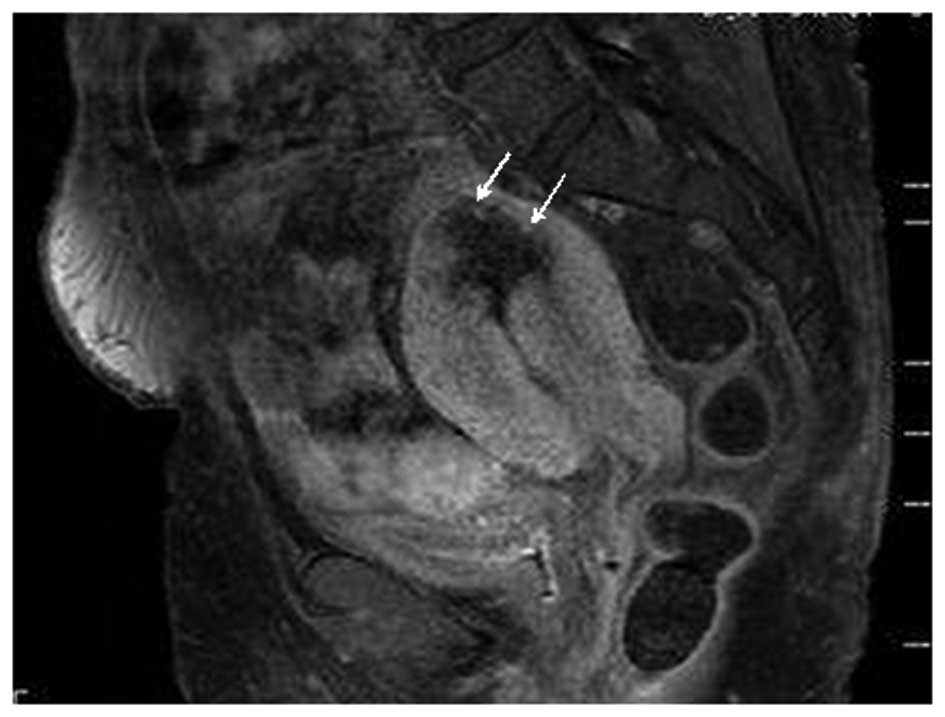
A 59-year-old post-menopausal female with scleroderma and diabetes mellitus presented with abnormal vaginal bleeding. A physical examination revealed the presence of pyometra and magnetic resonance imaging demonstrated a relatively well-circumscribed tumor, measuring 30 mm in diameter, in the fundus of the uterus (Fig. 1). Swelling of the internal and external iliac and paraaortic lymph nodes was also observed. A clinical diagnosis of a malignant uterine corpus tumor was suspected, and a total cystectomy and bilateral salpingo-oophorectomy were performed, with dissection of the pelvic and paraaortic lymph nodes. Serum β-human chorionic gonadotropin (hCG) levels were not measured.

Figure 1

Magnetic resonance imaging showing a relatively well-circumscribed tumor in the fundus of the uterine corpus (arrows).

Materials and methods

Formalin-fixed, paraffin-embedded tissue blocks were cut into 3-μm thick sections, then deparaffinized and rehydrated. Each section was stained with hematoxylin and eosin and used for immunostaining. Immunohistochemical analyses were performed using an autostainer (Benchmark XT system; Ventana Medical System, Tucson, AZ, USA) according to the manufacturer’s instructions. The following primary antibodies were used: Mouse monoclonal antibody against CA125 (Ov185:1; Novocastra Laboratories, Ltd., Newcastle upon Tyne, UK), mouse monoclonal antibody against cytokeratin (AE1/AE3; DAKO Cytomation, Glostrup, Denmark) and rabbit polyclonal antibody against human β-hCG (Novocastra).

Histopathological findings

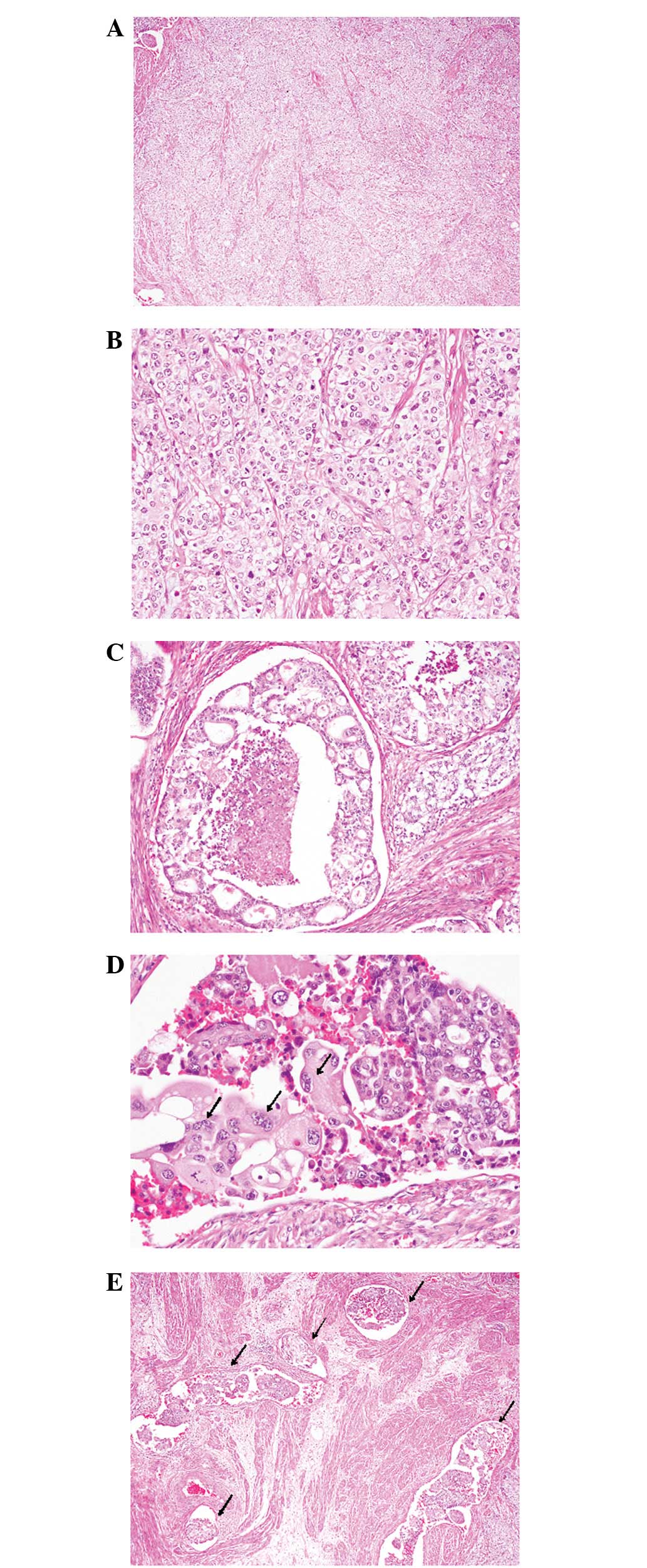
The uterine corpus tumor consisted of two distinct histopathological components. The first component comprised ~80% of the tumor and was composed of a poorly-differentiated adenocarcinoma with extensive hemorrhage and necrosis. This area involved a proliferation of sheets or variable-sized nests of atypical epithelial cells containing large oval nuclei with coarse chromatin and small nucleoli (Fig 2A and B). These tumor cells contained a relatively rich, marginally eosinophilic cytoplasm, but no intracytoplasmic mucin was observed (Fig. 2B). Mitotic figures were frequently observed (34/10 high-power fields). Focal glandular differentiation showing cribriform glands with central necrosis was present (Fig. 2C), however, no squamous differentiation was noted. Accordingly, this component was considered to be an endometrioid adenocarcinoma. The remaining component consisted of mononucleated and syncytial-like giant cells, with a rich eosinophilic cytoplasm and large pleomorphic nuclei with coarse chromatin (Fig. 2D). There was a transition between the endometrioid adenocarcinoma and choriocarcinomatous components (Fig. 2D). A number of lymphatic and vascular invasions were noted (Fig. 2E). The tumor had invaded deeply into the entire layer of the uterine corpus wall and serosal invasion was also noted. However, no parametrial or vaginal invasion was observed. The internal and external iliac and paraaortic lymph nodes exhibited metastatic carcinomas accompanying each of the components.

Figure 2

Histopathological findings of the uterine corpus tumor. (A) Poorly-differentiated endometrioid adenocarcinoma component. Proliferation of sheets or variable-sized nests of atypical epithelial cells. (hematoxylin and eosin; magnification, ×40). (B) Atypical epithelial cells contain a relatively rich, marginally eosinophilic cytoplasm and large nuclei with coarse chromatin and small nucleoli (hematoxylin and eosin; magnification, ×200). (C) Glandular differentiation showing a cribriform structure with central necrosis (hematoxylin and eosin; magnification ×100). (D) Choriocarcinomatous component. Syncytial giant cells are scattered (arrows; hematoxylin and eosin; magnification, ×200). (E) Vascular and lymphatic invasions are prominent (arrows; hematoxylin and eosin; magnification, ×40).

Immunohistochemical findings

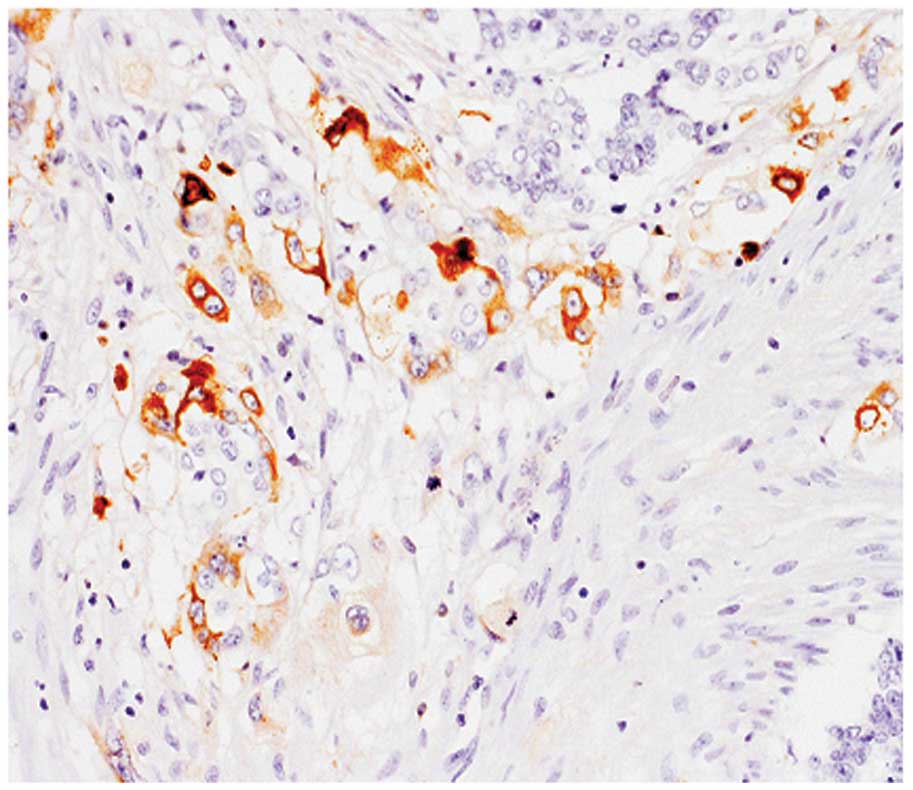
Cytokeratin (AE1/AE3) was expressed in the endometrioid adenocarcinoma and choriocarcinomatous components. CA125 was expressed in the endometrioid adenocarcinoma component, but not in the choriocarcinomatous component. β-hCG was expressed in the choriocarcinomatous component, particularly in the syncytial giant cells (Fig. 3), but not in the endometrial carcinoma component. Metastatic lesions of the lymph nodes showed similar immunohistochemical features to the primary tumor and β-hCG-positive syncytial giant cells were scattered amongst the metastatic lesions.

Figure 3

Immunohistochemical features of the uterine corpus tumor. β-human chorionic gonadotrophin (hGC) is expressed in the syncytial giant cells (x200).

According to the histopathological and immunohistochemical features, an ultimate diagnosis of endometrioid adenocarcinoma with choriocarcinomatous differentiation was made [pIIIC2; International Federation of Gynecology and Obstetrics (FIGO)].

Discussion

The present study describes a case of endometrioid adenocarcinoma of the uterine corpus with choriocarcinomatous differentiation. Civantos and Rywlin first reported a case of uterine corpus carcinoma (serous papillary adenocarcinoma) with choriocarcinomatous differentiation in 1972 (16). Subsequently, Savage et al reported the first case of endometrioid adenocarcinoma of the uterine corpus with choriocarcinomatous differentiation in 1987 (9). Since then, few uterine corpus adenocarcinomas with choriocarcinomatous differentiation have been reported (10–15). The most common histopathological subtype of the carcinomatous component is endometrioid adenocarcinoma (9–15), as seen in the present case. Serous papillary adenocarcinoma (16,17), clear cell adenocarcinoma (18) and carcinosarcoma with choriocarcinomatous differentiation (19,20) have also been documented. In addition, uterine cervical adenocarcinoma with choriocarcinomatous differentiation has also been reported (21).

Table I summarizes the clinicopathological features of nine previously reported cases of endometrioid adenocarcinoma of the uterine corpus with choriocarcinomatous differentiation, in addition to the present case. The median age of the patients was 62.3 years (range, 42–83 years) and the majority were post-menopausal females, with the exception of the case reported by Akbulut et al, in which the patient was a 42-year-old premenopausal female (15). Abnormal vaginal bleeding and abdominal pain were the main presenting symptoms (14,15). Endometrial choriocarcinoma may be considered to have a highly aggressive clinical course, since nine of the 10 cases studied showed metastases, with the common metastatic sites being the lung, liver and lymph nodes, while four patients succumbed to the disease (Table I). The histopathological features of the metastatic sites were variable; two cases, including the present case, shared the same features as the primary site (adenocarcinoma with choriocarcinomatous components) and two cases only exhibited the choriocarcinoma component (Table I).

Table I

Clinicopathological features of endometrioid adenocarcinoma with choriocarcinomatous differentiation.

Table I

Clinicopathological features of endometrioid adenocarcinoma with choriocarcinomatous differentiation.

Case no.Age (years)Histopathology of coexisting tumorMetastases or invasionHistopathology at metastatic sitesOutcome, monthsReference
170WDBrain, lung, liver, kidneysChoriocarcinomaDOD, 149
278PDPelvic lymph nodesNADOD, 1.510
348PDLungsNAAWD, 210
463AdenocarcinomaLungs, liver, peritoneumSame as primary siteDOD, 1410
583MDLungsNAAWD, 111
668PD, clear cell and serous papillaryPelvic lymph nodesSerous papillary adenocarcinomaNED, 1612
754MDRetroperitoneumAdenocarcinomaDOD, 2413
858WDVaginal cuffChoriocarcinomaNED, 3614
942MDNoneNED, 615
Present case59PDIliac and paraaortic lymph nodesSame as primary siteNED, 2

[i] WD, well-differentiated adenocarcinoma; PD, poorly-differentiated adenocarcinoma; MD, moderately-differentiated adenocarcinoma; NA, not available; AWD, alive with disease; DOD, died of disease; NED, no evidence of disease.

Although the pathogenesis of the choriocarcinomatous component in non-gestational tumors is not well understood, studies suggest that the choriocarcinomatous component probably represents heterotopic or aberrant differentiation of the conventional carcinoma components, rather than the malignant transformation of germ cells (7,22). Zetll et al reported a case of urothelial carcinoma with a choriocarcinomatous component and analyzed the comparative genomic hybridization of the two components (22). The study clearly demonstrated that the components shared losses of chromosomes 9 and 17p, which were characteristic genetic alterations of urothelial carcinoma, and that the choriocarcinomatous components acquired additional chromosomal losses and gains, mostly associated with poorly-differentiated urothelial carcinoma (22). The results suggest a close genetic association between urothelial carcinoma and the choriocarcinomatous component. Furthermore, Verbeek et al reported a case of rectal adenocarcinoma with choriocarcinomatous components and identified genetic changes that are characteristic of colorectal adenocarcinoma (losses of chromosomes 8p and 18q and gains of 5p and 20q) in the two components, providing evidence for a common origin (7). According to these results, the two histological components of endometrioid adenocarcinoma with choriocarcinomatous differentiation may share a common genetic origin, however, genetic analyses of this rare tumor have not been performed.

In conclusion, the present study describes the 10th documented case of endometrioid adenocarcinoma of the uterine corpus with choriocarcinomatous differentiation. The clinicopathological analyses revealed that this rare tumor has a highly aggressive clinical course, with a high incidence of metastases and a high mortality rate. Therefore, identifying the choriocarcinomatous component in endometrioid adenocarcinoma is essential for establishing an adequate therapeutic strategy.

References

1 

Serno J, Zeppernick F, Jäkel J, et al: Primary pulmonary choriocarcinoma: case report and review of the literature. Gynecol Obstet Invest. 74:171–176. 2012. View Article : Google Scholar : PubMed/NCBI

2 

Mohammadi A and Rosa M: Carcinoma of the breast with choriocarcinomatous features. Arch Pathol Lab Med. 135:1097–1100. 2011. View Article : Google Scholar : PubMed/NCBI

3 

Merimsky O, Jossiphov J, Asna N, Shmueli E, Stabsky A and Inbar M: Choriocarcinoma arising in a squamous cell carcinoma of the esophagus. Am J Clin Oncol. 23:203–206. 2000. View Article : Google Scholar : PubMed/NCBI

4 

Satake N, Chikakiyo M, Yagi T, Suzuki Y and Hirose T: Gastric cancer with choriocarcinoma and yolk sac tumor components: case report. Pathol Int. 61:156–160. 2011. View Article : Google Scholar : PubMed/NCBI

5 

Yoon JH, Kim MS, Kook EH, et al: Primary gastric choriocarcinoma: two case reports and review of the literatures. Cancer Res Treat. 40:145–150. 2008. View Article : Google Scholar : PubMed/NCBI

6 

Harada M, Inoue T and Hamano K: Choriocarcinoma of the sigmoid colon: report of a case. Surg Today. 42:93–96. 2012. View Article : Google Scholar : PubMed/NCBI

7 

Verbeek W, Schulten HJ, Sperling M, et al: Rectal adenocarcinoma with choriocarcinomatous differentiation: clinical and genetic aspects. Hum Pathol. 35:1427–1430. 2004. View Article : Google Scholar : PubMed/NCBI

8 

Minamino K, Adachi Y, Okamura A, et al: Autopsy case of primary choriocarcinoma of the urinary bladder. Pathol Int. 55:216–222. 2005. View Article : Google Scholar : PubMed/NCBI

9 

Savage J, Subby W and Okagaki T: Adenocarcinoma of the endometrium with trophoblastic differentiation and metastases as choriocarcinoma: a case report. Gynecol Oncol. 26:257–262. 1987. View Article : Google Scholar : PubMed/NCBI

10 

Pesce C, Merino MJ, Chambers JT and Nogales F: Endometrial carcinoma with trophoblastic differentiation. An aggressive form of uterine cancer. Cancer. 68:1799–1802. 1991. View Article : Google Scholar : PubMed/NCBI

11 

Kalir T, Seijo L, Deligdisch L and Cohen C: Endometrial adenocarcinoma with choriocarcinomatous differentiation in an elderly virginal woman. Int J Gynecol Pathol. 14:266–269. 1995. View Article : Google Scholar : PubMed/NCBI

12 

Bradley CS, Benjamin I, Wheeler JE and Rubin SC: Endometrial adenocarcinoma with trophoblastic differentiation. Gynecol Oncol. 69:74–77. 1998. View Article : Google Scholar : PubMed/NCBI

13 

Tunç M, Simşek T, Trak B and Uner M: Endometrium adenocarcinoma with choriocarcinomatous differentiation: a case report. Eur J Gynaecol Oncol. 19:489–491. 1998.

14 

Yamada T, Mori H, Kanemura M, Ohmichi M and Shibayama Y: Endometrial carcinoma with choriocarcinomatous differentiation: a case report and review of the literature. Gynecol Oncol. 113:291–294. 2009. View Article : Google Scholar : PubMed/NCBI

15 

Akbulut M, Tosun H, Soysal ME and Oztekin O: Endometrioid carcinoma of the endometrium with choriocarcinomatous differentiation: a case report and review of the literature. Arch Gynecol Obstet. 278:79–84. 2008. View Article : Google Scholar : PubMed/NCBI

16 

Civantos F and Rywlin AM: Carcinomas with trophoblastic differentiation and secretion of chorionic gonadotrophins. Cancer. 29:789–798. 1972. View Article : Google Scholar : PubMed/NCBI

17 

Horn LC, Hänel C, Bartholdt E and Dietel J: Serous carcinoma of the endometrium with choriocarcinomatous differentiation: a case report and review of the literature indicate the existence of 2 prognostically relevant tumor types. Int J Gynecol Pathol. 25:247–251. 2006. View Article : Google Scholar

18 

Black K, Sykes P and Ostör AG: Trophoblastic differentiation in an endometrial carcinoma. Aus NZ J Obstet Gynaecol. 38:472–473. 1998. View Article : Google Scholar : PubMed/NCBI

19 

Khuu HM, Crisco CP, Kilgore L, Rodgers WH and Conner MG: Carcinosarcoma of the uterus associated with a nongestational choriocarcinoma. South Med J. 93:226–228. 2000. View Article : Google Scholar : PubMed/NCBI

20 

Nguyen CP, Levi AW, Montz FJ and Bristow RE: Coexistent choriocarcinoma and malignant mixed mesodermal tumor of the uterus. Gynecol Oncol. 79:499–503. 2000. View Article : Google Scholar : PubMed/NCBI

21 

Shintaku M, Kariya M, Shime H and Ishikura H: Adenocarcinoma of the uterine cervix with choriocarcinomatous and hepatoid differentiation: report of a case. Int J Gynecol Pathol. 19:174–178. 2000. View Article : Google Scholar : PubMed/NCBI

22 

Zettl A, Konrad MA, Polzin S, et al: Urothelial carcinoma of the renal pelvis with choriocarcinomatous features: genetic evidence of clonal evolution. Hum Pathol. 33:1234–1237. 2002. View Article : Google Scholar : PubMed/NCBI

Related Articles

  • Abstract
  • View
  • Download
  • Twitter
Copy and paste a formatted citation
Spandidos Publications style
Ishida M and Okabe H: Endometrioid adenocarcinoma with choriocarcinomatous differentiation: A case report and review of the literature. Oncol Lett 6: 655-658, 2013.
APA
Ishida, M., & Okabe, H. (2013). Endometrioid adenocarcinoma with choriocarcinomatous differentiation: A case report and review of the literature. Oncology Letters, 6, 655-658. https://doi.org/10.3892/ol.2013.1431
MLA
Ishida, M., Okabe, H."Endometrioid adenocarcinoma with choriocarcinomatous differentiation: A case report and review of the literature". Oncology Letters 6.3 (2013): 655-658.
Chicago
Ishida, M., Okabe, H."Endometrioid adenocarcinoma with choriocarcinomatous differentiation: A case report and review of the literature". Oncology Letters 6, no. 3 (2013): 655-658. https://doi.org/10.3892/ol.2013.1431
Copy and paste a formatted citation
x
Spandidos Publications style
Ishida M and Okabe H: Endometrioid adenocarcinoma with choriocarcinomatous differentiation: A case report and review of the literature. Oncol Lett 6: 655-658, 2013.
APA
Ishida, M., & Okabe, H. (2013). Endometrioid adenocarcinoma with choriocarcinomatous differentiation: A case report and review of the literature. Oncology Letters, 6, 655-658. https://doi.org/10.3892/ol.2013.1431
MLA
Ishida, M., Okabe, H."Endometrioid adenocarcinoma with choriocarcinomatous differentiation: A case report and review of the literature". Oncology Letters 6.3 (2013): 655-658.
Chicago
Ishida, M., Okabe, H."Endometrioid adenocarcinoma with choriocarcinomatous differentiation: A case report and review of the literature". Oncology Letters 6, no. 3 (2013): 655-658. https://doi.org/10.3892/ol.2013.1431
Follow us
  • Twitter
  • LinkedIn
  • Facebook
About
  • Spandidos Publications
  • Careers
  • Cookie Policy
  • Privacy Policy
How can we help?
  • Help
  • Live Chat
  • Contact
  • Email to our Support Team