Spandidos Publications Logo
  • About
    • About Spandidos
    • Aims and Scopes
    • Abstracting and Indexing
    • Editorial Policies
    • Reprints and Permissions
    • Job Opportunities
    • Terms and Conditions
    • Contact
  • Journals
    • All Journals
    • Oncology Letters
      • Oncology Letters
      • Information for Authors
      • Editorial Policies
      • Editorial Board
      • Aims and Scope
      • Abstracting and Indexing
      • Bibliographic Information
      • Archive
    • International Journal of Oncology
      • International Journal of Oncology
      • Information for Authors
      • Editorial Policies
      • Editorial Board
      • Aims and Scope
      • Abstracting and Indexing
      • Bibliographic Information
      • Archive
    • Molecular and Clinical Oncology
      • Molecular and Clinical Oncology
      • Information for Authors
      • Editorial Policies
      • Editorial Board
      • Aims and Scope
      • Abstracting and Indexing
      • Bibliographic Information
      • Archive
    • Experimental and Therapeutic Medicine
      • Experimental and Therapeutic Medicine
      • Information for Authors
      • Editorial Policies
      • Editorial Board
      • Aims and Scope
      • Abstracting and Indexing
      • Bibliographic Information
      • Archive
    • International Journal of Molecular Medicine
      • International Journal of Molecular Medicine
      • Information for Authors
      • Editorial Policies
      • Editorial Board
      • Aims and Scope
      • Abstracting and Indexing
      • Bibliographic Information
      • Archive
    • Biomedical Reports
      • Biomedical Reports
      • Information for Authors
      • Editorial Policies
      • Editorial Board
      • Aims and Scope
      • Abstracting and Indexing
      • Bibliographic Information
      • Archive
    • Oncology Reports
      • Oncology Reports
      • Information for Authors
      • Editorial Policies
      • Editorial Board
      • Aims and Scope
      • Abstracting and Indexing
      • Bibliographic Information
      • Archive
    • Molecular Medicine Reports
      • Molecular Medicine Reports
      • Information for Authors
      • Editorial Policies
      • Editorial Board
      • Aims and Scope
      • Abstracting and Indexing
      • Bibliographic Information
      • Archive
    • World Academy of Sciences Journal
      • World Academy of Sciences Journal
      • Information for Authors
      • Editorial Policies
      • Editorial Board
      • Aims and Scope
      • Abstracting and Indexing
      • Bibliographic Information
      • Archive
    • International Journal of Functional Nutrition
      • International Journal of Functional Nutrition
      • Information for Authors
      • Editorial Policies
      • Editorial Board
      • Aims and Scope
      • Abstracting and Indexing
      • Bibliographic Information
      • Archive
    • International Journal of Epigenetics
      • International Journal of Epigenetics
      • Information for Authors
      • Editorial Policies
      • Editorial Board
      • Aims and Scope
      • Abstracting and Indexing
      • Bibliographic Information
      • Archive
    • Medicine International
      • Medicine International
      • Information for Authors
      • Editorial Policies
      • Editorial Board
      • Aims and Scope
      • Abstracting and Indexing
      • Bibliographic Information
      • Archive
  • Articles
  • Information
    • Information for Authors
    • Information for Reviewers
    • Information for Librarians
    • Information for Advertisers
    • Conferences
  • Language Editing
Spandidos Publications Logo
  • About
    • About Spandidos
    • Aims and Scopes
    • Abstracting and Indexing
    • Editorial Policies
    • Reprints and Permissions
    • Job Opportunities
    • Terms and Conditions
    • Contact
  • Journals
    • All Journals
    • Biomedical Reports
      • Information for Authors
      • Editorial Policies
      • Editorial Board
      • Aims and Scope
      • Abstracting and Indexing
      • Bibliographic Information
      • Archive
    • Experimental and Therapeutic Medicine
      • Information for Authors
      • Editorial Policies
      • Editorial Board
      • Aims and Scope
      • Abstracting and Indexing
      • Bibliographic Information
      • Archive
    • International Journal of Epigenetics
      • Information for Authors
      • Editorial Policies
      • Editorial Board
      • Aims and Scope
      • Abstracting and Indexing
      • Bibliographic Information
      • Archive
    • International Journal of Functional Nutrition
      • Information for Authors
      • Editorial Policies
      • Editorial Board
      • Aims and Scope
      • Abstracting and Indexing
      • Bibliographic Information
      • Archive
    • International Journal of Molecular Medicine
      • Information for Authors
      • Editorial Policies
      • Editorial Board
      • Aims and Scope
      • Abstracting and Indexing
      • Bibliographic Information
      • Archive
    • International Journal of Oncology
      • Information for Authors
      • Editorial Policies
      • Editorial Board
      • Aims and Scope
      • Abstracting and Indexing
      • Bibliographic Information
      • Archive
    • Medicine International
      • Information for Authors
      • Editorial Policies
      • Editorial Board
      • Aims and Scope
      • Abstracting and Indexing
      • Bibliographic Information
      • Archive
    • Molecular and Clinical Oncology
      • Information for Authors
      • Editorial Policies
      • Editorial Board
      • Aims and Scope
      • Abstracting and Indexing
      • Bibliographic Information
      • Archive
    • Molecular Medicine Reports
      • Information for Authors
      • Editorial Policies
      • Editorial Board
      • Aims and Scope
      • Abstracting and Indexing
      • Bibliographic Information
      • Archive
    • Oncology Letters
      • Information for Authors
      • Editorial Policies
      • Editorial Board
      • Aims and Scope
      • Abstracting and Indexing
      • Bibliographic Information
      • Archive
    • Oncology Reports
      • Information for Authors
      • Editorial Policies
      • Editorial Board
      • Aims and Scope
      • Abstracting and Indexing
      • Bibliographic Information
      • Archive
    • World Academy of Sciences Journal
      • Information for Authors
      • Editorial Policies
      • Editorial Board
      • Aims and Scope
      • Abstracting and Indexing
      • Bibliographic Information
      • Archive
  • Articles
  • Information
    • For Authors
    • For Reviewers
    • For Librarians
    • For Advertisers
    • Conferences
  • Language Editing
Login Register Submit
  • This site uses cookies
  • You can change your cookie settings at any time by following the instructions in our Cookie Policy. To find out more, you may read our Privacy Policy.

    I agree
Search articles by DOI, keyword, author or affiliation
Search
Advanced Search
presentation
Oncology Letters
Join Editorial Board Propose a Special Issue
Print ISSN: 1792-1074 Online ISSN: 1792-1082
Journal Cover
October 2013 Volume 6 Issue 4

Full Size Image

Sign up for eToc alerts
Recommend to Library

Journals

International Journal of Molecular Medicine

International Journal of Molecular Medicine

International Journal of Molecular Medicine is an international journal devoted to molecular mechanisms of human disease.

International Journal of Oncology

International Journal of Oncology

International Journal of Oncology is an international journal devoted to oncology research and cancer treatment.

Molecular Medicine Reports

Molecular Medicine Reports

Covers molecular medicine topics such as pharmacology, pathology, genetics, neuroscience, infectious diseases, molecular cardiology, and molecular surgery.

Oncology Reports

Oncology Reports

Oncology Reports is an international journal devoted to fundamental and applied research in Oncology.

Experimental and Therapeutic Medicine

Experimental and Therapeutic Medicine

Experimental and Therapeutic Medicine is an international journal devoted to laboratory and clinical medicine.

Oncology Letters

Oncology Letters

Oncology Letters is an international journal devoted to Experimental and Clinical Oncology.

Biomedical Reports

Biomedical Reports

Explores a wide range of biological and medical fields, including pharmacology, genetics, microbiology, neuroscience, and molecular cardiology.

Molecular and Clinical Oncology

Molecular and Clinical Oncology

International journal addressing all aspects of oncology research, from tumorigenesis and oncogenes to chemotherapy and metastasis.

World Academy of Sciences Journal

World Academy of Sciences Journal

Multidisciplinary open-access journal spanning biochemistry, genetics, neuroscience, environmental health, and synthetic biology.

International Journal of Functional Nutrition

International Journal of Functional Nutrition

Open-access journal combining biochemistry, pharmacology, immunology, and genetics to advance health through functional nutrition.

International Journal of Epigenetics

International Journal of Epigenetics

Publishes open-access research on using epigenetics to advance understanding and treatment of human disease.

Medicine International

Medicine International

An International Open Access Journal Devoted to General Medicine.

Journal Cover
October 2013 Volume 6 Issue 4

Full Size Image

Sign up for eToc alerts
Recommend to Library

  • Article
  • Citations
    • Cite This Article
    • Download Citation
    • Create Citation Alert
    • Remove Citation Alert
    • Cited By
  • Similar Articles
    • Related Articles (in Spandidos Publications)
    • Similar Articles (Google Scholar)
    • Similar Articles (PubMed)
  • Download PDF
  • Download XML
  • View XML
Case Report

Safety of nanoparticle albumin‑bound paclitaxel administered to breast cancer patients with clinical contraindications to paclitaxel or docetaxel: Four case reports

  • Authors:
    • Kosei Kimura
    • Satoru Tanaka
    • Mitsuhiko Iwamoto
    • Hiroya Fujioka
    • Yuko Takahashi
    • Nayuko Sato
    • Risa Terasawa
    • Tomo Tominaga
    • Ayana Ikari
    • Kazuhisa Uchiyama
  • View Affiliations / Copyright

    Affiliations: Section of Breast and Endocrine Surgery, Department of General and Gastroenterological Surgery, Osaka Medical College, Takatsuki, Osaka 569‑8686, Japan
  • Pages: 881-884
    |
    Published online on: July 17, 2013
       https://doi.org/10.3892/ol.2013.1471
  • Expand metrics +
Metrics: Total Views: 0 (Spandidos Publications: | PMC Statistics: )
Metrics: Total PDF Downloads: 0 (Spandidos Publications: | PMC Statistics: )
Cited By (CrossRef): 0 citations Loading Articles...

This article is mentioned in:


Abstract

Taxanes, including paclitaxel (PTX) and docetaxel (DOC), are poorly soluble in water due to their hydrophobic properties and thus, require solvents. However, use of these solvents has been associated with toxic responses, including a hypersensitivity reaction (HSR). Nanoparticle albumin‑bound paclitaxel (nab‑PTX) is a novel formulation of PTX, which allows reconstitution of the agent with a saline solution instead of solvents and administration without premedication for HSRs. The current study reports the safe administration of nab‑PTX to four breast cancer patients considered clinically to have contraindications to PTX or DOC. Two of the patients had previously experienced HSRs to PTX or DOC and the other two patients had contraindications to steroids as a premedication for HSRs, since one patient suffered from diabetes and the other was a carrier of the hepatitis B virus. All 4 patients were safely administered nab‑PTX. In conclusion, administration of nab‑PTX appears to be effective for patients that have previously experienced HSRs to other taxanes or in those with contraindications to steroids.

Introduction

Taxanes, including paclitaxel (PTX) and docetaxel (DOC), are among the most active and widely used classes of cytotoxic agents for breast cancer treatment (1,2). Taxanes are poorly soluble in water due to their hydrophobic properties and thus, require solvents, including polyoxyethylated castor oil and ethanol (3). The use of these solvents has been associated with toxic responses, including hypersensitivity reactions (HSRs) and prolonged sensory neuropathy (3). Nanoparticle albumin-bound PTX (nab-PTX) is a novel formulation of PTX that allows reconstitution of this agent with a saline solution instead of solvents and administration without premedication for HSRs (4,5). The aim of the present study was to report the safety of nab-PTX, as a result of the administration of the formulation to 4 breast cancer patients with contraindications to PTX or DOC. Written informed consent was obtained from the patients.

Case reports

Case 1

In May 2004, a 43-year-old female with right-sided breast cancer underwent a partial resection of the breast (Bp) and axillary lymph node dissection (Ax). The patient was of pathological stage IIB [T2N1M0; estrogen receptor (ER)-positive, progesterone receptor (PR)-positive and human epidermal growth factor receptor 2 (HER2)-negative]. The patient was treated with adjuvant therapy consisting of 4 cycles of oral cyclophosphamide (100 mg/m2 daily on days 1–14), doxorubicin (30 mg/m2 on days 1 and 8) and 5-fluorouracil (500 mg/m2 on days 1 and 8) every 4 weeks and sequential endocrine therapy with tamoxifen (20 mg/day). At 4-years post-surgery, multiple bone metastases were detected. The patient was initially treated with endocrine therapy (2.5 mg/day letrozole followed by 25 mg/day exemestane) and zoledronic acid (4 mg every 3–4 weeks). After 21 months, the patient exhibited new lesions in the liver and the endocrine therapy was adjusted to chemotherapy with PTX (175 mg/m2 on day 1) and gemcitabine (1,250 mg/m2 on days 1 and 8) every three weeks.

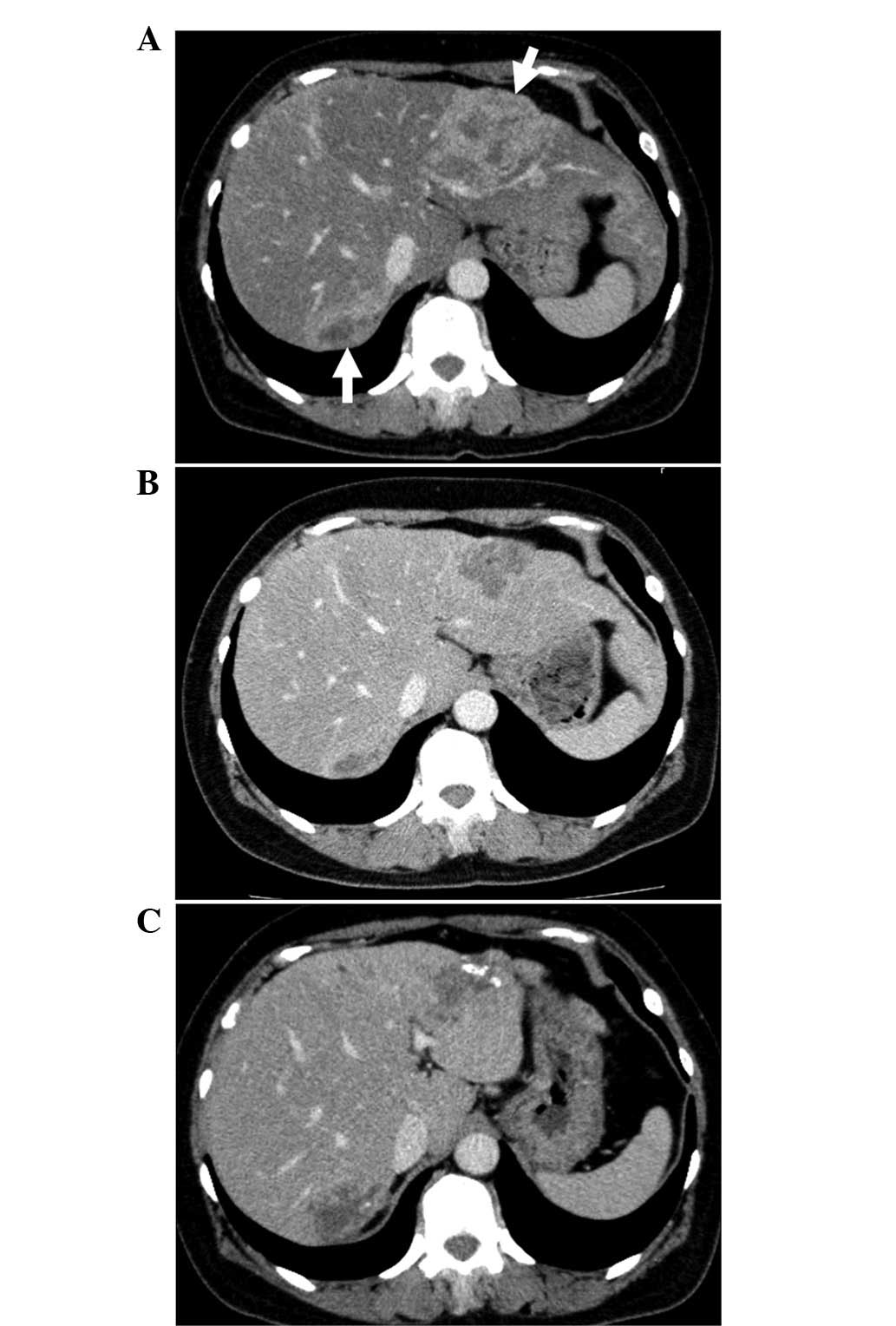
PTX was administered via a 180-min infusion following premedication consisting of corticosteroid (dexamethasone, 20 mg/body) and antihistamines (ranitidine and diphenhydramine, both 50 mg/body). However, the patient developed dyspnea and flushing 10 mins after the initiation of intravenous administration. The symptoms were considered to be due to an HSR to PTX and the infusion was terminated. After 30 mins, the symptoms improved and, subsequently, the regimen was adjusted to capecitabine. After six months, the individual exhibited progressive disease in the liver (Fig. 1) and the regimen was adjusted to nab-PTX (260 mg/m2) every three weeks for 30 mins, with premedication of dexamethasone (8 mg) only. No HSRs were exhibited and the nab-PTX treatment was continued. Abdominal computed tomography (CT) was performed following 4 cycles of therapy and the patient exhibited a stable disease (SD) state. However, following 11 cycles of treatment, the patient experienced disease progression; therefore, nab-PTX treatment was discontinued (Fig. 1). During nab-PTX treatment, the patient exhibited no HSRs and sensory neuropathy and neutropenia were recorded as grade 1. Following nab-PTX treatment, the patient had three other chemotherapy treatments for seven months as follows: i) Six cycles of 1.4 mg/m2 eribulin mesylate on days 1 and 8 every three weeks; ii) four cycles of FEC (100 mg/m2 epirubicin, 500 mg/m2 5-fluorouracil and 500 mg/m2 cyclophosphamide) every three weeks; and iii) one cycle of 1,200 mg/m2 gemcitabine and 25 mg/m2 vinorelbine on days 1 and 8 every three weeks. The outcome of the patient was good.

Figure 1

(A) Abdominal CT scan of a 43-year-old female with right-sided breast cancer showed multiple liver metastases, as indicated by the arrow. (B) CT following 4 cycles of therapy with nab-PTX showed stable disease, however, (C) following 11 cycles, disease progression in the liver was observed. CT, computed tomography; nab-PTX, nanoparticle albumin-bound paclitaxel.

Case 2

In May 2012, a 36-year-old female was diagnosed with left-sided breast cancer (stage IIIC; T3N3bM0; ER-positive, PR-positive and HER2-negative). The patient began pre-operative systemic therapy (PST) with 4 cycles of 5-fluorouracil (500 mg/m2), epirubicin (100 mg/m2) and cyclophosphamide (500 mg/m2) every 3 weeks, followed by 4 cycles of DOC (75 mg/m2) every 3 weeks. Dexamethasone (20 mg/body) was used as premedication for DOC. Although the patient received the initial cycle of DOC without developing an HSR, dyspnea and nausea developed 5 mins after administration of the second DOC. These symptoms were considered to be due to an HSR to DOC and the infusion was terminated. After 1 h, the symptoms improved and, subsequently, the regimen was adjusted to treatment with nab-PTX. The patient was administered nab-PTX (260 mg/m2) for 30 mins every 3 weeks, with premedication consisting of dexamethasone (8 mg) only. The patient exhibited no HSR and continued nab-PTX for 3 cycles. During the nab-PTX treatment, the patient exhibited no HSRs and sensory neuropathy and neutropenia were recorded as grade 1. Following PST, the patient experienced a clinically complete response (cCR; Fig. 2) and underwent a Bp and Ax. The patient had no recurrence.
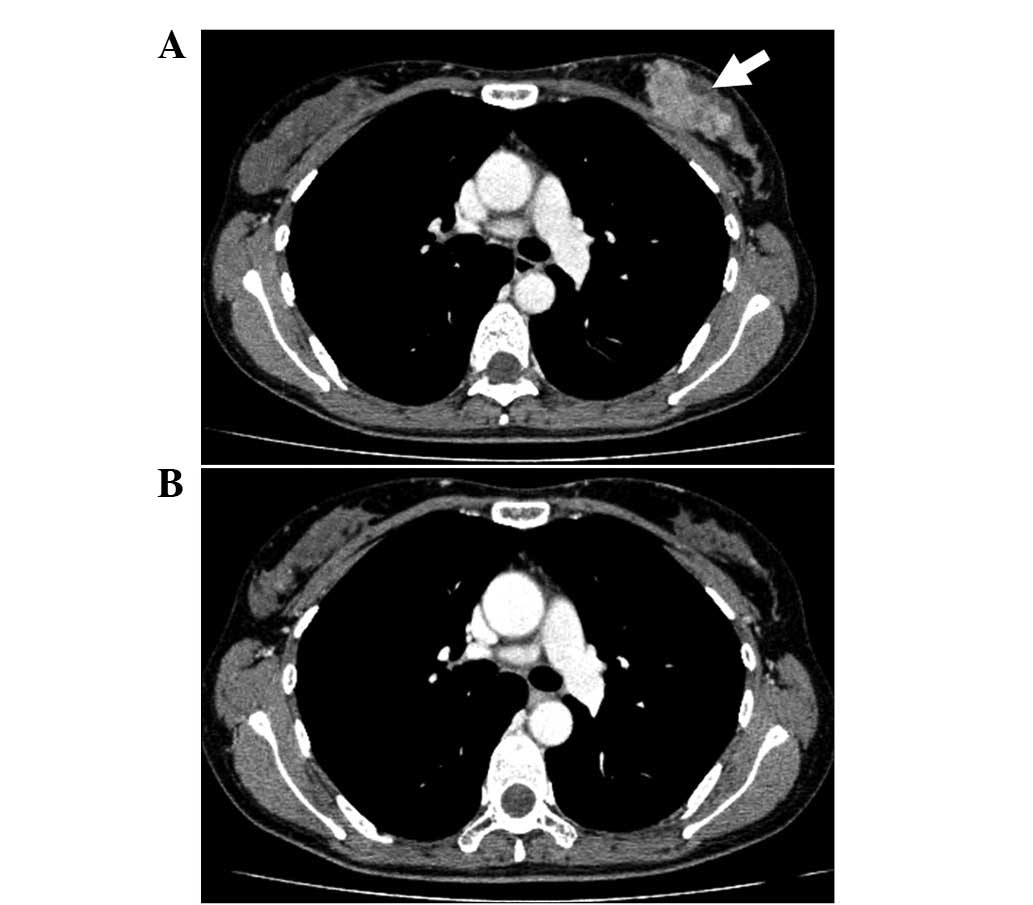
Figure 2

(A) Chest CT scan of a 36-year-old female showed left-sided breast cancer, as indicated by the arrow. (B) Following PST with 4 cycles of FEC, 1 cycle of DOC and 3 cycles of nab-PTX, the patient showed a cCR. CT, computed tomography; PST, pre-operative systemic therapy; nab-PTX, nanoparticle albumin-bound paclitaxel; FEC, 5-fluorouracil, epirubicin and cyclophosphamide; DOC, docetaxel; cCR, clinically complete response.

Case 3

In December 2000, a 45-year-old female with right-sided breast cancer underwent a total mastectomy and Ax. The patient was of pathological stage IIIB (T4bN2M0; ER-positive, PR-positive and HER2-negative). The patient was treated with 6 cycles of adjuvant chemotherapy with oral cyclophosphamide (100 mg/m2 daily on days 1–14), methotrexate (40 mg/m2 on days 1 and 8) and 5-fluorouracil (500 mg/m2 on days 1 and 8) every 4 weeks. At 9-years post-surgery, multiple lung metastases were detected and the patient was initially treated with anastrozole (1.0 mg/day). After 21 months, progressive disease was identified in the lung and FEC treatment (500 mg/m2 5-fluorouracil, 100 mg/m2 epirubicin and 500 mg/m2 cyclophosphamide) was initiated.

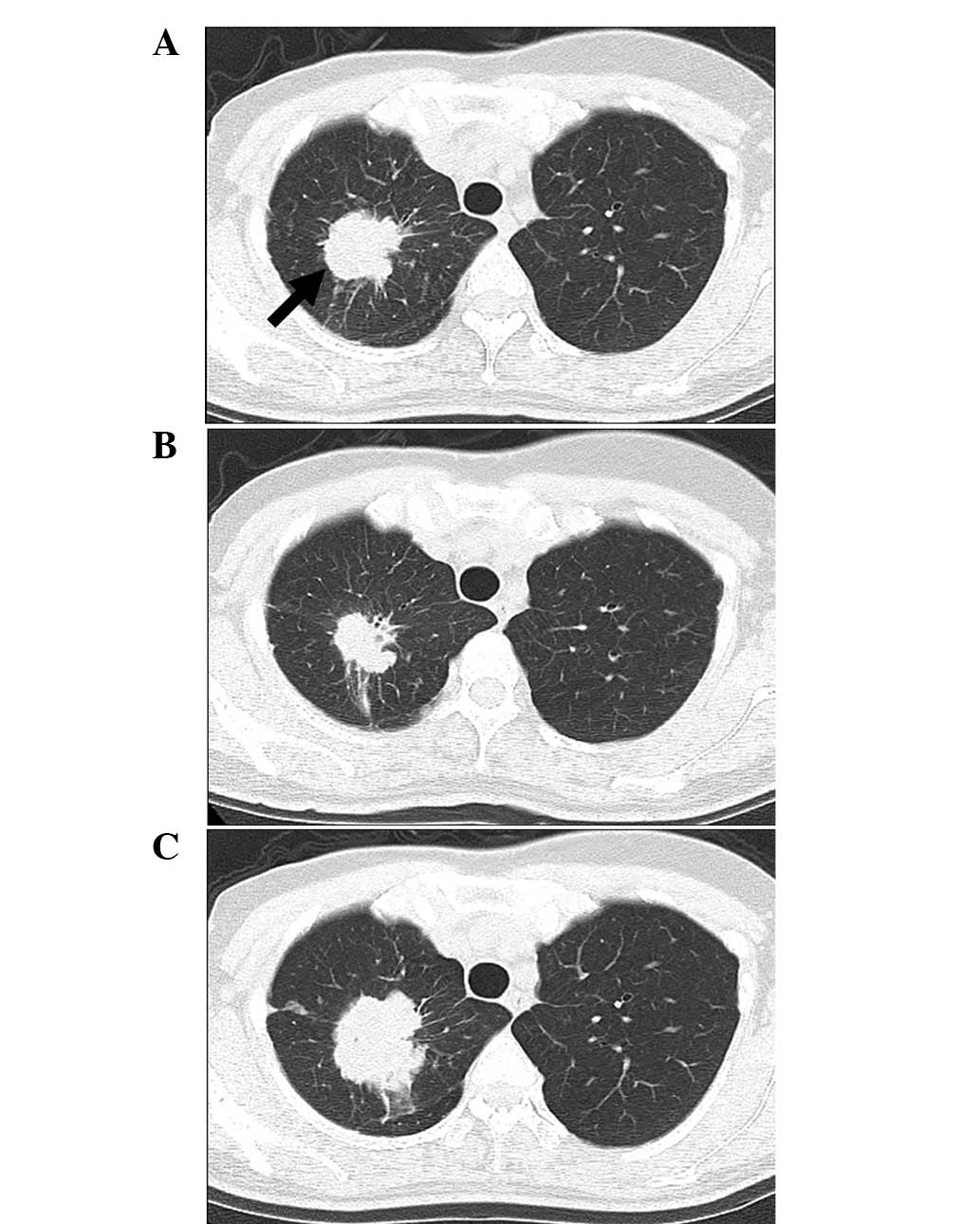
The patient had a past medical history of diabetes and their HbA1c was controlled to <7% by metformin hydrochloride (2,250 mg/day). Following FEC initiation, the patient’s fasting blood sugar increased to >250 mg/dl and insulin glargine (6 U/day) was prescribed. However, the patient’s HbA1c continued to increase to 8.7% and the individual developed a thirst and general fatigue. The symptoms appeared to be associated with the dexamethasone, which was being used as a premedication for FEC. Therefore, the regimen was adjusted to nab-PTX (260 mg/m2) every 3 weeks. In January 2012, the patient was administered with nab-PTX for 30 mins without dexamethasone. No HSRs were exhibited and the nab-PTX treatment was continued for 15 cycles. The patient’s thirst and general fatigue improved, and four months after the adjustment to nab-PTX, the patient’s HbA1c also improved. A chest CT following 4 cycles of therapy showed a partial response of the lung metastases. However, following 15 cycles of therapy, the patient experienced disease progression; therefore, an-PTX treatment was discontinued (Fig. 3). During the nab-PTX treatment, the patient exhibited no HSRs and grade 2 sensory neuropathy was recorded. Following nab-PTX treatment, the patient was administered with capecitabine (2,400 mg/day for 21 days every 4 weeks) for 7 months until now.

Figure 3

(A) CT scan of a 45-year-old female with right-sided breast cancer showed a lung metastasis, as indicated by the arrow. (B) CT following 4 cycles of therapy with nab-PTX showed a partial response, however, (C) following 15 cycles, disease progression was evident in the lung. CT, computed tomography; nab-PTX, nanoparticle albumin-bound paclitaxel.

Case 4

In November 2012, a 47-year-old female with left-sided breast cancer underwent a Bp and Ax. The patient was of pathological stage IIIA (T2N2M0; ER-positive, PR-positive and HER2-negative). Although adjuvant chemotherapy with 4 cycles of FEC (500 mg/m2 5-fluorouracil, 100 mg/m2 epirubicin and 500 mg/m2 cyclophosphamide) followed by 4 cycles of DOC (75 mg/m2) was initially prescribed, nab-PTX (260 mg/m2) without dexamethasone was selected since the patient was positive for the hepatitis B virus (HBV) antigen. Therefore, it was necessary to use entecavir hydrate and not a steroid as prophylaxis to avoid HBV reactivation. The patient completed the adjuvant chemotherapy, with no HSRs or HBV reactivation.

Discussion

To ensure the safety of taxane treatment, PTX and DOC require solvents, including Cremophor EL and ethanol or polysorbate 80, and premedication with corticosteroids to reduce the risk of HSRs associated with these solvents (3,6). By contrast, nab-PTX may be administered without corticosteroids due to its novel formulation with albumin that allows reconstitution of nab-PTX with a saline solution instead of solvents (3).

A phase III trial previously compared the administration of nab-PTX (260 mg/m2) with PTX (175 mg/m2) every three weeks in patients with metastatic breast cancer (MBC). Nab-PTX demonstrated a significantly improved overall response rate and longer time to progression compared with PTX (5). In addition, the incidence of grade 4 neutropenia was significantly lower for nab-PTX compared with PTX. However, nab-PTX was associated with a higher rate of grade 3 sensory neuropathy compared with PTX. The incidence of HSRs in the trial was low for the two arms of the study (nab-PTX and PTX), however, patients receiving PTX were premedicated, whereas those receiving nab-PTX were not. A phase II trial performed in 2009 reported that patients with MBC administered with weekly nab-PTX (100 or 150 mg/m2 during the first 3/4 weeks) demonstrated a higher overall response rate and median progression-free survival compared with those administered with DOC (100 mg/m2 every three weeks) (7). In addition, a phase III trial in 2012 compared the administration of weekly nab-PTX (150 mg/m2) to that of weekly PTX (90 mg/m2) with bevacizumab, as first-line therapies for MBC. However, nab-PTX was not shown to be superior to PTX for progression-free survival (8). Therefore, it has been unclear which patients are likely to benefit from nab-PTX treatment.

The present study reports two patients who experienced HSRs associated with PTX and DOC and were subsequently administered nab-PTX, which did not result in an HSR. One patient (Case 1) was treated with nab-PTX in a metastatic setting and was able to continue treatment for 11 cycles with an overall response of a SD state. The other patient (case 2) was treated with PST and achieved cCR. Adverse reactions of the two patients were recorded as grade 1. Therefore, nab-PTX appears to be safe and effective for these patients. When HSRs to taxanes occur, the administration of the taxane is usually terminated. However, taxanes are among the most effective cytotoxic agents for breast cancer treatment. Therefore, we hypothesize that even if a patient has experienced HSRs to other taxanes, nab-PTX should be selected as a treatment, rather than withdrawing from the use of taxanes completely.

In addition, the current study reported two cases with contraindications to steroids. One was a patient with diabetes (case 3) who needed to avoid the poor glycemic control associated with steroid administration. Following treatment with nab-PTX, the patient exhibited no HSRs and good glycemic control. Nab-PTX was continued for 15 cycles and the highest overall response was a partial response. The other patient (case 4) was a carrier for HBV and, therefore, HBV reactivation had to be prevented. The patient completed adjuvant chemotherapy without any HSRs or HBV reactivation. The adverse reactions of the two patients were recorded as grade 1 and 2. Since nab-PTX does not require concomitant steroid treatment, this agent must be selected for patients with clinical contraindications to steroids.

In conclusion, nab-PTX administration appears to be safe and effective for patients who have previously experienced HSRs to other taxanes or in those who have contraindications to steroids.

References

1 

De Laurentiis M, Cancello G, D’Agostino D, et al: Taxane-based combinations as adjuvant chemotherapy of early breast cancer: a meta-analysis of randomized trials. J Clin Oncol. 26:44–53. 2008.PubMed/NCBI

2 

Piccart-Gebhart MJ, Burzykowski T, Buyse M, et al: Taxanes alone or in combination with anthracyclines as first-line therapy of patients with metastatic breast cancer. J Clin Oncol. 26:1980–1986. 2008. View Article : Google Scholar : PubMed/NCBI

3 

Gradishar WJ: Albumin-bound paclitaxel: a next-generation taxane. Expert Opin Pharmacother. 7:1041–1053. 2006. View Article : Google Scholar : PubMed/NCBI

4 

Yamamoto Y, Kawano I and Iwase H: Nab-paclitaxel for the treatment of breast cancer: efficacy, safety, and approval. Onco Targets Ther. 4:123–136. 2011. View Article : Google Scholar : PubMed/NCBI

5 

Gradishar WJ, Tjulandin S, Davidson N, et al: Phase III trial of nanoparticle albumin-bound paclitaxel compared with polyethylated castor oil-based paclitaxel in women with breast cancer. J Clin Oncol. 23:7794–7803. 2005. View Article : Google Scholar : PubMed/NCBI

6 

Binder S: Evolution of taxanes in the treatment of metastatic breast cancer. Clin J Oncol Nurs. 17:9–14. 2013. View Article : Google Scholar

7 

Gradishar WJ, Krasnojon D, Cheporov S, et al: Phase II trial of nab-paclitaxel compared with docetaxel as first-line chemotherapy in patients with metastatic breast cancer: final analysis of overall survival. Clin Breast Cancer. 12:313–321. 2012. View Article : Google Scholar : PubMed/NCBI

8 

Rugo HS, Barry WT, Moreno-Aspitia A, et al: CALGB 40502/NCCTG N063H: Randomized phase III trial of weekly paclitaxel (P) compared to weekly nanoparticle albumin bound nab-paclitaxel (NP) or ixabepilone (Ix) with or without bevacizumab (B) as first-line therapy for locally recurrent or metastatic breast cancer (MBC). J Clin Oncol. 30:CRA10022012.

Related Articles

  • Abstract
  • View
  • Download
  • Twitter
Copy and paste a formatted citation
Spandidos Publications style
Kimura K, Tanaka S, Iwamoto M, Fujioka H, Takahashi Y, Sato N, Terasawa R, Tominaga T, Ikari A, Uchiyama K, Uchiyama K, et al: Safety of nanoparticle albumin‑bound paclitaxel administered to breast cancer patients with clinical contraindications to paclitaxel or docetaxel: Four case reports. Oncol Lett 6: 881-884, 2013.
APA
Kimura, K., Tanaka, S., Iwamoto, M., Fujioka, H., Takahashi, Y., Sato, N. ... Uchiyama, K. (2013). Safety of nanoparticle albumin‑bound paclitaxel administered to breast cancer patients with clinical contraindications to paclitaxel or docetaxel: Four case reports. Oncology Letters, 6, 881-884. https://doi.org/10.3892/ol.2013.1471
MLA
Kimura, K., Tanaka, S., Iwamoto, M., Fujioka, H., Takahashi, Y., Sato, N., Terasawa, R., Tominaga, T., Ikari, A., Uchiyama, K."Safety of nanoparticle albumin‑bound paclitaxel administered to breast cancer patients with clinical contraindications to paclitaxel or docetaxel: Four case reports". Oncology Letters 6.4 (2013): 881-884.
Chicago
Kimura, K., Tanaka, S., Iwamoto, M., Fujioka, H., Takahashi, Y., Sato, N., Terasawa, R., Tominaga, T., Ikari, A., Uchiyama, K."Safety of nanoparticle albumin‑bound paclitaxel administered to breast cancer patients with clinical contraindications to paclitaxel or docetaxel: Four case reports". Oncology Letters 6, no. 4 (2013): 881-884. https://doi.org/10.3892/ol.2013.1471
Copy and paste a formatted citation
x
Spandidos Publications style
Kimura K, Tanaka S, Iwamoto M, Fujioka H, Takahashi Y, Sato N, Terasawa R, Tominaga T, Ikari A, Uchiyama K, Uchiyama K, et al: Safety of nanoparticle albumin‑bound paclitaxel administered to breast cancer patients with clinical contraindications to paclitaxel or docetaxel: Four case reports. Oncol Lett 6: 881-884, 2013.
APA
Kimura, K., Tanaka, S., Iwamoto, M., Fujioka, H., Takahashi, Y., Sato, N. ... Uchiyama, K. (2013). Safety of nanoparticle albumin‑bound paclitaxel administered to breast cancer patients with clinical contraindications to paclitaxel or docetaxel: Four case reports. Oncology Letters, 6, 881-884. https://doi.org/10.3892/ol.2013.1471
MLA
Kimura, K., Tanaka, S., Iwamoto, M., Fujioka, H., Takahashi, Y., Sato, N., Terasawa, R., Tominaga, T., Ikari, A., Uchiyama, K."Safety of nanoparticle albumin‑bound paclitaxel administered to breast cancer patients with clinical contraindications to paclitaxel or docetaxel: Four case reports". Oncology Letters 6.4 (2013): 881-884.
Chicago
Kimura, K., Tanaka, S., Iwamoto, M., Fujioka, H., Takahashi, Y., Sato, N., Terasawa, R., Tominaga, T., Ikari, A., Uchiyama, K."Safety of nanoparticle albumin‑bound paclitaxel administered to breast cancer patients with clinical contraindications to paclitaxel or docetaxel: Four case reports". Oncology Letters 6, no. 4 (2013): 881-884. https://doi.org/10.3892/ol.2013.1471
Follow us
  • Twitter
  • LinkedIn
  • Facebook
About
  • Spandidos Publications
  • Careers
  • Cookie Policy
  • Privacy Policy
How can we help?
  • Help
  • Live Chat
  • Contact
  • Email to our Support Team