Spandidos Publications Logo
  • About
    • About Spandidos
    • Aims and Scopes
    • Abstracting and Indexing
    • Editorial Policies
    • Reprints and Permissions
    • Job Opportunities
    • Terms and Conditions
    • Contact
  • Journals
    • All Journals
    • Oncology Letters
      • Oncology Letters
      • Information for Authors
      • Editorial Policies
      • Editorial Board
      • Aims and Scope
      • Abstracting and Indexing
      • Bibliographic Information
      • Archive
    • International Journal of Oncology
      • International Journal of Oncology
      • Information for Authors
      • Editorial Policies
      • Editorial Board
      • Aims and Scope
      • Abstracting and Indexing
      • Bibliographic Information
      • Archive
    • Molecular and Clinical Oncology
      • Molecular and Clinical Oncology
      • Information for Authors
      • Editorial Policies
      • Editorial Board
      • Aims and Scope
      • Abstracting and Indexing
      • Bibliographic Information
      • Archive
    • Experimental and Therapeutic Medicine
      • Experimental and Therapeutic Medicine
      • Information for Authors
      • Editorial Policies
      • Editorial Board
      • Aims and Scope
      • Abstracting and Indexing
      • Bibliographic Information
      • Archive
    • International Journal of Molecular Medicine
      • International Journal of Molecular Medicine
      • Information for Authors
      • Editorial Policies
      • Editorial Board
      • Aims and Scope
      • Abstracting and Indexing
      • Bibliographic Information
      • Archive
    • Biomedical Reports
      • Biomedical Reports
      • Information for Authors
      • Editorial Policies
      • Editorial Board
      • Aims and Scope
      • Abstracting and Indexing
      • Bibliographic Information
      • Archive
    • Oncology Reports
      • Oncology Reports
      • Information for Authors
      • Editorial Policies
      • Editorial Board
      • Aims and Scope
      • Abstracting and Indexing
      • Bibliographic Information
      • Archive
    • Molecular Medicine Reports
      • Molecular Medicine Reports
      • Information for Authors
      • Editorial Policies
      • Editorial Board
      • Aims and Scope
      • Abstracting and Indexing
      • Bibliographic Information
      • Archive
    • World Academy of Sciences Journal
      • World Academy of Sciences Journal
      • Information for Authors
      • Editorial Policies
      • Editorial Board
      • Aims and Scope
      • Abstracting and Indexing
      • Bibliographic Information
      • Archive
    • International Journal of Functional Nutrition
      • International Journal of Functional Nutrition
      • Information for Authors
      • Editorial Policies
      • Editorial Board
      • Aims and Scope
      • Abstracting and Indexing
      • Bibliographic Information
      • Archive
    • International Journal of Epigenetics
      • International Journal of Epigenetics
      • Information for Authors
      • Editorial Policies
      • Editorial Board
      • Aims and Scope
      • Abstracting and Indexing
      • Bibliographic Information
      • Archive
    • Medicine International
      • Medicine International
      • Information for Authors
      • Editorial Policies
      • Editorial Board
      • Aims and Scope
      • Abstracting and Indexing
      • Bibliographic Information
      • Archive
  • Articles
  • Information
    • Information for Authors
    • Information for Reviewers
    • Information for Librarians
    • Information for Advertisers
    • Conferences
  • Language Editing
Spandidos Publications Logo
  • About
    • About Spandidos
    • Aims and Scopes
    • Abstracting and Indexing
    • Editorial Policies
    • Reprints and Permissions
    • Job Opportunities
    • Terms and Conditions
    • Contact
  • Journals
    • All Journals
    • Biomedical Reports
      • Information for Authors
      • Editorial Policies
      • Editorial Board
      • Aims and Scope
      • Abstracting and Indexing
      • Bibliographic Information
      • Archive
    • Experimental and Therapeutic Medicine
      • Information for Authors
      • Editorial Policies
      • Editorial Board
      • Aims and Scope
      • Abstracting and Indexing
      • Bibliographic Information
      • Archive
    • International Journal of Epigenetics
      • Information for Authors
      • Editorial Policies
      • Editorial Board
      • Aims and Scope
      • Abstracting and Indexing
      • Bibliographic Information
      • Archive
    • International Journal of Functional Nutrition
      • Information for Authors
      • Editorial Policies
      • Editorial Board
      • Aims and Scope
      • Abstracting and Indexing
      • Bibliographic Information
      • Archive
    • International Journal of Molecular Medicine
      • Information for Authors
      • Editorial Policies
      • Editorial Board
      • Aims and Scope
      • Abstracting and Indexing
      • Bibliographic Information
      • Archive
    • International Journal of Oncology
      • Information for Authors
      • Editorial Policies
      • Editorial Board
      • Aims and Scope
      • Abstracting and Indexing
      • Bibliographic Information
      • Archive
    • Medicine International
      • Information for Authors
      • Editorial Policies
      • Editorial Board
      • Aims and Scope
      • Abstracting and Indexing
      • Bibliographic Information
      • Archive
    • Molecular and Clinical Oncology
      • Information for Authors
      • Editorial Policies
      • Editorial Board
      • Aims and Scope
      • Abstracting and Indexing
      • Bibliographic Information
      • Archive
    • Molecular Medicine Reports
      • Information for Authors
      • Editorial Policies
      • Editorial Board
      • Aims and Scope
      • Abstracting and Indexing
      • Bibliographic Information
      • Archive
    • Oncology Letters
      • Information for Authors
      • Editorial Policies
      • Editorial Board
      • Aims and Scope
      • Abstracting and Indexing
      • Bibliographic Information
      • Archive
    • Oncology Reports
      • Information for Authors
      • Editorial Policies
      • Editorial Board
      • Aims and Scope
      • Abstracting and Indexing
      • Bibliographic Information
      • Archive
    • World Academy of Sciences Journal
      • Information for Authors
      • Editorial Policies
      • Editorial Board
      • Aims and Scope
      • Abstracting and Indexing
      • Bibliographic Information
      • Archive
  • Articles
  • Information
    • For Authors
    • For Reviewers
    • For Librarians
    • For Advertisers
    • Conferences
  • Language Editing
Login Register Submit
  • This site uses cookies
  • You can change your cookie settings at any time by following the instructions in our Cookie Policy. To find out more, you may read our Privacy Policy.

    I agree
Search articles by DOI, keyword, author or affiliation
Search
Advanced Search
presentation
Oncology Letters
Join Editorial Board Propose a Special Issue
Print ISSN: 1792-1074 Online ISSN: 1792-1082
Journal Cover
2014-April Volume 7 Issue 4

Full Size Image

Sign up for eToc alerts
Recommend to Library

Journals

International Journal of Molecular Medicine

International Journal of Molecular Medicine

International Journal of Molecular Medicine is an international journal devoted to molecular mechanisms of human disease.

International Journal of Oncology

International Journal of Oncology

International Journal of Oncology is an international journal devoted to oncology research and cancer treatment.

Molecular Medicine Reports

Molecular Medicine Reports

Covers molecular medicine topics such as pharmacology, pathology, genetics, neuroscience, infectious diseases, molecular cardiology, and molecular surgery.

Oncology Reports

Oncology Reports

Oncology Reports is an international journal devoted to fundamental and applied research in Oncology.

Experimental and Therapeutic Medicine

Experimental and Therapeutic Medicine

Experimental and Therapeutic Medicine is an international journal devoted to laboratory and clinical medicine.

Oncology Letters

Oncology Letters

Oncology Letters is an international journal devoted to Experimental and Clinical Oncology.

Biomedical Reports

Biomedical Reports

Explores a wide range of biological and medical fields, including pharmacology, genetics, microbiology, neuroscience, and molecular cardiology.

Molecular and Clinical Oncology

Molecular and Clinical Oncology

International journal addressing all aspects of oncology research, from tumorigenesis and oncogenes to chemotherapy and metastasis.

World Academy of Sciences Journal

World Academy of Sciences Journal

Multidisciplinary open-access journal spanning biochemistry, genetics, neuroscience, environmental health, and synthetic biology.

International Journal of Functional Nutrition

International Journal of Functional Nutrition

Open-access journal combining biochemistry, pharmacology, immunology, and genetics to advance health through functional nutrition.

International Journal of Epigenetics

International Journal of Epigenetics

Publishes open-access research on using epigenetics to advance understanding and treatment of human disease.

Medicine International

Medicine International

An International Open Access Journal Devoted to General Medicine.

Journal Cover
2014-April Volume 7 Issue 4

Full Size Image

Sign up for eToc alerts
Recommend to Library

  • Article
  • Citations
    • Cite This Article
    • Download Citation
    • Create Citation Alert
    • Remove Citation Alert
    • Cited By
  • Similar Articles
    • Related Articles (in Spandidos Publications)
    • Similar Articles (Google Scholar)
    • Similar Articles (PubMed)
  • Download PDF
  • Download XML
  • View XML
Case Report

Spontaneous complete regression of multiple metastases of hepatocellular carcinoma: A case report

  • Authors:
    • Do Hyoung Lim
    • Keon Woo Park
    • Soon Il Lee
  • View Affiliations / Copyright

    Affiliations: Division of Hematology-Oncology, Department of Medicine, Dankook University College of Medicine, Cheonan 330-715, Republic of Korea
  • Pages: 1225-1228
    |
    Published online on: February 11, 2014
       https://doi.org/10.3892/ol.2014.1869
  • Expand metrics +
Metrics: Total Views: 0 (Spandidos Publications: | PMC Statistics: )
Metrics: Total PDF Downloads: 0 (Spandidos Publications: | PMC Statistics: )
Cited By (CrossRef): 0 citations Loading Articles...

This article is mentioned in:


Abstract

Spontaneous regression of cancer is a partial or complete disappearance of malignant tumor without specific treatment. Spontaneous regression of hepatocellular carcinoma (HCC) is a rare condition, and the mechanism underlying it is unclear. This report presents a rare case of spontaneous complete regression of HCC, as revealed by tumor markers and imaging studies. A 64‑year‑old Korean male patient with hepatitis B virus‑associated chronic hepatitis presented with HCC. The patient had undergone right lobectomy of the liver but the cancer recurred with multiple lung and adrenal metastases after 14 months. The patient received palliative cytotoxic chemotherapy. However, there was no clinical benefit and the disease progressed. It was decided to discontinue anticancer therapy and administer only supportive care. After approximately six months, the symptoms disappeared and the HCC had completely regressed. The patient remains alive over five years after recurrence.

Introduction

Hepatocellular carcinoma (HCC) is the most frequent histological diagnosis of primary liver cancer, the fifth most prevalent type of cancer and the second most common cause of cancer-associated mortality in males worldwide. It is also the seventh most commonly diagnosed cancer and sixth greatest cause of cancer-associated mortality in females worldwide (1). Prognosis for terminal-stage HCC is poor, and the majority of patients succumb to the disease within six months (2). Spontaneous regression of cancer is defined as a partial or complete disappearance of malignant tumors in the absence of specific treatment (3). Spontaneous regression of HCC is a rare condition and the underlying mechanism of this phenomenon is unclear. The present study reports a case of multiple lung, adrenal gland and lymph node metastases of recurrent HCC with spontaneous complete regression, as revealed by tumor markers and imaging studies. The patient provided written informed consent.

Case report

A 64-year-old male patient was admitted to the Division of Hematology and Oncology, Department of Medicine, Dankook University Hospital (Cheonan, Korea) for treatment of progressive dyspnea and cough. The patient had undergone right lobectomy of the liver due to HCC at Severance Hospital (Seoul, Korea) on October 23, 2006. At that time, the surgical specimen was confirmed to be HCC, Edmondson grade II. After 14 months, a chest computed tomography (CT) scan revealed multiple lung metastases and left adrenal gland metastasis. The level of serum protein induced by vitamin K absence or antagonist II (PIVKA II) was elevated abnormally (207 mAU/ml). Diagnosed with recurrent HCC with multiple lung metastases and adrenal metastasis, the patient received palliative chemotherapy with 5-fluorouracil, adriamycin and carboplatin. Following two cycles of first-line chemotherapy, the disease progressed. The patient was administered two more cycles of second-line chemotherapy with 5-fluorouracil, etoposide and carboplatin, and three cycles of third-line chemotherapy with oral capecitabine. However, the disease demonstrated no objective response and further progressed. The patient and physician agreed to discontinue cytotoxic chemotherapy, and the patient was transferred to Dankook University Hospital for paliative care on February 19, 2009.

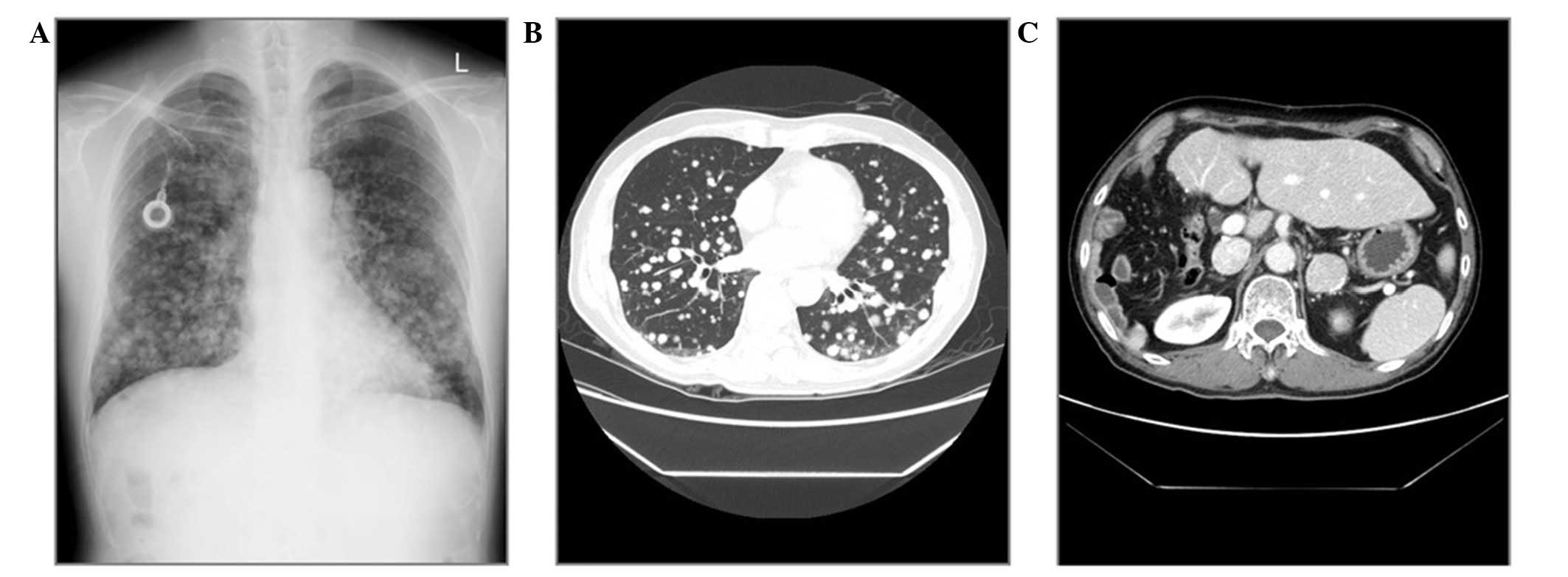
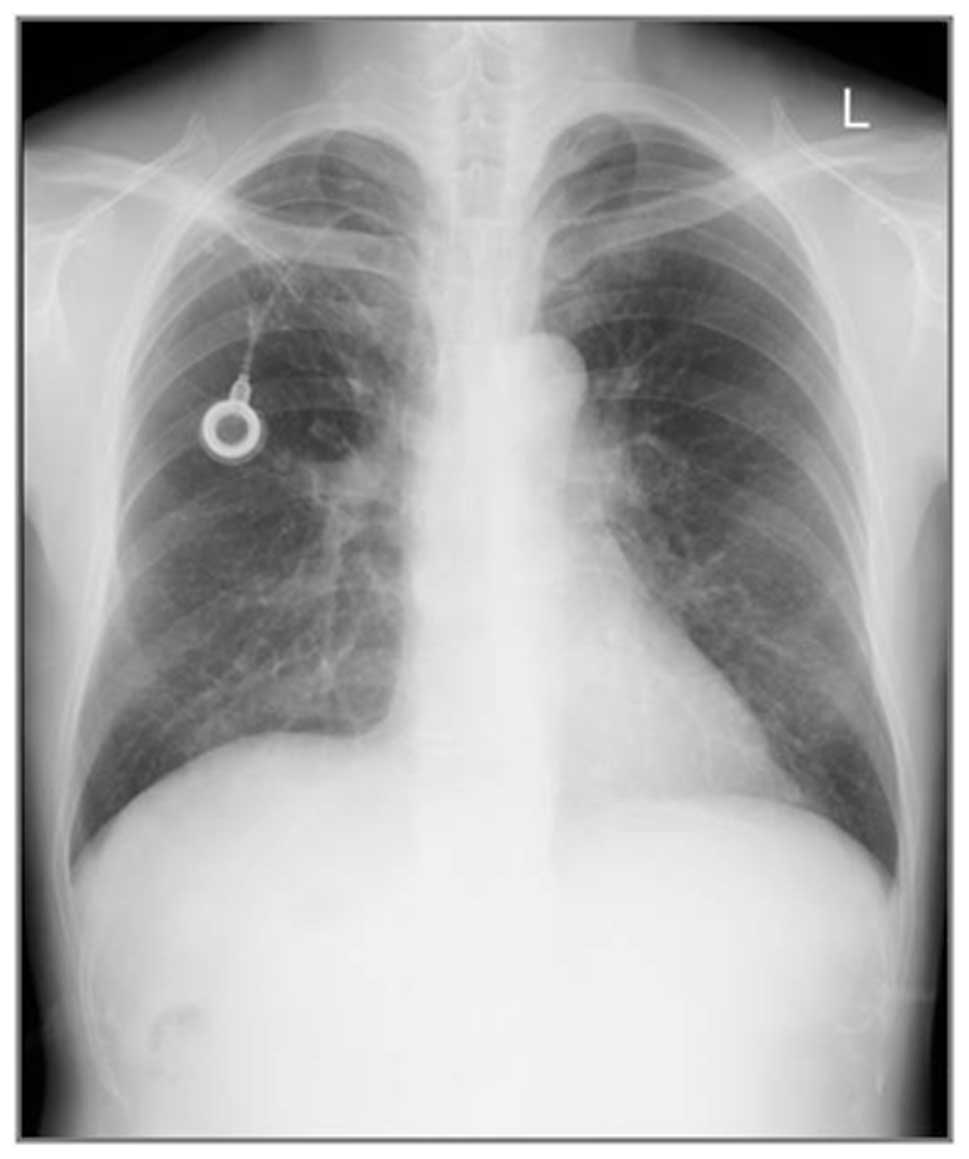
The patient was a chronic hepatitis B virus carrier and an older brother had hepatitis B viral liver cirrhosis. Initial laboratory data from our hospital was as follows: White blood cell count, 4,970 cells/μl; hemoglobin level, 17.2 g/dl; platelet count, 16.4×10⁴ platelets/μl; aspartate aminotransferase : alanine aminotransferase level, 32:41 IU/l; total bilirubin level, 0.97 mg/dl; gamma guanosine triphosphate level, 17 IU/l; alkaline phosphatase level, 89 IU/l; protein : albumin level, 8.4:4.3 g/dl; prothrombin time (international normalized ratio), 13.2 sec (1.14); α-fetoprotein (AFP) level, 16.55 ng/ml (normal range, 0–15 ng/ml); and PIVKA II level, 12,900 mAU/ml (normal range, 0–40 mAU/ml). Hepatitis B virus DNA polymerase chain reaction test results were positive. At the time of admission, a chest radiograph of the patient revealed miliary nodules in the entirety of the lungs. CT scan of the chest and abdominopelvis indicated miliary metastases throughout the lungs, bilateral adrenal metastases and metastatic abdominal lymph nodes (Fig. 1). The patient was observed at regular three-monthly follow-ups. After the first three months, the patient continued to exhibit cough and dyspnea, and there was no definitive interval change of the multiple lung metastases on the chest radiograph. At the second visit on September 14, 2009, the general condition of the patient had improved, and the cough and dyspnea had stopped. A chest radiograph revealed that all metastatic nodules had disappeared (Fig. 2). Serum AFP level had decreased to 1.5 ng/ml. Spontaneous tumor regression of HCC was observed, and whole-body positron emission tomography-CT scan in December, 2009 revealed that all metastatic nodules in the lung, as well as the metastatic lesions of the two adrenal glands and lymph nodes, had disappeared. The patient had taken an alternative herbal medicine for approximately one week, on the recommendation of his family. The herbal medicine was Dendropanax morbifera Leveille, which is a subtropical, broad-leaved evergreen tree belonging to the family Araliaceae (4).

Figure 1

(A) Chest radiography and computed tomography scans of the (B) chest and (C) abdominopelvis in February, 2009 revealed multiple metastatic nodules in the two lung fields, bilateral adrenal metastases and a metastatic lymph node ~1.6 cm in size adjacent to the liver resection margin.

Figure 2

Chest radiograph of the patient in September, 2009 revealed that all metastatic lung nodules had disappeared.

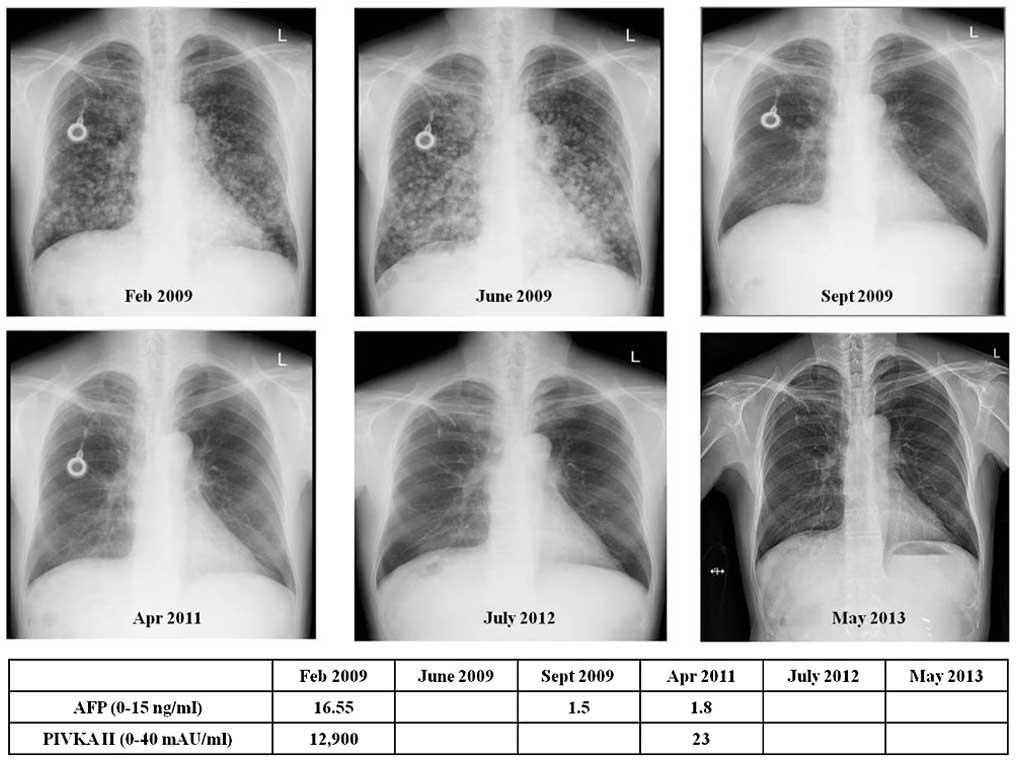
Follow-up CT scans revealed no recurrent lesions, and follow-up chest radiograph also indicated no metastatic lesions. Serum AFP and PIVKA II levels were within the normal range (Fig. 3). The patient is alive without any symptoms or signs as of May 2013.

Figure 3

Chest radiograph revealed no metastatic lesions in either lung field from September, 2009. Levels of AFP and PIVKA II were within the normal range. AFP, α-fetoprotein; PIVKA II, protein induced by vitamin K absence or antagonist II.

Discussion

The present study reports a rare case of spontaneous complete regression of hepatitis B virus-associated HCC. This phenomenon is consistent with spontaneous regression of cancer as defined by Everson and Cole (3). Spontaneous regression has been described in numerous types of tumors, particularly renal cell carcinoma, melanoma and neuroblastoma. The incidence of spontaneous regression of cancer is difficult to identify, but it has been estimated to occur in 1 in 60,000–100,000 cancer patients (5). Epstein and Leung reported that spontaneous regression of HCC appears to be more frequent than that of other types of cancers (6), and Oquinena et al reported that spontaneous regression is not an extraordinary event among patients with HCC (7). Nonetheless, spontaneous complete regression and long-term survival in HCC is extremely rare. In a PubMed search, the present study identified ≥60 reported cases of spontaneous regression of HCC (7–11). Despite several reported cases of spontaneous regression of metastatic HCC, to our knowledge, this is the first case of spontaneous complete regression of a massive HCC with multiple metastatic organs.

No exact mechanism for the spontaneous regression of HCC is known. Several factors have been proposed, including abstinence from alcohol, disruption of tumor blood supply from subintimal vascular injury during angiographic procedures, use of herbal medications, vitamin K, androgens, anti-estrogen therapy, sepsis, fever and blood transfusion (3,45,12–18). Even following detailed examination of all published cases of spontaneous regressing HCC, precise conclusions concerning the mechanisms of spontaneous regression remain unclear.

In the present report, no blood transfusion was performed, and during the follow-up period there was no use of hepatic angiography. There was no history of gastrointestinal bleeding or infection in this patient. As the patient was a social drinker, but had already stopped drinking alcohol at the initial diagnosis of the disease, abstinence from alcohol was not associated with the spontaneous regression.

The patient had taken an alternative herbal medicine: The extracts from Dendropanax morbifera Leveille (Korean name: Hwangchil tree), which is a subtropical, broad-leaved evergreen tree belonging to the family Araliaceae. Previous studies have demonstrated that Dendropanax morbifera Leveille has anticomplement activity, antiatherogenic activity and antidiabetic effects (19–21). Although the herbal medicine may be associated with regression of HCC, it cannot be concluded that the use of this particular herbal medicine affected the regression of HCC in the present case, as there is no study on the antitumor effects of Dendropanax morbifera Leveille, and the patient had taken the herbal medication on only a few occasions during a relatively short time period. The patient received no specific antitumor treatment, nor had any known factors that effect HCC regression. Therefore the regression of HCC presented in this report can be described as truly spontaneous.

In conclusion, spontaneous tumor regression is an interesting phenomenon, and spontaneous regression of HCC is rare but not unknown. Although the mechanism of spontaneous regression of HCC remains unclear and differs from patient to patient, collation and further discussion of such cases will help to advance the understanding of the phenomenon.

References

1 

Jemal A, Bray F, Center MM, Ferlay J, Ward E and Forman D: Global cancer statistics. CA Cancer J Clin. 61:69–90. 2011. View Article : Google Scholar

2 

Llovet JM, Fuster J and Bruix J: Prognosis of hepatocellular carcinoma. Hepatogastroenterology. 49:7–11. 2002.

3 

Everson TC and Cole WH: Spontaneous regression of cancer: preliminary report. Ann Surg. 144:366–380. 1956. View Article : Google Scholar : PubMed/NCBI

4 

Kim SH, Jang YS, Han JG, Chung HG, Lee SW and Cho KJ: Genetic variation and population structure of Dendropanax morbifera Lev. (Araliaceae) in Korea. Silvae Genet. 55:7–12. 2006.

5 

Cole WH: Efforts to explain spontaneous regression of cancer. J Surg Oncol. 17:201–209. 1981. View Article : Google Scholar : PubMed/NCBI

6 

Epstein RJ and Leung TW: Reversing hepatocellular carcinoma progression by using networked biological therapies. Clin Cancer Res. 13:11–17. 2007. View Article : Google Scholar

7 

Oquiñena S, Guillen-Grima F, Iñarrairaegui M, Zozaya JM and Sangro B: Spontaneous regression of hepatocellular carcinoma: a systematic review. Eur J Gastroenterol Hepatol. 21:254–257. 2009.PubMed/NCBI

8 

Meza-Junco J, Montano-Loza AJ, Martinez-Benitez B and Cabrera-Aleksandrova T: Spontaneous partial regression of hepatocellular carcinoma in a cirrhotic patient. Ann Hepatol. 6:66–69. 2007.PubMed/NCBI

9 

Arakawa Y, Mori H, Ikegami T, Hanaoka J, Kanamoto M, Kanemura H, et al: Hepatocellular carcinoma with spontaneous regression: report of the rare case. Hepatogastroenterology. 55:1770–1772. 2008.PubMed/NCBI

10 

Del Poggio P, Mattiello M, Gilardoni L, Jamoletti C, Colombo S and Zabbialini G: The mysterious case of spontaneous disappearance of hepatocellular carcinoma. Dig Liver Dis. 41:e21–e25. 2009.PubMed/NCBI

11 

Park HS, Jang KY, Kim YK, Cho BH and Moon WS: Hepatocellular carcinoma with massive lymphoid infiltration: a regressing phenomenon? Pathol Res Pract. 205:648–652. 2009. View Article : Google Scholar : PubMed/NCBI

12 

Lam KC, Ho JC and Yeung RT: Spontaneous regression of hepatocellular carcinoma: a case study. Cancer. 50:332–336. 1982. View Article : Google Scholar : PubMed/NCBI

13 

Cole WH: Relationship of causative factors in spontaneous regression of cancer to immunologic factors possibly effective in cancer. J Surg Oncol. 8:391–411. 1976. View Article : Google Scholar : PubMed/NCBI

14 

O’Beirne JP and Harrison PM: The role of the immune system in the control of hepatocellular carcinoma. Eur J Gastroenterol Hepatol. 16:1257–1260. 2004.

15 

Johnson FL, Lerner KG, Siegel M, et al: Association of androgenic-anabolic steroid therapy with development of hepatocellular carcinoma. Lancet. 2:1273–1276. 1972. View Article : Google Scholar : PubMed/NCBI

16 

Markovic S, Ferlan-Marolt V and Hlebanja Z: Spontaneous regression of hepatocellular carcinoma. Am J Gastroenterol. 91:392–393. 1996.

17 

Sato Y, Fujiwara K, Nakagawa S, et al: A case of spontaneous regression of hepatocellular carcinoma with bone metastasis. Cancer. 56:667–671. 1985. View Article : Google Scholar : PubMed/NCBI

18 

Tocci G, Conte A, Guarascio P and Visco G: Spontaneous remission of hepatocellular carcinoma after massive gastrointestinal haemorrhage. BMJ. 300:641–642. 1990. View Article : Google Scholar

19 

Chung IM, Song HK, Kim SJ and Moon HI: Anticomplement activity of polyacetylenes from leaves of Dendropanax morbifera Leveille. Phytother Res. 25:784–786. 2011.PubMed/NCBI

20 

Chung IM, Kim MY, Park WH and Moon HI: Antiatherogenic activity of Dendropanax morbifera essential oil in rats. Pharmazie. 64:547–549. 2009.

21 

Moon HI: Antidiabetic effects of dendropanoxide from leaves of Dendropanax morbifera Leveille in normal and streptozotocin-induced diabetic rats. Hum Exp Toxicol. 30:870–875. 2011. View Article : Google Scholar : PubMed/NCBI

Related Articles

  • Abstract
  • View
  • Download
  • Twitter
Copy and paste a formatted citation
Spandidos Publications style
Lim DH, Park KW and Lee SI: Spontaneous complete regression of multiple metastases of hepatocellular carcinoma: A case report. Oncol Lett 7: 1225-1228, 2014.
APA
Lim, D.H., Park, K.W., & Lee, S.I. (2014). Spontaneous complete regression of multiple metastases of hepatocellular carcinoma: A case report. Oncology Letters, 7, 1225-1228. https://doi.org/10.3892/ol.2014.1869
MLA
Lim, D. H., Park, K. W., Lee, S. I."Spontaneous complete regression of multiple metastases of hepatocellular carcinoma: A case report". Oncology Letters 7.4 (2014): 1225-1228.
Chicago
Lim, D. H., Park, K. W., Lee, S. I."Spontaneous complete regression of multiple metastases of hepatocellular carcinoma: A case report". Oncology Letters 7, no. 4 (2014): 1225-1228. https://doi.org/10.3892/ol.2014.1869
Copy and paste a formatted citation
x
Spandidos Publications style
Lim DH, Park KW and Lee SI: Spontaneous complete regression of multiple metastases of hepatocellular carcinoma: A case report. Oncol Lett 7: 1225-1228, 2014.
APA
Lim, D.H., Park, K.W., & Lee, S.I. (2014). Spontaneous complete regression of multiple metastases of hepatocellular carcinoma: A case report. Oncology Letters, 7, 1225-1228. https://doi.org/10.3892/ol.2014.1869
MLA
Lim, D. H., Park, K. W., Lee, S. I."Spontaneous complete regression of multiple metastases of hepatocellular carcinoma: A case report". Oncology Letters 7.4 (2014): 1225-1228.
Chicago
Lim, D. H., Park, K. W., Lee, S. I."Spontaneous complete regression of multiple metastases of hepatocellular carcinoma: A case report". Oncology Letters 7, no. 4 (2014): 1225-1228. https://doi.org/10.3892/ol.2014.1869
Follow us
  • Twitter
  • LinkedIn
  • Facebook
About
  • Spandidos Publications
  • Careers
  • Cookie Policy
  • Privacy Policy
How can we help?
  • Help
  • Live Chat
  • Contact
  • Email to our Support Team