Spandidos Publications Logo
  • About
    • About Spandidos
    • Aims and Scopes
    • Abstracting and Indexing
    • Editorial Policies
    • Reprints and Permissions
    • Job Opportunities
    • Terms and Conditions
    • Contact
  • Journals
    • All Journals
    • Oncology Letters
      • Oncology Letters
      • Information for Authors
      • Editorial Policies
      • Editorial Board
      • Aims and Scope
      • Abstracting and Indexing
      • Bibliographic Information
      • Archive
    • International Journal of Oncology
      • International Journal of Oncology
      • Information for Authors
      • Editorial Policies
      • Editorial Board
      • Aims and Scope
      • Abstracting and Indexing
      • Bibliographic Information
      • Archive
    • Molecular and Clinical Oncology
      • Molecular and Clinical Oncology
      • Information for Authors
      • Editorial Policies
      • Editorial Board
      • Aims and Scope
      • Abstracting and Indexing
      • Bibliographic Information
      • Archive
    • Experimental and Therapeutic Medicine
      • Experimental and Therapeutic Medicine
      • Information for Authors
      • Editorial Policies
      • Editorial Board
      • Aims and Scope
      • Abstracting and Indexing
      • Bibliographic Information
      • Archive
    • International Journal of Molecular Medicine
      • International Journal of Molecular Medicine
      • Information for Authors
      • Editorial Policies
      • Editorial Board
      • Aims and Scope
      • Abstracting and Indexing
      • Bibliographic Information
      • Archive
    • Biomedical Reports
      • Biomedical Reports
      • Information for Authors
      • Editorial Policies
      • Editorial Board
      • Aims and Scope
      • Abstracting and Indexing
      • Bibliographic Information
      • Archive
    • Oncology Reports
      • Oncology Reports
      • Information for Authors
      • Editorial Policies
      • Editorial Board
      • Aims and Scope
      • Abstracting and Indexing
      • Bibliographic Information
      • Archive
    • Molecular Medicine Reports
      • Molecular Medicine Reports
      • Information for Authors
      • Editorial Policies
      • Editorial Board
      • Aims and Scope
      • Abstracting and Indexing
      • Bibliographic Information
      • Archive
    • World Academy of Sciences Journal
      • World Academy of Sciences Journal
      • Information for Authors
      • Editorial Policies
      • Editorial Board
      • Aims and Scope
      • Abstracting and Indexing
      • Bibliographic Information
      • Archive
    • International Journal of Functional Nutrition
      • International Journal of Functional Nutrition
      • Information for Authors
      • Editorial Policies
      • Editorial Board
      • Aims and Scope
      • Abstracting and Indexing
      • Bibliographic Information
      • Archive
    • International Journal of Epigenetics
      • International Journal of Epigenetics
      • Information for Authors
      • Editorial Policies
      • Editorial Board
      • Aims and Scope
      • Abstracting and Indexing
      • Bibliographic Information
      • Archive
    • Medicine International
      • Medicine International
      • Information for Authors
      • Editorial Policies
      • Editorial Board
      • Aims and Scope
      • Abstracting and Indexing
      • Bibliographic Information
      • Archive
  • Articles
  • Information
    • Information for Authors
    • Information for Reviewers
    • Information for Librarians
    • Information for Advertisers
    • Conferences
  • Language Editing
Spandidos Publications Logo
  • About
    • About Spandidos
    • Aims and Scopes
    • Abstracting and Indexing
    • Editorial Policies
    • Reprints and Permissions
    • Job Opportunities
    • Terms and Conditions
    • Contact
  • Journals
    • All Journals
    • Biomedical Reports
      • Information for Authors
      • Editorial Policies
      • Editorial Board
      • Aims and Scope
      • Abstracting and Indexing
      • Bibliographic Information
      • Archive
    • Experimental and Therapeutic Medicine
      • Information for Authors
      • Editorial Policies
      • Editorial Board
      • Aims and Scope
      • Abstracting and Indexing
      • Bibliographic Information
      • Archive
    • International Journal of Epigenetics
      • Information for Authors
      • Editorial Policies
      • Editorial Board
      • Aims and Scope
      • Abstracting and Indexing
      • Bibliographic Information
      • Archive
    • International Journal of Functional Nutrition
      • Information for Authors
      • Editorial Policies
      • Editorial Board
      • Aims and Scope
      • Abstracting and Indexing
      • Bibliographic Information
      • Archive
    • International Journal of Molecular Medicine
      • Information for Authors
      • Editorial Policies
      • Editorial Board
      • Aims and Scope
      • Abstracting and Indexing
      • Bibliographic Information
      • Archive
    • International Journal of Oncology
      • Information for Authors
      • Editorial Policies
      • Editorial Board
      • Aims and Scope
      • Abstracting and Indexing
      • Bibliographic Information
      • Archive
    • Medicine International
      • Information for Authors
      • Editorial Policies
      • Editorial Board
      • Aims and Scope
      • Abstracting and Indexing
      • Bibliographic Information
      • Archive
    • Molecular and Clinical Oncology
      • Information for Authors
      • Editorial Policies
      • Editorial Board
      • Aims and Scope
      • Abstracting and Indexing
      • Bibliographic Information
      • Archive
    • Molecular Medicine Reports
      • Information for Authors
      • Editorial Policies
      • Editorial Board
      • Aims and Scope
      • Abstracting and Indexing
      • Bibliographic Information
      • Archive
    • Oncology Letters
      • Information for Authors
      • Editorial Policies
      • Editorial Board
      • Aims and Scope
      • Abstracting and Indexing
      • Bibliographic Information
      • Archive
    • Oncology Reports
      • Information for Authors
      • Editorial Policies
      • Editorial Board
      • Aims and Scope
      • Abstracting and Indexing
      • Bibliographic Information
      • Archive
    • World Academy of Sciences Journal
      • Information for Authors
      • Editorial Policies
      • Editorial Board
      • Aims and Scope
      • Abstracting and Indexing
      • Bibliographic Information
      • Archive
  • Articles
  • Information
    • For Authors
    • For Reviewers
    • For Librarians
    • For Advertisers
    • Conferences
  • Language Editing
Login Register Submit
  • This site uses cookies
  • You can change your cookie settings at any time by following the instructions in our Cookie Policy. To find out more, you may read our Privacy Policy.

    I agree
Search articles by DOI, keyword, author or affiliation
Search
Advanced Search
presentation
Oncology Letters
Join Editorial Board Propose a Special Issue
Print ISSN: 1792-1074 Online ISSN: 1792-1082
Journal Cover
May-2014 Volume 7 Issue 5

Full Size Image

Sign up for eToc alerts
Recommend to Library

Journals

International Journal of Molecular Medicine

International Journal of Molecular Medicine

International Journal of Molecular Medicine is an international journal devoted to molecular mechanisms of human disease.

International Journal of Oncology

International Journal of Oncology

International Journal of Oncology is an international journal devoted to oncology research and cancer treatment.

Molecular Medicine Reports

Molecular Medicine Reports

Covers molecular medicine topics such as pharmacology, pathology, genetics, neuroscience, infectious diseases, molecular cardiology, and molecular surgery.

Oncology Reports

Oncology Reports

Oncology Reports is an international journal devoted to fundamental and applied research in Oncology.

Experimental and Therapeutic Medicine

Experimental and Therapeutic Medicine

Experimental and Therapeutic Medicine is an international journal devoted to laboratory and clinical medicine.

Oncology Letters

Oncology Letters

Oncology Letters is an international journal devoted to Experimental and Clinical Oncology.

Biomedical Reports

Biomedical Reports

Explores a wide range of biological and medical fields, including pharmacology, genetics, microbiology, neuroscience, and molecular cardiology.

Molecular and Clinical Oncology

Molecular and Clinical Oncology

International journal addressing all aspects of oncology research, from tumorigenesis and oncogenes to chemotherapy and metastasis.

World Academy of Sciences Journal

World Academy of Sciences Journal

Multidisciplinary open-access journal spanning biochemistry, genetics, neuroscience, environmental health, and synthetic biology.

International Journal of Functional Nutrition

International Journal of Functional Nutrition

Open-access journal combining biochemistry, pharmacology, immunology, and genetics to advance health through functional nutrition.

International Journal of Epigenetics

International Journal of Epigenetics

Publishes open-access research on using epigenetics to advance understanding and treatment of human disease.

Medicine International

Medicine International

An International Open Access Journal Devoted to General Medicine.

Journal Cover
May-2014 Volume 7 Issue 5

Full Size Image

Sign up for eToc alerts
Recommend to Library

  • Article
  • Citations
    • Cite This Article
    • Download Citation
    • Create Citation Alert
    • Remove Citation Alert
    • Cited By
  • Similar Articles
    • Related Articles (in Spandidos Publications)
    • Similar Articles (Google Scholar)
    • Similar Articles (PubMed)
  • Download PDF
  • Download XML
  • View XML
Article

Effects of 14 frequently used drugs on prostate‑specific antigen expression in prostate cancer LNCaP cells

  • Authors:
    • Kazuhiro Iguchi
    • Maki Hashimoto
    • Masafumi Kubota
    • Shuji Yamashita
    • Mitsuhiro Nakamura
    • Shigeyuki Usui
    • Tadashi Sugiyama
    • Kazuyuki Hirano
  • View Affiliations / Copyright

    Affiliations: Laboratory of Drug Metabolism and Pharmacokinetics, Gifu Pharmaceutical University, Gifu 501‑1196, Japan, Laboratory of Community Pharmaceutics, Gifu Pharmaceutical University, Gifu 501‑1196, Japan, Laboratory of Pharmacy Practice and Social Science, Gifu Pharmaceutical University, Gifu 501‑1196, Japan, Laboratory of Drug Informatics, Gifu Pharmaceutical University, Gifu 501‑1196, Japan
  • Pages: 1665-1668
    |
    Published online on: March 5, 2014
       https://doi.org/10.3892/ol.2014.1936
  • Expand metrics +
Metrics: Total Views: 0 (Spandidos Publications: | PMC Statistics: )
Metrics: Total PDF Downloads: 0 (Spandidos Publications: | PMC Statistics: )
Cited By (CrossRef): 0 citations Loading Articles...

This article is mentioned in:


Abstract

Prostate cancer occurs more frequently among older males and such elderly individuals often have chronic underlying disorders for which various drugs are administered for treatment. The levels of prostate‑specific antigen (PSA), a widely used prostate cancer marker, are influenced by a number of drugs, such as non‑steroidal anti‑inflammatory drugs and statins. In the present study, the drugs prescribed to patients on a repeat prescription collected at the pharmacy of the Gifu Pharmaceutical University (Gifu, Japan) were examined for their effects on the levels of PSA expression in prostate cancer LNCaP cells. Among the 14 drugs investigated, betamethasone, an agonist of the glucocorticoid receptor, was found to increase the levels of PSA mRNA expression in the LNCaP cells. This betamethasone‑induced expression was mediated, at least in part, through androgen receptor (AR) transcriptional activation. Dexamethasone, a typical agonist of the glucocorticoid receptor, was also found to stimulate the AR transcriptional activity, however, to a lesser extent than betamethasone. Therefore, it would be interesting to examine in future studies whether the serum PSA levels in prostate cancer patients are influenced by betamethasone.

Introduction

Prostate cancer is a common disease among elderly men and the prostate-specific antigen (PSA) is a valuable tumor marker for the detection of this cancer. However, improvement of the detection specificity is required as, in addition to prostate cancer, serum PSA levels are also increased in patients with prostate benign hyperplasia and prostatitis (1). Furthermore, it has been recognized that the serum PSA levels are influenced by other drugs, such as statins and non-steroidal anti-inflammatory drugs (2–4). As elderly individuals are frequently prescribed drugs for the treatment of other chronic and underlying illnesses, there is a considerable chance that these drugs may influence the serum PSA levels, subsequently leading to false-positive or false-negative PSA test results (5).

In cases of abnormal growth of prostate cancer cells, the PSA is expressed in prostate epithelial cells and released into the blood by disruption of the basement membrane. Therefore, the potential mechanism underlying medication-induced changes in the blood PSA levels may be that certain drugs induce the release of PSA from the prostate gland or the expression of PSA itself. The present study used prostate cancer LNCaP cells to investigate whether the drugs that are frequently prescribed to patients, and collected at the pharmacy of Gifu Pharmaceutical University (Gifu, Japan), altered the expression level of PSA in prostate cancer LNCaP cells.

Materials and methods

Materials

Betamethasone, amlodipine, insulin, lansoprazole, loxoprofen, metformin and warfarin were purchased from Wako Pure Chemical Industries, Ltd. (Osaka, Japan); allopurinol, famotidine, magnesium oxide and D-pantothenic acid were obtained from Nacalai Tesque, Inc. (Kyoto, Japan); aspirin was obtained from Merck Hoei Ltd. (Osaka, Japan); candesartan was purchased from Toronto Research Chemicals Inc. (North York, ON, Canada); and rebamipide was purchased from Tokyo Chemical Industry Co., Ltd. (Tokyo, Japan). All other chemicals used were of analytical grade.

Investigation of prescription drugs

The prescriptions received at the Gifu Pharmaceutical University pharmacy for one year (between April 1, 2010 and March 31, 2011) were investigated for generic name, dosing period, and patient age and gender. Patients aged between 50 and 75 years at the prescription issue date were the focus of the present study.

Cell culture

Human prostate carcinoma LNCaP cells were obtained from the American Type Culture Collection (Rockville, MD, USA). The cells were cultured in RPMI-1640 medium containing 10% fetal bovine serum (FBS) and 1% penicillin-streptomycin, under a humidified 5% CO2 atmosphere at 37°C.

Cell viability

Cell viability was evaluated by measuring the fluorescence intensity of cells using the alamarBlue viability assay (Invitrogen Life Technologies, Carlsbad, CA, USA) (6). LNCaP cells were seeded in 96-well plates (Sumilon, Tokyo, Japan) at a density of 8×10³ cells/well in RPMI-1640 medium supplemented with 10% FBS. On the following day, cells were treated with various concentrations of each compound and the incubation was continued for three days. AlamarBlue solution was subsequently added to the wells and the plates were incubated for 1 h. Next, the fluorescence intensity of the cells was measured using a POLARstar Galaxy microplate reader (BMG Labtech Ltd., Offenburg, Germany) using excitation and emission wavelengths of 544 and 612 nm, respectively.

Real-time reverse transcription polymerase chain reaction (qPCR)

qPCR was performed according to previously described protocols with minor modifications (7). Total RNA was extracted using the TRIzol reagent (Invitrogen Life Technologies) and first-strand complementary DNA was synthesized from 1 μg of total RNA using PrimeScript reverse transcriptase (Takara Bio, Inc., Otsu, Japan). Real-time monitoring of the PCR was performed using the Thermal Cycler Dice Real-Time system (Takara Bio, Inc.) with Thunderbird SYBR qPCR mix (Toyobo Corporation, Osaka, Japan). At the end of the reaction, a dissociation curve analysis was performed to examine the specificity of the product. The PCR was performed using the following conditions: 35 Cycles of 15 sec at 95°C and 60 sec at 60°C. The β-actin (ACTB) housekeeping gene was used for the normalization of the target mRNA expression. The primers used were as follows: Sense, 5′-GAGGTCCACACACTGAAGTT-3′ and antisense, 5′-CCTCCTGAAGAATCGATTCCT-3′ for PSA (KLK3) ; and sense, 5′-CAAGTACTCCGTGTGGATCG-3′ and antisense, 5′-AGTCCGCCTAGAAGCATTTG-3′ for β-actin (ACTB).

Luciferase assay

The luciferase assay was performed as described previously (6). LNCaP cells (1×10⁵ cells/well) were incubated in a 24-well culture plate (Sumilon) for one day and cotransfected with 0.76 μg of the androgen-responsive MMTV-luc firefly luciferase reporter plasmid and 0.04 μg of the Renilla luciferase plasmid, phRL-TK, using Lipofectamine 2000 (Invitrogen Life Technologies). Cells were treated for 24 h with various concentrations of betamethasone or dexamethasone. Cell lysates were prepared and the luciferase activities were measured using the Dual-Luciferase Reporter assay system (Promega Corporation, Madison, WI, USA). The firefly luciferase activity was normalized to the activity of Renilla luciferase.

Statistical analysis

Statistical significance was assessed by one-way analysis of variance followed by Dunnett’s test, using PRISM 4 software (Graphpad Software, San Diego, CA, USA). P<0.05 was considered to indicate a statistically significant difference.

Results

Effect of the drugs on PSA expression in prostate cancer LNCaP cells

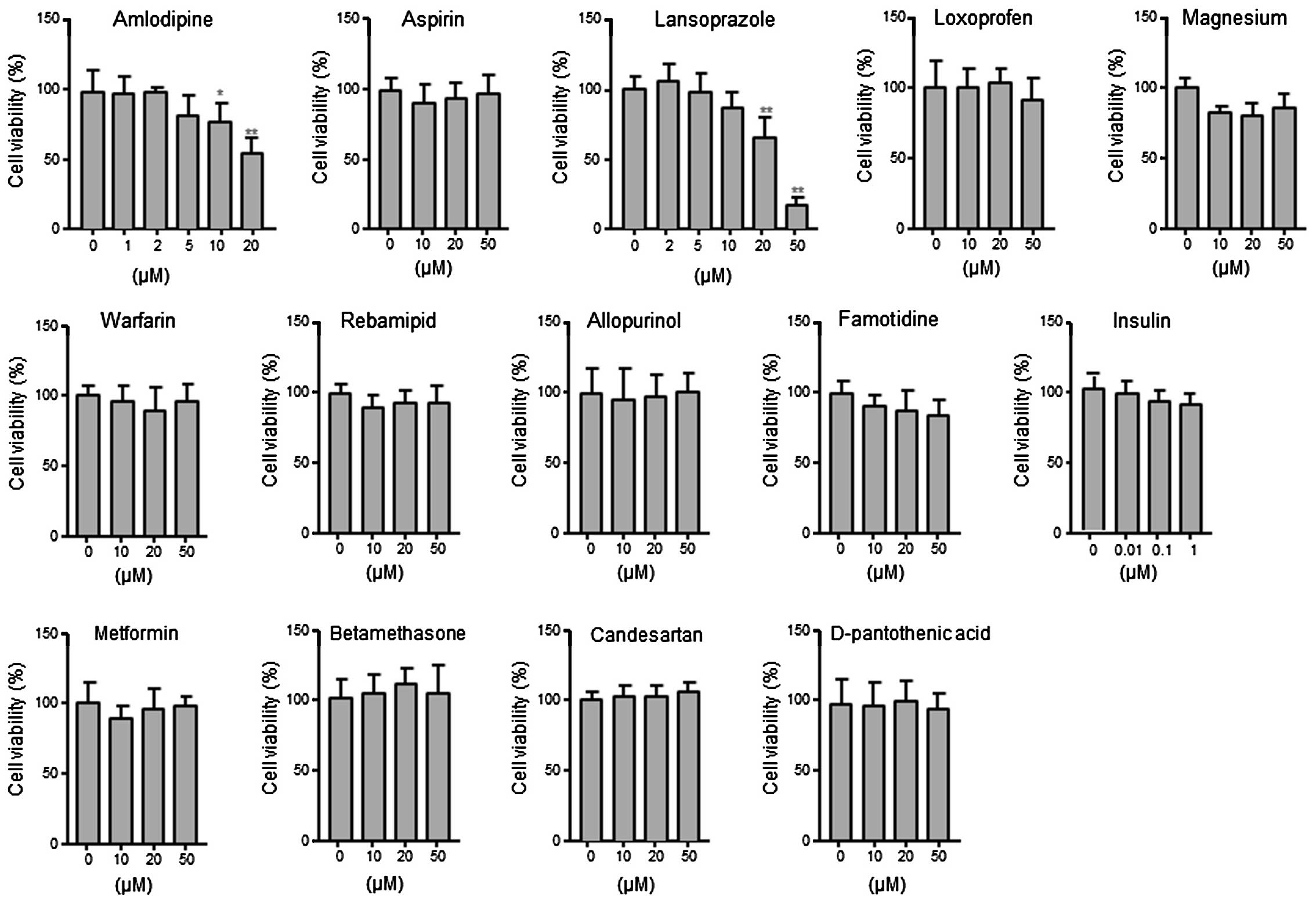
Table I shows the most frequently prescribed drugs for elderly men, including the drugs for the treatment of chronic diseases (such as hypertension and diabetes). Firstly, the effects of the drugs listed in Table 1 on the viability of androgen receptor (AR)-positive prostate cancer LNCaP cells were examined. LNCaP cells were treated with each drug at a concentration of 1–50 μM for 24 h. As shown in Fig. 1, no significant effect was identified on cell viability at concentrations of ≤20 μM, with the exception of amlodipine and lansoprazole. Based on these results, the treatment concentrations were determined to be 2 μM for amlodipine, 10 μM for lansoprazole and 20 μM for the other drugs to examine the effects of the drugs on PSA expression.

Figure 1

Effects of various drugs on the viability of prostate cancer LNCaP cells. LNCaP cells were treated with various drugs for three days and cell viability was determined by the alamarBlue assay. Data are presented as the mean ± standard deviation of four different incubations. *P<0.05 and **P<0.01 vs. control.

Table I

Frequently used drugs from the prescriptions received at the pharmacy of Gifu Pharmaceutical University.

Table I

Frequently used drugs from the prescriptions received at the pharmacy of Gifu Pharmaceutical University.

RankGeneric nameCount, n
1Amlodipine107
2Aspirin106
3Lansoprazole100
4Loxoprofen94
5Magnesium oxide80
6Warfarin74
7Rebamipide67
8Allopurinol65
9Famotidine64
10Insulin62
11Metformin58
12Betamethasone57
13Candesartan55
14D-pantothenic acid52

[i] Repeat prescription drugs that have been prescribed for >28 days to elderly males (aged 50–75 years).

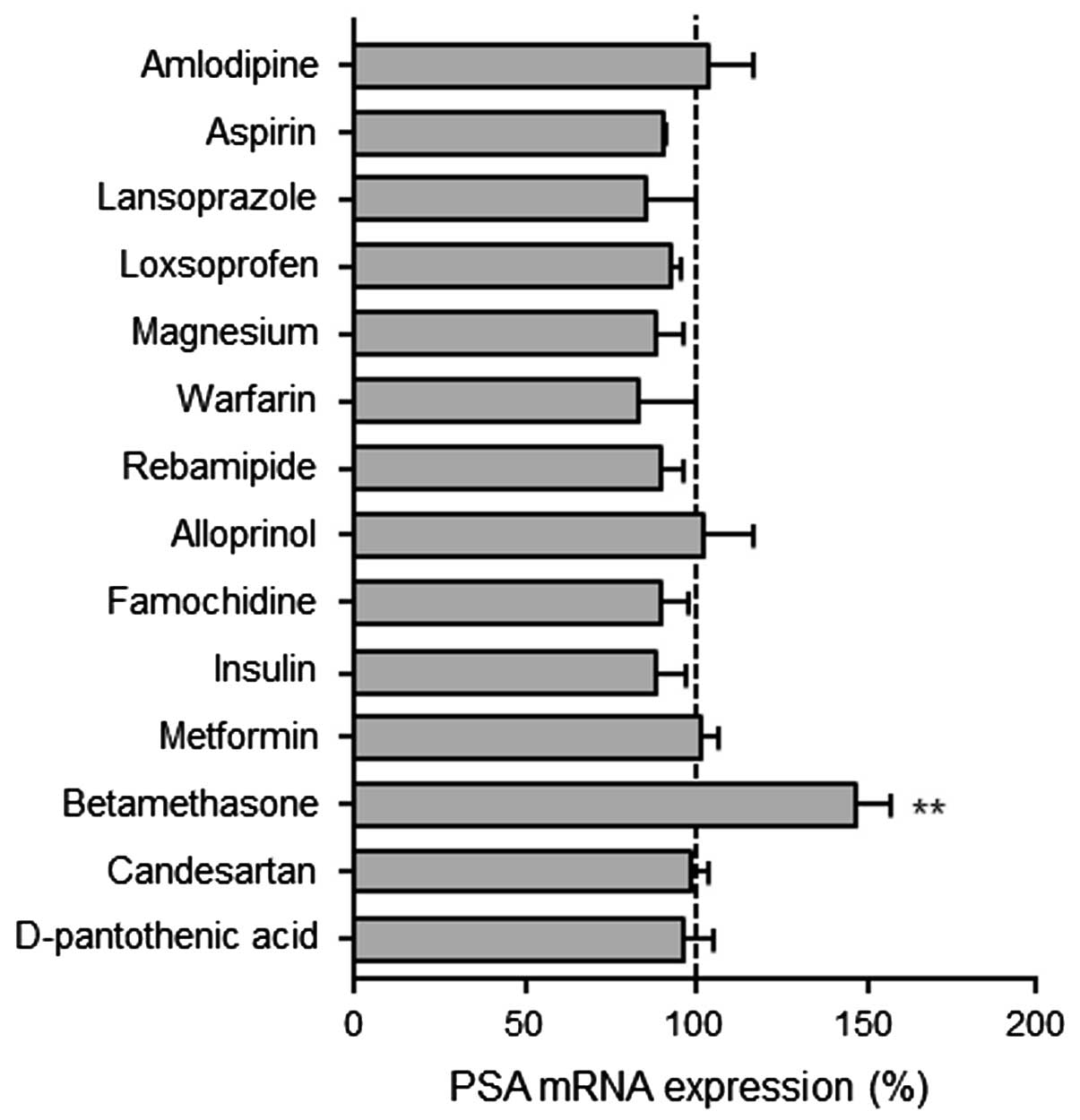
Fig. 2 shows the PSA mRNA expression in LNCaP cells following treatment with various drugs for three days. The PSA mRNA expression levels increased significantly in the betamethasone-treated LNCaP cells, whereas no significant differences were identified in the levels of PSA mRNA expression among the cells that were treated with the other drugs. Furthermore, long durations of drug treatment (nine or 14 days) showed no significant differences in the PSA expression levels among the drugs that were tested (data not shown).

Figure 2

Effect of various drugs on the level of PSA mRNA expression in LNCaP cells. LNCaP cells were treated with 20 μM of each drug for three days with the exception of amlodipine and lansoprazole, which were administered at 2 and 5 μM, respectively. Following incubation, total RNA was isolated and subjected to real-time reverse transcription-polymerase chain reaction analysis. The results were normalized to β-actin (ACTB) levels (n=4). **P<0.01 vs. control. The dashed line represents the baseline control (no drug). PSA, prostate-specific antigen.

Effect of betamethasone on AR transcriptional activity in LNCaP cells

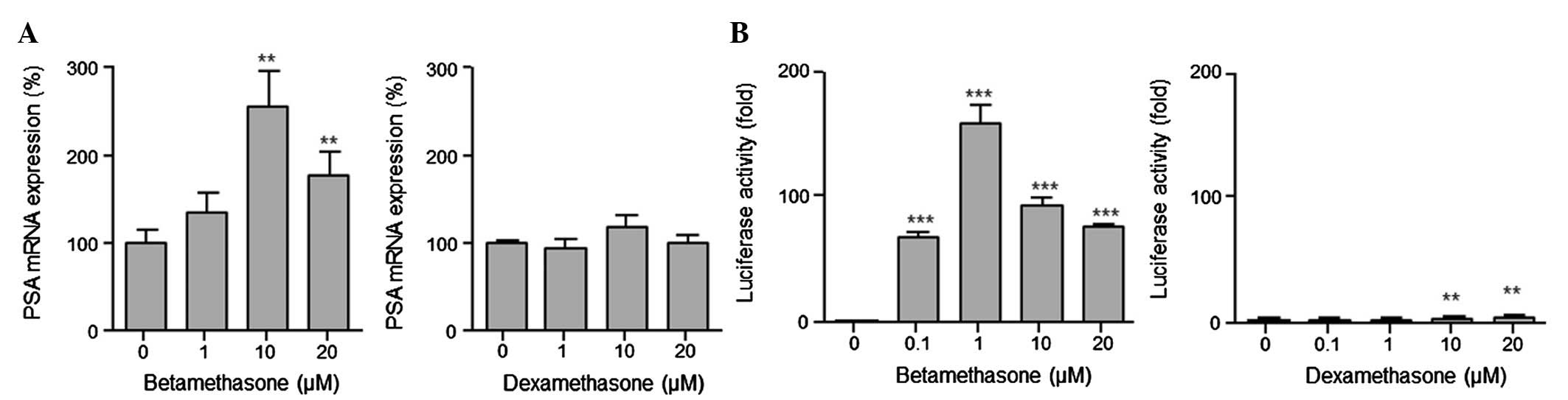
LNCaP cells have a point-mutated AR (T877A), which broadens the ligand specificity (8,9). Since PSA expression was found to be highly induced by betamethasone (an agonist against the glucocorticoid receptor), which has a steroid structure, this induction was considered to be mediated through transactivation of the mutated AR. As shown in Figs. 2 and 3A (left panel), the PSA induction by betamethasone in steroid-deprived medium was higher than that in normal medium. Furthermore, the AR transcriptional activity measured by the luciferase assay was significantly elevated by betamethasone treatment in the LNCaP cells (Fig. 3B). Notably, dexamethasone, an agonist of the glucocorticoid receptor, did not influence the PSA mRNA expression in the LNCaP cells (Fig. 3A, right panel). Furthermore, although the induction of AR transcriptional activity by dexamethasone was observed, the extent was much lower than that by betamethasone (Fig. 3B, right panel).

Figure 3

Effects of betamethasone and dexamethasone on the levels of PSA mRNA expression and androgen receptor transcriptional activity in LNCaP cells. LNCaP cells were seeded in phenol red-free RPMI-1640 medium with 2% charcoal stripped fetal bovine serum. (A) Cells were treated with 1–20 μM betamethasone or dexamethasone for three days, after which the total RNA was isolated and subjected to real-time reverse transcription-polymerase chain reaction analysis. The results were normalized to β-actin (ACTB) levels (n=4). **P<0.01 vs. control. (B) Following 24 h, the cells were transfected with the MMTV-luc and phRL-TK vectors and treated with 0.1–20 μM betamethasone or dexamethasone for a further 24 h. The cell lysates were prepared and firefly luciferase activity was measured using the Luciferase Reporter assay system and normalized to Renilla luciferase activity. **P<0.01 and ***P<0.001 vs 0 μM. PSA, prostate-specific antigen.

Discussion

The present study examined the drugs most frequently prescribed at the pharmacy of Gifu Pharmaceutical University and found that betamethasone, a frequently used drug among elderly males (rank 12, Table I), increased the PSA mRNA expression in prostate cancer LNCaP cells.

The significant increase of PSA expression by betamethasone is through the transcriptional activation of AR. Betamethasone is a ligand for the glucocorticoid receptor; therefore, the PSA increase is considered to be the result of the agonistic effect of this drug on the mutated AR (T877A) in LNCaP cells. Previously, it has been reported that betamethasone induces AR transcriptional activation to almost the same level as dihydrotestosterone when the T877A AR expression vector is transfected into CV-1 cells, whereas the activation is extremely low with the transfection of wild-type AR (10). In the present study, betamethasone treatment did not activate AR transcription in wild-type AR-transfected PC-3 cells (data not shown). Notably, the induction of AR transcriptional activity by betamethasone was markedly higher than that by the typical glucocorticoid receptor agonist, dexamethasone, in the LNCaP cells that were endogenously expressing T877A AR. A previous study demonstrated no notable differences in the AR transcriptional activity between betamethasone and dexamethasone treatments in T877A AR-transfected CV-1 cells (10). Therefore, the induction of AR transcriptional activity by betamethasone may be involved in a mechanism additional to acting as a ligand to the mutated AR.

It must also be noted that the results from our experimental model using LNCaP cells may provide insight into the effect of drugs on PSA test results. However, the serum PSA levels are not singularly determined by the amount of PSA produced from the cells. In the present study, aspirin did not affect PSA expression in LNCaP cells, although, the serum PSA levels in aspirin users has been identified as lower than those in non-users (4). The lowering of the serum PSA levels by aspirin may be mediated through its anti-inflammatory effect, since chronic inflammation causes the development of prostate cancer and anti-inflammatory aspirin has been postulated to have an inhibitory effect on prostate cancer development.

In the present study, the betamethasone that was prescribed to patients was for external application only. The circulating concentration of an externally applied drug is generally markedly lower than that of a drug that is administered orally. In addition, the PSA increase due to the betamethasone was identified to be particularly significant in the mutated T877A AR, which is consistent with the results of a previous study (10). Occasionally, prostate cancer cells exhibit a mutated AR, particularly in patients who are resistant to androgen ablation therapy (11). Therefore, it appears unlikely that the application of betamethasone to the skin would result in an alternation of serum PSA levels in healthy individuals. However, betamethasone is prescribed to patients with hormone-refractory advanced prostate cancer (12); therefore, in patients that are orally administering betamethasone, a false PSA test result may occur.

In conclusion, the PSA test was identified to be useful for monitoring the disease status in patients with prostate cancer; however, it may be beneficial to examine whether betamethasone influences the PSA test results in clinical cases.

References

1 

Mochtar CA and Andika RS: The value of prostate-specific antigen in Asia. Ther Adv Urol. 2:77–83. 2010. View Article : Google Scholar

2 

Fowke JH, Motley SS, Barocas DA, et al: The associations between statin use and prostate cancer screening, prostate size, high-grade prostatic intraepithelial neoplasia (PIN), and prostate cancer. Cancer Causes Control. 22:417–426. 2011. View Article : Google Scholar

3 

Hamilton RJ, Banez LL, Aronson WJ, et al: Statin medication use and the risk of biochemical recurrence after radical prostatectomy: results from the Shared Equal Access Regional Cancer Hospital (SEARCH) Database. Cancer. 116:3389–3398. 2008. View Article : Google Scholar

4 

Murad AS, Down L, Davey Smith G, et al: Associations of aspirin, nonsteroidal anti-inflammatory drug and paracetamol use with PSA-detected prostate cancer: findings from a large, population-based, case-control study (the ProtecT study). Int J Cancer. 128:1442–1448. 2011. View Article : Google Scholar

5 

Chang SL, Harshman LC and Presti JC Jr: Impact of common medications on serum total prostate-specific antigen levels: analysis of the National Health and Nutrition Examination Survey. J Clin Oncol. 28:3951–3957. 2010. View Article : Google Scholar

6 

Iguchi K, Toyama T, Ito T, et al: Antiandrogenic activity of resveratrol analogs in prostate cancer LNCaP cells. J Andrology. 33:1208–1215. 2012. View Article : Google Scholar : PubMed/NCBI

7 

Iguchi K, Hayakawa Y, Ishii K, et al: Characterization of the low pH/low nutrient-resistant LNCaP cell subline LNCaP-F10. Oncol Rep. 28:2009–2015. 2012.PubMed/NCBI

8 

Berrevoets CA, Veldscholte J and Mulder E: Effects of antiandrogens on transformation and transcription activation of wild-type and mutated (LNCaP) androgen receptors. J Steroid Biochem Mol Biol. 46:731–736. 1993. View Article : Google Scholar

9 

Otsuka T, Iguchi K, Fukami K, et al: Androgen receptor W741C and T877A mutations in AIDL cells, an androgen-independent subline of prostate cancer LNCaP cells. Tumour Biol. 32:1097–1102. 2011. View Article : Google Scholar

10 

Chang CY, Walther PJ and McDonnell DP: Glucocorticoids manifest androgenic activity in a cell line derived from a metastatic prostate cancer. Cancer Res. 61:8712–8717. 2001.

11 

Koochekpour S: Androgen receptor signaling and mutations in prostate cancer. Asian J Andrology. 12:639–657. 2010. View Article : Google Scholar : PubMed/NCBI

12 

Kassi E and Moutsatsou P: Glucocorticoid receptor signaling and prostate cancer. Cancer Lett. 302:1–10. 2011. View Article : Google Scholar : PubMed/NCBI

Related Articles

  • Abstract
  • View
  • Download
  • Twitter
Copy and paste a formatted citation
Spandidos Publications style
Iguchi K, Hashimoto M, Kubota M, Yamashita S, Nakamura M, Usui S, Sugiyama T and Hirano K: Effects of 14 frequently used drugs on prostate‑specific antigen expression in prostate cancer LNCaP cells. Oncol Lett 7: 1665-1668, 2014.
APA
Iguchi, K., Hashimoto, M., Kubota, M., Yamashita, S., Nakamura, M., Usui, S. ... Hirano, K. (2014). Effects of 14 frequently used drugs on prostate‑specific antigen expression in prostate cancer LNCaP cells. Oncology Letters, 7, 1665-1668. https://doi.org/10.3892/ol.2014.1936
MLA
Iguchi, K., Hashimoto, M., Kubota, M., Yamashita, S., Nakamura, M., Usui, S., Sugiyama, T., Hirano, K."Effects of 14 frequently used drugs on prostate‑specific antigen expression in prostate cancer LNCaP cells". Oncology Letters 7.5 (2014): 1665-1668.
Chicago
Iguchi, K., Hashimoto, M., Kubota, M., Yamashita, S., Nakamura, M., Usui, S., Sugiyama, T., Hirano, K."Effects of 14 frequently used drugs on prostate‑specific antigen expression in prostate cancer LNCaP cells". Oncology Letters 7, no. 5 (2014): 1665-1668. https://doi.org/10.3892/ol.2014.1936
Copy and paste a formatted citation
x
Spandidos Publications style
Iguchi K, Hashimoto M, Kubota M, Yamashita S, Nakamura M, Usui S, Sugiyama T and Hirano K: Effects of 14 frequently used drugs on prostate‑specific antigen expression in prostate cancer LNCaP cells. Oncol Lett 7: 1665-1668, 2014.
APA
Iguchi, K., Hashimoto, M., Kubota, M., Yamashita, S., Nakamura, M., Usui, S. ... Hirano, K. (2014). Effects of 14 frequently used drugs on prostate‑specific antigen expression in prostate cancer LNCaP cells. Oncology Letters, 7, 1665-1668. https://doi.org/10.3892/ol.2014.1936
MLA
Iguchi, K., Hashimoto, M., Kubota, M., Yamashita, S., Nakamura, M., Usui, S., Sugiyama, T., Hirano, K."Effects of 14 frequently used drugs on prostate‑specific antigen expression in prostate cancer LNCaP cells". Oncology Letters 7.5 (2014): 1665-1668.
Chicago
Iguchi, K., Hashimoto, M., Kubota, M., Yamashita, S., Nakamura, M., Usui, S., Sugiyama, T., Hirano, K."Effects of 14 frequently used drugs on prostate‑specific antigen expression in prostate cancer LNCaP cells". Oncology Letters 7, no. 5 (2014): 1665-1668. https://doi.org/10.3892/ol.2014.1936
Follow us
  • Twitter
  • LinkedIn
  • Facebook
About
  • Spandidos Publications
  • Careers
  • Cookie Policy
  • Privacy Policy
How can we help?
  • Help
  • Live Chat
  • Contact
  • Email to our Support Team