Spandidos Publications Logo
  • About
    • About Spandidos
    • Aims and Scopes
    • Abstracting and Indexing
    • Editorial Policies
    • Reprints and Permissions
    • Job Opportunities
    • Terms and Conditions
    • Contact
  • Journals
    • All Journals
    • Oncology Letters
      • Oncology Letters
      • Information for Authors
      • Editorial Policies
      • Editorial Board
      • Aims and Scope
      • Abstracting and Indexing
      • Bibliographic Information
      • Archive
    • International Journal of Oncology
      • International Journal of Oncology
      • Information for Authors
      • Editorial Policies
      • Editorial Board
      • Aims and Scope
      • Abstracting and Indexing
      • Bibliographic Information
      • Archive
    • Molecular and Clinical Oncology
      • Molecular and Clinical Oncology
      • Information for Authors
      • Editorial Policies
      • Editorial Board
      • Aims and Scope
      • Abstracting and Indexing
      • Bibliographic Information
      • Archive
    • Experimental and Therapeutic Medicine
      • Experimental and Therapeutic Medicine
      • Information for Authors
      • Editorial Policies
      • Editorial Board
      • Aims and Scope
      • Abstracting and Indexing
      • Bibliographic Information
      • Archive
    • International Journal of Molecular Medicine
      • International Journal of Molecular Medicine
      • Information for Authors
      • Editorial Policies
      • Editorial Board
      • Aims and Scope
      • Abstracting and Indexing
      • Bibliographic Information
      • Archive
    • Biomedical Reports
      • Biomedical Reports
      • Information for Authors
      • Editorial Policies
      • Editorial Board
      • Aims and Scope
      • Abstracting and Indexing
      • Bibliographic Information
      • Archive
    • Oncology Reports
      • Oncology Reports
      • Information for Authors
      • Editorial Policies
      • Editorial Board
      • Aims and Scope
      • Abstracting and Indexing
      • Bibliographic Information
      • Archive
    • Molecular Medicine Reports
      • Molecular Medicine Reports
      • Information for Authors
      • Editorial Policies
      • Editorial Board
      • Aims and Scope
      • Abstracting and Indexing
      • Bibliographic Information
      • Archive
    • World Academy of Sciences Journal
      • World Academy of Sciences Journal
      • Information for Authors
      • Editorial Policies
      • Editorial Board
      • Aims and Scope
      • Abstracting and Indexing
      • Bibliographic Information
      • Archive
    • International Journal of Functional Nutrition
      • International Journal of Functional Nutrition
      • Information for Authors
      • Editorial Policies
      • Editorial Board
      • Aims and Scope
      • Abstracting and Indexing
      • Bibliographic Information
      • Archive
    • International Journal of Epigenetics
      • International Journal of Epigenetics
      • Information for Authors
      • Editorial Policies
      • Editorial Board
      • Aims and Scope
      • Abstracting and Indexing
      • Bibliographic Information
      • Archive
    • Medicine International
      • Medicine International
      • Information for Authors
      • Editorial Policies
      • Editorial Board
      • Aims and Scope
      • Abstracting and Indexing
      • Bibliographic Information
      • Archive
  • Articles
  • Information
    • Information for Authors
    • Information for Reviewers
    • Information for Librarians
    • Information for Advertisers
    • Conferences
  • Language Editing
Spandidos Publications Logo
  • About
    • About Spandidos
    • Aims and Scopes
    • Abstracting and Indexing
    • Editorial Policies
    • Reprints and Permissions
    • Job Opportunities
    • Terms and Conditions
    • Contact
  • Journals
    • All Journals
    • Biomedical Reports
      • Information for Authors
      • Editorial Policies
      • Editorial Board
      • Aims and Scope
      • Abstracting and Indexing
      • Bibliographic Information
      • Archive
    • Experimental and Therapeutic Medicine
      • Information for Authors
      • Editorial Policies
      • Editorial Board
      • Aims and Scope
      • Abstracting and Indexing
      • Bibliographic Information
      • Archive
    • International Journal of Epigenetics
      • Information for Authors
      • Editorial Policies
      • Editorial Board
      • Aims and Scope
      • Abstracting and Indexing
      • Bibliographic Information
      • Archive
    • International Journal of Functional Nutrition
      • Information for Authors
      • Editorial Policies
      • Editorial Board
      • Aims and Scope
      • Abstracting and Indexing
      • Bibliographic Information
      • Archive
    • International Journal of Molecular Medicine
      • Information for Authors
      • Editorial Policies
      • Editorial Board
      • Aims and Scope
      • Abstracting and Indexing
      • Bibliographic Information
      • Archive
    • International Journal of Oncology
      • Information for Authors
      • Editorial Policies
      • Editorial Board
      • Aims and Scope
      • Abstracting and Indexing
      • Bibliographic Information
      • Archive
    • Medicine International
      • Information for Authors
      • Editorial Policies
      • Editorial Board
      • Aims and Scope
      • Abstracting and Indexing
      • Bibliographic Information
      • Archive
    • Molecular and Clinical Oncology
      • Information for Authors
      • Editorial Policies
      • Editorial Board
      • Aims and Scope
      • Abstracting and Indexing
      • Bibliographic Information
      • Archive
    • Molecular Medicine Reports
      • Information for Authors
      • Editorial Policies
      • Editorial Board
      • Aims and Scope
      • Abstracting and Indexing
      • Bibliographic Information
      • Archive
    • Oncology Letters
      • Information for Authors
      • Editorial Policies
      • Editorial Board
      • Aims and Scope
      • Abstracting and Indexing
      • Bibliographic Information
      • Archive
    • Oncology Reports
      • Information for Authors
      • Editorial Policies
      • Editorial Board
      • Aims and Scope
      • Abstracting and Indexing
      • Bibliographic Information
      • Archive
    • World Academy of Sciences Journal
      • Information for Authors
      • Editorial Policies
      • Editorial Board
      • Aims and Scope
      • Abstracting and Indexing
      • Bibliographic Information
      • Archive
  • Articles
  • Information
    • For Authors
    • For Reviewers
    • For Librarians
    • For Advertisers
    • Conferences
  • Language Editing
Login Register Submit
  • This site uses cookies
  • You can change your cookie settings at any time by following the instructions in our Cookie Policy. To find out more, you may read our Privacy Policy.

    I agree
Search articles by DOI, keyword, author or affiliation
Search
Advanced Search
presentation
Oncology Letters
Join Editorial Board Propose a Special Issue
Print ISSN: 1792-1074 Online ISSN: 1792-1082
Journal Cover
July-2014 Volume 8 Issue 1

Full Size Image

Sign up for eToc alerts
Recommend to Library

Journals

International Journal of Molecular Medicine

International Journal of Molecular Medicine

International Journal of Molecular Medicine is an international journal devoted to molecular mechanisms of human disease.

International Journal of Oncology

International Journal of Oncology

International Journal of Oncology is an international journal devoted to oncology research and cancer treatment.

Molecular Medicine Reports

Molecular Medicine Reports

Covers molecular medicine topics such as pharmacology, pathology, genetics, neuroscience, infectious diseases, molecular cardiology, and molecular surgery.

Oncology Reports

Oncology Reports

Oncology Reports is an international journal devoted to fundamental and applied research in Oncology.

Experimental and Therapeutic Medicine

Experimental and Therapeutic Medicine

Experimental and Therapeutic Medicine is an international journal devoted to laboratory and clinical medicine.

Oncology Letters

Oncology Letters

Oncology Letters is an international journal devoted to Experimental and Clinical Oncology.

Biomedical Reports

Biomedical Reports

Explores a wide range of biological and medical fields, including pharmacology, genetics, microbiology, neuroscience, and molecular cardiology.

Molecular and Clinical Oncology

Molecular and Clinical Oncology

International journal addressing all aspects of oncology research, from tumorigenesis and oncogenes to chemotherapy and metastasis.

World Academy of Sciences Journal

World Academy of Sciences Journal

Multidisciplinary open-access journal spanning biochemistry, genetics, neuroscience, environmental health, and synthetic biology.

International Journal of Functional Nutrition

International Journal of Functional Nutrition

Open-access journal combining biochemistry, pharmacology, immunology, and genetics to advance health through functional nutrition.

International Journal of Epigenetics

International Journal of Epigenetics

Publishes open-access research on using epigenetics to advance understanding and treatment of human disease.

Medicine International

Medicine International

An International Open Access Journal Devoted to General Medicine.

Journal Cover
July-2014 Volume 8 Issue 1

Full Size Image

Sign up for eToc alerts
Recommend to Library

  • Article
  • Citations
    • Cite This Article
    • Download Citation
    • Create Citation Alert
    • Remove Citation Alert
    • Cited By
  • Similar Articles
    • Related Articles (in Spandidos Publications)
    • Similar Articles (Google Scholar)
    • Similar Articles (PubMed)
  • Download PDF
  • Download XML
  • View XML
Case Report

Lung metastasis of transitional cell cancer of the urothelium, with fungus ball‑like shadows closely resembling aspergilloma: A case report and review of the literature

  • Authors:
    • Hidehiro Watanabe
    • Tomonori Uruma
    • Tokuro Tsunoda
    • Gen Tazaki
    • Atsushi Suga
    • Yusuke Nakamura
    • Shunsuke Yamada
    • Takuma Tajiri
  • View Affiliations / Copyright

    Affiliations: Department of Respiratory Medicine and Infection Control, Tokyo Medical University, Ibaraki Medical Center, Ami, Ibaraki 300‑0395, Japan, Department of Respiratory Medicine, Tokai University Hachioji Hospital, Tokai University School of Medicine, Tokyo 192‑0032, Japan, Department of General Thoracic Surgery, Tokai University Hachioji Hospital, Tokai University School of Medicine, Tokyo 192‑0032, Japan, Department of Pathology, Tokai University Hachioji Hospital, Tokai University School of Medicine, Tokyo 192‑0032, Japan
  • Pages: 95-98
    |
    Published online on: April 16, 2014
       https://doi.org/10.3892/ol.2014.2076
  • Expand metrics +
Metrics: Total Views: 0 (Spandidos Publications: | PMC Statistics: )
Metrics: Total PDF Downloads: 0 (Spandidos Publications: | PMC Statistics: )
Cited By (CrossRef): 0 citations Loading Articles...

This article is mentioned in:


Abstract

The present study reports the case of a 67‑year‑old female patient who was initially diagnosed with pulmonary aspergilloma. This diagnosis was based on a chest computed tomography (CT) scan showing a cavitary lesion of 3.5 cm in diameter, with fungus ball‑like shadows inside, and an air crescent sign in the right upper lung. At 63 years old, the patient was treated for transitional cell cancer of the urothelium (non‑invasive, pT1N0M0) by total cystectomy, ileal conduit diversion and urostomy. For 4 years post‑operatively, the patient was healthy and had no clinical symptoms, and the air crescent sign was not identified by chest CT until the patient had reached 67 years of age. However, a final diagnosis of lung metastasis of transitional cell cancer of the urothelium was histopathologically identified subsequent to video‑assisted thoracic surgery. Although it is rare that transitional cell cancer moves to the lung and makes a cavitary lesion, a differential diagnosis of cancer is necessary, even when examining infected patients with air crescent signs that are characteristic of aspergilloma. The physician must be mindful of metastatic pulmonary tumors that closely resemble aspergillomas, not only in infectious diseases, but also in oncological practice. Primary surgical removal should be considered.

Introduction

Pulmonary aspergilloma is classified as non-invasive pulmonary aspergillosis, and is a chronic debilitating disease with clinical symptoms that include a chronic cough, slight fever and bloody sputum. However, a number of patients are asymptomatic (1). A series of typical chest computed tomography (CT) findings, including cavitary lesions with fungus ball-like shadows, air crescent signs, meniscus signs and double arches, are mostly caused by inflammatory lung diseases such as mycetoma, lung abscess, pulmonary tuberculosis and echinococcosis (2). These findings, typical for pulmonary aspergilloma, are frequently found in the upper lobes of the lungs (3). Imaging examinations are therefore considered to be an essential diagnostic tool for this condition. By contrast, it is quite rare that metastatic lung cancer makes a cavity lesion (4). Furthermore, a fungus ball-like structure is rarely found inside the lung cavity, particularly in transitional cell cancer (5). The present study reports a case of lung metastasis of transitional cell cancer of the urothelium in an asymptomatic patient who was initially diagnosed with pulmonary aspergilloma based on air crescent signs in the right upper lung. The patient provided written informed consent.

Case report

Patient history

The 67-year-old female patient of the present study had previously been diagnosed with transitional cell cancer of the urothelium (non-invasive, pT1N0M0), which had been treated with total cystectomy, ileal conduit diversion and urostomy at the age of 63. The patient had smoked 10 cigarettes a day between the ages of 30 and 60 and had then quit. The patient had no documented hypertension or diabetes mellitus. Subsequent to the finding of an abnormal shadow in the right upper lung, based on X-rays taken during the follow-up post-operative testing in April 2012, the patient visited the Department of Respiratory and Infection Control (Tokai University Hachioji Hospital, Tokyo, Japan) for a detailed examination. No such shadow had been detected in the lung during testing the previous year.

Examination

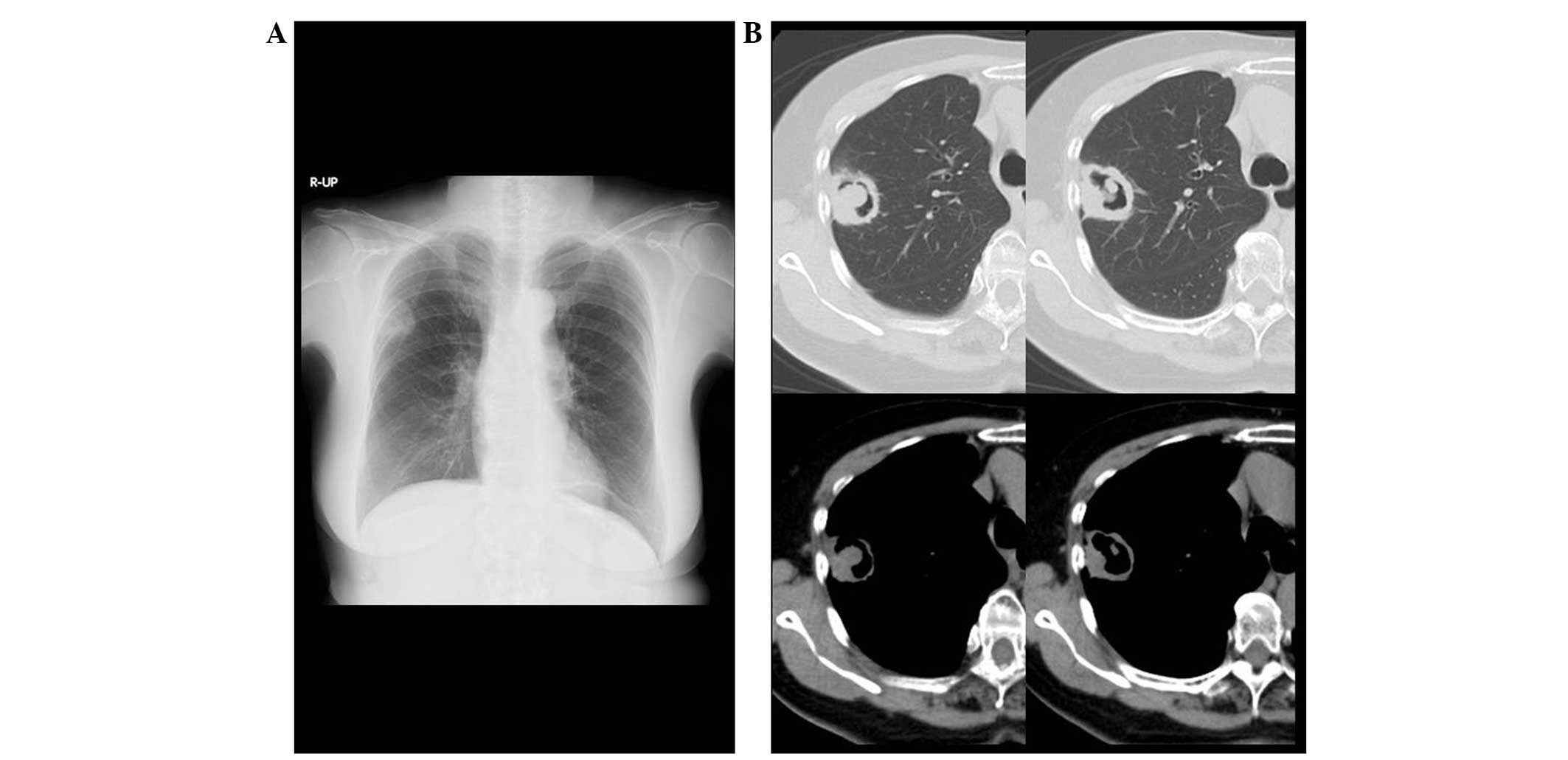
The patient’s blood pressure was 156/93, the heart rate was 79 bpm and regular, percutaneous oxygen saturation was 95% (room air) and there were no cardiopulmonary symptoms such as coughs and sputum. The patient had previously undergone a urostomy in the right lower abdomen. The blood tests, including those for tumor markers, were normal except for a slightly elevated white blood cell count. The aspergillus antigen and antibody were not present, and the β-D glucan level was also normal. The sputum culture detected no fungus or mycobacterial colonies throughout an 8-week incubation period. The chest CT showed a cavitary lesion that was 3.5 cm in diameter, with fungus ball-like shadows and air crescent signs next to the pleura in the right upper lung (Fig. 1). No nodular density was noted in the other lung fields. No pleural effusion or enlargement of the mediastinal lymph node was found. Based on the clinical and imaging findings, the patient was temporarily diagnosed with aspergilloma with a cavitary lesion and fungus ball-like shadows in the right upper lung.

Figure 1

Initial chest X-ray and CT findings. (A) Plain chest X-ray showing a nodule 3.5 cm in diameter next to the pleura in the right upper lung. (B) Chest CT revealing a lung cavity with ball-like structures and air crescent signs. CT, computed tomography.

Treatment

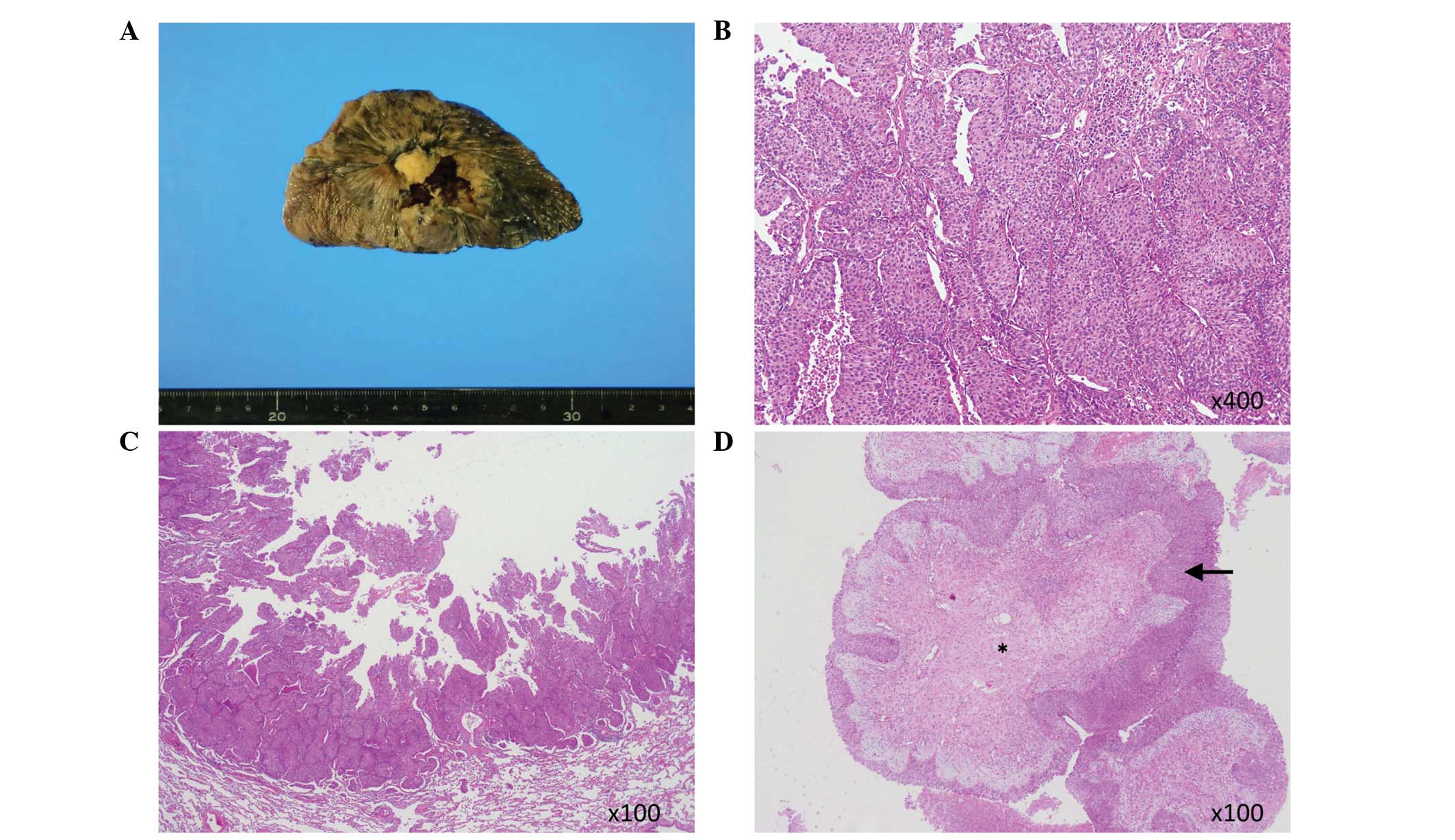
The primary treatment of aspergilloma is surgical removal, and the differentiation of a lung cancer is also required, therefore, video-assisted thoracic surgery was performed in May 2012, rather than a bronchoscopy, on the basis of the patient’s approval. The lesion was histopathologically identified as lung metastasis of transitional cell cancer of the urothelium (Fig. 2A). The histopathology confirmed that the tissues extended to the internal cavity wall and inner cavity, and that they were transitional cell cancer of the urothelium (Fig. 2B and C). The center of the fungus ball-like structure consisted of tumor stromal tissue covered with urothelial transitional cell cancer, not lung interstitial tissue (Fig. 2D). Mycetes, including Aspergillus sp., were not detected in the isolated tissue.

Figure 2

Resected lung tissue and histopathological findings (hematoxylin and eosin staining). (A) Resected lung tissue with fungus ball-like structures inside the cavity. (B) Planar growth of squamous cells in the surrounding area, mostly solid tumor with papillary growth progressing inward (magnification, ×100). (C) Transitional cell carcinoma (magnification, ×400). (D) Center of the fungus ball-like structure (magnification, ×100). Growth of transitional cell cancer (arrow) around the globular structure, covering the tumor stromal tissue (*) inside the cavity.

Discussion

Pulmonary aspergilloma is caused by Aspergillus sp., a naturally existing fungus (with conidia of 2 to 4 μm in diameter). The fungus is inhaled and delivered to the abnormal lung cavities formed due to post-tuberculosis infection, pulmonary cysts, pulmonary fibrosis, open-chest surgery or dilated bronchi. The fungus then saprophytically proliferates and forms fungus balls. Aspergilloma typically affects residual cavities subsequent to lung tuberculosis and its complications are found in 11 to 17% of cases (6). Immunocompetent patients with aspergilloma are generally asymptomatic and usually aspergillus antigen-negative. Microscopic detection of the fungus in the sputum is difficult. Air crescent signs formed by the fungus balls in the cavitary lesion in the upper lung are typical (2), Isolated aspergilloma in a patient with no underlying disorders, such as the present case, should be primarily treated with curative surgical removal (7). Lung disorders with cavitary lesions requiring a differential diagnosis include lung tuberculosis, lung suppuration, pulmonary mycosis (aspergillosis), Wegener’s granulomatosis and primary lung cancer. However, the frequency of cavitation tumors in the lung is 2–5%; 2/3 to 4/5 of these are squamous cell cancer (8), whilst the remainder are adenocarcinoma (9). Possible mechanisms of tumor cavity formation include internal tissue necrosis, air trapping by the check valve, local extension by the elastic traction and bullae (10–13). However, there is never an apparent structure involved in lung cavities caused by these mechanisms.

In addition, pulmonary cavitation occurs in 4% of metastatic lung cancers (4). Pulmonary metastases of transitional cell carcinomas are normally found as solitary masses, multiple nodules or interstitial micronodules (14). Transitional cell cancer of the urothelium is only cited ~0.6% of the time as a cause of cavitary metastases (9,14–16). The present review of the literature classified differentiation of cavities with fungus ball-like structures into the following 3 categories: i) Cancer-associated cavitary lesions complicated with aspergilloma (17,18); for each case in the literature, the cavity was made with a primary lung adenocarcinoma, the mycotic infection happened internally and the fungus ball was created. ii) Lung cancer with cavitary lesions, including a fungus ball-like structure that was not a mycete (19–21); the studies reporting this witnessed fungus ball-like structures in cavities formed secondary to the internal necrosis of primary lung cancer, and the internal structure and the cavity-wall tissue had the same type of cancer cells, e.g., squamous cell carcinoma (19,20) or adenocarcinoma (21). However, these examples involved primary lung cancer, and not transitional cell cancer or metastatic cancer. iii) Pulmonary metastasis of transitional cell cancer; there are several studies in the literature on cavity formation associated with lung metastasis of transitional cell cancer of the urothelium (9,14–16,22–25). However, these are all studies of the cavity without fungus ball-like structures. Alexander et al (9) reported that the fungus ball-like structure appeared to be in the cavity at the time of the chest roentgenogram, but this was unclear. The present case involved lung metastasis of transitional cell cancer of the urothelium involving fungus ball-like structures in an isolated cavity with an air crescent sign, closely resembling aspergilloma. The histopathology confirmed that the tissue extended to the internal cavity wall and the inner cavity. Metastasis of transitional cell cancer with tumor stromal tissue around the primary lesion to the lung was indicated. There were no necrotic tissues or fungus ball-like structures in an intracavernous area. The central part of the fungus ball-like structure was tumor stromal tissue, and the surrounding tissue was a transitional cell carcinoma. The metastasized transitional cell cancer may have grown along the internal cavity wall, covered the later-growing tumor stromal tissue and formed the fungus ball-like structures in the cavity.

In conclusion, metastatic lung cancer that builds a fungus ball (aspergilloma)-like structure inside a cavity is quite rare. Since fungus balls/aspergilloma in an immunocompetent patient lack clinical symptoms and signs, a differential diagnosis of cancer and a surgical approach (26) will always be crucial for physicians.

References

1 

Ueda H, Okabayashi K, Ondo K and Motohiro A: Analysis of various treatments for pulmonary aspergillomas. Surg Today. 31:768–773. 2001.

2 

Abramson S: The air crescent sign. Radiology. 218:230–232. 2001.

3 

Kawamura S, Maesaki S, Tomono K, Tashiro T and Kohno S: Clinical evaluation of 61 patients with pulmonary aspergilloma. Intern Med. 39:209–212. 2000.

4 

Grant LA, Babar J and Griffin N: Cysts, cavities, and honeycombing in multisystem disorders: differential diagnosis and findings on thin-section CT. Clin Radiol. 64:439–448. 2009.

5 

Rovirosa A, Salud A, Felip E, Capdevila F, Giralt J and Bellmunt J: Cavitary pulmonary metastases in transitional cell carcinoma of the urinary bladder. Urol Int. 48:102–104. 1992.

6 

Fishman AP, Elias JA, Fishman JA, Grippi MA, Kaiser LR and Senior RM: Aspergillus syndromes, mucormycosis and pulmonary candidiasis. Fishman’s Pulmonary Disease and Disorders. 3rd edition. McGraw Hill; New York, NY: pp. 2265–2288. 1998

7 

Brik A, Salem AM, Kamal AR, et al: Surgical outcome of pulmonary aspergilloma. Eur J Cardiothorac Surg. 34:882–885. 2008.

8 

Kolodziejski LS, Dyczek S, Duda K, Góralczyk J, Wysocki WM and Lobaziewicz W: Cavitated tumor as a clinical subentity in squamous cell lung cancer patients. Neoplasma. 50:66–73. 2003.

9 

Alexander PW, Sanders C and Nath H: Cavitary pulmonary metastases in transitional cell carcinoma of urinary bladder. AJR Am J Roentgenol. 154:493–494. 1990.

10 

Koizumi N, Akita S, Sakai K, et al: Classification of air density areas in CT-pathologic correlation of pulmonary adenocarcinoma. Radiat Med. 13:279–284. 1995.

11 

Weisbrod GL, Chamberlain D and Herman SJ: Cystic change (pseudocavitation) associated with bronchioloalveolar carcinoma: a report of four patients. J Thorac Imaging. 10:106–111. 1995.

12 

Weisbrod GL, Towers MJ, Chamberlain DW, Herman SJ and Matzinger FR: Thin-walled cystic lesions in bronchioalveolar carcinoma. Radiology. 185:401–405. 1992.

13 

Yoshida T, Harada T, Fuke S, et al: Lung adenocarcinoma presenting with enlarged and multiloculated cystic lesions over 2 years. Respir Care. 49:1522–1524. 2004.

14 

Fiorelli A, Vicidomini G, Messina G and Santini M: Metastasis from transitional cell carcinoma of urinary bladder as cystic pulmonary lesion. J Thorac Dis. 3:71–73. 2011.

15 

Angulo JC, Lopez JI and Flores N: Cavitation of lung metastases from bladder cancer. Report of two cases. Tumori. 79:141–143. 1993.

16 

Hisamatsu H and Yamashita S: A case of metastatic lung cancer with cavitation due to urothelial carcinoma. Hinyokika Kiyo. 56:269–272. 2010.(In Japanese).

17 

Smahi M, Serraj M, Ouadnouni Y, Chbani L, Znati K and Amarti A: Aspergilloma in combination with adenocarcinoma of the lung. World J Surg Oncol. 9:272011.

18 

Saleh W, Ostry A and Henteleff H: Aspergilloma in combination with adenocarcinoma of the lung. Can J Surg. 51:E3–E4. 2008.

19 

Bandoh S, Fujita J, Fukunaga Y, et al: Cavitary lung cancer with an aspergilloma-like shadow. Lung Cancer. 26:195–198. 1999.

20 

Goto T, Kato R, Maeshima A and Oyamada Y: Cavitary lung cancer with an aspergilloma-like shadow. J Thorac Oncol. 5:580–581. 2010.

21 

Wang LF, Chu H, Chen YM and Perng RP: Adenocarcinoma of the lung presenting as a mycetoma with an air crescent sign. Chest. 131:1239–1242. 2007.

22 

Dougherty DW, Gonsorcik VK, Harpster LE, Trussell JC and Drabick JJ: Superficial bladder cancer metastatic to the lungs: two case reports and review of the literature. Urology. 73:210.e3–210.e5. 2009.

23 

Kurian A, Lee J and Born A: Urothelial bladder cancer with cavitary lung metastases. Can Respir J. 18:e46–e47. 2011.

24 

Padmore DE, Millard OH and Mason W: Cavitary pulmonary metastases in transitional cell carcinoma. Can J Urol. 3:251–253. 1996.

25 

Koh KB, Rogawski K and Smith PH: Cavitating pulmonary metastases from superficial transitional cell carcinoma of urinary bladder. Case report. Scand J Urol Nephrol. 28:201–202. 1994.

26 

Schweigert M, Dubecz A, Beron M, Ofner D and Stein HJ: Pulmonary infections imitating lung cancer: clinical presentation and therapeutical approach. Ir J Med Sci. 182:73–80. 2013.

Related Articles

  • Abstract
  • View
  • Download
  • Twitter
Copy and paste a formatted citation
Spandidos Publications style
Watanabe H, Uruma T, Tsunoda T, Tazaki G, Suga A, Nakamura Y, Yamada S and Tajiri T: Lung metastasis of transitional cell cancer of the urothelium, with fungus ball‑like shadows closely resembling aspergilloma: A case report and review of the literature. Oncol Lett 8: 95-98, 2014.
APA
Watanabe, H., Uruma, T., Tsunoda, T., Tazaki, G., Suga, A., Nakamura, Y. ... Tajiri, T. (2014). Lung metastasis of transitional cell cancer of the urothelium, with fungus ball‑like shadows closely resembling aspergilloma: A case report and review of the literature. Oncology Letters, 8, 95-98. https://doi.org/10.3892/ol.2014.2076
MLA
Watanabe, H., Uruma, T., Tsunoda, T., Tazaki, G., Suga, A., Nakamura, Y., Yamada, S., Tajiri, T."Lung metastasis of transitional cell cancer of the urothelium, with fungus ball‑like shadows closely resembling aspergilloma: A case report and review of the literature". Oncology Letters 8.1 (2014): 95-98.
Chicago
Watanabe, H., Uruma, T., Tsunoda, T., Tazaki, G., Suga, A., Nakamura, Y., Yamada, S., Tajiri, T."Lung metastasis of transitional cell cancer of the urothelium, with fungus ball‑like shadows closely resembling aspergilloma: A case report and review of the literature". Oncology Letters 8, no. 1 (2014): 95-98. https://doi.org/10.3892/ol.2014.2076
Copy and paste a formatted citation
x
Spandidos Publications style
Watanabe H, Uruma T, Tsunoda T, Tazaki G, Suga A, Nakamura Y, Yamada S and Tajiri T: Lung metastasis of transitional cell cancer of the urothelium, with fungus ball‑like shadows closely resembling aspergilloma: A case report and review of the literature. Oncol Lett 8: 95-98, 2014.
APA
Watanabe, H., Uruma, T., Tsunoda, T., Tazaki, G., Suga, A., Nakamura, Y. ... Tajiri, T. (2014). Lung metastasis of transitional cell cancer of the urothelium, with fungus ball‑like shadows closely resembling aspergilloma: A case report and review of the literature. Oncology Letters, 8, 95-98. https://doi.org/10.3892/ol.2014.2076
MLA
Watanabe, H., Uruma, T., Tsunoda, T., Tazaki, G., Suga, A., Nakamura, Y., Yamada, S., Tajiri, T."Lung metastasis of transitional cell cancer of the urothelium, with fungus ball‑like shadows closely resembling aspergilloma: A case report and review of the literature". Oncology Letters 8.1 (2014): 95-98.
Chicago
Watanabe, H., Uruma, T., Tsunoda, T., Tazaki, G., Suga, A., Nakamura, Y., Yamada, S., Tajiri, T."Lung metastasis of transitional cell cancer of the urothelium, with fungus ball‑like shadows closely resembling aspergilloma: A case report and review of the literature". Oncology Letters 8, no. 1 (2014): 95-98. https://doi.org/10.3892/ol.2014.2076
Follow us
  • Twitter
  • LinkedIn
  • Facebook
About
  • Spandidos Publications
  • Careers
  • Cookie Policy
  • Privacy Policy
How can we help?
  • Help
  • Live Chat
  • Contact
  • Email to our Support Team