Spandidos Publications Logo
  • About
    • About Spandidos
    • Aims and Scopes
    • Abstracting and Indexing
    • Editorial Policies
    • Reprints and Permissions
    • Job Opportunities
    • Terms and Conditions
    • Contact
  • Journals
    • All Journals
    • Oncology Letters
      • Oncology Letters
      • Information for Authors
      • Editorial Policies
      • Editorial Board
      • Aims and Scope
      • Abstracting and Indexing
      • Bibliographic Information
      • Archive
    • International Journal of Oncology
      • International Journal of Oncology
      • Information for Authors
      • Editorial Policies
      • Editorial Board
      • Aims and Scope
      • Abstracting and Indexing
      • Bibliographic Information
      • Archive
    • Molecular and Clinical Oncology
      • Molecular and Clinical Oncology
      • Information for Authors
      • Editorial Policies
      • Editorial Board
      • Aims and Scope
      • Abstracting and Indexing
      • Bibliographic Information
      • Archive
    • Experimental and Therapeutic Medicine
      • Experimental and Therapeutic Medicine
      • Information for Authors
      • Editorial Policies
      • Editorial Board
      • Aims and Scope
      • Abstracting and Indexing
      • Bibliographic Information
      • Archive
    • International Journal of Molecular Medicine
      • International Journal of Molecular Medicine
      • Information for Authors
      • Editorial Policies
      • Editorial Board
      • Aims and Scope
      • Abstracting and Indexing
      • Bibliographic Information
      • Archive
    • Biomedical Reports
      • Biomedical Reports
      • Information for Authors
      • Editorial Policies
      • Editorial Board
      • Aims and Scope
      • Abstracting and Indexing
      • Bibliographic Information
      • Archive
    • Oncology Reports
      • Oncology Reports
      • Information for Authors
      • Editorial Policies
      • Editorial Board
      • Aims and Scope
      • Abstracting and Indexing
      • Bibliographic Information
      • Archive
    • Molecular Medicine Reports
      • Molecular Medicine Reports
      • Information for Authors
      • Editorial Policies
      • Editorial Board
      • Aims and Scope
      • Abstracting and Indexing
      • Bibliographic Information
      • Archive
    • World Academy of Sciences Journal
      • World Academy of Sciences Journal
      • Information for Authors
      • Editorial Policies
      • Editorial Board
      • Aims and Scope
      • Abstracting and Indexing
      • Bibliographic Information
      • Archive
    • International Journal of Functional Nutrition
      • International Journal of Functional Nutrition
      • Information for Authors
      • Editorial Policies
      • Editorial Board
      • Aims and Scope
      • Abstracting and Indexing
      • Bibliographic Information
      • Archive
    • International Journal of Epigenetics
      • International Journal of Epigenetics
      • Information for Authors
      • Editorial Policies
      • Editorial Board
      • Aims and Scope
      • Abstracting and Indexing
      • Bibliographic Information
      • Archive
    • Medicine International
      • Medicine International
      • Information for Authors
      • Editorial Policies
      • Editorial Board
      • Aims and Scope
      • Abstracting and Indexing
      • Bibliographic Information
      • Archive
  • Articles
  • Information
    • Information for Authors
    • Information for Reviewers
    • Information for Librarians
    • Information for Advertisers
    • Conferences
  • Language Editing
Spandidos Publications Logo
  • About
    • About Spandidos
    • Aims and Scopes
    • Abstracting and Indexing
    • Editorial Policies
    • Reprints and Permissions
    • Job Opportunities
    • Terms and Conditions
    • Contact
  • Journals
    • All Journals
    • Biomedical Reports
      • Information for Authors
      • Editorial Policies
      • Editorial Board
      • Aims and Scope
      • Abstracting and Indexing
      • Bibliographic Information
      • Archive
    • Experimental and Therapeutic Medicine
      • Information for Authors
      • Editorial Policies
      • Editorial Board
      • Aims and Scope
      • Abstracting and Indexing
      • Bibliographic Information
      • Archive
    • International Journal of Epigenetics
      • Information for Authors
      • Editorial Policies
      • Editorial Board
      • Aims and Scope
      • Abstracting and Indexing
      • Bibliographic Information
      • Archive
    • International Journal of Functional Nutrition
      • Information for Authors
      • Editorial Policies
      • Editorial Board
      • Aims and Scope
      • Abstracting and Indexing
      • Bibliographic Information
      • Archive
    • International Journal of Molecular Medicine
      • Information for Authors
      • Editorial Policies
      • Editorial Board
      • Aims and Scope
      • Abstracting and Indexing
      • Bibliographic Information
      • Archive
    • International Journal of Oncology
      • Information for Authors
      • Editorial Policies
      • Editorial Board
      • Aims and Scope
      • Abstracting and Indexing
      • Bibliographic Information
      • Archive
    • Medicine International
      • Information for Authors
      • Editorial Policies
      • Editorial Board
      • Aims and Scope
      • Abstracting and Indexing
      • Bibliographic Information
      • Archive
    • Molecular and Clinical Oncology
      • Information for Authors
      • Editorial Policies
      • Editorial Board
      • Aims and Scope
      • Abstracting and Indexing
      • Bibliographic Information
      • Archive
    • Molecular Medicine Reports
      • Information for Authors
      • Editorial Policies
      • Editorial Board
      • Aims and Scope
      • Abstracting and Indexing
      • Bibliographic Information
      • Archive
    • Oncology Letters
      • Information for Authors
      • Editorial Policies
      • Editorial Board
      • Aims and Scope
      • Abstracting and Indexing
      • Bibliographic Information
      • Archive
    • Oncology Reports
      • Information for Authors
      • Editorial Policies
      • Editorial Board
      • Aims and Scope
      • Abstracting and Indexing
      • Bibliographic Information
      • Archive
    • World Academy of Sciences Journal
      • Information for Authors
      • Editorial Policies
      • Editorial Board
      • Aims and Scope
      • Abstracting and Indexing
      • Bibliographic Information
      • Archive
  • Articles
  • Information
    • For Authors
    • For Reviewers
    • For Librarians
    • For Advertisers
    • Conferences
  • Language Editing
Login Register Submit
  • This site uses cookies
  • You can change your cookie settings at any time by following the instructions in our Cookie Policy. To find out more, you may read our Privacy Policy.

    I agree
Search articles by DOI, keyword, author or affiliation
Search
Advanced Search
presentation
Oncology Letters
Join Editorial Board Propose a Special Issue
Print ISSN: 1792-1074 Online ISSN: 1792-1082
Journal Cover
September-2014 Volume 8 Issue 3

Full Size Image

Sign up for eToc alerts
Recommend to Library

Journals

International Journal of Molecular Medicine

International Journal of Molecular Medicine

International Journal of Molecular Medicine is an international journal devoted to molecular mechanisms of human disease.

International Journal of Oncology

International Journal of Oncology

International Journal of Oncology is an international journal devoted to oncology research and cancer treatment.

Molecular Medicine Reports

Molecular Medicine Reports

Covers molecular medicine topics such as pharmacology, pathology, genetics, neuroscience, infectious diseases, molecular cardiology, and molecular surgery.

Oncology Reports

Oncology Reports

Oncology Reports is an international journal devoted to fundamental and applied research in Oncology.

Experimental and Therapeutic Medicine

Experimental and Therapeutic Medicine

Experimental and Therapeutic Medicine is an international journal devoted to laboratory and clinical medicine.

Oncology Letters

Oncology Letters

Oncology Letters is an international journal devoted to Experimental and Clinical Oncology.

Biomedical Reports

Biomedical Reports

Explores a wide range of biological and medical fields, including pharmacology, genetics, microbiology, neuroscience, and molecular cardiology.

Molecular and Clinical Oncology

Molecular and Clinical Oncology

International journal addressing all aspects of oncology research, from tumorigenesis and oncogenes to chemotherapy and metastasis.

World Academy of Sciences Journal

World Academy of Sciences Journal

Multidisciplinary open-access journal spanning biochemistry, genetics, neuroscience, environmental health, and synthetic biology.

International Journal of Functional Nutrition

International Journal of Functional Nutrition

Open-access journal combining biochemistry, pharmacology, immunology, and genetics to advance health through functional nutrition.

International Journal of Epigenetics

International Journal of Epigenetics

Publishes open-access research on using epigenetics to advance understanding and treatment of human disease.

Medicine International

Medicine International

An International Open Access Journal Devoted to General Medicine.

Journal Cover
September-2014 Volume 8 Issue 3

Full Size Image

Sign up for eToc alerts
Recommend to Library

  • Article
  • Citations
    • Cite This Article
    • Download Citation
    • Create Citation Alert
    • Remove Citation Alert
    • Cited By
  • Similar Articles
    • Related Articles (in Spandidos Publications)
    • Similar Articles (Google Scholar)
    • Similar Articles (PubMed)
  • Download PDF
  • Download XML
  • View XML
Article

Biological characteristics of prostate cancer cells are regulated by hypoxia‑inducible factor 1α

  • Authors:
    • Xiang Huang
    • Jianhua Zhou
    • Junyan Liu
    • Binzhi Tang
    • Fengyan Zhao
    • Yi Qu
  • View Affiliations / Copyright

    Affiliations: Department of Urology, Sichuan Academy of Medical Sciences and Sichuan Provincial People's Hospital, Chengdu, Sichuan 610041, P.R. China, Department of Pediatrics, West China Second University Hospital, Sichuan University, Chengdu, Sichuan 610041, P.R. China
  • Pages: 1217-1221
    |
    Published online on: June 17, 2014
       https://doi.org/10.3892/ol.2014.2259
  • Expand metrics +
Metrics: Total Views: 0 (Spandidos Publications: | PMC Statistics: )
Metrics: Total PDF Downloads: 0 (Spandidos Publications: | PMC Statistics: )
Cited By (CrossRef): 0 citations Loading Articles...

This article is mentioned in:


Abstract

Hypoxia‑inducible factor (HIF)‑1α has been reported to be associated with malignancy in a number of types of cancer. However, the role of HIF‑1 α in the regulation of prostate cancer (PCa) growth has yet to be elucidated. The present study aimed to investigate the effect of HIF‑1α on the biological characteristics of the PCa PC3 cell line. Full‑length (fL) HIF‑1α and dominant‑negative (dn) HIF‑1α were transfected into PC3 cells. The expression of HIF‑1α and its downstream genes, including vascular endothelial growth factor (VEGF), erythropoietin (EPO) and CXC chemokine receptor 4 (CXCR4), were detected using western blot analysis. Cell proliferation, apoptosis and migration were assessed using MTT, terminal deoxynucleotidyl transferase‑mediated dUTP nick end labeling and Boyden chamber assays. The expression of VEGF, EPO and CXCR4 was found to be upregulated in the fL HIF‑1α‑transfected PC3 cells and downregulated in the dn HIF‑1α‑transfected PC3 cells. The overexpression of HIF‑1α was observed to enhance cell proliferation and migration and decrease docetaxol‑induced cell apoptosis. However, dn HIF‑1α was found to attenuate cell proliferation and migration, and promote docetaxol‑induced cell apoptosis. These findings indicate that HIF‑1α regulates the proliferation, apoptosis and migration of PC3 cells, at least in part, by regulating the expression of its target genes, including VEGF, EPO and CXCR4. Thus, the use of HIF‑1α inhibitors may be a promising therapy for the treatment of PCa.

Introduction

Hypoxia-inducible factor (HIF)-1 has been reported as a transcription factor important for regulating cell energy, angiogenesis, apoptosis, adhesion and growth (1–5). HIF-1 is a heterodimeric protein complex that is composed of α and β subunits. The α subunit of HIF-1 is the determinant of HIF-1 transcriptional activity and acts as a regulatory subunit. The regulation of HIF-1α is induced by a variety of factors, including oxygen tension, cytokines and oncogenes (6–8). Upon activation, HIF-1 interacts with the hypoxia response element of HIF-1 target genes and promotes their transcription (9). HIF-1α has been found to be overexpressed in several types of human cancer (10) and to enhance the adaptive response of cancer to oxygen deprivation through upregulating the expression of its target genes (11). Based on the association between HIF-1α and malignant cancer phenotypes, the inhibition of HIF-1α is becoming one of the most important strategies for cancer treatment (12).

Prostate cancer (PCa) is one of the most common types of malignant tumor worldwide. It has been reported that HIF-1α may be a key factor for determining cancer malignancy and prognosis (13). However, the role of HIF-1α in PCa has yet to be elucidated. The present study aimed to investigate the effect of HIF-1α on the biological characteristics of PCa cells, including cell proliferation, apoptosis and migration, through transfecting full length (fL) and dominant-negative (dn) HIF-1α into the PCa PC3 cell line.

Materials and methods

Plasmids

pcDNA3.1 plasmids were purchased from Invitrogen Life Technologies (Carlsbad, CA, USA). pcDNA3.1-fL HIF-1α (fL HIF-1α) and pcDNA3.1-dn HIF-1 α (dn HIF-1α) plasmids were then constructed.

Cell culture and transfection

The PCa PC3 cell line was purchased from the American Type Culture Collection (Manassas, VA, USA) and cultured in RPMI-1640 supplemented with 10% fetal bovine serum and 1% L-glutamine. The cells were incubated at 37°C in 5% CO2 and 95% air. The cells were seeded onto six-well plates (Becton Dickinson, Franklin Lakes, NJ, USA) and maintained overnight to obtain ~80% confluence. Lipofectamine® 2000 (Invitrogen, Rockville, MD, USA) was used for cell transfection according to the manufacturer’s instructions. Following selection with 400 μg/ml G418 (Invitrogen) for two weeks, separate positive clones of each transfection were grown and termed PC3-pcDNA3.1-fL HIF-1α (fL HIF-1α), PC3-pcDNA3.1-dn HIF-1α (dn HIF-1α) and PC3-pcDNA3.1 (pcDNA3.1). PC3-pcDNA3.1 and wild-type PC3 cells were used as controls in subsequent experiments.

Western blot analysis

Cell lysates were obtained using radioimmunoprecipitation assay buffer (Sigma-Aldrich, St. Louis, MO, USA). A total of 10 μg protein was separated on 8% sodium dodecyl sulfate-polyacrylamide gels (Beijing Solarbio Science and Technology Co., Ltd., Beijing, China), transferred onto polyvinylidene difluoride membranes (Roche, Basel, Switzerland) and blocked using 5% blocking buffer (Wuhan Boster Biological Technology, Ltd., Wuhan, China). The membranes were washed and incubated with the following primary antibodies: Rabbit anti-human HIF-1α polyclonal (dilution, 1:150; Santa Cruz Biotechnology, Inc., Santa Cruz, CA, USA), mouse anti-human VEGF monoclonal (dilution, 1:200; Santa Cruz Biotechnology, Inc.), rabbit anti-human EPO polyclonal (dilution, 1:200; Santa Cruz Biotechnology, Inc.), rabbit anti-human CXCR4 polyclonal (dilution, 1:150; Abnova, Taipei, Taiwan) and rabbit anti-human β-actin polyclonal (dilution, 1:200; Santa Cruz Biotechnology, Inc.) for 1 h at room temperature and overnight at 4°C. Subsequent to being washed with Tris-buffered saline containing Tween 20, the membranes were incubated with horseradish peroxidase-conjugated secondary antibodies (dilution, 1:3,000; Zsgb-Bio, Beijing, China). The signals from the bound antibodies were identified using an enhanced chemiluminescence kit (Amersham, Freiburg, Germany). The integrated density value (IDV) of each band was assessed using a Gel-Pro Image Analyzer (Bio-Rad Laboratories, Inc., Hercules, CA, USA), and the ratios of the integrated density values (HIF-1α/β-actin, VEGF/β-actin, EPO/β-actin and CXCR4/β-actin) were calculated to assess the relative expression levels of the proteins.

Cell proliferation detected using MTT assay

The PC3 cells were plated on 96-well plates and maintained in normoxic conditions for five days. The viability of the PC3 cells was assessed using an MTT assay. In brief, 20 μl MTT solution (5 g/l; Sigma-Aldrich) was added to each well and incubated for 4 h at 37°C. A total of 150 ml dimethyl sulfoxide (Sigma-Aldrich) was then added to dissolve the crystal once the growth medium was removed. The absorbance of 200 μl of solution from each well was measured at 492 nm using a microplate reader (Thermo Fisher Scientific, Waltham, MA, USA). Cell growth curves were generated based on the corresponding optical density values at 492 nm.

Apoptosis assay

Exponential phase cells were split at a density of 5×10⁴ cells per well on 96-well plates (Becton Dickinson). Subsequent to 12 h of incubation, the RPMI-1640 medium was replaced with RPMI-1640 containing 2 or 4 μmol/l docetaxol (Aventis Pharma, Ltd., Mumbai, India) for 48 h. Cell apoptosis was detected using an in situ terminal deoxynucleotidyl transferase-mediated dUTP nick end labeling (TUNEL) kit (Roche) according to the manufacturer’s instructions. A total of 10 fields were chosen randomly at ×400 magnification to count the numbers of apoptotic and total cells. The apoptotic index (AI) was calculated as follows: AI = (number of apoptotic cells / total number counted) × 100.

In vitro migration assay

The cells were harvested through trypsinization, then counted and resuspended in RPMI-1640 at a concentration of 1×10⁵/ml. Next, 0.5-ml aliquots of cell suspension were added to the upper chamber of Millicell® Inserts (Millipore Corporation, Billerica, MA, USA). The upper and lower chambers were separated using a 12-mm pore polycarbonate membrane that was coated with Matrigel™ (Becton Dickinson). Subsequent to 24 h of incubation at 37°C, the remaining cells on the upper side of the chamber were removed using a cotton swab. The cells that had migrated through the pores to the bottom side of the membrane were fixed using 3.7% paraformaldehyde and stained with hematoxylin and eosin. The number of migrated cells was counted in 10 randomly selected fields using a microscope.

Statistical analysis

Student’s t-test was used to compare two groups. Analysis of variance with Fisher’s post-hoc test was used for comparing more than two groups. P<0.05 was considered to indicate a statistically significant difference.

Results

dn HIF-1α inactivates HIF-1 and attenuates the expression of HIF-1 downstream genes

The effect of dn HIF-1α and fL HIF-1α on VEGF, EPO and CXCR4 expression was analyzed using western blot analysis. VEGF, EPO and CXCR4 were observed to be upregulated by fL HIF-1α, while dn HIF-1α was found to downregulate the HIF-1 target genes, with no impact on HIF-1α expression (Fig. 1).
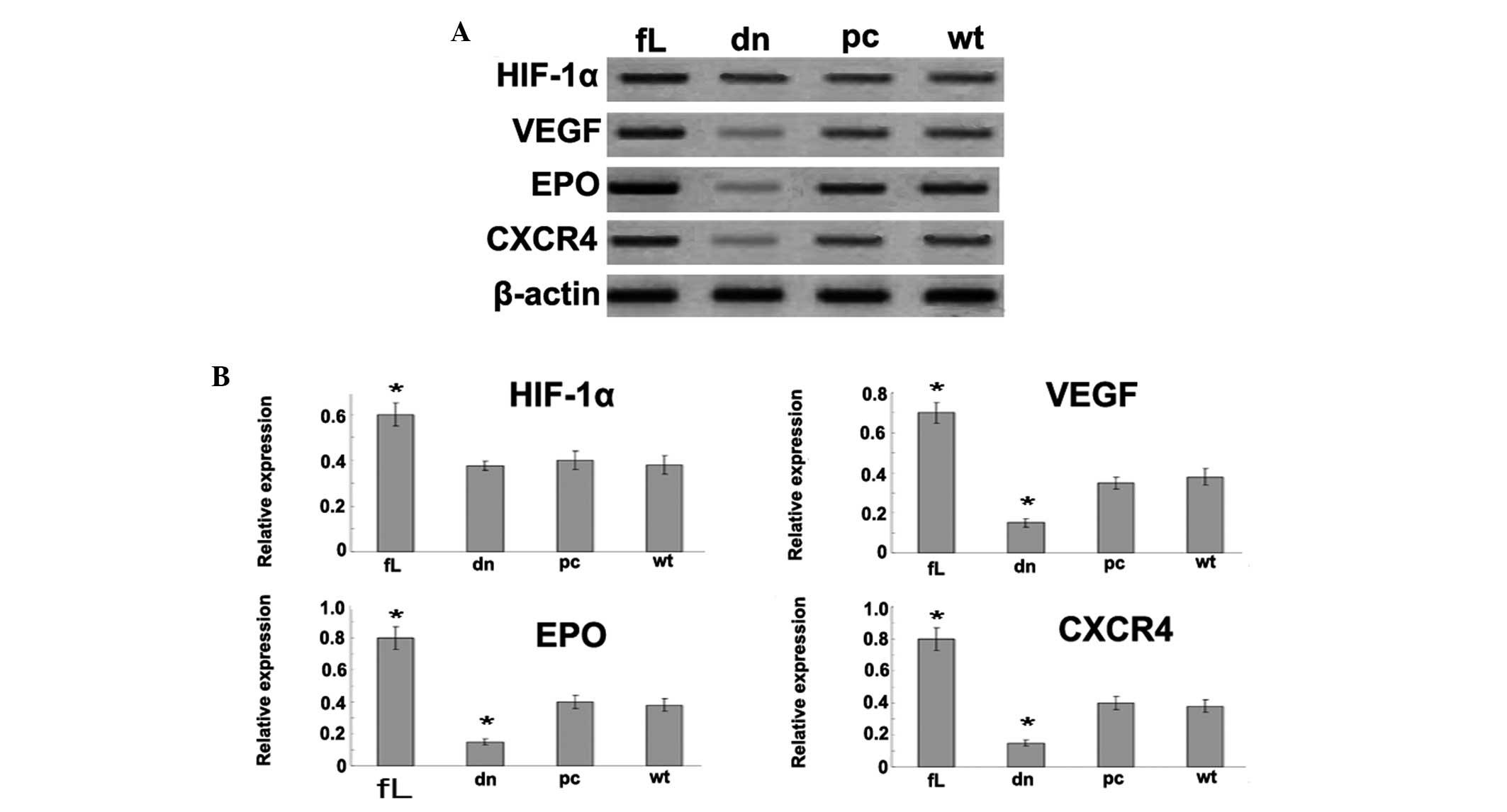
Figure 1

Expression of HIF-1α and its downstream genes, VEGF, EPO and CXCR4. (A) Western blot analysis was used to detect the effect of dn HIF-1α and fL HIF-1α on VEGF, EPO and CXCR4 expression. β-actin was used as a loading control. VEGF, EPO and CXCR4 were upregulated by fL HIF-1α, while dn HIF-1α significantly downregulated the HIF-1 target genes. (B) The relative protein expression of HIF-1α, VEGF, EPO and CXCR4 was calculated as integrated density values. Data are presented as the mean ± standard error of the mean from three independent experiments. *P<0.05 vs. pcDNA3.1 or wild type. HIF, hypoxia-inducible factor; VEGF, vascular endothelial growth factor; EPO, erythropoietin; CXCR4, CXC chemokine receptor 4; fL, full length; dn, dominant-negative; pc, pcDNA3.1; wt, wild-type.

dn HIF-1α inhibits PC3 proliferation

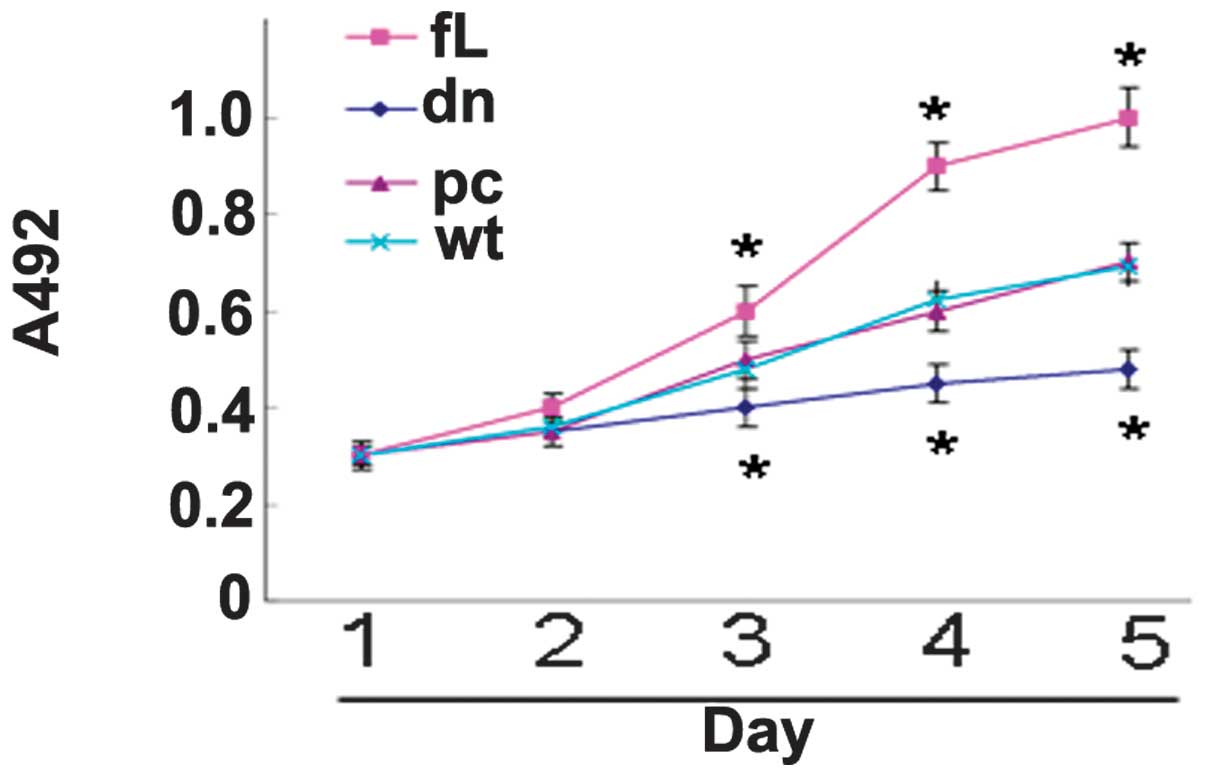
Compared with the control cells, the proliferation of the fL HIF-1α transfectants was observed to be significantly enhanced, while the proliferation of the dn HIF-1α transfectants was found to be significantly suppressed (Fig. 2).

Figure 2

HIF-1α regulates PC3 cell growth. Viable cell numbers were estimated using a colorimetric MTT assay at the different incubation time-points. The proliferation of the fL HIF-1α transfectants was significantly enhanced, while the proliferation of the dn HIF-1α transfectants was significantly suppressed compared with the control cells. *P<0.05 vs. control cells. HIF, hypoxia-inducible factor; fL, full length; dn, dominant-negative; pc, pcDNA3.1; wt, wild-type.

HIF-1α attenuates docetaxol-induced PC3 cell apoptosis

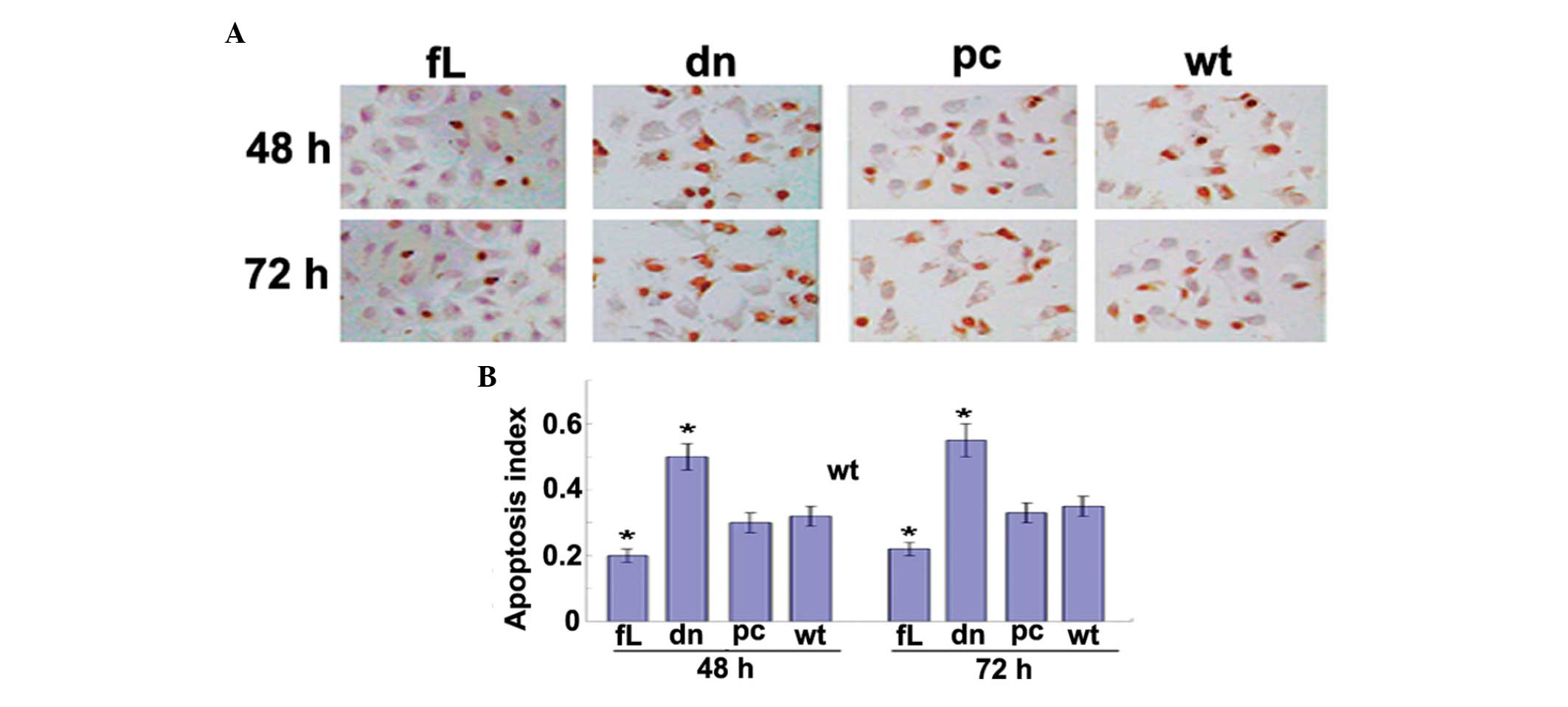
A TUNEL assay was used to detect apoptosis in the PC3 cells subjected to docetaxol treatment. Following treatment with docetaxol for 48 and 72 h, dn HIF-1α was found to promote PC3 cell apoptosis, while fL HIF-1α was observed to have an anti-apoptotic effect (Fig. 3).

Figure 3

HIF-1α activation prevents docetaxol-induced tumor apoptosis. (A) The terminal deoxynucleotidyl transferase-mediated dUTP nick end labeling (TUNEL) assay was used to detect PC3 cell apoptosis, and cells with yellow or brown granules confined to the nucleus were defined as apoptotic cells (magnification, ×400). (B) The apoptotic index was calculated and showed that HIF-1α protected PC3 cells from docetaxol-induced apoptosis, while dn HIF-1α was associated with increased apoptosis. *P<0.05 vs. controls. HIF, hypoxia-inducible factor; fL, full length; dn, dominant-negative; pc, pcDNA3.1; wt, wild-type.

HIF-1α enhances PC3 cell migration

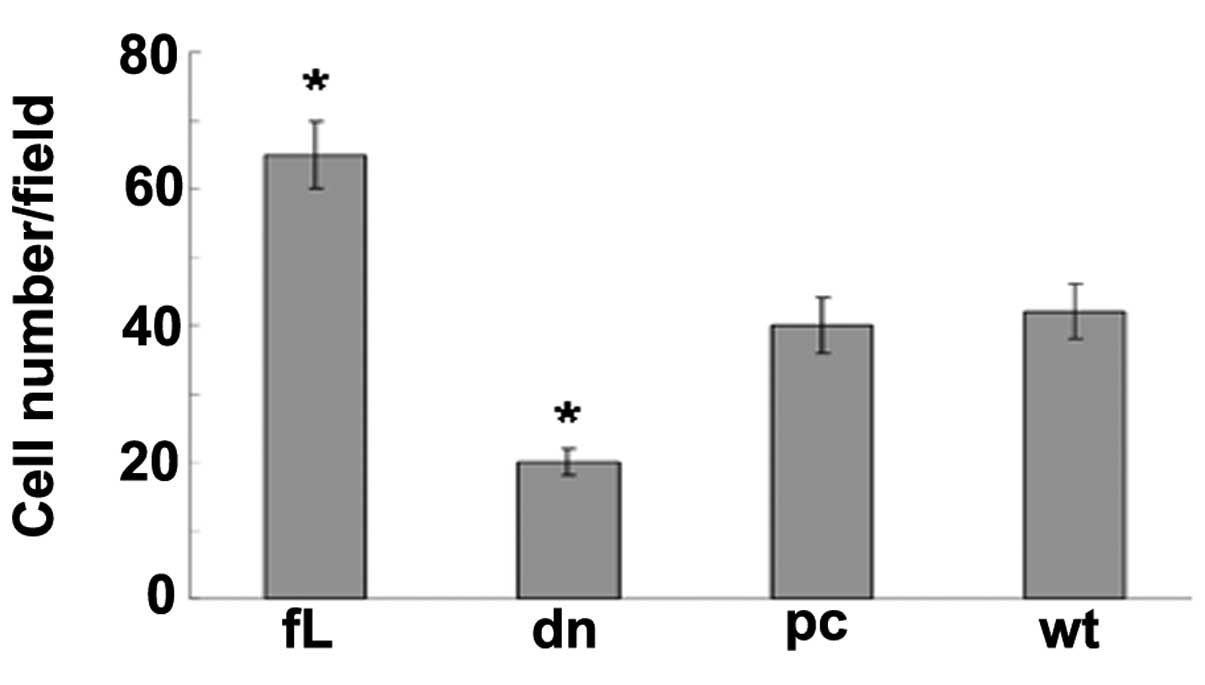
A Boyden chamber assay was used to detect cell migration, and revealed that the PC3 cells transfected with fL HIF-1α migrated more rapidly compared with those transfected with dn HIF-1α and the control cells (Fig. 4).

Figure 4

Effect of HIF-1α on the promotion of PC3 cell migration. A Boyden chamber assay was used to detect cell migration. The migration of the PC3 cells from the upper chamber to the lower chamber was analyzed 24 h after cell seeding. The cells that had migrated through the pores to the bottom side of the membrane were fixed and stained with hematoxylin and eosin. The number of migrating cells was counted in 10 randomly selected fields using light microscopy. Data are presented as the mean ± standard deviation of two independent experiments performed in triplicate. dn HIF-1α significantly inhibited PC3 migration, while the number of cells that migrated to the lower chamber in the fL HIF-1α group was increased compared with that in the control groups. *P<0.05 vs. control groups. HIF, hypoxia-inducible factor; fL, full length; dn, dominant-negative; pc, pcDNA3.1; wt, wild-type.

Discussion

dn HIF-1α is a truncated variant of HIF-1α that functions in a dn manner. Through competing with normal fL HIF-1α for the binding site of HIF-1β, dn HIF-1α inhibits the formation of functional HIF-1 (14). In the present study, a significant increase in HIF-1α expression was observed in the pcDNA3.1-fL HIF-1α PC3 cells, but not in the pcDNA3.1-dn HIF-1α PC3 cells. Furthermore, the expression of the HIF-1α target genes, VEGF, EPO and CXCR4, was found to be increased in the pcDNA3.1-fL HIF-1α-transfected PC3 cells, but decreased in the pcDNA3.1-dn HIF-1α-transfected PC3 cells.

VEGF has a vital role in the growth of blood vessels. Although the majority of studies have been focused on the function of VEGF and VEGF receptors in angiogenesis and in endothelial cells, the role of VEGF in carcinogenesis may be another function that requires highlighting. VEGF has been reported to have a role in the regulation of a number of functions in tumor cells, including survival, adhesion, migration and invasion (15). Similarly, EPO has also been reported to have other effects in addition to its role in erythropoiesis, including the promotion of tumor cell growth and survival (16). The CXCR4 signaling pathway is crucial in modulating cancer cell migration. The activation of CXCR4 leads to cellular skeleton remolding and pseudopodia formation, and consequently enhanced cell mobility and migration (17). Therefore, the HIF-1α-induced promotion of cell growth and migration and the reversal of docetaxol-induced cell apoptosis, may be associated with the overexpression of the HIF-1α downstream effectors VEGF, EPO and CXCR4.

Docetaxol is one of the most common drugs for the chemotherapeutic treatment of PCa (18). In the present study, following treatment with docetaxol, dn HIF-1α was found to promote PC3 apoptosis, while fL HIF-1α exhibited an anti-apoptotic effect. These findings indicate that dn HIF-1α may make PC3 cells more susceptible to docetaxol-induced apoptosis and that fL HIF-1α may rescue this susceptibility.

HIF-1α has a central role in regulating tumor behavior, including proliferation, apoptosis and migration, thus the inhibition of the HIF-1α pathway may be a promising strategy for attenuating tumor progression. Several methods to inhibit HIF-1α have been investigated, including using HIF-1α small interfering RNA to inhibit HIF-1α transcription, agents to accelerate the proteasome-dependent degradation of the HIF-1α protein and small molecular inhibitors to block the transcriptional activity of HIF-1α (19,20). The dn HIF-1α-induced inhibition of HIF-1α has been reported in a number of types of cancer, including malignant gliomas, gastric cancer and breast carcinoma, however, the underlying mechanism has yet to be elucidated (21–23). The present study showed that HIF-1α regulates certain biological characteristics of PC3 cells and that dn HIF-1α may be a promising biotherapy for PCa, providing novel insight into our understanding of the mechanism underlying the carcinogenesis of PCa and a potential therapy to treat PCa.

Acknowledgements

The present study was supported by the Major State Basic Research Development Program (grant no. 2013CB967404), the National Natural Science Foundation of China (grant nos. 81172174 and 81270724) and the Program for Outstanding Young Scholars of Sichuan University (grant no. 2012SCU04B03).

References

1 

Fukuda R, Zhang H, Kim JW, et al: HIF-1 regulates cytochrome oxidase subunits to optimize efficiency of respiration in hypoxic cells. Cell. 129:111–122. 2007.

2 

Hirota K and Semenza GL: Regulation of angiogenesis by hypoxia-inducible factor 1. Crit Rev Oncol Hematol. 59:15–26. 2006.

3 

Kilic M, Kasperczyk H, Fulda S and Debatin KM: Role of hypoxia inducible factor-1 alpha in modulation of apoptosis resistance. Oncogene. 26:2027–2038. 2007.

4 

Esteban MA, Tran MG, Harten SK, et al: Regulation of E-cadherin expression by VHL and hypoxia-inducible factor. Cancer Res. 66:3567–3575. 2006.

5 

Li J, Shi M, Cao Y, et al: Knockdown of hypoxia-inducible factor-1alpha in breast carcinoma MCF-7 cells results in reduced tumor growth and increased sensitivity to methotrexate. Biochem Biophys Res Commun. 342:1341–1351. 2006.

6 

Huang LE, Gu J, Schau M and Bunn HF: Regulation of hypoxia-inducible factor 1alpha is mediated by an O2-dependent degradation domain via the ubiquitin-proteasome pathway. Proc Natl Acad Sci USA. 95:7987–7992. 1998.

7 

Stiehl DP, Jelkmann W, Wenger RH and Hellwig-Bürgel T: Normoxic induction of the hypoxia-inducible factor 1alpha by insulin and interleukin-1beta involves the phosphatidylinositol 3-kinase pathway. FEBS Lett. 512:157–162. 2002.

8 

Semenza G: Signal transduction to hypoxia-inducible factor 1. Biochem Pharmacol. 64:993–998. 2002.

9 

Bárdos JI and Ashcrof M: Negative and positive regulation of HIF-1: a complex network. Biochim Biophys Acta. 1755:107–120. 2005.

10 

Zhong H, De Marzo AM, Laughner E, et al: Overexpression of hypoxia-inducible factor 1alpha in common human cancers and their metastases. Cancer Res. 59:5830–5835. 1999.

11 

Maxwell PH, Pugh CW and Ratcliffe PJ: Activation of the HIF pathway in cancer. Curr Opin Genet Dev. 11:293–299. 2001.

12 

Semenza GL: Targeting HIF-1 for cancer therapy. Nat Rev Cancer. 3:721–732. 2003.

13 

Semenza GL: Hypoxia-inducible factors: mediators of cancer progression and targets for cancer therapy. Trends Pharmacol Sci. 33:207–214. 2012.

14 

Chen J, Zhao S, Nakada K, et al: Dominant-negative hypoxia-inducible factor-1 alpha reduces tumorigenicity of pancreatic cancer cells through the suppression of glucose metabolism. Am J Pathol. 162:1283–1291. 2003.

15 

Perrot-Applanat M and Di Benedetto M: Autocrine functions of VEGF in breast tumor cells: adhesion, survival, migration and invasion. Cell Adh Migr. 6:547–553. 2012.

16 

Elliott S and Sinclair AM: The effect of erythropoietin on normal and neoplastic cells. Biologics. 6:163–189. 2012.

17 

Zheng H, Fu G, Dai T and Huang H: Migration of endothelial progenitor cells mediated by stromal cell-derived factor-1alpha/CXCR4 via PI3K/Akt/eNOS signal transduction pathway. J Cardiovasc Pharmacol. 50:274–280. 2007.

18 

Merseburger AS, Bellmunt J, Jenkins C, et al: Perspectives on treatment of metastatic castration-resistant prostate cancer. Oncologist. 18:558–567. 2013.

19 

Zhang P, Wang Y, Hui Y, et al: Inhibition of VEGF expression by targeting HIF-1alpha with small interference RNA in human RPE cells. Ophthalmologica. 221:411–417. 2007.

20 

Melillo G: Inhibiting hypoxia-inducible factor 1 for cancer therapy. Mol Cancer Res. 4:601–605. 2006.

21 

Jensen RL, Ragel BT, Whang K and Gillespie D: Inhibition of hypoxia inducible factor-1alpha (HIF-1alpha) decreases vascular endothelial growth factor (VEGF) secretion and tumor growth in malignant gliomas. J Neurooncol. 78:233–247. 2006.

22 

Stoeltzing O, McCarty MF, Wey JS, et al: Role of hypoxia-inducible factor 1alpha in gastric cancer cell growth, angiogenesis, and vessel maturation. J Natl Cancer Inst. 96:946–956. 2004.

23 

Brown LM, Cowen RL, Debray C, et al: Reversing hypoxic cell chemoresistance in vitro using genetic and small molecule approaches targeting hypoxia inducible factor-1. Mol Pharmacol. 69:411–418. 2006.

Related Articles

  • Abstract
  • View
  • Download
  • Twitter
Copy and paste a formatted citation
Spandidos Publications style
Huang X, Zhou J, Liu J, Tang B, Zhao F and Qu Y: Biological characteristics of prostate cancer cells are regulated by hypoxia‑inducible factor 1α. Oncol Lett 8: 1217-1221, 2014.
APA
Huang, X., Zhou, J., Liu, J., Tang, B., Zhao, F., & Qu, Y. (2014). Biological characteristics of prostate cancer cells are regulated by hypoxia‑inducible factor 1α. Oncology Letters, 8, 1217-1221. https://doi.org/10.3892/ol.2014.2259
MLA
Huang, X., Zhou, J., Liu, J., Tang, B., Zhao, F., Qu, Y."Biological characteristics of prostate cancer cells are regulated by hypoxia‑inducible factor 1α". Oncology Letters 8.3 (2014): 1217-1221.
Chicago
Huang, X., Zhou, J., Liu, J., Tang, B., Zhao, F., Qu, Y."Biological characteristics of prostate cancer cells are regulated by hypoxia‑inducible factor 1α". Oncology Letters 8, no. 3 (2014): 1217-1221. https://doi.org/10.3892/ol.2014.2259
Copy and paste a formatted citation
x
Spandidos Publications style
Huang X, Zhou J, Liu J, Tang B, Zhao F and Qu Y: Biological characteristics of prostate cancer cells are regulated by hypoxia‑inducible factor 1α. Oncol Lett 8: 1217-1221, 2014.
APA
Huang, X., Zhou, J., Liu, J., Tang, B., Zhao, F., & Qu, Y. (2014). Biological characteristics of prostate cancer cells are regulated by hypoxia‑inducible factor 1α. Oncology Letters, 8, 1217-1221. https://doi.org/10.3892/ol.2014.2259
MLA
Huang, X., Zhou, J., Liu, J., Tang, B., Zhao, F., Qu, Y."Biological characteristics of prostate cancer cells are regulated by hypoxia‑inducible factor 1α". Oncology Letters 8.3 (2014): 1217-1221.
Chicago
Huang, X., Zhou, J., Liu, J., Tang, B., Zhao, F., Qu, Y."Biological characteristics of prostate cancer cells are regulated by hypoxia‑inducible factor 1α". Oncology Letters 8, no. 3 (2014): 1217-1221. https://doi.org/10.3892/ol.2014.2259
Follow us
  • Twitter
  • LinkedIn
  • Facebook
About
  • Spandidos Publications
  • Careers
  • Cookie Policy
  • Privacy Policy
How can we help?
  • Help
  • Live Chat
  • Contact
  • Email to our Support Team