Spandidos Publications Logo
  • About
    • About Spandidos
    • Aims and Scopes
    • Abstracting and Indexing
    • Editorial Policies
    • Reprints and Permissions
    • Job Opportunities
    • Terms and Conditions
    • Contact
  • Journals
    • All Journals
    • Oncology Letters
      • Oncology Letters
      • Information for Authors
      • Editorial Policies
      • Editorial Board
      • Aims and Scope
      • Abstracting and Indexing
      • Bibliographic Information
      • Archive
    • International Journal of Oncology
      • International Journal of Oncology
      • Information for Authors
      • Editorial Policies
      • Editorial Board
      • Aims and Scope
      • Abstracting and Indexing
      • Bibliographic Information
      • Archive
    • Molecular and Clinical Oncology
      • Molecular and Clinical Oncology
      • Information for Authors
      • Editorial Policies
      • Editorial Board
      • Aims and Scope
      • Abstracting and Indexing
      • Bibliographic Information
      • Archive
    • Experimental and Therapeutic Medicine
      • Experimental and Therapeutic Medicine
      • Information for Authors
      • Editorial Policies
      • Editorial Board
      • Aims and Scope
      • Abstracting and Indexing
      • Bibliographic Information
      • Archive
    • International Journal of Molecular Medicine
      • International Journal of Molecular Medicine
      • Information for Authors
      • Editorial Policies
      • Editorial Board
      • Aims and Scope
      • Abstracting and Indexing
      • Bibliographic Information
      • Archive
    • Biomedical Reports
      • Biomedical Reports
      • Information for Authors
      • Editorial Policies
      • Editorial Board
      • Aims and Scope
      • Abstracting and Indexing
      • Bibliographic Information
      • Archive
    • Oncology Reports
      • Oncology Reports
      • Information for Authors
      • Editorial Policies
      • Editorial Board
      • Aims and Scope
      • Abstracting and Indexing
      • Bibliographic Information
      • Archive
    • Molecular Medicine Reports
      • Molecular Medicine Reports
      • Information for Authors
      • Editorial Policies
      • Editorial Board
      • Aims and Scope
      • Abstracting and Indexing
      • Bibliographic Information
      • Archive
    • World Academy of Sciences Journal
      • World Academy of Sciences Journal
      • Information for Authors
      • Editorial Policies
      • Editorial Board
      • Aims and Scope
      • Abstracting and Indexing
      • Bibliographic Information
      • Archive
    • International Journal of Functional Nutrition
      • International Journal of Functional Nutrition
      • Information for Authors
      • Editorial Policies
      • Editorial Board
      • Aims and Scope
      • Abstracting and Indexing
      • Bibliographic Information
      • Archive
    • International Journal of Epigenetics
      • International Journal of Epigenetics
      • Information for Authors
      • Editorial Policies
      • Editorial Board
      • Aims and Scope
      • Abstracting and Indexing
      • Bibliographic Information
      • Archive
    • Medicine International
      • Medicine International
      • Information for Authors
      • Editorial Policies
      • Editorial Board
      • Aims and Scope
      • Abstracting and Indexing
      • Bibliographic Information
      • Archive
  • Articles
  • Information
    • Information for Authors
    • Information for Reviewers
    • Information for Librarians
    • Information for Advertisers
    • Conferences
  • Language Editing
Spandidos Publications Logo
  • About
    • About Spandidos
    • Aims and Scopes
    • Abstracting and Indexing
    • Editorial Policies
    • Reprints and Permissions
    • Job Opportunities
    • Terms and Conditions
    • Contact
  • Journals
    • All Journals
    • Biomedical Reports
      • Information for Authors
      • Editorial Policies
      • Editorial Board
      • Aims and Scope
      • Abstracting and Indexing
      • Bibliographic Information
      • Archive
    • Experimental and Therapeutic Medicine
      • Information for Authors
      • Editorial Policies
      • Editorial Board
      • Aims and Scope
      • Abstracting and Indexing
      • Bibliographic Information
      • Archive
    • International Journal of Epigenetics
      • Information for Authors
      • Editorial Policies
      • Editorial Board
      • Aims and Scope
      • Abstracting and Indexing
      • Bibliographic Information
      • Archive
    • International Journal of Functional Nutrition
      • Information for Authors
      • Editorial Policies
      • Editorial Board
      • Aims and Scope
      • Abstracting and Indexing
      • Bibliographic Information
      • Archive
    • International Journal of Molecular Medicine
      • Information for Authors
      • Editorial Policies
      • Editorial Board
      • Aims and Scope
      • Abstracting and Indexing
      • Bibliographic Information
      • Archive
    • International Journal of Oncology
      • Information for Authors
      • Editorial Policies
      • Editorial Board
      • Aims and Scope
      • Abstracting and Indexing
      • Bibliographic Information
      • Archive
    • Medicine International
      • Information for Authors
      • Editorial Policies
      • Editorial Board
      • Aims and Scope
      • Abstracting and Indexing
      • Bibliographic Information
      • Archive
    • Molecular and Clinical Oncology
      • Information for Authors
      • Editorial Policies
      • Editorial Board
      • Aims and Scope
      • Abstracting and Indexing
      • Bibliographic Information
      • Archive
    • Molecular Medicine Reports
      • Information for Authors
      • Editorial Policies
      • Editorial Board
      • Aims and Scope
      • Abstracting and Indexing
      • Bibliographic Information
      • Archive
    • Oncology Letters
      • Information for Authors
      • Editorial Policies
      • Editorial Board
      • Aims and Scope
      • Abstracting and Indexing
      • Bibliographic Information
      • Archive
    • Oncology Reports
      • Information for Authors
      • Editorial Policies
      • Editorial Board
      • Aims and Scope
      • Abstracting and Indexing
      • Bibliographic Information
      • Archive
    • World Academy of Sciences Journal
      • Information for Authors
      • Editorial Policies
      • Editorial Board
      • Aims and Scope
      • Abstracting and Indexing
      • Bibliographic Information
      • Archive
  • Articles
  • Information
    • For Authors
    • For Reviewers
    • For Librarians
    • For Advertisers
    • Conferences
  • Language Editing
Login Register Submit
  • This site uses cookies
  • You can change your cookie settings at any time by following the instructions in our Cookie Policy. To find out more, you may read our Privacy Policy.

    I agree
Search articles by DOI, keyword, author or affiliation
Search
Advanced Search
presentation
Oncology Letters
Join Editorial Board Propose a Special Issue
Print ISSN: 1792-1074 Online ISSN: 1792-1082
Journal Cover
November-2014 Volume 8 Issue 5

Full Size Image

Sign up for eToc alerts
Recommend to Library

Journals

International Journal of Molecular Medicine

International Journal of Molecular Medicine

International Journal of Molecular Medicine is an international journal devoted to molecular mechanisms of human disease.

International Journal of Oncology

International Journal of Oncology

International Journal of Oncology is an international journal devoted to oncology research and cancer treatment.

Molecular Medicine Reports

Molecular Medicine Reports

Covers molecular medicine topics such as pharmacology, pathology, genetics, neuroscience, infectious diseases, molecular cardiology, and molecular surgery.

Oncology Reports

Oncology Reports

Oncology Reports is an international journal devoted to fundamental and applied research in Oncology.

Experimental and Therapeutic Medicine

Experimental and Therapeutic Medicine

Experimental and Therapeutic Medicine is an international journal devoted to laboratory and clinical medicine.

Oncology Letters

Oncology Letters

Oncology Letters is an international journal devoted to Experimental and Clinical Oncology.

Biomedical Reports

Biomedical Reports

Explores a wide range of biological and medical fields, including pharmacology, genetics, microbiology, neuroscience, and molecular cardiology.

Molecular and Clinical Oncology

Molecular and Clinical Oncology

International journal addressing all aspects of oncology research, from tumorigenesis and oncogenes to chemotherapy and metastasis.

World Academy of Sciences Journal

World Academy of Sciences Journal

Multidisciplinary open-access journal spanning biochemistry, genetics, neuroscience, environmental health, and synthetic biology.

International Journal of Functional Nutrition

International Journal of Functional Nutrition

Open-access journal combining biochemistry, pharmacology, immunology, and genetics to advance health through functional nutrition.

International Journal of Epigenetics

International Journal of Epigenetics

Publishes open-access research on using epigenetics to advance understanding and treatment of human disease.

Medicine International

Medicine International

An International Open Access Journal Devoted to General Medicine.

Journal Cover
November-2014 Volume 8 Issue 5

Full Size Image

Sign up for eToc alerts
Recommend to Library

  • Article
  • Citations
    • Cite This Article
    • Download Citation
    • Create Citation Alert
    • Remove Citation Alert
    • Cited By
  • Similar Articles
    • Related Articles (in Spandidos Publications)
    • Similar Articles (Google Scholar)
    • Similar Articles (PubMed)
  • Download PDF
  • Download XML
  • View XML
Article

Goiter and hearing impairment: A case of a male patient with Pendred syndrome

  • Authors:
    • Er-Wei Hu
    • Li-Bin Liu
    • Ruo-Yu Jiang
    • Xiang-Hui He
  • View Affiliations / Copyright

    Affiliations: Department of General Surgery, Tianjin Medical University General Hospital, Heping, Tianjin 300052, P.R. China
  • Pages: 2059-2062
    |
    Published online on: August 19, 2014
       https://doi.org/10.3892/ol.2014.2461
  • Expand metrics +
Metrics: Total Views: 0 (Spandidos Publications: | PMC Statistics: )
Metrics: Total PDF Downloads: 0 (Spandidos Publications: | PMC Statistics: )
Cited By (CrossRef): 0 citations Loading Articles...

This article is mentioned in:


Abstract

Pendred syndrome is a rare genetic disease that causes a disturbance in thyroid hormone synthesis, which results in thyroid dysfunction and the development of goiter and sensorineural deafness. The present report describes the case of a young euthyroid male, who developed a large goiter and hearing impairment, despite no family history of these conditions. A left lobectomy and a subtotal right lobectomy were performed, and the patient was administered permanent hormone replacement therapy with thyroxine. Patients with Pendred syndrome exhibit distinct clinical features and the mechanisms associated with the molecular genetics of this disease have been clarified. Thus, gene detection is considered to be a reliable diagnostic method. Certain patients require surgical intervention in order to relieve the symptoms. Misdiagnosis can be significantly reduced by increasing the understanding of Pendred syndrome.

Introduction

Pendred syndrome, also termed goiter-deafness syndrome, is a relatively rare recessive genetic disease, which is characterized by congenital deafness and progressive clinical enlargement of a goiter. Pendred syndrome was first recognized by Vaughan Pendred, a British physician, in 1896 (1). A single mutant recessive gene, SLC26A4(PDS), which encodes the protein pendrin, is considered to be responsible for the goiter and deafness. Previous studies have indicated that this protein functions as a chloride/iodine pump (2). A lack of awareness of this disease in clinical practice often results in cases of misdiagnosis or missed diagnoses. Thus, the details of a typical patient with Pendred syndrome are presented. Clinicians must raise awareness regarding the disease and ensure correct diagnosis and treatment.

The present report discusses a patient with a goiter and a hearing impairment, expounding the characteristics of Pendred syndrome so as to raise the awareness of the disease and ensure the correct diagnosis and treatment. The patient provided written informed consent.

Case report

A 26-year-old male presented to the Tianjin Medical University General Hospital (Tianjin, China) due to a painless lump in the neck, which had been inadvertently identified 6 years previously. The lump had recently begun to exhibit rapid growth and the patient reported symptoms of agitation, irritability, hyperhidrosis and discomfort whilst swallowing. Prior to presentation at Tianjin Medical University General Hospital (Heping, China), the patient had been diagnosed with nodular goiter by physicians at other hospitals. The patient had intermittently taken Euthyrox® for numerous years. The patient reported a hearing impairment and learning difficulties with language in childhood, however, a clinical examination showed that his mental and physical development was normal.

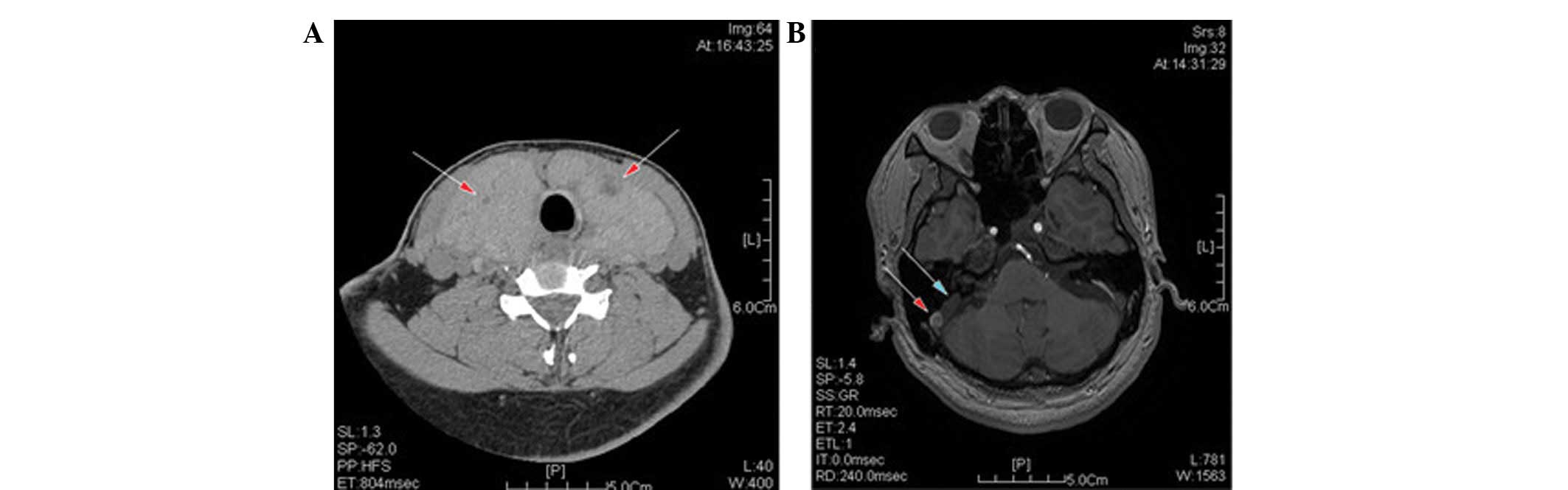
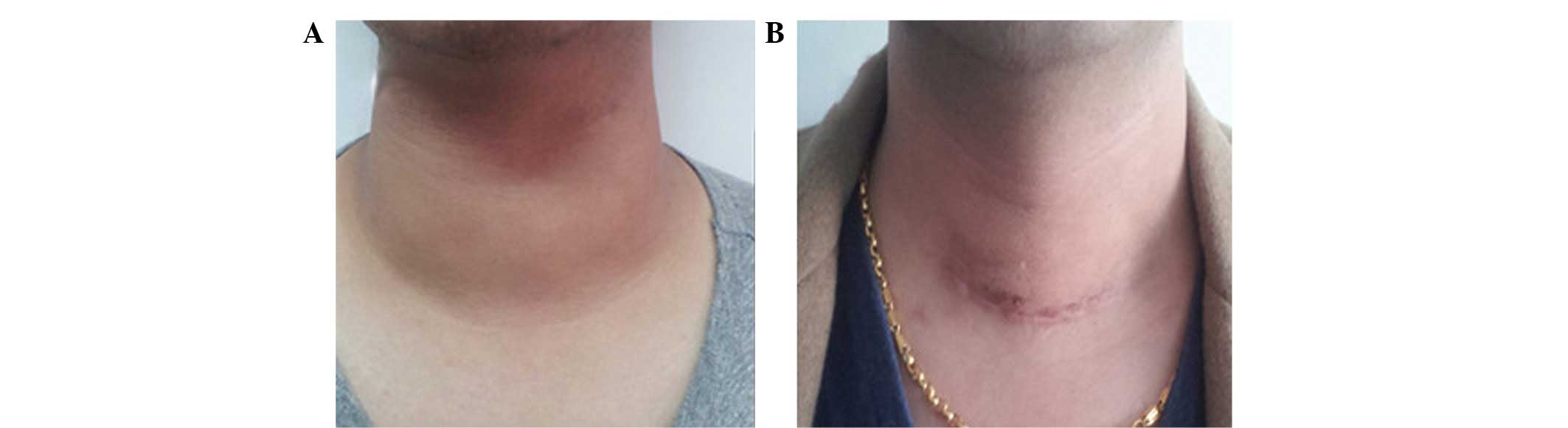
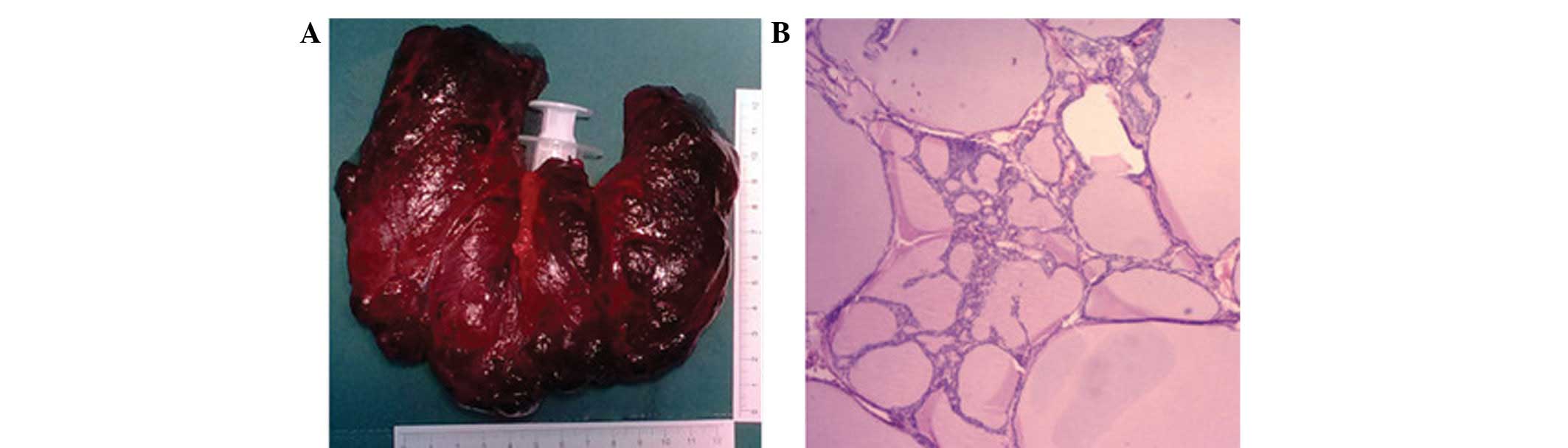
Physical examination showed a visible goiter, grade III according to the World Health Organisation and Pan American Health Organization criteria (3). The thyroid was enlarged, and felt tough with no palpable nodules and the thyroid boundary was clear. Laboratory tests revealed a free thyroxine level of 9.99 pmol/l (normal rannge, 11.5–23.5 pmol/l), a free triiodothyronine level of 6.07 pmol/l (normal range, 3.5–6.5 pmol/l) and a thyroid stimulating hormone level of 2.401 μlU/ml (0.3–5.0 μlU/ml). The thyrotrophin receptor, thyroglobulin and thyroperoxidase antibodies, carcinoembryonic antigen, thyroglobulin and calcitonin levels were within the normal ranges. A chest X-ray revealed a narrowing of the trachea at the level of the superior aperture of the thorax, and a thyroid ultrasound showed multiple hypoechoic signals in each lobe and isthmus of the thyroid. Furthermore, a cervical lymph node enlargement was revealed (Fig. 1). The manifestations of the cervical computed tomogrophy scan included a diffuse enlargement of each lobe, and a thickening of the isthmus of the thyroid gland. Numerous, oval, low- and slightly high-density nodules were identified in the thyroid. Electrical capacitance tomography results were consistent with the signs of a nodular goiter. Magnetic resonance imaging of the inner ear showed that the two vestibular aqueducts were enlarged, more markedly in the right aqueduct. The surgical procedure was performed under general anesthesia with an endotracheal intubation. A left lobectomy and a subtotal right lobectomy were performed and the patient experienced an uneventful postoperative period. Post surgery, the patient was administered permanent hormone replacement therapy with thyroxine (Fig. 2). The thyroid pathology following the thyroidectomy is shown in Fig. 3.

Figure 1

Thyroid ultrasound images. (A) Multiple low echo nodules in each lobe and isthmus of the thyroid (indicated by the arrows). (B) Enlargement of the vestibular aqueducts (indicated by the green arrow) and cavernous sinus (indicated by the red arrow).

Figure 2

Images of the patient (A) prior to and (B) following the thyroidectomy.

Figure 3

Isolated thyroid specimen following the thyroidectomy. (A) The two thyroid tissues measured ~15×13×7 cm, weighed 500 g, were dark red in color and contained colloid. (B) Microscopic pathological analysis showed that the thyroid follicular epithelial cells became short and the hyperplasia was reduced. The absorption cavitations decreased, and the quantity of colloid increased and became thicker. The capillary blood congestion was relieved between the interstitial spaces and the proportion of lymphocytes decreased. Magnification, ×40.

Discussion

Pendred syndrome is an autosomal recessive disorder, which is characterized by familial goiter, congenital deafness and organic iodine deficiency disorders (4). The most prominent clinical symptom in patients with Pendred syndrome is bilateral congenital sensorineural deafness (5). The degree of deafness may differ among individual patients, and may manifest at birth or appear gradually (6). The majority of patients have a speech disorder, and a small number may experience tinnitus and vertigo (7). The relevant imaging examinations in patients with Pendred syndrome show that the majority of patients exhibit a vestibular aqueduct enlargement, with or without inner ear malformation. Furthermore, patients commonly present with a dilated lymph sac and lymphatic vessels (8). A typical inner ear deformation, termed Mondini malformation, is an abnormality of the cochlear that is characterized by an abnormally short and flat cochlear structure (9). Goiter is another feature of Pendred syndrome that typically develops in patients following the onset of deafness. The early stages of goiter is diffuse, which subsequently and gradually develops into multiple nodular goiter. The common clinical sign of goiter in young patients is diffuse enlargement. In adults, the thyroids are typically enlarged with multiple palpable nodules, but with no tremors or vascular murmurs. It has previously been reported that Pendred syndome has the potential to become cancerous (10). Furthermore, goiter is exhibited to varying degrees in patients with Pendred syndrome, however, it is most significant between the ages of 20 and 30 years (8). The molecular mechanisms of Pendred syndrome have been determined by previous studies. The pathogenic gene, SLC26A4 (also termed PDS) is located on chromosome 7q31 (11). The PDS gene encodes the pendrin protein, a highly hydrophobic transmembrane protein that consists of 780 amino acids (12). A previous study demonstrated that this protein is highly expressed in the thyroid, inner ear and kidney (13). Pendrin functions as a chloride/iodide pump in the thyroid, and is responsible for transporting iodine out of the cell and into the follicular colloid (2). A PDS gene mutation may cause abnormal protein expression and affect iodine transport. As a result, patients may develop a clinically enlarged thyroid. Pendrin is expressed in the inner ear for the transport of chloride-formate, which has a critical role in the maintenance of a stable endolymph environment. PDS mutations may, therefore, result in an abnormal pendrin structure and influence its chloride ion transport function in the inner ear. Furthermore, abnormal pendrin structure and function leads to an increase in the internal pressure of the vestibular aqueduct and lymphatic vessels, which increases the pressure of the internal ear. As a result, patients are clinically characterized with a hearing impairment and even deafness (14).

Pendred syndrome was first described by Pendred (1) in 1896. Brian et al reported the case of an inbred family from London, comprising of 12 siblings who were identified to suffer from the goiter-deafness syndrome (15). It was concluded from the observations that the disease may be associated with a recessive gene mutation (16). Despite previous studies, the majority of clinicians are unfamiliar with the disease, resulting in frequent misdiagnoses. Furthermore, patients with Pendred syndrome present with different clinical manifestations, including varying degrees of hearing impairment and thyroid dysfunction, which complicates diagnosis (Dhariry). The perchlorate discharge test has traditionally been used to diagnose Pendred syndrome, however, it is not a specific diagnostic test (17). Patients are administered 10 mg/kg perchlorate, which is taken orally, and Iodine-131 (131I) uptake rates are measured 1 h prior to and following administration. A positive test is indicated by an 131I uptake rate of >10%. The perchlorate discharge test facilitates the diagnosis of Pendred syndrome, however, it is not considered to be the gold standard. The majority of patients exhibit euthyroid goiter, however, certain patients exhibit signs of hypothyroidism (6). In the present case report, a patient with Pendred syndrome was presented, who had no family history of deafness or goiter. The patient had experienced progressive hearing damage since early childhood and, from adolescence, had gradually developed goiter and shown signs of hypothyroidism. Genetic testing is a specific diagnostic method for detecting PDS mutations, however, it is currently difficult to perform in clinical practice. As a result, clinical manifestations and imaging methods are more commonly adopted to determine the diagnosis. There is currently no effective treatment for Pendred syndrome. Adequate thyroid hormone replacement therapy should be prescribed early to prevent further development of goiter. In patients without oppressive symptoms and probable canceration, surgery is not recommended. However, in the present case the patient underwent a left lobectomy and a subtotal right lobectomy due to the large size of the goiter and tracheal compression, which was caused by rapid growth.

In order to manage the goiter of Pendred syndrome, patients require adequate assessment, including observation of clinical symptoms, as well as imaging examinations of the thyroid. Due to the persistence of pathogenic factors, surgical removal of sections of the gland may lead to goiter recurrence postoperatively. As aforemtioned, surgery must be avoided in patients without oppressive symptoms and suspicious canceration. In patients with the aforementioned symptoms surgical intervention is of great significance as due to the persistence of pathogenic factors the surgical removal of the gland may lead to postoperative goiter recurrence. Early intervention measures can be taken to prevent disease progression and reduce thyroid growth, thereby reducing the likelihood of obstruction and canceration.

In conclusion, it is important to determine an early diagnosis of Pendred syndrome; however, reducing the rate of missed diagnoses and misdiagnoses requires further investigation, thus, it is essential for clinicians to improve their understanding of Pendred syndrome. Misdiagnosis may be reduced, in part, by screening for suspected cases, obtaining a full report of the family history and performing relevant imaging examinations. The incidence of the disease may be reduced via genetic analysis of the disease-causing PDS gene, genetic counseling and eugenic prenatal detection. The clinical understanding of Pendred syndrome, as well as the molecular and genetic research based on clinical diagnosis, will have a vital role in the prevention, early detection, diagnosis and treatment of this disease.

References

1 

Pendred V: Deaf mutism and goiter. Lancet. 148:5321896.

2 

Kandasamy N, Fugazzola L, Evans M, et al: Life-threatening metabolic alkalosis in Pendred syndrome. Eur J Endocrinol. 165:167–170. 2011.

3 

Hazarika NC and Mahanta J: Environmental iodine deficiency and goiter prevalence in a block area of the North Eastern region: a retrospective analysis. J Hum Ecol. 15:113–117. 2004.

4 

Kopp P, Pesce L and Solis-S JC: Pendred syndrome and iodide transport in the thyroid. Trends Endocrinol Metab. 19:260–268. 2008.

5 

Reardon W, Coffey R, Phelps PD, et al: Pendred syndrome --100 years of underascertainment. QJM. 90:443–447. 1997.

6 

Fagazzloa L, Cerutti N, Mannavola D, et al: Differential diagnosis between Pendred and pseudo-Pendred syndromes: clinical, radiologic, and molecular studies. Pediatr Res. 51:479–484. 2002.

7 

Kandasamy N, Fugazzola L, Evans M, et al: Life-threatening metabolic alkalosis in Pendred syndrome. Eur J Endocrinol. 165:167–170. 2011.

8 

Sugiura M, Sato E, Nakashima T, et al: Long-term follow-up in patients with Pendred syndrome: vestibular, auditory and other phenotypes. Eur Arch Otorhinolaryngol. 262:737–743. 2005.

9 

Griffith AJ, Telian SA, Downs C, et al: Familial Mondini dysplasia. Laryngoscope. 108:1368–1373. 1998.

10 

Nosé V: Thyroid cancer of follicular cell origin in inherited tumor syndromes. Adv Anat Pathol. 17:428–436. 2010.

11 

Massa G, Jaenen N, de Varebeke SI, et al: Solitary thyroidnoduleas presenting syndrome of Pendred syndrome caused by a novel splice-site mutation in intron 8 of the SLC26A4 gene. Eur J Pediate. 162:674–677. 2003.

12 

Bizhanova A and Kopp P: Genetics and phenomics of Pendred syndrome. Mol Cell Endocrinol. 322:83–90. 2010.

13 

Dhahiry JS, Niamey TK, Daher AK and Biati RK: Pendred’s syndrome; a case report and review of literatures. The Medical Journal of Basrah University. 29:40–42. 2011.

14 

De La Vieja A, Gnter CS and Carrasco N: Molecular analysis of a congenital iodide transport defect: G543E impairs maturation and trafficking of the Na+/I- symporter. Mol Endocrinol. 19:2847–2858. 2005.

15 

Derarmaeker R: Congenital deafness and goiter. Am J Hum Genet. 8:253–256. 1956.

16 

Scott DA, Wang R, Kreman TM, et al: The Pendred syndrome gene encodes a chloride-iodide transport protein. Nat Genet. 21:440–443. 1999.

17 

Reardon W, Coffey R, Pembrey ME, et al: Pitfalls in practice- diagnosis and misdiagnosis in Pendred syndrome. J Audiol Med. 6:1–9. 1997.

Related Articles

  • Abstract
  • View
  • Download
  • Twitter
Copy and paste a formatted citation
Spandidos Publications style
Hu E, Liu L, Jiang R and He X: Goiter and hearing impairment: A case of a male patient with Pendred syndrome. Oncol Lett 8: 2059-2062, 2014.
APA
Hu, E., Liu, L., Jiang, R., & He, X. (2014). Goiter and hearing impairment: A case of a male patient with Pendred syndrome. Oncology Letters, 8, 2059-2062. https://doi.org/10.3892/ol.2014.2461
MLA
Hu, E., Liu, L., Jiang, R., He, X."Goiter and hearing impairment: A case of a male patient with Pendred syndrome". Oncology Letters 8.5 (2014): 2059-2062.
Chicago
Hu, E., Liu, L., Jiang, R., He, X."Goiter and hearing impairment: A case of a male patient with Pendred syndrome". Oncology Letters 8, no. 5 (2014): 2059-2062. https://doi.org/10.3892/ol.2014.2461
Copy and paste a formatted citation
x
Spandidos Publications style
Hu E, Liu L, Jiang R and He X: Goiter and hearing impairment: A case of a male patient with Pendred syndrome. Oncol Lett 8: 2059-2062, 2014.
APA
Hu, E., Liu, L., Jiang, R., & He, X. (2014). Goiter and hearing impairment: A case of a male patient with Pendred syndrome. Oncology Letters, 8, 2059-2062. https://doi.org/10.3892/ol.2014.2461
MLA
Hu, E., Liu, L., Jiang, R., He, X."Goiter and hearing impairment: A case of a male patient with Pendred syndrome". Oncology Letters 8.5 (2014): 2059-2062.
Chicago
Hu, E., Liu, L., Jiang, R., He, X."Goiter and hearing impairment: A case of a male patient with Pendred syndrome". Oncology Letters 8, no. 5 (2014): 2059-2062. https://doi.org/10.3892/ol.2014.2461
Follow us
  • Twitter
  • LinkedIn
  • Facebook
About
  • Spandidos Publications
  • Careers
  • Cookie Policy
  • Privacy Policy
How can we help?
  • Help
  • Live Chat
  • Contact
  • Email to our Support Team