Spandidos Publications Logo
  • About
    • About Spandidos
    • Aims and Scopes
    • Abstracting and Indexing
    • Editorial Policies
    • Reprints and Permissions
    • Job Opportunities
    • Terms and Conditions
    • Contact
  • Journals
    • All Journals
    • Oncology Letters
      • Oncology Letters
      • Information for Authors
      • Editorial Policies
      • Editorial Board
      • Aims and Scope
      • Abstracting and Indexing
      • Bibliographic Information
      • Archive
    • International Journal of Oncology
      • International Journal of Oncology
      • Information for Authors
      • Editorial Policies
      • Editorial Board
      • Aims and Scope
      • Abstracting and Indexing
      • Bibliographic Information
      • Archive
    • Molecular and Clinical Oncology
      • Molecular and Clinical Oncology
      • Information for Authors
      • Editorial Policies
      • Editorial Board
      • Aims and Scope
      • Abstracting and Indexing
      • Bibliographic Information
      • Archive
    • Experimental and Therapeutic Medicine
      • Experimental and Therapeutic Medicine
      • Information for Authors
      • Editorial Policies
      • Editorial Board
      • Aims and Scope
      • Abstracting and Indexing
      • Bibliographic Information
      • Archive
    • International Journal of Molecular Medicine
      • International Journal of Molecular Medicine
      • Information for Authors
      • Editorial Policies
      • Editorial Board
      • Aims and Scope
      • Abstracting and Indexing
      • Bibliographic Information
      • Archive
    • Biomedical Reports
      • Biomedical Reports
      • Information for Authors
      • Editorial Policies
      • Editorial Board
      • Aims and Scope
      • Abstracting and Indexing
      • Bibliographic Information
      • Archive
    • Oncology Reports
      • Oncology Reports
      • Information for Authors
      • Editorial Policies
      • Editorial Board
      • Aims and Scope
      • Abstracting and Indexing
      • Bibliographic Information
      • Archive
    • Molecular Medicine Reports
      • Molecular Medicine Reports
      • Information for Authors
      • Editorial Policies
      • Editorial Board
      • Aims and Scope
      • Abstracting and Indexing
      • Bibliographic Information
      • Archive
    • World Academy of Sciences Journal
      • World Academy of Sciences Journal
      • Information for Authors
      • Editorial Policies
      • Editorial Board
      • Aims and Scope
      • Abstracting and Indexing
      • Bibliographic Information
      • Archive
    • International Journal of Functional Nutrition
      • International Journal of Functional Nutrition
      • Information for Authors
      • Editorial Policies
      • Editorial Board
      • Aims and Scope
      • Abstracting and Indexing
      • Bibliographic Information
      • Archive
    • International Journal of Epigenetics
      • International Journal of Epigenetics
      • Information for Authors
      • Editorial Policies
      • Editorial Board
      • Aims and Scope
      • Abstracting and Indexing
      • Bibliographic Information
      • Archive
    • Medicine International
      • Medicine International
      • Information for Authors
      • Editorial Policies
      • Editorial Board
      • Aims and Scope
      • Abstracting and Indexing
      • Bibliographic Information
      • Archive
  • Articles
  • Information
    • Information for Authors
    • Information for Reviewers
    • Information for Librarians
    • Information for Advertisers
    • Conferences
  • Language Editing
Spandidos Publications Logo
  • About
    • About Spandidos
    • Aims and Scopes
    • Abstracting and Indexing
    • Editorial Policies
    • Reprints and Permissions
    • Job Opportunities
    • Terms and Conditions
    • Contact
  • Journals
    • All Journals
    • Biomedical Reports
      • Information for Authors
      • Editorial Policies
      • Editorial Board
      • Aims and Scope
      • Abstracting and Indexing
      • Bibliographic Information
      • Archive
    • Experimental and Therapeutic Medicine
      • Information for Authors
      • Editorial Policies
      • Editorial Board
      • Aims and Scope
      • Abstracting and Indexing
      • Bibliographic Information
      • Archive
    • International Journal of Epigenetics
      • Information for Authors
      • Editorial Policies
      • Editorial Board
      • Aims and Scope
      • Abstracting and Indexing
      • Bibliographic Information
      • Archive
    • International Journal of Functional Nutrition
      • Information for Authors
      • Editorial Policies
      • Editorial Board
      • Aims and Scope
      • Abstracting and Indexing
      • Bibliographic Information
      • Archive
    • International Journal of Molecular Medicine
      • Information for Authors
      • Editorial Policies
      • Editorial Board
      • Aims and Scope
      • Abstracting and Indexing
      • Bibliographic Information
      • Archive
    • International Journal of Oncology
      • Information for Authors
      • Editorial Policies
      • Editorial Board
      • Aims and Scope
      • Abstracting and Indexing
      • Bibliographic Information
      • Archive
    • Medicine International
      • Information for Authors
      • Editorial Policies
      • Editorial Board
      • Aims and Scope
      • Abstracting and Indexing
      • Bibliographic Information
      • Archive
    • Molecular and Clinical Oncology
      • Information for Authors
      • Editorial Policies
      • Editorial Board
      • Aims and Scope
      • Abstracting and Indexing
      • Bibliographic Information
      • Archive
    • Molecular Medicine Reports
      • Information for Authors
      • Editorial Policies
      • Editorial Board
      • Aims and Scope
      • Abstracting and Indexing
      • Bibliographic Information
      • Archive
    • Oncology Letters
      • Information for Authors
      • Editorial Policies
      • Editorial Board
      • Aims and Scope
      • Abstracting and Indexing
      • Bibliographic Information
      • Archive
    • Oncology Reports
      • Information for Authors
      • Editorial Policies
      • Editorial Board
      • Aims and Scope
      • Abstracting and Indexing
      • Bibliographic Information
      • Archive
    • World Academy of Sciences Journal
      • Information for Authors
      • Editorial Policies
      • Editorial Board
      • Aims and Scope
      • Abstracting and Indexing
      • Bibliographic Information
      • Archive
  • Articles
  • Information
    • For Authors
    • For Reviewers
    • For Librarians
    • For Advertisers
    • Conferences
  • Language Editing
Login Register Submit
  • This site uses cookies
  • You can change your cookie settings at any time by following the instructions in our Cookie Policy. To find out more, you may read our Privacy Policy.

    I agree
Search articles by DOI, keyword, author or affiliation
Search
Advanced Search
presentation
Oncology Letters
Join Editorial Board Propose a Special Issue
Print ISSN: 1792-1074 Online ISSN: 1792-1082
Journal Cover
November-2014 Volume 8 Issue 5

Full Size Image

Sign up for eToc alerts
Recommend to Library

Journals

International Journal of Molecular Medicine

International Journal of Molecular Medicine

International Journal of Molecular Medicine is an international journal devoted to molecular mechanisms of human disease.

International Journal of Oncology

International Journal of Oncology

International Journal of Oncology is an international journal devoted to oncology research and cancer treatment.

Molecular Medicine Reports

Molecular Medicine Reports

Covers molecular medicine topics such as pharmacology, pathology, genetics, neuroscience, infectious diseases, molecular cardiology, and molecular surgery.

Oncology Reports

Oncology Reports

Oncology Reports is an international journal devoted to fundamental and applied research in Oncology.

Experimental and Therapeutic Medicine

Experimental and Therapeutic Medicine

Experimental and Therapeutic Medicine is an international journal devoted to laboratory and clinical medicine.

Oncology Letters

Oncology Letters

Oncology Letters is an international journal devoted to Experimental and Clinical Oncology.

Biomedical Reports

Biomedical Reports

Explores a wide range of biological and medical fields, including pharmacology, genetics, microbiology, neuroscience, and molecular cardiology.

Molecular and Clinical Oncology

Molecular and Clinical Oncology

International journal addressing all aspects of oncology research, from tumorigenesis and oncogenes to chemotherapy and metastasis.

World Academy of Sciences Journal

World Academy of Sciences Journal

Multidisciplinary open-access journal spanning biochemistry, genetics, neuroscience, environmental health, and synthetic biology.

International Journal of Functional Nutrition

International Journal of Functional Nutrition

Open-access journal combining biochemistry, pharmacology, immunology, and genetics to advance health through functional nutrition.

International Journal of Epigenetics

International Journal of Epigenetics

Publishes open-access research on using epigenetics to advance understanding and treatment of human disease.

Medicine International

Medicine International

An International Open Access Journal Devoted to General Medicine.

Journal Cover
November-2014 Volume 8 Issue 5

Full Size Image

Sign up for eToc alerts
Recommend to Library

  • Article
  • Citations
    • Cite This Article
    • Download Citation
    • Create Citation Alert
    • Remove Citation Alert
    • Cited By
  • Similar Articles
    • Related Articles (in Spandidos Publications)
    • Similar Articles (Google Scholar)
    • Similar Articles (PubMed)
  • Download PDF
  • Download XML
  • View XML
Case Report

Primary squamous cell carcinoma of the stomach: A case report

  • Authors:
    • Sun Hwi Hwang
    • Jung Hee Lee
    • Kyungbin Kim
    • Dong Hun Shin
    • Jee  Yeon Kim
    • Mee Young Sol
    • Kyung Un Choi
  • View Affiliations / Copyright

    Affiliations: Department of Surgery, Pusan National University Yangsan Hospital, Yangsan, Gyeongsangnam‑do 626‑770, Republic of Korea, Department of Pathology, Pusan National University Yangsan Hospital, Yangsan, Gyeongsangnam‑do 626‑770, Republic of Korea
  • Pages: 2122-2124
    |
    Published online on: September 1, 2014
       https://doi.org/10.3892/ol.2014.2492
  • Expand metrics +
Metrics: Total Views: 0 (Spandidos Publications: | PMC Statistics: )
Metrics: Total PDF Downloads: 0 (Spandidos Publications: | PMC Statistics: )
Cited By (CrossRef): 0 citations Loading Articles...

This article is mentioned in:


Abstract

Pure squamous cell carcinoma (SCC) of the stomach is rare and resembles SCC arising elsewhere in the body. The pathogenesis of SCC remains unclear and controversial. At present, <100 cases of primary SCC of the stomach have been reported. The current study presents a case of SCC of the stomach in a 61‑year‑old male. Total gastrectomy was performed and a 7.0x6.7x4.5‑cm tumor with a superiorly located ulcer was identified in the cardia. Upon histological examination, a moderately‑differentiated SCC was observed. Tumor cells extended to the serosa, and the perigastric regional lymph node was also involved. No evidence of human papillomavirus (HPV) or Epstein‑Barr virus (EBV) infection was identified using a DNA microarray and in situ hybridization, respectively. A post‑operative computed tomography scan four months after the gastrectomy revealed tumor recurrence and dissemination of the tumor to the jejunum and pancreas. The patient succumbed to the disease six months later despite the administration of low‑dose adjuvant 5‑fluorouracil/cisplatin chemotherapy.

Introduction

The incidence of primary squamous cell carcinoma (SCC) of the stomach ranges between 0.04 and 0.09%, making the disease an extremely rare entity (1). SCC was first identified in 1895, and <100 cases have been reported worldwide (2–15). Although theories exist regarding its development in the stomach (2,6,7), the pathogenesis of SCC remains unclear. Primary SCC of the stomach is often diagnosed at a late stage, and its prognosis is generally poor. Furthermore, no effective adjuvant chemotherapy has been identified.

Case report

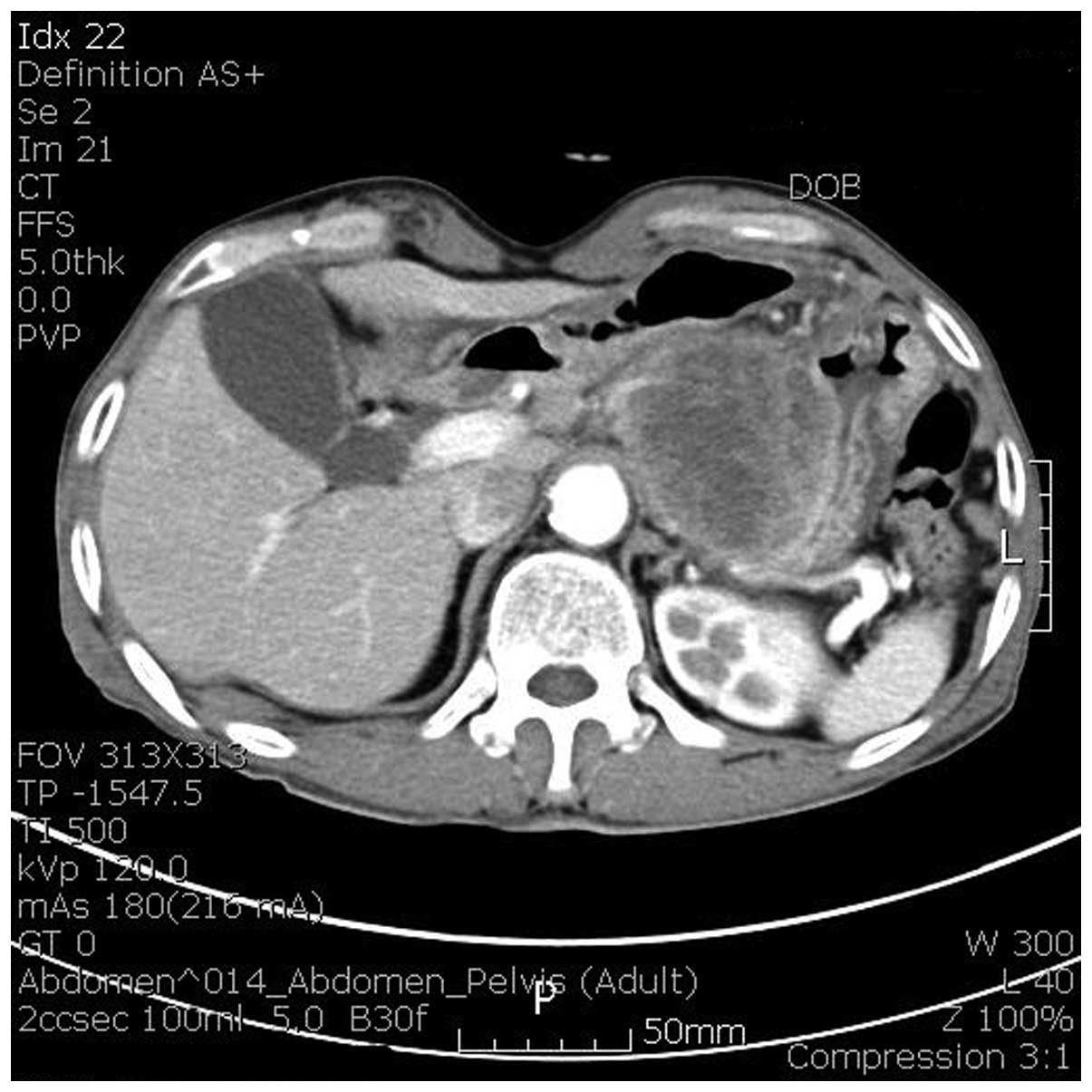
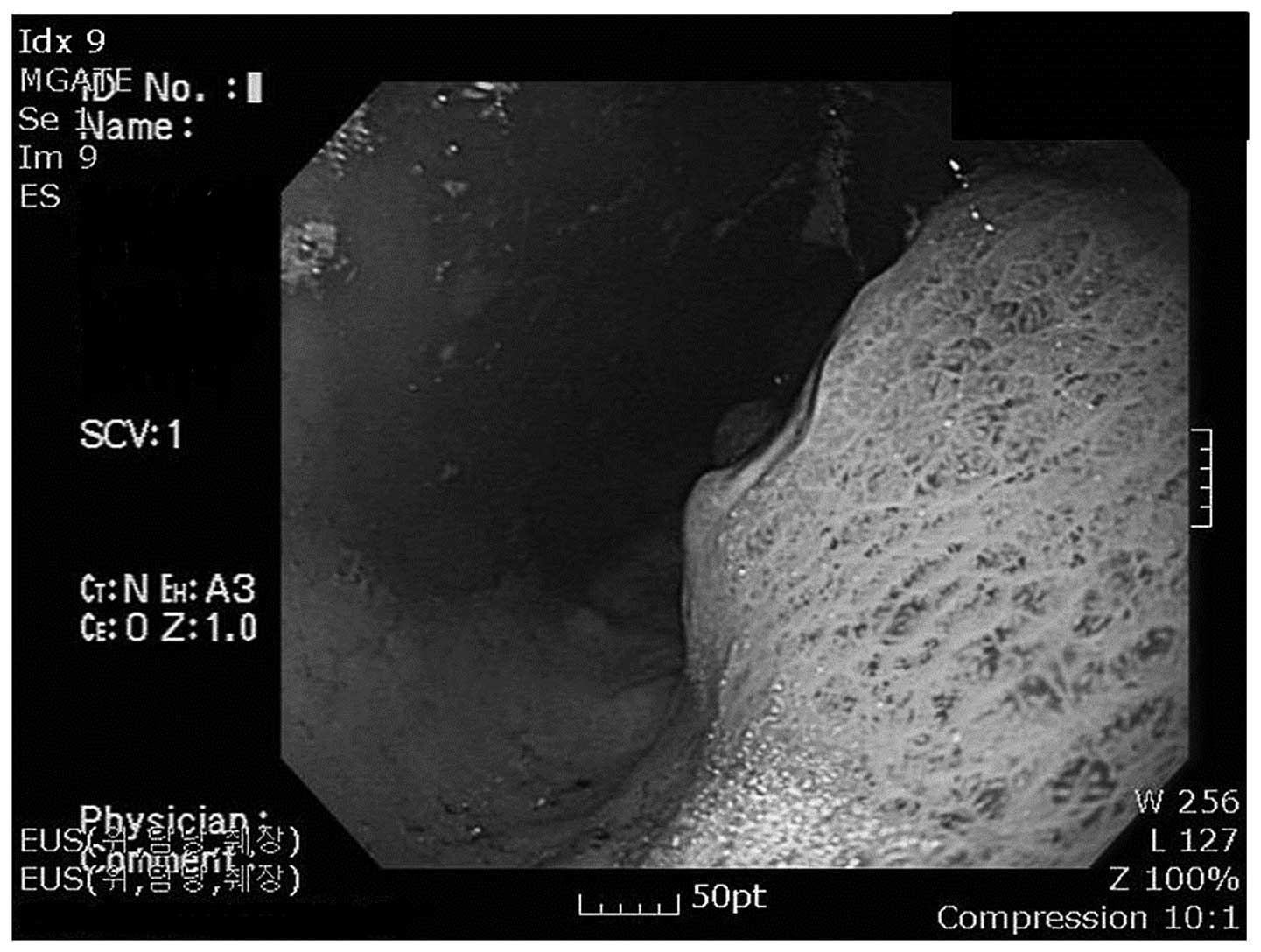
A 61-year-old male was admitted to the Pusan National University Yangsan Hospital (Yangsan, Korea) with a six-month history of weight loss, totaling ~6 kg. The patient exhibited no symptoms, including abdominal pain, nausea, vomiting or melena. Furthermore, a physical examination and routine laboratory tests on admission revealed no specific abnormalities. The patient underwent an abdominal computed tomography (CT) scan, which demonstrated a heterogeneously-enhanced tumor mass of 6.5 cm (Fig. 1). Endoscopic examination and endoscopic ultrasonography of the gastrointestinal tract revealed a submucosal tumor mass of 6 cm, with surface ulceration on the fundus and cardia of the stomach (Fig. 2). These observations indicated that the tumor was derived from non-epithelial cells, such as those that derive a gastrointestinal stroma tumor or malignant lymphoma. Notably, a biopsy specimen revealed the diagnosis of SCC.

Figure 1

Computed tomography revealing a heterogeneously-enhanced lesion of the cardia.

Figure 2

Endoscopic observation revealing a large tumor located predominantly in the cardia, which did not involve the gastroesophageal junction.

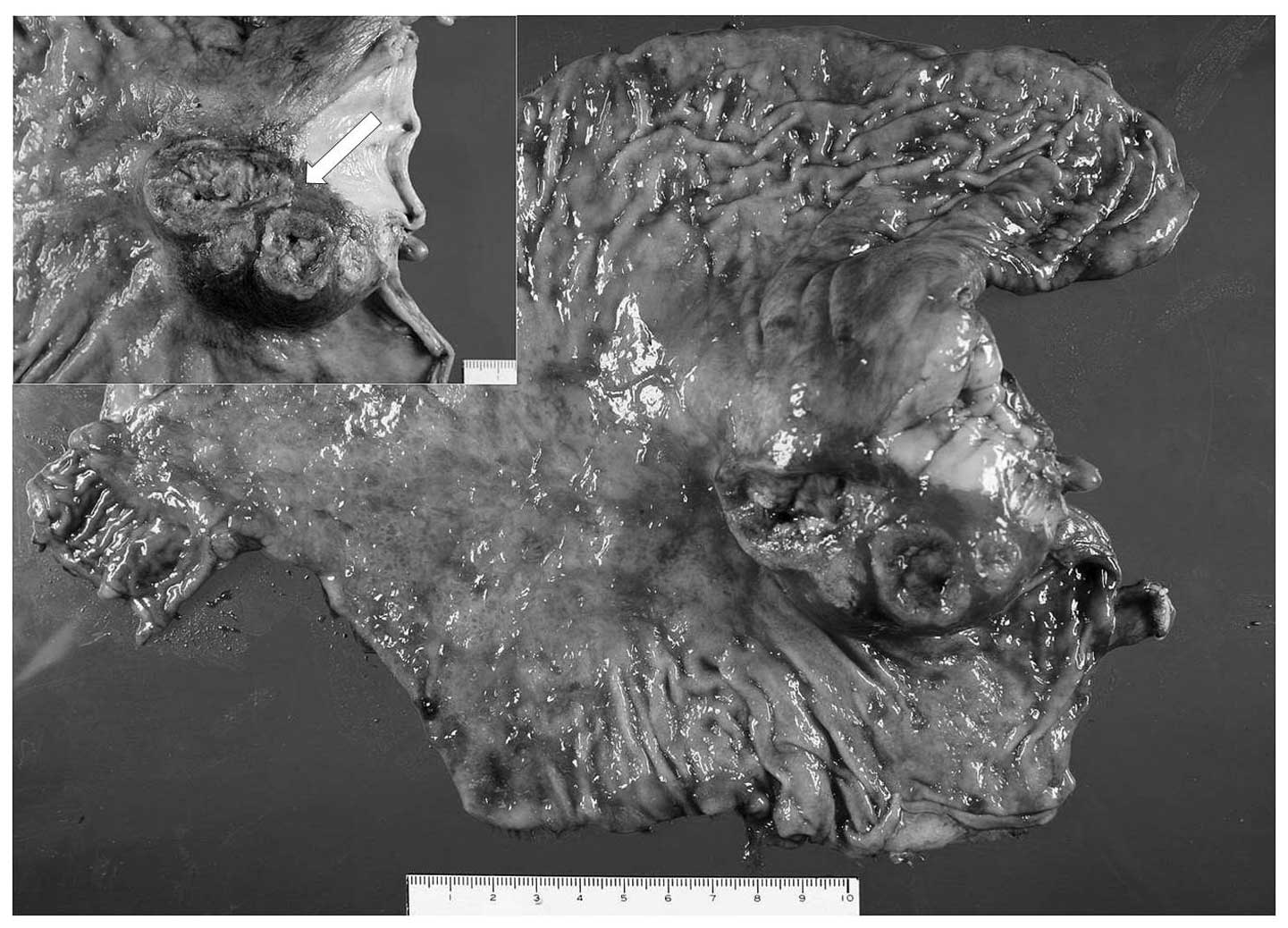
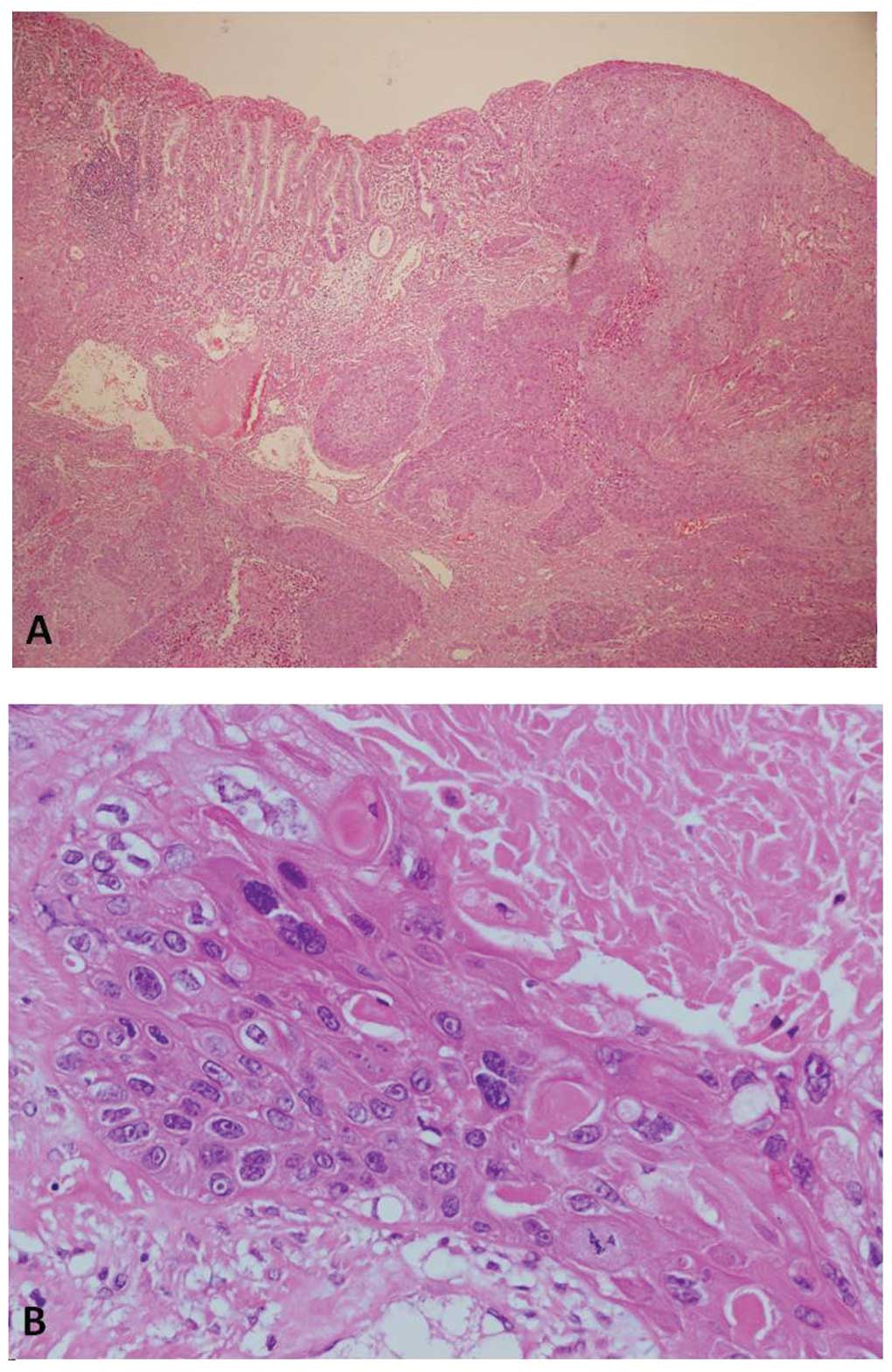
The patient underwent a total gastrectomy. The resected stomach exhibited a 7.0×6.7×4.5-cm tumor in the cardia, in the vicinity of the gastroesophageal junction (GEJ). The tumor exhibited a superiorly located ulcer and infiltrated the stomach wall (Fig. 3). A 0.7-cm tumor-free section was identified between the GEJ and the tumor. Histologically, the tumor was composed of moderately-differentiated squamous cells with keratinization and intercellular bridges in certain sections (Fig. 4). No evidence of glandular differentiation was identified within the tumor. SCC in situ without squamous metaplasia was observed adjacent to the tumor. The tumor was not contiguous with the squamous mucosa of the distal esophagus and was growing predominantly in the submucosal and muscle layers. The serosal layer exposed to the tumor and the gastric mucosa exhibited focal invasion by the tumor. One section of the lymph nodes of the lesser curvature exhibited metastatic SCC.

Figure 3

Gross findings of the resected stomach. A definite band of normal gastric mucosa was identified between the gastroesophageal junction and the carcinoma (shown by the arrow on the inset image).

Figure 4

Microscopic observations of the tumor. (A) The tumor exhibited infiltrating tumor nests and overlying SCC in situ (stain, hematoxylin and eosin; magnification, ×20) and consisted of (B) moderately-differentiated SCC, exhibiting a keratin formation and intercellular bridges (stain, hematoxylin and eosin; magnification, ×400). SCC, squamous cell carcinoma.

To investigate the role of human papillomavirus (HPV) and Epstein-Barr virus (EBV) infection in the carcinogenesis of SCC arising in the stomach, DNA microarray and in situ hybridization, respectively, were used for detection. However, no evidence of HPV or EBV infection was identified in the patient.

One month after the surgery, combination chemotherapy consisting of cisplatin (90 mg every 15 min) and 5-flourouracil (1,500 mg every 10 h) was administered for five days every 21 days. The patient received two cycles of chemotherapy. A follow-up abdominal CT scan four months later revealed tumor invasion of the jejunum and pancreas, enlargement of abdominal lymph nodes and multiple foci of liver metastasis. The patient succumbed to the disease six months later.

Discussion

Primary SCC of the stomach consists of only SCC as opposed to one consisting of adenocarcinoma, the most common malignancy in the stomach. The clinicopathological features of 90 patients with SCC are shown in Table I. Data were selected from previous studies in the English literature (2–15). The incidence of SCC was three times higher in the male patients compared with the females. The mean age of the patients was 59.7 years and the tumor size ranged between 2.1 and 17 cm (mean size, 7.1 cm).

Table I

Characteristics of patients with primary squamous cell carcinoma of the stomach (n=90).

Table I

Characteristics of patients with primary squamous cell carcinoma of the stomach (n=90).

ParameterValue
Mean patient age, years59.7
Gender, n (%)
 Male63 (70.0)
 Female18 (20.0)
 Not stated9 (10.0)
Tumor location, n (%)
 Proximal22 (24.4)
 Middle22 (24.4)
 Distal18 (20.0)
 Not stated28 (31.1)
Mean tumor size, cm7.1

In SCC proximal to the GEJ, evidence of its gastric origin must be present. The Japanese Gastric Cancer Association proposed the following criteria for the diagnosis of primary SCC (16): The tumor must consist of only SCC without adenocarcinoma, and any tumor close to the GEJ must not be diagnosed as gastric SCC without evidence that it originated in the stomach. The diagnosis of primary gastric SCC requires that normal gastric mucosa is present between the GEJ and SCC of the stomach. The present case matched these criteria and thus was diagnosed as primary SCC of the stomach cardia. However, Parks (2) proposed that SCC occurring in the cardia must not be considered as a primary gastric carcinoma, as it may arise from the distal esophagus or misplaced islands of squamous cells in the cardia. A number of previous studies have proposed that it may be referred to as gastric SCC when the lesion is completely separate from the esophageal epithelium (3–5).

A number of theories regarding the origin of SCC of the stomach have been proposed, including totipotent stem cells, squamous metaplasia, foci of heterotopic squamous epithelium and the overgrowth of a squamous epithelium element in a primary adenocarcinoma. However, the pathogenesis of SCC remains unclear. We favor the theory that SCC originates from the squamous metaplastic epithelium or heterotopic squamous epithelium, as the presence of squamous epithelium in the cardia has been reported (6), squamous metaplasia has been observed with SCC (7) and evidence of SCC in situ was identified during pathological examination in the present case.

Takita et al (17) proposed that EBV infection may be involved in the pathogenesis of certain cases of gastric SCC. In this study, a liquid hybridization assay for HPV infection and a polymerase chain reaction for EBV infection was performed and revealed the presence of EBV infection in surgical specimens of the tumor. However, no evidence of HPV or EBV infection was identified in the present case when using DNA microarray for HPV infection and in situ hybridization for EBV infection.

A standard chemotherapy regimen for this disease has not yet been established, and only one previous study has demonstrated the efficacy of chemotherapy against the tumor (4). The prognosis of primary SCC of the stomach has not been clearly defined. However, previous studies have indicated a poor prognosis for this disease, as the majority of lesions are detected at an advanced stage, with marked infiltrative growth. The present case exhibited disease progression despite chemotherapy administration.

Acknowledgements

This study was supported by a two-year research grant from Pusan National University (Yangsan, Gyeongsangnam-do, Republic of Korea).

References

1 

Straus R, Henschel S and Fortman DJ: Primary adenosquamous carcinoma of the stomach. A case report and review. Cancer. 24:985–995. 1969.

2 

Parks RE: Squamous neoplasms of the stomach. Am J Roentgenol Radium Ther Nucl Med. 101:447–449. 1967.

3 

Schwab G, Wetscher G, Dietze O, Schmid K and Pointner R: Primary squamous cell carcinoma of the stomach in a seventeen-year-old boy. Surg Today. 22:561–564. 1992.

4 

Marubashi S, Yano H, Monden T, et al: Primary squamous cell carcinoma of the stomach. Gastric Cancer. 2:136–141. 1999.

5 

Tokuhara K, Nakano T, Inoue K, Nakane Y and Kwon AH: Primary squamous cell carcinoma in the gastric remnant. Surg Today. 42:666–669. 2012.

6 

Fass R and Sampliner RE: Extension of squamous epithelium into the proximal stomach: a newly recognized mucosal abnormality. Endoscopy. 32:27–32. 2000.

7 

Oono Y, Fu K, Nagahisa E, et al: Primary gastric squamous cell carcinoma in situ originating from gastric squamous metaplasia. Endoscopy. 42(Suppl 2): E290–E291. 2010.

8 

Raju GC, Barton EN, Marchack D and Naraynsingh V: Hypercalcaemia in primary squamous cell carcinoma of the stomach. J R Soc Med. 80:587–588. 1987.

9 

Lee WA, Woo DK, Kim YI and Kim WH: p53, p16 and RB expression in adenosquamous and squamous cell carcinomas of the stomach. Pathol Res Pract. 195:747–752. 1999.

10 

Dursun M, Yaldiz M, Işikdoğan A, Yilmaz G, Canoruç F, Ormeci N and Yilmaz S: Primary squamous cell carcinoma of the stomach: a case report and review of the literature. Eur J Gastroenterol Hepatol. 15:329–330. 2003.

11 

Hara J, Masuda H, Ishii Y, et al: Exophytic primary squamous cell carcinoma of the stomach. J Gastroenterol. 39:299–300. 2004.

12 

Yildirim Y, Akcali Z, Bilezikci B and Ozyilkan O: Primary squamous cell carcinoma of the stomach: a case report. Tumori. 91:440–442. 2005.

13 

Choi SB, Park SS, Oh SY, et al: Primary squamous cell carcinoma of the stomach that developed with Menetrier’s disease. Dig Dis Sci. 52:1722–1724. 2007.

14 

Callacondo D, Ganoza-Salas A, Anicama-Lima W, Quispe-Mauricio A and Longacre TA: Primary squamous cell carcinoma of the stomach with paraneoplastic leukocytosis: a case report and review of literature. Hum Pathol. 40:1494–1498. 2009.

15 

Karaca G, Pekcici MR, Özer H, Köklü S, Kavlakoğlu B, Astarci M and Güler O: Primary squamous cell carcinoma of the stomach in a 68-years-old man. Geriatr Gerontol Int. 11:119–120. 2011.

16 

Japanese Gastric Cancer Association. Japanese Classification of Gastric Carcinoma. 13th edition. Tokoyo: Kanchara; 1999

17 

Takita J, Kato H, Miyazaki T, et al: Primary squamous cell carcinoma of the stomach: a case report with immunohistochemical and molecular biologic studies. Hepatogastroenterology. 52:969–974. 2005.

Related Articles

  • Abstract
  • View
  • Download
  • Twitter
Copy and paste a formatted citation
Spandidos Publications style
Hwang SH, Lee JH, Kim K, Shin DH, Kim JY, Sol MY and Choi KU: Primary squamous cell carcinoma of the stomach: A case report. Oncol Lett 8: 2122-2124, 2014.
APA
Hwang, S.H., Lee, J.H., Kim, K., Shin, D.H., Kim, J.Y., Sol, M.Y., & Choi, K.U. (2014). Primary squamous cell carcinoma of the stomach: A case report. Oncology Letters, 8, 2122-2124. https://doi.org/10.3892/ol.2014.2492
MLA
Hwang, S. H., Lee, J. H., Kim, K., Shin, D. H., Kim, J. Y., Sol, M. Y., Choi, K. U."Primary squamous cell carcinoma of the stomach: A case report". Oncology Letters 8.5 (2014): 2122-2124.
Chicago
Hwang, S. H., Lee, J. H., Kim, K., Shin, D. H., Kim, J. Y., Sol, M. Y., Choi, K. U."Primary squamous cell carcinoma of the stomach: A case report". Oncology Letters 8, no. 5 (2014): 2122-2124. https://doi.org/10.3892/ol.2014.2492
Copy and paste a formatted citation
x
Spandidos Publications style
Hwang SH, Lee JH, Kim K, Shin DH, Kim JY, Sol MY and Choi KU: Primary squamous cell carcinoma of the stomach: A case report. Oncol Lett 8: 2122-2124, 2014.
APA
Hwang, S.H., Lee, J.H., Kim, K., Shin, D.H., Kim, J.Y., Sol, M.Y., & Choi, K.U. (2014). Primary squamous cell carcinoma of the stomach: A case report. Oncology Letters, 8, 2122-2124. https://doi.org/10.3892/ol.2014.2492
MLA
Hwang, S. H., Lee, J. H., Kim, K., Shin, D. H., Kim, J. Y., Sol, M. Y., Choi, K. U."Primary squamous cell carcinoma of the stomach: A case report". Oncology Letters 8.5 (2014): 2122-2124.
Chicago
Hwang, S. H., Lee, J. H., Kim, K., Shin, D. H., Kim, J. Y., Sol, M. Y., Choi, K. U."Primary squamous cell carcinoma of the stomach: A case report". Oncology Letters 8, no. 5 (2014): 2122-2124. https://doi.org/10.3892/ol.2014.2492
Follow us
  • Twitter
  • LinkedIn
  • Facebook
About
  • Spandidos Publications
  • Careers
  • Cookie Policy
  • Privacy Policy
How can we help?
  • Help
  • Live Chat
  • Contact
  • Email to our Support Team