Spandidos Publications Logo
  • About
    • About Spandidos
    • Aims and Scopes
    • Abstracting and Indexing
    • Editorial Policies
    • Reprints and Permissions
    • Job Opportunities
    • Terms and Conditions
    • Contact
  • Journals
    • All Journals
    • Oncology Letters
      • Oncology Letters
      • Information for Authors
      • Editorial Policies
      • Editorial Board
      • Aims and Scope
      • Abstracting and Indexing
      • Bibliographic Information
      • Archive
    • International Journal of Oncology
      • International Journal of Oncology
      • Information for Authors
      • Editorial Policies
      • Editorial Board
      • Aims and Scope
      • Abstracting and Indexing
      • Bibliographic Information
      • Archive
    • Molecular and Clinical Oncology
      • Molecular and Clinical Oncology
      • Information for Authors
      • Editorial Policies
      • Editorial Board
      • Aims and Scope
      • Abstracting and Indexing
      • Bibliographic Information
      • Archive
    • Experimental and Therapeutic Medicine
      • Experimental and Therapeutic Medicine
      • Information for Authors
      • Editorial Policies
      • Editorial Board
      • Aims and Scope
      • Abstracting and Indexing
      • Bibliographic Information
      • Archive
    • International Journal of Molecular Medicine
      • International Journal of Molecular Medicine
      • Information for Authors
      • Editorial Policies
      • Editorial Board
      • Aims and Scope
      • Abstracting and Indexing
      • Bibliographic Information
      • Archive
    • Biomedical Reports
      • Biomedical Reports
      • Information for Authors
      • Editorial Policies
      • Editorial Board
      • Aims and Scope
      • Abstracting and Indexing
      • Bibliographic Information
      • Archive
    • Oncology Reports
      • Oncology Reports
      • Information for Authors
      • Editorial Policies
      • Editorial Board
      • Aims and Scope
      • Abstracting and Indexing
      • Bibliographic Information
      • Archive
    • Molecular Medicine Reports
      • Molecular Medicine Reports
      • Information for Authors
      • Editorial Policies
      • Editorial Board
      • Aims and Scope
      • Abstracting and Indexing
      • Bibliographic Information
      • Archive
    • World Academy of Sciences Journal
      • World Academy of Sciences Journal
      • Information for Authors
      • Editorial Policies
      • Editorial Board
      • Aims and Scope
      • Abstracting and Indexing
      • Bibliographic Information
      • Archive
    • International Journal of Functional Nutrition
      • International Journal of Functional Nutrition
      • Information for Authors
      • Editorial Policies
      • Editorial Board
      • Aims and Scope
      • Abstracting and Indexing
      • Bibliographic Information
      • Archive
    • International Journal of Epigenetics
      • International Journal of Epigenetics
      • Information for Authors
      • Editorial Policies
      • Editorial Board
      • Aims and Scope
      • Abstracting and Indexing
      • Bibliographic Information
      • Archive
    • Medicine International
      • Medicine International
      • Information for Authors
      • Editorial Policies
      • Editorial Board
      • Aims and Scope
      • Abstracting and Indexing
      • Bibliographic Information
      • Archive
  • Articles
  • Information
    • Information for Authors
    • Information for Reviewers
    • Information for Librarians
    • Information for Advertisers
    • Conferences
  • Language Editing
Spandidos Publications Logo
  • About
    • About Spandidos
    • Aims and Scopes
    • Abstracting and Indexing
    • Editorial Policies
    • Reprints and Permissions
    • Job Opportunities
    • Terms and Conditions
    • Contact
  • Journals
    • All Journals
    • Biomedical Reports
      • Information for Authors
      • Editorial Policies
      • Editorial Board
      • Aims and Scope
      • Abstracting and Indexing
      • Bibliographic Information
      • Archive
    • Experimental and Therapeutic Medicine
      • Information for Authors
      • Editorial Policies
      • Editorial Board
      • Aims and Scope
      • Abstracting and Indexing
      • Bibliographic Information
      • Archive
    • International Journal of Epigenetics
      • Information for Authors
      • Editorial Policies
      • Editorial Board
      • Aims and Scope
      • Abstracting and Indexing
      • Bibliographic Information
      • Archive
    • International Journal of Functional Nutrition
      • Information for Authors
      • Editorial Policies
      • Editorial Board
      • Aims and Scope
      • Abstracting and Indexing
      • Bibliographic Information
      • Archive
    • International Journal of Molecular Medicine
      • Information for Authors
      • Editorial Policies
      • Editorial Board
      • Aims and Scope
      • Abstracting and Indexing
      • Bibliographic Information
      • Archive
    • International Journal of Oncology
      • Information for Authors
      • Editorial Policies
      • Editorial Board
      • Aims and Scope
      • Abstracting and Indexing
      • Bibliographic Information
      • Archive
    • Medicine International
      • Information for Authors
      • Editorial Policies
      • Editorial Board
      • Aims and Scope
      • Abstracting and Indexing
      • Bibliographic Information
      • Archive
    • Molecular and Clinical Oncology
      • Information for Authors
      • Editorial Policies
      • Editorial Board
      • Aims and Scope
      • Abstracting and Indexing
      • Bibliographic Information
      • Archive
    • Molecular Medicine Reports
      • Information for Authors
      • Editorial Policies
      • Editorial Board
      • Aims and Scope
      • Abstracting and Indexing
      • Bibliographic Information
      • Archive
    • Oncology Letters
      • Information for Authors
      • Editorial Policies
      • Editorial Board
      • Aims and Scope
      • Abstracting and Indexing
      • Bibliographic Information
      • Archive
    • Oncology Reports
      • Information for Authors
      • Editorial Policies
      • Editorial Board
      • Aims and Scope
      • Abstracting and Indexing
      • Bibliographic Information
      • Archive
    • World Academy of Sciences Journal
      • Information for Authors
      • Editorial Policies
      • Editorial Board
      • Aims and Scope
      • Abstracting and Indexing
      • Bibliographic Information
      • Archive
  • Articles
  • Information
    • For Authors
    • For Reviewers
    • For Librarians
    • For Advertisers
    • Conferences
  • Language Editing
Login Register Submit
  • This site uses cookies
  • You can change your cookie settings at any time by following the instructions in our Cookie Policy. To find out more, you may read our Privacy Policy.

    I agree
Search articles by DOI, keyword, author or affiliation
Search
Advanced Search
presentation
Oncology Letters
Join Editorial Board Propose a Special Issue
Print ISSN: 1792-1074 Online ISSN: 1792-1082
Journal Cover
January-2015 Volume 9 Issue 1

Full Size Image

Sign up for eToc alerts
Recommend to Library

Journals

International Journal of Molecular Medicine

International Journal of Molecular Medicine

International Journal of Molecular Medicine is an international journal devoted to molecular mechanisms of human disease.

International Journal of Oncology

International Journal of Oncology

International Journal of Oncology is an international journal devoted to oncology research and cancer treatment.

Molecular Medicine Reports

Molecular Medicine Reports

Covers molecular medicine topics such as pharmacology, pathology, genetics, neuroscience, infectious diseases, molecular cardiology, and molecular surgery.

Oncology Reports

Oncology Reports

Oncology Reports is an international journal devoted to fundamental and applied research in Oncology.

Experimental and Therapeutic Medicine

Experimental and Therapeutic Medicine

Experimental and Therapeutic Medicine is an international journal devoted to laboratory and clinical medicine.

Oncology Letters

Oncology Letters

Oncology Letters is an international journal devoted to Experimental and Clinical Oncology.

Biomedical Reports

Biomedical Reports

Explores a wide range of biological and medical fields, including pharmacology, genetics, microbiology, neuroscience, and molecular cardiology.

Molecular and Clinical Oncology

Molecular and Clinical Oncology

International journal addressing all aspects of oncology research, from tumorigenesis and oncogenes to chemotherapy and metastasis.

World Academy of Sciences Journal

World Academy of Sciences Journal

Multidisciplinary open-access journal spanning biochemistry, genetics, neuroscience, environmental health, and synthetic biology.

International Journal of Functional Nutrition

International Journal of Functional Nutrition

Open-access journal combining biochemistry, pharmacology, immunology, and genetics to advance health through functional nutrition.

International Journal of Epigenetics

International Journal of Epigenetics

Publishes open-access research on using epigenetics to advance understanding and treatment of human disease.

Medicine International

Medicine International

An International Open Access Journal Devoted to General Medicine.

Journal Cover
January-2015 Volume 9 Issue 1

Full Size Image

Sign up for eToc alerts
Recommend to Library

  • Article
  • Citations
    • Cite This Article
    • Download Citation
    • Create Citation Alert
    • Remove Citation Alert
    • Cited By
  • Similar Articles
    • Related Articles (in Spandidos Publications)
    • Similar Articles (Google Scholar)
    • Similar Articles (PubMed)
  • Download PDF
  • Download XML
  • View XML
Case Report Open Access

Peripheral primitive neuroectodermal tumor of the kidney in a 51‑year‑old female following breast cancer: A case report and review of the literature

  • Authors:
    • Jinjing Zhong
    • Ni Chen
    • Xueqin Chen
    • Jing Gong
    • Ling Nie
    • Miao Xu
    • Qiao Zhou
  • View Affiliations / Copyright

    Affiliations: Department of Pathology, West China Hospital of Sichuan University, Chengdu, Sichuan 610041, P.R. China
  • Pages: 108-112
    |
    Published online on: November 10, 2014
       https://doi.org/10.3892/ol.2014.2695
  • Expand metrics +
Metrics: Total Views: 0 (Spandidos Publications: | PMC Statistics: )
Metrics: Total PDF Downloads: 0 (Spandidos Publications: | PMC Statistics: )
Cited By (CrossRef): 0 citations Loading Articles...

This article is mentioned in:


Abstract

Peripheral primitive neuroectodermal tumor/Ewing's sarcoma (pPNET/EWS) is an aggressive type of sarcoma that is rarely observed in the kidney. pPNET of the kidney principally occurs in young patients (<50 years old) and is very rare in older patients (≥50 years old). Additionally, only six cases of pPNET of the kidney have been reported in the literature in older patients (≥50 years old), and pPNET as a secondary primary tumor has rarely been reported. The current study presents a case of renal pPNET in a 51‑year‑old female who had been surgically treated for breast carcinoma and administered with adjuvant chemotherapy five years prior to hospitalization for pPNET. A computed tomography scan identified a tumor in the lower pole of the right kidney, which was treated by nephrectomy. Immunohistochemistry demonstrated diffuse, strong membranous positivity for cluster of differentiation (CD)99, positive nuclear staining for friend leukemia integration 1, and negative staining for Wilms' tumor 1 and other markers. Fluorescence in situ hybridization (FISH) analysis of the EWS breakpoint region 1 (EWSR1) demonstrated the characteristic EWSR1 translocation. The patient declined chemotherapy or radiotherapy but accepted traditional Chinese medicine. No evidence of recurrence was observed eight months after diagnosis. Only two cases of renal pPNET with a history of an earlier or synchronous primary cancer were reported in the literature from the USA and Germany, respectively. To the best of our knowledge, the present case is the first FISH‑confirmed renal pPNET in an older patient following breast adenocarcinoma.

Introduction

Peripheral primitive neuroectodermal tumor/Ewing’s sarcoma (pPNET/EWS) is an aggressive type of sarcoma characterized by the t(11; 22)(q24;q12) translocation and overexpression of the cluster of differentiation (CD)99/MIC2 gene (1). pPNET is predominantly considered to be a malignant bone or soft tissue tumor of children and young adults that is uncommon in individuals aged >30 years (2). pPNET of the kidney is very rare, and is even rarer in older patients or in patients who have received treatment for a different type of cancer. The current study presents the first known case of renal pPNET following breast adenocarcinoma in a 51-year-old female. Written informed consent was obtained from the patient’s family.

Case report

Patient presentation

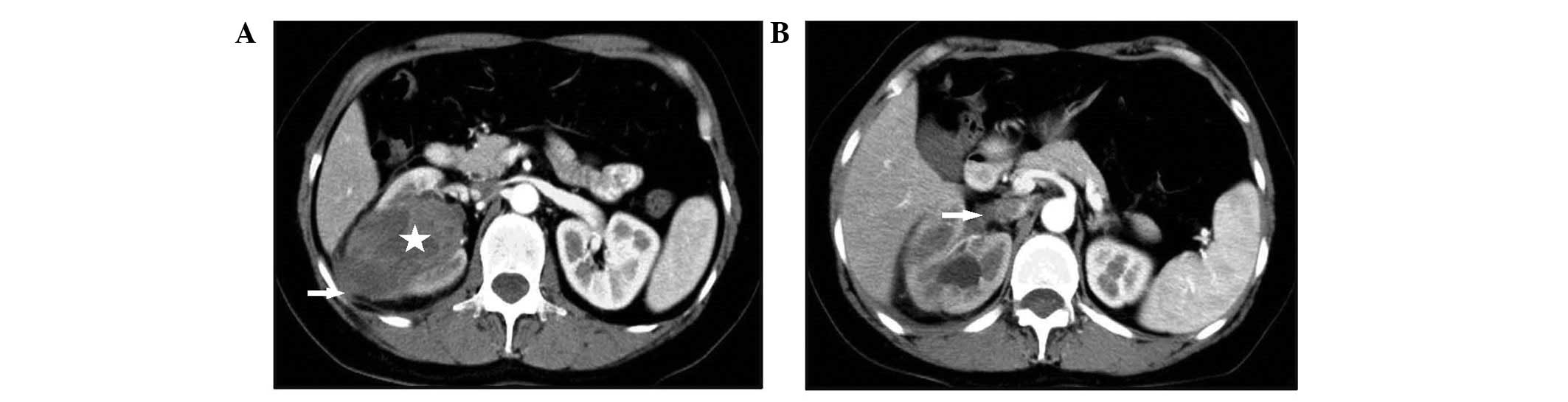
In December 2013, a 51-year-old female complaining of right flank pain was admitted to the West China Hospital of Sichuan University (Chengdu, China). Urine examination determined positive occult blood; however, all other laboratory analyses were unremarkable. Ultrasonography (USG) and computerized tomography (CT) scans revealed a 7×4-cm mass with an irregular contour in the lower pole of the right kidney, which involved the renal vein and the inferior vena cava (IVC). Enhanced CT scans identified extension of the tumor into the perirenal space and Gerota’s fascia (Fig. 1). The patient had been treated by radical mastectomy and adjuvant chemotherapy for a left breast adenocarcinoma five years prior to the current hospitalization. No evidence of breast cancer recurrence was observed.

Figure 1

(A) Enhanced computed tomography (CT) image demonstrating a large mass replacing the lower part of the right kidney (star); the mass had invaded the perirenal space and Gerota’s fascia (arrow). (B) Enhanced CT image of the upper abdomen reveals a thrombus in the renal vein and inferior vena cava (arrow).

Pathological observations

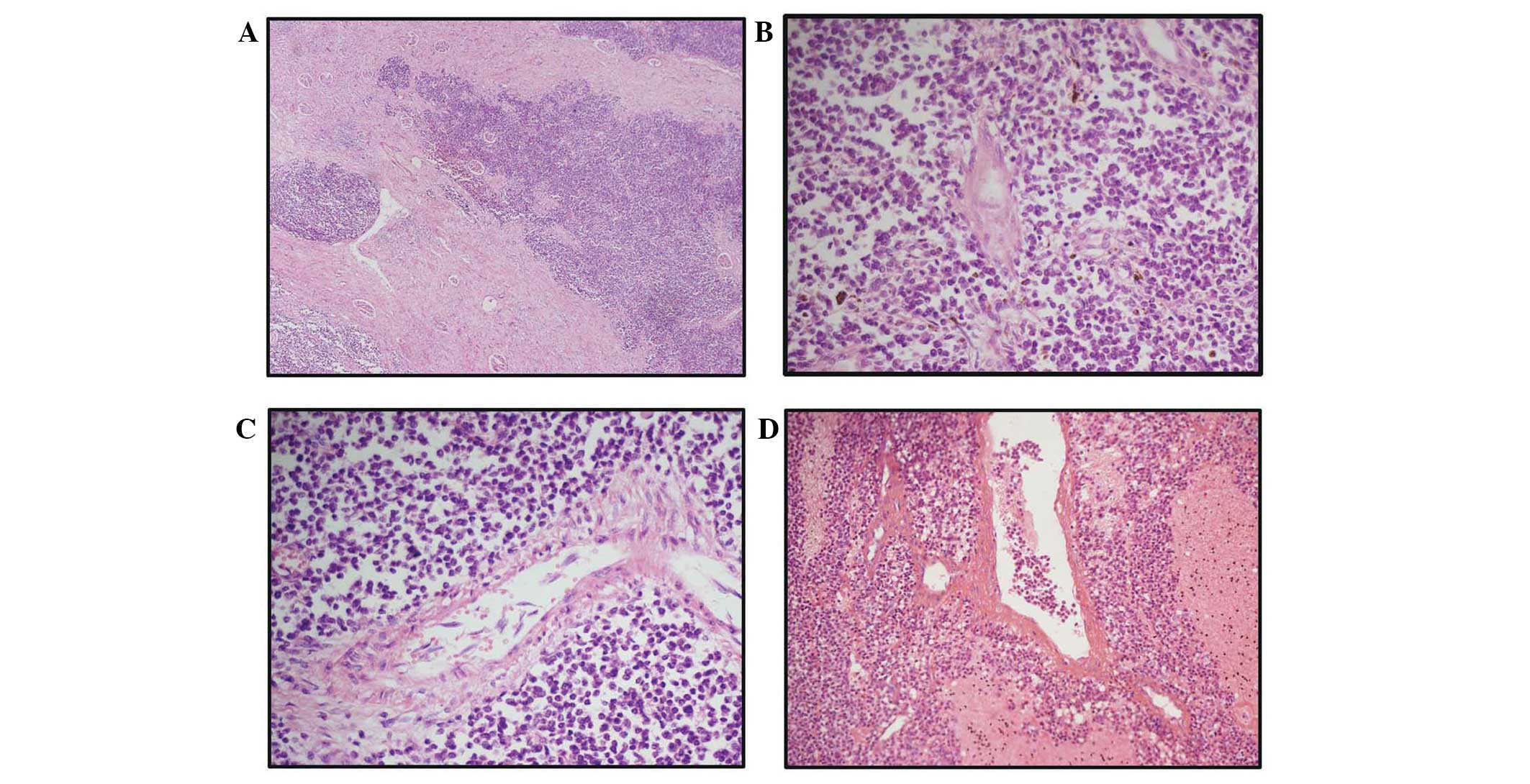
The patient received radical nephrectomy with resection of tumor thrombi in the IVC and right renal vein. Grossly, the kidney measured 11.5×8.5×4.6 cm and protruded from the kidney surface. On cut surface, the nodular, solid tumor measured 7.0×4.5×3.5 cm, with areas of hemorrhage and necrosis, as well as infiltration into the medulla and cortex. Analysis of hematoxylin and eosin-stained sections revealed that the tumor was composed of monotonous, small, blue round cells, two to three times the size of lymphocytes, with hyperchromatic nuclei and scanty cytoplasm. Furthermore, vague rosette-like patterns or perivascular concentrations of tumor cells were observed (Fig. 2).

Figure 2

(A) Histological examination of the kidney demonstrates that the tumor mass had infiltrated the cortex and medulla (original magnification, ×40). (B) Small, round tumor cells with scanty cytoplasm and round nuclei (original magnification, ×400). (C) Neoplastic cells infiltrating blood vessels (original magnification, ×400). (D) Similar neoplastic cells in the tumor thrombus (original magnification ×400). Staining, hematoxylin and eosin.

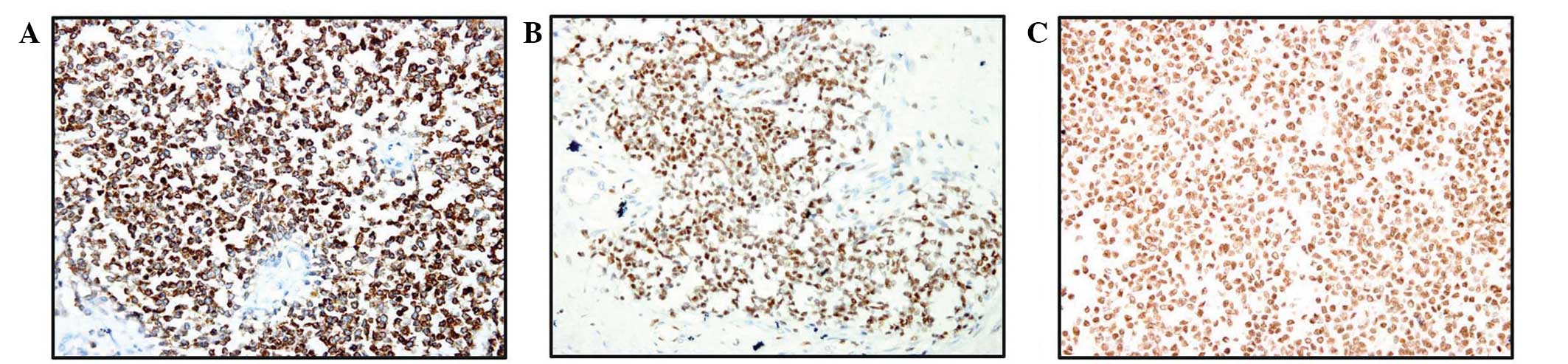
An immunohistochemical panel demonstrated strong, diffuse membranous positivity for CD99 and nuclear staining for friend leukemia integration 1 (FLI1) in the tumor sections (Fig. 3A and B, respectively). No loss of integrase interactor-1 (INI-1) protein expression levels were observed, as determined by the nuclear positivity for INI-1 (Fig. 3C), and the Ki-67 nuclear labeling index was ~10%. Additionally, the tumor cells were negative for desmin, myogenin, leukocyte common antigen (LCA), CD20, CD3, cytokeratin, P63 and Wilms’ tumor 1 (WT-1).

Figure 3

Immunohistochemical staining reveals that the tumor cells were positive for (A) cluster of differentiation 99, (B) friend leukemia integration 1 and (C) integrase interactor-1 (original magnification, ×400).

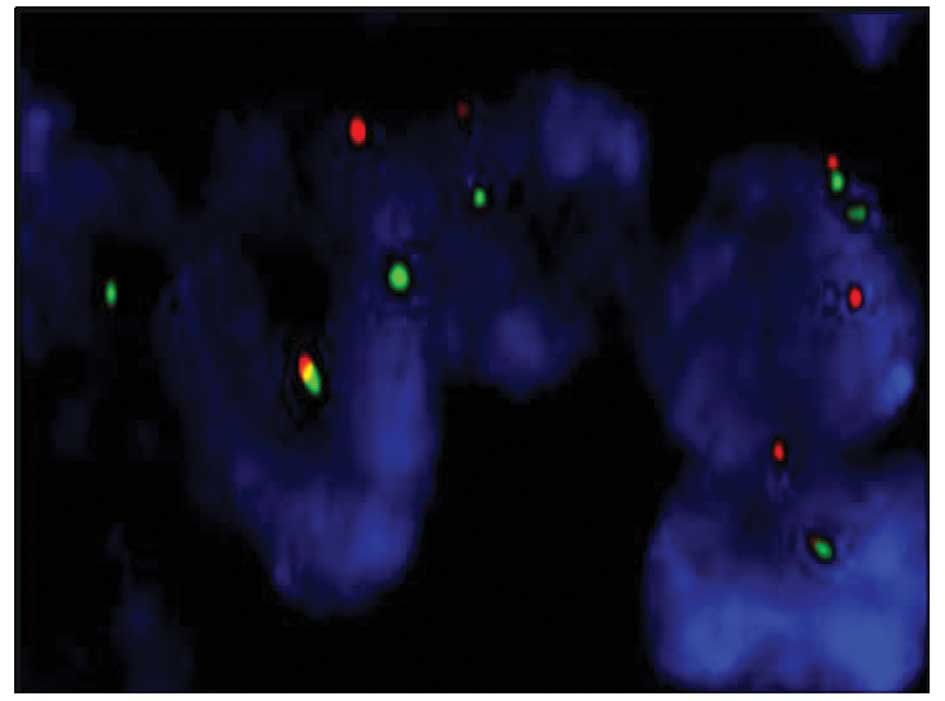
Fluorescence in situ hybridization (FISH) analysis using a Vysis LSI EWSR1 (22q12) Dual Color, Break Apart Rearrangement probe (Abbott Molecular, Inc., Des Plaines, IL, USA) was performed and revealed the characteristic EWSR1 translocation, confirming the diagnosis of pPNET of the kidney (Fig. 4).

Figure 4

Fluorescence in situ hybridization analysis using a Vysis LSI EWSR1 Dual Color, Break Apart Rearrangement probe for 22q12 demonstrates the green and red probe breaking apart, confirming the Ewing’s sarcoma breakpoint region 1 translocation.

Follow-up

The patient declined chemotherapy following surgery but accepted traditional Chinese medicine (six ingredient rehmannia pill). The patient has been followed up for the previous eight months with scheduled CT and USG scans, and periodic tumor marker monitoring. No evidence of recurrence or metastasis has been observed thus far.

Discussion

pPNET is a small round-cell tumor that predominantly occurs in bone and soft tissue; however, pPNET is occasionally reported in visceral organs, such as urogenital, intra-abdominal and intrathoracic organs. pPNET of the kidney is uncommon (3–5) and was first reported in 1975 (6). Since the first report, ~150 cases have been published in the medical literature, with the largest series of 24 cases reported by Zöllner et al (7). pPNET of the kidney is an aggressive disease with a high metastatic potential that predominantly occurs in children and young adults (median patient age, 28 years) and exhibits a slight male predominance (male:female ratio, 1.2:1) (8). pPNET of the kidney following or synchronous with a different primary cancer is extremely rare, with only two reported cases (from the USA and Germany, respectively) (9,10). To the best of our knowledge, the present case is unique: A female aged >50 years with a history of breast adenocarcinoma that had been treated with chemotherapy five years prior to the diagnosis of renal pPNET. Only six cases of a patient aged >50 years have previously been reported (9,11–14), the clinicopathologic features of which, together with that of the present case, are summarized in Table I. Whether the renal pPNETs developed independently or were associated with the previous cancer is unknown and future studies are required to clarify the issue.

Table I

Clinical and follow-up data of cases of renal peripheral primitive neuroectodermal tumor in older patients.

Table I

Clinical and follow-up data of cases of renal peripheral primitive neuroectodermal tumor in older patients.

Case report (reference number)Age, yearsGenderTumor size, cmPositionCD99 IHCEWSR1 FISHTreatment strategyChemotherapeutic agentsRecurrence or metastasisFollow-up periodOutcome at time of report
Tariq et al (11)57FemaleUNKUNK++Nephrectomy and multimodal treatmentUNKPulmonary metastasis at diagnosis8 yearsAlive with stabilized lung metastasis
Mandal et al (12)50Female16.0L+NCNephrectomy and chemotherapyVincristine, mesna, ifosfamide and doxorubicinRetroperitoneal lymph nodal metastasis at diagnosis1 yearAlive
Wedde et al (13)73MaleUNKR++Nephrectomy and chemotherapyUNKNo>7 monthsAlive
Koski et al (14)78Female10.9L+NCNephrectomyNCPulmonary metastasis without chemotherapy2 weeksDeceased
Jimenez et al (9)69Female5.0R+NCNephrectomy and chemotherapyCarboplatinum, VP-16, taxol interferon and estramustine etoposideLung and bone metastasis six months after chemotherapy25 monthsDeceased
Jimenez et al (9)50MaleUNKUNK+NCNephrectomyNCUNKUNKUNK
Present case51Female11.5R++NephrectomyNCNo8 monthsAlive

[i] CD, cluster of differentiation; IHC, immunohistochemistry; EWSR1, Ewing’s sarcoma breakpoint region 1; FISH, fluorescent in situ hybridization; UNK, unknown; L, left kidney; R, right kidney; NC, not conducted.

Diagnosis of pPNET is based on morphologic, immunohistochemical and genetic analyses. For example, pPNET of the kidney is characterized by small, round cells with hyperchromatic nuclei, scant to moderate cytoplasms and occasional rosette-like structures (15). However, pPNET of the kidney must still be differentiated from other small round-cell tumors, such as blastemal Wilms’ tumor, malignant lymphoma, small cell carcinoma, rhabdomyosarcoma, poorly differentiated synovial sarcoma and desmoplastic small round-cell tumors. Strong membranous positivity for CD99 and nuclear staining of FLI1 are characteristic features of pPNET; however, they are not definitive features, as CD99 positivity is observed in ~99% of cases (8). Therefore, an immunohistochemical panel consisting CD99, FLI1 and other relevant differential markers is recommended (16). Blastemal Wilms’ tumor is typically observed in patients of a young age (<5 years) and is usually immunohistochemically positive for WT-1 to various extents. Additionally, pPNET can be differentiated from rhabdomyosarcoma, which is positive for desmin and myogenin, and lymphoma, which may be excluded by immunostaining for LCA and other lymphohematopoietic markers (16).

Genetically, pPNET of the kidney is characterized by the chromosomal translocation t(11; 22)(q24;q12), resulting in the production of the EWS/FLI1 fusion gene (17). The EWS gene on chromosome 22 encodes an RNA-binding protein that is disrupted by the t(11;22)(q24;q12) translocation. The FLI1 gene on 11q24 was the first EWS translocation partner identified in the EWS/PNET family of tumors; it is a member of a large family of DNA-binding transcription factors that have a highly conserved 85-amino acid domain, termed the erythroblastosis virus-transforming sequence (ETS) domain (18). The resultant oncogenic fusion gene includes the N-terminal transactivation domain of EWS and the C-terminal DNA activation domain of FLI1, which acts as a powerful transcriptional activator (16). Furthermore, a recent study identified an association between CD99 overexpression and EWS/FLI1 fusion: EWS/FLI1 may downregulate microRNAs (miR), such as miR-30-5p, which may interact with the 3′-untranslated region of CD99 and post-transcriptionally downregulate its expression (19). Additionally, alternative chromosomal translocations with analogous fusion of EWS to other partners have been reported; for example, the rare t(16;21)(p11;q22) translocation and fusion of the ETS-related gene ETS domain to fused in sarcoma has previously been reported in renal pPNET (20). Thus, FISH with negative EWS-FLI1 fusion only cannot completely exclude the diagnosis of pPNET of the kidney (20,21).

pPNET of the kidney is an aggressive tumor with a poor prognosis; a previous study identified that 25–50% of patients presented with metastases and the five-year disease-free survival rate was ~45–55% (22). A review of 116 reported cases of renal pPNET demonstrated consistent results; 33% of patients exhibited metastases at diagnosis and 40% of patients developed metastases following surgery for the primary tumor (8). Treatment strategies for renal pPNET are similar to those for Ewing’s sarcoma, requiring systemic chemotherapy in conjunction with surgery or radiotherapy or both modalities for local tumor control. The benefit of radiotherapy is not clear, however, it may be preferable in locally advanced disease or in cases with Gerota’s fascia involvement (23). Since the cases of patients aged >50 years are rare, no consensus of a recommended treatment strategy has been documented.

In conclusion, although pPNET of the kidney typically occurs in young adults, it has also been reported to occur in older patients. Immunohistochemistry for CD99, FLI1 and other differential markers, as well as FISH analysis for EWSR1 fusion are key in the diagnosis of renal pPNET, which should be included in the differential diagnosis of small-cell kidney tumors in all age groups.

Acknowledgements

The authors thank Dr Hongying Zhang for performing the FISH analysis. The present study was supported by grants from the National Science Foundation of China (grant nos. 81272820, 81272824, 81101529 and 81100148).

Abbreviations:

pPNET

peripheral primitive neuroectodermal tumor

ES

Ewing’s sarcoma

USG

ultrasonography

CT

computerized tomography

FISH

fluorescent in situ hybridization

IHC

immunohistochemistry

References

1 

Marley EF, Liapis H, Humphrey PA, et al: Primitive neuroectodermal tumor of the kidney - another enigma: a pathologic, immunohistochemical, and molecular diagnostic study. Am J Surg Pathol. 21:354–359. 1997. View Article : Google Scholar : PubMed/NCBI

2 

Howe HL, Wu X, Ries LA, et al: Annual report to the nation on the status of cancer, 1975–2003, featuring cancer among U.S. Hispanic/Latino populations. Cancer. 107:1711–1742. 2006. View Article : Google Scholar : PubMed/NCBI

3 

Tsokos M, Alaggio RD, Dehner LP and Dickman PS: Ewing sarcoma/peripheral primitive neuroectodermal tumor and related tumors. Pediatr Dev Pathol. (Suppl 1)15:108–126. 2012. View Article : Google Scholar : PubMed/NCBI

4 

Movahedi-Lankarani S, Hruban RH, Westra WH and Klimstra DS: Primitive neuroectodermal tumors of the pancreas: a report of seven cases of a rare neoplasm. Am J Surg Pathol. 26:1040–1047. 2002. View Article : Google Scholar : PubMed/NCBI

5 

Mani S, Dutta D and De BK: Primitive neuroectodermal tumor of the liver: a case report. Japanese J Clin Oncol. 40:258–262. 2010. View Article : Google Scholar

6 

Seemayer TA, Thelmo WL, Bolande RP and Wiglesworth FW: Peripheral neuroectodermal tumors. Perspect Pediatr Pathol. 2:151–172. 1975.PubMed/NCBI

7 

Zöllner S, Dirksen U, Jürgens H and Ranft A: Renal Ewing tumors. Ann Oncol. 24:2455–2461. 2013. View Article : Google Scholar : PubMed/NCBI

8 

Risi E, Iacovelli R, Altavilla A, et al: Clinical and pathological features of primary neuroectodermal tumor/Ewing sarcoma of the kidney. Urology. 82:382–386. 2013. View Article : Google Scholar : PubMed/NCBI

9 

Jimenez RE, Folpe AL and Lapham RL: Primary Ewing’s sarcoma/primitive neuroectodermal tumor of the kidney: a clinicopathologic and immunohistochemical analysis of 11 cases. Am J Surg Pathol. 26:320–327. 2002. View Article : Google Scholar : PubMed/NCBI

10 

Eggers H, Waalkes S, von Klot C, Trankenschuh W, Merseburger AS and Herrmann TR: Ewing’s sarcoma of the kidneys with simultaneous seminoma. Urologe A. 50:205–207. 2011.(In German). View Article : Google Scholar : PubMed/NCBI

11 

Tariq Z, Ghose A, Sofi A, Mohamed I and Harmon D: Metastatic renal extraskeletal Ewing sarcoma in complete remission for the last 8 years. Am J Ther. 19:120–121. 2012. View Article : Google Scholar

12 

Mandal PK, Mukherjee S, Roy S and Bhattacharyya NK: PNET of kidney: Report of four cases. Indian J Med Paediatr Oncol. 33:130–133. 2012. View Article : Google Scholar : PubMed/NCBI

13 

Wedde TB, Lobmaier IV, Brennhovd B, Lohne F and Hall KS: Primary Ewing’s sarcoma of the kidney in a 73-year-old man. Sarcoma. 2011:9783192011. View Article : Google Scholar

14 

Koski ME, Tedesco JM and Clark PE: Renal peripheral neuroectodermal tumor presenting at age 78: case report. Scientific World Journal. 8:830–834. 2008. View Article : Google Scholar : PubMed/NCBI

15 

Parham DM, Roloson GJ, Feely M, Green DM, Bridge JA and Beckwith JB: Primary malignant neuroepithelial tumors of the kidney: a clinicopathologic analysis of 146 adult and pediatric cases from the National Wilms’ Tumor Study Group Pathology Center. Am J Surg Pathol. 25:133–146. 2001. View Article : Google Scholar : PubMed/NCBI

16 

Saxena R, Sait S and Mhawech-Fauceglia P: Ewing sarcoma/primitive neuroectodermal tumor of the kidney: a case report. Diagnosed by immunohistochemistry and molecular analysis. Ann Diagn Pathol. 10:363–366. 2006. View Article : Google Scholar : PubMed/NCBI

17 

Sorensen PH, Liu XF, Delattre O, et al: Reverse transcriptase PCR amplification of EWS/FLI-1 fusion transcripts as a diagnostic test for peripheral primitive neuroectodermal tumors of childhood. Diagn Mol Pathol. 2:147–157. 1993. View Article : Google Scholar : PubMed/NCBI

18 

Wasylyk B, Hahn SL and Giovane A: The Ets family of transcription factors. Eur J Biochem. 211:7–18. 1993. View Article : Google Scholar : PubMed/NCBI

19 

Franzetti GA, Laud-Duval K, Bellanger D, Stern MH, Sastre-Garau X and Delattre O: MiR-30a-5p connects EWS-FLI1 and CD99, two major therapeutic targets in Ewing tumor. Oncogene. 32:3915–3921. 2013. View Article : Google Scholar

20 

Berg T, Kalsaas AH, Buechner J and Busund LT: Ewing sarcoma-peripheral neuroectodermal tumor of the kidney with a FUS-ERG fusion transcript. Cancer Genet Cytogenet. 194:53–57. 2009. View Article : Google Scholar : PubMed/NCBI

21 

Angel J, Alfred A, Sakhuja A, Sells RE and Zechlinkski JJ: Ewing’s sarcoma of the kidney. Int J Clin Oncol. 15:314–318. 2010. View Article : Google Scholar : PubMed/NCBI

22 

Ishii H and Ogaki K: Primitive neuroectodermal tumor of the kidney. Med Mol Morphol. 42:175–179. 2009. View Article : Google Scholar : PubMed/NCBI

23 

Thyavihally YB, Tongaonkar HB, Gupta S, et al: Primitive neuroectodermal tumor of the kidney: a single institute series of 16 patients. Urology. 71:292–296. 2008. View Article : Google Scholar : PubMed/NCBI

Related Articles

  • Abstract
  • View
  • Download
  • Twitter
Copy and paste a formatted citation
Spandidos Publications style
Zhong J, Chen N, Chen X, Gong J, Nie L, Xu M and Zhou Q: Peripheral primitive neuroectodermal tumor of the kidney in a 51‑year‑old female following breast cancer: A case report and review of the literature. Oncol Lett 9: 108-112, 2015.
APA
Zhong, J., Chen, N., Chen, X., Gong, J., Nie, L., Xu, M., & Zhou, Q. (2015). Peripheral primitive neuroectodermal tumor of the kidney in a 51‑year‑old female following breast cancer: A case report and review of the literature. Oncology Letters, 9, 108-112. https://doi.org/10.3892/ol.2014.2695
MLA
Zhong, J., Chen, N., Chen, X., Gong, J., Nie, L., Xu, M., Zhou, Q."Peripheral primitive neuroectodermal tumor of the kidney in a 51‑year‑old female following breast cancer: A case report and review of the literature". Oncology Letters 9.1 (2015): 108-112.
Chicago
Zhong, J., Chen, N., Chen, X., Gong, J., Nie, L., Xu, M., Zhou, Q."Peripheral primitive neuroectodermal tumor of the kidney in a 51‑year‑old female following breast cancer: A case report and review of the literature". Oncology Letters 9, no. 1 (2015): 108-112. https://doi.org/10.3892/ol.2014.2695
Copy and paste a formatted citation
x
Spandidos Publications style
Zhong J, Chen N, Chen X, Gong J, Nie L, Xu M and Zhou Q: Peripheral primitive neuroectodermal tumor of the kidney in a 51‑year‑old female following breast cancer: A case report and review of the literature. Oncol Lett 9: 108-112, 2015.
APA
Zhong, J., Chen, N., Chen, X., Gong, J., Nie, L., Xu, M., & Zhou, Q. (2015). Peripheral primitive neuroectodermal tumor of the kidney in a 51‑year‑old female following breast cancer: A case report and review of the literature. Oncology Letters, 9, 108-112. https://doi.org/10.3892/ol.2014.2695
MLA
Zhong, J., Chen, N., Chen, X., Gong, J., Nie, L., Xu, M., Zhou, Q."Peripheral primitive neuroectodermal tumor of the kidney in a 51‑year‑old female following breast cancer: A case report and review of the literature". Oncology Letters 9.1 (2015): 108-112.
Chicago
Zhong, J., Chen, N., Chen, X., Gong, J., Nie, L., Xu, M., Zhou, Q."Peripheral primitive neuroectodermal tumor of the kidney in a 51‑year‑old female following breast cancer: A case report and review of the literature". Oncology Letters 9, no. 1 (2015): 108-112. https://doi.org/10.3892/ol.2014.2695
Follow us
  • Twitter
  • LinkedIn
  • Facebook
About
  • Spandidos Publications
  • Careers
  • Cookie Policy
  • Privacy Policy
How can we help?
  • Help
  • Live Chat
  • Contact
  • Email to our Support Team