Spandidos Publications Logo
  • About
    • About Spandidos
    • Aims and Scopes
    • Abstracting and Indexing
    • Editorial Policies
    • Reprints and Permissions
    • Job Opportunities
    • Terms and Conditions
    • Contact
  • Journals
    • All Journals
    • Oncology Letters
      • Oncology Letters
      • Information for Authors
      • Editorial Policies
      • Editorial Board
      • Aims and Scope
      • Abstracting and Indexing
      • Bibliographic Information
      • Archive
    • International Journal of Oncology
      • International Journal of Oncology
      • Information for Authors
      • Editorial Policies
      • Editorial Board
      • Aims and Scope
      • Abstracting and Indexing
      • Bibliographic Information
      • Archive
    • Molecular and Clinical Oncology
      • Molecular and Clinical Oncology
      • Information for Authors
      • Editorial Policies
      • Editorial Board
      • Aims and Scope
      • Abstracting and Indexing
      • Bibliographic Information
      • Archive
    • Experimental and Therapeutic Medicine
      • Experimental and Therapeutic Medicine
      • Information for Authors
      • Editorial Policies
      • Editorial Board
      • Aims and Scope
      • Abstracting and Indexing
      • Bibliographic Information
      • Archive
    • International Journal of Molecular Medicine
      • International Journal of Molecular Medicine
      • Information for Authors
      • Editorial Policies
      • Editorial Board
      • Aims and Scope
      • Abstracting and Indexing
      • Bibliographic Information
      • Archive
    • Biomedical Reports
      • Biomedical Reports
      • Information for Authors
      • Editorial Policies
      • Editorial Board
      • Aims and Scope
      • Abstracting and Indexing
      • Bibliographic Information
      • Archive
    • Oncology Reports
      • Oncology Reports
      • Information for Authors
      • Editorial Policies
      • Editorial Board
      • Aims and Scope
      • Abstracting and Indexing
      • Bibliographic Information
      • Archive
    • Molecular Medicine Reports
      • Molecular Medicine Reports
      • Information for Authors
      • Editorial Policies
      • Editorial Board
      • Aims and Scope
      • Abstracting and Indexing
      • Bibliographic Information
      • Archive
    • World Academy of Sciences Journal
      • World Academy of Sciences Journal
      • Information for Authors
      • Editorial Policies
      • Editorial Board
      • Aims and Scope
      • Abstracting and Indexing
      • Bibliographic Information
      • Archive
    • International Journal of Functional Nutrition
      • International Journal of Functional Nutrition
      • Information for Authors
      • Editorial Policies
      • Editorial Board
      • Aims and Scope
      • Abstracting and Indexing
      • Bibliographic Information
      • Archive
    • International Journal of Epigenetics
      • International Journal of Epigenetics
      • Information for Authors
      • Editorial Policies
      • Editorial Board
      • Aims and Scope
      • Abstracting and Indexing
      • Bibliographic Information
      • Archive
    • Medicine International
      • Medicine International
      • Information for Authors
      • Editorial Policies
      • Editorial Board
      • Aims and Scope
      • Abstracting and Indexing
      • Bibliographic Information
      • Archive
  • Articles
  • Information
    • Information for Authors
    • Information for Reviewers
    • Information for Librarians
    • Information for Advertisers
    • Conferences
  • Language Editing
Spandidos Publications Logo
  • About
    • About Spandidos
    • Aims and Scopes
    • Abstracting and Indexing
    • Editorial Policies
    • Reprints and Permissions
    • Job Opportunities
    • Terms and Conditions
    • Contact
  • Journals
    • All Journals
    • Biomedical Reports
      • Information for Authors
      • Editorial Policies
      • Editorial Board
      • Aims and Scope
      • Abstracting and Indexing
      • Bibliographic Information
      • Archive
    • Experimental and Therapeutic Medicine
      • Information for Authors
      • Editorial Policies
      • Editorial Board
      • Aims and Scope
      • Abstracting and Indexing
      • Bibliographic Information
      • Archive
    • International Journal of Epigenetics
      • Information for Authors
      • Editorial Policies
      • Editorial Board
      • Aims and Scope
      • Abstracting and Indexing
      • Bibliographic Information
      • Archive
    • International Journal of Functional Nutrition
      • Information for Authors
      • Editorial Policies
      • Editorial Board
      • Aims and Scope
      • Abstracting and Indexing
      • Bibliographic Information
      • Archive
    • International Journal of Molecular Medicine
      • Information for Authors
      • Editorial Policies
      • Editorial Board
      • Aims and Scope
      • Abstracting and Indexing
      • Bibliographic Information
      • Archive
    • International Journal of Oncology
      • Information for Authors
      • Editorial Policies
      • Editorial Board
      • Aims and Scope
      • Abstracting and Indexing
      • Bibliographic Information
      • Archive
    • Medicine International
      • Information for Authors
      • Editorial Policies
      • Editorial Board
      • Aims and Scope
      • Abstracting and Indexing
      • Bibliographic Information
      • Archive
    • Molecular and Clinical Oncology
      • Information for Authors
      • Editorial Policies
      • Editorial Board
      • Aims and Scope
      • Abstracting and Indexing
      • Bibliographic Information
      • Archive
    • Molecular Medicine Reports
      • Information for Authors
      • Editorial Policies
      • Editorial Board
      • Aims and Scope
      • Abstracting and Indexing
      • Bibliographic Information
      • Archive
    • Oncology Letters
      • Information for Authors
      • Editorial Policies
      • Editorial Board
      • Aims and Scope
      • Abstracting and Indexing
      • Bibliographic Information
      • Archive
    • Oncology Reports
      • Information for Authors
      • Editorial Policies
      • Editorial Board
      • Aims and Scope
      • Abstracting and Indexing
      • Bibliographic Information
      • Archive
    • World Academy of Sciences Journal
      • Information for Authors
      • Editorial Policies
      • Editorial Board
      • Aims and Scope
      • Abstracting and Indexing
      • Bibliographic Information
      • Archive
  • Articles
  • Information
    • For Authors
    • For Reviewers
    • For Librarians
    • For Advertisers
    • Conferences
  • Language Editing
Login Register Submit
  • This site uses cookies
  • You can change your cookie settings at any time by following the instructions in our Cookie Policy. To find out more, you may read our Privacy Policy.

    I agree
Search articles by DOI, keyword, author or affiliation
Search
Advanced Search
presentation
Oncology Letters
Join Editorial Board Propose a Special Issue
Print ISSN: 1792-1074 Online ISSN: 1792-1082
Journal Cover
March-2015 Volume 9 Issue 3

Full Size Image

Sign up for eToc alerts
Recommend to Library

Journals

International Journal of Molecular Medicine

International Journal of Molecular Medicine

International Journal of Molecular Medicine is an international journal devoted to molecular mechanisms of human disease.

International Journal of Oncology

International Journal of Oncology

International Journal of Oncology is an international journal devoted to oncology research and cancer treatment.

Molecular Medicine Reports

Molecular Medicine Reports

Covers molecular medicine topics such as pharmacology, pathology, genetics, neuroscience, infectious diseases, molecular cardiology, and molecular surgery.

Oncology Reports

Oncology Reports

Oncology Reports is an international journal devoted to fundamental and applied research in Oncology.

Experimental and Therapeutic Medicine

Experimental and Therapeutic Medicine

Experimental and Therapeutic Medicine is an international journal devoted to laboratory and clinical medicine.

Oncology Letters

Oncology Letters

Oncology Letters is an international journal devoted to Experimental and Clinical Oncology.

Biomedical Reports

Biomedical Reports

Explores a wide range of biological and medical fields, including pharmacology, genetics, microbiology, neuroscience, and molecular cardiology.

Molecular and Clinical Oncology

Molecular and Clinical Oncology

International journal addressing all aspects of oncology research, from tumorigenesis and oncogenes to chemotherapy and metastasis.

World Academy of Sciences Journal

World Academy of Sciences Journal

Multidisciplinary open-access journal spanning biochemistry, genetics, neuroscience, environmental health, and synthetic biology.

International Journal of Functional Nutrition

International Journal of Functional Nutrition

Open-access journal combining biochemistry, pharmacology, immunology, and genetics to advance health through functional nutrition.

International Journal of Epigenetics

International Journal of Epigenetics

Publishes open-access research on using epigenetics to advance understanding and treatment of human disease.

Medicine International

Medicine International

An International Open Access Journal Devoted to General Medicine.

Journal Cover
March-2015 Volume 9 Issue 3

Full Size Image

Sign up for eToc alerts
Recommend to Library

  • Article
  • Citations
    • Cite This Article
    • Download Citation
    • Create Citation Alert
    • Remove Citation Alert
    • Cited By
  • Similar Articles
    • Related Articles (in Spandidos Publications)
    • Similar Articles (Google Scholar)
    • Similar Articles (PubMed)
  • Download PDF
  • Download XML
  • View XML
Article

Treatment for giant cell tumor of the spine metastasizing to the lung: A report of two cases and a literature review

  • Authors:
    • Aikeremujiang Muheremu
    • Zhen Huang
    • Xiaohui Niu
  • View Affiliations / Copyright

    Affiliations: Department of Orthopedic Oncology Surgery, Beijing Jishuitan Hospital, Beijing 100035, P.R. China
  • Pages: 1321-1326
    |
    Published online on: December 30, 2014
       https://doi.org/10.3892/ol.2014.2837
  • Expand metrics +
Metrics: Total Views: 0 (Spandidos Publications: | PMC Statistics: )
Metrics: Total PDF Downloads: 0 (Spandidos Publications: | PMC Statistics: )
Cited By (CrossRef): 0 citations Loading Articles...

This article is mentioned in:


Abstract

Giant cell tumors of the bone (GCTB) account for 5% of all primary skeletal tumors. Although the tumors are normally benign, recurrence and metastasis of GCTB does occur. The most usual sites of a primary GCTB lesion are the distal femur and proximal tibia, and ~3% of these metastasize to the lung. Primary GCTB lesions in the spine are rare, and there have been few cases reporting the pulmonary metastasis of GCTB in the spine. The present study reports two cases of thoracic and sacral spinal GCTB lesions with pulmonary metastasis. One of the patients was a 45‑year‑old male who presented to hospital with gradually worsening pain in the left buttock during the last two years and was diagnosed with GCTB of the sacrum. The other patient was a 30‑year‑old female who complained of persistent back pain for a year and was also diagnosed with GCTB of the sacrum. Arterial embolization was performed prior to surgery and computer navigation was used during the surgery, resulting in the two patients achieving en bloc resection of their respective tumors, with satisfactory rehabilitation to follow.

Introduction

Giant cell tumors of the bone (GCTB) are intramedullary bone tumors with benign and locally aggressive pathological and clinical characteristics (1,2). GCTBs account for 5% of primary skeletal tumors and 21% of benign bone tumors (3,4). Although categorized as a benign bone tumor, GCTBs have been reported to have recurrence rates of 8–62% (5,6) and metastatic rates of 1.5–7% (7,8). GCTBs may have a higher prevalence in females than males, as certain studies have reported a female-to-male ratio of 1.3–1.5:1.0 (9,10). The usual primary sites for GCTBs include the distal femur, proximal tibia and distal radius (11,12). Diagnostically, X-ray and computed tomography (CT) scans may show eccentric lytic lesions with cortical extension. Pain, swelling and occasional pathological fractures are the usual manifestations of GCTB (13). There have been few studies on the primary lesions of GCTs of the spine, sacrum and small bones (14), and even fewer reporting the metastasis of these lesions to the lung. The present case study reports two cases of thoracic and sacral spinal GCTB lesions with pulmonary metastasis. Written informed consent was obtained from the patients.

Case report

Case one

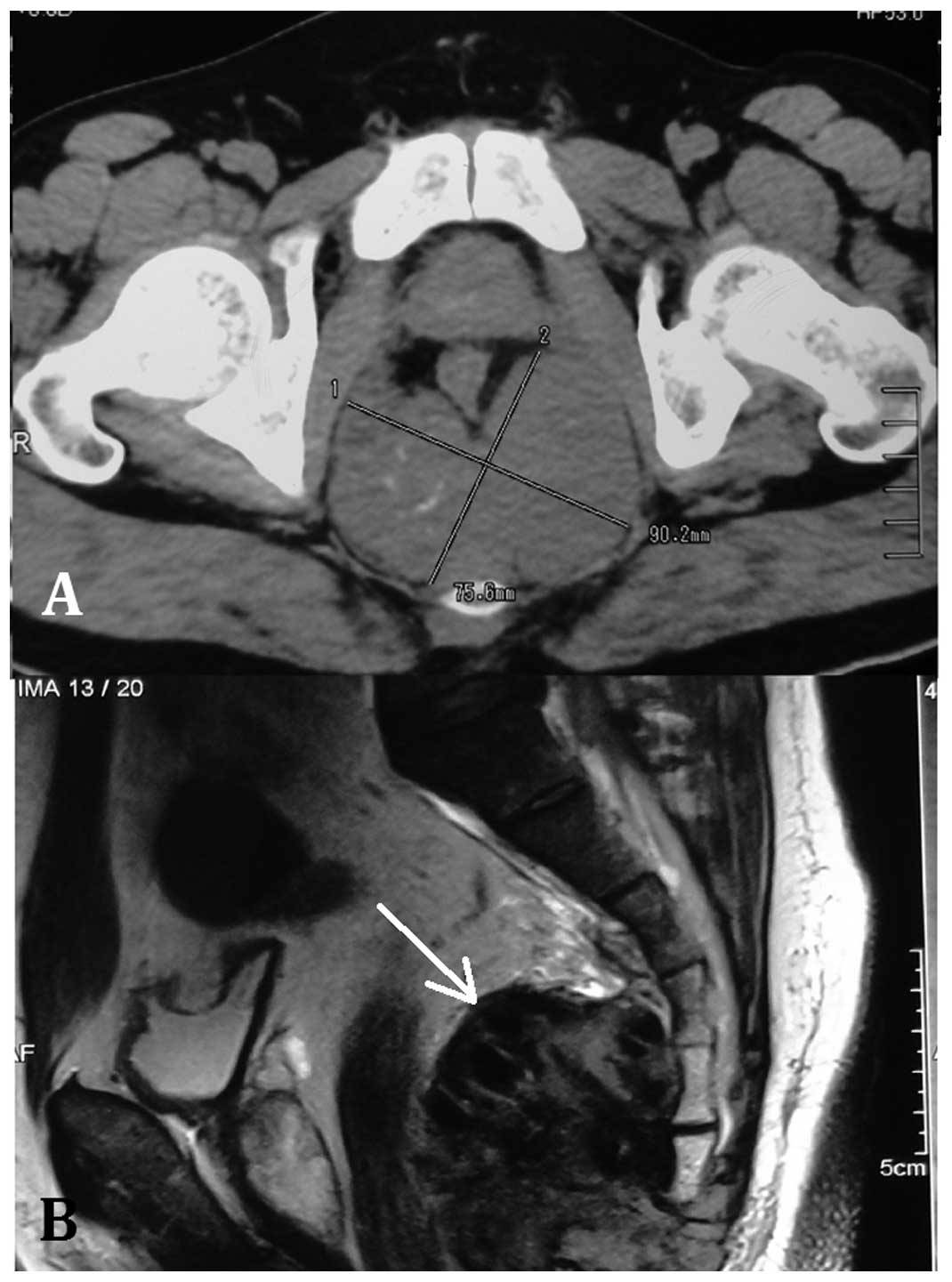
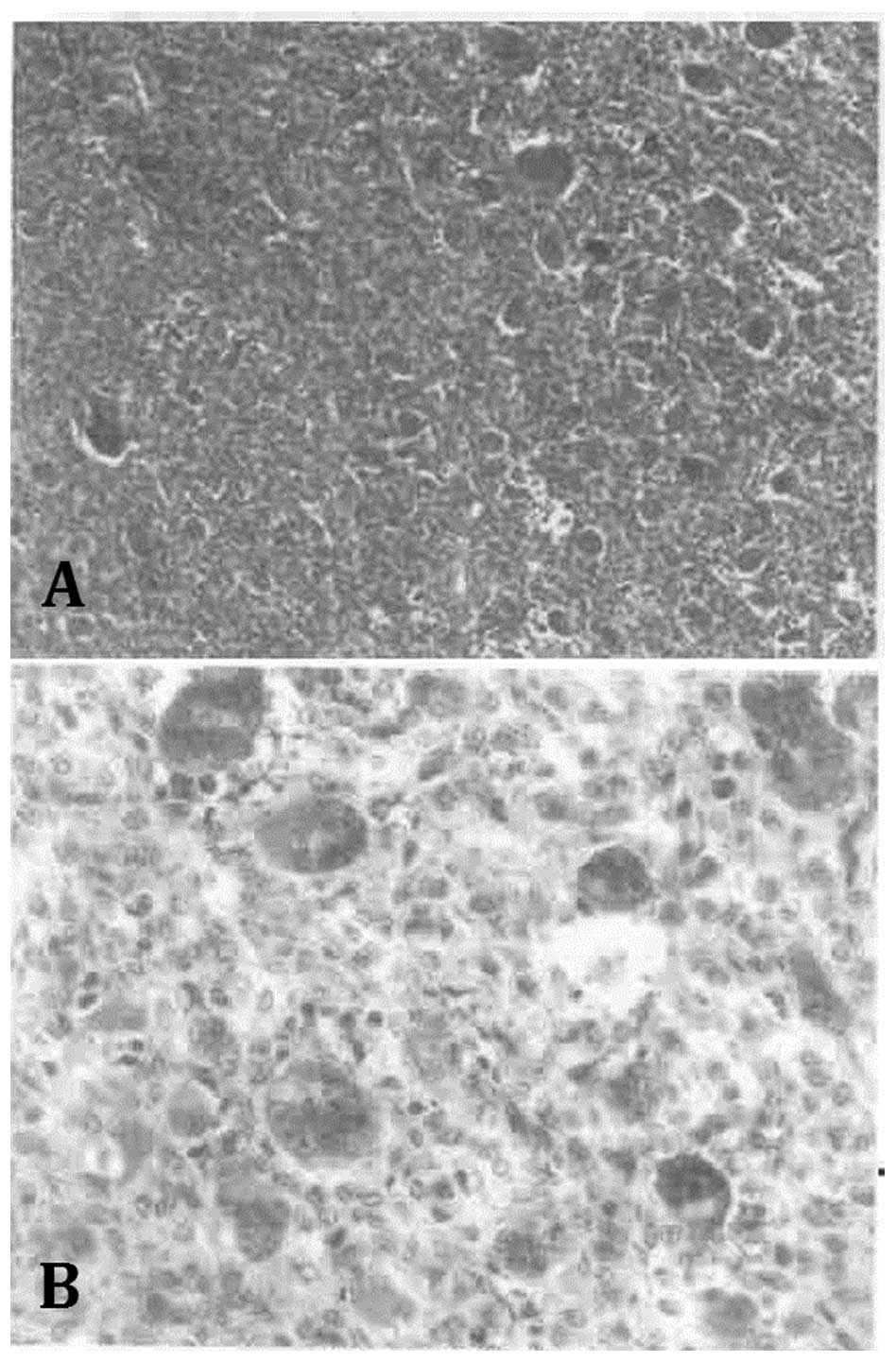
A 45-year-old male presented to a local hospital with pain in the left buttock that had persisted for 2 years. The pain was particularly bad when the patient was tired, however, the patient did not initially seek medical attention, as the pain was bearable. As the pain gradually worsened over the two-year period, the patient finally attended a clinic at a local hospital. Magnetic resonance imaging showed an irregularly-shaped mass, 7.5×9.1×9.3 cm in size (Fig. 1). Surgeons in the hospital carried out resection of the tumor and sacrum at the level of the 4th sacral vertebra. Immunohistochemical staining for the pre-operative fine-needle biopsy and the post-operative resection showed the lesion to be AE1/AE3(−), cluster of differentiation 68(+), p53(+) and S-100(+), with a Ki-67 of 20%. The histopathological examinations of the lesion established the diagnosis of a GCTB (Fig. 2).

Figure 1

Case one. (A) Transverse and (B) sagittal plane magnetic resonance imaging showing an irregularly shaped mass, 7.5×9.1×9.3 cm in size.

Figure 2

Case one (magnification, ×100). Immunohistochemical staining for the (A) pre-operative fine-needle biopsy and (B) post-operative resection specimens showed the tissues to be AE1/AE3(−), cluster of differentiation 68(+), p53(+) and S-100(+), with a Ki-67 of 20%. The histopathological examinations of the lesion established a diagnosis of a giant cell tumor of the bone.

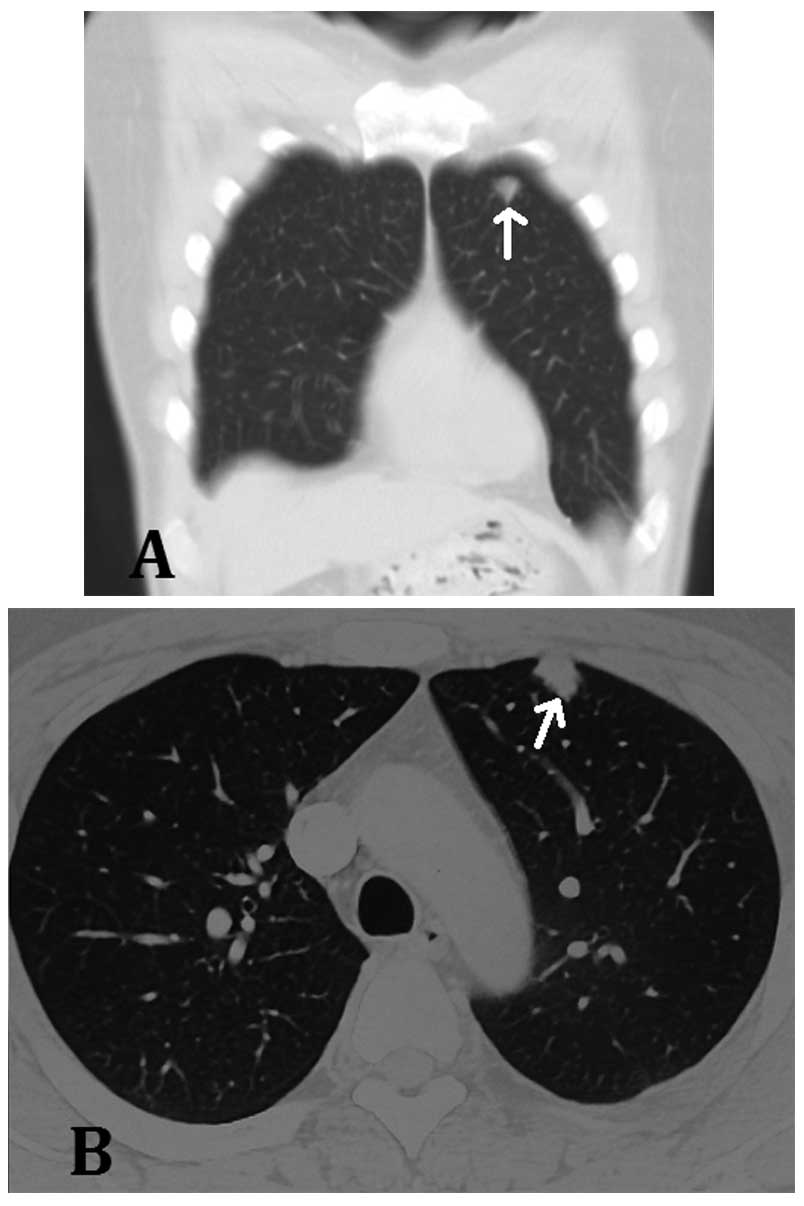
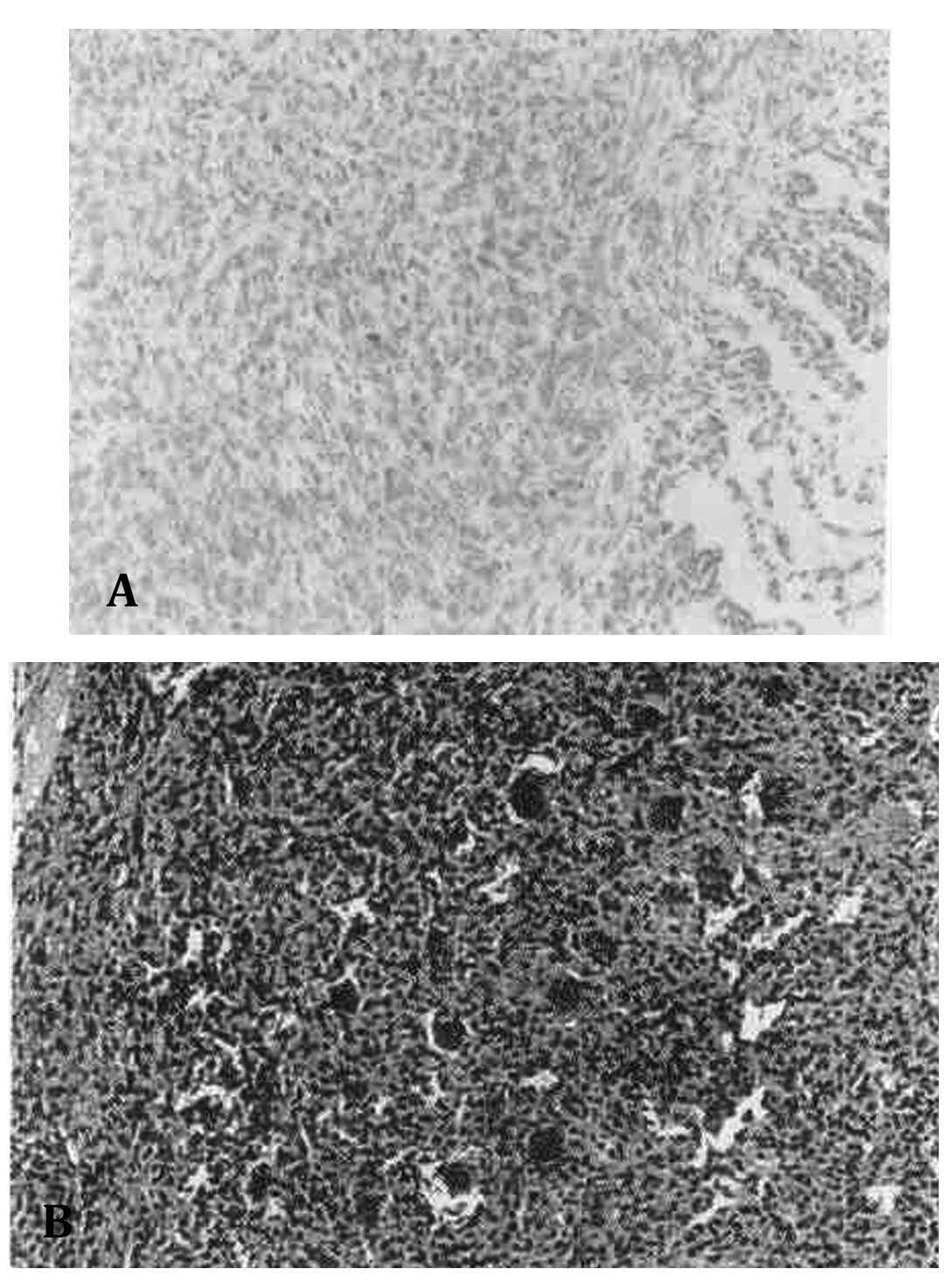
At the follow-up examination four months after the first surgery, a chest CT scan revealed a nodule with clear borders in the anterior upper left lobe of the lung (Fig. 3). Subsequent to a fine-needle biopsy, the 7.5×2.5×2.5-cm pulmonary lobe, which contained the 2.0×1.0×0.6-cm mass, was resected. The fine-needle and incisional biopsies each supported the diagnosis of a GCTB that had metastasized to the lung (Fig. 4).

Figure 3

Case one. (A) Coronal and (B) transverse computed tomography scans of the chest, performed four months after the first surgery at the follow-up visit, showing a nodule with clear borders in the anterior upper left lobe of the lung.

Figure 4

Case one (magnification, ×100). Subsequent to performing a fine-needle biopsy, the pulmonary lobe, which was 7.5×2.5×2.5 cm in size and contained the 2.0×1.0×0.6 cm mass, was resected. Fine-needle and incisional biopsies supported the diagnosis of lung metastases from a giant cell tumor of the bone.

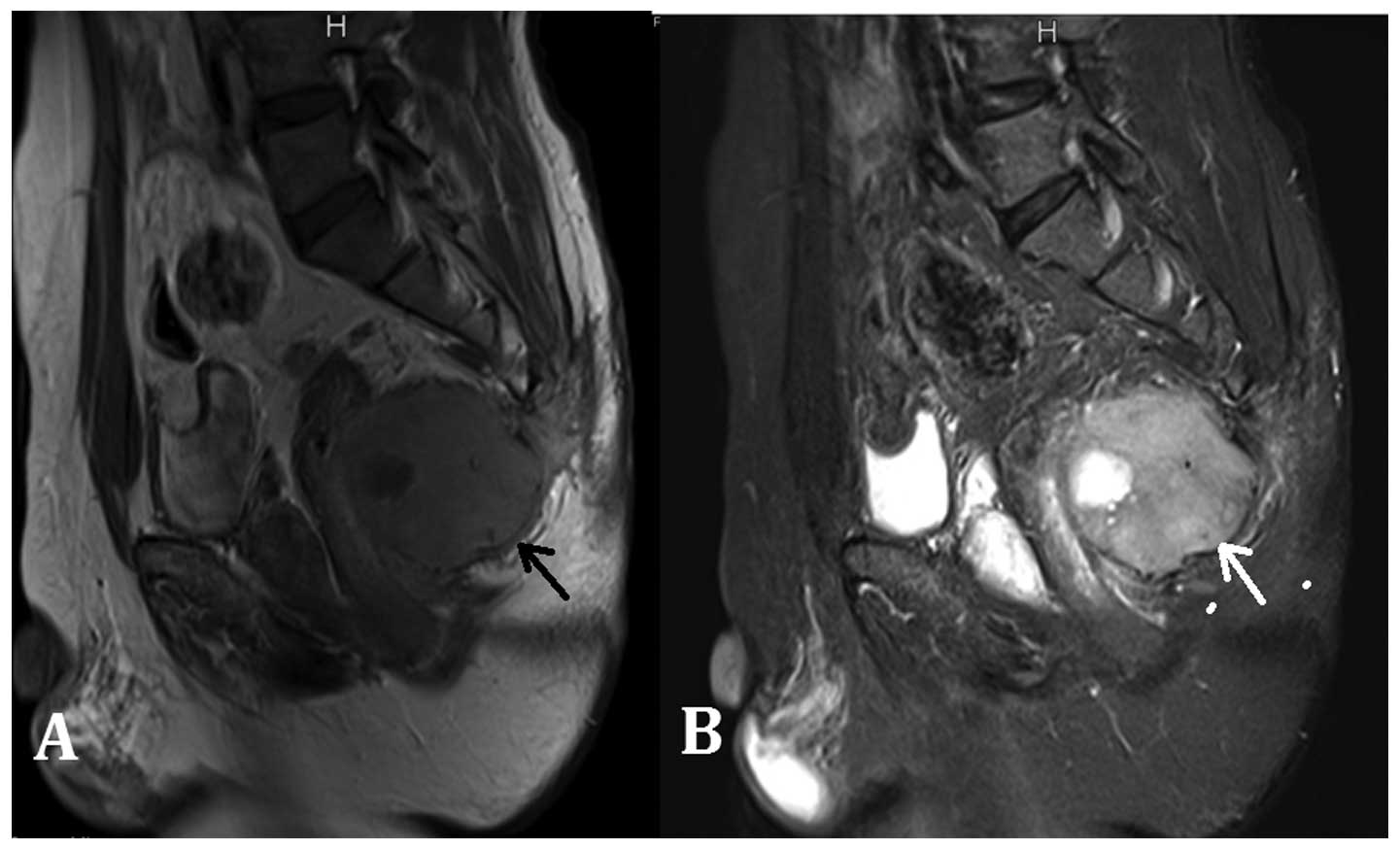
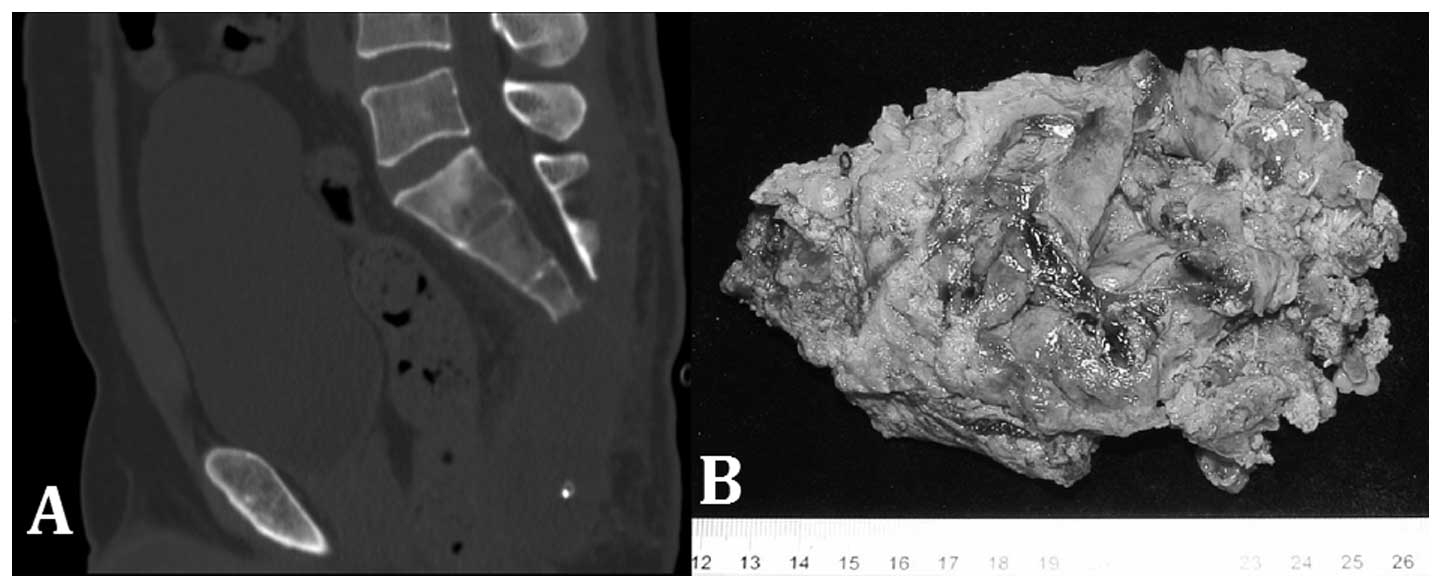
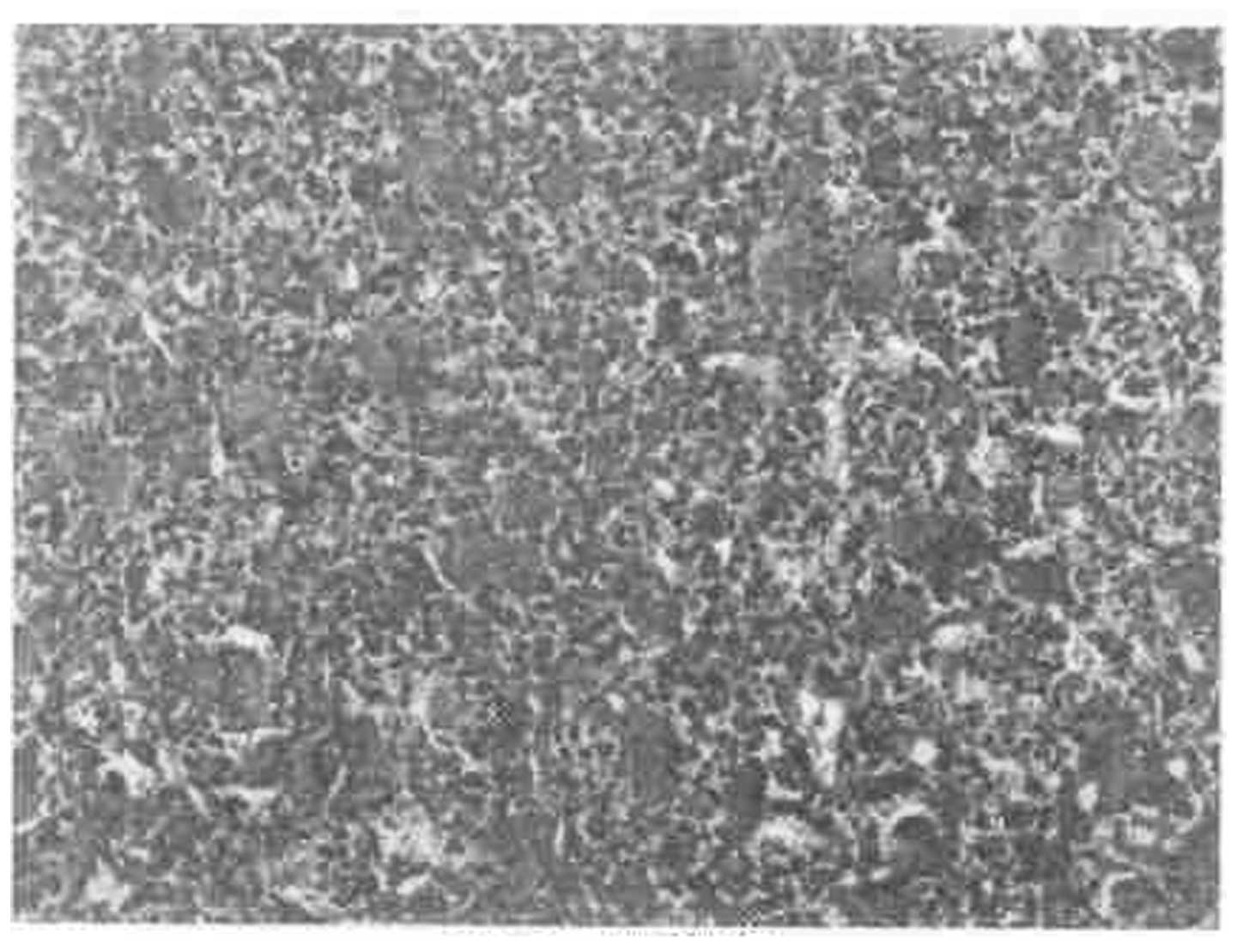
Nine months after the first surgery, a follow-up magnetic resonance imaging (MRI) scan showed a recurrent mass at the site of the original GCTB lesion (Fig. 5). The patient was transferred to the Department of Orthopedic Oncology Surgery, Beijing Ji Shui Tan Hospital (Beijing, China) and a surgical resection of the lesion was performed and the sacral body was excised at the level of the 3rd sacral vertebra (Fig. 6). Histopathological analysis after the surgery confirmed that it was a recurrent lesion from the original GCTB (Fig. 7).

Figure 5

Nine months after the first surgery, a follow-up magnetic resonance imaging scan (A, T1; B, T2) showed a recurrent mass at the site of the original giant cell tumor of the bone.

Figure 6

Case one. (A) Postoperative computed tomogaphy scan and (B) gross appearance of the lesion. A surgical resection was performed on the lesion and the sacral body was excised at the level of the 3rd sacral vertebra.

Figure 7

Case one (magnification, ×100). Histopathological analysis performed subsequent to the surgery confirming the presence of a recurrent lesion from the original giant cell tumor of the bone.

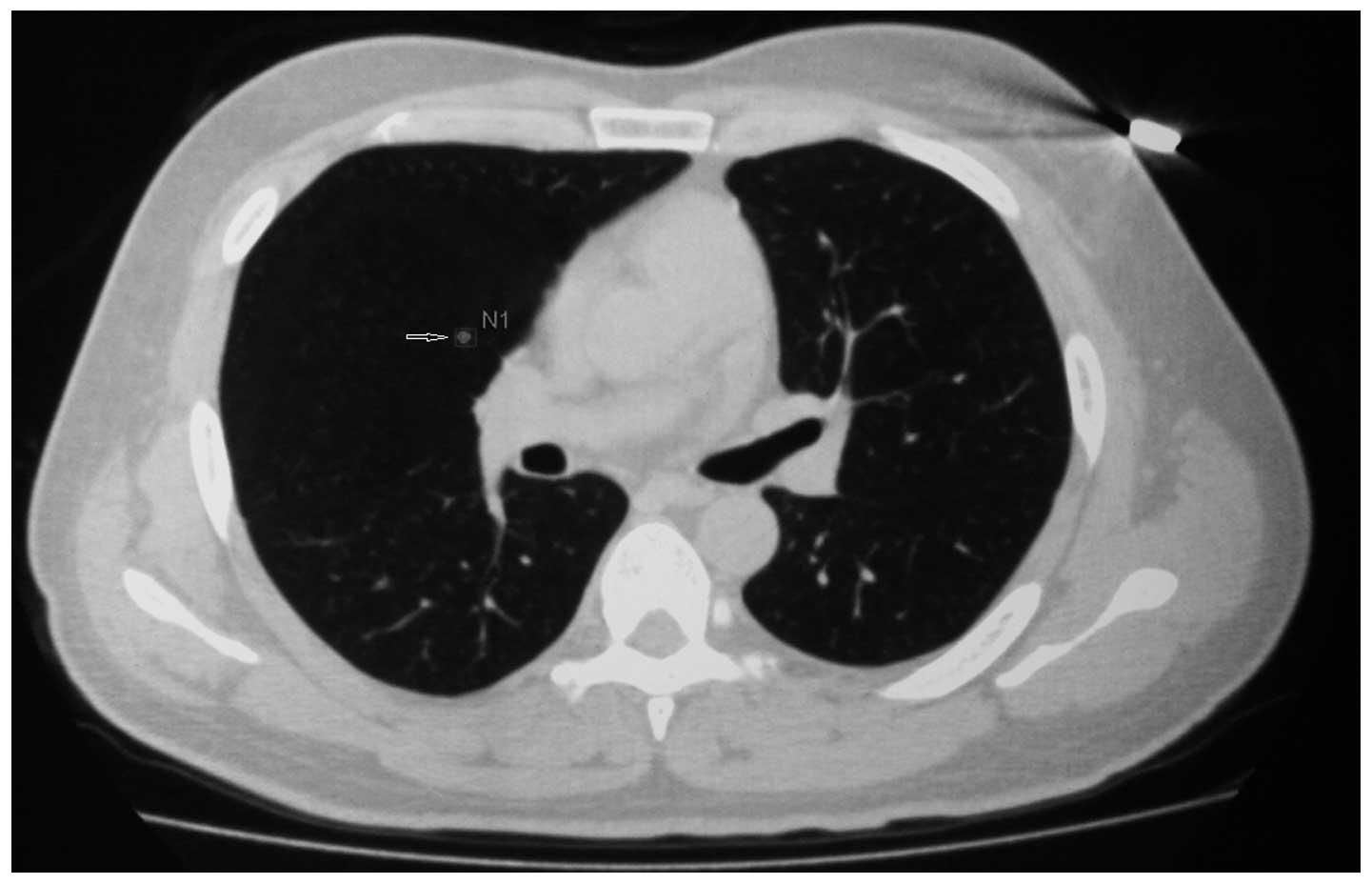
A chest CT scan performed at a follow-up examination 21 months after the first surgery, showed numerous metastatic nodules in diffuse and random distributions in each lung (Fig. 8). The patient refused to undergo any further surgical treatment or chemotherapy. The last follow-up took place 33 months after the first surgery, during which a CT scan found no local recurrence, and the patient complained of no pain at the site of the original lesion (Fig. 9). A chest CT scan showed several newly developed nodules, the largest being 7 mm in diameter (Fig. 10). However, the patient reported no chest pain or trouble in breathing.

Figure 8

Case one. Chest computed tomography scan performed at a follow-up visit 21 months after the first surgery showing numerous metastatic nodules in diffuse and random distributions in each lung.

Figure 9

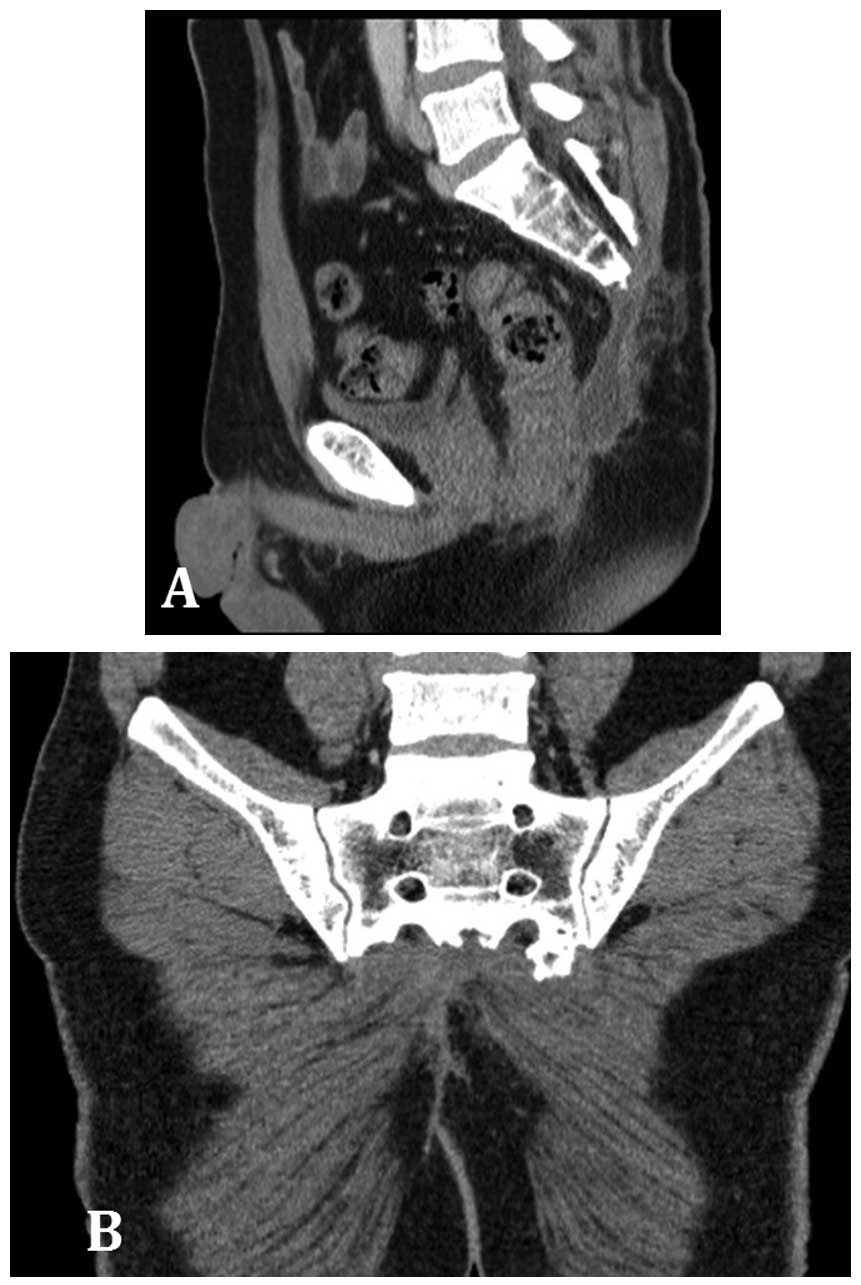
Case one. (A) Sagittal and (B) coronal plane computed tomography scans showing no local recurrence at the last follow-up examination 33 months after the first surgery.

Figure 10

Case one. Chest computed tomography scan showing several newly developed nodules, the largest being 7 mm in diameter, at the last follow-up examination 33 months after the first surgery.

Case two

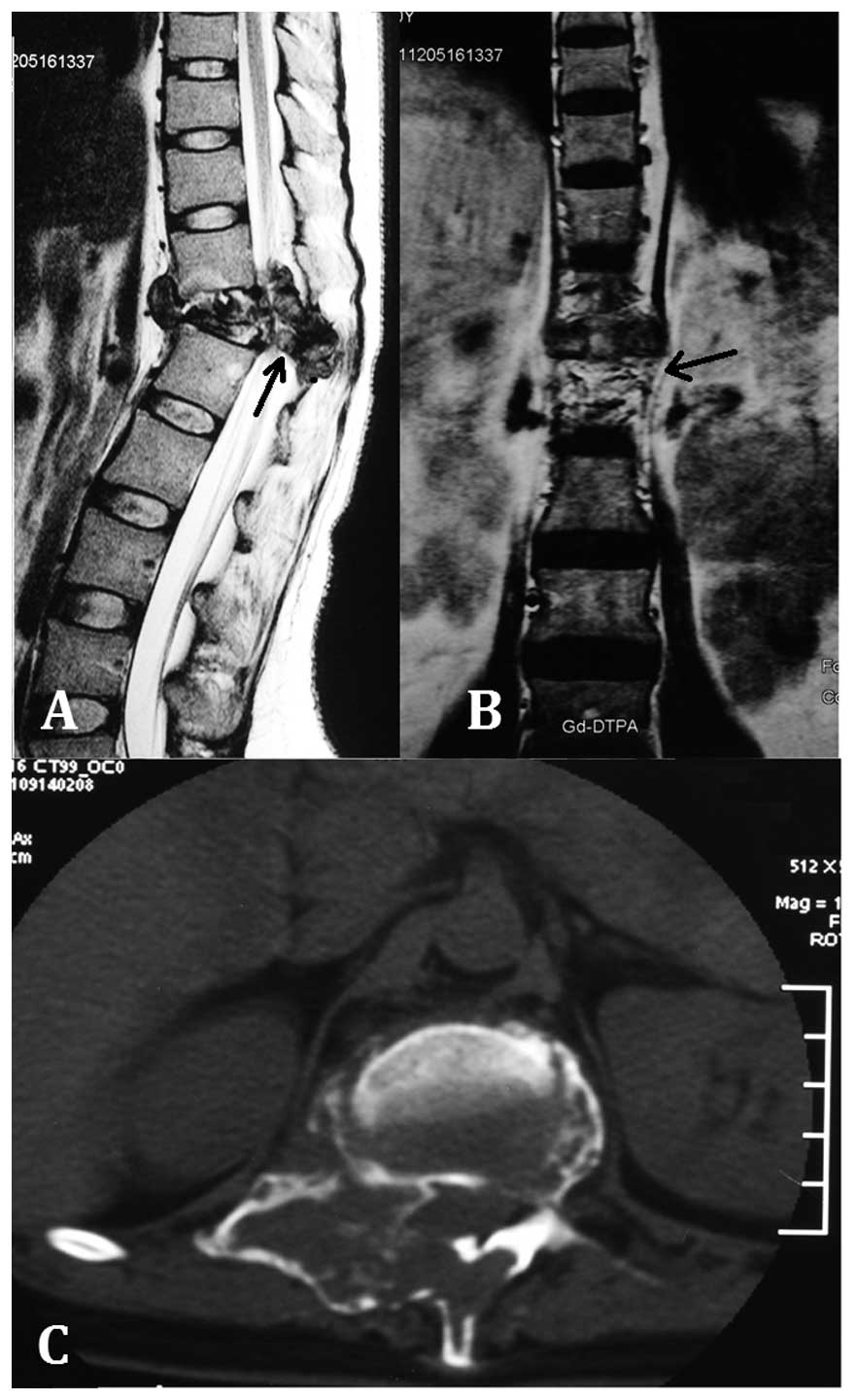
A 30-year-old female presented to a local hospital due to back pain that had persisted for one year. MRI revealed a 3.2×3.8×3.3-cm lesion in the twelfth thoracic vertebral body, with evident compression of the adjacent spinal canal and foramen. A 3.0×3.4×5.6-cm mass was also present in the spinal canal and posterior column of the T12 vertebra (Fig. 11). A fine-needle biopsy was performed and the tumor was diagnosed as a GCTB (Fig. 12).

Figure 11

Case two. (A) Sagittal, (B) coronal and (C) transverse plane magnetic resonance imaging showing the additional mass in the spinal canal and posterior column of the T12 vertebra.

Figure 12

Case two (magnification, ×100). Results of a fine-needle biopsy performed in the local hospital, which resulted in the tumor being diagnosed as a giant cell tumor of the bone.

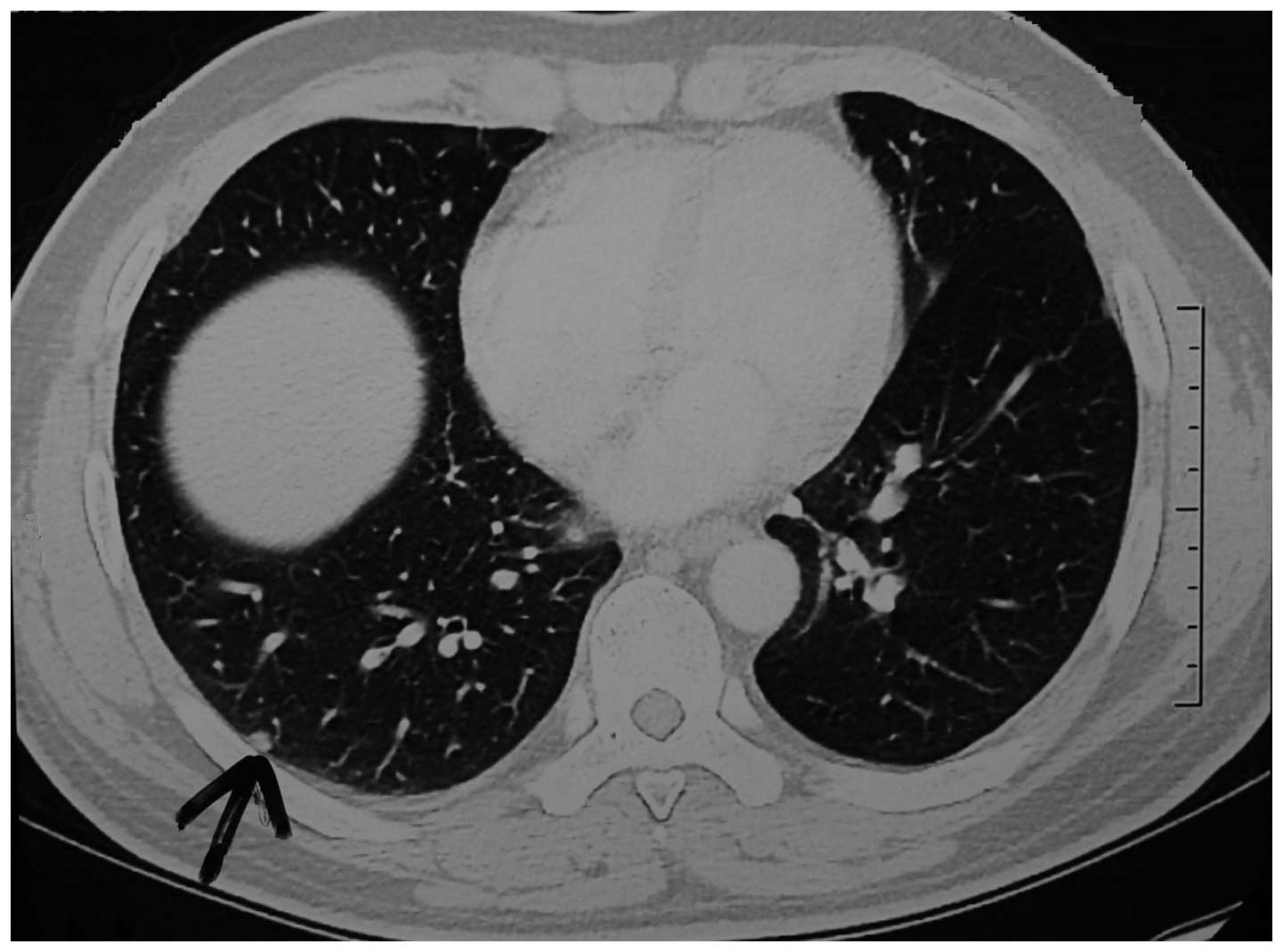
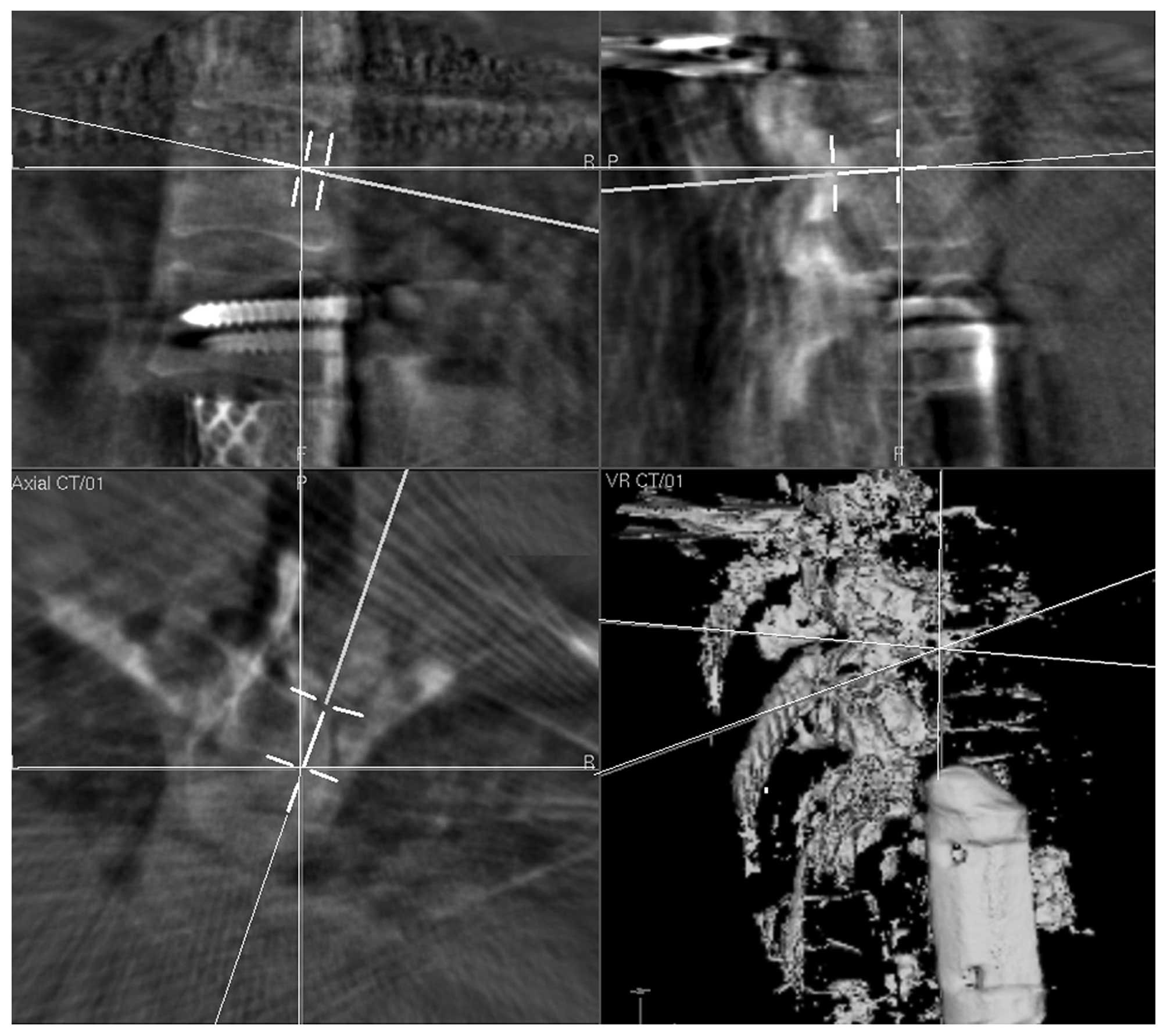
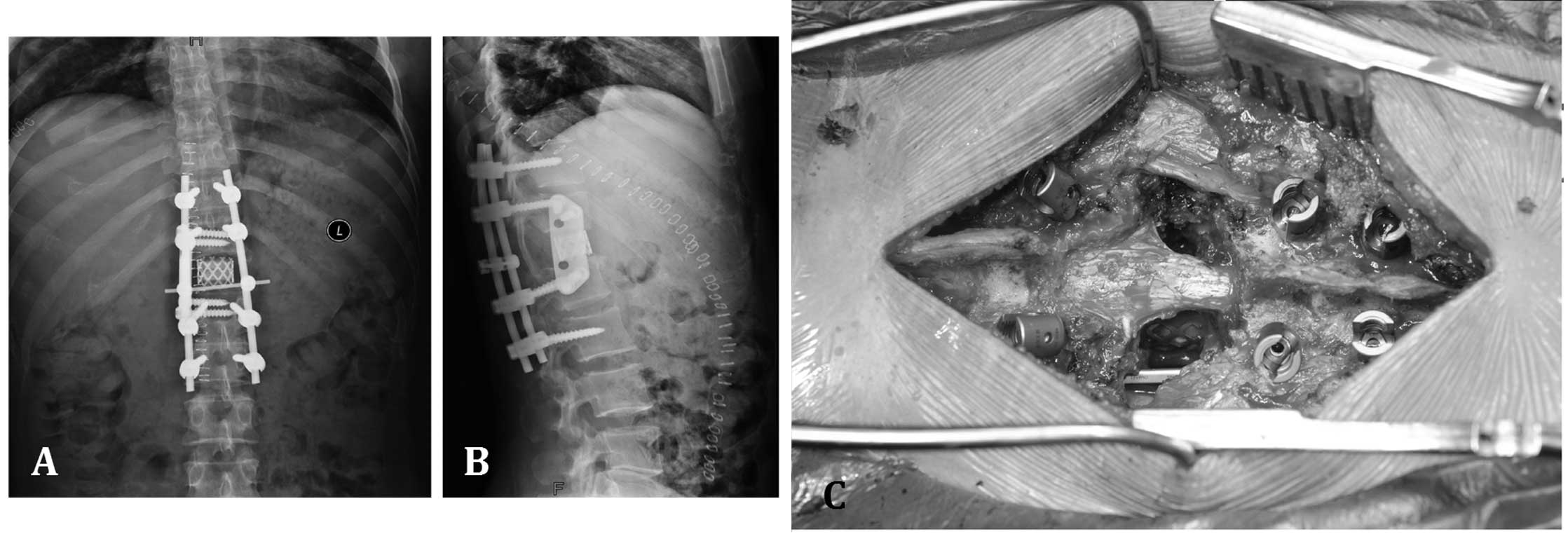
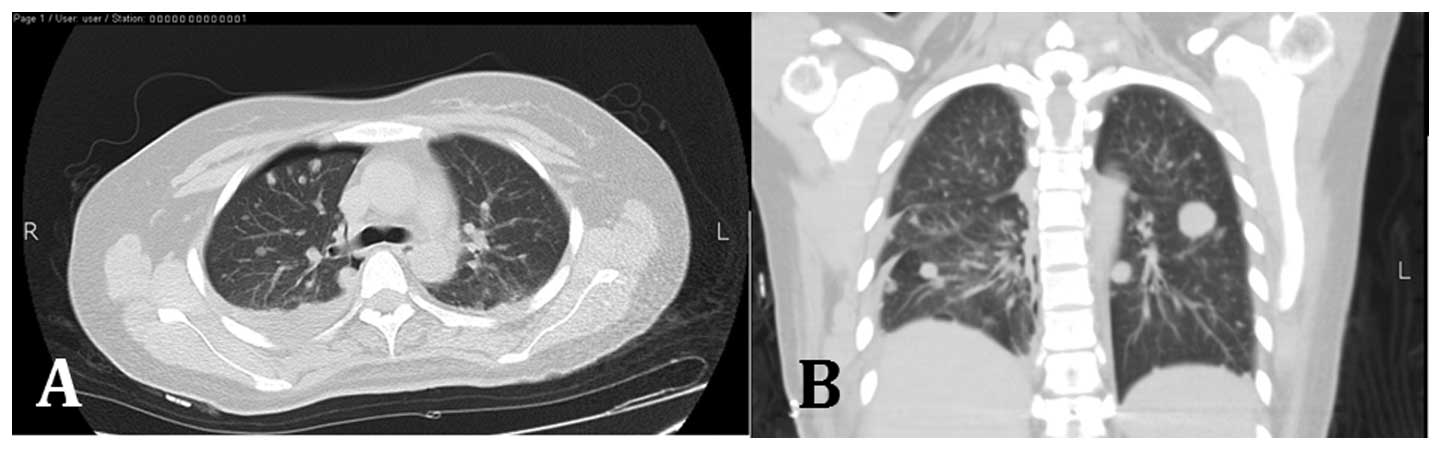
The patient was transferred to the Department of Orthopedic Oncology Surgery, Beijing Ji Shui Tan Hospital and computer-guided surgery was subsequently performed to resect the primary tumor (Fig. 13). The spine was stabilized by vertical and horizontal rods fixed by eight pedicle screws fixed into the 10th and 11th thoracic vertebrae, and the 1st and 2nd lumbar vertebrae. The vertebral body of the 12th thoracic vertebra was removed and replaced by a mesh cage filled with bone cement. A titanium palate with four screws was fixed laterally on the 11th thoracic and 1st lumbar vertebrae to provide reinforcement (Fig. 14). Due to the possibility of pulmonary metastasis, a chest CT scan was ordered, which showed multiple nodules of varying sizes in each lung (Fig. 15). Subsequent to a recovery period, the patient was advised to seek further surgical resection in a more specialized hospital or receive resection of the pulmonary metastasis. The patient was subsequently lost to follow-up.

Figure 13

Case two. Images showing the computer-guided resection of the primary tumor.

Figure 14

Case two. Postoperative (A) coronal and (B) sagittal computed tomogaphy scans, and (C) gross appearance of the surgical region. The vertebral body of the 12th thoracic vertebra was removed and replaced by a mesh cage filled with bone cement. A titanium palate with four screws was fixed laterally to the 11th thoracic and first lumbar vertebrae to provide reinforcement.

Figure 15

Case two. Post-operative (A) transverse and (B) coronal plane chest computed tomography scans showing multiple nodules of varying sizes in each lung.

Discussion

Giant cell tumors of the bone within the vertebrae are rare, accounting for just 2.7–6.5% of all GCTB (15). According to the literature, the sacrum may be the most common site for this lesion, followed by the thoracic, cervical and lumbar segments (16). Patients with vertebral GCTB usually demonstrate clinical manifestations such as pain with radicular distribution, weakness and sensory deficits. A variety of imaging modalities, including magnetic resonance imaging, CT scans, radionuclide imaging and positron emission tomography, are useful tools for the diagnosis for the diagnosis of GCT of the spine. Fine-needle aspiration biopsy can be used to aid the differential diagnosis and confirm the final diagnosis.

The ideal treatment for GCTB consists of an en-bloc excision at the early stages of the development of the lesion (17). However, due to the complicated anatomical structure of the spine and adjuvant spinal tissues, the surgical treatment of tumors of the spine is extremely challenging. In case one of the present study, the local hospital that the patient attended did not have much experience with rare sacral GCTB, and therefore failed to obtain an en-bloc resection. This was probably the most significant cause of the recurrent lesion and lung metastases not long after the first surgical treatment. In our center, the majority of patients are treated by senior surgeons who perform GCTB resection with the assistance of computer navigation, which predominantly achieves en-bloc resection of the tumor. In case one, following the resection of the recurrent lesion in our center, there was no further recurrence at the original site of the tumor and the metastatic lesions in the lungs were relatively stable with no symptoms. In case two, although the patient was lost to follow-up after the first surgery, it is not likely that there will be further recurrence or metastasis.

Although radiotherapy is recommended in cases of unresectable GCTB (18), it is not suitable for vertebral lesions, as it may cause spinal cord myelitis and malignant transformation of the tumor (19,20). Chemotherapy is also not highly recommended for the treatment of GCTB due to its toxic effects and the normally benign nature of GCTB (21). Thus, there is no standard chemical therapy protocol for the lesion. However, denosumab, a novel drug that inhibits the function of the cytokine receptor activator of nuclear factor-κB ligand (RANKL) may be an effective alternative based on the fact that GCTs overexpress RANKL and its receptor (22). Although the two patients in the present study refused to receive chemotherapy, certain other patients with GCTB that metastasized to the lung received a chemotherapy regime consisting of Adriamycin, ifosfamide and mitoxantrone, resulting in more growth of the metastatic tumor in the lung compared with the tumors of those who did not receive chemotherapy (23). However, randomized controlled trials should be carried out to evaluate the pros and cons of chemotherapy for GCTB with pulmonary metastasis.

Acknowledgements

The present study was funded by the National Natural Science Foundation Project of China (grant no. 61372179).

References

1 

Gong L, Liu W, Sun X, et al: Histological and clinical characteristics of malignant giant cell tumor of bone. Virchows Arch. 460:327–334. 2012. View Article : Google Scholar : PubMed/NCBI

2 

Enneking WF: Musculoskeletal Tumor Surgery. Churchill Livingstone, Inc; New York (NY): 1983

3 

Kivioja AH, Blomqvist C, Hietaniemi K, et al: Cement is recommended in intralesional surgery of giant cell tumors: a Scandinavian Sarcoma Group study of 294 patients followed for a median time of 5 years. Acta Orthop. 79:86–93. 2008. View Article : Google Scholar : PubMed/NCBI

4 

Lackman RD, Hosalkar HS, Ogilvie CM, et al: Intralesional curettage for grades II and III giant cell tumors of bone. Clin Orthop Relat Res. 438:123–127. 2005. View Article : Google Scholar : PubMed/NCBI

5 

Balke M, Schremper L, Gebert C, et al: Giant cell tumor of bone: treatment and outcome of 214 cases. J Cancer Res Clin Oncol. 134:969–978. 2008. View Article : Google Scholar : PubMed/NCBI

6 

Arbeitsgemeinschaft Knochentumoren. Becker WT, Dohle J, Bernd L, Braun A, et al: Local recurrence of giant cell tumor of bone after intralesional treatment with and without adjuvant therapy. J Bone Joint Surg Am. 90:1060–1067. 2008. View Article : Google Scholar : PubMed/NCBI

7 

Prosser GH, Baloch KG, Tillman RM, Carter SR and Grimer RJ: Does curettage without adjuvant therapy provide low recurrence rates in giant-cell tumors of bone? Clin Orthop Relat Res. 211–218. 2005. View Article : Google Scholar : PubMed/NCBI

8 

Vult von Steyern F, Bauer HC, Trovik C, et al: Scandinavian Sarcoma Group: Treatment of local recurrences of giant cell tumour in long bones after curettage and cementing. A Scandinavian Sarcoma Group study. J Bone Joint Surg Br. 88:531–535. 2006. View Article : Google Scholar : PubMed/NCBI

9 

Harness NG and Mankin HJ: Giant-cell tumor of the distal forearm. J Hand Surg Am. 29:188–193. 2004. View Article : Google Scholar : PubMed/NCBI

10 

Moon JC, Kim SR, Chung MJ and Lee YC: Multiple pulmonary metastases from giant cell tumor of a hand. Am J Med Sci. 343:171–173. 2012. View Article : Google Scholar

11 

Osaka S, Sugita H, Osaka E, et al: Clinical and immunohistochemical characteristics of benign giant cell tumour of bone with pulmonary metastases: case series. J Orthop Surg (Hong Kong). 12:55–62. 2004.

12 

Xiuchun Yu, Ming Xu, Songfeng Xu and Qing Su: Clinical outcomes of giant cell tumor of bone treated with bone cement filling and internal fixation, and oral bisphosphonates. Oncol Lett. 5:447–451. 2013.

13 

Ropars M, Kaila R, Cannon SR and Briggs TW: Primary giant cell tumours of the digital bones of the hand. J Hand Surg Eur Vol. 32:160–164. 2007. View Article : Google Scholar : PubMed/NCBI

14 

Averill RM, Smith RJ and Campbell CJ: Giant-cell tumors of the bones of the hand. J Hand Surg Am. 5:39–50. 1980. View Article : Google Scholar : PubMed/NCBI

15 

Shimada Y, Hongo M, Miyakoshi N, et al: Giant cell tumor of fifth lumbar vertebrae: two case reports and review of the literature. Spine J. 7:499–505. 2007. View Article : Google Scholar : PubMed/NCBI

16 

Bidwell JK, Young JW and Khalluff E: Giant cell tumor of the spine: computed tomography appearance and review of the literature. J Comput Tomogr. 11:307–311. 1987. View Article : Google Scholar : PubMed/NCBI

17 

Niu X, Zhang Q, Hao L, et al: Giant cell tumor of the extremity: retrospective analysis of 621 Chinese patients from one institution. J Bone Joint Surg Am. 94:461–467. 2012. View Article : Google Scholar : PubMed/NCBI

18 

Bhatia S, Miszczyk L, Roelandts M, et al: Radiotherapy for marginally resected, unresectable or recurrent giant cell tumor of the bone: a rare cancer network study. Rare Tumors. 3:e482011. View Article : Google Scholar

19 

Khan DC, Malhotra S, Stevens RE, et al: Radiotherapy for the treatment of giant cell tumor of the spine: a report of six cases and review of the literature. Cancer Invest. 17:110–113. 1999. View Article : Google Scholar : PubMed/NCBI

20 

Chen ZX, Gu DZ, Yu ZH, et al: Radiation therapy of giant cell tumor of bone: analysis of 35 patients. Int J Radiat Oncol Biol Phys. 12:329–334. 1986. View Article : Google Scholar : PubMed/NCBI

21 

Cheng YY, Huang L, Lee KM, et al: Bisphosphonates induce apoptosis of stromal tumor cells in giant cell tumor of bone. Calcif Tissue Int. 75:71–77. 2004. View Article : Google Scholar : PubMed/NCBI

22 

Thomas D, Henshaw R, Skubitz K, et al: Denosumab in patients with giant-cell tumour of bone: an open-label, phase 2 study. Lancet Oncol. 11:275–280. 2010. View Article : Google Scholar : PubMed/NCBI

23 

Klenke FM, Wenger DE, Inwards CY, Rose PS and Sim FH: Recurrent giant cell tumor of long bones: analysis of surgical management. Clin Orthop Relat Res. 469:1181–1187. 2011. View Article : Google Scholar :

Related Articles

  • Abstract
  • View
  • Download
  • Twitter
Copy and paste a formatted citation
Spandidos Publications style
Muheremu A, Huang Z and Niu X: Treatment for giant cell tumor of the spine metastasizing to the lung: A report of two cases and a literature review. Oncol Lett 9: 1321-1326, 2015.
APA
Muheremu, A., Huang, Z., & Niu, X. (2015). Treatment for giant cell tumor of the spine metastasizing to the lung: A report of two cases and a literature review. Oncology Letters, 9, 1321-1326. https://doi.org/10.3892/ol.2014.2837
MLA
Muheremu, A., Huang, Z., Niu, X."Treatment for giant cell tumor of the spine metastasizing to the lung: A report of two cases and a literature review". Oncology Letters 9.3 (2015): 1321-1326.
Chicago
Muheremu, A., Huang, Z., Niu, X."Treatment for giant cell tumor of the spine metastasizing to the lung: A report of two cases and a literature review". Oncology Letters 9, no. 3 (2015): 1321-1326. https://doi.org/10.3892/ol.2014.2837
Copy and paste a formatted citation
x
Spandidos Publications style
Muheremu A, Huang Z and Niu X: Treatment for giant cell tumor of the spine metastasizing to the lung: A report of two cases and a literature review. Oncol Lett 9: 1321-1326, 2015.
APA
Muheremu, A., Huang, Z., & Niu, X. (2015). Treatment for giant cell tumor of the spine metastasizing to the lung: A report of two cases and a literature review. Oncology Letters, 9, 1321-1326. https://doi.org/10.3892/ol.2014.2837
MLA
Muheremu, A., Huang, Z., Niu, X."Treatment for giant cell tumor of the spine metastasizing to the lung: A report of two cases and a literature review". Oncology Letters 9.3 (2015): 1321-1326.
Chicago
Muheremu, A., Huang, Z., Niu, X."Treatment for giant cell tumor of the spine metastasizing to the lung: A report of two cases and a literature review". Oncology Letters 9, no. 3 (2015): 1321-1326. https://doi.org/10.3892/ol.2014.2837
Follow us
  • Twitter
  • LinkedIn
  • Facebook
About
  • Spandidos Publications
  • Careers
  • Cookie Policy
  • Privacy Policy
How can we help?
  • Help
  • Live Chat
  • Contact
  • Email to our Support Team