Spandidos Publications Logo
  • About
    • About Spandidos
    • Aims and Scopes
    • Abstracting and Indexing
    • Editorial Policies
    • Reprints and Permissions
    • Job Opportunities
    • Terms and Conditions
    • Contact
  • Journals
    • All Journals
    • Oncology Letters
      • Oncology Letters
      • Information for Authors
      • Editorial Policies
      • Editorial Board
      • Aims and Scope
      • Abstracting and Indexing
      • Bibliographic Information
      • Archive
    • International Journal of Oncology
      • International Journal of Oncology
      • Information for Authors
      • Editorial Policies
      • Editorial Board
      • Aims and Scope
      • Abstracting and Indexing
      • Bibliographic Information
      • Archive
    • Molecular and Clinical Oncology
      • Molecular and Clinical Oncology
      • Information for Authors
      • Editorial Policies
      • Editorial Board
      • Aims and Scope
      • Abstracting and Indexing
      • Bibliographic Information
      • Archive
    • Experimental and Therapeutic Medicine
      • Experimental and Therapeutic Medicine
      • Information for Authors
      • Editorial Policies
      • Editorial Board
      • Aims and Scope
      • Abstracting and Indexing
      • Bibliographic Information
      • Archive
    • International Journal of Molecular Medicine
      • International Journal of Molecular Medicine
      • Information for Authors
      • Editorial Policies
      • Editorial Board
      • Aims and Scope
      • Abstracting and Indexing
      • Bibliographic Information
      • Archive
    • Biomedical Reports
      • Biomedical Reports
      • Information for Authors
      • Editorial Policies
      • Editorial Board
      • Aims and Scope
      • Abstracting and Indexing
      • Bibliographic Information
      • Archive
    • Oncology Reports
      • Oncology Reports
      • Information for Authors
      • Editorial Policies
      • Editorial Board
      • Aims and Scope
      • Abstracting and Indexing
      • Bibliographic Information
      • Archive
    • Molecular Medicine Reports
      • Molecular Medicine Reports
      • Information for Authors
      • Editorial Policies
      • Editorial Board
      • Aims and Scope
      • Abstracting and Indexing
      • Bibliographic Information
      • Archive
    • World Academy of Sciences Journal
      • World Academy of Sciences Journal
      • Information for Authors
      • Editorial Policies
      • Editorial Board
      • Aims and Scope
      • Abstracting and Indexing
      • Bibliographic Information
      • Archive
    • International Journal of Functional Nutrition
      • International Journal of Functional Nutrition
      • Information for Authors
      • Editorial Policies
      • Editorial Board
      • Aims and Scope
      • Abstracting and Indexing
      • Bibliographic Information
      • Archive
    • International Journal of Epigenetics
      • International Journal of Epigenetics
      • Information for Authors
      • Editorial Policies
      • Editorial Board
      • Aims and Scope
      • Abstracting and Indexing
      • Bibliographic Information
      • Archive
    • Medicine International
      • Medicine International
      • Information for Authors
      • Editorial Policies
      • Editorial Board
      • Aims and Scope
      • Abstracting and Indexing
      • Bibliographic Information
      • Archive
  • Articles
  • Information
    • Information for Authors
    • Information for Reviewers
    • Information for Librarians
    • Information for Advertisers
    • Conferences
  • Language Editing
Spandidos Publications Logo
  • About
    • About Spandidos
    • Aims and Scopes
    • Abstracting and Indexing
    • Editorial Policies
    • Reprints and Permissions
    • Job Opportunities
    • Terms and Conditions
    • Contact
  • Journals
    • All Journals
    • Biomedical Reports
      • Information for Authors
      • Editorial Policies
      • Editorial Board
      • Aims and Scope
      • Abstracting and Indexing
      • Bibliographic Information
      • Archive
    • Experimental and Therapeutic Medicine
      • Information for Authors
      • Editorial Policies
      • Editorial Board
      • Aims and Scope
      • Abstracting and Indexing
      • Bibliographic Information
      • Archive
    • International Journal of Epigenetics
      • Information for Authors
      • Editorial Policies
      • Editorial Board
      • Aims and Scope
      • Abstracting and Indexing
      • Bibliographic Information
      • Archive
    • International Journal of Functional Nutrition
      • Information for Authors
      • Editorial Policies
      • Editorial Board
      • Aims and Scope
      • Abstracting and Indexing
      • Bibliographic Information
      • Archive
    • International Journal of Molecular Medicine
      • Information for Authors
      • Editorial Policies
      • Editorial Board
      • Aims and Scope
      • Abstracting and Indexing
      • Bibliographic Information
      • Archive
    • International Journal of Oncology
      • Information for Authors
      • Editorial Policies
      • Editorial Board
      • Aims and Scope
      • Abstracting and Indexing
      • Bibliographic Information
      • Archive
    • Medicine International
      • Information for Authors
      • Editorial Policies
      • Editorial Board
      • Aims and Scope
      • Abstracting and Indexing
      • Bibliographic Information
      • Archive
    • Molecular and Clinical Oncology
      • Information for Authors
      • Editorial Policies
      • Editorial Board
      • Aims and Scope
      • Abstracting and Indexing
      • Bibliographic Information
      • Archive
    • Molecular Medicine Reports
      • Information for Authors
      • Editorial Policies
      • Editorial Board
      • Aims and Scope
      • Abstracting and Indexing
      • Bibliographic Information
      • Archive
    • Oncology Letters
      • Information for Authors
      • Editorial Policies
      • Editorial Board
      • Aims and Scope
      • Abstracting and Indexing
      • Bibliographic Information
      • Archive
    • Oncology Reports
      • Information for Authors
      • Editorial Policies
      • Editorial Board
      • Aims and Scope
      • Abstracting and Indexing
      • Bibliographic Information
      • Archive
    • World Academy of Sciences Journal
      • Information for Authors
      • Editorial Policies
      • Editorial Board
      • Aims and Scope
      • Abstracting and Indexing
      • Bibliographic Information
      • Archive
  • Articles
  • Information
    • For Authors
    • For Reviewers
    • For Librarians
    • For Advertisers
    • Conferences
  • Language Editing
Login Register Submit
  • This site uses cookies
  • You can change your cookie settings at any time by following the instructions in our Cookie Policy. To find out more, you may read our Privacy Policy.

    I agree
Search articles by DOI, keyword, author or affiliation
Search
Advanced Search
presentation
Oncology Letters
Join Editorial Board Propose a Special Issue
Print ISSN: 1792-1074 Online ISSN: 1792-1082
Journal Cover
June-2015 Volume 9 Issue 6

Full Size Image

Sign up for eToc alerts
Recommend to Library

Journals

International Journal of Molecular Medicine

International Journal of Molecular Medicine

International Journal of Molecular Medicine is an international journal devoted to molecular mechanisms of human disease.

International Journal of Oncology

International Journal of Oncology

International Journal of Oncology is an international journal devoted to oncology research and cancer treatment.

Molecular Medicine Reports

Molecular Medicine Reports

Covers molecular medicine topics such as pharmacology, pathology, genetics, neuroscience, infectious diseases, molecular cardiology, and molecular surgery.

Oncology Reports

Oncology Reports

Oncology Reports is an international journal devoted to fundamental and applied research in Oncology.

Experimental and Therapeutic Medicine

Experimental and Therapeutic Medicine

Experimental and Therapeutic Medicine is an international journal devoted to laboratory and clinical medicine.

Oncology Letters

Oncology Letters

Oncology Letters is an international journal devoted to Experimental and Clinical Oncology.

Biomedical Reports

Biomedical Reports

Explores a wide range of biological and medical fields, including pharmacology, genetics, microbiology, neuroscience, and molecular cardiology.

Molecular and Clinical Oncology

Molecular and Clinical Oncology

International journal addressing all aspects of oncology research, from tumorigenesis and oncogenes to chemotherapy and metastasis.

World Academy of Sciences Journal

World Academy of Sciences Journal

Multidisciplinary open-access journal spanning biochemistry, genetics, neuroscience, environmental health, and synthetic biology.

International Journal of Functional Nutrition

International Journal of Functional Nutrition

Open-access journal combining biochemistry, pharmacology, immunology, and genetics to advance health through functional nutrition.

International Journal of Epigenetics

International Journal of Epigenetics

Publishes open-access research on using epigenetics to advance understanding and treatment of human disease.

Medicine International

Medicine International

An International Open Access Journal Devoted to General Medicine.

Journal Cover
June-2015 Volume 9 Issue 6

Full Size Image

Sign up for eToc alerts
Recommend to Library

  • Article
  • Citations
    • Cite This Article
    • Download Citation
    • Create Citation Alert
    • Remove Citation Alert
    • Cited By
  • Similar Articles
    • Related Articles (in Spandidos Publications)
    • Similar Articles (Google Scholar)
    • Similar Articles (PubMed)
  • Download PDF
  • Download XML
  • View XML
Case Report Open Access

Acute myeloid leukemia with monosomy 7, ectopic virus integration site-1 overexpression and central diabetes insipidus: A case report

  • Authors:
    • Hongbing Ma
    • Jing Yang
    • Bing Xiang
    • Yongqian Jia
  • View Affiliations / Copyright

    Affiliations: Department of Hematology, West China Hospital, Sichuan University, Chengdu, Sichuan 610041, P.R. China
    Copyright: © Ma et al. This is an open access article distributed under the terms of Creative Commons Attribution License.
  • Pages: 2459-2462
    |
    Published online on: April 23, 2015
       https://doi.org/10.3892/ol.2015.3139
  • Expand metrics +
Metrics: Total Views: 0 (Spandidos Publications: | PMC Statistics: )
Metrics: Total PDF Downloads: 0 (Spandidos Publications: | PMC Statistics: )
Cited By (CrossRef): 0 citations Loading Articles...

This article is mentioned in:


Abstract

Central diabetes insipidus (DI) is a rare complication in patients with acute myeloid leukemia (AML), typically occurring in patients with abnormalities of chromosomes 3 or 7. The association between AML with monosomy 7 and DI has been described in a number of studies; however, DI has been rarely reported in cases of ectopic virus integration site‑1 (EVI1)‑positive AML with monosomy 7. The current study reports a case of AML with monosomy 7 and EVI1 overexpression, with central DI as the initial symptom. The patient was an 18‑year‑old female who presented with polyuria and polydipsia. Bone marrow aspiration revealed 83.5% myeloperoxidase‑positive blasts without trilineage myelodysplasia. The karyotype was 45,XX,‑7, and the patient presented monosomy 7 and EVI1 overexpression (‑7/EVI1+) without 3q aberration. Treatment with induction therapy was unsuccessful. To the best of our knowledge, this is the second case of DI‑AML with ‑7/EVI1+ and without a 3q aberration. The possible mechanisms associated with EVI1, monosomy 7 and DI were investigated.

Introduction

Acute myeloid leukemia (AML) represents a group of myeloid neoplasms characterized by the accumulation of myeloblasts in the bone marrow and/or blood (1). Central diabetes insipidus (DI) is a rare complication observed in <0.6% of patients with AML (2,3), which typically occurs in patients with abnormalities in chromosomes 3 or 7 (4–7). Central DI is a condition characterized by extreme thirst and excessive urination, that is caused by a deficiency of antidiuretic hormone (ADH) (8). A number of case studies have described an association between DI and AML with monosomy 7 (4,6,7,9,10); however, DI has been rarely reported in cases of ectopic virus integration site-1 (EVI1)-positive AML with monosomy 7. The EVI1 gene is located on chromosome 3q26 and encodes a 1,051-amino acid DNA-binding phosphoprotein, which functions as a transcription factor (11,12). Groschel et al (13) reported the that EVI1 overexpression is observed in 10.7% AML patients. The present study reports the case of an 18-year-old female suffering from AML with monosomy 7 and EVI1 overexpression (−7/EVI1+) without 3q aberration, who presented with central DI as the initial symptom. In addition, the present study investigated the possible mechanisms associated with EVI1, monosomy 7 and DI.

Case report

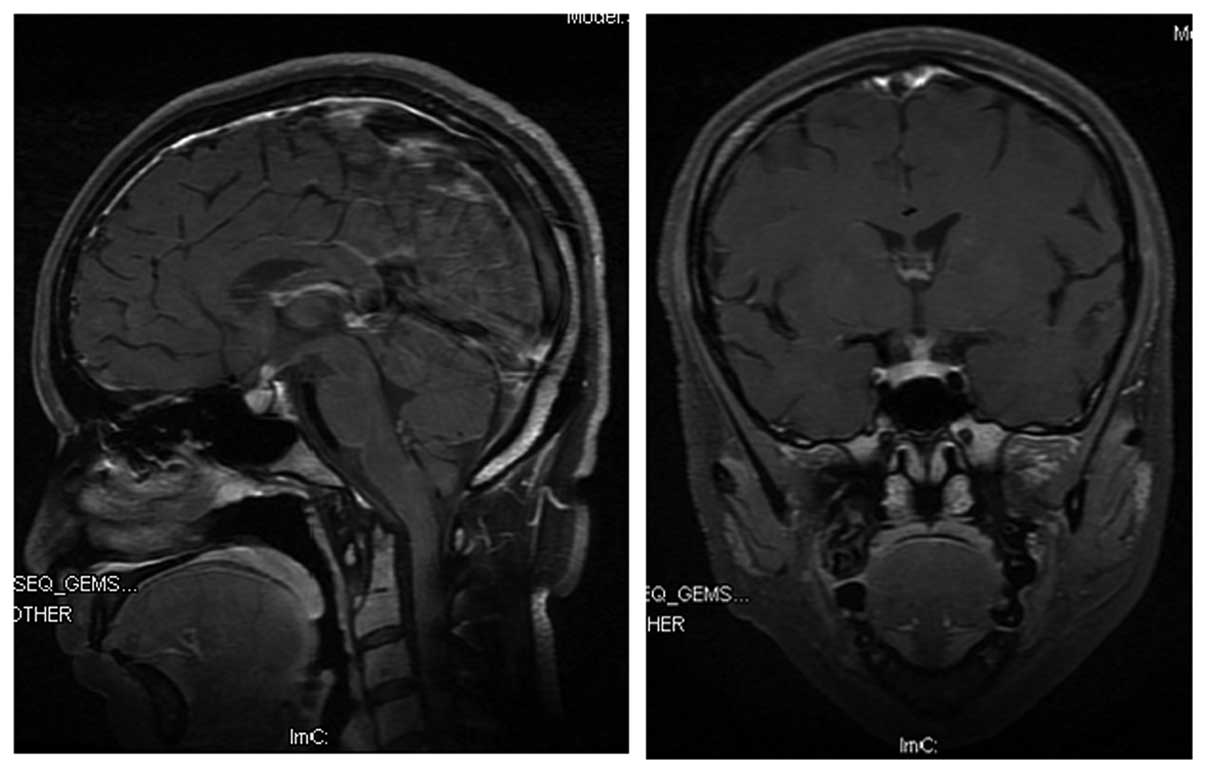
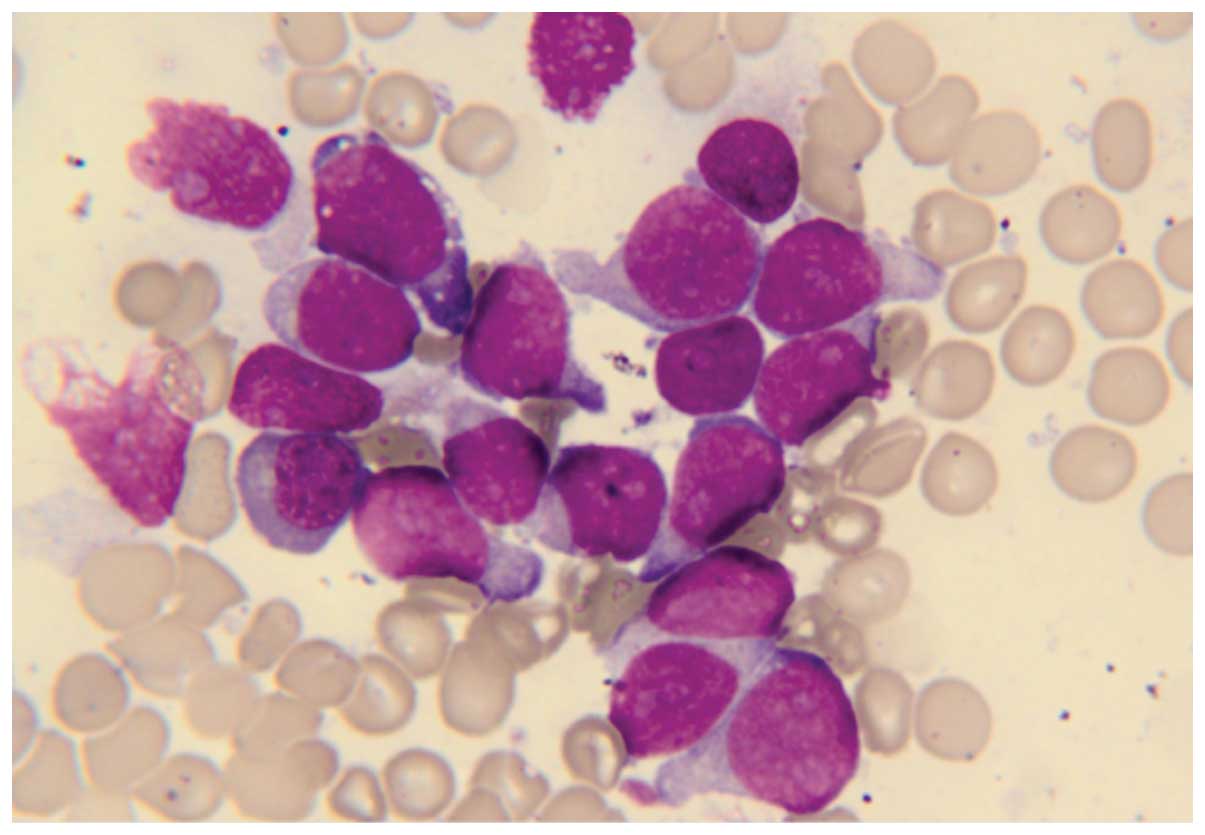
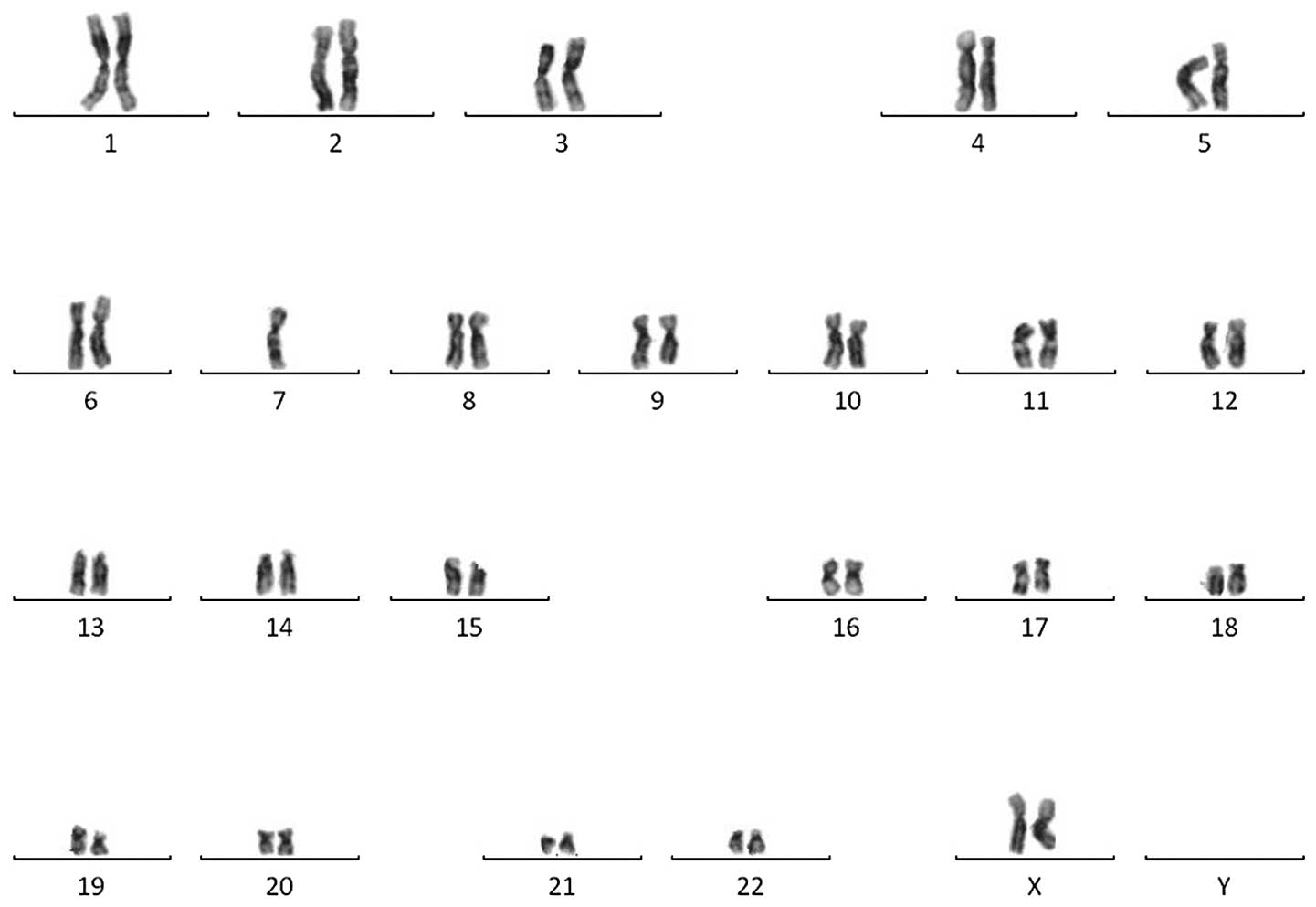
In December 2012, an 18-year-old female presented at West China Hospital (Chengdu, China) with complaints of fatigue, ecchymosis, polyuria and polydipsia lasting for two months. A physical examination performed upon admission revealed dry skin, indicating dehydration. A complete blood count revealed a white cell count of 151.93×10⁹/l, with 84% peripheral blasts, a hemoglobin level of 80 g/l and a platelet count of 139×109/l. In addition, electrolyte tests identified a serum sodium level of 162.4 mmol/l (indicating the presence of hypernatremia), serum osmolality level of 342 mOsm/kg and urine osmolality level of 128 mOsm/kg. Magnetic resonance imaging of the brain revealed mild thickening of the pituitary stalk (Fig. 1), while cerebrospinal analysis was negative for leukemia. Central DI was suspected, and the patient was administered desmopressin acetate tablets (2 mg; Minirin; Ferring International Center SA, Saint-Prex, Switzerland) orally, three times a day. The polyuria, polydipsia and dry skin resolved, with normalization of serum sodium and serum osmolality levels. Bone marrow smear tests indicated a morphological diagnosis of AML with 83.5% blasts (Fig. 2). Cytochemical staining was negative for peroxidase and positive for periodic acid-Schiff (Baso Diagnostics Inc., Zhuhai, Taiwan). Flow cytometric analysis revealed 88% blasts in the total nucleated cell population expressing cluster of differentiation (CD) 34, human leukocyte antigen (HLA)-DR, CD13, CD117 and CD123 (data not shown), and a diagnosis of AML with minimal differentiation [French-American-British classification, AML-M0 (14)] was determined. Trilineage dysplasia was unremarkable, while a cytogenetic analysis revealed a monosomy karyotype, 45,XX,-7 (Fig. 3). The patient was screened for fusion genes, revealing that EVI1 and T-cell leukemia homeobox 1 were positive, whereas FLT3/ITD, C-KIT D816V, nucleophosmin and CCAAT/enhancer binding protein α were negative. Furthermore, the patient had a family history of acute lymphocytic leukemia (pre-B), since the patient's father had been diagnosed with the disease at West China Hospital one year before the present diagnosis. Cytogenetic analysis and genetic screening of the bone marrow of the patient's father was performed to identify whether a common oncogene was present, however the results were unremarkable.

Figure 1.

Magnetic resonance imaging of the brain (sagittal and coronal scans) revealed a thickened pituitary stalk.

Figure 2.

Bone marrow smear test revealed the presence of a high number of myeloblasts, which indicates the diagnosis of acute myeloid leukemia.

Figure 3.

Karyotype of G-banded subclone with monosomy 7.

Subsequently, the patient was subjected to an initial cycle of induction chemotherapy with daunorubicin (45 mg/m2, days 1–3) and cytarabine (200 mg/d, days 1–7); however, remission was not achieved. A second cycle of induction chemotherapy was administered using the FLAG regimen (50 mg fludarabine, days 1–5; 2 g cytarabine, days 1–5; 300 µg granulocyte colony-stimulating factor, days 0–15) with no response. Treatment with arsenic trioxide (10 mg, days 1–21) and lenalidomide (10 mg, days 1–21) also produced no response. Without improvement or significant deterioration, the patient's platelet count remained high (83×109/l–194×109/l) following chemotherapy. Due to the refractoriness to chemotherapy and the high risk associated with transplantation, the patient was reluctant to undergo allogeneic stem-cell transplantation, despite her sibling being an HLA match. Therefore, the patient continued to take desmopressin acetate tablets, and palliative care with low-dose cytarabine and supportive treatment were administered. However, the patient succumbed to a severe pulmonary infection 8 months after diagnosis.

Discussion

AML associated with DI (DI-AML) rarely occurs. The association between DI-AML and cytogenetic aberrations has been reported in a number of studies (1–3). The most common aberrations are monosomy 7 and 3q alterations. Montecucco et al (15) and de la Chapelle et al (9) reported that 77% of DI-AML cases were associated with monosomy 7q and 44% of cases were associated with 3q alterations. In addition, Piccin et al (16) reviewed previously published reports of DI-AML, revealing that all 76 cases had acquired monosomy 7. The finding of the aforementioned studies indicate that monosomy 7q alterations may be a common ‘chromosomal determinant’ for DI-AML onset. DI-AML patients with 3q aberrations have a number of common characteristics, including age (29–52 years), normal or high platelet count, hyperleukocytosis, trilineage myelodysplasia, no central nervous system involvement, failure to respond to first-line treatment or early relapse, and poor prognosis (17,18). These features are termed 3q21q26 syndrome. The findings of the current study are consistent with such features, with the exception of trilineage myelodysplasia and 3q aberration. However, the patient also demonstrated EVI1 overexpression and monosomy-7 (−7/EVI1+), consistent with one of the two cases reported by Piccin (15). To the best of our knowledge, this is the second case of DI-AML with -7/EVI1+ without a 3q aberration.

The EVI1 gene is located on 3q26 and codes for a 1,051-amino acid DNA-binding phosphoprotein, which functions as a transcription factor (11,12). Groschel et al (13) demonstrated that EVI1+ is associated with specific chromosome abnormalities, including inv(3)/t(3;3), monosomy 7 and 11q23 translocations. EVI1+ was detected in 21/23 AML patients with inv(3)/t(3;3) and in 33/38 AML patients with monosomy 7. The role of EVI1 remains unclear; however, inappropriate EVI1 activation, in combination with other undefined genetic alterations, are hypothesized to result in low levels of antidiuretic hormone (ADH) (18). As ~90% of circulating ADH is associated with platelets, it is postulated that platelet ADH originates in the hypothalamus and that chromosome 3 abnormalities are associated with dysthrombopoiesis, which may result in alterations in ADH levels or function (7,19,20). However, this does not explain why DI-AML patients without 3q alterations exhibit aberrations in ADH levels or function.

In the present study, the patient exhibited no cytogenetic evidence of chromosome 3 abnormalities. Curley et al (21) reported a case of DI-AML with t(3;3)(q21;q26) and monosomy 7 that presented EVI1 overexpression at the onset; however, EVI1 overexpression was not detected upon AML relapse and DI did not recur. This indicates that EVI1 overexpression may be involved in the development of DI in AML patients. The prognosis of DI-AML is poor and patient survival, regardless of karyotype, is extremely low compared with a similar cohort of AML patients without DI. Monosomy 7 separates the disease into two entities (7). Patients with monosomy 7 tend to have a poorer complete remission (CR) rate and outcome compared with patients with other aberrations (7). Gröschel et al (13) reported that 31/33 patients with -7/EVI1+ AML failed to achieve CR following the first induction therapy, and 31 patients succumbed to the disease after a median period of 8.6 months. All patients with -7/EVI1+ AML had a poor survival rate [two-year relapse-free survival (RFS), 0%; two-year overall survival, 0%]. Additionally, patients with EVI1+ AML who received allogeneic stem cell transplantation during the first CR had significantly improved five-year RFS (33±10% vs. 0%) (13). The response to treatment and survival time in the present study are similar to the results of the study by Groschel et al (13).

In the current study, the case of an AML patient with monosomy 7 and EVI1 overexpression, who exhibited central DI as the initial symptom, was presented. Treatment with induction therapy was unsuccessful. This case suggests that the presence of -7/EVI1+ may be involved in the development of DI-AML, which is a rare syndrome, and indicates an extremely poor prognosis. The association between EVI1 overexpression and poor prognosis of AML requires further investigation and thus, the establishment of aggressive treatment approaches, including stem cell transplantation, and novel clinical trials are required.

Acknowledgements

The study was supported by funding provided by the Office of Science and Technology in Sichuan Province (grant no. 2014SZ0006-6).

References

1 

Hasserjian RP: Acute myeloid leukemia: advances in diagnosis and classification. Int J Lab Hematol. 35:358–366. 2013. View Article : Google Scholar : PubMed/NCBI

2 

Kimmel DW and O'Neill BP: Systemic cancer presenting as diabetes insipidus. Clinical and radiographic features of 11 patients with a review of metastatic-induced diabetes insipidus. Cancer. 52:2355–2358. 1983. View Article : Google Scholar : PubMed/NCBI

3 

Maghnie M, Cosi G, Genovese E, et al: Central diabetes insipidus in children and young adults. N Engl J Med. 343:998–1007. 2000. View Article : Google Scholar : PubMed/NCBI

4 

Castagnola C, Morra E, Bernasconi P, Astori C, Santagostino A and Bernasconi C: Acute myeloid leukemia and diabetes insipidus: results in 5 patients. Acta Haematol. 93:1–4. 1995. View Article : Google Scholar : PubMed/NCBI

5 

Nieboer P, Vellenga E, Adriaanse R and van de Loosdrecht AA: Central diabetes insipidus preceding acute myeloid leukemia with t(3;12)(q26;p12). Neth J Med. 56:45–47. 2000. View Article : Google Scholar : PubMed/NCBI

6 

Wössmann W, Borkhardt A, Gossen R, Göbel FJ and Reiter A: Acute myeloid leukemia presenting with diabetes insipidus. Eur J Pediatr. 161:161–162. 2002. View Article : Google Scholar : PubMed/NCBI

7 

Harb A, Tan W, Wilding GE, Battiwalla M, Sait SN, Wang ES and Wetzler M: Acute myeloid leukemia and diabetes insipidus with monosomy 7. Cancer Genet Cytogenet. 190:97–100. 2009. View Article : Google Scholar : PubMed/NCBI

8 

Saborio P, Tipton GA and Chan JC: Diabetes insipidus. Pediatr Rev. 21:122–129. 2000. View Article : Google Scholar : PubMed/NCBI

9 

de la Chapelle A and Lahtinen R: Monosomy 7 predisposes to diabetes insipidus in leukaemia and myelodysplastic syndrome. Eur J Haematol. 39:404–411. 1987. View Article : Google Scholar : PubMed/NCBI

10 

Müller CI, Engelhardt M, Laubenberger J, et al: Myelodysplastic syndrome in transformation to acute leukemia presenting with diabetes insipidus: Due to pituitary infiltration association with abnormalities of chromosome 3 and 7. Eur J Haematol. 69:115–119. 2002. View Article : Google Scholar : PubMed/NCBI

11 

Martinelli G, Ottaviani E, Buonamici S, et al: Association of 3q21q26 syndrome with different RPN1/EVI1 fusion transcripts. Haematologica. 88:1221–1228. 2003.PubMed/NCBI

12 

Jółkowska J and Witt M: The EVI-1 gene - its role in pathogenesis of human leukemias. Leuk Res. 24:553–558. 2000. View Article : Google Scholar : PubMed/NCBI

13 

Gröschel S, Lugthart S, Schlenk RF, et al: High EVI1 expression predicts outcome in younger adult patients with acute myeloid leukemia and is associated with distinct cytogenetic abnormalities. J Clin Oncol. 28:2101–2107. 2010. View Article : Google Scholar : PubMed/NCBI

14 

Catovsky D, Matutes E, Buccheri V, Shetty V, Hanslip J, Yoshida N and Morilla R: A classification of acute leukaemia for the 1990s. Ann Hematol. 62:16–21. 1991. View Article : Google Scholar : PubMed/NCBI

15 

Montecucco C, Cazzola M and Ascari E: Diabetes insipidus in the preleukaemic phase of acute non-lymphocytic leukaemia. A monosomy 7-associated condition? Scand J Haematol. 33:326–327. 1984. View Article : Google Scholar : PubMed/NCBI

16 

Piccin A, Raimondi R, Laspina S, Marchi M, Rodeghiero F and Rovigatti U: Erythroleukaemia, diabetes insipidus and hypophyseal damage: Two case reports. Leuk Res. 31:1135–1139. 2007. View Article : Google Scholar : PubMed/NCBI

17 

Lavabre-Bertrand T, Bourquard P, Chiesa J, Berthéas MF, Lefort G, Taïb J, Lavabre-Bertrand C, Navarro M and Bureau JP: Diabetes insipidus revealing acute myelogenous leukaemia with a high platelet count, monosomy 7 and abnormalities of chromosome 3: a new entity? Eur J Haematol. 66:66–69. 2001. View Article : Google Scholar : PubMed/NCBI

18 

Breccia M, Petti MC, Ottaviani E, Mancini M, D'Elia GM, Mecarocci S and Alimena G: Diabetes insipidus as first manifestation of acute myeloid leukaemia with EVI-1-positive, 3q21q26 syndrome and T cell-line antigen expression: what is the EVI-1 gene role? Br J Haematol. 118:438–441. 2002. View Article : Google Scholar : PubMed/NCBI

19 

Nussey SS, Ang VT, Bevan DH and Jenkins JS: Human platelet arginine vasopressin. Clin Endocrinol (Oxf). 24:427–433. 1986. View Article : Google Scholar : PubMed/NCBI

20 

Dilek I, Uysal A, Demirer T, Koç H, Ozcan M, Keleş H, Numaoğlu N, Ustün C and Ciftçi E: Acute myeloblastic leukemia associated with hyperleukocytosis and diabetes insipidus. Leuk Lymphoma. 30:657–660. 1998.PubMed/NCBI

21 

Curley C, Kennedy G, Haughton A, Love A, McCarthy C and Boyd A: Acute myeloid leukemia, the 3q21q26 syndrome and diabetes insipidus: a case presentation. Asia Pac J Clin Oncol. 6:77–79. 2010. View Article : Google Scholar : PubMed/NCBI

Related Articles

  • Abstract
  • View
  • Download
  • Twitter
Copy and paste a formatted citation
Spandidos Publications style
Ma H, Yang J, Xiang B and Jia Y: Acute myeloid leukemia with monosomy 7, ectopic virus integration site-1 overexpression and central diabetes insipidus: A case report. Oncol Lett 9: 2459-2462, 2015.
APA
Ma, H., Yang, J., Xiang, B., & Jia, Y. (2015). Acute myeloid leukemia with monosomy 7, ectopic virus integration site-1 overexpression and central diabetes insipidus: A case report. Oncology Letters, 9, 2459-2462. https://doi.org/10.3892/ol.2015.3139
MLA
Ma, H., Yang, J., Xiang, B., Jia, Y."Acute myeloid leukemia with monosomy 7, ectopic virus integration site-1 overexpression and central diabetes insipidus: A case report". Oncology Letters 9.6 (2015): 2459-2462.
Chicago
Ma, H., Yang, J., Xiang, B., Jia, Y."Acute myeloid leukemia with monosomy 7, ectopic virus integration site-1 overexpression and central diabetes insipidus: A case report". Oncology Letters 9, no. 6 (2015): 2459-2462. https://doi.org/10.3892/ol.2015.3139
Copy and paste a formatted citation
x
Spandidos Publications style
Ma H, Yang J, Xiang B and Jia Y: Acute myeloid leukemia with monosomy 7, ectopic virus integration site-1 overexpression and central diabetes insipidus: A case report. Oncol Lett 9: 2459-2462, 2015.
APA
Ma, H., Yang, J., Xiang, B., & Jia, Y. (2015). Acute myeloid leukemia with monosomy 7, ectopic virus integration site-1 overexpression and central diabetes insipidus: A case report. Oncology Letters, 9, 2459-2462. https://doi.org/10.3892/ol.2015.3139
MLA
Ma, H., Yang, J., Xiang, B., Jia, Y."Acute myeloid leukemia with monosomy 7, ectopic virus integration site-1 overexpression and central diabetes insipidus: A case report". Oncology Letters 9.6 (2015): 2459-2462.
Chicago
Ma, H., Yang, J., Xiang, B., Jia, Y."Acute myeloid leukemia with monosomy 7, ectopic virus integration site-1 overexpression and central diabetes insipidus: A case report". Oncology Letters 9, no. 6 (2015): 2459-2462. https://doi.org/10.3892/ol.2015.3139
Follow us
  • Twitter
  • LinkedIn
  • Facebook
About
  • Spandidos Publications
  • Careers
  • Cookie Policy
  • Privacy Policy
How can we help?
  • Help
  • Live Chat
  • Contact
  • Email to our Support Team