Spandidos Publications Logo
  • About
    • About Spandidos
    • Aims and Scopes
    • Abstracting and Indexing
    • Editorial Policies
    • Reprints and Permissions
    • Job Opportunities
    • Terms and Conditions
    • Contact
  • Journals
    • All Journals
    • Oncology Letters
      • Oncology Letters
      • Information for Authors
      • Editorial Policies
      • Editorial Board
      • Aims and Scope
      • Abstracting and Indexing
      • Bibliographic Information
      • Archive
    • International Journal of Oncology
      • International Journal of Oncology
      • Information for Authors
      • Editorial Policies
      • Editorial Board
      • Aims and Scope
      • Abstracting and Indexing
      • Bibliographic Information
      • Archive
    • Molecular and Clinical Oncology
      • Molecular and Clinical Oncology
      • Information for Authors
      • Editorial Policies
      • Editorial Board
      • Aims and Scope
      • Abstracting and Indexing
      • Bibliographic Information
      • Archive
    • Experimental and Therapeutic Medicine
      • Experimental and Therapeutic Medicine
      • Information for Authors
      • Editorial Policies
      • Editorial Board
      • Aims and Scope
      • Abstracting and Indexing
      • Bibliographic Information
      • Archive
    • International Journal of Molecular Medicine
      • International Journal of Molecular Medicine
      • Information for Authors
      • Editorial Policies
      • Editorial Board
      • Aims and Scope
      • Abstracting and Indexing
      • Bibliographic Information
      • Archive
    • Biomedical Reports
      • Biomedical Reports
      • Information for Authors
      • Editorial Policies
      • Editorial Board
      • Aims and Scope
      • Abstracting and Indexing
      • Bibliographic Information
      • Archive
    • Oncology Reports
      • Oncology Reports
      • Information for Authors
      • Editorial Policies
      • Editorial Board
      • Aims and Scope
      • Abstracting and Indexing
      • Bibliographic Information
      • Archive
    • Molecular Medicine Reports
      • Molecular Medicine Reports
      • Information for Authors
      • Editorial Policies
      • Editorial Board
      • Aims and Scope
      • Abstracting and Indexing
      • Bibliographic Information
      • Archive
    • World Academy of Sciences Journal
      • World Academy of Sciences Journal
      • Information for Authors
      • Editorial Policies
      • Editorial Board
      • Aims and Scope
      • Abstracting and Indexing
      • Bibliographic Information
      • Archive
    • International Journal of Functional Nutrition
      • International Journal of Functional Nutrition
      • Information for Authors
      • Editorial Policies
      • Editorial Board
      • Aims and Scope
      • Abstracting and Indexing
      • Bibliographic Information
      • Archive
    • International Journal of Epigenetics
      • International Journal of Epigenetics
      • Information for Authors
      • Editorial Policies
      • Editorial Board
      • Aims and Scope
      • Abstracting and Indexing
      • Bibliographic Information
      • Archive
    • Medicine International
      • Medicine International
      • Information for Authors
      • Editorial Policies
      • Editorial Board
      • Aims and Scope
      • Abstracting and Indexing
      • Bibliographic Information
      • Archive
  • Articles
  • Information
    • Information for Authors
    • Information for Reviewers
    • Information for Librarians
    • Information for Advertisers
    • Conferences
  • Language Editing
Spandidos Publications Logo
  • About
    • About Spandidos
    • Aims and Scopes
    • Abstracting and Indexing
    • Editorial Policies
    • Reprints and Permissions
    • Job Opportunities
    • Terms and Conditions
    • Contact
  • Journals
    • All Journals
    • Biomedical Reports
      • Information for Authors
      • Editorial Policies
      • Editorial Board
      • Aims and Scope
      • Abstracting and Indexing
      • Bibliographic Information
      • Archive
    • Experimental and Therapeutic Medicine
      • Information for Authors
      • Editorial Policies
      • Editorial Board
      • Aims and Scope
      • Abstracting and Indexing
      • Bibliographic Information
      • Archive
    • International Journal of Epigenetics
      • Information for Authors
      • Editorial Policies
      • Editorial Board
      • Aims and Scope
      • Abstracting and Indexing
      • Bibliographic Information
      • Archive
    • International Journal of Functional Nutrition
      • Information for Authors
      • Editorial Policies
      • Editorial Board
      • Aims and Scope
      • Abstracting and Indexing
      • Bibliographic Information
      • Archive
    • International Journal of Molecular Medicine
      • Information for Authors
      • Editorial Policies
      • Editorial Board
      • Aims and Scope
      • Abstracting and Indexing
      • Bibliographic Information
      • Archive
    • International Journal of Oncology
      • Information for Authors
      • Editorial Policies
      • Editorial Board
      • Aims and Scope
      • Abstracting and Indexing
      • Bibliographic Information
      • Archive
    • Medicine International
      • Information for Authors
      • Editorial Policies
      • Editorial Board
      • Aims and Scope
      • Abstracting and Indexing
      • Bibliographic Information
      • Archive
    • Molecular and Clinical Oncology
      • Information for Authors
      • Editorial Policies
      • Editorial Board
      • Aims and Scope
      • Abstracting and Indexing
      • Bibliographic Information
      • Archive
    • Molecular Medicine Reports
      • Information for Authors
      • Editorial Policies
      • Editorial Board
      • Aims and Scope
      • Abstracting and Indexing
      • Bibliographic Information
      • Archive
    • Oncology Letters
      • Information for Authors
      • Editorial Policies
      • Editorial Board
      • Aims and Scope
      • Abstracting and Indexing
      • Bibliographic Information
      • Archive
    • Oncology Reports
      • Information for Authors
      • Editorial Policies
      • Editorial Board
      • Aims and Scope
      • Abstracting and Indexing
      • Bibliographic Information
      • Archive
    • World Academy of Sciences Journal
      • Information for Authors
      • Editorial Policies
      • Editorial Board
      • Aims and Scope
      • Abstracting and Indexing
      • Bibliographic Information
      • Archive
  • Articles
  • Information
    • For Authors
    • For Reviewers
    • For Librarians
    • For Advertisers
    • Conferences
  • Language Editing
Login Register Submit
  • This site uses cookies
  • You can change your cookie settings at any time by following the instructions in our Cookie Policy. To find out more, you may read our Privacy Policy.

    I agree
Search articles by DOI, keyword, author or affiliation
Search
Advanced Search
presentation
Oncology Letters
Join Editorial Board Propose a Special Issue
Print ISSN: 1792-1074 Online ISSN: 1792-1082
Journal Cover
August-2015 Volume 10 Issue 2

Full Size Image

Sign up for eToc alerts
Recommend to Library

Journals

International Journal of Molecular Medicine

International Journal of Molecular Medicine

International Journal of Molecular Medicine is an international journal devoted to molecular mechanisms of human disease.

International Journal of Oncology

International Journal of Oncology

International Journal of Oncology is an international journal devoted to oncology research and cancer treatment.

Molecular Medicine Reports

Molecular Medicine Reports

Covers molecular medicine topics such as pharmacology, pathology, genetics, neuroscience, infectious diseases, molecular cardiology, and molecular surgery.

Oncology Reports

Oncology Reports

Oncology Reports is an international journal devoted to fundamental and applied research in Oncology.

Experimental and Therapeutic Medicine

Experimental and Therapeutic Medicine

Experimental and Therapeutic Medicine is an international journal devoted to laboratory and clinical medicine.

Oncology Letters

Oncology Letters

Oncology Letters is an international journal devoted to Experimental and Clinical Oncology.

Biomedical Reports

Biomedical Reports

Explores a wide range of biological and medical fields, including pharmacology, genetics, microbiology, neuroscience, and molecular cardiology.

Molecular and Clinical Oncology

Molecular and Clinical Oncology

International journal addressing all aspects of oncology research, from tumorigenesis and oncogenes to chemotherapy and metastasis.

World Academy of Sciences Journal

World Academy of Sciences Journal

Multidisciplinary open-access journal spanning biochemistry, genetics, neuroscience, environmental health, and synthetic biology.

International Journal of Functional Nutrition

International Journal of Functional Nutrition

Open-access journal combining biochemistry, pharmacology, immunology, and genetics to advance health through functional nutrition.

International Journal of Epigenetics

International Journal of Epigenetics

Publishes open-access research on using epigenetics to advance understanding and treatment of human disease.

Medicine International

Medicine International

An International Open Access Journal Devoted to General Medicine.

Journal Cover
August-2015 Volume 10 Issue 2

Full Size Image

Sign up for eToc alerts
Recommend to Library

  • Article
  • Citations
    • Cite This Article
    • Download Citation
    • Create Citation Alert
    • Remove Citation Alert
    • Cited By
  • Similar Articles
    • Related Articles (in Spandidos Publications)
    • Similar Articles (Google Scholar)
    • Similar Articles (PubMed)
  • Download PDF
  • Download XML
  • View XML
Case Report

Glucagonoma syndrome: A case report

  • Authors:
    • Jishu Wei
    • Shibo Lin
    • Cong Wang
    • Junli Wu
    • Zhuyin Qian
    • Cuncai Dai
    • Kuirong Jiang
    • Yi Miao
  • View Affiliations / Copyright

    Affiliations: The Pancreas Center of Nanjing Medical University, Nanjing, Jiangsu 210029, P.R. China, Department of Pathology, The First Affiliated Hospital of Nanjing Medical University, Nanjing, Jiangsu 210029, P.R. China
  • Pages: 1113-1116
    |
    Published online on: May 27, 2015
       https://doi.org/10.3892/ol.2015.3275
  • Expand metrics +
Metrics: Total Views: 0 (Spandidos Publications: | PMC Statistics: )
Metrics: Total PDF Downloads: 0 (Spandidos Publications: | PMC Statistics: )
Cited By (CrossRef): 0 citations Loading Articles...

This article is mentioned in:


Abstract

Necrolytic migratory erythema (NME), diabetes mellitus and glucagon-secreting tumors form the hallmarks of glucagonoma syndrome, and represent the major clinical manifestations of glucagonoma. NME is usually presented as the initial complaint of patients. Due to the rare incidence of glucagonoma, its diagnosis is often delayed, which leads to its progression. Here, we report a case of NME with a typical skin rash, which was misdiagnosed and treated with corticosteroids for two years. Removal of the tumor in the pancreatic body led to the rapid relief of the symptoms. The aim of the present study is to demonstrate the typical characteristics of glucagonoma syndrome to clinicians in order to improve its diagnosis and treatment.

Introduction

Glucagonoma is an uncommon neoplasm of the pancreatic neuroendocrine islet α-cells, whereby the islet cells secrete abundant glucagon (1). The estimated annual incidence of glucagonoma is ~1 case per 20,000,000 individuals (2). Due to the rarity of the disease, mortality rates remain unclear. In a study of 21 glucagonoma patients, Wermers et al (3) reported that nine patients succumbed to the diease after a mean duration of 4.91 years following diagnosis (3). Complete tumor resection may cure glucagonoma, with a 10-year survival rate of 64.3% following surgery, however, liver and lymph node metastasis are major risk factors that contribute to tumor-associated mortality (4). For patients with unresectable advanced disease, tumor debulking, chemotherapy or somatostatin may also be considered to reduce the tumor-associated symptoms, however, the survival benefit of such treatments is limited (2,3).

Glucagonoma induces various manifestations, which are characterized by necrolytic migratory erythema (NME), diabetes mellitus (DM), weight loss, anemia and neuropsychiatric disturbances (1). NME represents the most specific manifestation of glucagonoma syndrome and has therefore provided the most valuable indications for diagnosis in the majority of previous cases (5). Early recognition of NME is likely to lead to a more rapid diagnosis of glucagonoma, thereby allowing surgical resection and achieving a promising therapeutic outcome. This study presents the case of a glucagonoma patient who recovered following spleen-preserving distal pancreatectomy.

Case report

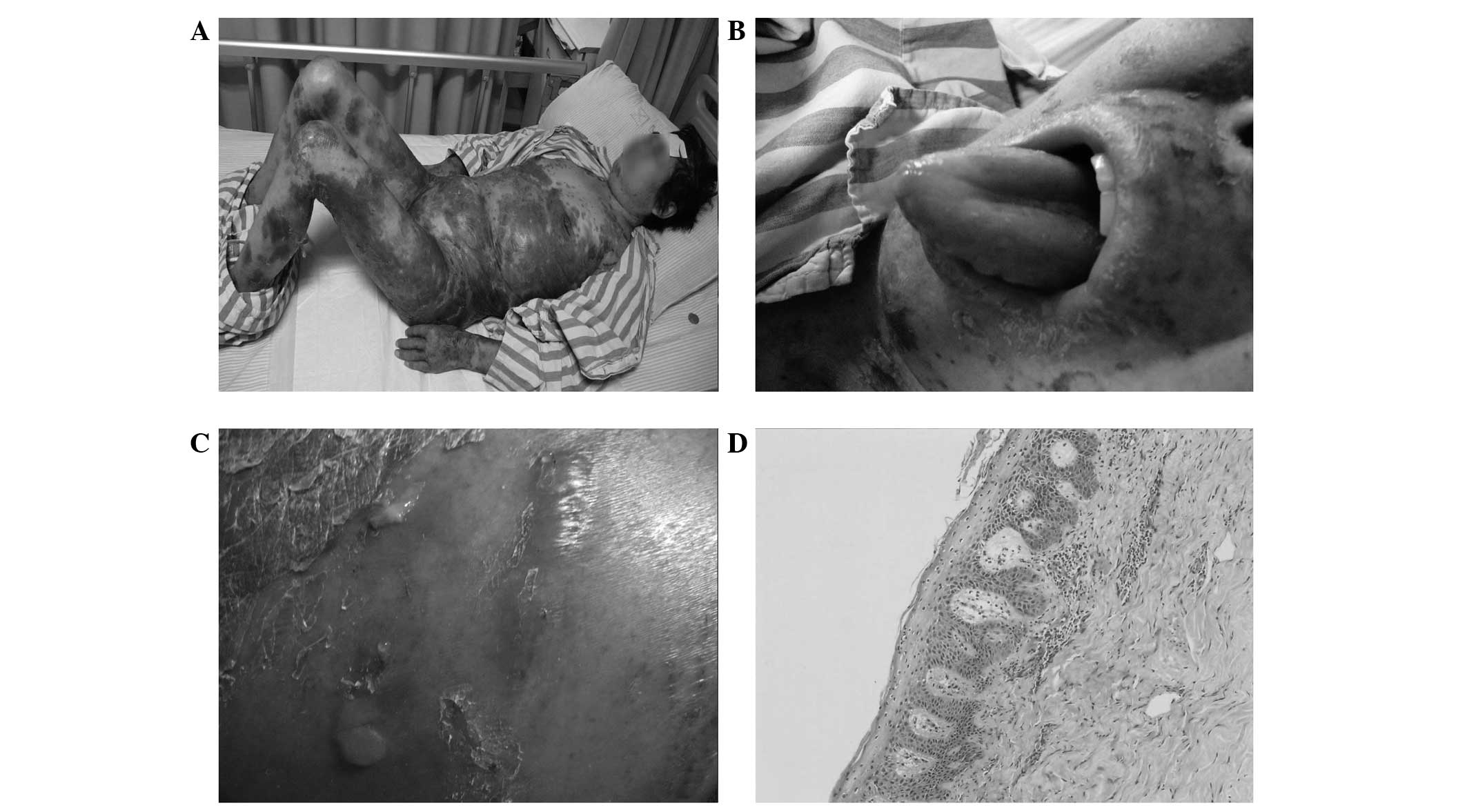
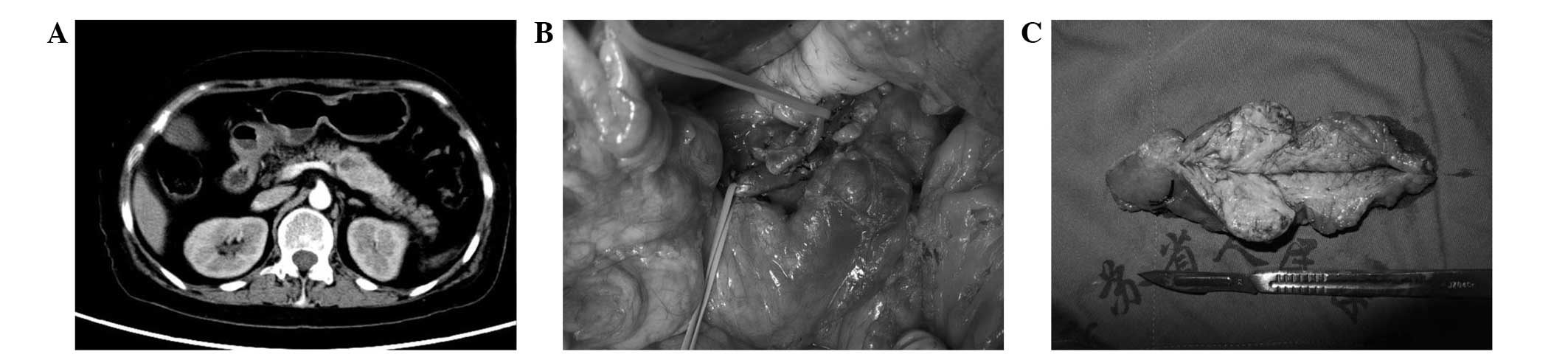
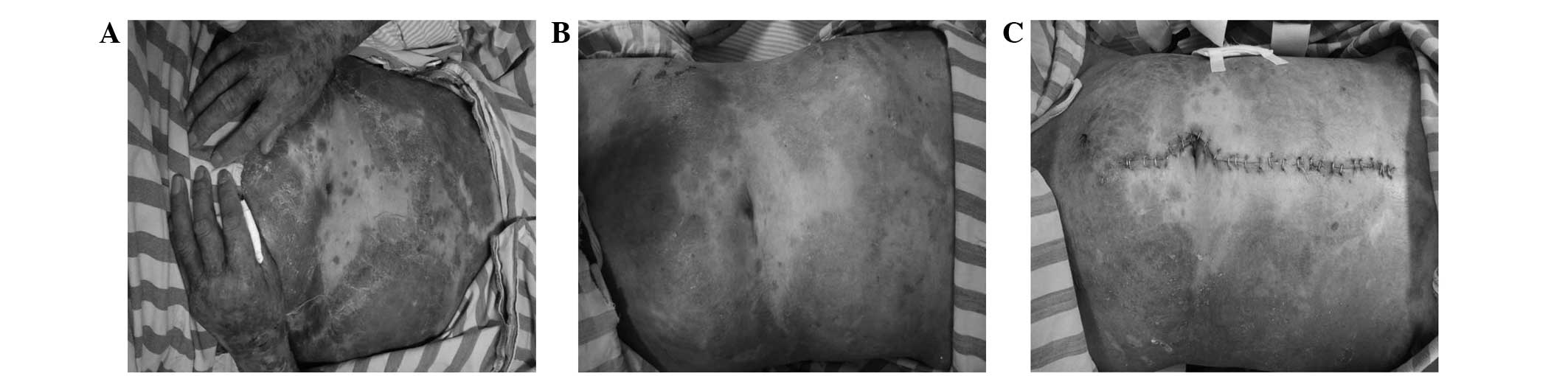
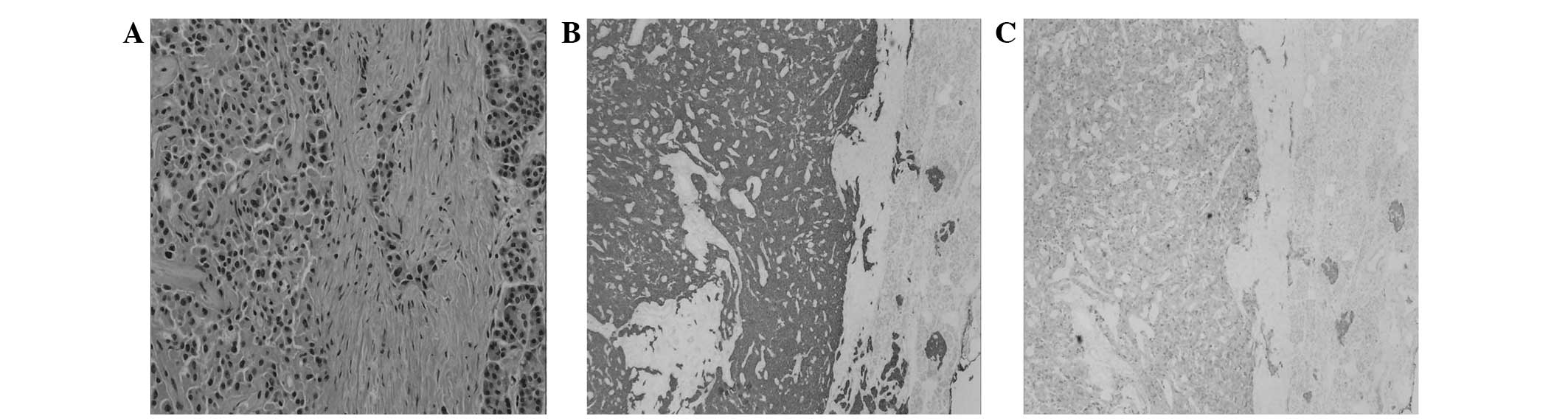
In November 2010, a 50-year-old female presented to The Pancreas Center of Nanjing Medical University (Nanjing, China) with a 2-year history of a pruritic and ulcerating skin rash, which initially appeared at the waist and slowly progressed to the entire body within three months (Fig. 1A). Phacoscotasmus, cheilitis and glossitis were also present (Fig. 1B). The patient also complained of blurred vision and weight loss of 5 kg. The patient was initially diagnosed with pemphigus and treated with prednisone without relief of the skin rash prior to her admission to our clinic. Physical examination revealed that the skin lesions were erythematous macules with erosions, serous exudate and crusting (Fig. 1C). A skin biopsy revealed that the skin layers were arranged normally with mild skin keratosis, basal pigmentation and perivascular infiltration of inflammatory cells in the superficial skin (Fig. 1D). Laboratory tests indicated elevated blood glucose (maximum 18 mmol/l), anemia (87 g/l) and hypoproteinemia (24.6 g/l). Following admission, the patient underwent abdominal computed tomography (CT) scanning, which disclosed a pancreatic body mass with low density (Fig. 2A). Given her history of the skin rash, DM and the pancreatic mass, the patient's blood glucagon concentration was measured, and her fasting glucagon level was noted to be elevated, at 1132.20 pg/ml (normal, 0–80 pg/ml). The patient was first treated with octreotide and intravenous amino acid infusion. After the patient's nutrition was improved, spleen-preserving distal pancreatectomy was performed (Fig. 2B and C). The skin lesions were partially relieved following treatment with octreotide and intravenous amino acid infusion, and gradually recovered following surgery (Fig. 3A–C). Pathological examination confirmed the diagnosis of glucagonoma (Fig. 4A) and immunohistochemical staining revealed the positive staining of chromogranin and synaptophysin (Fig. 4B and C). Four weeks subsequent to discharge, the skin lesions were completely resolved and blood glucose returned to normal. At 3-year follow-up, the patient remained asymptomatic and no signs of recurrence were detected. The patient provided written informed consent prior to the publication of the study, and the study was approved by the research ethics committee of The First Affiliated Hospital of Nanjing Medical University (Nanjing, China).

Figure 1.

Skin lesions of glucagonoma. (A) Necrolytic migratory erythema. (B) Cheilitis and glossitis. (C) Skin lesions with erosions, serous exudate and crusting. (D) Pathology of the skin biopsy, observed with hematoxylin and eosin staining (magnification, x100).

Figure 2.

Tumor mass identified by computed tomography (CT) scan and surgical resection. (A) CT scanning indicated the pancreatic body tumor. (B) Laparotomy confirmed the tumor in the pancreatic body. (C) Resected tumor.

Figure 3.

Changes in skin lesions following treatment. (A) Skin lesion upon admission. (B) Changes in skin lesions following treatment of octreotide and intravenous amino acid infusion. (C) Relief of skin lesion one week after surgery.

Figure 4.

Pathological and immunohistochemistry analysis of glucagonoma. (A) Pathological analysis of tumor by hematoxyling and eosin staining (magnification, x100). (B) Positive staining of synaptophysin and (C) chromogranin by immunohistochemistry (magnification, x40).

Discussion

Glucagonoma, which accounts for 2% of islet cell carcinomas, is a rare neuroendocrine pancreatic tumor with an estimated incidence of one in 20 million (6). Although the diagnostic criteria for glucagonoma has already been established by Stacpoole (7), its rare incidence has hampered prompt diagnosis when the glucagonoma syndrome appears. To date, there are fewer than 300 cases reported in the literature and the largest case cohort included only 21 patients. Delayed diagnosis remains a major issue in the treatment of glucagonoma. The median time between the onset of glucagonoma syndrome and diagnosis is 3–4 years (3,5).

Oversecretion of glucagon by islet α-cells in tumors contributes to the paraneoplastic phenomenon, namely glucagonoma syndrome (5). Glucagon exhibits its physiological functions by increasing the hepatic glucose output and maintaining the blood glucose level (8). Glucagon also exerts a catabolic role by attenuating protein synthesis (9). The elevated glucagon secreted by glucagonoma results in amino acid catabolism and serum glucose elevation, which are considered to be responsible for skin lesions and DM (10). Glucagonoma syndrome consists of a triad comprising glucagon-secreting tumors, DM and NME (11).

NME is considered to be the hallmark of glucagonoma syndrome and is characterized by an annular pattern of erythema with centrally formed fragile vesicles, bullae and crusts (2). It is present in ~65–70% of glucagonoma cases at the point of diagnosis (12). Although a skin biopsy of NME offers limited indications for the pathological diagnosis of glucagonoma, its early recognition may lead to further CT scanning and establish the diagnosis (13). It is worthy to note that celiac disease, malabsorption, cirrhosis, malignancy and pancreatitis may also present NME-like skin lesions, known as pseudoglucagonoma syndrome (14). In the present case, the NME had been misdiagnosed as immune pemphigus and treated with corticosteroids for two years. Although the corticosteroids treatments occasionally relieved the NME, persistent elevated glucagon inevitably induced its recurrence. In clinical practice, glucagonoma induced by NME should be considered if the skin lesions remain following conventional treatments.

DM is a further clinical hallmark of glucagonoma. Elevated glucagon levels promote the glucose output and antagonize the effect of insulin. Although only 40% of glucagonoma patients presented DM at the onset of symptoms, ~90% went on to develop it (2). The severity of the diabetes remains controversial in the literature, and NME usually occurs prior to the emergence of the diabetes. In the present case, the patient exhibited intermittent glucose elevation one and a half years after the initiation of the skin rash, and the diabetes resulted in the rapid damage of her lens.

Glucagonoma is a slow-growing and relatively low-malignancy tumor. Although numerous glucagonoma patients suffer due to a delayed diagnosis, the majority still benefit from tumor resection. Metastasis represents the main prognostic factor for glucagonoma. Half of all glucagonomas are metastatic at the time of diagnosis (15). Patients without metastasis achieve a 10-year survival rate of almost 100%, compared with 51.6% of patients with metastasis (4). Synchronous resection of liver metastasis or liver transplantation provides a favorable outcome (16,17). Whether patients would benefit from tumor debulking or chemotherapy remains to be elucidated (5,17). For localized glucagonoma, removal of the tumor led to a notable improvement of the glucagonoma syndrome within several days of surgery (18). In the case of malnutrition, total parenteral nutrition with amino acid and caloric supplementation may be used to counteract the catabolic effects of high glucagon and reduce perioperative complications (2). Moreover, somatostatin analog may be useful in relieving glucagonoma syndrome by inhibiting glucagon secretion or counteracting its effect (19).

Although serum glucagon measurement and CT scanning are capable of establishing diagnosis in most cases, the bridge from glucagonoma syndrome to serum glucagon measurement and CT scanning remains a major obstacle to early diagnosis. Few clinicians suspect glucagonoma in its early stages due to its rare incidence. Numerous patients suffer due to the delayed diagnosis and may even miss out on the opportunity of curable resection. For this rare tumor, optimization of the diagnostic procedure based on glucagonoma syndrome is urgently needed.

Acknowledgements

This study was supported by the Research Special Fund for Public Welfare of Health of China (201202007) and NSFC (81272239).

References

1 

Tseng HC, Liu CT, Ho JC and Lin SH: Necrolytic migratory erythema and glucagonoma rising from pancreatic head. Pancreatology. 13:455–457. 2013. View Article : Google Scholar : PubMed/NCBI

2 

Chastain MA: The glucagonoma syndrome: a review of its features and discussion of new perspectives. Am J Med Sci. 321:306–320. 2001. View Article : Google Scholar : PubMed/NCBI

3 

Wermers RA, Fatourechi V, Wynne AG, Kvols LK and Lloyd RV: The glucagonoma syndrome. Clinical and pathologic features in 21 patients. Medicine (Baltimore). 75:53–63. 1996. View Article : Google Scholar : PubMed/NCBI

4 

Soga J and Yakuwa Y: Glucagonomas/diabetico-dermatogenic syndrome (DDS): a statistical evaluation of 407 reported cases. J Hepatobiliary Pancreat Surg. 5:312–319. 1998. View Article : Google Scholar : PubMed/NCBI

5 

Eldor R, Glaser B, Fraenkel M, Doviner V, Salmon A and Gross DJ: Glucagonoma and the glucagonoma syndrome - cumulative experience with an elusive endocrine tumour. Clin Endocrinol (Oxf). 74:593–598. 2011. View Article : Google Scholar : PubMed/NCBI

6 

Lo CH, Ho CL and Shih YL: Glucagonoma with necrolytic migratory erythema exhibiting responsiveness to subcutaneous octreotide injections. QJM. 107:157–158. 2014. View Article : Google Scholar : PubMed/NCBI

7 

Stacpoole PW: The glucagonoma syndrome: clinical features, diagnosis and treatment. Endocr Rev. 2:347–361. 1981. View Article : Google Scholar : PubMed/NCBI

8 

Lefèbvre PJ: Glucagon and its family revisited. Diabetes Care. 18:715–730. 1995. View Article : Google Scholar : PubMed/NCBI

9 

Charlton MR, Adey DB and Nair KS: Evidence for a catabolic role of glucagon during an amino acid load. J Clin Invest. 98:90–99. 1996. View Article : Google Scholar : PubMed/NCBI

10 

van Beek AP, de Haas ER, van Vloten WA, Lips CJ, Roijers JF and Canninga-van Dijk MR: The glucagonoma syndrome and necrolytic migratory erythema: a clinical review. Eur J Endocrinol. 151:531–537. 2004. View Article : Google Scholar : PubMed/NCBI

11 

Shi W, Liao W, Mei X, Xiao Q, Zeng Y and Zhou Q: Necrolytic migratory erythema associated with glucagonoma syndrome. J Clin Oncol. 28:e329–e331. 2010. View Article : Google Scholar : PubMed/NCBI

12 

Remes-Troche JM, Garcia-de-Acevedo B, Zuniga-Varga J, Avila-Funes A and Orozco-Topete R: Necrolytic migratory erythema: a cutaneous clue to glucagonoma syndrome. J Eur Acad Dermatol Venereol. 18:591–595. 2004. View Article : Google Scholar : PubMed/NCBI

13 

Kheir SM, Omura EF, Grizzle WE, Herrera GA and Lee I: Histologic variation in the skin lesions of the glucagonoma syndrome. Am J Surg Pathol. 10:445–453. 1986. View Article : Google Scholar : PubMed/NCBI

14 

Mullans EA and Cohen PR: Iatrogenic necrolytic migratory erythema: a case report and review of nonglucagonoma-associated necrolytic migratory erythema. J Am Acad Dermatol. 38:866–873. 1998. View Article : Google Scholar : PubMed/NCBI

15 

Yao JC, Eisner MP, Leary C, Dagohoy C, Phan A, Rashid A, Hassan M and Evans DB: Population-based study of islet cell carcinoma. Ann Surg Oncol. 14:3492–3500. 2007. View Article : Google Scholar : PubMed/NCBI

16 

Radny P, Eigentler TK, Soennichsen K, Overkamp D, Raab HR, Viebahn R, Mueller-Horvart C, Sotlar K and Rassner G: Metastatic glucagonoma: treatment with liver transplantation. J Am Acad Dermatol. 54:344–347. 2006. View Article : Google Scholar : PubMed/NCBI

17 

Poggi G, Villani L and Bernardo G: Multimodality treatment of unresectable hepatic metastases from pancreatic glucagonoma. Rare Tumors. 1:e62009. View Article : Google Scholar : PubMed/NCBI

18 

Smith AP, Doolas A and Staren ED: Rapid resolution of necrolytic migratory erythema after glucagonoma resection. J Surg Oncol. 61:306–309. 1996. View Article : Google Scholar : PubMed/NCBI

19 

Elsborg L and Glenthoj A: Effect of somatostatin in necrolytic migratory erythema of glucagonoma. Acta Med Scand. 218:245–249. 1985. View Article : Google Scholar : PubMed/NCBI

Related Articles

  • Abstract
  • View
  • Download
  • Twitter
Copy and paste a formatted citation
Spandidos Publications style
Wei J, Lin S, Wang C, Wu J, Qian Z, Dai C, Jiang K and Miao Y: Glucagonoma syndrome: A case report. Oncol Lett 10: 1113-1116, 2015.
APA
Wei, J., Lin, S., Wang, C., Wu, J., Qian, Z., Dai, C. ... Miao, Y. (2015). Glucagonoma syndrome: A case report. Oncology Letters, 10, 1113-1116. https://doi.org/10.3892/ol.2015.3275
MLA
Wei, J., Lin, S., Wang, C., Wu, J., Qian, Z., Dai, C., Jiang, K., Miao, Y."Glucagonoma syndrome: A case report". Oncology Letters 10.2 (2015): 1113-1116.
Chicago
Wei, J., Lin, S., Wang, C., Wu, J., Qian, Z., Dai, C., Jiang, K., Miao, Y."Glucagonoma syndrome: A case report". Oncology Letters 10, no. 2 (2015): 1113-1116. https://doi.org/10.3892/ol.2015.3275
Copy and paste a formatted citation
x
Spandidos Publications style
Wei J, Lin S, Wang C, Wu J, Qian Z, Dai C, Jiang K and Miao Y: Glucagonoma syndrome: A case report. Oncol Lett 10: 1113-1116, 2015.
APA
Wei, J., Lin, S., Wang, C., Wu, J., Qian, Z., Dai, C. ... Miao, Y. (2015). Glucagonoma syndrome: A case report. Oncology Letters, 10, 1113-1116. https://doi.org/10.3892/ol.2015.3275
MLA
Wei, J., Lin, S., Wang, C., Wu, J., Qian, Z., Dai, C., Jiang, K., Miao, Y."Glucagonoma syndrome: A case report". Oncology Letters 10.2 (2015): 1113-1116.
Chicago
Wei, J., Lin, S., Wang, C., Wu, J., Qian, Z., Dai, C., Jiang, K., Miao, Y."Glucagonoma syndrome: A case report". Oncology Letters 10, no. 2 (2015): 1113-1116. https://doi.org/10.3892/ol.2015.3275
Follow us
  • Twitter
  • LinkedIn
  • Facebook
About
  • Spandidos Publications
  • Careers
  • Cookie Policy
  • Privacy Policy
How can we help?
  • Help
  • Live Chat
  • Contact
  • Email to our Support Team