Spandidos Publications Logo
  • About
    • About Spandidos
    • Aims and Scopes
    • Abstracting and Indexing
    • Editorial Policies
    • Reprints and Permissions
    • Job Opportunities
    • Terms and Conditions
    • Contact
  • Journals
    • All Journals
    • Oncology Letters
      • Oncology Letters
      • Information for Authors
      • Editorial Policies
      • Editorial Board
      • Aims and Scope
      • Abstracting and Indexing
      • Bibliographic Information
      • Archive
    • International Journal of Oncology
      • International Journal of Oncology
      • Information for Authors
      • Editorial Policies
      • Editorial Board
      • Aims and Scope
      • Abstracting and Indexing
      • Bibliographic Information
      • Archive
    • Molecular and Clinical Oncology
      • Molecular and Clinical Oncology
      • Information for Authors
      • Editorial Policies
      • Editorial Board
      • Aims and Scope
      • Abstracting and Indexing
      • Bibliographic Information
      • Archive
    • Experimental and Therapeutic Medicine
      • Experimental and Therapeutic Medicine
      • Information for Authors
      • Editorial Policies
      • Editorial Board
      • Aims and Scope
      • Abstracting and Indexing
      • Bibliographic Information
      • Archive
    • International Journal of Molecular Medicine
      • International Journal of Molecular Medicine
      • Information for Authors
      • Editorial Policies
      • Editorial Board
      • Aims and Scope
      • Abstracting and Indexing
      • Bibliographic Information
      • Archive
    • Biomedical Reports
      • Biomedical Reports
      • Information for Authors
      • Editorial Policies
      • Editorial Board
      • Aims and Scope
      • Abstracting and Indexing
      • Bibliographic Information
      • Archive
    • Oncology Reports
      • Oncology Reports
      • Information for Authors
      • Editorial Policies
      • Editorial Board
      • Aims and Scope
      • Abstracting and Indexing
      • Bibliographic Information
      • Archive
    • Molecular Medicine Reports
      • Molecular Medicine Reports
      • Information for Authors
      • Editorial Policies
      • Editorial Board
      • Aims and Scope
      • Abstracting and Indexing
      • Bibliographic Information
      • Archive
    • World Academy of Sciences Journal
      • World Academy of Sciences Journal
      • Information for Authors
      • Editorial Policies
      • Editorial Board
      • Aims and Scope
      • Abstracting and Indexing
      • Bibliographic Information
      • Archive
    • International Journal of Functional Nutrition
      • International Journal of Functional Nutrition
      • Information for Authors
      • Editorial Policies
      • Editorial Board
      • Aims and Scope
      • Abstracting and Indexing
      • Bibliographic Information
      • Archive
    • International Journal of Epigenetics
      • International Journal of Epigenetics
      • Information for Authors
      • Editorial Policies
      • Editorial Board
      • Aims and Scope
      • Abstracting and Indexing
      • Bibliographic Information
      • Archive
    • Medicine International
      • Medicine International
      • Information for Authors
      • Editorial Policies
      • Editorial Board
      • Aims and Scope
      • Abstracting and Indexing
      • Bibliographic Information
      • Archive
  • Articles
  • Information
    • Information for Authors
    • Information for Reviewers
    • Information for Librarians
    • Information for Advertisers
    • Conferences
  • Language Editing
Spandidos Publications Logo
  • About
    • About Spandidos
    • Aims and Scopes
    • Abstracting and Indexing
    • Editorial Policies
    • Reprints and Permissions
    • Job Opportunities
    • Terms and Conditions
    • Contact
  • Journals
    • All Journals
    • Biomedical Reports
      • Information for Authors
      • Editorial Policies
      • Editorial Board
      • Aims and Scope
      • Abstracting and Indexing
      • Bibliographic Information
      • Archive
    • Experimental and Therapeutic Medicine
      • Information for Authors
      • Editorial Policies
      • Editorial Board
      • Aims and Scope
      • Abstracting and Indexing
      • Bibliographic Information
      • Archive
    • International Journal of Epigenetics
      • Information for Authors
      • Editorial Policies
      • Editorial Board
      • Aims and Scope
      • Abstracting and Indexing
      • Bibliographic Information
      • Archive
    • International Journal of Functional Nutrition
      • Information for Authors
      • Editorial Policies
      • Editorial Board
      • Aims and Scope
      • Abstracting and Indexing
      • Bibliographic Information
      • Archive
    • International Journal of Molecular Medicine
      • Information for Authors
      • Editorial Policies
      • Editorial Board
      • Aims and Scope
      • Abstracting and Indexing
      • Bibliographic Information
      • Archive
    • International Journal of Oncology
      • Information for Authors
      • Editorial Policies
      • Editorial Board
      • Aims and Scope
      • Abstracting and Indexing
      • Bibliographic Information
      • Archive
    • Medicine International
      • Information for Authors
      • Editorial Policies
      • Editorial Board
      • Aims and Scope
      • Abstracting and Indexing
      • Bibliographic Information
      • Archive
    • Molecular and Clinical Oncology
      • Information for Authors
      • Editorial Policies
      • Editorial Board
      • Aims and Scope
      • Abstracting and Indexing
      • Bibliographic Information
      • Archive
    • Molecular Medicine Reports
      • Information for Authors
      • Editorial Policies
      • Editorial Board
      • Aims and Scope
      • Abstracting and Indexing
      • Bibliographic Information
      • Archive
    • Oncology Letters
      • Information for Authors
      • Editorial Policies
      • Editorial Board
      • Aims and Scope
      • Abstracting and Indexing
      • Bibliographic Information
      • Archive
    • Oncology Reports
      • Information for Authors
      • Editorial Policies
      • Editorial Board
      • Aims and Scope
      • Abstracting and Indexing
      • Bibliographic Information
      • Archive
    • World Academy of Sciences Journal
      • Information for Authors
      • Editorial Policies
      • Editorial Board
      • Aims and Scope
      • Abstracting and Indexing
      • Bibliographic Information
      • Archive
  • Articles
  • Information
    • For Authors
    • For Reviewers
    • For Librarians
    • For Advertisers
    • Conferences
  • Language Editing
Login Register Submit
  • This site uses cookies
  • You can change your cookie settings at any time by following the instructions in our Cookie Policy. To find out more, you may read our Privacy Policy.

    I agree
Search articles by DOI, keyword, author or affiliation
Search
Advanced Search
presentation
Oncology Letters
Join Editorial Board Propose a Special Issue
Print ISSN: 1792-1074 Online ISSN: 1792-1082
Journal Cover
August-2015 Volume 10 Issue 2

Full Size Image

Sign up for eToc alerts
Recommend to Library

Journals

International Journal of Molecular Medicine

International Journal of Molecular Medicine

International Journal of Molecular Medicine is an international journal devoted to molecular mechanisms of human disease.

International Journal of Oncology

International Journal of Oncology

International Journal of Oncology is an international journal devoted to oncology research and cancer treatment.

Molecular Medicine Reports

Molecular Medicine Reports

Covers molecular medicine topics such as pharmacology, pathology, genetics, neuroscience, infectious diseases, molecular cardiology, and molecular surgery.

Oncology Reports

Oncology Reports

Oncology Reports is an international journal devoted to fundamental and applied research in Oncology.

Experimental and Therapeutic Medicine

Experimental and Therapeutic Medicine

Experimental and Therapeutic Medicine is an international journal devoted to laboratory and clinical medicine.

Oncology Letters

Oncology Letters

Oncology Letters is an international journal devoted to Experimental and Clinical Oncology.

Biomedical Reports

Biomedical Reports

Explores a wide range of biological and medical fields, including pharmacology, genetics, microbiology, neuroscience, and molecular cardiology.

Molecular and Clinical Oncology

Molecular and Clinical Oncology

International journal addressing all aspects of oncology research, from tumorigenesis and oncogenes to chemotherapy and metastasis.

World Academy of Sciences Journal

World Academy of Sciences Journal

Multidisciplinary open-access journal spanning biochemistry, genetics, neuroscience, environmental health, and synthetic biology.

International Journal of Functional Nutrition

International Journal of Functional Nutrition

Open-access journal combining biochemistry, pharmacology, immunology, and genetics to advance health through functional nutrition.

International Journal of Epigenetics

International Journal of Epigenetics

Publishes open-access research on using epigenetics to advance understanding and treatment of human disease.

Medicine International

Medicine International

An International Open Access Journal Devoted to General Medicine.

Journal Cover
August-2015 Volume 10 Issue 2

Full Size Image

Sign up for eToc alerts
Recommend to Library

  • Article
  • Citations
    • Cite This Article
    • Download Citation
    • Create Citation Alert
    • Remove Citation Alert
    • Cited By
  • Similar Articles
    • Related Articles (in Spandidos Publications)
    • Similar Articles (Google Scholar)
    • Similar Articles (PubMed)
  • Download PDF
  • Download XML
  • View XML
Case Report

Successful treatment of gastrointestinal stromal tumor with multiple liver metastases with radiofrequency ablation and imatinib: A case report

  • Authors:
    • Chunchuan Fu
    • Nianzhou Liu
    • Qingsong Deng
    • Yunhua Tan
    • Kuansheng Ma
    • Ping Bie
  • View Affiliations / Copyright

    Affiliations: Institute of Hepatobiliary Surgery, Southwest Hospital, Third Military Medical University, Chongqing 400038, P.R. China
  • Pages: 875-878
    |
    Published online on: May 27, 2015
       https://doi.org/10.3892/ol.2015.3285
  • Expand metrics +
Metrics: Total Views: 0 (Spandidos Publications: | PMC Statistics: )
Metrics: Total PDF Downloads: 0 (Spandidos Publications: | PMC Statistics: )
Cited By (CrossRef): 0 citations Loading Articles...

This article is mentioned in:


Abstract

Gastrointestinal stromal tumors (GISTs) are the most common mesenchymal tumor of the gastrointestinal tract, and typically metastasize to the liver. In patients with recurrent metastatic GISTs, no single treatment is effective. The current study reports a case of GIST with 27 metastases in the liver, which was successfully treated using radiofrequency ablation (RFA) combined with surgical resection and imatinib therapy. The patient remains tumor‑free 36 months after the first RFA treatment. This case suggests that comprehensive therapy including surgical resection, RFA and imatinib, may be an effective strategy for the treatment of GIST with multiple liver metastases.

Introduction

Gastrointestinal stromal tumors (GISTs) are rare neoplasms with an estimated prevalence of 10–14 per 1,000,000. GISTs are mesenchymal tumors of the gastrointestinal tract, which occur most frequently in the stomach (60%) and small intestine (30%), and are less frequently observed in the rectum (4%), colon and appendix (1–2%), and duodenum (4–5%). In rare cases, GISTs may occur outside of the gastrointestinal tract, including in the greater omentum and mesentery (1,2). All GISTs are currently regarded to be potentially malignant, with varying degrees of malignancy. GISTs in the mesentery and the small intestine are more aggressive than those at other sites, and have a higher degree of malignancy and poorer prognosis than GISTs of the stomach (3). A comprehensive treatment strategy, including surgery, radiofrequency ablation (RFA) and imatinib mesylate therapy, is effective in treating liver metastases (4). RFA has also been reported to be an effective treatment modality for imatinib-resistant GIST with liver metastases (5). The present study describes a case of mesenteric GIST with 27 liver metastases, which was successfully treated by RFA combined with surgical resection and imatinib; this is the greatest number of tumors treated with the most RFA sessions for GISTs reported to date. Written informed consent was obtained from the patient.

Case report

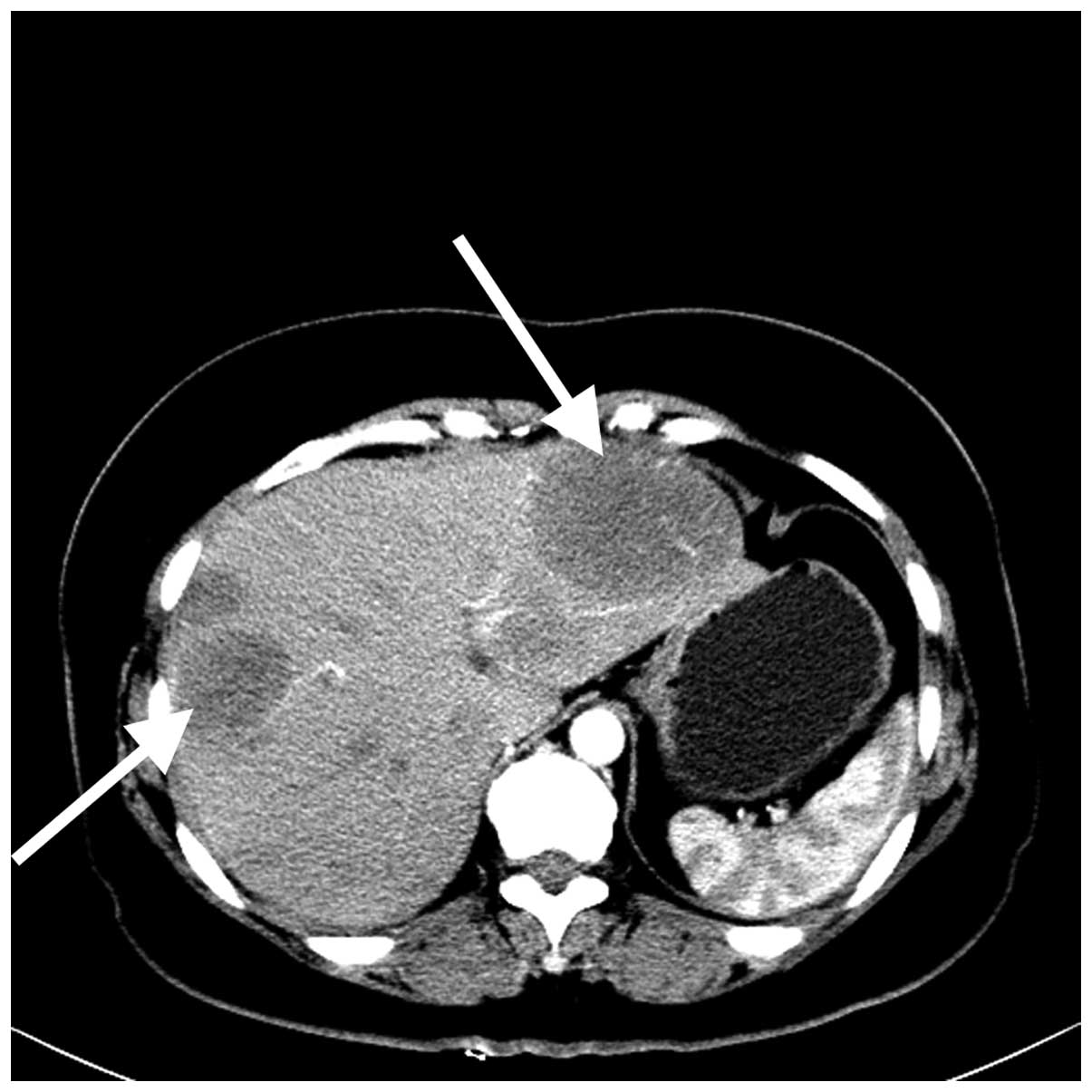
A 47-year-old female was admitted to Southwest Hospital, Third Military Medical University (Chongqing, China) on April 13, 2011, 1 year following surgical treatment for stromal tumors of the small intestinal mesentery. Prior to this admission, resection of small bowel mesenteric stromal tumors, and subtotal resection of the jejunum and intestinal anastomosis had been performed at the Department of Gastrointestinal Surgery, The Affiliated Hospital of Zunyi Medical College (Zunyi, China) on 27th April, 2010. The surgery had revealed a tumor of ~18×15 cm2 in size, located inside the mesentery in the upper jejunal segment. Postoperative pathological examination confirmed a diagnosis of stromal tumors of the small bowel mesentery. For financial reasons, the patient had declined imatinib mesylate or other molecular-targeted therapies following surgery. After 1 year, color Doppler ultrasonography and enhanced computed-tomography (CT) imaging revealed multiple solid, space-occupying lesions in the liver as a result of routine follow-up (Fig. 1). These findings, in combination with the patient's history of GIST, indicated a diagnosis of liver metastases.

Figure 1.

Abdominal enhanced computed tomography revealed multiple space-occupying lesions in the liver (arrows).

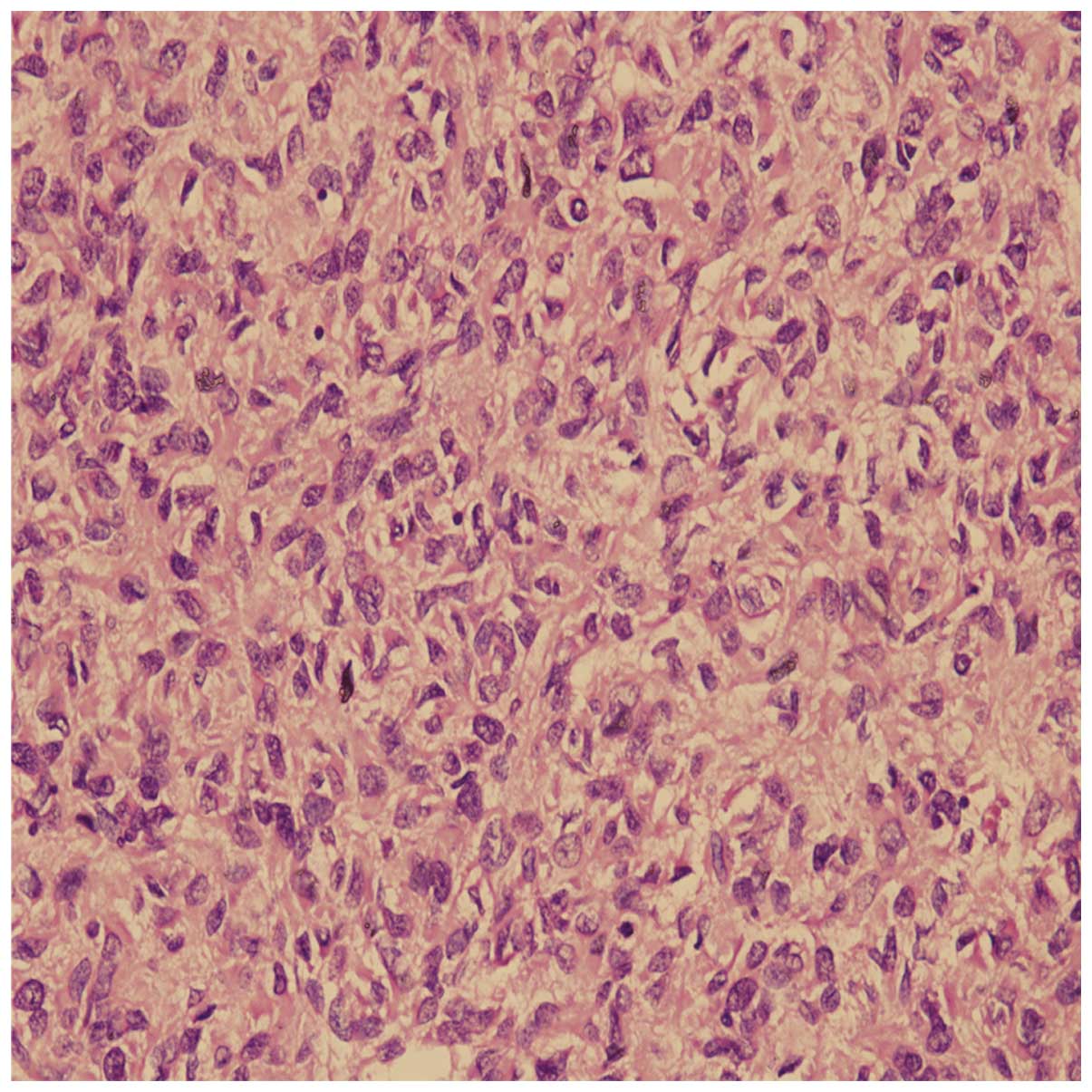
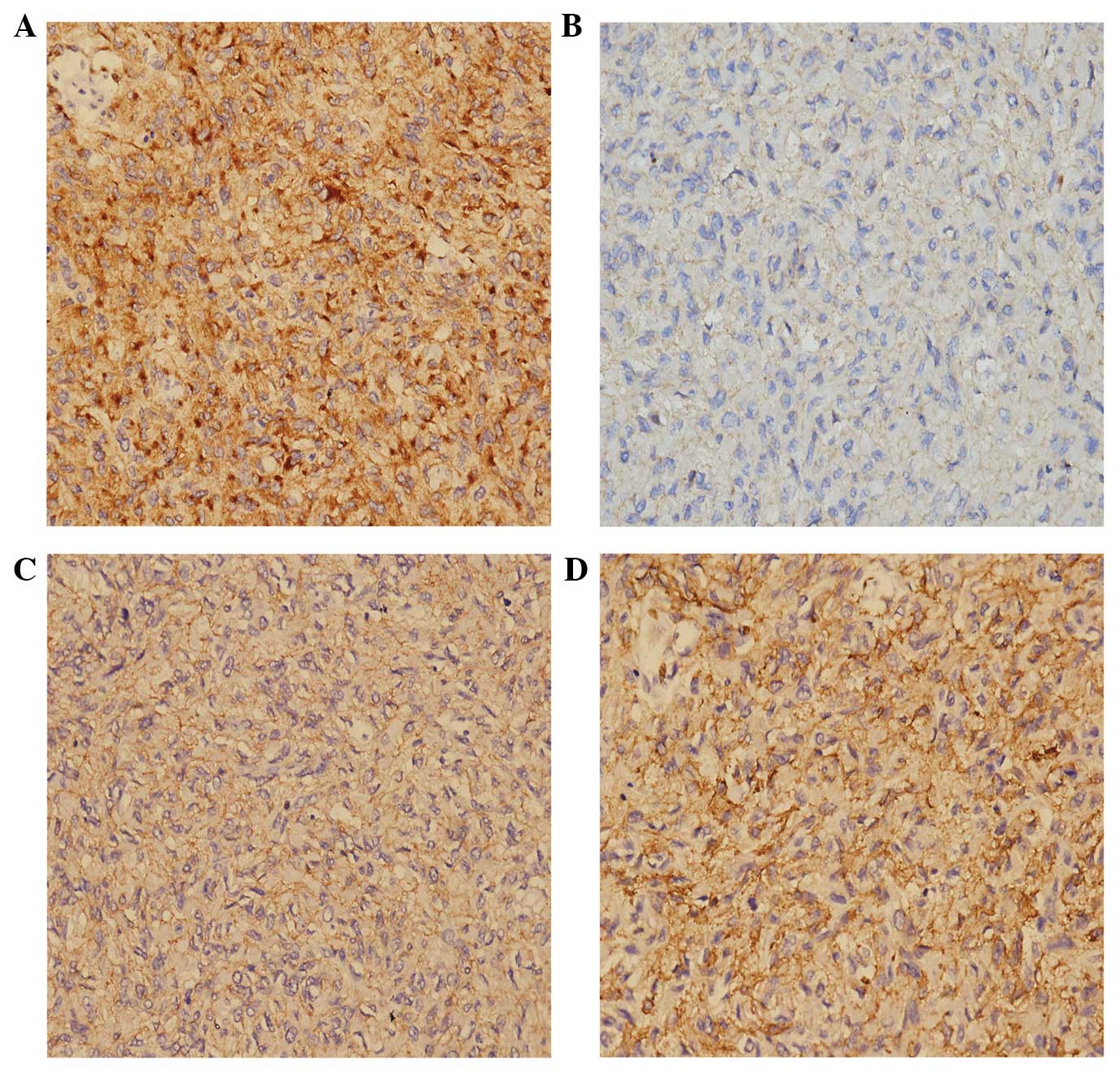
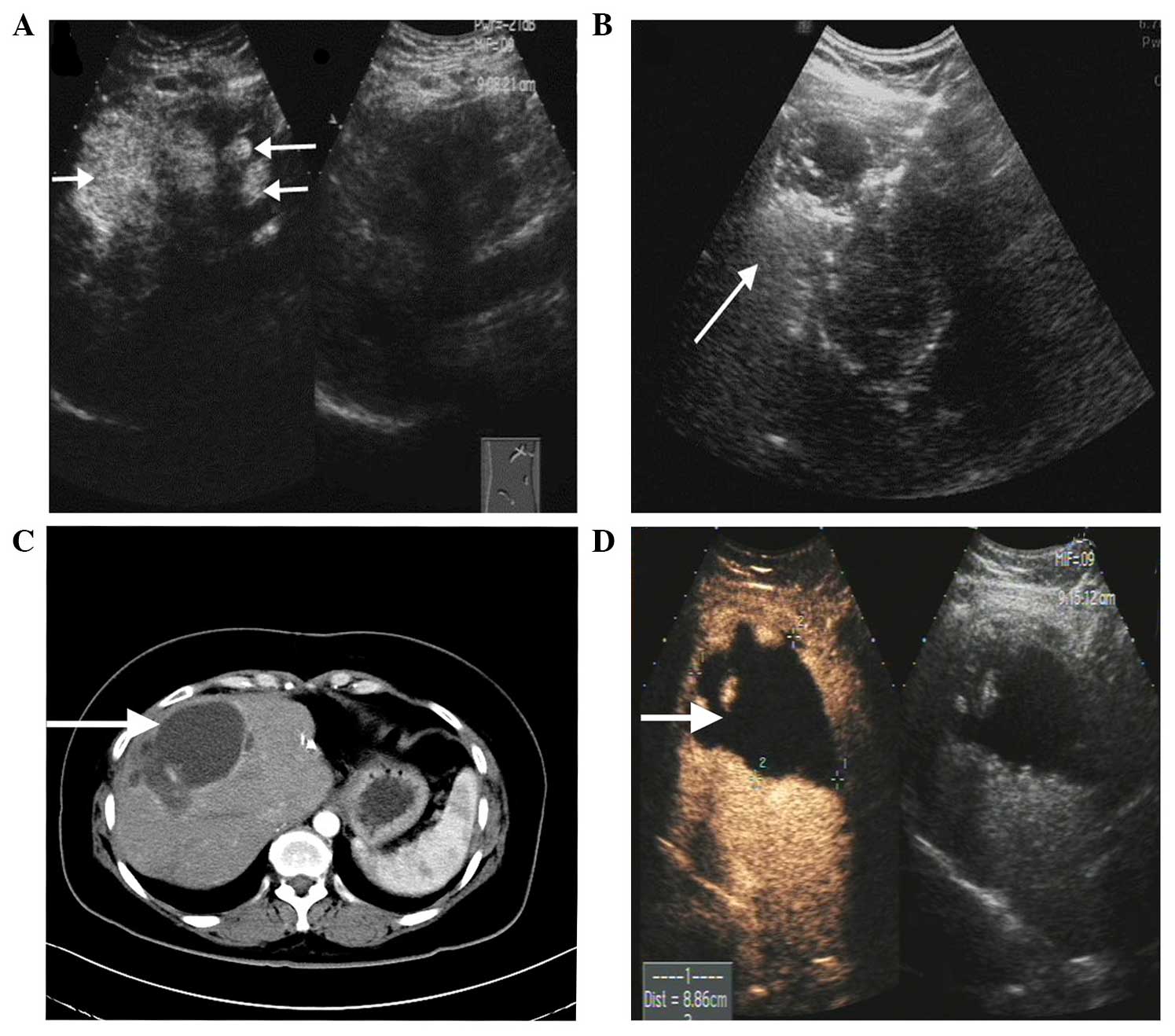
In May 2011, subtotal resection of the left liver and intraoperative ultrasound-guided RFA of four metastases in the right liver were conducted with the patient under general anesthesia. The postoperative pathological examination revealed predominantly fusiform tumor cells (Fig. 2) and six mitoses per 50 high power fields, confirming a diagnosis of malignant stromal tumors in the liver. Immunohistochemical evaluation showed that the tumor cells were positive for CD117, CD34, smooth muscle actin and Discovered on GIST-1 (Fig. 3). The patient was discharged on postoperative day 13. On June 20, 2011, a follow-up examination was conducted using color Doppler ultrasonography and enhanced CT imaging. Ultrasonography revealed 10 liver metastases in right liver, with a tumor size ranging from 7–22 mm, and the patient was readmitted for RFA treatment. All tumors were ablated percutaneously under local or general anesthesia. Ultrasound or contrast-enhanced ultrasound was used for tumor visualization. No liver metastases were observed on postoperative CT imaging. On September 5, 2011, a follow-up examination revealed seven liver metastases, the largest measuring 7.8 cm in diameter (Fig. 4A). The patient was readmitted for further RFA, and postoperative ultrasonography revealed the lesion to be hyperechoic (Fig. 4B). The patient subsequently commenced therapy with oral imatinib (400 mg/day; Gleevec, Novartis, Switzerland); this regimen has been continued to the present day.

Figure 2.

Liver metastases primarily composed of fusiform cells (hematoxylin and eosin staining). Magnification, x400.

Figure 3.

Immunohistochemical staining of gastrointestinal stromal tumor liver metastases. (A) CD117; (B) CD34; (C) Discovered on GIST-1; (D) Smooth muscle actin. Magnification, x400.

Figure 4.

(A) Preoperative contrast-enhanced ultrasonography revealed multiple hyperechoic tumors in the right liver (largest, 78×53 mm). (B) Ultrasonography immediately following radiofrequency ablation showed the tumor as a hyperechoic region. (C) Abdominal enhanced computed tomography revealed that the initial liver tumors had been replaced by non-enhanced regions (i.e. ablation zones). (D) Contrast-enhanced ultrasonography revealed multiple contrast agent filling defects in the right liver. No liver metastases were observed.

During follow-up examinations in January and May 2012, color Doppler ultrasonography revealed five liver metastases, and CT imaging revealed one liver metastasis. The patient subsequently underwent further RFA. In total, two surgeries were required to treat all tumors; three tumors were ablated for the first time, and the remaining nodules were completely destroyed for the second time. An abdominal CT scan (Fig. 4C) conducted on May 30, 2013, and contrast-enhanced ultrasonography on February 25, 2014, (Fig. 4D) revealed that the metastatic liver lesions had disappeared following RFA treatment and no new lesions were observed. At present, the patient has undergone 36 months of follow-up since the initial treatment with RFA, and has been hospitalized five times for the further RFA treatment of a total of 27 metastases, which ranged in diameter from 7–78 mm. The patient is currently stable and in good health. The most recent contrast-enhanced ultrasonography of the liver and abdominal CT imaging indicate no new or recurrent lesions.

Discussion

Liver metastasis is one major cause of mortality among GIST patients. Following total resection of the original tumor, liver metastases typically occur in 55% of patients (6). The majority of GIST liver metastases have complete capsules, with clear boundaries between tumor and healthy liver tissues. Surgical resection is the primary treatment for liver metastasis, and resection of the GIST itself may be curative. Surgical resection has a 5-year survival rate of 34%, and a median survival time of 36 months (7). However, the rate of tumor recurrence following liver resection may exceed 70% (7,8). As only a small minority of patients are able to undergo repeated liver resection, satisfactory outcomes are difficult to achieve with surgical treatment alone.

RFA has been widely used for the treatment of liver tumors; it has the advantage of easy administration that can be repeated with minimal trauma and a low rate of complication (9). However, few reports of RFA treatment for GIST liver metastases have been published. Yamanaka et al (10) reported the successful treatment of a total of 21 liver metastases (maximum diameter, 2.2±1.1 cm; range, 1.2–4.2 cm) from seven cases of GIST using CT-guided RFA, with a GIST-related 5-year survival rate of 100%. Jones et al (11) reported 13 cases of RFA treatment of GIST liver metastases, and a post-RFA 2-year survival rate of 77%. This indicates that repeated RFA may slow the rate of liver metastasis. In the present case, a small number of asymptomatic pleural effusions in the right chest were observed following two RFA sessions, and disappeared without treatment, suggesting that RFA is an effective and safe way to treat liver metastases from GIST.

Since 2000, the development and use of the tyrosine kinase inhibitor, imatinib mesylate has greatly improved molecular-targeted therapy for GIST. The c-kit expressed by the majority of GISTs is the protein product of the c-kit proto-oncogene; imatinib inhibits the enzymatic activity of c-kit, suppresses cell proliferation and restores apoptosis. It has been used successfully to treat unresectable and metastatic GIST, and oral administration of imatinib produces satisfactory outcomes in the majority of c-kit-positive patients (12,13). The adverse effects of imatinib are mild and generally tolerable, and include skin rash, edema, periorbital edema, diarrhea, nausea, vomiting and bleeding sclera. Few patients experience complications severe enough to merit the discontinuation of treatment. The National Comprehensive Cancer Network recommends imatinib as a first-line treatment for unresectable and metastatic GIST, and patients with a medium to high risk of metastasis are advised to receive at least 1 year of imatinib treatment following surgery (14).

A number of studies indicate good efficacy of combined RFA and imatinib therapy for GIST liver metastases. Pawlik et al (15) reported 36 cases of GIST liver metastases, in which the majority of patients who had received RFA combined with imatinib therapy had a significantly longer median survival compared with the patients who only received RFA. A further case of combined RFA and imatinib treatment for liver metastases was reported by Ishikawa et al (4); in this study, the patient experienced >28 months of progression-free survival. The use of imatinib in the absence of RFA has limited efficacy with regard to the elimination of tumors and sustained tumor-free survival. Although the tumor recurrence rate following RFA is high, it is valuable in reducing the tumor load, delaying local tumor growth and controlling development of the disease. This allows the opportunity for patients to maintain tumor-free survival with oral imatinib therapy.

In the present case, RFA combined with imatinib was used to treat the largest number of liver metastases observed in a single GIST patient to date. At 2 years following the most recent RFA treatment, the patient continues to take imatinib orally, exhibiting long-term tumor-free survival with satisfactory therapeutic efficacy.

In conclusion, RFA combined with imatinib may be an effective therapy in cases of multiple liver metastases arising from GISTs. However, a large-sample study with appropriate inclusion criteria is required to verify and further optimize this treatment strategy. This study was approved by the Research Ethics Committee of the Southwest Hospital, which is affiliated with The Third Military Medical University. Written informed consent was obtained from the patient.

Acknowledgements

The authors would like to thank the Southwest Hospital Department of Information.

References

1 

Miettinen M and Lasota J: Gastrointestinal stromal tumors: pathology and prognosis at different sites. Semin Diagn Pathol. 23:70–83. 2006. View Article : Google Scholar : PubMed/NCBI

2 

Miettinen M and Lasota J: Gastrointestinal stromal tumors: review on morphology, molecular pathology, prognosis, and differential diagnosis. Arch Pathol Lab Med. 130:1466–1478. 2006.PubMed/NCBI

3 

Reith JD, Goldblum JR, Lyles RH and Weiss SW: Extragastrointestinal (soft tissue) stromal tumors: an analysis of 48 cases with emphasis on histologic predictors of outcome. Mod Pathol. 13:577–585. 2000. View Article : Google Scholar : PubMed/NCBI

4 

Ishikawa A, Teratani T, Ono S, et al: A case of gastrointestinal stromal tumor with liver and bone metastases effectively treated with radiofrequency ablation and imatinib mesylate. Nihon Shokakibyo Gakkai Zasshi. 103:1274–1279. 2006.(In Japanese). PubMed/NCBI

5 

Minami T, Sato S, Watanabe Y, et al: Successful treatment of a gastrointestinal stromal tumor with liver metastases in a case that tolerated imatinib administration, by radiofrequency ablation using contrast-enhanced ultrasonography. Nihon Shokakibyo Gakkai Zasshi. 107:442–448. 2010.(In Japanese). PubMed/NCBI

6 

DeMatteo RP, Lewis JJ, Leung D, Mudan SS, Woodruff JM and Brennan MF: Two hundred gastrointestinal stromal tumors: recurrence patterns and prognostic factors for survival. Ann Surg. 231:51–58. 2000. View Article : Google Scholar : PubMed/NCBI

7 

Nunobe S, Sano T, Shimada K, Sakamoto Y and Kosuge T: Surgery including liver resection for metastatic gastrointestinal stromal tumors or gastrointestinal leiomyosarcomas. Jpn J Clin Oncol. 35:338–341. 2005. View Article : Google Scholar : PubMed/NCBI

8 

Gomez D, Al-Mukthar A, Menon KV, Toogood GJ, Lodge JP and Prasad KR: Aggressive surgical resection for the management of hepatic metastases from gastrointestinal stromal tumours: a single centre experience. HPB (Oxford). 9:64–70. 2007. View Article : Google Scholar : PubMed/NCBI

9 

Li L, Zhang J, Liu X, Li X, Jiao B and Kang T: Clinical outcomes of radiofrequency ablation and surgical resection for small hepatocellular carcinoma: a meta-analysis. J Gastroenterol Hepatol. 1:51–58. 2012. View Article : Google Scholar

10 

Yamanaka T, Takaki H, Nakatsuka A, et al: Radiofrequency ablation for liver metastasis from gastrointestinal stromal tumor. J Vasc Interv Radiol. 24:341–346. 2013. View Article : Google Scholar : PubMed/NCBI

11 

Jones RL, McCall J, Adam A, et al: Radiofrequency ablation is a feasible therapeutic option in the multi modality management of sarcoma. Eur J Surg Oncol. 36:477–482. 2010. View Article : Google Scholar : PubMed/NCBI

12 

Gastrointestinal Stromal Tumor Meta-Analysis Group (MetaGIST), . Comparison of two doses of imatinib for the treatment of unresectable or metastatic gastrointestinal stromal tumors: a meta-analysis of 1,640 patients. J Clin Oncol. 28:1247–1253. 2010. View Article : Google Scholar : PubMed/NCBI

13 

Blanke CD, Demetri GD, von Mehren M, et al: Long-term results from a randomized phase II trial of standard- versus higher-dose imatinib mesylate for patients with unresectable or metastatic gastrointestinal stromal tumors expressing KIT. J Clin Oncol. 26:620–625. 2008. View Article : Google Scholar : PubMed/NCBI

14 

Demetri GD, von Mehren M, Antonescu CR, et al: NCCN Task Force report: update on the management of patients with gastrointestinal stromal tumors. J Natl Compr Canc Netw. 8:S1–S41. 2010.PubMed/NCBI

15 

Pawlik TM, Vauthey JN, Abdalla EK, Pollock RE, Ellis LM and Curley SA: Results of a single-center experience with resection and ablation for sarcoma metastatic to the liver. Arch Surg. 141:537–543. 2006. View Article : Google Scholar : PubMed/NCBI

Related Articles

  • Abstract
  • View
  • Download
  • Twitter
Copy and paste a formatted citation
Spandidos Publications style
Fu C, Liu N, Deng Q, Tan Y, Ma K and Bie P: Successful treatment of gastrointestinal stromal tumor with multiple liver metastases with radiofrequency ablation and imatinib: A case report. Oncol Lett 10: 875-878, 2015.
APA
Fu, C., Liu, N., Deng, Q., Tan, Y., Ma, K., & Bie, P. (2015). Successful treatment of gastrointestinal stromal tumor with multiple liver metastases with radiofrequency ablation and imatinib: A case report. Oncology Letters, 10, 875-878. https://doi.org/10.3892/ol.2015.3285
MLA
Fu, C., Liu, N., Deng, Q., Tan, Y., Ma, K., Bie, P."Successful treatment of gastrointestinal stromal tumor with multiple liver metastases with radiofrequency ablation and imatinib: A case report". Oncology Letters 10.2 (2015): 875-878.
Chicago
Fu, C., Liu, N., Deng, Q., Tan, Y., Ma, K., Bie, P."Successful treatment of gastrointestinal stromal tumor with multiple liver metastases with radiofrequency ablation and imatinib: A case report". Oncology Letters 10, no. 2 (2015): 875-878. https://doi.org/10.3892/ol.2015.3285
Copy and paste a formatted citation
x
Spandidos Publications style
Fu C, Liu N, Deng Q, Tan Y, Ma K and Bie P: Successful treatment of gastrointestinal stromal tumor with multiple liver metastases with radiofrequency ablation and imatinib: A case report. Oncol Lett 10: 875-878, 2015.
APA
Fu, C., Liu, N., Deng, Q., Tan, Y., Ma, K., & Bie, P. (2015). Successful treatment of gastrointestinal stromal tumor with multiple liver metastases with radiofrequency ablation and imatinib: A case report. Oncology Letters, 10, 875-878. https://doi.org/10.3892/ol.2015.3285
MLA
Fu, C., Liu, N., Deng, Q., Tan, Y., Ma, K., Bie, P."Successful treatment of gastrointestinal stromal tumor with multiple liver metastases with radiofrequency ablation and imatinib: A case report". Oncology Letters 10.2 (2015): 875-878.
Chicago
Fu, C., Liu, N., Deng, Q., Tan, Y., Ma, K., Bie, P."Successful treatment of gastrointestinal stromal tumor with multiple liver metastases with radiofrequency ablation and imatinib: A case report". Oncology Letters 10, no. 2 (2015): 875-878. https://doi.org/10.3892/ol.2015.3285
Follow us
  • Twitter
  • LinkedIn
  • Facebook
About
  • Spandidos Publications
  • Careers
  • Cookie Policy
  • Privacy Policy
How can we help?
  • Help
  • Live Chat
  • Contact
  • Email to our Support Team