Spandidos Publications Logo
  • About
    • About Spandidos
    • Aims and Scopes
    • Abstracting and Indexing
    • Editorial Policies
    • Reprints and Permissions
    • Job Opportunities
    • Terms and Conditions
    • Contact
  • Journals
    • All Journals
    • Oncology Letters
      • Oncology Letters
      • Information for Authors
      • Editorial Policies
      • Editorial Board
      • Aims and Scope
      • Abstracting and Indexing
      • Bibliographic Information
      • Archive
    • International Journal of Oncology
      • International Journal of Oncology
      • Information for Authors
      • Editorial Policies
      • Editorial Board
      • Aims and Scope
      • Abstracting and Indexing
      • Bibliographic Information
      • Archive
    • Molecular and Clinical Oncology
      • Molecular and Clinical Oncology
      • Information for Authors
      • Editorial Policies
      • Editorial Board
      • Aims and Scope
      • Abstracting and Indexing
      • Bibliographic Information
      • Archive
    • Experimental and Therapeutic Medicine
      • Experimental and Therapeutic Medicine
      • Information for Authors
      • Editorial Policies
      • Editorial Board
      • Aims and Scope
      • Abstracting and Indexing
      • Bibliographic Information
      • Archive
    • International Journal of Molecular Medicine
      • International Journal of Molecular Medicine
      • Information for Authors
      • Editorial Policies
      • Editorial Board
      • Aims and Scope
      • Abstracting and Indexing
      • Bibliographic Information
      • Archive
    • Biomedical Reports
      • Biomedical Reports
      • Information for Authors
      • Editorial Policies
      • Editorial Board
      • Aims and Scope
      • Abstracting and Indexing
      • Bibliographic Information
      • Archive
    • Oncology Reports
      • Oncology Reports
      • Information for Authors
      • Editorial Policies
      • Editorial Board
      • Aims and Scope
      • Abstracting and Indexing
      • Bibliographic Information
      • Archive
    • Molecular Medicine Reports
      • Molecular Medicine Reports
      • Information for Authors
      • Editorial Policies
      • Editorial Board
      • Aims and Scope
      • Abstracting and Indexing
      • Bibliographic Information
      • Archive
    • World Academy of Sciences Journal
      • World Academy of Sciences Journal
      • Information for Authors
      • Editorial Policies
      • Editorial Board
      • Aims and Scope
      • Abstracting and Indexing
      • Bibliographic Information
      • Archive
    • International Journal of Functional Nutrition
      • International Journal of Functional Nutrition
      • Information for Authors
      • Editorial Policies
      • Editorial Board
      • Aims and Scope
      • Abstracting and Indexing
      • Bibliographic Information
      • Archive
    • International Journal of Epigenetics
      • International Journal of Epigenetics
      • Information for Authors
      • Editorial Policies
      • Editorial Board
      • Aims and Scope
      • Abstracting and Indexing
      • Bibliographic Information
      • Archive
    • Medicine International
      • Medicine International
      • Information for Authors
      • Editorial Policies
      • Editorial Board
      • Aims and Scope
      • Abstracting and Indexing
      • Bibliographic Information
      • Archive
  • Articles
  • Information
    • Information for Authors
    • Information for Reviewers
    • Information for Librarians
    • Information for Advertisers
    • Conferences
  • Language Editing
Spandidos Publications Logo
  • About
    • About Spandidos
    • Aims and Scopes
    • Abstracting and Indexing
    • Editorial Policies
    • Reprints and Permissions
    • Job Opportunities
    • Terms and Conditions
    • Contact
  • Journals
    • All Journals
    • Biomedical Reports
      • Information for Authors
      • Editorial Policies
      • Editorial Board
      • Aims and Scope
      • Abstracting and Indexing
      • Bibliographic Information
      • Archive
    • Experimental and Therapeutic Medicine
      • Information for Authors
      • Editorial Policies
      • Editorial Board
      • Aims and Scope
      • Abstracting and Indexing
      • Bibliographic Information
      • Archive
    • International Journal of Epigenetics
      • Information for Authors
      • Editorial Policies
      • Editorial Board
      • Aims and Scope
      • Abstracting and Indexing
      • Bibliographic Information
      • Archive
    • International Journal of Functional Nutrition
      • Information for Authors
      • Editorial Policies
      • Editorial Board
      • Aims and Scope
      • Abstracting and Indexing
      • Bibliographic Information
      • Archive
    • International Journal of Molecular Medicine
      • Information for Authors
      • Editorial Policies
      • Editorial Board
      • Aims and Scope
      • Abstracting and Indexing
      • Bibliographic Information
      • Archive
    • International Journal of Oncology
      • Information for Authors
      • Editorial Policies
      • Editorial Board
      • Aims and Scope
      • Abstracting and Indexing
      • Bibliographic Information
      • Archive
    • Medicine International
      • Information for Authors
      • Editorial Policies
      • Editorial Board
      • Aims and Scope
      • Abstracting and Indexing
      • Bibliographic Information
      • Archive
    • Molecular and Clinical Oncology
      • Information for Authors
      • Editorial Policies
      • Editorial Board
      • Aims and Scope
      • Abstracting and Indexing
      • Bibliographic Information
      • Archive
    • Molecular Medicine Reports
      • Information for Authors
      • Editorial Policies
      • Editorial Board
      • Aims and Scope
      • Abstracting and Indexing
      • Bibliographic Information
      • Archive
    • Oncology Letters
      • Information for Authors
      • Editorial Policies
      • Editorial Board
      • Aims and Scope
      • Abstracting and Indexing
      • Bibliographic Information
      • Archive
    • Oncology Reports
      • Information for Authors
      • Editorial Policies
      • Editorial Board
      • Aims and Scope
      • Abstracting and Indexing
      • Bibliographic Information
      • Archive
    • World Academy of Sciences Journal
      • Information for Authors
      • Editorial Policies
      • Editorial Board
      • Aims and Scope
      • Abstracting and Indexing
      • Bibliographic Information
      • Archive
  • Articles
  • Information
    • For Authors
    • For Reviewers
    • For Librarians
    • For Advertisers
    • Conferences
  • Language Editing
Login Register Submit
  • This site uses cookies
  • You can change your cookie settings at any time by following the instructions in our Cookie Policy. To find out more, you may read our Privacy Policy.

    I agree
Search articles by DOI, keyword, author or affiliation
Search
Advanced Search
presentation
Oncology Letters
Join Editorial Board Propose a Special Issue
Print ISSN: 1792-1074 Online ISSN: 1792-1082
Journal Cover
April-2016 Volume 11 Issue 4

Full Size Image

Sign up for eToc alerts
Recommend to Library

Journals

International Journal of Molecular Medicine

International Journal of Molecular Medicine

International Journal of Molecular Medicine is an international journal devoted to molecular mechanisms of human disease.

International Journal of Oncology

International Journal of Oncology

International Journal of Oncology is an international journal devoted to oncology research and cancer treatment.

Molecular Medicine Reports

Molecular Medicine Reports

Covers molecular medicine topics such as pharmacology, pathology, genetics, neuroscience, infectious diseases, molecular cardiology, and molecular surgery.

Oncology Reports

Oncology Reports

Oncology Reports is an international journal devoted to fundamental and applied research in Oncology.

Experimental and Therapeutic Medicine

Experimental and Therapeutic Medicine

Experimental and Therapeutic Medicine is an international journal devoted to laboratory and clinical medicine.

Oncology Letters

Oncology Letters

Oncology Letters is an international journal devoted to Experimental and Clinical Oncology.

Biomedical Reports

Biomedical Reports

Explores a wide range of biological and medical fields, including pharmacology, genetics, microbiology, neuroscience, and molecular cardiology.

Molecular and Clinical Oncology

Molecular and Clinical Oncology

International journal addressing all aspects of oncology research, from tumorigenesis and oncogenes to chemotherapy and metastasis.

World Academy of Sciences Journal

World Academy of Sciences Journal

Multidisciplinary open-access journal spanning biochemistry, genetics, neuroscience, environmental health, and synthetic biology.

International Journal of Functional Nutrition

International Journal of Functional Nutrition

Open-access journal combining biochemistry, pharmacology, immunology, and genetics to advance health through functional nutrition.

International Journal of Epigenetics

International Journal of Epigenetics

Publishes open-access research on using epigenetics to advance understanding and treatment of human disease.

Medicine International

Medicine International

An International Open Access Journal Devoted to General Medicine.

Journal Cover
April-2016 Volume 11 Issue 4

Full Size Image

Sign up for eToc alerts
Recommend to Library

  • Article
  • Citations
    • Cite This Article
    • Download Citation
    • Create Citation Alert
    • Remove Citation Alert
    • Cited By
  • Similar Articles
    • Related Articles (in Spandidos Publications)
    • Similar Articles (Google Scholar)
    • Similar Articles (PubMed)
  • Download PDF
  • Download XML
  • View XML
Case Report Open Access

Pneumothorax, pneumomediastinum, pneumoperitoneum and extensive subcutaneous emphysema resulting from endoscopic mucosal resection secondary to colonoscopy: A case report

  • Authors:
    • Jun Yang
    • Wei Qing Liu
    • Jian Dong
    • Zheng Qi Wen
    • Zhu Zhu
    • Wen Liang Li
  • View Affiliations / Copyright

    Affiliations: Department of Oncology, First Affiliated Hospital of Kunming Medical University, Kunming, Yunnan 650032, P.R. China, Department of Internal Medicine‑Oncology, First Affiliated Hospital of Kunming Medical University, Kunming, Yunnan 650032, P.R. China, Department of Internal Medicine‑Oncology, Third Affiliated Hospital of Kunming Medical University, Kunming, Yunnan 650106, P.R. China
    Copyright: © Yang et al. This is an open access article distributed under the terms of Creative Commons Attribution License.
  • Pages: 2763-2767
    |
    Published online on: March 2, 2016
       https://doi.org/10.3892/ol.2016.4302
  • Expand metrics +
Metrics: Total Views: 0 (Spandidos Publications: | PMC Statistics: )
Metrics: Total PDF Downloads: 0 (Spandidos Publications: | PMC Statistics: )
Cited By (CrossRef): 0 citations Loading Articles...

This article is mentioned in:


Abstract

Rectal perforation is an unusual complication of therapeutic colonoscopy. The present study reports the case of a patient with a rare manifestation of pneumothorax, pneumomediastinum, pneumoperitoneum and extensive subcutaneous emphysema that resulted from an endoscopic mucosal resection following a colonoscopy of the rectum. Only 3 cases of colonic perforation and 1 case of rectal perforation have been described previously, of which the clinical diagnoses and treatments were varied, and no results of follow‑up studies were reported. In the present study, dyspnea and neck swelling were acute signs of extraluminal air that resulted from rectal perforation. Computed axial tomography was an effective diagnosis method, and is recommended for the early recognition of colorectal perforation. Appropriate management and a close follow-up are crucial for optimal results.

Introduction

Previously, patients presenting with benign adenoma and colorectal neoplasms at the T1 stage were advised to undergo an endoscopic mucosal resection (EMR) (1). EMR is generally considered to be an endoscopic alternative to the surgical resection of mucosal and submucosal neoplastic lesions and intramucosal cancers (2). Various complications of EMR, including hemorrhages and perforations, have been reported. Alternatively, manifestations such as pneumothorax, pneumomediastinum, pneumoperitoneum, pneumoretroperitoneum and subcutaneous emphysema following EMR are extremely rare. At present, only 3 cases of colonic perforation and 1 case of rectal perforation have been described in the literature, and the clinical diagnoses and treatments were varied, with no additional results of follow-up studies being reported (3–6). The present study reports that for rectal perforation, which is revealed by an acute clinical manifestation, early imaging recognition by a computerized axial tomography (CT) scan and appropriate management is associated with optimal results. The results of a follow-up study that occurred 4 months subsequently suggested that the recovery of the patient was comprehensive. Written informed consent was obtained from the patient.

Case report

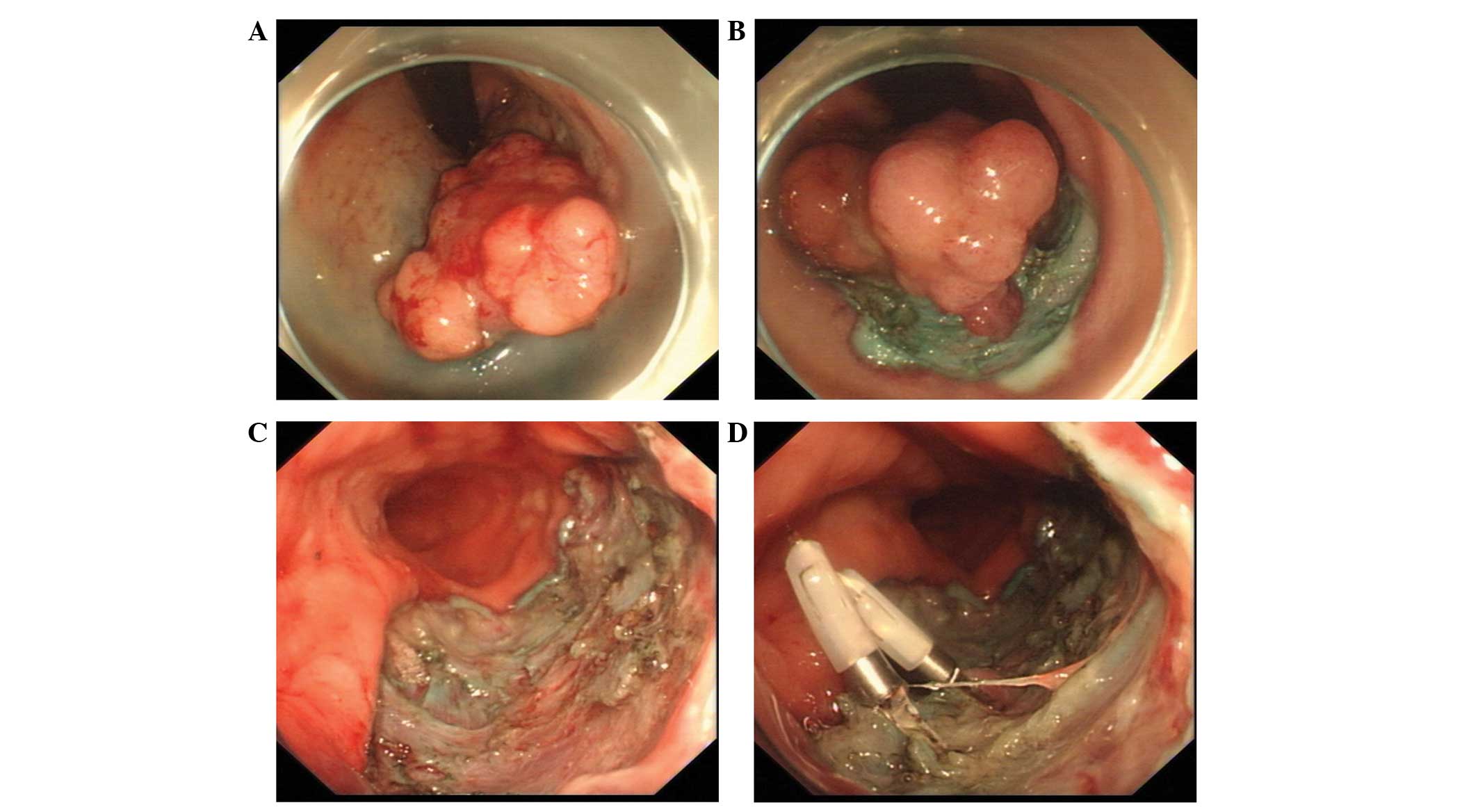
In May 2014, a 51-year-old male underwent a colonoscopy at the First Affiliated Hospital of Kunming Medical University (Kunming, China). In June 2014, the patient returned to the same hospital for an EMR of rectal adenoma. The patient possessed a previous medical history of a brain abscess close to the left basal ganglia region that was treated with ceftriaxone sodium for 14 days. The colonoscopy was performed in the left lateral position while the patient was sedated using 1.5 mg/kg intravenous propofol. The colonoscopy revealed a lobulated rectal adenoma, 1.5 cm in diameter, at the 4–6 o'clock position, located 5 cm from the anal verge, and the superficial margin was clear (Fig. 1A). An endoscopic mucosal resection using a transparent cap (EMR-C) (2,6) was performed with the intent to cure (Fig. 1B) (6,7). Following the EMR, no residual tumors at the periphery or any definite perforations were revealed using magnified observation (Fig. 1C). Subsequently, 2 titanium clips were used for wound hemostasis (Fig. 1D). No complications, such as massive bleeding or perforations, were identified during colonoscopy.

Figure 1.

(A) Rectal adenoma 5 cm from the anal verge, 1.5 cm in size. The lesion was lobulated and elevated, with normal mucosa. (B) The adenoma was snared off in the standard fashion of endoscopic mucosal resection. (C) The lesion was removed. (D) Titanium clips were used for wound hemostasis.

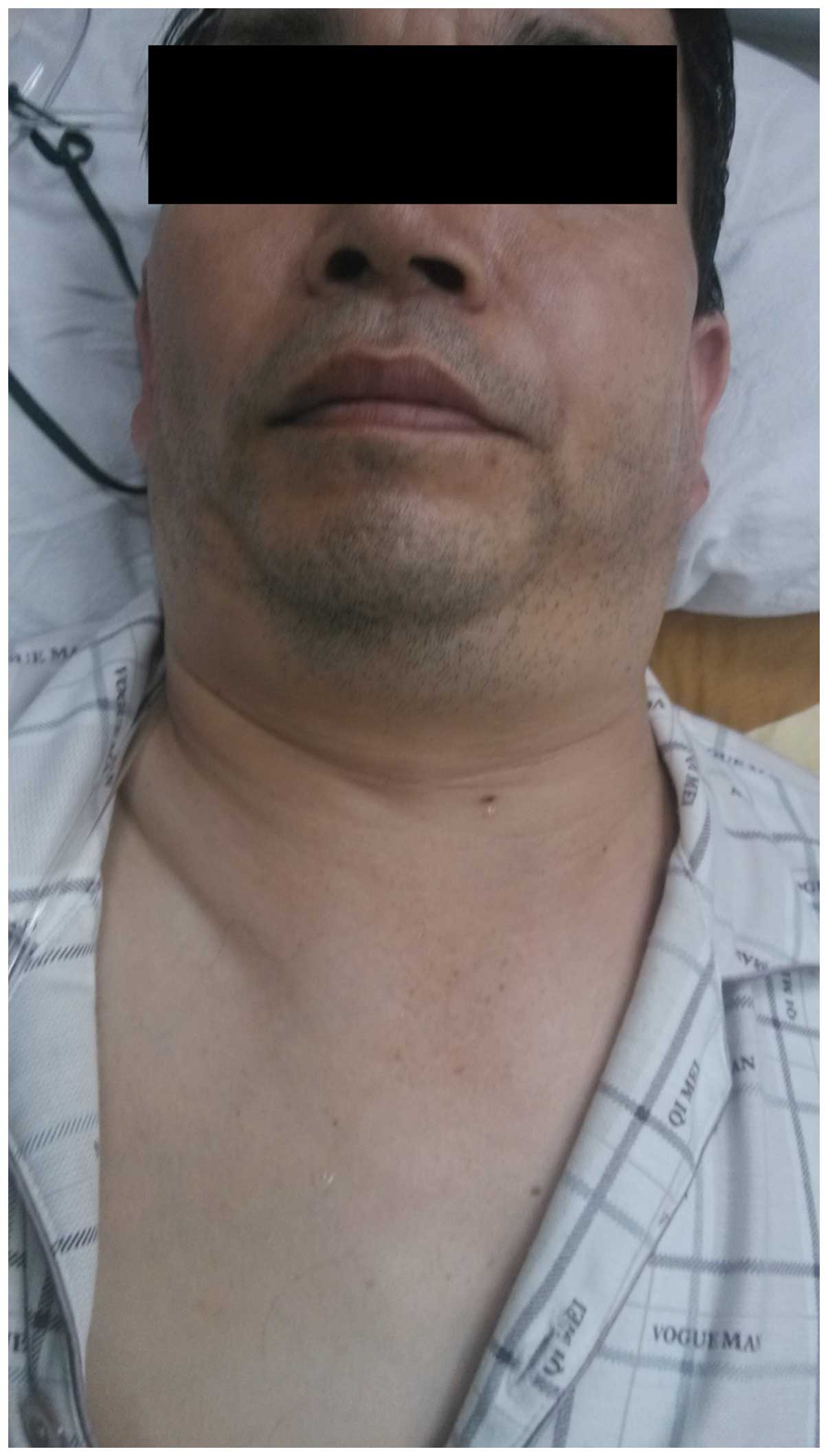
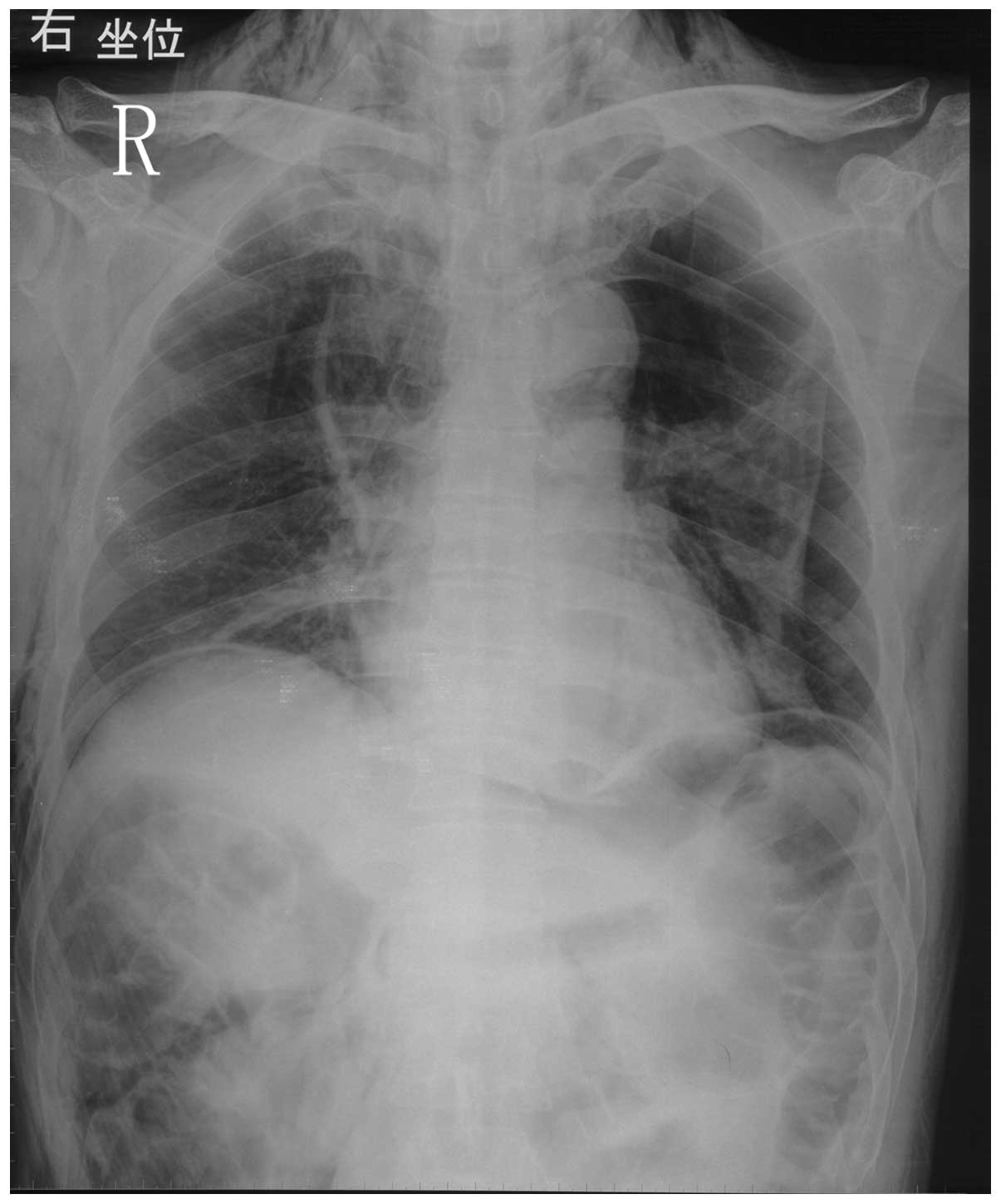
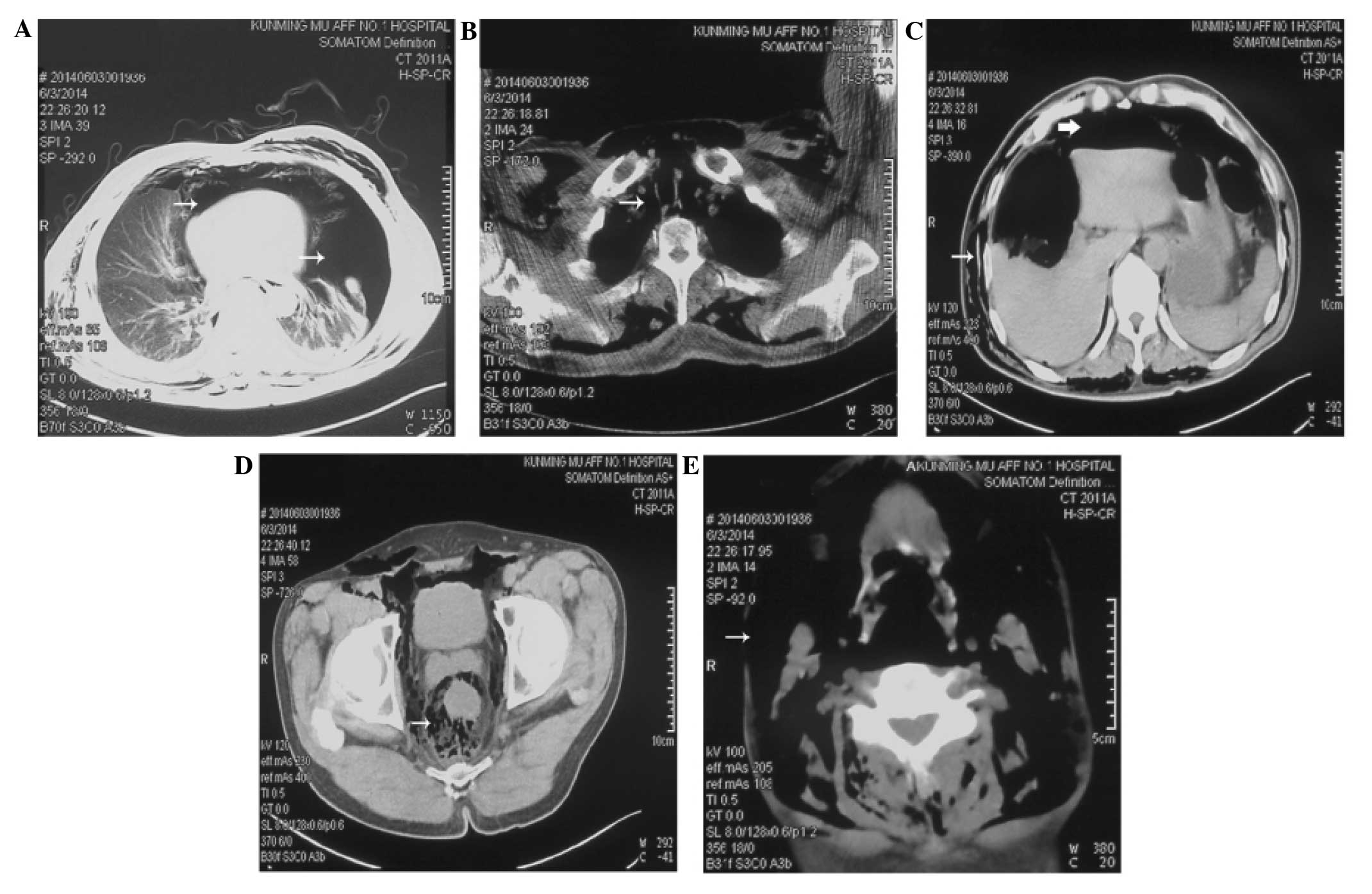
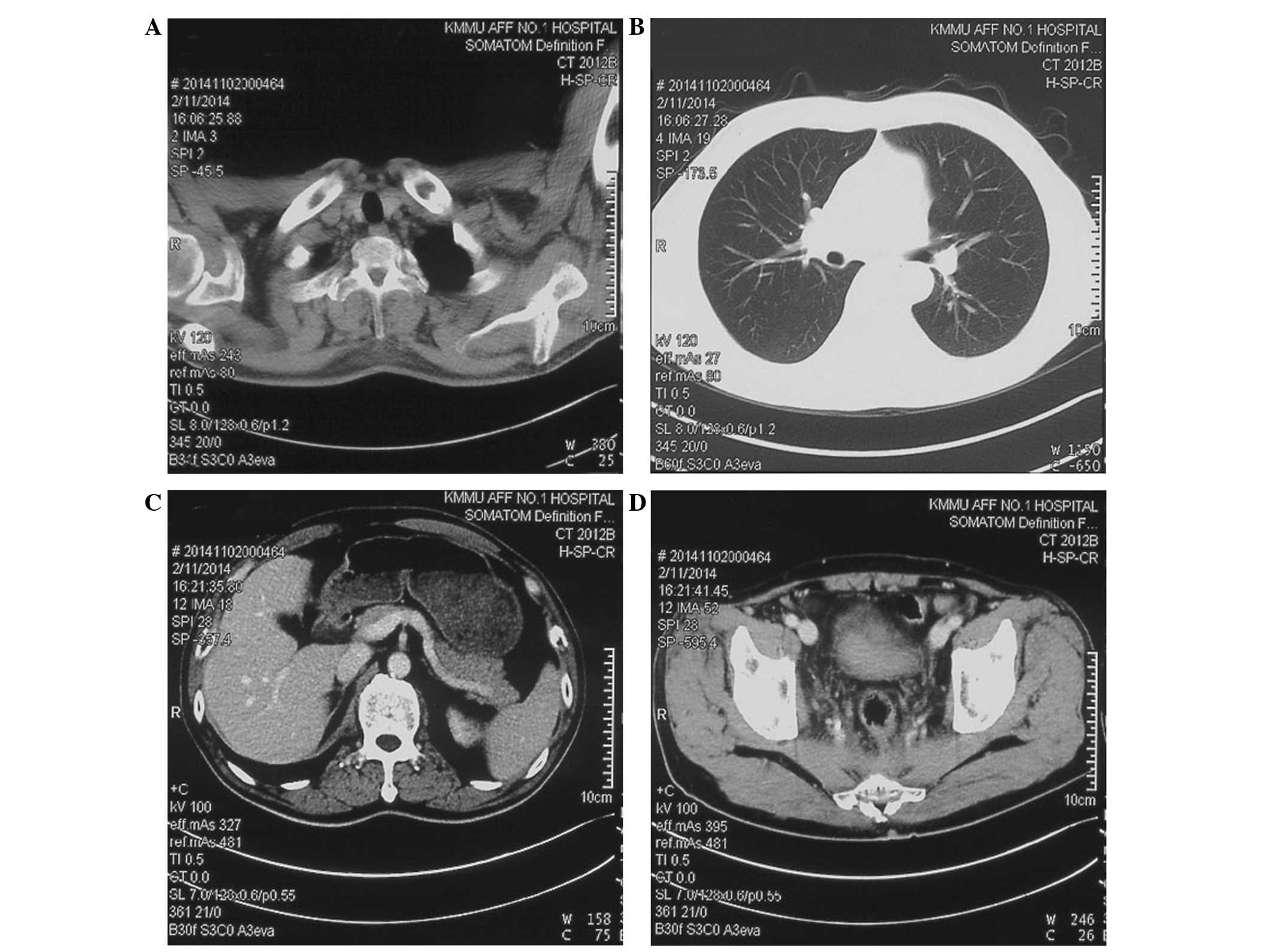
Following the EMR, the patient suddenly suffered from breathing difficulties. At this point, the patient developed acute subcutaneous emphysema of the neck (Fig. 2), posterior chest wall, and anterior and lateral abdominal walls. Following the intake of oxygen (FiO2, 41%) for 5 min, the dyspnea symptoms demonstrated no sign of improvement. An emergency chest X-ray examination was performed and a bilateral pneumothorax was indicated (Fig. 3). Additionally, a CT scan of the chest, abdomen and pelvis was performed. The CT scan results also demonstrated a bilateral pneumothorax, occupying ~70 and 20% of the left and right thoracic cavities, respectively (Fig. 4A), pneumomediastinum (Fig. 4B), pneumoperitoneum (Fig. 4C), and pneumoretroperitoneum extending down to the presacral space (Fig. 4D). Extensive cervical subcutaneous emphysema was also identified (Fig. 4E).

Figure 2.

The patient presenting with neck swelling.

Figure 3.

Chest radiograph exhibiting pneumothorax.

Figure 4.

(A) CT scan of the chest demonstrating a bilateral pneumothorax, occupying ~70 and 20% of the left and right thoracic cavity, respectively (thin arrow). (B) Axial CT scan of the chest demonstrating pneumomediastinum (thin arrow). (C) Abdominal CT disclosed pneumoperitoneum (thick arrow), and abdominal wall subcutaneous pneumatosis (thin arrow). (D) CT scan demonstrating pneumatosis around the presacral space (thin arrow). (E) CT scan of neck exhibiting cervical subcutaneous emphysema (thin arrow). CT, computed tomography.

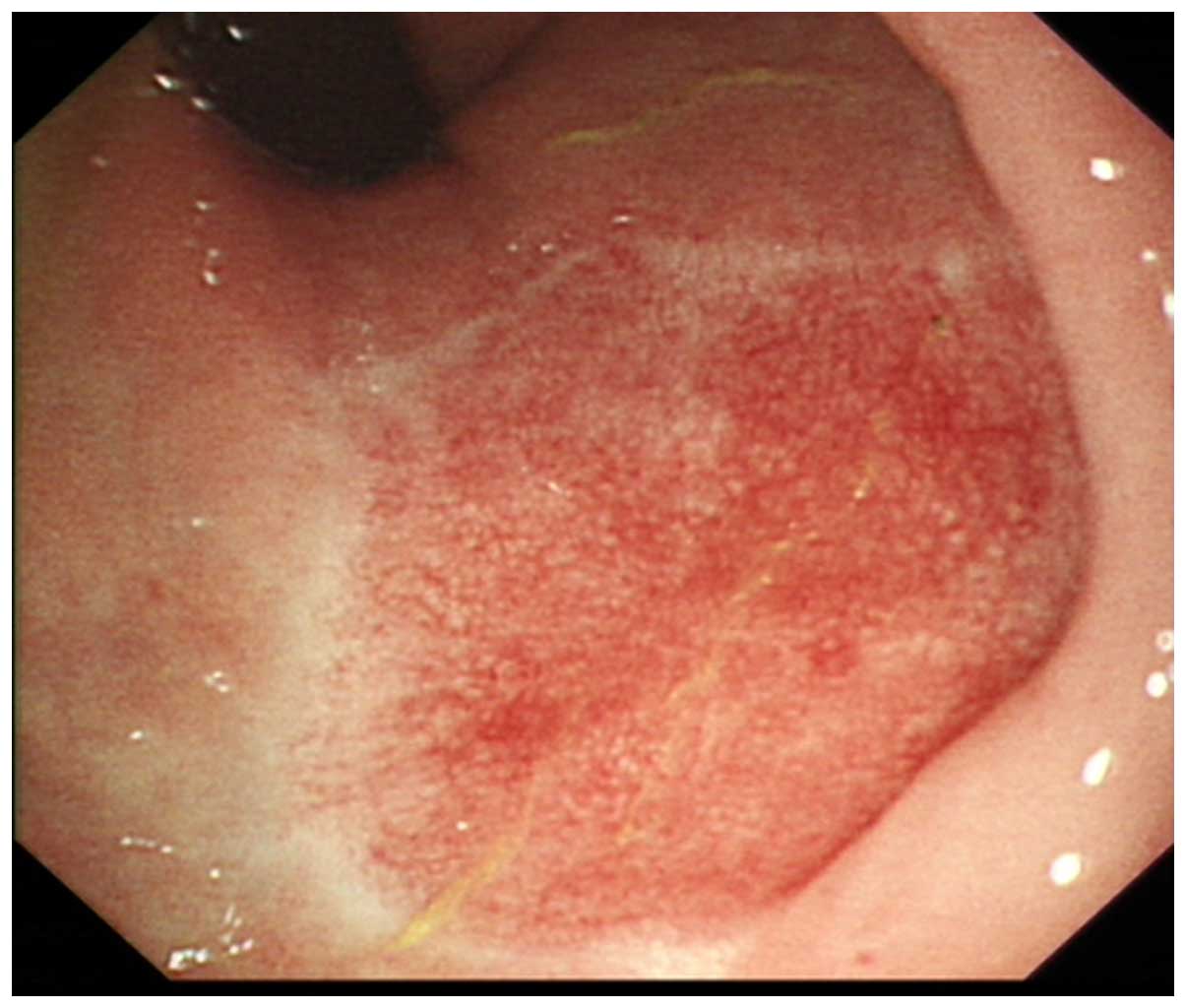
The laboratory data revealed that the white blood cell count was 11.5×10¹²cells/l (normal range, 4.0–10.0×10¹² cells/l), and that the C-reactive protein level was 65 mg/l (normal range, 0–3.3 mg/l). Due to the dyspnea symptoms, intercostal drainage of the left pneumothorax was performed immediately. A follow-up chest X-ray exhibited a resolving pneumomediastinum and the resolution of the pneumothorax 1 day later. As no peritonitis developed, the patient was managed conservatively with intravenous fluids and intravenous antibiotics (ceftriaxone sodium; 2 g/day) for 72 h prior to the gradual re-introduction of oral fluid and food. The pneumoperitoneum, pneumoretroperitoneum and subcutaneous emphysema were almost resolved within 7 days, and the CT reexamination and physical examination revealed a rapid, but not comprehensive, recovery. The white blood cell count and C-reactive protein levels decreased to normal. The excised specimen was histologically diagnosed as tubular adenoma, with focal carcinoma that was limited to within the mucosal layer. No residual tumor was found at the basal region of the tumor specimen. Following discharge, the patient reported no complaints of dyspnea or hematochezia in the monthly telephone follow-ups. Subsequent to 4 months of follow up, a colonoscopy demonstrated that the rectal mucosal wound and scar was healing (Fig. 5), and a CT scan provided no evidence of subcutaneous emphysema or interstitial pneumatosis (Fig. 6).

Figure 5.

(A) CT scan of neck presenting no subcutaneous emphysema. (B) CT examination of lung demonstrating no pneumomediastinum. (C) Abdominal CT demonstrating no pneumoperitoneum. (D) Pelvic CT examination disclosed no pneumatosis. CT, computed tomography.

Figure 6.

Colonoscopy demonstrating that the rectal mucosal wound and scar were healing.

Discussion

The incidence of colorectal perforation following colonoscopy has been reported to range between 0.16% in diagnostic colonoscopies and 0.44% in therapeutic colonoscopies (8). The major causes of perforation include excessive air insufflation, instrumental trauma and the improper use of electrocautery, while the factors that increase the risk of perforation include old age, medical comorbidity and therapeutic procedures, such as polypectomy, pneumatic dilation and endoscopic mucosal resection (9–11). The majority of the signs of colonic perforation are abdominal symptoms, such as acute peritonitis. However, the current patient presented with bilateral pneumothorax and subcutaneous emphysema as early signs of a rectal perforation following EMR, which caused serious dyspnea symptoms and neck swelling. In the present patient, pneumothorax was first indicated by an emergency chest X-ray; however, additional CT imaging tests comprehensively revealed the rare manifestations of pneumothorax, pneumomediastinum, pneumoperitoneum, pneumoretroperitoneum and extensive subcutaneous emphysema. Thus, CT is effective and recommended for early recognition in cases presenting with colorectal perforation.

There are varying mechanisms through which extraluminal air may reach the various body compartments, including undue instrument manipulation, air insufflation or improper use of diathermy (5,9,10). In the present study, extraluminal air entered the body due to rectal perforation following EMR. The retroperitoneal air resulted from a direct retroperitoneal space in rectal perforation, then the extraluminal air accumulated and passed along the mesentery to the retroperitoneum. Subsequently, air travelled along the fascial planes to enter the mediastinum, which caused the pneumomediastinum. A subsequent rupture of the mediastinal pleura allowed air to decompress into the pleural cavity and caused the pneumothorax (5,12).

The choice of conservative or surgical treatment for iatrogenic colonic perforation remains controversial (13–15). Finding air in the pleural and abdominal cavity may be an early sign of a life-threatening condition. In the present case, due to the serious dyspnea, intercostal drainage was performed immediately to improve the breathing difficulties. For patients that present with colonic perforation and acute peritonitis, a fecal diversion with a colostomy was suggested (10). In the present study, the choice of conservative treatment for the pneumoperitoneum was based on the following factors: First, the abdominal pain was mild and localized, and no complaint of acute peritonitis was observed; and second, the movement of air from the peritoneal space is usually considered as non-infectious and may be treated conservatively (3). In the present patient, the pneumoperitoneum, pneumoretroperitoneum and subcutaneous emphysema were almost resolved within 7 days of treatment. A CT reexamination and physical examination revealed a rapid and uneventful recovery, and a follow-up 4 months subsequently revealed a comprehensive recovery without subcutaneous emphysema or interstitial pneumatosis.

In conclusion, the present study reports a case of rectal perforation following EMR. Dyspnea and neck swelling are acute signs of extraluminal air resulting from rectal perforation. CT examination is a fast and effective method for the early and comprehensive assessment of the condition of a patient. Appropriate management and close follow-up are crucial for optimal results.

References

1 

Hurlstone DP, Sanders DS, Cross SS, Adam I, Shorthouse AJ, Brown S, Drew K and Lobo AJ: Colonoscopic resection of lateral spreading tumours: A prospective analysis of endoscopic mucosal resection. Gut. 53:1334–1339. 2004. View Article : Google Scholar : PubMed/NCBI

2 

Park SJ: Tips and tricks for better endoscopic treatment of colorectal tumors: Usefulness of cap and band in colorectal endoscopic mucosal resection. Clin Endosc. 46:492–494. 2013. View Article : Google Scholar : PubMed/NCBI

3 

Fu KI, Sano Y, Kato S, Fujii T, Sugito M, Ono M, Saito N, Kawashima K, Yoshida S and Fujimori T: Pneumoscrotum: A rare manifestation of perforation associated with therapeutic colonoscopy. World J Gastroenterol. 11:5061–5063. 2005. View Article : Google Scholar : PubMed/NCBI

4 

Marwan K, Farmer KC, Varley C and Chapple KS: Pneumothorax, pneumomediastinum, pneumoperitoneum, pneumoretroperitoneum and subcutaneous emphysema following diagnostic colonoscopy. Ann R Coll Surg Engl. 89:W20–W21. 2007. View Article : Google Scholar : PubMed/NCBI

5 

Zeno BR and Sahn SA: Colonoscopy-associated pneumothorax: A case of tension pneumothorax and review of the literature. Am J Med Sci. 332:153–155. 2006. View Article : Google Scholar : PubMed/NCBI

6 

Denadai R, Medeiros CC, Toledo AP, Carvalho AF Jr and Muraro CA: Rectal perforation after colonoscopic polypectomy presented as subcutaneous emphysema, pneumomediastinum and pneumoretroperitoneum successfully treated conservatively in an elderly adult. J Am Geriatr Soc. 61:1433–1435. 2013. View Article : Google Scholar : PubMed/NCBI

7 

Endo S, Hirasaki S, Doi T, Endo H, Nishina T, Moriwaki T, Nakauchi M, Masumoto T, Tanimizu M and Hyodo I: Granular cell tumor occurring in the sigmoid colon treated by endoscopic mucosal resection using a transparent cap (EMR-C). J Gastroenterol. 38:385–389. 2003. View Article : Google Scholar : PubMed/NCBI

8 

Kim HH, Park SJ, Lee SH, Park HU, Song CS, Park MI and Moon W: Efficacy of endoscopic submucosal resection with a ligation device for removing small rectal carcinoid tumor compared with endoscopic mucosal resection: Analysis of 100 cases. Dig Endosc. 24:159–163. 2012. View Article : Google Scholar : PubMed/NCBI

9 

Bakker J, van Kersen F and Spruyt Bellaar J: Pneumopericardium and pneumomediastinum after polypectomy. Endoscopy. 23:46–47. 1991. View Article : Google Scholar : PubMed/NCBI

10 

Lohsiriwat V: Colonoscopic perforation: Incidence, risk factors, management and outcome. World J Gastroenterol. 16:425–430. 2010. View Article : Google Scholar : PubMed/NCBI

11 

Castellví J, Pi F, Sueiras A, Vallet J, Bollo J, Tomas A, Verge J, Caballero F, Iglesias C and De Castro J: Colonoscopic perforation: Useful parameters for early diagnosis and conservative treatment. Int J Colorectal Dis. 26:1183–1190. 2011. View Article : Google Scholar : PubMed/NCBI

12 

Ho HC, Burchell S, Morris P and Yu M: Colon perforation, bilateral pneumothoraces, pneumopericardium, pneumomediastinum, and subcutaneous emphysema complicating endoscopic polypectomy: Anatomic and management considerations. Am Surg. 62:770–774. 1996.PubMed/NCBI

13 

La Torre M, Velluti F, Giuliani G, Di Giulio E, Ziparo V and La Torre F: Promptness of diagnosis is the main prognostic factor after colonoscopic perforation. Colorectal Dis. 14:e23–e26. 2012. View Article : Google Scholar : PubMed/NCBI

14 

Donatelli G, Vergeau BM, Dumont JL, Altmann C, Dritsas S, Dhumane P, Tuszynski T and Meduri B: Delayed successful treatment of iatrogenic colon perforation using an over-the-scope clip. Endoscopy. 46(Suppl 1): E285–E286. 2014.PubMed/NCBI

15 

Xiao YF, Bai JY, Yu J, Lin XL, Zhao XY, Yang SM and Fan CQ: Endoscopic treatment of delayed colon perforation: The enteroscopy overtube approach. Endoscopy. 46:503–508. 2014. View Article : Google Scholar : PubMed/NCBI

Related Articles

  • Abstract
  • View
  • Download
  • Twitter
Copy and paste a formatted citation
Spandidos Publications style
Yang J, Liu WQ, Dong J, Wen ZQ, Zhu Z and Li WL: Pneumothorax, pneumomediastinum, pneumoperitoneum and extensive subcutaneous emphysema resulting from endoscopic mucosal resection secondary to colonoscopy: A case report. Oncol Lett 11: 2763-2767, 2016.
APA
Yang, J., Liu, W.Q., Dong, J., Wen, Z.Q., Zhu, Z., & Li, W.L. (2016). Pneumothorax, pneumomediastinum, pneumoperitoneum and extensive subcutaneous emphysema resulting from endoscopic mucosal resection secondary to colonoscopy: A case report. Oncology Letters, 11, 2763-2767. https://doi.org/10.3892/ol.2016.4302
MLA
Yang, J., Liu, W. Q., Dong, J., Wen, Z. Q., Zhu, Z., Li, W. L."Pneumothorax, pneumomediastinum, pneumoperitoneum and extensive subcutaneous emphysema resulting from endoscopic mucosal resection secondary to colonoscopy: A case report". Oncology Letters 11.4 (2016): 2763-2767.
Chicago
Yang, J., Liu, W. Q., Dong, J., Wen, Z. Q., Zhu, Z., Li, W. L."Pneumothorax, pneumomediastinum, pneumoperitoneum and extensive subcutaneous emphysema resulting from endoscopic mucosal resection secondary to colonoscopy: A case report". Oncology Letters 11, no. 4 (2016): 2763-2767. https://doi.org/10.3892/ol.2016.4302
Copy and paste a formatted citation
x
Spandidos Publications style
Yang J, Liu WQ, Dong J, Wen ZQ, Zhu Z and Li WL: Pneumothorax, pneumomediastinum, pneumoperitoneum and extensive subcutaneous emphysema resulting from endoscopic mucosal resection secondary to colonoscopy: A case report. Oncol Lett 11: 2763-2767, 2016.
APA
Yang, J., Liu, W.Q., Dong, J., Wen, Z.Q., Zhu, Z., & Li, W.L. (2016). Pneumothorax, pneumomediastinum, pneumoperitoneum and extensive subcutaneous emphysema resulting from endoscopic mucosal resection secondary to colonoscopy: A case report. Oncology Letters, 11, 2763-2767. https://doi.org/10.3892/ol.2016.4302
MLA
Yang, J., Liu, W. Q., Dong, J., Wen, Z. Q., Zhu, Z., Li, W. L."Pneumothorax, pneumomediastinum, pneumoperitoneum and extensive subcutaneous emphysema resulting from endoscopic mucosal resection secondary to colonoscopy: A case report". Oncology Letters 11.4 (2016): 2763-2767.
Chicago
Yang, J., Liu, W. Q., Dong, J., Wen, Z. Q., Zhu, Z., Li, W. L."Pneumothorax, pneumomediastinum, pneumoperitoneum and extensive subcutaneous emphysema resulting from endoscopic mucosal resection secondary to colonoscopy: A case report". Oncology Letters 11, no. 4 (2016): 2763-2767. https://doi.org/10.3892/ol.2016.4302
Follow us
  • Twitter
  • LinkedIn
  • Facebook
About
  • Spandidos Publications
  • Careers
  • Cookie Policy
  • Privacy Policy
How can we help?
  • Help
  • Live Chat
  • Contact
  • Email to our Support Team