Spandidos Publications Logo
  • About
    • About Spandidos
    • Aims and Scopes
    • Abstracting and Indexing
    • Editorial Policies
    • Reprints and Permissions
    • Job Opportunities
    • Terms and Conditions
    • Contact
  • Journals
    • All Journals
    • Oncology Letters
      • Oncology Letters
      • Information for Authors
      • Editorial Policies
      • Editorial Board
      • Aims and Scope
      • Abstracting and Indexing
      • Bibliographic Information
      • Archive
    • International Journal of Oncology
      • International Journal of Oncology
      • Information for Authors
      • Editorial Policies
      • Editorial Board
      • Aims and Scope
      • Abstracting and Indexing
      • Bibliographic Information
      • Archive
    • Molecular and Clinical Oncology
      • Molecular and Clinical Oncology
      • Information for Authors
      • Editorial Policies
      • Editorial Board
      • Aims and Scope
      • Abstracting and Indexing
      • Bibliographic Information
      • Archive
    • Experimental and Therapeutic Medicine
      • Experimental and Therapeutic Medicine
      • Information for Authors
      • Editorial Policies
      • Editorial Board
      • Aims and Scope
      • Abstracting and Indexing
      • Bibliographic Information
      • Archive
    • International Journal of Molecular Medicine
      • International Journal of Molecular Medicine
      • Information for Authors
      • Editorial Policies
      • Editorial Board
      • Aims and Scope
      • Abstracting and Indexing
      • Bibliographic Information
      • Archive
    • Biomedical Reports
      • Biomedical Reports
      • Information for Authors
      • Editorial Policies
      • Editorial Board
      • Aims and Scope
      • Abstracting and Indexing
      • Bibliographic Information
      • Archive
    • Oncology Reports
      • Oncology Reports
      • Information for Authors
      • Editorial Policies
      • Editorial Board
      • Aims and Scope
      • Abstracting and Indexing
      • Bibliographic Information
      • Archive
    • Molecular Medicine Reports
      • Molecular Medicine Reports
      • Information for Authors
      • Editorial Policies
      • Editorial Board
      • Aims and Scope
      • Abstracting and Indexing
      • Bibliographic Information
      • Archive
    • World Academy of Sciences Journal
      • World Academy of Sciences Journal
      • Information for Authors
      • Editorial Policies
      • Editorial Board
      • Aims and Scope
      • Abstracting and Indexing
      • Bibliographic Information
      • Archive
    • International Journal of Functional Nutrition
      • International Journal of Functional Nutrition
      • Information for Authors
      • Editorial Policies
      • Editorial Board
      • Aims and Scope
      • Abstracting and Indexing
      • Bibliographic Information
      • Archive
    • International Journal of Epigenetics
      • International Journal of Epigenetics
      • Information for Authors
      • Editorial Policies
      • Editorial Board
      • Aims and Scope
      • Abstracting and Indexing
      • Bibliographic Information
      • Archive
    • Medicine International
      • Medicine International
      • Information for Authors
      • Editorial Policies
      • Editorial Board
      • Aims and Scope
      • Abstracting and Indexing
      • Bibliographic Information
      • Archive
  • Articles
  • Information
    • Information for Authors
    • Information for Reviewers
    • Information for Librarians
    • Information for Advertisers
    • Conferences
  • Language Editing
Spandidos Publications Logo
  • About
    • About Spandidos
    • Aims and Scopes
    • Abstracting and Indexing
    • Editorial Policies
    • Reprints and Permissions
    • Job Opportunities
    • Terms and Conditions
    • Contact
  • Journals
    • All Journals
    • Biomedical Reports
      • Information for Authors
      • Editorial Policies
      • Editorial Board
      • Aims and Scope
      • Abstracting and Indexing
      • Bibliographic Information
      • Archive
    • Experimental and Therapeutic Medicine
      • Information for Authors
      • Editorial Policies
      • Editorial Board
      • Aims and Scope
      • Abstracting and Indexing
      • Bibliographic Information
      • Archive
    • International Journal of Epigenetics
      • Information for Authors
      • Editorial Policies
      • Editorial Board
      • Aims and Scope
      • Abstracting and Indexing
      • Bibliographic Information
      • Archive
    • International Journal of Functional Nutrition
      • Information for Authors
      • Editorial Policies
      • Editorial Board
      • Aims and Scope
      • Abstracting and Indexing
      • Bibliographic Information
      • Archive
    • International Journal of Molecular Medicine
      • Information for Authors
      • Editorial Policies
      • Editorial Board
      • Aims and Scope
      • Abstracting and Indexing
      • Bibliographic Information
      • Archive
    • International Journal of Oncology
      • Information for Authors
      • Editorial Policies
      • Editorial Board
      • Aims and Scope
      • Abstracting and Indexing
      • Bibliographic Information
      • Archive
    • Medicine International
      • Information for Authors
      • Editorial Policies
      • Editorial Board
      • Aims and Scope
      • Abstracting and Indexing
      • Bibliographic Information
      • Archive
    • Molecular and Clinical Oncology
      • Information for Authors
      • Editorial Policies
      • Editorial Board
      • Aims and Scope
      • Abstracting and Indexing
      • Bibliographic Information
      • Archive
    • Molecular Medicine Reports
      • Information for Authors
      • Editorial Policies
      • Editorial Board
      • Aims and Scope
      • Abstracting and Indexing
      • Bibliographic Information
      • Archive
    • Oncology Letters
      • Information for Authors
      • Editorial Policies
      • Editorial Board
      • Aims and Scope
      • Abstracting and Indexing
      • Bibliographic Information
      • Archive
    • Oncology Reports
      • Information for Authors
      • Editorial Policies
      • Editorial Board
      • Aims and Scope
      • Abstracting and Indexing
      • Bibliographic Information
      • Archive
    • World Academy of Sciences Journal
      • Information for Authors
      • Editorial Policies
      • Editorial Board
      • Aims and Scope
      • Abstracting and Indexing
      • Bibliographic Information
      • Archive
  • Articles
  • Information
    • For Authors
    • For Reviewers
    • For Librarians
    • For Advertisers
    • Conferences
  • Language Editing
Login Register Submit
  • This site uses cookies
  • You can change your cookie settings at any time by following the instructions in our Cookie Policy. To find out more, you may read our Privacy Policy.

    I agree
Search articles by DOI, keyword, author or affiliation
Search
Advanced Search
presentation
Oncology Letters
Join Editorial Board Propose a Special Issue
Print ISSN: 1792-1074 Online ISSN: 1792-1082
Journal Cover
June-2016 Volume 11 Issue 6

Full Size Image

Sign up for eToc alerts
Recommend to Library

Journals

International Journal of Molecular Medicine

International Journal of Molecular Medicine

International Journal of Molecular Medicine is an international journal devoted to molecular mechanisms of human disease.

International Journal of Oncology

International Journal of Oncology

International Journal of Oncology is an international journal devoted to oncology research and cancer treatment.

Molecular Medicine Reports

Molecular Medicine Reports

Covers molecular medicine topics such as pharmacology, pathology, genetics, neuroscience, infectious diseases, molecular cardiology, and molecular surgery.

Oncology Reports

Oncology Reports

Oncology Reports is an international journal devoted to fundamental and applied research in Oncology.

Experimental and Therapeutic Medicine

Experimental and Therapeutic Medicine

Experimental and Therapeutic Medicine is an international journal devoted to laboratory and clinical medicine.

Oncology Letters

Oncology Letters

Oncology Letters is an international journal devoted to Experimental and Clinical Oncology.

Biomedical Reports

Biomedical Reports

Explores a wide range of biological and medical fields, including pharmacology, genetics, microbiology, neuroscience, and molecular cardiology.

Molecular and Clinical Oncology

Molecular and Clinical Oncology

International journal addressing all aspects of oncology research, from tumorigenesis and oncogenes to chemotherapy and metastasis.

World Academy of Sciences Journal

World Academy of Sciences Journal

Multidisciplinary open-access journal spanning biochemistry, genetics, neuroscience, environmental health, and synthetic biology.

International Journal of Functional Nutrition

International Journal of Functional Nutrition

Open-access journal combining biochemistry, pharmacology, immunology, and genetics to advance health through functional nutrition.

International Journal of Epigenetics

International Journal of Epigenetics

Publishes open-access research on using epigenetics to advance understanding and treatment of human disease.

Medicine International

Medicine International

An International Open Access Journal Devoted to General Medicine.

Journal Cover
June-2016 Volume 11 Issue 6

Full Size Image

Sign up for eToc alerts
Recommend to Library

  • Article
  • Citations
    • Cite This Article
    • Download Citation
    • Create Citation Alert
    • Remove Citation Alert
    • Cited By
  • Similar Articles
    • Related Articles (in Spandidos Publications)
    • Similar Articles (Google Scholar)
    • Similar Articles (PubMed)
  • Download PDF
  • Download XML
  • View XML
Case Report Open Access

Extraventricular neurocytoma in the left temporal lobe: A case report and review of the literature

  • Authors:
    • Yu‑Chen Ji
    • Jing‑Xia Hu
    • Yan Li
    • Peng‑Xiang Yan
    • Huan‑Cong Zuo
  • View Affiliations / Copyright

    Affiliations: Department of Neurosurgery, Tsinghua University Yuquan Hospital, Beijing 100040, P.R. China, Medical Center, Tsinghua University, Beijing 100084, P.R. China, Department of Neurosurgery, Beijing Tiantan Hospital, Capital Medical University, Beijing 100050, P.R. China
    Copyright: © Ji et al. This is an open access article distributed under the terms of Creative Commons Attribution License.
  • Pages: 3579-3582
    |
    Published online on: April 21, 2016
       https://doi.org/10.3892/ol.2016.4487
  • Expand metrics +
Metrics: Total Views: 0 (Spandidos Publications: | PMC Statistics: )
Metrics: Total PDF Downloads: 0 (Spandidos Publications: | PMC Statistics: )
Cited By (CrossRef): 0 citations Loading Articles...

This article is mentioned in:


Abstract

Central neurocytoma (CNC) often develops in the ventricular system adjacent to the interventricular foramen and septum pellucidum. According to the World Health Organization, CNCs are classified as grade II tumors, and in recent years it has been reported that CNCs have occasionally occurred in rare areas of the central nervous system. The current study describes a rare case of CNC located in the left temporal lobe of a 49‑year‑old man, who had been experiencing headaches for 3 weeks. Computed tomography identified a round, well‑demarcated, 3.3‑cm tumor in the left temporal lobe. The patient underwent surgery and the tumor was totally resected. Histological analysis demonstrated that the resected tumor tissue contained clusters of small cells with regular nuclear morphology, and round nuclei with fine chromatin. Immunohistochemically, neuronal differentiation markers, including synaptophysin and neuronal nuclear antigen, were expressed in the tumor cells. Histopathological examination of the resected tissue confirmed a diagnosis of extraventricular neurocytoma. Magnetic resonance imaging was performed at 3 months post‑surgery and demonstrated no evidence of tumor recurrence.

Introduction

Central neurocytomas (CNCs) are rare brain tumors that originate from neuroepithelial tissue, occurring most frequently in young adults, and are often located in the lateral ventricles. CNC was first described by Hassoun et al (1) in 1982, and accounts for 0.1–0.5% of all primary brain tumors (2). Complete surgical resection is currently the optimal treatment choice, and the prognosis of CNC is often favorable due to its benign nature (3). Although CNC typically occurs in the lateral ventricles, a few cases of CNC occurring in extraventricular regions have been reported in the literature.

Case report

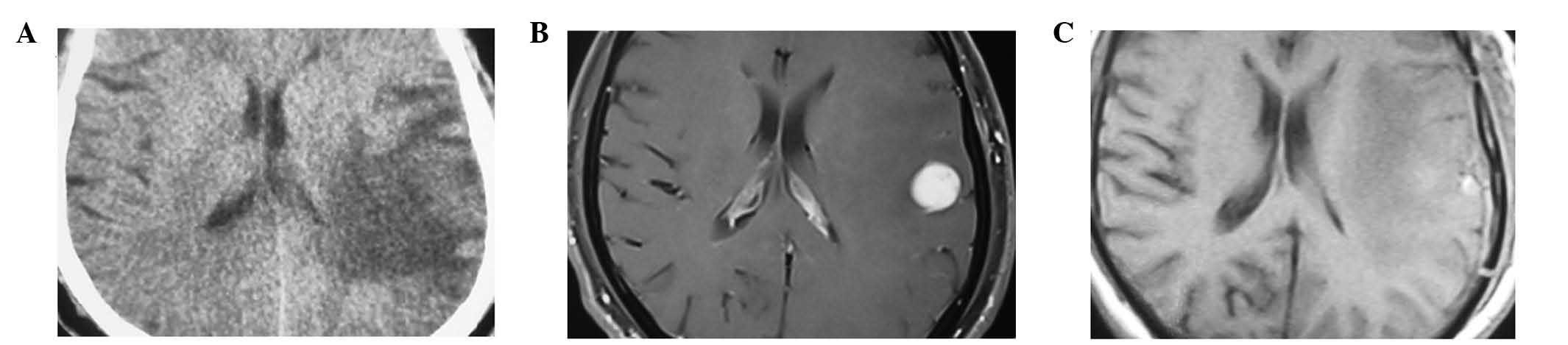
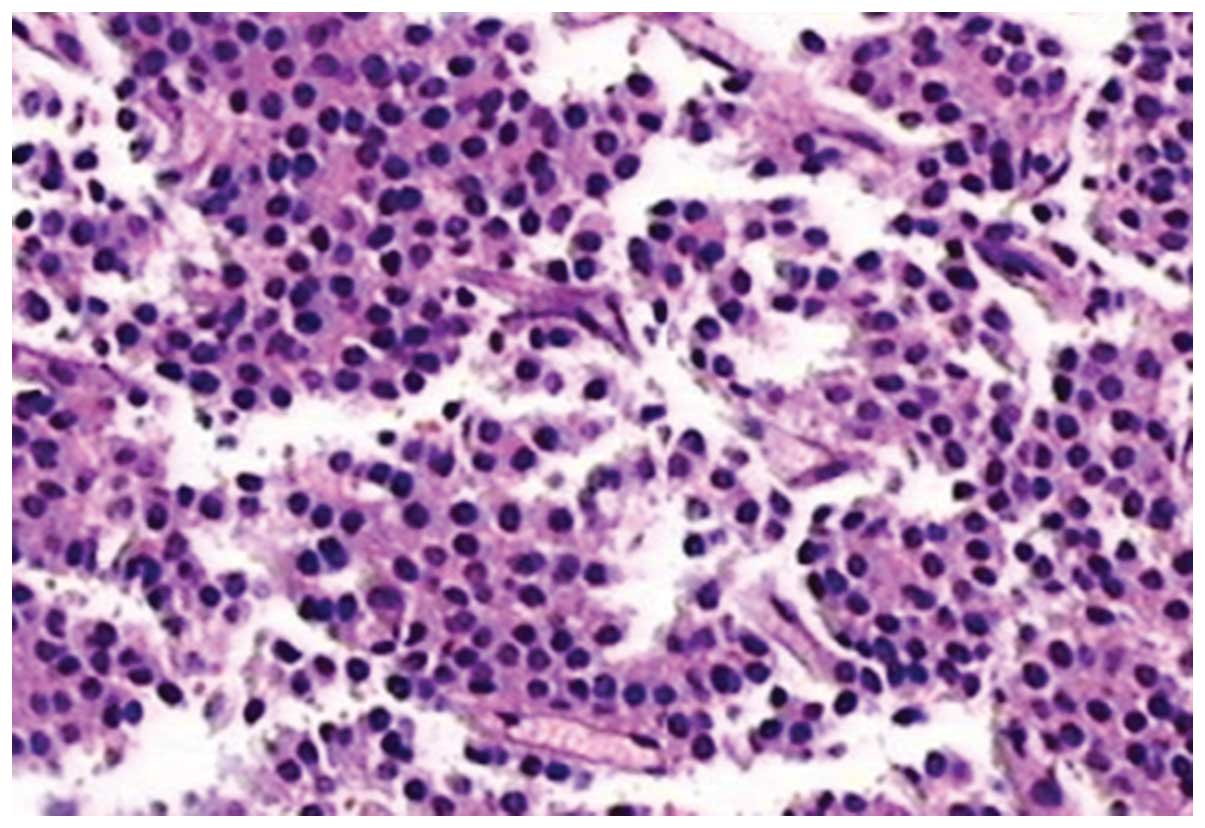
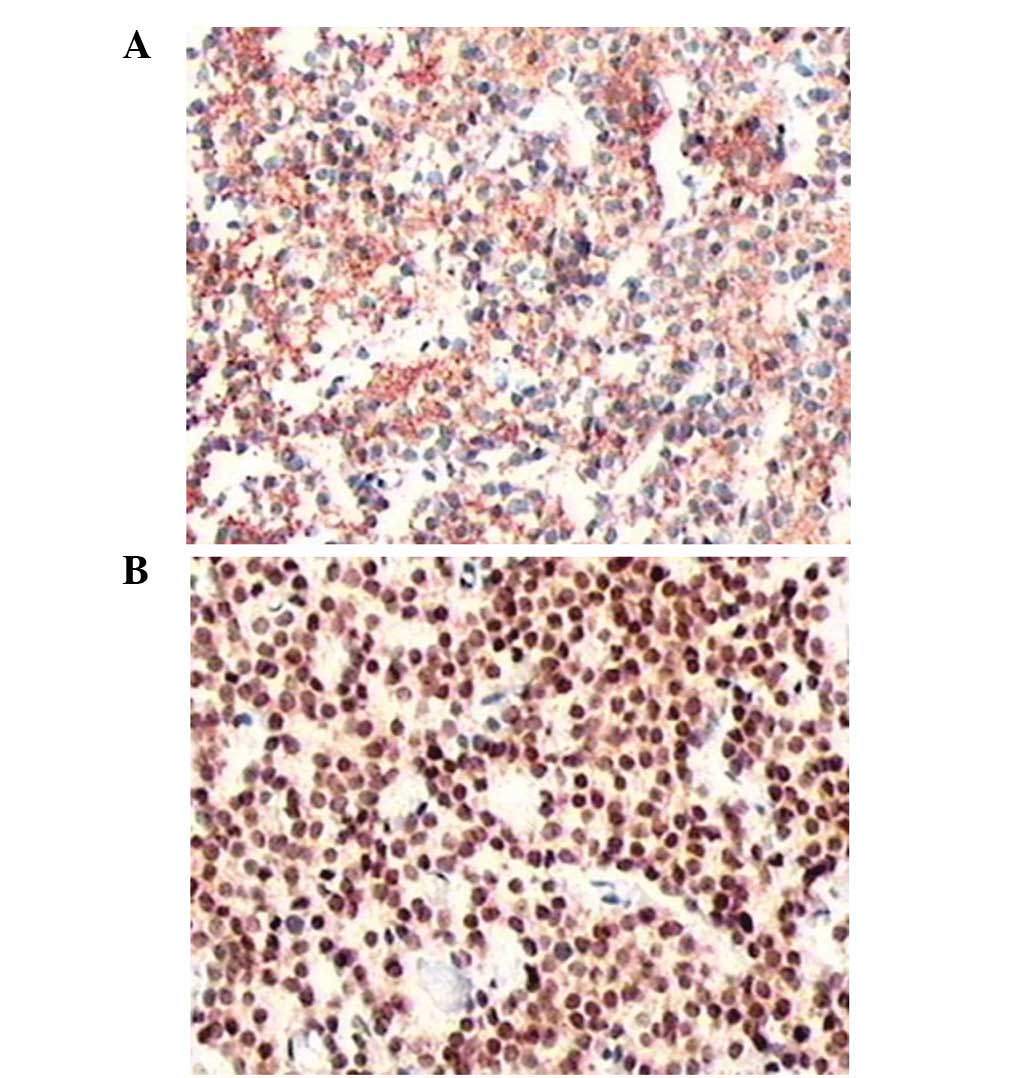
In March 2014, a 49-year-old man was admitted to the Tsinghua University Yuquan Hospital (Beijing, China) after experiencing headaches for 3 weeks. No other focal neurological deficits were observed upon admission. Computed tomography (CT; SOMATOM Sensation 16; Siemens AG, Munich, Germany) of the brain identified an isodense, round, well-demarcated, 3.3-cm tumor, which was located in the left temporal lobe, in addition to peritumoral edema (Fig. 1A). Marked homogeneous enhancement was observed within the mass on T1-gadolinium imaging (Fig. 1B). The patient underwent surgery, and the tumor was excised via a left temporal craniotomy. As there was no adhesion between the tumor and the dura or the brain, the radical resection of the lesion was straightforward. The pathological report stated that the tumor was a grade II extraventricular neurocytoma (EVN) according to the World Health Organization (WHO) classification of tumors of the central nervous system (4). Resected tissue specimens were formalin (Yuekai Trading Co., Ltd., Hebei, China)-fixed, paraffin (Sinopharm Chemical Reagent Co., Ltd., Shanghai, China)-embedded, cut into 8-µm sections, stained with hematoxylin and eosin (Shanghai Qianchen Biotechnologies, Co., Ltd., Shanghai, China) and visualized using an optical microscope (CX23; Olympus Corporation, Tokyo, Japan). Histologically, the resected tumor tissue contained clusters of small cells with regular nuclear morphology, and round nuclei with fine chromatin (Fig. 2). Vascular hyperplasia was also observed. There was no evidence of ischemic necrosis or hemorrhage. For immunohistochemical staining, tissue sections were incubated with monoclonal mouse anti-rat synaptophysin (cat. no. ab11105; 1:500; Abcam, Cambridge, MA, USA), rabbit anti-mouse neuronal nuclear antigen (cat. no. ab190565; 1:50; Abcam) and mouse anti-human Ki67 (cat. no. ab8191; 1:50; Abcam) antibodies overnight at 4°C. The sections were then washed with PBS, incubated with biotinylated goat anti-mouse (cat. no. ab97233; 1:300; Abcam) or goat anti-rabbit (cat. no. ab97188; 1:300; Abcam) secondary antibodies for 30 min and staining was visualized using an optical microscope (CX23; Olympus Corporation). Immunohistochemical staining revealed that the tumor cells expressed the neuronal differentiation markers, synaptophysin and neuronal nuclear antigen (Fig. 3). Ki-67, a marker for proliferation index, was detected in 10% of the tumor nuclei. The patient was discharged from hospital without further treatment, including radiotherapy or chemotherapy. The patient was followed up for 3 months post-surgery, with magnetic resonance imaging (MRI; Signa HDe 1.5T; GE Healthcare Bio-Sciences, Pittsburgh, PA, USA) of the brain demonstrating no evidence of tumor recurrence (Fig. 1C). After the initial 3 month follow-up period, the patient was followed-up every 6 months, and at the time of writing no recurrence had been identified.

Figure 1.

Pre- and post-surgery brain scans of the present case. (A) CT revealing a isodense, well-demarcated, round tumor located in the left temporal lobe, in addition to peritumoral edema. (B) T1-gadolinium image revealing a homogeneously-enhanced mass. (C) Post-operative magnetic resonance imaging demonstrating no signs of solid tumor recurrence. CT, computed tomography.

Figure 2.

Histological analysis of the resected tissue exhibiting clusters of small cells with regular nuclear morphology and round nuclei. Staining, hematoxylin and eosin; magnification, ×100.

Figure 3.

Immunohistochemical staining revealing expression of (A) synaptophysin and (B) neuronal nuclear antigen in the tumor cells. Magnification, ×100.

Discussion

CNC is most prevalent in adolescents and young adults, and is often located in the lateral ventricles. In 1997, Giangaspero et al (5) reported the first case of a tumor that mimicked CNC, but was located in an extraventricular region. In 2007, these tumors were classified by the WHO as a novel brain tumor entity (4), and the incidence of EVN remains extremely rare, with Liu et al (6) reporting a worldwide incidence of only 0.13%. The development of CNC appears to have no significant gender predilection; however, the literature indicates that EVN has a slight female predominance and a median patient age of 38 years (range, 5–76 years) (7,8).

Increased intracranial pressure is the most common clinical presentation, particularly for CNC of the lateral ventricles. Other symptoms may vary from seizure to gait disturbances depending on the tumor location. The most frequent symptom of EVN is complex partial seizure, followed by headaches, precocious puberty, cranial nerve paralysis, and on rare occasions, hemorrhage (9). Various other non-specific symptoms are also associated with the disease, including headache, dizziness, weakness, and memory and consciousness dysfunction (10). A large number of patients present with these non-specific symptoms, and thus there are no definitive symptoms to diagnose EVN.

EVNs do not present with specific imaging characteristics. On imaging analysis, EVNs may appear as well-circumscribed, round or multilobular, hypodense or isodense masses, which are homogeneously-enhanced with contrast medium, as observed in the present case. Liu et al (6) reported that cystic degeneration was observed in 6 out of 9 (66%) EVN cases, with calcification in 34% and perilesional edema in 44%, whilst Patil et al (11) reported that cystic degeneration was present in 71% of 9 cases and perifocal edema in 57%. MRI may exhibit an isointense or slightly hyperintense signal compared with the cortex on T1- and T2-weighted images. The majority of EVN tumors are solid, but largely cystic masses, and mural nodules may be identified. Moderate enhancement is typically observed in these tumors, however, following administration of a contrast agent, mild to strong heterogeneous enhancement may be exhibited (12–14). Common differential diagnoses include oligodendroglioma, ependymoma and dysembryoplastic neuroepithelial tumors, all of which usually lack a clear margin. Contrast enhancement and cystic changes also assist in distinguishing EVNs from other lesions. MR spectroscopy studies of EVNs have demonstrated a prominent choline peak with a notably decreased or absent N-acetylaspartate peak when compared with intraventricular neurocytomas (15).

A characteristic histological feature of EVNs is their composition of monotonous neoplastic cells with round, regular nuclei embedded in a matrix of fine neuronal processes, known as a neuropils. These neuropils are much finer than glial processes and exhibit a ‘velvety’ appearance, assisting their differentiation from typical rosettes observed in an ependymoma (16). Atypical EVNs are characterized immunohistochemically by a Ki-67 index of >2%, or by atypical histological features, including increased mitotic activity, focal necrosis and vascular proliferation (17). Histologically, EVN may also resemble oligodendroglioma, therefore, immunochemistry is required to a make an accurate diagnosis. Oligodendrogliomas may exhibit a limited amount of synaptophysin positivity in the tumor cell cytoplasm, but not to the same degree or extent as EVNs (18,19). EVNs may also occasionally carry the 1p19q codeletion, which is observed in 50–80% of oligodendroglioma cases (19).

Complete surgical excision is currently considered as the optimal treatment for EVN, but is often limited by tumor proximity to eloquent areas (20). In cases of incomplete resection, available data suggests that radiotherapy offers the same tumor control rates for EVN (11). The success rate of Gamma Knife® radiosurgery has not yet been discussed in the literature due to the limited number of EVN cases.

Post-operative radiation therapy may be effective in reducing tumor size and recurrence rates in cases of aggressive atypical neurocytoma; the recommended dose of 50 Gy is considered to be the most appropriate for long-term local control in children (20). Additional Gamma Knife stereotactic radiosurgery may be performed post-surgery in order to obtain improved local control and a higher survival rate for cases that cannot be surgically resected (7). The potential benefits of chemotherapy for recurrent tumors and residual lesions is uncertain and is not currently supported in the literature.

In the present case, complete surgical resection was performed due to the clear boundary of the tumor. Further treatment was not necessary, and the patient was followed-up 3 months post-surgery, with MRI of the brain indicating no signs of recurrence.

EVNs are benign in nature, with the exception of aggressive atypical variants (21). There is no association between tumor recurrence and tumor location, and pathology is one important prognostic factor. Atypical EVNs are characterized by a Ki-67 proliferation index of >2% or by atypical histological features, including vascular proliferation, focal necrosis and increased mitotic activity. As a result of these features, atypical EVN is difficult to resect completely. Kane et al (22) reported that a typical EVN histology significantly predicts a poor outcome with higher recurrence and mortality rates. Age is an additional prognostic factor, with an age of >50 years serving as a risk factor for recurrence, and an age of <18 years often associated with atypical features (16).

In conclusion, EVN is extremely rare and presents with varying clinical symptoms and imaging characteristics. The current case described a 49-year-old patient with EVN and discussed the associated clinical presentation, radiological manifestation and histopathological features. Total surgical resection of the tumor was considered as the optimal treatment. However, post-operative radiation therapy may be an effective therapeutic supplement for cases of incomplete resection. In addition, long-term follow-up is essential for cases of atypical EVN.

References

1 

Hassoun J, Gambarelli D, Grisoli F, Pellet W, Salamon G, Pellissier JF and Toga M: Central neurocytoma. An electron-microscopic study of two cases. Acta Neuropathol. 56:151–156. 1982. View Article : Google Scholar : PubMed/NCBI

2 

Sharma MC, Deb P, Sharma S and Sarkar C: Neurocytoma: A comprehensive review. Neurosurg Rev. 29:270–285. 2006. View Article : Google Scholar : PubMed/NCBI

3 

Patel DM, Schmidt RF and Liu JK: Update on the diagnosis, pathogenesis, and treatment strategies for central neurocytoma. J Clin Neurosci. 20:1193–1199. 2013. View Article : Google Scholar : PubMed/NCBI

4 

Louis DN, Ohgaki H, Wiestler OD, Cavenee WK, Burger PC, Jouvet A, Scheithauer BW and Kleihues P: The 2007 WHO classification of tumours of the central nervous system. Acta Neuropathol. 114:97–109. 2007. View Article : Google Scholar : PubMed/NCBI

5 

Giangaspero F, Cenacchi G, Losi L, Cerasoli S, Bisceglia M and Burger PC: Extraventricular neoplasms with neurocytoma features. A clinicopathological study of 11 cases. Am J Surg Pathol. 21:206–212. 1997. View Article : Google Scholar : PubMed/NCBI

6 

Liu K, Wen G, Lv XF, Deng YJ, Deng YJ, Hou GQ, Zhang XL, Han LJ and Ding JL: MR imaging of cerebral extraventricular neurocytoma: A report of 9 cases. AJNR Am J Neuroradiol. 34:541–546. 2013. View Article : Google Scholar : PubMed/NCBI

7 

Choi H, Park SH, Kim DG and Paek SH: Atypical extraventricular neurocytoma. J Korean Neurosurg Soc. 50:381–384. 2011. View Article : Google Scholar : PubMed/NCBI

8 

Choudhari KA, Kaliaperumal C, Jain A, Sarkar C, Soo MY, Rades D and Singh J: Central neurocytoma: A multi-disciplinary review. Br J Neurosurg. 23:585–595. 2009. View Article : Google Scholar : PubMed/NCBI

9 

Taylor CL, Cohen ML and Cohen AR: Neurocytoma presenting with intraparenchymal cerebral hemorrhage. Pediatr Neurosurg. 29:92–95. 1998. View Article : Google Scholar : PubMed/NCBI

10 

Hassoun J, Soylemezoglu F, Gambarelli D, Figarella-Branger D, von Ammon K and Kleihues P: Central neurocytoma: A synopsis of clinical and histological features. Brain Pathol. 3:297–306. 1993. View Article : Google Scholar : PubMed/NCBI

11 

Patil AS, Menon G, Easwer HV and Nair S: Extraventricular neurocytoma, a comprehensive review. Acta Neurochir (Wien). 156:349–354. 2014. View Article : Google Scholar : PubMed/NCBI

12 

Chen H, Zhou R, Liu J and Tang J: Central neurocytoma. J Clin Neurosci. 19:849–853. 2012. View Article : Google Scholar : PubMed/NCBI

13 

Jaiswal S, Vij M, Rajput D, Mehrotra A, Jaiswal AK, Srivastava AK, Behari S and Krishnani N: A clinicopathological, immunohistochemical and neuroradiological study of eight patients with central neurocytoma. J Clin Neurosci. 18:334–339. 2011. View Article : Google Scholar : PubMed/NCBI

14 

Yang GF, Wu SY, Zhang LJ, Lu GM, Tian W and Shah K: Imaging findings of extraventricular neurocytoma: Report of 3 cases and review of the literature. AJNR Am J Neuroradiol. 30:581–585. 2009. View Article : Google Scholar : PubMed/NCBI

15 

Ueda F, Suzuki M, Matsui O and Uchiyama N: Automated MR spectroscopy of intra- and extraventricular neurocytomas. Magn Reson Med Sci. 6:75–81. 2007. View Article : Google Scholar : PubMed/NCBI

16 

Brat DJ, Scheithauer BW, Eberhart CG and Burger PC: Extraventricular neurocytomas: Pathologic features and clinical outcome. Am J Surg Pathol. 25:1252–1260. 2001. View Article : Google Scholar : PubMed/NCBI

17 

Rades D, Fehlauer F and Schild SE: Treatment of atypical neurocytomas. Cancer. 100:814–817. 2004. View Article : Google Scholar : PubMed/NCBI

18 

Mut M, Güler-Tezel G, Lopes MB, Bilginer B, Ziyal I and Ozcan OE: Challenging diagnosis: Oligodendroglioma versus extraventricular neurocytoma. Clin Neuropathol. 24:225–229. 2005.PubMed/NCBI

19 

Perry A, Scheithauer BW, Macaulay RJ, Raffel C, Roth KA and Kros JM: Oligodendrogliomas with neurocytic differentiation. A report of 4 cases with diagnostic and histogenetic implications. J Neuropathol Exp Neurol. 61:947–955. 2002. View Article : Google Scholar : PubMed/NCBI

20 

Rades D, Schild SE and Fehlauer F: Defining the best available treatment for neurocytomas in children. Cancer. 101:2629–2632. 2004. View Article : Google Scholar : PubMed/NCBI

21 

Rades D, Schild SE and Fehlauer F: Prognostic value of the MIB-1 labeling index for central neurocytomas. Neurology. 62:987–989. 2004. View Article : Google Scholar : PubMed/NCBI

22 

Kane AJ, Sughrue ME, Rutkowski MJ, Aranda D, Mills SA, Lehil M, Fang S and Parsa AT: Atypia predicting prognosis for intracranial extraventricular neurocytomas. J Neurosurg. 116:349–354. 2012. View Article : Google Scholar : PubMed/NCBI

Related Articles

  • Abstract
  • View
  • Download
  • Twitter
Copy and paste a formatted citation
Spandidos Publications style
Ji YC, Hu JX, Li Y, Yan PX and Zuo HC: Extraventricular neurocytoma in the left temporal lobe: A case report and review of the literature. Oncol Lett 11: 3579-3582, 2016.
APA
Ji, Y., Hu, J., Li, Y., Yan, P., & Zuo, H. (2016). Extraventricular neurocytoma in the left temporal lobe: A case report and review of the literature. Oncology Letters, 11, 3579-3582. https://doi.org/10.3892/ol.2016.4487
MLA
Ji, Y., Hu, J., Li, Y., Yan, P., Zuo, H."Extraventricular neurocytoma in the left temporal lobe: A case report and review of the literature". Oncology Letters 11.6 (2016): 3579-3582.
Chicago
Ji, Y., Hu, J., Li, Y., Yan, P., Zuo, H."Extraventricular neurocytoma in the left temporal lobe: A case report and review of the literature". Oncology Letters 11, no. 6 (2016): 3579-3582. https://doi.org/10.3892/ol.2016.4487
Copy and paste a formatted citation
x
Spandidos Publications style
Ji YC, Hu JX, Li Y, Yan PX and Zuo HC: Extraventricular neurocytoma in the left temporal lobe: A case report and review of the literature. Oncol Lett 11: 3579-3582, 2016.
APA
Ji, Y., Hu, J., Li, Y., Yan, P., & Zuo, H. (2016). Extraventricular neurocytoma in the left temporal lobe: A case report and review of the literature. Oncology Letters, 11, 3579-3582. https://doi.org/10.3892/ol.2016.4487
MLA
Ji, Y., Hu, J., Li, Y., Yan, P., Zuo, H."Extraventricular neurocytoma in the left temporal lobe: A case report and review of the literature". Oncology Letters 11.6 (2016): 3579-3582.
Chicago
Ji, Y., Hu, J., Li, Y., Yan, P., Zuo, H."Extraventricular neurocytoma in the left temporal lobe: A case report and review of the literature". Oncology Letters 11, no. 6 (2016): 3579-3582. https://doi.org/10.3892/ol.2016.4487
Follow us
  • Twitter
  • LinkedIn
  • Facebook
About
  • Spandidos Publications
  • Careers
  • Cookie Policy
  • Privacy Policy
How can we help?
  • Help
  • Live Chat
  • Contact
  • Email to our Support Team