Spandidos Publications Logo
  • About
    • About Spandidos
    • Aims and Scopes
    • Abstracting and Indexing
    • Editorial Policies
    • Reprints and Permissions
    • Job Opportunities
    • Terms and Conditions
    • Contact
  • Journals
    • All Journals
    • Oncology Letters
      • Oncology Letters
      • Information for Authors
      • Editorial Policies
      • Editorial Board
      • Aims and Scope
      • Abstracting and Indexing
      • Bibliographic Information
      • Archive
    • International Journal of Oncology
      • International Journal of Oncology
      • Information for Authors
      • Editorial Policies
      • Editorial Board
      • Aims and Scope
      • Abstracting and Indexing
      • Bibliographic Information
      • Archive
    • Molecular and Clinical Oncology
      • Molecular and Clinical Oncology
      • Information for Authors
      • Editorial Policies
      • Editorial Board
      • Aims and Scope
      • Abstracting and Indexing
      • Bibliographic Information
      • Archive
    • Experimental and Therapeutic Medicine
      • Experimental and Therapeutic Medicine
      • Information for Authors
      • Editorial Policies
      • Editorial Board
      • Aims and Scope
      • Abstracting and Indexing
      • Bibliographic Information
      • Archive
    • International Journal of Molecular Medicine
      • International Journal of Molecular Medicine
      • Information for Authors
      • Editorial Policies
      • Editorial Board
      • Aims and Scope
      • Abstracting and Indexing
      • Bibliographic Information
      • Archive
    • Biomedical Reports
      • Biomedical Reports
      • Information for Authors
      • Editorial Policies
      • Editorial Board
      • Aims and Scope
      • Abstracting and Indexing
      • Bibliographic Information
      • Archive
    • Oncology Reports
      • Oncology Reports
      • Information for Authors
      • Editorial Policies
      • Editorial Board
      • Aims and Scope
      • Abstracting and Indexing
      • Bibliographic Information
      • Archive
    • Molecular Medicine Reports
      • Molecular Medicine Reports
      • Information for Authors
      • Editorial Policies
      • Editorial Board
      • Aims and Scope
      • Abstracting and Indexing
      • Bibliographic Information
      • Archive
    • World Academy of Sciences Journal
      • World Academy of Sciences Journal
      • Information for Authors
      • Editorial Policies
      • Editorial Board
      • Aims and Scope
      • Abstracting and Indexing
      • Bibliographic Information
      • Archive
    • International Journal of Functional Nutrition
      • International Journal of Functional Nutrition
      • Information for Authors
      • Editorial Policies
      • Editorial Board
      • Aims and Scope
      • Abstracting and Indexing
      • Bibliographic Information
      • Archive
    • International Journal of Epigenetics
      • International Journal of Epigenetics
      • Information for Authors
      • Editorial Policies
      • Editorial Board
      • Aims and Scope
      • Abstracting and Indexing
      • Bibliographic Information
      • Archive
    • Medicine International
      • Medicine International
      • Information for Authors
      • Editorial Policies
      • Editorial Board
      • Aims and Scope
      • Abstracting and Indexing
      • Bibliographic Information
      • Archive
  • Articles
  • Information
    • Information for Authors
    • Information for Reviewers
    • Information for Librarians
    • Information for Advertisers
    • Conferences
  • Language Editing
Spandidos Publications Logo
  • About
    • About Spandidos
    • Aims and Scopes
    • Abstracting and Indexing
    • Editorial Policies
    • Reprints and Permissions
    • Job Opportunities
    • Terms and Conditions
    • Contact
  • Journals
    • All Journals
    • Biomedical Reports
      • Information for Authors
      • Editorial Policies
      • Editorial Board
      • Aims and Scope
      • Abstracting and Indexing
      • Bibliographic Information
      • Archive
    • Experimental and Therapeutic Medicine
      • Information for Authors
      • Editorial Policies
      • Editorial Board
      • Aims and Scope
      • Abstracting and Indexing
      • Bibliographic Information
      • Archive
    • International Journal of Epigenetics
      • Information for Authors
      • Editorial Policies
      • Editorial Board
      • Aims and Scope
      • Abstracting and Indexing
      • Bibliographic Information
      • Archive
    • International Journal of Functional Nutrition
      • Information for Authors
      • Editorial Policies
      • Editorial Board
      • Aims and Scope
      • Abstracting and Indexing
      • Bibliographic Information
      • Archive
    • International Journal of Molecular Medicine
      • Information for Authors
      • Editorial Policies
      • Editorial Board
      • Aims and Scope
      • Abstracting and Indexing
      • Bibliographic Information
      • Archive
    • International Journal of Oncology
      • Information for Authors
      • Editorial Policies
      • Editorial Board
      • Aims and Scope
      • Abstracting and Indexing
      • Bibliographic Information
      • Archive
    • Medicine International
      • Information for Authors
      • Editorial Policies
      • Editorial Board
      • Aims and Scope
      • Abstracting and Indexing
      • Bibliographic Information
      • Archive
    • Molecular and Clinical Oncology
      • Information for Authors
      • Editorial Policies
      • Editorial Board
      • Aims and Scope
      • Abstracting and Indexing
      • Bibliographic Information
      • Archive
    • Molecular Medicine Reports
      • Information for Authors
      • Editorial Policies
      • Editorial Board
      • Aims and Scope
      • Abstracting and Indexing
      • Bibliographic Information
      • Archive
    • Oncology Letters
      • Information for Authors
      • Editorial Policies
      • Editorial Board
      • Aims and Scope
      • Abstracting and Indexing
      • Bibliographic Information
      • Archive
    • Oncology Reports
      • Information for Authors
      • Editorial Policies
      • Editorial Board
      • Aims and Scope
      • Abstracting and Indexing
      • Bibliographic Information
      • Archive
    • World Academy of Sciences Journal
      • Information for Authors
      • Editorial Policies
      • Editorial Board
      • Aims and Scope
      • Abstracting and Indexing
      • Bibliographic Information
      • Archive
  • Articles
  • Information
    • For Authors
    • For Reviewers
    • For Librarians
    • For Advertisers
    • Conferences
  • Language Editing
Login Register Submit
  • This site uses cookies
  • You can change your cookie settings at any time by following the instructions in our Cookie Policy. To find out more, you may read our Privacy Policy.

    I agree
Search articles by DOI, keyword, author or affiliation
Search
Advanced Search
presentation
Oncology Letters
Join Editorial Board Propose a Special Issue
Print ISSN: 1792-1074 Online ISSN: 1792-1082
Journal Cover
September-2016 Volume 12 Issue 3

Full Size Image

Sign up for eToc alerts
Recommend to Library

Journals

International Journal of Molecular Medicine

International Journal of Molecular Medicine

International Journal of Molecular Medicine is an international journal devoted to molecular mechanisms of human disease.

International Journal of Oncology

International Journal of Oncology

International Journal of Oncology is an international journal devoted to oncology research and cancer treatment.

Molecular Medicine Reports

Molecular Medicine Reports

Covers molecular medicine topics such as pharmacology, pathology, genetics, neuroscience, infectious diseases, molecular cardiology, and molecular surgery.

Oncology Reports

Oncology Reports

Oncology Reports is an international journal devoted to fundamental and applied research in Oncology.

Experimental and Therapeutic Medicine

Experimental and Therapeutic Medicine

Experimental and Therapeutic Medicine is an international journal devoted to laboratory and clinical medicine.

Oncology Letters

Oncology Letters

Oncology Letters is an international journal devoted to Experimental and Clinical Oncology.

Biomedical Reports

Biomedical Reports

Explores a wide range of biological and medical fields, including pharmacology, genetics, microbiology, neuroscience, and molecular cardiology.

Molecular and Clinical Oncology

Molecular and Clinical Oncology

International journal addressing all aspects of oncology research, from tumorigenesis and oncogenes to chemotherapy and metastasis.

World Academy of Sciences Journal

World Academy of Sciences Journal

Multidisciplinary open-access journal spanning biochemistry, genetics, neuroscience, environmental health, and synthetic biology.

International Journal of Functional Nutrition

International Journal of Functional Nutrition

Open-access journal combining biochemistry, pharmacology, immunology, and genetics to advance health through functional nutrition.

International Journal of Epigenetics

International Journal of Epigenetics

Publishes open-access research on using epigenetics to advance understanding and treatment of human disease.

Medicine International

Medicine International

An International Open Access Journal Devoted to General Medicine.

Journal Cover
September-2016 Volume 12 Issue 3

Full Size Image

Sign up for eToc alerts
Recommend to Library

  • Article
  • Citations
    • Cite This Article
    • Download Citation
    • Create Citation Alert
    • Remove Citation Alert
    • Cited By
  • Similar Articles
    • Related Articles (in Spandidos Publications)
    • Similar Articles (Google Scholar)
    • Similar Articles (PubMed)
  • Download PDF
  • Download XML
  • View XML
Case Report Open Access

Follow-up of IgD-κ multiple myeloma by monitoring free light chains and total heavy chain IgD: A case report

  • Authors:
    • Elena De Santis
    • Serena Masi
    • Iole Cordone
    • Francesco Pisani
    • Cecilia Zuppi
    • Fabrizio Mattei
    • Laura Conti
    • Giovanni Cigliana
  • View Affiliations / Copyright

    Affiliations: Clinical Pathology Unit, Italian National Cancer Institute ‘Regina Elena’, I‑00144 Rome, Italy, Hematology and Stem Cell Transplantation Unit, Italian National Cancer Institute ‘Regina Elena’, I‑00144 Rome, Italy, Department of Laboratory Medicine and Diagnostics, University Hospital Agostino Gemelli, I‑00168 Rome, Italy, Department of Hematology, Oncology and Molecular Medicine, National Institute of Health, I‑00161 Rome, Italy
    Copyright: © De Santis et al. This is an open access article distributed under the terms of Creative Commons Attribution License.
  • Pages: 1884-1888
    |
    Published online on: July 15, 2016
       https://doi.org/10.3892/ol.2016.4869
  • Expand metrics +
Metrics: Total Views: 0 (Spandidos Publications: | PMC Statistics: )
Metrics: Total PDF Downloads: 0 (Spandidos Publications: | PMC Statistics: )
Cited By (CrossRef): 0 citations Loading Articles...

This article is mentioned in:


Abstract

Immunoglobulin (Ig)D‑κ multiple myeloma (MM) is a rare neoplastic disease characterized by an aggressive and rapidly progressing course, which constitutes only a very small proportion of all MM cases. In the present report, the clinical case of a 51‑year‑old Caucasian woman diagnosed with IgD‑κ MM is described. The patient underwent different chemotherapeutic treatments subsequently to a single autologous stem cell transplantation. Despite the inherent difficulty of monitoring IgD levels and performing serum immunofixation electrophoresis, the clinical outcome of the patient was almost uniquely monitored by measuring the levels of κ and λ free light chains (FLCs) and total heavy chain IgD. The data suggest the non‑invasive potential and usefulness of FLCs evaluation for early detection of stringent complete remission, follow‑up and early detection of disease relapse. In addition, this diagnostic procedure has successfully been employed for the therapeutic monitoring of the present patient, and may represent a very helpful, non‑invasive tool for the follow‑up of IgD myeloma patients without the requirement of serial bone marrow aspirate.

Introduction

Multiple myeloma (MM) is a plasma cell (PC) disorder that induces anemia, skeletal destruction, renal failure and hypercalcemia (1). It is the second most common hematological malignancy, and it is characterized by the presence of a monoclonal immunoglobulin (Ig) expressed and secreted in the bone marrow, where there is a collection of abnormal PCs that interfere with the production of normal blood cells (2).

IgD MM constitutes ≤2% of all MM cases, displays generally an aggressive phenotype (often with renal failure) and is usually characterized by poor prognosis (3). IgD-κ occurs only in 3–4% of all IgD MM cases, and is also associated with the difficulty of obtaining a reliable diagnosis and of conducting a constant and precise follow-up (4).

The diagnostic panel for IgD-κ MM should include PC flow cytometry characterization, fluorescence in situ hybridization (FISH), serum protein electrophoresis (SPE), serum immunofixation electrophoresis (sIFE), measurement of serum free light chains (sFLCs) and total heavy chain IgD, and urinary IFE for Bence Jones (BJ) protein (5).

Diagnostically, with novel agent therapy (including thalidomide, bortezomib and lenalidomide) specifically integrated with autologous stem cells transplantation (ASCT) when feasible, the survival for IgD MM is improved; however, the outcomes remain inferior to those achieved in patients with other myeloma isotypes, thus highlighting the requirement for better and more innovative approaches in treatment and monitoring (6).

The present report describes the follow-up of a case of an IgD-K MM patient, who often refused to undergo a bone marrow aspirate, even in certain critical phases of the disease. Thus, given the occasional inability to obtain bone marrow aspirate samples, at times when a relapse was suspected, minimal residual disease (MRD) was alternatively monitored uniquely by serological evaluation of FLC and total heavy chain IgD levels (7,8).

The current report presents the case of a long survival patient monitored almost exclusively by sFLC and IgD measurements as an essential, non-invasive marker. Written informed consent was obtained from the patient [medical records no. 4249 on June 10, 2013 at Hematology and Stem Cell Trasplantation Unit, Italian National Cancer Institute ‘Regina Elena’ (Rome, Italy)].

Case report

In March 2007, a 51 year-old woman presented for the first time at the Hematology and Stem Cell Trasplantation Unit of the Italian National Cancer Institute ‘Regina Elena’ with multiple osteolytic lesions. PC flow cytometry characterization (FACSCanto™; BD Biosciences, Franklin Lakes, NJ, USA) identified an infiltration (23% of bone marrow population) of cluster of differentiation (CD)38+ CD138+ CD28+ CD56+ CD117+ CD19− CD45− tumor PCs, with κ-sFLC restriction, as illustrated by flow cytometric analysis at diagnosis (Fig. 1A). Bone marrow examination by FISH revealed no abnormalities.
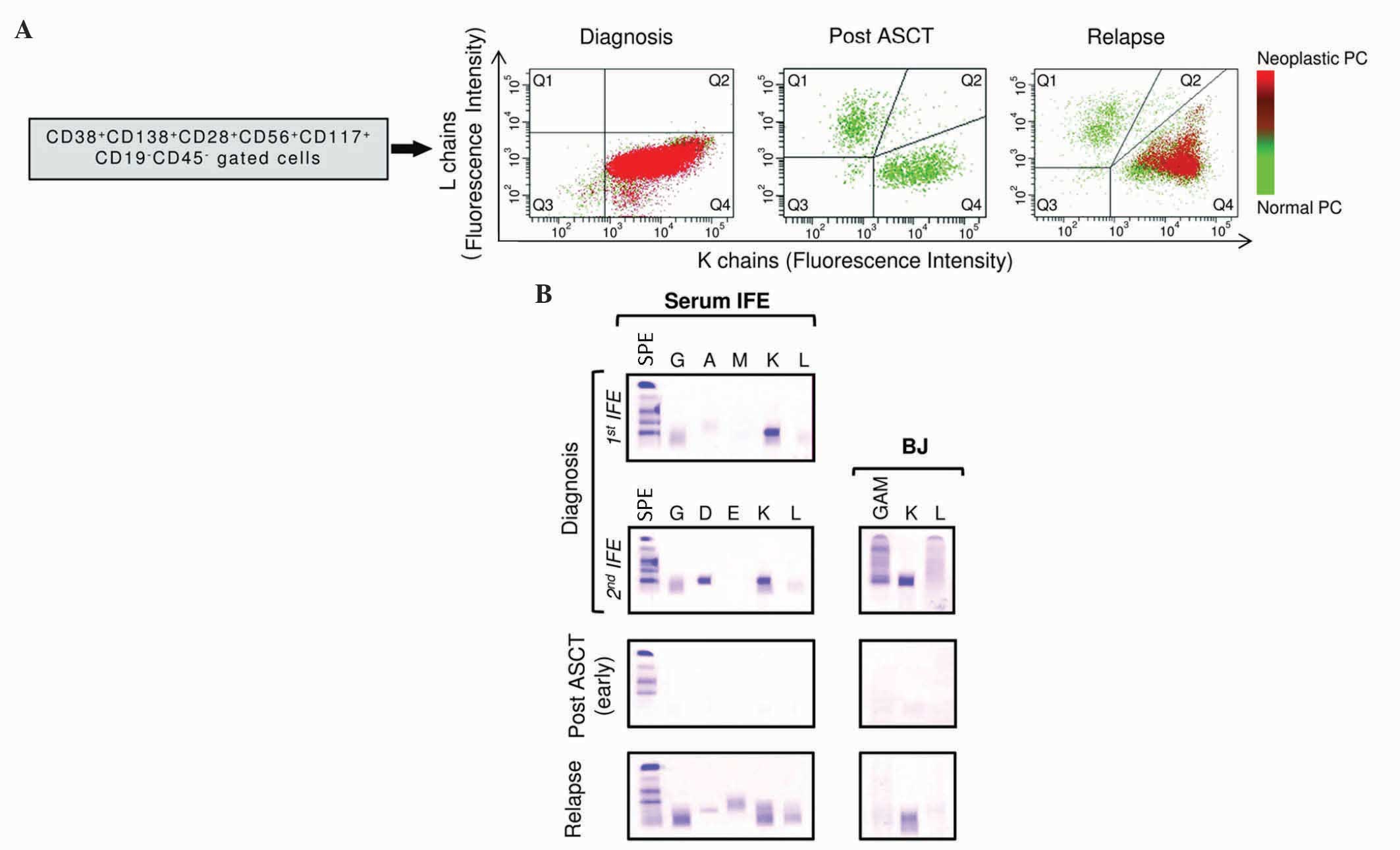
Figure 1.

Flow cytometric analysis and IFE detection during patient monitoring. (A) Flow cytometric evaluation of the expression of κ and λ chains in normal vs. malignant PCs at diagnosis, upon ASCT and at relapse. Q1-Q4 represent the distinct regions analyzed by flow cytometry, where Q1 comprises λ-positive PCs and Q4 contains κ-positive ones. The green color in the plots represents normal PCs, whereas the red color depicts the presence of neoplastic PCs. These bone marrow aspirates indicate the presence of neoplastic cells at diagnosis, which disappear following ASCT, while they are still present at the time of relapse. Their progress was coherent with the values of serum free light chains tested (B) IFE and Bence Jones protein at diagnosis, pre/post ASCT and during relapse. The term ‘early’ inside parentheses refers to the first post-ASCT timepoint. IFE was performed with the immunoglobulin antisera indicated above each lane. IFE, immunofixation electrophoresis; CD, cluster of differentiation; PC, plasma cell; ASCT, autologous stem cells transplantation; BJ, Bence Jones; GAM, mixed antisera against immunoglobulins G, A and M; SPE, serum protein electrophoresis.

sIFE and BJ protein IFE on urine evidenced the presence of an IgD-κ monoclonal component and κ light chains, respectively (Fig. 1B). In addition, sFLC quantification (The Binding Site Group, Ltd., Birmingham, UK) revealed a marked increase in κ-sFLC with an abnormal FLC κ/λ ratio (Table I). Total heavy chain IgD quantification (The Binding Site Group, Ltd.) confirmed the presence of elevated IgD levels (Fig. 1B and Table I).

Table I.

FLC/IgD values in the course of monitoring with BMD chemotherapy and ASCT.

Table I.

FLC/IgD values in the course of monitoring with BMD chemotherapy and ASCT.

FLCsa

TherapyTherapy scheduleDateκ (3.3–19.4)λ (5.7–26.3)κ/λ ratio (0.26–1.65)Heavy chain total IgD (7.7–132.1)
Pre-BMD–Oct 10 20075,889.008.30709.008,678.00
BMD1st cycle, basalOct 31 20074,812.003.441,398.00ND
1st cycle, 5 daysNov 16 20073,518.002.611,348.00ND
2nd cycle, basalDec 12 20073,352.002.821,188.005,028.00
2nd cycle, 5 daysDec 14 20072,539.002.091,215.00ND
2nd cycle, 15 daysDec 24 20072,484.002.74906.003,862.00
2nd cycle, 28 daysJan 7 20083,432.002.931,171.004,966.00
3rd cycle, 5 daysJan 11 20082,651.002.261,173.00ND
4th cycle, basalFeb 4 20083,460.008.13425.003,957.00
4th cycle, 7 daysFeb 11 20082,627.008.00328.004,050.00
4th cycle, 15 daysFeb 19 20083,580.008.13440.003,503.00
Pre-ASCT–Apr 10 20085,149.008.00643.008,406.00
Post-ASCT15 daysMay 9 200842.0914.102.91ND
2 monthsJul 23 200819.9271.400.286.44
4 monthsSep 3 200827.4159.320.46ND
6 monthsNov 3 200830.0828.911.046.44
17 monthsSep 17 200925.8317.771.45ND
21 monthsJan 20 201024.2626.430.928.65
24 monthsApr 19 201027.9521.801.28ND
43 monthsFeb 27 201226.9717.661.5312.50
48 monthsbJul 2 201237.0216.622.23208.00
56 monthsbMar 6 2013262.0014.7814.78190.00
59 monthsbJun 10 2013692.0011.2761.40748.00

a Values expressed in mg/l. Numbers in parentheses and inside the table represent the normal ranges.

b Relapse. BMD, bortezomib, Myocet® and dexamethasone chemotherapy; ASCT, autologous stem cell transplant; ND, not determined; FLC, free light chain; Ig, immunoglobulin.

The average and standard deviation values of β2-microglobulin (β2 M) levels were 7.47 and 3.77 mg/l, respectively (normal range, 0.80–2.20 mg/l). Other classical serological parameters [calcium (Ca)-renal-anemia-bone criteria] were altered. The diagnosis was an IgD-κ MM stage IIIA.

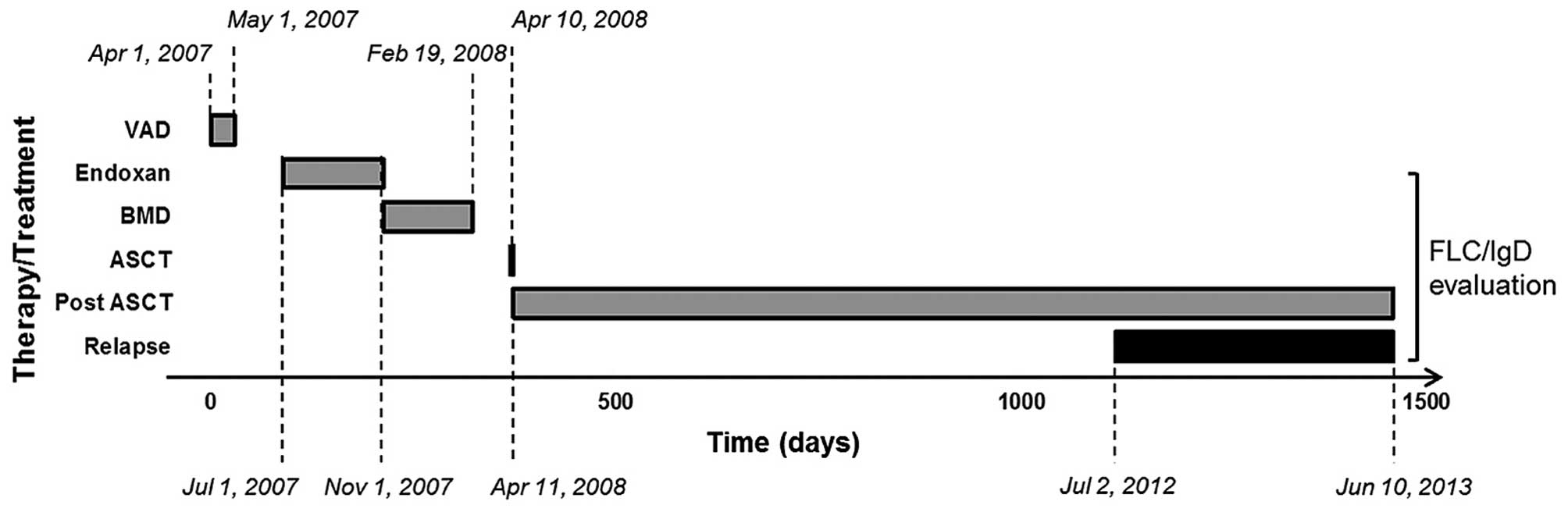
According to the current clinical practice at the Italian National Cancer Institute ‘Regina Elena’, the patient underwent chemotherapy with two cycles of vincristine, doxorubicin (Adriblastina®) and dexamethasone (VAD regimen) from April until May 2007 (9). The patient was then treated with two cycles of cyclophosphamide (Endoxan Baxter®) from July until November 2007, and four subsequent cycles of bortezomib (Velcade®), Myocet® and dexamethasone (BMD regimen) from November 2007 until February 2008 (Fig. 2 and Table I). The FLC measurements and total IgD evaluations commenced upon ASCT (10) and were extended until the relapse phase (Fig. 2). Following the first VAD cycle, bone marrow stem cells were collected.

Figure 2.

Overall view of the patient therapy and follow-up. The diagram represents the therapeutic strategies adopted for monitoring of the patient from July 2007 to June 2013. Free light chain/immunoglobulin D measurements were initiated in parallel with Endoxan Baxter® treatment. The gray boxes depict the duration of each treatment, inclusive of the beginning/end dates depicted in italics. The black box indicates the relapse interval of the patient. VAD, vincristine, Adriblastina® and dexamethasone chemotherapy (two cycles); BMD, bortezomib, Myocet® and dexamethasone chemotherapy (four cycles); ASCT, autologous stem cell transplant; FLC, free light chains. Ig, immunoglobulin.

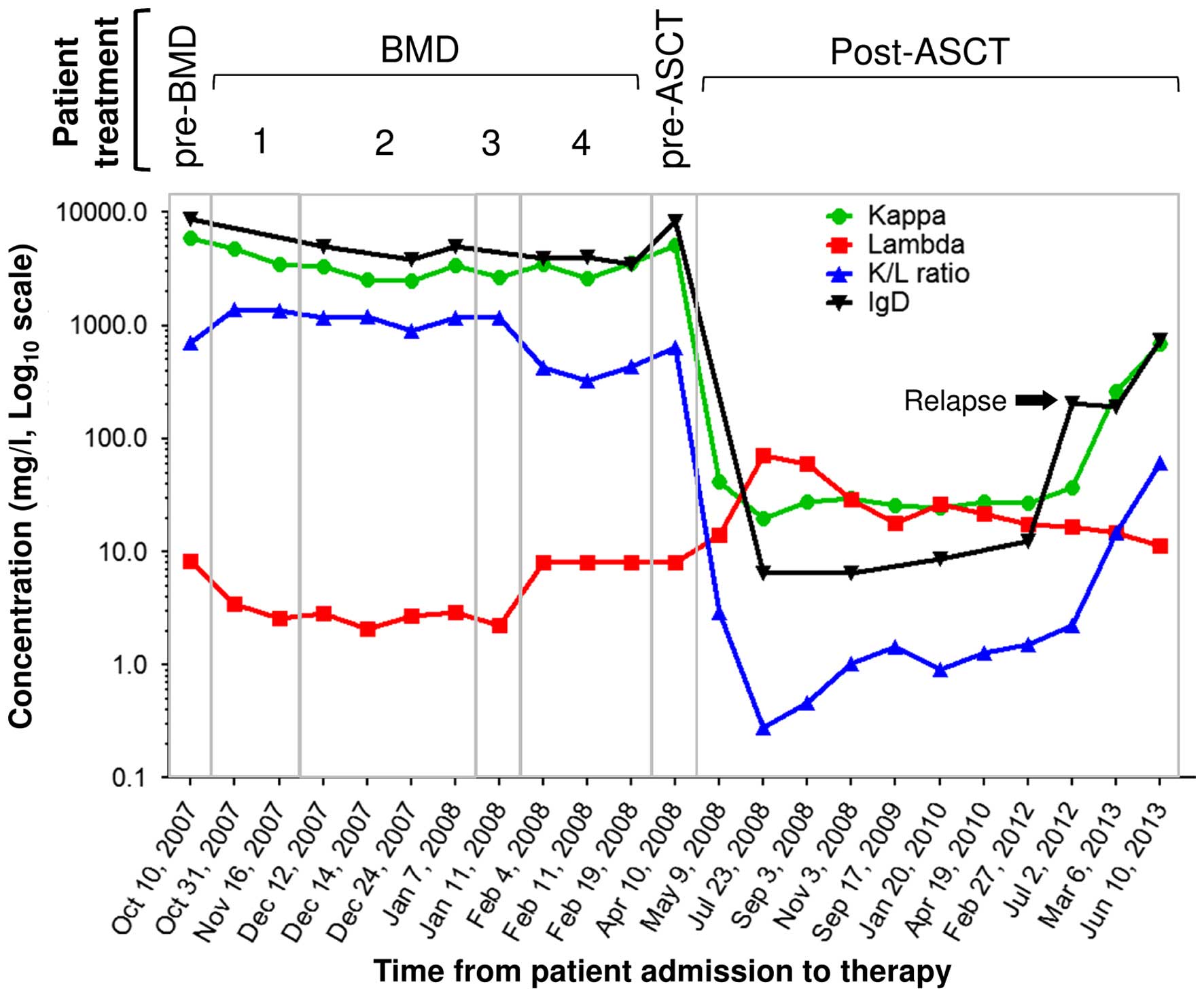
The patient was classified as ‘non responder’ to the different chemotherapeutic agents; however, the patient was selected for ASCT in April 10, 2008 (Fig. 2). Following ASCT, severe complications occurred, including pneumonia with Morganella morganii infection and then sepsis. Based on these observations, the hematological asset of the patient was re-evaluated upon ASCT, and bone barrow immunophenotyping revealed a 0.1% of PC population in the lymphocytes region. As displayed by post-ASCT flow cytometric analysis, the sFLC κ/λ ratio decreased, and no presence of neoplastic PCs was detected (Fig. 1A). In parallel, sIFE appeared without a monoclonal component, and the level of BJ protein was less pronounced overtime (Fig. 1B). Furthermore, these parameters were associated with a marked reduction in κ-sFLC (Fig. 3), suggesting that the patient was effectively responding to the treatment. However, osteolytic lesions were still present but did not progress overtime.

Figure 3.

Graphical representation of serum free light chains, κ/λ ratio and IgD during the overall monitoring phase of the IgD-κ multiple myeloma patient. The plot depicts all collected data in the course of the monitoring of the patient, from October 2007 to June 2013. The numbers of cycles of bortezomib, Myocet® and dexamethasone chemotherapy are indicated. The black arrow represents the initiation of the relapse phase. ASCT, autologous stem cell transplant; BMD, bortezomib, Myocet® and dexamethasone chemotherapy; Ig, immunoglobulin.

In November 2008, the patient was diagnosed with Guillain-Barré syndrome. Due to the several complications occurred during the course of this syndrome, the patient refused a second ASCT and other bone marrow aspirates. Therefore, the patient was regularly monitored with sFLC and total IgD measurements in order to assess the response to the first ASCT performed in April 2008 (Fig. 2), in addition to evaluation of other classical serological parameters, including β2 M, lactate dehydrogenase, Ca and hemoglobin). FLC/IgD parameters were also evaluated for the whole duration of post-ASCT and disease relapse (Fig. 2 and Table I).

In July 2012, after 4 years of ASCT, the levels of IgD first exhibited a substantial increase above the normal range (Fig. 3 and Table I), and 8 months later, in March 2013, the levels of κ-sFLC exhibited a further significant increase (Fig. 3). Due to this κ-sFLC increase, the presence of an IgD-κ MM was further confirmed by sIFE and urine IFE (Fig. 1B).

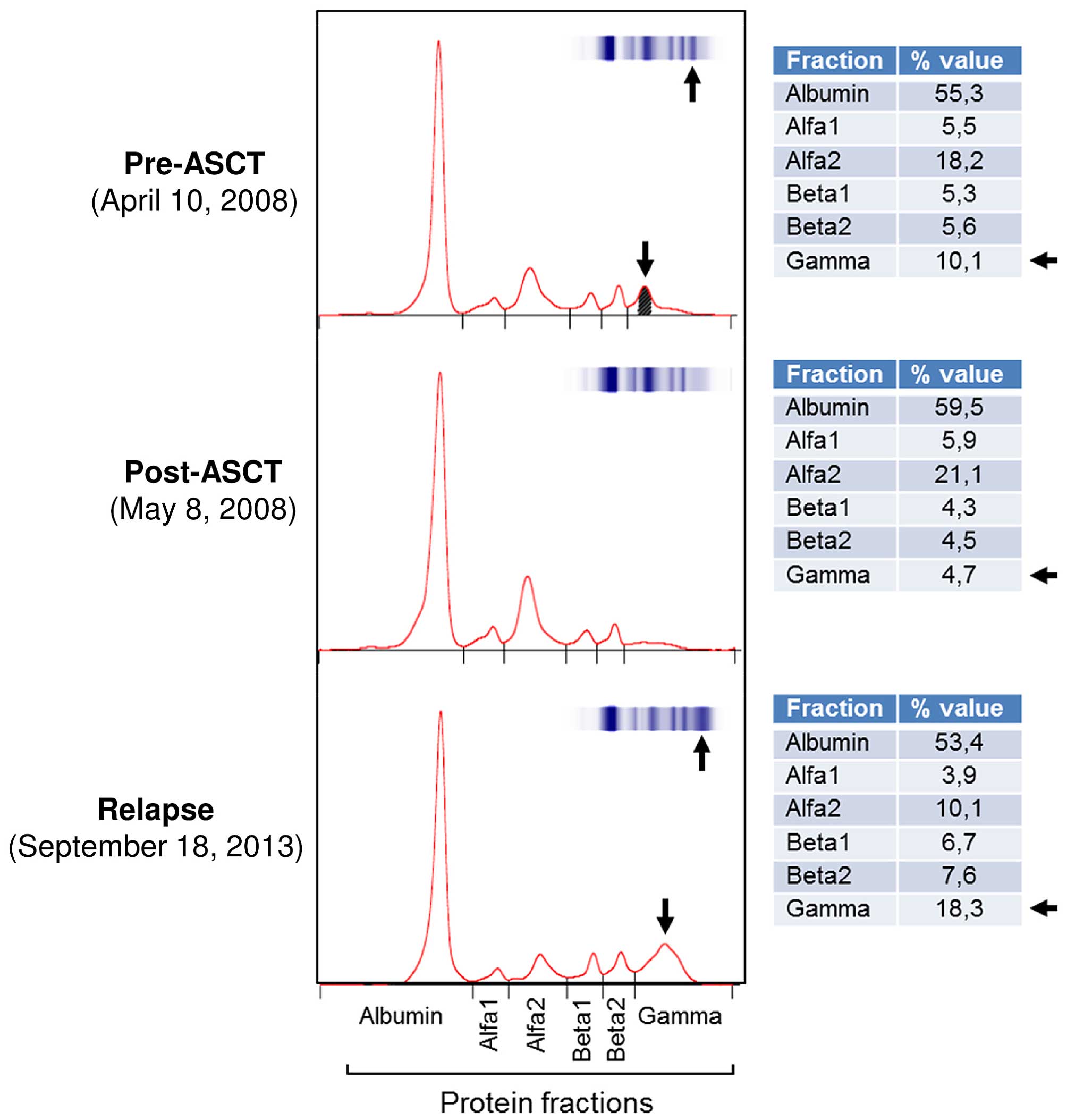
Accordingly, in view of a possible relapse, the patient agreed to undergo a bone marrow aspirate in March 2013, evidencing a PC population (4% of bone marrow cells) with the typical phenotypic hallmarks of CD38+ CD138+ CD28+ CD56+ CD117+ CD19− CD45− cells, including the presence of neoplastic PCs with κ light chains restriction, as indicated by the flow cytometric analysis performed at relapse (Fig. 1A). In addition, SPE was performed, which further supported the recurrence of a monoclonal peak inside the γ region. This recurrence was also confirmed by the percentage values of the γ regions from the SPE and IFE profiles (Fig. 4). Indeed, the high γ fraction value depicted in the pre-ASCT phase (10.1%, Fig. 4) reflects the values observed at relapse (18.3%, Fig. 4); there are similarly high values compared with post-ASCT (4.7%, Fig. 4).

Figure 4.

SPE profiles during the autologous stem cell transplant and relapse phases of the immunoglobulin D-κ disease. Serum samples were collected from the patient at the indicated timepoints and SPE was then perfomed in order to quantify the indicated protein fractions. The tables flanking each SPE panel present the percentage values of the indicated protein fractions. The black arrows depict the monoclonal component observed within the gamma region of the indicated serum SPE profiles and protein fraction tables. ASCT, autologous stem cell transplant; SPE, serum protein electrophoresis.

Upon another chemotherapy line, the patient underwent a second ASCT, and is currently monitored by measurement of sFLC and total heavy chain IgD.

Discussion

The present study reports the follow-up of a patient with IgD-κ MM that requires a careful approach and monitoring.

The patient refused bone marrow aspirate in various occasions, even under suspicion of relapse; thus, the patient had to be followed up by means of sFLC and total heavy chain IgD measurements for monitoring MRD. The sFLC values over the four BMD cycles were generally constant, indicating the unresponsiveness of the patient. Compared with pre-ASCT levels, the total IgD and light chain values displayed a post-ASCT decrease, including the FLC levels. This was further confirmed by the disappearance of the κ-sFLC in the post-ASCT IFE. In addition, the total heavy chain IgD and κ-sFLC values observed in July 2012 suggested a potential relapse of the disease, since a consequent relapse in March 2013 supported by the relative sIFE values was observed. These findings were also confirmed by the flow cytometric analysis performed at relapse, which demonstrated unbalanced expression levels of κ/λ chains, also displaying the presence of neoplastic PCs. Lastly, the SPE profiles of the patient appeared to be compatible with the overall diagnostic evaluation of the disease evolution, and provided further confirmation to the reliability of this unusual IgD-κ MM patient follow-up.

These data clearly suggest a coherent outcome of heavy chain and FLC levels alongside the diagnostic profile, and demonstrate its effectiveness as an early marker for diagnosis by monitoring the MRD and relapse of IgD-κ MM. Furthermore, in the present and peculiar case study, the availability of a rapid, quantitative and non-invasive test has been revealed of high significance in the monitoring of IgD-κ MM patients, particularly when bone marrow aspirate analysis is not available. In addition, evaluation of serum total heavy chain IgD could represent another useful clinical tool when employed in specialized centers where IgD MM cases could be better characterized and monitored (9,11). Finally, the present conclusions appears to be in line with the recent International Myeloma Working Group statements for MM patients that are not eligible for ASCT (12).

Acknowledgements

The authors are grateful to Dr Gaia Illuminati and Miss Marianna Attanasio (Clinical Pathology Unit, Italian National Cancer Institute ‘Regina Elena’) for their technical support on sample bio-banking and analytical procedures.

References

1 

Geng C, Liu N, Yang G, Liu A, Leng Y, Wang H, Li L, Wu Y, Li Y and Chen W: Retrospective analysis of 264 multiple myeloma patients. Oncol Lett. 5:707–713. 2013.PubMed/NCBI

2 

Raab MS, Podar K, Breitkreutz I, Richardson PG and Anderson KC: Multiple myeloma. Lancet. 374:324–339. 2009. View Article : Google Scholar : PubMed/NCBI

3 

Pandey S and Kyle RA: Unusual myelomas: A review of IgD and IgE variants. Oncology (Williston Park). 27:798–803. 2013.PubMed/NCBI

4 

Paiva B, Martinez-Lopez J, Vidriales MB, Mateos MV, Montalban MA, Fernandez-Redondo E, Alonso L, Oriol A, Teruel AI, de Paz R, et al: Comparison of immunofixation, serum free light chain and immunophenotyping for response evaluation and prognostication in multiple myeloma. J Clin Oncol. 29:1627–1633. 2011. View Article : Google Scholar : PubMed/NCBI

5 

Sinclair D: IgD myeloma: Clinical, biological and laboratory features. Clin Lab. 48:617–622. 2002.PubMed/NCBI

6 

Richardson PG, Laubach J, Paba-Prada C and Anderson KC: IgD and IgE variants of myeloma: Valuable insights and therapeutic opportunities. Oncology (Williston Park). 27:803–804. 2013.PubMed/NCBI

7 

Ferrero S, Drandi D, Mantoan B, Ghione P, Omede P and Ladetto M: Minimal residual disease detection in lymphoma and multiple myeloma: Impact on therapeutic paradigms. Hematol Oncol. 29:167–176. 2011. View Article : Google Scholar : PubMed/NCBI

8 

Ozaki S, Harada T, Saitoh T, Shimazaki C, Itagaki M, Asaoku H, Kuroda Y, Chou T, Yoshiki Y, Suzuki K, et al: Survival of multiple myeloma patients aged 65–70 years in the era of novel agents and autologous stem cell transplantation. A multicenter retrospective collaborative study of the japanese society of myeloma and the european myeloma network. Acta Haematol. 132:211–219. 2014. View Article : Google Scholar : PubMed/NCBI

9 

Pisani F, Petrucci MT, Giannarelli D, Bongarzoni V, Montanaro M, De Stefano V, La Verde G, Gentilini F, Levi A, Za T, et al: IgD multiple myeloma a descriptive report of 17 cases: Survival and response to therapy. J Exp Clin Cancer Res. 31:172012. View Article : Google Scholar : PubMed/NCBI

10 

Fu C, Wang J, Xin X, Liu H, Xue S, Ma X, Jin Z, Sun A, Qiu H and Wu D: Therapeutic effects of autologous hematopoietic stem cell transplantation in multiple myeloma patients. Exp Ther Med. 6:977–982. 2013.PubMed/NCBI

11 

Morabito F, Gentile M, Ciolli S, Petrucci MT, Galimberti S, Mele G, Casulli AF, Mannina D, Piro E, Pinotti G, et al: Safety and efficacy of bortezomib-based regimens for multiple myeloma patients with renal impairment: A retrospective study of Italian Myeloma Network GIMEMA. Eur J Haematol. 84:223–228. 2010. View Article : Google Scholar : PubMed/NCBI

12 

Palumbo A, Rajkumar SV, San Miguel JF, Larocca A, Niesvizky R, Morgan G, Landgren O, Hajek R, Einsele H, Anderson KC, et al: International Myeloma Working Group consensus statement for the management, treatment, and supportive care of patients with myeloma not eligible for standard autologous stem-cell transplantation. J Clin Oncol. 32:587–600. 2014. View Article : Google Scholar : PubMed/NCBI

Related Articles

  • Abstract
  • View
  • Download
  • Twitter
Copy and paste a formatted citation
Spandidos Publications style
De Santis E, Masi S, Cordone I, Pisani F, Zuppi C, Mattei F, Conti L and Cigliana G: Follow-up of IgD-κ multiple myeloma by monitoring free light chains and total heavy chain IgD: A case report. Oncol Lett 12: 1884-1888, 2016.
APA
De Santis, E., Masi, S., Cordone, I., Pisani, F., Zuppi, C., Mattei, F. ... Cigliana, G. (2016). Follow-up of IgD-κ multiple myeloma by monitoring free light chains and total heavy chain IgD: A case report. Oncology Letters, 12, 1884-1888. https://doi.org/10.3892/ol.2016.4869
MLA
De Santis, E., Masi, S., Cordone, I., Pisani, F., Zuppi, C., Mattei, F., Conti, L., Cigliana, G."Follow-up of IgD-κ multiple myeloma by monitoring free light chains and total heavy chain IgD: A case report". Oncology Letters 12.3 (2016): 1884-1888.
Chicago
De Santis, E., Masi, S., Cordone, I., Pisani, F., Zuppi, C., Mattei, F., Conti, L., Cigliana, G."Follow-up of IgD-κ multiple myeloma by monitoring free light chains and total heavy chain IgD: A case report". Oncology Letters 12, no. 3 (2016): 1884-1888. https://doi.org/10.3892/ol.2016.4869
Copy and paste a formatted citation
x
Spandidos Publications style
De Santis E, Masi S, Cordone I, Pisani F, Zuppi C, Mattei F, Conti L and Cigliana G: Follow-up of IgD-κ multiple myeloma by monitoring free light chains and total heavy chain IgD: A case report. Oncol Lett 12: 1884-1888, 2016.
APA
De Santis, E., Masi, S., Cordone, I., Pisani, F., Zuppi, C., Mattei, F. ... Cigliana, G. (2016). Follow-up of IgD-κ multiple myeloma by monitoring free light chains and total heavy chain IgD: A case report. Oncology Letters, 12, 1884-1888. https://doi.org/10.3892/ol.2016.4869
MLA
De Santis, E., Masi, S., Cordone, I., Pisani, F., Zuppi, C., Mattei, F., Conti, L., Cigliana, G."Follow-up of IgD-κ multiple myeloma by monitoring free light chains and total heavy chain IgD: A case report". Oncology Letters 12.3 (2016): 1884-1888.
Chicago
De Santis, E., Masi, S., Cordone, I., Pisani, F., Zuppi, C., Mattei, F., Conti, L., Cigliana, G."Follow-up of IgD-κ multiple myeloma by monitoring free light chains and total heavy chain IgD: A case report". Oncology Letters 12, no. 3 (2016): 1884-1888. https://doi.org/10.3892/ol.2016.4869
Follow us
  • Twitter
  • LinkedIn
  • Facebook
About
  • Spandidos Publications
  • Careers
  • Cookie Policy
  • Privacy Policy
How can we help?
  • Help
  • Live Chat
  • Contact
  • Email to our Support Team