Introduction
Lung cancer is a highly malignant disease and the
incidence is increasing annually (1).
With the enhancement and popularity of efforts aimed at educating
individuals about not smoking, this incidence rate of smoking has
shown a declining trend. According to the Centers for Disease
Control and Prevention statistics, there were ~172,570 new cases of
lung cancer in the United States in 2005, of which ~93,010 were men
and ~79,560 were women; for the two genders, the disease was ranked
in second place among all the newly added tumor diseases (prostate
cancer was ranked first for men and breast cancer for women)
(2). At that time, among all
cancer-related mortality cases in the United States, men with lung
cancer accounted for 31% of cases and women for 27%. At present,
the annual number of newly diagnosed lung cancer cases has reached
210,000. However, the incidence rate of male lung cancer in the
United States has declined for the first time, with the female
incidence unchanged. In addition to a reduction in the overall
incidence of lung cancer, the proportion of small cell lung cancer
(SCLC) has decreased by 13–20% (3).
The occurrence and development of SCLC involves many
factors, including environmental microbiology and inflammation,
accompanied by the participation of the immune response and the
disorder of ultimate immune surveillance mechanisms. Cluster of
differentiation (CD)4+ regulatory T cells are a class of
T-cell subsets with immune function, closely associated with the
tumor immune escape process (4). In
recent years, it has generally been considered that transcription
factor forkhead box P3 (Foxp3) is a characteristic sign of
CD4+ regulatory T cells and is a key transcription
factor for obtaining immunomodulatory properties (5). Foxp3 transforms primary CD4+
T cells into CD4+ regulatory T cells, and the normal
expression of the gene is built around the premise that
CD4+ regulatory T cells play a role (6). The Janus kinase 2/signal transducer and
activator of transcription 4 (JAK2/STAT4) signaling pathway is
activated continuously and abnormally activated in a variety of
tumor tissues and cell lines, which promotes tumor growth,
invasion, angiogenesis and metastasis (1). Increased activation of the the
JAK2/STAT4 signaling pathway has been demonstrated in a variety of
tumors, including stomach and liver cancer (2).
STAT4 is the direct substrate of JAKs, which
transmits signals directly to the nucleus to regulate the
expression of specific genes (2).
STAT4 is closely associated with tumor formation and development
(3). The STAT4 protein consists of
~770 amino acids and is involved in cell growth, development, cell
division and differentiation (3). The
JAK2/STAT4 signaling pathway is important for cytokine signal
transmission following the activation of Ras, which exhibits an
important function in the regulation of various pathological and
physiological processes, including cell proliferation,
differentiation, apoptosis, immune regulation and inflammation
(4).
Cryptotanshinone is a diterpene quinone compound,
separated and extracted from the dried roots and rhizomes of all
Salvia plants (Labiatae family) (7). The total tanshinone extract, with
cryptotanshinone and tanshinone IIA as the main components, not
only has pharmacological cardiovascular (8), anti-oxidation (9), anti-bacteria (10) and anti-inflammation (7) effects, but also has significant
antitumor effects (11). However, to
the best of our knowledge, there have been no published studies
regarding the inhibition of lung tumor cell growth by
cryptotanshinone through regulation of the immune system. Thus, the
present study investigated whether the anticancer effect of
cryptotanshinone inhibits the tumor growth of human SCLC H446 cells
by affecting CD4+ T cell cytotoxicity through activation
of the JAK2/STAT4 pathway.
Materials and methods
Materials
Cell Counting kit 8 (CCK-8), anti-interferon (IFN)-γ
and concanamycin A (CMA) were purchased from Sigma-Aldrich (St.
Louis, MO, USA). Dulbecco's modified Eagle's medium (DMEM) and
fetal bovine serum (FBS) were purchased from Thermo Fisher
Scientific Inc. (Waltham, MA, USA). The Enhanced Bicinchoninic
(BCA) Acid Protein assay kit was purchased from KeyGen Biotech Co.,
Ltd. (Nanjing, China).
Cell culture and cell
proliferation
Human SCLC H446 cells and splenocytes of wild-type
(WT) C57BL/J6 mice were obtained from the Center for Animal
Experiments of Wuhan University (Wuhan, Hubei, China). The H446
cells were maintained in DMEM supplemented with 10% FBS in a
humidified atmosphere of 5% CO2 at 37°C. CD4+
T cells were freshly isolated from WT mice and then seeded at
1×10⁴ cells/ml (CD4+ T cells/splenocytes/H446
cells) into a 96-well plate, and treated with 5, 10 or 20 µM of
cryptotanshinone (purity, >90%; Sigma-Aldrich) for 24, 48 or 72
h. CCK-8 solution (10 µl) was added to the cells, which were
incubated for 4 h in a humidified atmosphere of 5% CO2
at 37°C; the optical density at 450nm was detected after 4 h using
a microplate reader (SpectraMax M2; Molecular Devices, Sunnyvale,
CA, USA).
In vitro cytotoxicity assay
CD4+/CD8+ T cells were
acquired from the splenocytes of untreated tumor-bearing C57BL/J6
mice and H446 cells were prepared at 1×10⁴ cells/ml,
with effector-target ratios from 1:1 to 50:1. Cell solution (~100
µl) was seeded into a 96-well plate and incubated for 48 h in a
humidified atmosphere of 5% CO2 at 37°C. Next, cells
were assigned randomly into four groups: i) CD4+ T cell
group (CD4+; n=6), CD4+ T cells were treated
with complete medium for 48 h; ii) CD4+ T cell +
cryptotanshinone group (CD4++ Cry; n=6), CD4+
T cells were treated with cryptotanshinone (10 µM) for 48 h; iii)
CD8+ T cell group (CD8+; n=6),
CD8+ T cells was treated with complete medium for 48 h;
and iv) CD8+ T cell + cryptotanshinone group
(CD8+ + Cry; n=6), CD8+ T cells were treated
with cryptotanshinone (10 µM) for 48 h. Meanwhile,
1×10⁴−5×10⁵ cells/ml cells were assigned
randomly into four groups: i) CD4+ T cell group
(CD4+; n=6), CD4+ T cells were treated with
complete medium for 48 h; ii) CD4+ T cell
+cryptotanshinone group (CD4+ + Cry; n=6),
CD4+ T cells were treated with cryptotanshinone (10 µM)
for 48 h; iii) CD4+ T cell + cryptotanshinone +
anti-IFN-γ group (CD4+ + Cry + IFN-γ; n=6),
CD4+ T cells were treated with cryptotanshinone (10 µM)
and anti-IFN-γ (5 µg/ml) for 48 h; and iv) CD4+ T cell +
cryptotanshinone + CMA group (CD4++ Cry + CMA; n=6),
CD4+ T cells were treated with cryptotanshinone (10 µM)
and CMA (50 ng/ml) for 48 h. Cell cytotoxicity was detected by
lactate dehydrogenase assay (Beyotime Institute of Biotechnology,
Haimen, China) according to the manufacturer's protocols. Optical
density was read at 490 nm after 1 h. Percentage of cells killed
was calculated using the following formula: Cytotoxicity (%) =
(test sample – low control) / (high control – low control) ×
100.
Western blot analysis
CD4+ T cells were acquired from
splenocytes of untreated tumor-bearing mice and H446 cells were
prepared at 1×10⁴ cells/ml, with effector-target ratios
from 1:1 to 50:1. Cell solution (~0.5 ml) was seeded into 6-well
plates and incubated for 48 h in a humidified atmosphere of 5%
CO2 at 37°C. Next, 1×10⁴−5×10⁵
cells/ml were assigned randomly into two groups: i) CD4+
T cell group (CD4+; n=6), CD4+ T cells were
treated with complete medium for 48 h; and ii) CD4+ T
cell + cryptotanshinone group (CD4+ + Cry; n=6),
CD4+ T cells were treated with cryptotanshinone (10 µM)
for 48 h. All cells were washed with cold phosphate-buffered saline
(PBS) and incubated with ice-cold lysis buffer for 30 min on ice.
Lysates were centrifuged at 14,000 rpm (12,000 × g) for 10
min at 4°C. Protein concentration was determined using the Enhanced
BCA Protein assay kit (KeyGen Biotech Co., Ltd.). An equivalent
amount of protein was separated on 12% sodium dodecyl
sulfate-polyacrylamide gels and transferred onto polyvinylidene
difluoride membranes (Bio-Rad Laboratories Ltd., Hemel Hempstead,
UK). Membranes were incubated with PBS containing 0.5% skimmed dry
milk to block non-specific binding. Next, the membranes were
incubated with polyclonal rabbit anti-mouse JAK2 (1:1,000;
#sc-294), polyclonal rabbit anti-human phosphorylated (p)-JAK2
(1:1,000; #sc-16566-R), polyclonal rabbit anti-mouse STAT4
(1:1,000; #sc-486), polyclonal rabbit anti-mouse p-STAT4 (1:1,000;
#sc-22160-R) and monoclonal mouse anti-human β-actin (1:1,000;
#sc-47778) (all Santa Cruz Biotechnology Inc., Dallas, TX, USA)
antibodies overnight at 4°C. The membranes were washed twice with
Tris-buffered saline plus Tween 20 for 2 h at room temperature, and
then incubated with horseradish peroxidase-conjugated sheep
anti-mouse immunoglobulin G (1:1,000; Santa Cruz Biotechnology
Inc.) for 2 h at room temperature. Immunoreactive bands were
visualized using Pierce Enhanced Chemiluminescence Western Blotting
Substrate (Thermo Fisher Scientific Inc.).
Statistical analysis
Statistical analyses were performed using the SPSS
16.0 software (SPSS Inc., Chicago, IL, USA). Data are presented as
the mean ± standard deviation. Differences between the control and
experimental groups were analyzed by analysis of variance followed
by Tukey's range test. P<0.05 was used to indicate a
statistically significant difference.
Results
Cryptotanshinone inhibits tumor growth
of H446 cells in vivo
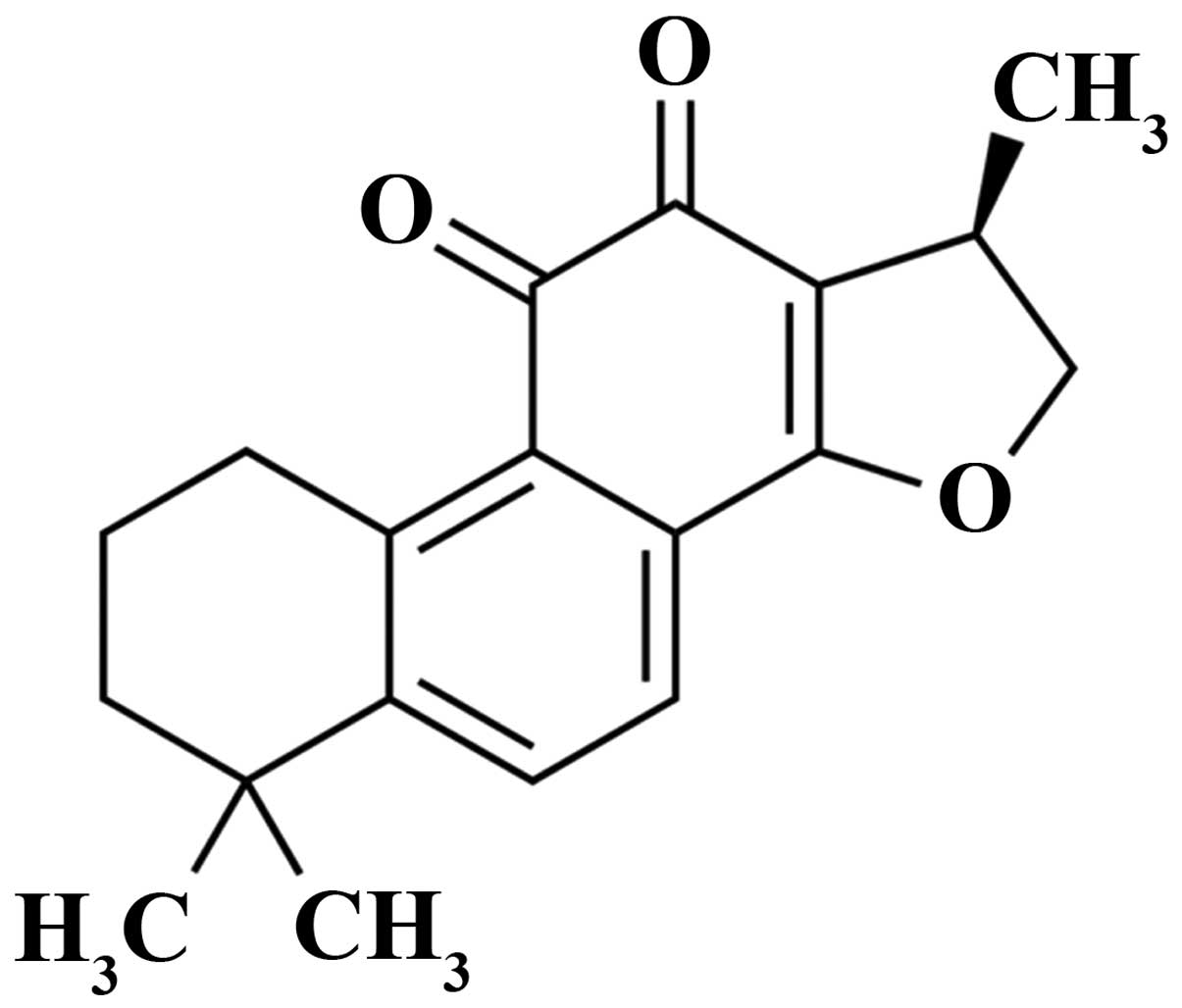
The chemical structure of cryptotanshinone is
indicated in Fig. 1. In order to
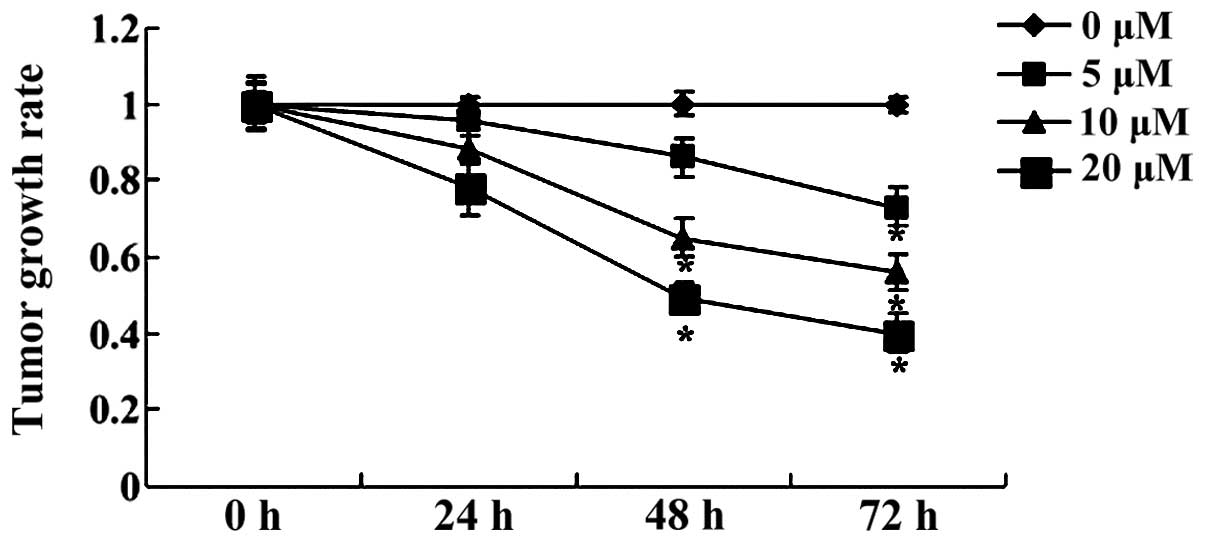
investigate the anticancer effect of cryptotanshinone in the H446
cells, different concentrations (5, 10 and 20 µM) of
cryptotanshinone were used to treat the H446 cells for 0, 24, 48
and 72 h. As shown in Fig. 2,
treatment with cryptotanshinone significantly inhibited the growth
of the H446 cells in a concentration– and time-dependent manner.
Considering that after 48 h cryptotanshinone inhibited H446 cell
growth by 40% at 10 µM (P<0.05), this was chosen as the
experimental concentration.
Cryptotanshinone inhibits
CD4+ T cell proliferation
In order to probe the anticancer effect of
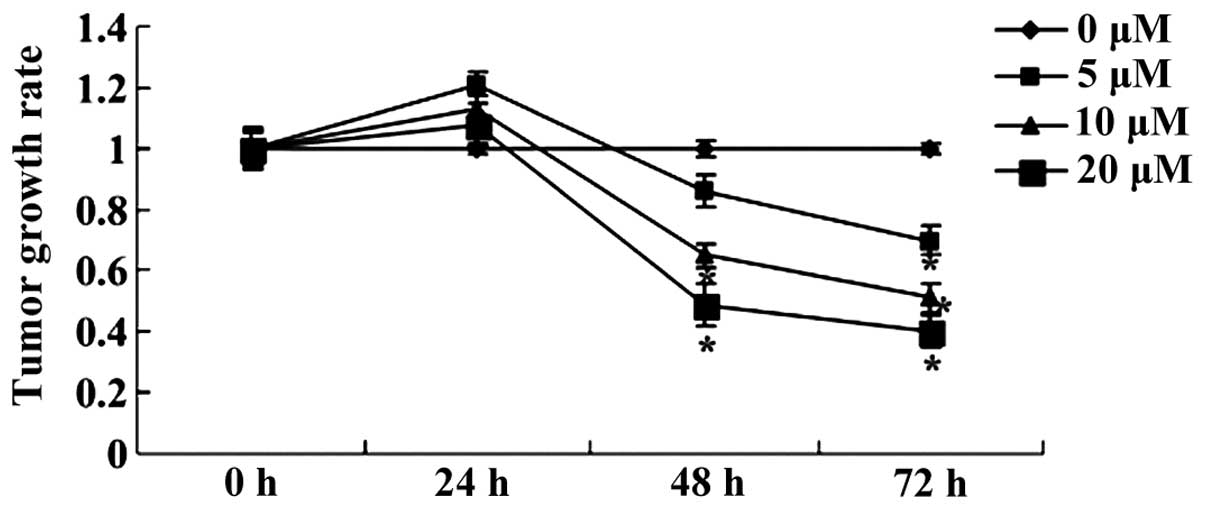
cryptotanshinone in the CD4+ T cells, different
concentrations (5, 10 and 20 µM) of cryptotanshinone were used to
treat the CD4+ T cells for 0, 24, 48 and 72 h. As shown
in Fig. 3, treatment with
cryptotanshinone significantly suppressed the growth of the
CD4+ T cells in a concentration– and time-dependent
manner. Considering that after 48 h cryptotanshinone inhibited
CD4+ T cell growth by 40% at 10 µM (P<0.05), this was
chosen as the experimental concentration.
Cryptotanshinone exploits cytotoxicity
in CD4+/CD8+ T cells
To expound the anticancer effect of cryptotanshinone
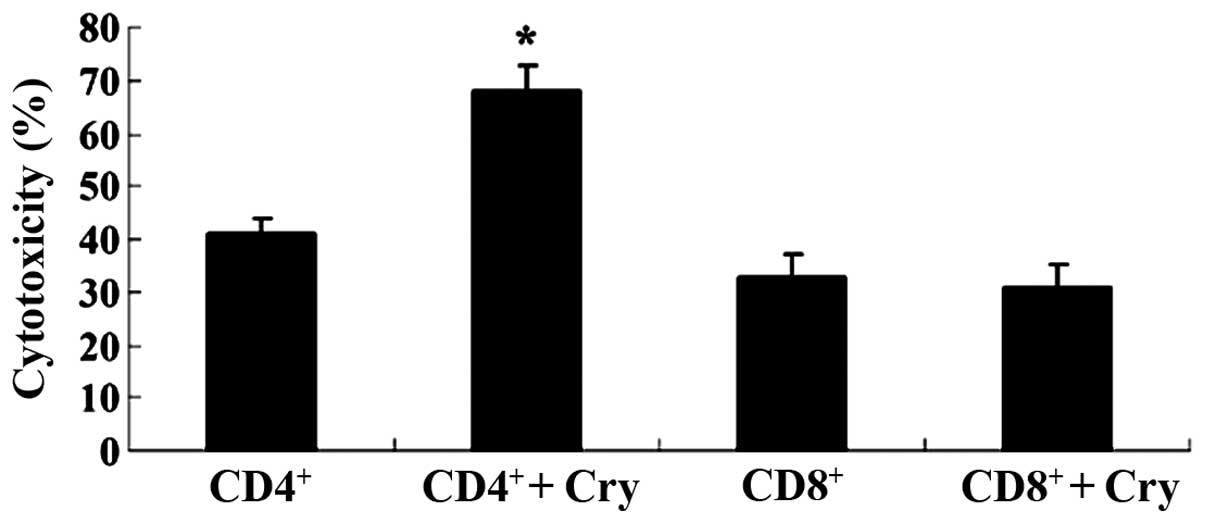
on the cytotoxic CD4+ T/CD8+ T cells, a 10-µM
concentration of cryptotanshinone was used to treat the
CD4+/CD8+ T cells for 48 h. As shown in
Fig. 4, treatment with
cryptotanshinone significantly increased the cytotoxicity of the
CD4+ T cells (P<0.05). However, cryptotanshinone
could not affect the cytotoxicity of the CD8+ T cells
(P>0.05; Fig. 4).
Cryptotanshinone exploits cytotoxicity
in CD4+ T cells
To analyze the anticancer effect of cryptotanshinone
in the cytotoxic CD4+ T cells, a 10-µM concentration of
cryptotanshinone was used to treat the CD4+ T cells for
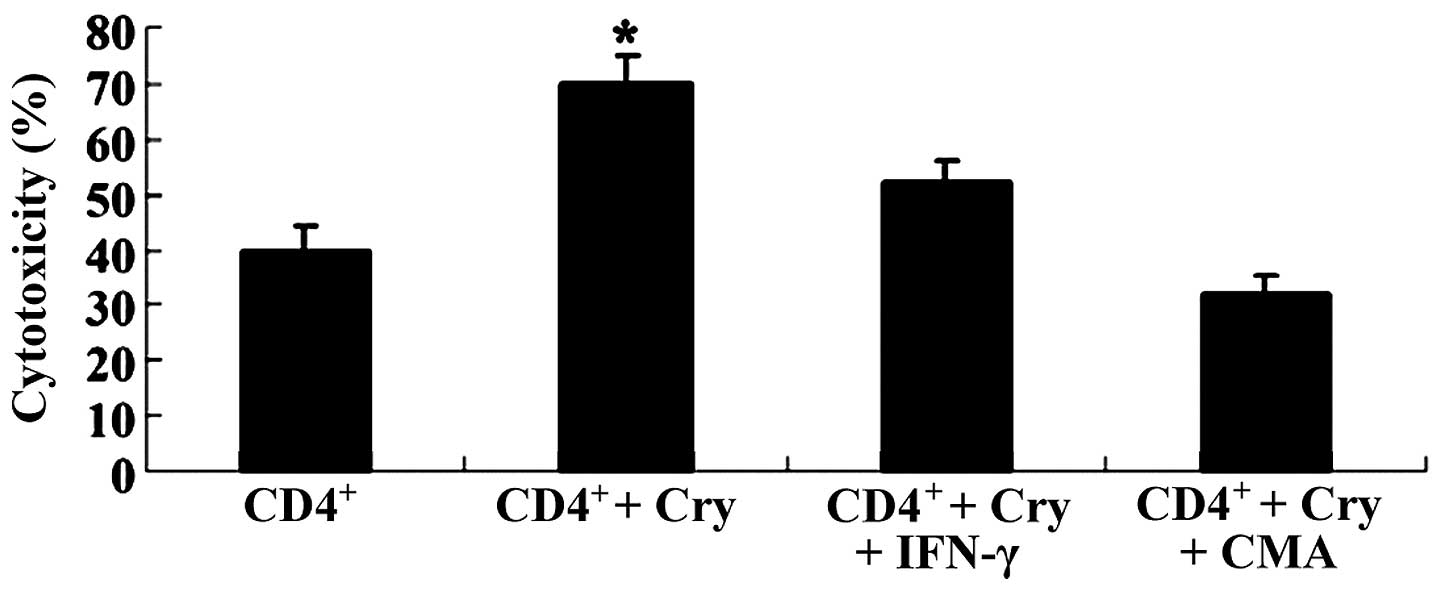
48 h. As shown in Fig. 5, treatment
with cryptotanshinone significantly increased the cytotoxicity of
the CD4+ T cells (P<0.05). However, the cytotoxicity
of the CD4+ + Cry + IFN-γ and CD4+ + Cry +
CMA groups were inhibited when compared with the CD4+ +
Cry group.
Cryptotanshinone induces p-JAK2
protein expression in CD4+ T cells
To elucidate the anticancer effect of
cryptotanshinone on the p-JAK2 protein expression of
CD4+ T cells, a 10-µM concentration of cryptotanshinone
was used to treat the CD4+ T cells for 48 h.
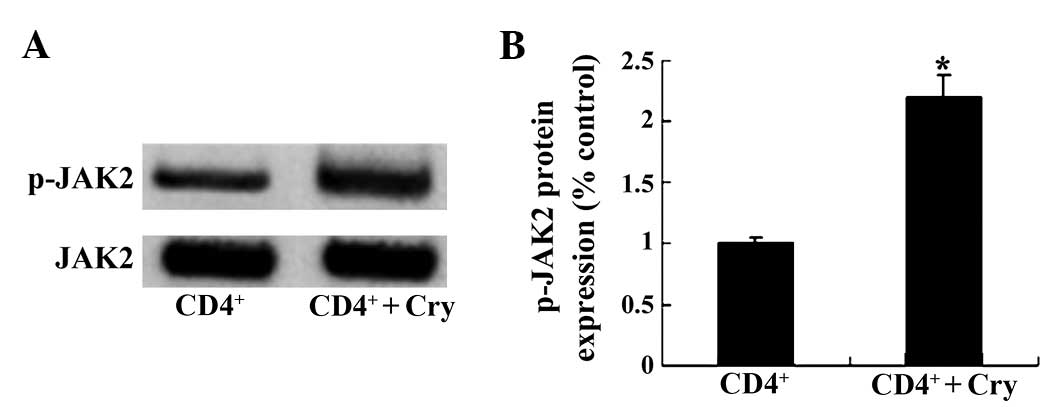
Administration of cryptotanshinone significantly increased the
p-JAK2 protein expression of the CD4+ T cells
(P<0.05; Fig. 6).
Cryptotanshinone induces p-STAT4
protein expression in CD4+ T cells
To elucidate the anticancer effect of
cryptotanshinone on the p-STAT4 protein expression of the
CD4+ T cells, a 10-µM concentration of cryptotanshinone
was used to treat the CD4+ T cells for 48 h.
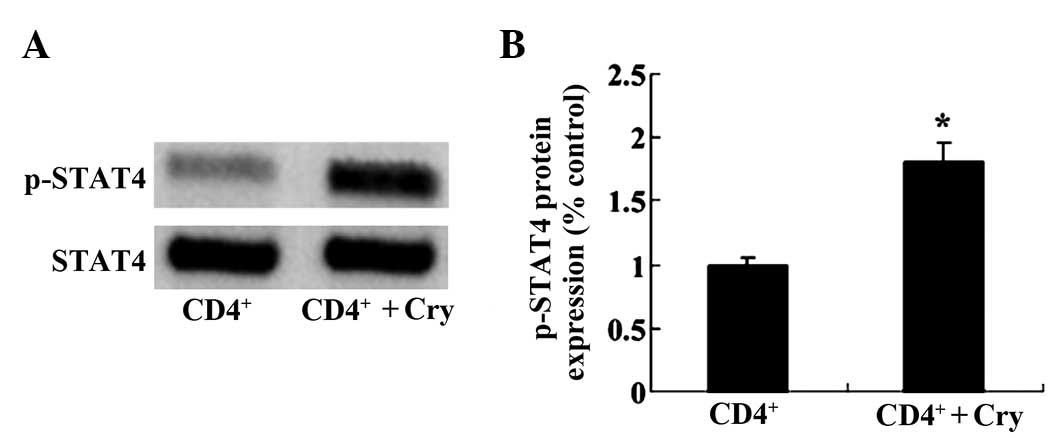
Administration of cryptotanshinone significantly induced the
p-STAT4 protein expression of the CD4+ T cells
(P<0.05; Fig. 7).
Discussion
SCLC grows rapidly and is extremely aggressive, and
if the disease is not treated effectively in time, the patient will
succumb within a few months (12).
SCLC has the features of a high growth score and short doubling
time, often with distant metastases at the diagnosis of the
disease. SCLC tumor cells are sensitive to chemotherapy and
radiotherapy (13), but decades of
clinical trials have shown no effective way to completely cure
SCLC, and the majority of patients will relapse or develop
metastases following first-line therapy (14). Therefore, it is difficult to achieve
long-term survival for patients with SCLC (15). In the present study, cryptotanshinone
was found to significantly reduce the cell growth of H446 cells and
the cell proliferation of CD4+ T in a concentration– and
time-dependent manner. Li et al confirmed that
cryptotanshinone suppressed the cell growth of breast cancer
(16), mucoepidermoid carcinoma
(17) and hepatoma (18).
For SCLC patients with lymph node metastasis, the
positive degree of Foxp3 expressed in the lymphocytes is
significantly higher than that of the non-metastatic lymph nodes
(19). This may be since tumor growth
promotes the proliferation and differentiation of CD4+
regulatory T cells in the lymph nodes, while at the same time,
increased regulatory T cells enhance the immunosuppressive effects,
thus inhibiting the killing effect of various immune cells within
the lymph nodes, thus contributing to the invasion of tumor cells
(20). In the process of tumor
immunity, tumor antigens can be recognized and eliminated by the
immune system in the body, conferring an important protective
effect on the human body (19).
Regulatory T cells can inhibit the maturation and
antigen-presenting ability of dendritic cells by inhibiting the
proliferation of CD4+ T cells and other effector T
cells, and can inhibit the antitumor immune response of the body by
participation in interactions with various cytokines, thereby
promoting the growth and invasion of tumor cells (21,22). In
the present study, treatment with cryptotanshinone significantly
increased the cytotoxicity of the CD4+ T cells, but did
not affect the cytotoxicity of the CD8+ T cells. Zhou
et al suggested that cryptotanshinone inhibited breast tumor
growth by increasing the cytotoxicity of CD4+ T cells
through activation of the JAK2/STAT4/perforin pathway (23).
JAK/STAT is a novel signal transduction pathway
within cells, which is composed of JAK protein family (JAK1, JAK2,
JAK3 and tyrosine kinase 2) and STAT protein family (STAT1, STAT2,
STAT3, STAT4, STAT5a, STAT5b and STAT6) components (24). A number of cytokines [including IFN,
interleukin (IL)-2, IL-4, IL-6 and ciliary neurotrophic factor] and
growth factors (including epidermal growth factor, platelet-derived
growth factor and colony-stimulating factor) induce cell
proliferation, differentiation or apoptosis using the signal
transduction pathway (25,26). These molecules have specificity and
pleiotropic biological functions in the regulation of immune
function, blood cell production, tumorigenesis, and nerve and
embryonic development (27). The
present study showed that cryptotanshinone significantly promoted
p-JAK2 and p-STAT4 protein expression in the CD4+ T
cells. Jung et al reported that cryptotanshinone induced
apoptosis of chronic myeloid leukemia K562 cells via JAK/STAT3/5
signaling (28). Shin et al
suggested that cryptotanshinone suppressed JAK2 phosphorylation and
STAT3 phosphorylation in prostate cancer DU145 cells (29).
In conclusion, the current study showed that
cryptotanshinone inhibited the tumor growth of H446 cells and
CD4+ T cell proliferation, and that it increased the
cytotoxicity of CD4+ T cells through activation of the
JAK2/STAT4 pathway. These findings will be important in further
understanding the anticancer effect of cryptotanshinone on lung
cancer by immunotherapy.
References
|
1
|
Perera Y, Toro ND, Gorovaya L,
Fernandez-DE-Cossio J, Farina HG and Perea SE: Synergistic
interactions of the anti-casein kinase 2 CIGB-300 peptide and
chemotherapeutic agents in lung and cervical preclinical cancer
models. Mol Clin Oncol. 2:935–944. 2014.PubMed/NCBI
|
|
2
|
Huang Y, Li W, Wang CC, Wu X and Zheng J:
Cryptotanshinone reverses ovarian insulin resistance in mice
through activation of insulin signaling and the regulation of
glucose transporters and hormone synthesizing enzymes. Fertil
Steril. 102:589–596.e4. 2014. View Article : Google Scholar : PubMed/NCBI
|
|
3
|
Makris N, Edgren M, Mavroidis P and Lind
BK: Investigation of the dose- and time-dependence of the induction
of different types of cell death in a small cell lung cancer cell
line: Implementation of the repairable-conditionally repairable
model. Int J Oncol. 42:2019–2027. 2013.PubMed/NCBI
|
|
4
|
Wang F, Xu J, Zhu Q, Qin X, Cao Y, Lou J,
Xu Y, Ke X, Li Q, Xie E, et al: Downregulation of IFNG in CD4(+) T
cells in lung cancer through hypermethylation: A possible mechanism
of tumor-induced immunosuppression. PLoS One. 8:e790642013.
View Article : Google Scholar : PubMed/NCBI
|
|
5
|
Wang YY, He XY, Cai YY, Wang ZJ and Lu SH:
The variation of CD4+CD25+ regulatory T cells in the periphery
blood and tumor microenvironment of non-small cell lung cancer
patients and the downregulation effects induced by CpG ODN. Target
Oncol. 6:147–154. 2011. View Article : Google Scholar : PubMed/NCBI
|
|
6
|
Wang W, Hodkinson P, McLaren F, MacKinnon
A, Wallace W, Howie S and Sethi T: Small cell lung cancer tumour
cells induce regulatory T lymphocytes and patient survival
correlates negatively with FOXP3+ cells in tumour infiltrate. Int J
Cancer. 131:E928–E937. 2012. View Article : Google Scholar : PubMed/NCBI
|
|
7
|
Yin HQ, Choi YJ, Kim YC, Sohn DH, Ryu SY
and Lee BH: Salvia miltiorrhiza Bunge and its active component
cryptotanshinone protects primary cultured rat hepatocytes from
acute ethanol-induced cytotoxicity and fatty infiltration. Food
Chem Toxicol. 47:98–103. 2009. View Article : Google Scholar : PubMed/NCBI
|
|
8
|
Pan Y, Bi HC, Zhong GP, Chen X, Zuo Z,
Zhao LZ, Gu LQ, Liu PQ, Huang ZY, Zhou SF and Huang M:
Pharmacokinetic characterization of
hydroxylpropyl-beta-cyclodextrin-included complex of
cryptotanshinone, an investigational cardiovascular drug purified
from Danshen (Salvia miltiorrhiza). Xenobiotica. 38:382–398. 2008.
View Article : Google Scholar : PubMed/NCBI
|
|
9
|
Dai H, Wang M, Li X, Wang L, Li Y and Xue
M: Structural elucidation of in vitro and in vivo metabolites of
cryptotanshinone by HPLC-DAD-ESI-MS(n). J Pharm Biomed Anal.
48:885–896. 2008. View Article : Google Scholar : PubMed/NCBI
|
|
10
|
Cha JD, Lee JH, Choi KM, Choi SM and Park
JH: Synergistic effect between cryptotanshinone and antibiotics
against clinic methicillin and vancomycin-resistant staphylococcus
aureus. Evid Based Complement Alternat Med. 2014:4505722014.
View Article : Google Scholar : PubMed/NCBI
|
|
11
|
Tang Y, Chen Y, Chu Z, Yan B and Xu L:
Protective effect of cryptotanshinone on lipopolysaccharide-induced
acute lung injury in mice. Eur J Pharmacol. 723:494–500. 2014.
View Article : Google Scholar : PubMed/NCBI
|
|
12
|
Siemianowicz K, Gminski J, Stajszczyk M,
Wojakowski W, Goss M, Machalski M, Telega A, Brulinski K and
Magiera-Molendowska H: Serum HDL cholesterol concentration in
patients with squamous cell and small cell lung cancer. Int J Mol
Med. 6:307–311. 2000.PubMed/NCBI
|
|
13
|
Williams M, Liu ZW, Hunter A and Macbeth
F: An updated systematic review of lung chemo-radiotherapy using a
new evidence aggregation method. Lung Cancer. 87:290–295. 2015.
View Article : Google Scholar : PubMed/NCBI
|
|
14
|
Cui X, Jin T, Wang X, Jin G, Li Z and Lin
L: NAD(P)H: Quinone oxidoreductase-1 overexpression predicts poor
prognosis in small cell lung cancer. Oncol Rep. 32:2589–2595.
2014.PubMed/NCBI
|
|
15
|
Huang B, Gao Y, Tian D and Zheng M: A
small interfering ABCE1-targeting RNA inhibits the proliferation
and invasiveness of small cell lung cancer. Int J Mol Med.
25:687–693. 2010.PubMed/NCBI
|
|
16
|
Li S, Wang H, Hong L, Liu W, Huang F, Wang
J, Wang P, Zhang X and Zhou J: Cryptotanshinone inhibits breast
cancer cell growth by suppressing estrogen receptor signaling.
Cancer Biol Ther. 16:176–184. 2015. View Article : Google Scholar : PubMed/NCBI
|
|
17
|
Yu HJ, Park C, Kim SJ, Cho NP and Cho SD:
Signal transducer and activators of transcription 3 regulates
cryptotanshinone-induced apoptosis in human mucoepidermoid
carcinoma cells. Pharmacogn Mag. 10(Suppl 3): S622–S629.
2014.PubMed/NCBI
|
|
18
|
Park IJ, Yang WK, Nam SH, Hong J, Yang KR,
Kim J, Kim SS, Choe W, Kang I and Ha J: Cryptotanshinone induces G1
cell cycle arrest and autophagic cell death by activating the
AMP-activated protein kinase signal pathway in HepG2 hepatoma.
Apoptosis. 19:615–628. 2014. View Article : Google Scholar : PubMed/NCBI
|
|
19
|
Zikos TA, Donnenberg AD, Landreneau RJ,
Luketich JD and Donnenberg VS: Lung T-cell subset composition at
the time of surgical resection is a prognostic indicator in
non-small cell lung cancer. Cancer Immunol Immunother. 60:819–827.
2011. View Article : Google Scholar : PubMed/NCBI
|
|
20
|
Que Z, Zou F, Zhang A, Zheng Y, Bi L,
Zhong J, Tian J and Liu J: Ganoderic acid Me induces the apoptosis
of competent T cells and increases the proportion of Treg cells
through enhancing the expression and activation of indoleamine
2,3-dioxygenase in mouse lewis lung cancer cells. Int
Immunopharmacol. 23:192–204. 2014. View Article : Google Scholar : PubMed/NCBI
|
|
21
|
Pircher A, Gamerith G, Amann A, Reinold S,
Popper H, Gächter A, Pall G, Wöll E, Jamnig H, Gastl G, et al:
Neoadjuvant chemo-immunotherapy modifies CD4(+)CD25(+) regulatory T
cells (Treg) in non-small cell lung cancer (NSCLC) patients. Lung
Cancer. 85:81–87. 2014. View Article : Google Scholar : PubMed/NCBI
|
|
22
|
Grzesk E, Koltan S, Debski R, Wysocki M,
Gruszka M, Kubicka M, Kołtan A, Grześk G, Manysiak S and
Odrowąż-Sypniewska G: Concentrations of IL-15, IL-18, IFN-γ and
activity of CD4, CD8 and NK cells at admission in children with
viral bronchiolitis. Exp Ther Med. 1:873–877. 2010.PubMed/NCBI
|
|
23
|
Zhou J, Xu XZ, Hu YR, Hu AR, Zhu CL and
Gao GS: Cryptotanshinone induces inhibition of breast tumor growth
by cytotoxic CD4+ T cells through the
JAK2/STAT4/perforin pathway. Asian Pac J Cancer Prev. 15:2439–2445.
2014. View Article : Google Scholar : PubMed/NCBI
|
|
24
|
Hu Y, Hong Y, Xu Y, Liu P, Guo DH and Chen
Y: Inhibition of the JAK/STAT pathway with ruxolitinib overcomes
cisplatin resistance in non-small-cell lung cancer NSCLC.
Apoptosis. 19:1627–1636. 2014. View Article : Google Scholar : PubMed/NCBI
|
|
25
|
Gurbuz V, Konac E, Varol N, Yilmaz A,
Gurocak S, Menevse S and Sozen S: Effects of AG490 and S3I-201 on
regulation of the JAK/STAT3 signaling pathway in relation to
angiogenesis in TRAIL-resistant prostate cancer cells in vitro.
Oncol Lett. 7:755–763. 2014.PubMed/NCBI
|
|
26
|
Jo SK, Hong JY, Park HJ and Lee SK:
Anticancer activity of novel Daphnane Diterpenoids from Daphne
genkwa through cell-cycle arrest and suppression of Akt/STAT/Src
signalings in human lung cancer cells. Biomol Ther (Seoul).
20:513–519. 2012. View Article : Google Scholar : PubMed/NCBI
|
|
27
|
Sun W, Ma Y, Chen P and Wang D:
MicroRNA-10a silencing reverses cisplatin resistance in the
A549/cisplatin human lung cancer cell line via the transforming
growth factor-β/Smad2/STAT3/STAT5 pathway. Mol Med Rep.
11:3854–3859. 2015.PubMed/NCBI
|
|
28
|
Jung JH, Kwon TR, Jeong SJ, Kim EO, Sohn
EJ, Yun M and Kim SH: Apoptosis induced by tanshinone IIa and
cryptotanshinone is mediated by distinct JAK/STAT3/5 and SHP1/2
signaling in chronic myeloid leukemia K562 cells. Evid Based
Complement Alternat Med. 2013:8056392013. View Article : Google Scholar : PubMed/NCBI
|
|
29
|
Shin DS, Kim HN, Shin KD, Yoon YJ, Kim SJ,
Han DC and Kwon BM: Cryptotanshinone inhibits constitutive signal
transducer and activator of transcription 3 function through
blocking the dimerization in DU145 prostate cancer cells. Cancer
Res. 69:193–202. 2009. View Article : Google Scholar : PubMed/NCBI
|