Spandidos Publications Logo
  • About
    • About Spandidos
    • Aims and Scopes
    • Abstracting and Indexing
    • Editorial Policies
    • Reprints and Permissions
    • Job Opportunities
    • Terms and Conditions
    • Contact
  • Journals
    • All Journals
    • Oncology Letters
      • Oncology Letters
      • Information for Authors
      • Editorial Policies
      • Editorial Board
      • Aims and Scope
      • Abstracting and Indexing
      • Bibliographic Information
      • Archive
    • International Journal of Oncology
      • International Journal of Oncology
      • Information for Authors
      • Editorial Policies
      • Editorial Board
      • Aims and Scope
      • Abstracting and Indexing
      • Bibliographic Information
      • Archive
    • Molecular and Clinical Oncology
      • Molecular and Clinical Oncology
      • Information for Authors
      • Editorial Policies
      • Editorial Board
      • Aims and Scope
      • Abstracting and Indexing
      • Bibliographic Information
      • Archive
    • Experimental and Therapeutic Medicine
      • Experimental and Therapeutic Medicine
      • Information for Authors
      • Editorial Policies
      • Editorial Board
      • Aims and Scope
      • Abstracting and Indexing
      • Bibliographic Information
      • Archive
    • International Journal of Molecular Medicine
      • International Journal of Molecular Medicine
      • Information for Authors
      • Editorial Policies
      • Editorial Board
      • Aims and Scope
      • Abstracting and Indexing
      • Bibliographic Information
      • Archive
    • Biomedical Reports
      • Biomedical Reports
      • Information for Authors
      • Editorial Policies
      • Editorial Board
      • Aims and Scope
      • Abstracting and Indexing
      • Bibliographic Information
      • Archive
    • Oncology Reports
      • Oncology Reports
      • Information for Authors
      • Editorial Policies
      • Editorial Board
      • Aims and Scope
      • Abstracting and Indexing
      • Bibliographic Information
      • Archive
    • Molecular Medicine Reports
      • Molecular Medicine Reports
      • Information for Authors
      • Editorial Policies
      • Editorial Board
      • Aims and Scope
      • Abstracting and Indexing
      • Bibliographic Information
      • Archive
    • World Academy of Sciences Journal
      • World Academy of Sciences Journal
      • Information for Authors
      • Editorial Policies
      • Editorial Board
      • Aims and Scope
      • Abstracting and Indexing
      • Bibliographic Information
      • Archive
    • International Journal of Functional Nutrition
      • International Journal of Functional Nutrition
      • Information for Authors
      • Editorial Policies
      • Editorial Board
      • Aims and Scope
      • Abstracting and Indexing
      • Bibliographic Information
      • Archive
    • International Journal of Epigenetics
      • International Journal of Epigenetics
      • Information for Authors
      • Editorial Policies
      • Editorial Board
      • Aims and Scope
      • Abstracting and Indexing
      • Bibliographic Information
      • Archive
    • Medicine International
      • Medicine International
      • Information for Authors
      • Editorial Policies
      • Editorial Board
      • Aims and Scope
      • Abstracting and Indexing
      • Bibliographic Information
      • Archive
  • Articles
  • Information
    • Information for Authors
    • Information for Reviewers
    • Information for Librarians
    • Information for Advertisers
    • Conferences
  • Language Editing
Spandidos Publications Logo
  • About
    • About Spandidos
    • Aims and Scopes
    • Abstracting and Indexing
    • Editorial Policies
    • Reprints and Permissions
    • Job Opportunities
    • Terms and Conditions
    • Contact
  • Journals
    • All Journals
    • Biomedical Reports
      • Information for Authors
      • Editorial Policies
      • Editorial Board
      • Aims and Scope
      • Abstracting and Indexing
      • Bibliographic Information
      • Archive
    • Experimental and Therapeutic Medicine
      • Information for Authors
      • Editorial Policies
      • Editorial Board
      • Aims and Scope
      • Abstracting and Indexing
      • Bibliographic Information
      • Archive
    • International Journal of Epigenetics
      • Information for Authors
      • Editorial Policies
      • Editorial Board
      • Aims and Scope
      • Abstracting and Indexing
      • Bibliographic Information
      • Archive
    • International Journal of Functional Nutrition
      • Information for Authors
      • Editorial Policies
      • Editorial Board
      • Aims and Scope
      • Abstracting and Indexing
      • Bibliographic Information
      • Archive
    • International Journal of Molecular Medicine
      • Information for Authors
      • Editorial Policies
      • Editorial Board
      • Aims and Scope
      • Abstracting and Indexing
      • Bibliographic Information
      • Archive
    • International Journal of Oncology
      • Information for Authors
      • Editorial Policies
      • Editorial Board
      • Aims and Scope
      • Abstracting and Indexing
      • Bibliographic Information
      • Archive
    • Medicine International
      • Information for Authors
      • Editorial Policies
      • Editorial Board
      • Aims and Scope
      • Abstracting and Indexing
      • Bibliographic Information
      • Archive
    • Molecular and Clinical Oncology
      • Information for Authors
      • Editorial Policies
      • Editorial Board
      • Aims and Scope
      • Abstracting and Indexing
      • Bibliographic Information
      • Archive
    • Molecular Medicine Reports
      • Information for Authors
      • Editorial Policies
      • Editorial Board
      • Aims and Scope
      • Abstracting and Indexing
      • Bibliographic Information
      • Archive
    • Oncology Letters
      • Information for Authors
      • Editorial Policies
      • Editorial Board
      • Aims and Scope
      • Abstracting and Indexing
      • Bibliographic Information
      • Archive
    • Oncology Reports
      • Information for Authors
      • Editorial Policies
      • Editorial Board
      • Aims and Scope
      • Abstracting and Indexing
      • Bibliographic Information
      • Archive
    • World Academy of Sciences Journal
      • Information for Authors
      • Editorial Policies
      • Editorial Board
      • Aims and Scope
      • Abstracting and Indexing
      • Bibliographic Information
      • Archive
  • Articles
  • Information
    • For Authors
    • For Reviewers
    • For Librarians
    • For Advertisers
    • Conferences
  • Language Editing
Login Register Submit
  • This site uses cookies
  • You can change your cookie settings at any time by following the instructions in our Cookie Policy. To find out more, you may read our Privacy Policy.

    I agree
Search articles by DOI, keyword, author or affiliation
Search
Advanced Search
presentation
Oncology Letters
Join Editorial Board Propose a Special Issue
Print ISSN: 1792-1074 Online ISSN: 1792-1082
Journal Cover
November-2016 Volume 12 Issue 5

Full Size Image

Sign up for eToc alerts
Recommend to Library

Journals

International Journal of Molecular Medicine

International Journal of Molecular Medicine

International Journal of Molecular Medicine is an international journal devoted to molecular mechanisms of human disease.

International Journal of Oncology

International Journal of Oncology

International Journal of Oncology is an international journal devoted to oncology research and cancer treatment.

Molecular Medicine Reports

Molecular Medicine Reports

Covers molecular medicine topics such as pharmacology, pathology, genetics, neuroscience, infectious diseases, molecular cardiology, and molecular surgery.

Oncology Reports

Oncology Reports

Oncology Reports is an international journal devoted to fundamental and applied research in Oncology.

Experimental and Therapeutic Medicine

Experimental and Therapeutic Medicine

Experimental and Therapeutic Medicine is an international journal devoted to laboratory and clinical medicine.

Oncology Letters

Oncology Letters

Oncology Letters is an international journal devoted to Experimental and Clinical Oncology.

Biomedical Reports

Biomedical Reports

Explores a wide range of biological and medical fields, including pharmacology, genetics, microbiology, neuroscience, and molecular cardiology.

Molecular and Clinical Oncology

Molecular and Clinical Oncology

International journal addressing all aspects of oncology research, from tumorigenesis and oncogenes to chemotherapy and metastasis.

World Academy of Sciences Journal

World Academy of Sciences Journal

Multidisciplinary open-access journal spanning biochemistry, genetics, neuroscience, environmental health, and synthetic biology.

International Journal of Functional Nutrition

International Journal of Functional Nutrition

Open-access journal combining biochemistry, pharmacology, immunology, and genetics to advance health through functional nutrition.

International Journal of Epigenetics

International Journal of Epigenetics

Publishes open-access research on using epigenetics to advance understanding and treatment of human disease.

Medicine International

Medicine International

An International Open Access Journal Devoted to General Medicine.

Journal Cover
November-2016 Volume 12 Issue 5

Full Size Image

Sign up for eToc alerts
Recommend to Library

  • Article
  • Citations
    • Cite This Article
    • Download Citation
    • Create Citation Alert
    • Remove Citation Alert
    • Cited By
  • Similar Articles
    • Related Articles (in Spandidos Publications)
    • Similar Articles (Google Scholar)
    • Similar Articles (PubMed)
  • Download PDF
  • Download XML
  • View XML
Case Report

Classical intracranial chondrosarcoma: A case report

  • Authors:
    • Jingyang Chi
    • Mingchao Zhang
    • Jianmin Kang
  • View Affiliations / Copyright

    Affiliations: Department of Neurosurgery, Tianjin Huanhu Hospital, Tianjin 300060, P.R. China
  • Pages: 4051-4053
    |
    Published online on: September 20, 2016
       https://doi.org/10.3892/ol.2016.5154
  • Expand metrics +
Metrics: Total Views: 0 (Spandidos Publications: | PMC Statistics: )
Metrics: Total PDF Downloads: 0 (Spandidos Publications: | PMC Statistics: )
Cited By (CrossRef): 0 citations Loading Articles...

This article is mentioned in:


Abstract

Intracranial chondrosarcoma is a rare malignant cartilage-forming tumor, with only a small number of cases in the posterior cranial fossa reported previously. The present study reports the case of a 40‑year‑old male patient who was admitted to Tianjin Huanhu Hospital with a progressive headache and dizziness that had lasted for 2 years. Physical and neurological examinations were normal. Radiography of the skull identified an opaque lesion in the left frontal region of the brain. Cranial computed tomography and magnetic resonance imaging revealed a lesion with calcification and homogenous contrast enhancement in the left frontal region. Subsequently, the patient underwent bicoronal craniotomy and gross total resection of the tumor. Pathological examination confirmed the diagnosis of classical intracranial chondrosarcoma. The patient was discharged 10 days after surgery, with no neurological deficit. One month after initial discharge, the patient underwent γ‑knife treatment. A follow‑up examination 9 months after surgery revealed that the patient was still alive and had returned to work, with no obvious symptoms or evidence of recurrence.

Introduction

Primary intracranial chondrosarcoma is an extremely rare malignant tumor of the central nervous system, which accounts for <0.16% of all primary intracranial tumors (1). The tumor most commonly arises from the skull base, however, cases originating from the choroid plexus, dura matter and brain parenchyma have also been reported (2). As a result of their slow growth rate, intracranial chondrosarcomas do not usually metastasize until the very late stages of the disease. The symptoms vary among patients, although a long-standing history of headaches and signs associated with intracranial pressure are the main symptoms. Furthermore, dizziness, tinnitus, sensory disturbances of the face, and decreased visual acuity have been reported in some cases (3).

Cranial computed tomography (CT) and magnetic resonance imaging (MRI) can aid the diagnosis of these tumors, although a clinical pathological diagnosis is the gold-standard. Radical excision is the standard treatment for intracranial chondrosarcoma, and postoperative adjuvant radiotherapy is the preferred treatment for remnants of the lesion (4). The prognosis of patients with intracranial chondrosarcoma is strongly influenced by a number of factors, including the use of postoperative adjuvant radiotherapy, pathological patterns, previous treatment (surgery or radiotherapy) and the extent of tumor removal. The overall 5-year mortality rate among patients in a previous study was 11%, with an average survival time of 53.7 months (5).

Histologically, three variants of chondrosarcoma have been defined: Myxoid, mesenchymal and classic chondrosarcoma. In this study, the case of a patient with low-grade, classic intracranial chondrosarcoma in the left frontoparietal region, which was misdiagnosed as meningioma preoperatively, is presented.

Case report

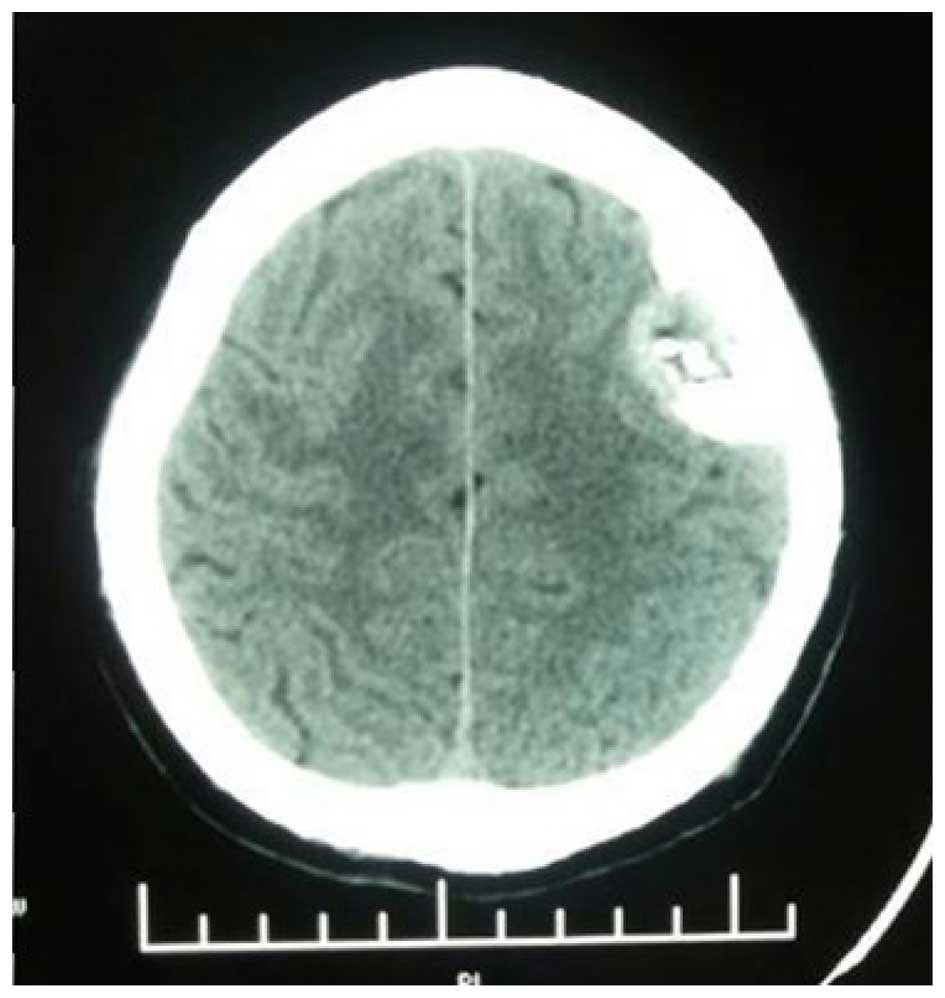
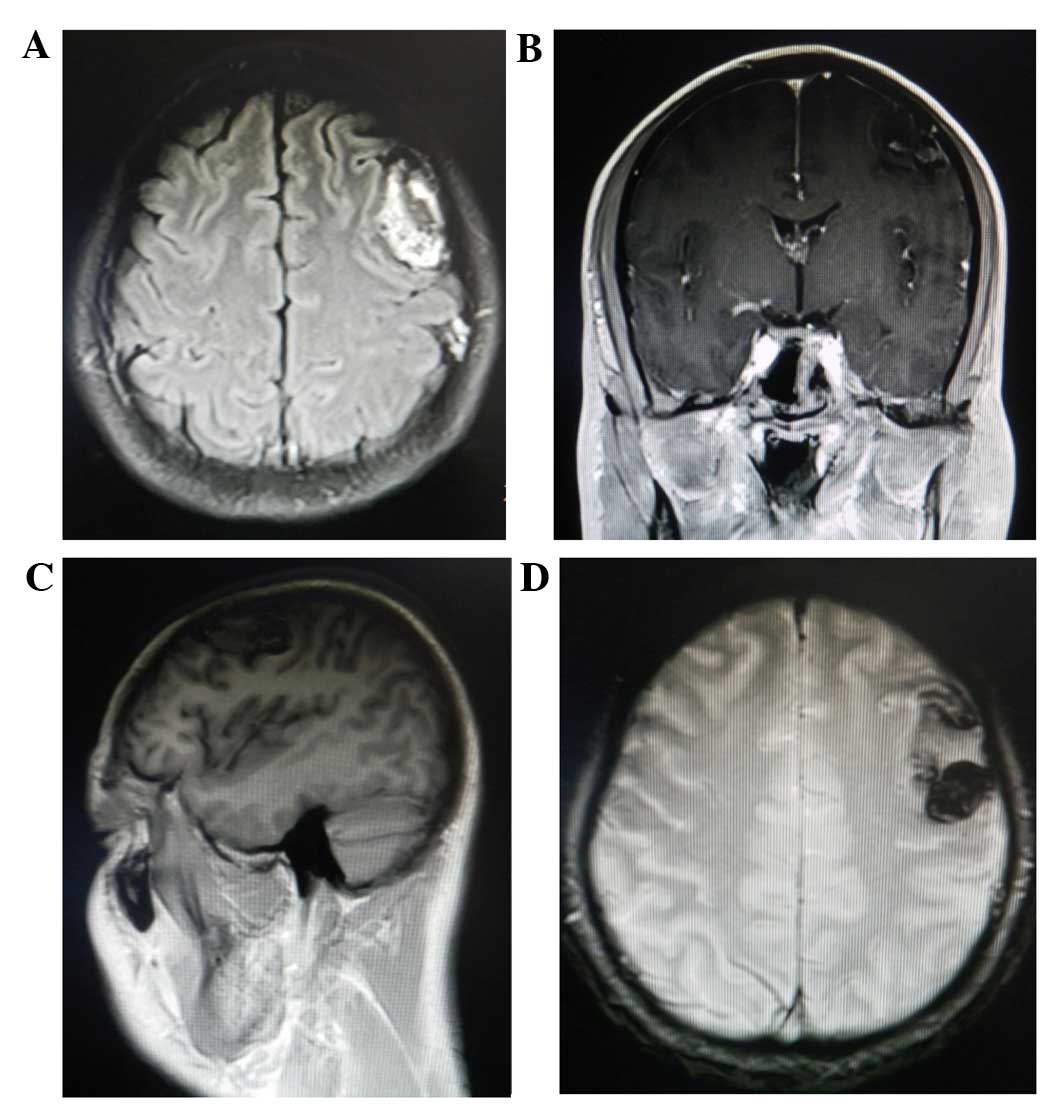
A 40-year-old male patient was admitted to The Department of Neurology, Tianjin Huanhu Hospital (Tianjin, China) on February 24, 2014 with a progressive headache and dizziness that had lasted for 2 years. Neurological examinations (including for hemiparesis and sensory disturbance) were normal and pathological signs (such as the Babinski sign) were negative. All laboratory tests (including routine blood count tests and assessments of liver and kidney, immune and blood coagulation functions) were within the normal ranges. The patient had no history of trauma and no family history of any hereditary illness. Cranial CT and an MRI scan revealed a mass in the left frontal region. CT scan revealed an iso-/hyperdense mass with unclear boundaries located in the left frontoparietal region (Fig. 1). Multiple patchy calcification shadows were present at the margins of the mass. Volumetric contrast-enhanced MRI revealed a heterogeneous extra-axial mass with clear margins (Fig. 2). The superficial margin of the mass was broad and based along the inner table of the skull; the center of the mass exhibited hyperostosis. The lesion exhibited a signal intensity that was higher than the grey matter on T1-weighted images and T2-weighted images. Based on the results of preoperative imaging, left frontal meningioma was suspected. The patient underwent tumor resection using the left frontal approach on February 28, 2014. Grossly, the tumor was attached to the tentorium and adjacent dura and was brown in color, hypervascularized and hard with clear boundaries. A dural incision was made along the tumor-brain interface and the involved dura and tumor were completely removed. Analysis of a frozen tumor biopsy showed that the tumor tissues were lobulated, contained blood vessels and exhibited nuclear enlargement, which indicated meningioma.

Figure 1.

Pre-operative computed tomography revealed an iso-/hyperdense mass with unclear boundaries located in the left frontoparietal region.

Figure 2.

(A) Horizontal, (B) coronal and (C) sagittal pre-operative MRI scans of the left frontoparietal region revealed a mass with a signal intensity higher than that of the grey matter on T1-weighted images. (D) Postoperative cranial MRI revealed no residual tumor. MRI, magnetic resonance imaging.

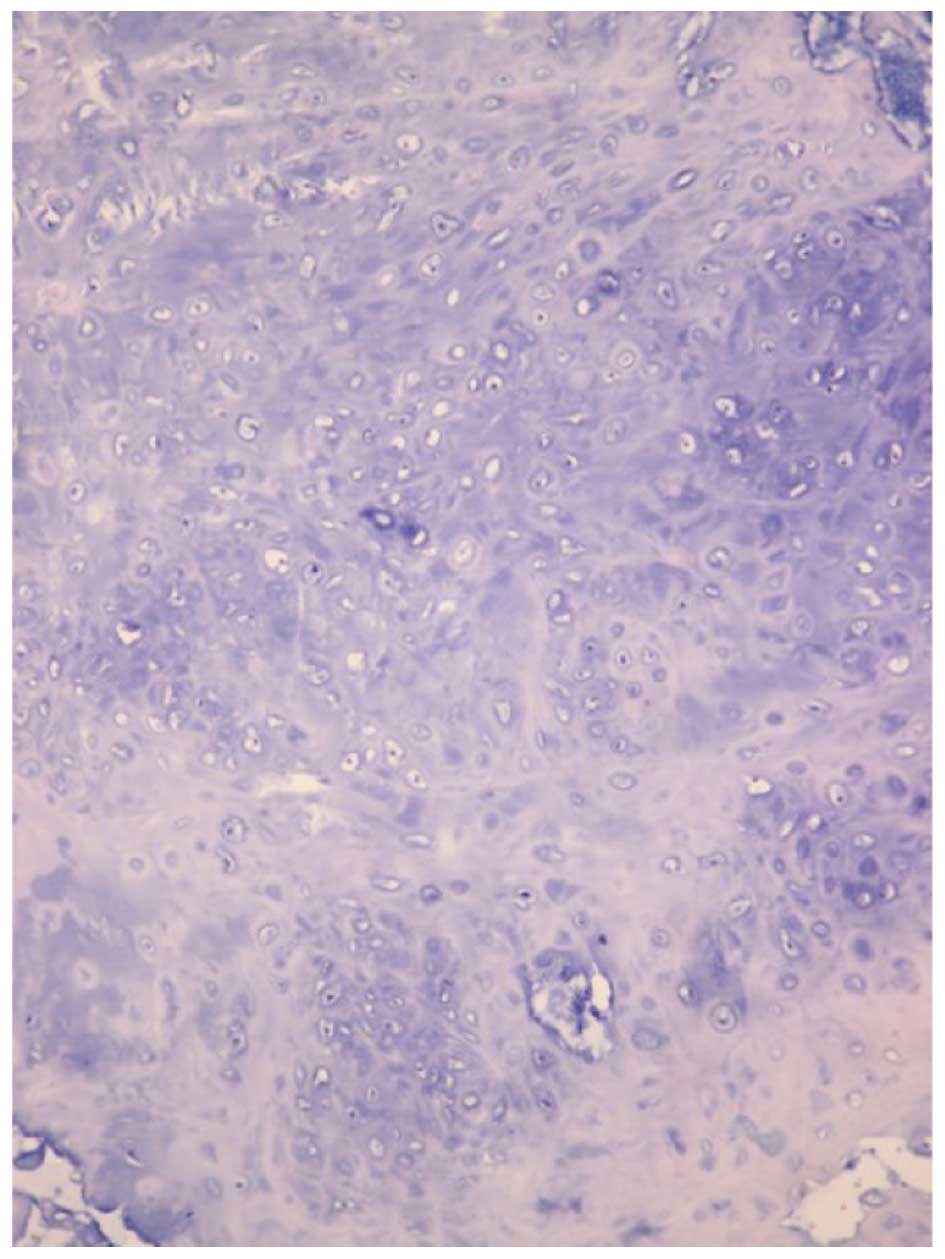
On histopathological evaluation, the mass was composed of undifferentiated round or spindle-shaped cells and mature cartilaginous tissue (Fig. 3). Immunohistochemical examination revealed that the well-differentiated round cells were positive for vimentin (anti-vimentin antibody; cat. no. ab52942; 1:500; Abcam, Cambridge, UK) and S100 (anti-S100 antibody; cat. no. ab66041; 1:500; Abcam), and only scattered proliferating cells were positive for the proliferative marker Ki-67 (labeling index, 4.2%; anti-Ki-67 antibody; cat. no. ab833; 1:500; Abcam). Thus, a pathological diagnosis of classical chondrosarcoma was confirmed. Postoperative cranial MRI identified no residual tumor (Fig. 2). The patient was discharged on the 10th postoperative day with no neurological deficits.

Figure 3.

Histopathological evaluation revealed that the mass was composed of undifferentiated round or spindle-shaped cells and mature cartilaginous tissue (stain, hematoxylin and eosin; magnification, ×200).

One month later, the patient underwent adjuvant γ-knife treatment (total dose, 60 Gy; 2 Gy once a day for 6 weeks). Follow-up MRI scans were taken at 1, 3 and 6 months after radiosurgery. A follow-up serial MRI performed 9 months postoperatively revealed no evidence of recurrence. The patient is currently alive and shows no obvious symptoms. Informed consent was obtained from the patient for the publication of this study.

Discussion

Intracranial chondrosarcoma, a subtype of chondrosarcoma, is a rare malignant cartilaginous tumor that was first reported by Mott in 1899 (6). Intracranial chondrosarcoma typically affects patients in the fourth and fifth decades of life, with no gender preference (7). The clinical presentation of chondrosarcomas has been extensively reported in the literature (8,9). Generally, patients present with an extensive history of headaches and symptoms associated with increased intracranial pressure. Histologically, intracranial chondrosarcomas are classified into three subtypes: Well-differentiated (classical type), intermediate (myxoid type) and undifferentiated (mesenchymal type) (10,11). In a review of 192 chondrosarcoma cases by Chandler et al (12), 62% were of the classical subtype, while the mesenchymal and myxoid types accounted for 30 and 8% of cases, respectively. Korten et al (8) reviewed 192 cases of chondrosarcoma and reported that in general, the mesenchymal type is malignant and occasionally spreads to distant areas, while the classical subtype is the most benign of the three subtypes. In this study, a case of classical type intracranial chondrosarcoma that occurred in the left frontal region of the skull was presented, which has rarely been reported in the literature to date. Generally, classical chondrosarcomas occur in the base of the cranium and affect patients between the fourth and sixth decades of life (3). In the review of chondrosarcomas by Korten et al (8), 37% of tumors were located in the petrous bone, while 23% occurred in the occipital bone and clivus, 20% in the sphenoid bone and 14% in the frontal, ethmoidal and parietal bones; the remaining 6% were in dural tissue, which does not typically contain cartilage.

CT scans usually reveal an isodense/hyperdense mass with heterogeneous enhancement and varying degrees of calcification in patients with chondrosarcomas (3,13). MRI usually reveals a hypointense mass on T1-weighted images and an extremely hyperintense mass on T2-weighted images (1,14).

On immunological examination, chondrosarcomas usually exhibit significant positivity for S100 and vimentin, while only scattered proliferating cells exhibit positivity for the proliferative marker, Ki-67. These features differentiate chondrosarcoma from meningioma, hemangiopericytoma, metastasis and vascular malformations.

Radical excision is the standard treatment for intracranial chondrosarcoma. In addition, postoperative adjuvant radiotherapy has been reported to improve patient outcomes for intracranial chondrosarcoma (15). Due to the invasive nature of chondrosarcoma, adjuvant radiotherapy may be recommended even after successful radical resection (4). According to a previous study, the 5-year recurrence rate for chondrosarcoma patients treated with surgery alone is 44%, which is markedly reduced to 9% following the addition of adjuvant radiation therapy (16). Combined surgical and postoperative proton radiation therapy has also demonstrated promising results with regard to tumor control (17). In the present case, the tumor was located at the surface of the left frontal region, and exhibited good dissection margins from the surrounding tissue. In the present case, the patient was treated with adjuvant radiotherapy following surgery, and subsequently exhibited a favorable prognosis after total resection.

In conclusion, intracranial chondrosarcoma is a rare malignant cartilaginous tumor that generally arises from the base of the skull. Due to its rarity and similar imaging findings with meningioma, a differential diagnosis is often challenging. Pathological diagnosis is the gold standard and neurosurgical resection is the mainstay of therapy, although, as a result of its high propensity for recurrence, radiotherapy is often necessary. According to this rare case of a low-grade, classic intracranial chondrosarcoma, the present study has provided a more objective protocol for clinicians managing these patients.

References

1 

Bingaman KD, Alleyne CJ Jr and Olson JJ: Intracranial extraskeletal mesenchymal chondrosarcoma: Case report. Neurosurgery. 46:207–212. 2000. View Article : Google Scholar : PubMed/NCBI

2 

Güneş M, Günaldi O, Tuğcu B, Tanriverdi O, Güler AK and Cöllüoğlu B: Intracranial chondrosarcoma: A case report and review of the literature. Minim Invasive Neurosurg. 52:238–241. 2009. View Article : Google Scholar : PubMed/NCBI

3 

Gay E, Sekhar LN, Rubinstein E, Wright DC, Sen C, Janecka IP and Snyderman CH: Chordomas and chondrosarcomas of the cranial base: Results and follow-up of 60 patients. Neurosurgery. 36:887–897. 1995. View Article : Google Scholar : PubMed/NCBI

4 

Bosma JJ, Kirollos RW, Broome J and Eldridge PR: Primary intradural classic chondrosarcoma: Case report and literature review. Neurosurgery. 48:420–423. 2001. View Article : Google Scholar : PubMed/NCBI

5 

Bloch OG, Jian BJ, Yang I, Han SJ, Aranda D, Ahn BJ and Parsa AT: A systematic review of intracranial chondrosarcoma and survival. J Clin Neurosci. 16:1547–1551. 2009. View Article : Google Scholar : PubMed/NCBI

6 

Mott FW: Chondrosarcoma springing from the sella turcica. Arch Neurol Psychiat. 1:432–433. 1899.

7 

Parker JR, Zarabi MC and Parker JC Jr: Intracerebral mesenchymal chondrosarcoma. Ann Clin Lab Sci. 19:401–407. 1989.PubMed/NCBI

8 

Korten AG, ter Berg HJ, Spincemaille GH, van der Laan RT and Van de Wel AM: Intracranial chondrosarcoma: Review of the literature and report of 15 cases. J Neurol Neurosurg Psychiatry. 65:88–92. 1998. View Article : Google Scholar : PubMed/NCBI

9 

Currie J, Lubin JH and Lesseil S: Chronic isolated abducens paresis from tumors at the base of the brain. Arch Neurol. 40:226–229. 1983. View Article : Google Scholar : PubMed/NCBI

10 

Wanebo JE, Bristol RE, Porter RR, Coons SW and Spetzler RF: Management of cranial base chondrosarcomas. Neurosurgery. 58:249–255. 2006. View Article : Google Scholar : PubMed/NCBI

11 

Neff B, Sataloff RT, Storey L, Hawkshaw M and Spiegel JR: Chondrosarcoma of the skull base. Laryngoscope. 112:134–139. 2002. View Article : Google Scholar : PubMed/NCBI

12 

Chandler JP, Yashar P, Laskin WB and Russell EJ: Intracranial chondrosarcoma: A case report and review of the literature. J Neurooncol. 68:33–39. 2004. View Article : Google Scholar : PubMed/NCBI

13 

Kim MJ, Cho KJ, Ayala AG and Ro JY: Chondrosarcoma: With updates on molecular genetics. Sarcoma. 2011:4054372011. View Article : Google Scholar : PubMed/NCBI

14 

Salcman M, Scholtz H, Kristt D and Numaguchi Y: Extraskeletal myxoid chondrosarcoma of the falx. Neurosurgery. 31:344–348. 1992. View Article : Google Scholar : PubMed/NCBI

15 

Park JH, Kim MJ, Kim CJ and Kim JH: Intracranial extraskeletal myxoid chondrosarcoma: Case report and literature review. J Korean Neurosurg Soc. 52:246–249. 2012. View Article : Google Scholar : PubMed/NCBI

16 

Bloch OG, Jian BJ, Yang I, Han SJ, Aranda D, Ahn BJ and Parsa AT: Cranial chondrosarcoma and recurrence. Skull Base. 20:149–156. 2010. View Article : Google Scholar : PubMed/NCBI

17 

Amichetti M, Amelio D, Cianchetti M, Enrici RM and Minniti G: A systematic review of proton therapy in the treatment of chondrosarcoma of the skull base. Neurosurg Rev. 33:155–165. 2010. View Article : Google Scholar : PubMed/NCBI

Related Articles

  • Abstract
  • View
  • Download
  • Twitter
Copy and paste a formatted citation
Spandidos Publications style
Chi J, Zhang M and Kang J: Classical intracranial chondrosarcoma: A case report. Oncol Lett 12: 4051-4053, 2016.
APA
Chi, J., Zhang, M., & Kang, J. (2016). Classical intracranial chondrosarcoma: A case report. Oncology Letters, 12, 4051-4053. https://doi.org/10.3892/ol.2016.5154
MLA
Chi, J., Zhang, M., Kang, J."Classical intracranial chondrosarcoma: A case report". Oncology Letters 12.5 (2016): 4051-4053.
Chicago
Chi, J., Zhang, M., Kang, J."Classical intracranial chondrosarcoma: A case report". Oncology Letters 12, no. 5 (2016): 4051-4053. https://doi.org/10.3892/ol.2016.5154
Copy and paste a formatted citation
x
Spandidos Publications style
Chi J, Zhang M and Kang J: Classical intracranial chondrosarcoma: A case report. Oncol Lett 12: 4051-4053, 2016.
APA
Chi, J., Zhang, M., & Kang, J. (2016). Classical intracranial chondrosarcoma: A case report. Oncology Letters, 12, 4051-4053. https://doi.org/10.3892/ol.2016.5154
MLA
Chi, J., Zhang, M., Kang, J."Classical intracranial chondrosarcoma: A case report". Oncology Letters 12.5 (2016): 4051-4053.
Chicago
Chi, J., Zhang, M., Kang, J."Classical intracranial chondrosarcoma: A case report". Oncology Letters 12, no. 5 (2016): 4051-4053. https://doi.org/10.3892/ol.2016.5154
Follow us
  • Twitter
  • LinkedIn
  • Facebook
About
  • Spandidos Publications
  • Careers
  • Cookie Policy
  • Privacy Policy
How can we help?
  • Help
  • Live Chat
  • Contact
  • Email to our Support Team