Spandidos Publications Logo
  • About
    • About Spandidos
    • Aims and Scopes
    • Abstracting and Indexing
    • Editorial Policies
    • Reprints and Permissions
    • Job Opportunities
    • Terms and Conditions
    • Contact
  • Journals
    • All Journals
    • Oncology Letters
      • Oncology Letters
      • Information for Authors
      • Editorial Policies
      • Editorial Board
      • Aims and Scope
      • Abstracting and Indexing
      • Bibliographic Information
      • Archive
    • International Journal of Oncology
      • International Journal of Oncology
      • Information for Authors
      • Editorial Policies
      • Editorial Board
      • Aims and Scope
      • Abstracting and Indexing
      • Bibliographic Information
      • Archive
    • Molecular and Clinical Oncology
      • Molecular and Clinical Oncology
      • Information for Authors
      • Editorial Policies
      • Editorial Board
      • Aims and Scope
      • Abstracting and Indexing
      • Bibliographic Information
      • Archive
    • Experimental and Therapeutic Medicine
      • Experimental and Therapeutic Medicine
      • Information for Authors
      • Editorial Policies
      • Editorial Board
      • Aims and Scope
      • Abstracting and Indexing
      • Bibliographic Information
      • Archive
    • International Journal of Molecular Medicine
      • International Journal of Molecular Medicine
      • Information for Authors
      • Editorial Policies
      • Editorial Board
      • Aims and Scope
      • Abstracting and Indexing
      • Bibliographic Information
      • Archive
    • Biomedical Reports
      • Biomedical Reports
      • Information for Authors
      • Editorial Policies
      • Editorial Board
      • Aims and Scope
      • Abstracting and Indexing
      • Bibliographic Information
      • Archive
    • Oncology Reports
      • Oncology Reports
      • Information for Authors
      • Editorial Policies
      • Editorial Board
      • Aims and Scope
      • Abstracting and Indexing
      • Bibliographic Information
      • Archive
    • Molecular Medicine Reports
      • Molecular Medicine Reports
      • Information for Authors
      • Editorial Policies
      • Editorial Board
      • Aims and Scope
      • Abstracting and Indexing
      • Bibliographic Information
      • Archive
    • World Academy of Sciences Journal
      • World Academy of Sciences Journal
      • Information for Authors
      • Editorial Policies
      • Editorial Board
      • Aims and Scope
      • Abstracting and Indexing
      • Bibliographic Information
      • Archive
    • International Journal of Functional Nutrition
      • International Journal of Functional Nutrition
      • Information for Authors
      • Editorial Policies
      • Editorial Board
      • Aims and Scope
      • Abstracting and Indexing
      • Bibliographic Information
      • Archive
    • International Journal of Epigenetics
      • International Journal of Epigenetics
      • Information for Authors
      • Editorial Policies
      • Editorial Board
      • Aims and Scope
      • Abstracting and Indexing
      • Bibliographic Information
      • Archive
    • Medicine International
      • Medicine International
      • Information for Authors
      • Editorial Policies
      • Editorial Board
      • Aims and Scope
      • Abstracting and Indexing
      • Bibliographic Information
      • Archive
  • Articles
  • Information
    • Information for Authors
    • Information for Reviewers
    • Information for Librarians
    • Information for Advertisers
    • Conferences
  • Language Editing
Spandidos Publications Logo
  • About
    • About Spandidos
    • Aims and Scopes
    • Abstracting and Indexing
    • Editorial Policies
    • Reprints and Permissions
    • Job Opportunities
    • Terms and Conditions
    • Contact
  • Journals
    • All Journals
    • Biomedical Reports
      • Information for Authors
      • Editorial Policies
      • Editorial Board
      • Aims and Scope
      • Abstracting and Indexing
      • Bibliographic Information
      • Archive
    • Experimental and Therapeutic Medicine
      • Information for Authors
      • Editorial Policies
      • Editorial Board
      • Aims and Scope
      • Abstracting and Indexing
      • Bibliographic Information
      • Archive
    • International Journal of Epigenetics
      • Information for Authors
      • Editorial Policies
      • Editorial Board
      • Aims and Scope
      • Abstracting and Indexing
      • Bibliographic Information
      • Archive
    • International Journal of Functional Nutrition
      • Information for Authors
      • Editorial Policies
      • Editorial Board
      • Aims and Scope
      • Abstracting and Indexing
      • Bibliographic Information
      • Archive
    • International Journal of Molecular Medicine
      • Information for Authors
      • Editorial Policies
      • Editorial Board
      • Aims and Scope
      • Abstracting and Indexing
      • Bibliographic Information
      • Archive
    • International Journal of Oncology
      • Information for Authors
      • Editorial Policies
      • Editorial Board
      • Aims and Scope
      • Abstracting and Indexing
      • Bibliographic Information
      • Archive
    • Medicine International
      • Information for Authors
      • Editorial Policies
      • Editorial Board
      • Aims and Scope
      • Abstracting and Indexing
      • Bibliographic Information
      • Archive
    • Molecular and Clinical Oncology
      • Information for Authors
      • Editorial Policies
      • Editorial Board
      • Aims and Scope
      • Abstracting and Indexing
      • Bibliographic Information
      • Archive
    • Molecular Medicine Reports
      • Information for Authors
      • Editorial Policies
      • Editorial Board
      • Aims and Scope
      • Abstracting and Indexing
      • Bibliographic Information
      • Archive
    • Oncology Letters
      • Information for Authors
      • Editorial Policies
      • Editorial Board
      • Aims and Scope
      • Abstracting and Indexing
      • Bibliographic Information
      • Archive
    • Oncology Reports
      • Information for Authors
      • Editorial Policies
      • Editorial Board
      • Aims and Scope
      • Abstracting and Indexing
      • Bibliographic Information
      • Archive
    • World Academy of Sciences Journal
      • Information for Authors
      • Editorial Policies
      • Editorial Board
      • Aims and Scope
      • Abstracting and Indexing
      • Bibliographic Information
      • Archive
  • Articles
  • Information
    • For Authors
    • For Reviewers
    • For Librarians
    • For Advertisers
    • Conferences
  • Language Editing
Login Register Submit
  • This site uses cookies
  • You can change your cookie settings at any time by following the instructions in our Cookie Policy. To find out more, you may read our Privacy Policy.

    I agree
Search articles by DOI, keyword, author or affiliation
Search
Advanced Search
presentation
Oncology Letters
Join Editorial Board Propose a Special Issue
Print ISSN: 1792-1074 Online ISSN: 1792-1082
Journal Cover
November-2016 Volume 12 Issue 5

Full Size Image

Sign up for eToc alerts
Recommend to Library

Journals

International Journal of Molecular Medicine

International Journal of Molecular Medicine

International Journal of Molecular Medicine is an international journal devoted to molecular mechanisms of human disease.

International Journal of Oncology

International Journal of Oncology

International Journal of Oncology is an international journal devoted to oncology research and cancer treatment.

Molecular Medicine Reports

Molecular Medicine Reports

Covers molecular medicine topics such as pharmacology, pathology, genetics, neuroscience, infectious diseases, molecular cardiology, and molecular surgery.

Oncology Reports

Oncology Reports

Oncology Reports is an international journal devoted to fundamental and applied research in Oncology.

Experimental and Therapeutic Medicine

Experimental and Therapeutic Medicine

Experimental and Therapeutic Medicine is an international journal devoted to laboratory and clinical medicine.

Oncology Letters

Oncology Letters

Oncology Letters is an international journal devoted to Experimental and Clinical Oncology.

Biomedical Reports

Biomedical Reports

Explores a wide range of biological and medical fields, including pharmacology, genetics, microbiology, neuroscience, and molecular cardiology.

Molecular and Clinical Oncology

Molecular and Clinical Oncology

International journal addressing all aspects of oncology research, from tumorigenesis and oncogenes to chemotherapy and metastasis.

World Academy of Sciences Journal

World Academy of Sciences Journal

Multidisciplinary open-access journal spanning biochemistry, genetics, neuroscience, environmental health, and synthetic biology.

International Journal of Functional Nutrition

International Journal of Functional Nutrition

Open-access journal combining biochemistry, pharmacology, immunology, and genetics to advance health through functional nutrition.

International Journal of Epigenetics

International Journal of Epigenetics

Publishes open-access research on using epigenetics to advance understanding and treatment of human disease.

Medicine International

Medicine International

An International Open Access Journal Devoted to General Medicine.

Journal Cover
November-2016 Volume 12 Issue 5

Full Size Image

Sign up for eToc alerts
Recommend to Library

  • Article
  • Citations
    • Cite This Article
    • Download Citation
    • Create Citation Alert
    • Remove Citation Alert
    • Cited By
  • Similar Articles
    • Related Articles (in Spandidos Publications)
    • Similar Articles (Google Scholar)
    • Similar Articles (PubMed)
  • Download PDF
  • Download XML
  • View XML
Article Open Access

Effect of surgical wound fluids after intraoperative electron radiotherapy on the cancer stem cell phenotype in a panel of human breast cancer cell lines

  • Authors:
    • Karolina Zaleska
    • Wiktoria Maria Suchorska
    • Anna Przybyła
    • Dawid Murawa
  • View Affiliations / Copyright

    Affiliations: Radiobiology Laboratory, Department of Medical Physics, Greater Poland Cancer Centre, 61‑866 Poznań, Poland, Department of Medical Biotechnology, Poznań University of Medical Sciences, 61‑701 Poznań, Poland, First Department of Surgical Oncology and General Surgery, Greater Poland Cancer Centre, 61‑866 Poznań, Poland
    Copyright: © Zaleska et al. This is an open access article distributed under the terms of Creative Commons Attribution License.
  • Pages: 3707-3714
    |
    Published online on: September 21, 2016
       https://doi.org/10.3892/ol.2016.5167
  • Expand metrics +
Metrics: Total Views: 0 (Spandidos Publications: | PMC Statistics: )
Metrics: Total PDF Downloads: 0 (Spandidos Publications: | PMC Statistics: )
Cited By (CrossRef): 0 citations Loading Articles...

This article is mentioned in:


Abstract

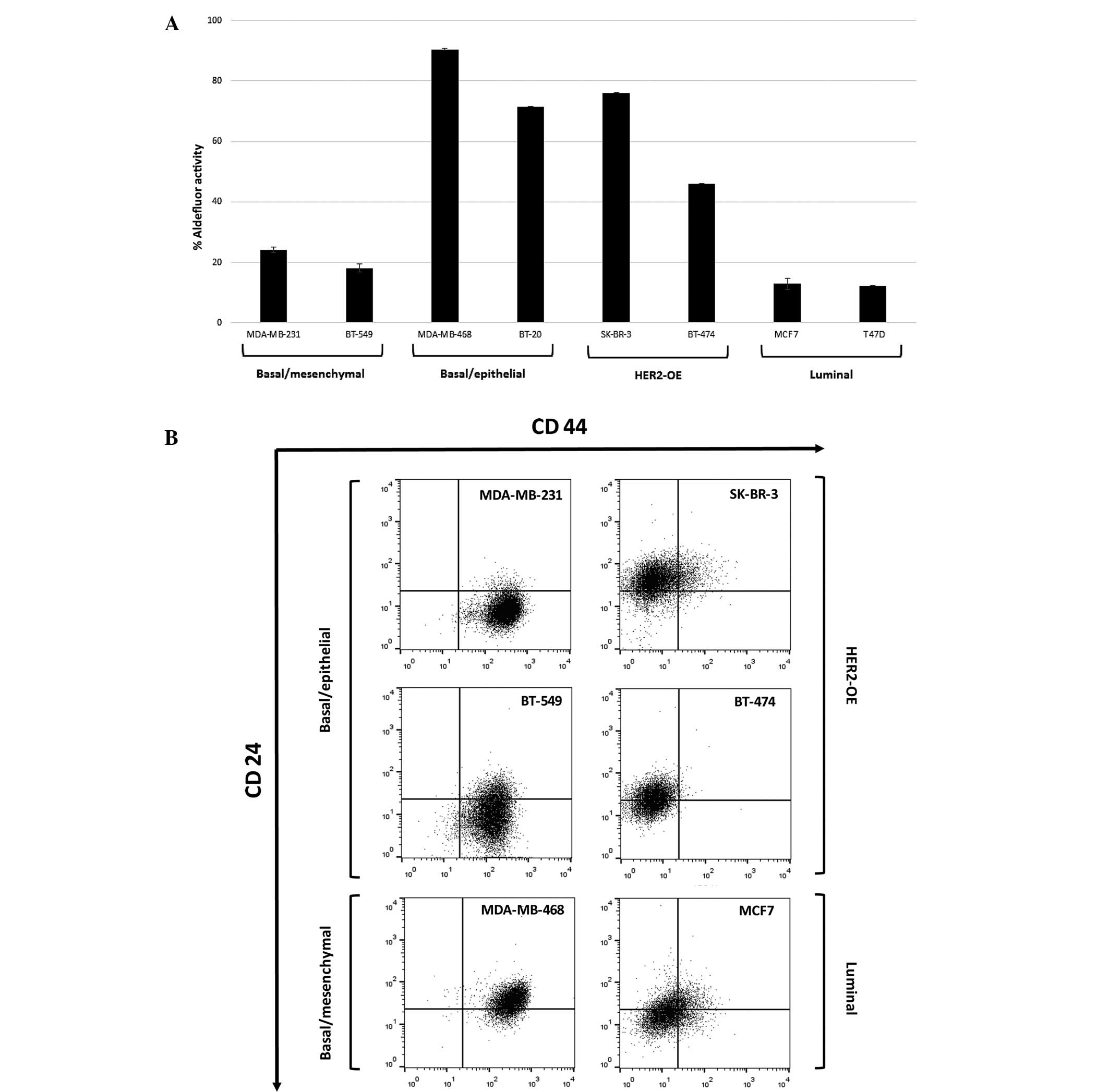
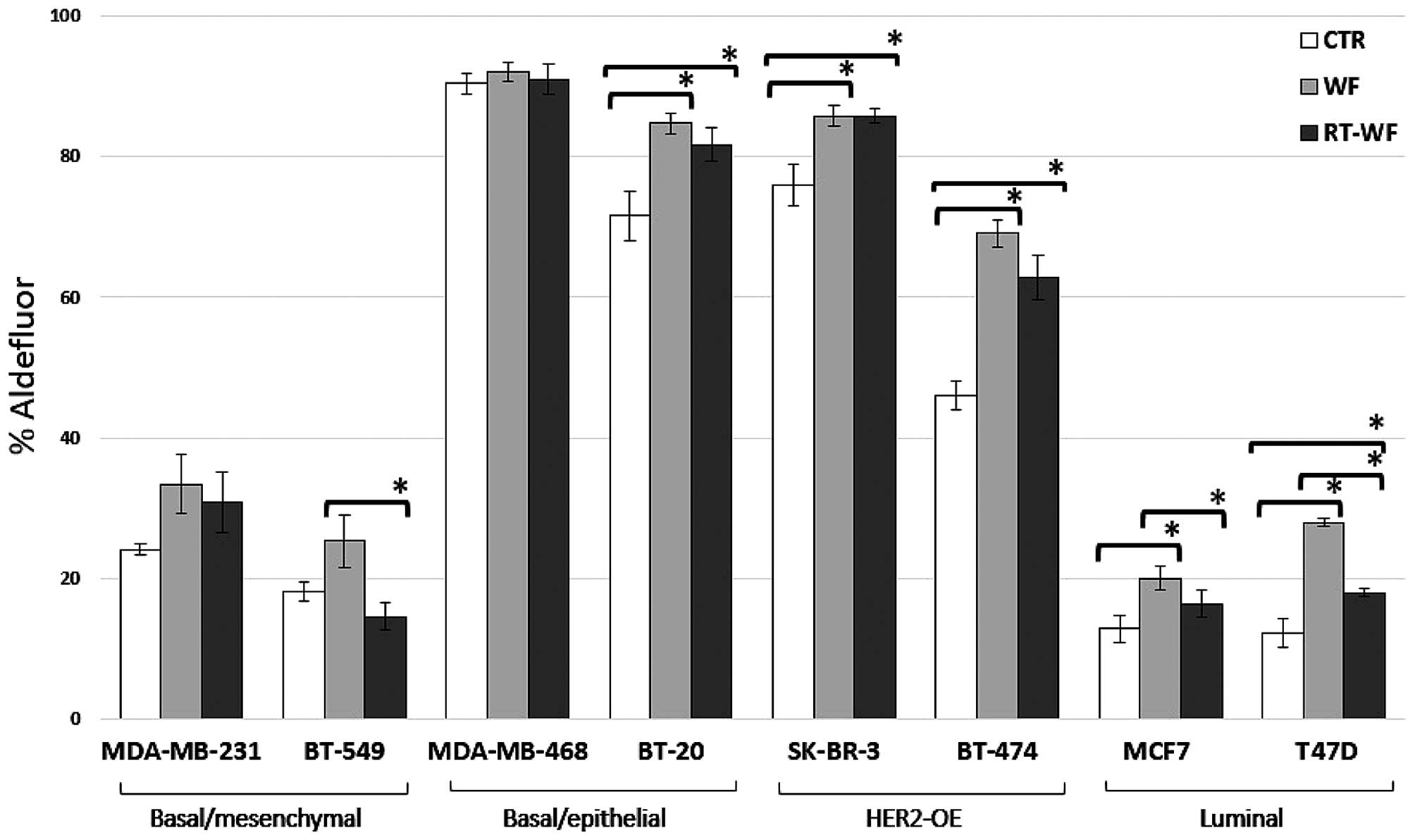
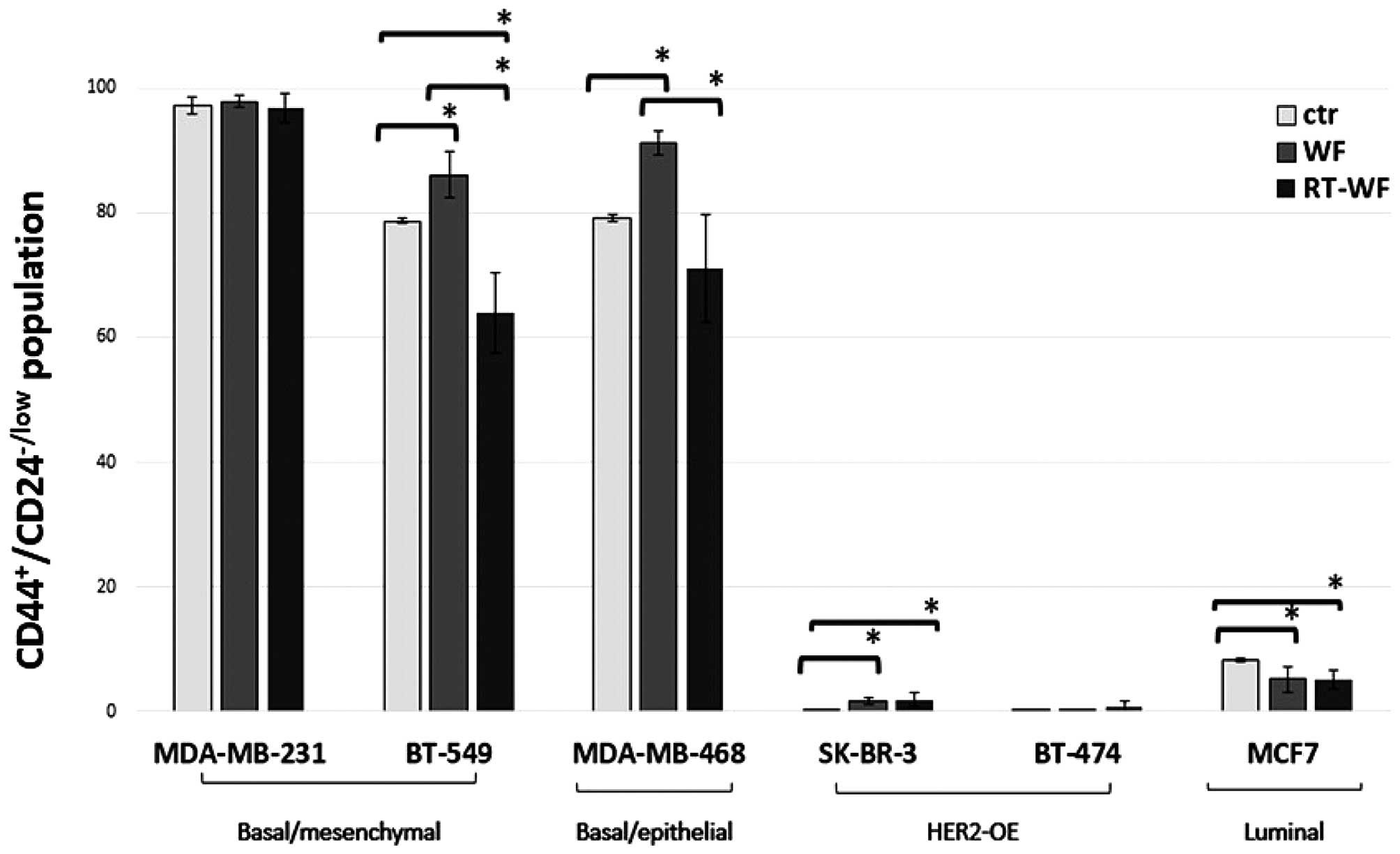
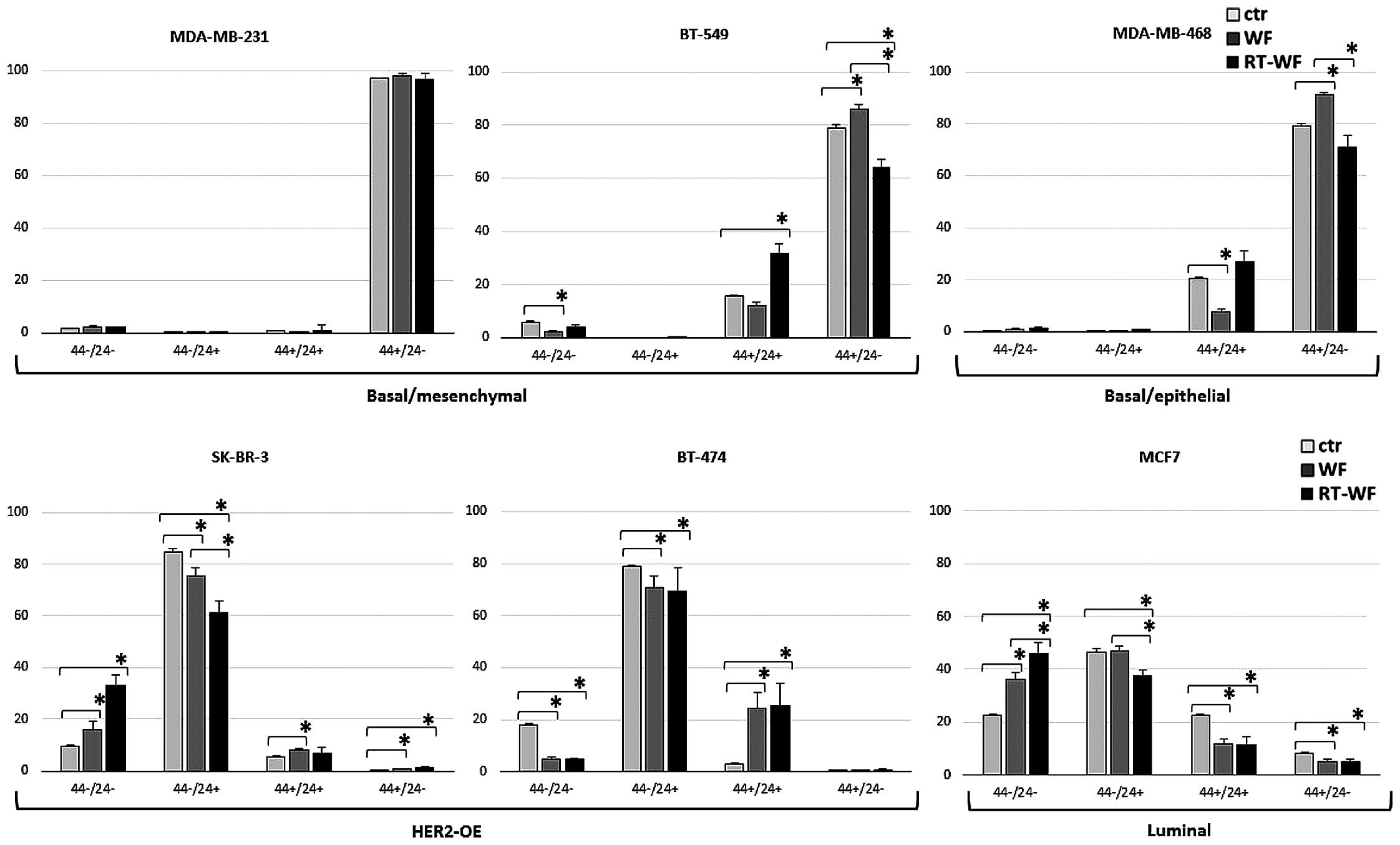
The wound healing process after surgery alters the area surrounding the original tumor and around the scar, and the modified microenvironment is more favorable for tumor recurrence. Intraoperative radiotherapy (IORT) is one of the more novel strategies in breast cancer (BC) treatment. Irradiation during surgery has effects on the tumor microenvironment, abrogating the proliferative cascade induced by surgical wound healing. The aim of the present study was to determine the effect of surgical wound fluids from IOERT treatment (RT‑WF) compared with wound fluids from conservative‑breast surgery only (WF) on the cancer stem cell phenotype in a panel of BC cell lines. Post‑operative wound fluids were derived from patients with BC who underwent a tumor resection (quadrantectomy) plus intraoperative electron radiotherapy using a single dose of ≤10 Gy on the tumor bed and surrounding tissues, or from those who underwent a tumor resection without IOERT. Cell lines were incubated with 10% wound fluids, and after 4 days, the cluster of differentiation (CD)44+/CD24‑/low phenotype and aldehyde dehydrogenase 1 (ALDH1) activity were determined by flow cytometry. The two types of fluid each affected the CD44+/CD24‑/low phenotype. The results varied markedly between each cell line, even for the same histological subtypes. RT‑WF decreased the CD44+/CD24‑/low populations in the basal‑like BT‑549 and MDA‑MB‑468 cell lines, whereas in the luminal type MCF7 cell line, the two fluids inhibited these populations. The HER‑OE subtypes harbored a minimal CD44+/CD24‑/low population, but the growth of SK‑BR‑3 was stimulated by the two post-operative fluids. WF exhibited a stronger effect on ALDH1 activity compared with RT‑WF. The stimulatory effect was dependent on the histological subtype of the cell line and the strongest dependence was observed in luminal subtypes characterized by low dehydrogenase activity in the control group. The present results enable a better understanding of the mechanism of recurrence and metastases following BC surgery. With respect to histological phenotype, its effect on tumor progression, either local or systemic, strongly suggests the requirement for further research and clinical validation.
View Figures

Figure 1

Figure 2

Figure 3

Figure 4

View References

1 

Campbell LL and Polyak K: Breast tumor heterogeneity: Cancer stem cells or clonal evolution? Cell Cycle. 6:2332–2338. 2007. View Article : Google Scholar : PubMed/NCBI

2 

Cancer Genome Atlas Network, . Comprehensive molecular portraits of human breast tumours. Nature. 490:61–70. 2012. View Article : Google Scholar : PubMed/NCBI

3 

Bitterman A, Kessner R, Goldman I, Shiloni E and Steiner M: Intraoperative radiotherapy for breast cancer. Isr Med Assoc J. 14:256–259. 2012.PubMed/NCBI

4 

Murawa P, Murawa D, Adamczyk B and Połom K: Breast cancer: Actual methods of treatment and future trends. Rep Pract Oncol Radiother. 19:165–172. 2014. View Article : Google Scholar : PubMed/NCBI

5 

Williams NR, Pigott KH and Keshtgar MR: Intraoperative radiotherapy in the treatment of breast cancer: A review of the evidence. Int J Breast Cancer. 2011:3751702011. View Article : Google Scholar : PubMed/NCBI

6 

Sedlmayer F, Reitsamer R, Fussl C, Ziegler I, Zehentmayr F, Deutschmann H, Kopp P and Fastner G: Boost IORT in breast cancer: Body of evidence. Int J Breast Cancer. 2014:4725162014. View Article : Google Scholar : PubMed/NCBI

7 

Liberman L, Van Zee KJ, Dershaw DD, Morris EA, Abramson AF and Samli B: Mammographic features of local recurrence in women who have undergone breast-conserving therapy for ductal carcinoma in situ. AJR Am J Roentgenol. 168:489–493. 1997. View Article : Google Scholar : PubMed/NCBI

8 

Fisher B, Dignam J, Wolmark N, Mamounas E, Costantino J, Poller W, Fisher ER, Wickerham DL, Deutsch M, Margolese R, et al: Lumpectomy and radiation therapy for the treatment of intraductal breast cancer: Findings from national surgical adjuvant breast and bowel project B-17. J Clin Oncol. 16:441–452. 1998.PubMed/NCBI

9 

Fastner G, Sedlmayer F, Merz F, Deutschmann H, Reitsamer R, Menzel C, Stierle C, Farmini A, Fischer T, Ciabattoni A, et al: IORT with electrons as boost strategy during breast conserving therapy in limited stage breast cancer: Long term results of an ISIORT pooled analysis. Radiother Oncol. 108:279–286. 2013. View Article : Google Scholar : PubMed/NCBI

10 

Demicheli R, Valagussa P and Bonadonna G: Does surgery modify growth kinetics of breast cancer micrometastases? Br J Cancer. 85:490–492. 2001. View Article : Google Scholar : PubMed/NCBI

11 

Baum M, Demicheli R, Hurshesky W and Retsky M: Does surgery unfavorable perturb the ‘natural history’ of early breast cancer by accelerating the appearance of distant metastases? Eur J Cancer. 41:508–515. 2005. View Article : Google Scholar : PubMed/NCBI

12 

Fisher B, Gunduz N, Coyle J, Rudock C and Saffer E: Presence of growth-stimulating factor in serum following primary tumor removal in mice. Cancer Res. 49:1996–2001. 1989.PubMed/NCBI

13 

Tsuchida Y, Sawada S, Yoshioka I, Ohashi Y, Matsuo M, Harimaya Y, Tsukada K and Saiki I: Increased surgical stress promotes tumor metastasis. Surgery. 133:547–555. 2003. View Article : Google Scholar : PubMed/NCBI

14 

Ménard S, Balsari A, Casalini P, Tagliabue E, Campiglio M, Bufalino R and Cascinelli N: HER-2 positive breast carcinomas as a particular subset with peculiar clinical behaviors. Clin Canc Res. 8:520–525. 2002.

15 

Tagliabue E, Agresti R, Carcangiu ML, Ghirelli C, Morelli D, Campiglio M, Martel M, Giovanazzi R, Greco M, Balsari A and Ménard S: Role of HER2 in wound-induced breast carcinoma proliferation. Lancet. 362:527–533. 2003. View Article : Google Scholar : PubMed/NCBI

16 

Belletti B, Vaidya JS, D'Andrea S, Entschladen F, Roncadin M, Lovat F, Berton S, Perin T, Candiani E, Reccanello S, et al: Targeted intraoperative radiotherapy impairs the stimulation of breast cancer cell proliferation and invasion caused by surgical wounding. Clin Cancer Res. 14:1325–1332. 2008. View Article : Google Scholar : PubMed/NCBI

17 

Dalerba P, Cho RW and Clarke MF: Cancer stem cells: Models and concepts. Annu Rev Med. 58:267–284. 2007. View Article : Google Scholar : PubMed/NCBI

18 

Visvader JE and Lindeman GJ: Cancer stem cells in solid tumors: Accumulating evidence and unresolved questions. Nat Rev Cancer. 8:755–768. 2008. View Article : Google Scholar : PubMed/NCBI

19 

Dean M, Fojo T and Bates S: Tumor stem cells and drug resistance. Nat Rev Cancer. 5:275–284. 2005. View Article : Google Scholar : PubMed/NCBI

20 

Brunner TB, Kunz-Schughart LA, Grosse-Gehling P and Baumann M: Cancer stem cells as a predictive factor in radiotherapy. Semin Radiat Oncol. 22:151–174. 2012. View Article : Google Scholar : PubMed/NCBI

21 

Bapat SA, Mali AM, Koppikar CB and Kurrey NK: Stem and progenitor-like cells contribute to the aggressive behavior of human epithelial ovarian cancer. Cancer Res. 65:3025–3029. 2005.PubMed/NCBI

22 

Al-Hajj M, Wicha MS, Benito-Hernandez A, Morrison SJ and Clarke MF: Prospective identification of tumorigenic breast cancer cells. Proc Natl Acad Sci USA. 100:3983–3988. 2003. View Article : Google Scholar : PubMed/NCBI

23 

Abraham BK, Fritz P, McClellan M, Hauptvogel P, Athelogou M and Brauch H: Prevalence of CD44+/CD24−/low cells in breast cancer may not be associated with clinical outcome but may favor distant metastasis. Clin Cancer Res. 11:1154–1159. 2005.PubMed/NCBI

24 

Ginestier C, Hur MH, Charafe-Jauffret E, Monville F, Dutcher J, Brown M, Jacquemier J, Viens P, Kleer CG, Liu S, et al: ALDH is a marker of normal and malignant human mammary stem cells and a predictor of poor clinical outcome. Cell Stem Cell. 1:555–567. 2007. View Article : Google Scholar : PubMed/NCBI

25 

Tanei T, Morimoto K, Shimazu K, Kim SJ, Tanji Y, Taguchi T, Tamaki Y and Noguchi S: Association of breast cancer stem cells identified by aldehyde dehydrogenase 1 expression with resistance to sequential paclitaxel and epirubicin-based chemotherapy for breast cancers. Clin Cancer Res. 15:4234–4241. 2009. View Article : Google Scholar : PubMed/NCBI

26 

Croker AK, Goodale D, Chu J, Postenka C, Hedley BD, Hess DA and Allan AL: High aldehyde dehydrogenase and expression of cancer stem cell markers selects for breast cancer cells with enhanced malignant and metastatic ability. J Cell Mol Med. 13:2236–2252. 2009. View Article : Google Scholar : PubMed/NCBI

27 

Marcato P, Dean CA, Giacomantonio CA and Lee PW: Aldehyde dehydrogenase: Its role as a cancer stem cell marker comes down to the specific isoform. Cell Cycle. 10:1378–1384. 2011. View Article : Google Scholar : PubMed/NCBI

28 

Park SY, Lee HE, Li H, Shipitsin M, Gelman R and Polyak K: Heterogeneity of stem-cell related markers according to tumor subtype and histologic stage in breast cancer. Clin Cancer Res. 16:876–887. 2010. View Article : Google Scholar : PubMed/NCBI

29 

Bromberg JF, Wrzeszczynska MH, Devgan G, Zhao Y, Pestell RG, Albanese C and Darnell JE Jr: STAT3 as an oncogene. Cell. 98:295–303. 1999. View Article : Google Scholar : PubMed/NCBI

30 

Lin L, Hutzen B, Lee HF, Peng Z, Wang W, Zhao C, Lin HJ, Sun D, Li PK, Li C, et al: Evaluation of STAT3 signaling in ALDH+ and ALDH+/CD44+/CD24− subpopulations of breast cancer cells. PLoS One. 8:e828212013. View Article : Google Scholar : PubMed/NCBI

31 

Holliday DL and Speirs V: Choosing the right cell line for breast cancer research. Breast Cancer Res. 13:2152011. View Article : Google Scholar : PubMed/NCBI

32 

Neve RM, Chin K, Fridlyand J, Yeh J, Baehner FL, Fevr T, Clark L, Bayani N, Coppe JP, Tong F, et al: A collection of breast cancer cell lines for the study of functionally distinct cancer subtypes. Cancer Cell. 10:515–527. 2006. View Article : Google Scholar : PubMed/NCBI

33 

Demicheli R, Retsky MW, Hrushesky WJ and Baum M: Tumor dormancy and surgery-driven interruption of dormancy in breast cancer: Learning from failures. Nat Clin Pract Oncol. 4:699–710. 2007. View Article : Google Scholar : PubMed/NCBI

34 

Marches R, Scheuermann R and Uhr J: Cancer dormancy: From mice to man. Cell Cycle. 5:1772–1778. 2006. View Article : Google Scholar : PubMed/NCBI

35 

Arnold KM, Opdenaker LM, Flynn D and Sims-Mourtada J: Wound healing and cancer stem cells: Inflammation as a driver of treatment resistance in breast cancer. Cancer Growth Metastasis. 8:1–13. 2015.PubMed/NCBI

36 

Fisher B, Gunduz N and Saffer EA: Influence of the interval between primary tumor removal and chemotherapy on kinetics and growth of metastases. Cancer Res. 43:1488–1492. 1983.PubMed/NCBI

37 

Segatto I, Berton S, Sonego M, Massarut S, Perin T, Piccoli E, Colombatti A, Vecchione A, Baldassarre G and Belletti B: Surgery-induced wound response promotes stem-like and tumor-initiating features of breast cancer cells, via STAT3 signaling. Oncotarget. 5:6267–6279. 2014. View Article : Google Scholar : PubMed/NCBI

38 

Ma F, Li H, Wang H, Shi X, Fan Y, Ding X, Lin C, Zhan Q, Qian H and Xu B: Enriched CD44(+)/CD24(−) population drives the aggressive phenotypes presented in triple-negative breast cancer (TNBC). Cancer Lett. 353:153–159. 2014. View Article : Google Scholar : PubMed/NCBI

39 

Camerlingo R, Ferraro GA, De Francesco F, Romano M, Nicoletti G, Di Bonito M, Rinaldo M, D'Andrea F and Pirozzi G: The role of CD44+/CD24−/low biomarker for screening, diagnosis and monitoring of breast cancer. Oncol Rep. 31:1127–1132. 2014.PubMed/NCBI

40 

Shipitsin M, Campbell LL, Argani P, Weremowicz S, Bloushtain-Qimron N, Yao J, Nikolskaya T, Serebryiskaya T, Beroukhim R, Hu M, et al: Molecular definition of breast tumor heterogeneity. Cancer Cell. 11:259–273. 2007. View Article : Google Scholar : PubMed/NCBI

41 

Sheridan C, Kishimoto H, Fuchs RK, Mehrotra S, Bhat-Nakshatri P, Turner CH, Goulet R Jr, Badve S and Nakshatri H: CD44+/CD24− breast cancer cells exhibit enhanced invasive properties: An early step necessary for metastasis. Breast Cancer Res. 8:R592006. View Article : Google Scholar : PubMed/NCBI

42 

Idowu MO, Kmieciak M, Dumur C, Burton RS, Grimes MM, Powers CN and Manjili MH: CD44(+)/CD24(−/low) cancer stem/progenitor cells are more abundant in triple-negative invasive breast carcinoma phenotype and are associated with poor outcome. Hum Pathol. 43:364–373. 2012. View Article : Google Scholar : PubMed/NCBI

43 

Ahmed MA, Aleskandarany MA, Rakha EA, Moustafa RZ, Benhasouna A, Nolan C, Green AR, Ilyas M and Ellis IO: A CD44−/CD24+ phenotype is a poor prognostic marker in early invasive breast cancer. Breast Cancer Res Treat. 133:979–995. 2012. View Article : Google Scholar : PubMed/NCBI

44 

Meyer MJ, Fleming JM, Ali MA, Pesesky MW, Ginsburg E and Vonderhaar BK: Dynamic regulation of CD24 and the invasive, CD44posCD24neg phenotype in breast cancer cell lines. Breast Cancer Res. 11:R822009. View Article : Google Scholar : PubMed/NCBI

45 

Zhong Y, Lin Y, Shen S, Zhou Y, Mao F, Guan J and Sun Q: Expression of ALDH1 in breast invasive ductal carcinoma: An independent predictor of early tumor relapse. Cancer Cell Int. 13:602013. View Article : Google Scholar : PubMed/NCBI

46 

Vaidya JS, Wenz F, Max Bulsara M, Tobias JS, Joseph DJ, Keshtgar M, Flyger HL, Massarut S, Alvarado M, Saunders C, et al: Risk-adapted targeted intraoperative radiotherapy versus whole-breast radiotherapy for breast cancer: 5-year results for local control and overall survival from the TARGIT-A randomised trial. Lancet. 383:603–613. 2014. View Article : Google Scholar : PubMed/NCBI

Related Articles

  • Abstract
  • View
  • Download
  • Twitter
Copy and paste a formatted citation
Spandidos Publications style
Zaleska K, Suchorska WM, Przybyła A and Murawa D: Effect of surgical wound fluids after intraoperative electron radiotherapy on the cancer stem cell phenotype in a panel of human breast cancer cell lines. Oncol Lett 12: 3707-3714, 2016.
APA
Zaleska, K., Suchorska, W.M., Przybyła, A., & Murawa, D. (2016). Effect of surgical wound fluids after intraoperative electron radiotherapy on the cancer stem cell phenotype in a panel of human breast cancer cell lines. Oncology Letters, 12, 3707-3714. https://doi.org/10.3892/ol.2016.5167
MLA
Zaleska, K., Suchorska, W. M., Przybyła, A., Murawa, D."Effect of surgical wound fluids after intraoperative electron radiotherapy on the cancer stem cell phenotype in a panel of human breast cancer cell lines". Oncology Letters 12.5 (2016): 3707-3714.
Chicago
Zaleska, K., Suchorska, W. M., Przybyła, A., Murawa, D."Effect of surgical wound fluids after intraoperative electron radiotherapy on the cancer stem cell phenotype in a panel of human breast cancer cell lines". Oncology Letters 12, no. 5 (2016): 3707-3714. https://doi.org/10.3892/ol.2016.5167
Copy and paste a formatted citation
x
Spandidos Publications style
Zaleska K, Suchorska WM, Przybyła A and Murawa D: Effect of surgical wound fluids after intraoperative electron radiotherapy on the cancer stem cell phenotype in a panel of human breast cancer cell lines. Oncol Lett 12: 3707-3714, 2016.
APA
Zaleska, K., Suchorska, W.M., Przybyła, A., & Murawa, D. (2016). Effect of surgical wound fluids after intraoperative electron radiotherapy on the cancer stem cell phenotype in a panel of human breast cancer cell lines. Oncology Letters, 12, 3707-3714. https://doi.org/10.3892/ol.2016.5167
MLA
Zaleska, K., Suchorska, W. M., Przybyła, A., Murawa, D."Effect of surgical wound fluids after intraoperative electron radiotherapy on the cancer stem cell phenotype in a panel of human breast cancer cell lines". Oncology Letters 12.5 (2016): 3707-3714.
Chicago
Zaleska, K., Suchorska, W. M., Przybyła, A., Murawa, D."Effect of surgical wound fluids after intraoperative electron radiotherapy on the cancer stem cell phenotype in a panel of human breast cancer cell lines". Oncology Letters 12, no. 5 (2016): 3707-3714. https://doi.org/10.3892/ol.2016.5167
Follow us
  • Twitter
  • LinkedIn
  • Facebook
About
  • Spandidos Publications
  • Careers
  • Cookie Policy
  • Privacy Policy
How can we help?
  • Help
  • Live Chat
  • Contact
  • Email to our Support Team