Spandidos Publications Logo
  • About
    • About Spandidos
    • Aims and Scopes
    • Abstracting and Indexing
    • Editorial Policies
    • Reprints and Permissions
    • Job Opportunities
    • Terms and Conditions
    • Contact
  • Journals
    • All Journals
    • Oncology Letters
      • Oncology Letters
      • Information for Authors
      • Editorial Policies
      • Editorial Board
      • Aims and Scope
      • Abstracting and Indexing
      • Bibliographic Information
      • Archive
    • International Journal of Oncology
      • International Journal of Oncology
      • Information for Authors
      • Editorial Policies
      • Editorial Board
      • Aims and Scope
      • Abstracting and Indexing
      • Bibliographic Information
      • Archive
    • Molecular and Clinical Oncology
      • Molecular and Clinical Oncology
      • Information for Authors
      • Editorial Policies
      • Editorial Board
      • Aims and Scope
      • Abstracting and Indexing
      • Bibliographic Information
      • Archive
    • Experimental and Therapeutic Medicine
      • Experimental and Therapeutic Medicine
      • Information for Authors
      • Editorial Policies
      • Editorial Board
      • Aims and Scope
      • Abstracting and Indexing
      • Bibliographic Information
      • Archive
    • International Journal of Molecular Medicine
      • International Journal of Molecular Medicine
      • Information for Authors
      • Editorial Policies
      • Editorial Board
      • Aims and Scope
      • Abstracting and Indexing
      • Bibliographic Information
      • Archive
    • Biomedical Reports
      • Biomedical Reports
      • Information for Authors
      • Editorial Policies
      • Editorial Board
      • Aims and Scope
      • Abstracting and Indexing
      • Bibliographic Information
      • Archive
    • Oncology Reports
      • Oncology Reports
      • Information for Authors
      • Editorial Policies
      • Editorial Board
      • Aims and Scope
      • Abstracting and Indexing
      • Bibliographic Information
      • Archive
    • Molecular Medicine Reports
      • Molecular Medicine Reports
      • Information for Authors
      • Editorial Policies
      • Editorial Board
      • Aims and Scope
      • Abstracting and Indexing
      • Bibliographic Information
      • Archive
    • World Academy of Sciences Journal
      • World Academy of Sciences Journal
      • Information for Authors
      • Editorial Policies
      • Editorial Board
      • Aims and Scope
      • Abstracting and Indexing
      • Bibliographic Information
      • Archive
    • International Journal of Functional Nutrition
      • International Journal of Functional Nutrition
      • Information for Authors
      • Editorial Policies
      • Editorial Board
      • Aims and Scope
      • Abstracting and Indexing
      • Bibliographic Information
      • Archive
    • International Journal of Epigenetics
      • International Journal of Epigenetics
      • Information for Authors
      • Editorial Policies
      • Editorial Board
      • Aims and Scope
      • Abstracting and Indexing
      • Bibliographic Information
      • Archive
    • Medicine International
      • Medicine International
      • Information for Authors
      • Editorial Policies
      • Editorial Board
      • Aims and Scope
      • Abstracting and Indexing
      • Bibliographic Information
      • Archive
  • Articles
  • Information
    • Information for Authors
    • Information for Reviewers
    • Information for Librarians
    • Information for Advertisers
    • Conferences
  • Language Editing
Spandidos Publications Logo
  • About
    • About Spandidos
    • Aims and Scopes
    • Abstracting and Indexing
    • Editorial Policies
    • Reprints and Permissions
    • Job Opportunities
    • Terms and Conditions
    • Contact
  • Journals
    • All Journals
    • Biomedical Reports
      • Information for Authors
      • Editorial Policies
      • Editorial Board
      • Aims and Scope
      • Abstracting and Indexing
      • Bibliographic Information
      • Archive
    • Experimental and Therapeutic Medicine
      • Information for Authors
      • Editorial Policies
      • Editorial Board
      • Aims and Scope
      • Abstracting and Indexing
      • Bibliographic Information
      • Archive
    • International Journal of Epigenetics
      • Information for Authors
      • Editorial Policies
      • Editorial Board
      • Aims and Scope
      • Abstracting and Indexing
      • Bibliographic Information
      • Archive
    • International Journal of Functional Nutrition
      • Information for Authors
      • Editorial Policies
      • Editorial Board
      • Aims and Scope
      • Abstracting and Indexing
      • Bibliographic Information
      • Archive
    • International Journal of Molecular Medicine
      • Information for Authors
      • Editorial Policies
      • Editorial Board
      • Aims and Scope
      • Abstracting and Indexing
      • Bibliographic Information
      • Archive
    • International Journal of Oncology
      • Information for Authors
      • Editorial Policies
      • Editorial Board
      • Aims and Scope
      • Abstracting and Indexing
      • Bibliographic Information
      • Archive
    • Medicine International
      • Information for Authors
      • Editorial Policies
      • Editorial Board
      • Aims and Scope
      • Abstracting and Indexing
      • Bibliographic Information
      • Archive
    • Molecular and Clinical Oncology
      • Information for Authors
      • Editorial Policies
      • Editorial Board
      • Aims and Scope
      • Abstracting and Indexing
      • Bibliographic Information
      • Archive
    • Molecular Medicine Reports
      • Information for Authors
      • Editorial Policies
      • Editorial Board
      • Aims and Scope
      • Abstracting and Indexing
      • Bibliographic Information
      • Archive
    • Oncology Letters
      • Information for Authors
      • Editorial Policies
      • Editorial Board
      • Aims and Scope
      • Abstracting and Indexing
      • Bibliographic Information
      • Archive
    • Oncology Reports
      • Information for Authors
      • Editorial Policies
      • Editorial Board
      • Aims and Scope
      • Abstracting and Indexing
      • Bibliographic Information
      • Archive
    • World Academy of Sciences Journal
      • Information for Authors
      • Editorial Policies
      • Editorial Board
      • Aims and Scope
      • Abstracting and Indexing
      • Bibliographic Information
      • Archive
  • Articles
  • Information
    • For Authors
    • For Reviewers
    • For Librarians
    • For Advertisers
    • Conferences
  • Language Editing
Login Register Submit
  • This site uses cookies
  • You can change your cookie settings at any time by following the instructions in our Cookie Policy. To find out more, you may read our Privacy Policy.

    I agree
Search articles by DOI, keyword, author or affiliation
Search
Advanced Search
presentation
Oncology Letters
Join Editorial Board Propose a Special Issue
Print ISSN: 1792-1074 Online ISSN: 1792-1082
Journal Cover
February-2017 Volume 13 Issue 2

Full Size Image

Sign up for eToc alerts
Recommend to Library

Journals

International Journal of Molecular Medicine

International Journal of Molecular Medicine

International Journal of Molecular Medicine is an international journal devoted to molecular mechanisms of human disease.

International Journal of Oncology

International Journal of Oncology

International Journal of Oncology is an international journal devoted to oncology research and cancer treatment.

Molecular Medicine Reports

Molecular Medicine Reports

Covers molecular medicine topics such as pharmacology, pathology, genetics, neuroscience, infectious diseases, molecular cardiology, and molecular surgery.

Oncology Reports

Oncology Reports

Oncology Reports is an international journal devoted to fundamental and applied research in Oncology.

Experimental and Therapeutic Medicine

Experimental and Therapeutic Medicine

Experimental and Therapeutic Medicine is an international journal devoted to laboratory and clinical medicine.

Oncology Letters

Oncology Letters

Oncology Letters is an international journal devoted to Experimental and Clinical Oncology.

Biomedical Reports

Biomedical Reports

Explores a wide range of biological and medical fields, including pharmacology, genetics, microbiology, neuroscience, and molecular cardiology.

Molecular and Clinical Oncology

Molecular and Clinical Oncology

International journal addressing all aspects of oncology research, from tumorigenesis and oncogenes to chemotherapy and metastasis.

World Academy of Sciences Journal

World Academy of Sciences Journal

Multidisciplinary open-access journal spanning biochemistry, genetics, neuroscience, environmental health, and synthetic biology.

International Journal of Functional Nutrition

International Journal of Functional Nutrition

Open-access journal combining biochemistry, pharmacology, immunology, and genetics to advance health through functional nutrition.

International Journal of Epigenetics

International Journal of Epigenetics

Publishes open-access research on using epigenetics to advance understanding and treatment of human disease.

Medicine International

Medicine International

An International Open Access Journal Devoted to General Medicine.

Journal Cover
February-2017 Volume 13 Issue 2

Full Size Image

Sign up for eToc alerts
Recommend to Library

  • Article
  • Citations
    • Cite This Article
    • Download Citation
    • Create Citation Alert
    • Remove Citation Alert
    • Cited By
  • Similar Articles
    • Related Articles (in Spandidos Publications)
    • Similar Articles (Google Scholar)
    • Similar Articles (PubMed)
  • Download PDF
  • Download XML
  • View XML
Article Open Access

Ursolic acid sensitizes radioresistant NSCLC cells expressing HIF‑1α through reducing endogenous GSH and inhibiting HIF‑1α

  • Authors:
    • Bing Song
    • Qian Zhang
    • Maohu Yu
    • Xinrong Qi
    • Gang Wang
    • Linlin Xiao
    • Qiyi Yi
    • Wensen Jin
  • View Affiliations / Copyright

    Affiliations: Department of Cardiology, First Affiliated Hospital, Anhui Medical University, Hefei, Anhui 230032, P.R. China, Teaching and Research Section of Nuclear Medicine, Anhui Medical University, Hefei, Anhui 230032, P.R. China
    Copyright: © Song et al. This is an open access article distributed under the terms of Creative Commons Attribution License.
  • Pages: 754-762
    |
    Published online on: December 7, 2016
       https://doi.org/10.3892/ol.2016.5468
  • Expand metrics +
Metrics: Total Views: 0 (Spandidos Publications: | PMC Statistics: )
Metrics: Total PDF Downloads: 0 (Spandidos Publications: | PMC Statistics: )
Cited By (CrossRef): 0 citations Loading Articles...

This article is mentioned in:


Abstract

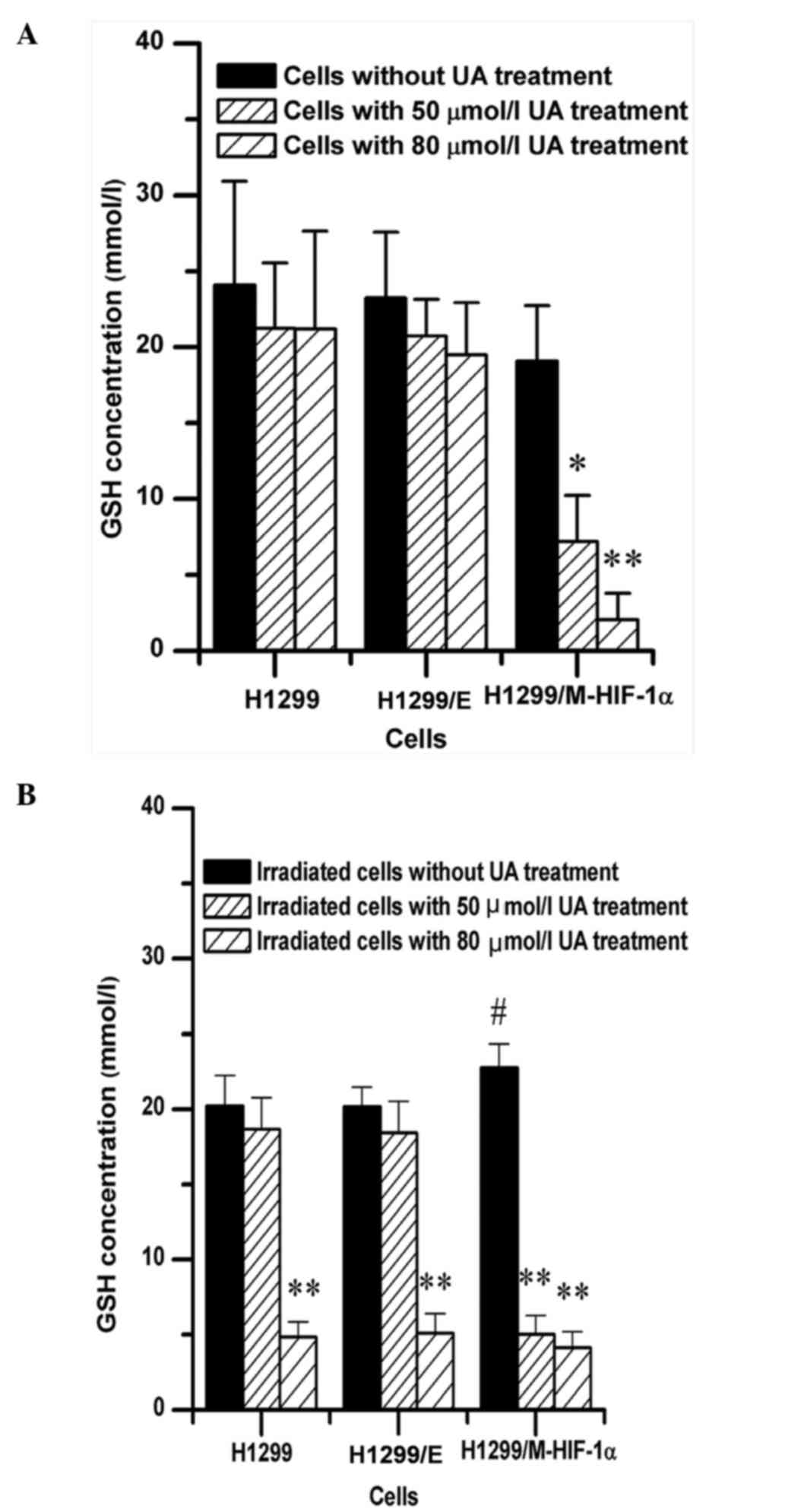
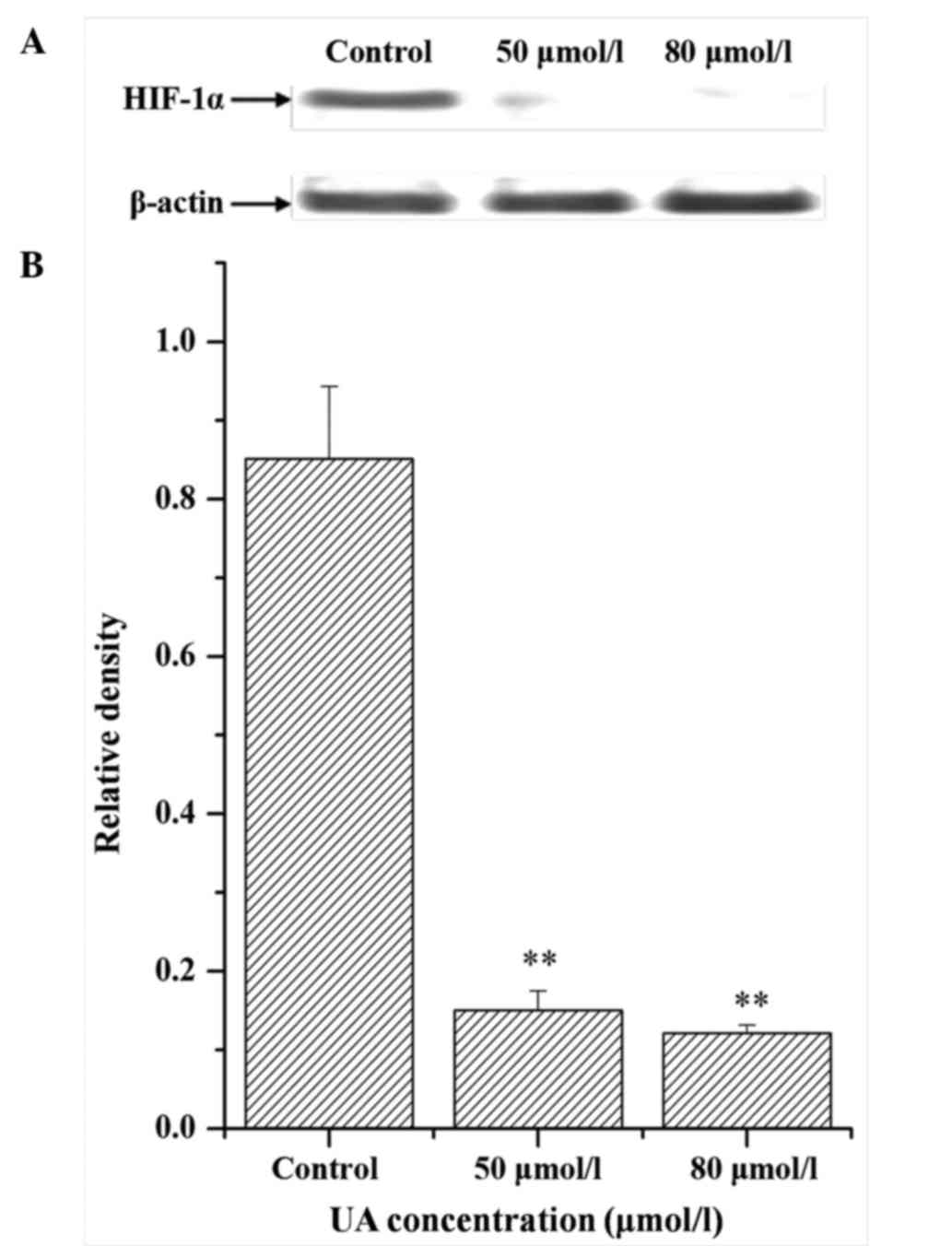
In previous studies, the present authors demonstrated that effective sensitization of ionizing radiation‑induced death of tumor cells, including non‑small cell lung cancer (NSCLC) cells, could be produced by oleanolic acid (OA), a pentacyclic triterpenoid present in plants. In the present study, it was investigated whether ursolic acid (UA), an isomer of OA, had also the capacity of sensitizing radioresistant NSCLC cells. The radioresistant cell line H1299/M‑hypoxia inducible factor‑1α (HIF‑1α) was established by transfection with a recombinant plasmid expressing mutant HIF‑1α (M‑HIF‑1α). Compared with parental H1299 cells and H1299 cells transfected with empty plasmid, H1299/M‑HIF‑1α cells had lower radiosensitivity. Following the use of UA to treat NSCLC cells, elevation of the radiosensitivity of cells was observed by MTT assay. The irradiated H1299/M‑HIF‑1α cells were more sensitive to UA pretreatment than the irradiated cells with empty plasmid and control. The alteration of DNA damage in the irradiated cells was further measured using micronucleus (MN) assay. The combination of UA treatment with radiation could induce the increase of cellular MN frequencies, in agreement with the change in the tendency observed in the cell viability assay. It was further shown that the endogenous glutathione (GSH) contents were markedly attenuated in the differently irradiated NSCLC cells with UA (80 µmol/l) pretreatment through glutathione reductase/5,5'‑dithiobis‑(2‑nitrob‑enzoic acid) (DTNB) recycling assay. The results revealed that UA treatment alone could effectively decrease the GSH content in H1299/M‑HIF‑1α cells. In addition, the inhibition of HIF‑1α expression in radioresistant cells was confirmed by western blotting. It was then concluded that UA could upregulate the radiosensitivity of NSCLC cells, and in particular reduce the refractory response of cells expressing HIF‑1α to ionizing radiation. The primary mechanism is associated with reduction of endogenous GSH and inhibition of high expression of intracellular HIF‑1α. UA should therefore be deeply studied as a potential radiosensitizing reagent for NSCLC radiotherapy.
View Figures

Figure 1

Figure 2

Figure 3

Figure 4

Figure 5

Figure 6

Figure 7

Figure 8

View References

1 

Senthi S, Haasbeek CJ, Slotman BJ and Senan S: Outcomes of stereotactic ablative radiotherapy for central lung tumours: A systematic review. Radiother Oncol. 106:276–282. 2013. View Article : Google Scholar : PubMed/NCBI

2 

Shen Z, Wu X, Wang Z, Li B and Zhu X: Effect of miR-18a overexpression on the radiosensitivity of non-small cell lung cancer. Int J Clin Exp Pathol. 8:643–648. 2015.PubMed/NCBI

3 

Subtil FS, Wilhelm J, Bill V, Westholt N, Rudolph S, Fischer J, Scheel S, Seay U, Fournier C, Taucher-Scholz G, et al: Carbon ion radiotherapy of human lung cancer attenuates HIF-1 signaling and acts with considerably enhanced therape-utic efficiency. FASEB J. 28:1412–1421. 2014. View Article : Google Scholar : PubMed/NCBI

4 

Cannon DM, Mehta MP, Adkison JB, Khuntia D, Traynor AM, Tomé WA, Chappell RJ, Tolakanahalli R, Mohindra P, Bentzen SM and Cannon GM: Dose-limiting toxicity after hypofractionated dose-escalated radiotherapy in non-small-cell lung cancer. J Clin Oncol. 31:4343–4348. 2013. View Article : Google Scholar : PubMed/NCBI

5 

Kim E, Youn H, Kwon T, Son B, Kang J, Yang HJ, Seong KM, Kim W and Youn B: PAK1 tyrosine phosphorylation is required to induce epithelial-mesenchymal transition and radioresistance in lung cancer cells. Cancer Res. 74:5520–5531. 2014. View Article : Google Scholar : PubMed/NCBI

6 

Sekhar KR, Benamar M, Venkateswaran A, Sasi S, Penthala NR, Crooks PA, Crooks PA, Hann SR, Geng L, Balusu R, et al: Targeting nucleophosmin 1 represents a rational strategy for radiationsensitization. Int J Radiat Oncol Biol Phys. 89:1106–1114. 2014. View Article : Google Scholar : PubMed/NCBI

7 

Theys J, Yahyanejad S, Habets R, Span P, Dubois L, Paesmans K, Kattenbeld B, Cleutjens J, Groot AJ, Schuurbiers OC, et al: High NOTCH activity induces radiation resistance in non small cell lung cancer. Radiother Oncol. 108:440–445. 2013. View Article : Google Scholar : PubMed/NCBI

8 

Okaichi K, Nose K, Kotake T, Izumi N and Kudo T: Phosphorylation of p53 modifies sensitivity to ionizing radiation. Anticancer Res. 31:2255–2258. 2011.PubMed/NCBI

9 

Jamal M, Rath BH, Williams ES, Camphausen K and Tofilon PJ: Microenvironmental regulation of glioblastoma radioresponse. Clin Cancer Res. 16:6049–6059. 2010. View Article : Google Scholar : PubMed/NCBI

10 

Ayouaz A, Raynaud C, Heride C, Revaud D and Sabatier L: Telomeres: Hallmarks of radiosensitivity. Biochimie. 90:60–72. 2008. View Article : Google Scholar : PubMed/NCBI

11 

Quintana-Cabrera R and Bolaños JP: Glutathione and γ-glutamylcysteine in the antioxidant and survival functions of mitochondria. Biochem Soc Trans. 41:106–110. 2013. View Article : Google Scholar : PubMed/NCBI

12 

Pereira CV, Nadanaciva S, Oliveira PJ and Will Y: The contribution of oxidative stress to drug-induced organ toxicity and its detection in vitro and in vivo. Expert Opin Drug Metab Toxicol. 8:219–237. 2012. View Article : Google Scholar : PubMed/NCBI

13 

Slemmer JE, Shacka JJ, Sweeney MI and Weber JT: Antioxidants and free radical scavengers for the treatment of stroke, traumatic brain injury and aging. Curr Med Chem. 15:404–414. 2008. View Article : Google Scholar : PubMed/NCBI

14 

Wells PG, Bhuller Y, Chen CS, Jeng W, Kasapinovic S, Kennedy JC, Kim PM, Laposa RR, McCallum GP, Nicol CJ, et al: Molecular and biochemical mechanisms in teratogenesis involving reactive oxygen species. Toxicol Appl Pharmacol 207 (2 Suppl). 354–366. 2005. View Article : Google Scholar

15 

Ogunrinu TA and Sontheimer H: Hypoxia increases the dependence of glioma cells on glutathione. J Biol Chem. 285:37716–37724. 2010. View Article : Google Scholar : PubMed/NCBI

16 

Honda T, Coppola S, Ghibelli L, Cho SH, Kagawa S, Spurgers KB, Brisbay SM, Roth JA, Meyn RE, Fang B and McDonnell TJ: GSH depletion enhances adenoviral bax-induced apoptosis in lung cancer cells. Cancer Gene Ther. 11:249–255. 2004. View Article : Google Scholar : PubMed/NCBI

17 

Lee JH, Tak JK, Park KM and Park JW: N-t-Butyl hydroxylamine regulates ionizing radiation-induced apoptosis in U937 cells. Biochimie. 89:1509–1516. 2007. View Article : Google Scholar : PubMed/NCBI

18 

Karthikeyan S, Kanimozhi G, Prasad NR and Mahalakshmi R: Radiosensitizing effect of ferulic acid on human cervical carcinoma cells in vitro. Toxicol In Vitro. 25:1366–1375. 2011. View Article : Google Scholar : PubMed/NCBI

19 

Keshmiri-Neghab H, Goliaei B and Nikoofar A: Gossypol enhances radiation induced autophagy in glioblastoma multiforme. Gen Physiol Biophys. 33:433–442. 2014. View Article : Google Scholar : PubMed/NCBI

20 

Elbaz HA, Lee I, Antwih DA, Liu J, Hüttemann M and Zielske SP: Epicatechin stimulates mitochondrial activity and selectively sensitizes cancer cells to radiation. PLoS One. 9:e883222014. View Article : Google Scholar : PubMed/NCBI

21 

Zang LL, Wu BN, Lin Y, Wang J, Fu L and Tang ZY: Research progress of ursolic acid's anti-tumor actions. Chin J Integr Med. 20:72–79. 2014. View Article : Google Scholar : PubMed/NCBI

22 

Wang W, Zhao C, Jou D, Lü J, Zhang C, Lin L and Lin J: Ursolic acid inhibits the growth of colon cancer-initiating cells by targeting STAT3. Anticancer Res. 33:4279–4284. 2013.PubMed/NCBI

23 

Huang CY, Lin CY, Tsai CW and Yin MC: Inhibition of cell proliferation, invasion and migration by ursolic acid in human lung cancer cell lines. Toxicol In Vitro. 25:1274–1280. 2011. View Article : Google Scholar : PubMed/NCBI

24 

Park JH, Kwon HY, Sohn EJ, Kim KA, Kim B, Jeong SJ, Song JH, Koo JS and Kim SH: Inhibition of Wnt/β-catenin signaling mediates ursolic acid-induced apoptosis in PC-3 prostate cancer cells. Pharmacol Rep. 65:1366–1374. 2013. View Article : Google Scholar : PubMed/NCBI

25 

Xavier CP, Lima CF, Pedro DF, Wilson JM, Kristiansen K and Pereira-Wilson C: Ursolic acid induces cell death and modulates autophagy through JNK pathway in apoptosis-resistant colorectal cancer cells. J Nutr Biochem. 24:706–712. 2013. View Article : Google Scholar : PubMed/NCBI

26 

Li J, Liang X and Yang X: Ursolic acid inhibits growth and induces apoptosis in gemcitabine-resistant human pancreatic cancer via the JNK and PI3K/Akt/NF-κB pathways. Oncol Rep. 28:501–510. 2012.PubMed/NCBI

27 

Li Y, Xing D, Chen Q and Chen WR: Enhancement of chemotherapeutic agent-induced apoptosis by inhibition of NF-kappaB using ursolic acid. Int J Cancer. 127:462–473. 2010.PubMed/NCBI

28 

Koh SJ, Tak JK, Kim ST, Nam WS, Kim SY, Park KM and Park JW: Sensitization of ionizing radiation-induced apoptosis by ursolic acid. Free Radic Res. 46:339–345. 2012. View Article : Google Scholar : PubMed/NCBI

29 

Huq F, Yu JQ, Beale P, Chan C, Arzuman L, Nessa MU and Mazumder ME: Combinations of platinums and selected phytochemicals as a means of overcoming resistance in ovarian cancer. Anticancer Res. 34:541–545. 2014.PubMed/NCBI

30 

Romm H, Barnard S, Boulay-Greene H, De Amicis A, De Sanctis S, Franco M, Herodin F, Jones A, Kulka U, Lista F, et al: Laboratory intercomparison of the cytokinesis-block micronucleus assay. Radiat Res. 180:120–128. 2013. View Article : Google Scholar : PubMed/NCBI

31 

Qi R and Jin W, Wang J, Yi Q, Yu M, Xu S and Jin W: Oleanolic acid enhances the radiosensitivity of tumor cells under mimetic hypoxia through the reduction in intracellular GSH content and HIF-1α expression. Oncol Rep. 31:2399–2406. 2014.PubMed/NCBI

32 

Wang J, Yu M, Xiao L, Xu S, Yi Q and Jin W: Radiosensitizing effect of oleanolic acid on tumor cells through the inhibition of GSH synthesis in vitro. Oncol Rep. 30:917–924. 2013.PubMed/NCBI

33 

Shan JZ, Xuan YY, Ruan SQ and Sun M: Proliferation-inhibiting and apoptosis-inducing effects of ursolic acid and oleanolic acid on multi-drug resistance cancer cells in vitro. Chin J Integr Med. 17:607–611. 2011. View Article : Google Scholar : PubMed/NCBI

34 

Berghoff AS, Ilhan-Mutlu A, Wöhrer A, Hackl M, Widhalm G, Hainfellner JA, Dieckmann K, Melchardt T, Dome B, Heinzl H, et al: Prognostic significance of Ki67 proliferation index, HIF1 alpha index and microvascular density in patients with non-small cell lung cancer brain metastases. Strahlenther Onkol. 190:676–685. 2014. View Article : Google Scholar : PubMed/NCBI

35 

Yoshimura M, Itasaka S, Harada H and Hiraoka M: Microenvironment and radiation therapy. Biomed Res Int. 2013:6853082013. View Article : Google Scholar : PubMed/NCBI

36 

van Baardwijk A, Dooms C, van Suylen RJ, Verbeken E, Hochstenbag M, Dehing-Oberije C, Rupa D, Pastorekova S, Stroobants S, Buell U, et al: The maximum uptake of (18)F-deoxyglucose on positron emission tomography scan correlates with survival, hypoxia inducible factor-1alpha and GLUT-1 in non-small cell lung cancer. Eur J Cancer. 43:1392–1398. 2007. View Article : Google Scholar : PubMed/NCBI

37 

Zeng L, Ou G, Itasaka S, Harada H, Xie X, Shibuya K, Kizaka-Kondoh S, Morinibu A, Shinomiya K and Hiraoka M: TS-1 enhances the effect of radiotherapy by suppressing radiation-induced hypoxia-inducible factor-1 activation and inducing endothelial cell apoptosis. Cancer Sci. 99:2327–2335. 2008. View Article : Google Scholar : PubMed/NCBI

38 

Rolfo A, Many A, Racano A, Tal R, Tagliaferro A, Ietta F, Wang J, Post M and Caniggia I: Abnormalities in oxygen sensing define early and late onset preeclampsia as distinct pathologies. PLoS One. 5:e132882010. View Article : Google Scholar : PubMed/NCBI

39 

Semenza GL: HIF-1 mediates metabolic responses to intratumoral hypoxia and oncogenic mutations. J Clin Invest. 123:3664–3671. 2013. View Article : Google Scholar : PubMed/NCBI

40 

Jin WS, Kong ZL, Shen ZF, Jin YZ, Zhang WK and Chen GF: Regulation of hypoxia inducible factor-1α expression by the alteration of redox status in HepG2 cells. J Exp Clin Cancer Res. 30:612011. View Article : Google Scholar : PubMed/NCBI

41 

Wei L, Lu J, Feng L, Li S, Shan J and Li Y: Construction of recombinant adenovirus vector containing a modified gene that codes for human hypoxia-inducible factor-1alpha without oxygen-dependent degradation. Plasmid. 63:20–26. 2010. View Article : Google Scholar : PubMed/NCBI

42 

Kassi E, Sourlingas TG, Spiliotaki M, Papoutsi Z, Pratsinis H, Aligiannis N and Moutsatsou P: Ursolic acid triggers apoptosis and Bcl-2 downregulation in MCF-7 breast cancer cells. Cancer Invest. 27:723–733. 2009. View Article : Google Scholar : PubMed/NCBI

43 

Biddlestone-Thorpe L, Sajjad M, Rosenberg E, Beckta JM, Valerie NC, Tokarz M, Adams BR, Wagner AF, Khalil A, Gilfor D, et al: ATM kinase inhibition preferentially sensitizes p53-mutant glioma to ionizing radiation. Clin Cancer Res. 19:3189–3200. 2013. View Article : Google Scholar : PubMed/NCBI

44 

Kim JC, Ali MA, Nandi A, Mukhopadhyay P, Choy H, Cao C and Saha D: Correlation of HER1/EGFR expression and degree of radiosensitizing effect of the HER1/EGFR-tyrosine kinase inhibitor erlotinib. Indian J Biochem Biophys. 42:358–365. 2005.PubMed/NCBI

45 

Kashino G, Prise KM, Suzuki K, Matsuda N, Kodama S, Suzuki M, Nagata K, Kinashi Y, Masunaga S, Ono K and Watanabe M: Effective suppression of bystander effects by DMSO treatment of irradiated CHO cells. J Radiat Res. 48:327–333. 2007. View Article : Google Scholar : PubMed/NCBI

46 

Thierens H and Vral A: The micronucleus assay in radiation accidents. Ann Ist Super Sanita. 45:260–264. 2009.PubMed/NCBI

47 

Romm H, Barnard S, Boulay-Greene H, De Amicis A, De Sanctis S, Franco M, Herodin F, Jones A, Kulka U, Lista F, et al: Laboratory intercomparison of the cytokinesis-block micronucleus assay. Radiat Res. 180:120–128. 2013. View Article : Google Scholar : PubMed/NCBI

48 

Singh A, Bodas M, Wakabayashi N, Bunz F and Biswal S: Gain of Nrf2 function in non-small-cell lung cancer cells confers radioresistance. Antioxid Redox Signal. 13:1627–1637. 2010. View Article : Google Scholar : PubMed/NCBI

49 

Das B, Yeger H, Tsuchida R, Torkin R, Gee MF, Thorner PS, Shibuya M, Malkin D and Baruchel S: A hypoxia-driven vascular endothelial growth factor/Flt1 autocrine loop interacts with hypoxia-inducible factor-1alpha through mitogen-activated protein kinase/extracellular signal-regulated kinase 1/2 pathway in neuroblastoma. Cancer Res. 65:7267–7275. 2005. View Article : Google Scholar : PubMed/NCBI

50 

Lin CC, Huang CY, Mong MC, Chan CY and Yin MC: Antiangiogenic potential of three triterpenic acids in human liver cancer cells. J Agric Food Chem. 59:755–762. 2011. View Article : Google Scholar : PubMed/NCBI

51 

Guo S, Miyake M, Liu KJ and Shi H: Specific inhibition of hypoxia inducible factor 1 exaggerates cell injury induced by in vitro ischemia through deteriorating cellular redox environment. J Neurochem. 108:1309–1321. 2009. View Article : Google Scholar : PubMed/NCBI

Related Articles

  • Abstract
  • View
  • Download
  • Twitter
Copy and paste a formatted citation
Spandidos Publications style
Song B, Zhang Q, Yu M, Qi X, Wang G, Xiao L, Yi Q and Jin W: Ursolic acid sensitizes radioresistant NSCLC cells expressing HIF‑1α through reducing endogenous GSH and inhibiting HIF‑1α. Oncol Lett 13: 754-762, 2017.
APA
Song, B., Zhang, Q., Yu, M., Qi, X., Wang, G., Xiao, L. ... Jin, W. (2017). Ursolic acid sensitizes radioresistant NSCLC cells expressing HIF‑1α through reducing endogenous GSH and inhibiting HIF‑1α. Oncology Letters, 13, 754-762. https://doi.org/10.3892/ol.2016.5468
MLA
Song, B., Zhang, Q., Yu, M., Qi, X., Wang, G., Xiao, L., Yi, Q., Jin, W."Ursolic acid sensitizes radioresistant NSCLC cells expressing HIF‑1α through reducing endogenous GSH and inhibiting HIF‑1α". Oncology Letters 13.2 (2017): 754-762.
Chicago
Song, B., Zhang, Q., Yu, M., Qi, X., Wang, G., Xiao, L., Yi, Q., Jin, W."Ursolic acid sensitizes radioresistant NSCLC cells expressing HIF‑1α through reducing endogenous GSH and inhibiting HIF‑1α". Oncology Letters 13, no. 2 (2017): 754-762. https://doi.org/10.3892/ol.2016.5468
Copy and paste a formatted citation
x
Spandidos Publications style
Song B, Zhang Q, Yu M, Qi X, Wang G, Xiao L, Yi Q and Jin W: Ursolic acid sensitizes radioresistant NSCLC cells expressing HIF‑1α through reducing endogenous GSH and inhibiting HIF‑1α. Oncol Lett 13: 754-762, 2017.
APA
Song, B., Zhang, Q., Yu, M., Qi, X., Wang, G., Xiao, L. ... Jin, W. (2017). Ursolic acid sensitizes radioresistant NSCLC cells expressing HIF‑1α through reducing endogenous GSH and inhibiting HIF‑1α. Oncology Letters, 13, 754-762. https://doi.org/10.3892/ol.2016.5468
MLA
Song, B., Zhang, Q., Yu, M., Qi, X., Wang, G., Xiao, L., Yi, Q., Jin, W."Ursolic acid sensitizes radioresistant NSCLC cells expressing HIF‑1α through reducing endogenous GSH and inhibiting HIF‑1α". Oncology Letters 13.2 (2017): 754-762.
Chicago
Song, B., Zhang, Q., Yu, M., Qi, X., Wang, G., Xiao, L., Yi, Q., Jin, W."Ursolic acid sensitizes radioresistant NSCLC cells expressing HIF‑1α through reducing endogenous GSH and inhibiting HIF‑1α". Oncology Letters 13, no. 2 (2017): 754-762. https://doi.org/10.3892/ol.2016.5468
Follow us
  • Twitter
  • LinkedIn
  • Facebook
About
  • Spandidos Publications
  • Careers
  • Cookie Policy
  • Privacy Policy
How can we help?
  • Help
  • Live Chat
  • Contact
  • Email to our Support Team