Spandidos Publications Logo
  • About
    • About Spandidos
    • Aims and Scopes
    • Abstracting and Indexing
    • Editorial Policies
    • Reprints and Permissions
    • Job Opportunities
    • Terms and Conditions
    • Contact
  • Journals
    • All Journals
    • Oncology Letters
      • Oncology Letters
      • Information for Authors
      • Editorial Policies
      • Editorial Board
      • Aims and Scope
      • Abstracting and Indexing
      • Bibliographic Information
      • Archive
    • International Journal of Oncology
      • International Journal of Oncology
      • Information for Authors
      • Editorial Policies
      • Editorial Board
      • Aims and Scope
      • Abstracting and Indexing
      • Bibliographic Information
      • Archive
    • Molecular and Clinical Oncology
      • Molecular and Clinical Oncology
      • Information for Authors
      • Editorial Policies
      • Editorial Board
      • Aims and Scope
      • Abstracting and Indexing
      • Bibliographic Information
      • Archive
    • Experimental and Therapeutic Medicine
      • Experimental and Therapeutic Medicine
      • Information for Authors
      • Editorial Policies
      • Editorial Board
      • Aims and Scope
      • Abstracting and Indexing
      • Bibliographic Information
      • Archive
    • International Journal of Molecular Medicine
      • International Journal of Molecular Medicine
      • Information for Authors
      • Editorial Policies
      • Editorial Board
      • Aims and Scope
      • Abstracting and Indexing
      • Bibliographic Information
      • Archive
    • Biomedical Reports
      • Biomedical Reports
      • Information for Authors
      • Editorial Policies
      • Editorial Board
      • Aims and Scope
      • Abstracting and Indexing
      • Bibliographic Information
      • Archive
    • Oncology Reports
      • Oncology Reports
      • Information for Authors
      • Editorial Policies
      • Editorial Board
      • Aims and Scope
      • Abstracting and Indexing
      • Bibliographic Information
      • Archive
    • Molecular Medicine Reports
      • Molecular Medicine Reports
      • Information for Authors
      • Editorial Policies
      • Editorial Board
      • Aims and Scope
      • Abstracting and Indexing
      • Bibliographic Information
      • Archive
    • World Academy of Sciences Journal
      • World Academy of Sciences Journal
      • Information for Authors
      • Editorial Policies
      • Editorial Board
      • Aims and Scope
      • Abstracting and Indexing
      • Bibliographic Information
      • Archive
    • International Journal of Functional Nutrition
      • International Journal of Functional Nutrition
      • Information for Authors
      • Editorial Policies
      • Editorial Board
      • Aims and Scope
      • Abstracting and Indexing
      • Bibliographic Information
      • Archive
    • International Journal of Epigenetics
      • International Journal of Epigenetics
      • Information for Authors
      • Editorial Policies
      • Editorial Board
      • Aims and Scope
      • Abstracting and Indexing
      • Bibliographic Information
      • Archive
    • Medicine International
      • Medicine International
      • Information for Authors
      • Editorial Policies
      • Editorial Board
      • Aims and Scope
      • Abstracting and Indexing
      • Bibliographic Information
      • Archive
  • Articles
  • Information
    • Information for Authors
    • Information for Reviewers
    • Information for Librarians
    • Information for Advertisers
    • Conferences
  • Language Editing
Spandidos Publications Logo
  • About
    • About Spandidos
    • Aims and Scopes
    • Abstracting and Indexing
    • Editorial Policies
    • Reprints and Permissions
    • Job Opportunities
    • Terms and Conditions
    • Contact
  • Journals
    • All Journals
    • Biomedical Reports
      • Information for Authors
      • Editorial Policies
      • Editorial Board
      • Aims and Scope
      • Abstracting and Indexing
      • Bibliographic Information
      • Archive
    • Experimental and Therapeutic Medicine
      • Information for Authors
      • Editorial Policies
      • Editorial Board
      • Aims and Scope
      • Abstracting and Indexing
      • Bibliographic Information
      • Archive
    • International Journal of Epigenetics
      • Information for Authors
      • Editorial Policies
      • Editorial Board
      • Aims and Scope
      • Abstracting and Indexing
      • Bibliographic Information
      • Archive
    • International Journal of Functional Nutrition
      • Information for Authors
      • Editorial Policies
      • Editorial Board
      • Aims and Scope
      • Abstracting and Indexing
      • Bibliographic Information
      • Archive
    • International Journal of Molecular Medicine
      • Information for Authors
      • Editorial Policies
      • Editorial Board
      • Aims and Scope
      • Abstracting and Indexing
      • Bibliographic Information
      • Archive
    • International Journal of Oncology
      • Information for Authors
      • Editorial Policies
      • Editorial Board
      • Aims and Scope
      • Abstracting and Indexing
      • Bibliographic Information
      • Archive
    • Medicine International
      • Information for Authors
      • Editorial Policies
      • Editorial Board
      • Aims and Scope
      • Abstracting and Indexing
      • Bibliographic Information
      • Archive
    • Molecular and Clinical Oncology
      • Information for Authors
      • Editorial Policies
      • Editorial Board
      • Aims and Scope
      • Abstracting and Indexing
      • Bibliographic Information
      • Archive
    • Molecular Medicine Reports
      • Information for Authors
      • Editorial Policies
      • Editorial Board
      • Aims and Scope
      • Abstracting and Indexing
      • Bibliographic Information
      • Archive
    • Oncology Letters
      • Information for Authors
      • Editorial Policies
      • Editorial Board
      • Aims and Scope
      • Abstracting and Indexing
      • Bibliographic Information
      • Archive
    • Oncology Reports
      • Information for Authors
      • Editorial Policies
      • Editorial Board
      • Aims and Scope
      • Abstracting and Indexing
      • Bibliographic Information
      • Archive
    • World Academy of Sciences Journal
      • Information for Authors
      • Editorial Policies
      • Editorial Board
      • Aims and Scope
      • Abstracting and Indexing
      • Bibliographic Information
      • Archive
  • Articles
  • Information
    • For Authors
    • For Reviewers
    • For Librarians
    • For Advertisers
    • Conferences
  • Language Editing
Login Register Submit
  • This site uses cookies
  • You can change your cookie settings at any time by following the instructions in our Cookie Policy. To find out more, you may read our Privacy Policy.

    I agree
Search articles by DOI, keyword, author or affiliation
Search
Advanced Search
presentation
Oncology Letters
Join Editorial Board Propose a Special Issue
Print ISSN: 1792-1074 Online ISSN: 1792-1082
Journal Cover
February-2017 Volume 13 Issue 2

Full Size Image

Sign up for eToc alerts
Recommend to Library

Journals

International Journal of Molecular Medicine

International Journal of Molecular Medicine

International Journal of Molecular Medicine is an international journal devoted to molecular mechanisms of human disease.

International Journal of Oncology

International Journal of Oncology

International Journal of Oncology is an international journal devoted to oncology research and cancer treatment.

Molecular Medicine Reports

Molecular Medicine Reports

Covers molecular medicine topics such as pharmacology, pathology, genetics, neuroscience, infectious diseases, molecular cardiology, and molecular surgery.

Oncology Reports

Oncology Reports

Oncology Reports is an international journal devoted to fundamental and applied research in Oncology.

Experimental and Therapeutic Medicine

Experimental and Therapeutic Medicine

Experimental and Therapeutic Medicine is an international journal devoted to laboratory and clinical medicine.

Oncology Letters

Oncology Letters

Oncology Letters is an international journal devoted to Experimental and Clinical Oncology.

Biomedical Reports

Biomedical Reports

Explores a wide range of biological and medical fields, including pharmacology, genetics, microbiology, neuroscience, and molecular cardiology.

Molecular and Clinical Oncology

Molecular and Clinical Oncology

International journal addressing all aspects of oncology research, from tumorigenesis and oncogenes to chemotherapy and metastasis.

World Academy of Sciences Journal

World Academy of Sciences Journal

Multidisciplinary open-access journal spanning biochemistry, genetics, neuroscience, environmental health, and synthetic biology.

International Journal of Functional Nutrition

International Journal of Functional Nutrition

Open-access journal combining biochemistry, pharmacology, immunology, and genetics to advance health through functional nutrition.

International Journal of Epigenetics

International Journal of Epigenetics

Publishes open-access research on using epigenetics to advance understanding and treatment of human disease.

Medicine International

Medicine International

An International Open Access Journal Devoted to General Medicine.

Journal Cover
February-2017 Volume 13 Issue 2

Full Size Image

Sign up for eToc alerts
Recommend to Library

  • Article
  • Citations
    • Cite This Article
    • Download Citation
    • Create Citation Alert
    • Remove Citation Alert
    • Cited By
  • Similar Articles
    • Related Articles (in Spandidos Publications)
    • Similar Articles (Google Scholar)
    • Similar Articles (PubMed)
  • Download PDF
  • Download XML
  • View XML
Article

Molecular mechanisms of cholangiocarcinoma cell inhibition by medicinal plants

  • Authors:
    • Surang Leelawat
    • Kawin Leelawat
  • View Affiliations / Copyright

    Affiliations: Faculty of Pharmacy, Rangsit University, Amphoe Mueang, Pathum Thani 12000, Thailand, Department of Surgery, Rajavithi Hospital, Bangkok 10400, Thailand
  • Pages: 961-966
    |
    Published online on: December 12, 2016
       https://doi.org/10.3892/ol.2016.5488
  • Expand metrics +
Metrics: Total Views: 0 (Spandidos Publications: | PMC Statistics: )
Metrics: Total PDF Downloads: 0 (Spandidos Publications: | PMC Statistics: )
Cited By (CrossRef): 0 citations Loading Articles...

This article is mentioned in:


Abstract

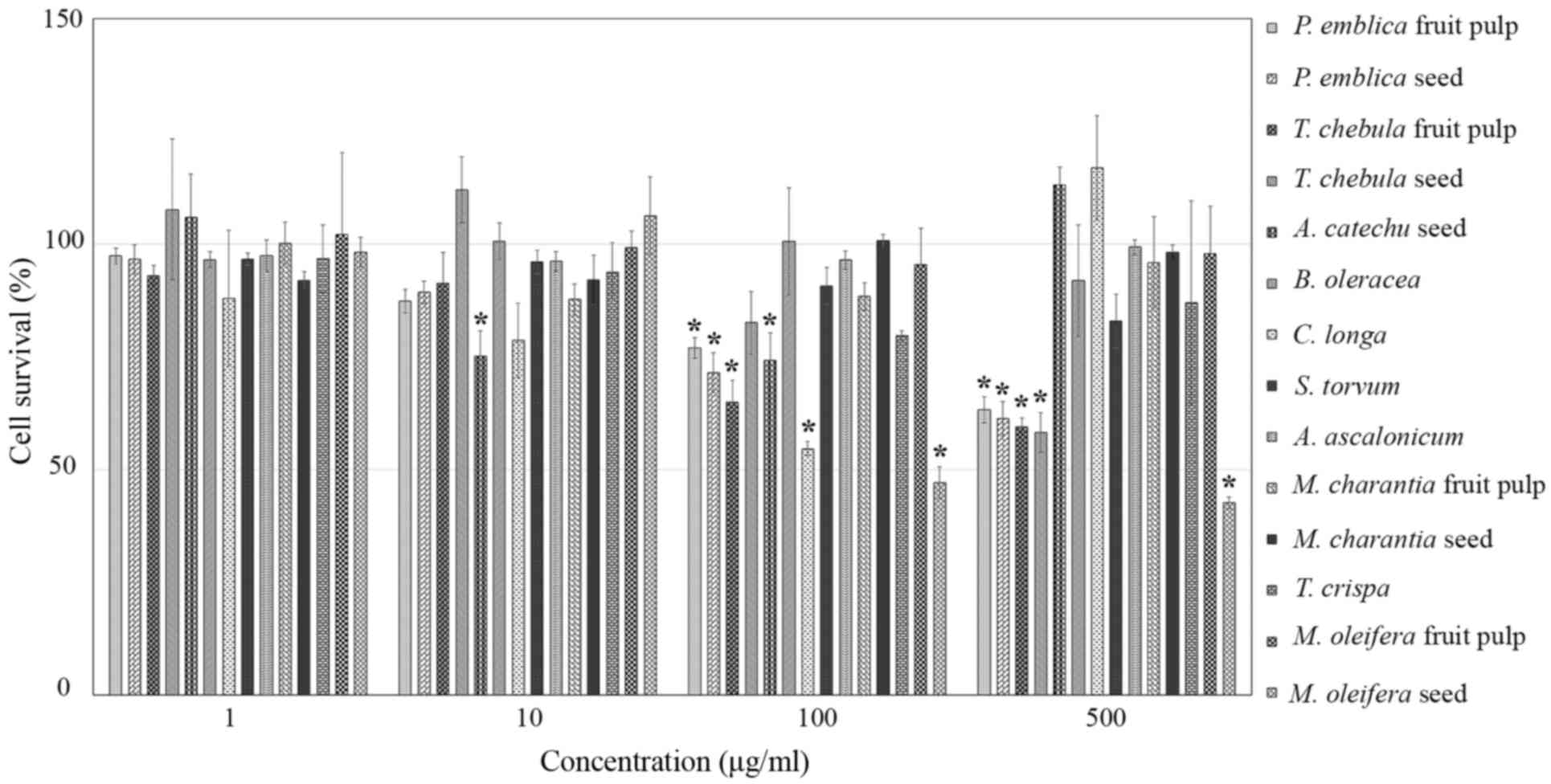
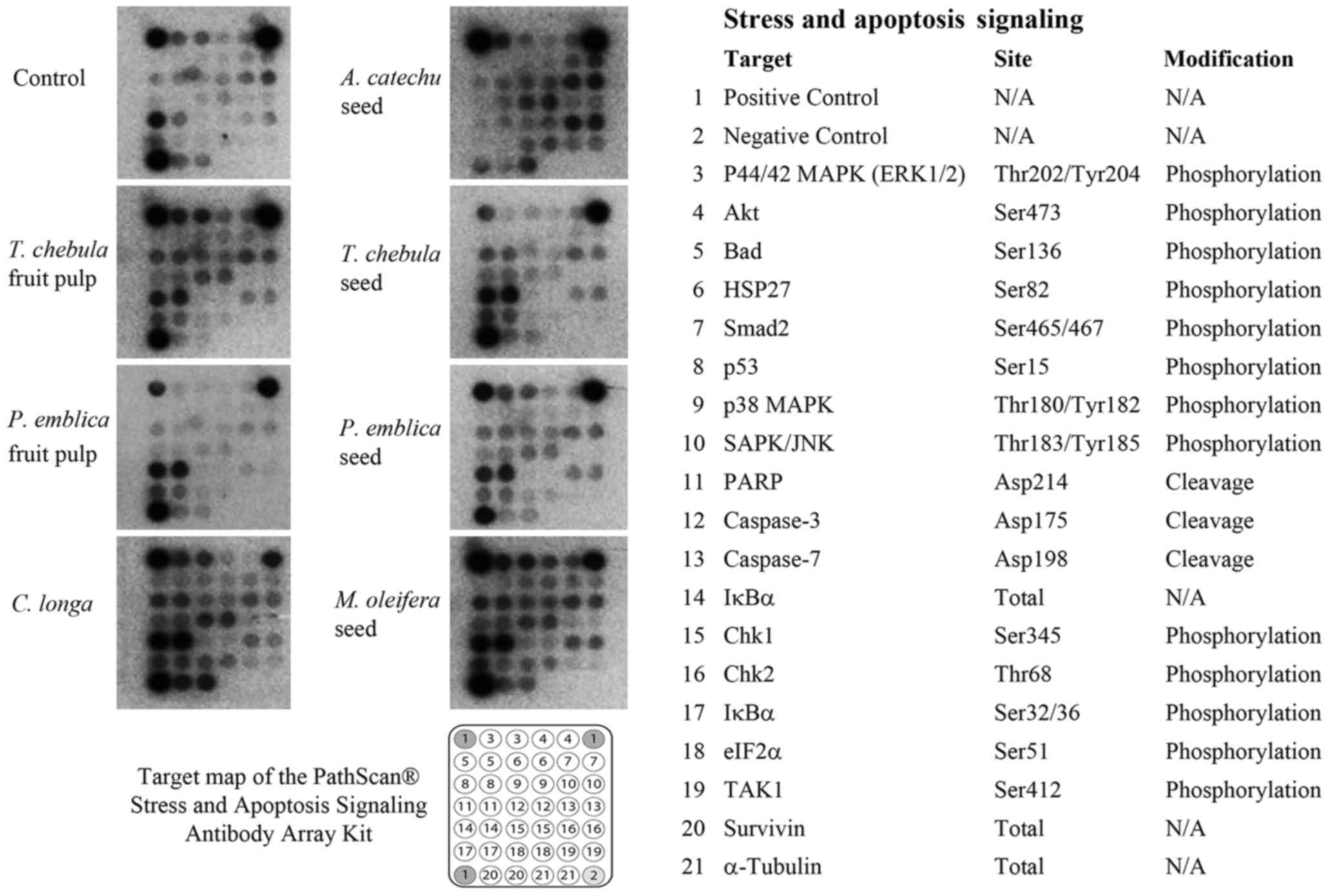
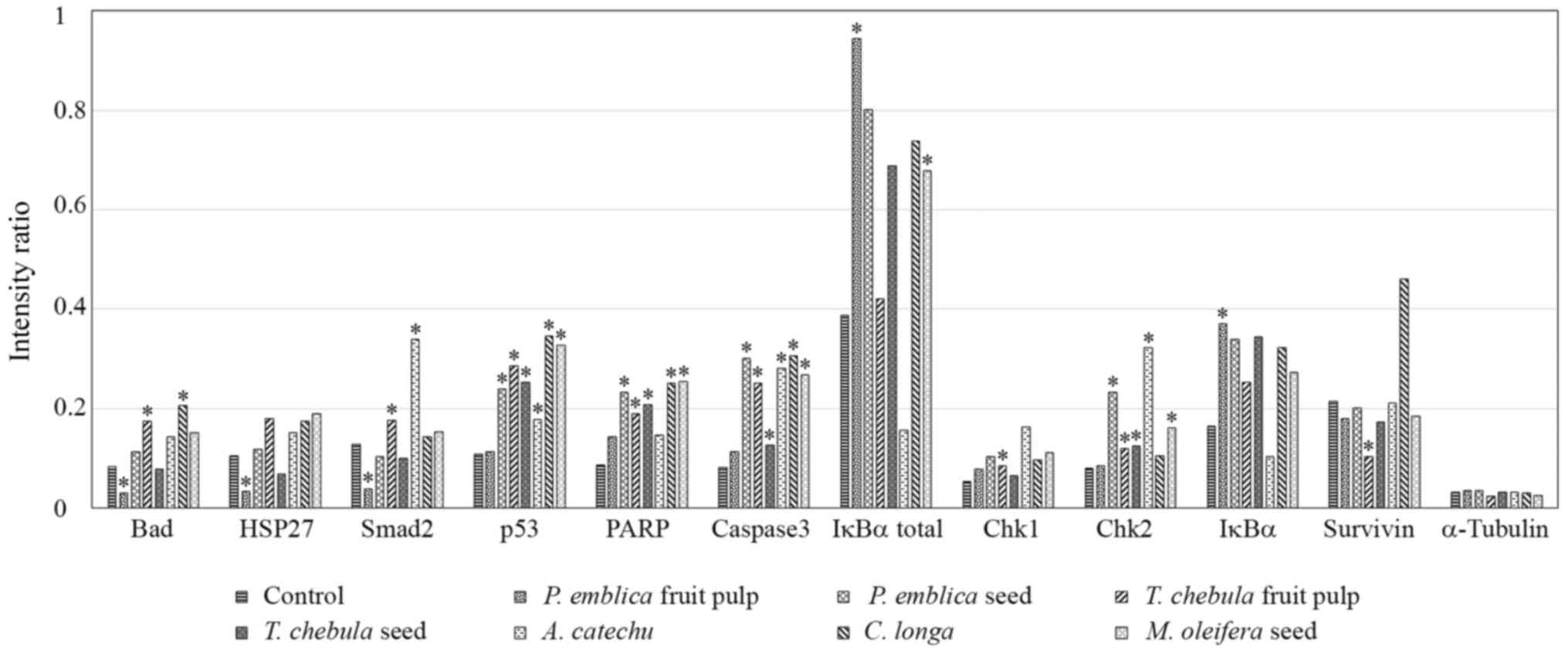
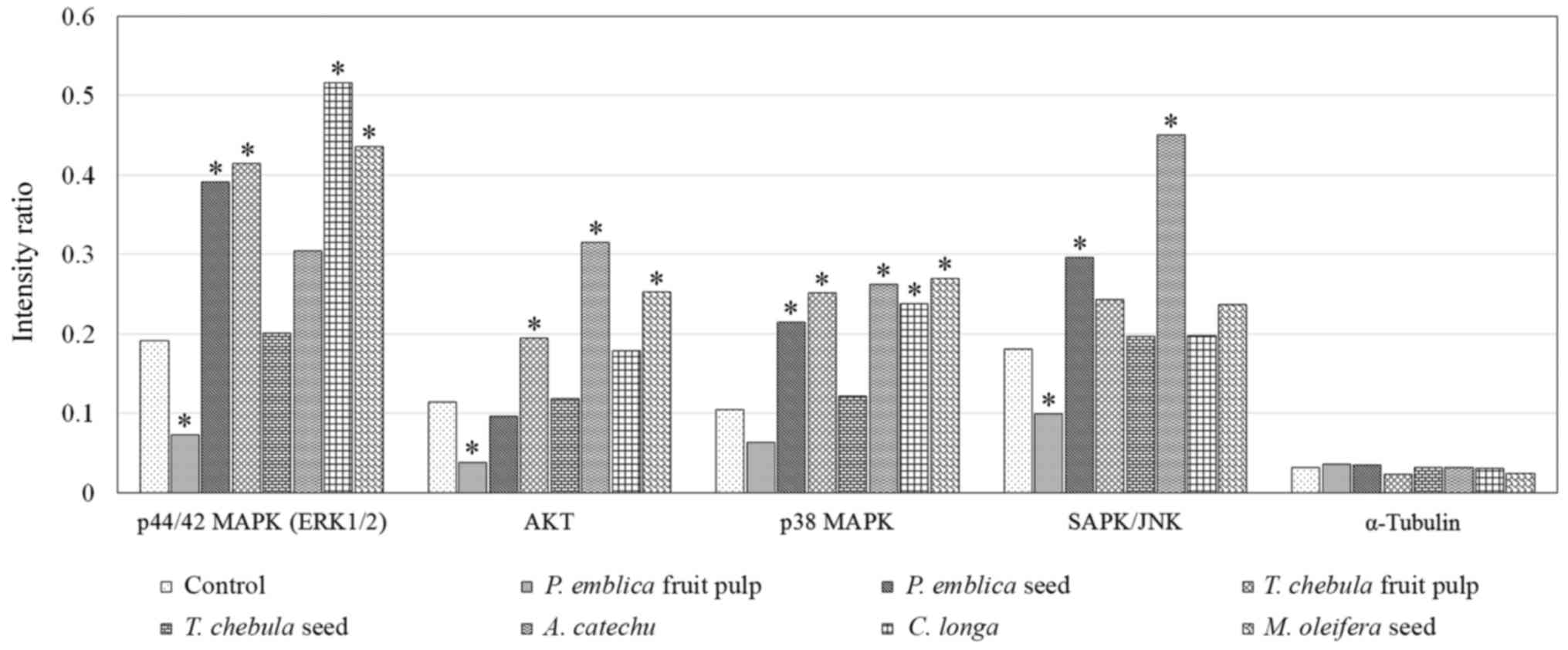
Cholangiocarcinoma (CCA) is one of the most common causes of cancer‑associated mortality in Thailand. Certain phytochemicals have been demonstrated to modulate apoptotic signaling pathways, which may be targeted for the prevention and treatment of cancer. Therefore, the aim of the present study was to investigate the effect of specific medicinal plants on the inhibition of CCA cell proliferation, and to identify the molecular mechanisms underlying this. A WST‑1 cell proliferation assay was performed using an RMCCA1 cell line, and apoptotic signaling pathways were also investigated using a PathScan Stress and Apoptosis Signaling Antibody Array Kit. The cell proliferation assay indicated that extracts from the Phyllanthus emblica fruit pulp (PEf), Phyllanthus emblica seed (PEs), Terminalia chebula fruit pulp (TCf), Terminalia chebula seed (TCs), Areca catechu seed (ACs), Curcuma longa (CL) and Moringa oleifera seed (MOs) exerted anti‑proliferative activity in RMCCA1 cells. In addition, the PathScan assay revealed that certain pro‑apoptotic molecules, including caspase‑3, poly (ADP‑ribose) polymerase, checkpoint kinase 2 and tumor protein 53, exhibited increased activity in RMCCA1 cells treated with the aforementioned selected plant extracts, with the exception of PEf. The mitogen‑activated protein kinase (MAPK) pathways (including ERK1/2 and p38 MAPK) expression level was significantly increased in RMCCA1 cells pre‑treated with extracts of PEs, TCf, CL and MOs. The activation of protein kinase B (Akt) was significantly demonstrated in RMCCA1 cells pre‑treated with extracts of TCf, ACs and MOs. In summary, the present study demonstrated that extracts of PEs, TCf, TCs, ACs, CL and MOs exhibited anti‑proliferative effects in CCA cells by inducing pro‑apoptotic signals and modulating signal transduction molecules. Further studies in vivo are required to demonstrate the potential applications of specific plant extracts for the treatment of human cancer.
View Figures

Figure 1

Figure 2

Figure 3

Figure 4

View References

1 

Sripa B and Pairojkul C: Cholangiocarcinoma: Lessons from Thailand. Curr Opin Gastroenterol. 24:349–356. 2008. View Article : Google Scholar : PubMed/NCBI

2 

Shanmugam MK, Kannaiyan R and Sethi G: Targeting cell signaling and apoptotic pathways by dietary agents: Role in the prevention and treatment of cancer. Nutr Cancer. 63:161–173. 2011. View Article : Google Scholar : PubMed/NCBI

3 

Zhao T, Sun Q, Marques M and Witcher M: Anticancer properties of Phyllanthus emblica (Indian gooseberry). Oxid Med Cell Longev. 2015:9508902015. View Article : Google Scholar : PubMed/NCBI

4 

Mahata S, Pandey A, Shukla S, Tyagi A, Husain SA, Das BC and Bharti AC: Anticancer activity of Phyllanthus emblica Linn. (Indian gooseberry): Inhibition of transcription factor AP-1 and HPV gene expression in cervical cancer cells. Nutr Cancer. 65:(Suppl). S88–S97. 2013. View Article : Google Scholar

5 

Zhu X, Wang J, Ou Y, Han W and Li H: Polyphenol extract of Phyllanthus emblica (PEEP) induces inhibition of cell proliferation and triggers apoptosis in cervical cancer cells. Eur J Med Res. 18:462013. View Article : Google Scholar : PubMed/NCBI

6 

Rahmani AH, Al Zohairy MA, Aly SM and Khan MA: Curcumin: A potential candidate in prevention of cancer via modulation of molecular pathways. BioMed Res Int. 2014:7616082014. View Article : Google Scholar : PubMed/NCBI

7 

Kumar N, Gangappa D, Gupta G and Karnati R: Chebulagic acid from Terminalia chebula causes G1 arrest, inhibits NFκB and induces apoptosis in retinoblastoma cells. BMC Complement Altern Med. 14:3192014. View Article : Google Scholar : PubMed/NCBI

8 

Leelawat S and Leelawat K: Moringa oleifera extracts induce cholangiocarcinoma cell apoptosis by induction of reactive oxygen species production. Int J Pharmacog Phytochem Res. 6:183–189. 2014.

9 

Berkovich L, Earon G, Ron I, Rimmon A, Vexler A and Lev-Ari S: Moringa Oleifera aqueous leaf extract down-regulates nuclear factor-kappaB and increases cytotoxic effect of chemotherapy in pancreatic cancer cells. BMC Complement Altern Med. 13:2122013. View Article : Google Scholar : PubMed/NCBI

10 

Nhiem NX, Yen PH, Ngan NT, Quang TH, Kiem PV, Minh CV, Tai BH, Cuong NX, Song SB and Kim YH: Inhibition of nuclear transcription factor-κB and activation of peroxisome proliferator-activated receptors in HepG2 cells by cucurbitane-type triterpene glycosides from Momordica charantia. J Med Food. 15:369–377. 2012. View Article : Google Scholar : PubMed/NCBI

11 

Li CJ, Tsang SF, Tsai CH, Tsai HY, Chyuan JH and Hsu HY: Momordica charantia extract induces apoptosis in human cancer cells through caspase- and mitochondria-dependent pathways. Evid-Based Complement Altern Med. 2012:2619712012. View Article : Google Scholar

12 

Li M, Gao F, Zhou ZS, Zhang HM, Zhang R, Wu YF, Bai MH, Li JJ, Lin SR and Peng JY: Arecoline inhibits epithelial cell viability by upregulating the apoptosis pathway: Implication for oral submucous fibrosis. Oncol Rep. 31:2422–2428. 2014.PubMed/NCBI

13 

Devi JR and Thangam EB: Mechanisms of anticancer activity of sulforaphane from Brassica oleracea in HEp-2 human epithelial carcinoma cell line. Asian Pac J Cancer Prev. 13:2095–2100. 2012. View Article : Google Scholar : PubMed/NCBI

14 

Abu MN, Salleh MAM, Radzman NHM, Ismail WIW, Yusoff RM and Hasan HF: Insulin sensitivity enhancement of the mixture of Tinospora Crispa and Gelam (Melaleuca Cajuputi) honey and its antiproliferative activity on hepatocellular carcinoma, HepG2: A preliminary study. J Med Res Devel. 2:48–54. 2013.

15 

Yousafa Z, Wanga Y and Baydounc E: Phytochemistry and pharmacological studies on Solanum torvum Swartz. J Appl Pharm Sci. 3:152–160. 2013.

16 

Mohammadi-Motlagh HR, Mostafaie A and Mansouri K: Anticancer and anti-inflammatory activities of shallot (Allium ascalonicum) extract. Arch Med Sci. 7:38–44. 2011. View Article : Google Scholar : PubMed/NCBI

17 

Rattanasinganchan P, Leelawat K, Treepongkaruna SA, Tocharoentanaphol C, Subwongcharoen S, Suthiphongchai T and Tohtong R: Establishment and characterization of a cholangiocarcinoma cell line (RMCCA-1) from a Thai patient. World J Gastroenterol. 12:6500–6506. 2006. View Article : Google Scholar : PubMed/NCBI

18 

Nowsheen S and Yang ES: The intersection between DNA damage response and cell death pathways. Exp Oncol. 34:234–254. 2012.

19 

Sasidharan S, Chen Y, Saravanan D, Sundram KM and Yoga Latha L: Extraction, isolation and characterization of bioactive compounds form plants' extracts. Afr J Tradit Complement Altern Med. 8:1–10. 2011.PubMed/NCBI

20 

Shalini S, Dorstyn L, Dawar S and Kumar S: Old, new and emerging functions of caspases. Cell Death Differ. 22:526–539. 2015. View Article : Google Scholar : PubMed/NCBI

21 

Yu SW, Wang H, Dawson TM and Dawson VL: Poly(ADP-ribose) polymerase-1 and apoptosis inducing factor in neurotoxicity. Neurobiol Dis. 14:303–317. 2003. View Article : Google Scholar : PubMed/NCBI

22 

Smith J, Tho LM, Xu N and Gillespie DA: The ATM-Chk2 and ATR-Chk1 pathways in DNA damage signaling and cancer. Adv Cancer Res. 108:73–112. 2010. View Article : Google Scholar : PubMed/NCBI

23 

Suh DK, Lee EJ, Kim HC and Kim JH: Induction of G(1)/S phase arrest and apoptosis by quercetin in human osteosarcoma cells. Arch Pharm Res. 33:781–785. 2010. View Article : Google Scholar : PubMed/NCBI

24 

Agarwal C, Tyagi A and Agarwal R: Gallic acid causes inactivating phosphorylation of cdc25A/cdc25C-cdc2 via ATM-Chk2 activation, leading to cell cycle arrest, and induces apoptosis in human prostate carcinoma DU145 cells. Mol Cancer Ther. 5:3294–3302. 2006. View Article : Google Scholar : PubMed/NCBI

25 

Meek DW: Regulation of the p53 response and its relationship to cancer. Biochem J. 469:325–346. 2015. View Article : Google Scholar : PubMed/NCBI

26 

Dmitrieva NI, Michea LF, Rocha GM and Burg MB: Cell cycle delay and apoptosis in response to osmotic stress. Comp Biochem Physiol A Mol Integr Physiol. 130:411–420. 2001. View Article : Google Scholar : PubMed/NCBI

27 

Chi SW: Structural insights into the transcription-independent apoptotic pathway of p53. BMB Rep. 47:167–172. 2014. View Article : Google Scholar : PubMed/NCBI

28 

Wu J, Tang Q, Zhao S, Zheng F, Wu Y, Tang G and Hahn SS: Extracellular signal-regulated kinase signaling-mediated induction and interaction of FOXO3a and p53 contribute to the inhibition of nasopharyngeal carcinoma cell growth by curcumin. Int J Oncol. 45:95–103. 2014.PubMed/NCBI

29 

Sui X, Kong N, Ye L, Han W, Zhou J, Zhang Q, He C and Pan H: p38 and JNK MAPK pathways control the balance of apoptosis and autophagy in response to chemotherapeutic agents. Cancer Lett. 344:174–179. 2014. View Article : Google Scholar : PubMed/NCBI

30 

Leelawat K, Keeratichamroen S, Leelawat S and Tohtong R: CD24 induces the invasion of cholangiocarcinoma cells by upregulating CXCR4 and increasing the phosphorylation of ERK1/2. Oncol Lett. 6:1439–1446. 2013.PubMed/NCBI

31 

Kim SJ, Ju JW, Oh CD, Yoon YM, Song WK, Kim JH, Yoo YJ, Bang OS, Kang SS and Chun JS: ERK-1/2 and p38 kinase oppositely regulate nitric oxide-induced apoptosis of chondrocytes in association with p53, caspase-3, and differentiation status. J Biol Chem. 277:1332–1339. 2002. View Article : Google Scholar : PubMed/NCBI

32 

Gong X, Liu A, Ming X, Deng P and Jiang Y: UV-induced interaction between p38 MAPK and p53 serves as a molecular switch in determining cell fate. FEBS Lett. 584:4711–4716. 2010. View Article : Google Scholar : PubMed/NCBI

33 

Cao F, Liu T, Xu Y, Xu D and Feng S: Curcumin inhibits cell proliferation and promotes apoptosis in human osteoclastoma cell through MMP-9, NF-κB and JNK signaling pathways. Int J Clin Exp Pathol. 8:6037–6045. 2015.PubMed/NCBI

34 

Nishina H, Wada T and Katada T: Physiological roles of SAPK/JNK signaling pathway. J Biochem. 136:123–126. 2004. View Article : Google Scholar : PubMed/NCBI

35 

Davis WJ, Lehmann PZ and Li W: Nuclear PI3K signaling in cell growth and tumorigenesis. Front Cell Dev Biol. 3:242015. View Article : Google Scholar : PubMed/NCBI

36 

Leelawat K, Udomchaiprasertkul W, Narong S and Leelawat S: Induction of MKP-1 prevents the cytotoxic effects of PI3K inhibition in hilar cholangiocarcinoma cells. J Cancer Res Clin Oncol. 136:1537–1544. 2010. View Article : Google Scholar : PubMed/NCBI

37 

Tang YQ, Jaganath I, Manikam R and Sekaran SD: Phyllanthus suppresses prostate cancer cell, PC-3, proliferation and induces apoptosis through multiple signaling pathways (MAPKs, PI3K/Akt, NFκB, and hypoxia). Evid-Based Complement Altern Med. 2013:1–13. 2013. View Article : Google Scholar

Related Articles

  • Abstract
  • View
  • Download
  • Twitter
Copy and paste a formatted citation
Spandidos Publications style
Leelawat S and Leelawat K: Molecular mechanisms of cholangiocarcinoma cell inhibition by medicinal plants. Oncol Lett 13: 961-966, 2017.
APA
Leelawat, S., & Leelawat, K. (2017). Molecular mechanisms of cholangiocarcinoma cell inhibition by medicinal plants. Oncology Letters, 13, 961-966. https://doi.org/10.3892/ol.2016.5488
MLA
Leelawat, S., Leelawat, K."Molecular mechanisms of cholangiocarcinoma cell inhibition by medicinal plants". Oncology Letters 13.2 (2017): 961-966.
Chicago
Leelawat, S., Leelawat, K."Molecular mechanisms of cholangiocarcinoma cell inhibition by medicinal plants". Oncology Letters 13, no. 2 (2017): 961-966. https://doi.org/10.3892/ol.2016.5488
Copy and paste a formatted citation
x
Spandidos Publications style
Leelawat S and Leelawat K: Molecular mechanisms of cholangiocarcinoma cell inhibition by medicinal plants. Oncol Lett 13: 961-966, 2017.
APA
Leelawat, S., & Leelawat, K. (2017). Molecular mechanisms of cholangiocarcinoma cell inhibition by medicinal plants. Oncology Letters, 13, 961-966. https://doi.org/10.3892/ol.2016.5488
MLA
Leelawat, S., Leelawat, K."Molecular mechanisms of cholangiocarcinoma cell inhibition by medicinal plants". Oncology Letters 13.2 (2017): 961-966.
Chicago
Leelawat, S., Leelawat, K."Molecular mechanisms of cholangiocarcinoma cell inhibition by medicinal plants". Oncology Letters 13, no. 2 (2017): 961-966. https://doi.org/10.3892/ol.2016.5488
Follow us
  • Twitter
  • LinkedIn
  • Facebook
About
  • Spandidos Publications
  • Careers
  • Cookie Policy
  • Privacy Policy
How can we help?
  • Help
  • Live Chat
  • Contact
  • Email to our Support Team