Spandidos Publications Logo
  • About
    • About Spandidos
    • Aims and Scopes
    • Abstracting and Indexing
    • Editorial Policies
    • Reprints and Permissions
    • Job Opportunities
    • Terms and Conditions
    • Contact
  • Journals
    • All Journals
    • Oncology Letters
      • Oncology Letters
      • Information for Authors
      • Editorial Policies
      • Editorial Board
      • Aims and Scope
      • Abstracting and Indexing
      • Bibliographic Information
      • Archive
    • International Journal of Oncology
      • International Journal of Oncology
      • Information for Authors
      • Editorial Policies
      • Editorial Board
      • Aims and Scope
      • Abstracting and Indexing
      • Bibliographic Information
      • Archive
    • Molecular and Clinical Oncology
      • Molecular and Clinical Oncology
      • Information for Authors
      • Editorial Policies
      • Editorial Board
      • Aims and Scope
      • Abstracting and Indexing
      • Bibliographic Information
      • Archive
    • Experimental and Therapeutic Medicine
      • Experimental and Therapeutic Medicine
      • Information for Authors
      • Editorial Policies
      • Editorial Board
      • Aims and Scope
      • Abstracting and Indexing
      • Bibliographic Information
      • Archive
    • International Journal of Molecular Medicine
      • International Journal of Molecular Medicine
      • Information for Authors
      • Editorial Policies
      • Editorial Board
      • Aims and Scope
      • Abstracting and Indexing
      • Bibliographic Information
      • Archive
    • Biomedical Reports
      • Biomedical Reports
      • Information for Authors
      • Editorial Policies
      • Editorial Board
      • Aims and Scope
      • Abstracting and Indexing
      • Bibliographic Information
      • Archive
    • Oncology Reports
      • Oncology Reports
      • Information for Authors
      • Editorial Policies
      • Editorial Board
      • Aims and Scope
      • Abstracting and Indexing
      • Bibliographic Information
      • Archive
    • Molecular Medicine Reports
      • Molecular Medicine Reports
      • Information for Authors
      • Editorial Policies
      • Editorial Board
      • Aims and Scope
      • Abstracting and Indexing
      • Bibliographic Information
      • Archive
    • World Academy of Sciences Journal
      • World Academy of Sciences Journal
      • Information for Authors
      • Editorial Policies
      • Editorial Board
      • Aims and Scope
      • Abstracting and Indexing
      • Bibliographic Information
      • Archive
    • International Journal of Functional Nutrition
      • International Journal of Functional Nutrition
      • Information for Authors
      • Editorial Policies
      • Editorial Board
      • Aims and Scope
      • Abstracting and Indexing
      • Bibliographic Information
      • Archive
    • International Journal of Epigenetics
      • International Journal of Epigenetics
      • Information for Authors
      • Editorial Policies
      • Editorial Board
      • Aims and Scope
      • Abstracting and Indexing
      • Bibliographic Information
      • Archive
    • Medicine International
      • Medicine International
      • Information for Authors
      • Editorial Policies
      • Editorial Board
      • Aims and Scope
      • Abstracting and Indexing
      • Bibliographic Information
      • Archive
  • Articles
  • Information
    • Information for Authors
    • Information for Reviewers
    • Information for Librarians
    • Information for Advertisers
    • Conferences
  • Language Editing
Spandidos Publications Logo
  • About
    • About Spandidos
    • Aims and Scopes
    • Abstracting and Indexing
    • Editorial Policies
    • Reprints and Permissions
    • Job Opportunities
    • Terms and Conditions
    • Contact
  • Journals
    • All Journals
    • Biomedical Reports
      • Information for Authors
      • Editorial Policies
      • Editorial Board
      • Aims and Scope
      • Abstracting and Indexing
      • Bibliographic Information
      • Archive
    • Experimental and Therapeutic Medicine
      • Information for Authors
      • Editorial Policies
      • Editorial Board
      • Aims and Scope
      • Abstracting and Indexing
      • Bibliographic Information
      • Archive
    • International Journal of Epigenetics
      • Information for Authors
      • Editorial Policies
      • Editorial Board
      • Aims and Scope
      • Abstracting and Indexing
      • Bibliographic Information
      • Archive
    • International Journal of Functional Nutrition
      • Information for Authors
      • Editorial Policies
      • Editorial Board
      • Aims and Scope
      • Abstracting and Indexing
      • Bibliographic Information
      • Archive
    • International Journal of Molecular Medicine
      • Information for Authors
      • Editorial Policies
      • Editorial Board
      • Aims and Scope
      • Abstracting and Indexing
      • Bibliographic Information
      • Archive
    • International Journal of Oncology
      • Information for Authors
      • Editorial Policies
      • Editorial Board
      • Aims and Scope
      • Abstracting and Indexing
      • Bibliographic Information
      • Archive
    • Medicine International
      • Information for Authors
      • Editorial Policies
      • Editorial Board
      • Aims and Scope
      • Abstracting and Indexing
      • Bibliographic Information
      • Archive
    • Molecular and Clinical Oncology
      • Information for Authors
      • Editorial Policies
      • Editorial Board
      • Aims and Scope
      • Abstracting and Indexing
      • Bibliographic Information
      • Archive
    • Molecular Medicine Reports
      • Information for Authors
      • Editorial Policies
      • Editorial Board
      • Aims and Scope
      • Abstracting and Indexing
      • Bibliographic Information
      • Archive
    • Oncology Letters
      • Information for Authors
      • Editorial Policies
      • Editorial Board
      • Aims and Scope
      • Abstracting and Indexing
      • Bibliographic Information
      • Archive
    • Oncology Reports
      • Information for Authors
      • Editorial Policies
      • Editorial Board
      • Aims and Scope
      • Abstracting and Indexing
      • Bibliographic Information
      • Archive
    • World Academy of Sciences Journal
      • Information for Authors
      • Editorial Policies
      • Editorial Board
      • Aims and Scope
      • Abstracting and Indexing
      • Bibliographic Information
      • Archive
  • Articles
  • Information
    • For Authors
    • For Reviewers
    • For Librarians
    • For Advertisers
    • Conferences
  • Language Editing
Login Register Submit
  • This site uses cookies
  • You can change your cookie settings at any time by following the instructions in our Cookie Policy. To find out more, you may read our Privacy Policy.

    I agree
Search articles by DOI, keyword, author or affiliation
Search
Advanced Search
presentation
Oncology Letters
Join Editorial Board Propose a Special Issue
Print ISSN: 1792-1074 Online ISSN: 1792-1082
Journal Cover
February-2017 Volume 13 Issue 2

Full Size Image

Sign up for eToc alerts
Recommend to Library

Journals

International Journal of Molecular Medicine

International Journal of Molecular Medicine

International Journal of Molecular Medicine is an international journal devoted to molecular mechanisms of human disease.

International Journal of Oncology

International Journal of Oncology

International Journal of Oncology is an international journal devoted to oncology research and cancer treatment.

Molecular Medicine Reports

Molecular Medicine Reports

Covers molecular medicine topics such as pharmacology, pathology, genetics, neuroscience, infectious diseases, molecular cardiology, and molecular surgery.

Oncology Reports

Oncology Reports

Oncology Reports is an international journal devoted to fundamental and applied research in Oncology.

Experimental and Therapeutic Medicine

Experimental and Therapeutic Medicine

Experimental and Therapeutic Medicine is an international journal devoted to laboratory and clinical medicine.

Oncology Letters

Oncology Letters

Oncology Letters is an international journal devoted to Experimental and Clinical Oncology.

Biomedical Reports

Biomedical Reports

Explores a wide range of biological and medical fields, including pharmacology, genetics, microbiology, neuroscience, and molecular cardiology.

Molecular and Clinical Oncology

Molecular and Clinical Oncology

International journal addressing all aspects of oncology research, from tumorigenesis and oncogenes to chemotherapy and metastasis.

World Academy of Sciences Journal

World Academy of Sciences Journal

Multidisciplinary open-access journal spanning biochemistry, genetics, neuroscience, environmental health, and synthetic biology.

International Journal of Functional Nutrition

International Journal of Functional Nutrition

Open-access journal combining biochemistry, pharmacology, immunology, and genetics to advance health through functional nutrition.

International Journal of Epigenetics

International Journal of Epigenetics

Publishes open-access research on using epigenetics to advance understanding and treatment of human disease.

Medicine International

Medicine International

An International Open Access Journal Devoted to General Medicine.

Journal Cover
February-2017 Volume 13 Issue 2

Full Size Image

Sign up for eToc alerts
Recommend to Library

  • Article
  • Citations
    • Cite This Article
    • Download Citation
    • Create Citation Alert
    • Remove Citation Alert
    • Cited By
  • Similar Articles
    • Related Articles (in Spandidos Publications)
    • Similar Articles (Google Scholar)
    • Similar Articles (PubMed)
  • Download PDF
  • Download XML
  • View XML
Article Open Access

EGFR expression is associated with cytoplasmic staining of CXCR4 and predicts poor prognosis in triple‑negative breast carcinomas

  • Authors:
    • Rong‑Hui Li
    • Wen‑He Huang
    • Jun‑Dong Wu
    • Cai‑Wen Du
    • Guo‑Jun Zhang
  • View Affiliations / Copyright

    Affiliations: The Breast Center, Cancer Hospital of Shantou University Medical College, Shantou, Guangdong 515041, P.R. China, Chang Jiang Scholar's Laboratory, Cancer Hospital of Shantou University Medical College, Shantou, Guangdong 515041, P.R. China
    Copyright: © Li et al. This is an open access article distributed under the terms of Creative Commons Attribution License.
  • Pages: 695-703
    |
    Published online on: December 12, 2016
       https://doi.org/10.3892/ol.2016.5489
  • Expand metrics +
Metrics: Total Views: 0 (Spandidos Publications: | PMC Statistics: )
Metrics: Total PDF Downloads: 0 (Spandidos Publications: | PMC Statistics: )
Cited By (CrossRef): 0 citations Loading Articles...

This article is mentioned in:


Abstract

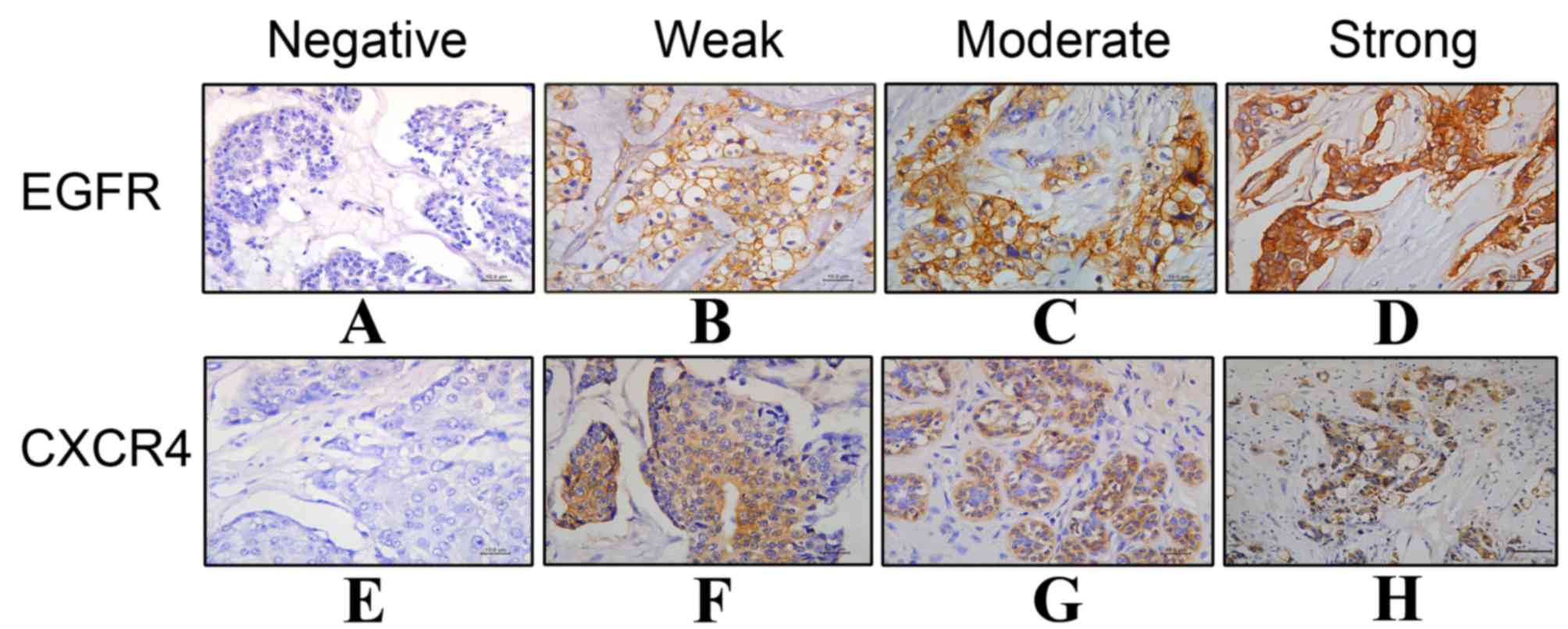
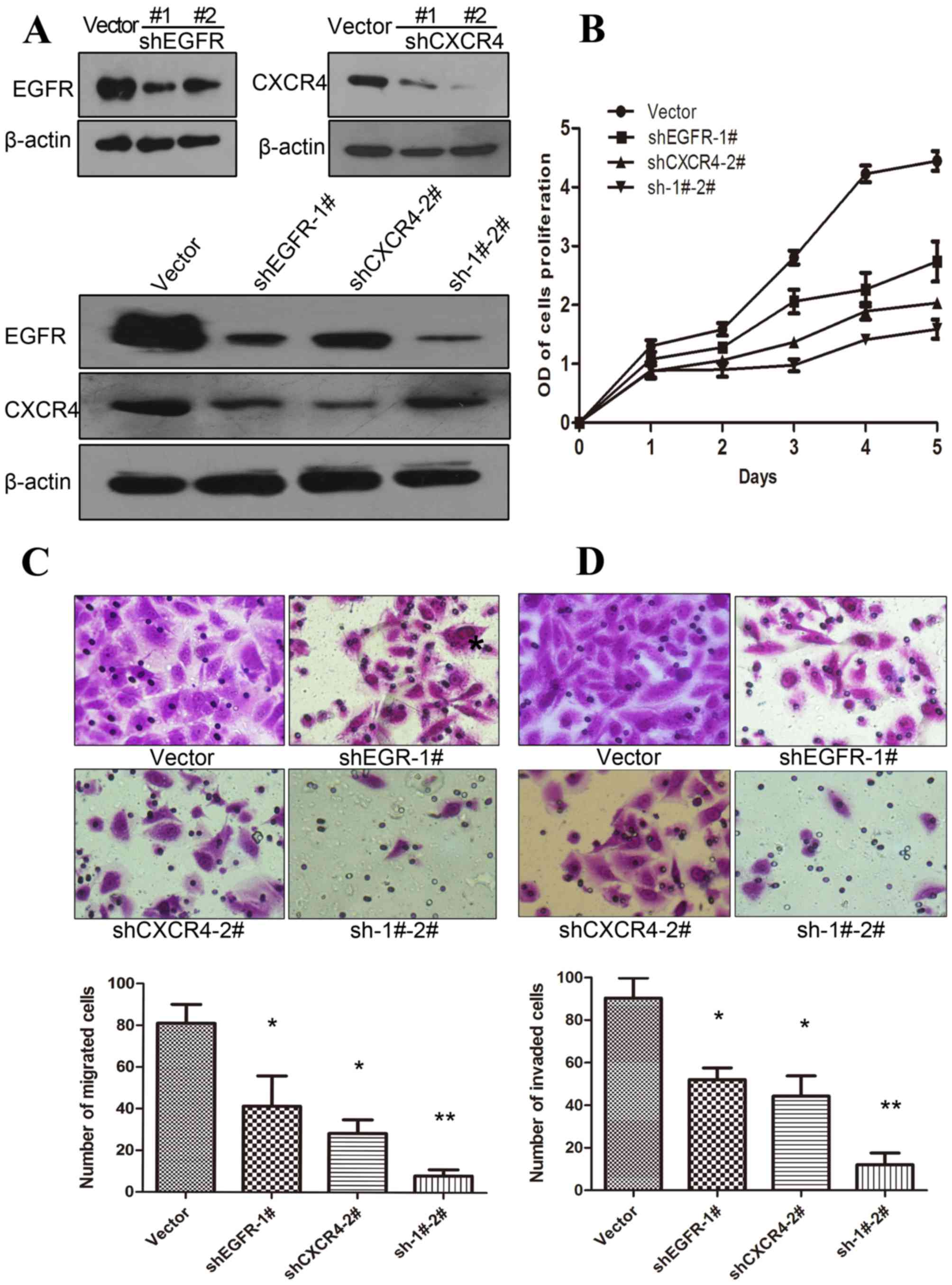
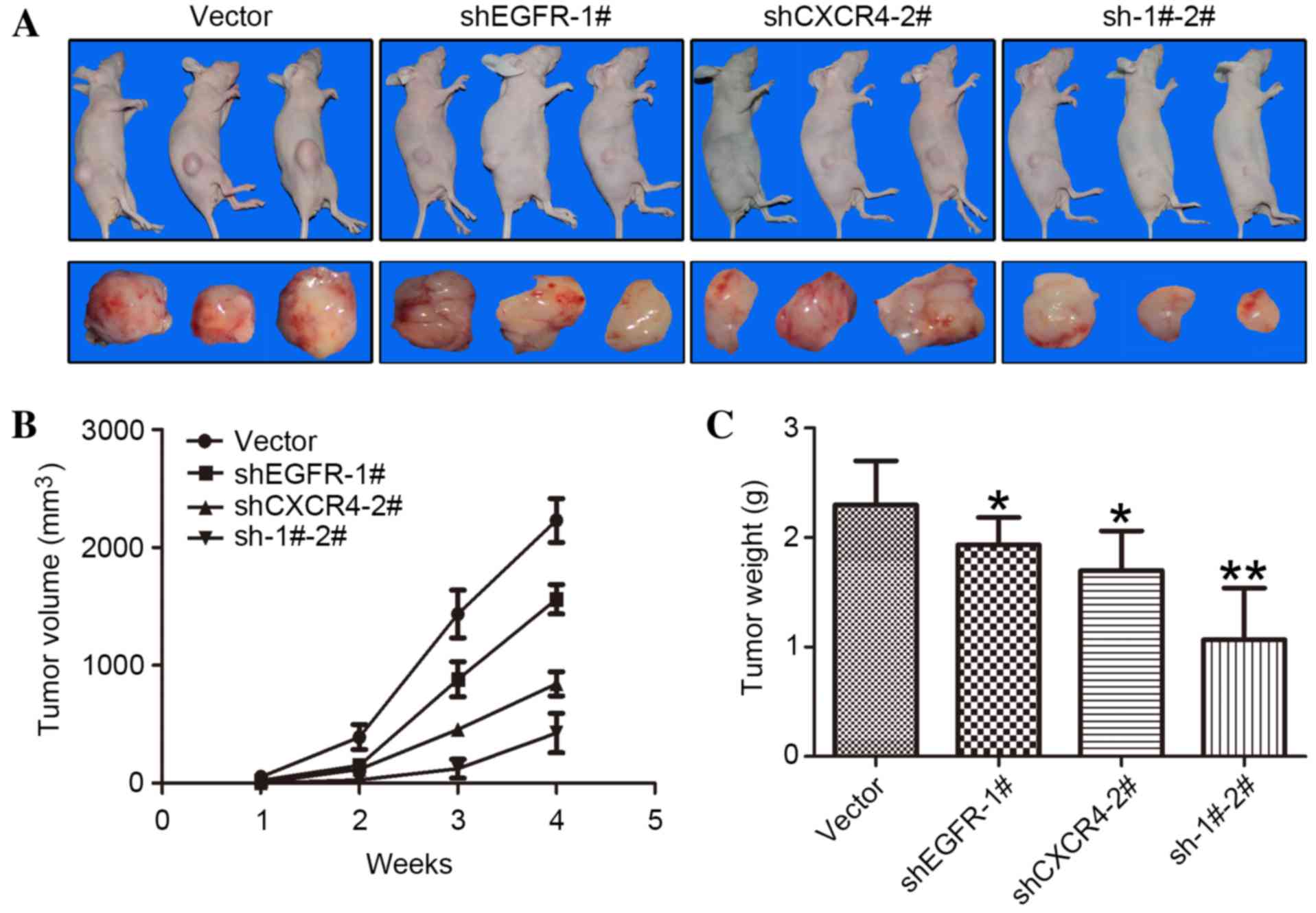
The purpose of the present study was to investigate the significance of C‑X‑C motif chemokine receptor type 4 (CXCR4) and epidermal growth factor receptors (EGFRs) in triple‑negative breast cancer (TNBC). CXCR4 and EGFR expression levels were immunohistochemically determined in 207 primary breast cancer specimens. The associations between receptor expression and clinicopathological characteristics were analyzed, and receptor expression was also assessed as a prognostic factor. In the human MDA‑MB‑231 TNBC cell line, CXCR4 or EGFR was stably knocked down by short hairpin RNA, and the biological behavior of the cells, including migration, invasion and tumorigenesis, was investigated. The results revealed that TNBC was associated with younger age, higher histological grade and an aggressive phenotype. CXCR4 and EGFR were highly expressed in patients with TNBC, and those with high CXCR4 or EGFR expression exhibited an unfavorable prognosis in terms of disease‑free survival and overall survival. In MDA‑MB‑231 cells, the expression of CXCR4 protein was decreased following EGFR silencing, while CXCR4 knockdown also caused a decrease in EGFR protein levels. The migratory and invasive capabilities of MDA‑MB‑231 cells were decreased following the knockdown of CXCR4 or EGFR expression. A strong correlation between CXCR4 and EGFR expression was identified in patients with TNBC. The results suggest that elevated expression levels of these two receptors may serve as predictive factors for poor prognosis in patients with TNBC. In addition, tumor proliferation, migration, invasion and tumorigenesis are weakened in MDA‑MB‑231 cells following suppression of CXCR4 or EGFR expression. Therefore, EGFR and CXCR4 may be potential therapeutic targets for TNBC.
View Figures

Figure 1

Figure 2

Figure 3

View References

1 

Prat A, Adamo B, Cheang MC, Anders CK, Carey LA and Perou CM: Molecular characterization of basal-like and non-basal-like triple-negative breast cancer. Oncologist. 18:123–133. 2013. View Article : Google Scholar : PubMed/NCBI

2 

Nassar A, Sussman ZM, Lawson D and Cohen C: Inference of the Basal epithelial phenotype in breast carcinoma from differential marker expression, using tissue microarrays in triple negative breast cancer and women younger than 35. Breast J. 18:399–405. 2012. View Article : Google Scholar : PubMed/NCBI

3 

Choi WT, Yang Y, Xu Y and An J: Targeting chemokine receptor CXCR4 for treatment of HIV-1 infection, tumor progression and metastasis. Curr Top Med Chem. 14:1574–1589. 2014. View Article : Google Scholar : PubMed/NCBI

4 

Jin F, Brockmeier U, Otterbach F and Metzen E: New insight into the SDF-1/CXCR4 axis in a breast carcinoma model: Hypoxia-induced endothelial SDF-1 and tumor cell CXCR4 are required for tumor cell intravasation. Mol Cancer Res. 10:1021–1031. 2012. View Article : Google Scholar : PubMed/NCBI

5 

Luker KE, Lewin SA, Mihalko LA, Schmidt BT, Winkler JS, Coggins NL, Thomas DG and Luker GD: Scavenging of CXCL12 by CXCR7 promotes tumor growth and metastasis of CXCR4-positive breast cancer cells. Oncogene. 31:4750–4758. 2012. View Article : Google Scholar : PubMed/NCBI

6 

Chu QD, Panu L, Holm NT, Li BD, Johnson LW and Zhang S: High chemokine receptor CXCR4 level in triple negative breast cancer specimens predicts poor clinical outcome. J Surg Res. 159:689–95. 2010. View Article : Google Scholar : PubMed/NCBI

7 

Petersen ER, Sørensen PD, Jakobsen EH, Madsen JS and Brandslund I: Serum HER-2 predicts response and resistance to trastuzumab treatment in breast cancer. Clin Chem Lab Med. 51:1483–1492. 2013. View Article : Google Scholar : PubMed/NCBI

8 

Tang Y, Zhu L, Li Y, Ji J, Li J, Yuan F, Wang D, Chen W, Huang O, Chen X, et al: Overexpression of epithelial growth factor receptor (EGFR) predicts better response to neo-adjuvant chemotherapy in patients with triple-negative breast cancer. J Transl Med. 10:(Suppl 1). S42012. View Article : Google Scholar : PubMed/NCBI

9 

Skedgel C, Rayson D and Younis T: Is adjuvant trastuzumab a cost-effective therapy for HER-2/neu-positive T1bN0 breast cancer? Ann Oncol. 24:1834–1840. 2013. View Article : Google Scholar : PubMed/NCBI

10 

Burness ML, Grushko TA and Olopade OI: Epidermal growth factor receptor in triple-negative and basal-like breast cancer: Promising clinical target or only a marker? Cancer J. 16:23–32. 2010. View Article : Google Scholar : PubMed/NCBI

11 

Brand TM, lida M, Luthar N, Starr MM, Huppert EJ and Wheeler DL: Nuclear EGFR as a molecular target in cancer. Radiother Oncol. 108:370–377. 2013. View Article : Google Scholar : PubMed/NCBI

12 

Masuda H, Zhang D, Bartholomeusz C, Doihara H, Hortobagyi GN and Ueno NT: Role of epidermal growth factor receptor in breast cancer. Breast Cancer Res Treat. 136:331–345. 2012. View Article : Google Scholar : PubMed/NCBI

13 

Rahimi M, George J and Tang C: EGFR variant-mediated invasion by enhanced CXCR4 expression through transcriptional and post-translational mechanisms. Int J Cancer. 126:1850–1860. 2010.PubMed/NCBI

14 

Salvucci O, Bouchard A, Baccarelli A, Deschênes J, Sauter G, Simon R, Bianchi R and Basik M: The role of CXCR4 receptor expression in breast cancer: A large tissue microarray study. Breast Cancer Res Treat. 97:275–283. 2006. View Article : Google Scholar : PubMed/NCBI

15 

Cabioglu N, Summy J, Miller C, Parikh NU, Sahin AA, Tuzlali S, Pumiglia K, Gallick GE and Price JE: CXCL-12/stromal cell-derived factor-1alpha transactivates HER2-neu in breast cancer cells by a novel pathway involving Src kinase activation. Cancer Res. 65:6493–6497. 2005. View Article : Google Scholar : PubMed/NCBI

16 

Phillips RJ, Mestas J, Gharaee-Kermani M, Burdick MD, Sica A, Belperio JA, Keane MP and Strieter RM: Epidermal growth factor and hypoxia-induced expression of CXC chemokine receptor 4 on non-small cell lung cancer cells is regulated by the phosphatidylinositol 3-kinase/PTEN/AKT/mammalian target of rapamycin signaling pathway and activation of hypoxia inducible factor-1alpha. J Biol Chem. 280:22473–22481. 2005. View Article : Google Scholar : PubMed/NCBI

17 

Rahimi M, Toth TA and Tang CK: CXCR4 suppression attenuates EGFRvIII-mediated invasion and induces p38 MAPK-dependent protein trafficking and degradation of EGFRvIII in breast cancer cells. Cancer Lett. 306:43–51. 2011. View Article : Google Scholar : PubMed/NCBI

18 

Liu Y, Ji R, Li J, Gu Q, Zhao X, Sun T, Wang J, Li J, Du Q and Sun B: Correlation effect of EGFR and CXCR4 and CCR7 chemokine receptors in predicting breast cancer metastasis and prognosis. J Exp Clin Cancer Res. 29:162010. View Article : Google Scholar : PubMed/NCBI

19 

Jin Z, Zhao C, Han X and Han Y: Wnt5a promotes ewing sarcoma cell migration through upregulating CXCR4 expression. BMC Cancer. 12:4802012. View Article : Google Scholar : PubMed/NCBI

20 

Wu J, Zhang B, Wu M, Li H, Niu R, Ying G and Zhang N: Screening of a PKC zeta-specific kinase inhibitor PKCzI257.3 which inhibits EGF-induced breast cancer cell chemotaxis. Invest New Drugs. 28:268–275. 2010. View Article : Google Scholar : PubMed/NCBI

21 

Lapteva N, Yang AG, Sanders DE, Strube RW and Chen SY: CXCR4 knockdown by small interfering RNA abrogates breast tumor growth in vivo. Cancer Gene Ther. 12:84–89. 2005. View Article : Google Scholar : PubMed/NCBI

22 

Spina A, Di Maiolo F, Esposito A, Sapio L, Chiosi E, Sorvillo L and Naviglio S: cAMP elevation down-regulates β3 integrin and focal adhesion kinase and inhibits leptin-induced migration of MDA-MB-231 breast cancer cells. Biores Open Access. 1:324–332. 2012. View Article : Google Scholar : PubMed/NCBI

23 

Ye Q, Kantonen S and Gomez-Cambronero J: Serum deprivation confers the MDA-MB-231 breast cancer line with an EGFR/JAK3/PLD2 system that maximizes cancer cell invasion. J Mol Biol. 425:755–766. 2013. View Article : Google Scholar : PubMed/NCBI

24 

Murillo G, Peng X, Torres KE and Mehta RG: Deguelin inhibits growth of breast cancer cells by modulating the expression of key members of the Wnt signaling pathway. Cancer Prev Res (Phila). 2:942–950. 2009. View Article : Google Scholar : PubMed/NCBI

25 

Pattarozzi A, Gatti M, Barbieri F, Würth R, Porcile C, Lunardi G, Ratto A, Favoni R, Bajetto A, Ferrari A and Florio T: 17beta-estradiol promotes breast cancer cell proliferation-inducing stromal cell-derived factor-1-mediated epidermal growth factor receptor transactivation: Reversal by gefitinib pretreatment. Mol Pharmacol. 73:191–202. 2008. View Article : Google Scholar : PubMed/NCBI

26 

Sales KJ, Grant V, Catalano RD and Jabbour HN: Chorionic gonadotrophin regulates CXCR4 expression in human endometrium via E-series prostanoid receptor 2 signalling to PI3K-ERK1/2: Implications for fetal-maternal crosstalk for embryo implantation. Mol Hum Reprod. 17:22–32. 2011. View Article : Google Scholar : PubMed/NCBI

27 

Liang YJ, Wang QY, Zhou CX, Yin QQ, He M, Yu XT, Cao DX, Chen GQ, He JR and Zhao Q: MiR-124 targets Slug to regulate epithelial-mesenchymal transition and metastasis of breast cancer. Carcinogenesis. 34:713–722. 2013. View Article : Google Scholar : PubMed/NCBI

28 

Hallett MA, Teng B, Hasegawa H, Schwab LP, Seagroves TN and Pourmotabbed T: Anti-matrix metalloproteinase-9 DNAzyme decreases tumor growth in the MMTV-PyMT mouse model of breast cancer. Breast Cancer Res. 15:R122013. View Article : Google Scholar : PubMed/NCBI

29 

Nasser MW, Qamri Z, Deol YS, Smith D, Shilo K, Zou X and Ganju RK: Crosstalk between chemokine receptor CXCR4 and cannabinoid receptor CB2 in modulating breast cancer growth and invasion. PLoS One. 6:e239012011. View Article : Google Scholar : PubMed/NCBI

30 

Liedtke C, Hess KR, Karn T, Rody A, Kiesel L, Hortobagyi GN, Pusztai L and Gonzalez-Angulo AM: The prognostic impact of age in patients with triple-negative breast cancer. Breast Cancer Res Treat. 138:591–599. 2013. View Article : Google Scholar : PubMed/NCBI

31 

Wendel C, Hemping-Bovenkerk A, Krasnyanska J, Mees ST, Kochetkova M, Stoeppeler S and Haier J: CXCR4/CXCL12 participate in extravasation of metastasizing breast cancer cells within the liver in a rat model. PLoS One. 7:e300462012. View Article : Google Scholar : PubMed/NCBI

32 

Lee MF, Pan MH, Chiou YS, Cheng AC and Huang H: Resveratrol modulates MED28 (Magicin/EG-1) expression and inhibits epidermal growth factor (EGF)-induced migration in MDA-MB-231 human breast cancer cells. J Agric Food Chem. 59:11853–11861. 2011. View Article : Google Scholar : PubMed/NCBI

33 

Thike AA, Cheok PY, Jara-Lazaro AR, Tan B, Tan P and Tan PH: Triple-negative breast cancer: Clinicopathological characteristics and relationship with basal-like breast cancer. Mod Pathol. 23:123–133. 2010. View Article : Google Scholar : PubMed/NCBI

34 

de Ruijter TC, Veeck J, de Hoon JP, van Engeland M and Tjan-Heijnen VC: Characteristics of triple-negative breast cancer. J Cancer Res Clin Oncol. 137:183–192. 2011. View Article : Google Scholar : PubMed/NCBI

35 

Bae SY, Lee SK, Koo MY, Hur SM, Choi MY, Cho DH, Kim S, Choe JH, Lee JE, Kim JH, et al: The prognoses of metaplastic breast cancer patients compared to those of triple-negative breast cancer patients. Breast Cancer Res Treat. 126:471–478. 2011. View Article : Google Scholar : PubMed/NCBI

36 

Choi YL, Oh E, Park S, Kim Y, Park YH, Song K, Cho EY, Hong YC, Choi JS, Lee JE, et al: Triple-negative, basal-like, and quintuple-negative breast cancers: Better prediction model for survival. BMC Cancer. 10:5072010. View Article : Google Scholar : PubMed/NCBI

37 

Chacón RD and Costanzo MV: Triple-negative breast cancer. Breast Cancer Res. 12:(Suppl 2). S32010. View Article : Google Scholar

38 

Boudot A, Kerdivel G, Habauzit D, Eeckhoute J, Le Dily F, Flouriot G, Samson M and Pakdel F: Differential estrogen-regulation of CXCL12 chemokine receptors, CXCR4 and CXCR7, contributes to the growth effect of estrogens in breast cancer cells. PLoS One. 6:e208982011. View Article : Google Scholar : PubMed/NCBI

39 

Hawkins OE and Richmond A: The dynamic yin-yang interaction of CXCR4 and CXCR7 in breast cancer metastasis. Breast Cancer Res. 14:1032012. View Article : Google Scholar : PubMed/NCBI

40 

Lill NL and Sever NI: Where EGF receptors transmit their signals. Sci Signal. 5:pe412012. View Article : Google Scholar : PubMed/NCBI

41 

Tsai PC, Hsieh CY, Chiu CC, Wang CK, Chang LS and Lin SR: Cardiotoxin III suppresses MDA-MB-231 cell metastasis through the inhibition of EGF/EGFR-mediated signaling pathway. Toxicon. 60:734–743. 2012. View Article : Google Scholar : PubMed/NCBI

42 

Liu D, He J, Yuan Z, Wang S, Peng R, Shi Y, Teng X and Qin T: EGFR expression correlates with decreased disease-free survival in triple-negative breast cancer: A retrospective analysis based on a tissue microarray. Med Oncol. 29:401–405. 2012. View Article : Google Scholar : PubMed/NCBI

43 

Billadeau DD, Chatterjee S, Bramati P, Sreekumar R, Shah V, Hedin K and Urrutia R: Characterization of the CXCR4 signaling in pancreatic cancer cells. Int J Gastrointest Cancer. 37:110–119. 2006.PubMed/NCBI

44 

Yasumoto K, Yamada T, Kawashima A, Wang W, Li Q, Donev IS, Tacheuchi S, Mouri H, Yamashita K, Ohtsubo K and Yano S: The EGFR ligands amphiregulin and heparin-binding egf-like growth factor promote peritoneal carcinomatosis in CXCR4-expressing gastric cancer. Clin Cancer Res. 17:3619–3630. 2011. View Article : Google Scholar : PubMed/NCBI

Related Articles

  • Abstract
  • View
  • Download
  • Twitter
Copy and paste a formatted citation
Spandidos Publications style
Li RH, Huang WH, Wu JD, Du CW and Zhang GJ: EGFR expression is associated with cytoplasmic staining of CXCR4 and predicts poor prognosis in triple‑negative breast carcinomas. Oncol Lett 13: 695-703, 2017.
APA
Li, R., Huang, W., Wu, J., Du, C., & Zhang, G. (2017). EGFR expression is associated with cytoplasmic staining of CXCR4 and predicts poor prognosis in triple‑negative breast carcinomas. Oncology Letters, 13, 695-703. https://doi.org/10.3892/ol.2016.5489
MLA
Li, R., Huang, W., Wu, J., Du, C., Zhang, G."EGFR expression is associated with cytoplasmic staining of CXCR4 and predicts poor prognosis in triple‑negative breast carcinomas". Oncology Letters 13.2 (2017): 695-703.
Chicago
Li, R., Huang, W., Wu, J., Du, C., Zhang, G."EGFR expression is associated with cytoplasmic staining of CXCR4 and predicts poor prognosis in triple‑negative breast carcinomas". Oncology Letters 13, no. 2 (2017): 695-703. https://doi.org/10.3892/ol.2016.5489
Copy and paste a formatted citation
x
Spandidos Publications style
Li RH, Huang WH, Wu JD, Du CW and Zhang GJ: EGFR expression is associated with cytoplasmic staining of CXCR4 and predicts poor prognosis in triple‑negative breast carcinomas. Oncol Lett 13: 695-703, 2017.
APA
Li, R., Huang, W., Wu, J., Du, C., & Zhang, G. (2017). EGFR expression is associated with cytoplasmic staining of CXCR4 and predicts poor prognosis in triple‑negative breast carcinomas. Oncology Letters, 13, 695-703. https://doi.org/10.3892/ol.2016.5489
MLA
Li, R., Huang, W., Wu, J., Du, C., Zhang, G."EGFR expression is associated with cytoplasmic staining of CXCR4 and predicts poor prognosis in triple‑negative breast carcinomas". Oncology Letters 13.2 (2017): 695-703.
Chicago
Li, R., Huang, W., Wu, J., Du, C., Zhang, G."EGFR expression is associated with cytoplasmic staining of CXCR4 and predicts poor prognosis in triple‑negative breast carcinomas". Oncology Letters 13, no. 2 (2017): 695-703. https://doi.org/10.3892/ol.2016.5489
Follow us
  • Twitter
  • LinkedIn
  • Facebook
About
  • Spandidos Publications
  • Careers
  • Cookie Policy
  • Privacy Policy
How can we help?
  • Help
  • Live Chat
  • Contact
  • Email to our Support Team