Spandidos Publications Logo
  • About
    • About Spandidos
    • Aims and Scopes
    • Abstracting and Indexing
    • Editorial Policies
    • Reprints and Permissions
    • Job Opportunities
    • Terms and Conditions
    • Contact
  • Journals
    • All Journals
    • Oncology Letters
      • Oncology Letters
      • Information for Authors
      • Editorial Policies
      • Editorial Board
      • Aims and Scope
      • Abstracting and Indexing
      • Bibliographic Information
      • Archive
    • International Journal of Oncology
      • International Journal of Oncology
      • Information for Authors
      • Editorial Policies
      • Editorial Board
      • Aims and Scope
      • Abstracting and Indexing
      • Bibliographic Information
      • Archive
    • Molecular and Clinical Oncology
      • Molecular and Clinical Oncology
      • Information for Authors
      • Editorial Policies
      • Editorial Board
      • Aims and Scope
      • Abstracting and Indexing
      • Bibliographic Information
      • Archive
    • Experimental and Therapeutic Medicine
      • Experimental and Therapeutic Medicine
      • Information for Authors
      • Editorial Policies
      • Editorial Board
      • Aims and Scope
      • Abstracting and Indexing
      • Bibliographic Information
      • Archive
    • International Journal of Molecular Medicine
      • International Journal of Molecular Medicine
      • Information for Authors
      • Editorial Policies
      • Editorial Board
      • Aims and Scope
      • Abstracting and Indexing
      • Bibliographic Information
      • Archive
    • Biomedical Reports
      • Biomedical Reports
      • Information for Authors
      • Editorial Policies
      • Editorial Board
      • Aims and Scope
      • Abstracting and Indexing
      • Bibliographic Information
      • Archive
    • Oncology Reports
      • Oncology Reports
      • Information for Authors
      • Editorial Policies
      • Editorial Board
      • Aims and Scope
      • Abstracting and Indexing
      • Bibliographic Information
      • Archive
    • Molecular Medicine Reports
      • Molecular Medicine Reports
      • Information for Authors
      • Editorial Policies
      • Editorial Board
      • Aims and Scope
      • Abstracting and Indexing
      • Bibliographic Information
      • Archive
    • World Academy of Sciences Journal
      • World Academy of Sciences Journal
      • Information for Authors
      • Editorial Policies
      • Editorial Board
      • Aims and Scope
      • Abstracting and Indexing
      • Bibliographic Information
      • Archive
    • International Journal of Functional Nutrition
      • International Journal of Functional Nutrition
      • Information for Authors
      • Editorial Policies
      • Editorial Board
      • Aims and Scope
      • Abstracting and Indexing
      • Bibliographic Information
      • Archive
    • International Journal of Epigenetics
      • International Journal of Epigenetics
      • Information for Authors
      • Editorial Policies
      • Editorial Board
      • Aims and Scope
      • Abstracting and Indexing
      • Bibliographic Information
      • Archive
    • Medicine International
      • Medicine International
      • Information for Authors
      • Editorial Policies
      • Editorial Board
      • Aims and Scope
      • Abstracting and Indexing
      • Bibliographic Information
      • Archive
  • Articles
  • Information
    • Information for Authors
    • Information for Reviewers
    • Information for Librarians
    • Information for Advertisers
    • Conferences
  • Language Editing
Spandidos Publications Logo
  • About
    • About Spandidos
    • Aims and Scopes
    • Abstracting and Indexing
    • Editorial Policies
    • Reprints and Permissions
    • Job Opportunities
    • Terms and Conditions
    • Contact
  • Journals
    • All Journals
    • Biomedical Reports
      • Information for Authors
      • Editorial Policies
      • Editorial Board
      • Aims and Scope
      • Abstracting and Indexing
      • Bibliographic Information
      • Archive
    • Experimental and Therapeutic Medicine
      • Information for Authors
      • Editorial Policies
      • Editorial Board
      • Aims and Scope
      • Abstracting and Indexing
      • Bibliographic Information
      • Archive
    • International Journal of Epigenetics
      • Information for Authors
      • Editorial Policies
      • Editorial Board
      • Aims and Scope
      • Abstracting and Indexing
      • Bibliographic Information
      • Archive
    • International Journal of Functional Nutrition
      • Information for Authors
      • Editorial Policies
      • Editorial Board
      • Aims and Scope
      • Abstracting and Indexing
      • Bibliographic Information
      • Archive
    • International Journal of Molecular Medicine
      • Information for Authors
      • Editorial Policies
      • Editorial Board
      • Aims and Scope
      • Abstracting and Indexing
      • Bibliographic Information
      • Archive
    • International Journal of Oncology
      • Information for Authors
      • Editorial Policies
      • Editorial Board
      • Aims and Scope
      • Abstracting and Indexing
      • Bibliographic Information
      • Archive
    • Medicine International
      • Information for Authors
      • Editorial Policies
      • Editorial Board
      • Aims and Scope
      • Abstracting and Indexing
      • Bibliographic Information
      • Archive
    • Molecular and Clinical Oncology
      • Information for Authors
      • Editorial Policies
      • Editorial Board
      • Aims and Scope
      • Abstracting and Indexing
      • Bibliographic Information
      • Archive
    • Molecular Medicine Reports
      • Information for Authors
      • Editorial Policies
      • Editorial Board
      • Aims and Scope
      • Abstracting and Indexing
      • Bibliographic Information
      • Archive
    • Oncology Letters
      • Information for Authors
      • Editorial Policies
      • Editorial Board
      • Aims and Scope
      • Abstracting and Indexing
      • Bibliographic Information
      • Archive
    • Oncology Reports
      • Information for Authors
      • Editorial Policies
      • Editorial Board
      • Aims and Scope
      • Abstracting and Indexing
      • Bibliographic Information
      • Archive
    • World Academy of Sciences Journal
      • Information for Authors
      • Editorial Policies
      • Editorial Board
      • Aims and Scope
      • Abstracting and Indexing
      • Bibliographic Information
      • Archive
  • Articles
  • Information
    • For Authors
    • For Reviewers
    • For Librarians
    • For Advertisers
    • Conferences
  • Language Editing
Login Register Submit
  • This site uses cookies
  • You can change your cookie settings at any time by following the instructions in our Cookie Policy. To find out more, you may read our Privacy Policy.

    I agree
Search articles by DOI, keyword, author or affiliation
Search
Advanced Search
presentation
Oncology Letters
Join Editorial Board Propose a Special Issue
Print ISSN: 1792-1074 Online ISSN: 1792-1082
Journal Cover
February-2017 Volume 13 Issue 2

Full Size Image

Sign up for eToc alerts
Recommend to Library

Journals

International Journal of Molecular Medicine

International Journal of Molecular Medicine

International Journal of Molecular Medicine is an international journal devoted to molecular mechanisms of human disease.

International Journal of Oncology

International Journal of Oncology

International Journal of Oncology is an international journal devoted to oncology research and cancer treatment.

Molecular Medicine Reports

Molecular Medicine Reports

Covers molecular medicine topics such as pharmacology, pathology, genetics, neuroscience, infectious diseases, molecular cardiology, and molecular surgery.

Oncology Reports

Oncology Reports

Oncology Reports is an international journal devoted to fundamental and applied research in Oncology.

Experimental and Therapeutic Medicine

Experimental and Therapeutic Medicine

Experimental and Therapeutic Medicine is an international journal devoted to laboratory and clinical medicine.

Oncology Letters

Oncology Letters

Oncology Letters is an international journal devoted to Experimental and Clinical Oncology.

Biomedical Reports

Biomedical Reports

Explores a wide range of biological and medical fields, including pharmacology, genetics, microbiology, neuroscience, and molecular cardiology.

Molecular and Clinical Oncology

Molecular and Clinical Oncology

International journal addressing all aspects of oncology research, from tumorigenesis and oncogenes to chemotherapy and metastasis.

World Academy of Sciences Journal

World Academy of Sciences Journal

Multidisciplinary open-access journal spanning biochemistry, genetics, neuroscience, environmental health, and synthetic biology.

International Journal of Functional Nutrition

International Journal of Functional Nutrition

Open-access journal combining biochemistry, pharmacology, immunology, and genetics to advance health through functional nutrition.

International Journal of Epigenetics

International Journal of Epigenetics

Publishes open-access research on using epigenetics to advance understanding and treatment of human disease.

Medicine International

Medicine International

An International Open Access Journal Devoted to General Medicine.

Journal Cover
February-2017 Volume 13 Issue 2

Full Size Image

Sign up for eToc alerts
Recommend to Library

  • Article
  • Citations
    • Cite This Article
    • Download Citation
    • Create Citation Alert
    • Remove Citation Alert
    • Cited By
  • Similar Articles
    • Related Articles (in Spandidos Publications)
    • Similar Articles (Google Scholar)
    • Similar Articles (PubMed)
  • Download PDF
  • Download XML
  • View XML
Article

Potential regulation of glioma through the induction of apoptosis signaling via Egl‑9 family hypoxia‑inducible factor 3

  • Authors:
    • Ke Mao
    • Chao You
    • Ding Lei
    • Heng Zhang
  • View Affiliations / Copyright

    Affiliations: Department of Neurosurgery, West China Hospital of Sichuan University, Chengdu, Sichuan 610041, P.R. China
  • Pages: 893-897
    |
    Published online on: December 14, 2016
       https://doi.org/10.3892/ol.2016.5492
  • Expand metrics +
Metrics: Total Views: 0 (Spandidos Publications: | PMC Statistics: )
Metrics: Total PDF Downloads: 0 (Spandidos Publications: | PMC Statistics: )
Cited By (CrossRef): 0 citations Loading Articles...

This article is mentioned in:


Abstract

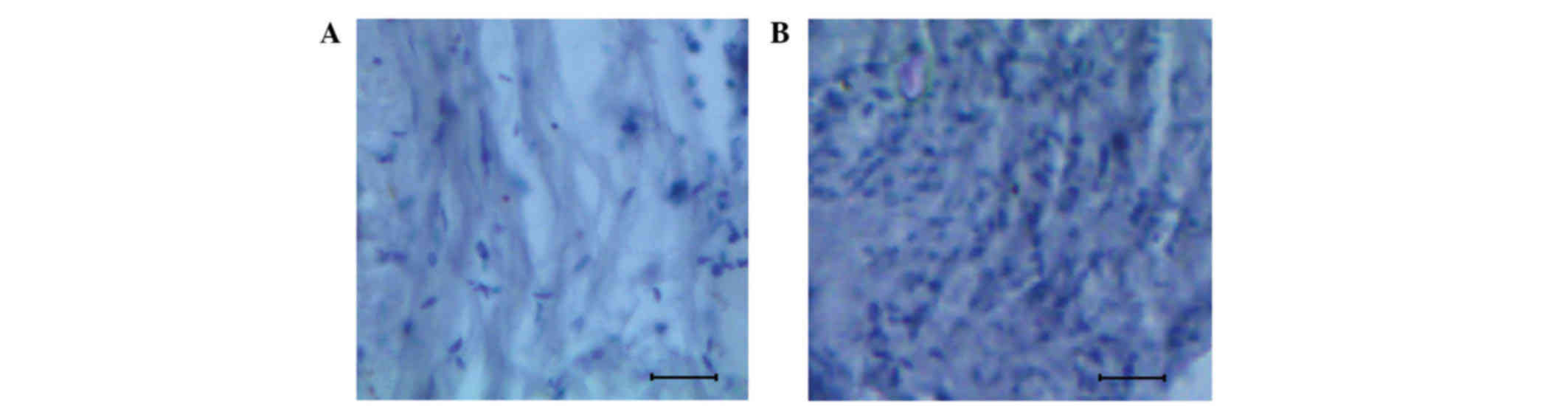
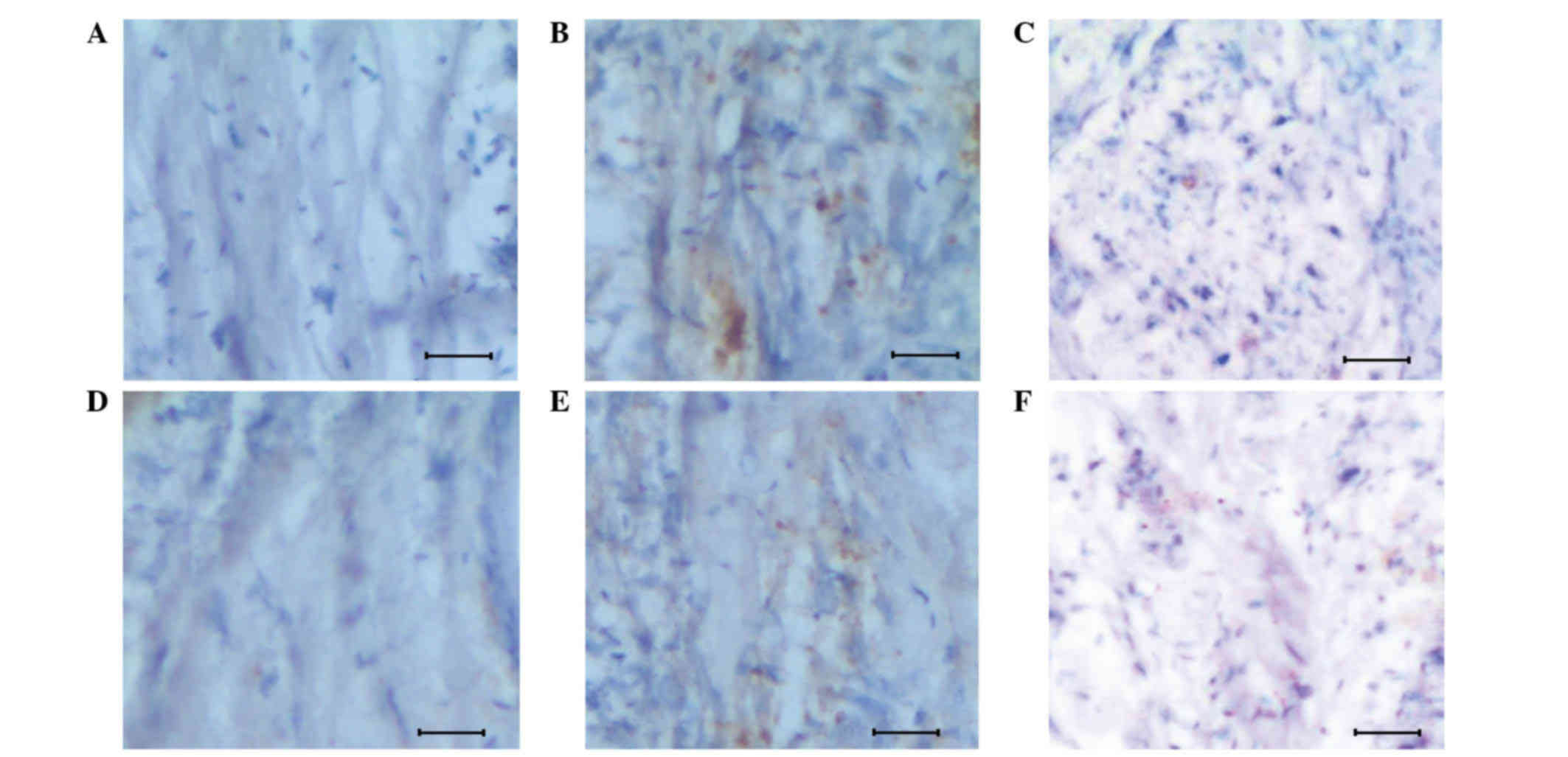
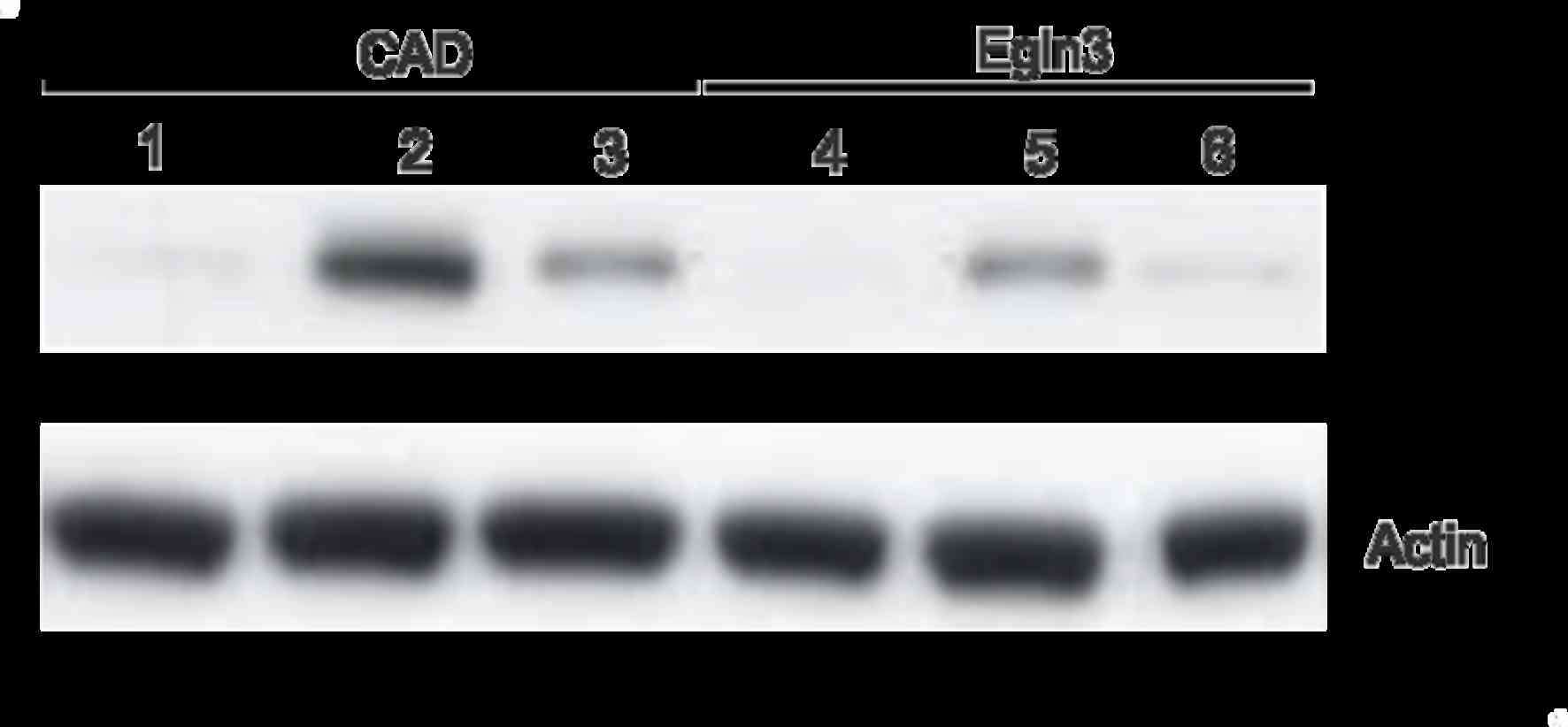
Glioma is an aggressive form of brain cancer that occurs following the abnormal proliferation of glial cells. Although glioma cannot spread to other organs, the morbidity and mortality rates of the disease are high, even following surgery, radiotherapy and chemotherapy. The function of Egl‑9 family hypoxia‑inducible factor 3 (Egln3) in cancer is controversial, and it is debated as to whether Egln3 positively or negatively regulates tumors. In the present study, a mouse model of low‑grade glioma was successfully established. Through the use of immunohistochemical and western blot analyses, it was demonstrated that Egln3 expression in glioma tissue performed an important role in regulation by amplifying the signals for apoptosis, as determined by an increase in DNA fragments. Furthermore, Egln3 expression was inhibited by the administration of dimethyloxalylglycine, and the downregulated expression of Egln3 had marked effects on the regulation of glioma through apoptosis. The present study therefore provides evidence of an association between Egln3 expression and apoptosis in low‑grade glioma.
View Figures

Figure 1

Figure 2

Figure 3

View References

1 

Stupp R, Mason WP, van den Bent MJ, Weller M, Fisher B, Taphoorn MJ, Belanger K, Brandes AA, Marosi C, Bogdahn U, et al: European Organisation for Research and Treatment of Cancer Brain Tumor and Radiotherapy Groups; National Cancer Institute of Canada Clinical Trials Group: Radiotherapy plus concomitant and adjuvant temozolomide for glioblastoma. N Engl J Med. 352:987–996. 2005. View Article : Google Scholar : PubMed/NCBI

2 

Wen PY and Kesari S: Malignant gliomas in adults. N Engl J Med. 359:492–507. 2008. View Article : Google Scholar : PubMed/NCBI

3 

Cuddapah VA, Robel S, Watkins S and Sontheimer H: A neurocentric perspective on glioma invasion. Nat Rev Neurosci. 15:455–465. 2014. View Article : Google Scholar : PubMed/NCBI

4 

Louis DN, Ohgaki H, Wiestler OD, Cavenee WK, Burger PC, Jouvet A, Scheithauer BW and Kleihues P: The 2007 WHO classification of tumours of the central nervous system. Acta Neuropathol. 114:97–109. 2007. View Article : Google Scholar : PubMed/NCBI

5 

Nieder C, Grosu AL, Astner S and Molls M: Treatment of unresectable glioblastoma multiforme. Anticancer Res. 25(6C): 4605–4610. 2005.PubMed/NCBI

6 

Stupp R, Pavlidis N and Jelic S: ESMO Guidelines Task Force: ESMO Minimum Clinical Recommendations for diagnosis, treatment and follow-up of malignant glioma. Ann Oncol. 16:(Suppl 1). i64–i65. 2005. View Article : Google Scholar : PubMed/NCBI

7 

Huse JT and Holland EC: Targeting brain cancer: Advances in the molecular pathology of malignant glioma and medulloblastoma. Nat Rev Cancer. 10:319–331. 2010. View Article : Google Scholar : PubMed/NCBI

8 

Epstein AC, Gleadle JM, McNeill LA, Hewitson KS, O'Rourke J, Mole DR, Mukherji M, Metzen E, Wilson MI, Dhanda A, et al: C. elegans EGL-9 and mammalian homologs define a family of dioxygenases that regulate HIF by prolyl hydroxylation. Cell. 107:43–54. 2001. View Article : Google Scholar : PubMed/NCBI

9 

Ivan M, Haberberger T, Gervasi DC, Michelson KS, Günzler V, Kondo K, Yang H, Sorokina I, Conaway RC, Conaway JW and Kaelin WG Jr: Biochemical purification and pharmacological inhibition of a mammalian prolyl hydroxylase acting on hypoxia-inducible factor. Proc Natl Acad Sci USA. 99:13459–13464. 2002. View Article : Google Scholar : PubMed/NCBI

10 

Kivirikko KI and Myllyharju J: Prolyl 4-hydroxylases and their protein disulfide isomerase subunit. Matrix Biol. 16:357–368. 1998. View Article : Google Scholar : PubMed/NCBI

11 

Bruick RK and McKnight SL: A conserved family of prolyl-4-hydroxylases that modify HIF. Science. 294:1337–1340. 2001. View Article : Google Scholar : PubMed/NCBI

12 

McNeill LA, Hewitson KS, Gleadle JM, Horsfall LE, Oldham NJ, Maxwell PH, Pugh CW, Ratcliffe PJ and Schofield CJ: The use of dioxygen by HIF prolyl hydroxylase (PHD1). Bioorg Med Chem Lett. 12:1547–1550. 2002. View Article : Google Scholar : PubMed/NCBI

13 

Maxwell PH, Wiesener MS, Chang G-W, Clifford SC, Vaux EC, Cockman ME, Wykoff CC, Pugh CW, Maher ER and Ratcliffe PJ: The tumour suppressor protein VHL targets hypoxia-inducible factors for oxygen-dependent proteolysis. Nature. 399:271–275. 1999. View Article : Google Scholar : PubMed/NCBI

14 

Ivan M, Kondo K, Yang H, Kim W, Valiando J, Ohh M, Salic A, Asara JM, Lane WS and Kaelin WG Jr: HIFalpha targeted for VHL-mediated destruction by proline hydroxylation: Implications for O2 sensing. Science. 292:464–468. 2001. View Article : Google Scholar : PubMed/NCBI

15 

Gordan JD and Simon MC: Hypoxia-inducible factors: Central regulators of the tumor phenotype. Curr Opin Genet Dev. 17:71–77. 2007. View Article : Google Scholar : PubMed/NCBI

16 

Keith B and Simon MC: Hypoxia-inducible factors, stem cells, and cancer. Cell. 129:465–472. 2007. View Article : Google Scholar : PubMed/NCBI

17 

Kaelin WG Jr: The von Hippel-Lindau tumour suppressor protein: O2 sensing and cancer. Nat Rev Cancer. 8:865–873. 2008. View Article : Google Scholar : PubMed/NCBI

18 

Semenza GL: Angiogenesis in ischemic and neoplastic disorders. Annu Rev Med. 54:17–28. 2003. View Article : Google Scholar : PubMed/NCBI

19 

Appelhoff RJ, Tian Y-M, Raval RR, Turley H, Harris AL, Pugh CW, Ratcliffe PJ and Gleadle JM: Differential function of the prolyl hydroxylases PHD1, PHD2, and PHD3 in the regulation of hypoxia-inducible factor. J Biol Chem. 279:38458–38465. 2004. View Article : Google Scholar : PubMed/NCBI

20 

Rankin EB, Rha J, Unger TL, Wu CH, Shutt HP, Johnson RS, Simon MC, Keith B and Haase VH: Hypoxia-inducible factor-2 regulates vascular tumorigenesis in mice. Oncogene. 27:5354–5358. 2008. View Article : Google Scholar : PubMed/NCBI

21 

Ryan HE, Lo J and Johnson RS: HIF-1 alpha is required for solid tumor formation and embryonic vascularization. EMBO J. 17:3005–3015. 1998. View Article : Google Scholar : PubMed/NCBI

22 

Lipscomb EA, Sarmiere PD, Crowder RJ and Freeman RS: Expression of the SM-20 gene promotes death in nerve growth factor-dependent sympathetic neurons. J Neurochem. 73:429–432. 1999. View Article : Google Scholar : PubMed/NCBI

23 

Chan DA, Kawahara TL, Sutphin PD, Chang HY, Chi JT and Giaccia AJ: Tumor vasculature is regulated by PHD2-mediated angiogenesis and bone marrow-derived cell recruitment. Cancer Cell. 15:527–538. 2009. View Article : Google Scholar : PubMed/NCBI

24 

Chan DA and Giaccia AJ: PHD2 in tumour angiogenesis. Br J Cancer. 103:1–5. 2010. View Article : Google Scholar : PubMed/NCBI

25 

Erez N, Milyavsky M, Eilam R, Shats I, Goldfinger N and Rotter V: Expression of prolyl-hydroxylase-1 (PHD1/EGLN2) suppresses hypoxia inducible factor-1alpha activation and inhibits tumor growth. Cancer Res. 63:8777–8783. 2003.PubMed/NCBI

26 

Hatzimichael E, Dasoula A, Shah R, Syed N, PapoudouBai A, Coley HM, Dranitsaris G, Bourantas KL, Stebbing J and Crook T: The prolyl-hydroxylase EGLN3 and not EGLN1 is inactivated by methylation in plasma cell neoplasia. Eur J Haematol. 84:47–51. 2010. View Article : Google Scholar : PubMed/NCBI

27 

Henze AT, Riedel J, Diem T, Wenner J, Flamme I, Pouyseggur J, Plate KH and Acker T: Prolyl hydroxylases 2 and 3 act in gliomas as protective negative feedback regulators of hypoxia-inducible factors. Cancer Res. 70:357–366. 2010. View Article : Google Scholar : PubMed/NCBI

28 

Mazzone M, Dettori D, de Oliveira R Leite, Loges S, Schmidt T, Jonckx B, Tian YM, Lanahan AA, Pollard P, de Almodovar C Ruiz, et al: Heterozygous deficiency of PHD2 restores tumor oxygenation and inhibits metastasis via endothelial normalization. Cell. 136:839–851. 2009. View Article : Google Scholar : PubMed/NCBI

29 

Li Z, Bao S, Wu Q, Wang H, Eyler C, Sathornsumetee S, Shi Q, Cao Y, Lathia J, McLendon RE, et al: Hypoxia-inducible factors regulate tumorigenic capacity of glioma stem cells. Cancer Cell. 15:501–513. 2009. View Article : Google Scholar : PubMed/NCBI

30 

Hamidouche Z, Haÿ E, Vaudin P, Charbord P, Schüle R, Marie PJ and Fromigué O: FHL2 mediates dexamethasone-induced mesenchymal cell differentiation into osteoblasts by activating Wnt/β-catenin signaling-dependent Runx2 expression. FASEB J. 22:3813–3822. 2008. View Article : Google Scholar : PubMed/NCBI

31 

Fulda S and Pervaiz S: Apoptosis signaling in cancer stem cells. Int J Biochem Cell Biol. 42:31–38. 2010. View Article : Google Scholar : PubMed/NCBI

32 

Su Y, Loos M, Giese N, Hines OJ, Diebold I, Görlach A, Metzen E, Pastorekova S, Friess H and Büchler P: PHD3 regulates differentiation, tumour growth and angiogenesis in pancreatic cancer. Br J Cancer. 103:1571–1579. 2010. View Article : Google Scholar : PubMed/NCBI

33 

Kovalenko A, ChableBessia C, Cantarella G, Israël A, Wallach D and Courtois G: The tumour suppressor CYLD negatively regulates NF-kappaB signalling by deubiquitination. Nature. 424:801–805. 2003. View Article : Google Scholar : PubMed/NCBI

34 

Jaakkola P, Mole DR, Tian Y-M, Wilson MI, Gielbert J, Gaskell SJ, von Kriegsheim A, Hebestreit HF, Mukherji M, Schofield CJ, et al: Targeting of HIF-alpha to the von Hippel-Lindau ubiquitylation complex by O2-regulated prolyl hydroxylation. Science. 292:468–472. 2001. View Article : Google Scholar : PubMed/NCBI

35 

Xie L, Xiao K, Whalen EJ, Forrester MT, Freeman RS, Fong G, Gygi SP, Lefkowitz RJ and Stamler JS: Oxygen-regulated β(2)-adrenergic receptor hydroxylation by EGLN3 and ubiquitylation by pVHL. Sci Signal. 2:ra332009. View Article : Google Scholar : PubMed/NCBI

36 

Luo W, Hu H, Chang R, Zhong J, Knabel M, O'Meally R, Cole RN, Pandey A and Semenza GL: Pyruvate kinase M2 is a PHD3-stimulated coactivator for hypoxia-inducible factor 1. Cell. 145:732–744. 2011. View Article : Google Scholar : PubMed/NCBI

37 

Xue J, Li X, Jiao S, Wei Y, Wu G and Fang J: Prolyl hydroxylase-3 is down-regulated in colorectal cancer cells and inhibits IKKbeta independent of hydroxylase activity. Gastroenterology. 138:606–615. 2010. View Article : Google Scholar : PubMed/NCBI

Related Articles

  • Abstract
  • View
  • Download
  • Twitter
Copy and paste a formatted citation
Spandidos Publications style
Mao K, You C, Lei D and Zhang H: Potential regulation of glioma through the induction of apoptosis signaling via Egl‑9 family hypoxia‑inducible factor 3. Oncol Lett 13: 893-897, 2017.
APA
Mao, K., You, C., Lei, D., & Zhang, H. (2017). Potential regulation of glioma through the induction of apoptosis signaling via Egl‑9 family hypoxia‑inducible factor 3. Oncology Letters, 13, 893-897. https://doi.org/10.3892/ol.2016.5492
MLA
Mao, K., You, C., Lei, D., Zhang, H."Potential regulation of glioma through the induction of apoptosis signaling via Egl‑9 family hypoxia‑inducible factor 3". Oncology Letters 13.2 (2017): 893-897.
Chicago
Mao, K., You, C., Lei, D., Zhang, H."Potential regulation of glioma through the induction of apoptosis signaling via Egl‑9 family hypoxia‑inducible factor 3". Oncology Letters 13, no. 2 (2017): 893-897. https://doi.org/10.3892/ol.2016.5492
Copy and paste a formatted citation
x
Spandidos Publications style
Mao K, You C, Lei D and Zhang H: Potential regulation of glioma through the induction of apoptosis signaling via Egl‑9 family hypoxia‑inducible factor 3. Oncol Lett 13: 893-897, 2017.
APA
Mao, K., You, C., Lei, D., & Zhang, H. (2017). Potential regulation of glioma through the induction of apoptosis signaling via Egl‑9 family hypoxia‑inducible factor 3. Oncology Letters, 13, 893-897. https://doi.org/10.3892/ol.2016.5492
MLA
Mao, K., You, C., Lei, D., Zhang, H."Potential regulation of glioma through the induction of apoptosis signaling via Egl‑9 family hypoxia‑inducible factor 3". Oncology Letters 13.2 (2017): 893-897.
Chicago
Mao, K., You, C., Lei, D., Zhang, H."Potential regulation of glioma through the induction of apoptosis signaling via Egl‑9 family hypoxia‑inducible factor 3". Oncology Letters 13, no. 2 (2017): 893-897. https://doi.org/10.3892/ol.2016.5492
Follow us
  • Twitter
  • LinkedIn
  • Facebook
About
  • Spandidos Publications
  • Careers
  • Cookie Policy
  • Privacy Policy
How can we help?
  • Help
  • Live Chat
  • Contact
  • Email to our Support Team