Spandidos Publications Logo
  • About
    • About Spandidos
    • Aims and Scopes
    • Abstracting and Indexing
    • Editorial Policies
    • Reprints and Permissions
    • Job Opportunities
    • Terms and Conditions
    • Contact
  • Journals
    • All Journals
    • Oncology Letters
      • Oncology Letters
      • Information for Authors
      • Editorial Policies
      • Editorial Board
      • Aims and Scope
      • Abstracting and Indexing
      • Bibliographic Information
      • Archive
    • International Journal of Oncology
      • International Journal of Oncology
      • Information for Authors
      • Editorial Policies
      • Editorial Board
      • Aims and Scope
      • Abstracting and Indexing
      • Bibliographic Information
      • Archive
    • Molecular and Clinical Oncology
      • Molecular and Clinical Oncology
      • Information for Authors
      • Editorial Policies
      • Editorial Board
      • Aims and Scope
      • Abstracting and Indexing
      • Bibliographic Information
      • Archive
    • Experimental and Therapeutic Medicine
      • Experimental and Therapeutic Medicine
      • Information for Authors
      • Editorial Policies
      • Editorial Board
      • Aims and Scope
      • Abstracting and Indexing
      • Bibliographic Information
      • Archive
    • International Journal of Molecular Medicine
      • International Journal of Molecular Medicine
      • Information for Authors
      • Editorial Policies
      • Editorial Board
      • Aims and Scope
      • Abstracting and Indexing
      • Bibliographic Information
      • Archive
    • Biomedical Reports
      • Biomedical Reports
      • Information for Authors
      • Editorial Policies
      • Editorial Board
      • Aims and Scope
      • Abstracting and Indexing
      • Bibliographic Information
      • Archive
    • Oncology Reports
      • Oncology Reports
      • Information for Authors
      • Editorial Policies
      • Editorial Board
      • Aims and Scope
      • Abstracting and Indexing
      • Bibliographic Information
      • Archive
    • Molecular Medicine Reports
      • Molecular Medicine Reports
      • Information for Authors
      • Editorial Policies
      • Editorial Board
      • Aims and Scope
      • Abstracting and Indexing
      • Bibliographic Information
      • Archive
    • World Academy of Sciences Journal
      • World Academy of Sciences Journal
      • Information for Authors
      • Editorial Policies
      • Editorial Board
      • Aims and Scope
      • Abstracting and Indexing
      • Bibliographic Information
      • Archive
    • International Journal of Functional Nutrition
      • International Journal of Functional Nutrition
      • Information for Authors
      • Editorial Policies
      • Editorial Board
      • Aims and Scope
      • Abstracting and Indexing
      • Bibliographic Information
      • Archive
    • International Journal of Epigenetics
      • International Journal of Epigenetics
      • Information for Authors
      • Editorial Policies
      • Editorial Board
      • Aims and Scope
      • Abstracting and Indexing
      • Bibliographic Information
      • Archive
    • Medicine International
      • Medicine International
      • Information for Authors
      • Editorial Policies
      • Editorial Board
      • Aims and Scope
      • Abstracting and Indexing
      • Bibliographic Information
      • Archive
  • Articles
  • Information
    • Information for Authors
    • Information for Reviewers
    • Information for Librarians
    • Information for Advertisers
    • Conferences
  • Language Editing
Spandidos Publications Logo
  • About
    • About Spandidos
    • Aims and Scopes
    • Abstracting and Indexing
    • Editorial Policies
    • Reprints and Permissions
    • Job Opportunities
    • Terms and Conditions
    • Contact
  • Journals
    • All Journals
    • Biomedical Reports
      • Information for Authors
      • Editorial Policies
      • Editorial Board
      • Aims and Scope
      • Abstracting and Indexing
      • Bibliographic Information
      • Archive
    • Experimental and Therapeutic Medicine
      • Information for Authors
      • Editorial Policies
      • Editorial Board
      • Aims and Scope
      • Abstracting and Indexing
      • Bibliographic Information
      • Archive
    • International Journal of Epigenetics
      • Information for Authors
      • Editorial Policies
      • Editorial Board
      • Aims and Scope
      • Abstracting and Indexing
      • Bibliographic Information
      • Archive
    • International Journal of Functional Nutrition
      • Information for Authors
      • Editorial Policies
      • Editorial Board
      • Aims and Scope
      • Abstracting and Indexing
      • Bibliographic Information
      • Archive
    • International Journal of Molecular Medicine
      • Information for Authors
      • Editorial Policies
      • Editorial Board
      • Aims and Scope
      • Abstracting and Indexing
      • Bibliographic Information
      • Archive
    • International Journal of Oncology
      • Information for Authors
      • Editorial Policies
      • Editorial Board
      • Aims and Scope
      • Abstracting and Indexing
      • Bibliographic Information
      • Archive
    • Medicine International
      • Information for Authors
      • Editorial Policies
      • Editorial Board
      • Aims and Scope
      • Abstracting and Indexing
      • Bibliographic Information
      • Archive
    • Molecular and Clinical Oncology
      • Information for Authors
      • Editorial Policies
      • Editorial Board
      • Aims and Scope
      • Abstracting and Indexing
      • Bibliographic Information
      • Archive
    • Molecular Medicine Reports
      • Information for Authors
      • Editorial Policies
      • Editorial Board
      • Aims and Scope
      • Abstracting and Indexing
      • Bibliographic Information
      • Archive
    • Oncology Letters
      • Information for Authors
      • Editorial Policies
      • Editorial Board
      • Aims and Scope
      • Abstracting and Indexing
      • Bibliographic Information
      • Archive
    • Oncology Reports
      • Information for Authors
      • Editorial Policies
      • Editorial Board
      • Aims and Scope
      • Abstracting and Indexing
      • Bibliographic Information
      • Archive
    • World Academy of Sciences Journal
      • Information for Authors
      • Editorial Policies
      • Editorial Board
      • Aims and Scope
      • Abstracting and Indexing
      • Bibliographic Information
      • Archive
  • Articles
  • Information
    • For Authors
    • For Reviewers
    • For Librarians
    • For Advertisers
    • Conferences
  • Language Editing
Login Register Submit
  • This site uses cookies
  • You can change your cookie settings at any time by following the instructions in our Cookie Policy. To find out more, you may read our Privacy Policy.

    I agree
Search articles by DOI, keyword, author or affiliation
Search
Advanced Search
presentation
Oncology Letters
Join Editorial Board Propose a Special Issue
Print ISSN: 1792-1074 Online ISSN: 1792-1082
Journal Cover
May-2017 Volume 13 Issue 5

Full Size Image

Sign up for eToc alerts
Recommend to Library

Journals

International Journal of Molecular Medicine

International Journal of Molecular Medicine

International Journal of Molecular Medicine is an international journal devoted to molecular mechanisms of human disease.

International Journal of Oncology

International Journal of Oncology

International Journal of Oncology is an international journal devoted to oncology research and cancer treatment.

Molecular Medicine Reports

Molecular Medicine Reports

Covers molecular medicine topics such as pharmacology, pathology, genetics, neuroscience, infectious diseases, molecular cardiology, and molecular surgery.

Oncology Reports

Oncology Reports

Oncology Reports is an international journal devoted to fundamental and applied research in Oncology.

Experimental and Therapeutic Medicine

Experimental and Therapeutic Medicine

Experimental and Therapeutic Medicine is an international journal devoted to laboratory and clinical medicine.

Oncology Letters

Oncology Letters

Oncology Letters is an international journal devoted to Experimental and Clinical Oncology.

Biomedical Reports

Biomedical Reports

Explores a wide range of biological and medical fields, including pharmacology, genetics, microbiology, neuroscience, and molecular cardiology.

Molecular and Clinical Oncology

Molecular and Clinical Oncology

International journal addressing all aspects of oncology research, from tumorigenesis and oncogenes to chemotherapy and metastasis.

World Academy of Sciences Journal

World Academy of Sciences Journal

Multidisciplinary open-access journal spanning biochemistry, genetics, neuroscience, environmental health, and synthetic biology.

International Journal of Functional Nutrition

International Journal of Functional Nutrition

Open-access journal combining biochemistry, pharmacology, immunology, and genetics to advance health through functional nutrition.

International Journal of Epigenetics

International Journal of Epigenetics

Publishes open-access research on using epigenetics to advance understanding and treatment of human disease.

Medicine International

Medicine International

An International Open Access Journal Devoted to General Medicine.

Journal Cover
May-2017 Volume 13 Issue 5

Full Size Image

Sign up for eToc alerts
Recommend to Library

  • Article
  • Citations
    • Cite This Article
    • Download Citation
    • Create Citation Alert
    • Remove Citation Alert
    • Cited By
  • Similar Articles
    • Related Articles (in Spandidos Publications)
    • Similar Articles (Google Scholar)
    • Similar Articles (PubMed)
  • Download PDF
  • Download XML
  • View XML
Article Open Access

FBP1 expression is associated with basal-like breast carcinoma

  • Authors:
    • Lei Shi
    • Chunbo Zhao
    • Haihong Pu
    • Qingyuan Zhang
  • View Affiliations / Copyright

    Affiliations: Department of Radiation Oncology, The Fourth Hospital, Harbin Medical University, Harbin, Heilongjiang 150001, P.R. China, Department of Radiation Oncology, The Third Hospital, Harbin Medical University, Harbin, Heilongjiang 150080, P.R. China, Department of Oncology, The Third Hospital, Harbin Medical University, Harbin, Heilongjiang 150080, P.R. China
    Copyright: © Shi et al. This is an open access article distributed under the terms of Creative Commons Attribution License.
  • Pages: 3046-3056
    |
    Published online on: March 14, 2017
       https://doi.org/10.3892/ol.2017.5860
  • Expand metrics +
Metrics: Total Views: 0 (Spandidos Publications: | PMC Statistics: )
Metrics: Total PDF Downloads: 0 (Spandidos Publications: | PMC Statistics: )
Cited By (CrossRef): 0 citations Loading Articles...

This article is mentioned in:


Abstract

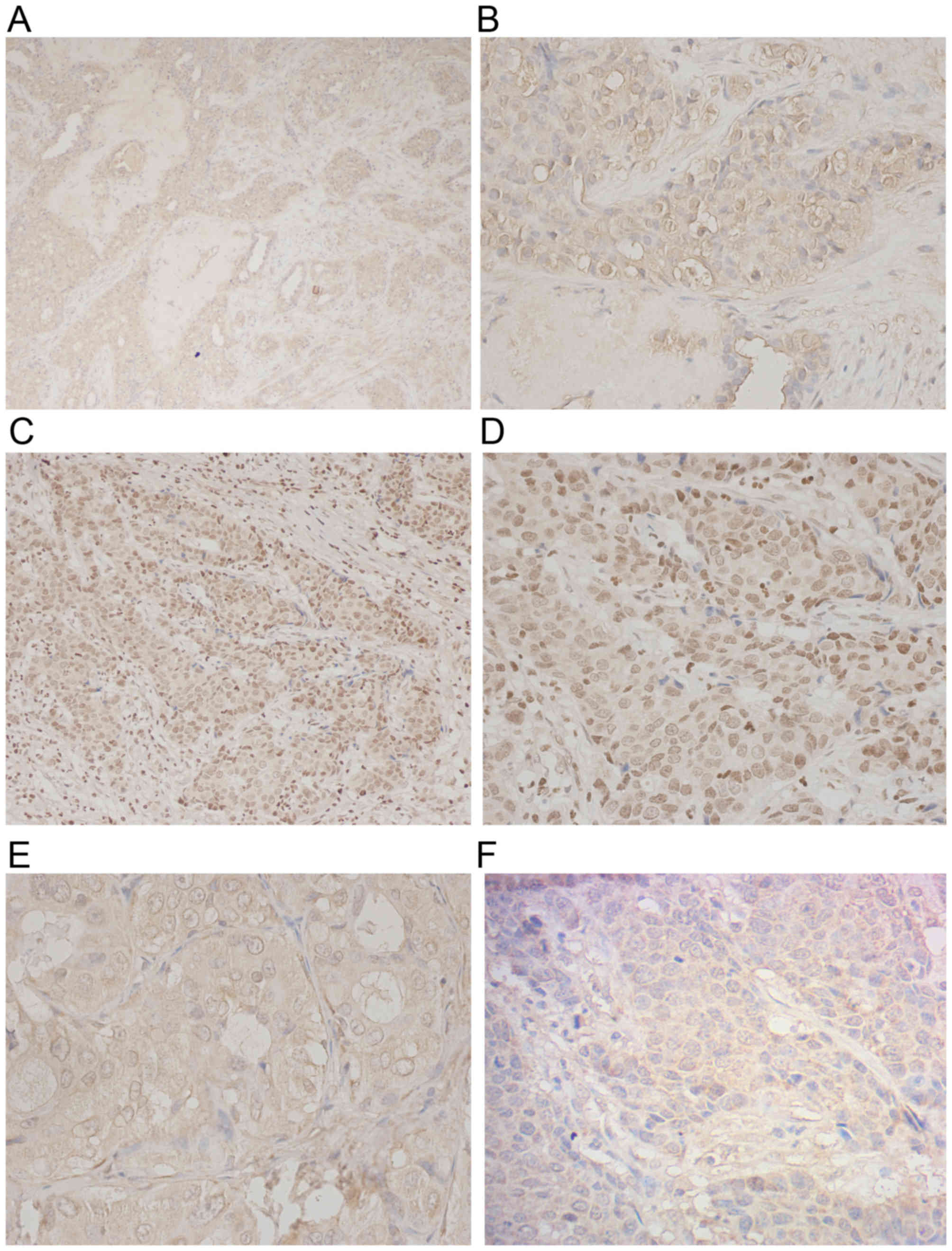
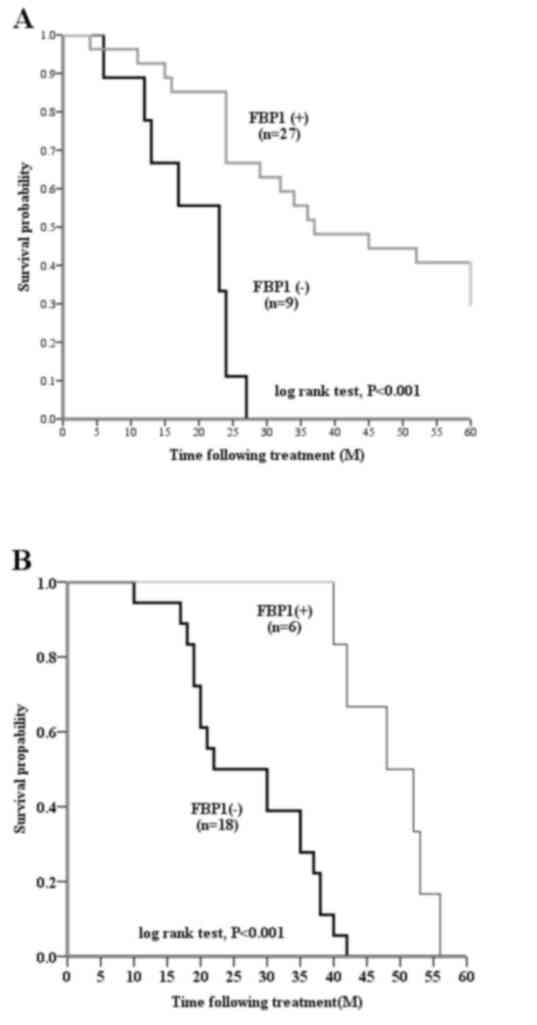
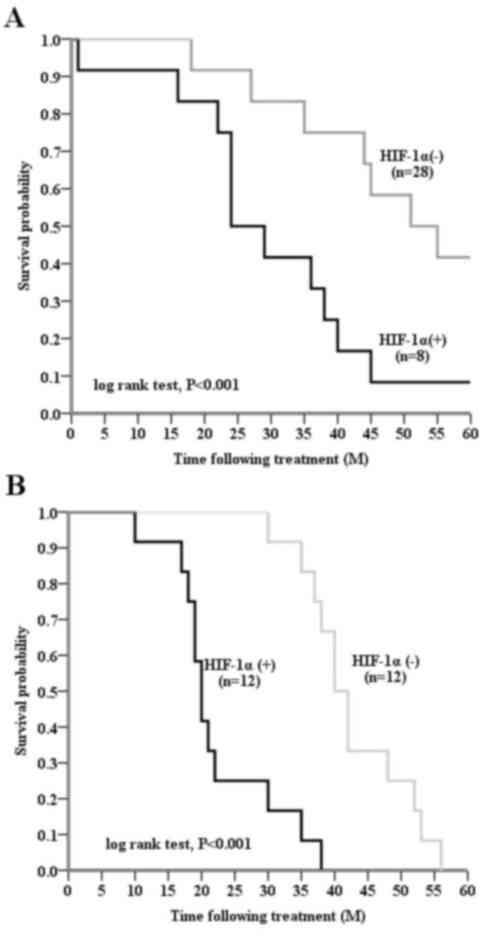
The present study aimed to investigate the value of liver fructose 1,6-bisphophatase (FBP1) and hypoxia-inducible factor-1α (HIF-1α) in the molecular subtyping of breast carcinoma. Tissue obtained from 60 surgical specimens from patients with breast carcinoma underwent immunohistochemical staining for cytokeratin 5/6, HIF‑1α and FBP1. The variation in the expression levels of these markers and clinicopathological factors were compared between molecular subtypes. In addition, disease‑free survival was compared between basal‑like and luminal breast carcinoma, according to differing expression levels of HIF‑1α and FBP1. The results revealed that HIF‑1α expression was detectable in 20/60 (33.3%) of the breast carcinoma cases, and was positively associated with lymph node metastasis (P=0.007). HIF-1α-positive patients exhibited a shorter disease‑free survival, compared with HIF‑1α‑negative patients with invasive breast cancer. The expression levels of FBP1 were positive in 33/60 tumor tissues (55%; P<0.001), and FBP1 expression was associated with nuclear grade (P=0.017) and tumor stage (P=0.012). In breast carcinoma, HIF‑1α expression levels were significantly negatively correlated with FBP1 levels (r=‑0.711; P<0.001). Cox regression analysis identified FBP1 and tumor size as independent prognostic factors. Therefore, the present study demonstrated that patients with basal‑like breast carcinoma exhibited lower levels of FBP1 expression in tumor tissues, compared with patients with luminal type breast cancer, and that low or absent expression levels of FBP1 may be associated with reduced disease-free survival.
View Figures

Figure 1

Figure 2

Figure 3

Figure 4

View References

1 

Vaupel P, Schlenger K, Knoop C and Höckel M: Oxygenation of human tumors: Evaluation of tissue oxygen distribution in breast cancers by computerized O2 tension measurements. Cancer Res. 51:3316–3322. 1991.PubMed/NCBI

2 

Vaupel P: The role of hypoxia-induced factors in tumor progression. Oncologist. 9:(Suppl 5). S10–S17. 2004. View Article : Google Scholar

3 

Fisher ER, Anderson S, Redmond C and Fisher B: Pathologic findings from the national surgical adjuvant breast project protocol B-06. 10-year pathologic and clinical prognostic discriminants. Cancer. 71:2507–2514. 1993. View Article : Google Scholar : PubMed/NCBI

4 

Hockel M and Vaupel P: Tumor hypoxia: Definitions and current clinical, biologic, and molecular aspects. J Natl Cancer Inst. 93:266–276. 2001. View Article : Google Scholar : PubMed/NCBI

5 

Garcia S, Dalès JP, Charafe-Jauffret E, Carpentier-Meunier S, Andrac-Meyer L, Jacquemier J, Andonian C, Lavaut MN, Allasia C, Bonnier P and Charpin C: Poor prognosis in breast carcinomas correlates with increased expression of targetable CD146 and c-Met and with proteomic basal-like phenotype. Hum Pathol. 38:830–841. 2007. View Article : Google Scholar : PubMed/NCBI

6 

Kallergi G, Markomanolaki H, Giannoukaraki V, Papadaki MA, Strati A, Lianidou ES, Georgoulias V, Mavroudis D and Agelaki S: Hypoxia-inducible factor-1alpha and vascular endothelial growth factor expression in circulating tumor cells of breast cancer patients. Breast cancer Res. 11:R842009. View Article : Google Scholar : PubMed/NCBI

7 

Karlin KL, Mondal G, Hartman JK, Tyagi S, Kurley SJ, Bland CS, Hsu TY, Renwick A, Fang JE, Migliaccio I, et al: The oncogenic STP axis promotes triple-negative breast cancer via degradation of the REST tumor suppressor. Cell Rep. 9:1318–1332. 2014. View Article : Google Scholar : PubMed/NCBI

8 

Gleadle JM and Ratcliffe PJ: Induction of hypoxia-inducible factor-1, erythropoietin, vascular endothelial growth factor, and glucose transporter-1 by hypoxia: Evidence against a regulatory role for Src kinase. Blood. 89:503–509. 1997.PubMed/NCBI

9 

Price BD and Calderwood SK: Gadd45 and Gadd153 messenger RNA levels are increased during hypoxia and after exposure of cells to agents which elevate the levels of the glucose-regulated proteins. Cancer Res. 52:3814–3817. 1992.PubMed/NCBI

10 

Moulder JE and Rockwell S: Tumor hypoxia: Its impact on cancer therapy. Cancer Metastasis Rev. 5:313–341. 1987. View Article : Google Scholar : PubMed/NCBI

11 

Giaccia AJ: Hypoxic stress proteins: Survival of the Fittest. Semin Radiat Oncol. 6:46–58. 1996. View Article : Google Scholar : PubMed/NCBI

12 

Kunz M and Ibrahim SM: Molecular responses to hypoxia in tumor cells. Mol Cancer. 2:232003. View Article : Google Scholar : PubMed/NCBI

13 

Harris AL: Hypoxia-a key regulatory factor in tumour growth. Nat Rev Cancer. 2:38–47. 2002. View Article : Google Scholar : PubMed/NCBI

14 

Semenza GL: HIF-1, O(2), and the 3 PHDs: How animal cells signal hypoxia to the nucleus. Cell. 107:1–3. 2001. View Article : Google Scholar : PubMed/NCBI

15 

Jaakkola P, Mole DR, Tian YM, Wilson MI, Gielbert J, Gaskell SJ, von Kriegsheim A, Hebestreit HF, Mukherji M, Schofield CJ, et al: Targeting of HIF-alpha to the von Hippel-Lindau ubiquitylation complex by O2-regulated prolyl hydroxylation. Science. 292:468–472. 2001. View Article : Google Scholar : PubMed/NCBI

16 

Semenza GL: Hypoxia, clonal selection, and the role of HIF-1 in tumor progression. Crit Rev Biochem Mol Biol. 35:71–103. 2000. View Article : Google Scholar : PubMed/NCBI

17 

Kreike B, van Kouwenhove M, Horlings H, Weigelt B, Peterse H, Bartelink H and van de Vijver MJ: Gene expression profiling and histopathological characterization of triple-negative/basal-like breast carcinomas. Breast Cancer Res. 9:R652007. View Article : Google Scholar : PubMed/NCBI

18 

Rakha EA, Elsheikh SE, Aleskandarany MA, Habashi HO, Green AR, Powe DG, El-Sayed ME, Benhasouna A, Brunet JS, Akslen LA, et al: Triple-negative breast cancer: Distinguishing between basal and nonbasal subtypes. Clin Cancer Res. 15:2302–2310. 2009. View Article : Google Scholar : PubMed/NCBI

19 

Tan EY, Yan M, Campo L, Han C, Takano E, Turley H, Candiloro I, Pezzella F, Gatter KC, Millar EK, et al: The key hypoxia regulated gene CAIX is upregulated in basal-like breast tumours and is associated with resistance to chemotherapy. Br J Cancer. 100:405–411. 2009. View Article : Google Scholar : PubMed/NCBI

20 

Tsuda H, Takarabe T, Hasegawa F, Fukutomi T and Hirohashi S: Large, central acellular zones indicating myoepithelial tumor differentiation in high-grade invasive ductal carcinomas as markers of predisposition to lung and brain metastases. Am J Surg Pathol. 24:197–202. 2000. View Article : Google Scholar : PubMed/NCBI

21 

Riva C, Chauvin C, Pison C and Leverve X: Cellular physiology and molecular events in hypoxia-induced apoptosis. Anticancer Res. 18:4729–4736. 1998.PubMed/NCBI

22 

Vaupel P, Kallinowski F and Okunieff P: Blood flow, oxygen and nutrient supply, and metabolic microenvironment of human tumors: A review. Cancer Res. 49:6449–6465. 1989.PubMed/NCBI

23 

Semenza GL, Roth PH, Fang HM and Wang GL: Transcriptional regulation of genes encoding glycolytic enzymes by hypoxia-inducible factor 1. J Biol Chem. 269:23757–23763. 1994.PubMed/NCBI

24 

Mizunuma H and Tashima Y: Fructose-1,6-biphosphatase of the small intestine. Purification and comparison with liver and muscle fructose-1,6-bisphosphatases. J Biochem. 84:327–336. 1978. View Article : Google Scholar : PubMed/NCBI

25 

Tillmann H and Eschrich K: Isolation and characterization of an allelic cDNA for human muscle fructose-1,6-bisphosphatase. Gene. 212:295–304. 1998. View Article : Google Scholar : PubMed/NCBI

26 

Tejwani GA: Regulation of fructose-bisphosphatase activity. Adv Enzymol Relat Areas Mol Biol. 54:121–194. 1983.PubMed/NCBI

27 

Liu X, Wang X, Zhang J, Lam EK, Shin VY, Cheng AS, Yu J, Chan FK, Sung JJ and Jin HC: Warburg effect revisited: An epigenetic link between glycolysis and gastric carcinogenesis. Oncogene. 29:442–450. 2010. View Article : Google Scholar : PubMed/NCBI

28 

Li B, Qiu B, Lee DS, Walton ZE, Ochocki JD, Mathew LK, Mancuso A, Gade TP, Keith B, Nissim I and Simon MC: Fructose-1,6-bisphosphatase opposes renal carcinoma progression. Nature. 513:251–255. 2014. View Article : Google Scholar : PubMed/NCBI

29 

Bigl M, Jandrig B, Horn LC and Eschrich K: Aberrant methylation of human L- and M-fructose 1,6-bisphosphatase genes in cancer. Biochem Biophys Res Commun. 377:720–724. 2008. View Article : Google Scholar : PubMed/NCBI

30 

Viale G: Histopathology of primary breast cancer 2003. Breast. 12:391–396. 2003. View Article : Google Scholar : PubMed/NCBI

31 

Elston CW and Ellis IO: Pathological prognostic factors in breast cancer. I. The value of histological grade in breast cancer: Experience from a large study with long-term follow-up. Histopathology. 41:154–161. 2002.PubMed/NCBI

32 

Carlson RW: NCCN breast cancer clinical practice guidelines in oncology: An update. J Natl Compr Canc Netw. 1:(Suppl 1). S61–S63. 2003.PubMed/NCBI

33 

Zhou M, Zhao Y, Ding Y, Liu H, Liu Z, Fodstad O, Riker AI, Kamarajugadda S, Lu J, Owen LB, et al: Warburg effect in chemosensitivity: Targeting lactate dehydrogenase-A re-sensitizes taxol-resistant cancer cells to taxol. Mol Cancer. 9:332010. View Article : Google Scholar : PubMed/NCBI

34 

Bos R, van der Groep P, Greijer AE, Shvarts A, Meijer S, Pinedo HM, Semenza GL, van Diest PJ and van der Wall E: Levels of hypoxia-inducible factor-1alpha independently predict prognosis in patients with lymph node negative breast carcinoma. Cancer. 97:1573–1581. 2003. View Article : Google Scholar : PubMed/NCBI

35 

Jacobs TW, Gown AM, Yaziji H, Barnes MJ and Schnitt SJ: Specificity of HercepTest in determining HER-2/neu status of breast cancers using the United States Food and Drug Administration-approved scoring system. J Clin Oncol. 17:1983–1987. 1999. View Article : Google Scholar : PubMed/NCBI

36 

Livasy CA, Karaca G, Nanda R, Tretiakova MS, Olopade OI, Moore DT and Perou CM: Phenotypic evaluation of the basal-like subtype of invasive breast carcinoma. Mod Pathol. 19:264–271. 2006. View Article : Google Scholar : PubMed/NCBI

37 

Nielsen TO, Hsu FD, Jensen K, Cheang M, Karaca G, Hu Z, Hernandez-Boussard T, Livasy C, Cowan D, Dressler L, et al: Immunohistochemical and clinical characterization of the basal-like subtype of invasive breast carcinoma. Clin Cancer Res. 10:5367–5374. 2004. View Article : Google Scholar : PubMed/NCBI

38 

Yamamoto Y, Ibusuki M, Okumura Y, Kawasoe T, Kai K, Iyama K and Iwase H: Hypoxia-inducible factor 1alpha is closely linked to an aggressive phenotype in breast cancer. Breast Cancer Res Treat. 110:465–475. 2008. View Article : Google Scholar : PubMed/NCBI

39 

Dales JP, Garcia S, Meunier-Carpentier S, Andrac-Meyer L, Haddad O, Lavaut MN, Allasia C, Bonnier P and Charpin C: Overexpression of hypoxia-inducible factor HIF-1alpha predicts early relapse in breast cancer: Retrospective study in a series of 745 patients. Int J Cancer. 116:734–739. 2005. View Article : Google Scholar : PubMed/NCBI

40 

Schindl M, Schoppmann SF, Samonigg H, Hausmaninger H, Kwasny W, Gnant M, Jakesz R, Kubista E, Birner P and Oberhuber G: Austrian Breast and Colorectal Cancer Study Group: Overexpression of hypoxia-inducible factor 1alpha is associated with an unfavorable prognosis in lymph node-positive breast cancer. Clin Cancer Res. 8:1831–1837. 2002.PubMed/NCBI

41 

Giatromanolaki A, Koukourakis MI, Simopoulos C, Polychronidis A, Gatter KC, Harris AL and Sivridis E: c-erbB-2 related aggressiveness in breast cancer is hypoxia inducible factor-1alpha dependent. Clin Cancer Res. 10:7972–7977. 2004. View Article : Google Scholar : PubMed/NCBI

42 

Schoppmann SF, Fenzl A, Schindl M, Bachleitner-Hofmann T, Nagy K, Gnant M, Horvat R, Jakesz R and Birner P: Hypoxia inducible factor-1alpha correlates with VEGF-C expression and lymphangiogenesis in breast cancer. Breast Cancer Res Treat. 99:135–141. 2006. View Article : Google Scholar : PubMed/NCBI

43 

Kronblad A, Jirstrom K, Rydén L, Nordenskjöld B and Landberg G: Hypoxia inducible factor-1alpha is a prognostic marker in premenopausal patients with intermediate to highly differentiated breast cancer but not a predictive marker for tamoxifen response. Int J Cancer. 118:2609–2616. 2006. View Article : Google Scholar : PubMed/NCBI

44 

Semenza GL: HIF-1 and tumor progression: Pathophysiology and therapeutics. Trends Mol Med. 8:(4 Suppl). S62–S67. 2002. View Article : Google Scholar : PubMed/NCBI

45 

Zhong H, De Marzo AM, Laughner E, Lim M, Hilton DA, Zagzag D, Buechler P, Isaacs WB, Semenza GL and Simons JW: Overexpression of hypoxia-inducible factor 1alpha in common human cancers and their metastases. Cancer Res. 59:5830–5835. 1999.PubMed/NCBI

46 

Page EL, Robitaille GA, Pouysségur J and Richard DE: Induction of hypoxia-inducible factor-1alpha by transcriptional and translational mechanisms. J Biol Chem. 277:48403–48409. 2002. View Article : Google Scholar : PubMed/NCBI

47 

Gizak A, Rakus D and Dzugaj A: Nuclear localization of fructose 1,6-bisphosphatase in smooth muscle cells. J Mol Histol. 36:243–248. 2005. View Article : Google Scholar : PubMed/NCBI

48 

Mamczur P, Mazurek J and Rakus D: Ubiquitous presence of gluconeogenic regulatory enzyme, fructose-1,6-bisphosphatase, within layers of rat retina. Cell Tissue Res. 341:213–221. 2010. View Article : Google Scholar : PubMed/NCBI

49 

Nordlie RC, Foster JD and Lange AJ: Regulation of glucose production by the liver. Annu Rev Nutr. 19:379–406. 1999. View Article : Google Scholar : PubMed/NCBI

50 

Radziuk J and Pye S: Hepatic glucose uptake, gluconeogenesis and the regulation of glycogen synthesis. Diabetes Metab Res Rev. 17:250–272. 2001. View Article : Google Scholar : PubMed/NCBI

51 

Bhide SV: Enzyme studies on tumour cell suspensions. Br J Cancer. 24:869–874. 1970. View Article : Google Scholar : PubMed/NCBI

52 

Pouysségur J, Dayan F and Mazure NM: Hypoxia signalling in cancer and approaches to enforce tumour regression. Nature. 441:437–443. 2006. View Article : Google Scholar : PubMed/NCBI

53 

Ryan HE, Poloni M, McNulty W, Elson D, Gassmann M, Arbeit JM and Johnson RS: Hypoxia-inducible factor-1alpha is a positive factor in solid tumor growth. Cancer Res. 60:4010–4015. 2000.PubMed/NCBI

Related Articles

  • Abstract
  • View
  • Download
  • Twitter
Copy and paste a formatted citation
Spandidos Publications style
Shi L, Zhao C, Pu H and Zhang Q: FBP1 expression is associated with basal-like breast carcinoma. Oncol Lett 13: 3046-3056, 2017.
APA
Shi, L., Zhao, C., Pu, H., & Zhang, Q. (2017). FBP1 expression is associated with basal-like breast carcinoma. Oncology Letters, 13, 3046-3056. https://doi.org/10.3892/ol.2017.5860
MLA
Shi, L., Zhao, C., Pu, H., Zhang, Q."FBP1 expression is associated with basal-like breast carcinoma". Oncology Letters 13.5 (2017): 3046-3056.
Chicago
Shi, L., Zhao, C., Pu, H., Zhang, Q."FBP1 expression is associated with basal-like breast carcinoma". Oncology Letters 13, no. 5 (2017): 3046-3056. https://doi.org/10.3892/ol.2017.5860
Copy and paste a formatted citation
x
Spandidos Publications style
Shi L, Zhao C, Pu H and Zhang Q: FBP1 expression is associated with basal-like breast carcinoma. Oncol Lett 13: 3046-3056, 2017.
APA
Shi, L., Zhao, C., Pu, H., & Zhang, Q. (2017). FBP1 expression is associated with basal-like breast carcinoma. Oncology Letters, 13, 3046-3056. https://doi.org/10.3892/ol.2017.5860
MLA
Shi, L., Zhao, C., Pu, H., Zhang, Q."FBP1 expression is associated with basal-like breast carcinoma". Oncology Letters 13.5 (2017): 3046-3056.
Chicago
Shi, L., Zhao, C., Pu, H., Zhang, Q."FBP1 expression is associated with basal-like breast carcinoma". Oncology Letters 13, no. 5 (2017): 3046-3056. https://doi.org/10.3892/ol.2017.5860
Follow us
  • Twitter
  • LinkedIn
  • Facebook
About
  • Spandidos Publications
  • Careers
  • Cookie Policy
  • Privacy Policy
How can we help?
  • Help
  • Live Chat
  • Contact
  • Email to our Support Team