Spandidos Publications Logo
  • About
    • About Spandidos
    • Aims and Scopes
    • Abstracting and Indexing
    • Editorial Policies
    • Reprints and Permissions
    • Job Opportunities
    • Terms and Conditions
    • Contact
  • Journals
    • All Journals
    • Oncology Letters
      • Oncology Letters
      • Information for Authors
      • Editorial Policies
      • Editorial Board
      • Aims and Scope
      • Abstracting and Indexing
      • Bibliographic Information
      • Archive
    • International Journal of Oncology
      • International Journal of Oncology
      • Information for Authors
      • Editorial Policies
      • Editorial Board
      • Aims and Scope
      • Abstracting and Indexing
      • Bibliographic Information
      • Archive
    • Molecular and Clinical Oncology
      • Molecular and Clinical Oncology
      • Information for Authors
      • Editorial Policies
      • Editorial Board
      • Aims and Scope
      • Abstracting and Indexing
      • Bibliographic Information
      • Archive
    • Experimental and Therapeutic Medicine
      • Experimental and Therapeutic Medicine
      • Information for Authors
      • Editorial Policies
      • Editorial Board
      • Aims and Scope
      • Abstracting and Indexing
      • Bibliographic Information
      • Archive
    • International Journal of Molecular Medicine
      • International Journal of Molecular Medicine
      • Information for Authors
      • Editorial Policies
      • Editorial Board
      • Aims and Scope
      • Abstracting and Indexing
      • Bibliographic Information
      • Archive
    • Biomedical Reports
      • Biomedical Reports
      • Information for Authors
      • Editorial Policies
      • Editorial Board
      • Aims and Scope
      • Abstracting and Indexing
      • Bibliographic Information
      • Archive
    • Oncology Reports
      • Oncology Reports
      • Information for Authors
      • Editorial Policies
      • Editorial Board
      • Aims and Scope
      • Abstracting and Indexing
      • Bibliographic Information
      • Archive
    • Molecular Medicine Reports
      • Molecular Medicine Reports
      • Information for Authors
      • Editorial Policies
      • Editorial Board
      • Aims and Scope
      • Abstracting and Indexing
      • Bibliographic Information
      • Archive
    • World Academy of Sciences Journal
      • World Academy of Sciences Journal
      • Information for Authors
      • Editorial Policies
      • Editorial Board
      • Aims and Scope
      • Abstracting and Indexing
      • Bibliographic Information
      • Archive
    • International Journal of Functional Nutrition
      • International Journal of Functional Nutrition
      • Information for Authors
      • Editorial Policies
      • Editorial Board
      • Aims and Scope
      • Abstracting and Indexing
      • Bibliographic Information
      • Archive
    • International Journal of Epigenetics
      • International Journal of Epigenetics
      • Information for Authors
      • Editorial Policies
      • Editorial Board
      • Aims and Scope
      • Abstracting and Indexing
      • Bibliographic Information
      • Archive
    • Medicine International
      • Medicine International
      • Information for Authors
      • Editorial Policies
      • Editorial Board
      • Aims and Scope
      • Abstracting and Indexing
      • Bibliographic Information
      • Archive
  • Articles
  • Information
    • Information for Authors
    • Information for Reviewers
    • Information for Librarians
    • Information for Advertisers
    • Conferences
  • Language Editing
Spandidos Publications Logo
  • About
    • About Spandidos
    • Aims and Scopes
    • Abstracting and Indexing
    • Editorial Policies
    • Reprints and Permissions
    • Job Opportunities
    • Terms and Conditions
    • Contact
  • Journals
    • All Journals
    • Biomedical Reports
      • Information for Authors
      • Editorial Policies
      • Editorial Board
      • Aims and Scope
      • Abstracting and Indexing
      • Bibliographic Information
      • Archive
    • Experimental and Therapeutic Medicine
      • Information for Authors
      • Editorial Policies
      • Editorial Board
      • Aims and Scope
      • Abstracting and Indexing
      • Bibliographic Information
      • Archive
    • International Journal of Epigenetics
      • Information for Authors
      • Editorial Policies
      • Editorial Board
      • Aims and Scope
      • Abstracting and Indexing
      • Bibliographic Information
      • Archive
    • International Journal of Functional Nutrition
      • Information for Authors
      • Editorial Policies
      • Editorial Board
      • Aims and Scope
      • Abstracting and Indexing
      • Bibliographic Information
      • Archive
    • International Journal of Molecular Medicine
      • Information for Authors
      • Editorial Policies
      • Editorial Board
      • Aims and Scope
      • Abstracting and Indexing
      • Bibliographic Information
      • Archive
    • International Journal of Oncology
      • Information for Authors
      • Editorial Policies
      • Editorial Board
      • Aims and Scope
      • Abstracting and Indexing
      • Bibliographic Information
      • Archive
    • Medicine International
      • Information for Authors
      • Editorial Policies
      • Editorial Board
      • Aims and Scope
      • Abstracting and Indexing
      • Bibliographic Information
      • Archive
    • Molecular and Clinical Oncology
      • Information for Authors
      • Editorial Policies
      • Editorial Board
      • Aims and Scope
      • Abstracting and Indexing
      • Bibliographic Information
      • Archive
    • Molecular Medicine Reports
      • Information for Authors
      • Editorial Policies
      • Editorial Board
      • Aims and Scope
      • Abstracting and Indexing
      • Bibliographic Information
      • Archive
    • Oncology Letters
      • Information for Authors
      • Editorial Policies
      • Editorial Board
      • Aims and Scope
      • Abstracting and Indexing
      • Bibliographic Information
      • Archive
    • Oncology Reports
      • Information for Authors
      • Editorial Policies
      • Editorial Board
      • Aims and Scope
      • Abstracting and Indexing
      • Bibliographic Information
      • Archive
    • World Academy of Sciences Journal
      • Information for Authors
      • Editorial Policies
      • Editorial Board
      • Aims and Scope
      • Abstracting and Indexing
      • Bibliographic Information
      • Archive
  • Articles
  • Information
    • For Authors
    • For Reviewers
    • For Librarians
    • For Advertisers
    • Conferences
  • Language Editing
Login Register Submit
  • This site uses cookies
  • You can change your cookie settings at any time by following the instructions in our Cookie Policy. To find out more, you may read our Privacy Policy.

    I agree
Search articles by DOI, keyword, author or affiliation
Search
Advanced Search
presentation
Oncology Letters
Join Editorial Board Propose a Special Issue
Print ISSN: 1792-1074 Online ISSN: 1792-1082
Journal Cover
May-2017 Volume 13 Issue 5

Full Size Image

Sign up for eToc alerts
Recommend to Library

Journals

International Journal of Molecular Medicine

International Journal of Molecular Medicine

International Journal of Molecular Medicine is an international journal devoted to molecular mechanisms of human disease.

International Journal of Oncology

International Journal of Oncology

International Journal of Oncology is an international journal devoted to oncology research and cancer treatment.

Molecular Medicine Reports

Molecular Medicine Reports

Covers molecular medicine topics such as pharmacology, pathology, genetics, neuroscience, infectious diseases, molecular cardiology, and molecular surgery.

Oncology Reports

Oncology Reports

Oncology Reports is an international journal devoted to fundamental and applied research in Oncology.

Experimental and Therapeutic Medicine

Experimental and Therapeutic Medicine

Experimental and Therapeutic Medicine is an international journal devoted to laboratory and clinical medicine.

Oncology Letters

Oncology Letters

Oncology Letters is an international journal devoted to Experimental and Clinical Oncology.

Biomedical Reports

Biomedical Reports

Explores a wide range of biological and medical fields, including pharmacology, genetics, microbiology, neuroscience, and molecular cardiology.

Molecular and Clinical Oncology

Molecular and Clinical Oncology

International journal addressing all aspects of oncology research, from tumorigenesis and oncogenes to chemotherapy and metastasis.

World Academy of Sciences Journal

World Academy of Sciences Journal

Multidisciplinary open-access journal spanning biochemistry, genetics, neuroscience, environmental health, and synthetic biology.

International Journal of Functional Nutrition

International Journal of Functional Nutrition

Open-access journal combining biochemistry, pharmacology, immunology, and genetics to advance health through functional nutrition.

International Journal of Epigenetics

International Journal of Epigenetics

Publishes open-access research on using epigenetics to advance understanding and treatment of human disease.

Medicine International

Medicine International

An International Open Access Journal Devoted to General Medicine.

Journal Cover
May-2017 Volume 13 Issue 5

Full Size Image

Sign up for eToc alerts
Recommend to Library

  • Article
  • Citations
    • Cite This Article
    • Download Citation
    • Create Citation Alert
    • Remove Citation Alert
    • Cited By
  • Similar Articles
    • Related Articles (in Spandidos Publications)
    • Similar Articles (Google Scholar)
    • Similar Articles (PubMed)
  • Download PDF
  • Download XML
  • View XML
Article

Licochalcone-E induces caspase-dependent death of human pharyngeal squamous carcinoma cells through the extrinsic and intrinsic apoptotic signaling pathways

  • Authors:
    • Sang‑Joun Yu
    • In‑A Cho
    • Kyeong‑Rok Kang
    • Yi‑Ra Jung
    • Seung Sik Cho
    • Goo Yoon
    • Ji‑Su Oh
    • Jae‑Seek You
    • Yo‑Seob Seo
    • Gyeong‑Je Lee
    • Sook‑Young Lee
    • Do Kyung Kim
    • Chun Sung Kim
    • Su‑Gwan Kim
    • Mi‑Ae Jeong
    • Jae‑Sung Kim
  • View Affiliations / Copyright

    Affiliations: Department of Periodontology, School of Dentistry, Chosun University, Gwangju 501‑759, Republic of Korea, Department of Biodental Engineering, Graduate School, Chosun University, Gwangju 501‑759, Republic of Korea, Regional Innovation Center for Dental Science and Engineering, Chosun University, Gwangju 501‑759, Republic of Korea, Department of Pharmacy, College of Pharmacy, Mokpo National University, Mokpo, Jeollanamdo 353‑729, Republic of Korea, Department of Oral and Maxillofacial Surgery, Chosun University, Gwangju 501‑759, Republic of Korea, Department of Oral and Maxillofacial Radiology, Chosun University, Gwangju 501‑759, Republic of Korea, Department of Prosthodontics, Chosun University, Gwangju 501‑759, Republic of Korea, Oral Biology Research Institute, Chosun University, Gwangju 501‑759, Republic of Korea, Department of Dental Hygiene, Kangwon National University, Samcheok, Gangwon 259‑13, Republic of Korea, Pre‑Dentistry, School of Dentistry, Chosun University, Gwangju 501‑759, Republic of Korea
  • Pages: 3662-3668
    |
    Published online on: March 16, 2017
       https://doi.org/10.3892/ol.2017.5865
  • Expand metrics +
Metrics: Total Views: 0 (Spandidos Publications: | PMC Statistics: )
Metrics: Total PDF Downloads: 0 (Spandidos Publications: | PMC Statistics: )
Cited By (CrossRef): 0 citations Loading Articles...

This article is mentioned in:


Abstract

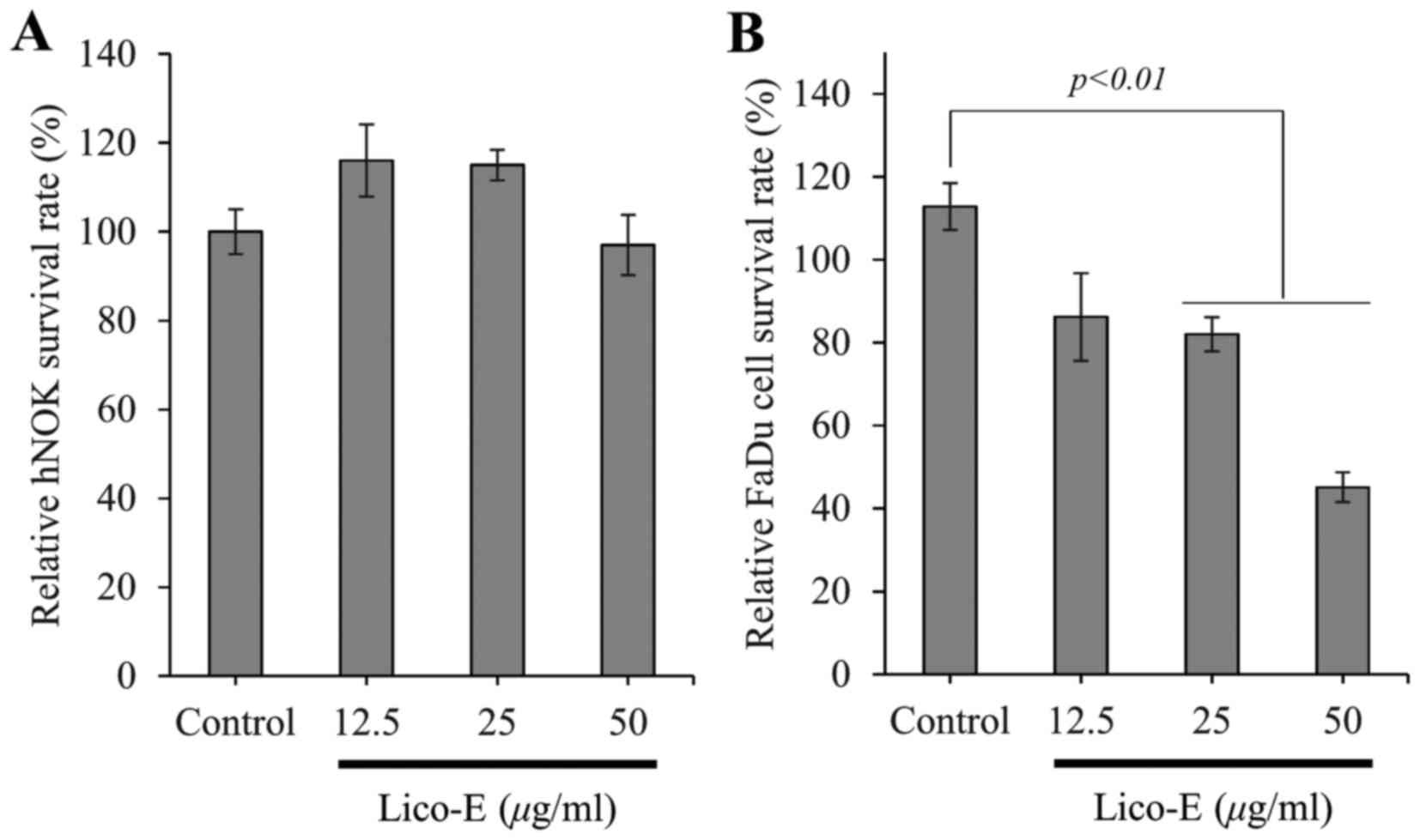
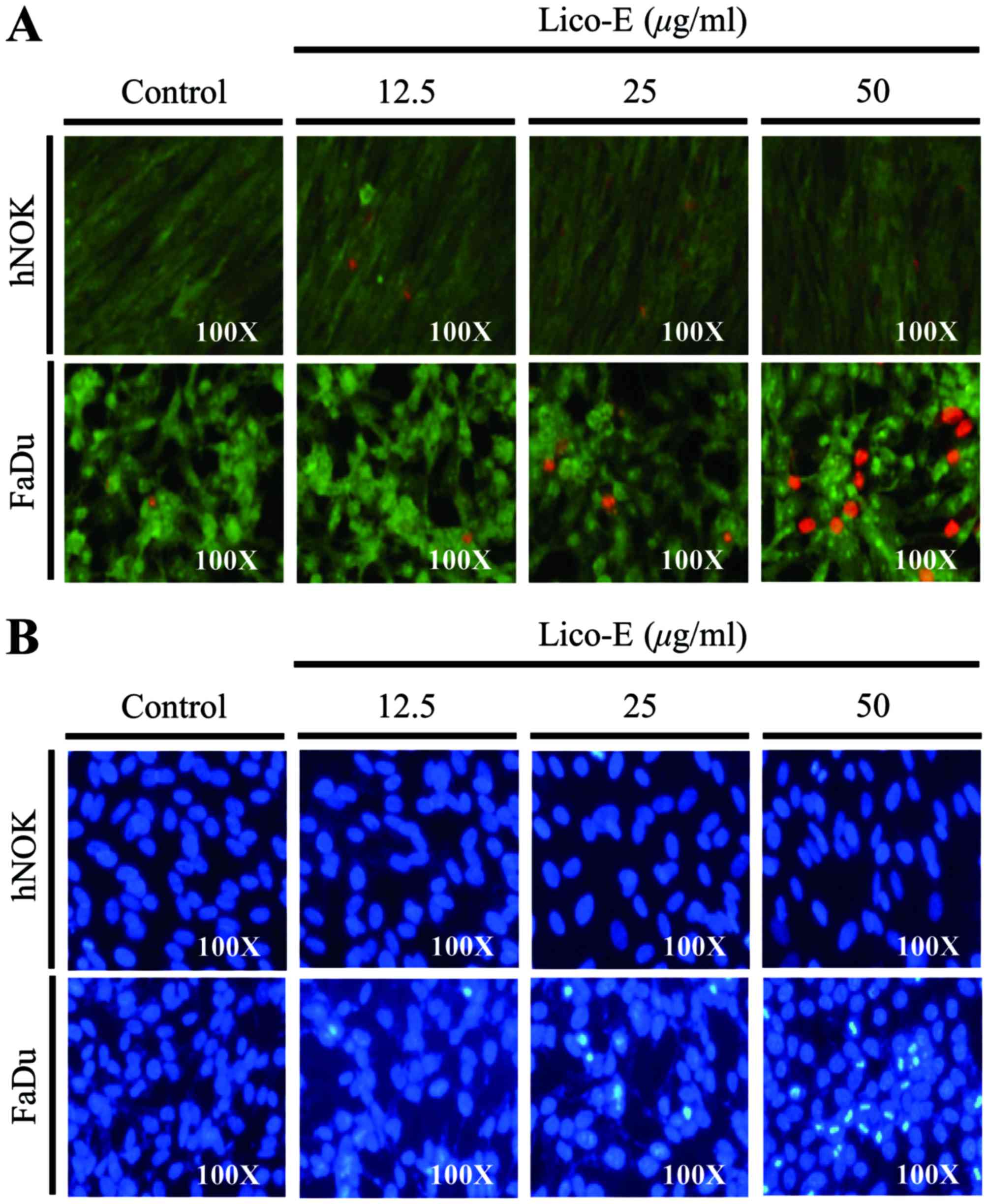
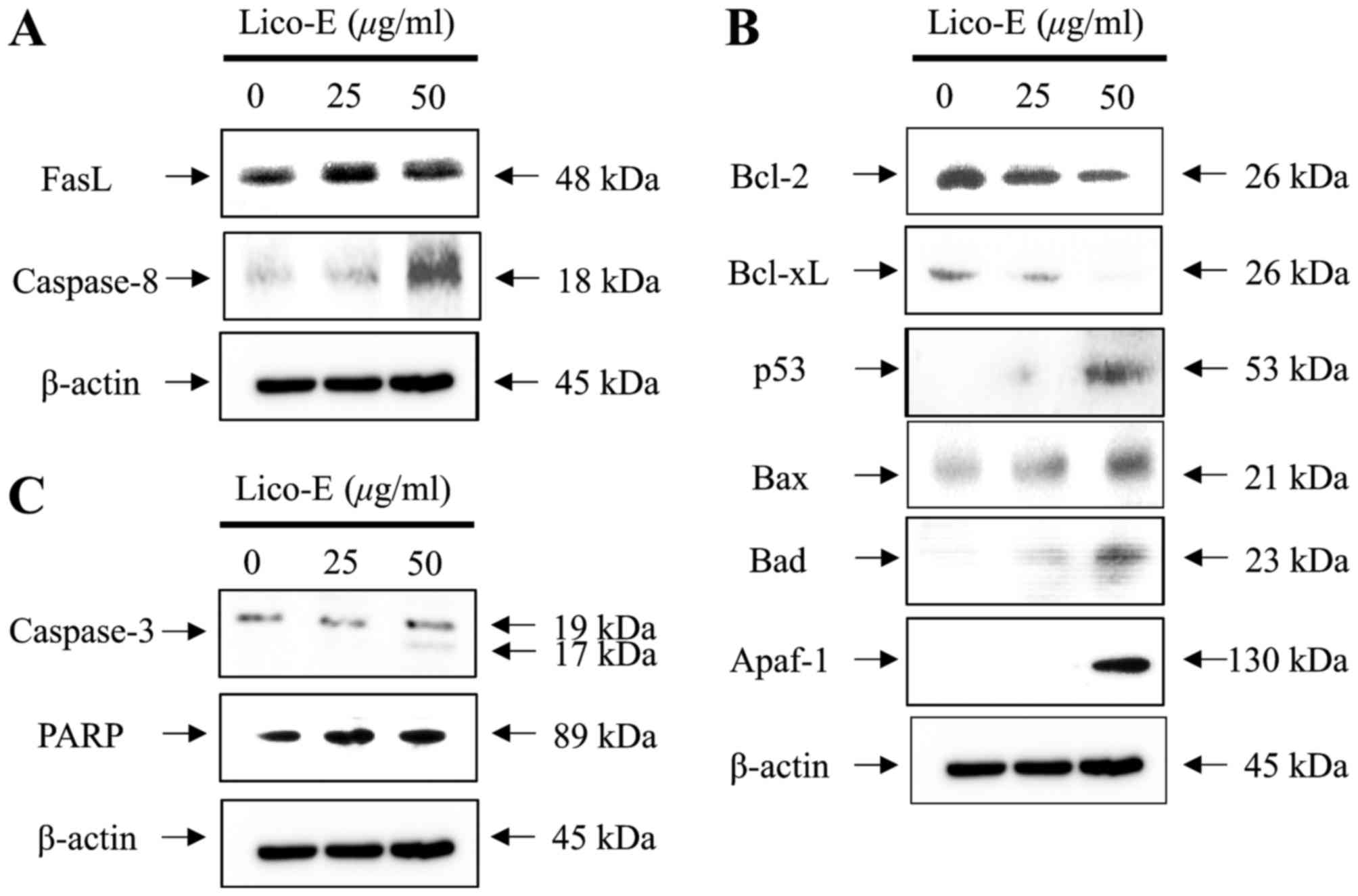
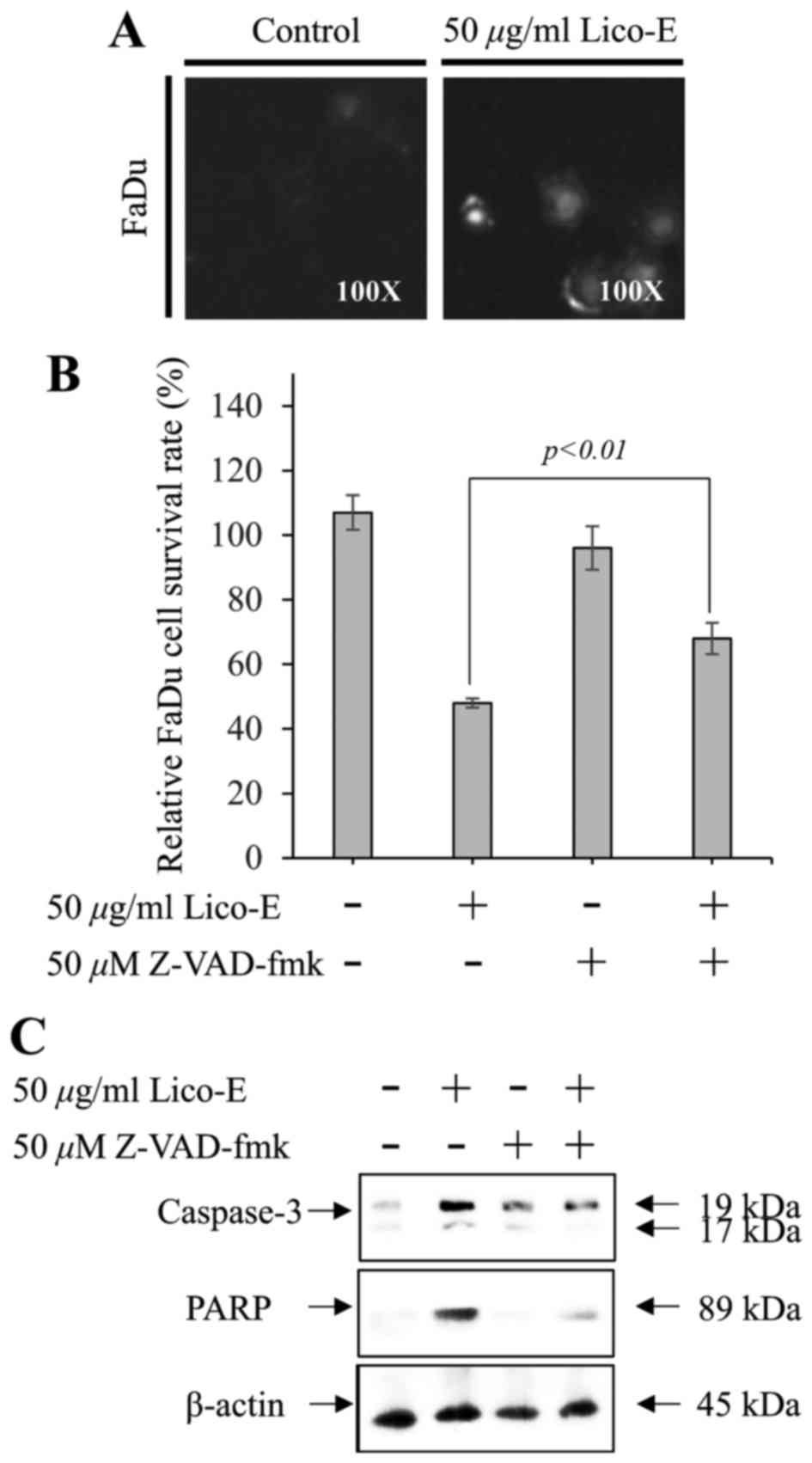
The aim of the present study was to investigate licochalcone-E (Lico-E)-induced apoptosis and the associated apoptotic signaling pathway in FaDu cells, a human pharyngeal squamous carcinoma cell line. Treatment with Lico‑E exhibited significant cytotoxicity on FaDu cells in a concentration‑dependent manner. The IC50 value of Lico-E in FaDu cells was ~50 µM. Treatment with Lico‑E increased the number of dead FaDu cells. Furthermore, chromatin condensation, which is associated with apoptotic cell death, was observed in FaDu cells treated with Lico‑E for 24 h. By contrast, Lico‑E did not produce cytotoxicity or increase the number of dead cells when applied to human normal oral keratinocytes (hNOKs). Furthermore, chromatin condensation was not observed in hNOKs treated with Lico‑E. Treatment with Lico‑E increased the expression of Fas ligand and the cleaved form of caspase‑8 in FaDu cells. Furthermore, treatment with Lico‑E increased the expression of pro‑apoptotic factors, including apoptosis regulator BAX, Bcl‑2‑associated agonist of cell death, apoptotic protease‑activating factor 1, caspase‑9 and tumor suppressor p53, while decreasing the expression of anti‑apoptotic factors, including apoptosis regulator Bcl‑2 and Bcl‑2‑like protein 1 in FaDu cells. The expression of cleaved caspases‑3 and poly (ADP‑ribose) polymerase was significantly upregulated following treatment with Lico‑E in FaDu cells, while Lico‑E‑induced apoptotic FaDu cell death was partially suppressed by treatment with Z‑VAD‑FMK, a pan caspase inhibitor. Therefore, Lico‑E‑induced oral cancer (OC) cell‑specific apoptosis is mediated by the death receptor-dependent extrinsic and mitochondrial‑dependent intrinsic apoptotic signaling pathways. In conclusion, these data suggested that Lico‑E exhibits potential chemopreventive effects and warrants further developed as a chemotherapeutic agent against OC.
View Figures

Figure 1

Figure 2

Figure 3

Figure 4

View References

1 

Sturgis EM and Miller RH: Second primary malignancies in the head and neck cancer patient. Ann Otol Rhinol Laryngol. 104:946–954. 1995. View Article : Google Scholar : PubMed/NCBI

2 

Rothman KJ: The effect of alcohol consumption on risk of cancer of the head and neck. Laryngoscope. 88:(1 Pt 2 Suppl 8). S51–S55. 1978.

3 

Marron M, Boffetta P, Zhang ZF, Zaridze D, Wünsch-Filho V, Winn DM, Wei Q, Talamini R, Szeszenia-Dabrowska N, Sturgis EM, et al: Cessation of alcohol drinking, tobacco smoking and the reversal of head and neck cancer risk. Int J Epidemiol. 39:182–196. 2010. View Article : Google Scholar : PubMed/NCBI

4 

Hashibe M, Hunt J, Wei M, Buys S, Gren L and Lee YC: Tobacco, alcohol, body mass index, physical activity, and the risk of head and neck cancer in the prostate, lung, colorectal, and ovarian (PLCO) cohort. Head Neck. 35:914–922. 2013. View Article : Google Scholar : PubMed/NCBI

5 

Lin YS, Jen YM, Wang BB, Lee JC and Kang BH: Epidemiology of oral cavity cancer in taiwan with emphasis on the role of betel nut chewing. ORL J Otorhinolaryngol Relat Spec. 67:230–236. 2005. View Article : Google Scholar : PubMed/NCBI

6 

Smith EM, Rubenstein LM, Haugen TH, Pawlita M and Turek LP: Complex etiology underlies risk and survival in head and neck cancer human papillomavirus, tobacco, and alcohol: A case for multifactor disease. J Oncol. 2012:5718622012. View Article : Google Scholar : PubMed/NCBI

7 

Park MR, Kim SG, Cho IA, Oh D, Kang KR, Lee SY, Moon SM, Cho SS, Yoon G, Kim CS, et al: Licochalcone-A induces intrinsic and extrinsic apoptosis via ERK1/2 and p38 phosphorylation-mediated TRAIL expression in head and neck squamous carcinoma FaDu cells. Food Chem Toxicol. 77:34–43. 2015. View Article : Google Scholar : PubMed/NCBI

8 

Chi AC, Day TA and Neville BW: Oral cavity and oropharyngeal squamous cell carcinoma-an update. CA Cancer J Clin. 65:401–421. 2015. View Article : Google Scholar : PubMed/NCBI

9 

Epstein JB, Thariat J, Bensadoun RJ, Barasch A, Murphy BA, Kolnick L, Popplewell L and Maghami E: Oral complications of cancer and cancer therapy: From cancer treatment to survivorship. CA Cancer J Clin. 62:400–422. 2012. View Article : Google Scholar : PubMed/NCBI

10 

Fesik SW: Promoting apoptosis as a strategy for cancer drug discovery. Nat Rev Cancer. 5:876–885. 2005. View Article : Google Scholar : PubMed/NCBI

11 

Shen H, Zeng G, Sun B, Cai X, Bi L, Tang G and Yang Y: A polysaccharide from Glycyrrhiza inflata Licorice inhibits proliferation of human oral cancer cells by inducing apoptosis via mitochondrial pathway. Tumour Biol. 36:4825–4831. 2015. View Article : Google Scholar : PubMed/NCBI

12 

Lee CK, Park KK, Lim SS, Park JH and Chung WY: Effects of the licorice extract against tumor growth and cisplatin-induced toxicity in a mouse xenograft model of colon cancer. Biol Pharm Bull. 30:2191–2195. 2007. View Article : Google Scholar : PubMed/NCBI

13 

Fu Y, Hsieh TC, Guo J, Kunicki J, Lee MY, Darzynkiewicz Z and Wu JM: Licochalcone-A, a novel flavonoid isolated from licorice root (Glycyrrhiza glabra), causes G2 and late-G1 arrests in androgen-independent PC-3 prostate cancer cells. Biochem Biophys Res Commun. 322:263–270. 2004. View Article : Google Scholar : PubMed/NCBI

14 

Jo EH, Kim SH, Ra JC, Kim SR, Cho SD, Jung JW, Yang SR, Park JS, Hwang JW, Aruoma OI, et al: Chemopreventive properties of the ethanol extract of Chinese licorice (Glycyrrhiza uralensis) root: Induction of apoptosis and G1 cell cycle arrest in MCF-7 human breast cancer cells. Cancer Lett. 230:239–247. 2005. View Article : Google Scholar : PubMed/NCBI

15 

Cho JJ, Chae JI, Yoon G, Kim KH, Cho JH, Cho SS, Cho YS and Shim JH: Licochalcone A, a natural chalconoid isolated from Glycyrrhiza inflata root, induces apoptosis via Sp1 and Sp1 regulatory proteins in oral squamous cell carcinoma. Int J Oncol. 45:667–674. 2014.PubMed/NCBI

16 

Kinghorn AD, Pan L, Fletcher JN and Chai H: The relevance of higher plants in lead compound discovery programs. J Nat Prod. 74:1539–1555. 2011. View Article : Google Scholar : PubMed/NCBI

17 

Wittschier N, Faller G and Hensel A: Aqueous extracts and polysaccharides from liquorice roots (Glycyrrhiza glabra L.) inhibit adhesion of Helicobacter pylori to human gastric mucosa. J Ethnopharmacol. 125:218–223. 2009. View Article : Google Scholar : PubMed/NCBI

18 

Lee SK, Park KK, Park JH, Lim SS and Chung WY: The inhibitory effect of roasted licorice extract on human metastatic breast cancer cell-induced bone destruction. Phytother Res. 27:1776–1783. 2013. View Article : Google Scholar : PubMed/NCBI

19 

Tamir S, Eizenberg M, Somjen D, Stern N, Shelach R, Kaye A and Vaya J: Estrogenic and antiproliferative properties of glabridin from licorice in human breast cancer cells. Cancer Res. 60:5704–5709. 2000.PubMed/NCBI

20 

Yoon G, Jung YD and Cheon SH: Cytotoxic allyl retrochalcone from the roots of Glycyrrhiza inflata. Chem Pharm Bull (Tokyo). 53:694–695. 2005. View Article : Google Scholar : PubMed/NCBI

21 

Lee HN, Cho HJ, Lim DY, Kang YH, Lee KW and Park JH: Mechanisms by which licochalcone e exhibits potent anti-inflammatory properties: Studies with phorbol ester-treated mouse skin and lipopolysaccharide-stimulated murine macrophages. Int J Mol Sci. 14:10926–10943. 2013. View Article : Google Scholar : PubMed/NCBI

22 

Zhou T, Deng X and Qiu J: Antimicrobial activity of licochalcone E against Staphylococcus aureus and its impact on the production of staphylococcal alpha-toxin. J Microbiol Biotechnol. 22:800–805. 2012. View Article : Google Scholar : PubMed/NCBI

23 

Kim SS, Lim J, Bang Y, Gal J, Lee SU, Cho YC, Yoon G, Kang BY, Cheon SH and Choi HJ: Licochalcone E activates Nrf2/antioxidant response element signaling pathway in both neuronal and microglial cells: Therapeutic relevance to neurodegenerative disease. J Nutr Biochem. 23:1314–1323. 2012. View Article : Google Scholar : PubMed/NCBI

24 

Park HG, Bak EJ, Woo GH, Kim JM, Quan Z, Kim JM, Yoon HK, Cheon SH, Yoon G, Yoo YJ, et al: Licochalcone E has an antidiabetic effect. J Nutr Biochem. 23:759–767. 2012. View Article : Google Scholar : PubMed/NCBI

25 

Kwon SJ, Park SY, Kwon GT, Lee KW, Kang YH, Choi MS, Yun JW, Jeon JH, Jun JG and Park JH: Licochalcone E present in licorice suppresses lung metastasis in the 4T1 mammary orthotopic cancer model. Cancer Prev Res (Phila). 6:603–613. 2013. View Article : Google Scholar : PubMed/NCBI

26 

International head and neck cancer epidemiology consortium: Update no. 19. Head Neck. 37:1401–1402. 2015. View Article : Google Scholar

27 

Howren MB, Christensen AJ, Karnell LH and Funk GF: Psychological factors associated with head and neck cancer treatment and survivorship: Evidence and opportunities for behavioral medicine. J Consult Clin Psychol. 81:299–317. 2013. View Article : Google Scholar : PubMed/NCBI

28 

Ohnishi S and Takeda H: Herbal medicines for the treatment of cancer chemotherapy-induced side effects. Front Pharmacol. 6:142015. View Article : Google Scholar : PubMed/NCBI

29 

Lee KH: Research and future trends in the pharmaceutical development of medicinal herbs from Chinese medicine. Public Health Nutr. 3:515–522. 2000. View Article : Google Scholar : PubMed/NCBI

30 

Peng F, Du Q, Peng C, Wang N, Tang H, Xie X, Shen J and Chen J: A review: The pharmacology of isoliquiritigenin. Phytother Res. 29:969–977. 2015. View Article : Google Scholar : PubMed/NCBI

31 

Song NR, Kim JE, Park JS, Kim JR, Kang H, Lee E, Kang YG, Son JE, Seo SG, Heo YS and Lee KW: Licochalcone A, a polyphenol present in licorice, suppresses UV-induced COX-2 expression by targeting PI3K, MEK1, and B-Raf. Int J Mol Sci. 16:4453–4470. 2015. View Article : Google Scholar : PubMed/NCBI

32 

Kuwajima H, Taneda Y, Chen WZ, Kawanishi T, Hori K, Taniyama T, Kobayashi M, Ren J and Kitagawa I: Variation of chemical constituents in processed licorice roots: Quantitative determination of saponin and flavonoid constituents in bark removed and roasted licorice roots. Yakugaku Zasshi. 119:945–955. 1999.(In Japanese). View Article : Google Scholar : PubMed/NCBI

33 

Stewart PM and Prescott SM: Can licorice lick colon cancer? J Clin Invest. 119:760–763. 2009. View Article : Google Scholar : PubMed/NCBI

34 

Hu C, Liu H, Du J, Mo B, Qi H, Wang X, Ye S and Li Z: Estrogenic activities of extracts of Chinese licorice (Glycyrrhiza uralensis) root in MCF-7 breast cancer cells. J Steroid Biochem Mol Biol. 113:209–216. 2009. View Article : Google Scholar : PubMed/NCBI

35 

Jo EH, Hong HD, Ahn NC, Jung JW, Yang SR, Park JS, Kim SH, Lee YS and Kang KS: Modulations of the Bcl-2/Bax family were involved in the chemopreventive effects of licorice root (Glycyrrhiza uralensis Fisch) in MCF-7 human breast cancer cell. J Agric Food Chem. 52:1715–1719. 2004. View Article : Google Scholar : PubMed/NCBI

36 

Zeng G, Shen H, Yang Y, Cai X and Xun W: Licochalcone A as a potent antitumor agent suppresses growth of human oral cancer SCC-25 cells in vitro via caspase-3 dependent pathways. Tumour Biol. 35:6549–6555. 2014. View Article : Google Scholar : PubMed/NCBI

37 

Yuan X, Li T, Xiao E, Zhao H, Li Y, Fu S, Gan L and Wang Z, Zheng Q and Wang Z: Licochalcone B inhibits growth of bladder cancer cells by arresting cell cycle progression and inducing apoptosis. Food Chem Toxicol. 65:242–251. 2014. View Article : Google Scholar : PubMed/NCBI

38 

Yuan X, Li D, Zhao H, Jiang J, Wang P, Ma X, Sun X and Zheng Q: Licochalcone A-induced human bladder cancer T24 cells apoptosis triggered by mitochondria dysfunction and endoplasmic reticulum stress. Biomed Res Int. 2013:4742722013. View Article : Google Scholar : PubMed/NCBI

39 

Huang HC, Tsai LL, Tsai JP, Hsieh SC, Yang SF, Hsueh JT and Hsieh YH: Licochalcone A inhibits the migration and invasion of human lung cancer cells via inactivation of the Akt signaling pathway with downregulation of MMP-1/−3 expression. Tumour Biol. 35:12139–12149. 2014. View Article : Google Scholar : PubMed/NCBI

40 

Xiao XY, Hao M, Yang XY, Ba Q, Li M, Ni SJ, Wang LS and Du X: Licochalcone A inhibits growth of gastric cancer cells by arresting cell cycle progression and inducing apoptosis. Cancer Lett. 302:69–75. 2011. View Article : Google Scholar : PubMed/NCBI

41 

Yo YT, Shieh GS, Hsu KF, Wu CL and Shiau AL: Licorice and licochalcone-A induce autophagy in LNCaP prostate cancer cells by suppression of Bcl-2 expression and the mTOR pathway. J Agric Food Chem. 57:8266–8273. 2009. View Article : Google Scholar : PubMed/NCBI

42 

Chang HJ, Yoon G, Park JS, Kim MH, Baek MK, Kim NH, Shin BA, Ahn BW, Cheon SH and Jung YD: Induction of apoptosis by the licochalcone E in endothelial cells via modulation of NF-kappaB and Bcl-2 Family. Biol Pharm Bull. 30:2290–2293. 2007. View Article : Google Scholar : PubMed/NCBI

43 

Oberhammer FA, Hochegger K, Fröschl G, Tiefenbacher R and Pavelka M: Chromatin condensation during apoptosis is accompanied by degradation of lamin A+B, without enhanced activation of cdc2 kinase. J Cell Biol. 126:827–837. 1994. View Article : Google Scholar : PubMed/NCBI

44 

Weissmann C: Fas ligand and Fas: a death factor and its receptor. Jpn J Cancer Res. 85:inside front cover. 1994.PubMed/NCBI

45 

Li Y, Wang H, Wang Z, Makhija S, Buchsbaum D, LoBuglio A, Kimberly R and Zhou T: Inducible resistance of tumor cells to tumor necrosis factor-related apoptosis-inducing ligand receptor 2-mediated apoptosis by generation of a blockade at the death domain function. Cancer Res. 66:8520–8528. 2006. View Article : Google Scholar : PubMed/NCBI

46 

Ikner A and Ashkenazi A: TWEAK induces apoptosis through a death-signaling complex comprising receptor-interacting protein 1 (RIP1), Fas-associated death domain (FADD) and caspase-8. J Biol Chem. 286:21546–21554. 2011. View Article : Google Scholar : PubMed/NCBI

47 

Li H, Zhu H, Xu CJ and Yuan J: Cleavage of BID by caspase 8 mediates the mitochondrial damage in the Fas pathway of apoptosis. Cell. 94:491–501. 1998. View Article : Google Scholar : PubMed/NCBI

48 

Fischer B, Coelho D, Dufour P, Bergerat JP, Denis JM, Gueulette J and Bischoff P: Caspase 8-mediated cleavage of the pro-apoptotic BCL-2 family member BID in p53-dependent apoptosis. Biochem Biophys Res Commun. 306:516–522. 2003. View Article : Google Scholar : PubMed/NCBI

Related Articles

  • Abstract
  • View
  • Download
  • Twitter
Copy and paste a formatted citation
Spandidos Publications style
Yu SJ, Cho IA, Kang KR, Jung YR, Cho SS, Yoon G, Oh JS, You JS, Seo YS, Lee GJ, Lee GJ, et al: Licochalcone-E induces caspase-dependent death of human pharyngeal squamous carcinoma cells through the extrinsic and intrinsic apoptotic signaling pathways. Oncol Lett 13: 3662-3668, 2017.
APA
Yu, S., Cho, I., Kang, K., Jung, Y., Cho, S.S., Yoon, G. ... Kim, J. (2017). Licochalcone-E induces caspase-dependent death of human pharyngeal squamous carcinoma cells through the extrinsic and intrinsic apoptotic signaling pathways. Oncology Letters, 13, 3662-3668. https://doi.org/10.3892/ol.2017.5865
MLA
Yu, S., Cho, I., Kang, K., Jung, Y., Cho, S. S., Yoon, G., Oh, J., You, J., Seo, Y., Lee, G., Lee, S., Kim, D. K., Kim, C. S., Kim, S., Jeong, M., Kim, J."Licochalcone-E induces caspase-dependent death of human pharyngeal squamous carcinoma cells through the extrinsic and intrinsic apoptotic signaling pathways". Oncology Letters 13.5 (2017): 3662-3668.
Chicago
Yu, S., Cho, I., Kang, K., Jung, Y., Cho, S. S., Yoon, G., Oh, J., You, J., Seo, Y., Lee, G., Lee, S., Kim, D. K., Kim, C. S., Kim, S., Jeong, M., Kim, J."Licochalcone-E induces caspase-dependent death of human pharyngeal squamous carcinoma cells through the extrinsic and intrinsic apoptotic signaling pathways". Oncology Letters 13, no. 5 (2017): 3662-3668. https://doi.org/10.3892/ol.2017.5865
Copy and paste a formatted citation
x
Spandidos Publications style
Yu SJ, Cho IA, Kang KR, Jung YR, Cho SS, Yoon G, Oh JS, You JS, Seo YS, Lee GJ, Lee GJ, et al: Licochalcone-E induces caspase-dependent death of human pharyngeal squamous carcinoma cells through the extrinsic and intrinsic apoptotic signaling pathways. Oncol Lett 13: 3662-3668, 2017.
APA
Yu, S., Cho, I., Kang, K., Jung, Y., Cho, S.S., Yoon, G. ... Kim, J. (2017). Licochalcone-E induces caspase-dependent death of human pharyngeal squamous carcinoma cells through the extrinsic and intrinsic apoptotic signaling pathways. Oncology Letters, 13, 3662-3668. https://doi.org/10.3892/ol.2017.5865
MLA
Yu, S., Cho, I., Kang, K., Jung, Y., Cho, S. S., Yoon, G., Oh, J., You, J., Seo, Y., Lee, G., Lee, S., Kim, D. K., Kim, C. S., Kim, S., Jeong, M., Kim, J."Licochalcone-E induces caspase-dependent death of human pharyngeal squamous carcinoma cells through the extrinsic and intrinsic apoptotic signaling pathways". Oncology Letters 13.5 (2017): 3662-3668.
Chicago
Yu, S., Cho, I., Kang, K., Jung, Y., Cho, S. S., Yoon, G., Oh, J., You, J., Seo, Y., Lee, G., Lee, S., Kim, D. K., Kim, C. S., Kim, S., Jeong, M., Kim, J."Licochalcone-E induces caspase-dependent death of human pharyngeal squamous carcinoma cells through the extrinsic and intrinsic apoptotic signaling pathways". Oncology Letters 13, no. 5 (2017): 3662-3668. https://doi.org/10.3892/ol.2017.5865
Follow us
  • Twitter
  • LinkedIn
  • Facebook
About
  • Spandidos Publications
  • Careers
  • Cookie Policy
  • Privacy Policy
How can we help?
  • Help
  • Live Chat
  • Contact
  • Email to our Support Team