Spandidos Publications Logo
  • About
    • About Spandidos
    • Aims and Scopes
    • Abstracting and Indexing
    • Editorial Policies
    • Reprints and Permissions
    • Job Opportunities
    • Terms and Conditions
    • Contact
  • Journals
    • All Journals
    • Oncology Letters
      • Oncology Letters
      • Information for Authors
      • Editorial Policies
      • Editorial Board
      • Aims and Scope
      • Abstracting and Indexing
      • Bibliographic Information
      • Archive
    • International Journal of Oncology
      • International Journal of Oncology
      • Information for Authors
      • Editorial Policies
      • Editorial Board
      • Aims and Scope
      • Abstracting and Indexing
      • Bibliographic Information
      • Archive
    • Molecular and Clinical Oncology
      • Molecular and Clinical Oncology
      • Information for Authors
      • Editorial Policies
      • Editorial Board
      • Aims and Scope
      • Abstracting and Indexing
      • Bibliographic Information
      • Archive
    • Experimental and Therapeutic Medicine
      • Experimental and Therapeutic Medicine
      • Information for Authors
      • Editorial Policies
      • Editorial Board
      • Aims and Scope
      • Abstracting and Indexing
      • Bibliographic Information
      • Archive
    • International Journal of Molecular Medicine
      • International Journal of Molecular Medicine
      • Information for Authors
      • Editorial Policies
      • Editorial Board
      • Aims and Scope
      • Abstracting and Indexing
      • Bibliographic Information
      • Archive
    • Biomedical Reports
      • Biomedical Reports
      • Information for Authors
      • Editorial Policies
      • Editorial Board
      • Aims and Scope
      • Abstracting and Indexing
      • Bibliographic Information
      • Archive
    • Oncology Reports
      • Oncology Reports
      • Information for Authors
      • Editorial Policies
      • Editorial Board
      • Aims and Scope
      • Abstracting and Indexing
      • Bibliographic Information
      • Archive
    • Molecular Medicine Reports
      • Molecular Medicine Reports
      • Information for Authors
      • Editorial Policies
      • Editorial Board
      • Aims and Scope
      • Abstracting and Indexing
      • Bibliographic Information
      • Archive
    • World Academy of Sciences Journal
      • World Academy of Sciences Journal
      • Information for Authors
      • Editorial Policies
      • Editorial Board
      • Aims and Scope
      • Abstracting and Indexing
      • Bibliographic Information
      • Archive
    • International Journal of Functional Nutrition
      • International Journal of Functional Nutrition
      • Information for Authors
      • Editorial Policies
      • Editorial Board
      • Aims and Scope
      • Abstracting and Indexing
      • Bibliographic Information
      • Archive
    • International Journal of Epigenetics
      • International Journal of Epigenetics
      • Information for Authors
      • Editorial Policies
      • Editorial Board
      • Aims and Scope
      • Abstracting and Indexing
      • Bibliographic Information
      • Archive
    • Medicine International
      • Medicine International
      • Information for Authors
      • Editorial Policies
      • Editorial Board
      • Aims and Scope
      • Abstracting and Indexing
      • Bibliographic Information
      • Archive
  • Articles
  • Information
    • Information for Authors
    • Information for Reviewers
    • Information for Librarians
    • Information for Advertisers
    • Conferences
  • Language Editing
Spandidos Publications Logo
  • About
    • About Spandidos
    • Aims and Scopes
    • Abstracting and Indexing
    • Editorial Policies
    • Reprints and Permissions
    • Job Opportunities
    • Terms and Conditions
    • Contact
  • Journals
    • All Journals
    • Biomedical Reports
      • Information for Authors
      • Editorial Policies
      • Editorial Board
      • Aims and Scope
      • Abstracting and Indexing
      • Bibliographic Information
      • Archive
    • Experimental and Therapeutic Medicine
      • Information for Authors
      • Editorial Policies
      • Editorial Board
      • Aims and Scope
      • Abstracting and Indexing
      • Bibliographic Information
      • Archive
    • International Journal of Epigenetics
      • Information for Authors
      • Editorial Policies
      • Editorial Board
      • Aims and Scope
      • Abstracting and Indexing
      • Bibliographic Information
      • Archive
    • International Journal of Functional Nutrition
      • Information for Authors
      • Editorial Policies
      • Editorial Board
      • Aims and Scope
      • Abstracting and Indexing
      • Bibliographic Information
      • Archive
    • International Journal of Molecular Medicine
      • Information for Authors
      • Editorial Policies
      • Editorial Board
      • Aims and Scope
      • Abstracting and Indexing
      • Bibliographic Information
      • Archive
    • International Journal of Oncology
      • Information for Authors
      • Editorial Policies
      • Editorial Board
      • Aims and Scope
      • Abstracting and Indexing
      • Bibliographic Information
      • Archive
    • Medicine International
      • Information for Authors
      • Editorial Policies
      • Editorial Board
      • Aims and Scope
      • Abstracting and Indexing
      • Bibliographic Information
      • Archive
    • Molecular and Clinical Oncology
      • Information for Authors
      • Editorial Policies
      • Editorial Board
      • Aims and Scope
      • Abstracting and Indexing
      • Bibliographic Information
      • Archive
    • Molecular Medicine Reports
      • Information for Authors
      • Editorial Policies
      • Editorial Board
      • Aims and Scope
      • Abstracting and Indexing
      • Bibliographic Information
      • Archive
    • Oncology Letters
      • Information for Authors
      • Editorial Policies
      • Editorial Board
      • Aims and Scope
      • Abstracting and Indexing
      • Bibliographic Information
      • Archive
    • Oncology Reports
      • Information for Authors
      • Editorial Policies
      • Editorial Board
      • Aims and Scope
      • Abstracting and Indexing
      • Bibliographic Information
      • Archive
    • World Academy of Sciences Journal
      • Information for Authors
      • Editorial Policies
      • Editorial Board
      • Aims and Scope
      • Abstracting and Indexing
      • Bibliographic Information
      • Archive
  • Articles
  • Information
    • For Authors
    • For Reviewers
    • For Librarians
    • For Advertisers
    • Conferences
  • Language Editing
Login Register Submit
  • This site uses cookies
  • You can change your cookie settings at any time by following the instructions in our Cookie Policy. To find out more, you may read our Privacy Policy.

    I agree
Search articles by DOI, keyword, author or affiliation
Search
Advanced Search
presentation
Oncology Letters
Join Editorial Board Propose a Special Issue
Print ISSN: 1792-1074 Online ISSN: 1792-1082
Journal Cover
March-2018 Volume 15 Issue 3

Full Size Image

Sign up for eToc alerts
Recommend to Library

Journals

International Journal of Molecular Medicine

International Journal of Molecular Medicine

International Journal of Molecular Medicine is an international journal devoted to molecular mechanisms of human disease.

International Journal of Oncology

International Journal of Oncology

International Journal of Oncology is an international journal devoted to oncology research and cancer treatment.

Molecular Medicine Reports

Molecular Medicine Reports

Covers molecular medicine topics such as pharmacology, pathology, genetics, neuroscience, infectious diseases, molecular cardiology, and molecular surgery.

Oncology Reports

Oncology Reports

Oncology Reports is an international journal devoted to fundamental and applied research in Oncology.

Experimental and Therapeutic Medicine

Experimental and Therapeutic Medicine

Experimental and Therapeutic Medicine is an international journal devoted to laboratory and clinical medicine.

Oncology Letters

Oncology Letters

Oncology Letters is an international journal devoted to Experimental and Clinical Oncology.

Biomedical Reports

Biomedical Reports

Explores a wide range of biological and medical fields, including pharmacology, genetics, microbiology, neuroscience, and molecular cardiology.

Molecular and Clinical Oncology

Molecular and Clinical Oncology

International journal addressing all aspects of oncology research, from tumorigenesis and oncogenes to chemotherapy and metastasis.

World Academy of Sciences Journal

World Academy of Sciences Journal

Multidisciplinary open-access journal spanning biochemistry, genetics, neuroscience, environmental health, and synthetic biology.

International Journal of Functional Nutrition

International Journal of Functional Nutrition

Open-access journal combining biochemistry, pharmacology, immunology, and genetics to advance health through functional nutrition.

International Journal of Epigenetics

International Journal of Epigenetics

Publishes open-access research on using epigenetics to advance understanding and treatment of human disease.

Medicine International

Medicine International

An International Open Access Journal Devoted to General Medicine.

Journal Cover
March-2018 Volume 15 Issue 3

Full Size Image

Sign up for eToc alerts
Recommend to Library

  • Article
  • Citations
    • Cite This Article
    • Download Citation
    • Create Citation Alert
    • Remove Citation Alert
    • Cited By
  • Similar Articles
    • Related Articles (in Spandidos Publications)
    • Similar Articles (Google Scholar)
    • Similar Articles (PubMed)
  • Download PDF
  • Download XML
  • View XML
Article Open Access

Mitochondrial ROS contribute to oridonin-induced HepG2 apoptosis through PARP activation

  • Authors:
    • Xiaoning Liu
    • Jingjing Kang
    • Hui Wang
    • Tao Huang
  • View Affiliations / Copyright

    Affiliations: Department of Biochemistry, School of Medicine, Huanghe College of Science and Technology, Zhengzhou, Henan 450063, P.R. China
    Copyright: © Liu et al. This is an open access article distributed under the terms of Creative Commons Attribution License.
  • Pages: 2881-2888
    |
    Published online on: December 20, 2017
       https://doi.org/10.3892/ol.2017.7665
  • Expand metrics +
Metrics: Total Views: 0 (Spandidos Publications: | PMC Statistics: )
Metrics: Total PDF Downloads: 0 (Spandidos Publications: | PMC Statistics: )
Cited By (CrossRef): 0 citations Loading Articles...

This article is mentioned in:


Abstract

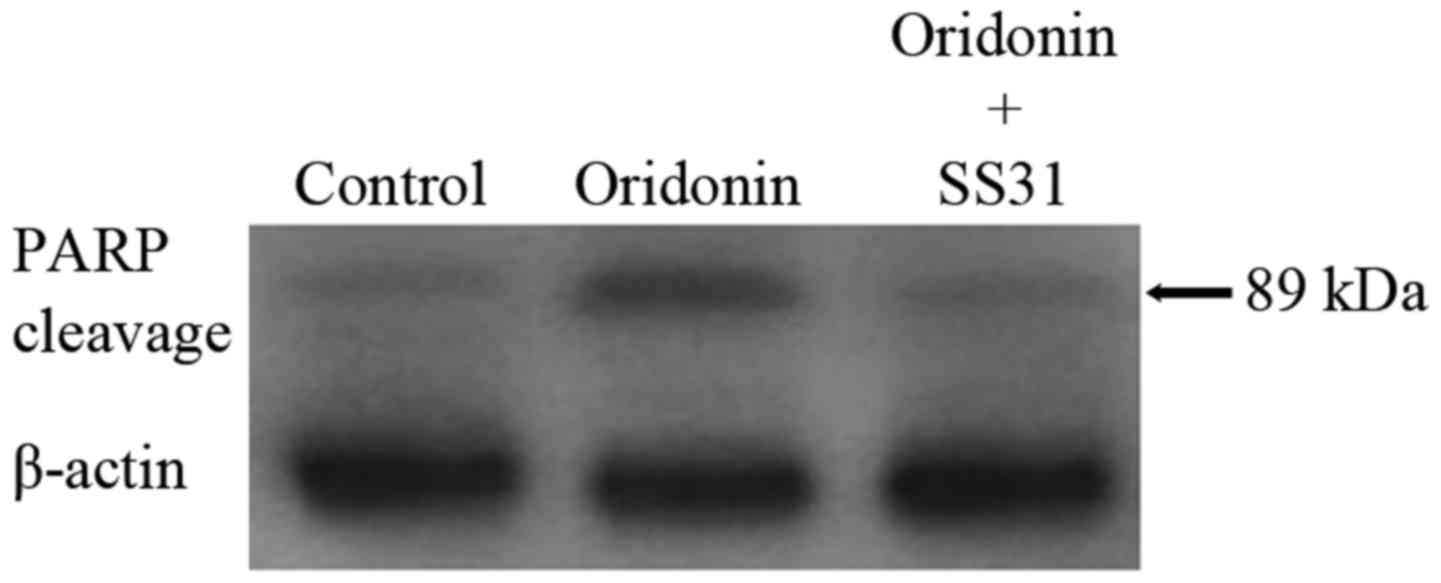
Oridonin, the main active constituent of Rabdosia rubescens, is known to exert antitumor activity via the induction of apoptosis in numerous types of human cancer cells. However, the underlying regulatory mechanisms of mitochondrial ROS in oridonin‑induced HepG2 apoptosis remain largely unknown, due to limitations of subcellular imaging resolution. Previously, it has been suggested that mitochondria serve a potential role in sensing and signaling cellular redox changes in vital biological processes such as cell death and the abiotic stress response, based on studies involving the mitochondrial‑targeted redox‑sensitive green fluorescent protein (GFP). To address this, a mitochondrial‑targeted Grx1‑roGFP2 (mtGrx1‑roGFP2) biosensor was implemented to monitor real‑time mitochondrial redox changes of HepG2 cells in response to either H2O2/DTT or oridonin/SS31 treatment. It was determined that oridonin caused a perturbation in mitochondrial redox status, which in turn contributed to oridonin‑induced apoptosis. Furthermore, a novel mechanism underlying the regulation of mitochondrial redox changes in oridonin‑induced HepG2 apoptosis, presumably dependent on PARP cleavage, was proposed. In conclusion, the present study provides evidence in support of mitochondrial redox changes as a potential mediator in the apoptotic activities of oridonin in HepG2 cells, which provides insight into the molecular mechanisms by which mitochondrial redox signaling regulates oridonin‑induced apoptosis in cancer therapy, and the development of mitochondria‑specific oridonin as a promising novel anticancer therapeutic strategy.
View Figures

Figure 1

Figure 2

Figure 3

Figure 4

Figure 5

View References

1 

Mohan H: Textbook of pathology. 5th. Jaypee Brothers Medical Publishers; New Delhi: pp. 21–60. 2010, View Article : Google Scholar

2 

Merkle CJ: Cellular adaptation, injury and deathPathophysiology: Concepts of altered health states. Porth CM and Matfin G: 8th. Wolters Kluwer/Lippincott Williams and Wilkins; Philadelphia, PA: pp. 94–111. 2009

3 

Ghobrial IM, Witzig TE and Adjei AA: Targeting apoptosis pathways in cancer therapy. CA Cancer J Clin. 55:178–194. 2005. View Article : Google Scholar : PubMed/NCBI

4 

Wong RS: Apoptosis in cancer: From pathogenesis to treatment. J Exp Clin Cancer Res. 30:872011. View Article : Google Scholar : PubMed/NCBI

5 

Parri M and Chiarugi P: Redox molecular machines involved in tumor progression. Antioxid Redox Signal. 19:1828–1845. 2013. View Article : Google Scholar : PubMed/NCBI

6 

Tochhawng L, Deng S, Pervaiz S and Yap CT: Redox regulation of cancer cell migration and invasion. Mitochondrion. 13:246–253. 2013. View Article : Google Scholar : PubMed/NCBI

7 

Zhang L, Wang K, Lei Y, Li Q, Nice EC and Huang C: Redox signaling: Potential arbitrator of autophagy and apoptosis in therapeutic response. Free Radic Biol Med. 89:452–465. 2015. View Article : Google Scholar : PubMed/NCBI

8 

Liao W, Yu Z, Lin Z, Lei Z, Ning Z, Regenstein JM, Yang J and Ren J: Biofunctionalization of Selenium nanoparticle with dictyophora indusiata polysaccharide and its antiproliferative activity through death-receptor and mitochondria-mediated apoptotic pathways. Sci Rep. 5:186292015. View Article : Google Scholar : PubMed/NCBI

9 

Xue M, Ge Y, Yu C, Zheng Z, He X and Zhao J: Apoptosis is induced by docosahexaenoic acid in breast cancer cells via death receptor and mitochondria-mediated pathways. Mol Med Rep. 16:978–982. 2017. View Article : Google Scholar : PubMed/NCBI

10 

Zhang YQ, Xiao CX, Lin BY, Shi Y, Liu YP, Liu JJ, Guleng B and Ren JL: Silencing of pokemon enhances caspase-dependent apoptosis via fas- and mitochondria-mediated pathways in hepatocellular carcinoma cells. PLoS One. 8:e689812013. View Article : Google Scholar : PubMed/NCBI

11 

Kroemer G: Mitochondrial control of apoptosis: An overview. Biochem Soc Symp. 66:1–15. 1999. View Article : Google Scholar : PubMed/NCBI

12 

Mari M, Morales A, Colell A, Garcia-Ruiz C and Fernandez-Checa JC: Mitochondrial glutathione, a key survival antioxidant. Antioxid Redox Signal. 11:2685–2700. 2009. View Article : Google Scholar : PubMed/NCBI

13 

Morgan B, Sobotta MC and Dick TP: Measuring E(GSH) and H2O2 with roGFP2-based redox probes. Free Radic Biol Med. 51:1943–1951. 2011. View Article : Google Scholar : PubMed/NCBI

14 

Kolossov VL, Hanafin WP, Beaudoin JN, Bica DE, DiLiberto SJ, Kenis PJ and Gaskins HR: Inhibition of glutathione synthesis distinctly alters mitochondrial and cytosolic redox poise. Exp Biol Med (Maywood). 239:394–403. 2014. View Article : Google Scholar : PubMed/NCBI

15 

Chan CK, Supriady H, Goh BH and Kadir HA: Elephantopus scaber induces apoptosis through ROS-dependent mitochondrial signaling pathway in HCT116 human colorectal carcinoma cells. J Ethnopharmacol. 168:291–304. 2015. View Article : Google Scholar : PubMed/NCBI

16 

Shen S, Zhang Y, Zhang R and Gong X: Sarsasapogenin induces apoptosis via the reactive oxygen species-mediated mitochondrial pathway and ER stress pathway in HeLa cells. Biochem Biophys Res Commun. 15:519–524. 2013. View Article : Google Scholar

17 

Ezerina D, Morgan B and Dick TP: Imaging dynamic redox processes with genetically encoded probes. J Mol Cell Cardiol. 73:43–49. 2014. View Article : Google Scholar : PubMed/NCBI

18 

Bhaskar A, Munshi M, Khan SZ, Fatima S, Arya R, Jameel S and Singh A: Measuring glutathione redox potential of HIV-1-infected macrophages. J Biol Chem. 290:1020–1038. 2015. View Article : Google Scholar : PubMed/NCBI

19 

van Lith M, Tiwari S, Pediani J, Milligan G and Bulleid NJ: Real-time monitoring of redox changes in the mammalian endoplasmic reticulum. J Cell Sci. 124:2349–2356. 2011. View Article : Google Scholar : PubMed/NCBI

20 

Hanson GT, Aggeler R, Oglesbee D, Cannon M, Capaldi RA, Tsien RY and Remington SJ: Investigating mitochondrial redox potential with redox-sensitive green fluorescent protein indicators. J Biol Chem. 279:13044–13053. 2004. View Article : Google Scholar : PubMed/NCBI

21 

Gutscher M, Pauleau AL, Marty L, Brach T, Wabnitz GH, Samstag Y, Meyer AJ and Dick TP: Real-time imaging of the intracellular glutathione redox potential. Nat Methods. 5:553–559. 2008. View Article : Google Scholar : PubMed/NCBI

22 

Kang N, Zhang JH, Qiu F, Tashiro S, Onodera S and Ikejima T: Inhibition of EGFR signaling augments oridonin-induced apoptosis in human laryngeal cancer cells via enhancing oxidative stress coincident with activation of both the intrinsic and extrinsic apoptotic pathways. Cancer Lett. 294:147–158. 2010. View Article : Google Scholar : PubMed/NCBI

23 

Zhang YH, Wu YL, Tashiro S, Onodera S and Ikejima T: Reactive oxygen species contribute to oridonin-induced apoptosis and autophagy in human cervical carcinoma HeLa cells. Acta Pharmacol Sin. 32:1266–1275. 2011. View Article : Google Scholar : PubMed/NCBI

24 

Chen G, Wang K, Yang BY, Tang B, Chen JX and Hua ZC: Synergistic antitumor activity of oridonin and arsenic trioxide on hepatocellular carcinoma cells. Int J Oncol. 40:139–147. 2012.PubMed/NCBI

25 

Wang H, Ye Y and Yu ZL: Proteomic and functional analyses demonstrate the involvement of oxidative stress in the anticancer activities of oridonin in HepG2 cells. Oncol Rep. 31:2165–2172. 2014. View Article : Google Scholar : PubMed/NCBI

26 

Yu Y, Fan SM, Ye YC, Tashiro S, Onodera S and Ikejima T: The tyrphostin AG1478 augments oridonin-induced A431 cell apoptosis by blockage of JNK MAPK and enhancement of oxidative stress. Free Radic Res. 46:1393–1405. 2012. View Article : Google Scholar : PubMed/NCBI

27 

Yu Y, Fan SM, Song JK, Tashiro S, Onodera S and Ikejima T: Hydroxyl radical (OH) played a pivotal role in oridonin-induced apoptosis and autophagy in human epidermoid carcinoma A431 cells. Biol Pharm Bull. 35:2148–2159. 2012. View Article : Google Scholar : PubMed/NCBI

28 

Zang L, He H, Xu Q, Yu Y, Zheng N, Liu W, Hayashi T, Tashiro S, Onodera S and Ikejima T: Reactive oxygen species H2O2 and •OH, but not O2•(−) promote oridonin-induced phagocytosis of apoptotic cells by human histocytic lymphoma U937 cells. Int Immunopharmacol. 15:414–423. 2013. View Article : Google Scholar : PubMed/NCBI

29 

Pi J, Cai H, Jin H, Yang F, Jiang J, Wu A, Zhu H, Liu J, Su X, Yang P and Cai J: Qualitative and quantitative analysis of ROS-mediated oridonin-induced oesophageal cancer KYSE-150 cell apoptosis by atomic force microscopy. PLoS One. 10:e01409352015. View Article : Google Scholar : PubMed/NCBI

30 

Shang CH, Zhang QQ and Zhou JH: Oridonin inhibits cell proliferation and induces apoptosis in rheumatoid arthritis fibroblast-like Synoviocytes. Inflammation. 39:873–880. 2016. View Article : Google Scholar : PubMed/NCBI

31 

Xu ZZ, Fu WB, Jin Z, Guo P, Wang WF and Li JM: Reactive oxygen species mediate oridonin-induced apoptosis through DNA damage response and activation of JNK pathway in diffuse large B cell lymphoma. Leuk Lymphoma. 57:888–898. 2016. View Article : Google Scholar : PubMed/NCBI

32 

Huang J, Wu L, Tashiro S, Onodera S and Ikejima T: Reactive oxygen species mediate oridonin-induced HepG2 apoptosis through p53, MAPK and mitochondrial signaling pathways. J Pharmacol Sci. 107:370–379. 2008. View Article : Google Scholar : PubMed/NCBI

33 

Bao R, Shu Y, Wu X, Weng H, Ding Q, Cao Y, Li M, Mu J, Wu W, Ding Q, et al: Oridonin induces apoptosis and cell cycle arrest of gallbladder cancer cells via the mitochondrial pathway. BMC Cancer. 14:2172014. View Article : Google Scholar : PubMed/NCBI

34 

Li J, Chen X, Xiao W, Ma W, Li T, Huang J, Liu X, Liang X, Tang S and Luo Y: Mitochondria-targeted antioxidant peptide SS31 attenuates high glucose-induced injury on human retinal endothelial cells. Biochem Biophys Res Commun. 404:349–356. 2011. View Article : Google Scholar : PubMed/NCBI

35 

Zhao K, Zhao GM, Wu D, Soong Y, Birk AV, Schiller PW and Szeto HH: Cell-permeable peptide antioxidants targeted to inner mitochondrial membrane inhibit mitochondrial swelling, oxidative cell death and reperfusion injury. J Biol Chem. 279:34682–34690. 2004. View Article : Google Scholar : PubMed/NCBI

36 

Zhao K, Luo G, Giannelli S and Szeto HH: Mitochondria-targeted peptide prevents mitochondrial depolarization and apoptosis induced by tert-butyl hydroperoxide in neuronal cell lines. Biochem Pharmacol. 70:1796–1806. 2005. View Article : Google Scholar : PubMed/NCBI

37 

López-Terrada D, Cheung SW, Finegold MJ and Knowles BB: Hep G2 is a hepatoblastoma-derived cell line. Hum Pathol. 40:1512–1515. 2009. View Article : Google Scholar

38 

Capes-Davis A, Theodosopoulos G, Atkin I, Drexler HG, Kohara A, MacLeod RA, Masters JR, Nakamura Y, Reid YA, Reddel RR and Freshney RI: Check your cultures! A list of cross-contaminated or misidentified cell lines. Int J Cancer. 127:1–8. 2010. View Article : Google Scholar : PubMed/NCBI

39 

Zufferey R, Nagy D, Mandel RJ, Naldini L and Trono D: Multiply attenuated lentiviral vector achieves efficient gene delivery in vivo. Nat Biotechnol. 15:871–875. 1997. View Article : Google Scholar : PubMed/NCBI

40 

Rota C, Chignell CF and Mason RP: Evidence for free radical formation during the oxidation of 2′-7′-dichlorofluorescin to the fluorescent dye 2′-7′-dichlorofluorescein by horseradish peroxidase: Possible implications for oxidative stress measurements. Free Radic Biol Med. 27:873–881. 1999. View Article : Google Scholar : PubMed/NCBI

41 

Loor G, Kondapalli J, Schriewer JM, Chandel NS, Vanden Hoek TL and Schumacker PT: Menadione triggers cell death through ROS-dependent mechanisms involving PARP activation without requiring apoptosis. Free Radic Biol Med. 49:1925–1936. 2010. View Article : Google Scholar : PubMed/NCBI

42 

Ye W, Zhong Z, Zhu S, Zheng S, Xiao J, Song S, Yu H, Wu Q, Lin Z and Chen J: Advanced oxidation protein products induce chondrocyte death through a redox-dependent, poly (ADP-ribose) polymerase-1-mediated pathway. Apoptosis. 22:86–97. 2017. View Article : Google Scholar : PubMed/NCBI

43 

Lu P, Kamboj A, Gibson SB and Anderson CM: Poly(ADP-ribose) polymerase-1 causes mitochondrial damage and neuron death mediated by Bnip3. J Neurosci. 34:15975–15987. 2014. View Article : Google Scholar : PubMed/NCBI

44 

Li CY, Wang EQ, Cheng Y and Bao JK: Oridonin: An active diterpenoid targeting cell cycle arrest, apoptotic and autophagic pathways for cancer therapeutics. Int J Biochem Cell Biol. 43:701–704. 2011. View Article : Google Scholar : PubMed/NCBI

45 

Ikezoe T, Chen SS, Tong XJ, Heber D, Taguchi H and Koeffler HP: Oridonin induces growth inhibition and apoptosis of a variety of human cancer cells. Int J Oncol. 23:1187–1193. 2003.PubMed/NCBI

46 

Schwarzlander M, Fricker MD and Sweetlove LJ: Monitoring the in vivo redox state of plant mitochondria: effect of respiratory inhibitors, abiotic stress and assessment of recovery from oxidative challenge. Biochim Biophys Acta. 1787:468–475. 2009. View Article : Google Scholar : PubMed/NCBI

47 

Albrecht SC, Sobotta MC, Bausewein D, Aller I, Hell R, Dick TP and Meyer AJ: Redesign of genetically encoded biosensors for monitoring mitochondrial redox status in a broad range of model eukaryotes. J Biomol Screen. 19:379–386. 2014. View Article : Google Scholar : PubMed/NCBI

48 

Johnson TM, Yu ZX, Ferrans VJ, Lowenstein RA and Finkel T: Reactive oxygen species are downstream mediators of p53-dependent apoptosis. Proc Natl Acad Sci USA. 93:pp. 11848–11852. 1996; View Article : Google Scholar : PubMed/NCBI

49 

Wang H, Ye Y, Chui JH, Zhu GY, Li YW, Fong DW and Yu ZL: Oridonin induces G2/M cell cycle arrest and apoptosis through MAPK and p53 signaling pathways in HepG2 cells. Oncol Rep. 24:647–651. 2010.PubMed/NCBI

50 

Wang H, Ye Y, Chu JH, Zhu GY, Fong WF and Yu ZL: Proteomic and functional analyses reveal the potential involvement of endoplasmic reticulum stress and alpha-CP1 in the anticancer activities of oridonin in HepG2 cells. Integr Cancer Ther. 10:160–167. 2011. View Article : Google Scholar : PubMed/NCBI

Related Articles

  • Abstract
  • View
  • Download
  • Twitter
Copy and paste a formatted citation
Spandidos Publications style
Liu X, Kang J, Wang H and Huang T: Mitochondrial ROS contribute to oridonin-induced HepG2 apoptosis through PARP activation. Oncol Lett 15: 2881-2888, 2018.
APA
Liu, X., Kang, J., Wang, H., & Huang, T. (2018). Mitochondrial ROS contribute to oridonin-induced HepG2 apoptosis through PARP activation. Oncology Letters, 15, 2881-2888. https://doi.org/10.3892/ol.2017.7665
MLA
Liu, X., Kang, J., Wang, H., Huang, T."Mitochondrial ROS contribute to oridonin-induced HepG2 apoptosis through PARP activation". Oncology Letters 15.3 (2018): 2881-2888.
Chicago
Liu, X., Kang, J., Wang, H., Huang, T."Mitochondrial ROS contribute to oridonin-induced HepG2 apoptosis through PARP activation". Oncology Letters 15, no. 3 (2018): 2881-2888. https://doi.org/10.3892/ol.2017.7665
Copy and paste a formatted citation
x
Spandidos Publications style
Liu X, Kang J, Wang H and Huang T: Mitochondrial ROS contribute to oridonin-induced HepG2 apoptosis through PARP activation. Oncol Lett 15: 2881-2888, 2018.
APA
Liu, X., Kang, J., Wang, H., & Huang, T. (2018). Mitochondrial ROS contribute to oridonin-induced HepG2 apoptosis through PARP activation. Oncology Letters, 15, 2881-2888. https://doi.org/10.3892/ol.2017.7665
MLA
Liu, X., Kang, J., Wang, H., Huang, T."Mitochondrial ROS contribute to oridonin-induced HepG2 apoptosis through PARP activation". Oncology Letters 15.3 (2018): 2881-2888.
Chicago
Liu, X., Kang, J., Wang, H., Huang, T."Mitochondrial ROS contribute to oridonin-induced HepG2 apoptosis through PARP activation". Oncology Letters 15, no. 3 (2018): 2881-2888. https://doi.org/10.3892/ol.2017.7665
Follow us
  • Twitter
  • LinkedIn
  • Facebook
About
  • Spandidos Publications
  • Careers
  • Cookie Policy
  • Privacy Policy
How can we help?
  • Help
  • Live Chat
  • Contact
  • Email to our Support Team