Spandidos Publications Logo
  • About
    • About Spandidos
    • Aims and Scopes
    • Abstracting and Indexing
    • Editorial Policies
    • Reprints and Permissions
    • Job Opportunities
    • Terms and Conditions
    • Contact
  • Journals
    • All Journals
    • Oncology Letters
      • Oncology Letters
      • Information for Authors
      • Editorial Policies
      • Editorial Board
      • Aims and Scope
      • Abstracting and Indexing
      • Bibliographic Information
      • Archive
    • International Journal of Oncology
      • International Journal of Oncology
      • Information for Authors
      • Editorial Policies
      • Editorial Board
      • Aims and Scope
      • Abstracting and Indexing
      • Bibliographic Information
      • Archive
    • Molecular and Clinical Oncology
      • Molecular and Clinical Oncology
      • Information for Authors
      • Editorial Policies
      • Editorial Board
      • Aims and Scope
      • Abstracting and Indexing
      • Bibliographic Information
      • Archive
    • Experimental and Therapeutic Medicine
      • Experimental and Therapeutic Medicine
      • Information for Authors
      • Editorial Policies
      • Editorial Board
      • Aims and Scope
      • Abstracting and Indexing
      • Bibliographic Information
      • Archive
    • International Journal of Molecular Medicine
      • International Journal of Molecular Medicine
      • Information for Authors
      • Editorial Policies
      • Editorial Board
      • Aims and Scope
      • Abstracting and Indexing
      • Bibliographic Information
      • Archive
    • Biomedical Reports
      • Biomedical Reports
      • Information for Authors
      • Editorial Policies
      • Editorial Board
      • Aims and Scope
      • Abstracting and Indexing
      • Bibliographic Information
      • Archive
    • Oncology Reports
      • Oncology Reports
      • Information for Authors
      • Editorial Policies
      • Editorial Board
      • Aims and Scope
      • Abstracting and Indexing
      • Bibliographic Information
      • Archive
    • Molecular Medicine Reports
      • Molecular Medicine Reports
      • Information for Authors
      • Editorial Policies
      • Editorial Board
      • Aims and Scope
      • Abstracting and Indexing
      • Bibliographic Information
      • Archive
    • World Academy of Sciences Journal
      • World Academy of Sciences Journal
      • Information for Authors
      • Editorial Policies
      • Editorial Board
      • Aims and Scope
      • Abstracting and Indexing
      • Bibliographic Information
      • Archive
    • International Journal of Functional Nutrition
      • International Journal of Functional Nutrition
      • Information for Authors
      • Editorial Policies
      • Editorial Board
      • Aims and Scope
      • Abstracting and Indexing
      • Bibliographic Information
      • Archive
    • International Journal of Epigenetics
      • International Journal of Epigenetics
      • Information for Authors
      • Editorial Policies
      • Editorial Board
      • Aims and Scope
      • Abstracting and Indexing
      • Bibliographic Information
      • Archive
    • Medicine International
      • Medicine International
      • Information for Authors
      • Editorial Policies
      • Editorial Board
      • Aims and Scope
      • Abstracting and Indexing
      • Bibliographic Information
      • Archive
  • Articles
  • Information
    • Information for Authors
    • Information for Reviewers
    • Information for Librarians
    • Information for Advertisers
    • Conferences
  • Language Editing
Spandidos Publications Logo
  • About
    • About Spandidos
    • Aims and Scopes
    • Abstracting and Indexing
    • Editorial Policies
    • Reprints and Permissions
    • Job Opportunities
    • Terms and Conditions
    • Contact
  • Journals
    • All Journals
    • Biomedical Reports
      • Information for Authors
      • Editorial Policies
      • Editorial Board
      • Aims and Scope
      • Abstracting and Indexing
      • Bibliographic Information
      • Archive
    • Experimental and Therapeutic Medicine
      • Information for Authors
      • Editorial Policies
      • Editorial Board
      • Aims and Scope
      • Abstracting and Indexing
      • Bibliographic Information
      • Archive
    • International Journal of Epigenetics
      • Information for Authors
      • Editorial Policies
      • Editorial Board
      • Aims and Scope
      • Abstracting and Indexing
      • Bibliographic Information
      • Archive
    • International Journal of Functional Nutrition
      • Information for Authors
      • Editorial Policies
      • Editorial Board
      • Aims and Scope
      • Abstracting and Indexing
      • Bibliographic Information
      • Archive
    • International Journal of Molecular Medicine
      • Information for Authors
      • Editorial Policies
      • Editorial Board
      • Aims and Scope
      • Abstracting and Indexing
      • Bibliographic Information
      • Archive
    • International Journal of Oncology
      • Information for Authors
      • Editorial Policies
      • Editorial Board
      • Aims and Scope
      • Abstracting and Indexing
      • Bibliographic Information
      • Archive
    • Medicine International
      • Information for Authors
      • Editorial Policies
      • Editorial Board
      • Aims and Scope
      • Abstracting and Indexing
      • Bibliographic Information
      • Archive
    • Molecular and Clinical Oncology
      • Information for Authors
      • Editorial Policies
      • Editorial Board
      • Aims and Scope
      • Abstracting and Indexing
      • Bibliographic Information
      • Archive
    • Molecular Medicine Reports
      • Information for Authors
      • Editorial Policies
      • Editorial Board
      • Aims and Scope
      • Abstracting and Indexing
      • Bibliographic Information
      • Archive
    • Oncology Letters
      • Information for Authors
      • Editorial Policies
      • Editorial Board
      • Aims and Scope
      • Abstracting and Indexing
      • Bibliographic Information
      • Archive
    • Oncology Reports
      • Information for Authors
      • Editorial Policies
      • Editorial Board
      • Aims and Scope
      • Abstracting and Indexing
      • Bibliographic Information
      • Archive
    • World Academy of Sciences Journal
      • Information for Authors
      • Editorial Policies
      • Editorial Board
      • Aims and Scope
      • Abstracting and Indexing
      • Bibliographic Information
      • Archive
  • Articles
  • Information
    • For Authors
    • For Reviewers
    • For Librarians
    • For Advertisers
    • Conferences
  • Language Editing
Login Register Submit
  • This site uses cookies
  • You can change your cookie settings at any time by following the instructions in our Cookie Policy. To find out more, you may read our Privacy Policy.

    I agree
Search articles by DOI, keyword, author or affiliation
Search
Advanced Search
presentation
Oncology Letters
Join Editorial Board Propose a Special Issue
Print ISSN: 1792-1074 Online ISSN: 1792-1082
Journal Cover
March-2018 Volume 15 Issue 3

Full Size Image

Sign up for eToc alerts
Recommend to Library

Journals

International Journal of Molecular Medicine

International Journal of Molecular Medicine

International Journal of Molecular Medicine is an international journal devoted to molecular mechanisms of human disease.

International Journal of Oncology

International Journal of Oncology

International Journal of Oncology is an international journal devoted to oncology research and cancer treatment.

Molecular Medicine Reports

Molecular Medicine Reports

Covers molecular medicine topics such as pharmacology, pathology, genetics, neuroscience, infectious diseases, molecular cardiology, and molecular surgery.

Oncology Reports

Oncology Reports

Oncology Reports is an international journal devoted to fundamental and applied research in Oncology.

Experimental and Therapeutic Medicine

Experimental and Therapeutic Medicine

Experimental and Therapeutic Medicine is an international journal devoted to laboratory and clinical medicine.

Oncology Letters

Oncology Letters

Oncology Letters is an international journal devoted to Experimental and Clinical Oncology.

Biomedical Reports

Biomedical Reports

Explores a wide range of biological and medical fields, including pharmacology, genetics, microbiology, neuroscience, and molecular cardiology.

Molecular and Clinical Oncology

Molecular and Clinical Oncology

International journal addressing all aspects of oncology research, from tumorigenesis and oncogenes to chemotherapy and metastasis.

World Academy of Sciences Journal

World Academy of Sciences Journal

Multidisciplinary open-access journal spanning biochemistry, genetics, neuroscience, environmental health, and synthetic biology.

International Journal of Functional Nutrition

International Journal of Functional Nutrition

Open-access journal combining biochemistry, pharmacology, immunology, and genetics to advance health through functional nutrition.

International Journal of Epigenetics

International Journal of Epigenetics

Publishes open-access research on using epigenetics to advance understanding and treatment of human disease.

Medicine International

Medicine International

An International Open Access Journal Devoted to General Medicine.

Journal Cover
March-2018 Volume 15 Issue 3

Full Size Image

Sign up for eToc alerts
Recommend to Library

  • Article
  • Citations
    • Cite This Article
    • Download Citation
    • Create Citation Alert
    • Remove Citation Alert
    • Cited By
  • Similar Articles
    • Related Articles (in Spandidos Publications)
    • Similar Articles (Google Scholar)
    • Similar Articles (PubMed)
  • Download PDF
  • Download XML
  • View XML
Article Open Access

Long‑lasting memory of cellular immunity in a chronic myeloid leukemia patient maintains molecular response 5 after cessation of dasatinib

  • Authors:
    • Tatsuro Jo
    • Kazuhiro Noguchi
    • Shizuka Hayashi
    • Sadaharu Irie
    • Risa Hayase
    • Haruna Shioya
    • Youhei Kaneko
    • Kensuke Horio
    • Jun Taguchi
  • View Affiliations / Copyright

    Affiliations: Department of Hematology, Japanese Red Cross Nagasaki Genbaku Hospital, Nagasaki 852‑8511, Japan, Department of Clinical Laboratory, Japanese Red Cross Nagasaki Genbaku Hospital, Nagasaki 852‑8511, Japan, Department of Pharmacy, Japanese Red Cross Nagasaki Genbaku Hospital, Nagasaki 852‑8511, Japan
    Copyright: © Jo et al. This is an open access article distributed under the terms of Creative Commons Attribution License.
  • Pages: 2935-2938
    |
    Published online on: December 29, 2017
       https://doi.org/10.3892/ol.2017.7720
  • Expand metrics +
Metrics: Total Views: 0 (Spandidos Publications: | PMC Statistics: )
Metrics: Total PDF Downloads: 0 (Spandidos Publications: | PMC Statistics: )
Cited By (CrossRef): 0 citations Loading Articles...

This article is mentioned in:


Abstract

Tyrosine kinase inhibitors (TKIs), including imatinib, dasatinib and nilotinib are primarily used in the initial treatment of chronic phase (CP)‑chronic myeloid leukemia (CML), as CMLs harbor the BCR‑ABL fusion product. An increased number of lymphocytes and large granular lymphocytes (LGLs) have been observed in patients treated with dasatinib, but not other TKIs. The LGLs have been reported to be primarily natural killer (NK) cells and cytotoxic T lymphocytes (CTLs). In the present study, a CP‑CML patient who has maintained molecular response 5 for >2.4 years after stopping dasatinib was reported. Memory and effector CTLs and NK cells, were observed after 2.4 years of treatment‑free remission, despite the fact that lymphocyte counts are not elevated in the patient. These results suggest that dasatinib may induce cellular immunity, including NK cells and CTLs and this cellular immunity may be maintained for a long period following cessation of dasatinib. The results suggest that this cellular immunity may provide a long‑term cure without the need for continued TKI treatment.

Introduction

Chronic myeloid leukemia (CML) is caused by a reciprocal translocation in a hematopoietic stem cell between chromosomes 9 and 22, resulting in the bcr-abl1 fusion gene. The bcr-abl1 fusion gene encodes a constitutively active tyrosine kinase. Currently, the tyrosine kinase inhibitors (TKIs) imatinib, dasatinib, and nilotinib are commonly used as the first line treatment for chronic phase (CP)-CML treatment (1–3). Each TKI can affect multiple kinases with different activities (4). These TKIs induce a high rate of deep molecular response, and approximately half of CP-CML patients who cease TKI therapy can achieve treatment-free remission (TFR) (5–7). The lack of relapse in such patients may be brought about by immunological control of CML. The effectiveness of allogeneic donor lymphocyte infusion in relapsed CML patients after allogeneic hematopoietic stem cell transplantation suggests that lymphocytes can produce an anti-CML effect (8). An increased number of lymphocytes has been found in patients treated with dasatinib, and these lymphocytes were reported to be natural killer (NK) cells and cytotoxic T lymphocytes (CTLs) (9,10). However, no detailed analysis on cellular immunity in CP-CML patients who cease TKI therapy has been performed. Here, we report a case of long-lasting memory of cellular immunity against CML.

Materials and methods

bcr-abl1 expression analyses

mRNA extracted from bone marrow aspirates or peripheral blood samples was subjected to bcr-abl1 expression analyses. Quantitative analyses of major bcr-abl1 mRNA were performed using mRNA extracted from bone marrow aspirates or peripheral blood samples until June 2015, and the International Scale (IS) method of major bcr-abl1 mRNA analyses using peripheral blood samples has been applied since July 2015 (11). All analyses were performed by the SRL Corporation (Tokyo, Japan). We defined molecular response (MR) 3 as ≤0.1%, MR4 as ≤0.01%, and MR5 as ≤0.001% of major bcr-abl1 expression, respectively.

Cellular immunity analyses

Cellular immunity analyses were conducted using flow cytometry. Antibodies for assays of NK cells and CTLs were purchased from DACO Japan (Tokyo, Japan). IOTest Beta Mark T cell receptor (TCR) Vβ (Vb) repertoire kit (Beckman Coulter, Tokyo, Japan) was used for TCR Vb gene repertoire assays in CD8+ T cells. We performed flow cytometric analyses according to the manufacturers' instructions.

Informed consent

Informed consent was obtained from the patient's son in Case 1, because the patient's consent could not be obtained due to dementia. Informed consent was obtained from the patients described in Cases 2 and 3.

Case reports

Case 1

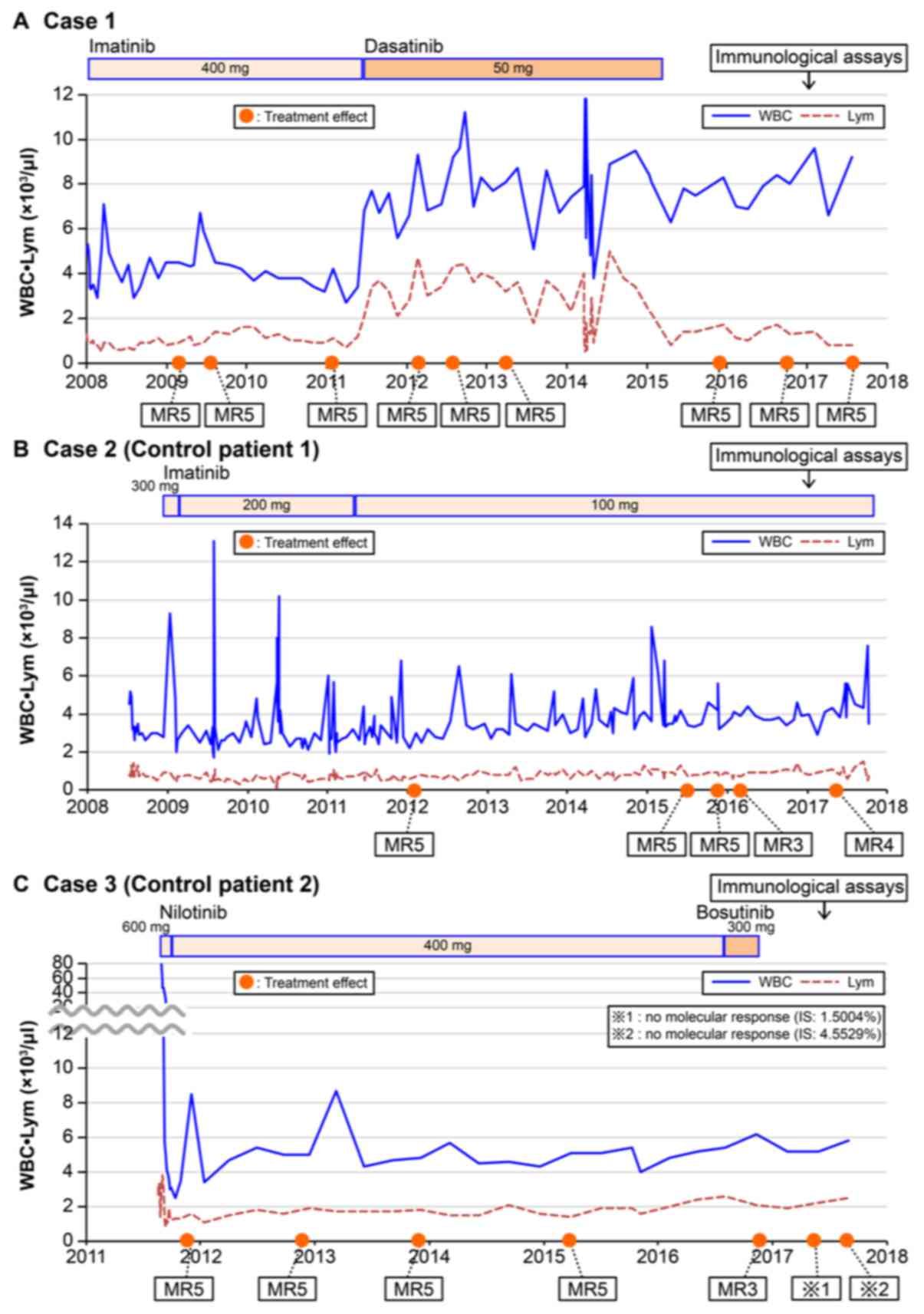
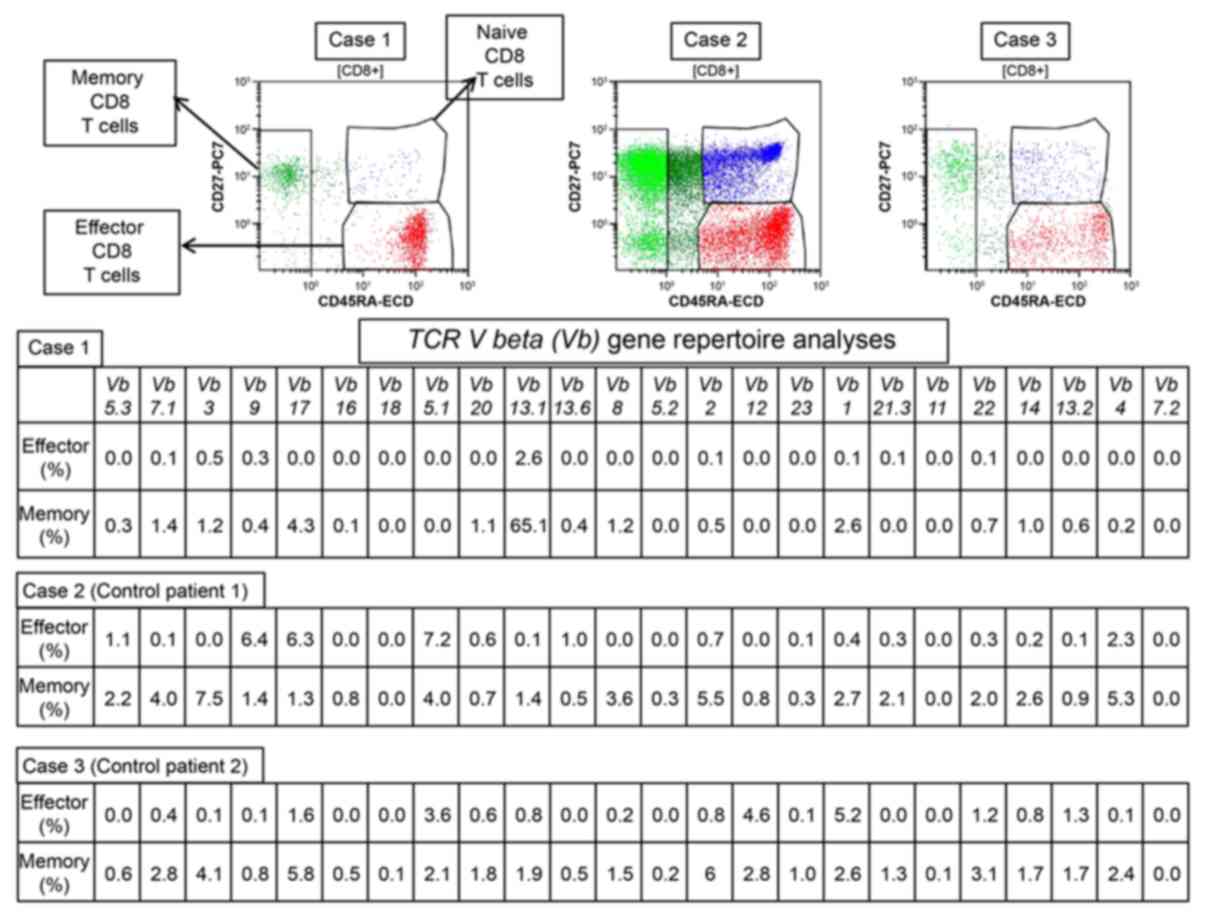
A 75-year-old woman was diagnosed with CP-CML, and 400 mg/day of imatinib, the first generation TKI, was started in January 2008. The results of gene expression analyses using mRNA extracted from bone marrow aspirates in April 2009 and February 2011 revealed absence of bcr-abl1, indicating MR5. Fifty milligrams of dasatinib, a second generation TKI, was administered instead of imatinib starting in May 2011 due to cramping in the calf that was thought to be an adverse effect of imatinib. Absence of bcr-abl1 was reconfirmed using mRNA extracted from bone marrow aspirates in February 2012 and April 2013. She suffered from subdural hematoma due to a fall in January 2015, and dasatinib was stopped in March 2015. Absence of bcr-abl1 was reconfirmed using mRNA extracted from peripheral blood in July 2017, more than 2.4 years after stopping dasatinib. Interestingly, elevation of lymphocyte count was observed only when the patient was receiving dasatinib (Fig. 1). Cellular immunity, represented by the NK cell, CTL, and regulatory T (Treg) cell populations, was investigated in July and August 2017. The percentage of NK cells, defined as CD3−CD16+CD56+, was 54.5%. The percentages of effector memory CTLs, defined as CD8+CD27+CD57−, and terminal effector CTLs, defined as CD8+CD27−CD57+, were 14.3 and 24.2%, respectively (Table I). A TCR Vb gene repertoire assay showed that Vb13.1 was the most common gene variant in both effector and memory CD8+ T cells (Fig. 2). The rate of Vb13.1 in memory CD8+ T cells was extremely high (65.1%). The percentages of effector and naïve Treg were 1.1 and 0.9%, respectively, but we could not evaluate the changes in these populations because Tregs were not measured during TKI treatment.

Figure 1.

Clinical courses of (A) Case 1, (B) Case 2 (control patient 1), and (C) Case 3 (control patient 2). Blue lines indicate white blood cells (WBC) and dotted brown lines indicate lymphocytes (Lym). Treatment effect was examined by bcr-abl1 expression analysis using mRNA extracted from bone marrow aspirates (Case 1, through June 2015) or peripheral blood samples (Case 1 after June 2015, Cases 2–3). Quantitative analyses of major bcr-abl1 mRNA were performed through June 2015, and the International Scale (IS) method of major bcr-abl1 mRNA analyses using peripheral blood samples was applied in July 2015. Control patient 2 (panel C; Case 3) has had no molecular response since 2017. Major bcr-abl1 mRNA expression levels in March and September 2017 were 1.5004 and 4.5529% by the IS method, respectively. MR, molecular response.

Figure 2.

Analyses of the T cell receptor (TCR) Vβ (Vb) gene usage of CD8+ T cells. Memory CD8+ T cells were defined as the CD8+CD27+CD45RA− population (green cells), and effector CD8+ T cells were defined as the CD8+CD27−CD45RA+ population (red cells). Naïve CD8+ T cells were defined as CD8+CD27+CD45RA+ (blue cells). Peripheral blood mononuclear cells were analyzed by flow cytometric analysis using IOTest Beta Mark TCR Vb repertoire kit (Beckman Coulter) according to the manufacturer's instruction.

Table I.

Percentage of NK cells, effector memory CTLs and terminal effector CTLs in the patient and controls.

Table I.

Percentage of NK cells, effector memory CTLs and terminal effector CTLs in the patient and controls.

Cell typeCase 1Case 2 (control patient 1)Case 3 (control patient 2)
NK cells (%)54.524.116.6
Effector memory CTLs (%)14.3  6.421.8
Terminal effector CTLs (%)24.211.6  7.4

[i] NK cells were defined as CD16/CD56 positive, CD3 negative cells. Effector memory CTLs were defined as CD8/CD27 positive, CD57 negative cells. Terminal effector CTLs were defined as CD8/CD57 positive, CD27 negative cells. NK, natural killer; CTL, cytotoxic T lymphocyte.

Case-2 (control patient 1)

A 72-year-old woman was diagnosed with CP-CML, and 600 mg/day of imatinib was started in June 2004. Three months later, imatinib was stopped due to skin rash. Three hundred mg/day of imatinib was started again due to disease progression in July 2008 with no further evidence of skin rash. The dose of imatinib was reduced gradually to 100 mg/day according to the patient's will. Absence of bcr-abl1 mRNA was confirmed through December 2015. However, the molecular response level decreased from MR5 to MR3 (March 2016) and MR4 (September 2017). The patient's clinical course beginning in July 2008 is illustrated in Fig. 1B.

Case 3 (control patient 2)

A 50-year-old man was diagnosed with CP-CML, and 600 mg/day of nilotinib, a second generation TKI, was started in August 2011. Three weeks later, the dose of nilotinib was reduced to 400 mg/day due to slight leukocytopenia and the dose was maintained until August 2016. Nilotinib was changed to 300 mg/day of bosutinib, a second generation TKI, due to nilotinib-induced skin rash in August 2016. However, bosutinib was stopped due to bosutinib-induced diarrhea. After that, no TKIs have been administered, according to the patient's will. Although absence of bcr-abl1 mRNA was confirmed through March 2015, the molecular response levels decreased from MR5 to MR3 (November 2016), and later, the patient had no molecular response (May and September 2017) (Fig. 1C).

Discussion

TKIs such as imatinib, dasatinib, and nilotinib have made a drastic impact on survival in patients with CP-CML (1–3). These patients now have life expectancies comparable to patients with lifestyle-related diseases such as hypertension and diabetes mellitus (12). However, TKIs cannot completely eliminate CML stem cells, and patients must continue treatment, which can be expensive. Some previous reports regarding cessation of TKIs showed that approximately half of patients could safely stop treatment under stringent treatment conditions (5–7); however, the parameters for safely stopping TKI treatment are still unclear. In contrast, patients who obtained TFR after interferon alpha treatment showed upregulation of cellular immunity, including CD8+ T cells and NK cells (13–15). Furthermore, allogeneic donor lymphocyte infusion has been reported to be effective in relapsed CML patients (8). These data suggest that upregulation of cellular immunity is critical to eliminate CML stem cells and obtain TFR. All three TKIs (imatinib, dasatinib, and nilotinib) can inhibit not only BCR-ABL but also other tyrosine kinases, such as KIT, PDGFR, and SRC (4). However, the increase in large granular lymphocytes (LGLs) has only been reported in patients treated with dasatinib (16). Activation of NK cells and CTLs also was observed in those patients (9,10). By contrast, clonal expansion of TCR Vb genes in patients who receive multiple TKI therapies has been reported using polymerase chain reaction (PCR)-based clonality testing (44% in dasatinib-treated patients, 46% in imatinib-treated patients, and 33% in nolitinib-treated patients) (17).

Cessation of dasatinib treatments induces a rapid decline in the LGL counts, almost to the baseline levels (18). Similarly, in Case 1, we observed an elevation of lymphocytes immediately after changing to dasatinib treatment, and a decrease in lymphocyte levels was observed soon after cessation of dasatinib treatment (Fig. 1A), while there was no obvious elevation of lymphocytes observed in Cases 2 and 3 (Fig. 1B and C). The immunological analyses of Case 1 showed not only maintenance of memory and effector CTL activation and NK cells, but also TCR clonality more than 2.4 years from cessation of dasatinib, despite the absence of lymphocyte elevation (Figs. 1A and 2, Table I). NK cells and CTLs were also analyzed in Cases 2 and 3 (Table I and Fig. 2); the percentages of NK cells and terminal effector CTLs were higher in Case 1 compared to Case 2 and 3, while there were no differences between effector memory T cells among the three cases (Table I). TCR Vb gene analysis revealed that there was marked elevation of Vb13.1 in memory CD8+ T cells in Case 1 (65.1%), but no such elevation of TCR Vb genes was observed in the two control patients (Fig. 2). These data suggest that the maintenance of cellular immunity against CML protected the patient from CML relapse and provided a cure. Although LGLs were not observed in the patients treated with imatinib and nilotinib, TCR clonality was observed in approximately 45% of these patients by PCR-based TCR repertoire analyses (17). Both control patients could not retain long-term MR5 status, which may be related to the absence of significant clonality in the TCR repertoire of memory CD8+ T cells. These data suggest that the activation of CTLs against CML plays an important role in obtaining TFR in patients treated with TKIs. If this speculation is correct, testing the TCR Vb repertoire may be a useful tool to consider whether TKI treatment can be safely stopped under stringent treatment conditions.

In summary, we report a case of MR5 more than 2.4 years after cessation of dasatinib. Maintenance of memory and effector CTLs with TCR clonality as well as NK cells was observed in this case. These data suggest that clonal expansion of CTLs against CML cells may be a meaningful marker for cessation of TKIs.

Acknowledgements

The authors would like to thank Ms. Kana Okabe for her editorial work.

References

1 

O'Brien SG, Guilhot F, Larson RA, Gathmann I, Baccarani M, Cervantes F, Cornelissen JJ, Fischer T, Hochhaus A, Hughes T, et al: Imatinib compared with interferon and low-dose cytarabine for newly diagnosed chronic-phase chronic myeloid leukemia. N Engl J Med. 348:994–1004. 2003. View Article : Google Scholar : PubMed/NCBI

2 

Kantarjian H, Shah NP, Hochhaus A, Cortes J, Shah S, Ayala M, Moiraghi B, Shen Z, Mayer J, Pasquini R, et al: Dasatinib versus imatinib in newly diagnosed chronic-phase chronic myeloid leukemia. N Engl J Med. 362:2260–2270. 2010. View Article : Google Scholar : PubMed/NCBI

3 

Saglio G, Kim DW, Issaragrisil S, le Coutre P, Etienne G, Lobo C, Pasquini R, Clark RE, Hochhaus A, Hughes TP, et al: Nilotinib versus imatinib for newly diagnosed chronic myeloid leukemia. N Engl J Med. 362:2251–2259. 2010. View Article : Google Scholar : PubMed/NCBI

4 

Hantschel O, Rix U and Superti-Furga G: Target spectrum of the BCR-ABL inhibitors imatinib, nilotinib and dasatinib. Leuk Lymphoma. 49:615–619. 2008. View Article : Google Scholar : PubMed/NCBI

5 

Mahon FX, Réa D, Guilhot J, Guilhot F, Huguet F, Nicolini F, Legros L, Charbonnier A, Guerci A, Varet B, et al: Discontinuation of imatinib in patients with chronic myeloid leukaemia who have maintained complete molecular remission for at least 2 years: The prospective, multicentre Stop Imatinib (STIM) trial. Lancet Oncol. 11:1029–1035. 2010. View Article : Google Scholar : PubMed/NCBI

6 

Ross DM, Branford S, Seymour JF, Schwarer AP, Arthur C, Yeung DT, Dang P, Goyne JM, Slader C, Filshie RJ, et al: Safety and efficacy of imatinib cessation for CML patients with stable undetectable minimal residual disease: Results from the TWISTER study. Blood. 122:515–522. 2013. View Article : Google Scholar : PubMed/NCBI

7 

Imagawa J, Tanaka H, Okada M, Nakamae H, Hino M, Murai K, Ishida Y, Kumagai T, Sato S, Ohashi K, et al: Discontinuation of dasatinib in patients with chronic myeloid leukaemia who have maintained deep molecular response for longer than 1 year (DADI trial): A multicentre phase 2 trial. Lancet Haematol. 2:e528–e535. 2015. View Article : Google Scholar : PubMed/NCBI

8 

Kolb HJ, Schattenberg A, Goldman JM, Hertenstein B, Jacobsen N, Arcese W, Ljungman P, Ferrant A, Verdonck L, Niederwieser D, et al: Graft-versus-leukemia effect of donor lymphocyte transfusions in marrow grafted patients. Blood. 86:2041–2050. 1995.PubMed/NCBI

9 

Mustjoki S, Ekblom M, Arstila TP, Dybedal I, Epling-Burnette PK, Guilhot F, Hjorth-Hansen H, Höglund M, Kovanen P, Laurinolli T, et al: Clonal expansion of T/NK-cells during tyrosine kinase inhibitor dasatinib therapy. Leukemia. 23:1398–1405. 2009. View Article : Google Scholar : PubMed/NCBI

10 

Kim DH, Kamel-Reid S, Chang H, Sutherland R, Jung CW, Kim HJ, Lee JJ and Lipton JH: Natural killer or natural killer/T cell lineage large granular lymphocytosis associated with dasatinib therapy for Philadelphia chromosome positive leukemia. Haematologica. 94:135–139. 2009. View Article : Google Scholar : PubMed/NCBI

11 

White HE, Matejtschuk P, Rigsby P, Gabert J, Lin F, Lynn Wang Y, Branford S, Müller MC, Beaufils N, Beillard E, et al: Establishment of the first World Health Organization International Genetic Reference Panel for quantitation of BCR-ABL mRNA. Blood. 116:e111–e117. 2010. View Article : Google Scholar : PubMed/NCBI

12 

Sasaki K, Strom SS, O'Brien S, Jabbour E, Ravandi F, Konopleva M, Borthakur G, Pemmaraju N, Daver N, Jain P, et al: Relative survival in patients with chronic-phase chronic myeloid leukaemia in the tyrosine-kinase inhibitor era: Analysis of patient data from six prospective clinical trials. Lancet Haematol. 2:e186–e193. 2015. View Article : Google Scholar : PubMed/NCBI

13 

Rohon P, Porkka K and Mustjoki S: Immunoprofiling of patients with chronic myeloid leukemia at diagnosis and during tyrosine kinase inhibitor therapy. Eur J Haematol. 85:387–398. 2010. View Article : Google Scholar : PubMed/NCBI

14 

Kreutzman A, Rohon P, Faber E, Indrak K, Juvonen V, Kairisto V, Voglová J, Sinisalo M, Flochová E, Vakkila J, et al: Chronic myeloid leukemia patients in prolonged remission following interferon-α monotherapy have distinct cytokine and oligoclonal lymphocyte profile. PLoS One. 6:e230222011. View Article : Google Scholar : PubMed/NCBI

15 

de Castro FA, Palma PV, Morais FR, Simões BP, Carvalho PV, Ismael SJ, Lima CP and Voltarelli JC: Immunological effects of interferon-alpha on chronic myelogenous leukemia. Leuk Lymphoma. 44:2061–2067. 2003. View Article : Google Scholar : PubMed/NCBI

16 

Schiffer CA, Cortes JE, Hochhaus A, Saglio G, le Coutre P, Porkka K, Mustjoki S, Mohamed H and Shah NP: Lymphocytosis after treatment with dasatinib in chronic myeloid leukemia: Effects on response and toxicity. Cancer. 122:1398–1407. 2016. View Article : Google Scholar : PubMed/NCBI

17 

Powers JJ, Dubovsky JA, Epling-Burnette PK, Moscinski L, Zhang L, Mustjoki S, Sotomayor EM and Pinilla-Ibarz JA: A molecular and functional analysis of large granular lymphocyte expansions in patients with chronic myelogenous leukemia treated with tyrosine kinase inhibitors. Leuk Lymphoma. 52:668–679. 2011. View Article : Google Scholar : PubMed/NCBI

18 

Kreutzman A, Juvonen V, Kairisto V, Ekblom M, Stenke L, Seggewiss R, Porkka K and Mustjoki S: Mono/oligoclonal T and NK cells are common in chronic myeloid leukemia patients at diagnosis and expand during dasatinib therapy. Blood. 116:772–782. 2010. View Article : Google Scholar : PubMed/NCBI

Related Articles

  • Abstract
  • View
  • Download
  • Twitter
Copy and paste a formatted citation
Spandidos Publications style
Jo T, Noguchi K, Hayashi S, Irie S, Hayase R, Shioya H, Kaneko Y, Horio K and Taguchi J: Long‑lasting memory of cellular immunity in a chronic myeloid leukemia patient maintains molecular response 5 after cessation of dasatinib. Oncol Lett 15: 2935-2938, 2018.
APA
Jo, T., Noguchi, K., Hayashi, S., Irie, S., Hayase, R., Shioya, H. ... Taguchi, J. (2018). Long‑lasting memory of cellular immunity in a chronic myeloid leukemia patient maintains molecular response 5 after cessation of dasatinib. Oncology Letters, 15, 2935-2938. https://doi.org/10.3892/ol.2017.7720
MLA
Jo, T., Noguchi, K., Hayashi, S., Irie, S., Hayase, R., Shioya, H., Kaneko, Y., Horio, K., Taguchi, J."Long‑lasting memory of cellular immunity in a chronic myeloid leukemia patient maintains molecular response 5 after cessation of dasatinib". Oncology Letters 15.3 (2018): 2935-2938.
Chicago
Jo, T., Noguchi, K., Hayashi, S., Irie, S., Hayase, R., Shioya, H., Kaneko, Y., Horio, K., Taguchi, J."Long‑lasting memory of cellular immunity in a chronic myeloid leukemia patient maintains molecular response 5 after cessation of dasatinib". Oncology Letters 15, no. 3 (2018): 2935-2938. https://doi.org/10.3892/ol.2017.7720
Copy and paste a formatted citation
x
Spandidos Publications style
Jo T, Noguchi K, Hayashi S, Irie S, Hayase R, Shioya H, Kaneko Y, Horio K and Taguchi J: Long‑lasting memory of cellular immunity in a chronic myeloid leukemia patient maintains molecular response 5 after cessation of dasatinib. Oncol Lett 15: 2935-2938, 2018.
APA
Jo, T., Noguchi, K., Hayashi, S., Irie, S., Hayase, R., Shioya, H. ... Taguchi, J. (2018). Long‑lasting memory of cellular immunity in a chronic myeloid leukemia patient maintains molecular response 5 after cessation of dasatinib. Oncology Letters, 15, 2935-2938. https://doi.org/10.3892/ol.2017.7720
MLA
Jo, T., Noguchi, K., Hayashi, S., Irie, S., Hayase, R., Shioya, H., Kaneko, Y., Horio, K., Taguchi, J."Long‑lasting memory of cellular immunity in a chronic myeloid leukemia patient maintains molecular response 5 after cessation of dasatinib". Oncology Letters 15.3 (2018): 2935-2938.
Chicago
Jo, T., Noguchi, K., Hayashi, S., Irie, S., Hayase, R., Shioya, H., Kaneko, Y., Horio, K., Taguchi, J."Long‑lasting memory of cellular immunity in a chronic myeloid leukemia patient maintains molecular response 5 after cessation of dasatinib". Oncology Letters 15, no. 3 (2018): 2935-2938. https://doi.org/10.3892/ol.2017.7720
Follow us
  • Twitter
  • LinkedIn
  • Facebook
About
  • Spandidos Publications
  • Careers
  • Cookie Policy
  • Privacy Policy
How can we help?
  • Help
  • Live Chat
  • Contact
  • Email to our Support Team