Spandidos Publications Logo
  • About
    • About Spandidos
    • Aims and Scopes
    • Abstracting and Indexing
    • Editorial Policies
    • Reprints and Permissions
    • Job Opportunities
    • Terms and Conditions
    • Contact
  • Journals
    • All Journals
    • Oncology Letters
      • Oncology Letters
      • Information for Authors
      • Editorial Policies
      • Editorial Board
      • Aims and Scope
      • Abstracting and Indexing
      • Bibliographic Information
      • Archive
    • International Journal of Oncology
      • International Journal of Oncology
      • Information for Authors
      • Editorial Policies
      • Editorial Board
      • Aims and Scope
      • Abstracting and Indexing
      • Bibliographic Information
      • Archive
    • Molecular and Clinical Oncology
      • Molecular and Clinical Oncology
      • Information for Authors
      • Editorial Policies
      • Editorial Board
      • Aims and Scope
      • Abstracting and Indexing
      • Bibliographic Information
      • Archive
    • Experimental and Therapeutic Medicine
      • Experimental and Therapeutic Medicine
      • Information for Authors
      • Editorial Policies
      • Editorial Board
      • Aims and Scope
      • Abstracting and Indexing
      • Bibliographic Information
      • Archive
    • International Journal of Molecular Medicine
      • International Journal of Molecular Medicine
      • Information for Authors
      • Editorial Policies
      • Editorial Board
      • Aims and Scope
      • Abstracting and Indexing
      • Bibliographic Information
      • Archive
    • Biomedical Reports
      • Biomedical Reports
      • Information for Authors
      • Editorial Policies
      • Editorial Board
      • Aims and Scope
      • Abstracting and Indexing
      • Bibliographic Information
      • Archive
    • Oncology Reports
      • Oncology Reports
      • Information for Authors
      • Editorial Policies
      • Editorial Board
      • Aims and Scope
      • Abstracting and Indexing
      • Bibliographic Information
      • Archive
    • Molecular Medicine Reports
      • Molecular Medicine Reports
      • Information for Authors
      • Editorial Policies
      • Editorial Board
      • Aims and Scope
      • Abstracting and Indexing
      • Bibliographic Information
      • Archive
    • World Academy of Sciences Journal
      • World Academy of Sciences Journal
      • Information for Authors
      • Editorial Policies
      • Editorial Board
      • Aims and Scope
      • Abstracting and Indexing
      • Bibliographic Information
      • Archive
    • International Journal of Functional Nutrition
      • International Journal of Functional Nutrition
      • Information for Authors
      • Editorial Policies
      • Editorial Board
      • Aims and Scope
      • Abstracting and Indexing
      • Bibliographic Information
      • Archive
    • International Journal of Epigenetics
      • International Journal of Epigenetics
      • Information for Authors
      • Editorial Policies
      • Editorial Board
      • Aims and Scope
      • Abstracting and Indexing
      • Bibliographic Information
      • Archive
    • Medicine International
      • Medicine International
      • Information for Authors
      • Editorial Policies
      • Editorial Board
      • Aims and Scope
      • Abstracting and Indexing
      • Bibliographic Information
      • Archive
  • Articles
  • Information
    • Information for Authors
    • Information for Reviewers
    • Information for Librarians
    • Information for Advertisers
    • Conferences
  • Language Editing
Spandidos Publications Logo
  • About
    • About Spandidos
    • Aims and Scopes
    • Abstracting and Indexing
    • Editorial Policies
    • Reprints and Permissions
    • Job Opportunities
    • Terms and Conditions
    • Contact
  • Journals
    • All Journals
    • Biomedical Reports
      • Information for Authors
      • Editorial Policies
      • Editorial Board
      • Aims and Scope
      • Abstracting and Indexing
      • Bibliographic Information
      • Archive
    • Experimental and Therapeutic Medicine
      • Information for Authors
      • Editorial Policies
      • Editorial Board
      • Aims and Scope
      • Abstracting and Indexing
      • Bibliographic Information
      • Archive
    • International Journal of Epigenetics
      • Information for Authors
      • Editorial Policies
      • Editorial Board
      • Aims and Scope
      • Abstracting and Indexing
      • Bibliographic Information
      • Archive
    • International Journal of Functional Nutrition
      • Information for Authors
      • Editorial Policies
      • Editorial Board
      • Aims and Scope
      • Abstracting and Indexing
      • Bibliographic Information
      • Archive
    • International Journal of Molecular Medicine
      • Information for Authors
      • Editorial Policies
      • Editorial Board
      • Aims and Scope
      • Abstracting and Indexing
      • Bibliographic Information
      • Archive
    • International Journal of Oncology
      • Information for Authors
      • Editorial Policies
      • Editorial Board
      • Aims and Scope
      • Abstracting and Indexing
      • Bibliographic Information
      • Archive
    • Medicine International
      • Information for Authors
      • Editorial Policies
      • Editorial Board
      • Aims and Scope
      • Abstracting and Indexing
      • Bibliographic Information
      • Archive
    • Molecular and Clinical Oncology
      • Information for Authors
      • Editorial Policies
      • Editorial Board
      • Aims and Scope
      • Abstracting and Indexing
      • Bibliographic Information
      • Archive
    • Molecular Medicine Reports
      • Information for Authors
      • Editorial Policies
      • Editorial Board
      • Aims and Scope
      • Abstracting and Indexing
      • Bibliographic Information
      • Archive
    • Oncology Letters
      • Information for Authors
      • Editorial Policies
      • Editorial Board
      • Aims and Scope
      • Abstracting and Indexing
      • Bibliographic Information
      • Archive
    • Oncology Reports
      • Information for Authors
      • Editorial Policies
      • Editorial Board
      • Aims and Scope
      • Abstracting and Indexing
      • Bibliographic Information
      • Archive
    • World Academy of Sciences Journal
      • Information for Authors
      • Editorial Policies
      • Editorial Board
      • Aims and Scope
      • Abstracting and Indexing
      • Bibliographic Information
      • Archive
  • Articles
  • Information
    • For Authors
    • For Reviewers
    • For Librarians
    • For Advertisers
    • Conferences
  • Language Editing
Login Register Submit
  • This site uses cookies
  • You can change your cookie settings at any time by following the instructions in our Cookie Policy. To find out more, you may read our Privacy Policy.

    I agree
Search articles by DOI, keyword, author or affiliation
Search
Advanced Search
presentation
Oncology Letters
Join Editorial Board Propose a Special Issue
Print ISSN: 1792-1074 Online ISSN: 1792-1082
Journal Cover
April-2018 Volume 15 Issue 4

Full Size Image

Sign up for eToc alerts
Recommend to Library

Journals

International Journal of Molecular Medicine

International Journal of Molecular Medicine

International Journal of Molecular Medicine is an international journal devoted to molecular mechanisms of human disease.

International Journal of Oncology

International Journal of Oncology

International Journal of Oncology is an international journal devoted to oncology research and cancer treatment.

Molecular Medicine Reports

Molecular Medicine Reports

Covers molecular medicine topics such as pharmacology, pathology, genetics, neuroscience, infectious diseases, molecular cardiology, and molecular surgery.

Oncology Reports

Oncology Reports

Oncology Reports is an international journal devoted to fundamental and applied research in Oncology.

Experimental and Therapeutic Medicine

Experimental and Therapeutic Medicine

Experimental and Therapeutic Medicine is an international journal devoted to laboratory and clinical medicine.

Oncology Letters

Oncology Letters

Oncology Letters is an international journal devoted to Experimental and Clinical Oncology.

Biomedical Reports

Biomedical Reports

Explores a wide range of biological and medical fields, including pharmacology, genetics, microbiology, neuroscience, and molecular cardiology.

Molecular and Clinical Oncology

Molecular and Clinical Oncology

International journal addressing all aspects of oncology research, from tumorigenesis and oncogenes to chemotherapy and metastasis.

World Academy of Sciences Journal

World Academy of Sciences Journal

Multidisciplinary open-access journal spanning biochemistry, genetics, neuroscience, environmental health, and synthetic biology.

International Journal of Functional Nutrition

International Journal of Functional Nutrition

Open-access journal combining biochemistry, pharmacology, immunology, and genetics to advance health through functional nutrition.

International Journal of Epigenetics

International Journal of Epigenetics

Publishes open-access research on using epigenetics to advance understanding and treatment of human disease.

Medicine International

Medicine International

An International Open Access Journal Devoted to General Medicine.

Journal Cover
April-2018 Volume 15 Issue 4

Full Size Image

Sign up for eToc alerts
Recommend to Library

  • Article
  • Citations
    • Cite This Article
    • Download Citation
    • Create Citation Alert
    • Remove Citation Alert
    • Cited By
  • Similar Articles
    • Related Articles (in Spandidos Publications)
    • Similar Articles (Google Scholar)
    • Similar Articles (PubMed)
  • Download PDF
  • Download XML
  • View XML
Article Open Access

Expression of pAkt is associated with a poor prognosis in Chinese women with invasive ductal breast cancer

  • Authors:
    • Ling Zhou
    • Min Wang
    • Chongyong Guo
    • Ying Zhu
    • Hua Yu
    • Lu Zhang
    • Pei Yu
  • View Affiliations / Copyright

    Affiliations: Department of Surgery, Branch of Shanghai First People's Hospital, Shanghai 200081, P.R. China, Department of Pathology, Branch of Shanghai First People's Hospital, Shanghai 200081, P.R. China, Department of General Surgery, Binzhou People's Hospital, Binzhou, Shandong 256600, P.R. China, Department of General Surgery, The First Affiliated Hospital of Nanjing Medical University, Nanjing, Jiangsu 210029, P.R. China, Department of Orthopedics, Shanghai Ruijin Hospital Affiliated to Shanghai Jiaotong University School of Medicine, Shanghai 210025, P.R. China
    Copyright: © Zhou et al. This is an open access article distributed under the terms of Creative Commons Attribution License.
  • Pages: 4859-4866
    |
    Published online on: February 6, 2018
       https://doi.org/10.3892/ol.2018.7965
  • Expand metrics +
Metrics: Total Views: 0 (Spandidos Publications: | PMC Statistics: )
Metrics: Total PDF Downloads: 0 (Spandidos Publications: | PMC Statistics: )
Cited By (CrossRef): 0 citations Loading Articles...

This article is mentioned in:


Abstract

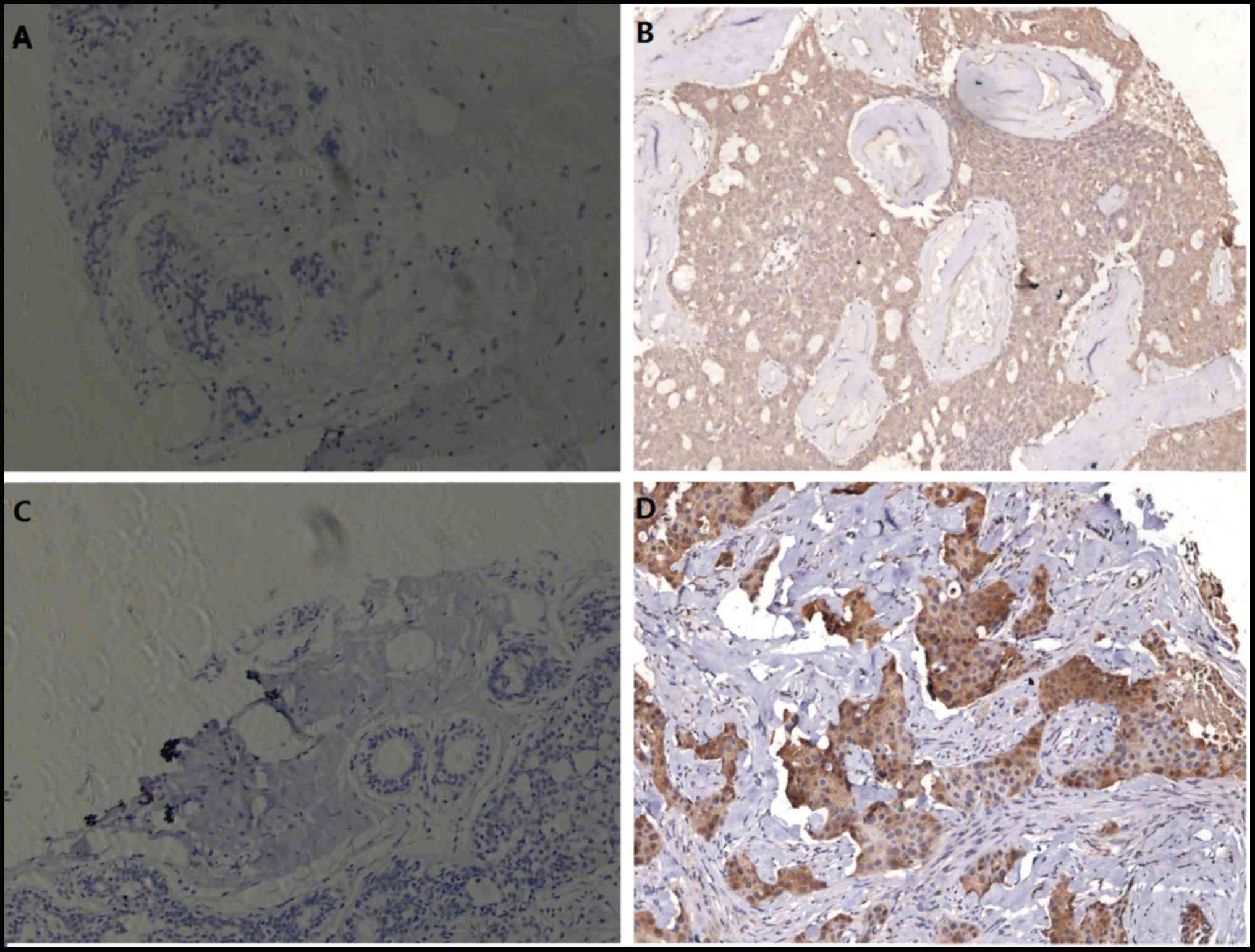
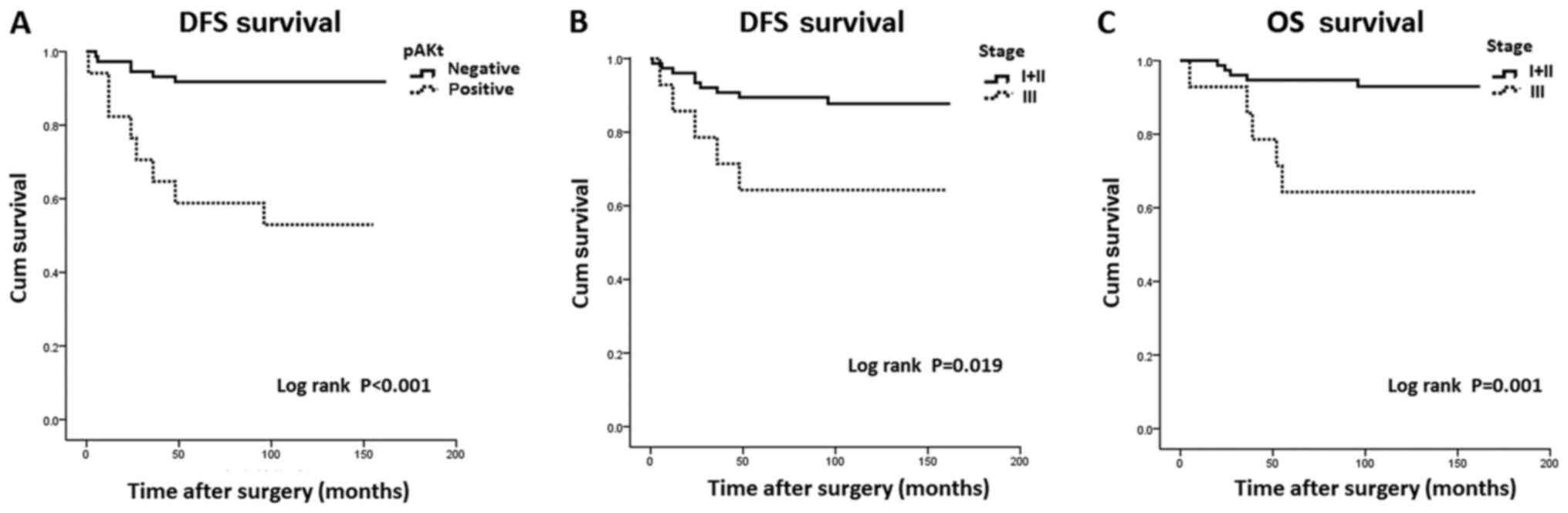
Over the past three decades, numerous patients with breast cancer succumbed to cancer metastasis and recurrence, while, the exact mechanisms underlying this malignancy, and the potential biomarkers for prognosis prediction remain elusive. It was previously demonstrated that phosphorylated RAC‑α serine/threonine‑protein kinase (pAkt) and Beclin 1 was associated with cancer metastasis, and recurrence. Thus far, the expression patterns of pAkt and Beclin 1 in breast cancer tissues, and their associations with the prognosis of invasive ductal breast cancer remain inconclusive, which may be due to various factors, including ethnicity and pathological types. In the present study, a total of 90 Chinese female patients with invasive ductal breast cancer between June 1999 and August 2002 were enrolled at Shanghai First People's Hospital (Shanghai, China). The patients were followed up from 5 months to 13.5 years for survival analysis. The expressional levels of pAkt and Beclin 1 in invasive ductal breast cancer tissues, and the normal paracancerous tissues were measured by immunohistochemistry. Associations with prognosis following surgery were further evaluated using Cox regression analysis. In 90 invasive ductal breast cancer samples, pAkt was detected in 17 (18.9%) samples and Beclin 1 in 33 (36.7%) samples, but both were not detected in any of the paracancerous samples. Survival analysis revealed that pAkt expression carried a tendency to predict a shorter disease-free survival (DFS) in patients with invasive ductal breast cancer. Additionally, Beclin 1 expression was not significantly associated with survival. Furthermore, univariate Cox regression analysis demonstrated that pAkt expression was negatively associated with DFS and overall survival. Multivariate Cox regression analysis indicated that pAkt expression was an independent risk factor associated with poor prognosis in patients with invasive ductal breast cancer (all P<0.05). pAkt may be used as a potential prognostic biomarker in Chinese women with invasive ductal breast cancer.
View Figures

Figure 1

Figure 2

View References

1 

Jemal A, Bray F, Center MM, Ferlay J, Ward E and Forman D: Global cancer statistics. CA Cancer J Clin. 61:69–90. 2011. View Article : Google Scholar : PubMed/NCBI

2 

Li CI, Anderson BO, Daling JR and Moe RE: Trends in incidence rates of invasive lobular and ductal breast carcinoma. JAMA. 289:1421–1424. 2003. View Article : Google Scholar : PubMed/NCBI

3 

Kohler BA, Ward E, McCarthy BJ, Schymura MJ, Ries LA, Eheman C, Jemal A, Anderson RN, Ajani UA and Edwards BK: Annual report to the nation on the status of cancer, 1975–2007, featuring tumors of the brain and other nervous system. J Nat Cancer Inst. 103:714–736. 2011. View Article : Google Scholar : PubMed/NCBI

4 

Wang YC, Wei LJ, Liu JT, Li SX and Wang QS: Comparison of cancer incidence between China and the USA. Cancer Biol Med. 9:128–132. 2012.PubMed/NCBI

5 

Linos E, Spanos D, Rosner BA, Linos K, Hesketh T, Qu JD, Gao YT, Zheng W and Colditz GA: Effects of reproductive and demographic changes on breast cancer incidence in China: A modeling analysis. J Natl Cancer Inst. 100:1352–1360. 2008. View Article : Google Scholar : PubMed/NCBI

6 

McPherson K, Steel CM and Dixon JM: ABC of breast diseases. Breast cancer-epidemiology, risk factors, and genetics. BJM. 321:624–628. 2000. View Article : Google Scholar

7 

Chia KS, Reilly M, Tan CS, Lee J, Pawitan Y, Adami HO, Hall P and Mow B: Profound changes in breast cancer incidence may reflect changes into a Westernized lifestyle: A comparative population-based study in Singapore and Sweden. Int J Cancer. 113:302–306. 2005. View Article : Google Scholar : PubMed/NCBI

8 

Pérez-Tenorio G and Stål O; Southeast Sweden Breast Cancer Group, : Activation of AKT/PKB in breast cancer predicts a worse outcome among endocrine treated patients. Br J Cancer. 86:540–545. 2002. View Article : Google Scholar : PubMed/NCBI

9 

Song G, Ouyang G and Bao S: The activation of Akt/PKB signaling pathway and cell survival. J Cell Mol Med. 9:59–71. 2005. View Article : Google Scholar : PubMed/NCBI

10 

Roudier E, Mistafa O and Stenius U: Statins induce mammalian target of rapamycin mTOR)-mediated inhibition of Akt signaling and sensitize p53-deficient cells to cytostatic drugs. Mol Cancer Ther. 5:2706–2715. 2006. View Article : Google Scholar : PubMed/NCBI

11 

Mondesire WH, Jian W, Zhang H, Ensor J, Hung MC, Mills GB and Meric-Bernstam F: Targeting mammalian target of rapamycin synergistically enhances chemotherapy-induced cytotoxicity in breast cancer cells. Clin Cancer Res. 10:7031–7042. 2004. View Article : Google Scholar : PubMed/NCBI

12 

Vestey SB, Sen C, Calder CJ, Perks CM, Pignatelli M and Winters ZE: Activated Akt expression in breast cancer: Correlation with p53, Hdm2 and patient outcome. Eur J Cancer. 41:1017–1025. 2005. View Article : Google Scholar : PubMed/NCBI

13 

Tokunaga E, Kimura Y, Oki E, Ueda N, Futatsugi M, Mashino K, Yamamoto M, Ikebe M, Kakeji Y, Baba H and Maehara Y: Akt is frequently activated in HER2/neu-positive breast cancers and associated with poor prognosis among hormone-treated patients. Int J Cancer. 118:284–289. 2006. View Article : Google Scholar : PubMed/NCBI

14 

Benesch C, Schneider C, Voelker HU, Kapp M, Caffier H, Krockenberger M, Dietl J, Kammerer U and Schmidt M: The clinicopathological andprognostic relevance of pyruvate kinase M2 and pAkt expression in breast cancer. Anticancer Res. 30:1689–1694. 2010.PubMed/NCBI

15 

Badve S, Collins NR, Bhat-Nakshatri P, Turbin D, Leung S, Thorat M, Dunn SE, Geistlinger TR, Carroll JS, Brown M, et al: Subcellular localization ofactivated AKT in estrogen receptor- and progesterone receptor-expressing breastcancers: Potential clinical implications. Am J Pathol. 176:2139–2149. 2010. View Article : Google Scholar : PubMed/NCBI

16 

Levine B and Kroemer G: Autophagy in the pathogenesis of disease. Cell. 132:27–42. 2008. View Article : Google Scholar : PubMed/NCBI

17 

Mizushima N, Levine B, Cuervo AM and Klionsky DJ: Autophagy fights disease through cellular self-digestion. Nature. 451:1069–1075. 2008. View Article : Google Scholar : PubMed/NCBI

18 

Nishimura K, Semba S, Aoyagi K, Sasaki H and Yokozaki H: Mesenchymal stem cells provide an advantageous tumor microenvironment for the restoration of cancer stem cells. Pathobiology. 79:290–306. 2012. View Article : Google Scholar : PubMed/NCBI

19 

Singletary SE, Allred C, Ashley P, Bassett LW, Berry D, Bland KI, Borgen PI, Clark GM, Edge SB, Hayes DF, et al: Staging system for breast cancer: Revisions for the 6th adition of the AJCC cancer staging manual. Surg Clin North Am. 83:803–819. 2003. View Article : Google Scholar : PubMed/NCBI

20 

Markman B, Atzori F, Pérez-García J, Tabernero J and Baselga J: Status of PI3K inhibition and biomarker development in cancer therapeutics. Ann Oncol. 21:683–691. 2010. View Article : Google Scholar : PubMed/NCBI

21 

Altomare DA, Wang HQ, Skele KL, De Rienzo A, Klein-Szanto AJ, Godwin AK and Testa JR: AKT and mTOR phosphorylation is frequently detectedin ovarian cancer and can be targeted to disrupt ovarian tumor cell growth. Oncogene. 23:5853–5857. 2004. View Article : Google Scholar : PubMed/NCBI

22 

Verhaak RG, Tamayo P, Yang JY, Hubbard D, Zhang H, Creighton CJ, Fereday S, Lawrence M, Carter SL, Mermel CH, et al: Prognostically relevant gene signatures of high-grade serouso varian carcinoma. J Clin Invest. 123:517–525. 2013.PubMed/NCBI

23 

Woenckhaus J, Steger K, Sturm K, Münstedt K, Franke FE and Fenic I: Prognostic value of PIK3 CA and phosphorylated AKT expression in ovarian cancer. Virchows Arch. 450:387–395. 2007. View Article : Google Scholar : PubMed/NCBI

24 

Azim HA, Kassem L, Treilleux I, Wang Q, El Enein MA, Anis SE and Bachelot T: Analysis of PI3K/mTOR pathway biomarkers and their prognostic value in women with hormone receptor-positive, HER2-negative early breast cancer. Transl Oncol. 9:114–123. 2016. View Article : Google Scholar : PubMed/NCBI

25 

Chen J, Xi B, Zhao Y, Yu Y, Zhang J and Wang C: High-mobility group protein B1 (HMGB1) is a novel biomarker for human ovarian cancer. Gynecol Oncol. 126:109–117. 2012. View Article : Google Scholar : PubMed/NCBI

26 

Jiang ZF, Shao LJ, Wang WM, Yan XB and Liu RY: Decreased expression of Beclin-1 and LC3 in human lung cancer. Mol Biol Rep. 39:259–267. 2012. View Article : Google Scholar : PubMed/NCBI

27 

Zarzynska JM: The importance of autophagy regulation in breast cancer development and treatment. Biomed Res Int. 2014:7103452014. View Article : Google Scholar : PubMed/NCBI

28 

Ding ZB, Shi YH, Zhou J, Qiu SJ, Xu Y, Dai Z, Shi GM, Wang XY, Ke AW, Wu B and Fan J: Association of autophagy defect with a malignant phenotype and poor prognosis of hepatocellular carcinoma. Cancer Res. 68:9167–9175. 2008. View Article : Google Scholar : PubMed/NCBI

29 

Dalby KN, Tekedereli I, Lopez-Berestein G and Ozpolat B: Targeting the prodeath and prosurvival functions of autophagy as novel therapeutic strategies in cancer. Autophagy. 6:322–329. 2010. View Article : Google Scholar : PubMed/NCBI

30 

Yoshioka A, Miyata H, Doki Y, Yamasaki M, Sohma I, Gotoh K, Takiguchi S, Fujiwara Y, Uchiyama Y and Monden M: LC3, an autophagosome marker, is highly expressed in gastrointestinal cancers. Int J Oncol. 33:461–468. 2008.PubMed/NCBI

31 

Fujii S, Mitsunaga S, Yamazaki M, Hasebe T, Ishii G, Kojima M, Kinoshita T, Ueno T, Esumi H and Ochiai A: Autophagy is activated in pancreatic cancer cells and correlates with poor patient outcome. Cancer Sci. 99:1813–1819. 2008.PubMed/NCBI

32 

Park JY, Kim HS, Cho H, Kim NC, Chae KH, Park WS and Kim YW: Clinicopathologic correlation of autophagy-related Beclin-1 expression in gallbladder cancer. Hepatogastroenterology. 61:1494–1500. 2014.PubMed/NCBI

33 

Jiang ZF, Shao LJ, Wang WM, Yan XB and Liu RY: Decreased expression of Beclin-1 and LC3 in human lung cancer. Mol Biol Rep. 39:259–267. 2012. View Article : Google Scholar : PubMed/NCBI

34 

Cheng HY, Zhang YN, Wu QL, Sun XM, Sun JR and Huang X: Expression of beclin 1, an autophagy-related protein, in human cervical carcinoma and its clinical significance. Eur J Gynaecol Oncol. 33:15–20. 2012.PubMed/NCBI

35 

Chen YB, Hou JH, Feng XY, Chen S, Zhou ZW, Zhang XS and Cai MY: Decreased expression of Beclin 1 correlates with a metastatic phenotypic feature and adverse prognosis of gastric carcinomas. J Surg Oncol. 105:542–547. 2012. View Article : Google Scholar : PubMed/NCBI

36 

Chen Y, Lu Y, Lu C and Zhang L: Beclin-1 expression is a predictor of clinical outcome in patients with esophageal squamous cell carcinoma and correlated to hypoxia-inducible factor HIF)-1alpha expression. Pathol Oncol Res. 15:487–493. 2009. View Article : Google Scholar : PubMed/NCBI

37 

Osman NA, Abd El-Rehim DM and Kamal IM: Defective Beclin-1 and elevated hypoxia-inducible factor (HIF)-1α expression are closely linked to tumorigenesis, differentiation, and progression of hepatocellular carcinoma. Tumour Biol. 36:4293–4299. 2015. View Article : Google Scholar : PubMed/NCBI

38 

Mathew R, Karantza-Wadsworth V and White E: Role of autophagy in cancer. Nat Rev Cancer. 7:961–967. 2007. View Article : Google Scholar : PubMed/NCBI

39 

Degenhardt K, Mathew R, Beaudoin B, Bray K, Anderson D, Chen G, Mukherjee C, Shi Y, Gélinas C, Fan Y, et al: Autophagy promotes tumor cell survival and restricts necrosis, inflammation, and tumorigenesis. Cancer Cell. 10:51–64. 2006. View Article : Google Scholar : PubMed/NCBI

40 

Lorin S, Hamaï A, Mehrpour M and Codogno P: Autophagy regulation and its role in cancer. Semin Cancer Biol. 23:361–379. 2013. View Article : Google Scholar : PubMed/NCBI

41 

Choi AM, Ryter SW and Levine B: Autophagy in human health and disease. N Engl J Med. 368:651–662. 2013. View Article : Google Scholar : PubMed/NCBI

42 

Liang XH, Jackson S, Seaman M, Brown K, Kempkes B, Hibshoosh H and Levine B: Induction of autophagy and inhibition of tumorigenesis by beclin 1. Nature. 402:672–676. 1999. View Article : Google Scholar : PubMed/NCBI

43 

Zhang Y, Zhang Y, Xiu HQ, et al: Clinical features of TNM staging of triple negative breast cancer and risk factors affecting its prognosis. Chin J Breast Dis. 6:30–35. 2012.

Related Articles

  • Abstract
  • View
  • Download
  • Twitter
Copy and paste a formatted citation
Spandidos Publications style
Zhou L, Wang M, Guo C, Zhu Y, Yu H, Zhang L and Yu P: Expression of pAkt is associated with a poor prognosis in Chinese women with invasive ductal breast cancer. Oncol Lett 15: 4859-4866, 2018.
APA
Zhou, L., Wang, M., Guo, C., Zhu, Y., Yu, H., Zhang, L., & Yu, P. (2018). Expression of pAkt is associated with a poor prognosis in Chinese women with invasive ductal breast cancer. Oncology Letters, 15, 4859-4866. https://doi.org/10.3892/ol.2018.7965
MLA
Zhou, L., Wang, M., Guo, C., Zhu, Y., Yu, H., Zhang, L., Yu, P."Expression of pAkt is associated with a poor prognosis in Chinese women with invasive ductal breast cancer". Oncology Letters 15.4 (2018): 4859-4866.
Chicago
Zhou, L., Wang, M., Guo, C., Zhu, Y., Yu, H., Zhang, L., Yu, P."Expression of pAkt is associated with a poor prognosis in Chinese women with invasive ductal breast cancer". Oncology Letters 15, no. 4 (2018): 4859-4866. https://doi.org/10.3892/ol.2018.7965
Copy and paste a formatted citation
x
Spandidos Publications style
Zhou L, Wang M, Guo C, Zhu Y, Yu H, Zhang L and Yu P: Expression of pAkt is associated with a poor prognosis in Chinese women with invasive ductal breast cancer. Oncol Lett 15: 4859-4866, 2018.
APA
Zhou, L., Wang, M., Guo, C., Zhu, Y., Yu, H., Zhang, L., & Yu, P. (2018). Expression of pAkt is associated with a poor prognosis in Chinese women with invasive ductal breast cancer. Oncology Letters, 15, 4859-4866. https://doi.org/10.3892/ol.2018.7965
MLA
Zhou, L., Wang, M., Guo, C., Zhu, Y., Yu, H., Zhang, L., Yu, P."Expression of pAkt is associated with a poor prognosis in Chinese women with invasive ductal breast cancer". Oncology Letters 15.4 (2018): 4859-4866.
Chicago
Zhou, L., Wang, M., Guo, C., Zhu, Y., Yu, H., Zhang, L., Yu, P."Expression of pAkt is associated with a poor prognosis in Chinese women with invasive ductal breast cancer". Oncology Letters 15, no. 4 (2018): 4859-4866. https://doi.org/10.3892/ol.2018.7965
Follow us
  • Twitter
  • LinkedIn
  • Facebook
About
  • Spandidos Publications
  • Careers
  • Cookie Policy
  • Privacy Policy
How can we help?
  • Help
  • Live Chat
  • Contact
  • Email to our Support Team