Spandidos Publications Logo
  • About
    • About Spandidos
    • Aims and Scopes
    • Abstracting and Indexing
    • Editorial Policies
    • Reprints and Permissions
    • Job Opportunities
    • Terms and Conditions
    • Contact
  • Journals
    • All Journals
    • Oncology Letters
      • Oncology Letters
      • Information for Authors
      • Editorial Policies
      • Editorial Board
      • Aims and Scope
      • Abstracting and Indexing
      • Bibliographic Information
      • Archive
    • International Journal of Oncology
      • International Journal of Oncology
      • Information for Authors
      • Editorial Policies
      • Editorial Board
      • Aims and Scope
      • Abstracting and Indexing
      • Bibliographic Information
      • Archive
    • Molecular and Clinical Oncology
      • Molecular and Clinical Oncology
      • Information for Authors
      • Editorial Policies
      • Editorial Board
      • Aims and Scope
      • Abstracting and Indexing
      • Bibliographic Information
      • Archive
    • Experimental and Therapeutic Medicine
      • Experimental and Therapeutic Medicine
      • Information for Authors
      • Editorial Policies
      • Editorial Board
      • Aims and Scope
      • Abstracting and Indexing
      • Bibliographic Information
      • Archive
    • International Journal of Molecular Medicine
      • International Journal of Molecular Medicine
      • Information for Authors
      • Editorial Policies
      • Editorial Board
      • Aims and Scope
      • Abstracting and Indexing
      • Bibliographic Information
      • Archive
    • Biomedical Reports
      • Biomedical Reports
      • Information for Authors
      • Editorial Policies
      • Editorial Board
      • Aims and Scope
      • Abstracting and Indexing
      • Bibliographic Information
      • Archive
    • Oncology Reports
      • Oncology Reports
      • Information for Authors
      • Editorial Policies
      • Editorial Board
      • Aims and Scope
      • Abstracting and Indexing
      • Bibliographic Information
      • Archive
    • Molecular Medicine Reports
      • Molecular Medicine Reports
      • Information for Authors
      • Editorial Policies
      • Editorial Board
      • Aims and Scope
      • Abstracting and Indexing
      • Bibliographic Information
      • Archive
    • World Academy of Sciences Journal
      • World Academy of Sciences Journal
      • Information for Authors
      • Editorial Policies
      • Editorial Board
      • Aims and Scope
      • Abstracting and Indexing
      • Bibliographic Information
      • Archive
    • International Journal of Functional Nutrition
      • International Journal of Functional Nutrition
      • Information for Authors
      • Editorial Policies
      • Editorial Board
      • Aims and Scope
      • Abstracting and Indexing
      • Bibliographic Information
      • Archive
    • International Journal of Epigenetics
      • International Journal of Epigenetics
      • Information for Authors
      • Editorial Policies
      • Editorial Board
      • Aims and Scope
      • Abstracting and Indexing
      • Bibliographic Information
      • Archive
    • Medicine International
      • Medicine International
      • Information for Authors
      • Editorial Policies
      • Editorial Board
      • Aims and Scope
      • Abstracting and Indexing
      • Bibliographic Information
      • Archive
  • Articles
  • Information
    • Information for Authors
    • Information for Reviewers
    • Information for Librarians
    • Information for Advertisers
    • Conferences
  • Language Editing
Spandidos Publications Logo
  • About
    • About Spandidos
    • Aims and Scopes
    • Abstracting and Indexing
    • Editorial Policies
    • Reprints and Permissions
    • Job Opportunities
    • Terms and Conditions
    • Contact
  • Journals
    • All Journals
    • Biomedical Reports
      • Information for Authors
      • Editorial Policies
      • Editorial Board
      • Aims and Scope
      • Abstracting and Indexing
      • Bibliographic Information
      • Archive
    • Experimental and Therapeutic Medicine
      • Information for Authors
      • Editorial Policies
      • Editorial Board
      • Aims and Scope
      • Abstracting and Indexing
      • Bibliographic Information
      • Archive
    • International Journal of Epigenetics
      • Information for Authors
      • Editorial Policies
      • Editorial Board
      • Aims and Scope
      • Abstracting and Indexing
      • Bibliographic Information
      • Archive
    • International Journal of Functional Nutrition
      • Information for Authors
      • Editorial Policies
      • Editorial Board
      • Aims and Scope
      • Abstracting and Indexing
      • Bibliographic Information
      • Archive
    • International Journal of Molecular Medicine
      • Information for Authors
      • Editorial Policies
      • Editorial Board
      • Aims and Scope
      • Abstracting and Indexing
      • Bibliographic Information
      • Archive
    • International Journal of Oncology
      • Information for Authors
      • Editorial Policies
      • Editorial Board
      • Aims and Scope
      • Abstracting and Indexing
      • Bibliographic Information
      • Archive
    • Medicine International
      • Information for Authors
      • Editorial Policies
      • Editorial Board
      • Aims and Scope
      • Abstracting and Indexing
      • Bibliographic Information
      • Archive
    • Molecular and Clinical Oncology
      • Information for Authors
      • Editorial Policies
      • Editorial Board
      • Aims and Scope
      • Abstracting and Indexing
      • Bibliographic Information
      • Archive
    • Molecular Medicine Reports
      • Information for Authors
      • Editorial Policies
      • Editorial Board
      • Aims and Scope
      • Abstracting and Indexing
      • Bibliographic Information
      • Archive
    • Oncology Letters
      • Information for Authors
      • Editorial Policies
      • Editorial Board
      • Aims and Scope
      • Abstracting and Indexing
      • Bibliographic Information
      • Archive
    • Oncology Reports
      • Information for Authors
      • Editorial Policies
      • Editorial Board
      • Aims and Scope
      • Abstracting and Indexing
      • Bibliographic Information
      • Archive
    • World Academy of Sciences Journal
      • Information for Authors
      • Editorial Policies
      • Editorial Board
      • Aims and Scope
      • Abstracting and Indexing
      • Bibliographic Information
      • Archive
  • Articles
  • Information
    • For Authors
    • For Reviewers
    • For Librarians
    • For Advertisers
    • Conferences
  • Language Editing
Login Register Submit
  • This site uses cookies
  • You can change your cookie settings at any time by following the instructions in our Cookie Policy. To find out more, you may read our Privacy Policy.

    I agree
Search articles by DOI, keyword, author or affiliation
Search
Advanced Search
presentation
Oncology Letters
Join Editorial Board Propose a Special Issue
Print ISSN: 1792-1074 Online ISSN: 1792-1082
Journal Cover
April-2018 Volume 15 Issue 4

Full Size Image

Sign up for eToc alerts
Recommend to Library

Journals

International Journal of Molecular Medicine

International Journal of Molecular Medicine

International Journal of Molecular Medicine is an international journal devoted to molecular mechanisms of human disease.

International Journal of Oncology

International Journal of Oncology

International Journal of Oncology is an international journal devoted to oncology research and cancer treatment.

Molecular Medicine Reports

Molecular Medicine Reports

Covers molecular medicine topics such as pharmacology, pathology, genetics, neuroscience, infectious diseases, molecular cardiology, and molecular surgery.

Oncology Reports

Oncology Reports

Oncology Reports is an international journal devoted to fundamental and applied research in Oncology.

Experimental and Therapeutic Medicine

Experimental and Therapeutic Medicine

Experimental and Therapeutic Medicine is an international journal devoted to laboratory and clinical medicine.

Oncology Letters

Oncology Letters

Oncology Letters is an international journal devoted to Experimental and Clinical Oncology.

Biomedical Reports

Biomedical Reports

Explores a wide range of biological and medical fields, including pharmacology, genetics, microbiology, neuroscience, and molecular cardiology.

Molecular and Clinical Oncology

Molecular and Clinical Oncology

International journal addressing all aspects of oncology research, from tumorigenesis and oncogenes to chemotherapy and metastasis.

World Academy of Sciences Journal

World Academy of Sciences Journal

Multidisciplinary open-access journal spanning biochemistry, genetics, neuroscience, environmental health, and synthetic biology.

International Journal of Functional Nutrition

International Journal of Functional Nutrition

Open-access journal combining biochemistry, pharmacology, immunology, and genetics to advance health through functional nutrition.

International Journal of Epigenetics

International Journal of Epigenetics

Publishes open-access research on using epigenetics to advance understanding and treatment of human disease.

Medicine International

Medicine International

An International Open Access Journal Devoted to General Medicine.

Journal Cover
April-2018 Volume 15 Issue 4

Full Size Image

Sign up for eToc alerts
Recommend to Library

  • Article
  • Citations
    • Cite This Article
    • Download Citation
    • Create Citation Alert
    • Remove Citation Alert
    • Cited By
  • Similar Articles
    • Related Articles (in Spandidos Publications)
    • Similar Articles (Google Scholar)
    • Similar Articles (PubMed)
  • Download PDF
  • Download XML
  • View XML
Article

PLAC1-specific TCR-engineered T cells mediate antigen-specific antitumor effects in breast cancer

  • Authors:
    • Qiongshu Li
    • Muyun Liu
    • Man Wu
    • Xin Zhou
    • Shaobin Wang
    • Yuan Hu
    • Youfu Wang
    • Yixin He
    • Xiaoping Zeng
    • Junhui Chen
    • Qubo Liu
    • Dong Xiao
    • Xiang Hu
    • Weibin Liu
  • View Affiliations / Copyright

    Affiliations: Shenzhen Beike Cell Engineering Research Institute, Shenzhen, Guangdong 518057, P.R. China, Interventional and Minimally Invasive Oncology Therapy Department, Peking University Shenzhen Hospital, Shenzhen, Guangdong 518035, P.R. China, Guangdong Provincial Key Laboratory of Cancer Immunotherapy Research and Guangzhou Key Laboratory of Tumor Immunology Research, Cancer Research Institute, Southern Medical University, Guangzhou, Guangdong 510515, P.R. China
  • Pages: 5924-5932
    |
    Published online on: February 16, 2018
       https://doi.org/10.3892/ol.2018.8075
  • Expand metrics +
Metrics: Total Views: 0 (Spandidos Publications: | PMC Statistics: )
Metrics: Total PDF Downloads: 0 (Spandidos Publications: | PMC Statistics: )
Cited By (CrossRef): 0 citations Loading Articles...

This article is mentioned in:


Abstract

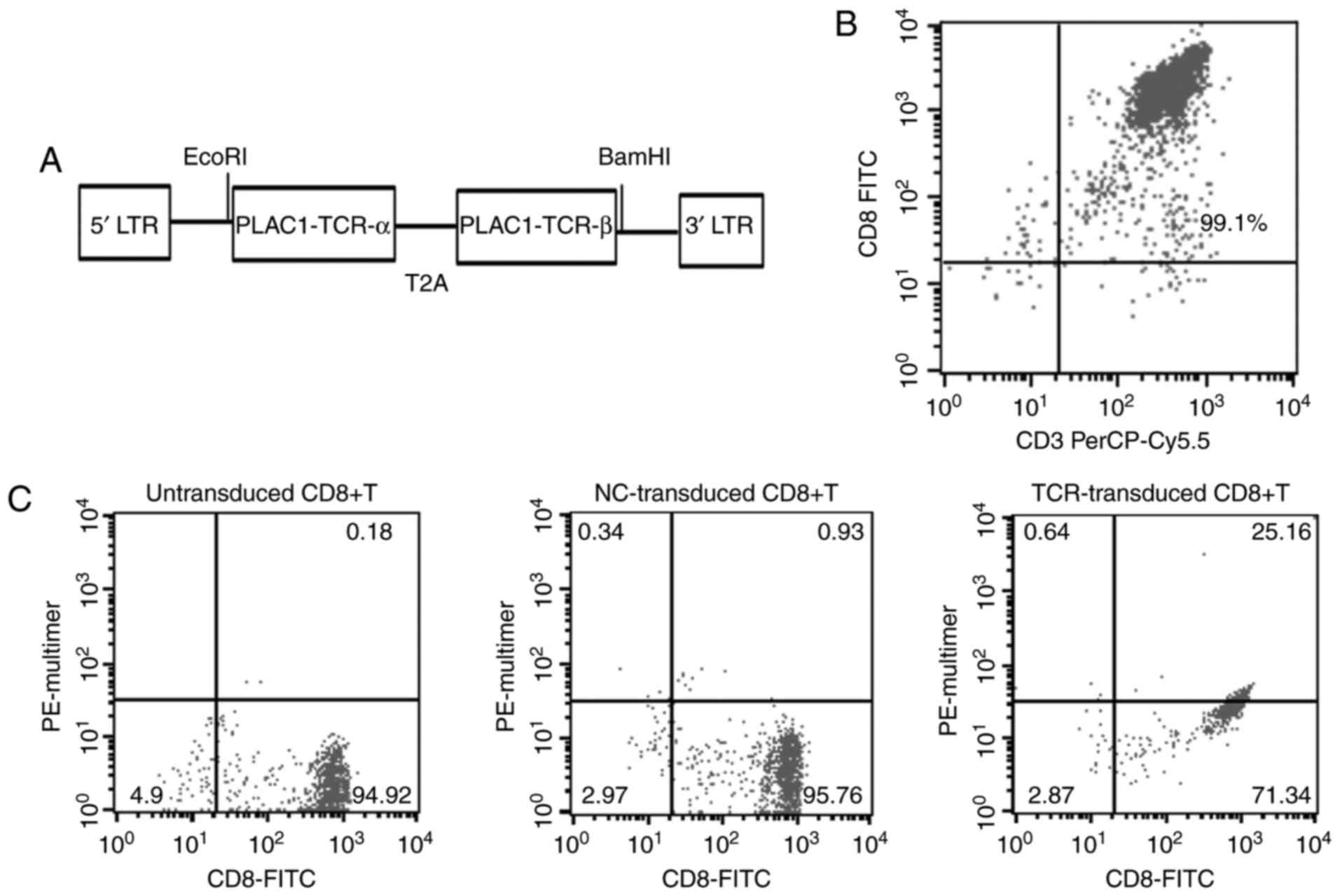
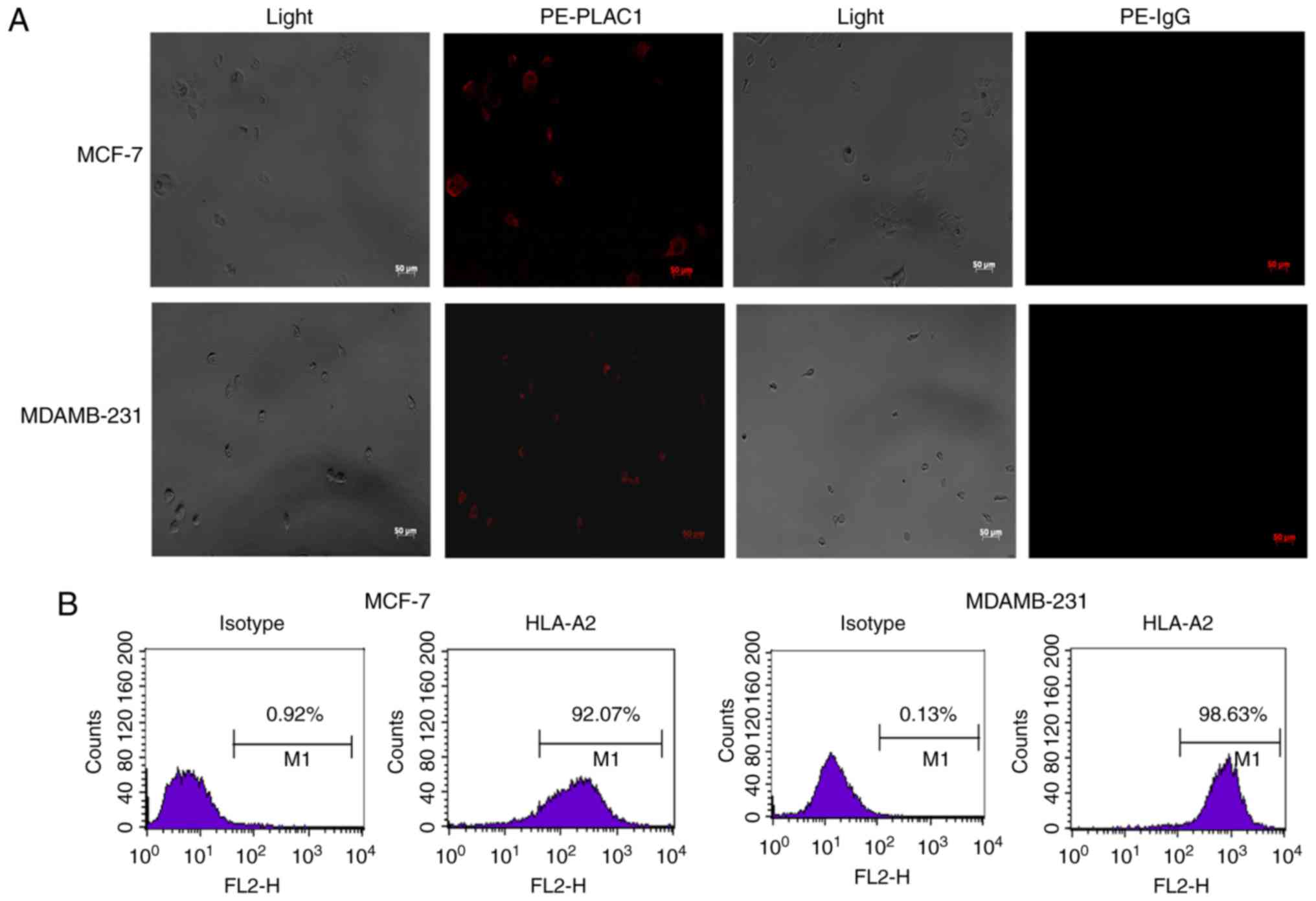
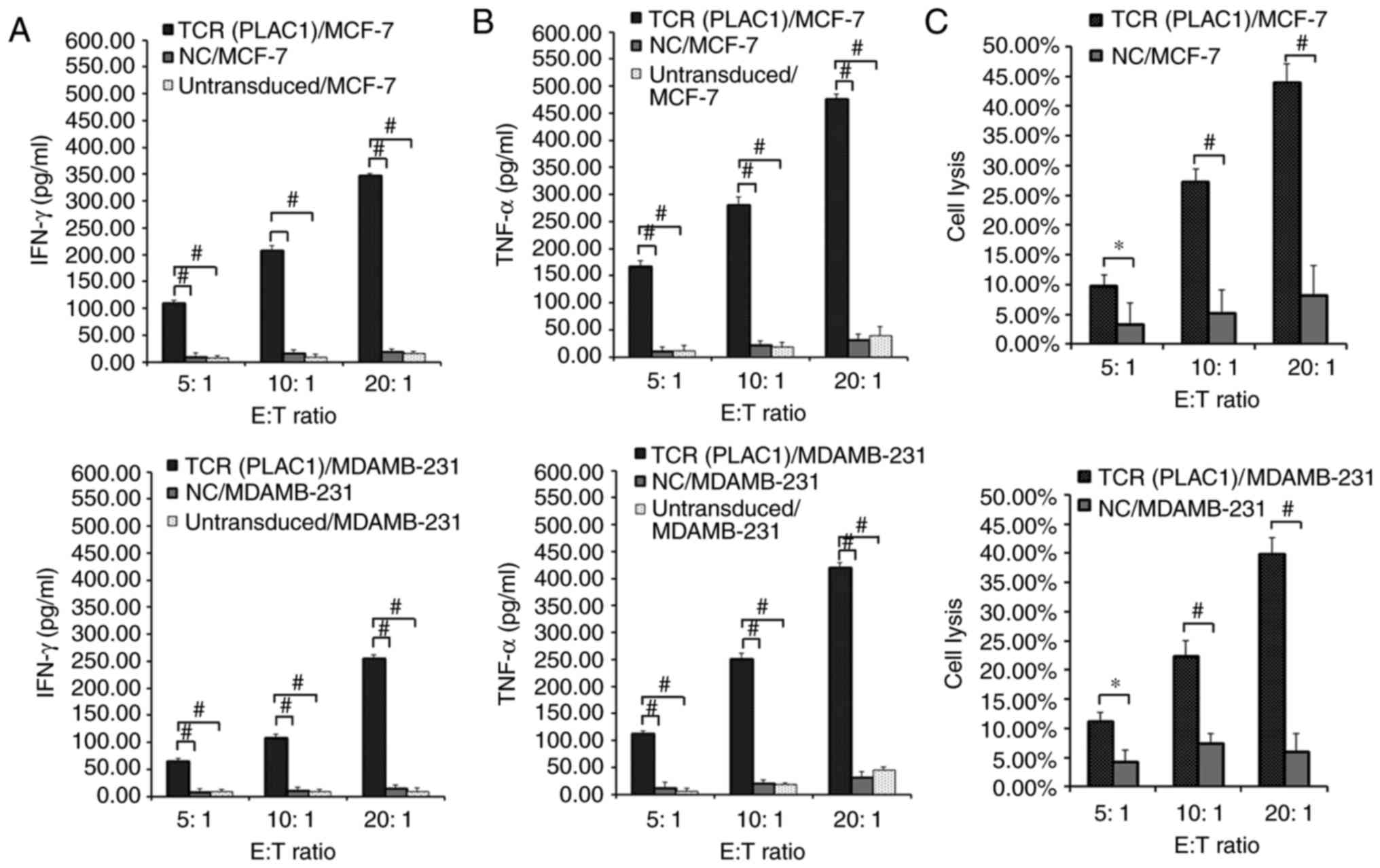
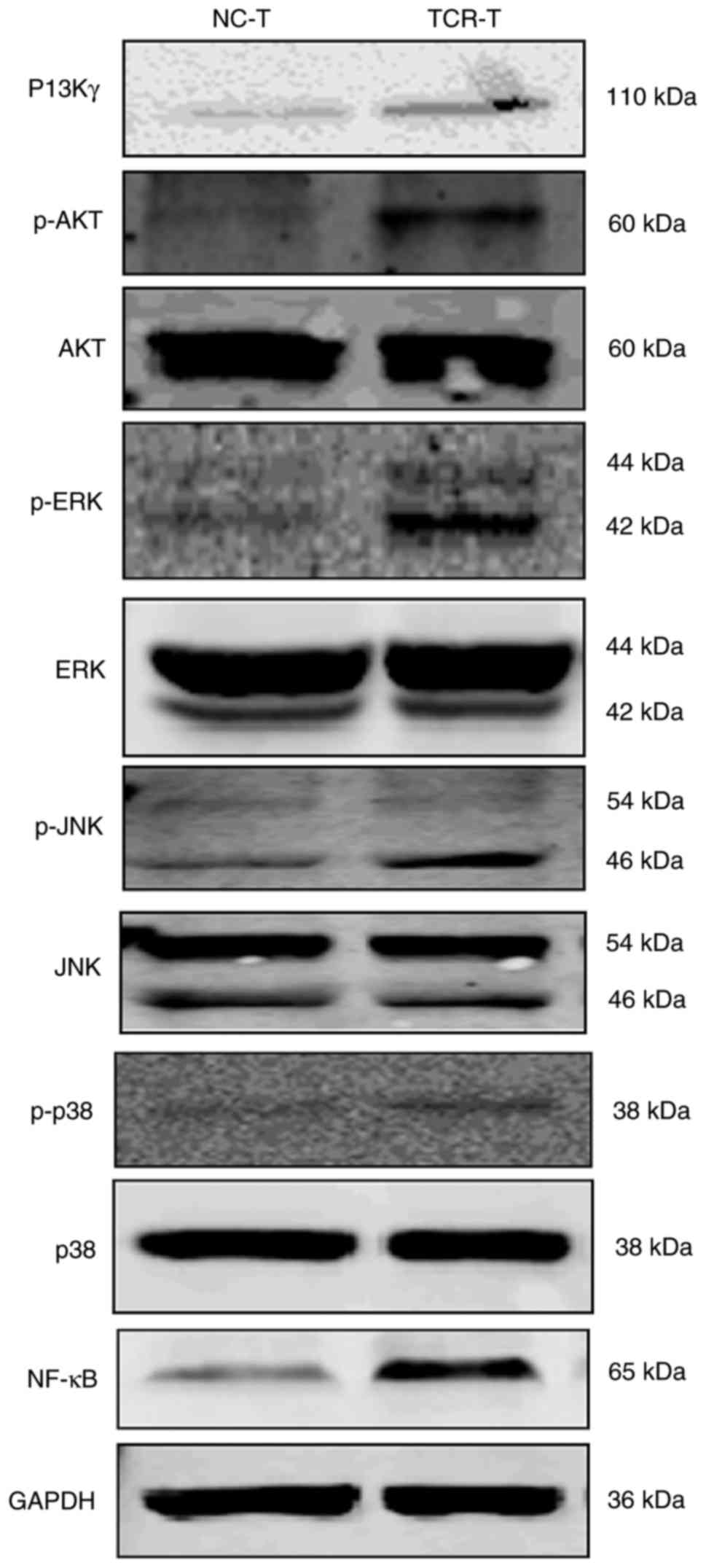
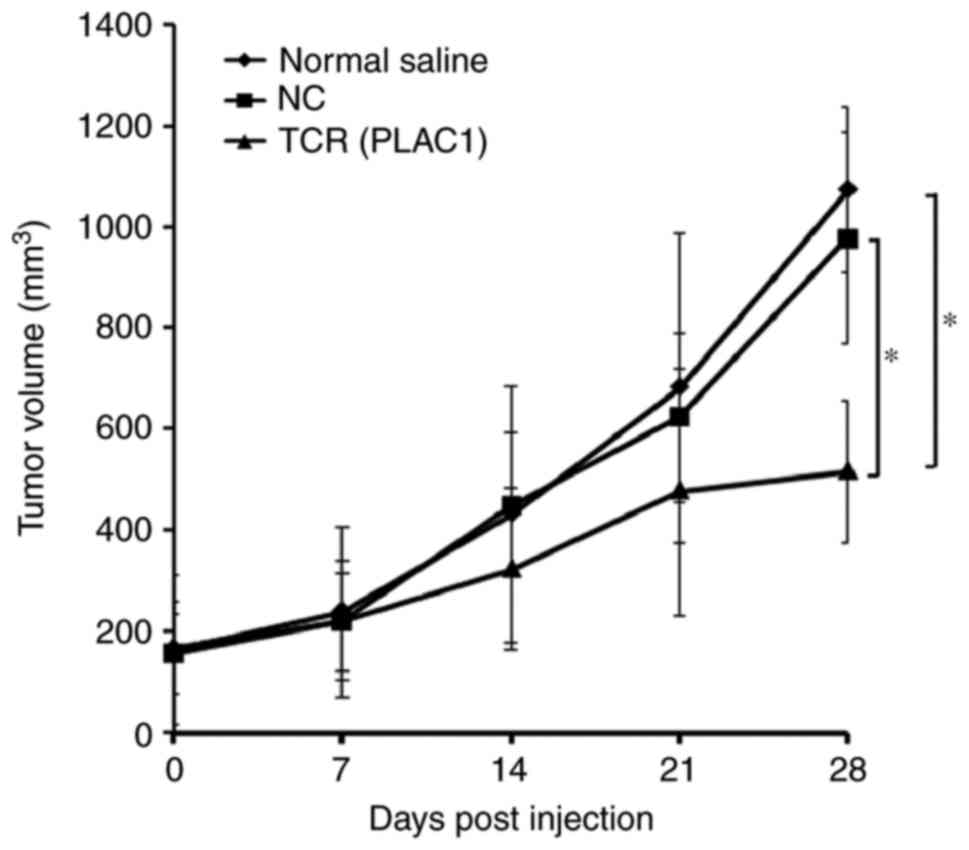
Placenta-specific 1 (PLAC1), a novel cancer-testis antigen (CTA), is expressed in a number of different human malignancies. It is frequently produced in breast cancer, serving a function in tumorigenesis. Adoptive immunotherapy using T cell receptor (TCR)‑engineered T cells against CTA mediates objective tumor regression; however, to the best of our knowledge, targeting PLAC1 using engineered T cells has not yet been attempted. In the present study, the cDNAs encoding TCRα‑ and β‑chains specific for human leukocyte antigen (HLA)‑A*0201‑restricted PLAC1 were cloned from a cytotoxic T‑lymphocyte, generated by in vitro by the stimulation of CD8+ T cells using autologous HLA‑A2+ dendritic cells loaded with a PLAC1‑specific peptide (p28‑36, VLCSIDWFM). The TCRα/β‑chains were linked by a 2A peptide linker (TCRα‑Thosea asigna virus‑TCRβ), and the constructs were cloned into the lentiviral vector, followed by transduction into human cytotoxic (CD8+) T cells. The efficiency of transduction was up to 25.16%, as detected by PLAC1 multimers. TCR‑transduced CD8+ T cells, co‑cultured with human non‑metastatic breast cancer MCF‑7 cells (PLAC1+, HLA‑A2+) and triple‑negative breast cancer MDAMB‑231 cells (PLAC1+, HLA‑A2+), produced interferon γ and tumor necrosis factor α, suggesting TCR activation. Furthermore, the PLAC1 TCR‑transduced CD8+ T cells efficiently and specifically identified and annihilated the HLA‑A2+/PLAC1+ breast cancer cell lines in a lactate dehydrogenase activity assay. Western blot analysis demonstrated that TCR transduction stimulated the production of mitogen‑activated protein kinase signaling molecules, extracellular signal‑regulated kinases 1/2 and nuclear factor‑κB, through phosphoinositide 3‑kinase γ‑mediated phosphorylation of protein kinase B in CD8+ T cells. Xenograft mouse assays revealed that PLAC1 TCR‑transduced CD8+T cells significantly delayed the tumor progression in mice‑bearing breast cancer compared with normal saline or negative control‑transduced groups. In conclusion, a novel HLA‑A2‑restricted and PLAC1‑specific TCR was identified. The present study demonstrated PLAC1 to be a potential target for breast cancer treatment; and the usage of PLAC1‑specific TCR‑engineered T cells may be a novel strategy for PLAC1-positive breast cancer treatment.
View Figures

Figure 1

Figure 2

Figure 3

Figure 4

Figure 5

Figure 6

View References

1 

Siegel RL, Miller KD and Jemal A: Cancer statistics, 2015. CA Cancer J Clin. 65:5–29. 2015. View Article : Google Scholar : PubMed/NCBI

2 

Jiang X, Tang H and Chen T: Epidemiology of gynecologic cancers in China. J Gynecol Oncol. 29:e72018. View Article : Google Scholar : PubMed/NCBI

3 

Torre LA, Bray F, Siegel RL, Ferlay J, Lortet-Tieulent J and Jemal A: Global cancer statistic, 2012. CA Cancer J Clin. 65:87–108. 2015. View Article : Google Scholar : PubMed/NCBI

4 

Mondal D and Sharma DN: External beam radiation techniques for breast cancer in the new millennium: New challenging perspectives. J Egypt Natl Canc Inst. 28:211–218. 2016. View Article : Google Scholar : PubMed/NCBI

5 

Yu LY, Tang J, Zhang CM, Zeng WJ, Yan H, Li MP and Chen XP: New immunotherapy strategies in breast cancer. Int J Environ Res Public Health. 14:E682017. View Article : Google Scholar : PubMed/NCBI

6 

Bernal-Estévez D, Sanchez R, Tejada RE and Parra-López C: Chemotherapy and radiation therapy elicits tumor specific T cell responses in a breast cancer patient. BMC Cancer. 16:5912016. View Article : Google Scholar : PubMed/NCBI

7 

Nakai K, Hung MC and Yamaguchi H: A perspective on anti-EGFR therapies targeting triple-negative breast cancer. Am J Cancer Res. 6:1609–1623. 2016.PubMed/NCBI

8 

Foulkes WD, Smith IE and Reis-Filho JS: Triple-negative breast cancer. N Engl J Med. 363:1938–1948. 2010. View Article : Google Scholar : PubMed/NCBI

9 

Migali C, Milano M, Trapani D, Criscitiello C, Esposito A, Locatelli M, Minchella I and Curigliano G: Strategies to modulate the immune system in breast cancer: Checkpoint inhibitors and beyond. Ther Adv Med Oncol. 8:360–374. 2016. View Article : Google Scholar : PubMed/NCBI

10 

Rapoport AP, Stadtmauer EA, Binder-Scholl GK, Goloubeva O, Vogl DT, Lacey SF, Badros AZ, Garfall A, Weiss B, Finklestein J, et al: NY-ESO-1-specific TCR-engineered T cells mediate sustained antigen-specific antitumor effects in myeloma. Nat Med. 21:914–921. 2015. View Article : Google Scholar : PubMed/NCBI

11 

Kunert A, Straetemans T, Govers C, Lamers C, Mathijssen R, Sleijfer S and Debets R: TCR-Engineered T cells meet new challenges to treat solid tumors: Choice of antigen, t cell fitness and sensitization of tumor milieu. Front Immunol. 4:3632013. View Article : Google Scholar : PubMed/NCBI

12 

Chinnasamy N, Wargo JA, Yu Z, Rao M, Frankel TL, Riley JP, Hong JJ, Parkhurst MR, Feldman SA, Schrump DS, et al: A TCR targeting the HLA-A*0201-restricted epitope of MAGE-A3 recognizes multiple epitopes of the MAGE-A antigen superfamily in several types of cancer. J Immunol. 186:685–696. 2011. View Article : Google Scholar : PubMed/NCBI

13 

Chodon T, Comin-Anduix B, Chmielowski B, Koya RC, Wu Z, Auerbach M, Ng C, Avramis E, Seja E, Villanueva A, et al: Adoptive transfer of MART-1 T cell receptor transgenic lymphocytes and dendritic cell vaccination in patients with metastatic melanoma. Clin Cancer Res. 20:2457–2465. 2014. View Article : Google Scholar : PubMed/NCBI

14 

Koslowski M, Tureci O, Biesterfeld S, Seitz G, Huber C and Sahin U: Selective activation of trophoblast-specific PLAC1 in breast cancer by CCAAT/enhancer-binding protein beta (C/EBPbeta) isoform 2. J Biol Chem. 284:28607–28615. 2009. View Article : Google Scholar : PubMed/NCBI

15 

Old LJ: Cancer is a somatic cell pregnancy. Cancer Immun. 7:192007.PubMed/NCBI

16 

Koslowski M, Sahin U, Mitnacht-Kraus R, Seitz G, Huber C and Tureci O: A placenta-specific gene ectopically activated in many human cancers is essentially involved in malignant cell processes. Cancer Res. 67:9528–9534. 2007. View Article : Google Scholar : PubMed/NCBI

17 

Leisegang M, Engels B, Meyerhuber P, Kieback E, Sommermeyer D, Xue SA, Reuss S, Stauss H and Uckert W: Enhanced functionality of T cell receptor-redirected T cells is defined by the transgene cassette. J Mol Med (Berl). 86:573–583. 2008. View Article : Google Scholar : PubMed/NCBI

18 

Sommermeyer D, Conrad H, Krönig H, Gelfort H, Bernhard H and Uckert W: NY-ESO-1 antigen-reactive T cell receptors exhibit diverse therapeutic capability. Int J Cancer. 132:1360–1367. 2013. View Article : Google Scholar : PubMed/NCBI

19 

Rosati SF, Parkhurst MR, Hong Y, Zheng Z, Feldman SA, Rao M, Abate-Daga D, Beard RE, Xu H, Black MA, et al: A Novel murine T cell receptor targeting NY-ESO-1. J Immunother. 37:135–146. 2014. View Article : Google Scholar : PubMed/NCBI

20 

Lee SY and Sin JI: MC32 tumor cells acquire Ag-specific CTL resistance through the loss of CEA in a colon cancer model. Hum Vaccin Immunother. 11:2012–2020. 2015. View Article : Google Scholar : PubMed/NCBI

21 

Li Q, Liu G, Shao D, Wang J, Yuan H, Chen T, Zhai R, Ni W and Tai G: Mucin1 mediates autocrine transforming growth factor beta signaling through activating the c-Jun N-terminal kinase/activator protein 1 pathway in human hepatocellular carcinoma cells. Int J Biochem Cell Biol. 59:116–125. 2015. View Article : Google Scholar : PubMed/NCBI

22 

Wang F, Li Q, Ni W, Fang F, Sun X, Xie F, Wang J, Wang F, Gao S and Tai G: Expression of human full-length MUC1 inhibits the proliferation and migration of a B16 mouse melanoma cell line. Oncol Rep. 30:260–268. 2013. View Article : Google Scholar : PubMed/NCBI

23 

Li Q, Wang F, Liu G, Yuan H, Chen T, Wang J, Xie F, Zhai R, Wang F, Guo Y, et al: Impact of Mucin1 knockdown on the phenotypic characteristics of the human hepatocellular carcinoma cell line SMMC-7721. Oncol Rep. 31:2811–2819. 2014. View Article : Google Scholar : PubMed/NCBI

24 

Yun BL, Cho N, Li M, Jang MH, Park SY, Kang HC, Kim B, Song IC and Moon WK: Intratumoral heterogeneity of breast cancer xenograft models: Texture analysis of diffusion-weighted MR imaging. Korean J Radiol. 15:591–604. 2014. View Article : Google Scholar : PubMed/NCBI

25 

Ladygina N, Gottipati S, Ngo K, Castro G, Ma JY, Banie H, Rao TS and Fung-Leung WP: PI3Kγ kinase activity is required for optimal T cell activation and differentiation. Eur J Immunol. 43:3183–3196. 2013. View Article : Google Scholar : PubMed/NCBI

26 

Huse M: The T cell-receptor signaling network. J Cell Sci. 122:1269–1273. 2009. View Article : Google Scholar : PubMed/NCBI

27 

Prinz PU, Mendler AN, Masouris I, Durner L, Oberneder R and Noessner E: High DGK-α and disabled MAPK pathways cause dysfunction of human tumor-infiltrating CD8+ T cells that is reversible by pharmacologic intervention. J Immunol. 188:5990–6000. 2012. View Article : Google Scholar : PubMed/NCBI

28 

Robertson LK, Mireau LR and Ostergaard HL: A role for phosphatidylinositol 3-kinase in TCR-stimulated ERK activation leading to paxillin phosphorylation and CTL degranulation. J Immunol. 175:8138–8145. 2005. View Article : Google Scholar : PubMed/NCBI

29 

Radoja S, Frey AB and Vukmanovic S: T cell receptor signaling events triggering granule exocytosis. Crit Rev Immunol. 26:265–290. 2006. View Article : Google Scholar : PubMed/NCBI

30 

Adamina M: When gene therapy meets adoptive cell therapy: Better days ahead for cancer immunotherapy? Expert Rev Vaccines. 9:359–363. 2010. View Article : Google Scholar : PubMed/NCBI

31 

Stevenson BJ, Iseli C, Panji S, Zahn-Zabal M, Hide W, Old LJ, Simpson AJ and Jongeneel V: Rapid evolution of cancer/testis genes on the X chromosome. BMC Genomics. 8:1292007. View Article : Google Scholar : PubMed/NCBI

32 

Cocchia M, Huber R, Pantano S, Chen EY, Ma P, Forabosco A, Ko MS and Schlessinger D: PLAC1, an Xq26 gene with placenta-specific expression. Genomics. 68:305–312. 2000. View Article : Google Scholar : PubMed/NCBI

33 

Gjerstorff MF, Andersen MH and Ditzel HJ: Oncogenic cancer/testis antigens: Prime candidates for immunotherapy. Oncotarget. 6:15772–15787. 2015. View Article : Google Scholar : PubMed/NCBI

34 

Liu W, Zhai M, Wu Z, Qi Y, Wu Y, Dai C, Sun M, Li L and Gao Y: Identification of a novel HLA-A2-restricted cytotoxic T lymphocyte epitope from cancer-testis antigen PLAC1 in breast cancer. Amino Acids. 42:2257–2265. 2012. View Article : Google Scholar : PubMed/NCBI

35 

De FP, Luke GA, Hughes LE, Gani D, Halpin C and Ryan MD: E unum pluribus: Multiple proteins from a self-processing polyprotein. Trends Biotechnol. 24:68–75. 2006. View Article : Google Scholar : PubMed/NCBI

36 

Tang X, Liu X, Tao G, Qin M, Yin G, Suo J and Suo X: ‘Self cleaving’ 2A peptide from porcine teschovirus 1 mediates cleavage of dual fluorescent proteins in transgenic Eimeria tenella. Vet Res. 47:682016. View Article : Google Scholar : PubMed/NCBI

37 

Mizote Y, Uenaka A, Isobe M, Wada H, Kakimi K, Saika T, Kita S, Koide Y, Oka M and Nakayama E: Production of NY-ESO-1 peptide/DRB1*08:03 tetramers and ex vivo detection of CD4 T cell responses in vaccinated cancer patients. Vaccine. 32:957–964. 2014. View Article : Google Scholar : PubMed/NCBI

38 

Malyguine AM, Strobl S, Dunham K, Shurin MR and Sayers TJ: ELISPOT assay for monitoring cytotoxic T lymphocytes (CTL) activity in cancer vaccine clinical trials. Cells. 1:111–126. 2012. View Article : Google Scholar : PubMed/NCBI

39 

Colagiovanni A, Di Renzo L, Sarlo F, Schiavino D and De Lorenzo A: Role of TNF-alpha polymorphism in patients with nickel allergy: A marker of susceptibility to contact polysensitization. Eur Rev Med Pharmacol Sci. 20:2663–2666. 2016.PubMed/NCBI

40 

Wang S, Campos J, Gallotta M, Gong M, Crain C, Naik E, Coffman RL and Guiducci C: Intratumoral injection of a CpG oligonucleotide reverts resistance to PD-1 blockade by expanding multifunctional CD8+ T cells. Proc Natl Acad Sci USA. 113:pp. E7240–e7249. 2016; View Article : Google Scholar : PubMed/NCBI

41 

Gammaitoni L, Giraudo L, Leuci V, Todorovic M, Mesiano G, Picciotto F, Pisacane A, Zaccagna A, Volpe MG, Gallo S, et al: Effective activity of cytokine-induced killer cells against autologous metastatic melanoma including cells with stemness features. Clin Cancer Res. 19:4347–4358. 2013. View Article : Google Scholar : PubMed/NCBI

Related Articles

  • Abstract
  • View
  • Download
  • Twitter
Copy and paste a formatted citation
Spandidos Publications style
Li Q, Liu M, Wu M, Zhou X, Wang S, Hu Y, Wang Y, He Y, Zeng X, Chen J, Chen J, et al: PLAC1-specific TCR-engineered T cells mediate antigen-specific antitumor effects in breast cancer. Oncol Lett 15: 5924-5932, 2018.
APA
Li, Q., Liu, M., Wu, M., Zhou, X., Wang, S., Hu, Y. ... Liu, W. (2018). PLAC1-specific TCR-engineered T cells mediate antigen-specific antitumor effects in breast cancer. Oncology Letters, 15, 5924-5932. https://doi.org/10.3892/ol.2018.8075
MLA
Li, Q., Liu, M., Wu, M., Zhou, X., Wang, S., Hu, Y., Wang, Y., He, Y., Zeng, X., Chen, J., Liu, Q., Xiao, D., Hu, X., Liu, W."PLAC1-specific TCR-engineered T cells mediate antigen-specific antitumor effects in breast cancer". Oncology Letters 15.4 (2018): 5924-5932.
Chicago
Li, Q., Liu, M., Wu, M., Zhou, X., Wang, S., Hu, Y., Wang, Y., He, Y., Zeng, X., Chen, J., Liu, Q., Xiao, D., Hu, X., Liu, W."PLAC1-specific TCR-engineered T cells mediate antigen-specific antitumor effects in breast cancer". Oncology Letters 15, no. 4 (2018): 5924-5932. https://doi.org/10.3892/ol.2018.8075
Copy and paste a formatted citation
x
Spandidos Publications style
Li Q, Liu M, Wu M, Zhou X, Wang S, Hu Y, Wang Y, He Y, Zeng X, Chen J, Chen J, et al: PLAC1-specific TCR-engineered T cells mediate antigen-specific antitumor effects in breast cancer. Oncol Lett 15: 5924-5932, 2018.
APA
Li, Q., Liu, M., Wu, M., Zhou, X., Wang, S., Hu, Y. ... Liu, W. (2018). PLAC1-specific TCR-engineered T cells mediate antigen-specific antitumor effects in breast cancer. Oncology Letters, 15, 5924-5932. https://doi.org/10.3892/ol.2018.8075
MLA
Li, Q., Liu, M., Wu, M., Zhou, X., Wang, S., Hu, Y., Wang, Y., He, Y., Zeng, X., Chen, J., Liu, Q., Xiao, D., Hu, X., Liu, W."PLAC1-specific TCR-engineered T cells mediate antigen-specific antitumor effects in breast cancer". Oncology Letters 15.4 (2018): 5924-5932.
Chicago
Li, Q., Liu, M., Wu, M., Zhou, X., Wang, S., Hu, Y., Wang, Y., He, Y., Zeng, X., Chen, J., Liu, Q., Xiao, D., Hu, X., Liu, W."PLAC1-specific TCR-engineered T cells mediate antigen-specific antitumor effects in breast cancer". Oncology Letters 15, no. 4 (2018): 5924-5932. https://doi.org/10.3892/ol.2018.8075
Follow us
  • Twitter
  • LinkedIn
  • Facebook
About
  • Spandidos Publications
  • Careers
  • Cookie Policy
  • Privacy Policy
How can we help?
  • Help
  • Live Chat
  • Contact
  • Email to our Support Team