Spandidos Publications Logo
  • About
    • About Spandidos
    • Aims and Scopes
    • Abstracting and Indexing
    • Editorial Policies
    • Reprints and Permissions
    • Job Opportunities
    • Terms and Conditions
    • Contact
  • Journals
    • All Journals
    • Oncology Letters
      • Oncology Letters
      • Information for Authors
      • Editorial Policies
      • Editorial Board
      • Aims and Scope
      • Abstracting and Indexing
      • Bibliographic Information
      • Archive
    • International Journal of Oncology
      • International Journal of Oncology
      • Information for Authors
      • Editorial Policies
      • Editorial Board
      • Aims and Scope
      • Abstracting and Indexing
      • Bibliographic Information
      • Archive
    • Molecular and Clinical Oncology
      • Molecular and Clinical Oncology
      • Information for Authors
      • Editorial Policies
      • Editorial Board
      • Aims and Scope
      • Abstracting and Indexing
      • Bibliographic Information
      • Archive
    • Experimental and Therapeutic Medicine
      • Experimental and Therapeutic Medicine
      • Information for Authors
      • Editorial Policies
      • Editorial Board
      • Aims and Scope
      • Abstracting and Indexing
      • Bibliographic Information
      • Archive
    • International Journal of Molecular Medicine
      • International Journal of Molecular Medicine
      • Information for Authors
      • Editorial Policies
      • Editorial Board
      • Aims and Scope
      • Abstracting and Indexing
      • Bibliographic Information
      • Archive
    • Biomedical Reports
      • Biomedical Reports
      • Information for Authors
      • Editorial Policies
      • Editorial Board
      • Aims and Scope
      • Abstracting and Indexing
      • Bibliographic Information
      • Archive
    • Oncology Reports
      • Oncology Reports
      • Information for Authors
      • Editorial Policies
      • Editorial Board
      • Aims and Scope
      • Abstracting and Indexing
      • Bibliographic Information
      • Archive
    • Molecular Medicine Reports
      • Molecular Medicine Reports
      • Information for Authors
      • Editorial Policies
      • Editorial Board
      • Aims and Scope
      • Abstracting and Indexing
      • Bibliographic Information
      • Archive
    • World Academy of Sciences Journal
      • World Academy of Sciences Journal
      • Information for Authors
      • Editorial Policies
      • Editorial Board
      • Aims and Scope
      • Abstracting and Indexing
      • Bibliographic Information
      • Archive
    • International Journal of Functional Nutrition
      • International Journal of Functional Nutrition
      • Information for Authors
      • Editorial Policies
      • Editorial Board
      • Aims and Scope
      • Abstracting and Indexing
      • Bibliographic Information
      • Archive
    • International Journal of Epigenetics
      • International Journal of Epigenetics
      • Information for Authors
      • Editorial Policies
      • Editorial Board
      • Aims and Scope
      • Abstracting and Indexing
      • Bibliographic Information
      • Archive
    • Medicine International
      • Medicine International
      • Information for Authors
      • Editorial Policies
      • Editorial Board
      • Aims and Scope
      • Abstracting and Indexing
      • Bibliographic Information
      • Archive
  • Articles
  • Information
    • Information for Authors
    • Information for Reviewers
    • Information for Librarians
    • Information for Advertisers
    • Conferences
  • Language Editing
Spandidos Publications Logo
  • About
    • About Spandidos
    • Aims and Scopes
    • Abstracting and Indexing
    • Editorial Policies
    • Reprints and Permissions
    • Job Opportunities
    • Terms and Conditions
    • Contact
  • Journals
    • All Journals
    • Biomedical Reports
      • Information for Authors
      • Editorial Policies
      • Editorial Board
      • Aims and Scope
      • Abstracting and Indexing
      • Bibliographic Information
      • Archive
    • Experimental and Therapeutic Medicine
      • Information for Authors
      • Editorial Policies
      • Editorial Board
      • Aims and Scope
      • Abstracting and Indexing
      • Bibliographic Information
      • Archive
    • International Journal of Epigenetics
      • Information for Authors
      • Editorial Policies
      • Editorial Board
      • Aims and Scope
      • Abstracting and Indexing
      • Bibliographic Information
      • Archive
    • International Journal of Functional Nutrition
      • Information for Authors
      • Editorial Policies
      • Editorial Board
      • Aims and Scope
      • Abstracting and Indexing
      • Bibliographic Information
      • Archive
    • International Journal of Molecular Medicine
      • Information for Authors
      • Editorial Policies
      • Editorial Board
      • Aims and Scope
      • Abstracting and Indexing
      • Bibliographic Information
      • Archive
    • International Journal of Oncology
      • Information for Authors
      • Editorial Policies
      • Editorial Board
      • Aims and Scope
      • Abstracting and Indexing
      • Bibliographic Information
      • Archive
    • Medicine International
      • Information for Authors
      • Editorial Policies
      • Editorial Board
      • Aims and Scope
      • Abstracting and Indexing
      • Bibliographic Information
      • Archive
    • Molecular and Clinical Oncology
      • Information for Authors
      • Editorial Policies
      • Editorial Board
      • Aims and Scope
      • Abstracting and Indexing
      • Bibliographic Information
      • Archive
    • Molecular Medicine Reports
      • Information for Authors
      • Editorial Policies
      • Editorial Board
      • Aims and Scope
      • Abstracting and Indexing
      • Bibliographic Information
      • Archive
    • Oncology Letters
      • Information for Authors
      • Editorial Policies
      • Editorial Board
      • Aims and Scope
      • Abstracting and Indexing
      • Bibliographic Information
      • Archive
    • Oncology Reports
      • Information for Authors
      • Editorial Policies
      • Editorial Board
      • Aims and Scope
      • Abstracting and Indexing
      • Bibliographic Information
      • Archive
    • World Academy of Sciences Journal
      • Information for Authors
      • Editorial Policies
      • Editorial Board
      • Aims and Scope
      • Abstracting and Indexing
      • Bibliographic Information
      • Archive
  • Articles
  • Information
    • For Authors
    • For Reviewers
    • For Librarians
    • For Advertisers
    • Conferences
  • Language Editing
Login Register Submit
  • This site uses cookies
  • You can change your cookie settings at any time by following the instructions in our Cookie Policy. To find out more, you may read our Privacy Policy.

    I agree
Search articles by DOI, keyword, author or affiliation
Search
Advanced Search
presentation
Oncology Letters
Join Editorial Board Propose a Special Issue
Print ISSN: 1792-1074 Online ISSN: 1792-1082
Journal Cover
June-2018 Volume 15 Issue 6

Full Size Image

Sign up for eToc alerts
Recommend to Library

Journals

International Journal of Molecular Medicine

International Journal of Molecular Medicine

International Journal of Molecular Medicine is an international journal devoted to molecular mechanisms of human disease.

International Journal of Oncology

International Journal of Oncology

International Journal of Oncology is an international journal devoted to oncology research and cancer treatment.

Molecular Medicine Reports

Molecular Medicine Reports

Covers molecular medicine topics such as pharmacology, pathology, genetics, neuroscience, infectious diseases, molecular cardiology, and molecular surgery.

Oncology Reports

Oncology Reports

Oncology Reports is an international journal devoted to fundamental and applied research in Oncology.

Experimental and Therapeutic Medicine

Experimental and Therapeutic Medicine

Experimental and Therapeutic Medicine is an international journal devoted to laboratory and clinical medicine.

Oncology Letters

Oncology Letters

Oncology Letters is an international journal devoted to Experimental and Clinical Oncology.

Biomedical Reports

Biomedical Reports

Explores a wide range of biological and medical fields, including pharmacology, genetics, microbiology, neuroscience, and molecular cardiology.

Molecular and Clinical Oncology

Molecular and Clinical Oncology

International journal addressing all aspects of oncology research, from tumorigenesis and oncogenes to chemotherapy and metastasis.

World Academy of Sciences Journal

World Academy of Sciences Journal

Multidisciplinary open-access journal spanning biochemistry, genetics, neuroscience, environmental health, and synthetic biology.

International Journal of Functional Nutrition

International Journal of Functional Nutrition

Open-access journal combining biochemistry, pharmacology, immunology, and genetics to advance health through functional nutrition.

International Journal of Epigenetics

International Journal of Epigenetics

Publishes open-access research on using epigenetics to advance understanding and treatment of human disease.

Medicine International

Medicine International

An International Open Access Journal Devoted to General Medicine.

Journal Cover
June-2018 Volume 15 Issue 6

Full Size Image

Sign up for eToc alerts
Recommend to Library

  • Article
  • Citations
    • Cite This Article
    • Download Citation
    • Create Citation Alert
    • Remove Citation Alert
    • Cited By
  • Similar Articles
    • Related Articles (in Spandidos Publications)
    • Similar Articles (Google Scholar)
    • Similar Articles (PubMed)
  • Download PDF
  • Download XML
  • View XML
Article

Growth pattern change of a benign clear cell ‘sugar’ tumor of the lung: Serial imaging surveillance over seven years

  • Authors:
    • Eung Koo Yeon
    • Jung Im Kim
    • Kyu Yeoun Won
    • Han Na Lee
  • View Affiliations / Copyright

    Affiliations: Department of Radiology, Kyung Hee University Medical Center, Seoul 02447, Republic of Korea, Department of Radiology, Kyung Hee University Hospital at Gangdong, College of Medicine, Kyung Hee University, Seoul 05278, Republic of Korea, Department of Pathology, Kyung Hee University Hospital at Gangdong, College of Medicine, Kyung Hee University, Seoul 05278, Republic of Korea
  • Pages: 8652-8654
    |
    Published online on: March 30, 2018
       https://doi.org/10.3892/ol.2018.8391
  • Expand metrics +
Metrics: Total Views: 0 (Spandidos Publications: | PMC Statistics: )
Metrics: Total PDF Downloads: 0 (Spandidos Publications: | PMC Statistics: )
Cited By (CrossRef): 0 citations Loading Articles...

This article is mentioned in:


Abstract

Clear cell tumor of the lung is a rare benign mesenchymal tumor and only sporadic cases have been previously reported. The present study reports the case of a 58‑year‑old man who presented with an incidentally detected solitary pulmonary nodule. Based on comparisons with serial previous chest and spine radiographs, a growth pattern change in the nodule (initial gradual growth over 4.5 years, then recent no growth over 2.5 years) was identified. The nodule was diagnosed as a benign clear cell tumor of the lung (CCTL) following surgical resection. Few studies have previously reported interval growth of CCTLs and the growth pattern of CCTL is not yet well known. To the best of our knowledge, this is the first reported case in which the growth pattern change of CCTL was identified via serial imaging over 7 years of follow‑up.

Introduction

Clear cell tumor, also known as ‘sugar’ tumor, belongs to the family of perivascular epithelial cell tumors (PEComas) and can originate from various organs in the body, such as the rectum, pancreas, heart, salivary gland, trachea and lung (1,2). Clear cell tumor of the lung (CCTL) was first described by Liebow and Castleman (3) in 1963 and is generally regarded as an extremely rare benign mesenchymal lung tumor. It is usually incidentally detected on routine check-up chest radiograph as a solitary pulmonary nodule. There are no significant findings in physical examinations and laboratory studies although only a few patients displayed symptoms (headaches, weakness, cough, bloody sputum, hemoptysis, chest pain, essential thrombocytosis and unexplained high fever) (4). Only a few sporadic cases have been reported and study of the interval growth of this tumor is extremely limited. The present study reports a CCTL that exhibited growth pattern change on follow-up imaging studies over 7 years along with a review of the literature. The present case study was approved by the Kyung Hee University Hospital at Gangdong Institutional Review Board (Seoul, Korea) and the patient provided informed written consent for the publication of the present study.

Case report

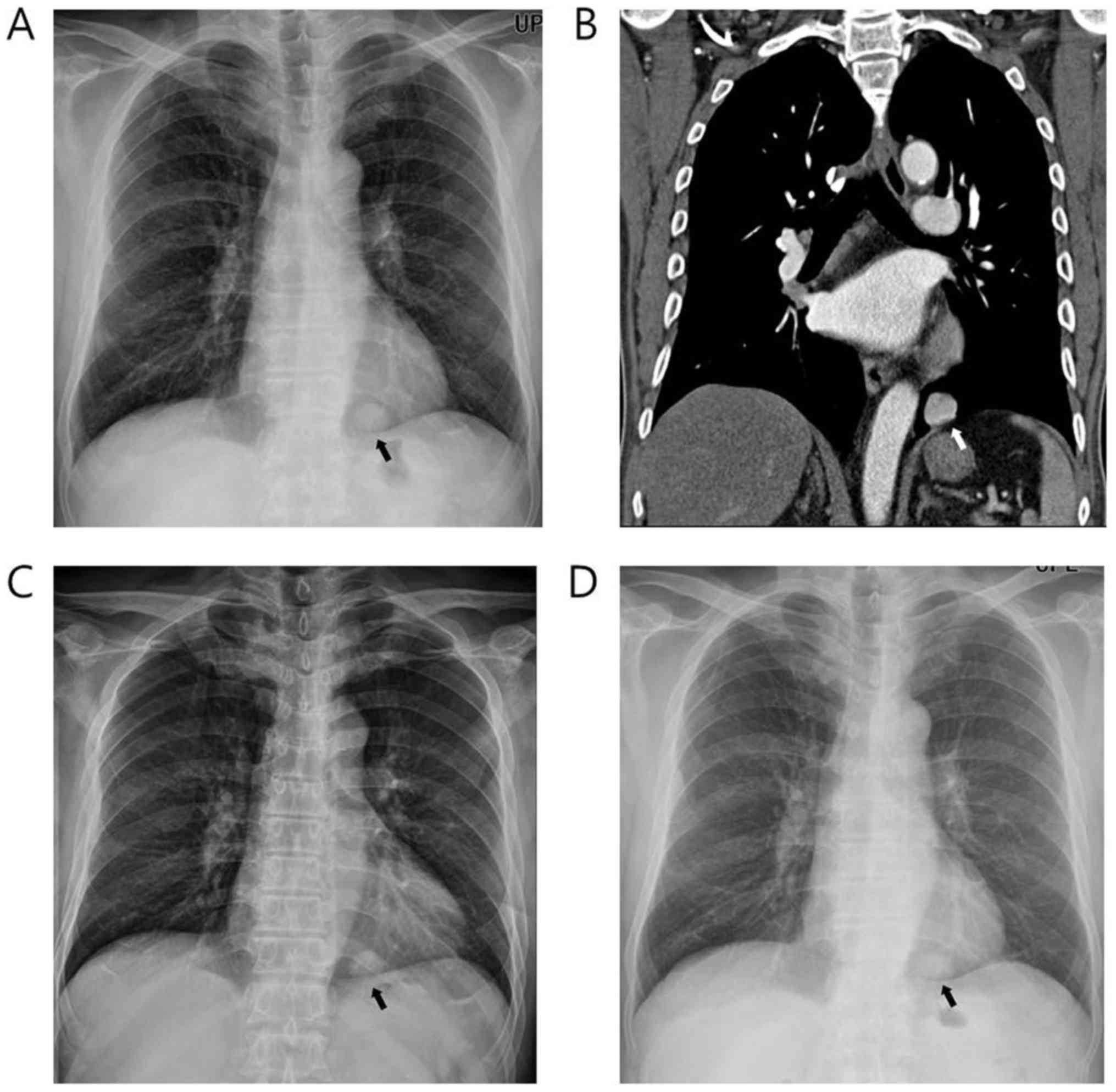
A 58-year-old man was admitted to our hospital for further evaluation of an incidentally detected nodular opacity on routine check-up chest radiograph. Physical and laboratory examinations did not exhibit any abnormalities. He was a 35-pack-year current smoker and had a history of diabetes mellitus. On chest radiograph, a round and well-defined nodular opacity was identified in the left lower lung field (Fig. 1A). Contrast-enhanced chest computed tomography (CT) demonstrated a 2.7 cm nodule in the left lower lobe, and the nodule showed strong homogeneous contrast enhancement (Fig. 1B). There was no definite cavitation or necrosis. The nodule was retrospectively traced on whole spine radiography that was performed to evaluate back pain 18 months ago (Fig. 1C). The maximal diameter of the nodule was 2.6 cm, and there was no significant interval change in size over 18 months. Because the patient was unwilling to proceed with further evaluation of the nodule and the nodule was stable, the patient was decided to undergo serial observation.

Figure 1.

(A) Chest radiograph showing a solitary pulmonary nodule (black arrow) in the left lower lung field with a 2.7 cm diameter. (B) Contrast-enhanced CT scan exhibiting a round, well-defined, strongly homogenous enhanced nodule (white arrow) in left lower lobe. (C) Whole spine radiograph performed 18 months ago demonstrating no significant interval change in nodule size (black arrow). (D) Follow-up chest radiograph taken 1 year later showing no significant interval change in nodule size (black arrow). CT, computed tomography.

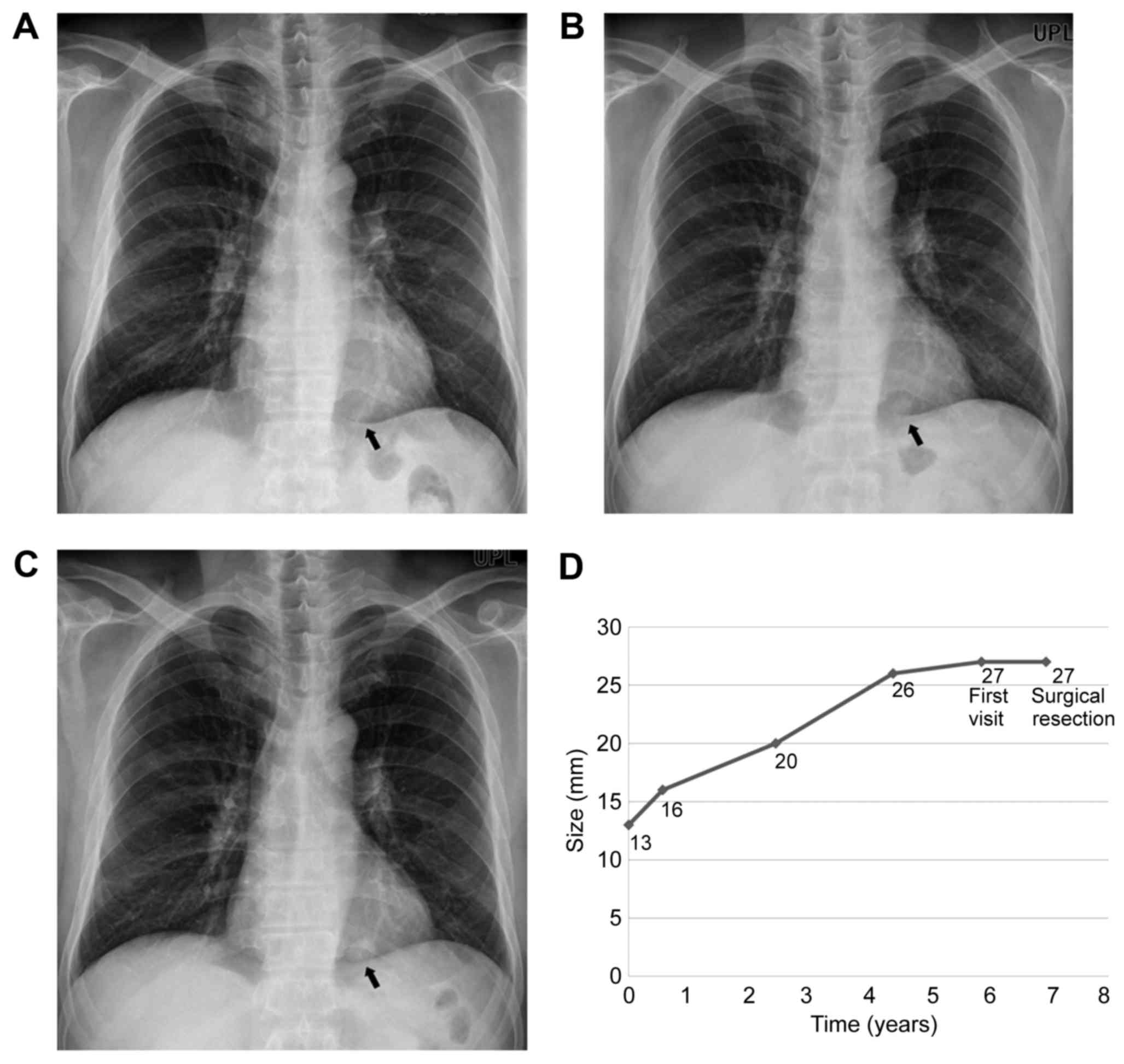
One year later, the patient underwent follow-up evaluation. The nodule showed no significant interval change in size on chest radiographs (Fig. 1D). However, he brought his old chest radiographs from an outside hospital, in which the nodule had showed slow interval growth from 1.3 to 2.6 cm over 4.5 years (Fig. 2A-D).

Figure 2.

Previous chest radiograph performed (A) 7 years, (B) 6.5 years and (C) 4.5 years previously exhibiting gradual interval growth from 1.3 to 2.0 cm (black arrows). (D) Graph showing tumor size according to time over the course of 7 years.

Although there was no significant interval change in size over the most recent 2.5 years, the malignant potential of the nodule was unknown because of previous interval growth. Therefore, the nodule was resected by video-assisted thoracoscopic wedge resection.

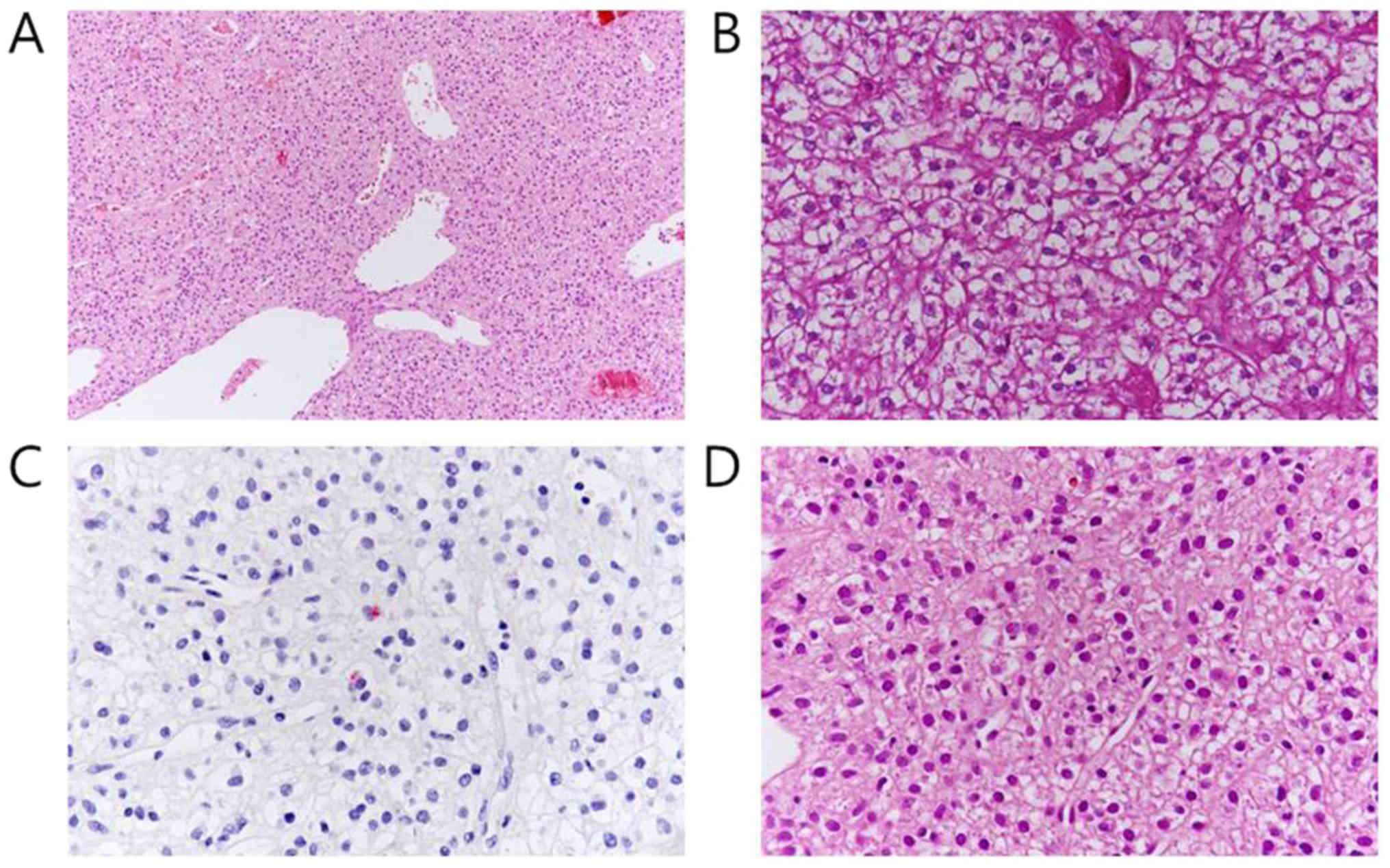
The gross specimen reveals a well-defined nodule measuring 2.7 cm in diameter without evidence of cavitation, hemorrhage, or calcification. Microscopically, the tumor consisted of rounded cells with clear to pale eosinophilic cytoplasm rich in periodic acid-Schiff (PAS)-positive glycogen granules (Fig. 3A, B). Immunohistochemial staining showed human melanoma black (HMB)-45, vimentin, and CD34 expression, but failed to express cytokeratin AE1/AE3, and epithelial membrane antigen (Fig. 3C). The tumor cells showed mild variation in nuclear size, but mitosis was not identified (Fig. 3D). On the basis of morphology and immunohistochemistry results, a diagnosis of CCTL was established. After surgical resection, the patient remained well with no evidence of local recurrence.

Figure 3.

(A) Rounded cells with clear to pale eosinophilic cytoplasm formed solid sheets around sinusoidal blood vessels (magnification, ×40). (B) Tumor cells had strong periodic acid-Schiff-positive cytoplasmic granules (magnification, ×200). (C) Few melanosome (human melanoma black 45)-positive tumor cells were present (magnification, ×200). (D) Tumor cells show mild variation in nuclear size, but mitosis was not identified (magnification, ×200).

Discussion

CCTL is a very rare benign mesenchymal tumor with less than 60 cases reported in the English literature (5). The tumor can occur in any age group, although it affects elderly patients more often, and it has equal sex predilection with slight female predominance (1). According to the 2004 World Health Organization classification of lung tumors, CCTL belongs to the family of PEComas (1). The tumor consists of clear cells with a large amount of cytoplasmic periodic acid-Schiff (PAS)-positive glycogen; this is why the CCTL is also called sugar tumor. CCTL has distinguishable immunohistochemical features that include positivity for S-100 protein and human melanoma black (HMB)-45 and no reactivity for cytokeratin, an epithelial marker (6).

Most CCTLs have no symptoms and are usually incidentally discovered on routine chest radiography or CT scan (4). On chest radiographs, CCTLs present as a coin lesion or peripheral solitary nodule with well-defined smooth margins (5,7). Because of the rich vascular stroma, most CCTLs show homogenous intense enhancement on CT scans. Kim et al (8), reported an early wash-in and washout pattern of CCTL on dynamic CT. CCTLs usually show no 18F-2-deoxy-D-glucose (FDG) uptake, but a 2.8-cm benign CCTL that showed extensive FDG uptake has been reported (9).

Although CCTL is generally regarded as benign, there are some reports of CCTLs that exhibit malignant behavior in terms of local invasion or vascularity (10). Necrosis, mitotic index of 1 per 50 high-power fields, marked pleomorphism, and nuclear atypia also raise the possibility of malignant potential (11). It is difficult to definitively evaluate these pathological features by cytologic study such as fine needle aspiration or biopsy. Therefore, surgical resection is recommended for diagnosis and curative treatment (8).

The rarity of CCTL and the paucity of published literature on CCTL makes it difficult to identify the interval growth pattern of CCTL. Only few cases have reported the interval growth of CCTLs. However, previous reports only stated an interval growth without mentioning the exact change in size (9,12) or suggested a maximum volume doubling time estimated from initial normal chest radiograph (13). No previous reports remarked on serial imaging follow up of CCTL. Interestingly, CCTL showed a growth pattern change during 7 years of follow up in this case. On serial radiographs, the nodule initially showed linear gradual interval growth, but it remained 2.7 cm in diameter for the next 2.5 years. Although the limit of detectable changes in size on standard radiography has been estimated to be 3.0 to 5.0 mm (14), a reasonable assumption is that the nodule growth rate was extremely low during the past 2.5 years. We should keep in mind CCTL can show stable or aggressive behavior depending on the detection time and observation period. Growth pattern change and malignant potential of CCTL underlines the need of constant and close observation of these tumors.

Acknowledgements

Not applicable.

Funding

No funding was received.

Availability of data and materials

The datasets used and/or analyzed during the current study are available from the corresponding author on reasonable request.

Authors' contributions

JIK made substantial contributions to the conception and design of the study. EKY and HNL analyzed and interpreted the patient data regarding the follow up simple radiograph images and CT images and EKY was a major contributor in writing the manuscript. KYW performed the histological examination of the lung. All authors read and approved the final manuscript.

Ethics approval and consent to participate

The present case study was approved by the Kyung Hee University Hospital at Gangdong Institutional Review Board (Seoul, Korea).

Consent for publication

The patient provided written informed consent for the publication of their data.

Competing interests

The authors declare that they have no competing interests.

References

1 

Travis WD, Brambilla E, Nicholson AG, Yatabe Y, Austin JHM, Beasley MB, Chirieac LR, Dacic S, Duhig E, Flieder DB, et al: The 2015 World Health Organization classification of lung tumors: Impact of genetic, clinical and radiologic advances since the 2004 classification. J Thorac Oncol. 10:1243–1260. 2015. View Article : Google Scholar : PubMed/NCBI

2 

Tazelaar HD, Batts KP and Srigley JR: Primary extrapulmonary sugar tumor (PEST): A report of four cases. Mod Pathol. 14:615–622. 2001. View Article : Google Scholar : PubMed/NCBI

3 

Liebow A and Castleman B: Benign clear cell (‘sugar’) tumors of the lung. Yale J Biol Med. 43:213–222. 1971.PubMed/NCBI

4 

Chen YB, Guo LC, Huang JA, Ji C and Ling CH: Clear cell tumor of the lung: A retrospective analysis. Am J Med Sci. 347:50–53. 2014. View Article : Google Scholar : PubMed/NCBI

5 

Wang GX, Zhang D, Diao XW and Wen L: Clear cell tumor of the lung: A case report and literature review. World J Surg Oncol. 11:2472013. View Article : Google Scholar : PubMed/NCBI

6 

Mizobuchi T, Masahiro N, Iwai N, Kohno H, Okada N and Nakada S: Clear cell tumor of the lung: Surgical and immunohistochemical findings. Gen Thorac Cardiovasc Surg. 58:243–247. 2010. View Article : Google Scholar : PubMed/NCBI

7 

Das S, Cherian SV, Das N, Hamarneh WA, Garcha Singh A, Singh Preet P and Lenox R: A 52-Year-Old smoker with an incidental pulmonary nodule. Chest. 141:1346–1350. 2012. View Article : Google Scholar : PubMed/NCBI

8 

Kim WJ, Kim SR, Choe YH, Lee KY, Park SJ, Lee HB, Chung MJ, Jin GY and Lee YC: Clear cell ‘sugar’ tumor of the lung: A well-enhanced mass with an early washout pattern on dynamic contrast-enhanced computed tomography. J Korean Med Sci. 23:1121–1124. 2008. View Article : Google Scholar : PubMed/NCBI

9 

Zarbis N, Barth TF, Blumstein NM and Schelzig H: Pecoma of the lung: A benign tumor with extensive 18F-2-deoxy-D-glucose uptake. Interact Cardiovasc Thorac Surg. 6:676–678. 2007. View Article : Google Scholar : PubMed/NCBI

10 

Kavunkal AM, Pandiyan MS, Philip MA, Parimelazhagan KN, Manipadam MT and Cherian VK: Large clear cell tumor of the lung mimicking malignant behavior. Ann Thorac Surg. 83:310–312. 2007. View Article : Google Scholar : PubMed/NCBI

11 

Hornick JL and Fletcher CD: PEComa: What do we know so far? Histopathology. 48:75–82. 2006. View Article : Google Scholar : PubMed/NCBI

12 

Mishina T, Suzuki I, Fujino M, Watanabe N, Akita H, Narita Y and Kawakami Y: A benign clear cell tumor of the lung that grew gradually over five years. Nihon Kyobu Shikkan Gakkai Zasshi. 33:765–770. 1995.PubMed/NCBI

13 

Kalkanis A, Trianti M, Psathakis K, Mermigkis C, Kalkanis D, Karagkiouzis G, Razou A and Tsintiris K: A clear cell tumor of the lung presenting as a rapidly growing coin lesion: Is it really a benign tumor? Ann Thorac Surg. 91:588–591. 2011. View Article : Google Scholar : PubMed/NCBI

14 

Ost D, Fein AM and Feinsilver SH: Clinical practice. The solitary pulmonary nodule. N Engl J Med. 348:2535–2542. 2003. View Article : Google Scholar : PubMed/NCBI

Related Articles

  • Abstract
  • View
  • Download
  • Twitter
Copy and paste a formatted citation
Spandidos Publications style
Yeon EK, Kim JI, Won KY and Lee HN: Growth pattern change of a benign clear cell ‘sugar’ tumor of the lung: Serial imaging surveillance over seven years. Oncol Lett 15: 8652-8654, 2018.
APA
Yeon, E.K., Kim, J.I., Won, K.Y., & Lee, H.N. (2018). Growth pattern change of a benign clear cell ‘sugar’ tumor of the lung: Serial imaging surveillance over seven years. Oncology Letters, 15, 8652-8654. https://doi.org/10.3892/ol.2018.8391
MLA
Yeon, E. K., Kim, J. I., Won, K. Y., Lee, H. N."Growth pattern change of a benign clear cell ‘sugar’ tumor of the lung: Serial imaging surveillance over seven years". Oncology Letters 15.6 (2018): 8652-8654.
Chicago
Yeon, E. K., Kim, J. I., Won, K. Y., Lee, H. N."Growth pattern change of a benign clear cell ‘sugar’ tumor of the lung: Serial imaging surveillance over seven years". Oncology Letters 15, no. 6 (2018): 8652-8654. https://doi.org/10.3892/ol.2018.8391
Copy and paste a formatted citation
x
Spandidos Publications style
Yeon EK, Kim JI, Won KY and Lee HN: Growth pattern change of a benign clear cell ‘sugar’ tumor of the lung: Serial imaging surveillance over seven years. Oncol Lett 15: 8652-8654, 2018.
APA
Yeon, E.K., Kim, J.I., Won, K.Y., & Lee, H.N. (2018). Growth pattern change of a benign clear cell ‘sugar’ tumor of the lung: Serial imaging surveillance over seven years. Oncology Letters, 15, 8652-8654. https://doi.org/10.3892/ol.2018.8391
MLA
Yeon, E. K., Kim, J. I., Won, K. Y., Lee, H. N."Growth pattern change of a benign clear cell ‘sugar’ tumor of the lung: Serial imaging surveillance over seven years". Oncology Letters 15.6 (2018): 8652-8654.
Chicago
Yeon, E. K., Kim, J. I., Won, K. Y., Lee, H. N."Growth pattern change of a benign clear cell ‘sugar’ tumor of the lung: Serial imaging surveillance over seven years". Oncology Letters 15, no. 6 (2018): 8652-8654. https://doi.org/10.3892/ol.2018.8391
Follow us
  • Twitter
  • LinkedIn
  • Facebook
About
  • Spandidos Publications
  • Careers
  • Cookie Policy
  • Privacy Policy
How can we help?
  • Help
  • Live Chat
  • Contact
  • Email to our Support Team