Spandidos Publications Logo
  • About
    • About Spandidos
    • Aims and Scopes
    • Abstracting and Indexing
    • Editorial Policies
    • Reprints and Permissions
    • Job Opportunities
    • Terms and Conditions
    • Contact
  • Journals
    • All Journals
    • Oncology Letters
      • Oncology Letters
      • Information for Authors
      • Editorial Policies
      • Editorial Board
      • Aims and Scope
      • Abstracting and Indexing
      • Bibliographic Information
      • Archive
    • International Journal of Oncology
      • International Journal of Oncology
      • Information for Authors
      • Editorial Policies
      • Editorial Board
      • Aims and Scope
      • Abstracting and Indexing
      • Bibliographic Information
      • Archive
    • Molecular and Clinical Oncology
      • Molecular and Clinical Oncology
      • Information for Authors
      • Editorial Policies
      • Editorial Board
      • Aims and Scope
      • Abstracting and Indexing
      • Bibliographic Information
      • Archive
    • Experimental and Therapeutic Medicine
      • Experimental and Therapeutic Medicine
      • Information for Authors
      • Editorial Policies
      • Editorial Board
      • Aims and Scope
      • Abstracting and Indexing
      • Bibliographic Information
      • Archive
    • International Journal of Molecular Medicine
      • International Journal of Molecular Medicine
      • Information for Authors
      • Editorial Policies
      • Editorial Board
      • Aims and Scope
      • Abstracting and Indexing
      • Bibliographic Information
      • Archive
    • Biomedical Reports
      • Biomedical Reports
      • Information for Authors
      • Editorial Policies
      • Editorial Board
      • Aims and Scope
      • Abstracting and Indexing
      • Bibliographic Information
      • Archive
    • Oncology Reports
      • Oncology Reports
      • Information for Authors
      • Editorial Policies
      • Editorial Board
      • Aims and Scope
      • Abstracting and Indexing
      • Bibliographic Information
      • Archive
    • Molecular Medicine Reports
      • Molecular Medicine Reports
      • Information for Authors
      • Editorial Policies
      • Editorial Board
      • Aims and Scope
      • Abstracting and Indexing
      • Bibliographic Information
      • Archive
    • World Academy of Sciences Journal
      • World Academy of Sciences Journal
      • Information for Authors
      • Editorial Policies
      • Editorial Board
      • Aims and Scope
      • Abstracting and Indexing
      • Bibliographic Information
      • Archive
    • International Journal of Functional Nutrition
      • International Journal of Functional Nutrition
      • Information for Authors
      • Editorial Policies
      • Editorial Board
      • Aims and Scope
      • Abstracting and Indexing
      • Bibliographic Information
      • Archive
    • International Journal of Epigenetics
      • International Journal of Epigenetics
      • Information for Authors
      • Editorial Policies
      • Editorial Board
      • Aims and Scope
      • Abstracting and Indexing
      • Bibliographic Information
      • Archive
    • Medicine International
      • Medicine International
      • Information for Authors
      • Editorial Policies
      • Editorial Board
      • Aims and Scope
      • Abstracting and Indexing
      • Bibliographic Information
      • Archive
  • Articles
  • Information
    • Information for Authors
    • Information for Reviewers
    • Information for Librarians
    • Information for Advertisers
    • Conferences
  • Language Editing
Spandidos Publications Logo
  • About
    • About Spandidos
    • Aims and Scopes
    • Abstracting and Indexing
    • Editorial Policies
    • Reprints and Permissions
    • Job Opportunities
    • Terms and Conditions
    • Contact
  • Journals
    • All Journals
    • Biomedical Reports
      • Information for Authors
      • Editorial Policies
      • Editorial Board
      • Aims and Scope
      • Abstracting and Indexing
      • Bibliographic Information
      • Archive
    • Experimental and Therapeutic Medicine
      • Information for Authors
      • Editorial Policies
      • Editorial Board
      • Aims and Scope
      • Abstracting and Indexing
      • Bibliographic Information
      • Archive
    • International Journal of Epigenetics
      • Information for Authors
      • Editorial Policies
      • Editorial Board
      • Aims and Scope
      • Abstracting and Indexing
      • Bibliographic Information
      • Archive
    • International Journal of Functional Nutrition
      • Information for Authors
      • Editorial Policies
      • Editorial Board
      • Aims and Scope
      • Abstracting and Indexing
      • Bibliographic Information
      • Archive
    • International Journal of Molecular Medicine
      • Information for Authors
      • Editorial Policies
      • Editorial Board
      • Aims and Scope
      • Abstracting and Indexing
      • Bibliographic Information
      • Archive
    • International Journal of Oncology
      • Information for Authors
      • Editorial Policies
      • Editorial Board
      • Aims and Scope
      • Abstracting and Indexing
      • Bibliographic Information
      • Archive
    • Medicine International
      • Information for Authors
      • Editorial Policies
      • Editorial Board
      • Aims and Scope
      • Abstracting and Indexing
      • Bibliographic Information
      • Archive
    • Molecular and Clinical Oncology
      • Information for Authors
      • Editorial Policies
      • Editorial Board
      • Aims and Scope
      • Abstracting and Indexing
      • Bibliographic Information
      • Archive
    • Molecular Medicine Reports
      • Information for Authors
      • Editorial Policies
      • Editorial Board
      • Aims and Scope
      • Abstracting and Indexing
      • Bibliographic Information
      • Archive
    • Oncology Letters
      • Information for Authors
      • Editorial Policies
      • Editorial Board
      • Aims and Scope
      • Abstracting and Indexing
      • Bibliographic Information
      • Archive
    • Oncology Reports
      • Information for Authors
      • Editorial Policies
      • Editorial Board
      • Aims and Scope
      • Abstracting and Indexing
      • Bibliographic Information
      • Archive
    • World Academy of Sciences Journal
      • Information for Authors
      • Editorial Policies
      • Editorial Board
      • Aims and Scope
      • Abstracting and Indexing
      • Bibliographic Information
      • Archive
  • Articles
  • Information
    • For Authors
    • For Reviewers
    • For Librarians
    • For Advertisers
    • Conferences
  • Language Editing
Login Register Submit
  • This site uses cookies
  • You can change your cookie settings at any time by following the instructions in our Cookie Policy. To find out more, you may read our Privacy Policy.

    I agree
Search articles by DOI, keyword, author or affiliation
Search
Advanced Search
presentation
Oncology Letters
Join Editorial Board Propose a Special Issue
Print ISSN: 1792-1074 Online ISSN: 1792-1082
Journal Cover
November-2018 Volume 16 Issue 5

Full Size Image

Sign up for eToc alerts
Recommend to Library

Journals

International Journal of Molecular Medicine

International Journal of Molecular Medicine

International Journal of Molecular Medicine is an international journal devoted to molecular mechanisms of human disease.

International Journal of Oncology

International Journal of Oncology

International Journal of Oncology is an international journal devoted to oncology research and cancer treatment.

Molecular Medicine Reports

Molecular Medicine Reports

Covers molecular medicine topics such as pharmacology, pathology, genetics, neuroscience, infectious diseases, molecular cardiology, and molecular surgery.

Oncology Reports

Oncology Reports

Oncology Reports is an international journal devoted to fundamental and applied research in Oncology.

Experimental and Therapeutic Medicine

Experimental and Therapeutic Medicine

Experimental and Therapeutic Medicine is an international journal devoted to laboratory and clinical medicine.

Oncology Letters

Oncology Letters

Oncology Letters is an international journal devoted to Experimental and Clinical Oncology.

Biomedical Reports

Biomedical Reports

Explores a wide range of biological and medical fields, including pharmacology, genetics, microbiology, neuroscience, and molecular cardiology.

Molecular and Clinical Oncology

Molecular and Clinical Oncology

International journal addressing all aspects of oncology research, from tumorigenesis and oncogenes to chemotherapy and metastasis.

World Academy of Sciences Journal

World Academy of Sciences Journal

Multidisciplinary open-access journal spanning biochemistry, genetics, neuroscience, environmental health, and synthetic biology.

International Journal of Functional Nutrition

International Journal of Functional Nutrition

Open-access journal combining biochemistry, pharmacology, immunology, and genetics to advance health through functional nutrition.

International Journal of Epigenetics

International Journal of Epigenetics

Publishes open-access research on using epigenetics to advance understanding and treatment of human disease.

Medicine International

Medicine International

An International Open Access Journal Devoted to General Medicine.

Journal Cover
November-2018 Volume 16 Issue 5

Full Size Image

Sign up for eToc alerts
Recommend to Library

  • Article
  • Citations
    • Cite This Article
    • Download Citation
    • Create Citation Alert
    • Remove Citation Alert
    • Cited By
  • Similar Articles
    • Related Articles (in Spandidos Publications)
    • Similar Articles (Google Scholar)
    • Similar Articles (PubMed)
  • Download PDF
  • Download XML
  • View XML
Article Open Access

Poly(ADP‑ribose) polymerase‑3 overexpression is associated with poor prognosis in patients with breast cancer following chemotherapy

  • Authors:
    • Zhiguo Song
    • Yong Wang
    • Qinghuan Xia
    • Zhaojin Yu
    • Lin Zhao
    • Huizhe Wu
    • Mingli Sun
    • Zhangguo Chai
    • Ping Hou
    • Xiaoqiang Geng
    • Wensi Liu
    • Minjie Wei
  • View Affiliations / Copyright

    Affiliations: Department of Pharmacology, School of Pharmacy, China Medical University, Shenyang, Liaoning 110122, P.R. China, Department of General Practice, The First Hospital of China Medical University, Shenyang, Liaoning 110001, P.R. China, Deparment of Ion Channel Pharmacology, School of Pharmacy, China Medical University, Shenyang, Liaoning 110122, P.R. China, Outpatient Department, Shenyang Artillery Academy, Shenyang, Liaoning 110867, P.R. China, Liaoning Blood Center, Shenyang, Liaoning 110044, P.R. China
    Copyright: © Song et al. This is an open access article distributed under the terms of Creative Commons Attribution License.
  • Pages: 5621-5630
    |
    Published online on: September 5, 2018
       https://doi.org/10.3892/ol.2018.9398
  • Expand metrics +
Metrics: Total Views: 0 (Spandidos Publications: | PMC Statistics: )
Metrics: Total PDF Downloads: 0 (Spandidos Publications: | PMC Statistics: )
Cited By (CrossRef): 0 citations Loading Articles...

This article is mentioned in:


Abstract

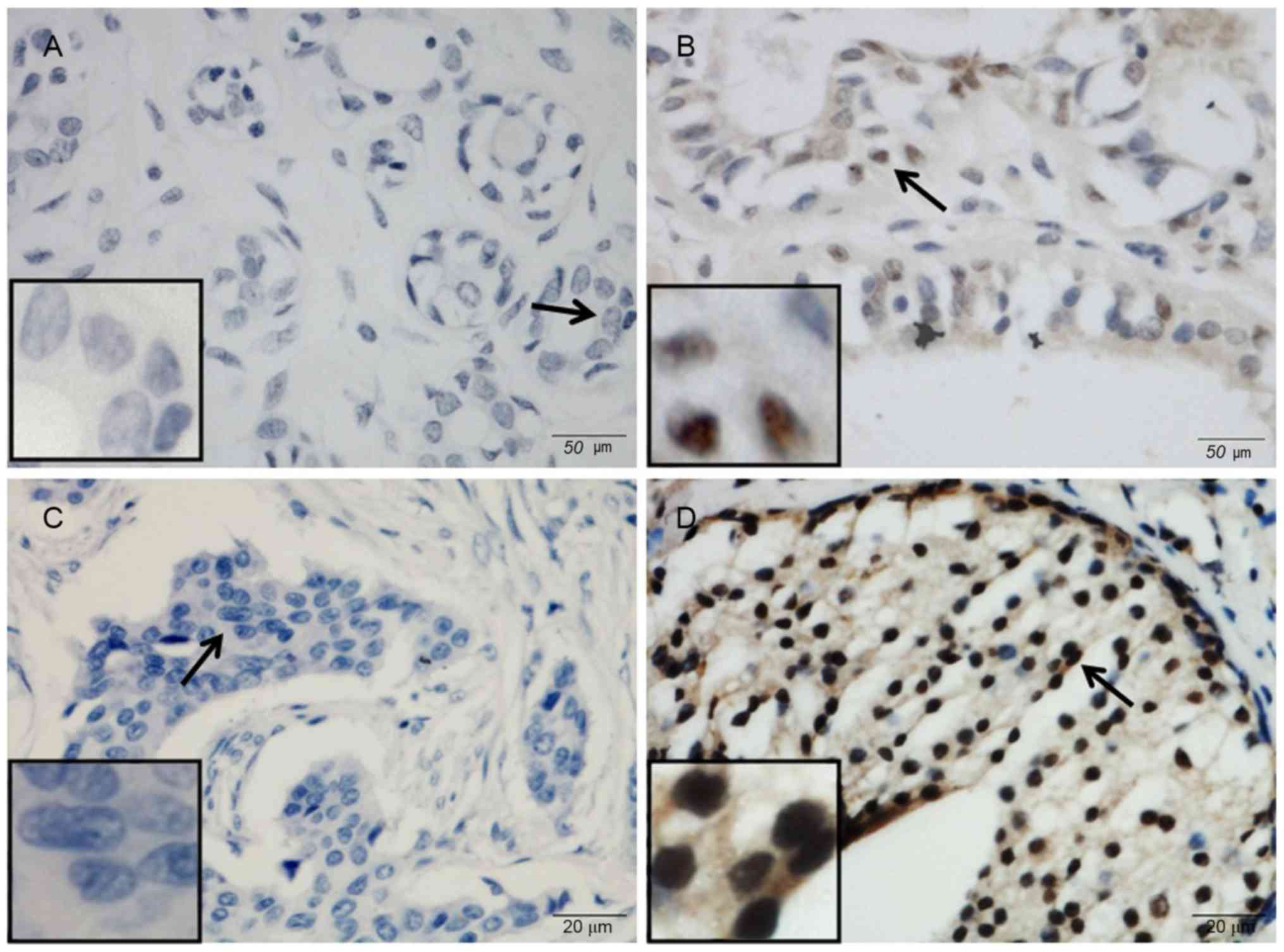
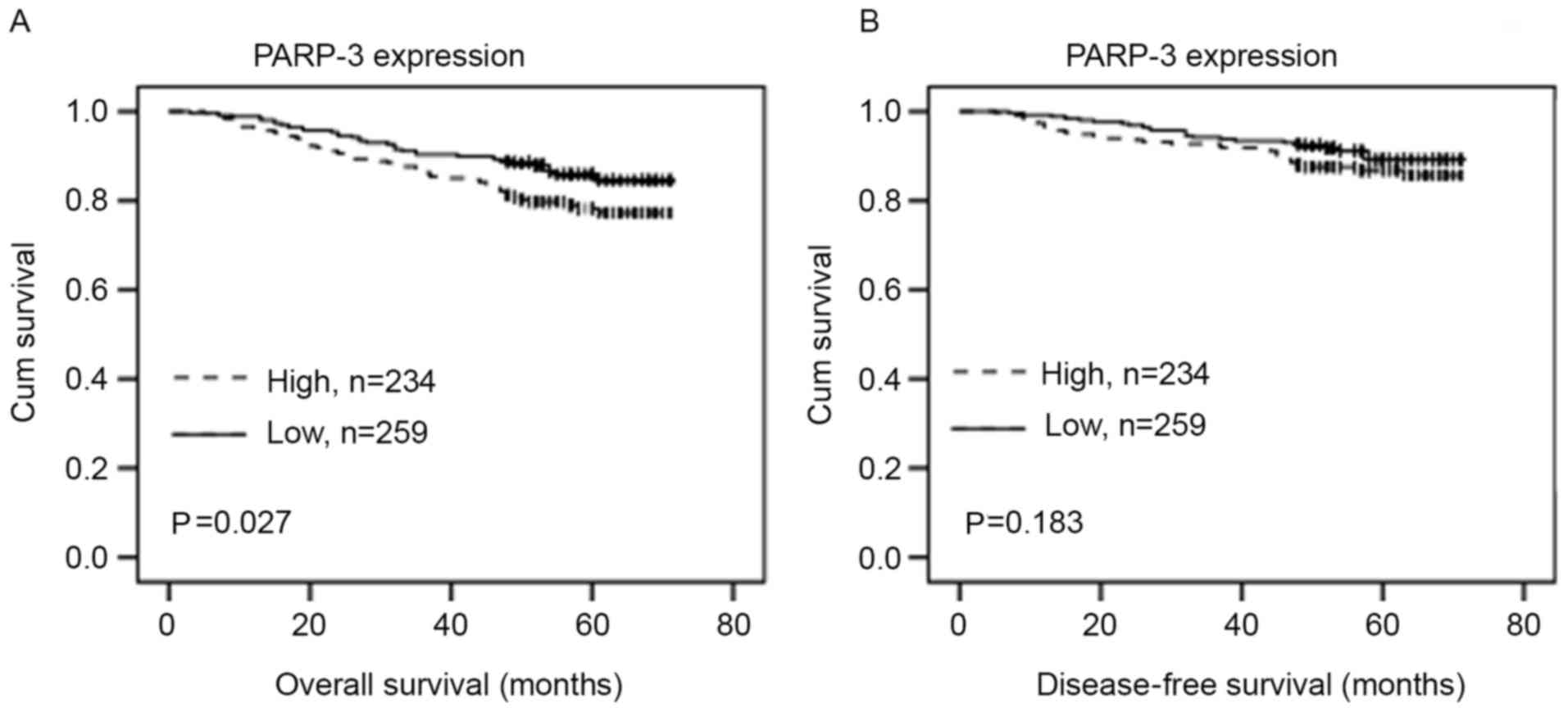
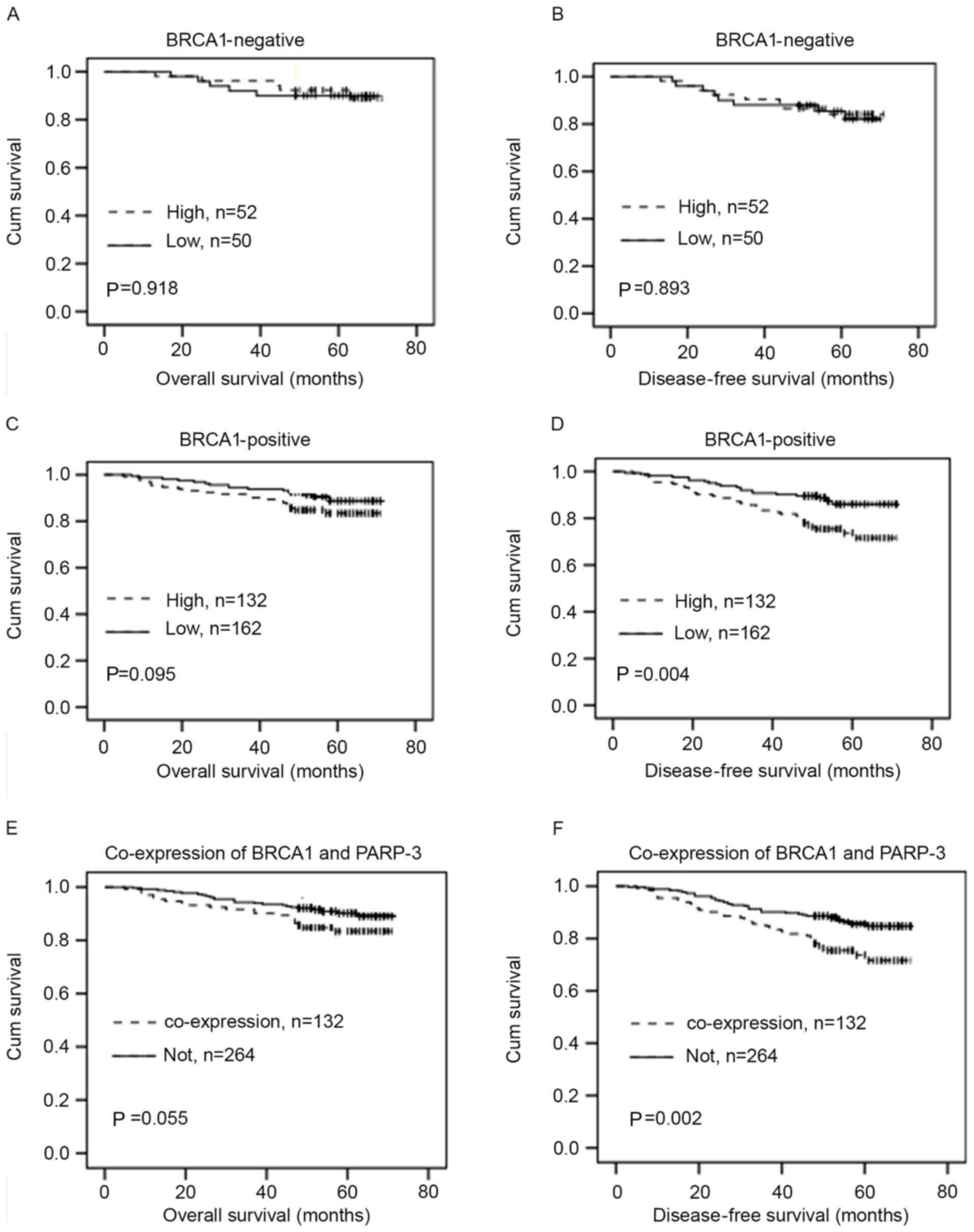
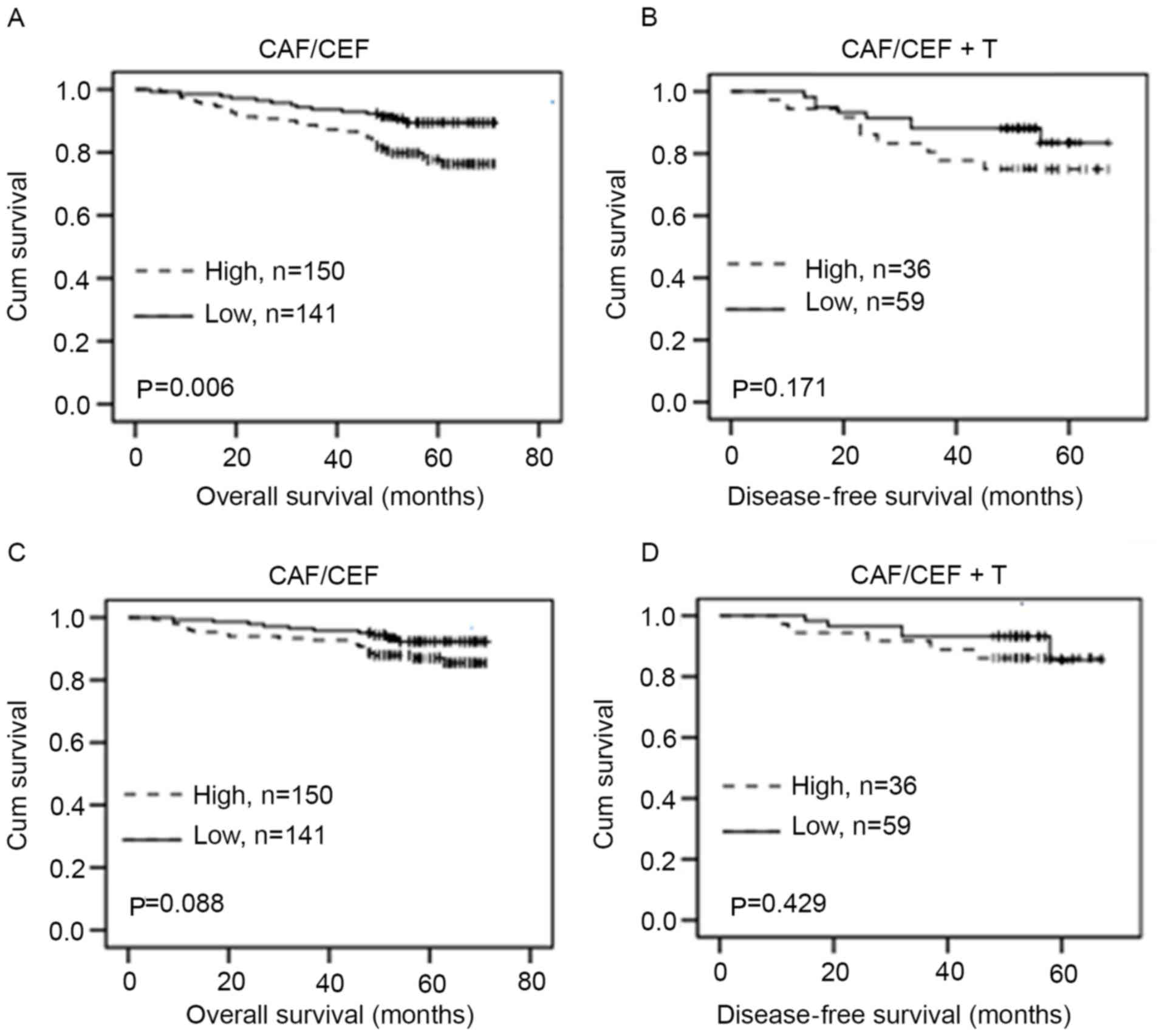
Double strand breaks induced by genotoxic agents, if inappropriately repaired, will cause cell death or induce cancer. Poly(ADP‑ribose) polymerase‑3 (PARP‑3) serves a role in double strand break repair, and may be involved in tumorigenesis. To the best of our knowledge, the role of PARP‑3 in breast cancer has not yet been examined. In the present study, the expression of PARP‑3 was investigated in 493 breast cancer samples and 54 tumor‑adjacent control samples using tissue‑microarray‑based immunohistochemistry. PARP‑3 expression was higher in breast cancer samples compared with control samples. PARP‑3 overexpression was significantly associated with histological grade II‑III (P=0.012). In addition, PARP‑3 overexpression was significantly associated with shorter disease‑free survival (DFS; P=0.027) time and exhibited a tendency toward shorter overall survival (OS; P=0.183) time in patients with breast cancer compared with patients with lower PARP‑3 expression, particularly in BRCA1‑positive patients (P=0.004 for disease‑free survival and P=0.095 for OS). Multivariate Cox regression analysis indicated that PARP‑3 was an independent prognostic factor in patients with breast cancer. Furthermore, it was revealed that PARP‑3 overexpression was associated with shorter survival time in patients with cyclophosphamide/doxorubicin or epirubicin/5‑fluorouracil (CAF/CEF) chemotherapy compared with low PARP‑3 expression, but not in patients with CAF/CEF + docetaxel chemotherapy. The present study suggested that PARP‑3 may be used as a biomarker for predicting the clinical outcome of patients receiving chemotherapy, and targeting PARP‑3 may be a potential therapeutic strategy for the treatment of breast cancer.
View Figures

Figure 1

Figure 2

Figure 3

Figure 4

Figure 5

View References

1 

Bertucci F and Birnbaum D: Reasons for breast cancer heterogeneity. J Biol. 7:62008. View Article : Google Scholar : PubMed/NCBI

2 

Patani N, Martin LA and Dowsett M: Biomarkers for the clinical management of breast cancer: International perspective. Int J Cancer. 133:1–13. 2013. View Article : Google Scholar : PubMed/NCBI

3 

Hakmé A, Wong HK, Dantzer F and Schreiber V: The expanding field of poly(ADP-ribosyl)ation reactions. ‘Protein modifications: Beyond the usual suspects’ review series. EMBO Rep. 9:1094–1100. 2008. View Article : Google Scholar : PubMed/NCBI

4 

Hottiger MO, Hassa PO, Lüscher B, Schüler H and Koch-Nolte F: Toward a unified nomenclature for mammalian ADP-ribosyltransferases. Trends Biochem Sci. 35:208–219. 2010. View Article : Google Scholar : PubMed/NCBI

5 

Megnin-Chanet F, Bollet MA and Hall J: Targeting poly(ADP-ribose) polymerase activity for cancer therapy. Cell Mol Life Sci. 67:3649–3662. 2010. View Article : Google Scholar : PubMed/NCBI

6 

Cepeda V, Fuertes MA, Castilla J, Alonso C, Quevedo C, Soto M and Pérez JM: Poly(ADP-ribose) polymerase-1 (PARP-1) inhibitors in cancer chemotherapy. Recent Pat Anticancer Drug Discov. 1:39–53. 2006. View Article : Google Scholar : PubMed/NCBI

7 

Boehler C and Dantzer F: PARP-3, a DNA-dependent PARP with emerging roles in double-strand break repair and mitotic progression. Cell Cycle. 10:1023–1024. 2011. View Article : Google Scholar : PubMed/NCBI

8 

Miwa M and Masutani M: PolyADP-ribosylation and cancer. Cancer Sci. 98:1528–1535. 2007. View Article : Google Scholar : PubMed/NCBI

9 

Shimizu S, Nomura F, Tomonaga T, Sunaga M, Noda M, Ebara M and Saisho H: Expression of poly(ADP-ribose) polymerase in human hepatocellular carcinoma and analysis of biopsy specimens obtained under sonographic guidance. Oncol Rep. 12:821–825. 2004.PubMed/NCBI

10 

Staibano S, Pepe S, Lo Muzio L, Somma P, Mascolo M, Argenziano G, Scalvenzi M, Salvatore G, Fabbrocini G, Molea G, et al: Poly(adenosine diphosphate-ribose) polymerase 1 expression in malignant melanomas from photoexposed areas of the head and neck region. Hum Pathol. 36:724–731. 2005. View Article : Google Scholar : PubMed/NCBI

11 

Brustmann H: Poly(adenosine diphosphate-ribose) polymerase expression in serous ovarian carcinoma: Correlation with p53, MIB-1, and outcome. Int J Gynecol Pathol. 26:147–153. 2007.PubMed/NCBI

12 

Rojo F, García-Parra J, Zazo S, Tusquets I, Ferrer-Lozano J, Menendez S, Eroles P, Chamizo C, Servitja S, Ramírez-Merino N, et al: Nuclear PARP-1 protein overexpression is associated with poor overall survival in early breast cancer. Ann Oncol. 23:1156–1164. 2012. View Article : Google Scholar : PubMed/NCBI

13 

Ossovskaya V, Koo IC, Kaldjian EP, Alvares C and Sherman BM: Upregulation of Poly(ADP-Ribose) Polymerase-1 (PARP1) in triple-negative breast cancer and other primary human tumor types. Genes Cancer. 1:812–821. 2010. View Article : Google Scholar : PubMed/NCBI

14 

O'Shaughnessy J, Osborne C, Pippen JE, Yoffe M, Patt D, Rocha C, Koo IC, Sherman BM and Bradley C: Iniparib plus chemotherapy in metastatic triple-negative breast cancer. N Engl J Med. 364:205–214. 2011. View Article : Google Scholar : PubMed/NCBI

15 

Fong PC, Boss DS, Yap TA, Tutt A, Wu P, Mergui-Roelvink M, Mortimer P, Swaisland H, Lau A, O'Connor MJ, et al: Inhibition of poly(ADP-ribose) polymerase in tumors from BRCA mutation carriers. N Engl J Med. 361:123–134. 2009. View Article : Google Scholar : PubMed/NCBI

16 

Tutt A, Robson M, Garber JE, Domchek SM, Audeh MW, Weitzel JN, Friedlander M, Arun B, Loman N, Schmutzler RK, et al: Oral poly(ADP-ribose) polymerase inhibitor olaparib in patients with BRCA1 or BRCA2 mutations and advanced breast cancer: A proof-of-concept trial. Lancet. 376:235–244. 2010. View Article : Google Scholar : PubMed/NCBI

17 

De Vos M, Schreiber V and Dantzer F: The diverse roles and clinical relevance of PARPs in DNA damage repair: Current state of the art. Biochem Pharmacol. 84:137–146. 2012. View Article : Google Scholar : PubMed/NCBI

18 

Langelier MF, Riccio AA and Pascal JM: PARP-2 and PARP-3 are selectively activated by 5′ phosphorylated DNA breaks through an allosteric regulatory mechanism shared with PARP-1. Nucleic Acids Res. 42:7762–7775. 2014. View Article : Google Scholar : PubMed/NCBI

19 

Boehler C, Gauthier LR, Mortusewicz O, Biard DS, Saliou JM, Bresson A, Sanglier-Cianferani S, Smith S, Schreiber V, Boussin F and Dantzer F: Poly(ADP-ribose) polymerase 3 (PARP3), a newcomer in cellular response to DNA damage and mitotic progression. Proc Natl Acad Sci USA. 108:2783–2788. 2011. View Article : Google Scholar : PubMed/NCBI

20 

Bieche I, Pennaneach V, Driouch K, Vacher S, Zaremba T, Susini A, Lidereau R and Hall J: Variations in the mRNA expression of poly(ADP-ribose) polymerases, poly(ADP-ribose) glycohydrolase and ADP-ribosylhydrolase 3 in breast tumors and impact on clinical outcome. Int J Cancer. 133:2791–2800. 2013.PubMed/NCBI

21 

Bansal C, Pujani M, Sharma KL, Srivastava AN and Singh US: Grading systems in the cytological diagnosis of breast cancer: A review. J Cancer Res Ther. 10:839–845. 2014. View Article : Google Scholar : PubMed/NCBI

22 

Cowherd SM: Tumor staging and grading: A primer. Methods Mol Biol. 823:1–18. 2012. View Article : Google Scholar : PubMed/NCBI

23 

Fang Y, Wei J, Cao J, Zhao H, Liao B, Qiu S, Wang D, Luo J and Chen W: Protein expression of ZEB2 in renal cell carcinoma and its prognostic significance in patient survival. PLoS One. 8:e625582013. View Article : Google Scholar : PubMed/NCBI

24 

Zhu W, Cai MY, Tong ZT, Dong SS, Mai SJ, Liao YJ, Bian XW, Lin MC, Kung HF, Zeng YX, et al: Overexpression of EIF5A2 promotes colorectal carcinoma cell aggressiveness by upregulating MTA1 through C-myc to induce epithelial-mesenchymaltransition. Gut. 61:562–575. 2012. View Article : Google Scholar : PubMed/NCBI

25 

Khanna KK and Jackson SP: DNA double-strand breaks: Signaling, repair and the cancer connection. Nat Genet. 27:247–254. 2001. View Article : Google Scholar : PubMed/NCBI

26 

Goncalves A, Finetti P, Sabatier R, Gilabert M, Adelaide J, Borg JP, Chaffanet M, Viens P, Birnbaum D and Bertucci F: Poly(ADP-ribose) polymerase-1 mRNA expression in human breast cancer: A meta-analysis. Breast Cancer Res Treat. 127:273–281. 2011. View Article : Google Scholar : PubMed/NCBI

27 

Chapman JR, Taylor MR and Boulton SJ: Playing the end game: DNA double-strand break repair pathway choice. Mol Cell. 47:497–510. 2012. View Article : Google Scholar : PubMed/NCBI

28 

Rulten SL, Fisher AE, Robert I, Zuma MC, Rouleau M, Ju L, Poirier G, Reina-San-Martin B and Caldecott KW: PARP-3 and APLF function together to accelerate nonhomologous end-joining. Mol Cell. 41:33–45. 2011. View Article : Google Scholar : PubMed/NCBI

29 

Fenton AL, Shirodkar P, Macrae CJ, Meng L and Koch CA: The PARP3- and ATM-dependent phosphorylation of APLF facilitates DNA double-strand break repair. Nucleic Acids Res. 41:4080–4092. 2013. View Article : Google Scholar : PubMed/NCBI

30 

Zhang J: The role of BRCA1 in homologous recombination repair in response to replication stress: Significance in tumorigenesis and cancer therapy. Cell Biosci. 3:112013. View Article : Google Scholar : PubMed/NCBI

31 

Prakash R, Zhang Y, Feng W and Jasin M: Homologous recombination and human health: The roles of BRCA1, BRCA2, and associated proteins. Cold Spring Harb Perspect Biol. 7:a0166002015. View Article : Google Scholar : PubMed/NCBI

32 

Willis NA, Chandramouly G, Huang B, Kwok A, Follonier C, Deng C and Scully R: BRCA1 controls homologous recombination at Tus/Ter-stalled mammalian replication forks. Nature. 510:556–559. 2014. View Article : Google Scholar : PubMed/NCBI

33 

Beck C, Boehler C, Barbat Guirouilh J, Bonnet ME, Illuzzi G, Ronde P, Gauthier LR, Magroun N, Rajendran A, Lopez BS, et al: PARP3 affects the relative contribution of homologous recombination and nonhomologous end-joining pathways. Nucleic Acids Res. 42:5616–5632. 2014. View Article : Google Scholar : PubMed/NCBI

34 

Casorelli I, Bossa C and Bignami M: DNA damage and repair in human cancer: Molecular mechanisms and contribution to therapy-related leukemias. Int J Environ Res Public Health. 9:2636–2657. 2012. View Article : Google Scholar : PubMed/NCBI

35 

Wang Q and Wieder R: All-trans retinoic acid potentiates Taxotere-induced cell death mediated by Jun N-terminal kinase in breast cancer cells. Oncogene. 23:426–433. 2004. View Article : Google Scholar : PubMed/NCBI

36 

Mhaidat NM, Wang Y, Kiejda KA, Zhang XD and Hersey P: Docetaxel-induced apoptosis in melanoma cells is dependent on activation of caspase-2. Mol Cancer Ther. 6:752–761. 2007. View Article : Google Scholar : PubMed/NCBI

37 

Kolfschoten GM, Hulscher TM, Duyndam MC, Pinedo HM and Boven E: Variation in the kinetics of caspase-3 activation, Bcl-2 phosphorylation and apoptotic morphology in unselected human ovarian cancer cell lines as a response to docetaxel. Biochem Pharmacol. 63:733–743. 2002. View Article : Google Scholar : PubMed/NCBI

Related Articles

  • Abstract
  • View
  • Download
  • Twitter
Copy and paste a formatted citation
Spandidos Publications style
Song Z, Wang Y, Xia Q, Yu Z, Zhao L, Wu H, Sun M, Chai Z, Hou P, Geng X, Geng X, et al: Poly(ADP‑ribose) polymerase‑3 overexpression is associated with poor prognosis in patients with breast cancer following chemotherapy. Oncol Lett 16: 5621-5630, 2018.
APA
Song, Z., Wang, Y., Xia, Q., Yu, Z., Zhao, L., Wu, H. ... Wei, M. (2018). Poly(ADP‑ribose) polymerase‑3 overexpression is associated with poor prognosis in patients with breast cancer following chemotherapy. Oncology Letters, 16, 5621-5630. https://doi.org/10.3892/ol.2018.9398
MLA
Song, Z., Wang, Y., Xia, Q., Yu, Z., Zhao, L., Wu, H., Sun, M., Chai, Z., Hou, P., Geng, X., Liu, W., Wei, M."Poly(ADP‑ribose) polymerase‑3 overexpression is associated with poor prognosis in patients with breast cancer following chemotherapy". Oncology Letters 16.5 (2018): 5621-5630.
Chicago
Song, Z., Wang, Y., Xia, Q., Yu, Z., Zhao, L., Wu, H., Sun, M., Chai, Z., Hou, P., Geng, X., Liu, W., Wei, M."Poly(ADP‑ribose) polymerase‑3 overexpression is associated with poor prognosis in patients with breast cancer following chemotherapy". Oncology Letters 16, no. 5 (2018): 5621-5630. https://doi.org/10.3892/ol.2018.9398
Copy and paste a formatted citation
x
Spandidos Publications style
Song Z, Wang Y, Xia Q, Yu Z, Zhao L, Wu H, Sun M, Chai Z, Hou P, Geng X, Geng X, et al: Poly(ADP‑ribose) polymerase‑3 overexpression is associated with poor prognosis in patients with breast cancer following chemotherapy. Oncol Lett 16: 5621-5630, 2018.
APA
Song, Z., Wang, Y., Xia, Q., Yu, Z., Zhao, L., Wu, H. ... Wei, M. (2018). Poly(ADP‑ribose) polymerase‑3 overexpression is associated with poor prognosis in patients with breast cancer following chemotherapy. Oncology Letters, 16, 5621-5630. https://doi.org/10.3892/ol.2018.9398
MLA
Song, Z., Wang, Y., Xia, Q., Yu, Z., Zhao, L., Wu, H., Sun, M., Chai, Z., Hou, P., Geng, X., Liu, W., Wei, M."Poly(ADP‑ribose) polymerase‑3 overexpression is associated with poor prognosis in patients with breast cancer following chemotherapy". Oncology Letters 16.5 (2018): 5621-5630.
Chicago
Song, Z., Wang, Y., Xia, Q., Yu, Z., Zhao, L., Wu, H., Sun, M., Chai, Z., Hou, P., Geng, X., Liu, W., Wei, M."Poly(ADP‑ribose) polymerase‑3 overexpression is associated with poor prognosis in patients with breast cancer following chemotherapy". Oncology Letters 16, no. 5 (2018): 5621-5630. https://doi.org/10.3892/ol.2018.9398
Follow us
  • Twitter
  • LinkedIn
  • Facebook
About
  • Spandidos Publications
  • Careers
  • Cookie Policy
  • Privacy Policy
How can we help?
  • Help
  • Live Chat
  • Contact
  • Email to our Support Team