Spandidos Publications Logo
  • About
    • About Spandidos
    • Aims and Scopes
    • Abstracting and Indexing
    • Editorial Policies
    • Reprints and Permissions
    • Job Opportunities
    • Terms and Conditions
    • Contact
  • Journals
    • All Journals
    • Oncology Letters
      • Oncology Letters
      • Information for Authors
      • Editorial Policies
      • Editorial Board
      • Aims and Scope
      • Abstracting and Indexing
      • Bibliographic Information
      • Archive
    • International Journal of Oncology
      • International Journal of Oncology
      • Information for Authors
      • Editorial Policies
      • Editorial Board
      • Aims and Scope
      • Abstracting and Indexing
      • Bibliographic Information
      • Archive
    • Molecular and Clinical Oncology
      • Molecular and Clinical Oncology
      • Information for Authors
      • Editorial Policies
      • Editorial Board
      • Aims and Scope
      • Abstracting and Indexing
      • Bibliographic Information
      • Archive
    • Experimental and Therapeutic Medicine
      • Experimental and Therapeutic Medicine
      • Information for Authors
      • Editorial Policies
      • Editorial Board
      • Aims and Scope
      • Abstracting and Indexing
      • Bibliographic Information
      • Archive
    • International Journal of Molecular Medicine
      • International Journal of Molecular Medicine
      • Information for Authors
      • Editorial Policies
      • Editorial Board
      • Aims and Scope
      • Abstracting and Indexing
      • Bibliographic Information
      • Archive
    • Biomedical Reports
      • Biomedical Reports
      • Information for Authors
      • Editorial Policies
      • Editorial Board
      • Aims and Scope
      • Abstracting and Indexing
      • Bibliographic Information
      • Archive
    • Oncology Reports
      • Oncology Reports
      • Information for Authors
      • Editorial Policies
      • Editorial Board
      • Aims and Scope
      • Abstracting and Indexing
      • Bibliographic Information
      • Archive
    • Molecular Medicine Reports
      • Molecular Medicine Reports
      • Information for Authors
      • Editorial Policies
      • Editorial Board
      • Aims and Scope
      • Abstracting and Indexing
      • Bibliographic Information
      • Archive
    • World Academy of Sciences Journal
      • World Academy of Sciences Journal
      • Information for Authors
      • Editorial Policies
      • Editorial Board
      • Aims and Scope
      • Abstracting and Indexing
      • Bibliographic Information
      • Archive
    • International Journal of Functional Nutrition
      • International Journal of Functional Nutrition
      • Information for Authors
      • Editorial Policies
      • Editorial Board
      • Aims and Scope
      • Abstracting and Indexing
      • Bibliographic Information
      • Archive
    • International Journal of Epigenetics
      • International Journal of Epigenetics
      • Information for Authors
      • Editorial Policies
      • Editorial Board
      • Aims and Scope
      • Abstracting and Indexing
      • Bibliographic Information
      • Archive
    • Medicine International
      • Medicine International
      • Information for Authors
      • Editorial Policies
      • Editorial Board
      • Aims and Scope
      • Abstracting and Indexing
      • Bibliographic Information
      • Archive
  • Articles
  • Information
    • Information for Authors
    • Information for Reviewers
    • Information for Librarians
    • Information for Advertisers
    • Conferences
  • Language Editing
Spandidos Publications Logo
  • About
    • About Spandidos
    • Aims and Scopes
    • Abstracting and Indexing
    • Editorial Policies
    • Reprints and Permissions
    • Job Opportunities
    • Terms and Conditions
    • Contact
  • Journals
    • All Journals
    • Biomedical Reports
      • Information for Authors
      • Editorial Policies
      • Editorial Board
      • Aims and Scope
      • Abstracting and Indexing
      • Bibliographic Information
      • Archive
    • Experimental and Therapeutic Medicine
      • Information for Authors
      • Editorial Policies
      • Editorial Board
      • Aims and Scope
      • Abstracting and Indexing
      • Bibliographic Information
      • Archive
    • International Journal of Epigenetics
      • Information for Authors
      • Editorial Policies
      • Editorial Board
      • Aims and Scope
      • Abstracting and Indexing
      • Bibliographic Information
      • Archive
    • International Journal of Functional Nutrition
      • Information for Authors
      • Editorial Policies
      • Editorial Board
      • Aims and Scope
      • Abstracting and Indexing
      • Bibliographic Information
      • Archive
    • International Journal of Molecular Medicine
      • Information for Authors
      • Editorial Policies
      • Editorial Board
      • Aims and Scope
      • Abstracting and Indexing
      • Bibliographic Information
      • Archive
    • International Journal of Oncology
      • Information for Authors
      • Editorial Policies
      • Editorial Board
      • Aims and Scope
      • Abstracting and Indexing
      • Bibliographic Information
      • Archive
    • Medicine International
      • Information for Authors
      • Editorial Policies
      • Editorial Board
      • Aims and Scope
      • Abstracting and Indexing
      • Bibliographic Information
      • Archive
    • Molecular and Clinical Oncology
      • Information for Authors
      • Editorial Policies
      • Editorial Board
      • Aims and Scope
      • Abstracting and Indexing
      • Bibliographic Information
      • Archive
    • Molecular Medicine Reports
      • Information for Authors
      • Editorial Policies
      • Editorial Board
      • Aims and Scope
      • Abstracting and Indexing
      • Bibliographic Information
      • Archive
    • Oncology Letters
      • Information for Authors
      • Editorial Policies
      • Editorial Board
      • Aims and Scope
      • Abstracting and Indexing
      • Bibliographic Information
      • Archive
    • Oncology Reports
      • Information for Authors
      • Editorial Policies
      • Editorial Board
      • Aims and Scope
      • Abstracting and Indexing
      • Bibliographic Information
      • Archive
    • World Academy of Sciences Journal
      • Information for Authors
      • Editorial Policies
      • Editorial Board
      • Aims and Scope
      • Abstracting and Indexing
      • Bibliographic Information
      • Archive
  • Articles
  • Information
    • For Authors
    • For Reviewers
    • For Librarians
    • For Advertisers
    • Conferences
  • Language Editing
Login Register Submit
  • This site uses cookies
  • You can change your cookie settings at any time by following the instructions in our Cookie Policy. To find out more, you may read our Privacy Policy.

    I agree
Search articles by DOI, keyword, author or affiliation
Search
Advanced Search
presentation
Oncology Letters
Join Editorial Board Propose a Special Issue
Print ISSN: 1792-1074 Online ISSN: 1792-1082
Journal Cover
June-2019 Volume 17 Issue 6

Full Size Image

Sign up for eToc alerts
Recommend to Library

Journals

International Journal of Molecular Medicine

International Journal of Molecular Medicine

International Journal of Molecular Medicine is an international journal devoted to molecular mechanisms of human disease.

International Journal of Oncology

International Journal of Oncology

International Journal of Oncology is an international journal devoted to oncology research and cancer treatment.

Molecular Medicine Reports

Molecular Medicine Reports

Covers molecular medicine topics such as pharmacology, pathology, genetics, neuroscience, infectious diseases, molecular cardiology, and molecular surgery.

Oncology Reports

Oncology Reports

Oncology Reports is an international journal devoted to fundamental and applied research in Oncology.

Experimental and Therapeutic Medicine

Experimental and Therapeutic Medicine

Experimental and Therapeutic Medicine is an international journal devoted to laboratory and clinical medicine.

Oncology Letters

Oncology Letters

Oncology Letters is an international journal devoted to Experimental and Clinical Oncology.

Biomedical Reports

Biomedical Reports

Explores a wide range of biological and medical fields, including pharmacology, genetics, microbiology, neuroscience, and molecular cardiology.

Molecular and Clinical Oncology

Molecular and Clinical Oncology

International journal addressing all aspects of oncology research, from tumorigenesis and oncogenes to chemotherapy and metastasis.

World Academy of Sciences Journal

World Academy of Sciences Journal

Multidisciplinary open-access journal spanning biochemistry, genetics, neuroscience, environmental health, and synthetic biology.

International Journal of Functional Nutrition

International Journal of Functional Nutrition

Open-access journal combining biochemistry, pharmacology, immunology, and genetics to advance health through functional nutrition.

International Journal of Epigenetics

International Journal of Epigenetics

Publishes open-access research on using epigenetics to advance understanding and treatment of human disease.

Medicine International

Medicine International

An International Open Access Journal Devoted to General Medicine.

Journal Cover
June-2019 Volume 17 Issue 6

Full Size Image

Sign up for eToc alerts
Recommend to Library

  • Article
  • Citations
    • Cite This Article
    • Download Citation
    • Create Citation Alert
    • Remove Citation Alert
    • Cited By
  • Similar Articles
    • Related Articles (in Spandidos Publications)
    • Similar Articles (Google Scholar)
    • Similar Articles (PubMed)
  • Download PDF
  • Download XML
  • View XML
Article Open Access

Capsaicin induces apoptosis and autophagy in human melanoma cells

  • Authors:
    • Haihan Chu
    • Meng Li
    • Xiuchun Wang
  • View Affiliations / Copyright

    Affiliations: Department of Burn and Plastic Surgery, Jining First People's Hospital, Jining, Shandong 272011, P.R. China
    Copyright: © Chu et al. This is an open access article distributed under the terms of Creative Commons Attribution License.
  • Pages: 4827-4834
    |
    Published online on: April 3, 2019
       https://doi.org/10.3892/ol.2019.10206
  • Expand metrics +
Metrics: Total Views: 0 (Spandidos Publications: | PMC Statistics: )
Metrics: Total PDF Downloads: 0 (Spandidos Publications: | PMC Statistics: )
Cited By (CrossRef): 0 citations Loading Articles...

This article is mentioned in:


Abstract

Melanoma is the most lethal type of skin cancer; rapid metastasis and resistance to conventional radio‑ and chemotherapy make melanoma the most aggressive type of skin cancer. In addition, there is a high recurrence rate within 1 year among patients with melanoma following traditional treatment by chemotherapy or immunotherapy, and these treatment options are only useful in advanced stages. As the efficiency of treatment options for melanoma is not ideal, the present study aimed to confirm that capsaicin has inhibitory effects on the human melanoma A375 and C8161 cell lines in vitro. Capsaicin, the active component of peppers, has been reported to possess substantial anticarcinogenic and antimutagenic activities. Additionally, capsaicin exhibits an inhibitory effect on tumor growth in numerous malignant cell lines. In the present study, flow cytometry, fluorescent puncta detection and western blotting were performed. The experimental results indicated that capsaicin activated apoptosis, and that apoptosis induction was associated with poly(ADP‑ribose) polymerase (PARP) cleavage and activation of caspase‑3. Additionally, the formation of autophagosomes and accumulation of microtubule‑associated proteins 1A/1B light chain 3B‑II and beclin 1 suggested that capsaicin induced autophagy in human melanoma cells. Furthermore, inhibiting capsaicin‑induced autophagy promoted the activation of cleaved caspase‑3 and PARP proteins, which are associated with apoptosis. In addition, inhibition of autophagy using 3‑MA enhanced capsaicin‑induced cell death, indicating that capsaicin‑induced autophagy is a pro‑survival process in cells. In conclusion, the results of the present study revealed that capsaicin induced cell apoptosis and autophagy in human melanoma cells and capsaicin may be considered as a novel candidate drug for melanoma treatment.
View Figures

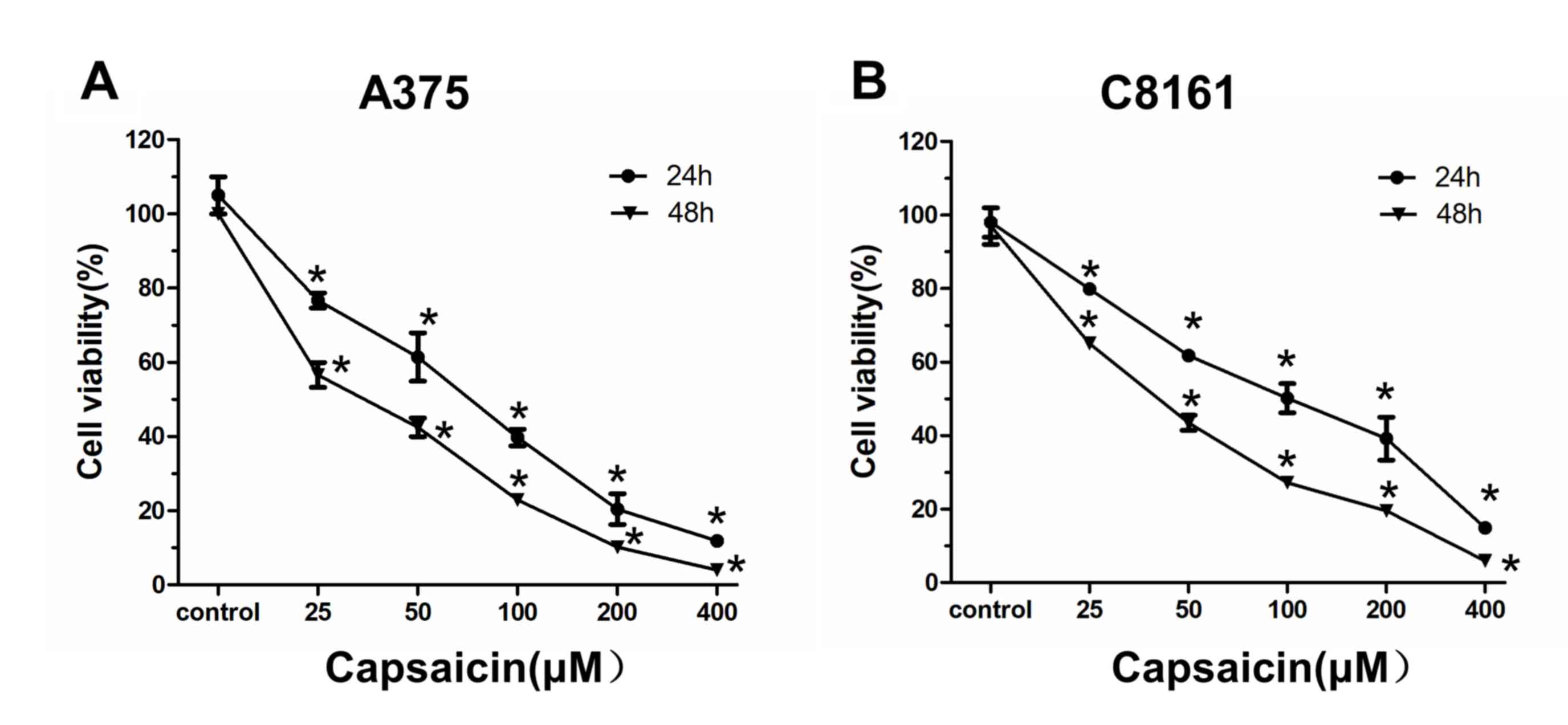
Figure 1

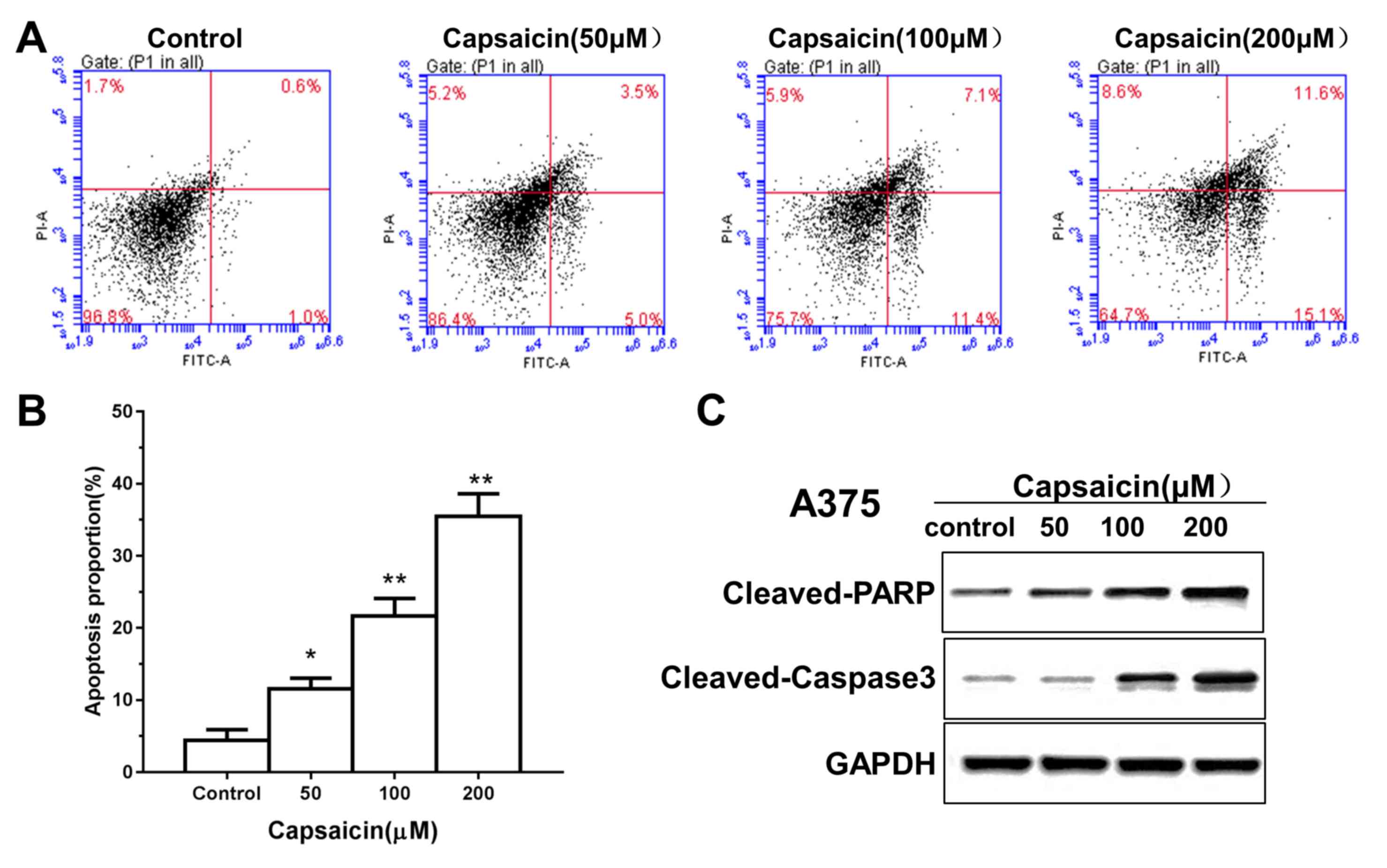
Figure 2

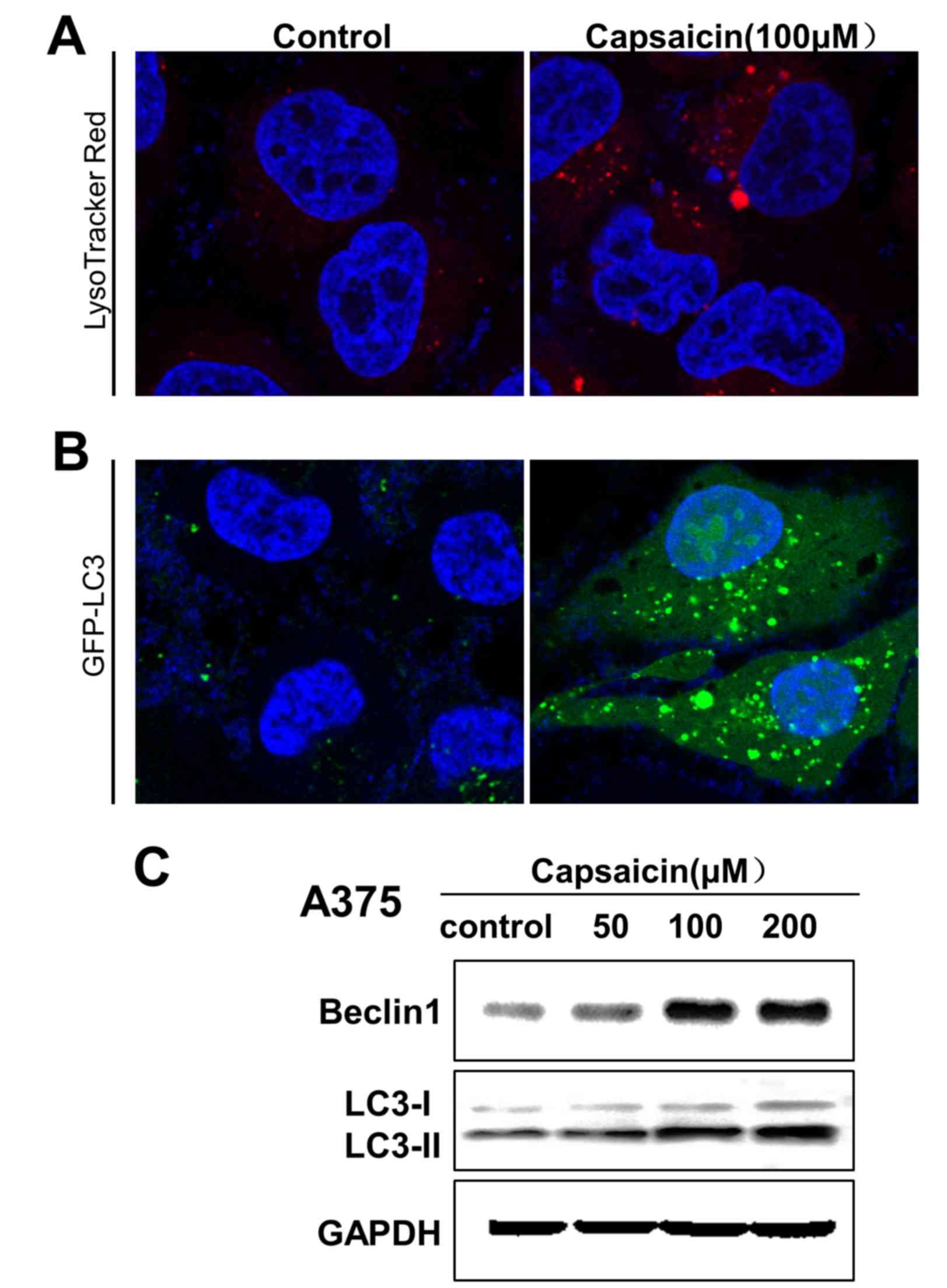
Figure 3

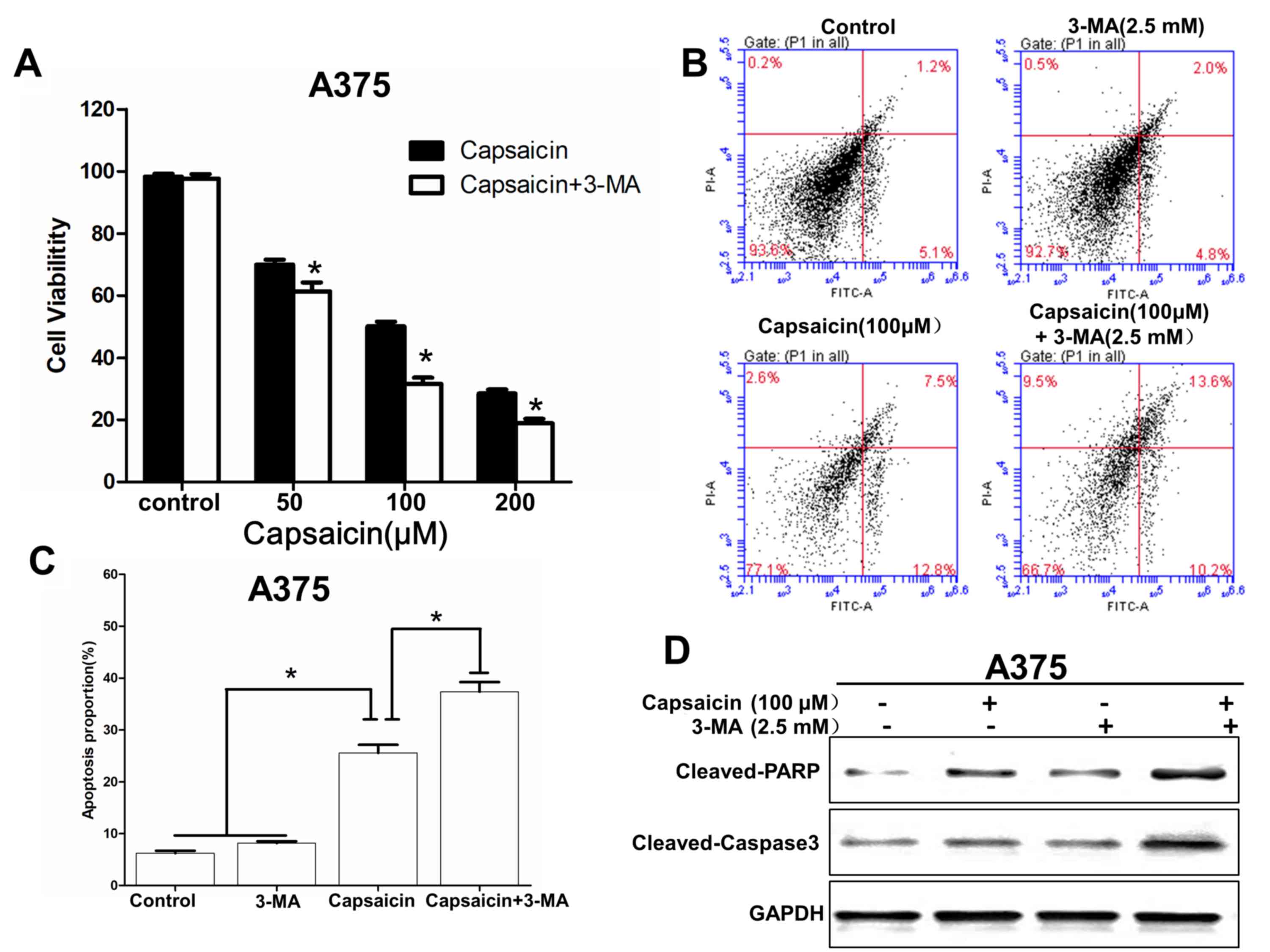
Figure 4

View References

1 

Schadendorf D, Fisher DE, Garbe C, Gershenwald JE, Grob JJ, Halpern A, Herlyn M, Marchetti MA, McArthur G, Ribas A, et al: Melanoma. Nat Rev Dis Primers. 1:150032015. View Article : Google Scholar : PubMed/NCBI

2 

Leiter U and Garbe C: Epidemiology of melanoma and nonmelanoma skin cancer-the role of sunlight. Adv Exp Med Biol. 624:89–103. 2008. View Article : Google Scholar : PubMed/NCBI

3 

Wei W, Ehlerding EB, Lan X, Luo Q and Cai W: PET and SPECT imaging of melanoma: The state of the art. Eur J Nucl Med Mol Imaging. 45:132–150. 2018. View Article : Google Scholar : PubMed/NCBI

4 

Schadendorf D and Hauschild A: Melanoma in 2013: Melanoma-the run of success continues. Nat Rev Clin Oncol. 11:75–76. 2014. View Article : Google Scholar : PubMed/NCBI

5 

Balch CM, Gershenwald JE, Soong SJ, Thompson JF, Atkins MB, Byrd DR, Buzaid AC, Cochran AJ, Coit DG, Ding S, et al: Final version of 2009 AJCC melanoma staging and classification. J Clin Oncol. 27:6199–6206. 2009. View Article : Google Scholar : PubMed/NCBI

6 

Srinivasan K: Biological activities of red pepper (Capsicum annuum) and its pungent principle capsaicin: A review. Crit Rev Food Sci Nutr. 56:1488–1500. 2016. View Article : Google Scholar : PubMed/NCBI

7 

Ludy MJ, Moore GE and Mattes RD: The effects of capsaicin and capsiate on energy balance: Critical review and meta-analyses of studies in humans. Chem Senses. 37:103–121. 2012. View Article : Google Scholar : PubMed/NCBI

8 

Patel S, Trueman D, Bentley A, Poole C and Chambers C: Cost-effectiveness of capsaicin 8% patch (Qutenza(tm)) compared with pregabalin for the treatment of patients with peripheral neuropathic pain (Pnp) in Scotland. Value Health. 17:A5312014. View Article : Google Scholar : PubMed/NCBI

9 

Fattori V, Hohmann MS, Rossaneis AC, Pinho-Ribeiro FA and Verri WA: Capsaicin: Current understanding of its mechanisms and therapy of pain and other pre-clinical and clinical uses. Molecules. 21(pii): E8442016. View Article : Google Scholar : PubMed/NCBI

10 

Bernstein JA, Davis BP, Picard JK, Cooper JP, Zheng S and Levin LS: A randomized, double-blind, parallel trial comparing capsaicin nasal spray with placebo in subjects with a significant component of nonallergic rhinitis. Ann Allergy Asthma Immunol. 107:171–178. 2011. View Article : Google Scholar : PubMed/NCBI

11 

Díaz-Laviada I and Rodríguez-Henche N: The potential antitumor effects of capsaicin. Prog Drug Res. 68:181–208. 2014.PubMed/NCBI

12 

Ramos-Torres Á, Bort A, Morell C, Rodríguez-Henche N and Díaz-Laviada I: The pepper's natural ingredient capsaicin induces autophagy blockage in prostate cancer cells. Oncotarget. 7:1569–1583. 2016. View Article : Google Scholar : PubMed/NCBI

13 

Lin YT, Wang HC, Hsu YC, Cho CL, Yang MY and Chien CY: Capsaicin induces autophagy and apoptosis in human nasopharyngeal carcinoma cells by downregulating the PI3K/AKT/mTOR pathway. Int J Mol Sci. 18(pii): E13432017. View Article : Google Scholar : PubMed/NCBI

14 

Yang KM, Pyo JO, Kim GY, Yu R, Han IS, Ju SA, Kim WH and Kim BS: Capsaicin induces apoptosis by generating reactive oxygen species and disrupting mitochondrial transmembrane potential in human colon cancer cell lines. Cell Mol Biol Lett. 14:497–510. 2009. View Article : Google Scholar : PubMed/NCBI

15 

Zhang R, Xia Y, Wang Z, Zheng J, Chen Y, Li X, Wang Y and Ming H: Serum long non coding RNA MALAT-1 protected by exosomes is up-regulated and promotes cell proliferation and migration in non-small cell lung cancer. Biochem Biophys Res Commun. 490:406–414. 2017. View Article : Google Scholar : PubMed/NCBI

16 

Huang SP, Chen JC, Wu CC, Chen CT, Tang NY, Ho YT, Lo C, Lin JP, Chung JG and Lin JG: Capsaicin-induced apoptosis in human hepatoma HepG2 cells. Anticancer Res. 29:165–174. 2009.PubMed/NCBI

17 

Ouyang L, Shi Z, Zhao S, Wang FT, Zhou TT, Liu B and Bao JK: Programmed cell death pathways in cancer: A review of apoptosis, autophagy and programmed necrosis. Cell Prolif. 45:487–498. 2012. View Article : Google Scholar : PubMed/NCBI

18 

Jun HS, Park T, Lee CK, Kang MK, Park MS, Kang HI, Surh YJ and Kim OH: Capsaicin induced apoptosis of B16-F10 melanoma cells through down-regulation of Bcl-2. Food Chem Toxicol. 45:708–715. 2007. View Article : Google Scholar : PubMed/NCBI

19 

Eisenberg-Lerner A and Kimchi A: The paradox of autophagy and its implication in cancer etiology and therapy. Apoptosis. 14:376–391. 2009. View Article : Google Scholar : PubMed/NCBI

20 

Yang ZJ, Chee CE, Huang S and Sinicrope FA: The role of autophagy in cancer: Therapeutic implications. Mol Cancer Ther. 10:1533–1541. 2011. View Article : Google Scholar : PubMed/NCBI

21 

Maiuri MC, Zalckvar E, Kimchi A and Kroemer G: Self-eating and self-killing: Crosstalk between autophagy and apoptosis. Nat Rev Mol Cell Biol. 8:741–752. 2007. View Article : Google Scholar : PubMed/NCBI

22 

Lo JA and Fisher DE: The melanoma revolution: From UV carcinogenesis to a new era in therapeutics. Science. 346:945–949. 2014. View Article : Google Scholar : PubMed/NCBI

23 

Lin JY and Fisher DE: Melanocyte biology and skin pigmentation. Nature. 445:843–850. 2007. View Article : Google Scholar : PubMed/NCBI

24 

Dong J, Phelps RG, Qiao R, Yao S, Benard O, Ronai Z and Aaronson SA: BRAF oncogenic mutations correlate with progression rather than initiation of human melanoma. Cancer Res. 63:3883–3885. 2003.PubMed/NCBI

25 

Flaherty KT, Puzanov I, Kim KB, Ribas A, McArthur GA, Sosman JA, O'Dwyer PJ, Lee RJ, Grippo JF, Nolop K and Chapman PB: Inhibition of mutated, activated BRAF in metastatic melanoma. N Engl J Med. 363:809–819. 2010. View Article : Google Scholar : PubMed/NCBI

26 

Hauschild A, Grob JJ, Demidov LV, Jouary T, Gutzmer R, Millward M, Rutkowski P, Blank CU, Miller WH Jr, Kaempgen E, et al: Dabrafenib in BRAF-mutated metastatic melanoma: A multicentre, open-label, phase 3 randomised controlled trial. Lancet. 380:358–365. 2012. View Article : Google Scholar : PubMed/NCBI

27 

Chapman PB, Hauschild A, Robert C, Haanen JB, Ascierto P, Larkin J, Dummer R, Garbe C, Testori A, Maio M, et al: Improved survival with vemurafenib in melanoma with BRAF V600E mutation. N Engl J Med. 364:2507–2516. 2011. View Article : Google Scholar : PubMed/NCBI

28 

Ribas A, Gonzalez R, Pavlick A, Hamid O, Gajewski TF, Daud A, Flaherty L, Logan T, Chmielowski B, Lewis K, et al: Combination of vemurafenib and cobimetinib in patients with advanced BRAF (V600)-mutated melanoma: A phase 1b study. Lancet Oncol. 15:954–965. 2014. View Article : Google Scholar : PubMed/NCBI

29 

Dvořánková B, Szabo P, Kodet O, Strnad H, Kolář M, Lacina L, Krejčí E, Naňka O, Šedo A and Smetana K Jr: Intercellular crosstalk in human malignant melanoma. Protoplasma. 254:1143–1150. 2017. View Article : Google Scholar : PubMed/NCBI

30 

Toh CC, Lee TS and Kiang AK: The pharmacological actions of capsaicin and analogues. Br J Pharmacol Chemother. 10:175–182. 1955. View Article : Google Scholar : PubMed/NCBI

31 

Sekine R, Satoh T, Takaoka A, Saeki K and Yokozeki H: Anti pruritic effects of topical crotamiton, capsaicin, and a corticosteroid on pruritogen-induced scratching behavior. Exp Dermatol. 21:201–204. 2012. View Article : Google Scholar : PubMed/NCBI

32 

Liao HT, Lee HJ, Ho YC and Chiou LC: Capsaicin in the periaqueductal gray induces analgesia via metabotropic glutamate receptor-mediated endocannabinoid retrograde disinhibition. Br J Pharmacol. 163:330–345. 2011. View Article : Google Scholar : PubMed/NCBI

33 

Clark R and Lee SH: Anticancer properties of capsaicin against human cancer. Anticancer Res. 36:837–843. 2016.PubMed/NCBI

34 

Chapa-Oliver AM and Mejía-Teniente L: Capsaicin: From plants to a cancer-suppressing agent. Molecules. 21(pii): E9312016. View Article : Google Scholar : PubMed/NCBI

35 

Shin DH, Kim OH, Jun HS and Kang MK: Inhibitory effect of capsaicin on B16-F10 melanoma cell migration via the phosphatidylinositol 3-kinase/Akt/Rac1 signal pathway. Exp Mol Med. 40:486–494. 2008. View Article : Google Scholar : PubMed/NCBI

36 

Lin CH, Lu WC, Wang CW, Chan YC and Chen MK: Capsaicin induces cell cycle arrest and apoptosis in human KB cancer cells. BMC Complement Altern Med. 13:462013. View Article : Google Scholar : PubMed/NCBI

37 

Liu Z, Ouyang L, Peng H and Zhang WZ: Oridonin: Targeting programmed cell death pathways as an anti-tumour agent. Cell Prolif. 45:499–507. 2012. View Article : Google Scholar : PubMed/NCBI

38 

Hail N Jr, Carter BZ, Konopleva M and Andreeff M: Apoptosis effector mechanisms: A requiem performed in different keys. Apoptosis. 11:889–904. 2006. View Article : Google Scholar : PubMed/NCBI

39 

Mukhopadhyay S, Panda PK, Sinha N, Das DN and Bhutia SK: Autophagy and apoptosis: Where do they meet? Apoptosis. 19:555–566. 2014. View Article : Google Scholar : PubMed/NCBI

40 

Boulares AH, Yakovlev AG, Ivanova V, Stoica BA, Wang G, Iyer S and Smulson M: Role of poly(ADP-ribose) polymerase (PARP) cleavage in apoptosis. Caspase 3-resistant PARP mutant increases rates of apoptosis in transfected cells. J Biol Chem. 274:22932–22940. 1999. View Article : Google Scholar : PubMed/NCBI

41 

Kulms D and Schwarz T: Molecular mechanisms of UV-induced apoptosis. Photodermatol Photoimmunol Photomed. 16:195–201. 2000. View Article : Google Scholar : PubMed/NCBI

42 

Liu YP, Dong FX, Chai X, Zhu S, Zhang BL and Gao DS: Role of autophagy in capsaicin-induced apoptosis in U251 glioma cells. Cell Mol Neurobiol. 36:737–743. 2016. View Article : Google Scholar : PubMed/NCBI

43 

Radogna F, Dicato M and Diederich M: Cancer-type-specific crosstalk between autophagy, necroptosis and apoptosis as a pharmacological target. Biochem Pharmacol. 94:1–11. 2015. View Article : Google Scholar : PubMed/NCBI

44 

Li M, Tan J, Miao Y, Lei P and Zhang Q: The dual role of autophagy under hypoxia-involvement of interaction between autophagy and apoptosis. Apoptosis. 20:769–777. 2015. View Article : Google Scholar : PubMed/NCBI

45 

Fu D, Yu JY, Yang S, Wu M, Hammad SM, Connell AR, Du M, Chen J and Lyons TJ: Survival or death: A dual role for autophagy in stress-induced pericyte loss in diabetic retinopathy. Diabetologia. 59:2251–2261. 2016. View Article : Google Scholar : PubMed/NCBI

46 

Ravegnini G, Sammarini G, Nannini M, Pantaleo MA, Biasco G, Hrelia P and Angelini S: Gastrointestinal stromal tumors (GIST): Facing cell death between autophagy and apoptosis. Autophagy. 13:452–463. 2017. View Article : Google Scholar : PubMed/NCBI

Related Articles

  • Abstract
  • View
  • Download
  • Twitter
Copy and paste a formatted citation
Spandidos Publications style
Chu H, Li M and Wang X: Capsaicin induces apoptosis and autophagy in human melanoma cells. Oncol Lett 17: 4827-4834, 2019.
APA
Chu, H., Li, M., & Wang, X. (2019). Capsaicin induces apoptosis and autophagy in human melanoma cells. Oncology Letters, 17, 4827-4834. https://doi.org/10.3892/ol.2019.10206
MLA
Chu, H., Li, M., Wang, X."Capsaicin induces apoptosis and autophagy in human melanoma cells". Oncology Letters 17.6 (2019): 4827-4834.
Chicago
Chu, H., Li, M., Wang, X."Capsaicin induces apoptosis and autophagy in human melanoma cells". Oncology Letters 17, no. 6 (2019): 4827-4834. https://doi.org/10.3892/ol.2019.10206
Copy and paste a formatted citation
x
Spandidos Publications style
Chu H, Li M and Wang X: Capsaicin induces apoptosis and autophagy in human melanoma cells. Oncol Lett 17: 4827-4834, 2019.
APA
Chu, H., Li, M., & Wang, X. (2019). Capsaicin induces apoptosis and autophagy in human melanoma cells. Oncology Letters, 17, 4827-4834. https://doi.org/10.3892/ol.2019.10206
MLA
Chu, H., Li, M., Wang, X."Capsaicin induces apoptosis and autophagy in human melanoma cells". Oncology Letters 17.6 (2019): 4827-4834.
Chicago
Chu, H., Li, M., Wang, X."Capsaicin induces apoptosis and autophagy in human melanoma cells". Oncology Letters 17, no. 6 (2019): 4827-4834. https://doi.org/10.3892/ol.2019.10206
Follow us
  • Twitter
  • LinkedIn
  • Facebook
About
  • Spandidos Publications
  • Careers
  • Cookie Policy
  • Privacy Policy
How can we help?
  • Help
  • Live Chat
  • Contact
  • Email to our Support Team