Spandidos Publications Logo
  • About
    • About Spandidos
    • Aims and Scopes
    • Abstracting and Indexing
    • Editorial Policies
    • Reprints and Permissions
    • Job Opportunities
    • Terms and Conditions
    • Contact
  • Journals
    • All Journals
    • Oncology Letters
      • Oncology Letters
      • Information for Authors
      • Editorial Policies
      • Editorial Board
      • Aims and Scope
      • Abstracting and Indexing
      • Bibliographic Information
      • Archive
    • International Journal of Oncology
      • International Journal of Oncology
      • Information for Authors
      • Editorial Policies
      • Editorial Board
      • Aims and Scope
      • Abstracting and Indexing
      • Bibliographic Information
      • Archive
    • Molecular and Clinical Oncology
      • Molecular and Clinical Oncology
      • Information for Authors
      • Editorial Policies
      • Editorial Board
      • Aims and Scope
      • Abstracting and Indexing
      • Bibliographic Information
      • Archive
    • Experimental and Therapeutic Medicine
      • Experimental and Therapeutic Medicine
      • Information for Authors
      • Editorial Policies
      • Editorial Board
      • Aims and Scope
      • Abstracting and Indexing
      • Bibliographic Information
      • Archive
    • International Journal of Molecular Medicine
      • International Journal of Molecular Medicine
      • Information for Authors
      • Editorial Policies
      • Editorial Board
      • Aims and Scope
      • Abstracting and Indexing
      • Bibliographic Information
      • Archive
    • Biomedical Reports
      • Biomedical Reports
      • Information for Authors
      • Editorial Policies
      • Editorial Board
      • Aims and Scope
      • Abstracting and Indexing
      • Bibliographic Information
      • Archive
    • Oncology Reports
      • Oncology Reports
      • Information for Authors
      • Editorial Policies
      • Editorial Board
      • Aims and Scope
      • Abstracting and Indexing
      • Bibliographic Information
      • Archive
    • Molecular Medicine Reports
      • Molecular Medicine Reports
      • Information for Authors
      • Editorial Policies
      • Editorial Board
      • Aims and Scope
      • Abstracting and Indexing
      • Bibliographic Information
      • Archive
    • World Academy of Sciences Journal
      • World Academy of Sciences Journal
      • Information for Authors
      • Editorial Policies
      • Editorial Board
      • Aims and Scope
      • Abstracting and Indexing
      • Bibliographic Information
      • Archive
    • International Journal of Functional Nutrition
      • International Journal of Functional Nutrition
      • Information for Authors
      • Editorial Policies
      • Editorial Board
      • Aims and Scope
      • Abstracting and Indexing
      • Bibliographic Information
      • Archive
    • International Journal of Epigenetics
      • International Journal of Epigenetics
      • Information for Authors
      • Editorial Policies
      • Editorial Board
      • Aims and Scope
      • Abstracting and Indexing
      • Bibliographic Information
      • Archive
    • Medicine International
      • Medicine International
      • Information for Authors
      • Editorial Policies
      • Editorial Board
      • Aims and Scope
      • Abstracting and Indexing
      • Bibliographic Information
      • Archive
  • Articles
  • Information
    • Information for Authors
    • Information for Reviewers
    • Information for Librarians
    • Information for Advertisers
    • Conferences
  • Language Editing
Spandidos Publications Logo
  • About
    • About Spandidos
    • Aims and Scopes
    • Abstracting and Indexing
    • Editorial Policies
    • Reprints and Permissions
    • Job Opportunities
    • Terms and Conditions
    • Contact
  • Journals
    • All Journals
    • Biomedical Reports
      • Information for Authors
      • Editorial Policies
      • Editorial Board
      • Aims and Scope
      • Abstracting and Indexing
      • Bibliographic Information
      • Archive
    • Experimental and Therapeutic Medicine
      • Information for Authors
      • Editorial Policies
      • Editorial Board
      • Aims and Scope
      • Abstracting and Indexing
      • Bibliographic Information
      • Archive
    • International Journal of Epigenetics
      • Information for Authors
      • Editorial Policies
      • Editorial Board
      • Aims and Scope
      • Abstracting and Indexing
      • Bibliographic Information
      • Archive
    • International Journal of Functional Nutrition
      • Information for Authors
      • Editorial Policies
      • Editorial Board
      • Aims and Scope
      • Abstracting and Indexing
      • Bibliographic Information
      • Archive
    • International Journal of Molecular Medicine
      • Information for Authors
      • Editorial Policies
      • Editorial Board
      • Aims and Scope
      • Abstracting and Indexing
      • Bibliographic Information
      • Archive
    • International Journal of Oncology
      • Information for Authors
      • Editorial Policies
      • Editorial Board
      • Aims and Scope
      • Abstracting and Indexing
      • Bibliographic Information
      • Archive
    • Medicine International
      • Information for Authors
      • Editorial Policies
      • Editorial Board
      • Aims and Scope
      • Abstracting and Indexing
      • Bibliographic Information
      • Archive
    • Molecular and Clinical Oncology
      • Information for Authors
      • Editorial Policies
      • Editorial Board
      • Aims and Scope
      • Abstracting and Indexing
      • Bibliographic Information
      • Archive
    • Molecular Medicine Reports
      • Information for Authors
      • Editorial Policies
      • Editorial Board
      • Aims and Scope
      • Abstracting and Indexing
      • Bibliographic Information
      • Archive
    • Oncology Letters
      • Information for Authors
      • Editorial Policies
      • Editorial Board
      • Aims and Scope
      • Abstracting and Indexing
      • Bibliographic Information
      • Archive
    • Oncology Reports
      • Information for Authors
      • Editorial Policies
      • Editorial Board
      • Aims and Scope
      • Abstracting and Indexing
      • Bibliographic Information
      • Archive
    • World Academy of Sciences Journal
      • Information for Authors
      • Editorial Policies
      • Editorial Board
      • Aims and Scope
      • Abstracting and Indexing
      • Bibliographic Information
      • Archive
  • Articles
  • Information
    • For Authors
    • For Reviewers
    • For Librarians
    • For Advertisers
    • Conferences
  • Language Editing
Login Register Submit
  • This site uses cookies
  • You can change your cookie settings at any time by following the instructions in our Cookie Policy. To find out more, you may read our Privacy Policy.

    I agree
Search articles by DOI, keyword, author or affiliation
Search
Advanced Search
presentation
Oncology Letters
Join Editorial Board Propose a Special Issue
Print ISSN: 1792-1074 Online ISSN: 1792-1082
Journal Cover
June-2019 Volume 17 Issue 6

Full Size Image

Sign up for eToc alerts
Recommend to Library

Journals

International Journal of Molecular Medicine

International Journal of Molecular Medicine

International Journal of Molecular Medicine is an international journal devoted to molecular mechanisms of human disease.

International Journal of Oncology

International Journal of Oncology

International Journal of Oncology is an international journal devoted to oncology research and cancer treatment.

Molecular Medicine Reports

Molecular Medicine Reports

Covers molecular medicine topics such as pharmacology, pathology, genetics, neuroscience, infectious diseases, molecular cardiology, and molecular surgery.

Oncology Reports

Oncology Reports

Oncology Reports is an international journal devoted to fundamental and applied research in Oncology.

Experimental and Therapeutic Medicine

Experimental and Therapeutic Medicine

Experimental and Therapeutic Medicine is an international journal devoted to laboratory and clinical medicine.

Oncology Letters

Oncology Letters

Oncology Letters is an international journal devoted to Experimental and Clinical Oncology.

Biomedical Reports

Biomedical Reports

Explores a wide range of biological and medical fields, including pharmacology, genetics, microbiology, neuroscience, and molecular cardiology.

Molecular and Clinical Oncology

Molecular and Clinical Oncology

International journal addressing all aspects of oncology research, from tumorigenesis and oncogenes to chemotherapy and metastasis.

World Academy of Sciences Journal

World Academy of Sciences Journal

Multidisciplinary open-access journal spanning biochemistry, genetics, neuroscience, environmental health, and synthetic biology.

International Journal of Functional Nutrition

International Journal of Functional Nutrition

Open-access journal combining biochemistry, pharmacology, immunology, and genetics to advance health through functional nutrition.

International Journal of Epigenetics

International Journal of Epigenetics

Publishes open-access research on using epigenetics to advance understanding and treatment of human disease.

Medicine International

Medicine International

An International Open Access Journal Devoted to General Medicine.

Journal Cover
June-2019 Volume 17 Issue 6

Full Size Image

Sign up for eToc alerts
Recommend to Library

  • Article
  • Citations
    • Cite This Article
    • Download Citation
    • Create Citation Alert
    • Remove Citation Alert
    • Cited By
  • Similar Articles
    • Related Articles (in Spandidos Publications)
    • Similar Articles (Google Scholar)
    • Similar Articles (PubMed)
  • Download PDF
  • Download XML
  • View XML
Article Open Access

EGFR, but not COX‑2, protein in resected pancreatic ductal adenocarcinoma is associated with poor survival

  • Authors:
    • Johan Bourghardt Fagman
    • David Ljungman
    • Peter Falk
    • Britt‑Marie Iresjö
    • Cecilia Engström
    • Peter Naredi
    • Kent Lundholm
  • View Affiliations / Copyright

    Affiliations: Department of Surgery, Institute of Clinical Sciences, Sahlgrenska Academy, University of Gothenburg, SE‑413 45 Gothenburg, Sweden
    Copyright: © Fagman et al. This is an open access article distributed under the terms of Creative Commons Attribution License.
  • Pages: 5361-5368
    |
    Published online on: April 5, 2019
       https://doi.org/10.3892/ol.2019.10224
  • Expand metrics +
Metrics: Total Views: 0 (Spandidos Publications: | PMC Statistics: )
Metrics: Total PDF Downloads: 0 (Spandidos Publications: | PMC Statistics: )
Cited By (CrossRef): 0 citations Loading Articles...

This article is mentioned in:


Abstract

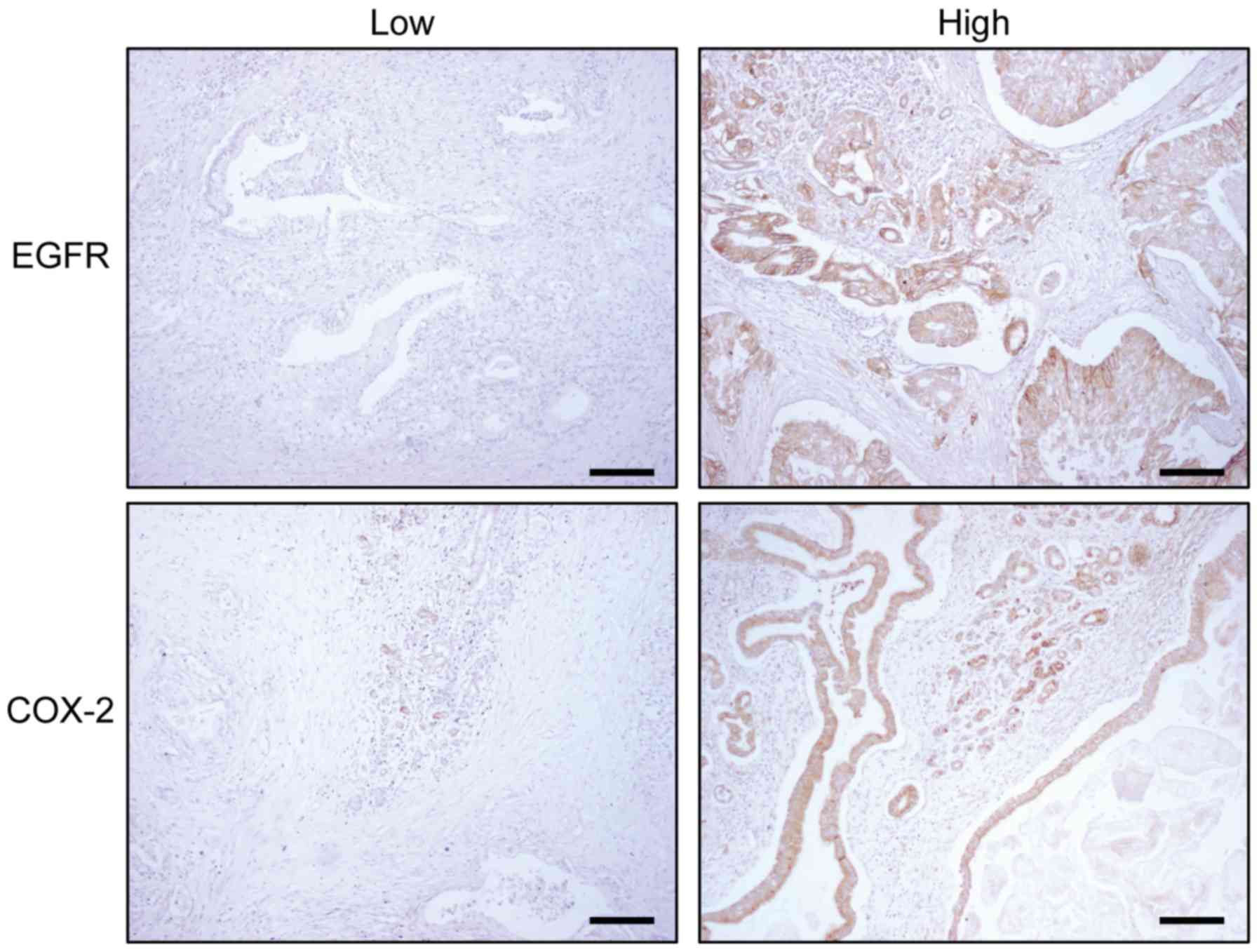
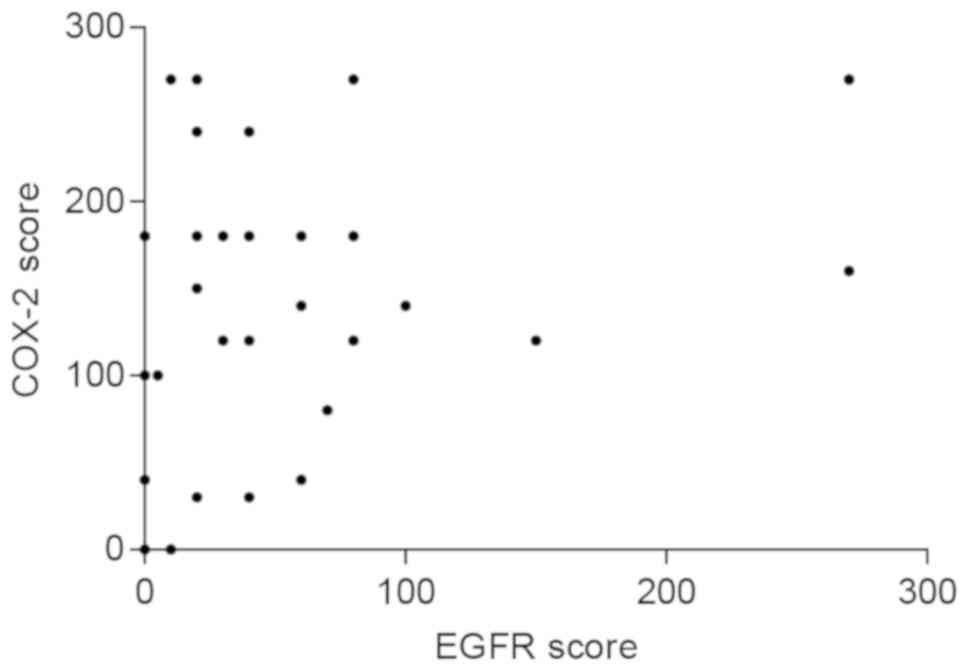
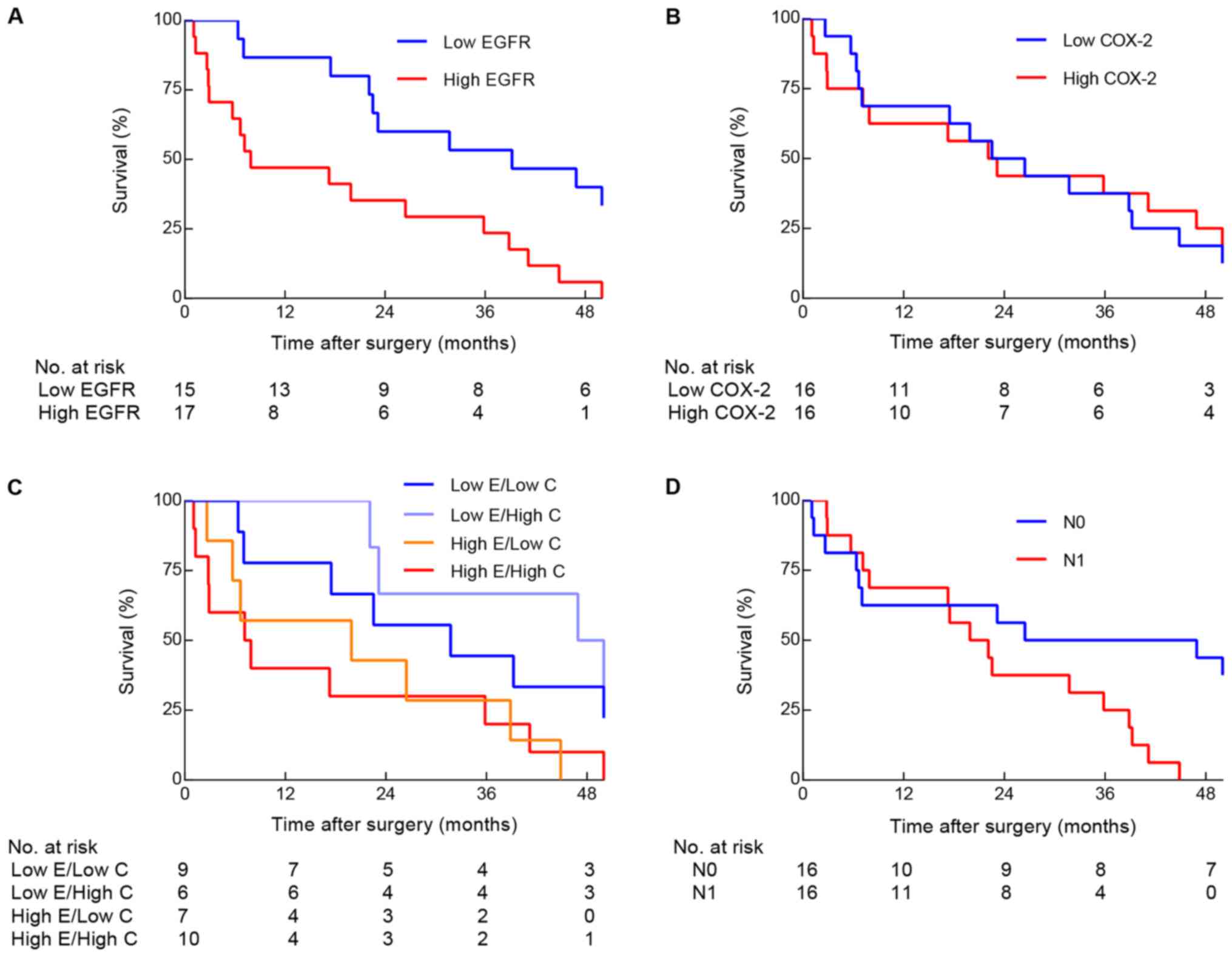
The effects of EGFR and COX‑2 protein overexpression on clinical outcomes in pancreatic ductal adenocarcinoma (PDAC) patients remains unclear. Therefore, the aim of the present study was to evaluate the protein expression of epithelial growth factor receptor (EGFR) and cyclooxygenase‑2 (COX‑2) in tumor cells in surgically resected PDAC, in comparison with clinicopathological characteristics and clinical outcomes. Immunohistochemical staining of formalin‑fixed paraffin‑embedded tissue derived from surgically resected tumors was performed. Tissue slides were evaluated for membrane wild‑type EGFR and cytoplasmic COX‑2 staining using a histoscore system. Statistical associations between EGFR and COX‑2 staining and clinicopathological characteristics were examined to predict survival. In a cohort of 32 resected PDAC patients, high EGFR protein expression in tumor cells was significantly associated with shorter median overall survival (7.9 vs. 39.2 months, P=0.0038). The corresponding hazard ratio (HR) for patients with high EGFR protein expression in tumor cells was 3.12 [95% confidence interval (CI): 1.39‑7.00, P=0.006]. COX‑2 protein expression was not associated with survival (22.6 vs. 24.5 months P=0.60; HR 1.22 95% CI: 0.59‑2.51, P=0.60). Following multivariate Cox regression analysis, high EGFR protein expression in tumor cells (P=0.043) remained as significant independent prognostic factor for survival. In conclusion, high wild‑type EGFR protein expression, but not COX‑2 protein expression, in tumor cells is a prognostic factor for reduced overall survival following pancreatic tumor resection, supporting a role for EGFR in identifying resected patients that may benefit from EGFR‑targeted therapy.
View Figures

Figure 1

Figure 2

Figure 3

View References

1 

Hezel AF, Kimmelman AC, Stanger BZ, Bardeesy N and Depinho RA: Genetics and biology of pancreatic ductal adenocarcinoma. Genes Dev. 20:1218–1249. 2006. View Article : Google Scholar : PubMed/NCBI

2 

Siegel RL, Miller KD and Jemal A: Cancer statistics, 2018. CA Cancer J Clin. 68:7–30. 2018. View Article : Google Scholar : PubMed/NCBI

3 

Hishinuma S, Ogata Y, Tomikawa M, Ozawa I, Hirabayashi K and Igarashi S: Patterns of recurrence after curative resection of pancreatic cancer, based on autopsy findings. J Gastrointest Surg. 10:511–518. 2006. View Article : Google Scholar : PubMed/NCBI

4 

Iacobuzio-Donahue CA, Fu B, Yachida S, Luo M, Abe H, Henderson CM, Vilardell F, Wang Z, Keller JW, Banerjee P, et al: DPC4 gene status of the primary carcinoma correlates with patterns of failure in patients with pancreatic cancer. J Clin Oncol. 27:1806–1813. 2009. View Article : Google Scholar : PubMed/NCBI

5 

Philip PA and Lutz MP: Targeting epidermal growth factor receptor-related signaling pathways in pancreatic cancer. Pancreas. 44:1046–1052. 2015. View Article : Google Scholar : PubMed/NCBI

6 

Tobita K, Kijima H, Dowaki S, Kashiwagi H, Ohtani Y, Oida Y, Yamazaki H, Nakamura M, Ueyama Y, Tanaka M, et al: Epidermal growth factor receptor expression in human pancreatic cancer: Significance for liver metastasis. Int J Mol Med. 11:305–309. 2003.PubMed/NCBI

7 

Bloomston M, Bhardwaj A, Ellison EC and Frankel WL: Epidermal growth factor receptor expression in pancreatic carcinoma using tissue microarray technique. Dig Surg. 23:74–79. 2006. View Article : Google Scholar : PubMed/NCBI

8 

Mahipal A, Mcdonald MJ, Witkiewicz A and Carr BI: Cell membrane and cytoplasmic epidermal growth factor receptor expression in pancreatic ductal adenocarcinoma. Med Oncol. 29:134–139. 2012. View Article : Google Scholar : PubMed/NCBI

9 

Moore MJ, Goldstein D, Hamm J, Figer A, Hecht JR, Gallinger S, Au HJ, Murawa P, Walde D, Wolff RA, et al: Erlotinib plus gemcitabine compared with gemcitabine alone in patients with advanced pancreatic cancer: A phase III trial of the National Cancer Institute of Canada Clinical Trials Group. J Clin Oncol. 25:1960–1966. 2007. View Article : Google Scholar : PubMed/NCBI

10 

Wang JP, Wu CY, Yeh YC, Shyr YM, Wu YY, Kuo CY, Hung YP, Chen MH, Lee WP, Luo JC, et al: Erlotinib is effective in pancreatic cancer with epidermal growth factor receptor mutations: A randomized, open-label, prospective trial. Oncotarget. 6:18162–18173. 2015.PubMed/NCBI

11 

Herman JM, Fan KY, Wild AT, Hacker-Prietz A, Wood LD, Blackford AL, Ellsworth S, Zheng L, Le DT, De Jesus-Acosta A, et al: Phase 2 study of erlotinib combined with adjuvant chemoradiation and chemotherapy in patients with resectable pancreatic cancer. Int J Radiat Oncol Biol Phys. 86:678–685. 2013. View Article : Google Scholar : PubMed/NCBI

12 

Sinn M, Bahra M, Liersch T, Gellert K, Messmann H, Bechstein W, Waldschmidt D, Jacobasch L, Wilhelm M, Rau BM, et al: CONKO-005: Adjuvant chemotherapy with gemcitabine plus erlotinib versus gemcitabine alone in patients after R0 resection of pancreatic cancer: A multicenter randomized phase III trial. J Clin Oncol. 35:3330–3337. 2017. View Article : Google Scholar : PubMed/NCBI

13 

Ardito CM, Grüner BM, Takeuchi KK, Lubeseder-Martellato C, Teichmann N, Mazur PK, Delgiorno KE, Carpenter ES, Halbrook CJ, Hall JC, et al: EGF receptor is required for KRAS-induced pancreatic tumorigenesis. Cancer Cell. 22:304–317. 2012. View Article : Google Scholar : PubMed/NCBI

14 

Navas C, Hernández-Porras I, Schuhmacher AJ, Sibilia M, Guerra C and Barbacid M: EGF receptor signaling is essential for k-ras oncogene-driven pancreatic ductal adenocarcinoma. Cancer Cell. 22:318–330. 2012. View Article : Google Scholar : PubMed/NCBI

15 

Molina MA, Sitja-Arnau M, Lemoine MG, Frazier ML and Sinicrope FA: Increased cyclooxygenase-2 expression in human pancreatic carcinomas and cell lines: growth inhibition by nonsteroidal anti-inflammatory drugs. Cancer Res. 59:4356–4362. 1999.PubMed/NCBI

16 

Kokawa A, Kondo H, Gotoda T, Ono H, Saito D, Nakadaira S, Kosuge T and Yoshida S: Increased expression of cyclooxygenase-2 in human pancreatic neoplasms and potential for chemoprevention by cyclooxygenase inhibitors. Cancer. 91:333–338. 2001. View Article : Google Scholar : PubMed/NCBI

17 

Juuti A, Louhimo J, Nordling S, Ristimäki A and Haglund C: Cyclooxygenase-2 expression correlates with poor prognosis in pancreatic cancer. J Clin Pathol. 59:382–386. 2006. View Article : Google Scholar : PubMed/NCBI

18 

Matsubayashi H, Infante JR, Winter J, Klein AP, Schulick R, Hruban R, Visvanathan K and Goggins M: Tumor COX-2 expression and prognosis of patients with resectable pancreatic cancer. Cancer Biol Ther. 6:1569–1575. 2007. View Article : Google Scholar : PubMed/NCBI

19 

Richards NG, Rittenhouse DW, Freydin B, Cozzitorto JA, Grenda D, Rui H, Gonye G, Kennedy EP, Yeo CJ, Brody JR and Witkiewicz AK: HuR status is a powerful marker for prognosis and response to gemcitabine-based chemotherapy for resected pancreatic ductal adenocarcinoma patients. Ann Surg. 252:499–506. 2010.PubMed/NCBI

20 

Koshiba T, Hosotani R, Miyamoto Y, Wada M, Lee JU, Fujimoto K, Tsuji S, Nakajima S, Doi R and Imamura M: Immunohistochemical analysis of cyclooxygenase-2 expression in pancreatic tumors. Int J Pancreatol. 26:69–76. 1999. View Article : Google Scholar : PubMed/NCBI

21 

Okami J, Yamamoto H, Fujiwara Y, Tsujie M, Kondo M, Noura S, Oshima S, Nagano H, Dono K, Umeshita K, et al: Overexpression of cyclooxygenase-2 in carcinoma of the pancreas. Clin Cancer Res. 5:2018–2024. 1999.PubMed/NCBI

22 

Merati K, said Siadaty M, Andea A, Sarkar F, Ben-Josef E, Mohammad R, Philip P, Shields AF, Vaitkevicius V, Grignon DJ and Adsay NV: Expression of inflammatory modulator COX-2 in pancreatic ductal adenocarcinoma and its relationship to pathologic and clinical parameters. Am J Clin Oncol. 24:447–452. 2001. View Article : Google Scholar : PubMed/NCBI

23 

Lipton A, Campbell-Baird C, Witters L, Harvey H and Ali S: Phase II trial of gemcitabine, irinotecan, and celecoxib in patients with advanced pancreatic cancer. J Clin Gastroenterol. 44:286–288. 2010. View Article : Google Scholar : PubMed/NCBI

24 

Kirane A, Toombs JE, Ostapoff K, Carbon JG, Zaknoen S, Braunfeld J, Schwarz RE, Burrows FJ and Brekken RA: Apricoxib, a novel inhibitor of COX-2, markedly improves standard therapy response in molecularly defined models of pancreatic cancer. Clin Cancer Res. 18:5031–5042. 2012. View Article : Google Scholar : PubMed/NCBI

25 

Hill R, Li Y, Tran LM, Dry S, Calvopina JH, Garcia A, Kim C, Wang Y, Donahue TR, Herschman HR and Wu H: Cell intrinsic role of COX-2 in pancreatic cancer development. Mol Cancer Ther. 11:2127–2137. 2012. View Article : Google Scholar : PubMed/NCBI

26 

Yang CC and Chang KW: Eicosanoids and HB-EGF/EGFR in cancer. Cancer Metastasis Rev. 23–Jun;2018.(Epub ahead of print). View Article : Google Scholar

27 

Wang D, Xia D and Dubois RN: The crosstalk of PTGS2 and EGF signaling pathways in colorectal cancer. Cancers (Basel). 3:3894–3908. 2011. View Article : Google Scholar : PubMed/NCBI

28 

Axelsson H, Lönnroth C, Andersson M and Lundholm K: Mechanisms behind COX-1 and COX-2 inhibition of tumor growth in vivo. Int J Oncol. 37:1143–1152. 2010.PubMed/NCBI

29 

Lönnroth C, Andersson M, Asting AG, Nordgren S and Lundholm K: Preoperative low dose NSAID treatment influences the genes for stemness, growth, invasion and metastasis in colorectal cancer. Int J Oncol. 45:2208–2220. 2014. View Article : Google Scholar : PubMed/NCBI

30 

Valsecchi ME, McDonald M, Brody JR, Hyslop T, Freydin B, Yeo CJ, Solomides C, Peiper SC and Witkiewicz AK: Epidermal growth factor receptor and insulinlike growth factor 1 receptor expression predict poor survival in pancreatic ductal adenocarcinoma. Cancer. 118:3484–3493. 2012. View Article : Google Scholar : PubMed/NCBI

31 

Lim JE, Chien MW and Earle CC: Prognostic factors following curative resection for pancreatic adenocarcinoma: A population-based, linked database analysis of 396 patients. Ann Surg. 237:74–85. 2003. View Article : Google Scholar : PubMed/NCBI

32 

Ueda S, Ogata S, Tsuda H, Kawarabayashi N, Kimura M, Sugiura Y, Tamai S, Matsubara O, Hatsuse K and Mochizuki H: The correlation between cytoplasmic overexpression of epidermal growth factor receptor and tumor aggressiveness: Poor prognosis in patients with pancreatic ductal adenocarcinoma. Pancreas. 29:e1–e8. 2004. View Article : Google Scholar : PubMed/NCBI

33 

Perini MV, Montagnini AL, Coudry R, Patzina R, Penteado S, Abdo EE, Diniz A, Jukemura J and da Cunha JE: Prognostic significance of epidermal growth factor receptor overexpression in pancreas cancer and nodal metastasis. ANZ J Surg. 85:174–178. 2015. View Article : Google Scholar : PubMed/NCBI

34 

Smeenk HG, Erdmann J, van Dekken H, van Marion R, Hop WC, Jeekel J and van Eijck CH: Long-term survival after radical resection for pancreatic head and ampullary cancer: A potential role for the EGF-R. Dig Surg. 24:38–45. 2007. View Article : Google Scholar : PubMed/NCBI

35 

Park SJ, Gu MJ, Lee DS, Yun SS, Kim HJ and Choi JH: EGFR expression in pancreatic intraepithelial neoplasia and ductal adenocarcinoma. Int J Clin Exp Pathol. 8:8298–8304. 2015.PubMed/NCBI

36 

Wang L, Wu H, Wang L, Lu J, Duan H, Liu X and Liang Z: Expression of amphiregulin predicts poor outcome in patients with pancreatic ductal adenocarcinoma. Diagn Pathol. 11:602016. View Article : Google Scholar : PubMed/NCBI

37 

Almoguera C, Shibata D, Forrester K, Martin J, Arnheim N and Perucho M: Most human carcinomas of the exocrine pancreas contain mutant c-K-ras genes. Cell. 53:549–554. 1988. View Article : Google Scholar : PubMed/NCBI

38 

Yamanaka Y, Friess H, Kobrin MS, Buchler M, Beger HG and Korc M: Coexpression of epidermal growth factor receptor and ligands in human pancreatic cancer is associated with enhanced tumor aggressiveness. Anticancer Res. 13:565–569. 1993.PubMed/NCBI

39 

Asting AG, Farivar A, Iresjö BM, Svensson H, Gustavsson B and Lundholm K: EGF receptor and COX-1/COX-2 enzyme proteins as related to corresponding mRNAs in human per-operative biopsies of colorectal cancer. BMC Cancer. 13:5112013. View Article : Google Scholar : PubMed/NCBI

40 

Hu H, Han T, Zhuo M, Wu LL, Yuan C, Wu L, Lei W, Jiao F and Wang LW: Elevated COX-2 expression promotes angiogenesis through EGFR/p38-MAPK/Sp1-dependent signalling in pancreatic cancer. Sci Rep. 7:4702017. View Article : Google Scholar : PubMed/NCBI

41 

Lozano-Leon A, Perez-Quintela BV, Iglesias-García J, Lariño-Noia J, Varo E, Forteza J and Domínguez-Muñoz JE: Ductal adenocarcinoma of the pancreas: Expression of growth factor receptors, oncogenes and suppressor genes, and their relationship to pathological features, staging and survival. Oncol Lett. 2:161–166. 2011. View Article : Google Scholar : PubMed/NCBI

42 

Khouja MH, Baekelandt M, Sarab A, Nesland JM and Holm R: Limitations of tissue microarrays compared with whole tissue sections in survival analysis. Oncol Lett. 1:827–831. 2010. View Article : Google Scholar : PubMed/NCBI

Related Articles

  • Abstract
  • View
  • Download
  • Twitter
Copy and paste a formatted citation
Spandidos Publications style
Fagman JB, Ljungman D, Falk P, Iresjö BM, Engström C, Naredi P and Lundholm K: EGFR, but not COX‑2, protein in resected pancreatic ductal adenocarcinoma is associated with poor survival. Oncol Lett 17: 5361-5368, 2019.
APA
Fagman, J.B., Ljungman, D., Falk, P., Iresjö, B., Engström, C., Naredi, P., & Lundholm, K. (2019). EGFR, but not COX‑2, protein in resected pancreatic ductal adenocarcinoma is associated with poor survival. Oncology Letters, 17, 5361-5368. https://doi.org/10.3892/ol.2019.10224
MLA
Fagman, J. B., Ljungman, D., Falk, P., Iresjö, B., Engström, C., Naredi, P., Lundholm, K."EGFR, but not COX‑2, protein in resected pancreatic ductal adenocarcinoma is associated with poor survival". Oncology Letters 17.6 (2019): 5361-5368.
Chicago
Fagman, J. B., Ljungman, D., Falk, P., Iresjö, B., Engström, C., Naredi, P., Lundholm, K."EGFR, but not COX‑2, protein in resected pancreatic ductal adenocarcinoma is associated with poor survival". Oncology Letters 17, no. 6 (2019): 5361-5368. https://doi.org/10.3892/ol.2019.10224
Copy and paste a formatted citation
x
Spandidos Publications style
Fagman JB, Ljungman D, Falk P, Iresjö BM, Engström C, Naredi P and Lundholm K: EGFR, but not COX‑2, protein in resected pancreatic ductal adenocarcinoma is associated with poor survival. Oncol Lett 17: 5361-5368, 2019.
APA
Fagman, J.B., Ljungman, D., Falk, P., Iresjö, B., Engström, C., Naredi, P., & Lundholm, K. (2019). EGFR, but not COX‑2, protein in resected pancreatic ductal adenocarcinoma is associated with poor survival. Oncology Letters, 17, 5361-5368. https://doi.org/10.3892/ol.2019.10224
MLA
Fagman, J. B., Ljungman, D., Falk, P., Iresjö, B., Engström, C., Naredi, P., Lundholm, K."EGFR, but not COX‑2, protein in resected pancreatic ductal adenocarcinoma is associated with poor survival". Oncology Letters 17.6 (2019): 5361-5368.
Chicago
Fagman, J. B., Ljungman, D., Falk, P., Iresjö, B., Engström, C., Naredi, P., Lundholm, K."EGFR, but not COX‑2, protein in resected pancreatic ductal adenocarcinoma is associated with poor survival". Oncology Letters 17, no. 6 (2019): 5361-5368. https://doi.org/10.3892/ol.2019.10224
Follow us
  • Twitter
  • LinkedIn
  • Facebook
About
  • Spandidos Publications
  • Careers
  • Cookie Policy
  • Privacy Policy
How can we help?
  • Help
  • Live Chat
  • Contact
  • Email to our Support Team