Introduction
Cervical cancer is one of the most common cancers
amongst women worldwide (1). The
persistent infection of high-risk human papillomavirus is
associated with a high incidence of cervical cancer (2,3).
According to histological phenotypes, cervical cancer is divided
into two types: Squamous cell carcinoma (SCC; ~80%) and
adenocarcinoma (~5–20%) (4). SCC
primarily originates from cervical intraepithelial neoplasia (CIN),
but adenocarcinoma results from intraepithelial adenocarcinoma and
glandular dysplasia (5,6).
It has been determined that the most utilized
biomarker for cervical cancer is the squamous cell carcinoma
antigen (SCC-Ag) (7), and that this
antigen is effective for the detection of advanced cervical cancer
(8,9). It was revealed that the detection rate
of stage III, IV and recurrent malignancies were 76.4, 76.9 and
87%, respectively (10). However,
the detection rate of SCC-Ag is relatively low in early stage
tumors (10). Therefore, it is
necessary to identify novel biomarkers for the early detection of
cervical cancer, particularly for high-grade CIN (CIN II/III).
MicroRNAs (miRNAs, miRs) are small, endogenous,
single-stranded RNAs consisting of ~22 nucleotides (11). The abnormal expression of various
miRNAs have been extensively demonstrated in certain types of tumor
(12,13). Previous studies have indicated that
circulating miRNAs possess diagnostic value and suitability for the
detection of tumors (12,14). For instance, the abnormal expression
of miRNA-145 and miRNA-338 was identified in serum and sputum
samples of patients with chronic obstructive pulmonary disease and
asthma (15). In addition, decreased
miR-433 and miR-133b levels in the blood may predict the
progression of Parkinson's disease (16). Furthermore, miR-152 was previously
demonstrated to be upregulated in cervical cancer cells (17). A previous study indicated that
miR-152 acts as an attractive biomarker for the prediction of
cancer prognosis and development (18). A reduction of circulating miR-152 can
be applied for the early detection of lung, colorectal, breast and
non-small cell lung cancer by screening cancerous tissues from
various benign lesions (19,20). However, whether miR-152 can be
utilized for the early detection of cervical cancer is yet to be
elucidated.
In the present study, the level of circulating
miR-152 in patients with low-grade CIN (CIN I), high-grade CIN (CIN
II–III) and cervical cancer was determined, and its potential
diagnostic value was assessed.
Materials and methods
Study design
A total of 150 patients (50 patients with cervical
cancer, 50 patients with CIN and 50 healthy controls) were enrolled
in the present study from Linyi People's Hospital (Shandong, China)
between April 2015 and March 2016. The research protocol utilized
in the present study was approved by Linyi People's Hospital
(Shandong China) and written informed consent was obtained from all
patients prior to enrollment. The patients had not received any
treatment prior to surgery. The inclusion criteria were: i)
Diagnosis with cervical cancer by two senior pathologists; ii)
stage IA2-IIA2 cervical cancer, classified according to the
International Federation of Gynecology and Obstetrics (2009)
(21); iii) a radical hysterectomy
and pelvic lymphadenectomy as a method of treatment; and iv)
availability of the clinical and pathological data. Exclusion
criteria: Patients with active infections, HPV infections, chronic
inflammatory disease and histopathologically undetermined cervical
abnormalities.
Among patients with cervical cancer, 15 were
diagnosed with stage I, 15 with stage II, and 20 with stage III–IV.
In addition, 15 patients with CIN were diagnosed with CIN I, 15
were diagnosed with CIN II, and 20 were diagnosed with CIN III. A
total of 35 SCC and 15 adenocarcinoma tissue samples were collected
from the patients. Blood samples were collected from all patients
prior to and following chemotherapy (28 patients) or chemotherapy
and radiation therapy (22 patients). The characteristics of each
patient enrolled in the current study are presented in Table I.
 | Table I.Characteristics of patients enrolled
in the present study. |
Table I.
Characteristics of patients enrolled
in the present study.
| Characteristic | Cervical cancer
(n=50) | CIN I (n=15) | CIN II (n=15) | CIN III (n=20) | Healthy controls
(n=50) |
|---|
| Age, years | 48.0±15.2 | 38.0±8.9 | 35.3±9.5 | 36.2±10.2 | 43.0±7.6 |
| Histological
type |
|
|
|
|
|
| SCC,
n | 39 | 0 | 0 | 0 | 0 |
|
Adenocarcinoma, n | 11 | 0 | 0 | 0 | 0 |
| Clinical stage |
|
|
|
|
|
| I, n | 15 | 0 | 0 | 0 | 0 |
| II,
n | 15 | 0 | 0 | 0 | 0 |
| III–IV,
n | 20 | 0 | 0 | 0 | 0 |
Measurement of serum SCC-Ag
levels
Serum SCC-Ag levels were determined using
microparticle enzyme immunoassay (MEIA) with a human SCC-Ag ELISA
kit (xy-E10281; Shanghai Xinyu Biotechnology Co. Ltd., Shanghai,
China). MEIA was measured by AxSym automated chemiluminescent
analyzer from Abbott Diagnostics. Samples were read at 450 nm using
a microplate reader.
RNA extraction
Whole blood samples (5 ml) were collected in tubes
containing EDTA. Total RNA was extracted using RNAzol LS (Vigorous
Biotechnology, Beijing, China), according to the manufacturer's
protocol. The concentration and purity of the RNA samples were
determined using the ratio of optical density (OD) 260/280.
Reverse transcription quantitative
polymerase chain reaction (RT-qPCR)
RNA was reverse transcribed into cDNA using a
PrimeScript One Step RT-PCR kit (cat. no. C28025-032; Invitrogen;
Thermo Fisher Scientific, Inc., Waltham, MA, USA). In brief, 5 µl
RNA template was mixed with 25 µl 2X reaction buffer, 2 µl 10 µM
RT-primer, 2.75 µl RT-PCR MIX and 12.75 µl RNase-free
H2O. The sequences of the primers used in RT-PCR were as
follows: miR-152-RT,
5′-GTCGTATCCAGTGCAGGGTCCGAGGTATTCGCACTGGATACGACAGTCGG-3′; and
U6-RT, 5′-GTCGTATCCAGTGCAGGGTCCGAGGTATTCGCACTGGATACGACAAAATG-3′.
The reaction procedure for reverse transcription was: Pre-
denaturing for 5 min at 94°C, followed by 40 cycles of denaturing
for 30 sec at 94°C, annealing for 30 sec at 55°C and elongation for
30 sec at 72°C, and final elongation at 72°C for 10 min. To
quantify the relative mRNA levels, qPCR was performed using
SYBR® Green Supermix (Bio-Rad Laboratories, Inc.,
Hercules, CA, USA) in an iCycler iQ Real Time PCR Detection system.
The PCR amplifications were performed in a 10 µl reaction system
containing 5 µl SYBR Green Supermix, 0.4 µl forward primer, 0.4 µl
reverse primer, 2.2 µl double-distilled water and 2 µl template
cDNA. The sequences of the primers for qPCR were as follows:
miR-152 forward, 5′-GCGCAGGTTCTGTGATACACTC-3′; U6 forward,
5′-GCGCGTCGTGAAGCGTTC-3′; universal reverse primer,
5′-GTGCAGGGTCCGAGGT-3′. The thermocycling conditions were as
follows: 95°C for 10 min, followed by 50 cycles at 95°C for 10 sec,
55°C for 10 sec, 72°C for 5 sec, 99°C for 1 sec, 59°C for 15 sec,
and 95°C for 2 min. The samples were then cooled to 40°C. The
relative expression levels were calculated using the
2−ΔΔCq method (22) and
experiments were repeated in triplicate. U6 was used as an internal
control.
Statistical analysis
Data were analyzed using SPSS 13.0 software (SPSS,
Inc., Chicago, IL, USA). Data are expressed as the mean ± standard
deviation. Statistical analysis was performed using Student's t
test or one-way analysis of variance followed by Tukey post hoc
test. Receiver operating characteristic (ROC) curves were used to
assess miR-152 as a biomarker and the area under the curve was
determined. P<0.05 was considered to indicate a statistically
significant result.
Results
miR-152 is elevated in the peripheral
blood of patients with cervical cancer
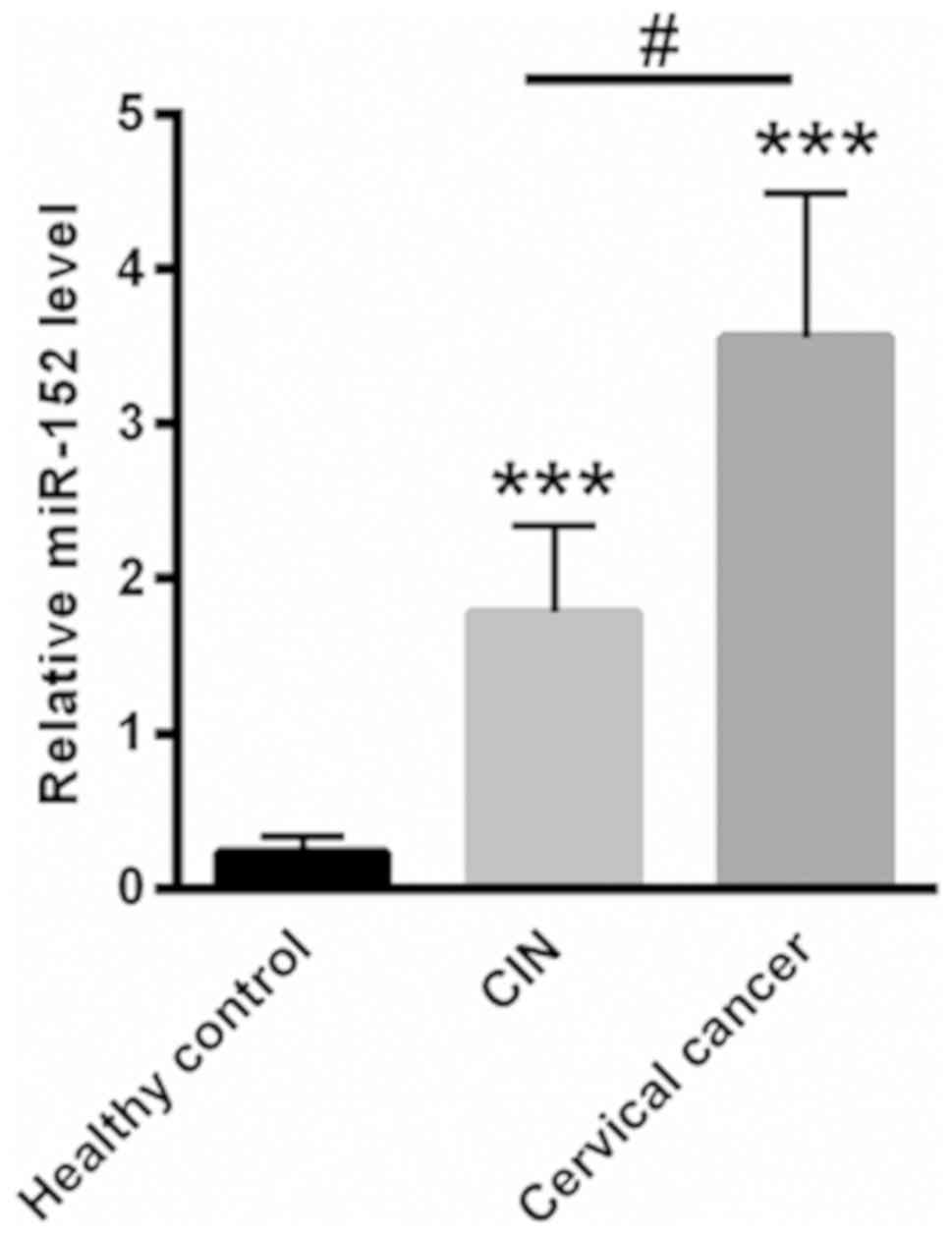
The level of miR-152 in patients with cervical
cancer was determined. The results revealed that levels of miR-152
in the peripheral blood was increased in patients with cervical
cancer and patients with CIN compared with healthy controls. The
highest expression levels of miR-152 were identified in patients
with cervical cancer (Fig. 1). The
median serum miRNA-152 level in healthy controls, patients with CIN
and patients with cervical cancer were 0.23±0.11, 1.78±0.56 and
3.56±0.93, respectively (P<0.001 vs. healthy control; ANOVA
followed by Turkey post hoc test).
miR-152 distinguishes patients with
CIN and patients with cervical cancer from healthy controls
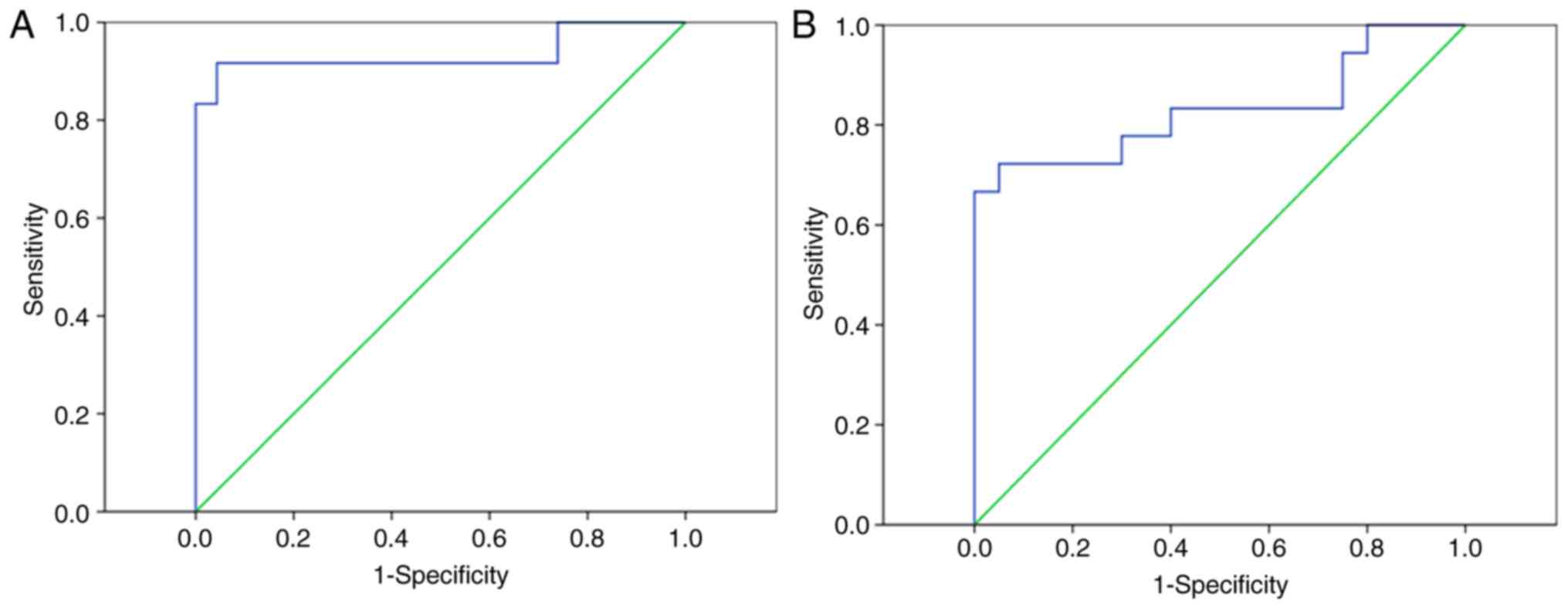
The ROC curve indicated that miR-152 levels in the
peripheral blood of patients may be used to distinguish patients
with CIN from healthy controls, with an ROC curve area of 0.831
with a 95% confidence interval (CI) of 0.688–0.973 (P<0.001;
Fig. 2A). Furthermore, the
peripheral blood levels of miR-152 may be used to differentiate
patients with cervical cancer from healthy controls, with an ROC
curve area of 0.935 (95% CI, 0.817–0.996; P<0.001; Fig. 2B).
Expression levels of miR-152 in the
peripheral blood increase along with the stage of cervical
cancer
Since elevated SCC-Ag levels in patients prior to
treatment is closely associated with advanced international
federation of gynecology and obstetrics stage (23), the present study assessed the
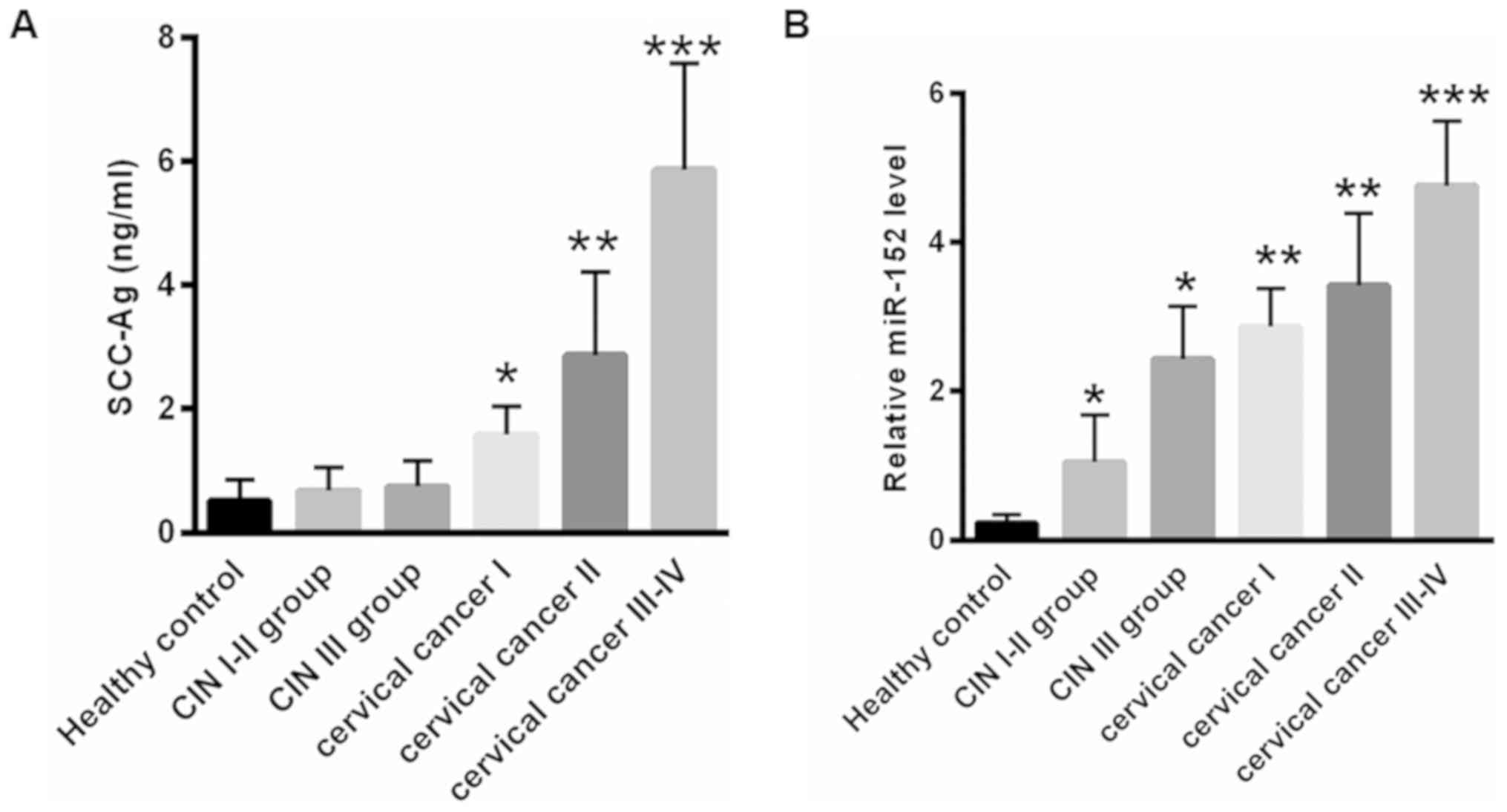
association between SCC-Ag and miR-152 levels. As presented in
Fig. 3A, the median level of SCC-Ag
prior to treatment in early stage CIN and cervical cancer was lower
compared with that in advanced disease stages (healthy controls,
0.52±0.34 ng/ml; CIN I–II group, 0.68±0.38 ng/ml; CIN III group,
0.75±0.42 ng/ml; cervical cancer I, 1.58±0.46 ng/ml; cervical
cancer II, 2.87±1.35 ng/ml; and cervical cancer III–IV, 5.87±1.72
ng/ml). Furthermore, the present study assessed the expression of
miR-152 at different stages of cervical cancer. As presented in
Fig. 3B, compared with healthy
controls (0.23±0.11), the level of miR-152 was 1.05±0.63 for the
CIN I–II group (*P<0.05), 2.43±0.71 for the CIN III group
(*P<0.05), 2.87±0.51 for the cervical cancer stage I group
(**P<0.01), 3.42±0.97 for the cervical cancer stage II group
(**P<0.01) and 4.76±0.87 for the cervical cancer stage III–IV
group (***P<0.001). These data indicated that the level of
miR-152 increased with cervical cancer stage, and was positively
associated with serum SCC-Ag levels.
miR-152 did not identify SCC and
adenocarcinoma
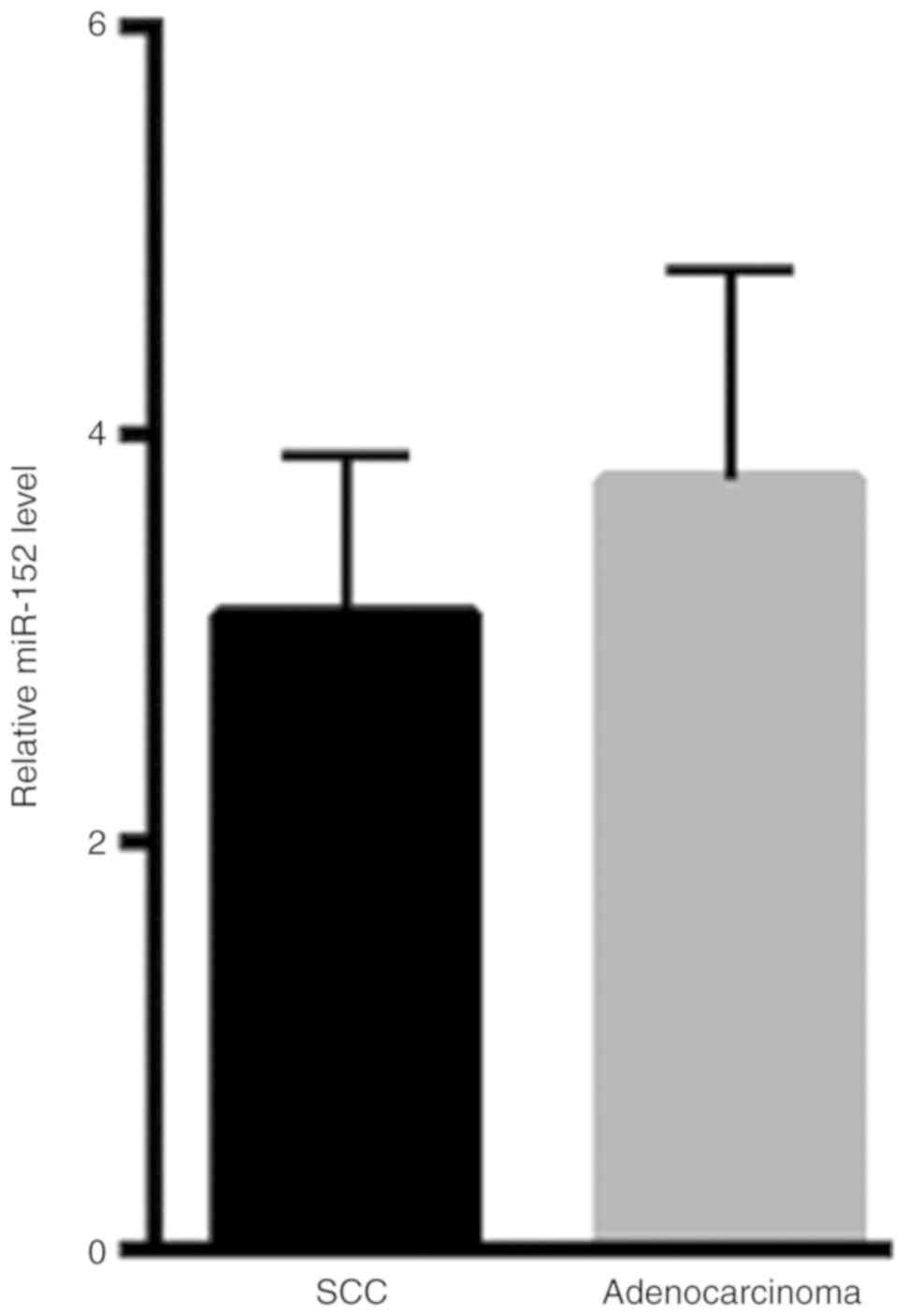
The present study assessed the level of miR-152 in
SCC and adenocarcinoma tissues. However, no significant differences
were observed in the miR-152 levels of SCC (3.12±0.78) and
adenocarcinoma tissues (3.78±1.02; Fig.
4).
miR-152 levels decrease following
treatment
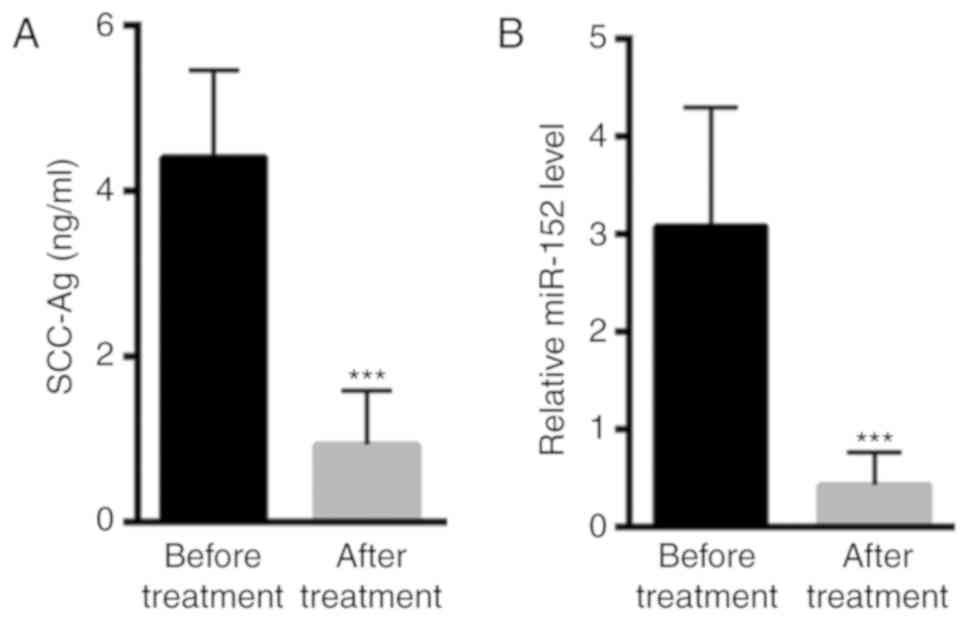
The level of total serum SCC-Ag of 50 patients with
cervical cancer were assessed following treatment with chemotherapy
or chemotherapy and radiation therapy. Prior to treatment, the
median level of SCC-Ag was 4.41±1.05 ng/ml (Fig. 5A). However, the level of serum SCC-Ag
was decreased to 0.74±0.35 ng/ml following treatment (Fig. 5A). In addition, the average level of
miR-152 prior to treatment was 3.08±1.22, which was reduced to
0.43±0.34 following treatment (Fig.
5B). These data indicated that miR-152 levels in peripheral
blood may be an effective biomarker for cervical cancer
screening.
Discussion
At present, it is important to identify effective
disease biomarkers that detect early stage cancer, and thus improve
survival rate (24), particularly
for high-risk patients (8,24). The SCC-Ag is extensively applied
clinically as a prognostic and diagnostic biomarker for patients
with cervical cancer (7,24). However, this antigen is not
significantly increased during the early stages of disease
(25). Therefore, it is necessary to
identify novel biomarkers for the early detection of cervical
cancer.
Previous studies have indicated that miRNAs serve
important regulatory roles in the progression of cervical cancer;
miRNAs primarily regulate cancer cell proliferation, migration and
apoptosis (26,27). miRNAs are also suggested to be stable
in the tissues and blood (28,29),
with circulating miRNAs acting as ‘extracellular communication
RNAs’ between various tissues (30,31).
Compared with tissue-based miRNA profiling, blood miRNAs may be
used as non-invasive, sensitive and specific biomarkers in certain
tumors (32,33). For instance, the level of miR-146a-5p
in serum exosomes may predict the therapeutic effects of cisplatin
in non-small cell lung cancer (34).
In addition, circulating exosomal miR-125a-3p was demonstrated to
be a novel biomarker used for the early detection of colon cancer
(13). These results indicate that
circulating miRNAs may be effective biomarkers for the early
detection of certain types of cancer.
The present study demonstrated that levels of
miR-152 were the lowest in healthy controls, higher in CIN patients
and further increased in patients with cervical cancer.
Furthermore, the level of miR-152 in peripheral blood was higher in
patients with high-grade CIN compared with those with low-grade
CIN. At present, cervical cancer tumor markers, including SCC-Ag,
carcinoembryonic antigen, cytokeratin 19, cancer antigen 125 and
carbohydrate antigen 19-9, are widely utilized in clinical settings
(35). However, these tumor markers
are ineffective at identifying patients with CIN. The present study
assessed the serum SCC-Ag levels of patients with cervical cancer.
Compared with healthy controls, SSC-Ag levels were significantly
higher in patients with cervical cancer. However, no significant
differences were identified in patients with CIN, indicating that
SCC-Ag could not be used as an early detection marker for CIN.
Additionally, low expression levels of SCC-Ag were identified in
the peripheral blood of healthy controls. Unlike SCC-Ag, an
upregulation of miR-152 was detected in patients with CIN.
Therefore, miR-152 was demonstrated to be a more sensitive and
specific screening method compared with SCC-Ag for patients with
CIN. By detecting changes of miR-152 expression in peripheral
blood, patients with a high-risk of cervical cancer may be
differentially identified from healthy controls.
The present study assessed the potential mechanism
by which increased miR-152 levels modulates the malignant
progression of cervical cancer. It has been suggested that the
phosphatase and tensin homolog (PTEN), a tumor suppressor, is
decreased in patients with nasopharyngeal carcinoma (NPC) and is
associated with the pathological grade and clinical stage of NPC
(36). It has been demonstrated that
the reduced expression of PTEN in patients with NPC may be
associated with the upregulation of miR-152, thereby inhibiting
cell apoptosis and enhancing cancer cell proliferation and
migration during NPC development (36). Similarly, the results of the present
study indicated that increased miR-152 levels are identified in
patients with CIN and patients with cervical cancer. Further
studies are required to investigate the impact of increased miR-152
in the peripheral blood of patients with cervical cancer on the
expression of PTEN, and whether this may enhance malignant
changes.
In conclusion, the level of miR-152 in peripheral
blood may be utilized as an effective biomarker for the early
detection of cervical cancer, thus decreasing the requirement for
invasive cervical biopsies. It may also predict the most
appropriate method of treatment for patients with cervical cancer.
However, further studies are required to fully elucidate the
functional role of miR-152 in cervical cancer.
Acknowledgements
Not applicable.
Funding
The present study was supported by a grant from
Hunan Province supporting fund of Linyi People's Hospital
(SDLYH-20170812; Shandong, China).
Availability of data and materials
The datasets used and/or analyzed during the current
study are available from the corresponding author on reasonable
request.
Authors' contributions
DY performed the experiments, analyzed the data and
wrote the paper. QZ designed the experiments, analyzed the data and
gave final approval of the version to be published. Both authors
read and approved the final manuscript.
Ethics approval and consent to
participate
The present study was approved by the Research
Ethics Committee of Linyi People's Hospital (Linyi, Shandong,
China) and all the patients have provided written informed consent
for this study.
Patient consent for publication
All patients provided written informed consent for
the publication of data in this study.
Competing interests
The authors declare that they have no competing
interests.
References
|
1
|
Luttmer R, De Strooper LM, Steenbergen RD,
Berkhof J, Snijders PJ, Heideman DA and Meijer CJ: Management of
high-risk HPV-positive women for detection of cervical (pre)cancer.
Expert Rev Mol Diagn. 16:961–974. 2016. View Article : Google Scholar : PubMed/NCBI
|
|
2
|
El-Zein M, Richardson L and Franco EL:
Cervical cancer screening of HPV vaccinated populations: Cytology,
molecular testing, both or none. J Clin Virol. 76 (Suppl
1):S62–S68. 2016. View Article : Google Scholar : PubMed/NCBI
|
|
3
|
Jayasinghe Y, Rangiah C, Gorelik A,
Ogilvie G, Wark JD, Hartley S and Garland SM: Primary HPV DNA based
cervical cancer screening at 25 years: Views of young Australian
women aged 16–28 years. J Clin Virol. 76 (Suppl 1):S74–S80. 2016.
View Article : Google Scholar : PubMed/NCBI
|
|
4
|
Hasahya OT, Berggren V, Sematimba D,
Nabirye RC and Kumakech E: Beliefs, perceptions and health-seeking
behaviours in relation to cervical cancer: A qualitative study
among women in Uganda following completion of an HPV vaccination
campaign. Glob Health Action. 9:293362016. View Article : Google Scholar : PubMed/NCBI
|
|
5
|
Lofters A and Vahabi M: Self-sampling for
HPV to enhance uptake of cervical cancer screening: Has the time
come in Canada? CMAJ. 188:853–854. 2016. View Article : Google Scholar : PubMed/NCBI
|
|
6
|
Lowy DR: HPV vaccination to prevent
cervical cancer and other HPV-associated disease: From basic
science to effective interventions. J Clin Invest. 126:5–11. 2016.
View Article : Google Scholar : PubMed/NCBI
|
|
7
|
Salvatici M, Achilarre MT, Sandri MT,
Boveri S, Vanna Z and Landoni F: Squamous cell carcinoma antigen
(SCC-Ag) during follow-up of cervical cancer patients: Role in the
early diagnosis of recurrence. Gynecol Oncol. 142:115–119. 2016.
View Article : Google Scholar : PubMed/NCBI
|
|
8
|
Micke O, Prott FJ, Schäfer U, Tangerding
S, Pötter R and Willich N: The impact of squamous cell carcinoma
(SCC) antigen in the follow-up after radiotherapy in patients with
cervical cancer. Anticancer Res. 20:5113–5115. 2000.PubMed/NCBI
|
|
9
|
Nozawa S, Kojima M, Tukazaki K, Sakayori
M, Iizuka R and Kagiyama N: In vitro and in vivo induction of
squamous cell carcinoma antigen (SCC) in a uterine cervical cancer
cell line (SKG-IIIa) with peplomycin and sodium butyrate. Asia
Oceania J Obstet Gynaecol. 16:153–160. 1990. View Article : Google Scholar : PubMed/NCBI
|
|
10
|
Yamashita Y, Uehara T, Hasegawa M, Deng Z,
Matayoshi S, Kiyuna A, Kondo S, Maeda H, Ganaha A and Suzuki M:
Squamous cell carcinoma antigen as a diagnostic marker of nasal
inverted papilloma. Am J Rhinol Allergy. 30:122–127. 2016.
View Article : Google Scholar : PubMed/NCBI
|
|
11
|
Yao J, Zhang P, Li J and Xu W:
MicroRNA-215 acts as a tumor suppressor in breast cancer by
targeting AKT serine/threonine kinase 1. Oncol Lett. 14:1097–1104.
2017. View Article : Google Scholar : PubMed/NCBI
|
|
12
|
Sempere LF, Keto J and Fabbri M: Exosomal
MicroRNAs in breast cancer towards diagnostic and therapeutic
applications. Cancers (Basel). 9:E712017. View Article : Google Scholar : PubMed/NCBI
|
|
13
|
Wang J, Yan F, Zhao Q, Zhan F, Wang R,
Wang L, Zhang Y and Huang X: Circulating exosomal miR-125a-3p as a
novel biomarker for early-stage colon cancer. Sci Rep. 7:41502017.
View Article : Google Scholar : PubMed/NCBI
|
|
14
|
Zhang ZQ, Meng H, Wang N, Liang LN, Liu
LN, Lu SM and Luan Y: Serum microRNA 143 and microRNA 215 as
potential biomarkers for the diagnosis of chronic hepatitis and
hepatocellular carcinoma. Diagn Pathol. 9:1352014. View Article : Google Scholar : PubMed/NCBI
|
|
15
|
Lacedonia D, Palladino GP,
Foschino-Barbaro MP, Scioscia G and Carpagnano GE: Expression
profiling of miRNA-145 and miRNA-338 in serum and sputum of
patients with COPD, asthma, and asthma-COPD overlap syndrome
phenotype. Int J Chron Obstruct Pulmon Dis. 12:1811–1817. 2017.
View Article : Google Scholar : PubMed/NCBI
|
|
16
|
Zhang X, Yang R, Hu BL, Lu P, Zhou LL, He
ZY, Wu HM and Zhu JH: Reduced circulating levels of miR-433 and
miR-133b are potential biomarkers for Parkinson's disease. Front
Cell Neurosci. 11:1702017. View Article : Google Scholar : PubMed/NCBI
|
|
17
|
Tang XL, Lin L, Song LN and Tang XH:
Hypoxia-inducible miR-152 suppresses the expression of WNT1 and
ERBB3, and inhibits the proliferation of cervical cancer cells. Exp
Biol Med (Maywood). 241:1429–1437. 2016. View Article : Google Scholar : PubMed/NCBI
|
|
18
|
Miao C, Zhang J, Zhao K, Liang C, Xu A,
Zhu J, Wang Y, Hua Y, Tian Y, Liu S, et al: The significance of
microRNA-148/152 family as a prognostic factor in multiple human
malignancies: A meta-analysis. Oncotarget. 8:43344–43355. 2017.
View Article : Google Scholar : PubMed/NCBI
|
|
19
|
Chen H, Liu H, Zou H, Chen R, Dou Y, Sheng
S, Dai S, Ai J, Melson J, Kittles RA, et al: Evaluation of plasma
miR-21 and miR-152 as diagnostic biomarkers for common types of
human cancers. J Cancer. 7:490–499. 2016. View Article : Google Scholar : PubMed/NCBI
|
|
20
|
Dou H, Wang Y, Su G and Zhao S: Decreased
plasma let-7c and miR-152 as noninvasive biomarker for
non-small-cell lung cancer. Int J Clin Exp Med. 8:9291–9298.
2015.PubMed/NCBI
|
|
21
|
Pecorelli S: Revised FIGO staging for
carcinoma of the vulva, cervix, and endometrium. Int J Gynaecol
Obstet. 105:103–104. 2009. View Article : Google Scholar : PubMed/NCBI
|
|
22
|
Livak KJ and Schmittgen TD: Analysis of
relative gene expression data using real-time quantitative PCR and
the 2(-Delta Delta C(T)) method. Methods. 25:402–408. 2001.
View Article : Google Scholar : PubMed/NCBI
|
|
23
|
Wen YF, Cheng TT, Chen XL, Huang WJ, Peng
HH, Zhou TC, Lin XD and Zeng LS: Elevated circulating tumor cells
and squamous cell carcinoma antigen levels predict poor survival
for patients with locally advanced cervical cancer treated with
radiotherapy. PLoS One. 13:e02043342018. View Article : Google Scholar : PubMed/NCBI
|
|
24
|
Hung YC, Shiau YC, Chang WC, Kao CH and
Lin CC: Early predicting recurrent cervical cancer with combination
of tissue polypeptide specific antigen (TPS) and squamous cell
carcinoma antigen (SCC). Neoplasma. 49:415–417. 2002.PubMed/NCBI
|
|
25
|
Nagamitsu Y, Nishi H, Sasaki T, Takaesu Y,
Terauchi F and Isaka K: Profiling analysis of circulating microRNA
expression in cervical cancer. Mol Clin Oncol. 5:189–194. 2016.
View Article : Google Scholar : PubMed/NCBI
|
|
26
|
Granados-López AJ, Ruiz-Carrillo JL,
Servín-González LS, Martínez-Rodríguez JL, Reyes-Estrada CA,
Gutiérrez- Hernández R and López JA: Use of mature miRNA strand
selection in miRNAs families in cervical cancer development. Int J
Mol Sci. 18:E4072017. View Article : Google Scholar : PubMed/NCBI
|
|
27
|
Gao D, Zhang Y, Zhu M, Liu S and Wang X:
miRNA expression profiles of HPV-infected patients with cervical
cancer in the Uyghur population in China. PLoS One.
11:e01647012016. View Article : Google Scholar : PubMed/NCBI
|
|
28
|
Liu B, Ding JF, Luo J, Lu L, Yang F and
Tan XD: Seven protective miRNA signatures for prognosis of cervical
cancer. Oncotarget. 7:56690–56698. 2016.PubMed/NCBI
|
|
29
|
Zhao S, Yao D, Chen J and Ding N:
Circulating miRNA-20a and miRNA-203 for screening lymph node
metastasis in early stage cervical cancer. Genet Test Mol
Biomarkers. 17:631–636. 2013. View Article : Google Scholar : PubMed/NCBI
|
|
30
|
Zhao C, Lu F and Chen H, Zhao F, Zhu Z,
Zhao X and Chen H: Clinical significance of circulating miRNA
detection in lung cancer. Med Oncol. 33:412016. View Article : Google Scholar : PubMed/NCBI
|
|
31
|
Ponomaryova AA, Morozkin ES, Rykova EY,
Zaporozhchenko IA, Skvortsova TE, Dobrodeev АY, Zavyalov AA,
Tuzikov SA, Vlassov VV, Cherdyntseva NV, et al: Dynamic changes in
circulating miRNA levels in response to antitumor therapy of lung
cancer. Exp Lung Res. 42:95–102. 2016. View Article : Google Scholar : PubMed/NCBI
|
|
32
|
Qu K, Zhang X, Lin T, Liu T, Wang Z, Liu
S, Zhou L, Wei J, Chang H, Li K, et al: Circulating miRNA-21-5p as
a diagnostic biomarker for pancreatic cancer: Evidence from
comprehensive miRNA expression profiling analysis and clinical
validation. Sci Rep. 7:16922017. View Article : Google Scholar : PubMed/NCBI
|
|
33
|
Sharova E, Grassi A, Marcer A, Ruggero K,
Pinto F, Bassi P, Zanovello P, Zattoni F, D'Agostino DM, Iafrate M
and Ciminale V: A circulating miRNA assay as a first-line test for
prostate cancer screening. Br J Cancer. 114:1362–1366. 2016.
View Article : Google Scholar : PubMed/NCBI
|
|
34
|
Yuwen DL, Sheng BB, Liu J, Wenyu W and Shu
YQ: MiR-146a-5p level in serum exosomes predicts therapeutic effect
of cisplatin in non-small cell lung cancer. Eur Rev Med Pharmacol
Sci. 21:2650–2658. 2017.PubMed/NCBI
|
|
35
|
Dasari S, Wudayagiri R and Valluru L:
Cervical cancer: Biomarkers for diagnosis and treatment. Clin Chim
Acta. 445:7–11. 2015. View Article : Google Scholar : PubMed/NCBI
|
|
36
|
Huang S, Li X and Zhu H: MicroRNA-152
targets phosphatase and tensin homolog to inhibit apoptosis and
promote cell migration of nasopharyngeal carcinoma cells. Med Sci
Monit. 22:4330–4337. 2016. View Article : Google Scholar : PubMed/NCBI
|