Spandidos Publications Logo
  • About
    • About Spandidos
    • Aims and Scopes
    • Abstracting and Indexing
    • Editorial Policies
    • Reprints and Permissions
    • Job Opportunities
    • Terms and Conditions
    • Contact
  • Journals
    • All Journals
    • Oncology Letters
      • Oncology Letters
      • Information for Authors
      • Editorial Policies
      • Editorial Board
      • Aims and Scope
      • Abstracting and Indexing
      • Bibliographic Information
      • Archive
    • International Journal of Oncology
      • International Journal of Oncology
      • Information for Authors
      • Editorial Policies
      • Editorial Board
      • Aims and Scope
      • Abstracting and Indexing
      • Bibliographic Information
      • Archive
    • Molecular and Clinical Oncology
      • Molecular and Clinical Oncology
      • Information for Authors
      • Editorial Policies
      • Editorial Board
      • Aims and Scope
      • Abstracting and Indexing
      • Bibliographic Information
      • Archive
    • Experimental and Therapeutic Medicine
      • Experimental and Therapeutic Medicine
      • Information for Authors
      • Editorial Policies
      • Editorial Board
      • Aims and Scope
      • Abstracting and Indexing
      • Bibliographic Information
      • Archive
    • International Journal of Molecular Medicine
      • International Journal of Molecular Medicine
      • Information for Authors
      • Editorial Policies
      • Editorial Board
      • Aims and Scope
      • Abstracting and Indexing
      • Bibliographic Information
      • Archive
    • Biomedical Reports
      • Biomedical Reports
      • Information for Authors
      • Editorial Policies
      • Editorial Board
      • Aims and Scope
      • Abstracting and Indexing
      • Bibliographic Information
      • Archive
    • Oncology Reports
      • Oncology Reports
      • Information for Authors
      • Editorial Policies
      • Editorial Board
      • Aims and Scope
      • Abstracting and Indexing
      • Bibliographic Information
      • Archive
    • Molecular Medicine Reports
      • Molecular Medicine Reports
      • Information for Authors
      • Editorial Policies
      • Editorial Board
      • Aims and Scope
      • Abstracting and Indexing
      • Bibliographic Information
      • Archive
    • World Academy of Sciences Journal
      • World Academy of Sciences Journal
      • Information for Authors
      • Editorial Policies
      • Editorial Board
      • Aims and Scope
      • Abstracting and Indexing
      • Bibliographic Information
      • Archive
    • International Journal of Functional Nutrition
      • International Journal of Functional Nutrition
      • Information for Authors
      • Editorial Policies
      • Editorial Board
      • Aims and Scope
      • Abstracting and Indexing
      • Bibliographic Information
      • Archive
    • International Journal of Epigenetics
      • International Journal of Epigenetics
      • Information for Authors
      • Editorial Policies
      • Editorial Board
      • Aims and Scope
      • Abstracting and Indexing
      • Bibliographic Information
      • Archive
    • Medicine International
      • Medicine International
      • Information for Authors
      • Editorial Policies
      • Editorial Board
      • Aims and Scope
      • Abstracting and Indexing
      • Bibliographic Information
      • Archive
  • Articles
  • Information
    • Information for Authors
    • Information for Reviewers
    • Information for Librarians
    • Information for Advertisers
    • Conferences
  • Language Editing
Spandidos Publications Logo
  • About
    • About Spandidos
    • Aims and Scopes
    • Abstracting and Indexing
    • Editorial Policies
    • Reprints and Permissions
    • Job Opportunities
    • Terms and Conditions
    • Contact
  • Journals
    • All Journals
    • Biomedical Reports
      • Information for Authors
      • Editorial Policies
      • Editorial Board
      • Aims and Scope
      • Abstracting and Indexing
      • Bibliographic Information
      • Archive
    • Experimental and Therapeutic Medicine
      • Information for Authors
      • Editorial Policies
      • Editorial Board
      • Aims and Scope
      • Abstracting and Indexing
      • Bibliographic Information
      • Archive
    • International Journal of Epigenetics
      • Information for Authors
      • Editorial Policies
      • Editorial Board
      • Aims and Scope
      • Abstracting and Indexing
      • Bibliographic Information
      • Archive
    • International Journal of Functional Nutrition
      • Information for Authors
      • Editorial Policies
      • Editorial Board
      • Aims and Scope
      • Abstracting and Indexing
      • Bibliographic Information
      • Archive
    • International Journal of Molecular Medicine
      • Information for Authors
      • Editorial Policies
      • Editorial Board
      • Aims and Scope
      • Abstracting and Indexing
      • Bibliographic Information
      • Archive
    • International Journal of Oncology
      • Information for Authors
      • Editorial Policies
      • Editorial Board
      • Aims and Scope
      • Abstracting and Indexing
      • Bibliographic Information
      • Archive
    • Medicine International
      • Information for Authors
      • Editorial Policies
      • Editorial Board
      • Aims and Scope
      • Abstracting and Indexing
      • Bibliographic Information
      • Archive
    • Molecular and Clinical Oncology
      • Information for Authors
      • Editorial Policies
      • Editorial Board
      • Aims and Scope
      • Abstracting and Indexing
      • Bibliographic Information
      • Archive
    • Molecular Medicine Reports
      • Information for Authors
      • Editorial Policies
      • Editorial Board
      • Aims and Scope
      • Abstracting and Indexing
      • Bibliographic Information
      • Archive
    • Oncology Letters
      • Information for Authors
      • Editorial Policies
      • Editorial Board
      • Aims and Scope
      • Abstracting and Indexing
      • Bibliographic Information
      • Archive
    • Oncology Reports
      • Information for Authors
      • Editorial Policies
      • Editorial Board
      • Aims and Scope
      • Abstracting and Indexing
      • Bibliographic Information
      • Archive
    • World Academy of Sciences Journal
      • Information for Authors
      • Editorial Policies
      • Editorial Board
      • Aims and Scope
      • Abstracting and Indexing
      • Bibliographic Information
      • Archive
  • Articles
  • Information
    • For Authors
    • For Reviewers
    • For Librarians
    • For Advertisers
    • Conferences
  • Language Editing
Login Register Submit
  • This site uses cookies
  • You can change your cookie settings at any time by following the instructions in our Cookie Policy. To find out more, you may read our Privacy Policy.

    I agree
Search articles by DOI, keyword, author or affiliation
Search
Advanced Search
presentation
Oncology Letters
Join Editorial Board Propose a Special Issue
Print ISSN: 1792-1074 Online ISSN: 1792-1082
Journal Cover
July-2019 Volume 18 Issue 1

Full Size Image

Sign up for eToc alerts
Recommend to Library

Journals

International Journal of Molecular Medicine

International Journal of Molecular Medicine

International Journal of Molecular Medicine is an international journal devoted to molecular mechanisms of human disease.

International Journal of Oncology

International Journal of Oncology

International Journal of Oncology is an international journal devoted to oncology research and cancer treatment.

Molecular Medicine Reports

Molecular Medicine Reports

Covers molecular medicine topics such as pharmacology, pathology, genetics, neuroscience, infectious diseases, molecular cardiology, and molecular surgery.

Oncology Reports

Oncology Reports

Oncology Reports is an international journal devoted to fundamental and applied research in Oncology.

Experimental and Therapeutic Medicine

Experimental and Therapeutic Medicine

Experimental and Therapeutic Medicine is an international journal devoted to laboratory and clinical medicine.

Oncology Letters

Oncology Letters

Oncology Letters is an international journal devoted to Experimental and Clinical Oncology.

Biomedical Reports

Biomedical Reports

Explores a wide range of biological and medical fields, including pharmacology, genetics, microbiology, neuroscience, and molecular cardiology.

Molecular and Clinical Oncology

Molecular and Clinical Oncology

International journal addressing all aspects of oncology research, from tumorigenesis and oncogenes to chemotherapy and metastasis.

World Academy of Sciences Journal

World Academy of Sciences Journal

Multidisciplinary open-access journal spanning biochemistry, genetics, neuroscience, environmental health, and synthetic biology.

International Journal of Functional Nutrition

International Journal of Functional Nutrition

Open-access journal combining biochemistry, pharmacology, immunology, and genetics to advance health through functional nutrition.

International Journal of Epigenetics

International Journal of Epigenetics

Publishes open-access research on using epigenetics to advance understanding and treatment of human disease.

Medicine International

Medicine International

An International Open Access Journal Devoted to General Medicine.

Journal Cover
July-2019 Volume 18 Issue 1

Full Size Image

Sign up for eToc alerts
Recommend to Library

  • Article
  • Citations
    • Cite This Article
    • Download Citation
    • Create Citation Alert
    • Remove Citation Alert
    • Cited By
  • Similar Articles
    • Related Articles (in Spandidos Publications)
    • Similar Articles (Google Scholar)
    • Similar Articles (PubMed)
  • Download PDF
  • Download XML
  • View XML
Article Open Access

Prognostic value of ephrin B receptors in breast cancer: An online survival analysis using the microarray data of 3,554 patients

  • Authors:
    • Xin Mu
    • Ou Huang
    • Min Jiang
    • Zuoquan Xie
    • Debo Chen
    • Xi Zhang
  • View Affiliations / Copyright

    Affiliations: Department of Urology, The Second Affiliated Hospital of Fujian Medical University, Quanzhou, Fujian 362000, P.R. China, Comprehensive Breast Health Center, Ruijin Hospital, Shanghai Jiaotong University School of Medicine, Shanghai 200025, P.R. China, Department of Oncology, The First Affiliated Hospital of Soochow University, Suzhou, Jiangsu 215000, P.R. China, Division of Anti‑tumor Pharmacology, State Key Laboratory of Drug Research, Shanghai Institute of Materia Medica, Chinese Academy of Sciences, Shanghai 200025, P.R. China, Department of Breast Oncology, The First Hospital of Quanzhou Affiliated to Fujian Medical University, Quanzhou, Fujian 362000, P.R. China
    Copyright: © Mu et al. This is an open access article distributed under the terms of Creative Commons Attribution License.
  • Pages: 742-750
    |
    Published online on: May 17, 2019
       https://doi.org/10.3892/ol.2019.10363
  • Expand metrics +
Metrics: Total Views: 0 (Spandidos Publications: | PMC Statistics: )
Metrics: Total PDF Downloads: 0 (Spandidos Publications: | PMC Statistics: )
Cited By (CrossRef): 0 citations Loading Articles...

This article is mentioned in:


Abstract

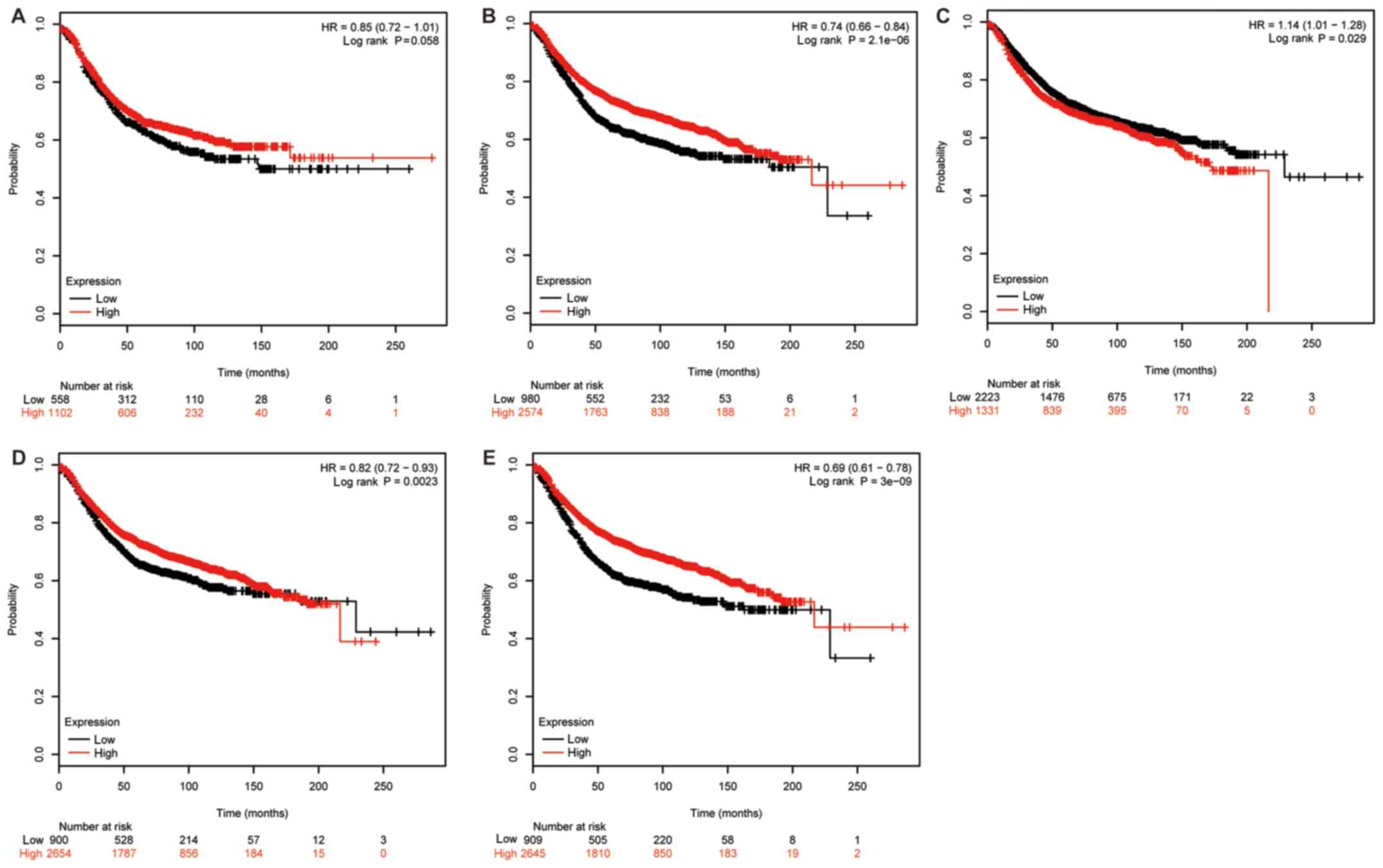
The roles of Ephrin B (EphB) receptors in cancer are relatively unknown as these receptors are associated with complex signaling pathways. A limited number of studies have investigated the association between EphB receptors and prognosis. Using the Kaplan‑Meier plotter database, the present study investigated the associations between the mRNA expression levels of five EphB receptors and the outcomes of 3,554 patients with breast cancer who had been followed‑up for 20 years. Hazard ratios (HR) and 95% confidence intervals (CI) were calculated to assess the relative risk of survival. The results demonstrated that high mRNA expression levels of EphB2 (HR, 0.74; 95% CI, 0.66‑0.84; P=2.1x10‑6), EphB4 (HR, 0.82; 95% CI, 0.72‑0.93; P=0.0023) and EphB6 (HR, 0.69; 95% CI, 0.61‑0.78; P=3x10‑9) were significantly associated with improved survival, while a high mRNA expression level of EphB3 (HR, 1.14; 95% CI, 1.01‑1.28; P=0.029) was associated with worse survival for patients with breast cancer. High expression levels of all EphB receptors, including EphB1 (HR, 1.4; 95% CI, 1.02‑1.94; P=0.039), EphB2 (HR, 1.34; 95% CI, 1.07‑1.67; P=0.011), EphB3 (HR, 1.39; 95% CI, 1.11‑1.73, P=0.0038), EphB4 (HR, 1.33; 95% CI, 1.06‑1.67; P=0.013) and EphB6 (HR, 1.32; 95% CI, 1.05‑1.65; P=0.016), were associated with an increased risk of mortality in patients with lymph‑node‑positive breast cancer. High mRNA expression levels of EphB1 were not associated with survival for all patients with breast cancer (HR, 0.85; 95% CI, 0.72‑1.01; P=0.058). The results of the present suggested that EphB receptors may be useful as prognostic biomarkers of breast cancer.
View Figures

Figure 1

View References

1 

Siegel RL, Miller KD and Jemal A: Cancer statistics, 2018. CA Cancer J Clin. 68:7–30. 2018. View Article : Google Scholar : PubMed/NCBI

2 

Gonzalez-Conchas GA, Rodriguez-Romo L, Hernandez-Barajas D, Gonzalez-Guerrero JF, Rodriguez-Fernandez IA, Verdines-Perez A, Templeton AJ, Ocana A, Seruga B, Tannock IF, et al: Epidermal growth factor receptor overexpression and outcomes in early breast cancer: A systematic review and a meta-analysis. Cancer Treat Rev. 62:1–8. 2018. View Article : Google Scholar : PubMed/NCBI

3 

Pasquale EB: Eph-ephrin bidirectional signaling in physiology and disease. Cell. 133:38–52. 2008. View Article : Google Scholar : PubMed/NCBI

4 

Himanen JP, Saha N and Nikolov DB: Cell-cell signaling via Eph receptors and ephrins. Curr Opin Cell Biol. 19:534–542. 2007. View Article : Google Scholar : PubMed/NCBI

5 

Brantley-Sieders DM: Clinical relevance of Ephs and ephrins in cancer: Lessons from breast, colorectal, and lung cancer profiling. Semin Cell Dev Biol. 23:102–108. 2012. View Article : Google Scholar : PubMed/NCBI

6 

Kaenel P, Mosimann M and Andres AC: The multifaceted roles of Eph/ephrin signaling in breast cancer. Cell Adh Migr. 6:138–147. 2012. View Article : Google Scholar : PubMed/NCBI

7 

Genander M and Frisén J: Ephrins and Eph receptors in stem cells and cancer. Curr Opin Cell Biol. 22:611–616. 2010. View Article : Google Scholar : PubMed/NCBI

8 

Lin B, Yin T, Wu YI, Inoue T and Levchenko A: Interplay between chemotaxis and contact inhibition of locomotion determines exploratory cell migration. Nat Commun. 6:66192015. View Article : Google Scholar : PubMed/NCBI

9 

Pasquale EB: Eph receptors and ephrins in cancer: Bidirectional signalling and beyond. Nat Rev Cancer. 10:165–180. 2010. View Article : Google Scholar : PubMed/NCBI

10 

Noren NK, Foos G, Hauser CA and Pasquale EB: The EphB4 receptor suppresses breast cancer cell tumorigenicity through an Abl-Crk pathway. Nat Cell Biol. 8:815–825. 2006. View Article : Google Scholar : PubMed/NCBI

11 

Janes PW, Griesshaber B, Atapattu L, Nievergall E, Hii LL, Mensinga A, Chheang C, Day BW, Boyd AW, Bastiaens PI, et al: Eph receptor function is modulated by heterooligomerization of A and B type Eph receptors. J Cell Biol. 195:1033–1045. 2011. View Article : Google Scholar : PubMed/NCBI

12 

Arvanitis D and Davy A: Eph/ephrin signaling: Networks. Genes Dev. 22:416–429. 2008. View Article : Google Scholar : PubMed/NCBI

13 

Cortina C, Palomo-Ponce S, Iglesias M, Fernández-Masip JL, Vivancos A, Whissell G, Humà M, Peiró N, Gallego L, Jonkheer S, et al: EphB-ephrin-B interactions suppress colorectal cancer progression by compartmentalizing tumor cells. Nat Genet. 39:1376–1383. 2007. View Article : Google Scholar : PubMed/NCBI

14 

Győrffy B, Surowiak P, Budczies J and Lánczky A: Online survival analysis software to assess the prognostic value of biomarkers using transcriptomic data in non-small-cell lung cancer. PLoS One. 8:e822412013. View Article : Google Scholar : PubMed/NCBI

15 

Pénzváltó Z, Lánczky A, Lénárt J, Meggyesházi N, Krenács T, Szoboszlai N, Denkert C, Pete I and Győrffy B: MEK1 is associated with carboplatin resistance and is a prognostic biomarker in epithelial ovarian cancer. BMC Cancer. 14:8372014. View Article : Google Scholar : PubMed/NCBI

16 

Győrffy B, Bottai G, Lehmann-Che J, Kéri G, Orfi L, Iwamoto T, Desmedt C, Bianchini G, Turner NC, de Thè H, et al: TP53 mutation-correlated genes predict the risk of tumor relapse and identify MPS1 as a potential therapeutic kinase in TP53-mutated breast cancers. Mol Oncol. 8:508–519. 2014. View Article : Google Scholar : PubMed/NCBI

17 

Pongor L, Kormos M, Hatzis C, Pusztai L, Szabó A and Győrffy B: A genome-wide approach to link genotype to clinical outcome by utilizing next generation sequencing and gene chip data of 6,697 breast cancer patients. Genome Med. 7:1042015. View Article : Google Scholar : PubMed/NCBI

18 

Györffy B, Lanczky A, Eklund AC, Denkert C, Budczies J, Li Q and Szallasi Z: An online survival analysis tool to rapidly assess the effect of 22,277 genes on breast cancer prognosis using microarray data of 1,809 patients. Breast Cancer Res Treat. 123:725–731. 2010. View Article : Google Scholar : PubMed/NCBI

19 

Gyorffy B, Lánczky A and Szállási Z: Implementing an online tool for genome-wide validation of survival-associated biomarkers in ovarian-cancer using microarray data from 1287 patients. Endocr Relat Cancer. 19:197–208. 2012. View Article : Google Scholar : PubMed/NCBI

20 

Bonifaci N, Górski B, Masojć B, Wokołorczyk D, Jakubowska A, Dębniak T, Berenguer A, Serra Musach J, Brunet J, Dopazo J, et al: Exploring the link between germline and somatic genetic alterations in breast carcinogenesis. PLoS One. 5:e140782010. View Article : Google Scholar : PubMed/NCBI

21 

Becker E, Huynh-Do U, Holland S, Pawson T, Daniel TO and Skolnik EY: Nck-interacting Ste20 kinase couples Eph receptors to c-Jun N-terminal kinase and integrin activation. Mol Cell Biol. 20:1537–1545. 2000. View Article : Google Scholar : PubMed/NCBI

22 

Stein E, Huynh-Do U, Lane AA, Cerretti DP and Daniel TO: Nck recruitment to Eph receptor, EphB1/ELK, couples ligand activation to c-Jun kinase. J Biol Chem. 273:1303–1308. 1998. View Article : Google Scholar : PubMed/NCBI

23 

Vindis C, Cerretti DP, Daniel TO and Huynh-Do U: EphB1 recruits c-Src and p52Shc to activate MAPK/ERK and promote chemotaxis. J Cell Biol. 162:661–671. 2003. View Article : Google Scholar : PubMed/NCBI

24 

Chukkapalli S, Amessou M, Dilly AK, Dekhil H, Zhao J, Liu Q, Bejna A, Thomas RD, Bandyopadhyay S, Bismar TA, et al: Role of the EphB2 receptor in autophagy, apoptosis and invasion in human breast cancer cells. Exp Cell Res. 320:233–246. 2014. View Article : Google Scholar : PubMed/NCBI

25 

Genander M, Halford MM, Xu NJ, Eriksson M, Yu Z, Qiu Z, Martling A, Greicius G, Thakar S, Catchpole T, et al: Dissociation of EphB2 signaling pathways mediating progenitor cell proliferation and tumor suppression. Cell. 139:679–692. 2009. View Article : Google Scholar : PubMed/NCBI

26 

Husa AM, Magić Ž, Larsson M, Fornander T and Pérez-Tenorio G: EPH/ephrin profile and EPHB2 expression predicts patient survival in breast cancer. Oncotarget. 7:21362–21380. 2016. View Article : Google Scholar : PubMed/NCBI

27 

Lam S, Wiercinska E, Teunisse AF, Lodder K, ten Dijke P and Jochemsen AG: Wild-type p53 inhibits pro-invasive properties of TGF-β3 in breast cancer, in part through regulation of EPHB2, a new TGF-β target gene. Breast Cancer Res Treat. 148:7–18. 2014. View Article : Google Scholar : PubMed/NCBI

28 

Poliakov A, Cotrina ML, Pasini A and Wilkinson DG: Regulation of EphB2 activation and cell repulsion by feedback control of the MAPK pathway. J Cell Biol. 183:933–947. 2008. View Article : Google Scholar : PubMed/NCBI

29 

Dail M, Richter M, Godement P and Pasquale EB: Eph receptors inactivate R-Ras through different mechanisms to achieve cell repulsion. J Cell Sci. 119:1244–1254. 2006. View Article : Google Scholar : PubMed/NCBI

30 

Miao H, Strebhardt K, Pasquale EB, Shen TL, Guan JL and Wang B: Inhibition of integrin-mediated cell adhesion but not directional cell migration requires catalytic activity of EphB3 receptor tyrosine kinase. Role of Rho family small GTPases. J Biol Chem. 280:923–932. 2005. View Article : Google Scholar : PubMed/NCBI

31 

Maddigan A, Truitt L, Arsenault R, Freywald T, Allonby O, Dean J, Narendran A, Xiang J, Weng A, Napper S and Freywald A: EphB receptors trigger Akt activation and suppress Fas receptor-induced apoptosis in malignant T lymphocytes. J Immunol. 187:5983–5994. 2011. View Article : Google Scholar : PubMed/NCBI

32 

Nikolova Z, Djonov V, Zuercher G, Andres AC and Ziemiecki A: Cell-type specific and estrogen dependent expression of the receptor tyrosine kinase EphB4 and its ligand ephrin-B2 during mammary gland morphogenesis. J Cell Sci. 111:2741–2751. 1998.PubMed/NCBI

33 

Munarini N, Jäger R, Abderhalden S, Zuercher G, Rohrbach V, Loercher S, Pfanner-Meyer B, Andres AC and Ziemiecki A: Altered mammary epithelial development, pattern formation and involution in transgenic mice expressing the EphB4 receptor tyrosine kinase. J Cell Sci. 115:25–37. 2002.PubMed/NCBI

34 

Rutkowski R, Mertens-Walker I, Lisle JE, Herington AC and Stephenson SA: Evidence for a dual function of EphB4 as tumor promoter and suppressor regulated by the absence or presence of the ephrin-B2 ligand. Int J Cancer. 131:E614–E624. 2012. View Article : Google Scholar : PubMed/NCBI

35 

Pradeep S, Huang J, Mora EM, Nick AM, Cho MS, Wu SY, Noh K, Pecot CV, Rupaimoole R, Stein MA, et al: Erythropoietin stimulates tumor growth via EphB4. Cancer Cell. 28:610–622. 2015. View Article : Google Scholar : PubMed/NCBI

36 

Li X, Song C, Huang G, Sun S, Qiao J, Zhao J, Zhao Z and Li M: The coexpression of EphB4 and EphrinB2 is associated with poor prognosis in HER2-positive breast cancer. Onco Targets Ther. 10:1735–1742. 2017. View Article : Google Scholar : PubMed/NCBI

37 

Brantley-Sieders DM, Jiang A, Sarma K, Badu-Nkansah A, Walter DL, Shyr Y and Chen J: Eph/ephrin profiling in human breast cancer reveals significant associations between expression level and clinical outcome. PLoS One. 6:e244262011. View Article : Google Scholar : PubMed/NCBI

38 

Barneh F, Moshayedi M, Mirmohammadsadeghi H, Haghjooy-Javanmard S, Sabzghabaee AM and Badri S: EphB4 tyrosine kinase stimulation inhibits growth of MDA-MB-231 breast cancer cells in a dose and time dependent manner. Dis Markers. 35:933–938. 2013. View Article : Google Scholar : PubMed/NCBI

39 

Noren NK and Pasquale EB: Paradoxes of the EphB4 receptor in cancer. Cancer Res. 67:3994–3997. 2007. View Article : Google Scholar : PubMed/NCBI

40 

Steinle JJ, Meininger CJ, Forough R, Wu G, Wu MH and Granger HJ: Eph B4 receptor signaling mediates endothelial cell migration and proliferation via the phosphatidylinositol 3-kinase pathway. J Biol Chem. 277:43830–43835. 2002. View Article : Google Scholar : PubMed/NCBI

41 

Truitt L, Freywald T, DeCoteau J, Sharfe N and Freywald A: The EphB6 receptor cooperates with c-Cbl to regulate the behavior of breast cancer cells. Cancer Res. 70:1141–1153. 2010. View Article : Google Scholar : PubMed/NCBI

42 

Bhushan L, Tavitian N, Dey D, Tumur Z, Parsa C and Kandpal RP: Modulation of liver-intestine cadherin (Cadherin 17) expression, ERK phosphorylation and WNT signaling in EPHB6 receptor-expressing MDA-MB-231 cells. Cancer Genomics Proteomics. 11:239–249. 2014.PubMed/NCBI

43 

Fox BP and Kandpal RP: EphB6 receptor significantly alters invasiveness and other phenotypic characteristics of human breast carcinoma cells. Oncogene. 28:1706–1713. 2009. View Article : Google Scholar : PubMed/NCBI

44 

Kandpal RP: Tyrosine kinase-deficient EphB6 receptor-dependent alterations in proteomic profiles of invasive breast carcinoma cells as determined by difference gel electrophoresis. Cancer Genomics Proteomics. 7:253–260. 2010.PubMed/NCBI

45 

Moshayedi M, Barneh F, Haghjooy-Javanmard S, Sadeghi HM, Eskandari N and Sabzghabaee AM: A rapid and sensitive method for EphB4 identification as a diagnostic and therapeutic biomarker in invasive breast cancer. J Cancer Res Ther. 12:188–192. 2016. View Article : Google Scholar : PubMed/NCBI

46 

Curtis C, Shah SP, Chin SF, Turashvili G, Rueda OM, Dunning MJ, Speed D, Lynch AG, Samarajiwa S, Yuan Y, et al: The genomic and transcriptomic architecture of 2,000 breast tumours reveals novel subgroups. Nature. 486:346–352. 2012. View Article : Google Scholar : PubMed/NCBI

47 

Pereira B, Chin SF, Rueda OM, Vollan HK, Provenzano E, Bardwell HA, Pugh M, Jones L, Russell R, Sammut S, et al: The somatic mutation profiles of 2,433 breast cancers refines their genomic and transcriptomic landscapes. Nat Commun. 7:114792016. View Article : Google Scholar : PubMed/NCBI

48 

Kullander K and Klein R: Mechanisms and functions of Eph and ephrin signalling. Nat Rev Mol Cell Biol. 3:475–486. 2002. View Article : Google Scholar : PubMed/NCBI

49 

Fox BP and Kandpal RP: A paradigm shift in EPH receptor interaction: Biological relevance of EPHB6 interaction with EPHA2 and EPHB2 in breast carcinoma cell lines. Cancer Genomics Proteomics. 8:185–193. 2011.PubMed/NCBI

50 

Klein R: Bidirectional modulation of synaptic functions by Eph/ephrin signaling. Nat Neurosci. 12:15–20. 2009. View Article : Google Scholar : PubMed/NCBI

51 

Orsulic S and Kemler R: Expression of Eph receptors and ephrins is differentially regulated by E-cadherin. J Cell Sci. 113:1793–1802. 2000.PubMed/NCBI

52 

Paul JM, Toosi B, Vizeacoumar FS, Bhanumathy KK, Li Y, Gerger C, El Zawily A, Freywald T, Anderson DH, Mousseau D, et al: Targeting synthetic lethality between the SRC kinase and the EPHB6 receptor may benefit cancer treatment. Oncotarget. 7:50027–50042. 2016. View Article : Google Scholar : PubMed/NCBI

53 

Lodola A, Giorgio C, Incerti M, Zanotti I and Tognolini M: Targeting Eph/ephrin system in cancer therapy. Eur J Med Chem. 142:152–162. 2017. View Article : Google Scholar : PubMed/NCBI

54 

Chrencik JE, Brooun A, Recht MI, Nicola G, Davis LK, Abagyan R, Widmer H, Pasquale EB and Kuhn P: Three-dimensional structure of the EphB2 receptor in complex with an antagonistic peptide reveals a novel mode of inhibition. J Biol Chem. 282:36505–36513. 2007. View Article : Google Scholar : PubMed/NCBI

55 

Koolpe M, Burgess R, Dail M and Pasquale EB: EphB receptor-binding peptides identified by phage display enable design of an antagonist with ephrin-like affinity. J Biol Chem. 280:17301–17311. 2005. View Article : Google Scholar : PubMed/NCBI

Related Articles

  • Abstract
  • View
  • Download
  • Twitter
Copy and paste a formatted citation
Spandidos Publications style
Mu X, Huang O, Jiang M, Xie Z, Chen D and Zhang X: Prognostic value of ephrin B receptors in breast cancer: An online survival analysis using the microarray data of 3,554 patients. Oncol Lett 18: 742-750, 2019.
APA
Mu, X., Huang, O., Jiang, M., Xie, Z., Chen, D., & Zhang, X. (2019). Prognostic value of ephrin B receptors in breast cancer: An online survival analysis using the microarray data of 3,554 patients. Oncology Letters, 18, 742-750. https://doi.org/10.3892/ol.2019.10363
MLA
Mu, X., Huang, O., Jiang, M., Xie, Z., Chen, D., Zhang, X."Prognostic value of ephrin B receptors in breast cancer: An online survival analysis using the microarray data of 3,554 patients". Oncology Letters 18.1 (2019): 742-750.
Chicago
Mu, X., Huang, O., Jiang, M., Xie, Z., Chen, D., Zhang, X."Prognostic value of ephrin B receptors in breast cancer: An online survival analysis using the microarray data of 3,554 patients". Oncology Letters 18, no. 1 (2019): 742-750. https://doi.org/10.3892/ol.2019.10363
Copy and paste a formatted citation
x
Spandidos Publications style
Mu X, Huang O, Jiang M, Xie Z, Chen D and Zhang X: Prognostic value of ephrin B receptors in breast cancer: An online survival analysis using the microarray data of 3,554 patients. Oncol Lett 18: 742-750, 2019.
APA
Mu, X., Huang, O., Jiang, M., Xie, Z., Chen, D., & Zhang, X. (2019). Prognostic value of ephrin B receptors in breast cancer: An online survival analysis using the microarray data of 3,554 patients. Oncology Letters, 18, 742-750. https://doi.org/10.3892/ol.2019.10363
MLA
Mu, X., Huang, O., Jiang, M., Xie, Z., Chen, D., Zhang, X."Prognostic value of ephrin B receptors in breast cancer: An online survival analysis using the microarray data of 3,554 patients". Oncology Letters 18.1 (2019): 742-750.
Chicago
Mu, X., Huang, O., Jiang, M., Xie, Z., Chen, D., Zhang, X."Prognostic value of ephrin B receptors in breast cancer: An online survival analysis using the microarray data of 3,554 patients". Oncology Letters 18, no. 1 (2019): 742-750. https://doi.org/10.3892/ol.2019.10363
Follow us
  • Twitter
  • LinkedIn
  • Facebook
About
  • Spandidos Publications
  • Careers
  • Cookie Policy
  • Privacy Policy
How can we help?
  • Help
  • Live Chat
  • Contact
  • Email to our Support Team