Spandidos Publications Logo
  • About
    • About Spandidos
    • Aims and Scopes
    • Abstracting and Indexing
    • Editorial Policies
    • Reprints and Permissions
    • Job Opportunities
    • Terms and Conditions
    • Contact
  • Journals
    • All Journals
    • Oncology Letters
      • Oncology Letters
      • Information for Authors
      • Editorial Policies
      • Editorial Board
      • Aims and Scope
      • Abstracting and Indexing
      • Bibliographic Information
      • Archive
    • International Journal of Oncology
      • International Journal of Oncology
      • Information for Authors
      • Editorial Policies
      • Editorial Board
      • Aims and Scope
      • Abstracting and Indexing
      • Bibliographic Information
      • Archive
    • Molecular and Clinical Oncology
      • Molecular and Clinical Oncology
      • Information for Authors
      • Editorial Policies
      • Editorial Board
      • Aims and Scope
      • Abstracting and Indexing
      • Bibliographic Information
      • Archive
    • Experimental and Therapeutic Medicine
      • Experimental and Therapeutic Medicine
      • Information for Authors
      • Editorial Policies
      • Editorial Board
      • Aims and Scope
      • Abstracting and Indexing
      • Bibliographic Information
      • Archive
    • International Journal of Molecular Medicine
      • International Journal of Molecular Medicine
      • Information for Authors
      • Editorial Policies
      • Editorial Board
      • Aims and Scope
      • Abstracting and Indexing
      • Bibliographic Information
      • Archive
    • Biomedical Reports
      • Biomedical Reports
      • Information for Authors
      • Editorial Policies
      • Editorial Board
      • Aims and Scope
      • Abstracting and Indexing
      • Bibliographic Information
      • Archive
    • Oncology Reports
      • Oncology Reports
      • Information for Authors
      • Editorial Policies
      • Editorial Board
      • Aims and Scope
      • Abstracting and Indexing
      • Bibliographic Information
      • Archive
    • Molecular Medicine Reports
      • Molecular Medicine Reports
      • Information for Authors
      • Editorial Policies
      • Editorial Board
      • Aims and Scope
      • Abstracting and Indexing
      • Bibliographic Information
      • Archive
    • World Academy of Sciences Journal
      • World Academy of Sciences Journal
      • Information for Authors
      • Editorial Policies
      • Editorial Board
      • Aims and Scope
      • Abstracting and Indexing
      • Bibliographic Information
      • Archive
    • International Journal of Functional Nutrition
      • International Journal of Functional Nutrition
      • Information for Authors
      • Editorial Policies
      • Editorial Board
      • Aims and Scope
      • Abstracting and Indexing
      • Bibliographic Information
      • Archive
    • International Journal of Epigenetics
      • International Journal of Epigenetics
      • Information for Authors
      • Editorial Policies
      • Editorial Board
      • Aims and Scope
      • Abstracting and Indexing
      • Bibliographic Information
      • Archive
    • Medicine International
      • Medicine International
      • Information for Authors
      • Editorial Policies
      • Editorial Board
      • Aims and Scope
      • Abstracting and Indexing
      • Bibliographic Information
      • Archive
  • Articles
  • Information
    • Information for Authors
    • Information for Reviewers
    • Information for Librarians
    • Information for Advertisers
    • Conferences
  • Language Editing
Spandidos Publications Logo
  • About
    • About Spandidos
    • Aims and Scopes
    • Abstracting and Indexing
    • Editorial Policies
    • Reprints and Permissions
    • Job Opportunities
    • Terms and Conditions
    • Contact
  • Journals
    • All Journals
    • Biomedical Reports
      • Information for Authors
      • Editorial Policies
      • Editorial Board
      • Aims and Scope
      • Abstracting and Indexing
      • Bibliographic Information
      • Archive
    • Experimental and Therapeutic Medicine
      • Information for Authors
      • Editorial Policies
      • Editorial Board
      • Aims and Scope
      • Abstracting and Indexing
      • Bibliographic Information
      • Archive
    • International Journal of Epigenetics
      • Information for Authors
      • Editorial Policies
      • Editorial Board
      • Aims and Scope
      • Abstracting and Indexing
      • Bibliographic Information
      • Archive
    • International Journal of Functional Nutrition
      • Information for Authors
      • Editorial Policies
      • Editorial Board
      • Aims and Scope
      • Abstracting and Indexing
      • Bibliographic Information
      • Archive
    • International Journal of Molecular Medicine
      • Information for Authors
      • Editorial Policies
      • Editorial Board
      • Aims and Scope
      • Abstracting and Indexing
      • Bibliographic Information
      • Archive
    • International Journal of Oncology
      • Information for Authors
      • Editorial Policies
      • Editorial Board
      • Aims and Scope
      • Abstracting and Indexing
      • Bibliographic Information
      • Archive
    • Medicine International
      • Information for Authors
      • Editorial Policies
      • Editorial Board
      • Aims and Scope
      • Abstracting and Indexing
      • Bibliographic Information
      • Archive
    • Molecular and Clinical Oncology
      • Information for Authors
      • Editorial Policies
      • Editorial Board
      • Aims and Scope
      • Abstracting and Indexing
      • Bibliographic Information
      • Archive
    • Molecular Medicine Reports
      • Information for Authors
      • Editorial Policies
      • Editorial Board
      • Aims and Scope
      • Abstracting and Indexing
      • Bibliographic Information
      • Archive
    • Oncology Letters
      • Information for Authors
      • Editorial Policies
      • Editorial Board
      • Aims and Scope
      • Abstracting and Indexing
      • Bibliographic Information
      • Archive
    • Oncology Reports
      • Information for Authors
      • Editorial Policies
      • Editorial Board
      • Aims and Scope
      • Abstracting and Indexing
      • Bibliographic Information
      • Archive
    • World Academy of Sciences Journal
      • Information for Authors
      • Editorial Policies
      • Editorial Board
      • Aims and Scope
      • Abstracting and Indexing
      • Bibliographic Information
      • Archive
  • Articles
  • Information
    • For Authors
    • For Reviewers
    • For Librarians
    • For Advertisers
    • Conferences
  • Language Editing
Login Register Submit
  • This site uses cookies
  • You can change your cookie settings at any time by following the instructions in our Cookie Policy. To find out more, you may read our Privacy Policy.

    I agree
Search articles by DOI, keyword, author or affiliation
Search
Advanced Search
presentation
Oncology Letters
Join Editorial Board Propose a Special Issue
Print ISSN: 1792-1074 Online ISSN: 1792-1082
Journal Cover
September-2019 Volume 18 Issue 3

Full Size Image

Sign up for eToc alerts
Recommend to Library

Journals

International Journal of Molecular Medicine

International Journal of Molecular Medicine

International Journal of Molecular Medicine is an international journal devoted to molecular mechanisms of human disease.

International Journal of Oncology

International Journal of Oncology

International Journal of Oncology is an international journal devoted to oncology research and cancer treatment.

Molecular Medicine Reports

Molecular Medicine Reports

Covers molecular medicine topics such as pharmacology, pathology, genetics, neuroscience, infectious diseases, molecular cardiology, and molecular surgery.

Oncology Reports

Oncology Reports

Oncology Reports is an international journal devoted to fundamental and applied research in Oncology.

Experimental and Therapeutic Medicine

Experimental and Therapeutic Medicine

Experimental and Therapeutic Medicine is an international journal devoted to laboratory and clinical medicine.

Oncology Letters

Oncology Letters

Oncology Letters is an international journal devoted to Experimental and Clinical Oncology.

Biomedical Reports

Biomedical Reports

Explores a wide range of biological and medical fields, including pharmacology, genetics, microbiology, neuroscience, and molecular cardiology.

Molecular and Clinical Oncology

Molecular and Clinical Oncology

International journal addressing all aspects of oncology research, from tumorigenesis and oncogenes to chemotherapy and metastasis.

World Academy of Sciences Journal

World Academy of Sciences Journal

Multidisciplinary open-access journal spanning biochemistry, genetics, neuroscience, environmental health, and synthetic biology.

International Journal of Functional Nutrition

International Journal of Functional Nutrition

Open-access journal combining biochemistry, pharmacology, immunology, and genetics to advance health through functional nutrition.

International Journal of Epigenetics

International Journal of Epigenetics

Publishes open-access research on using epigenetics to advance understanding and treatment of human disease.

Medicine International

Medicine International

An International Open Access Journal Devoted to General Medicine.

Journal Cover
September-2019 Volume 18 Issue 3

Full Size Image

Sign up for eToc alerts
Recommend to Library

  • Article
  • Citations
    • Cite This Article
    • Download Citation
    • Create Citation Alert
    • Remove Citation Alert
    • Cited By
  • Similar Articles
    • Related Articles (in Spandidos Publications)
    • Similar Articles (Google Scholar)
    • Similar Articles (PubMed)
  • Download PDF
  • Download XML
  • View XML
Article Open Access

TIGAR promotes growth, survival and metastasis through oxidation resistance and AKT activation in glioblastoma

  • Authors:
    • Zhi Tang
    • Zhengwen He
  • View Affiliations / Copyright

    Affiliations: Department of Neurosurgery, Hunan Cancer Hospital and The Affiliated Cancer Hospital of Xiangya School of Medicine, Central South University, Changsha, Hunan 410013, P.R. China
    Copyright: © Tang et al. This is an open access article distributed under the terms of Creative Commons Attribution License.
  • Pages: 2509-2517
    |
    Published online on: July 5, 2019
       https://doi.org/10.3892/ol.2019.10574
  • Expand metrics +
Metrics: Total Views: 0 (Spandidos Publications: | PMC Statistics: )
Metrics: Total PDF Downloads: 0 (Spandidos Publications: | PMC Statistics: )
Cited By (CrossRef): 0 citations Loading Articles...

This article is mentioned in:


Abstract

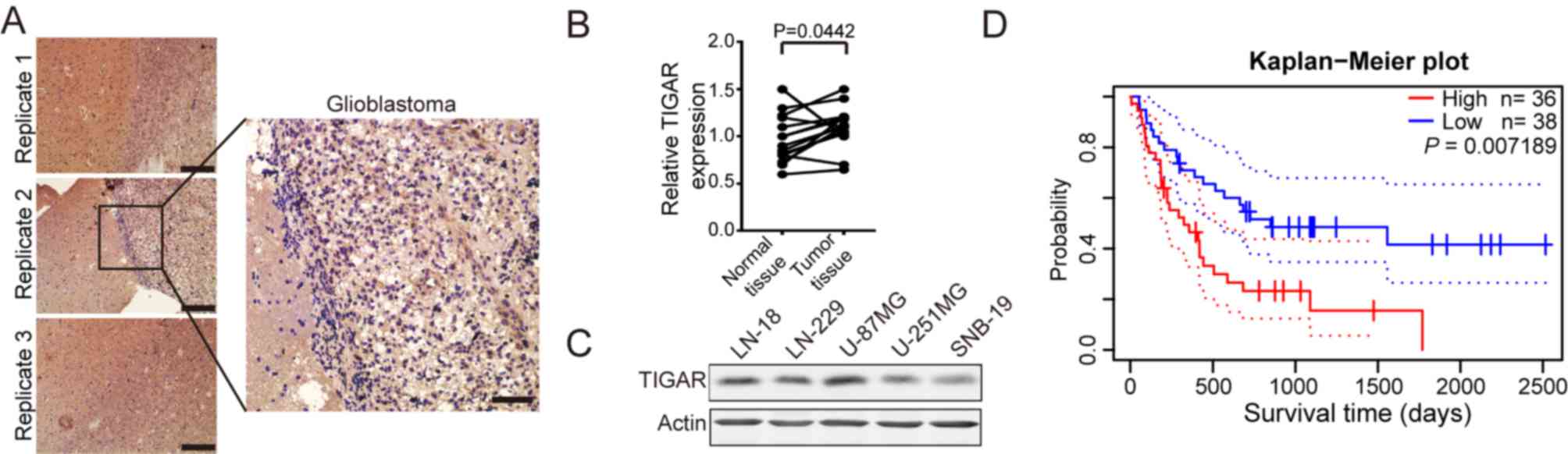
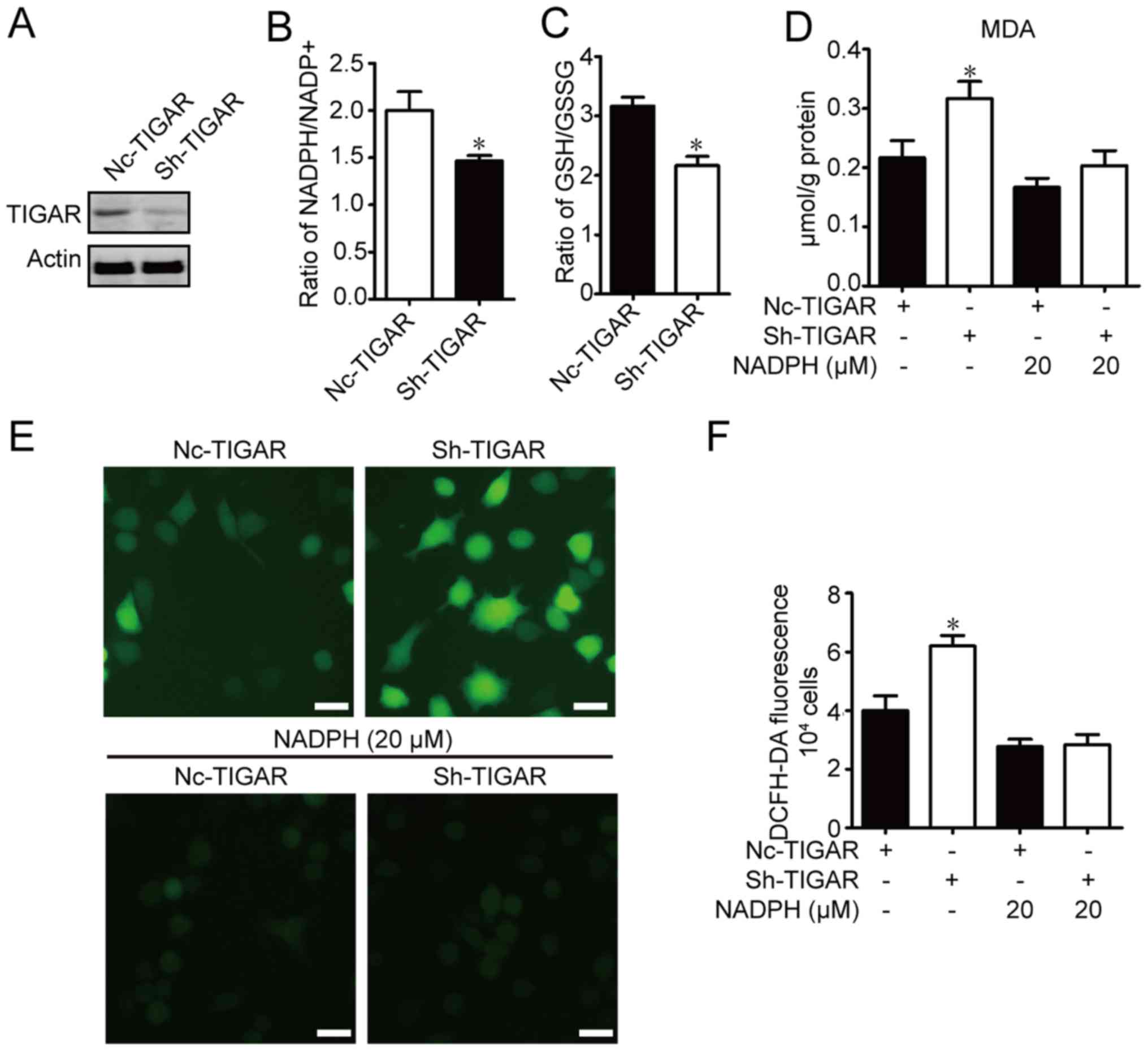
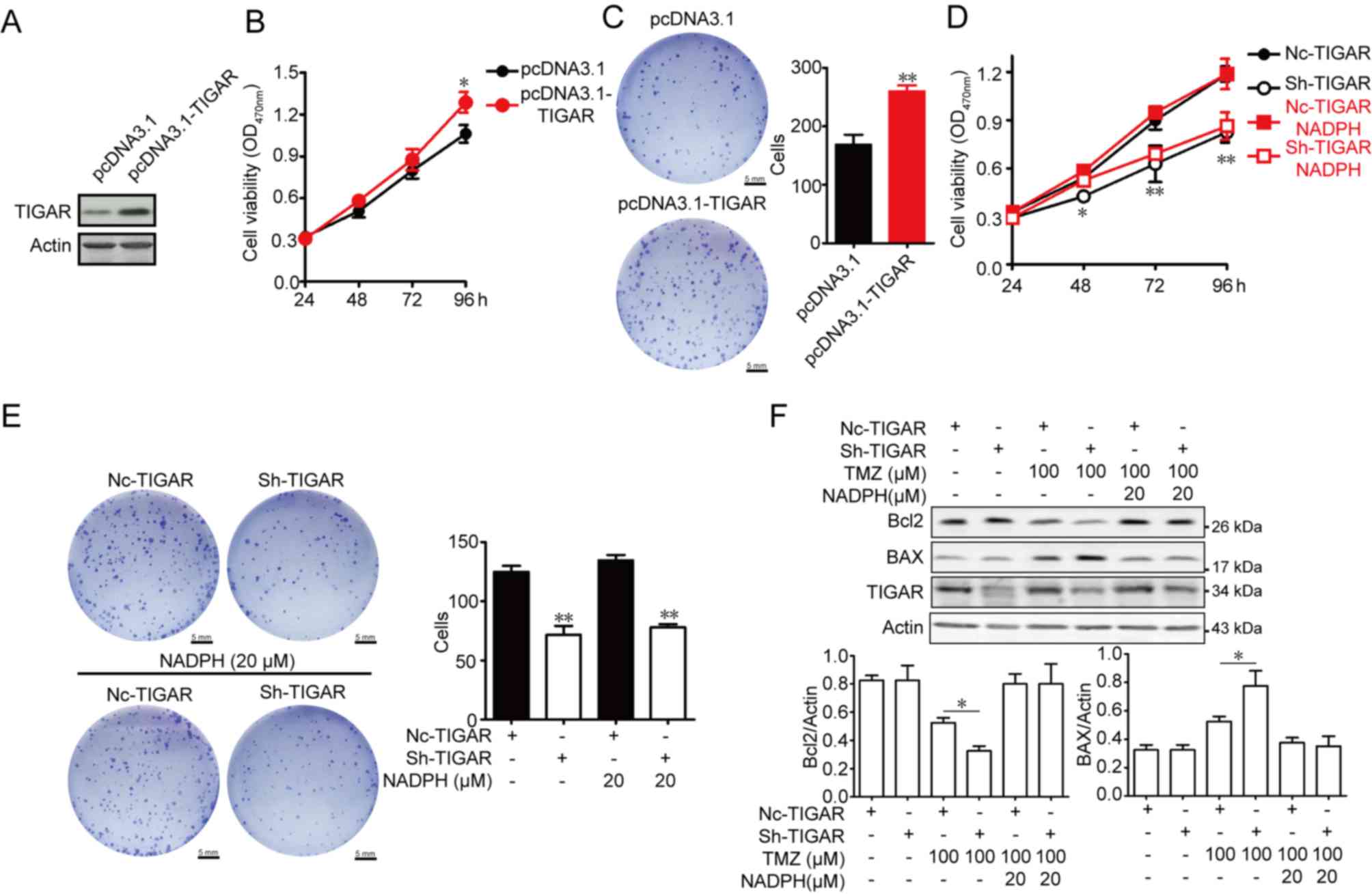
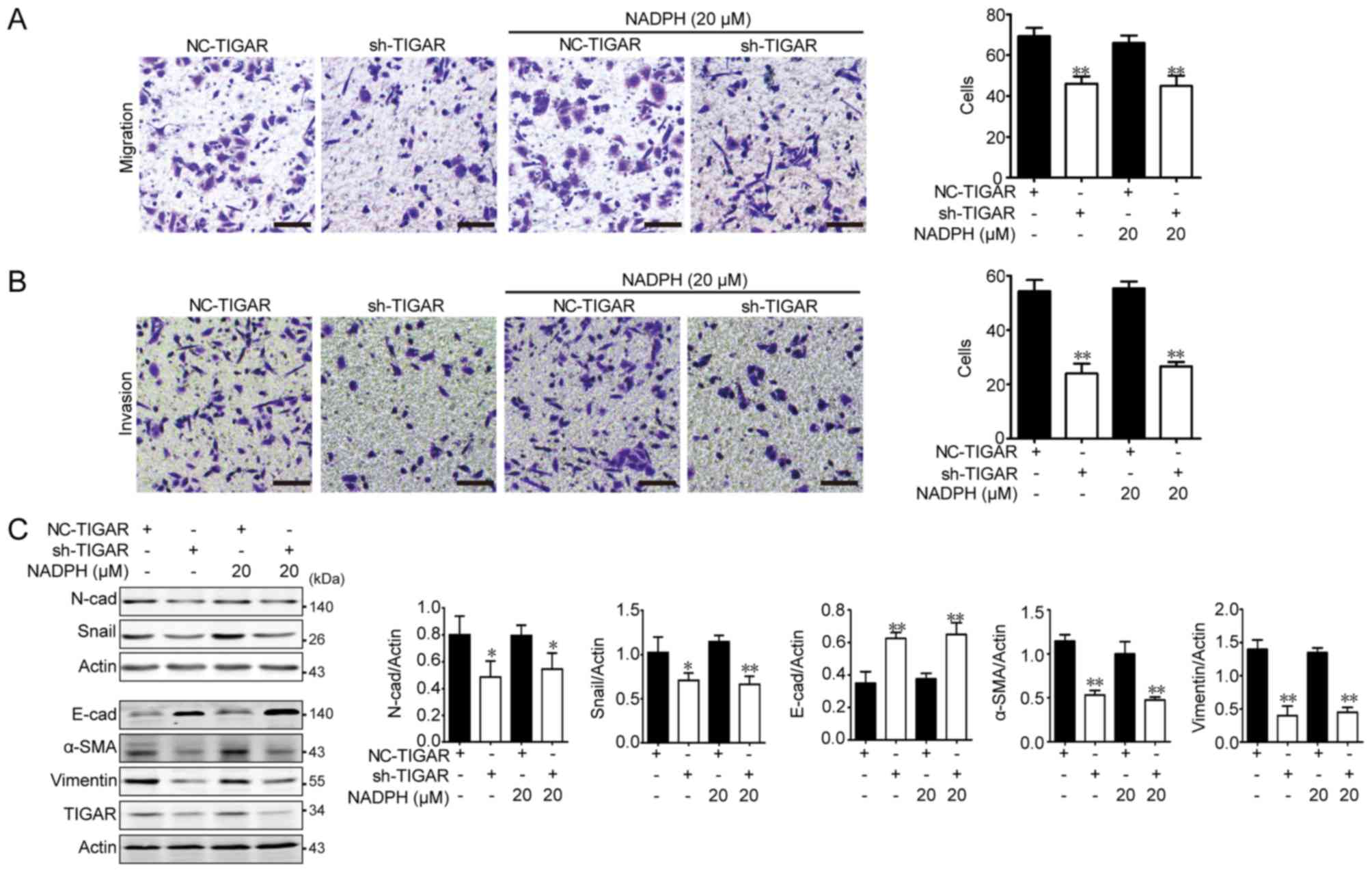
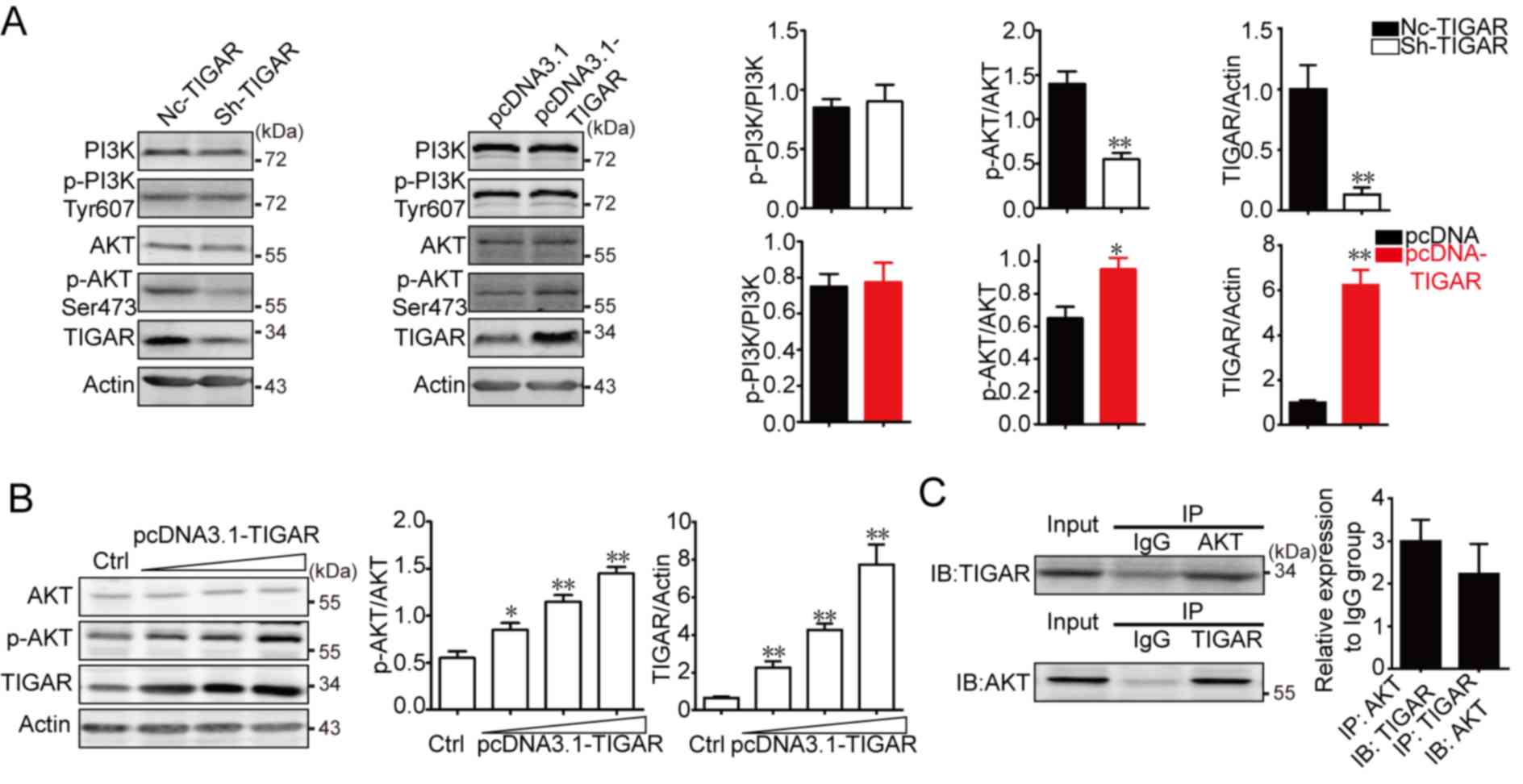
Glioblastoma has a poor prognosis and is one of the most lethal types of cancer in the world. TP53 induced glycolysis regulatory phosphatase (TIGAR) is upregulated in various types of cancer. Therefore, the present study investigated the role of TIGAR in glioblastoma. TIGAR expression was measured in glioma samples and cell lines using immunohistochemistry and western blotting. Reduced nicotinamide adenine dinucleotide phosphate (NADPH), glutathione, malondialdehyde and intracellular reactive oxygen species levels were detected to measure oxidative stress in U‑87MG cells following short hairpin RNA (shRNA)‑mediated knockdown of TIGAR. Cell viability was determined using an MTT assay for TIGAR‑overexpression vector‑ and TIGAR‑shRNA‑transfected U‑87MG cells. Apoptosis was assessed to evaluate whether TIGAR knockdown sensitized cells to the antitumor effects of temozolomide (TMZ). Migration, invasion and epithelial‑mesenchymal transition (EMT) were further assessed using Transwell and western blotting assays. A co‑immunoprecipitation assay was used to detect the interaction between TIGAR and protein kinase B (AKT). The results of the present study revealed that TIGAR was positively associated with poor survival and was upregulated in glioblastoma. TIGAR knockdown significantly increased oxidative stress, decreased cell proliferation and exacerbated TMZ‑induced apoptosis in U‑87MG cells. Additionally, TIGAR knockdown decreased migration, invasion and EMT, and treatment of TIGAR‑shRNA‑transfected cells with NADPH had no effect on metastasis. In addition, TIGAR promoted AKT activation and bound to AKT. In conclusion, the present study demonstrated that TIGAR may promote glioblastoma growth and progression through oxidation resistance and AKT activation.
View Figures

Figure 1

Figure 2

Figure 3

Figure 4

Figure 5

View References

1 

Wen PY and Kesari S: Malignant gliomas in adults. N Engl J Med. 359:492–507. 2008. View Article : Google Scholar : PubMed/NCBI

2 

Stupp R, Taillibert S, Kanner A, Read W, Steinberg D, Lhermitte B, Toms S, Idbaih A, Ahluwalia MS, Fink K, et al: Effect of tumor-treating fields plus maintenance temozolomide vs maintenance temozolomide alone on survival in patients with glioblastoma: A randomized clinical trial. JAMA. 318:2306–2316. 2017. View Article : Google Scholar : PubMed/NCBI

3 

Bensaad K, Tsuruta A, Selak MA, Vidal MN, Nakano K, Bartrons R, Gottlieb E and Vousden KH: TIGAR, a p53-inducible regulator of glycolysis and apoptosis. Cell. 126:107–120. 2006. View Article : Google Scholar : PubMed/NCBI

4 

Green DR and Chipuk JE: P53 and metabolism: Inside the TIGAR. Cell. 126:30–32. 2006. View Article : Google Scholar : PubMed/NCBI

5 

Agnoletto C, Melloni E, Casciano F, Rigolin GM, Rimondi E, Celeghini C, Brunelli L, Cuneo A, Secchiero P and Zauli G: Sodium dichloroacetate exhibits anti-leukemic activity in B-chronic lymphocytic leukemia (B-CLL) and synergizes with the p53 activator Nutlin-3. Oncotarget. 5:4347–4360. 2014. View Article : Google Scholar : PubMed/NCBI

6 

Zhou X, Xie W, Li Q, Zhang Y, Zhang J, Zhao X, Liu J and Huang G: TIGAR is correlated with maximal standardized uptake value on FDG-PET and survival in non-small cell lung cancer. PLoS One. 8:e805762013. View Article : Google Scholar : PubMed/NCBI

7 

Ko YH, Domingo-Vidal M, Roche M, Lin Z, Whitaker-Menezes D, Seifert E, Capparelli C, Tuluc M, Birbe RC, Tassone P, et al: TIGAR metabolically reprograms carcinoma and stromal cells in breast cancer. J Biol Chem. 116:7402092016.

8 

Zou S, Gu Z, Ni P, Liu X, Wang J and Fan Q: SP1 plays a pivotal role for basal activity of TIGAR promoter in liver cancer cell lines. Mol Cell Biochem. 359:17–23. 2012. View Article : Google Scholar : PubMed/NCBI

9 

Cheung EC, Athineos D, Lee P, Ridgway RA, Lambie W, Nixon C, Strathdee D, Blyth K, Sansom OJ and Vousden KH: TIGAR is required for efficient intestinal regeneration and tumorigenesis. Dev Cell. 25:463–477. 2013. View Article : Google Scholar : PubMed/NCBI

10 

Lee P, Vousden KH and Cheung EC: TIGAR, TIGAR, burning bright. Cancer Metab. 2:12014. View Article : Google Scholar : PubMed/NCBI

11 

Mizuno H, Kitada K, Nakai K and Sarai A: PrognoScan: A new database for meta-analysis of the prognostic value of genes. BMC Med Genomics. 2:182009. View Article : Google Scholar : PubMed/NCBI

12 

Griffith OW: Determination of glutathione and glutathione disulfide using glutathione reductase and 2-vinylpyridine. Anal Biochem. 106:207–212. 1980. View Article : Google Scholar : PubMed/NCBI

13 

Nielsen F, Mikkelsen BB, Nielsen JB, Andersen HR and Grandjean P: Plasma malondialdehyde as biomarker for oxidative stress: Reference interval and effects of life-style factors. Clin Chem. 43:1209–1214. 1997.PubMed/NCBI

14 

Xie JM, Li B, Yu HP, Gao QG, Li W, Wu HR and Qin ZH: TIGAR has a dual role in cancer cell survival through regulating apoptosis and autophagy. Cancer Res. 74:5127–5138. 2014. View Article : Google Scholar : PubMed/NCBI

15 

Lee SY: Temozolomide resistance in glioblastoma multiforme. Genes Dis. 3:198–210. 2016. View Article : Google Scholar : PubMed/NCBI

16 

Zeng WF, Navaratne K, Prayson RA and Weil RJ: Aurora B expression correlates with aggressive behaviour in glioblastoma multiforme. J Clin Pathol. 60:218–221. 2007. View Article : Google Scholar : PubMed/NCBI

17 

Heerboth S, Housman G, Leary M, Longacre M, Byler S, Lapinska K, Willbanks A and Sarkar S: EMT and tumor metastasis. Clin Transl Med. 4:62015. View Article : Google Scholar : PubMed/NCBI

18 

Li X, Wu C, Chen N, Gu H, Yen A, Cao L, Wang E and Wang L: PI3K/Akt/mTOR signaling pathway and targeted therapy for glioblastoma. Oncotarget. 7:33440–33450. 2016.PubMed/NCBI

19 

Agarwal E, Brattain MG and Chowdhury S: Cell survival and metastasis regulation by Akt signaling in colorectal cancer. Cell Signal. 25:1711–1719. 2013. View Article : Google Scholar : PubMed/NCBI

20 

Gladson CL, Prayson RA and Liu WM: The pathobiology of glioma tumors. Annu Rev Pathol. 5:33–50. 2010. View Article : Google Scholar : PubMed/NCBI

21 

Delgado-Lopez PD and Corrales-Garcia EM: Survival in glioblastoma: A review on the impact of treatment modalities. Clin Transl Oncol. 18:1062–1071. 2016. View Article : Google Scholar : PubMed/NCBI

22 

Xie Q, Mittal S and Berens ME: Targeting adaptive glioblastoma: An overview of proliferation and invasion. Neuro Oncol. 16:1575–1584. 2014. View Article : Google Scholar : PubMed/NCBI

23 

Chen X, Zhang M, Gan H, Wang H, Lee JH, Fang D, Kitange GJ, He L, Hu Z, Parney IF, et al: A novel enhancer regulates MGMT expression and promotes temozolomide resistance in glioblastoma. Nat Commun. 9:29492018. View Article : Google Scholar : PubMed/NCBI

24 

Blagosklonny MV: Loss of function and p53 protein stabilization. Oncogene. 15:1889–1893. 1997. View Article : Google Scholar : PubMed/NCBI

25 

Fischer M: Census and evaluation of p53 target genes. Oncogene. 36:3943–3956. 2017. View Article : Google Scholar : PubMed/NCBI

26 

Zhang WB, Wang Z, Shu F, Jin YH, Liu HY, Wang QJ and Yang Y: Activation of AMP-activated protein kinase by temozolomide contributes to apoptosis in glioblastoma cells via p53 activation and mTORC1 inhibition. J Biol Chem. 285:40461–40471. 2010. View Article : Google Scholar : PubMed/NCBI

27 

Lee P, Hock A, Vousden K and Cheung E: P53-and p73-independent activation of TIGAR expression in vivo. Cell Death Dis. 6:e18422015. View Article : Google Scholar : PubMed/NCBI

28 

Cheung EC, Ludwig RL and Vousden KH: Mitochondrial localization of TIGAR under hypoxia stimulates HK2 and lowers ROS and cell death. Proc Natl Acad Sci USA. 109:20491–20496. 2012. View Article : Google Scholar : PubMed/NCBI

29 

Zhang Y, Chen F, Tai G, Wang J, Shang J, Zhang B, Wang P, Huang B, Du J, Yu J, et al: TIGAR knockdown radiosensitizes TrxR1-overexpressing glioma in vitro and in vivo via inhibiting Trx1 nuclear transport. Sci Rep. 7:429282017. View Article : Google Scholar : PubMed/NCBI

30 

Zhang H, Gu C, Yu J, Wang Z, Yuan X, Yang L, Wang J, Jia Y, Liu J and Liu F: Radiosensitization of glioma cells by TP53-induced glycolysis and apoptosis regulator knockdown is dependent on thioredoxin-1 nuclear translocation. Free Radic Biol Med. 69:239–248. 2014. View Article : Google Scholar : PubMed/NCBI

31 

Yu HP, Xie JM, Li B, Sun YH, Gao QG, Ding ZH, Wu HR and Qin ZH: TIGAR regulates DNA damage and repair through pentosephosphate pathway and Cdk5-ATM pathway. Sci Rep. 5:98532015. View Article : Google Scholar : PubMed/NCBI

32 

Li M, Sun M, Cao L, Gu JH, Ge J, Chen J, Han R, Qin YY, Zhou ZP, Ding Y and Qin ZH: A TIGAR-regulated metabolic pathway is critical for protection of brain ischemia. J Neurosci. 34:7458–7471. 2014. View Article : Google Scholar : PubMed/NCBI

33 

Oda K, Stokoe D, Taketani Y and McCormick F: High frequency of coexistent mutations of PIK3CA and PTEN genes in endometrial carcinoma. Cancer Res. 65:10669–10673. 2005. View Article : Google Scholar : PubMed/NCBI

34 

Luo J, Manning BD and Cantley LC: Targeting the PI3K-Akt pathway in human cancer: Rationale and promise. Cancer Cell. 4:257–262. 2003. View Article : Google Scholar : PubMed/NCBI

35 

Vanhaesebroeck B, Guillermet-Guibert J, Graupera M and Bilanges B: The emerging mechanisms of isoform-specific PI3K signalling. Nat Rev Mol Cell Biol. 11:329–341. 2010. View Article : Google Scholar : PubMed/NCBI

36 

Zhao L and Vogt PK: Class I PI3K in oncogenic cellular transformation. Oncogene. 27:5486–5496. 2008. View Article : Google Scholar : PubMed/NCBI

37 

Ebner M, Sinkovics B, Szczygiel M, Ribeiro DW and Yudushkin I: Localization of mTORC2 activity inside cells. J Cell Biol. 216:343–353. 2017. View Article : Google Scholar : PubMed/NCBI

38 

Fan QW and Weiss WA: Autophagy and Akt promote survival in glioma. Autophagy. 7:536–538. 2011. View Article : Google Scholar : PubMed/NCBI

39 

Rajasekhar VK, Viale A, Socci ND, Wiedmann M, Hu X and Holland EC: Oncogenic Ras and Akt signaling contribute to glioblastoma formation by differential recruitment of existing mRNAs to polysomes. Mol Cell. 12:889–901. 2003. View Article : Google Scholar : PubMed/NCBI

40 

Gao T, Furnari F and Newton AC: PHLPP: A phosphatase that directly dephosphorylates Akt, promotes apoptosis, and suppresses tumor growth. Mol Cell. 18:13–24. 2005. View Article : Google Scholar : PubMed/NCBI

41 

Assad Kahn S, Costa SL, Gholamin S, Nitta RT, Dubois LG, Fève M, Zeniou M, Coelho PL, El-Habr E, Cadusseau J, et al: The anti-hypertensive drug prazosin inhibits glioblastoma growth via the PKCdelta-dependent inhibition of the AKT pathway. EMBO Mol Med. 8:511–526. 2016. View Article : Google Scholar : PubMed/NCBI

42 

Dasgupta S, Rajapakshe K, Zhu B, Nikolai BC, Yi P, Putluri N, Choi JM, Jung SY, Coarfa C, Westbrook TF, et al: Metabolic enzyme PFKFB4 activates transcriptional coactivator SRC-3 to drive breast cancer. Nature. 556:249–254. 2018. View Article : Google Scholar : PubMed/NCBI

Related Articles

  • Abstract
  • View
  • Download
  • Twitter
Copy and paste a formatted citation
Spandidos Publications style
Tang Z and He Z: TIGAR promotes growth, survival and metastasis through oxidation resistance and AKT activation in glioblastoma. Oncol Lett 18: 2509-2517, 2019.
APA
Tang, Z., & He, Z. (2019). TIGAR promotes growth, survival and metastasis through oxidation resistance and AKT activation in glioblastoma. Oncology Letters, 18, 2509-2517. https://doi.org/10.3892/ol.2019.10574
MLA
Tang, Z., He, Z."TIGAR promotes growth, survival and metastasis through oxidation resistance and AKT activation in glioblastoma". Oncology Letters 18.3 (2019): 2509-2517.
Chicago
Tang, Z., He, Z."TIGAR promotes growth, survival and metastasis through oxidation resistance and AKT activation in glioblastoma". Oncology Letters 18, no. 3 (2019): 2509-2517. https://doi.org/10.3892/ol.2019.10574
Copy and paste a formatted citation
x
Spandidos Publications style
Tang Z and He Z: TIGAR promotes growth, survival and metastasis through oxidation resistance and AKT activation in glioblastoma. Oncol Lett 18: 2509-2517, 2019.
APA
Tang, Z., & He, Z. (2019). TIGAR promotes growth, survival and metastasis through oxidation resistance and AKT activation in glioblastoma. Oncology Letters, 18, 2509-2517. https://doi.org/10.3892/ol.2019.10574
MLA
Tang, Z., He, Z."TIGAR promotes growth, survival and metastasis through oxidation resistance and AKT activation in glioblastoma". Oncology Letters 18.3 (2019): 2509-2517.
Chicago
Tang, Z., He, Z."TIGAR promotes growth, survival and metastasis through oxidation resistance and AKT activation in glioblastoma". Oncology Letters 18, no. 3 (2019): 2509-2517. https://doi.org/10.3892/ol.2019.10574
Follow us
  • Twitter
  • LinkedIn
  • Facebook
About
  • Spandidos Publications
  • Careers
  • Cookie Policy
  • Privacy Policy
How can we help?
  • Help
  • Live Chat
  • Contact
  • Email to our Support Team