Spandidos Publications Logo
  • About
    • About Spandidos
    • Aims and Scopes
    • Abstracting and Indexing
    • Editorial Policies
    • Reprints and Permissions
    • Job Opportunities
    • Terms and Conditions
    • Contact
  • Journals
    • All Journals
    • Oncology Letters
      • Oncology Letters
      • Information for Authors
      • Editorial Policies
      • Editorial Board
      • Aims and Scope
      • Abstracting and Indexing
      • Bibliographic Information
      • Archive
    • International Journal of Oncology
      • International Journal of Oncology
      • Information for Authors
      • Editorial Policies
      • Editorial Board
      • Aims and Scope
      • Abstracting and Indexing
      • Bibliographic Information
      • Archive
    • Molecular and Clinical Oncology
      • Molecular and Clinical Oncology
      • Information for Authors
      • Editorial Policies
      • Editorial Board
      • Aims and Scope
      • Abstracting and Indexing
      • Bibliographic Information
      • Archive
    • Experimental and Therapeutic Medicine
      • Experimental and Therapeutic Medicine
      • Information for Authors
      • Editorial Policies
      • Editorial Board
      • Aims and Scope
      • Abstracting and Indexing
      • Bibliographic Information
      • Archive
    • International Journal of Molecular Medicine
      • International Journal of Molecular Medicine
      • Information for Authors
      • Editorial Policies
      • Editorial Board
      • Aims and Scope
      • Abstracting and Indexing
      • Bibliographic Information
      • Archive
    • Biomedical Reports
      • Biomedical Reports
      • Information for Authors
      • Editorial Policies
      • Editorial Board
      • Aims and Scope
      • Abstracting and Indexing
      • Bibliographic Information
      • Archive
    • Oncology Reports
      • Oncology Reports
      • Information for Authors
      • Editorial Policies
      • Editorial Board
      • Aims and Scope
      • Abstracting and Indexing
      • Bibliographic Information
      • Archive
    • Molecular Medicine Reports
      • Molecular Medicine Reports
      • Information for Authors
      • Editorial Policies
      • Editorial Board
      • Aims and Scope
      • Abstracting and Indexing
      • Bibliographic Information
      • Archive
    • World Academy of Sciences Journal
      • World Academy of Sciences Journal
      • Information for Authors
      • Editorial Policies
      • Editorial Board
      • Aims and Scope
      • Abstracting and Indexing
      • Bibliographic Information
      • Archive
    • International Journal of Functional Nutrition
      • International Journal of Functional Nutrition
      • Information for Authors
      • Editorial Policies
      • Editorial Board
      • Aims and Scope
      • Abstracting and Indexing
      • Bibliographic Information
      • Archive
    • International Journal of Epigenetics
      • International Journal of Epigenetics
      • Information for Authors
      • Editorial Policies
      • Editorial Board
      • Aims and Scope
      • Abstracting and Indexing
      • Bibliographic Information
      • Archive
    • Medicine International
      • Medicine International
      • Information for Authors
      • Editorial Policies
      • Editorial Board
      • Aims and Scope
      • Abstracting and Indexing
      • Bibliographic Information
      • Archive
  • Articles
  • Information
    • Information for Authors
    • Information for Reviewers
    • Information for Librarians
    • Information for Advertisers
    • Conferences
  • Language Editing
Spandidos Publications Logo
  • About
    • About Spandidos
    • Aims and Scopes
    • Abstracting and Indexing
    • Editorial Policies
    • Reprints and Permissions
    • Job Opportunities
    • Terms and Conditions
    • Contact
  • Journals
    • All Journals
    • Biomedical Reports
      • Information for Authors
      • Editorial Policies
      • Editorial Board
      • Aims and Scope
      • Abstracting and Indexing
      • Bibliographic Information
      • Archive
    • Experimental and Therapeutic Medicine
      • Information for Authors
      • Editorial Policies
      • Editorial Board
      • Aims and Scope
      • Abstracting and Indexing
      • Bibliographic Information
      • Archive
    • International Journal of Epigenetics
      • Information for Authors
      • Editorial Policies
      • Editorial Board
      • Aims and Scope
      • Abstracting and Indexing
      • Bibliographic Information
      • Archive
    • International Journal of Functional Nutrition
      • Information for Authors
      • Editorial Policies
      • Editorial Board
      • Aims and Scope
      • Abstracting and Indexing
      • Bibliographic Information
      • Archive
    • International Journal of Molecular Medicine
      • Information for Authors
      • Editorial Policies
      • Editorial Board
      • Aims and Scope
      • Abstracting and Indexing
      • Bibliographic Information
      • Archive
    • International Journal of Oncology
      • Information for Authors
      • Editorial Policies
      • Editorial Board
      • Aims and Scope
      • Abstracting and Indexing
      • Bibliographic Information
      • Archive
    • Medicine International
      • Information for Authors
      • Editorial Policies
      • Editorial Board
      • Aims and Scope
      • Abstracting and Indexing
      • Bibliographic Information
      • Archive
    • Molecular and Clinical Oncology
      • Information for Authors
      • Editorial Policies
      • Editorial Board
      • Aims and Scope
      • Abstracting and Indexing
      • Bibliographic Information
      • Archive
    • Molecular Medicine Reports
      • Information for Authors
      • Editorial Policies
      • Editorial Board
      • Aims and Scope
      • Abstracting and Indexing
      • Bibliographic Information
      • Archive
    • Oncology Letters
      • Information for Authors
      • Editorial Policies
      • Editorial Board
      • Aims and Scope
      • Abstracting and Indexing
      • Bibliographic Information
      • Archive
    • Oncology Reports
      • Information for Authors
      • Editorial Policies
      • Editorial Board
      • Aims and Scope
      • Abstracting and Indexing
      • Bibliographic Information
      • Archive
    • World Academy of Sciences Journal
      • Information for Authors
      • Editorial Policies
      • Editorial Board
      • Aims and Scope
      • Abstracting and Indexing
      • Bibliographic Information
      • Archive
  • Articles
  • Information
    • For Authors
    • For Reviewers
    • For Librarians
    • For Advertisers
    • Conferences
  • Language Editing
Login Register Submit
  • This site uses cookies
  • You can change your cookie settings at any time by following the instructions in our Cookie Policy. To find out more, you may read our Privacy Policy.

    I agree
Search articles by DOI, keyword, author or affiliation
Search
Advanced Search
presentation
Oncology Letters
Join Editorial Board Propose a Special Issue
Print ISSN: 1792-1074 Online ISSN: 1792-1082
Journal Cover
February-2020 Volume 19 Issue 2

Full Size Image

Sign up for eToc alerts
Recommend to Library

Journals

International Journal of Molecular Medicine

International Journal of Molecular Medicine

International Journal of Molecular Medicine is an international journal devoted to molecular mechanisms of human disease.

International Journal of Oncology

International Journal of Oncology

International Journal of Oncology is an international journal devoted to oncology research and cancer treatment.

Molecular Medicine Reports

Molecular Medicine Reports

Covers molecular medicine topics such as pharmacology, pathology, genetics, neuroscience, infectious diseases, molecular cardiology, and molecular surgery.

Oncology Reports

Oncology Reports

Oncology Reports is an international journal devoted to fundamental and applied research in Oncology.

Experimental and Therapeutic Medicine

Experimental and Therapeutic Medicine

Experimental and Therapeutic Medicine is an international journal devoted to laboratory and clinical medicine.

Oncology Letters

Oncology Letters

Oncology Letters is an international journal devoted to Experimental and Clinical Oncology.

Biomedical Reports

Biomedical Reports

Explores a wide range of biological and medical fields, including pharmacology, genetics, microbiology, neuroscience, and molecular cardiology.

Molecular and Clinical Oncology

Molecular and Clinical Oncology

International journal addressing all aspects of oncology research, from tumorigenesis and oncogenes to chemotherapy and metastasis.

World Academy of Sciences Journal

World Academy of Sciences Journal

Multidisciplinary open-access journal spanning biochemistry, genetics, neuroscience, environmental health, and synthetic biology.

International Journal of Functional Nutrition

International Journal of Functional Nutrition

Open-access journal combining biochemistry, pharmacology, immunology, and genetics to advance health through functional nutrition.

International Journal of Epigenetics

International Journal of Epigenetics

Publishes open-access research on using epigenetics to advance understanding and treatment of human disease.

Medicine International

Medicine International

An International Open Access Journal Devoted to General Medicine.

Journal Cover
February-2020 Volume 19 Issue 2

Full Size Image

Sign up for eToc alerts
Recommend to Library

  • Article
  • Citations
    • Cite This Article
    • Download Citation
    • Create Citation Alert
    • Remove Citation Alert
    • Cited By
  • Similar Articles
    • Related Articles (in Spandidos Publications)
    • Similar Articles (Google Scholar)
    • Similar Articles (PubMed)
  • Download PDF
  • Download XML
  • View XML

  • Supplementary Files
    • Supplementary_Data.pdf
Article

Evaluation of circulating cell‑free DNA as a molecular monitoring tool in patients with metastatic cancer

  • Authors:
    • Clemens Hufnagl
    • Michael Leisch
    • Lukas Weiss
    • Thomas Melchardt
    • Martin Moik
    • Daniela Asslaber
    • Geisberger Roland
    • Philipp Steininger
    • Thomas Meissnitzer
    • Daniel Neureiter
    • Richard Greil
    • Alexander Egle
  • View Affiliations / Copyright

    Affiliations: Institute of Pathology, Paracelsus Medical University Salzburg, A‑5020 Salzburg, Austria, IIIrd Medical Department with Hematology and Medical Oncology, Oncologic Center, Paracelsus Medical University Salzburg, A‑5020 Salzburg, Austria, Institute for Research and Development on Advanced Radiation Technologies, Paracelsus Medical University Salzburg, A‑5020 Salzburg, Austria, Institute of Radiology, Paracelsus Medical University Salzburg, A‑5020 Salzburg, Austria
  • Pages: 1551-1558
    |
    Published online on: December 9, 2019
       https://doi.org/10.3892/ol.2019.11192
  • Expand metrics +
Metrics: Total Views: 0 (Spandidos Publications: | PMC Statistics: )
Metrics: Total PDF Downloads: 0 (Spandidos Publications: | PMC Statistics: )
Cited By (CrossRef): 0 citations Loading Articles...

This article is mentioned in:


Abstract

The clinical decisions made when treating patients with metastatic cancer require knowledge of the current tumor extent and response to therapy. For the majority of solid tumors, a response assessment, which is based on imaging, is used to guide these decisions. However, measuring serum protein biomarkers (i.e. tumor markers) may be of additional use. Furthermore, tumor markers exhibit variable specificity and sensitivity and cannot therefore be solely relied upon when making decisions regarding cancer treatment. Therefore, there is a clinical requirement for the identification of specific, sensitive and quantitative biomarkers. In recent years, circulating cell‑free DNA (cfDNA) and mutation‑specific circulating cell‑free tumor DNA (cftDNA) have been identified as novel potential biomarkers. In the current study, cfDNA and cftDNA were compared using imaging‑based staging and current tumor markers in 15 patients with metastatic colorectal, pancreatic or breast cancer. These patients were treated at the Third Medical Department of Paracelsus Medical University Salzburg (Austria). The results of the current study demonstrated a statistically significant correlation between the concentration changes of cfDNA and cftDNA and response to treatment, which was assessed by imaging. A correlation was not indicated with current clinically used tumor markers, including carcinoembryonic antigen, carcinoma antigen 15‑3 and carcinoma antigen 19‑9. The present study also indicated a correlation between cfDNA and cftDNA and the tumor volume of metastatic lesions, which was not observed with the current clinically used tumor markers. In conclusion, cfDNA and cftDNA exhibit the potential to become novel biomarkers for the response assessment following cancer treatment, and may serve as a tool for the estimation of tumor volume. The current study further supports the increasingly important role of cfDNA and cftDNA as new monitoring tools for use during cancer therapy.
View Figures

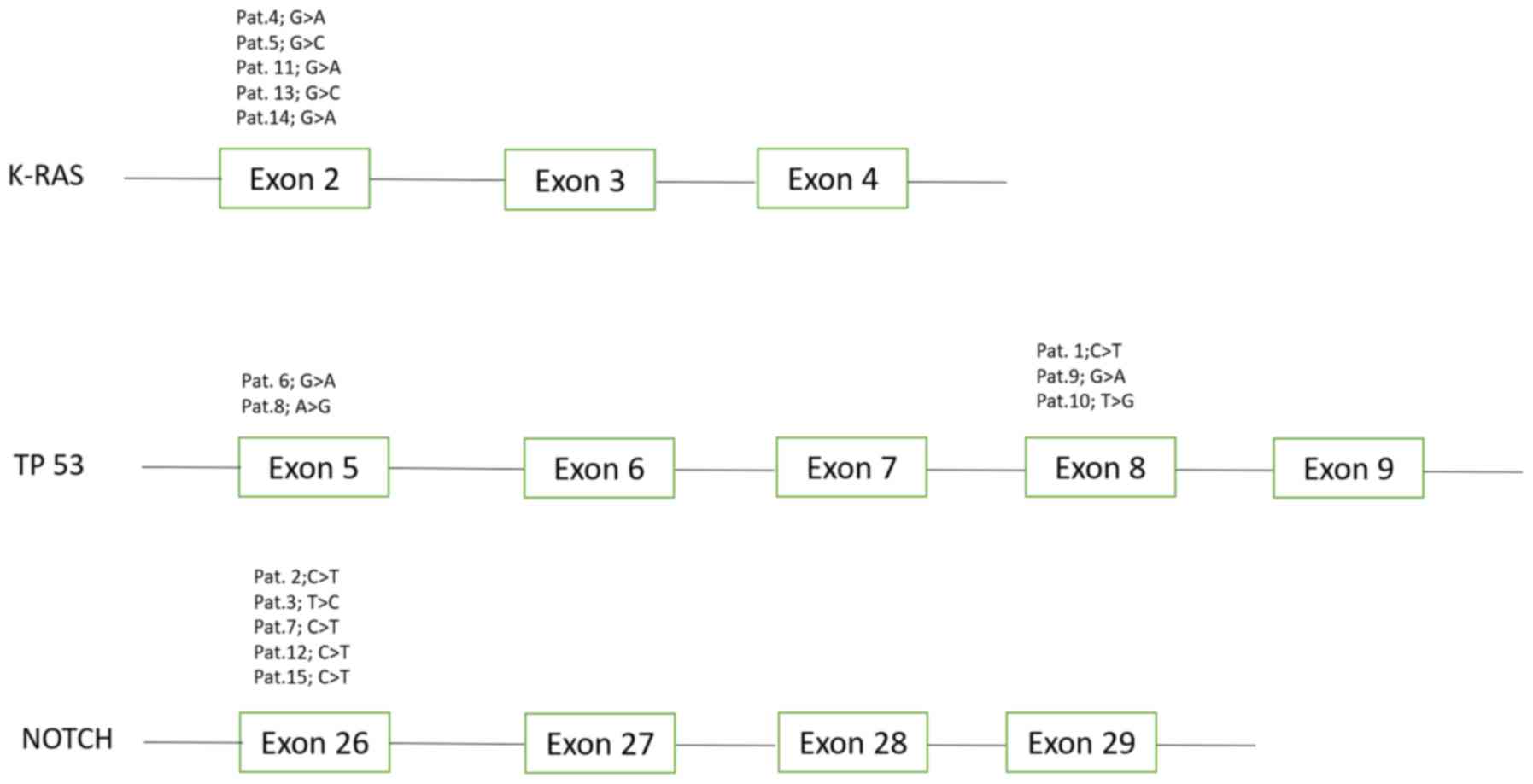
Figure 1

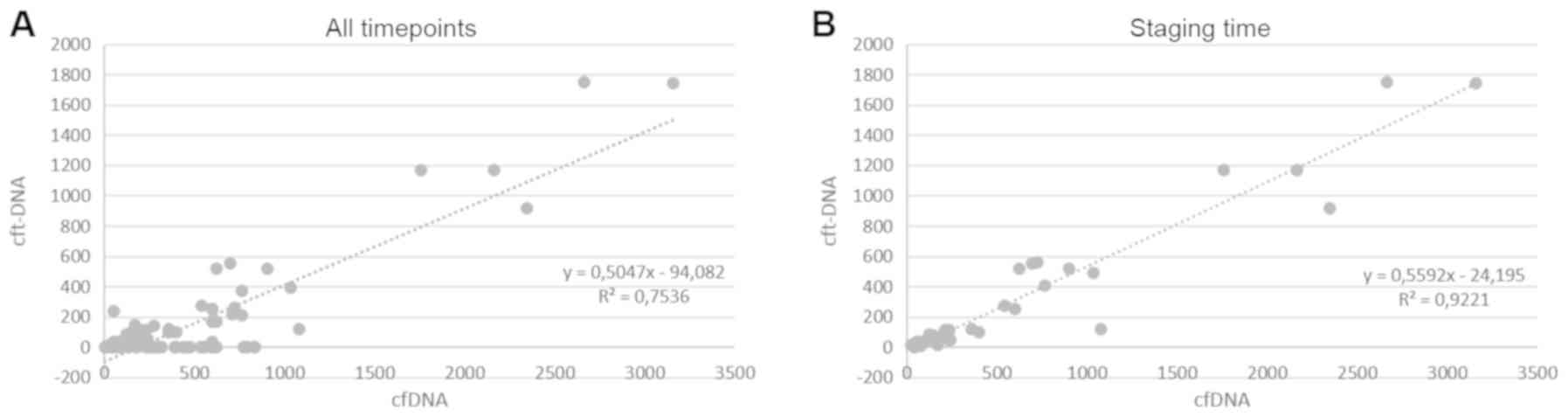
Figure 2

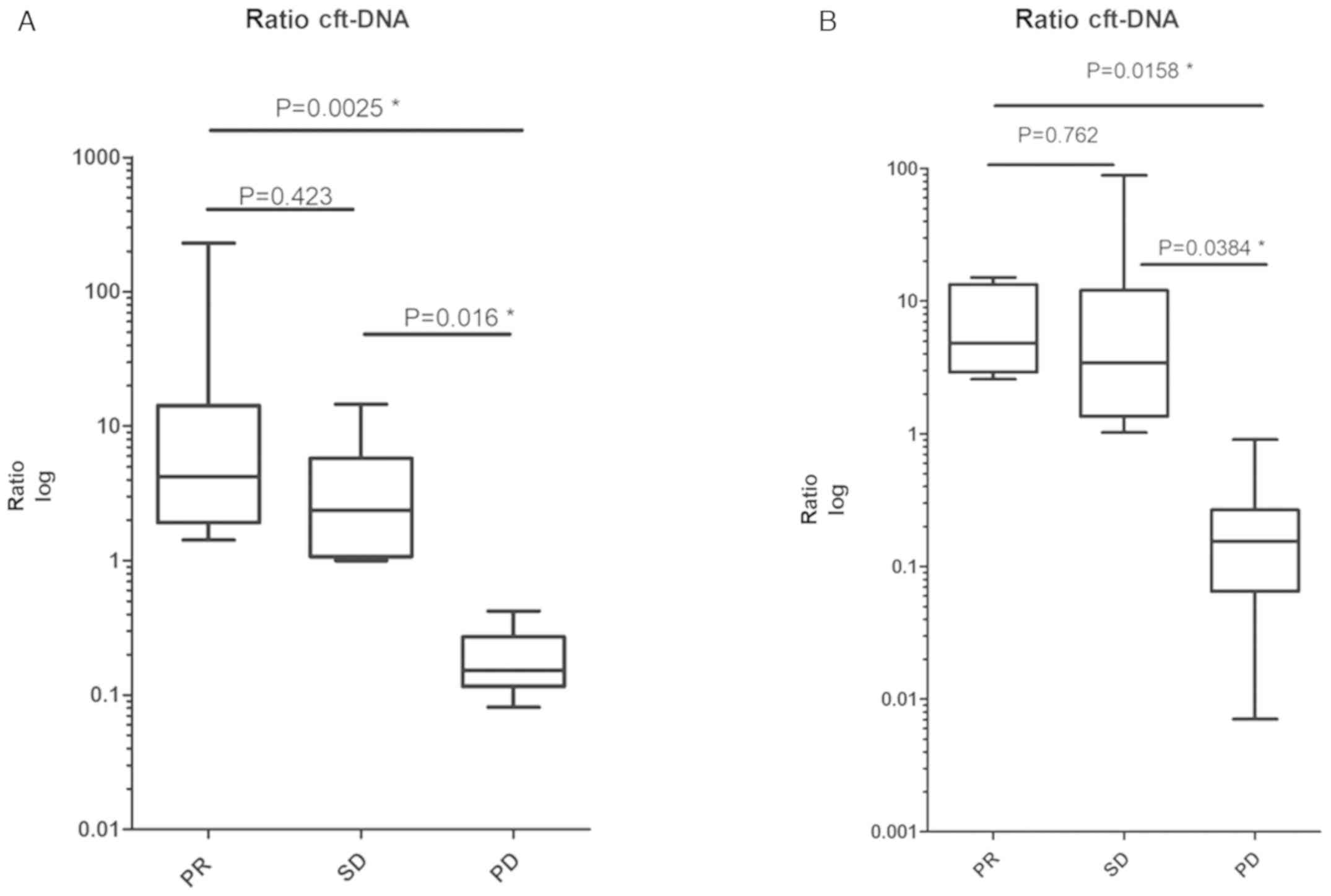
Figure 3

View References

1 

Ciombor KK, Haraldsdottir S and Goldberg RM: How can next-generation sequencing (genomics) help us in treating colorectal cancer? Curr Colorectal Cancer Rep. 10:372–379. 2014. View Article : Google Scholar : PubMed/NCBI

2 

Hanahan D and Weinberg RA: Hallmarks of cancer: The next generation. Cell. 144:646–674. 2011. View Article : Google Scholar : PubMed/NCBI

3 

Diaz LA Jr and Bardelli A: Liquid biopsies: Genotyping circulating tumor DNA. J Clin Oncol. 32:579–586. 2014. View Article : Google Scholar : PubMed/NCBI

4 

Choi JH, Ahn MJ, Rhim HC, Kim JW, Lee GH, Lee YY and Kim IS: Comparison of WHO and RECIST criteria for response in metastatic colorectal carcinoma. Cancer Res Treat. 37:290–293. 2005. View Article : Google Scholar : PubMed/NCBI

5 

Padhani AR and Ollivier L: The RECIST (Response Evaluation Criteria in Solid Tumors) criteria: Implications for diagnostic radiologists. Br J Radiol. 74:983–986. 2001. View Article : Google Scholar : PubMed/NCBI

6 

Therasse P, Le Cesne A, Van Glabbeke M, Verweij J and Judson I; EORTC Soft Tissue and Bone SarcomaGroup, : RECIST vs. WHO: Prospective comparison of response criteria in an EORTC phase II clinical trial investigating ET-743 in advanced soft tissue sarcoma. Eur J Cancer. 41:1426–1430. 2005. View Article : Google Scholar : PubMed/NCBI

7 

Watanabe H, Yamamoto S, Kunitoh H, Sekine I, Yamamoto N, Ohe Y, Tamura T, Kodama T, Sugimura K and Saijo N: Tumor response to chemotherapy: The validity and reproducibility of RECIST guidelines in NSCLC patients. Cancer Sci. 94:1015–1020. 2003. View Article : Google Scholar : PubMed/NCBI

8 

Harris L, Fritsche H, Mennel R, Norton L, Ravdin P, Taube S, Somerfield MR, Hayes DF and Bast RC Jr; American Society of Clinical Oncology, : American Society of Clinical Oncology 2007 update of recommendations for the use of tumor markers in breast cancer. J Clin Oncol. 25:5287–5312. 2007. View Article : Google Scholar : PubMed/NCBI

9 

Schwartz LH, Seymour L, Litière S, Ford R, Gwyther S, Mandrekar S, Shankar L, Bogaerts J, Chen A, Dancey J, et al: RECIST 1.1-Standardisation and disease-specific adaptations: Perspectives from the RECIST Working Group. Eur J Cancer. 62:138–145. 2016. View Article : Google Scholar : PubMed/NCBI

10 

Arrieta O, Villarreal-Garza C, Martínez-Barrera L, Morales M, Dorantes-Gallareta Y, Peña-Curiel O, Contreras-Reyes S, Macedo-Pérez EO and Alatorre-Alexander J: Usefulness of serum carcinoembryonic antigen (CEA) in evaluating response to chemotherapy in patients with advanced non small-cell lung cancer: A prospective cohort study. BMC Cancer. 13:2542013. View Article : Google Scholar : PubMed/NCBI

11 

Ballehaninna UK and Chamberlain RS: The clinical utility of serum CA 19-9 in the diagnosis, prognosis and management of pancreatic adenocarcinoma: An evidence based appraisal. J Gastrointest Oncol. 3:105–119. 2012.PubMed/NCBI

12 

O'Connell M: PET-CT modification of RECIST guidelines. J Natl Cancer Inst. 96:801–802; author reply 802. 2004. View Article : Google Scholar : PubMed/NCBI

13 

Watanabe S, Nakamura Y, Kariatsumari K, Nagata T, Sakata R, Zinnouchi S and Date K: Pulmonary paragonimiasis mimicking lung cancer on FDG-PET imaging. Anticancer Res. 23:3437–3440. 2003.PubMed/NCBI

14 

Solinas C, Porcu M, Hlavata Z, De Silva P, Puzzoni M, Willard-Gallo K, Scartozzi M and Saba L: Critical features and challenges associated with imaging in patients undergoing cancer immunotherapy. Crit Rev Oncol Hematol. 120:13–21. 2017. View Article : Google Scholar : PubMed/NCBI

15 

Kidess E and Jeffrey SS: Circulating tumor cells versus tumor-derived cell-free DNA: Rivals or partners in cancer care in the era of single-cell analysis? Genome Med. 5:702013. View Article : Google Scholar : PubMed/NCBI

16 

Alix-Panabières C and Pantel K: Challenges in circulating tumour cell research. Nat Rev Cancer. 14:623–631. 2014. View Article : Google Scholar : PubMed/NCBI

17 

Dive C and Brady G: SnapShot: Circulating tumor cells. Cell. 168:742–742.e1. 2017. View Article : Google Scholar : PubMed/NCBI

18 

Pantel K and Alix-Panabières C: Liquid biopsy in 2016: Circulating tumour cells and cell-free DNA in gastrointestinal cancer. Nat Rev Gastroenterol Hepatol. 14:73–74. 2017. View Article : Google Scholar : PubMed/NCBI

19 

González-Masiá JA, García-Olmo D and García-Olmo DC: Circulating nucleic acids in plasma and serum (CNAPS): Applications in oncology. Onco Targets Ther. 6:819–832. 2013.PubMed/NCBI

20 

Circulating nucleic acids in plasma/serum III and serum proteomics. Proceedings of the Third International Symposium. November 9-12–2003, Santa Monica; California, USA: Ann NY Acad Sci. 1022. pp. 1–322, 2004.

21 

Anker P, Lyautey J, Lederrey C and Stroun M: Circulating nucleic acids in plasma or serum. Clin Chim Acta. 313:143–146. 2001. View Article : Google Scholar : PubMed/NCBI

22 

Anker P, Mulcahy H and Stroun M: Circulating nucleic acids in plasma and serum as a noninvasive investigation for cancer: Time for large-scale clinical studies? Int J Cancer. 103:149–152. 2003. View Article : Google Scholar : PubMed/NCBI

23 

Diehl F, Schmidt K, Choti MA, Romans K, Goodman S, Li M, Thornton K, Agrawal N, Sokoll L, Szabo SA, et al: Circulating mutant DNA to assess tumor dynamics. Nat Med. 14:985–990. 2008. View Article : Google Scholar : PubMed/NCBI

24 

Fleischhacker M and Schmidt B: Free circulating nucleic acids in plasma and serum (CNAPS)-useful for the detection of lung cancer patients? Cancer Biomark. 6:211–219. 2010. View Article : Google Scholar : PubMed/NCBI

25 

Gahan PB: Circulating nucleic acids in plasma and serum: Roles in diagnosis and prognosis in diabetes and cancer. Infect Disord Drug Targets. 8:100–108. 2008. View Article : Google Scholar : PubMed/NCBI

26 

Rolfo C, Castiglia M, Hong D, Alessandro R, Mertens I, Baggerman G, Zwaenepoel K, Gil-Bazo I, Passiglia F, Carreca AP, et al: Liquid biopsies in lung cancer: The new ambrosia of researchers. Biochim Biophys Acta. 1846:539–546. 2014.PubMed/NCBI

27 

Taback B and Hoon DS: Circulating nucleic acids in plasma and serum: Past, present and future. Curr Opin Mol Ther. 6:273–278. 2004.PubMed/NCBI

28 

Tsang JC and Lo YM: Circulating nucleic acids in plasma/serum. Pathology. 39:197–207. 2007. View Article : Google Scholar : PubMed/NCBI

29 

Yong E: Cancer biomarkers: Written in blood. Nature. 511:524–526. 2014. View Article : Google Scholar : PubMed/NCBI

30 

Cervera Deval J: RECIST and the radiologist. Radiologia. 56:193–205. 2014.(In Spanish). View Article : Google Scholar : PubMed/NCBI

31 

Krajewski KM, Nishino M, Ramaiya NH and Choueiri TK: RECIST 1.1 compared with RECIST 1.0 in patients with advanced renal cell carcinoma receiving vascular endothelial growth factor-targeted therapy. AJR Am J Roentgenol. 204:W282–W288. 2015. View Article : Google Scholar : PubMed/NCBI

32 

Lencioni R and Llovet JM: Modified RECIST (mRECIST) assessment for hepatocellular carcinoma. Semin Liver Dis. 30:52–60. 2010. View Article : Google Scholar : PubMed/NCBI

33 

van Persijn van Meerten EL, Gelderblom H and Bloem JL: RECIST revised: Implications for the radiologist. A review article on the modified RECIST guideline. Eur Radiol. 20:1456–1467. 2010. View Article : Google Scholar : PubMed/NCBI

34 

Lemoine NR: Molecular advances in pancreatic cancer. Digestion. 58:550–556. 1997. View Article : Google Scholar : PubMed/NCBI

35 

Oden-Gangloff A, Di Fiore F, Bibeau F, Lamy A, Bougeard G, Charbonnier F, Blanchard F, Tougeron D, Ychou M, Boissière F, et al: TP53 mutations predict disease control in metastatic colorectal cancer treated with cetuximab-based chemotherapy. Br J Cancer. 100:1330–1335. 2009. View Article : Google Scholar : PubMed/NCBI

36 

Olivier M, Hollstein M and Hainaut P: TP53 mutations in human cancers: Origins, consequences, and clinical use. Cold Spring Harb Perspect Biol. 2:a0010082010. View Article : Google Scholar : PubMed/NCBI

37 

Shaw JA, Page K, Blighe K, Hava N, Guttery D, Ward B, Brown J, Ruangpratheep C, Stebbing J, Payne R, et al: Genomic analysis of circulating cell-free DNA infers breast cancer dormancy. Genome Res. 22:220–231. 2012. View Article : Google Scholar : PubMed/NCBI

38 

Hufnagl C, Stöcher M, Moik M, Geisberger R and Greil R: A modified Phenol-chloroform extraction method for isolating circulating cell free DNA of tumor patients. J Nucleic Acids Invest. 4:2013. View Article : Google Scholar

39 

Paci M, Maramotti S, Bellesia E, Formisano D, Albertazzi L, Ricchetti T, Ferrari G, Annessi V, Lasagni D, Carbonelli C, et al: Circulating plasma DNA as diagnostic biomarker in non-small cell lung cancer. Lung Cancer. 64:92–97. 2009. View Article : Google Scholar : PubMed/NCBI

40 

Sirera R, Bremnes RM, Cabrera A, Jantus-Lewintre E, Sanmartín E, Blasco A, Del Pozo N, Rosell R, Guijarro R, Galbis J, et al: Circulating DNA is a useful prognostic factor in patients with advanced non-small cell lung cancer. J Thorac Oncol. 6:286–290. 2011. View Article : Google Scholar : PubMed/NCBI

41 

Marten K, Auer F, Schmidt S, Rummeny EJ and Engelke C: Automated CT volumetry of pulmonary metastases: The effect of a reduced growth threshold and target lesion number on the reliability of therapy response assessment using RECIST criteria. Eur Radiol. 17:2561–2571. 2007. View Article : Google Scholar : PubMed/NCBI

42 

Ferrero A, Bernad B, Campos J, Perales E, Velázquez JL and Martínez-Verdú FM: Color characterization of coatings with diffraction pigments. J Opt Soc Am A Opt Image Sci Vis. 33:1978–1988. 2016. View Article : Google Scholar : PubMed/NCBI

43 

Gordis L and Gold EB: Epidemiology of pancreatic cancer. World J Surg. 8:808–821. 1984. View Article : Google Scholar : PubMed/NCBI

44 

Maughan NJ and Quirke P: Genomics in colorectal cancer: Godsend or gimmick? Scand J Gastroenterol. (Suppl):26–29. 2003. View Article : Google Scholar

45 

Michaud DS: Epidemiology of pancreatic cancer. Minerva Chir. 59:99–111. 2004.PubMed/NCBI

46 

Stein RG, Wollschläger D, Kreienberg R, Janni W, Wischnewsky M, Diessner J, Stüber T, Bartmann C, Krockenberger M, Wischhusen J, et al: The impact of breast cancer biological subtyping on tumor size assessment by ultrasound and mammography-a retrospective multicenter cohort study of 6543 primary breast cancer patients. BMC Cancer. 16:4592016. View Article : Google Scholar : PubMed/NCBI

47 

Anker P, Lefort F, Vasioukhin V, Lyautey J, Lederrey C, Chen XQ, Stroun M, Mulcahy HE and Farthing MJ: K-ras mutations are found in DNA extracted from the plasma of patients with colorectal cancer. Gastroenterology. 112:1114–1120. 1997. View Article : Google Scholar : PubMed/NCBI

48 

Boeck S, Jung A, Laubender RP, Neumann J, Egg R, Goritschan C, Vehling-Kaiser U, Winkelmann C, Fischer von Weikersthal L, Clemens MR, et al: EGFR pathway biomarkers in erlotinib-treated patients with advanced pancreatic cancer: Translational results from the randomised, crossover phase 3 trial AIO-PK0104. Br J Cancer. 108:469–476. 2012. View Article : Google Scholar : PubMed/NCBI

49 

Chappell WH, Steelman LS, Long JM, Kempf RC, Abrams SL, Franklin RA, Bäsecke J, Stivala F, Donia M, Fagone P, et al: Ras/Raf/MEK/ERK and PI3K/PTEN/Akt/mTOR inhibitors: Rationale and importance to inhibiting these pathways in human health. Oncotarget. 2:135–164. 2011. View Article : Google Scholar : PubMed/NCBI

50 

De Luca A, Maiello MR, D'Alessio A, Pergameno M and Normanno N: The RAS/RAF/MEK/ERK and the PI3K/AKT signalling pathways: Role in cancer pathogenesis and implications for therapeutic approaches. Expert Opin Ther Targets. 16 (Suppl 2):S17–S27. 2012. View Article : Google Scholar : PubMed/NCBI

51 

Deramaudt T and Rustgi AK: Mutant KRAS in the initiation of pancreatic cancer. Biochim Biophys Acta. 1756:97–101. 2005.PubMed/NCBI

52 

Lui VW, Hedberg ML, Li H, Vangara BS, Pendleton K, Zeng Y, Lu Y, Zhang Q, Du Y, Gilbert BR, et al: Frequent mutation of the PI3K pathway in head and neck cancer defines predictive biomarkers. Cancer Discov. 3:761–769. 2013. View Article : Google Scholar : PubMed/NCBI

53 

Rao SS, O'Neil J, Liberator CD, Hardwick JS, Dai X, Zhang T, Tyminski E, Yuan J, Kohl NE, Richon VM, et al: Inhibition of NOTCH signaling by gamma secretase inhibitor engages the RB pathway and elicits cell cycle exit in T-cell acute lymphoblastic leukemia cells. Cancer Res. 69:3060–3068. 2009. View Article : Google Scholar : PubMed/NCBI

54 

van Krieken JH, Jung A, Kirchner T, Carneiro F, Seruca R, Bosman FT, Quirke P, Fléjou JF, Plato Hansen T, de Hertogh G, et al: KRAS mutation testing for predicting response to anti-EGFR therapy for colorectal carcinoma: Proposal for an European quality assurance program. Virchows Arch. 453:417–431. 2008. View Article : Google Scholar : PubMed/NCBI

55 

Heitzer E, Auer M, Ulz P, Geigl JB and Speicher MR: Circulating tumor cells and DNA as liquid biopsies. Genome Med. 5:732013. View Article : Google Scholar : PubMed/NCBI

56 

Estakhri R, Ghahramanzade A, Vahedi A and Nourazarian A: Serum levels of CA15-3, AFP, CA19-9 and CEA tumor markers in cancer care and treatment of patients with impaired renal function on hemodialysis. Asian Pac J Cancer Prev. 14:1597–1599. 2013. View Article : Google Scholar : PubMed/NCBI

57 

Guo Q, Kang M, Zhang B, Chen Y, Dong X and Wu Y: Elevated levels of CA 19-9 and CEA in pancreatic cancer-associated diabetes. J Cancer Res Clin Oncol. 136:1627–1631. 2010. View Article : Google Scholar : PubMed/NCBI

58 

Hegele A, Mecklenburg V, Varga Z, Olbert P, Hofmann R and Barth P: CA19.9 and CEA in transitional cell carcinoma of the bladder: Serological and immunohistochemical findings. Anticancer Res. 30:5195–5200. 2010.PubMed/NCBI

59 

Ince AT, Yıldız K, Baysal B, Danalıoğlu A, Kocaman O, Tozlu M, Gangarapu V, Sarbay Kemik A, Uysal Ö and Şentürk H: Roles of serum and biliary CEA, CA19-9, VEGFR3, and TAC in differentiating between malignant and benign biliary obstructions. Turk J Gastroenterol. 25:162–169. 2014. View Article : Google Scholar : PubMed/NCBI

60 

Thomakos N, Rodolakis A, Zagouri F, Zacharakis D, Sotiropoulou M, Akrivos N, Haidopoulos D, Papadimitriou CA, Dimopoulos MA and Antsaklis A: Serum CA 125, CA 15-3, CEA, and CA 19-9: A prognostic factor for uterine carcinosarcomas? Arch Gynecol Obstet. 287:97–102. 2013. View Article : Google Scholar : PubMed/NCBI

Related Articles

  • Abstract
  • View
  • Download
  • Twitter
Copy and paste a formatted citation
Spandidos Publications style
Hufnagl C, Leisch M, Weiss L, Melchardt T, Moik M, Asslaber D, Roland G, Steininger P, Meissnitzer T, Neureiter D, Neureiter D, et al: Evaluation of circulating cell‑free DNA as a molecular monitoring tool in patients with metastatic cancer. Oncol Lett 19: 1551-1558, 2020.
APA
Hufnagl, C., Leisch, M., Weiss, L., Melchardt, T., Moik, M., Asslaber, D. ... Egle, A. (2020). Evaluation of circulating cell‑free DNA as a molecular monitoring tool in patients with metastatic cancer. Oncology Letters, 19, 1551-1558. https://doi.org/10.3892/ol.2019.11192
MLA
Hufnagl, C., Leisch, M., Weiss, L., Melchardt, T., Moik, M., Asslaber, D., Roland, G., Steininger, P., Meissnitzer, T., Neureiter, D., Greil, R., Egle, A."Evaluation of circulating cell‑free DNA as a molecular monitoring tool in patients with metastatic cancer". Oncology Letters 19.2 (2020): 1551-1558.
Chicago
Hufnagl, C., Leisch, M., Weiss, L., Melchardt, T., Moik, M., Asslaber, D., Roland, G., Steininger, P., Meissnitzer, T., Neureiter, D., Greil, R., Egle, A."Evaluation of circulating cell‑free DNA as a molecular monitoring tool in patients with metastatic cancer". Oncology Letters 19, no. 2 (2020): 1551-1558. https://doi.org/10.3892/ol.2019.11192
Copy and paste a formatted citation
x
Spandidos Publications style
Hufnagl C, Leisch M, Weiss L, Melchardt T, Moik M, Asslaber D, Roland G, Steininger P, Meissnitzer T, Neureiter D, Neureiter D, et al: Evaluation of circulating cell‑free DNA as a molecular monitoring tool in patients with metastatic cancer. Oncol Lett 19: 1551-1558, 2020.
APA
Hufnagl, C., Leisch, M., Weiss, L., Melchardt, T., Moik, M., Asslaber, D. ... Egle, A. (2020). Evaluation of circulating cell‑free DNA as a molecular monitoring tool in patients with metastatic cancer. Oncology Letters, 19, 1551-1558. https://doi.org/10.3892/ol.2019.11192
MLA
Hufnagl, C., Leisch, M., Weiss, L., Melchardt, T., Moik, M., Asslaber, D., Roland, G., Steininger, P., Meissnitzer, T., Neureiter, D., Greil, R., Egle, A."Evaluation of circulating cell‑free DNA as a molecular monitoring tool in patients with metastatic cancer". Oncology Letters 19.2 (2020): 1551-1558.
Chicago
Hufnagl, C., Leisch, M., Weiss, L., Melchardt, T., Moik, M., Asslaber, D., Roland, G., Steininger, P., Meissnitzer, T., Neureiter, D., Greil, R., Egle, A."Evaluation of circulating cell‑free DNA as a molecular monitoring tool in patients with metastatic cancer". Oncology Letters 19, no. 2 (2020): 1551-1558. https://doi.org/10.3892/ol.2019.11192
Follow us
  • Twitter
  • LinkedIn
  • Facebook
About
  • Spandidos Publications
  • Careers
  • Cookie Policy
  • Privacy Policy
How can we help?
  • Help
  • Live Chat
  • Contact
  • Email to our Support Team