Spandidos Publications Logo
  • About
    • About Spandidos
    • Aims and Scopes
    • Abstracting and Indexing
    • Editorial Policies
    • Reprints and Permissions
    • Job Opportunities
    • Terms and Conditions
    • Contact
  • Journals
    • All Journals
    • Oncology Letters
      • Oncology Letters
      • Information for Authors
      • Editorial Policies
      • Editorial Board
      • Aims and Scope
      • Abstracting and Indexing
      • Bibliographic Information
      • Archive
    • International Journal of Oncology
      • International Journal of Oncology
      • Information for Authors
      • Editorial Policies
      • Editorial Board
      • Aims and Scope
      • Abstracting and Indexing
      • Bibliographic Information
      • Archive
    • Molecular and Clinical Oncology
      • Molecular and Clinical Oncology
      • Information for Authors
      • Editorial Policies
      • Editorial Board
      • Aims and Scope
      • Abstracting and Indexing
      • Bibliographic Information
      • Archive
    • Experimental and Therapeutic Medicine
      • Experimental and Therapeutic Medicine
      • Information for Authors
      • Editorial Policies
      • Editorial Board
      • Aims and Scope
      • Abstracting and Indexing
      • Bibliographic Information
      • Archive
    • International Journal of Molecular Medicine
      • International Journal of Molecular Medicine
      • Information for Authors
      • Editorial Policies
      • Editorial Board
      • Aims and Scope
      • Abstracting and Indexing
      • Bibliographic Information
      • Archive
    • Biomedical Reports
      • Biomedical Reports
      • Information for Authors
      • Editorial Policies
      • Editorial Board
      • Aims and Scope
      • Abstracting and Indexing
      • Bibliographic Information
      • Archive
    • Oncology Reports
      • Oncology Reports
      • Information for Authors
      • Editorial Policies
      • Editorial Board
      • Aims and Scope
      • Abstracting and Indexing
      • Bibliographic Information
      • Archive
    • Molecular Medicine Reports
      • Molecular Medicine Reports
      • Information for Authors
      • Editorial Policies
      • Editorial Board
      • Aims and Scope
      • Abstracting and Indexing
      • Bibliographic Information
      • Archive
    • World Academy of Sciences Journal
      • World Academy of Sciences Journal
      • Information for Authors
      • Editorial Policies
      • Editorial Board
      • Aims and Scope
      • Abstracting and Indexing
      • Bibliographic Information
      • Archive
    • International Journal of Functional Nutrition
      • International Journal of Functional Nutrition
      • Information for Authors
      • Editorial Policies
      • Editorial Board
      • Aims and Scope
      • Abstracting and Indexing
      • Bibliographic Information
      • Archive
    • International Journal of Epigenetics
      • International Journal of Epigenetics
      • Information for Authors
      • Editorial Policies
      • Editorial Board
      • Aims and Scope
      • Abstracting and Indexing
      • Bibliographic Information
      • Archive
    • Medicine International
      • Medicine International
      • Information for Authors
      • Editorial Policies
      • Editorial Board
      • Aims and Scope
      • Abstracting and Indexing
      • Bibliographic Information
      • Archive
  • Articles
  • Information
    • Information for Authors
    • Information for Reviewers
    • Information for Librarians
    • Information for Advertisers
    • Conferences
  • Language Editing
Spandidos Publications Logo
  • About
    • About Spandidos
    • Aims and Scopes
    • Abstracting and Indexing
    • Editorial Policies
    • Reprints and Permissions
    • Job Opportunities
    • Terms and Conditions
    • Contact
  • Journals
    • All Journals
    • Biomedical Reports
      • Information for Authors
      • Editorial Policies
      • Editorial Board
      • Aims and Scope
      • Abstracting and Indexing
      • Bibliographic Information
      • Archive
    • Experimental and Therapeutic Medicine
      • Information for Authors
      • Editorial Policies
      • Editorial Board
      • Aims and Scope
      • Abstracting and Indexing
      • Bibliographic Information
      • Archive
    • International Journal of Epigenetics
      • Information for Authors
      • Editorial Policies
      • Editorial Board
      • Aims and Scope
      • Abstracting and Indexing
      • Bibliographic Information
      • Archive
    • International Journal of Functional Nutrition
      • Information for Authors
      • Editorial Policies
      • Editorial Board
      • Aims and Scope
      • Abstracting and Indexing
      • Bibliographic Information
      • Archive
    • International Journal of Molecular Medicine
      • Information for Authors
      • Editorial Policies
      • Editorial Board
      • Aims and Scope
      • Abstracting and Indexing
      • Bibliographic Information
      • Archive
    • International Journal of Oncology
      • Information for Authors
      • Editorial Policies
      • Editorial Board
      • Aims and Scope
      • Abstracting and Indexing
      • Bibliographic Information
      • Archive
    • Medicine International
      • Information for Authors
      • Editorial Policies
      • Editorial Board
      • Aims and Scope
      • Abstracting and Indexing
      • Bibliographic Information
      • Archive
    • Molecular and Clinical Oncology
      • Information for Authors
      • Editorial Policies
      • Editorial Board
      • Aims and Scope
      • Abstracting and Indexing
      • Bibliographic Information
      • Archive
    • Molecular Medicine Reports
      • Information for Authors
      • Editorial Policies
      • Editorial Board
      • Aims and Scope
      • Abstracting and Indexing
      • Bibliographic Information
      • Archive
    • Oncology Letters
      • Information for Authors
      • Editorial Policies
      • Editorial Board
      • Aims and Scope
      • Abstracting and Indexing
      • Bibliographic Information
      • Archive
    • Oncology Reports
      • Information for Authors
      • Editorial Policies
      • Editorial Board
      • Aims and Scope
      • Abstracting and Indexing
      • Bibliographic Information
      • Archive
    • World Academy of Sciences Journal
      • Information for Authors
      • Editorial Policies
      • Editorial Board
      • Aims and Scope
      • Abstracting and Indexing
      • Bibliographic Information
      • Archive
  • Articles
  • Information
    • For Authors
    • For Reviewers
    • For Librarians
    • For Advertisers
    • Conferences
  • Language Editing
Login Register Submit
  • This site uses cookies
  • You can change your cookie settings at any time by following the instructions in our Cookie Policy. To find out more, you may read our Privacy Policy.

    I agree
Search articles by DOI, keyword, author or affiliation
Search
Advanced Search
presentation
Oncology Letters
Join Editorial Board Propose a Special Issue
Print ISSN: 1792-1074 Online ISSN: 1792-1082
Journal Cover
April-2020 Volume 19 Issue 4

Full Size Image

Sign up for eToc alerts
Recommend to Library

Journals

International Journal of Molecular Medicine

International Journal of Molecular Medicine

International Journal of Molecular Medicine is an international journal devoted to molecular mechanisms of human disease.

International Journal of Oncology

International Journal of Oncology

International Journal of Oncology is an international journal devoted to oncology research and cancer treatment.

Molecular Medicine Reports

Molecular Medicine Reports

Covers molecular medicine topics such as pharmacology, pathology, genetics, neuroscience, infectious diseases, molecular cardiology, and molecular surgery.

Oncology Reports

Oncology Reports

Oncology Reports is an international journal devoted to fundamental and applied research in Oncology.

Experimental and Therapeutic Medicine

Experimental and Therapeutic Medicine

Experimental and Therapeutic Medicine is an international journal devoted to laboratory and clinical medicine.

Oncology Letters

Oncology Letters

Oncology Letters is an international journal devoted to Experimental and Clinical Oncology.

Biomedical Reports

Biomedical Reports

Explores a wide range of biological and medical fields, including pharmacology, genetics, microbiology, neuroscience, and molecular cardiology.

Molecular and Clinical Oncology

Molecular and Clinical Oncology

International journal addressing all aspects of oncology research, from tumorigenesis and oncogenes to chemotherapy and metastasis.

World Academy of Sciences Journal

World Academy of Sciences Journal

Multidisciplinary open-access journal spanning biochemistry, genetics, neuroscience, environmental health, and synthetic biology.

International Journal of Functional Nutrition

International Journal of Functional Nutrition

Open-access journal combining biochemistry, pharmacology, immunology, and genetics to advance health through functional nutrition.

International Journal of Epigenetics

International Journal of Epigenetics

Publishes open-access research on using epigenetics to advance understanding and treatment of human disease.

Medicine International

Medicine International

An International Open Access Journal Devoted to General Medicine.

Journal Cover
April-2020 Volume 19 Issue 4

Full Size Image

Sign up for eToc alerts
Recommend to Library

  • Article
  • Citations
    • Cite This Article
    • Download Citation
    • Create Citation Alert
    • Remove Citation Alert
    • Cited By
  • Similar Articles
    • Related Articles (in Spandidos Publications)
    • Similar Articles (Google Scholar)
    • Similar Articles (PubMed)
  • Download PDF
  • Download XML
  • View XML
Article Open Access

Advanced glycation end products induce proliferation, invasion and epithelial‑mesenchymal transition of human SW480 colon cancer cells through the PI3K/AKT signaling pathway

  • Authors:
    • Huasheng Liang
  • View Affiliations / Copyright

    Affiliations: Institute of Endocrine and Metabolic Diseases, Beihai People's Hospital, Beihai, Guangxi Zhuang Autonomous Region 536000, P.R. China
    Copyright: © Liang et al. This is an open access article distributed under the terms of Creative Commons Attribution License.
  • Pages: 3215-3222
    |
    Published online on: February 19, 2020
       https://doi.org/10.3892/ol.2020.11413
  • Expand metrics +
Metrics: Total Views: 0 (Spandidos Publications: | PMC Statistics: )
Metrics: Total PDF Downloads: 0 (Spandidos Publications: | PMC Statistics: )
Cited By (CrossRef): 0 citations Loading Articles...

This article is mentioned in:


Abstract

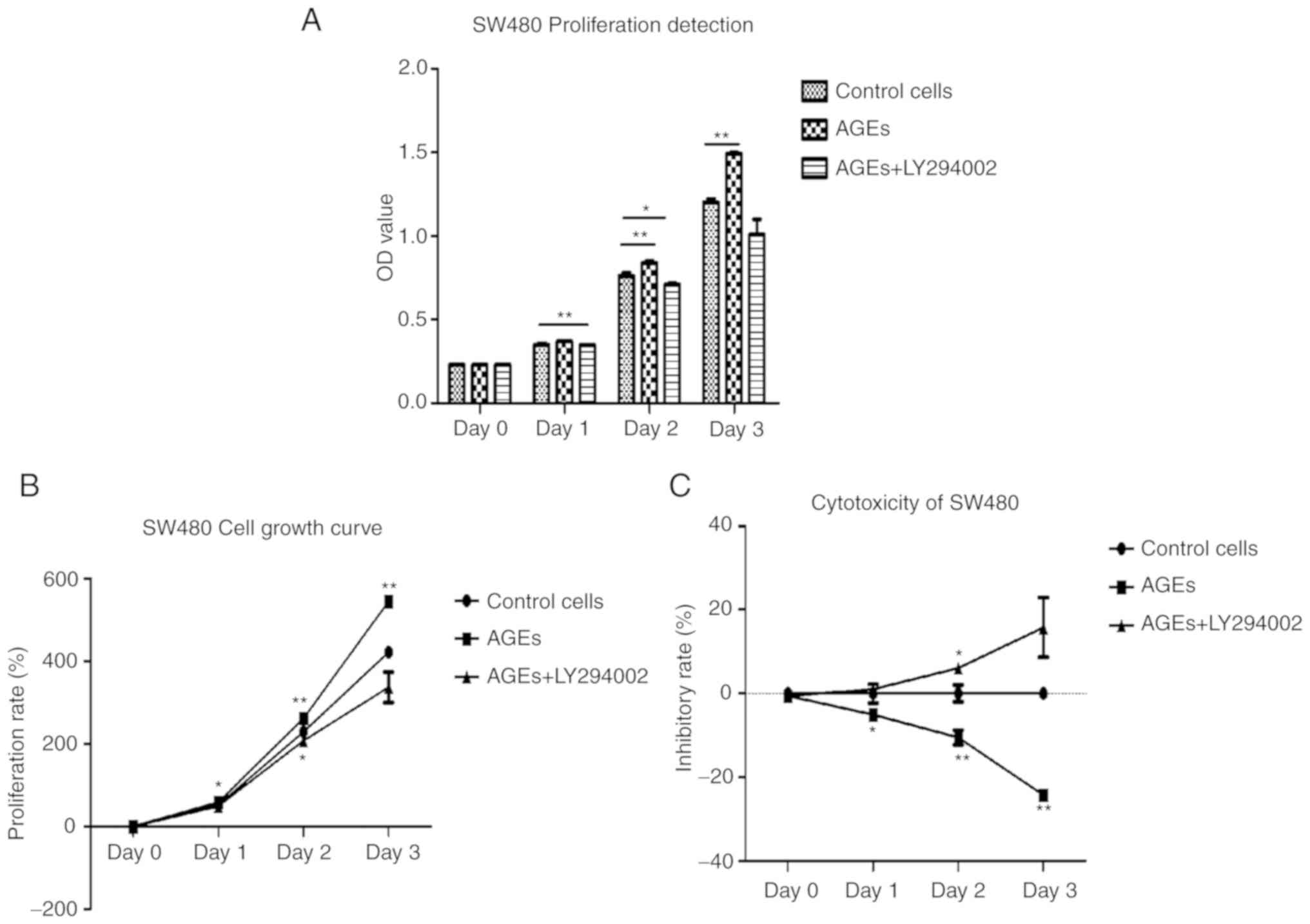
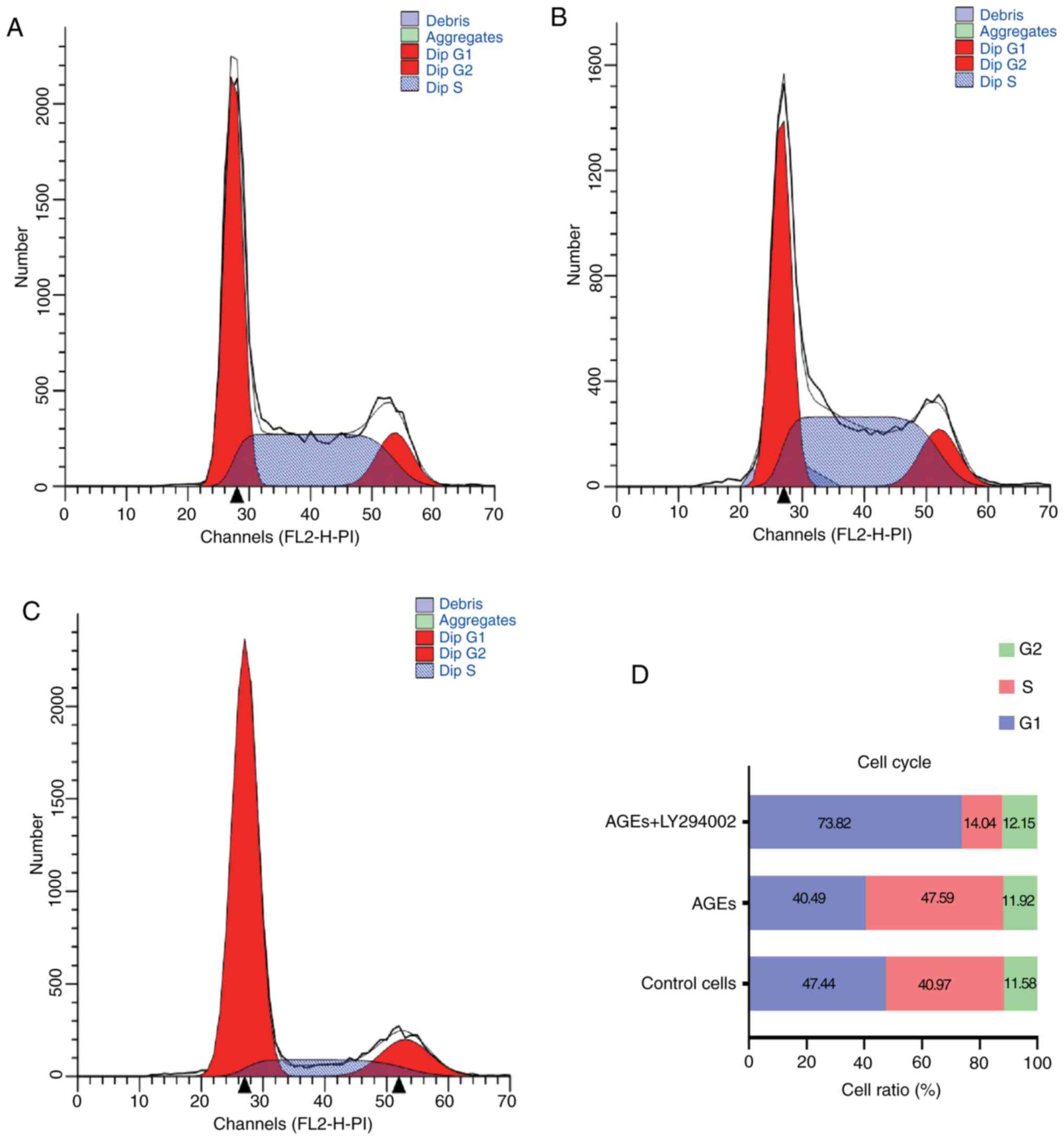
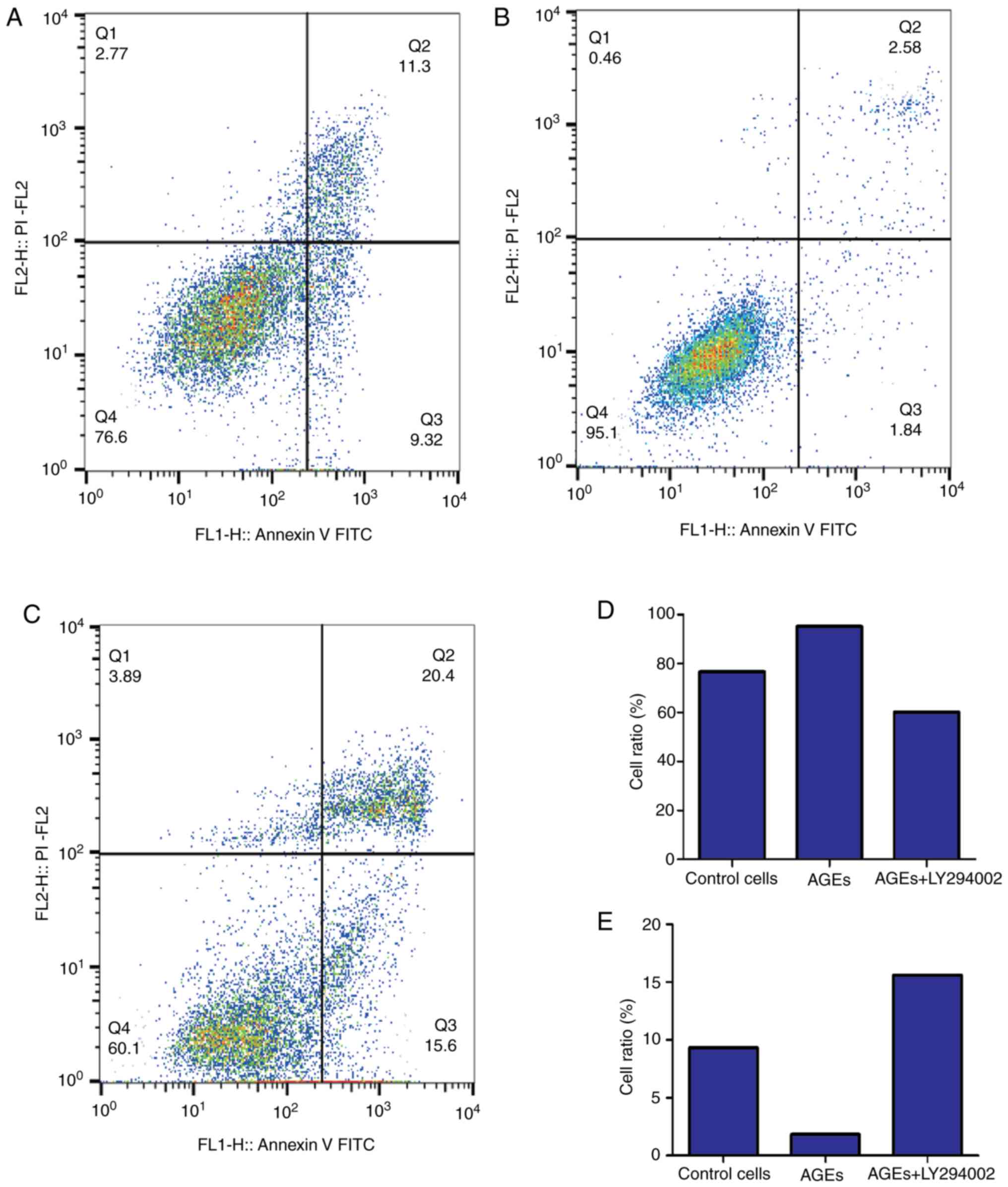
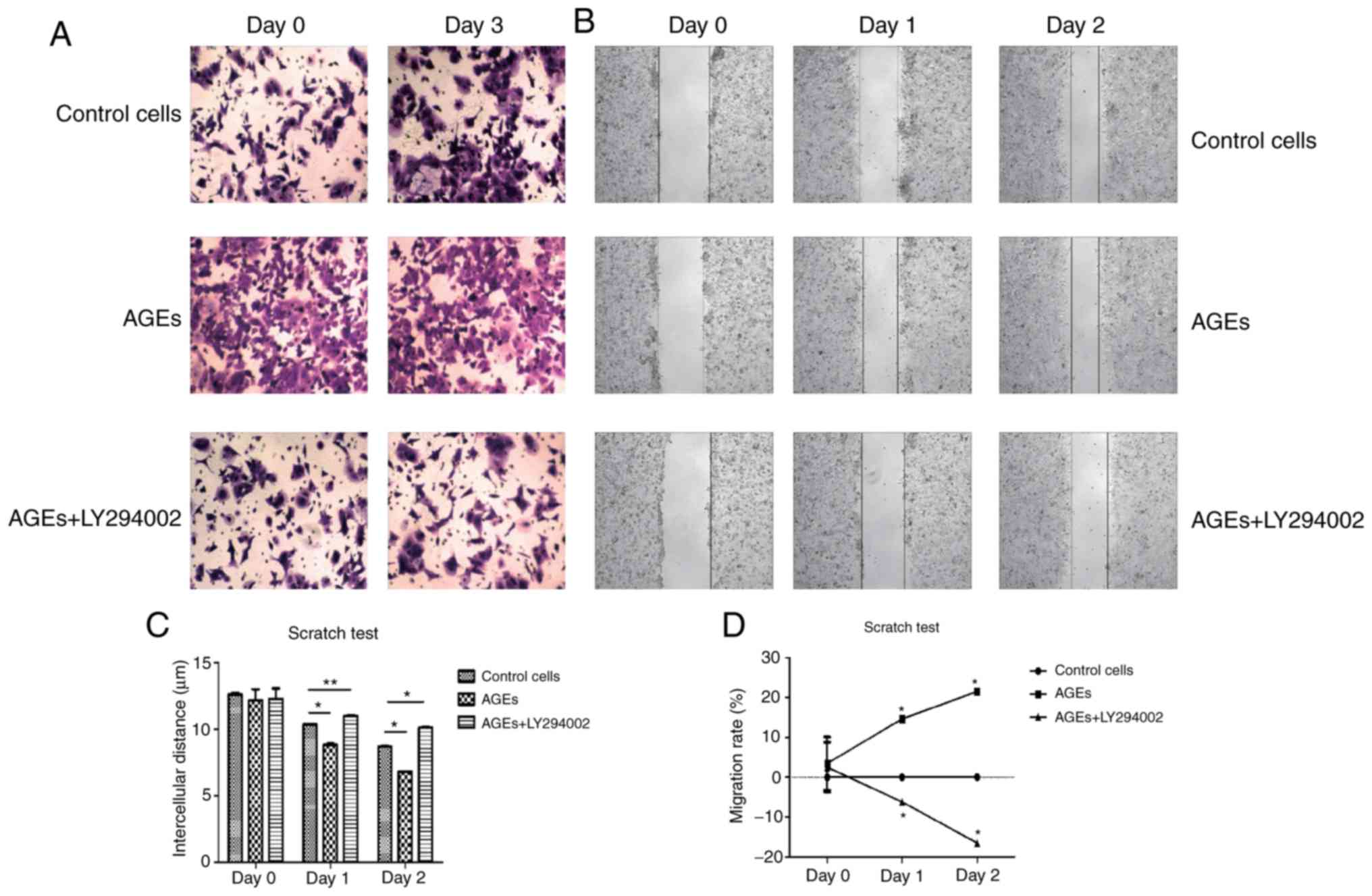
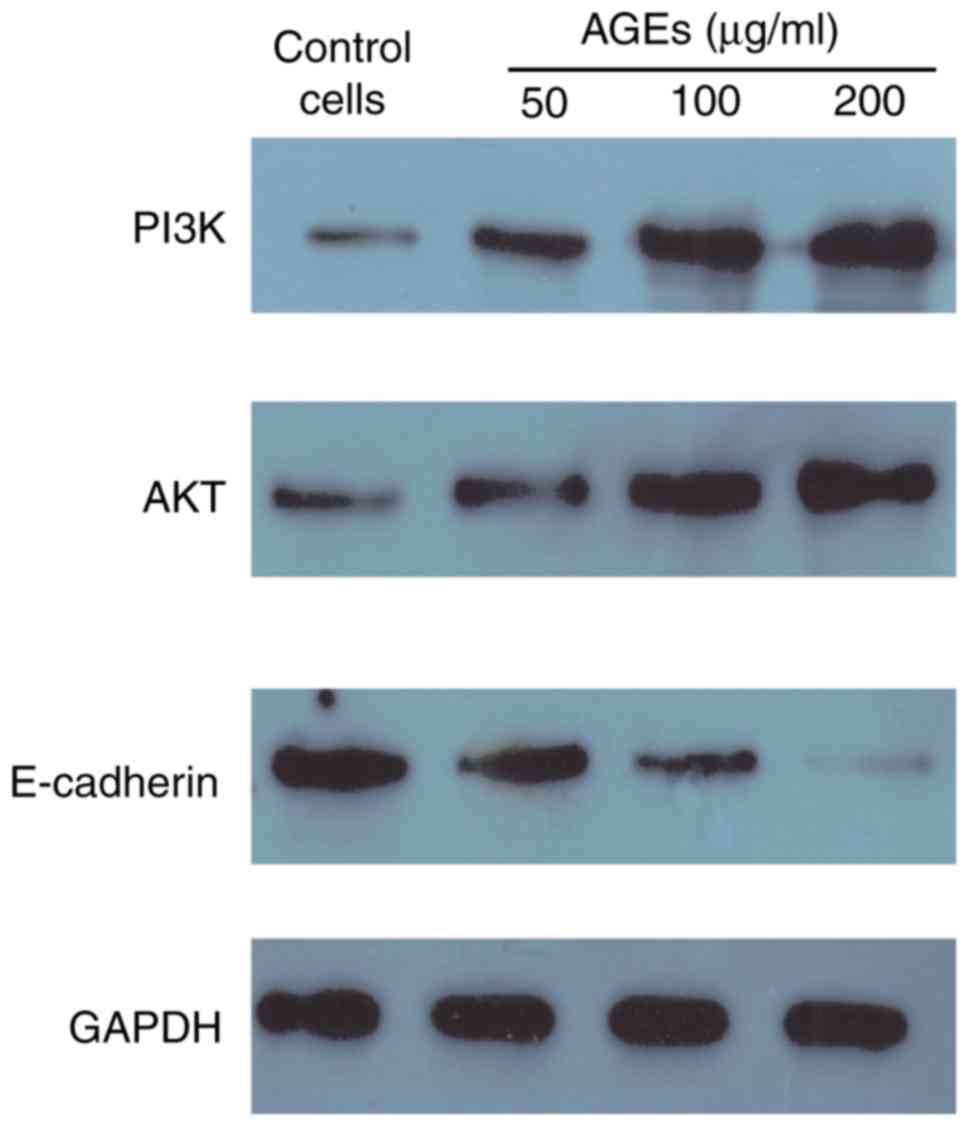
The aim of the present study was to determine the mechanism by which advanced glycation end products (AGEs) induce proliferation, invasion and epithelial‑mesenchymal transition (EMT) of human colon cancer SW480 cells. SW480 cells were divided into groups as follows: i) Control; ii) cells treated with AGEs alone; and iii) cells treated with AGEs combined with LY294002. Proliferation, cell cycle progression, apoptosis, invasion and migration of SW480 cells were assessed using an MTT assay, flow cytometry, Transwell assays and a wound healing assay, respectively. The protein expression levels of PI3K, AKT and epithelial cadherin (E‑cadherin) were examined by western blot analysis in SW480 cells treated with various concentrations of AGEs. Proliferation, invasion and migration were enhanced, cell cycle progression was increased and apoptosis was decreased in SW480 cells treated with AGEs compared with the control. The PI3K inhibitor, LY294002, reversed the effects of AGEs. Western blot analysis data demonstrated that AGEs increased the protein expression levels of PI3K and AKT, and decreased the expression of E‑cadherin. The results suggested that AGEs exert a positive effect on the proliferation, invasion and EMT in SW480 cells through the PI3K/AKT signaling pathway.
View Figures

Figure 1

Figure 2

Figure 3

Figure 4

Figure 5

View References

1 

Cao H, Xu E, Liu H, Wan L and Lai M: Epithelial-mesenchymal transition in colorectal cancer metastasis: A system review. Pathol Res Pract. 211:557–569. 2015. View Article : Google Scholar : PubMed/NCBI

2 

Kang KA, Piao MJ, Ryu YS, Hyun YJ, Park JE, Shilnikova K, Zhen AX, Kang HK, Koh YS, Jeong YJ and Hyun JW: Luteolin induces apoptotic cell death via antioxidant activity in human colon cancer cells. Int J Oncol. 51:1169–1178. 2017. View Article : Google Scholar : PubMed/NCBI

3 

Ferlay J, Shin HR, Bray F, Forman D, Mathers C and Parkin DM: Estimates of worldwide burden of cancer in 2008: GLOBOCAN 2008. Int J Cancer. 127:2893–2917. 2010. View Article : Google Scholar : PubMed/NCBI

4 

Brownlee M: Advanced protein glycosylation in diabetes and aging. Annu Rev Med. 46:223–234. 1995. View Article : Google Scholar : PubMed/NCBI

5 

Hori O, Yan SD, Ogawa S, Kuwabara K, Matsumoto M, Stern D and Schmidt AM: The receptor for advanced glycation end-products has a central role in mediating the effects of advanced glycation end-products on the development of vascular disease in diabetes mellitus. Nephrol Dial Transplant. 11 (Suppl 5):S13–S16. 1996. View Article : Google Scholar

6 

Schmidt AM, Yan SD, Wautier JL and Stern D: Activation of receptor for advanced glycation end products: A mechanism for chronic vascular dysfunction in diabetic vasculopathy and atherosclerosis. Circ Res. 84:489–497. 1999. View Article : Google Scholar : PubMed/NCBI

7 

Bao JM, He MY, Liu YW, Lu YJ, Hong YQ, Luo HH, Ren ZL, Zhao SC and Jiang Y: AGE/RAGE/Akt pathway contributes to prostate cancer cell proliferation by promoting Rb phosphorylation and degradation. Am J Cancer Res. 5:1741–1750. 2015.PubMed/NCBI

8 

Lee KJ, Yoo JW, Kim YK, Choi JH, Ha TY and Gil M: Advanced glycation end products promote triple negative breast cancer cells via ERK and NF-κB pathway. Biochem Biophys Res Commun. 495:2195–2201. 2018. View Article : Google Scholar : PubMed/NCBI

9 

Neviere R, Yu Y, Wang L, Tessier F and Boulanger E: Implication of advanced glycation end products (Ages) and their receptor (Rage) on myocardial contractile and mitochondrial functions. Glycoconj J. 33:607–617. 2016. View Article : Google Scholar : PubMed/NCBI

10 

Sun L, Huang T, Xu W, Sun J, Lv Y and Wang Y: Advanced glycation end products promote VEGF expression and thus choroidal neovascularization via Cyr61-PI3K/AKT signaling pathway. Sci Rep. 7:149252017. View Article : Google Scholar : PubMed/NCBI

11 

Nasser MW, Wani NA, Ahirwar DK, Powell CA, Ravi J, Elbaz M, Zhao H, Padilla L, Zhang X, Shilo K, et al: RAGE mediates S100A7-induced breast cancer growth and metastasis by modulating the tumor microenvironment. Cancer Res. 75:974–985. 2015. View Article : Google Scholar : PubMed/NCBI

12 

Qin Q, Niu J, Wang Z, Xu W, Qiao Z and Gu Y: Heparanase induced by advanced glycation end products (AGEs) promotes macrophage migration involving RAGE and PI3K/AKT pathway. Cardiovasc Diabetol. 12:372013. View Article : Google Scholar : PubMed/NCBI

13 

Li G, Xu J and Li Z: Receptor for advanced glycation end products inhibits proliferation in osteoblast through suppression of Wnt, PI3K and ERK signaling. Biochem Biophys Res Commun. 423:684–689. 2012. View Article : Google Scholar : PubMed/NCBI

14 

Thiery JP: Epithelial-mesenchymal transitions in tumour progression. Nat Rev Cancer. 2:442–454. 2002. View Article : Google Scholar : PubMed/NCBI

15 

Karin M, Yamamoto Y and Wang QM: The IKK NF-kB system: A treasure trove for drug development. Nat Rev Drug Discov. 3:17–26. 2004. View Article : Google Scholar : PubMed/NCBI

16 

Downward J: Targeting RAS signalling pathways in cancer therapy. Nat Rev Cancer. 3:11–22. 2003. View Article : Google Scholar : PubMed/NCBI

17 

Huber MA, Kraut N and Beug H: Molecular requirements for epithelial-mesenchymal transition during tumor progression. Curr Opin Cell Biol. 17:548–558. 2005. View Article : Google Scholar : PubMed/NCBI

18 

Shimomoto T, Luo Y, Ohmori H, Chihara Y, Fujii K, Sasahira T, Denda A and Kuniyasu H: Advanced glycation end products (AGE) induce the receptor for AGE in the colonic mucosa of azoxymethane-injected Fischer 344 rats fed with a high-linoleic acid and high-glucose diet. J Gastroenterol. 47:1073–1083. 2012. View Article : Google Scholar : PubMed/NCBI

19 

Chen H, Wu L, Li Y, Meng J, Lin N, Yang D, Zhu Y, Li X, Li M, Xu Y, et al: Advanced glycation end products increase carbohydrate responsive element binding protein expression and promote cancer cell proliferation. Mol Cell Endocrinol. 395:69–78. 2015. View Article : Google Scholar

20 

Grote VA, Nieters A, Kaaks R, Tjønneland A, Roswall N, Overvad K, Nielsen MR, Clavel-Chapelon F, Boutron-Ruault MC, Racine A, et al: The associations of advanced glycation end products and its soluble receptor with pancreatic cancer risk: A case-control study within the prospective EPIC cohort. Cancer Epidemiol Biomarkers Prev. 21:619–628. 2012. View Article : Google Scholar : PubMed/NCBI

21 

Takino J, Yamagishi S and Takeuchi M: Glycer-AGEs-RAGE signaling enhances the angiogenic potential of hepatocellular carcinoma by upregulating VEGF expression. World J Gastroenterol. 18:1781–1788. 2012. View Article : Google Scholar : PubMed/NCBI

22 

Ishibashi Y, Matsui T, Takeuchi M and Yamagishi S: Metformin inhibits advanced glycation end products (AGEs)-induced growth and VEGF expression in MCF-7 breast cancer cells by suppressing AGEs receptor expression via AMP-activated protein kinase. Horm Metab Res. 45:387–390. 2013.PubMed/NCBI

23 

Chen H, Li Y, Zhu Y, Wu L, Meng J, Lin N, Yang D, Li M, Ding W, Tong X and Su Q: Advanced glycation end products promote ChREBP expression and cell proliferation in liver cancer cells by increasing reactive oxygen species. Medicine (Baltimore). 96:e74562017. View Article : Google Scholar : PubMed/NCBI

24 

Liu X, Liu K, Wang Z, Liu C, Han Z, Tao J, Lu P, Wang J, Wu B, Huang Z, et al: Advanced glycation end products accelerate arteriosclerosis after renal transplantation through the AGE/RAGE/ILK pathway. Exp Mol Pathol. 99:312–319. 2015. View Article : Google Scholar : PubMed/NCBI

25 

Foster D, Spruill L, Walter KR, Nogueira LM, Fedarovich H, Turner RY, Ahmed M, Salley JD, Ford ME, Findlay VJ and Turner DP: AGE metabolites: A biomarker linked to cancer disparity? Cancer Epidemiol Biomarkers Prev. 23:2186–2191. 2014. View Article : Google Scholar : PubMed/NCBI

26 

Vlassara H and Uribarri J: Advanced glycation end products (AGE) and diabetes: Cause, effect, or both? Curr Diab Rep. 14:4532014. View Article : Google Scholar : PubMed/NCBI

27 

Duan Z, Chen G, Chen L, Stolzenberg-Solomon R, Weinstein SJ, Mannisto S, White DL, Albanes D and Jiao L: Determinants of concentrations of N(ε)-carboxymethyl-lysine and soluble receptor for advanced glycation end products and their associations with risk of pancreatic cancer. Int J Mol Epidemiol Genet. 5:152–163. 2014.PubMed/NCBI

28 

Yang S, Pinney SM, Mallick P, Ho SM, Bracken B and Wu T: Impact of oxidative stress biomarkers and carboxymethyllysine (an advanced glycation end product) on prostate cancer: A prospective study. Clin Genitourin Cancer. 13:e347–e351. 2015. View Article : Google Scholar : PubMed/NCBI

29 

Nicholson KM and Anderson NG: The protein kinase B/Akt signalling pathway in human malignancy. Cell Signal. 14:381–395. 2002. View Article : Google Scholar : PubMed/NCBI

30 

Xin M and Deng X: Nicotine inactivation of the proapoptotic function of Bax through phosphorylation. J Biol Chem. 280:10781–10789. 2005. View Article : Google Scholar : PubMed/NCBI

31 

Semba S, Itoh N, Ito M, Harada M and Yamakawa M: The in vitro and in vivo effects of 2-(4-morpholinyl)-8-phenyl-chromone (LY294002), a specific inhibitor of phosphatidylinositol 3′-kinase, in human colon cancer cells. Clin Cancer Res. 8:1957–1963. 2002.PubMed/NCBI

32 

Hu L, Zaloudek C, Mills GB, Gray J and Jaffe RB: In vivo and in vitro ovarian carcinoma growth inhibition by a phosphatidylinositol 3-kinase inhibitor (LY294002). Clin Cancer Res. 6:880–886. 2000.PubMed/NCBI

33 

Song G, Ouyang G and Bao S: The activation of Akt/PKB signaling pathway and cell survival. J Cell Mol Med. 9:59–71. 2005. View Article : Google Scholar : PubMed/NCBI

34 

Zheng J, Koh X, Hua F, Li G, Larrick JW and Bian JS: Cardioprotection induced by Na+/K+-ATPase activation involves extracellular signal-regulated kinase 1/2 and phosphoinositide 3-kinase/Akt pathway. Cardiovasc Res. 89:51–59. 2011. View Article : Google Scholar : PubMed/NCBI

35 

Liu Q, Turner KM, Alfred Yung WK, Chen K and Zhang W: Role of AKT signaling in DNA repair and clinical response to cancer therapy. Neuro Oncol. 16:1313–1323. 2014. View Article : Google Scholar : PubMed/NCBI

36 

Blume-Jensen P and Hunter T: Oncogenic kinase signalling. Nature. 411:355–365. 2001. View Article : Google Scholar : PubMed/NCBI

37 

Boudot C, Saidak Z, Boulanouar AK, Petit L, Gouilleux F, Massy Z, Brazier M, Mentaverri R and Kamel S: Implication of the calcium sensing receptor and the Phosphoinositide 3-kinase/Akt pathway in the extracellular calcium-mediated migration of RAW 264.7 osteoclast precursor cells. Bone. 46:1416–1423. 2010. View Article : Google Scholar : PubMed/NCBI

38 

Granado MH, Gangoiti P, Ouro A, Arana L, González M, Trueba M and Gómez-Muñoz A: Ceramide 1-phosphate (C1P) promotes cell migration: Involvement of a specific C1P receptor. Cell Signal. 21:405–412. 2009. View Article : Google Scholar : PubMed/NCBI

39 

Wallesch M, Pachow D, Blücher C, Firsching R, Warnke JP, Braunsdorf WEK, Kirches E and Mawrin C: Altered expression of E-Cadherin-related transcription factors indicates partial epithelial-mesenchymal transition in aggressive meningiomas. J Neurol Sci. 380:112–121. 2017. View Article : Google Scholar : PubMed/NCBI

40 

Prieto-García E, Díaz-García CV, García-Ruiz I and Agulló-Ortuño MT: Epithelial-to-mesenchymal transition in tumor progression. Med Oncol. 34:1222017. View Article : Google Scholar : PubMed/NCBI

41 

Huber MA, Azoitei N, Baumann B, Grünert S, Sommer A, Pehamberger H, Kraut N, Beug H and Wirth T: NF-кB is essential for epithelial-mesenchymal transition and metastasis in a model of breast cancer progression. J Clin Invest. 114:569–581. 2004. View Article : Google Scholar : PubMed/NCBI

Related Articles

  • Abstract
  • View
  • Download
  • Twitter
Copy and paste a formatted citation
Spandidos Publications style
Liang H: Advanced glycation end products induce proliferation, invasion and epithelial‑mesenchymal transition of human SW480 colon cancer cells through the PI3K/AKT signaling pathway. Oncol Lett 19: 3215-3222, 2020.
APA
Liang, H. (2020). Advanced glycation end products induce proliferation, invasion and epithelial‑mesenchymal transition of human SW480 colon cancer cells through the PI3K/AKT signaling pathway. Oncology Letters, 19, 3215-3222. https://doi.org/10.3892/ol.2020.11413
MLA
Liang, H."Advanced glycation end products induce proliferation, invasion and epithelial‑mesenchymal transition of human SW480 colon cancer cells through the PI3K/AKT signaling pathway". Oncology Letters 19.4 (2020): 3215-3222.
Chicago
Liang, H."Advanced glycation end products induce proliferation, invasion and epithelial‑mesenchymal transition of human SW480 colon cancer cells through the PI3K/AKT signaling pathway". Oncology Letters 19, no. 4 (2020): 3215-3222. https://doi.org/10.3892/ol.2020.11413
Copy and paste a formatted citation
x
Spandidos Publications style
Liang H: Advanced glycation end products induce proliferation, invasion and epithelial‑mesenchymal transition of human SW480 colon cancer cells through the PI3K/AKT signaling pathway. Oncol Lett 19: 3215-3222, 2020.
APA
Liang, H. (2020). Advanced glycation end products induce proliferation, invasion and epithelial‑mesenchymal transition of human SW480 colon cancer cells through the PI3K/AKT signaling pathway. Oncology Letters, 19, 3215-3222. https://doi.org/10.3892/ol.2020.11413
MLA
Liang, H."Advanced glycation end products induce proliferation, invasion and epithelial‑mesenchymal transition of human SW480 colon cancer cells through the PI3K/AKT signaling pathway". Oncology Letters 19.4 (2020): 3215-3222.
Chicago
Liang, H."Advanced glycation end products induce proliferation, invasion and epithelial‑mesenchymal transition of human SW480 colon cancer cells through the PI3K/AKT signaling pathway". Oncology Letters 19, no. 4 (2020): 3215-3222. https://doi.org/10.3892/ol.2020.11413
Follow us
  • Twitter
  • LinkedIn
  • Facebook
About
  • Spandidos Publications
  • Careers
  • Cookie Policy
  • Privacy Policy
How can we help?
  • Help
  • Live Chat
  • Contact
  • Email to our Support Team