Spandidos Publications Logo
  • About
    • About Spandidos
    • Aims and Scopes
    • Abstracting and Indexing
    • Editorial Policies
    • Reprints and Permissions
    • Job Opportunities
    • Terms and Conditions
    • Contact
  • Journals
    • All Journals
    • Oncology Letters
      • Oncology Letters
      • Information for Authors
      • Editorial Policies
      • Editorial Board
      • Aims and Scope
      • Abstracting and Indexing
      • Bibliographic Information
      • Archive
    • International Journal of Oncology
      • International Journal of Oncology
      • Information for Authors
      • Editorial Policies
      • Editorial Board
      • Aims and Scope
      • Abstracting and Indexing
      • Bibliographic Information
      • Archive
    • Molecular and Clinical Oncology
      • Molecular and Clinical Oncology
      • Information for Authors
      • Editorial Policies
      • Editorial Board
      • Aims and Scope
      • Abstracting and Indexing
      • Bibliographic Information
      • Archive
    • Experimental and Therapeutic Medicine
      • Experimental and Therapeutic Medicine
      • Information for Authors
      • Editorial Policies
      • Editorial Board
      • Aims and Scope
      • Abstracting and Indexing
      • Bibliographic Information
      • Archive
    • International Journal of Molecular Medicine
      • International Journal of Molecular Medicine
      • Information for Authors
      • Editorial Policies
      • Editorial Board
      • Aims and Scope
      • Abstracting and Indexing
      • Bibliographic Information
      • Archive
    • Biomedical Reports
      • Biomedical Reports
      • Information for Authors
      • Editorial Policies
      • Editorial Board
      • Aims and Scope
      • Abstracting and Indexing
      • Bibliographic Information
      • Archive
    • Oncology Reports
      • Oncology Reports
      • Information for Authors
      • Editorial Policies
      • Editorial Board
      • Aims and Scope
      • Abstracting and Indexing
      • Bibliographic Information
      • Archive
    • Molecular Medicine Reports
      • Molecular Medicine Reports
      • Information for Authors
      • Editorial Policies
      • Editorial Board
      • Aims and Scope
      • Abstracting and Indexing
      • Bibliographic Information
      • Archive
    • World Academy of Sciences Journal
      • World Academy of Sciences Journal
      • Information for Authors
      • Editorial Policies
      • Editorial Board
      • Aims and Scope
      • Abstracting and Indexing
      • Bibliographic Information
      • Archive
    • International Journal of Functional Nutrition
      • International Journal of Functional Nutrition
      • Information for Authors
      • Editorial Policies
      • Editorial Board
      • Aims and Scope
      • Abstracting and Indexing
      • Bibliographic Information
      • Archive
    • International Journal of Epigenetics
      • International Journal of Epigenetics
      • Information for Authors
      • Editorial Policies
      • Editorial Board
      • Aims and Scope
      • Abstracting and Indexing
      • Bibliographic Information
      • Archive
    • Medicine International
      • Medicine International
      • Information for Authors
      • Editorial Policies
      • Editorial Board
      • Aims and Scope
      • Abstracting and Indexing
      • Bibliographic Information
      • Archive
  • Articles
  • Information
    • Information for Authors
    • Information for Reviewers
    • Information for Librarians
    • Information for Advertisers
    • Conferences
  • Language Editing
Spandidos Publications Logo
  • About
    • About Spandidos
    • Aims and Scopes
    • Abstracting and Indexing
    • Editorial Policies
    • Reprints and Permissions
    • Job Opportunities
    • Terms and Conditions
    • Contact
  • Journals
    • All Journals
    • Biomedical Reports
      • Information for Authors
      • Editorial Policies
      • Editorial Board
      • Aims and Scope
      • Abstracting and Indexing
      • Bibliographic Information
      • Archive
    • Experimental and Therapeutic Medicine
      • Information for Authors
      • Editorial Policies
      • Editorial Board
      • Aims and Scope
      • Abstracting and Indexing
      • Bibliographic Information
      • Archive
    • International Journal of Epigenetics
      • Information for Authors
      • Editorial Policies
      • Editorial Board
      • Aims and Scope
      • Abstracting and Indexing
      • Bibliographic Information
      • Archive
    • International Journal of Functional Nutrition
      • Information for Authors
      • Editorial Policies
      • Editorial Board
      • Aims and Scope
      • Abstracting and Indexing
      • Bibliographic Information
      • Archive
    • International Journal of Molecular Medicine
      • Information for Authors
      • Editorial Policies
      • Editorial Board
      • Aims and Scope
      • Abstracting and Indexing
      • Bibliographic Information
      • Archive
    • International Journal of Oncology
      • Information for Authors
      • Editorial Policies
      • Editorial Board
      • Aims and Scope
      • Abstracting and Indexing
      • Bibliographic Information
      • Archive
    • Medicine International
      • Information for Authors
      • Editorial Policies
      • Editorial Board
      • Aims and Scope
      • Abstracting and Indexing
      • Bibliographic Information
      • Archive
    • Molecular and Clinical Oncology
      • Information for Authors
      • Editorial Policies
      • Editorial Board
      • Aims and Scope
      • Abstracting and Indexing
      • Bibliographic Information
      • Archive
    • Molecular Medicine Reports
      • Information for Authors
      • Editorial Policies
      • Editorial Board
      • Aims and Scope
      • Abstracting and Indexing
      • Bibliographic Information
      • Archive
    • Oncology Letters
      • Information for Authors
      • Editorial Policies
      • Editorial Board
      • Aims and Scope
      • Abstracting and Indexing
      • Bibliographic Information
      • Archive
    • Oncology Reports
      • Information for Authors
      • Editorial Policies
      • Editorial Board
      • Aims and Scope
      • Abstracting and Indexing
      • Bibliographic Information
      • Archive
    • World Academy of Sciences Journal
      • Information for Authors
      • Editorial Policies
      • Editorial Board
      • Aims and Scope
      • Abstracting and Indexing
      • Bibliographic Information
      • Archive
  • Articles
  • Information
    • For Authors
    • For Reviewers
    • For Librarians
    • For Advertisers
    • Conferences
  • Language Editing
Login Register Submit
  • This site uses cookies
  • You can change your cookie settings at any time by following the instructions in our Cookie Policy. To find out more, you may read our Privacy Policy.

    I agree
Search articles by DOI, keyword, author or affiliation
Search
Advanced Search
presentation
Oncology Letters
Join Editorial Board Propose a Special Issue
Print ISSN: 1792-1074 Online ISSN: 1792-1082
Journal Cover
April-2020 Volume 19 Issue 4

Full Size Image

Sign up for eToc alerts
Recommend to Library

Journals

International Journal of Molecular Medicine

International Journal of Molecular Medicine

International Journal of Molecular Medicine is an international journal devoted to molecular mechanisms of human disease.

International Journal of Oncology

International Journal of Oncology

International Journal of Oncology is an international journal devoted to oncology research and cancer treatment.

Molecular Medicine Reports

Molecular Medicine Reports

Covers molecular medicine topics such as pharmacology, pathology, genetics, neuroscience, infectious diseases, molecular cardiology, and molecular surgery.

Oncology Reports

Oncology Reports

Oncology Reports is an international journal devoted to fundamental and applied research in Oncology.

Experimental and Therapeutic Medicine

Experimental and Therapeutic Medicine

Experimental and Therapeutic Medicine is an international journal devoted to laboratory and clinical medicine.

Oncology Letters

Oncology Letters

Oncology Letters is an international journal devoted to Experimental and Clinical Oncology.

Biomedical Reports

Biomedical Reports

Explores a wide range of biological and medical fields, including pharmacology, genetics, microbiology, neuroscience, and molecular cardiology.

Molecular and Clinical Oncology

Molecular and Clinical Oncology

International journal addressing all aspects of oncology research, from tumorigenesis and oncogenes to chemotherapy and metastasis.

World Academy of Sciences Journal

World Academy of Sciences Journal

Multidisciplinary open-access journal spanning biochemistry, genetics, neuroscience, environmental health, and synthetic biology.

International Journal of Functional Nutrition

International Journal of Functional Nutrition

Open-access journal combining biochemistry, pharmacology, immunology, and genetics to advance health through functional nutrition.

International Journal of Epigenetics

International Journal of Epigenetics

Publishes open-access research on using epigenetics to advance understanding and treatment of human disease.

Medicine International

Medicine International

An International Open Access Journal Devoted to General Medicine.

Journal Cover
April-2020 Volume 19 Issue 4

Full Size Image

Sign up for eToc alerts
Recommend to Library

  • Article
  • Citations
    • Cite This Article
    • Download Citation
    • Create Citation Alert
    • Remove Citation Alert
    • Cited By
  • Similar Articles
    • Related Articles (in Spandidos Publications)
    • Similar Articles (Google Scholar)
    • Similar Articles (PubMed)
  • Download PDF
  • Download XML
  • View XML

  • Supplementary Files
    • Supplementary_Data.pdf
Article Open Access

microRNA‑144 inhibits cell proliferation and invasion by directly targeting TIGAR in esophageal carcinoma

  • Authors:
    • Yushu Mu
    • Qifei Wang
    • Lei Tan
    • Lin Lin
    • Benhua Zhang
  • View Affiliations / Copyright

    Affiliations: Department of Thoracic Surgery, Affiliated Hospital of Taishan Medical University, Tai'an, Shandong 271000, P.R. China, Department of Thoracic Surgery, Tai'an City Central Hospital, Tai'an, Shandong 271000, P.R. China, Department of Digestive Medicine, Tai'an City Central Hospital, Tai'an, Shandong 271000, P.R. China, Department of Oncology, Affiliated Hospital of Taishan Medical University, Tai'an, Shandong 271000, P.R. China
    Copyright: © Mu et al. This is an open access article distributed under the terms of Creative Commons Attribution License.
  • Pages: 3079-3088
    |
    Published online on: February 24, 2020
       https://doi.org/10.3892/ol.2020.11420
  • Expand metrics +
Metrics: Total Views: 0 (Spandidos Publications: | PMC Statistics: )
Metrics: Total PDF Downloads: 0 (Spandidos Publications: | PMC Statistics: )
Cited By (CrossRef): 0 citations Loading Articles...

This article is mentioned in:


Abstract

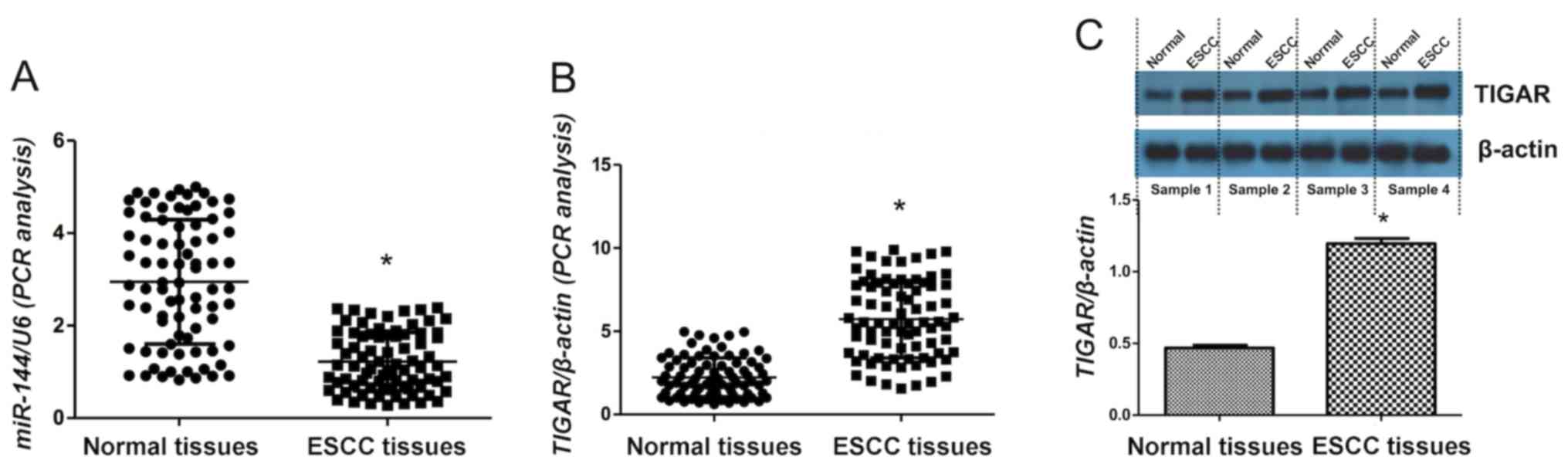
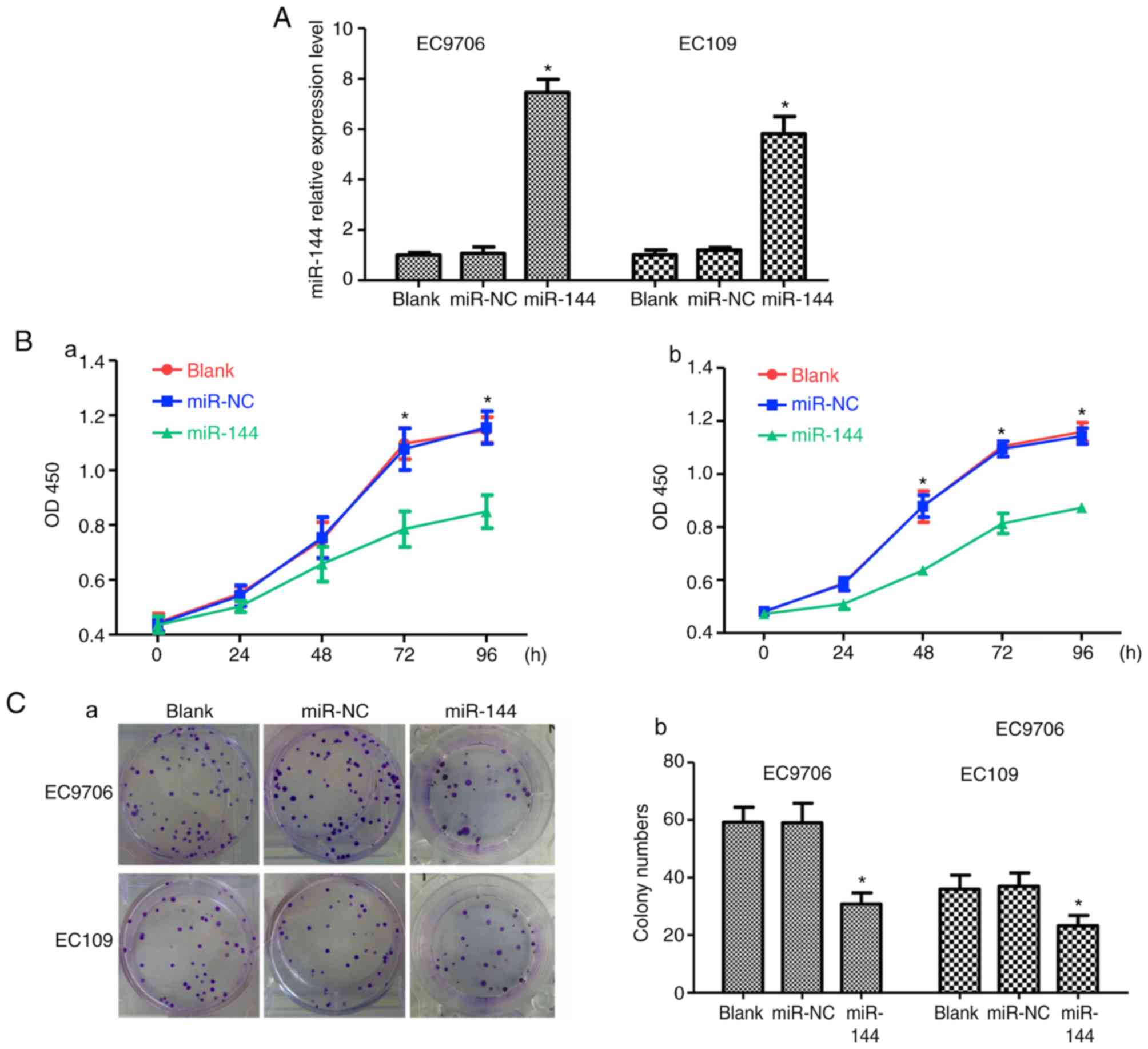
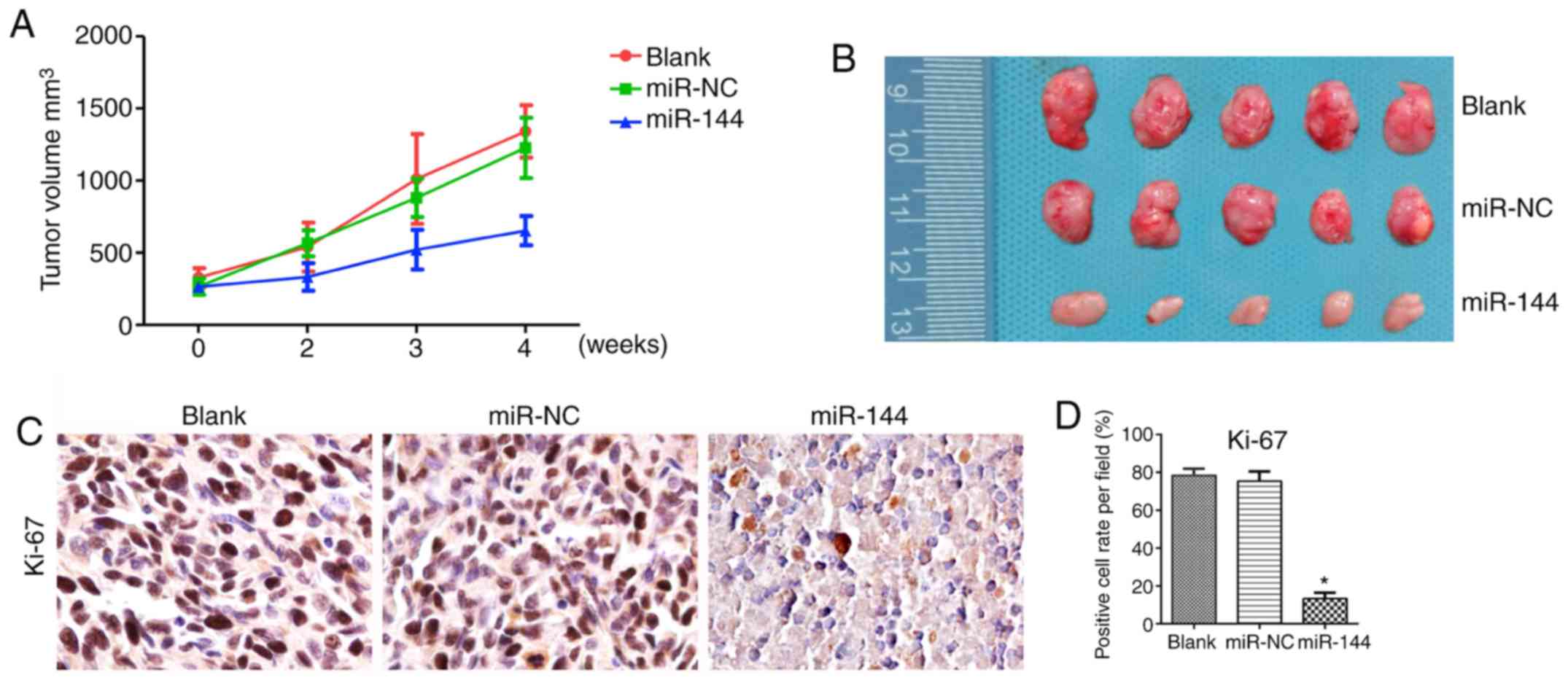
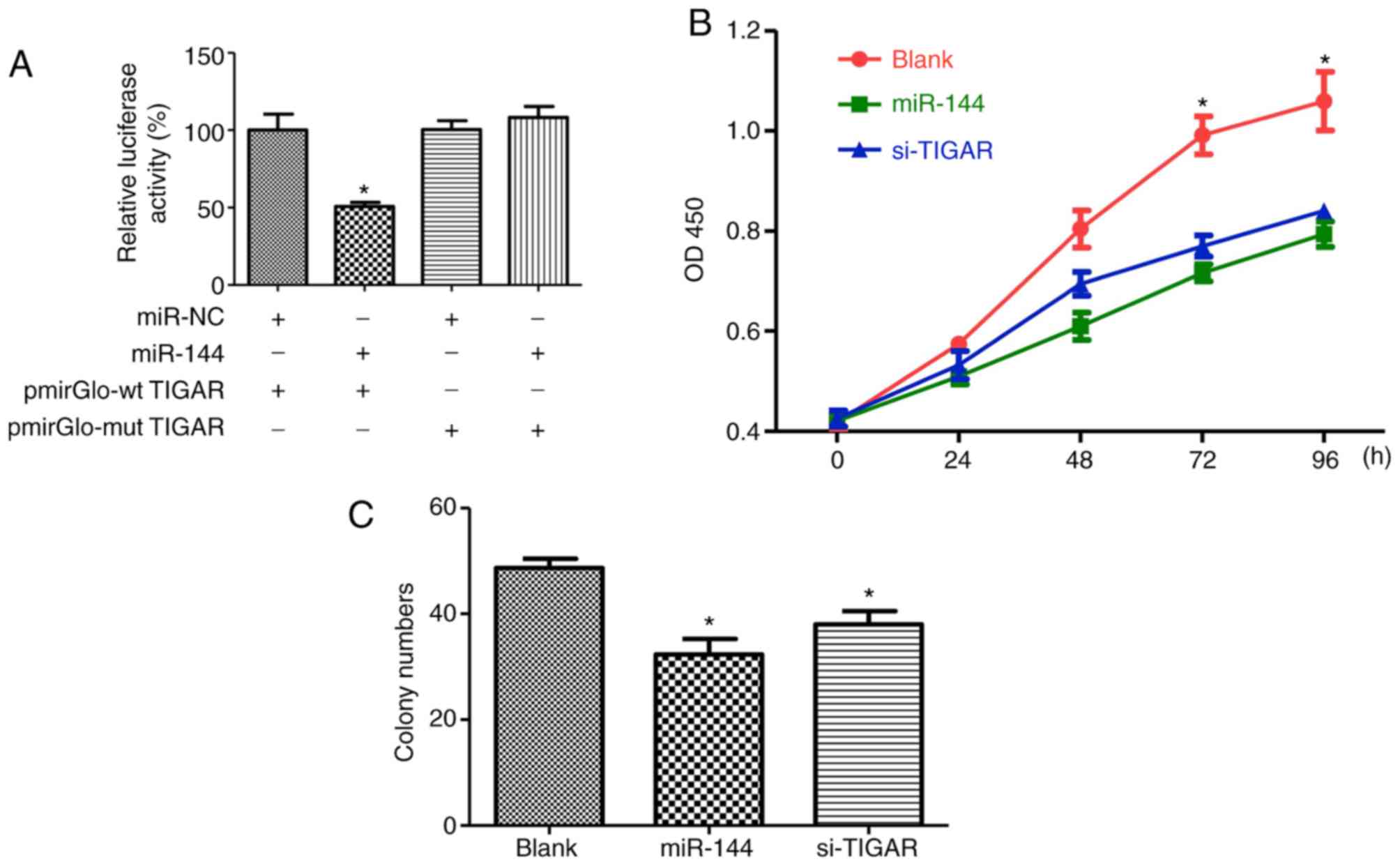
microRNAs (miRNAs) have been identified to play vital roles in the development and progression of numerous different types of human malignancy, including esophageal squamous cell carcinoma (ESCC). In the present study, the biological function of microRNA‑144 (miR‑144) was investigated, as well as its underlying molecular mechanism in ESCC. The results revealed that miR‑144 expression was significantly decreased, whereas the expression of TP53‑inducible glycolysis and apoptosis regulator (TIGAR) was significantly increased in human ESCC tissues when compared with adjacent non‑tumor tissues. An increase in TIGAR was significantly associated with tumor size and Tumor‑Node‑Metastasis staging in patients. Functional analysis revealed that the overexpression of miR‑144 using lentivirus particles significantly inhibited cell proliferation and tumor colony formation, and induced cell apoptosis in EC9706 and EC109 cells. The autophagy activity was also enhanced by miR‑144 activity. In addition, overexpression of miR‑144 significantly inhibited tumor growth in vivo. In the present study, TIGAR was confirmed to be the downstream target of miR‑144 in ESCC. siRNA‑mediated downregulation of TIGAR inversely regulated the inhibition effect of miR‑144 on ESCC cells. To conclude, the present study demonstrated that miR‑144 inhibits proliferation and invasion in esophageal cancer by directly targeting TIGAR.
View Figures

Figure 1

Figure 2

Figure 3

Figure 4

View References

1 

Bai Y, Lin H, Fang Z, Luo Q, Fang Y, Su Y, Hu Q, Duan H, Chen F and Zhang ZY: Plasma microRNA-19a as a potential biomarker for esophageal squamous cell carcinoma diagnosis and prognosis. Biomark Med. 11:431–441. 2017. View Article : Google Scholar : PubMed/NCBI

2 

Cao Z, Zheng X, Cao L and Liang N: MicroRNA-539 inhibits the epithelial-mesenchymal transition of esophageal cancer cells by twist-related protein 1-mediated modulation of melanoma associated antigen A4. Oncol Res. 26:529–536. 2018. View Article : Google Scholar : PubMed/NCBI

3 

Cui XB, Peng H, Li RR, Mu JQ, Yang L, Li N, Liu CX, Hu JM, Li SG, Wei Y, et al: MicroRNA-34a functions as a tumor suppressor by directly targeting oncogenic PLCE1 in Kazakh esophageal squamous cell carcinoma. Oncotarget. 8:92454–92469. 2017. View Article : Google Scholar : PubMed/NCBI

4 

Fong LY, Taccioli C, Jing R, Smalley KJ, Alder H, Jiang Y, Fadda P, Farber JL and Croce CM: MicroRNA dysregulation and esophageal cancer development depend on the extent of zinc dietary deficiency. Oncotarget. 7:10723–10738. 2016. View Article : Google Scholar : PubMed/NCBI

5 

Chen M, Xia Y, Tan Y, Jiang G, Jin H and Chen Y: Downregulation of microRNA-370 in esophageal squamous-cell carcinoma is associated with cancer progression and promotes cancer cell proliferation via upregulating PIN1. Gene. 661:68–77. 2018. View Article : Google Scholar : PubMed/NCBI

6 

Chen Z, Zhao L, Zhao F, Yang G and Wang J: MicroRNA-26b regulates cancer proliferation migration and cell cycle transition by suppressing TRAF5 in esophageal squamous cell carcinoma. Am J Transl Res. 8:1957–1970. 2016.PubMed/NCBI

7 

Dong W, Li B, Wang J, Song Y, Zhang Z, Fu C and Zhang P: Diagnostic and predictive significance of serum microRNA-7 in esophageal squamous cell carcinoma. Oncol Rep. 35:1449–1456. 2016. View Article : Google Scholar : PubMed/NCBI

8 

Gao X, Wang X, Cai K, Wang W, Ju Q, Yang X, Wang H and Wu H: MicroRNA-127 is a tumor suppressor in human esophageal squamous cell carcinoma through the regulation of oncogene FMNL3. Eur J Pharmacol. 791:603–610. 2016. View Article : Google Scholar : PubMed/NCBI

9 

He W, Feng J, Zhang Y, Wang Y, Zang W and Zhao G: microRNA-186 inhibits cell proliferation and induces apoptosis in human esophageal squamous cell carcinoma by targeting SKP2. Lab Invest. 96:317–324. 2016. View Article : Google Scholar : PubMed/NCBI

10 

Ji HH, Hong L, Huang GL, Yin HX, Xu P, Luo SY and Song JK: Association between microRNA-196a2 rs11614913, microRNA-146a rs2910164, and microRNA-423 rs6505162 polymorphisms and esophageal cancer risk: A meta-analysis. Meta Gene. 3:14–25. 2015. View Article : Google Scholar : PubMed/NCBI

11 

Wu N, Song Y, Pang L and Chen Z: CRCT1 regulated by microRNA-520 g inhibits proliferation and induces apoptosis in esophageal squamous cell cancer. Tumour Biol. 37:8271–8279. 2016. View Article : Google Scholar : PubMed/NCBI

12 

Yu Q, Liu Y, Wen C, Zhao Y, Jin S, Hu Y, Wang F, Chen L, Zhang B, Wang W, et al: MicroRNA-1 inhibits tumorigenicity of esophageal squamous cell carcinoma and enhances sensitivity to gefitinib. Oncol Lett. 15:963–971. 2018.PubMed/NCBI

13 

Bulibu J, Wang W, Tang Y, Li N and Saifuding K: Association between polymorphisms in the promoter region of microRNA-34b/c and the chemoradiotherapy efficacy for locally advanced esophageal squamous cell carcinoma in Chinese Han population. Pathol Oncol Res. 25:421–427. 2019. View Article : Google Scholar : PubMed/NCBI

14 

Harada K, Baba Y, Ishimoto T, Kosumi K, Tokunaga R, Izumi D, Ohuchi M, Nakamura K, Kiyozumi Y, Kurashige J, et al: Suppressor microRNA-145 is epigenetically regulated by promoter hypermethylation in esophageal squamous cell carcinoma. Anticancer Res. 35:4617–4624. 2015.PubMed/NCBI

15 

Chan CM, Lai KK, Ng EK, Kiang MN, Kwok TW, Wang HK, Chan KW, Law TT, Tong DK, Chan KT, et al: Serum microRNA-193b as a promising biomarker for prediction of chemoradiation sensitivity in esophageal squamous cell carcinoma patients. Oncol Lett. 15:3273–3280. 2018.PubMed/NCBI

16 

Dong S, Yin H, Dong C, Sun K, Lv P, Meng W, Ming L and He F: Predictive value of plasma MicroRNA-216a/b in the diagnosis of esophageal squamous cell carcinoma. Dis Markers. 2016:18570672016. View Article : Google Scholar : PubMed/NCBI

17 

Fan YX, Bian XH, Qian PD, Chen ZZ, Wen J, Luo YH, Yan PW and Zhang Q: MicroRNA-125b inhibits cell proliferation and induces cell apoptosis in esophageal squamous cell carcinoma by targeting BMF. Oncol Rep. 40:61–72. 2018.PubMed/NCBI

18 

Berry MF: Esophageal cancer: Staging system and guidelines for staging and treatment. J Thorac Dis. 6 (Suppl 3):S289–S297. 2014.PubMed/NCBI

19 

Liu L, Wang S, Chen R, Wu Y, Zhang B, Huang S, Zhang J, Xiao F, Wang M and Liang Y: Myc induced miR-144/451 contributes to the acquired imatinib resistance in chronic myelogenous leukemia cell K562. Biochem Biophys Res Commun. 425:368–373. 2012. View Article : Google Scholar : PubMed/NCBI

20 

Whitman SP, Maharry K, Radmacher MD, Becker H, Mrózek K, Margeson D, Holland KB, Wu YZ, Schwind S, Metzeler KH, et al: FLT3 internal tandem duplication associates with adverse outcome and gene- and microRNA-expression signatures in patients 60 years of age or older with primary cytogenetically normal acute myeloid leukemia: A Cancer and Leukemia Group B study. Blood. 116:3622–3626. 2010. View Article : Google Scholar : PubMed/NCBI

21 

Gao Z, Liu R, Liao J, Yang M, Pan E, Yin L and Pu Y: Possible tumor suppressive role of the miR-144/451 cluster in esophageal carcinoma as determined by principal component regression analysis. Mol Med Rep. 14:3805–3813. 2016. View Article : Google Scholar : PubMed/NCBI

22 

Wu W, Hou W, Wu Z, Wang Y, Yi Y and Lin W: miRNA-144 in the saliva is a genetic marker for early diagnosis of esophageal cancer. Nan Fang Yi Ke Da Xue Xue Bao. 33:1783–1786. 2013.(In Chinese). PubMed/NCBI

23 

Livak KJ and Schmittgen TD: Analysis of relative gene expression data using real-time quantitative PCR and the 2(-Delta Delta C(T)) method. Methods. 25:402–408. 2001. View Article : Google Scholar : PubMed/NCBI

24 

Agarwal V, Bell GW, Nam JW and Bartel DP: Predicting effective microRNA target sites in mammalian mRNAs. Elife. 4:2015. View Article : Google Scholar

25 

Lewis BP, Burge CB and Bartel DP: Conserved seed pairing, often flanked by adenosines, indicates that thousands of human genes are microRNA targets. Cell. 120:15–20. 2005. View Article : Google Scholar : PubMed/NCBI

26 

Vlachos IS, Zagganas K, Paraskevopoulou MD, Georgakilas G, Karagkouni D, Vergoulis T, Dalamagas T and Hatzigeorgiou AG: DIANA-miRPath v3.0: Deciphering microRNA function with experimental support. Nucleic Acids Res. 43:W460–W466. 2015. View Article : Google Scholar : PubMed/NCBI

27 

Hu C, Lv L, Peng J, Liu D, Wang X, Zhou Y and Huo J: MicroRNA-375 suppresses esophageal cancer cell growth and invasion by repressing metadherin expression. Oncol Lett. 13:4769–4775. 2017. View Article : Google Scholar : PubMed/NCBI

28 

Zhang ZQ, Cao Z, Liu C, Li R, Wang WD and Wang XY: MiRNA-embedded ShRNAs for radiation-inducible LGMN knockdown and the antitumor effects on breast cancer. PLoS One. 11:e01634462016. View Article : Google Scholar : PubMed/NCBI

29 

Dong S, Yin H, Dong C, Sun K, Lv P, Meng W, Ming L and He F: Corrigendum to ‘Predictive value of plasma MicroRNA-216a/b in the diagnosis of esophageal squamous cell carcinoma’. Dis Markers. 2017:34376792017. View Article : Google Scholar : PubMed/NCBI

30 

Fong LY, Farber JL and Croce CM: Zinc intake, microRNA dysregulation, and esophageal cancer. Aging (Albany NY). 8:1161–1162. 2016. View Article : Google Scholar : PubMed/NCBI

31 

Cui H, Zhang S, Zhou H and Guo L: Direct downregulation of B-cell translocation gene 3 by microRNA-93 is required for desensitizing esophageal cancer to radiotherapy. Dig Dis Sci. 62:1995–2003. 2017. View Article : Google Scholar : PubMed/NCBI

32 

Fan JY, Yang Y, Xie JY, Lu YL, Shi K and Huang YQ: MicroRNA-144 mediates metabolic shift in ovarian cancer cells by directly targeting Glut1. Tumour Biol. 37:6855–6860. 2016. View Article : Google Scholar : PubMed/NCBI

33 

Huang J, Shi Y, Li H, Yang M and Liu G: MicroRNA-144 acts as a tumor suppressor by targeting Rho-associated coiled-coil containing protein kinase 1 in osteosarcoma cells. Mol Med Rep. 12:4554–4559. 2015. View Article : Google Scholar : PubMed/NCBI

34 

Huo F, Zhang C, He H and Wang Y: MicroRNA-144-3p inhibits proliferation and induces apoptosis of human salivary adenoid carcinoma cells via targeting of mTOR. Biotechnol Lett. 38:409–416. 2016. View Article : Google Scholar : PubMed/NCBI

35 

Jin J, Wang Y, Xu Y, Zhou X, Liu Y, Li X and Wang J: MicroRNA-144 regulates cancer cell proliferation and cell-cycle transition in acute lymphoblastic leukemia through the interaction of FMN2. J Gene Med. 19:2017. View Article : Google Scholar

36 

Li B, Zhang S, Shen H and Li C: MicroRNA-144-3p suppresses gastric cancer progression by inhibiting epithelial-to-mesenchymal transition through targeting PBX3. Biochem Biophys Res Commun. 484:241–247. 2017. View Article : Google Scholar : PubMed/NCBI

37 

Li D, Li H, Yang Y and Kang L: Long noncoding RNA urothelial carcinoma associated 1 promotes the proliferation and metastasis of human lung tumor cells by regulating MicroRNA-144. Oncol Res. 26:537–546. 2018. View Article : Google Scholar : PubMed/NCBI

38 

Lin L, Zheng Y, Tu Y, Wang Z, Liu H, Lu X, Xu L and Yuan J: MicroRNA-144 suppresses tumorigenesis and tumor progression of astrocytoma by targeting EZH2. Hum Pathol. 46:971–980. 2015. View Article : Google Scholar : PubMed/NCBI

39 

Cheng AM, Byrom MW, Shelton J and Ford LP: Antisense inhibition of human miRNAs and indications for an involvement of miRNA in cell growth and apoptosis. Nucleic Acids Res. 33:1290–1297. 2005. View Article : Google Scholar : PubMed/NCBI

40 

Zhang LY, Ho-Fun Lee V, Wong AM, Kwong DL, Zhu YH, Dong SS, Kong KL, Chen J, Tsao SW, Guan XY and Fu L: MicroRNA-144 promotes cell proliferation, migration and invasion in nasopharyngeal carcinoma through repression of PTEN. Carcinogenesis. 34:454–463. 2013. View Article : Google Scholar : PubMed/NCBI

41 

Shao Y, Li P, Zhu ST, Yue JP, Ji XJ, Ma D, Wang L, Wang YJ, Zong Y, Wu YD and Zhang ST: MiR-26a and miR-144 inhibit proliferation and metastasis of esophageal squamous cell cancer by inhibiting cyclooxygenase-2. Oncotarget. 7:15173–15186. 2016. View Article : Google Scholar : PubMed/NCBI

42 

Ko YH, Domingo-Vidal M, Roche M, Lin Z, Whitaker-Menezes D, Seifert E, Capparelli C, Tuluc M, Birbe RC, Tassone P, et al: TP53-inducible glycolysis and apoptosis regulator (TIGAR) metabolically reprograms carcinoma and stromal cells in breast cancer. J Biol Chem. 291:26291–26303. 2016. View Article : Google Scholar : PubMed/NCBI

43 

Xu X, Liu C and Bao J: Hypoxia-induced hsa-miR-101 promotes glycolysis by targeting TIGAR mRNA in clear cell renal cell carcinoma. Mol Med Rep. 15:1373–1378. 2017. View Article : Google Scholar : PubMed/NCBI

Related Articles

  • Abstract
  • View
  • Download
  • Twitter
Copy and paste a formatted citation
Spandidos Publications style
Mu Y, Wang Q, Tan L, Lin L and Zhang B: microRNA‑144 inhibits cell proliferation and invasion by directly targeting TIGAR in esophageal carcinoma. Oncol Lett 19: 3079-3088, 2020.
APA
Mu, Y., Wang, Q., Tan, L., Lin, L., & Zhang, B. (2020). microRNA‑144 inhibits cell proliferation and invasion by directly targeting TIGAR in esophageal carcinoma. Oncology Letters, 19, 3079-3088. https://doi.org/10.3892/ol.2020.11420
MLA
Mu, Y., Wang, Q., Tan, L., Lin, L., Zhang, B."microRNA‑144 inhibits cell proliferation and invasion by directly targeting TIGAR in esophageal carcinoma". Oncology Letters 19.4 (2020): 3079-3088.
Chicago
Mu, Y., Wang, Q., Tan, L., Lin, L., Zhang, B."microRNA‑144 inhibits cell proliferation and invasion by directly targeting TIGAR in esophageal carcinoma". Oncology Letters 19, no. 4 (2020): 3079-3088. https://doi.org/10.3892/ol.2020.11420
Copy and paste a formatted citation
x
Spandidos Publications style
Mu Y, Wang Q, Tan L, Lin L and Zhang B: microRNA‑144 inhibits cell proliferation and invasion by directly targeting TIGAR in esophageal carcinoma. Oncol Lett 19: 3079-3088, 2020.
APA
Mu, Y., Wang, Q., Tan, L., Lin, L., & Zhang, B. (2020). microRNA‑144 inhibits cell proliferation and invasion by directly targeting TIGAR in esophageal carcinoma. Oncology Letters, 19, 3079-3088. https://doi.org/10.3892/ol.2020.11420
MLA
Mu, Y., Wang, Q., Tan, L., Lin, L., Zhang, B."microRNA‑144 inhibits cell proliferation and invasion by directly targeting TIGAR in esophageal carcinoma". Oncology Letters 19.4 (2020): 3079-3088.
Chicago
Mu, Y., Wang, Q., Tan, L., Lin, L., Zhang, B."microRNA‑144 inhibits cell proliferation and invasion by directly targeting TIGAR in esophageal carcinoma". Oncology Letters 19, no. 4 (2020): 3079-3088. https://doi.org/10.3892/ol.2020.11420
Follow us
  • Twitter
  • LinkedIn
  • Facebook
About
  • Spandidos Publications
  • Careers
  • Cookie Policy
  • Privacy Policy
How can we help?
  • Help
  • Live Chat
  • Contact
  • Email to our Support Team