Spandidos Publications Logo
  • About
    • About Spandidos
    • Aims and Scopes
    • Abstracting and Indexing
    • Editorial Policies
    • Reprints and Permissions
    • Job Opportunities
    • Terms and Conditions
    • Contact
  • Journals
    • All Journals
    • Oncology Letters
      • Oncology Letters
      • Information for Authors
      • Editorial Policies
      • Editorial Board
      • Aims and Scope
      • Abstracting and Indexing
      • Bibliographic Information
      • Archive
    • International Journal of Oncology
      • International Journal of Oncology
      • Information for Authors
      • Editorial Policies
      • Editorial Board
      • Aims and Scope
      • Abstracting and Indexing
      • Bibliographic Information
      • Archive
    • Molecular and Clinical Oncology
      • Molecular and Clinical Oncology
      • Information for Authors
      • Editorial Policies
      • Editorial Board
      • Aims and Scope
      • Abstracting and Indexing
      • Bibliographic Information
      • Archive
    • Experimental and Therapeutic Medicine
      • Experimental and Therapeutic Medicine
      • Information for Authors
      • Editorial Policies
      • Editorial Board
      • Aims and Scope
      • Abstracting and Indexing
      • Bibliographic Information
      • Archive
    • International Journal of Molecular Medicine
      • International Journal of Molecular Medicine
      • Information for Authors
      • Editorial Policies
      • Editorial Board
      • Aims and Scope
      • Abstracting and Indexing
      • Bibliographic Information
      • Archive
    • Biomedical Reports
      • Biomedical Reports
      • Information for Authors
      • Editorial Policies
      • Editorial Board
      • Aims and Scope
      • Abstracting and Indexing
      • Bibliographic Information
      • Archive
    • Oncology Reports
      • Oncology Reports
      • Information for Authors
      • Editorial Policies
      • Editorial Board
      • Aims and Scope
      • Abstracting and Indexing
      • Bibliographic Information
      • Archive
    • Molecular Medicine Reports
      • Molecular Medicine Reports
      • Information for Authors
      • Editorial Policies
      • Editorial Board
      • Aims and Scope
      • Abstracting and Indexing
      • Bibliographic Information
      • Archive
    • World Academy of Sciences Journal
      • World Academy of Sciences Journal
      • Information for Authors
      • Editorial Policies
      • Editorial Board
      • Aims and Scope
      • Abstracting and Indexing
      • Bibliographic Information
      • Archive
    • International Journal of Functional Nutrition
      • International Journal of Functional Nutrition
      • Information for Authors
      • Editorial Policies
      • Editorial Board
      • Aims and Scope
      • Abstracting and Indexing
      • Bibliographic Information
      • Archive
    • International Journal of Epigenetics
      • International Journal of Epigenetics
      • Information for Authors
      • Editorial Policies
      • Editorial Board
      • Aims and Scope
      • Abstracting and Indexing
      • Bibliographic Information
      • Archive
    • Medicine International
      • Medicine International
      • Information for Authors
      • Editorial Policies
      • Editorial Board
      • Aims and Scope
      • Abstracting and Indexing
      • Bibliographic Information
      • Archive
  • Articles
  • Information
    • Information for Authors
    • Information for Reviewers
    • Information for Librarians
    • Information for Advertisers
    • Conferences
  • Language Editing
Spandidos Publications Logo
  • About
    • About Spandidos
    • Aims and Scopes
    • Abstracting and Indexing
    • Editorial Policies
    • Reprints and Permissions
    • Job Opportunities
    • Terms and Conditions
    • Contact
  • Journals
    • All Journals
    • Biomedical Reports
      • Information for Authors
      • Editorial Policies
      • Editorial Board
      • Aims and Scope
      • Abstracting and Indexing
      • Bibliographic Information
      • Archive
    • Experimental and Therapeutic Medicine
      • Information for Authors
      • Editorial Policies
      • Editorial Board
      • Aims and Scope
      • Abstracting and Indexing
      • Bibliographic Information
      • Archive
    • International Journal of Epigenetics
      • Information for Authors
      • Editorial Policies
      • Editorial Board
      • Aims and Scope
      • Abstracting and Indexing
      • Bibliographic Information
      • Archive
    • International Journal of Functional Nutrition
      • Information for Authors
      • Editorial Policies
      • Editorial Board
      • Aims and Scope
      • Abstracting and Indexing
      • Bibliographic Information
      • Archive
    • International Journal of Molecular Medicine
      • Information for Authors
      • Editorial Policies
      • Editorial Board
      • Aims and Scope
      • Abstracting and Indexing
      • Bibliographic Information
      • Archive
    • International Journal of Oncology
      • Information for Authors
      • Editorial Policies
      • Editorial Board
      • Aims and Scope
      • Abstracting and Indexing
      • Bibliographic Information
      • Archive
    • Medicine International
      • Information for Authors
      • Editorial Policies
      • Editorial Board
      • Aims and Scope
      • Abstracting and Indexing
      • Bibliographic Information
      • Archive
    • Molecular and Clinical Oncology
      • Information for Authors
      • Editorial Policies
      • Editorial Board
      • Aims and Scope
      • Abstracting and Indexing
      • Bibliographic Information
      • Archive
    • Molecular Medicine Reports
      • Information for Authors
      • Editorial Policies
      • Editorial Board
      • Aims and Scope
      • Abstracting and Indexing
      • Bibliographic Information
      • Archive
    • Oncology Letters
      • Information for Authors
      • Editorial Policies
      • Editorial Board
      • Aims and Scope
      • Abstracting and Indexing
      • Bibliographic Information
      • Archive
    • Oncology Reports
      • Information for Authors
      • Editorial Policies
      • Editorial Board
      • Aims and Scope
      • Abstracting and Indexing
      • Bibliographic Information
      • Archive
    • World Academy of Sciences Journal
      • Information for Authors
      • Editorial Policies
      • Editorial Board
      • Aims and Scope
      • Abstracting and Indexing
      • Bibliographic Information
      • Archive
  • Articles
  • Information
    • For Authors
    • For Reviewers
    • For Librarians
    • For Advertisers
    • Conferences
  • Language Editing
Login Register Submit
  • This site uses cookies
  • You can change your cookie settings at any time by following the instructions in our Cookie Policy. To find out more, you may read our Privacy Policy.

    I agree
Search articles by DOI, keyword, author or affiliation
Search
Advanced Search
presentation
Oncology Letters
Join Editorial Board Propose a Special Issue
Print ISSN: 1792-1074 Online ISSN: 1792-1082
Journal Cover
August-2020 Volume 20 Issue 2

Full Size Image

Sign up for eToc alerts
Recommend to Library

Journals

International Journal of Molecular Medicine

International Journal of Molecular Medicine

International Journal of Molecular Medicine is an international journal devoted to molecular mechanisms of human disease.

International Journal of Oncology

International Journal of Oncology

International Journal of Oncology is an international journal devoted to oncology research and cancer treatment.

Molecular Medicine Reports

Molecular Medicine Reports

Covers molecular medicine topics such as pharmacology, pathology, genetics, neuroscience, infectious diseases, molecular cardiology, and molecular surgery.

Oncology Reports

Oncology Reports

Oncology Reports is an international journal devoted to fundamental and applied research in Oncology.

Experimental and Therapeutic Medicine

Experimental and Therapeutic Medicine

Experimental and Therapeutic Medicine is an international journal devoted to laboratory and clinical medicine.

Oncology Letters

Oncology Letters

Oncology Letters is an international journal devoted to Experimental and Clinical Oncology.

Biomedical Reports

Biomedical Reports

Explores a wide range of biological and medical fields, including pharmacology, genetics, microbiology, neuroscience, and molecular cardiology.

Molecular and Clinical Oncology

Molecular and Clinical Oncology

International journal addressing all aspects of oncology research, from tumorigenesis and oncogenes to chemotherapy and metastasis.

World Academy of Sciences Journal

World Academy of Sciences Journal

Multidisciplinary open-access journal spanning biochemistry, genetics, neuroscience, environmental health, and synthetic biology.

International Journal of Functional Nutrition

International Journal of Functional Nutrition

Open-access journal combining biochemistry, pharmacology, immunology, and genetics to advance health through functional nutrition.

International Journal of Epigenetics

International Journal of Epigenetics

Publishes open-access research on using epigenetics to advance understanding and treatment of human disease.

Medicine International

Medicine International

An International Open Access Journal Devoted to General Medicine.

Journal Cover
August-2020 Volume 20 Issue 2

Full Size Image

Sign up for eToc alerts
Recommend to Library

  • Article
  • Citations
    • Cite This Article
    • Download Citation
    • Create Citation Alert
    • Remove Citation Alert
    • Cited By
  • Similar Articles
    • Related Articles (in Spandidos Publications)
    • Similar Articles (Google Scholar)
    • Similar Articles (PubMed)
  • Download PDF
  • Download XML
  • View XML

  • Supplementary Files
    • Supplementary_Data.pdf
Article Open Access

Development and validation of a hypoxia‑related prognostic signature for breast cancer

  • Authors:
    • Jianxin Wang
    • Yuquan Wang
    • Ping Xing
    • Qianqi Liu
    • Cong Zhang
    • Yang Sui
    • Changjun Wu
  • View Affiliations / Copyright

    Affiliations: Department of Ultrasound, The First Affiliated Hospital of Harbin Medical University, Harbin, Heilongjiang 150001, P.R. China, College of Bioinformatics, Harbin Medical University, Harbin, Heilongjiang 150086, P.R. China
    Copyright: © Wang et al. This is an open access article distributed under the terms of Creative Commons Attribution License.
  • Pages: 1906-1914
    |
    Published online on: June 16, 2020
       https://doi.org/10.3892/ol.2020.11733
  • Expand metrics +
Metrics: Total Views: 0 (Spandidos Publications: | PMC Statistics: )
Metrics: Total PDF Downloads: 0 (Spandidos Publications: | PMC Statistics: )
Cited By (CrossRef): 0 citations Loading Articles...

This article is mentioned in:


Abstract

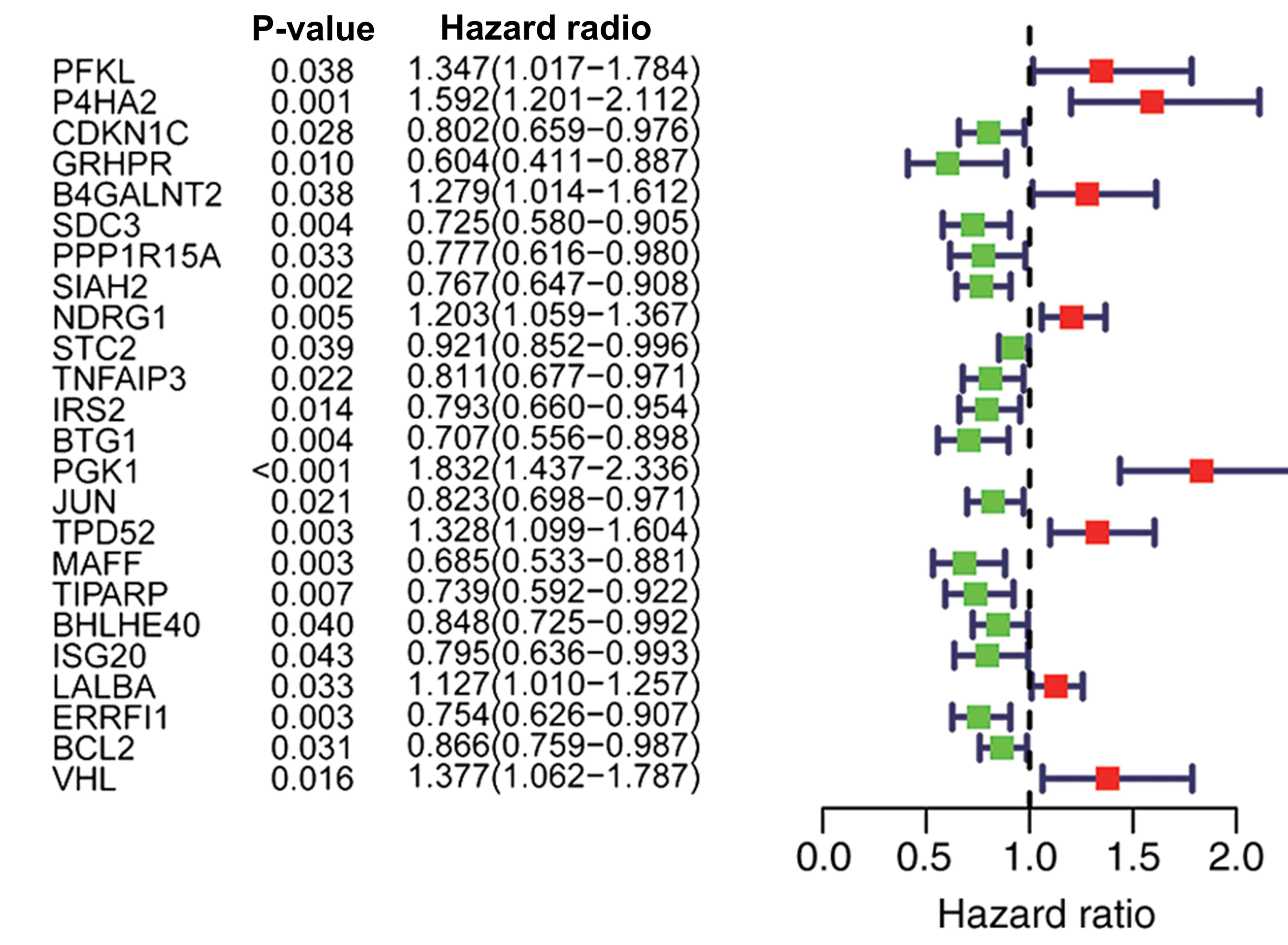
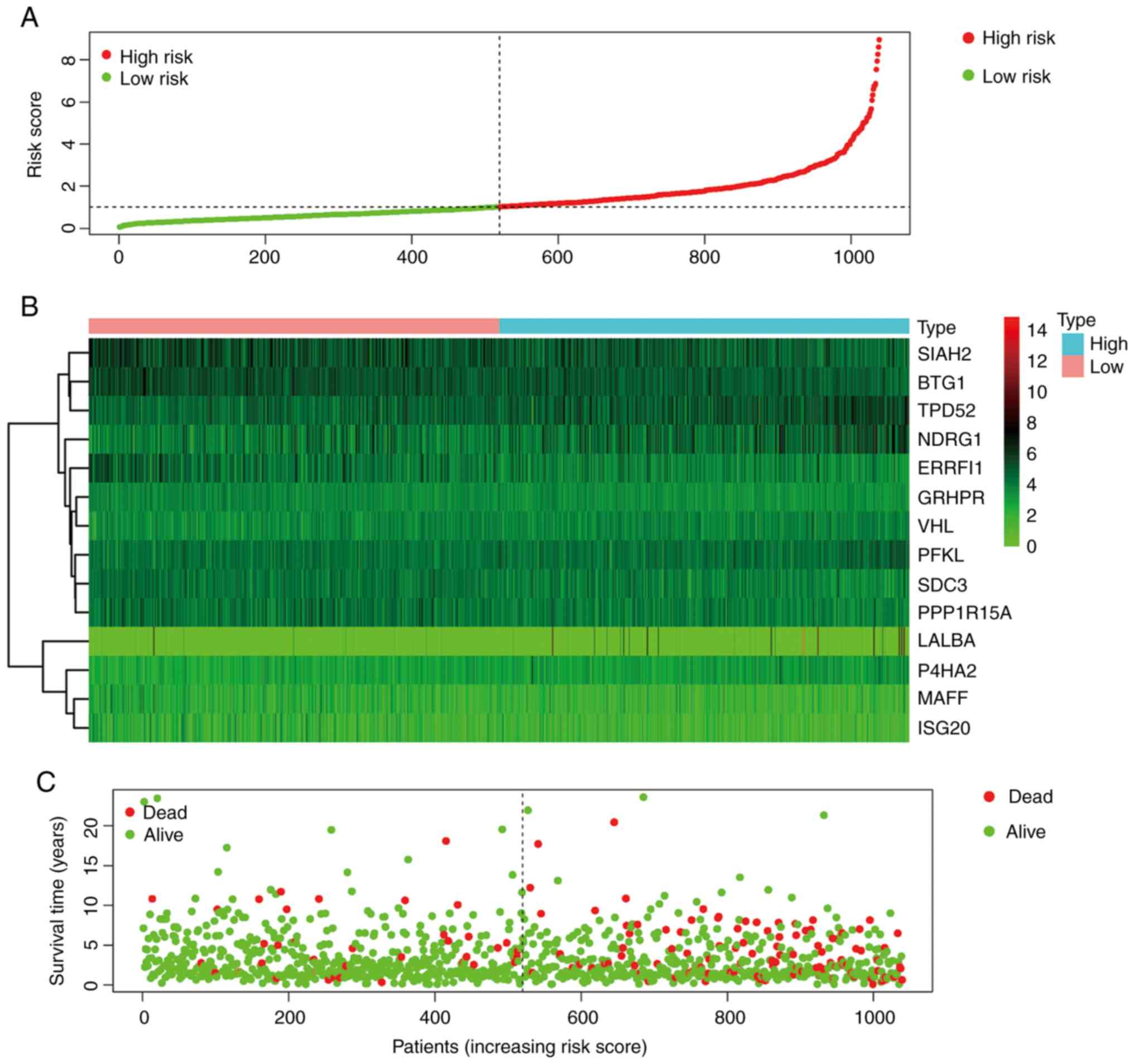
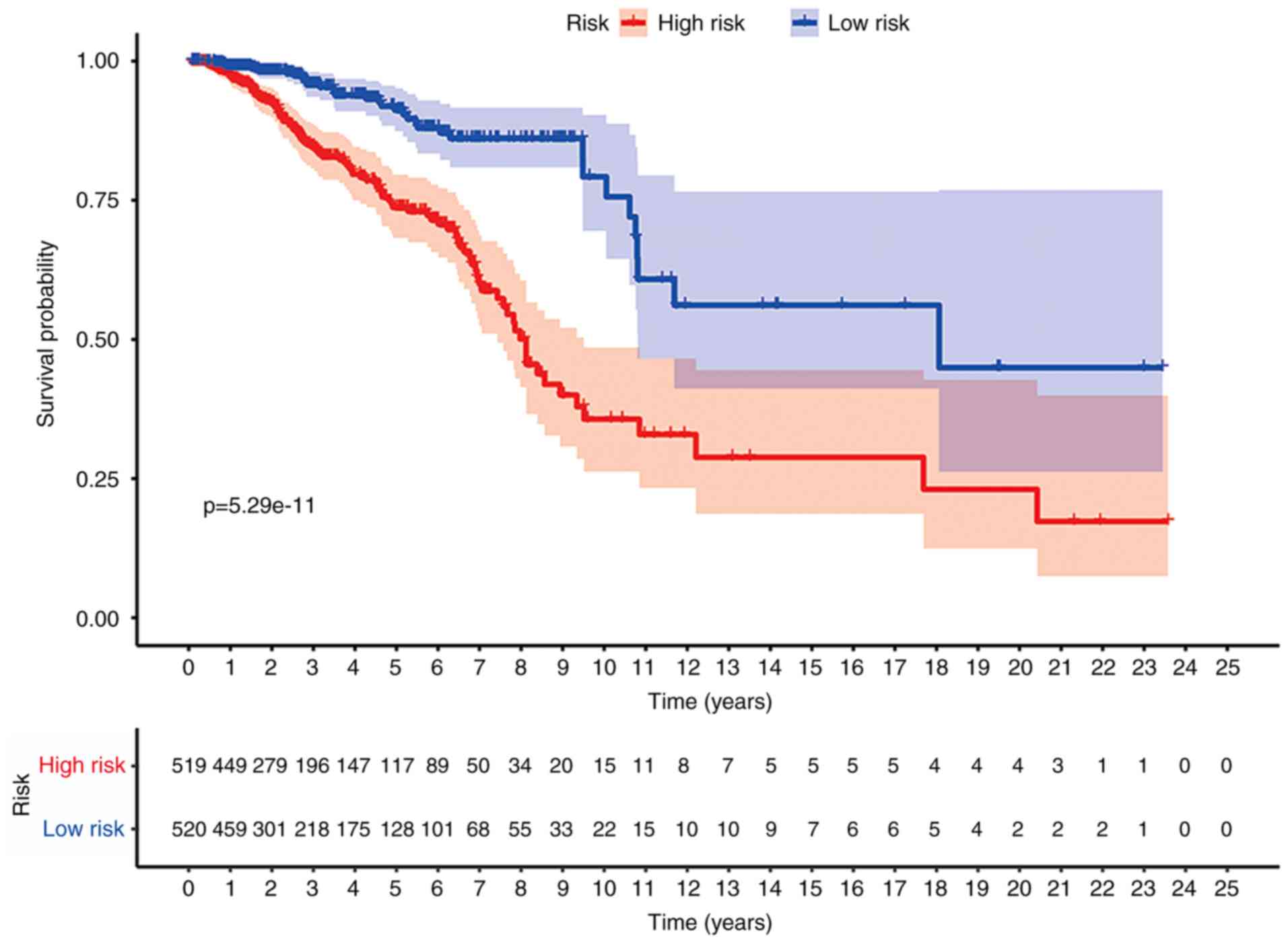
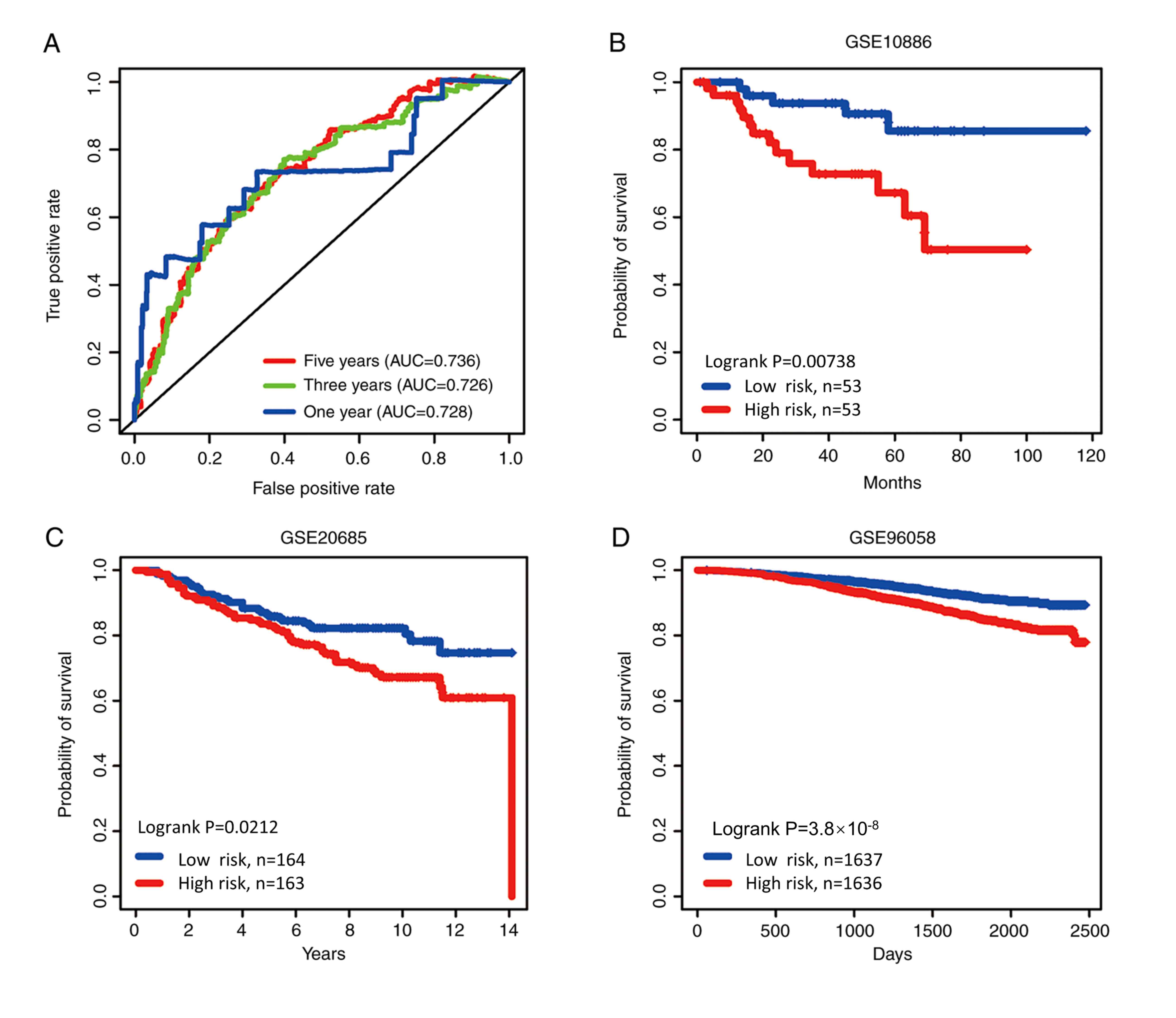
Hypoxia, an important component of the tumor microenvironment, plays a crucial role in the occurrence and progression of cancer. However, to the best of our knowledge, a systematic analysis of a hypoxia‑related prognostic signature for breast cancer is lacking and is urgently required. Therefore, in the present study, RNA‑seq data and clinical information were downloaded from The Cancer Genome Atlas (TCGA) and served as a discovery cohort. Cox proportional hazards regression analysis was performed to construct a 14‑gene prognostic signature (PFKL, P4HA2, GRHPR, SDC3, PPP1R15A, SIAH2, NDRG1, BTG1, TPD52, MAFF, ISG20, LALBA, ERRFI1 and VHL). The hypoxia‑related signature successfully predicted survival outcomes of the discovery cohort (P<0.001 for the TCGA dataset). Three independent Gene Expression Omnibus databases (GSE10886, GSE20685 and GSE96058) were used as validation cohorts to verify the value of the predictive signature (P=0.007 for GSE10886, P=0.021 for GSE20685, P<0.001 for GSE96058). In the present study, a robust predictive signature was developed for patients with breast cancer, and the findings revealed that the 14‑gene hypoxia‑related signature could serve as a potential prognostic biomarker for breast cancer.
View Figures

Figure 1

Figure 2

Figure 3

Figure 4

Figure 5

Figure 6

Figure 7

View References

1 

Global Burden of Disease Cancer Collaboration, . Fitzmaurice C, Akinyemiju TF, Al Lami FH, Alam T, Alizadeh-Navaei R, Allen C, Alsharif U, Alvis-Guzman N, Amini E, et al: Global, regional, and national cancer incidence, mortality, years of life lost, years lived with disability, and disability-adjusted life-years for 29 cancer groups, 1990 to 2016: A systematic analysis for the global burden of disease study. JAMA Oncol. 4:1533–1568. 2018.

2 

Waks AG and Winer EP: Breast cancer treatment. JAMA. 321:3162019. View Article : Google Scholar : PubMed/NCBI

3 

Harbeck N, Penault-Llorca F, Cortes J, Gnant M, Houssami N, Poortmans P, Ruddy K, Tsang J and Cardoso F: Breast cancer. Nat Rev Dis Primers. 5:662019. View Article : Google Scholar : PubMed/NCBI

4 

Tao L, Schwab RB, San Miguel Y, Gomez SL, Canchola AJ, Gago-Dominguez M, Komenaka IK, Murphy JD, Molinolo AA and Martinez ME: Breast cancer mortality in older and younger patients in California. Cancer Epidemiol Biomarkers Prev. 28:303–310. 2019. View Article : Google Scholar : PubMed/NCBI

5 

Saini G, Mittal K, Rida P, Janssen EAM, Gogineni K and Aneja R: Panoptic view of prognostic models for personalized breast cancer management. Cancers (Basel). 11:13252019. View Article : Google Scholar

6 

Saggar JK, Yu M, Tan Q and Tannock IF: The tumor microenvironment and strategies to improve drug distribution. Front Oncol. 3:1542013. View Article : Google Scholar : PubMed/NCBI

7 

Chouaib S, Noman MZ, Kosmatopoulos K and Curran MA: Hypoxic stress: Obstacles and opportunities for innovative immunotherapy of cancer. Oncogene. 36:439–445. 2017. View Article : Google Scholar : PubMed/NCBI

8 

Vaupel P, Briest S and Höckel M: Hypoxia in breast cancer: Pathogenesis, characterization and biological/therapeutic implications. Wien Med Wochenschr. 152:334–342. 2002. View Article : Google Scholar : PubMed/NCBI

9 

Brooks JM, Menezes AN, Ibrahim M, Archer L, Lal N, Bagnall CJ, von Zeidler SV, Valentine HR, Spruce RJ, Batis N, et al: Development and validation of a combined hypoxia and immune prognostic classifier for head and neck cancer. Clin Cancer Res. 25:5315–5328. 2019. View Article : Google Scholar : PubMed/NCBI

10 

Subramanian A, Tamayo P, Mootha VK, Mukherjee S, Ebert BL, Gillette MA, Paulovich A, Pomeroy SL, Golub TR, Lander ES and Mesirov JP: Gene set enrichment analysis: A knowledge-based approach for interpreting genome-wide expression profiles. Proc Natl Acad Sci USA. 102:15545–15550. 2005. View Article : Google Scholar : PubMed/NCBI

11 

Brueffer C, Vallon-Christersson J, Grabau D, Ehinger A, Häkkinen J, Hegardt C, Malina J, Chen Y, Bendahl P, Manjer J, et al: Clinical value of RNA sequencing-based classifiers for prediction of the five conventional breast cancer biomarkers: A report from the population-based multicenter sweden cancerome analysis network. Breast Initiative. 2:1–18. 2018.

12 

Kao KJ, Chang KM, Hsu HC and Huang AT: Correlation of microarray-based breast cancer molecular subtypes and clinical outcomes: Implications for treatment optimization. BMC Cancer. 11:1432011. View Article : Google Scholar : PubMed/NCBI

13 

Parker JS, Mullins M, Cheang MC, Leung S, Voduc D, Vickery T, Davies S, Fauron C, He X, Hu Z, et al: Supervised risk predictor of breast cancer based on intrinsic subtypes. J Clin Oncol. 27:1160–1167. 2009. View Article : Google Scholar : PubMed/NCBI

14 

Ritchie ME, Phipson B, Wu D, Hu Y, Law CW, Shi W and Smyth GK: Limma powers differential expression analyses for RNA-sequencing and microarray studies. Nucleic Acids Res. 43:e472015. View Article : Google Scholar : PubMed/NCBI

15 

Yu G, Wang LG, Han Y and He QY: ClusterProfiler: An R package for comparing biological themes among gene clusters. OMICS. 16:284–287. 2012. View Article : Google Scholar : PubMed/NCBI

16 

Weigel MT and Dowsett M: Current and emerging biomarkers in breast cancer: Prognosis and prediction. Endocr Relat Cancer. 17:R245–R262. 2010. View Article : Google Scholar : PubMed/NCBI

17 

Unruh A, Ressel A, Mohamed HG, Johnson RS, Nadrowitz R, Richter E, Katschinski DM and Wenger RH: The hypoxia-inducible factor-1 alpha is a negative factor for tumor therapy. Oncogene. 22:3213–3220. 2003. View Article : Google Scholar : PubMed/NCBI

18 

Vaupel P, Kelleher DK and Hckel M: Oxygenation status of malignant tumors: Pathogenesis of hypoxia and significance for tumor therapy. Semin Oncol 28 (2 Suppl 8). S29–S35. 2001.

19 

Semenza GL: Angiogenesis in ischemic and neoplastic disorders. Annu Rev Med. 54:17–28. 2003. View Article : Google Scholar : PubMed/NCBI

20 

Semenza GL, Roth PH, Fang HM and Wang GL: Transcriptional regulation of genes encoding glycolytic enzymes by hypoxia-inducible factor 1. J Biol Chem. 269:23757–23763. 1994.PubMed/NCBI

21 

Peng G and Liu Y: Hypoxia-inducible factors in cancer stem cells and inflammation. Trends Pharmacol Sci. 36:374–383. 2015. View Article : Google Scholar : PubMed/NCBI

22 

Ganapathy-Kanniappan S: Molecular intricacies of aerobic glycolysis in cancer: Current insights into the classic metabolic phenotype. Crit Rev. Biochem Mol Biol. 53:667–682. 2018.

23 

Soysal SD, Tzankov A and Muenst SE: Role of the tumor microenvironment in breast cancer. Pathobiology. 82:142–152. 2015. View Article : Google Scholar : PubMed/NCBI

24 

Martinez-Outschoorn UE, Trimmer C, Lin Z, Whitaker Menezes D, Chiavarina B, Zhou J, Wang C, Pavlides S, Martinez-Cantarin MP, Capozza F, et al: Autophagy in cancer associated fibroblasts promotes tumor cell survival: Role of hypoxia, HIF1 induction and NFκB activation in the tumor stromal microenvironment. Cell Cycle. 9:3515–3533. 2010. View Article : Google Scholar : PubMed/NCBI

25 

Xiong G, Deng L, Zhu J, Rychahou PG and Xu R: Prolyl-4-hydroxylase α subunit 2 promotes breast cancer progression and metastasis by regulating collagen deposition. BMC Cancer. 14:12014. View Article : Google Scholar : PubMed/NCBI

26 

Gilkes DM, Bajpai S, Chaturvedi P, Wirtz D and Semenza GL: Hypoxia-inducible factor 1 (HIF-1) promotes extracellular matrix remodeling under hypoxic conditions by inducing P4HA1, P4HA2, and PLOD2 expression in fibroblasts. J Biol Chem. 288:10819–10829. 2013. View Article : Google Scholar : PubMed/NCBI

27 

Toss MS, Miligy IM, Gorringe KL, AlKawaz A, Khout H, Ellis IO, Green AR and Rakha EA: Prolyl-4-hydroxylase A subunit 2 (P4HA2) expression is a predictor of poor outcome in breast ductal carcinoma in situ (DCIS). Br J Cancer. 119:1518–1526. 2018. View Article : Google Scholar : PubMed/NCBI

28 

Li EY, Huang WY, Chang YC, Tsai MH, Chuang EY, Kuok QY, Bai ST, Chao LY, Sher YP and Lai LC: Aryl Hydrocarbon receptor activates NDRG1 transcription under hypoxia in breast cancer cells. Sci Rep. 6:208082016. View Article : Google Scholar : PubMed/NCBI

29 

Ma B, Cheng H, Mu C, Geng G, Zhao T, Luo Q, Ma K, Chang R, Liu Q, Gao R, et al: The SIAH2-NRF1 axis spatially regulates tumor microenvironment remodeling for tumor progression. Nat Commun. 10:10342019. View Article : Google Scholar : PubMed/NCBI

30 

Ge J, Mao L, Xu W, Fang W, Wang N, Ye D, Dong Z, Guan H and Guan C: miR-103a-3p suppresses cell proliferation and invasion by targeting tumor protein D52 in prostate cancer. J Invest Surg. 1–9. Mar 13–2020.(Epub ahead of print). View Article : Google Scholar : PubMed/NCBI

31 

Lu W, Wan X, Tao L and Wan J: Long non-coding RNA HULC promotes cervical cancer cell proliferation, migration and invasion via miR-218/TPD52 Axis. Onco Targets Ther. 13:1109–1118. 2020. View Article : Google Scholar : PubMed/NCBI

32 

Wang Z, Li Y, Fan L, Zhao Q, Tan B, Liu R and Li F: Silencing of TPD52 inhibits proliferation, migration, invasion but induces apoptosis of pancreatic cancer cells by deactivating Akt pathway. Neoplasma. 67:277–285. 2020. View Article : Google Scholar : PubMed/NCBI

33 

Zhang Z, Wang J, Gao R, Yang X, Zhang Y, Li J, Zhang J, Zhao X, Xi C and Lu X: Downregulation of microRNA-449 promotes migration and invasion of breast cancer cells by targeting tumor protein D52 (TPD52). Oncol Res. 25:753–761. 2017. View Article : Google Scholar : PubMed/NCBI

34 

Zhu R, Zou ST, Wan JM, Li W, Li XL and Zhu W: BTG1 inhibits breast cancer cell growth through induction of cell cycle arrest and apoptosis. Oncol Rep. 30:2137–2144. 2013. View Article : Google Scholar : PubMed/NCBI

35 

Malec V, Coulson JM, Urbé S and Clague MJ: Combined analyses of the VHL and hypoxia signaling axes in an isogenic pairing of renal clear cell carcinoma cells. J Proteome Res. 14:5263–5272. 2015. View Article : Google Scholar : PubMed/NCBI

36 

Alves MR, Carneiro FC, Lavorato-Rocha AM, da Costa WH, da Cunha IW, de Cássio Zequi S, Guimaraes GC, Soares FA, Carraro DM and Rocha RM: Mutational status of VHL gene and its clinical importance in renal clear cell carcinoma. Virchows Arch. 465:321–330. 2014. View Article : Google Scholar : PubMed/NCBI

37 

Kong W, He L, Richards EJ, Challa S, Xu CX, Permuth-Wey J, Lancaster JM, Coppola D, Sellers TA, Djeu JY and Cheng JQ: Upregulation of miRNA-155 promotes tumour angiogenesis by targeting VHL and is associated with poor prognosis and triple-negative breast cancer. Oncogene. 33:679–89. 2014. View Article : Google Scholar : PubMed/NCBI

38 

Xu T, Ruan H, Gao S, Liu J, Liu Y, Song Z, Cao Q, Wang K, Bao L, Liu D, et al: ISG20 serves as a potential biomarker and drives tumor progression in clear cell renal cell carcinoma. Aging (Albany NY). 12:1808–1827. 2020. View Article : Google Scholar : PubMed/NCBI

39 

Hamdan FH and Zihlif MA: Gene expression alterations in chronic hypoxic MCF7 breast cancer cell line. Genomics. 104:477–481. 2014. View Article : Google Scholar : PubMed/NCBI

40 

Comerford KM, Wallace TJ, Karhausen J, Louis NA, Montalto MC and Colgan SP: Hypoxia-inducible factor-1-dependent regulation of the multidrug resistance (MDR1) gene. Cancer Res. 62:3387–3394. 2002.PubMed/NCBI

41 

Chen J, Ding Z, Peng Y, Pan F, Li J, Zou L, Zhang Y and Liang H: HIF-1α inhibition reverses multidrug resistance in colon cancer cells via downregulation of MDR1/P-glycoprotein. PLoS One. 9:e988822014. View Article : Google Scholar : PubMed/NCBI

Related Articles

  • Abstract
  • View
  • Download
  • Twitter
Copy and paste a formatted citation
Spandidos Publications style
Wang J, Wang Y, Xing P, Liu Q, Zhang C, Sui Y and Wu C: Development and validation of a hypoxia‑related prognostic signature for breast cancer. Oncol Lett 20: 1906-1914, 2020.
APA
Wang, J., Wang, Y., Xing, P., Liu, Q., Zhang, C., Sui, Y., & Wu, C. (2020). Development and validation of a hypoxia‑related prognostic signature for breast cancer. Oncology Letters, 20, 1906-1914. https://doi.org/10.3892/ol.2020.11733
MLA
Wang, J., Wang, Y., Xing, P., Liu, Q., Zhang, C., Sui, Y., Wu, C."Development and validation of a hypoxia‑related prognostic signature for breast cancer". Oncology Letters 20.2 (2020): 1906-1914.
Chicago
Wang, J., Wang, Y., Xing, P., Liu, Q., Zhang, C., Sui, Y., Wu, C."Development and validation of a hypoxia‑related prognostic signature for breast cancer". Oncology Letters 20, no. 2 (2020): 1906-1914. https://doi.org/10.3892/ol.2020.11733
Copy and paste a formatted citation
x
Spandidos Publications style
Wang J, Wang Y, Xing P, Liu Q, Zhang C, Sui Y and Wu C: Development and validation of a hypoxia‑related prognostic signature for breast cancer. Oncol Lett 20: 1906-1914, 2020.
APA
Wang, J., Wang, Y., Xing, P., Liu, Q., Zhang, C., Sui, Y., & Wu, C. (2020). Development and validation of a hypoxia‑related prognostic signature for breast cancer. Oncology Letters, 20, 1906-1914. https://doi.org/10.3892/ol.2020.11733
MLA
Wang, J., Wang, Y., Xing, P., Liu, Q., Zhang, C., Sui, Y., Wu, C."Development and validation of a hypoxia‑related prognostic signature for breast cancer". Oncology Letters 20.2 (2020): 1906-1914.
Chicago
Wang, J., Wang, Y., Xing, P., Liu, Q., Zhang, C., Sui, Y., Wu, C."Development and validation of a hypoxia‑related prognostic signature for breast cancer". Oncology Letters 20, no. 2 (2020): 1906-1914. https://doi.org/10.3892/ol.2020.11733
Follow us
  • Twitter
  • LinkedIn
  • Facebook
About
  • Spandidos Publications
  • Careers
  • Cookie Policy
  • Privacy Policy
How can we help?
  • Help
  • Live Chat
  • Contact
  • Email to our Support Team