Spandidos Publications Logo
  • About
    • About Spandidos
    • Aims and Scopes
    • Abstracting and Indexing
    • Editorial Policies
    • Reprints and Permissions
    • Job Opportunities
    • Terms and Conditions
    • Contact
  • Journals
    • All Journals
    • Oncology Letters
      • Oncology Letters
      • Information for Authors
      • Editorial Policies
      • Editorial Board
      • Aims and Scope
      • Abstracting and Indexing
      • Bibliographic Information
      • Archive
    • International Journal of Oncology
      • International Journal of Oncology
      • Information for Authors
      • Editorial Policies
      • Editorial Board
      • Aims and Scope
      • Abstracting and Indexing
      • Bibliographic Information
      • Archive
    • Molecular and Clinical Oncology
      • Molecular and Clinical Oncology
      • Information for Authors
      • Editorial Policies
      • Editorial Board
      • Aims and Scope
      • Abstracting and Indexing
      • Bibliographic Information
      • Archive
    • Experimental and Therapeutic Medicine
      • Experimental and Therapeutic Medicine
      • Information for Authors
      • Editorial Policies
      • Editorial Board
      • Aims and Scope
      • Abstracting and Indexing
      • Bibliographic Information
      • Archive
    • International Journal of Molecular Medicine
      • International Journal of Molecular Medicine
      • Information for Authors
      • Editorial Policies
      • Editorial Board
      • Aims and Scope
      • Abstracting and Indexing
      • Bibliographic Information
      • Archive
    • Biomedical Reports
      • Biomedical Reports
      • Information for Authors
      • Editorial Policies
      • Editorial Board
      • Aims and Scope
      • Abstracting and Indexing
      • Bibliographic Information
      • Archive
    • Oncology Reports
      • Oncology Reports
      • Information for Authors
      • Editorial Policies
      • Editorial Board
      • Aims and Scope
      • Abstracting and Indexing
      • Bibliographic Information
      • Archive
    • Molecular Medicine Reports
      • Molecular Medicine Reports
      • Information for Authors
      • Editorial Policies
      • Editorial Board
      • Aims and Scope
      • Abstracting and Indexing
      • Bibliographic Information
      • Archive
    • World Academy of Sciences Journal
      • World Academy of Sciences Journal
      • Information for Authors
      • Editorial Policies
      • Editorial Board
      • Aims and Scope
      • Abstracting and Indexing
      • Bibliographic Information
      • Archive
    • International Journal of Functional Nutrition
      • International Journal of Functional Nutrition
      • Information for Authors
      • Editorial Policies
      • Editorial Board
      • Aims and Scope
      • Abstracting and Indexing
      • Bibliographic Information
      • Archive
    • International Journal of Epigenetics
      • International Journal of Epigenetics
      • Information for Authors
      • Editorial Policies
      • Editorial Board
      • Aims and Scope
      • Abstracting and Indexing
      • Bibliographic Information
      • Archive
    • Medicine International
      • Medicine International
      • Information for Authors
      • Editorial Policies
      • Editorial Board
      • Aims and Scope
      • Abstracting and Indexing
      • Bibliographic Information
      • Archive
  • Articles
  • Information
    • Information for Authors
    • Information for Reviewers
    • Information for Librarians
    • Information for Advertisers
    • Conferences
  • Language Editing
Spandidos Publications Logo
  • About
    • About Spandidos
    • Aims and Scopes
    • Abstracting and Indexing
    • Editorial Policies
    • Reprints and Permissions
    • Job Opportunities
    • Terms and Conditions
    • Contact
  • Journals
    • All Journals
    • Biomedical Reports
      • Information for Authors
      • Editorial Policies
      • Editorial Board
      • Aims and Scope
      • Abstracting and Indexing
      • Bibliographic Information
      • Archive
    • Experimental and Therapeutic Medicine
      • Information for Authors
      • Editorial Policies
      • Editorial Board
      • Aims and Scope
      • Abstracting and Indexing
      • Bibliographic Information
      • Archive
    • International Journal of Epigenetics
      • Information for Authors
      • Editorial Policies
      • Editorial Board
      • Aims and Scope
      • Abstracting and Indexing
      • Bibliographic Information
      • Archive
    • International Journal of Functional Nutrition
      • Information for Authors
      • Editorial Policies
      • Editorial Board
      • Aims and Scope
      • Abstracting and Indexing
      • Bibliographic Information
      • Archive
    • International Journal of Molecular Medicine
      • Information for Authors
      • Editorial Policies
      • Editorial Board
      • Aims and Scope
      • Abstracting and Indexing
      • Bibliographic Information
      • Archive
    • International Journal of Oncology
      • Information for Authors
      • Editorial Policies
      • Editorial Board
      • Aims and Scope
      • Abstracting and Indexing
      • Bibliographic Information
      • Archive
    • Medicine International
      • Information for Authors
      • Editorial Policies
      • Editorial Board
      • Aims and Scope
      • Abstracting and Indexing
      • Bibliographic Information
      • Archive
    • Molecular and Clinical Oncology
      • Information for Authors
      • Editorial Policies
      • Editorial Board
      • Aims and Scope
      • Abstracting and Indexing
      • Bibliographic Information
      • Archive
    • Molecular Medicine Reports
      • Information for Authors
      • Editorial Policies
      • Editorial Board
      • Aims and Scope
      • Abstracting and Indexing
      • Bibliographic Information
      • Archive
    • Oncology Letters
      • Information for Authors
      • Editorial Policies
      • Editorial Board
      • Aims and Scope
      • Abstracting and Indexing
      • Bibliographic Information
      • Archive
    • Oncology Reports
      • Information for Authors
      • Editorial Policies
      • Editorial Board
      • Aims and Scope
      • Abstracting and Indexing
      • Bibliographic Information
      • Archive
    • World Academy of Sciences Journal
      • Information for Authors
      • Editorial Policies
      • Editorial Board
      • Aims and Scope
      • Abstracting and Indexing
      • Bibliographic Information
      • Archive
  • Articles
  • Information
    • For Authors
    • For Reviewers
    • For Librarians
    • For Advertisers
    • Conferences
  • Language Editing
Login Register Submit
  • This site uses cookies
  • You can change your cookie settings at any time by following the instructions in our Cookie Policy. To find out more, you may read our Privacy Policy.

    I agree
Search articles by DOI, keyword, author or affiliation
Search
Advanced Search
presentation
Oncology Letters
Join Editorial Board Propose a Special Issue
Print ISSN: 1792-1074 Online ISSN: 1792-1082
Journal Cover
March-2021 Volume 21 Issue 3

Full Size Image

Sign up for eToc alerts
Recommend to Library

Journals

International Journal of Molecular Medicine

International Journal of Molecular Medicine

International Journal of Molecular Medicine is an international journal devoted to molecular mechanisms of human disease.

International Journal of Oncology

International Journal of Oncology

International Journal of Oncology is an international journal devoted to oncology research and cancer treatment.

Molecular Medicine Reports

Molecular Medicine Reports

Covers molecular medicine topics such as pharmacology, pathology, genetics, neuroscience, infectious diseases, molecular cardiology, and molecular surgery.

Oncology Reports

Oncology Reports

Oncology Reports is an international journal devoted to fundamental and applied research in Oncology.

Experimental and Therapeutic Medicine

Experimental and Therapeutic Medicine

Experimental and Therapeutic Medicine is an international journal devoted to laboratory and clinical medicine.

Oncology Letters

Oncology Letters

Oncology Letters is an international journal devoted to Experimental and Clinical Oncology.

Biomedical Reports

Biomedical Reports

Explores a wide range of biological and medical fields, including pharmacology, genetics, microbiology, neuroscience, and molecular cardiology.

Molecular and Clinical Oncology

Molecular and Clinical Oncology

International journal addressing all aspects of oncology research, from tumorigenesis and oncogenes to chemotherapy and metastasis.

World Academy of Sciences Journal

World Academy of Sciences Journal

Multidisciplinary open-access journal spanning biochemistry, genetics, neuroscience, environmental health, and synthetic biology.

International Journal of Functional Nutrition

International Journal of Functional Nutrition

Open-access journal combining biochemistry, pharmacology, immunology, and genetics to advance health through functional nutrition.

International Journal of Epigenetics

International Journal of Epigenetics

Publishes open-access research on using epigenetics to advance understanding and treatment of human disease.

Medicine International

Medicine International

An International Open Access Journal Devoted to General Medicine.

Journal Cover
March-2021 Volume 21 Issue 3

Full Size Image

Sign up for eToc alerts
Recommend to Library

  • Article
  • Citations
    • Cite This Article
    • Download Citation
    • Create Citation Alert
    • Remove Citation Alert
    • Cited By
  • Similar Articles
    • Related Articles (in Spandidos Publications)
    • Similar Articles (Google Scholar)
    • Similar Articles (PubMed)
  • Download PDF
  • Download XML
  • View XML

  • Supplementary Files
    • Supplementary_Data.pdf
Article Open Access

Immunological status of peripheral blood is associated with prognosis in patients with bone and soft-tissue sarcoma

  • Authors:
    • Youngji Kim
    • Eisuke Kobayashi
    • Yoshiyuki Suehara
    • Ayumu Ito
    • Daisuke Kubota
    • Yoshikazu Tanzawa
    • Makoto Endo
    • Fumihiko Nakatani
    • Tetsuya Nakatsura
    • Akira Kawai
    • Kazuo Kaneko
    • Shigehisa Kitano
  • View Affiliations / Copyright

    Affiliations: Division of Musculoskeletal Oncology, National Cancer Center Hospital, Tokyo 104-0045, Japan, Department of Orthopedic Surgery, Juntendo University School of Medicine, Tokyo 113-8431, Japan, Department of Hematopoietic Stem Cell Transplantation, National Cancer Center Hospital, Tokyo 104-0045, Japan, Division of Cancer Immunotherapy, Exploratory Oncology Research and Clinical Trial Center, National Cancer Center Hospital, Tokyo 104-0045, Japan
    Copyright: © Kim et al. This is an open access article distributed under the terms of Creative Commons Attribution License.
  • Article Number: 212
    |
    Published online on: January 18, 2021
       https://doi.org/10.3892/ol.2021.12473
  • Expand metrics +
Metrics: Total Views: 0 (Spandidos Publications: | PMC Statistics: )
Metrics: Total PDF Downloads: 0 (Spandidos Publications: | PMC Statistics: )
Cited By (CrossRef): 0 citations Loading Articles...

This article is mentioned in:


Abstract

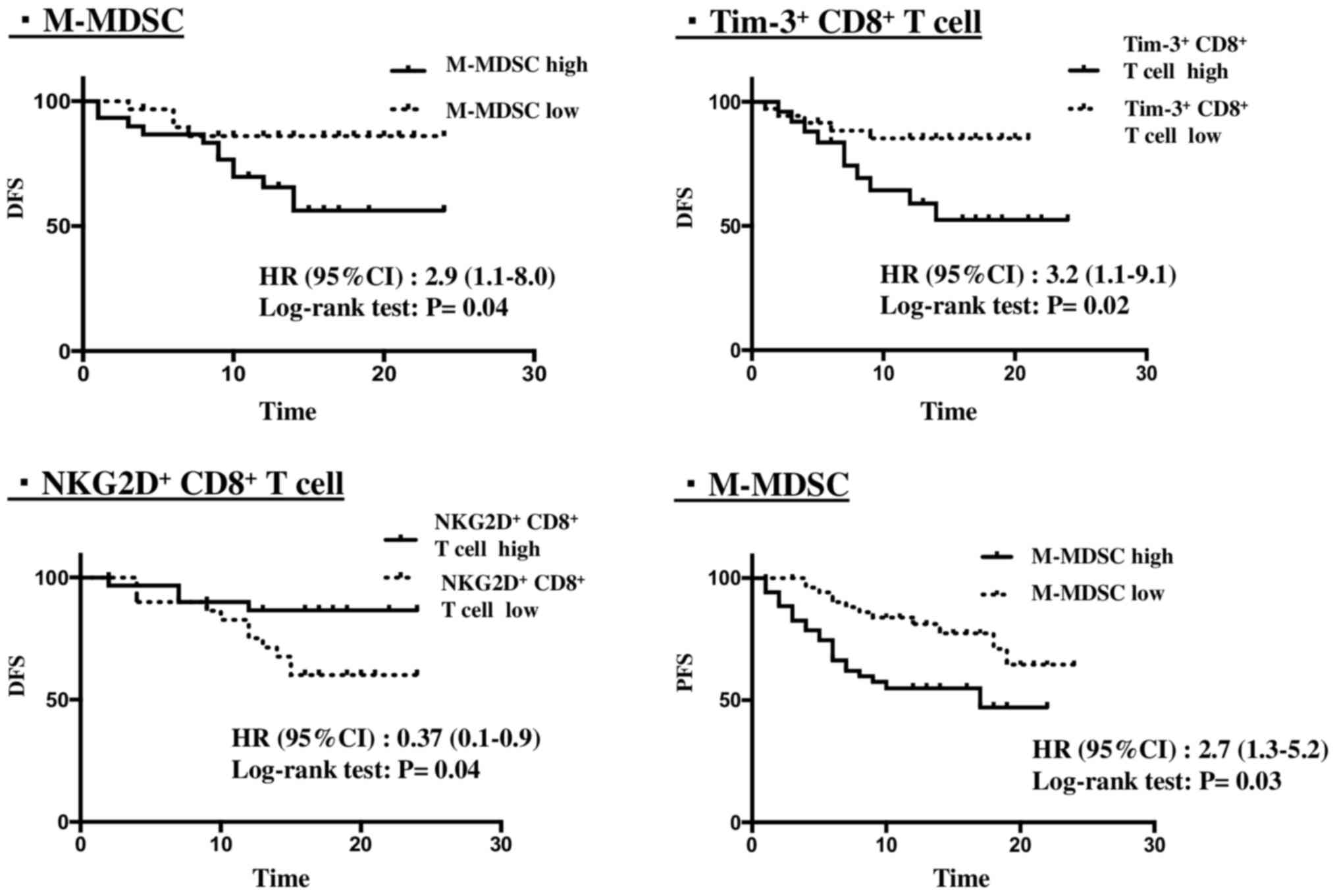
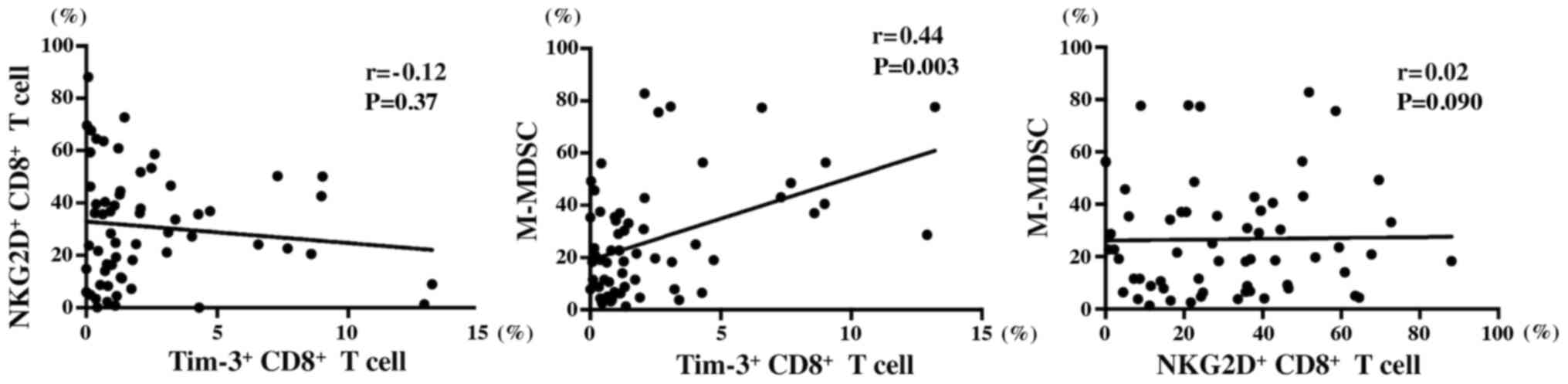
Immune‑checkpoint inhibitors have shown promising antitumor effects against certain types of cancer. However, specific immune‑checkpoint inhibitors for patients with sarcoma have yet to be identified, whereas the immunological status of peripheral blood in patients with bone sarcoma and soft‑tissue sarcoma (STS) remains unknown. In addition, it is unclear whether the immunological status from the peripheral blood could be used as a prognostic indicator. Therefore, the present study aimed to clarify the immunological status of peripheral blood samples derived from patients with bone sarcoma and STS. Immune monitoring was performed using the peripheral blood samples of 61 patients with no metastasis of high‑grade sarcoma. A total of 25 patients with metastatic sarcoma were used for comparison. A total of 41 immune cell subsets were analyzed using multicolor‑flow cytometry. The patients that did not have metastasis demonstrated higher quantities of monocytic myeloid‑derived suppressor cells (M‑MDSCs) and T cell immunoglobulin and mucin domain‑3 (Tim‑3)+ CD8+ T cells, which were significantly associated with poor disease‑free survival (DFS) time, while higher quantities of NKG2D+ CD8+ T cells were significantly associated with improved DFS time. Multivariate Cox regression analysis demonstrated that the number of Tim‑3+ CD8+ T cells was associated with lower DFS time. A significant association was also found between the number of M‑MDSCs and progression‑free survival (PFS) time in patients with metastasis. The results suggested the occurrence of immune surveillance, which indicated that the host immune reaction against cancer existed in patients with bone sarcoma and STS. Notably, a high number of M‑MDSCs was associated with both DFS and PFS time, suggesting a strong prognostic value. The data suggested that the immune status of peripheral blood was associated with the prognosis in patients with sarcoma, as previously reported in patients with other cancer types. In summary, the results may assist with the development of novel strategies for sarcoma treatment, based on the use of biomarkers or immunotherapy.
View Figures

Figure 1

Figure 2

Figure 3

Figure 4

Figure 5

View References

1 

Zambo I and Veselý K: WHO classification of tumours of soft tissue and bone 2013: The main changes compared to the 3rd edition. Cesk Patol. 50:64–70. 2014.PubMed/NCBI

2 

Gelderblom H, Blay JY, Seddon BM, Leahy M, Ray-Coquard R, Sleijfer S, Kerst JM, Rutkowski P, Bauer S, Ouali M, et al: Brostallicin versus doxorubicin as first-line chemotherapy in patients with advanced or metastatic soft tissue sarcoma: an European Organisation for Research and Treatment of Cancer Soft Tissue and Bone Sarcoma Group randomised phase II and pharmacogenetic study. Eur J Cancer. 50:388–396. 2014. View Article : Google Scholar : PubMed/NCBI

3 

Mirabello L, Troisi RJ and Savage SA: International osteosarcoma incidence patterns in children and adolescents, middle ages and elderly persons. Int J Cancer. 125:229–234. 2009. View Article : Google Scholar : PubMed/NCBI

4 

Esiashvili N, Goodman M and Marcus RB Jr: Changes in incidence and survival of Ewing sarcoma patients over the past 3 decades: Surveillance Epidemiology and End Results data. J Pediatr Hematol Oncol. 30:425–430. 2008. View Article : Google Scholar : PubMed/NCBI

5 

Goorin AM, Schwartzentruber DJ, Devidas M, Gebhardt MC, Ayala AG, Harris MB, Helman LJ, Grier HE and Link MP; Pediatric Oncology Group, : Presurgical chemotherapy compared with immediate surgery and adjuvant chemotherapy for nonmetastatic osteosarcoma: Pediatric Oncology Group Study POG-8651. J Clin Oncol. 21:1574–1580. 2003. View Article : Google Scholar : PubMed/NCBI

6 

Nesbit ME Jr, Gehan EA, Burgert EO Jr, Vietti TJ, Cangir A, Tefft M, Evans R, Thomas P, Askin FB and Kissane JM: Multimodal therapy for the management of primary, nonmetastatic Ewing's sarcoma of bone: A long-term follow-up of the First Intergroup study. J Clin Oncol. 8:1664–1674. 1990. View Article : Google Scholar : PubMed/NCBI

7 

Italiano A, Mir O, Cioffi A, Palmerini E, Piperno-Neumann S, Perrin C, Chaigneau L, Penel N, Duffaud F, Kurtz JE, et al: Advanced chondrosarcomas: Role of chemotherapy and survival. Ann Oncol. 24:2916–2922. 2013. View Article : Google Scholar : PubMed/NCBI

8 

George B, Bresson D, Herman P and Froelich S: Chordomas: A review. Neurosurg Clin N Am. 26:437–452. 2015. View Article : Google Scholar : PubMed/NCBI

9 

Swann JB and Smyth MJ: Immune surveillance of tumors. J Clin Invest. 117:1137–1146. 2007. View Article : Google Scholar : PubMed/NCBI

10 

Pardoll DM: The blockade of immune checkpoints in cancer immunotherapy. Nat Rev Cancer. 12:252–264. 2012. View Article : Google Scholar : PubMed/NCBI

11 

McCoy KD and Le Gros G: The role of CTLA-4 in the regulation of T cell immune responses. Immunol Cell Biol. 77:1–10. 1999. View Article : Google Scholar : PubMed/NCBI

12 

Nishimura H and Honjo T: PD-1: An inhibitory immunoreceptor involved in peripheral tolerance. Trends Immunol. 22:265–268. 2001. View Article : Google Scholar : PubMed/NCBI

13 

He Y, Rivard CJ, Rozeboom L, Yu H, Ellison K, Kowalewski A, Zhou C and Hirsch FR: Lymphocyte-activation gene-3, an important immune checkpoint in cancer. Cancer Sci. 107:1193–1197. 2016. View Article : Google Scholar : PubMed/NCBI

14 

Cheng L and Ruan Z: Tim-3 and Tim-4 as the potential targets for antitumor therapy. Hum Vaccin Immunother. 11:2458–2462. 2015. View Article : Google Scholar : PubMed/NCBI

15 

Riha P and Rudd CE: CD28 co-signaling in the adaptive immune response. Self Nonself. 1:231–240. 2010. View Article : Google Scholar : PubMed/NCBI

16 

Redmond WL, Ruby CE and Weinberg AD: The role of OX40-mediated co-stimulation in T-cell activation and survival. Crit Rev Immunol. 29:187–201. 2009. View Article : Google Scholar : PubMed/NCBI

17 

Palazón A, Teijeira A, Martínez-Forero I, Hervás-Stubbs S, Roncal C, Peñuelas I, Dubrot J, Morales-Kastresana A, Pérez-Gracia JL, Ochoa MC, et al: Agonist anti-CD137 mAb act on tumor endothelial cells to enhance recruitment of activated T lymphocytes. Cancer Res. 71:801–811. 2011. View Article : Google Scholar : PubMed/NCBI

18 

Dong C, Juedes AE, Temann UA, Shresta S, Allison JP, Ruddle NH and Flavell RA: ICOS co-stimulatory receptor is essential for T-cell activation and function. Nature. 409:97–101. 2001. View Article : Google Scholar : PubMed/NCBI

19 

Pende D, Cantoni C, Rivera P, Vitale M, Castriconi R, Marcenaro S, Nanni M, Biassoni R, Bottino C, Moretta A, et al: Role of NKG2D in tumor cell lysis mediated by human NK cells: Cooperation with natural cytotoxicity receptors and capability of recognizing tumors of nonepithelial origin. Eur J Immunol. 31:1076–1086. 2001. View Article : Google Scholar : PubMed/NCBI

20 

Overman MJ, McDermott R, Leach JL, Lonardi S, Lenz HJ, Morse MA, Desai J, Hill A, Axelson M, Moss RA, et al: Nivolumab in patients with metastatic DNA mismatch repair-deficient or microsatellite instability-high colorectal cancer (CheckMate 142): An open-label, multicentre, phase 2 study. Lancet Oncol. 18:1182–1191. 2017. View Article : Google Scholar : PubMed/NCBI

21 

Capdevila J, Wirth LJ, Ernst T, Ponce Aix S, Lin CC, Ramlau R, Butler MO, Delord JP, Gelderblom H, Ascierto PA, et al: PD-1 blockade in anaplastic thyroid carcinoma. J Clin Oncol. 38:2620–2627. 2020. View Article : Google Scholar : PubMed/NCBI

22 

Armand P, Lesokhin A, Borrello I, Timmerman J, Gutierrez M, Zhu L, Popa McKiver M and Ansell SM: A phase 1b study of dual PD-1 and CTLA-4 or KIR blockade in patients with relapsed/refractory lymphoid malignancies. Leukemia. Jun 29–2020.(Epub ahead of print). doi: 10.1038/s41375-020-0939-1. View Article : Google Scholar

23 

Gabrilovich DI and Nagaraj S: Myeloid-derived suppressor cells as regulators of the immune system. Nat Rev Immunol. 9:162–174. 2009. View Article : Google Scholar : PubMed/NCBI

24 

Kondĕlková K, Vokurková D, Krejsek J, Borská L, Fiala Z and Ctirad A: Regulatory T cells (TREG) and their roles in immune system with respect to immunopathological disorders. Acta Med (Hradec Kralove). 53:73–77. 2010. View Article : Google Scholar

25 

Tada K, Kitano S, Shoji H, Nishimura T, Shimada Y, Nagashima K, Aoki K, Hiraoka N, Honma Y, Iwasa S, et al: Pretreatment immune status correlates with progression-free survival in chemotherapy-treated metastatic colorectal cancer patients. Cancer Immunol Res. 4:592–599. 2016. View Article : Google Scholar : PubMed/NCBI

26 

Kitano S, Postow MA, Ziegler CG, Kuk D, Panageas KS, Cortez C, Rasalan T, Adamow M, Yuan J, Wong P, et al: Computational algorithm-driven evaluation of monocytic myeloid-derived suppressor cell frequency for prediction of clinical outcomes. Cancer Immunol Res. 2:812–821. 2014. View Article : Google Scholar : PubMed/NCBI

27 

Gonda K, Shibata M, Ohtake T, Matsumoto Y, Tachibana K, Abe N, Ohto H, Sakurai K and Takenoshita S: Myeloid-derived suppressor cells are increased and correlated with type 2 immune responses, malnutrition, inflammation, and poor prognosis in patients with breast cancer. Oncol Lett. 14:1766–1774. 2017. View Article : Google Scholar : PubMed/NCBI

28 

Arihara F, Mizukoshi E, Kitahara M, Takata Y, Arai K, Yamashita T, Nakamoto Y and Kaneko S: Increase in CD14+HLA-DR−/low myeloid-derived suppressor cells in hepatocellular carcinoma patients and its impact on prognosis. Cancer Immunol Immunother. 62:1421–1430. 2013. View Article : Google Scholar : PubMed/NCBI

29 

Kotsakis A, Harasymczuk M, Schilling B, Georgoulias V, Argiris A and Whiteside TL: Myeloid-derived suppressor cell measurements in fresh and cryopreserved blood samples. J Immunol Methods. 381:14–22. 2012. View Article : Google Scholar : PubMed/NCBI

30 

Eisenhauer EA, Therasse P, Bogaerts J, Schwartz LH, Sargent D, Ford R, Dancey J, Arbuck S, Gwyther S, Mooney M, et al: New response evaluation criteria in solid tumours: Revised RECIST guideline (version 1.1). Eur J Cancer. 45:228–247. 2009. View Article : Google Scholar : PubMed/NCBI

31 

Gabitass RF, Annels NE, Stocken DD, Pandha HA and Middleton GW: Elevated myeloid-derived suppressor cells in pancreatic, esophageal and gastric cancer are an independent prognostic factor and are associated with significant elevation of the Th2 cytokine interleukin-13. Cancer Immunol Immunother. 60:1419–1430. 2011. View Article : Google Scholar : PubMed/NCBI

32 

Vetsika EK, Koinis F, Gioulbasani M, Aggouraki D, Koutoulaki A, Skalidaki E, Mavroudis D, Georgoulias V and Kotsakis A: A circulating subpopulation of monocytic myeloid-derived suppressor cells as an independent prognostic/predictive factor in untreated non-small lung cancer patients. J Immunol Res. 2014:6592942014. View Article : Google Scholar : PubMed/NCBI

33 

Shoji H, Tada K, Kitano S, Nishimura T, Shimada Y, Nagashima K, Aoki K, Hiraoka N, Honma Y, Iwasa S, et al: The peripheral immune status of granulocytic myeloid-derived suppressor cells correlates the survival in advanced gastric cancer patients receiving cisplatin-based chemotherapy. Oncotarget. 8:95083–95094. 2017. View Article : Google Scholar : PubMed/NCBI

34 

Wesolowski R, Markowitz J and Carson WE III: Myeloid derived suppressor cells - a new therapeutic target in the treatment of cancer. J Immunother Cancer. 1:102013. View Article : Google Scholar : PubMed/NCBI

35 

Zhou J, Liu M, Sun H, Feng Y, Xu L, Chan AW, Tong JH, Wong J, Chong CC, Lai PB, et al: Hepatoma-intrinsic CCRK inhibition diminishes myeloid-derived suppressor cell immunosuppression and enhances immune-checkpoint blockade efficacy. Gut. 67:931–944. 2018. View Article : Google Scholar : PubMed/NCBI

36 

Sade-Feldman M, Kanterman J, Klieger Y, Ish-Shalom E, Olga M, Saragovi A, Shtainberg H, Lotem M and Baniyash M: Clinical significance of circulating CD33+CD11b+HLA-DR− myeloid cells in patients with stage IV melanoma treated with Ipilimumab. Clin Cancer Res. 22:5661–5672. 2016. View Article : Google Scholar : PubMed/NCBI

37 

Zhu C, Anderson AC, Schubart A, Xiong H, Imitola J, Khoury SJ, Zheng XX, Strom TB and Kuchroo VK: The Tim-3 ligand galectin-9 negatively regulates T helper type 1 immunity. Nat Immunol. 6:1245–1252. 2005. View Article : Google Scholar : PubMed/NCBI

38 

Gorman JV and Colgan JD: Regulation of T cell responses by the receptor molecule Tim-3. Immunol Res. 59:56–65. 2014. View Article : Google Scholar : PubMed/NCBI

39 

Yan J, Zhang Y, Zhang JP, Liang J, Li L and Zheng L: Tim-3 expression defines regulatory T cells in human tumors. PLoS One. 8:e580062013. View Article : Google Scholar : PubMed/NCBI

40 

Arai Y, Saito H and Ikeguchi M: Upregulation of TIM-3 and PD-1 on CD4+ and CD8+ T cells associated with dysfunction of cell-mediated immunity after colorectal cancer operation. Yonago Acta Med. 55:1–9. 2012.PubMed/NCBI

41 

Anderson AC: Tim-3, a negative regulator of anti-tumor immunity. Curr Opin Immunol. 24:213–216. 2012. View Article : Google Scholar : PubMed/NCBI

42 

Ge W, Li J, Fan W, Xu D and Sun S: Tim-3 as a diagnostic and prognostic biomarker of osteosarcoma. Tumour Biol. Jul 3–2017.(Epub ahead of print). doi.org/10.1177/1010428317715643. View Article : Google Scholar

43 

Zhuang X, Zhang X, Xia X, Zhang C, Liang X, Gao L, Zhang X and Ma C: Ectopic expression of TIM-3 in lung cancers: A potential independent prognostic factor for patients with NSCLC. Am J Clin Pathol. 137:978–985. 2012. View Article : Google Scholar : PubMed/NCBI

44 

Dorfman DM, Hornick JL, Shahsafaei A and Freeman GJ: The phosphatidylserine receptors, T cell immunoglobulin mucin proteins 3 and 4, are markers of histiocytic sarcoma and other histiocytic and dendritic cell neoplasms. Hum Pathol. 41:1486–1494. 2010. View Article : Google Scholar : PubMed/NCBI

45 

Yang ZZ, Grote DM, Ziesmer SC, Niki T, Hirashima M, Novak AJ, Witzig TE and Ansell SM: IL-12 upregulates TIM-3 expression and induces T cell exhaustion in patients with follicular B cell non-Hodgkin lymphoma. J Clin Invest. 122:1271–1282. 2012. View Article : Google Scholar : PubMed/NCBI

46 

Feng ZM and Guo SM: Tim-3 facilitates osteosarcoma proliferation and metastasis through the NF-κB pathway and epithelial-mesenchymal transition. Genet Mol Res. Sep 2–2016.(Epub ahead of print). doi: 10.4238/gmr.15037844. View Article : Google Scholar

47 

Groh V, Wu J, Yee C and Spies T: Tumour-derived soluble MIC ligands impair expression of NKG2D and T-cell activation. Nature. 419:734–738. 2002. View Article : Google Scholar : PubMed/NCBI

48 

Raulet DH, Gasser S, Gowen BG, Deng W and Jung H: Regulation of ligands for the NKG2D activating receptor. Annu Rev Immunol. 31:413–441. 2013. View Article : Google Scholar : PubMed/NCBI

49 

Zafirova B, Wensveen FM, Gulin M and Polić B: Regulation of immune cell function and differentiation by the NKG2D receptor. Cell Mol Life Sci. 68:3519–3529. 2011. View Article : Google Scholar : PubMed/NCBI

50 

Xu Y, Zhou L, Zong J, Ye Y, Chen G, Chen Y, Liao X, Guo Q, Qiu S, Lin S, et al: Decreased expression of the NKG2D ligand ULBP4 may be an indicator of poor prognosis in patients with nasopharyngeal carcinoma. Oncotarget. 8:42007–42019. 2017. View Article : Google Scholar : PubMed/NCBI

51 

Cho H, Chung JY, Kim S, Braunschweig T, Kang TH, Kim J, Chung EJ, Hewitt SM and Kim JH: MICA/B and ULBP1 NKG2D ligands are independent predictors of good prognosis in cervical cancer. BMC Cancer. 14:9572014. View Article : Google Scholar : PubMed/NCBI

52 

Chen J, Xu H and Zhu XX: Abnormal expression levels of sMICA and NKG2D are correlated with poor prognosis in pancreatic cancer. Ther Clin Risk Manag. 12:11–18. 2015.PubMed/NCBI

53 

Gabrilovich DI: Myeloid-derived suppressor cells. Cancer Immunol Res. 5:3–8. 2017. View Article : Google Scholar : PubMed/NCBI

54 

Tcyganov E, Mastio J, Chen E and Gabrilovich DI: Plasticity of myeloid-derived suppressor cells in cancer. Curr Opin Immunol. 51:76–82. 2018. View Article : Google Scholar : PubMed/NCBI

55 

Kumar V, Patel S, Tcyganov E and Gabrilovich DI: The nature of myeloid-derived suppressor cells in the tumor microenvironment. Trends Immunol. 37:208–220. 2016. View Article : Google Scholar : PubMed/NCBI

Related Articles

  • Abstract
  • View
  • Download
  • Twitter
Copy and paste a formatted citation
Spandidos Publications style
Kim Y, Kobayashi E, Suehara Y, Ito A, Kubota D, Tanzawa Y, Endo M, Nakatani F, Nakatsura T, Kawai A, Kawai A, et al: Immunological status of peripheral blood is associated with prognosis in patients with bone and soft-tissue sarcoma. Oncol Lett 21: 212, 2021.
APA
Kim, Y., Kobayashi, E., Suehara, Y., Ito, A., Kubota, D., Tanzawa, Y. ... Kitano, S. (2021). Immunological status of peripheral blood is associated with prognosis in patients with bone and soft-tissue sarcoma. Oncology Letters, 21, 212. https://doi.org/10.3892/ol.2021.12473
MLA
Kim, Y., Kobayashi, E., Suehara, Y., Ito, A., Kubota, D., Tanzawa, Y., Endo, M., Nakatani, F., Nakatsura, T., Kawai, A., Kaneko, K., Kitano, S."Immunological status of peripheral blood is associated with prognosis in patients with bone and soft-tissue sarcoma". Oncology Letters 21.3 (2021): 212.
Chicago
Kim, Y., Kobayashi, E., Suehara, Y., Ito, A., Kubota, D., Tanzawa, Y., Endo, M., Nakatani, F., Nakatsura, T., Kawai, A., Kaneko, K., Kitano, S."Immunological status of peripheral blood is associated with prognosis in patients with bone and soft-tissue sarcoma". Oncology Letters 21, no. 3 (2021): 212. https://doi.org/10.3892/ol.2021.12473
Copy and paste a formatted citation
x
Spandidos Publications style
Kim Y, Kobayashi E, Suehara Y, Ito A, Kubota D, Tanzawa Y, Endo M, Nakatani F, Nakatsura T, Kawai A, Kawai A, et al: Immunological status of peripheral blood is associated with prognosis in patients with bone and soft-tissue sarcoma. Oncol Lett 21: 212, 2021.
APA
Kim, Y., Kobayashi, E., Suehara, Y., Ito, A., Kubota, D., Tanzawa, Y. ... Kitano, S. (2021). Immunological status of peripheral blood is associated with prognosis in patients with bone and soft-tissue sarcoma. Oncology Letters, 21, 212. https://doi.org/10.3892/ol.2021.12473
MLA
Kim, Y., Kobayashi, E., Suehara, Y., Ito, A., Kubota, D., Tanzawa, Y., Endo, M., Nakatani, F., Nakatsura, T., Kawai, A., Kaneko, K., Kitano, S."Immunological status of peripheral blood is associated with prognosis in patients with bone and soft-tissue sarcoma". Oncology Letters 21.3 (2021): 212.
Chicago
Kim, Y., Kobayashi, E., Suehara, Y., Ito, A., Kubota, D., Tanzawa, Y., Endo, M., Nakatani, F., Nakatsura, T., Kawai, A., Kaneko, K., Kitano, S."Immunological status of peripheral blood is associated with prognosis in patients with bone and soft-tissue sarcoma". Oncology Letters 21, no. 3 (2021): 212. https://doi.org/10.3892/ol.2021.12473
Follow us
  • Twitter
  • LinkedIn
  • Facebook
About
  • Spandidos Publications
  • Careers
  • Cookie Policy
  • Privacy Policy
How can we help?
  • Help
  • Live Chat
  • Contact
  • Email to our Support Team