Spandidos Publications Logo
  • About
    • About Spandidos
    • Aims and Scopes
    • Abstracting and Indexing
    • Editorial Policies
    • Reprints and Permissions
    • Job Opportunities
    • Terms and Conditions
    • Contact
  • Journals
    • All Journals
    • Oncology Letters
      • Oncology Letters
      • Information for Authors
      • Editorial Policies
      • Editorial Board
      • Aims and Scope
      • Abstracting and Indexing
      • Bibliographic Information
      • Archive
    • International Journal of Oncology
      • International Journal of Oncology
      • Information for Authors
      • Editorial Policies
      • Editorial Board
      • Aims and Scope
      • Abstracting and Indexing
      • Bibliographic Information
      • Archive
    • Molecular and Clinical Oncology
      • Molecular and Clinical Oncology
      • Information for Authors
      • Editorial Policies
      • Editorial Board
      • Aims and Scope
      • Abstracting and Indexing
      • Bibliographic Information
      • Archive
    • Experimental and Therapeutic Medicine
      • Experimental and Therapeutic Medicine
      • Information for Authors
      • Editorial Policies
      • Editorial Board
      • Aims and Scope
      • Abstracting and Indexing
      • Bibliographic Information
      • Archive
    • International Journal of Molecular Medicine
      • International Journal of Molecular Medicine
      • Information for Authors
      • Editorial Policies
      • Editorial Board
      • Aims and Scope
      • Abstracting and Indexing
      • Bibliographic Information
      • Archive
    • Biomedical Reports
      • Biomedical Reports
      • Information for Authors
      • Editorial Policies
      • Editorial Board
      • Aims and Scope
      • Abstracting and Indexing
      • Bibliographic Information
      • Archive
    • Oncology Reports
      • Oncology Reports
      • Information for Authors
      • Editorial Policies
      • Editorial Board
      • Aims and Scope
      • Abstracting and Indexing
      • Bibliographic Information
      • Archive
    • Molecular Medicine Reports
      • Molecular Medicine Reports
      • Information for Authors
      • Editorial Policies
      • Editorial Board
      • Aims and Scope
      • Abstracting and Indexing
      • Bibliographic Information
      • Archive
    • World Academy of Sciences Journal
      • World Academy of Sciences Journal
      • Information for Authors
      • Editorial Policies
      • Editorial Board
      • Aims and Scope
      • Abstracting and Indexing
      • Bibliographic Information
      • Archive
    • International Journal of Functional Nutrition
      • International Journal of Functional Nutrition
      • Information for Authors
      • Editorial Policies
      • Editorial Board
      • Aims and Scope
      • Abstracting and Indexing
      • Bibliographic Information
      • Archive
    • International Journal of Epigenetics
      • International Journal of Epigenetics
      • Information for Authors
      • Editorial Policies
      • Editorial Board
      • Aims and Scope
      • Abstracting and Indexing
      • Bibliographic Information
      • Archive
    • Medicine International
      • Medicine International
      • Information for Authors
      • Editorial Policies
      • Editorial Board
      • Aims and Scope
      • Abstracting and Indexing
      • Bibliographic Information
      • Archive
  • Articles
  • Information
    • Information for Authors
    • Information for Reviewers
    • Information for Librarians
    • Information for Advertisers
    • Conferences
  • Language Editing
Spandidos Publications Logo
  • About
    • About Spandidos
    • Aims and Scopes
    • Abstracting and Indexing
    • Editorial Policies
    • Reprints and Permissions
    • Job Opportunities
    • Terms and Conditions
    • Contact
  • Journals
    • All Journals
    • Biomedical Reports
      • Information for Authors
      • Editorial Policies
      • Editorial Board
      • Aims and Scope
      • Abstracting and Indexing
      • Bibliographic Information
      • Archive
    • Experimental and Therapeutic Medicine
      • Information for Authors
      • Editorial Policies
      • Editorial Board
      • Aims and Scope
      • Abstracting and Indexing
      • Bibliographic Information
      • Archive
    • International Journal of Epigenetics
      • Information for Authors
      • Editorial Policies
      • Editorial Board
      • Aims and Scope
      • Abstracting and Indexing
      • Bibliographic Information
      • Archive
    • International Journal of Functional Nutrition
      • Information for Authors
      • Editorial Policies
      • Editorial Board
      • Aims and Scope
      • Abstracting and Indexing
      • Bibliographic Information
      • Archive
    • International Journal of Molecular Medicine
      • Information for Authors
      • Editorial Policies
      • Editorial Board
      • Aims and Scope
      • Abstracting and Indexing
      • Bibliographic Information
      • Archive
    • International Journal of Oncology
      • Information for Authors
      • Editorial Policies
      • Editorial Board
      • Aims and Scope
      • Abstracting and Indexing
      • Bibliographic Information
      • Archive
    • Medicine International
      • Information for Authors
      • Editorial Policies
      • Editorial Board
      • Aims and Scope
      • Abstracting and Indexing
      • Bibliographic Information
      • Archive
    • Molecular and Clinical Oncology
      • Information for Authors
      • Editorial Policies
      • Editorial Board
      • Aims and Scope
      • Abstracting and Indexing
      • Bibliographic Information
      • Archive
    • Molecular Medicine Reports
      • Information for Authors
      • Editorial Policies
      • Editorial Board
      • Aims and Scope
      • Abstracting and Indexing
      • Bibliographic Information
      • Archive
    • Oncology Letters
      • Information for Authors
      • Editorial Policies
      • Editorial Board
      • Aims and Scope
      • Abstracting and Indexing
      • Bibliographic Information
      • Archive
    • Oncology Reports
      • Information for Authors
      • Editorial Policies
      • Editorial Board
      • Aims and Scope
      • Abstracting and Indexing
      • Bibliographic Information
      • Archive
    • World Academy of Sciences Journal
      • Information for Authors
      • Editorial Policies
      • Editorial Board
      • Aims and Scope
      • Abstracting and Indexing
      • Bibliographic Information
      • Archive
  • Articles
  • Information
    • For Authors
    • For Reviewers
    • For Librarians
    • For Advertisers
    • Conferences
  • Language Editing
Login Register Submit
  • This site uses cookies
  • You can change your cookie settings at any time by following the instructions in our Cookie Policy. To find out more, you may read our Privacy Policy.

    I agree
Search articles by DOI, keyword, author or affiliation
Search
Advanced Search
presentation
Oncology Letters
Join Editorial Board Propose a Special Issue
Print ISSN: 1792-1074 Online ISSN: 1792-1082
Journal Cover
June-2021 Volume 21 Issue 6

Full Size Image

Sign up for eToc alerts
Recommend to Library

Journals

International Journal of Molecular Medicine

International Journal of Molecular Medicine

International Journal of Molecular Medicine is an international journal devoted to molecular mechanisms of human disease.

International Journal of Oncology

International Journal of Oncology

International Journal of Oncology is an international journal devoted to oncology research and cancer treatment.

Molecular Medicine Reports

Molecular Medicine Reports

Covers molecular medicine topics such as pharmacology, pathology, genetics, neuroscience, infectious diseases, molecular cardiology, and molecular surgery.

Oncology Reports

Oncology Reports

Oncology Reports is an international journal devoted to fundamental and applied research in Oncology.

Experimental and Therapeutic Medicine

Experimental and Therapeutic Medicine

Experimental and Therapeutic Medicine is an international journal devoted to laboratory and clinical medicine.

Oncology Letters

Oncology Letters

Oncology Letters is an international journal devoted to Experimental and Clinical Oncology.

Biomedical Reports

Biomedical Reports

Explores a wide range of biological and medical fields, including pharmacology, genetics, microbiology, neuroscience, and molecular cardiology.

Molecular and Clinical Oncology

Molecular and Clinical Oncology

International journal addressing all aspects of oncology research, from tumorigenesis and oncogenes to chemotherapy and metastasis.

World Academy of Sciences Journal

World Academy of Sciences Journal

Multidisciplinary open-access journal spanning biochemistry, genetics, neuroscience, environmental health, and synthetic biology.

International Journal of Functional Nutrition

International Journal of Functional Nutrition

Open-access journal combining biochemistry, pharmacology, immunology, and genetics to advance health through functional nutrition.

International Journal of Epigenetics

International Journal of Epigenetics

Publishes open-access research on using epigenetics to advance understanding and treatment of human disease.

Medicine International

Medicine International

An International Open Access Journal Devoted to General Medicine.

Journal Cover
June-2021 Volume 21 Issue 6

Full Size Image

Sign up for eToc alerts
Recommend to Library

  • Article
  • Citations
    • Cite This Article
    • Download Citation
    • Create Citation Alert
    • Remove Citation Alert
    • Cited By
  • Similar Articles
    • Related Articles (in Spandidos Publications)
    • Similar Articles (Google Scholar)
    • Similar Articles (PubMed)
  • Download PDF
  • Download XML
  • View XML
Article Open Access

Curcumin induces apoptosis and inhibits the growth of adrenocortical carcinoma: Identification of potential candidate genes and pathways by transcriptome analysis

  • Authors:
    • Xuemei Huang
    • Chunfeng Liang
    • Haiyan Yang
    • Xin Li
    • Xiujun Deng
    • Xinghuan Liang
    • Li Li
    • Zhenxing Huang
    • Decheng Lu
    • Yan Ma
    • Zuojie Luo
  • View Affiliations / Copyright

    Affiliations: Department of Endocrinology, The Fifth Affiliated Hospital of Guangxi Medical University, Nanning, Guangxi Zhuang Autonomous Region 530022, P.R. China, Department of Endocrinology, The First Affiliated Hospital of Guangxi Medical University, Nanning, Guangxi Zhuang Autonomous Region 530021, P.R. China, Department of Ultrasonic Diagnosis, The First Affiliated Hospital of Guangxi Medical University, Nanning, Guangxi Zhuang Autonomous Region 530021, P.R. China
    Copyright: © Huang et al. This is an open access article distributed under the terms of Creative Commons Attribution License.
  • Article Number: 476
    |
    Published online on: April 15, 2021
       https://doi.org/10.3892/ol.2021.12737
  • Expand metrics +
Metrics: Total Views: 0 (Spandidos Publications: | PMC Statistics: )
Metrics: Total PDF Downloads: 0 (Spandidos Publications: | PMC Statistics: )
Cited By (CrossRef): 0 citations Loading Articles...

This article is mentioned in:


Abstract

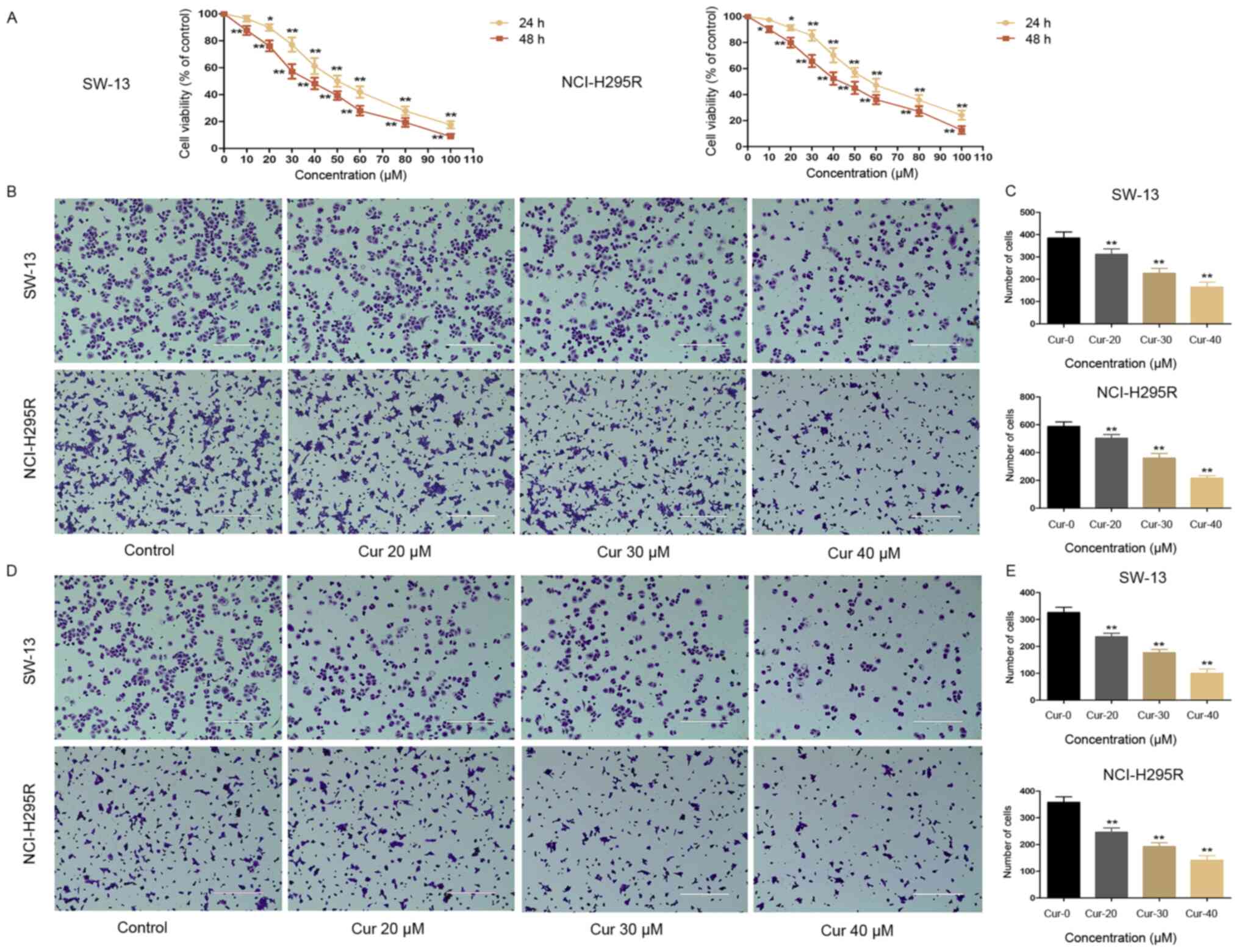
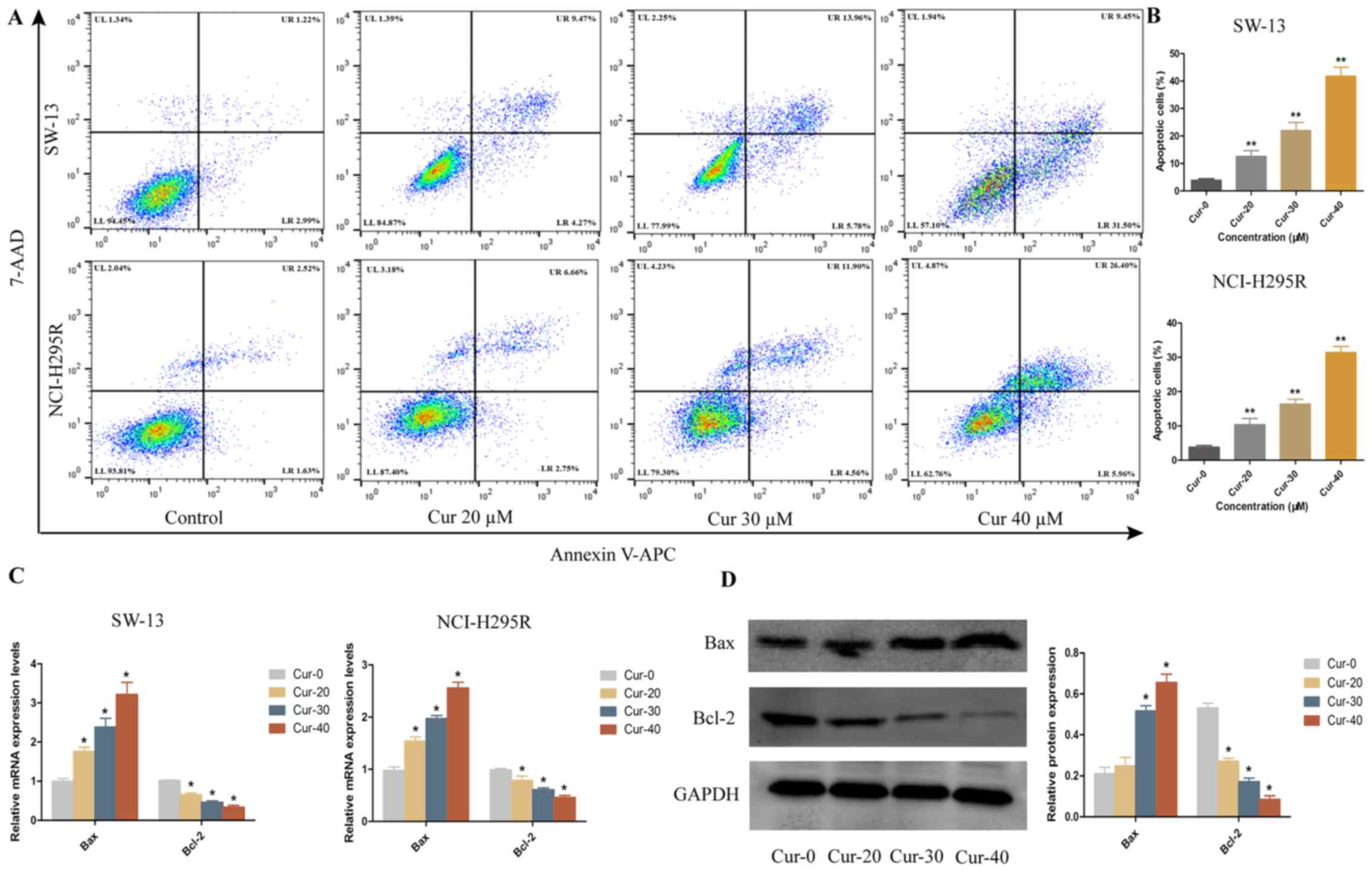
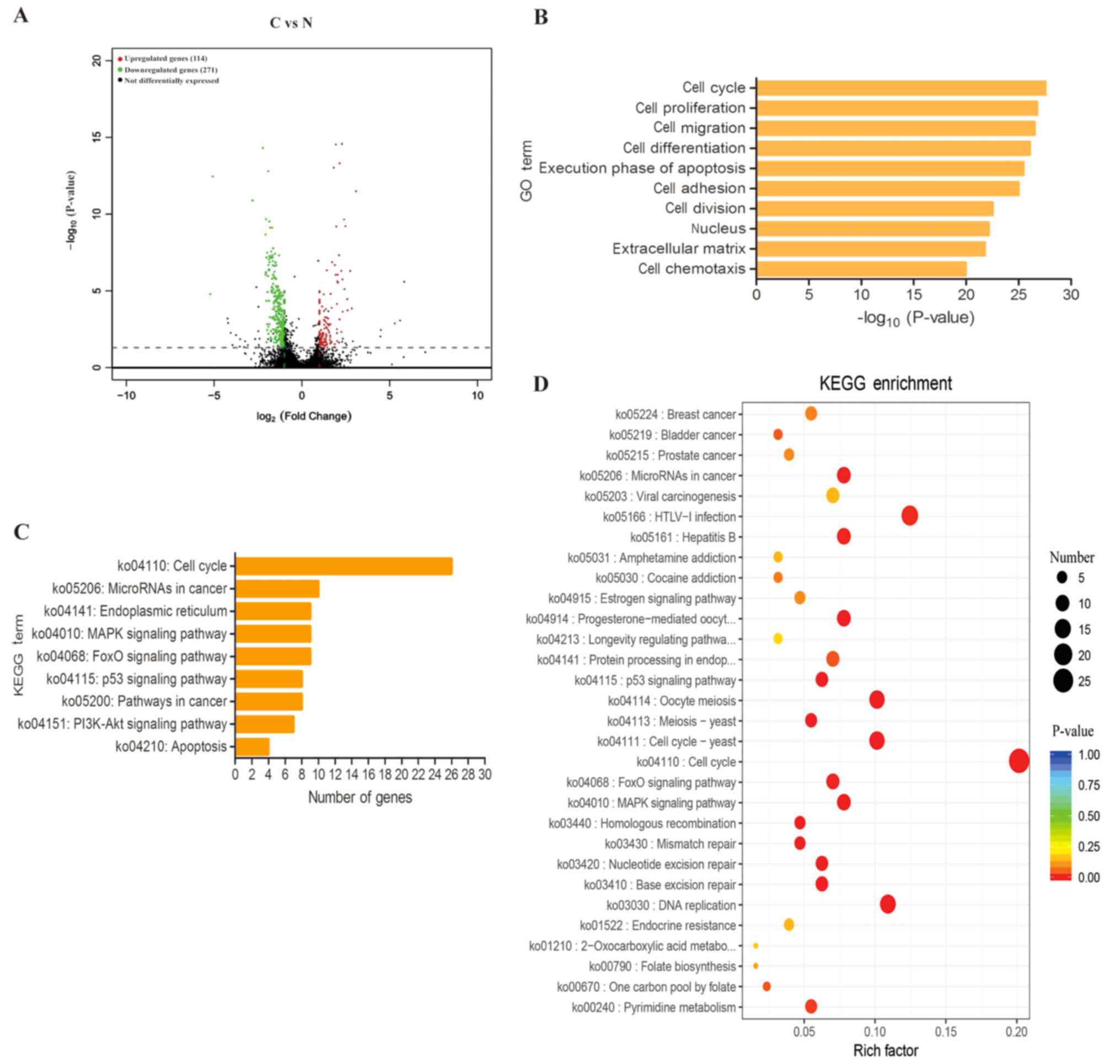
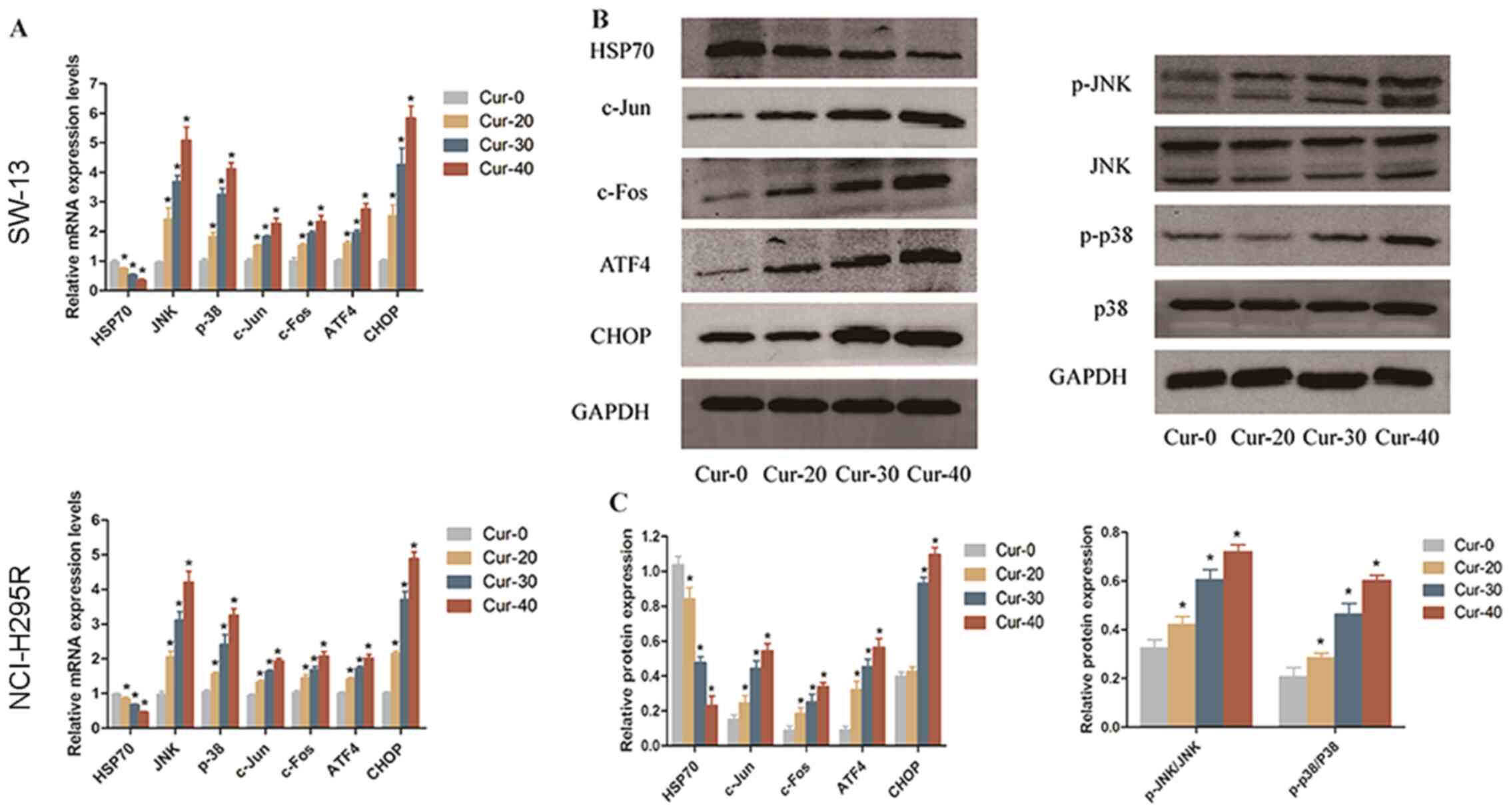
Adrenocortical carcinoma (ACC) is an endocrine tumour with high malignancy, high invasiveness and poor prognosis. Curcumin, a major component in turmeric, has been reported to have good efficacy and biological safety in treating cancer. However, the role and mechanism of curcumin in ACC have not yet been fully investigated and were thus the focus of this study. In vitro, ACC SW‑13 and NCI‑H295R cells were treated with curcumin and their viability, migration and invasion were assessed by CCK‑8 and Transwell assays. Apoptosis was detected via flow cytometry and western blotting. High‑throughput sequencing and comprehensive bioinformatics analyses were performed to elucidate the molecular processes underlying curcumin activity. In vivo, SW‑13 cells were injected into nude mice, and the tumour volumes and weights were observed after 2 weeks of curcumin treatment. Organelle changes were observed by electron microscopy, and potential candidate genes and pathways were analysed by RT‑qPCR and western blotting. The role of the CHOP target gene in curcumin‑induced ACC cell apoptosis was verified via lentiviral transfection experiments. Curcumin inhibited the viability, migration and invasion, and induced the apoptosis of ACC cells. Transcriptome sequencing analysis showed that curcumin treatment markedly changed the gene expression levels. Gene Ontology and Kyoto Encyclopedia of Genes and Genomes pathway enrichment analyses showed that the MAPK and endoplasmic reticulum (ER) stress pathways were the predominant pathways associated with curcumin‑induced apoptosis of ACC cells. Subsequent in vivo and in vitro results demonstrated that the JNK, p38 MAPK and ER stress pathways were activated in curcumin‑treated ACC cells, and that C/EBP homologous protein induction was responsible for curcumin‑induced apoptosis of ACC cells. In summary, curcumin induced ACC cell apoptosis and inhibited tumour growth by activating the JNK, p38 MAPK and ER stress pathways. Thus, curcumin may be a potential therapeutic drug for ACC.
View Figures

Figure 1

Figure 2

Figure 3

Figure 4

Figure 5

Figure 6

Figure 7

View References

1 

Roca E, Berruti A, Sbiera S, Rapa I, Oneda E, Sperone P, Ronchi CL, Ferrari L, Grisanti S, Germano A, et al: Topoisomerase 2α and thymidylate synthase expression in adrenocortical cancer. Endocr Relat Cancer. 24:319–327. 2017. View Article : Google Scholar : PubMed/NCBI

2 

Simon G, Pattou F, Mirallié E, Lifante JC, Nominé C, Arnault V, de Calan L, Caillard C, Carnaille B, Brunaud L, et al: Surgery for recurrent adrenocortical carcinoma: A multicenter retrospective study. Surgery. 161:249–256. 2017. View Article : Google Scholar : PubMed/NCBI

3 

Assié G, Antoni G, Tissier F, Caillou B, Abiven G, Gicquel C, Leboulleux S, Travagli JP, Dromain C, Bertagna X, et al: Prognostic parameters of metastatic adrenocortical carcinoma. J Clin Endocrinol Metab. 92:148–154. 2007. View Article : Google Scholar

4 

Ruggiero C, Doghman-Bouguerra M, Ronco C, Benhida R, Rocchi S and Lalli E: The GRP78/BiP inhibitor HA15 synergizes with mitotane action against adrenocortical carcinoma cells through convergent activation of ER stress pathways. Mol Cell Endocrinol. 474:57–64. 2018. View Article : Google Scholar : PubMed/NCBI

5 

Hermsen IG, Haak HR, de Krijger RR, Kerkhofs TM, Feelders RA, de Herder WW, Wilmink H, Smit JW, Gelderblom H, de Miranda NF, et al: Mutational analyses of epidermal growth factor receptor and downstream pathways in adrenocortical carcinoma. Eur J Endocrinol. 169:51–58. 2013. View Article : Google Scholar : PubMed/NCBI

6 

Baudin E, Pellegriti G, Bonnay M, Penfornis A, Laplanche A, Vassal G and Schlumberger M: Impact of monitoring plasma 1,1-dichlorodiphenildichloroethane (o,p'DDD) levels on the treatment of patients with adrenocortical carcinoma. Cancer. 92:1385–1392. 2001. View Article : Google Scholar : PubMed/NCBI

7 

Muratori L, Pia A, Reimondo G, Pisano C, La Salvia A, Puglisi S, Scagliotti GV and Sperone P: Prolonged adrenal insufficiency after the discontinuation of mitotane therapy. Endocr Metab Immune Disord Drug Targets. 20:485–487. 2020. View Article : Google Scholar : PubMed/NCBI

8 

Else T, Kim AC, Sabolch A, Raymond VM, Kandathil A, Caoili EM, Jolly S, Miller BS, Giordano TJ and Hammer GD: Adrenocortical carcinoma. Endocr Rev. 35:282–326. 2014. View Article : Google Scholar : PubMed/NCBI

9 

Seidel E, Walenda G, Messerschmidt C, Obermayer B, Peitzsch M, Wallace P, Bahethi R, Yoo T, Choi M, Schrade P, et al: Generation and characterization of a mitotane-resistant adrenocortical cell line. Endocr Connect. 9:122–134. 2020. View Article : Google Scholar : PubMed/NCBI

10 

Schaffer M, Schaffer PM and Bar-Sela G: An update on Curcuma as a functional food in the control of cancer and inflammation. Curr Opin Clin Nutr Metab Care. 18:605–611. 2015. View Article : Google Scholar : PubMed/NCBI

11 

Sun C, Zhang S, Liu C and Liu X: Curcumin Promoted miR-34a expression and suppressed proliferation of gastric cancer cells. Cancer Biother Radiopharm. 34:634–641. 2019. View Article : Google Scholar : PubMed/NCBI

12 

Milacic V, Banerjee S, Landis-Piwowar KR, Sarkar FH, Majumdar AP and Dou QP: Curcumin inhibits the proteasome activity in human colon cancer cells in vitro and in vivo. Cancer Res. 68:7283–7292. 2008. View Article : Google Scholar : PubMed/NCBI

13 

Somasundaram S, Edmund NA, Moore DT, Small GW, Shi YY and Orlowski RZ: Dietary curcumin inhibits chemotherapy-induced apoptosis in models of human breast cancer. Cancer Res. 62:3868–3875. 2002.PubMed/NCBI

14 

Sreekanth CN, Bava SV, Sreekumar E and Anto RJ: Molecular evidences for the chemosensitizing efficacy of liposomal curcumin in paclitaxel chemotherapy in mouse models of cervical cancer. Oncogene. 30:3139–3152. 2011. View Article : Google Scholar : PubMed/NCBI

15 

Watson JL, Hill R, Yaffe PB, Greenshields A, Walsh M, Lee PW, Giacomantonio CA and Hoskin DW: Curcumin causes superoxide anion production and p53-independent apoptosis in human colon cancer cells. Cancer Lett. 297:1–8. 2010. View Article : Google Scholar : PubMed/NCBI

16 

Killian PH, Kronski E, Michalik KM, Barbieri O, Astigiano S, Sommerhoff CP, Pfeffer U, Nerlich AG and Bachmeier BE: Curcumin inhibits prostate cancer metastasis in vivo by targeting the inflammatory cytokines CXCL1 and −2. Carcinogenesis. 33:2507–2519. 2012. View Article : Google Scholar : PubMed/NCBI

17 

Wang Y, Xiao J, Zhou H, Yang S, Wu X, Jiang C, Zhao Y, Liang D, Li X and Liang G: A novel monocarbonyl analogue of curcumin, (1E,4E)-1,5-bis(2,3-dimethoxyphenyl)penta-1,4-dien-3-one, induced cancer cell H460 apoptosis via activation of endoplasmic reticulum stress signaling pathway. J Med Chem. 54:3768–3778. 2011. View Article : Google Scholar : PubMed/NCBI

18 

Khan AQ, Ahmed EI, Elareer N, Fathima H, Prabhu KS, Siveen KS, Kulinski M, Azizi F, Dermime S, et al: Curcumin-mediated apoptotic cell death in papillary thyroid cancer and cancer stem-like cells through targeting of the JAK/STAT3 signaling pathway. International journal of molecular sciences. 212020.

19 

Sharma RA, McLelland HR, Hill KA, Ireson CR, Euden SA, Manson MM, Pirmohamed M, Marnett LJ, Gescher AJ, et al: Pharmacodynamic and pharmacokinetic study of oral Curcuma extract in patients with colorectal cancer. Clin Cancer Res. 7:1894–1900. 2001.PubMed/NCBI

20 

Saghatelyan T, Tananyan A, Janoyan N, Tadevosyan A, Petrosyan H, Hovhannisyan A, Hayrapetyan L, Arustamyan M, Arnhold J, et al: Efficacy and safety of curcumin in combination with paclitaxel in patients with advanced, metastatic breast cancer: A comparative, randomized, double-blind, placebo-controlled clinical trial. Phytomedicine. 70:1532182020. View Article : Google Scholar : PubMed/NCBI

21 

Choi YH, Han DH, Kim SW, Kim MJ, Sung HH, Jeon HG, Jeong BC, Seo SI, Jeon SS, Lee HM, et al: A randomized, double-blind, placebo-controlled trial to evaluate the role of curcumin in prostate cancer patients with intermittent androgen deprivation. Prostate. 79:614–621. 2019. View Article : Google Scholar : PubMed/NCBI

22 

Livak KJ and Schmittgen TD: Analysis of relative gene expression data using real-time quantitative PCR and the 2(-Delta Delta C(T)) method. Methods. 25:402–408. 2001. View Article : Google Scholar : PubMed/NCBI

23 

Boudesco C, Cause S, Jego G and Garrido C: Hsp70: A cancer target inside and outside the cell. Methods Mol Biol. 1709:371–396. 2018. View Article : Google Scholar : PubMed/NCBI

24 

Lee WH, Loo CY, Young PM, Traini D, Mason RS and Rohanizadeh R: Recent advances in curcumin nanoformulation for cancer therapy. Expert Opin Drug Deliv. 11:1183–1201. 2014. View Article : Google Scholar : PubMed/NCBI

25 

Shishodia S, Potdar P, Gairola CG and Aggarwal BB: Curcumin (diferuloylmethane) down-regulates cigarette smoke-induced NF-kappaB activation through inhibition of IkappaBalpha kinase in human lung epithelial cells: Correlation with suppression of COX-2, MMP-9 and cyclin D1. Carcinogenesis. 24:1269–1279. 2003. View Article : Google Scholar : PubMed/NCBI

26 

Zhu G, Shen Q, Jiang H, Ji O, Zhu L and Zhang L: Curcumin inhibited the growth and invasion of human monocytic leukaemia SHI-1 cells in vivo by altering MAPK and MMP signalling. Pharm Biol. 58:25–34. 2020. View Article : Google Scholar : PubMed/NCBI

27 

Moradi-Marjaneh R, Hassanian SM, Rahmani F, Aghaee-Bakhtiari SH, Avan A and Khazaei M: Phytosomal curcumin elicits anti-tumor properties through suppression of angiogenesis, cell proliferation and induction of oxidative stress in colorectal cancer. Curr Pharm Des. 24:4626–4638. 2018. View Article : Google Scholar : PubMed/NCBI

28 

Kumar P, Barua CC, Sulakhiya K and Sharma RK: Curcumin ameliorates cisplatin-induced nephrotoxicity and potentiates its anticancer activity in sd rats: Potential role of curcumin in breast cancer chemotherapy. Front Pharmacol. 8:1322017. View Article : Google Scholar : PubMed/NCBI

29 

Kerkhofs TM, Ettaieb MH, Hermsen IG and Haak HR: Developing treatment for adrenocortical carcinoma. Endocr Relat Cancer. 22:R325–R338. 2015. View Article : Google Scholar : PubMed/NCBI

30 

Chen L, Zhan CZ, Wang T, You H and Yao R: Curcumin inhibits the proliferation, migration, invasion, and apoptosis of diffuse large B-cell lymphoma cell line by regulating MiR-21/VHL axis. Yonsei Med J. 61:20–29. 2020. View Article : Google Scholar : PubMed/NCBI

31 

Hassanalilou T, Ghavamzadeh S and Khalili L: Curcumin and gastric cancer: A review on mechanisms of action. J Gastrointest Cancer. 50:185–192. 2019. View Article : Google Scholar : PubMed/NCBI

32 

He YC, He L, Khoshaba R, Lu FG, Cai C, Zhou FL, Liao DF and Cao D: Curcumin nicotinate selectively induces cancer cell apoptosis and cycle arrest through a P53-mediated mechanism. Molecules. 24:41792019. View Article : Google Scholar : PubMed/NCBI

33 

Maiti P, Plemmons A and Dunbar GL: Combination treatment of berberine and solid lipid curcumin particles increased cell death and inhibited PI3K/Akt/mTOR pathway of human cultured glioblastoma cells more effectively than did individual treatments. PLoS One. 14:e02256602019. View Article : Google Scholar : PubMed/NCBI

34 

Chadalapaka G, Jutooru I, Chintharlapalli S, Papineni S, Smith R III, Li X and Safe S: Curcumin decreases specificity protein expression in bladder cancer cells. Cancer Res. 68:5345–5354. 2008. View Article : Google Scholar : PubMed/NCBI

35 

Firouzi Amoodizaj F, Baghaeifar S, Taheri E, Farhoudi Sefidan Jadid M, Safi M, Seyyed Sani N, Hajazimian S, Isazadeh A and Shanehbandi D: Enhanced anticancer potency of doxorubicin in combination with curcumin in gastric adenocarcinoma. J Biochem Mol Toxicol. 34:e224862020. View Article : Google Scholar : PubMed/NCBI

36 

Lin SS, Huang HP, Yang JS, Wu JY, Hsia TC, Lin CC, Lin CW, Kuo CL, Gibson Wood W and Chung JG: DNA damage and endoplasmic reticulum stress mediated curcumin-induced cell cycle arrest and apoptosis in human lung carcinoma A-549 cells through the activation caspases cascade- and mitochondrial-dependent pathway. Cancer Lett. 272:77–90. 2008. View Article : Google Scholar : PubMed/NCBI

37 

Das JK, Xiong X, Ren X, Yang JM and Song J: Heat Shock Proteins in Cancer Immunotherapy. J Oncol. 2019:32672072019. View Article : Google Scholar : PubMed/NCBI

38 

Kumar S, Stokes J III, Singh UP, Scissum Gunn K, Acharya A, Manne U and Mishra M: Targeting Hsp70: A possible therapy for cancer. Cancer Lett. 374:156–166. 2016. View Article : Google Scholar : PubMed/NCBI

39 

Yun CW, Kim HJ, Lim JH and Lee SH: Heat shock proteins: agents of cancer development and therapeutic targets in anti-cancer therapy. Cells. 9:602019. View Article : Google Scholar : PubMed/NCBI

40 

Avdalyan AM, Ivanov AA, Lushnikova EL, Molodykh OP and Vikhlyanov IV: The relationship of immunoexpression of Ki-67 and Hsp70 with clinical and norphological parameters and prognosis of papillary thyroid cancer. Bull Exp Biol Med. 168:688–693. 2020. View Article : Google Scholar : PubMed/NCBI

41 

Feng J, Zhan Y, Zhang Y, Zheng H, Wang W and Fan S: Increased expression of heat shock protein (HSP) 10 and HSP70 correlates with poor prognosis of nasopharyngeal carcinoma. Cancer Manag Res. 11:8219–8227. 2019. View Article : Google Scholar : PubMed/NCBI

42 

Sheng L, Tang T, Liu Y, Ma Y, Wang Z, Tao H, Zhang Y and Qi Z: Inducible HSP70 antagonizes cisplatin induced cell apoptosis through inhibition of the MAPK signaling pathway in HGC 27 cells. Int J Mol Med. 42:2089–2097. 2018.PubMed/NCBI

43 

Wagner EF and Nebreda AR: Signal integration by JNK and p38 MAPK pathways in cancer development. Nat Rev Cancer. 9:537–549. 2009. View Article : Google Scholar : PubMed/NCBI

44 

Yue J and Lopez JM: Understanding MAPK signaling pathways in apoptosis. Int J Mol Sci. 21:2346212020. View Article : Google Scholar : PubMed/NCBI

45 

Sui X, Kong N, Ye L, Han W, Zhou J, Zhang Q, He C and Pan H: p38 and JNK MAPK pathways control the balance of apoptosis and autophagy in response to chemotherapeutic agents. Cancer Lett. 344:174–179. 2014. View Article : Google Scholar : PubMed/NCBI

46 

Gabai VL, Meriin AB, Mosser DD, Caron AW, Rits S, Shifrin VI and Sherman MY: Hsp70 prevents activation of stress kinases. A novel pathway of cellular thermotolerance. J Biol Chem. 272:18033–18037. 1997. View Article : Google Scholar : PubMed/NCBI

47 

Zheng QY, Li PP, Jin FS, Yao C, Zhang GH, Zang T and Ai X: Ursolic acid induces ER stress response to activate ASK1-JNK signaling and induce apoptosis in human bladder cancer T24 cells. Cell Signal. 25:206–213. 2013. View Article : Google Scholar : PubMed/NCBI

48 

Choi JH, Jeong YJ, Yu AR, Yoon KS, Choe W, Ha J, Kim SS, Yeo EJ and Kang I: Fluoxetine induces apoptosis through endoplasmic reticulum stress via mitogen-activated protein kinase activation and histone hyperacetylation in SK-N-BE(2)-M17 human neuroblastoma cells. Apoptosis. 22:1079–1097. 2017. View Article : Google Scholar : PubMed/NCBI

49 

Mathur A, Abd Elmageed ZY, Liu X, Kostochka ML, Zhang H, Abdel-Mageed AB and Mondal D: Subverting ER-stress towards apoptosis by nelfinavir and curcumin coexposure augments docetaxel efficacy in castration resistant prostate cancer cells. PLoS One. 9:e1031092014. View Article : Google Scholar : PubMed/NCBI

50 

Zinszner H, Kuroda M, Wang X, Batchvarova N, Lightfoot RT, Remotti H, Stevens JL and Ron D: CHOP is implicated in programmed cell death in response to impaired function of the endoplasmic reticulum. Genes Dev. 12:982–995. 1998. View Article : Google Scholar : PubMed/NCBI

51 

Liu TH, Tu WQ, Tao WC, Liang QE, Xiao Y and Chen LG: Verification of resveratrol inhibits intestinal aging by downregulating ATF4/Chop/Bcl-2/Bax signaling pathway: Based on network pharmacology and animal experiment. Front Pharmacol. 11:10642020. View Article : Google Scholar : PubMed/NCBI

52 

Wang X, Zhuang Y, Fang Y, Cao H, Zhang C, Xing C, Guo X, Li G, Liu P, Hu G, et al: Endoplasmic reticulum stress aggravates copper-induced apoptosis via the PERK/ATF4/CHOP signaling pathway in duck renal tubular epithelial cells. Environ Pollut. 272:1159812021. View Article : Google Scholar : PubMed/NCBI

53 

Khatun H, Wada Y, Konno T, Tatemoto H and Yamanaka KI: Endoplasmic reticulum stress attenuation promotes bovine oocyte maturation in vitro. Reproduction. 159:361–370. 2020. View Article : Google Scholar : PubMed/NCBI

54 

Liang T, Zhang X, Xue W, Zhao S, Zhang X and Pei J: Curcumin induced human gastric cancer BGC-823 cells apoptosis by ROS-mediated ASK1-MKK4-JNK stress signaling pathway. Int J Mol Sci. 15:15754–15765. 2014. View Article : Google Scholar : PubMed/NCBI

55 

Yu X, Zhong J, Yan L, Li J, Wang H, Wen Y and Zhao Y: Curcumin exerts antitumor effects in retinoblastoma cells by regulating the JNK and p38 MAPK pathways. Int J Mol Med. 38:861–868. 2016. View Article : Google Scholar : PubMed/NCBI

56 

Zhang W, Chen L, Shen Y and Xu J: Rifampicin-induced injury in L02 cells is alleviated by 4-PBA via inhibition of the PERK-ATF4-CHOP pathway. Toxicol In Vitro. 36:186–196. 2016. View Article : Google Scholar : PubMed/NCBI

Related Articles

  • Abstract
  • View
  • Download
  • Twitter
Copy and paste a formatted citation
Spandidos Publications style
Huang X, Liang C, Yang H, Li X, Deng X, Liang X, Li L, Huang Z, Lu D, Ma Y, Ma Y, et al: Curcumin induces apoptosis and inhibits the growth of adrenocortical carcinoma: Identification of potential candidate genes and pathways by transcriptome analysis. Oncol Lett 21: 476, 2021.
APA
Huang, X., Liang, C., Yang, H., Li, X., Deng, X., Liang, X. ... Luo, Z. (2021). Curcumin induces apoptosis and inhibits the growth of adrenocortical carcinoma: Identification of potential candidate genes and pathways by transcriptome analysis. Oncology Letters, 21, 476. https://doi.org/10.3892/ol.2021.12737
MLA
Huang, X., Liang, C., Yang, H., Li, X., Deng, X., Liang, X., Li, L., Huang, Z., Lu, D., Ma, Y., Luo, Z."Curcumin induces apoptosis and inhibits the growth of adrenocortical carcinoma: Identification of potential candidate genes and pathways by transcriptome analysis". Oncology Letters 21.6 (2021): 476.
Chicago
Huang, X., Liang, C., Yang, H., Li, X., Deng, X., Liang, X., Li, L., Huang, Z., Lu, D., Ma, Y., Luo, Z."Curcumin induces apoptosis and inhibits the growth of adrenocortical carcinoma: Identification of potential candidate genes and pathways by transcriptome analysis". Oncology Letters 21, no. 6 (2021): 476. https://doi.org/10.3892/ol.2021.12737
Copy and paste a formatted citation
x
Spandidos Publications style
Huang X, Liang C, Yang H, Li X, Deng X, Liang X, Li L, Huang Z, Lu D, Ma Y, Ma Y, et al: Curcumin induces apoptosis and inhibits the growth of adrenocortical carcinoma: Identification of potential candidate genes and pathways by transcriptome analysis. Oncol Lett 21: 476, 2021.
APA
Huang, X., Liang, C., Yang, H., Li, X., Deng, X., Liang, X. ... Luo, Z. (2021). Curcumin induces apoptosis and inhibits the growth of adrenocortical carcinoma: Identification of potential candidate genes and pathways by transcriptome analysis. Oncology Letters, 21, 476. https://doi.org/10.3892/ol.2021.12737
MLA
Huang, X., Liang, C., Yang, H., Li, X., Deng, X., Liang, X., Li, L., Huang, Z., Lu, D., Ma, Y., Luo, Z."Curcumin induces apoptosis and inhibits the growth of adrenocortical carcinoma: Identification of potential candidate genes and pathways by transcriptome analysis". Oncology Letters 21.6 (2021): 476.
Chicago
Huang, X., Liang, C., Yang, H., Li, X., Deng, X., Liang, X., Li, L., Huang, Z., Lu, D., Ma, Y., Luo, Z."Curcumin induces apoptosis and inhibits the growth of adrenocortical carcinoma: Identification of potential candidate genes and pathways by transcriptome analysis". Oncology Letters 21, no. 6 (2021): 476. https://doi.org/10.3892/ol.2021.12737
Follow us
  • Twitter
  • LinkedIn
  • Facebook
About
  • Spandidos Publications
  • Careers
  • Cookie Policy
  • Privacy Policy
How can we help?
  • Help
  • Live Chat
  • Contact
  • Email to our Support Team