Spandidos Publications Logo
  • About
    • About Spandidos
    • Aims and Scopes
    • Abstracting and Indexing
    • Editorial Policies
    • Reprints and Permissions
    • Job Opportunities
    • Terms and Conditions
    • Contact
  • Journals
    • All Journals
    • Oncology Letters
      • Oncology Letters
      • Information for Authors
      • Editorial Policies
      • Editorial Board
      • Aims and Scope
      • Abstracting and Indexing
      • Bibliographic Information
      • Archive
    • International Journal of Oncology
      • International Journal of Oncology
      • Information for Authors
      • Editorial Policies
      • Editorial Board
      • Aims and Scope
      • Abstracting and Indexing
      • Bibliographic Information
      • Archive
    • Molecular and Clinical Oncology
      • Molecular and Clinical Oncology
      • Information for Authors
      • Editorial Policies
      • Editorial Board
      • Aims and Scope
      • Abstracting and Indexing
      • Bibliographic Information
      • Archive
    • Experimental and Therapeutic Medicine
      • Experimental and Therapeutic Medicine
      • Information for Authors
      • Editorial Policies
      • Editorial Board
      • Aims and Scope
      • Abstracting and Indexing
      • Bibliographic Information
      • Archive
    • International Journal of Molecular Medicine
      • International Journal of Molecular Medicine
      • Information for Authors
      • Editorial Policies
      • Editorial Board
      • Aims and Scope
      • Abstracting and Indexing
      • Bibliographic Information
      • Archive
    • Biomedical Reports
      • Biomedical Reports
      • Information for Authors
      • Editorial Policies
      • Editorial Board
      • Aims and Scope
      • Abstracting and Indexing
      • Bibliographic Information
      • Archive
    • Oncology Reports
      • Oncology Reports
      • Information for Authors
      • Editorial Policies
      • Editorial Board
      • Aims and Scope
      • Abstracting and Indexing
      • Bibliographic Information
      • Archive
    • Molecular Medicine Reports
      • Molecular Medicine Reports
      • Information for Authors
      • Editorial Policies
      • Editorial Board
      • Aims and Scope
      • Abstracting and Indexing
      • Bibliographic Information
      • Archive
    • World Academy of Sciences Journal
      • World Academy of Sciences Journal
      • Information for Authors
      • Editorial Policies
      • Editorial Board
      • Aims and Scope
      • Abstracting and Indexing
      • Bibliographic Information
      • Archive
    • International Journal of Functional Nutrition
      • International Journal of Functional Nutrition
      • Information for Authors
      • Editorial Policies
      • Editorial Board
      • Aims and Scope
      • Abstracting and Indexing
      • Bibliographic Information
      • Archive
    • International Journal of Epigenetics
      • International Journal of Epigenetics
      • Information for Authors
      • Editorial Policies
      • Editorial Board
      • Aims and Scope
      • Abstracting and Indexing
      • Bibliographic Information
      • Archive
    • Medicine International
      • Medicine International
      • Information for Authors
      • Editorial Policies
      • Editorial Board
      • Aims and Scope
      • Abstracting and Indexing
      • Bibliographic Information
      • Archive
  • Articles
  • Information
    • Information for Authors
    • Information for Reviewers
    • Information for Librarians
    • Information for Advertisers
    • Conferences
  • Language Editing
Spandidos Publications Logo
  • About
    • About Spandidos
    • Aims and Scopes
    • Abstracting and Indexing
    • Editorial Policies
    • Reprints and Permissions
    • Job Opportunities
    • Terms and Conditions
    • Contact
  • Journals
    • All Journals
    • Biomedical Reports
      • Information for Authors
      • Editorial Policies
      • Editorial Board
      • Aims and Scope
      • Abstracting and Indexing
      • Bibliographic Information
      • Archive
    • Experimental and Therapeutic Medicine
      • Information for Authors
      • Editorial Policies
      • Editorial Board
      • Aims and Scope
      • Abstracting and Indexing
      • Bibliographic Information
      • Archive
    • International Journal of Epigenetics
      • Information for Authors
      • Editorial Policies
      • Editorial Board
      • Aims and Scope
      • Abstracting and Indexing
      • Bibliographic Information
      • Archive
    • International Journal of Functional Nutrition
      • Information for Authors
      • Editorial Policies
      • Editorial Board
      • Aims and Scope
      • Abstracting and Indexing
      • Bibliographic Information
      • Archive
    • International Journal of Molecular Medicine
      • Information for Authors
      • Editorial Policies
      • Editorial Board
      • Aims and Scope
      • Abstracting and Indexing
      • Bibliographic Information
      • Archive
    • International Journal of Oncology
      • Information for Authors
      • Editorial Policies
      • Editorial Board
      • Aims and Scope
      • Abstracting and Indexing
      • Bibliographic Information
      • Archive
    • Medicine International
      • Information for Authors
      • Editorial Policies
      • Editorial Board
      • Aims and Scope
      • Abstracting and Indexing
      • Bibliographic Information
      • Archive
    • Molecular and Clinical Oncology
      • Information for Authors
      • Editorial Policies
      • Editorial Board
      • Aims and Scope
      • Abstracting and Indexing
      • Bibliographic Information
      • Archive
    • Molecular Medicine Reports
      • Information for Authors
      • Editorial Policies
      • Editorial Board
      • Aims and Scope
      • Abstracting and Indexing
      • Bibliographic Information
      • Archive
    • Oncology Letters
      • Information for Authors
      • Editorial Policies
      • Editorial Board
      • Aims and Scope
      • Abstracting and Indexing
      • Bibliographic Information
      • Archive
    • Oncology Reports
      • Information for Authors
      • Editorial Policies
      • Editorial Board
      • Aims and Scope
      • Abstracting and Indexing
      • Bibliographic Information
      • Archive
    • World Academy of Sciences Journal
      • Information for Authors
      • Editorial Policies
      • Editorial Board
      • Aims and Scope
      • Abstracting and Indexing
      • Bibliographic Information
      • Archive
  • Articles
  • Information
    • For Authors
    • For Reviewers
    • For Librarians
    • For Advertisers
    • Conferences
  • Language Editing
Login Register Submit
  • This site uses cookies
  • You can change your cookie settings at any time by following the instructions in our Cookie Policy. To find out more, you may read our Privacy Policy.

    I agree
Search articles by DOI, keyword, author or affiliation
Search
Advanced Search
presentation
Oncology Letters
Join Editorial Board Propose a Special Issue
Print ISSN: 1792-1074 Online ISSN: 1792-1082
Journal Cover
September-2025 Volume 30 Issue 3

Full Size Image

Sign up for eToc alerts
Recommend to Library

Journals

International Journal of Molecular Medicine

International Journal of Molecular Medicine

International Journal of Molecular Medicine is an international journal devoted to molecular mechanisms of human disease.

International Journal of Oncology

International Journal of Oncology

International Journal of Oncology is an international journal devoted to oncology research and cancer treatment.

Molecular Medicine Reports

Molecular Medicine Reports

Covers molecular medicine topics such as pharmacology, pathology, genetics, neuroscience, infectious diseases, molecular cardiology, and molecular surgery.

Oncology Reports

Oncology Reports

Oncology Reports is an international journal devoted to fundamental and applied research in Oncology.

Experimental and Therapeutic Medicine

Experimental and Therapeutic Medicine

Experimental and Therapeutic Medicine is an international journal devoted to laboratory and clinical medicine.

Oncology Letters

Oncology Letters

Oncology Letters is an international journal devoted to Experimental and Clinical Oncology.

Biomedical Reports

Biomedical Reports

Explores a wide range of biological and medical fields, including pharmacology, genetics, microbiology, neuroscience, and molecular cardiology.

Molecular and Clinical Oncology

Molecular and Clinical Oncology

International journal addressing all aspects of oncology research, from tumorigenesis and oncogenes to chemotherapy and metastasis.

World Academy of Sciences Journal

World Academy of Sciences Journal

Multidisciplinary open-access journal spanning biochemistry, genetics, neuroscience, environmental health, and synthetic biology.

International Journal of Functional Nutrition

International Journal of Functional Nutrition

Open-access journal combining biochemistry, pharmacology, immunology, and genetics to advance health through functional nutrition.

International Journal of Epigenetics

International Journal of Epigenetics

Publishes open-access research on using epigenetics to advance understanding and treatment of human disease.

Medicine International

Medicine International

An International Open Access Journal Devoted to General Medicine.

Journal Cover
September-2025 Volume 30 Issue 3

Full Size Image

Sign up for eToc alerts
Recommend to Library

  • Article
  • Citations
    • Cite This Article
    • Download Citation
    • Create Citation Alert
    • Remove Citation Alert
    • Cited By
  • Similar Articles
    • Related Articles (in Spandidos Publications)
    • Similar Articles (Google Scholar)
    • Similar Articles (PubMed)
  • Download PDF
  • Download XML
  • View XML
Article Open Access

A novel glutamine metabolism‑related risk model for prognostic prediction of liver hepatocellular carcinoma

  • Authors:
    • Xia He
    • Rui Wang
    • Yonghua Zhu
    • Xi Chen
    • Yu Zhang
    • Min Sun
  • View Affiliations / Copyright

    Affiliations: Operating Theatre, Yixing Branch of Wuxi Medical Center of Nanjing Medical University, Yixing People's Hospital, Yixing, Jiangsu 214200, P.R. China, Department of Gastroenterology, Xuyi People's Hospital, Xuyi, Jiangsu 211700, P.R. China, Department of General Surgery, The Fourth Affiliated Hospital of Nanjing Medical University, Nanjing, Jiangsu 210000, P.R. China, Department of Hepatopancreatobiliary Surgery, Yixing Branch of Wuxi Medical Center of Nanjing Medical University, Yixing People's Hospital, Yixing, Jiangsu 214200, P.R. China
    Copyright: © He et al. This is an open access article distributed under the terms of Creative Commons Attribution License.
  • Article Number: 403
    |
    Published online on: June 20, 2025
       https://doi.org/10.3892/ol.2025.15149
  • Expand metrics +
Metrics: Total Views: 0 (Spandidos Publications: | PMC Statistics: )
Metrics: Total PDF Downloads: 0 (Spandidos Publications: | PMC Statistics: )
Cited By (CrossRef): 0 citations Loading Articles...

This article is mentioned in:


Abstract

Glutamine has emerged as a focus of cancer metabolism research, although its role in liver hepatocellular carcinoma (LIHC) has yet to be fully elucidated. To determine the role of glutamine metabolism in the development of LIHC, the gene expression profiles and the clinical data of patients with LIHC were obtained from The Cancer Genome Atlas database and the International Cancer Genome Consortium website. Consensus clustering was used to identify distinct molecular clusters. Functional enrichment analysis between clusters was performed using the Gene Ontology and Kyoto Encyclopedia of Genes and Genomes databases, and gene set variation analysis was performed. Least absolute shrinkage and selection operator and multivariate Cox regression analyses were then performed to generate a novel prognostic model. The prognostic, immune, mutational and drug‑sensitive characteristics of the model were subsequently evaluated. The clinical proteomic tumor analysis consortium and reverse transcription‑quantitative PCR analysis were then used to assess the protein and mRNA expression levels of the modeled genes. In addition, western blot analysis and Cell Counting Kit‑8, 5‑ethynyl‑2'‑deoxyuridine, Transwell and wound healing assays were performed to further evaluate the role of glutamate‑oxaloacetate transaminase 2 (GOT2) in the pathogenesis of LIHC. Data from multiple LIHC cohorts were utilized to identify two distinct clusters of LIHC, each characterized by unique clinical and immunological features associated with different levels of glutamine metabolism‑related genes. Numerous functional pathway differences were identified between these clusters, and these were demonstrated to be crucial for the onset and progression of LIHC. For modeling of glutamine metabolism‑related features, patients with LIHC were divided into two groups, namely a high‑ and a low‑risk group. Different clusters of patients with LIHC exhibited distinct characteristics in terms of their clinicopathological features, drug‑sensitivity and mutations. For example, the high‑risk group had a higher mutational load and was associated with a poorer prognosis compared to the low‑risk group. Finally, GOT2 protein and mRNA expression levels were significantly lower in LIHC tissues compared to paracancerous tissues, and GOT2 knockdown promoted the malignant phenotype of LIHC. In conclusion, the results of the present study indicate that glutamine metabolism exerts a crucial role in the tumorigenesis and progression of LIHC, and that this is positively associated with poor prognosis. The identified glutamine metabolism‑related signature was revealed to have notable accuracy in predicting the prognosis and immune characteristics of patients with LIHC. Moreover, the expression level of GOT2 was downregulated in LIHC, and a low expression of GOT2 was indicative of a poor prognosis for patients with LIHC, suggesting that the expression of GOT2 may be used as a potential therapeutic target.
View Figures

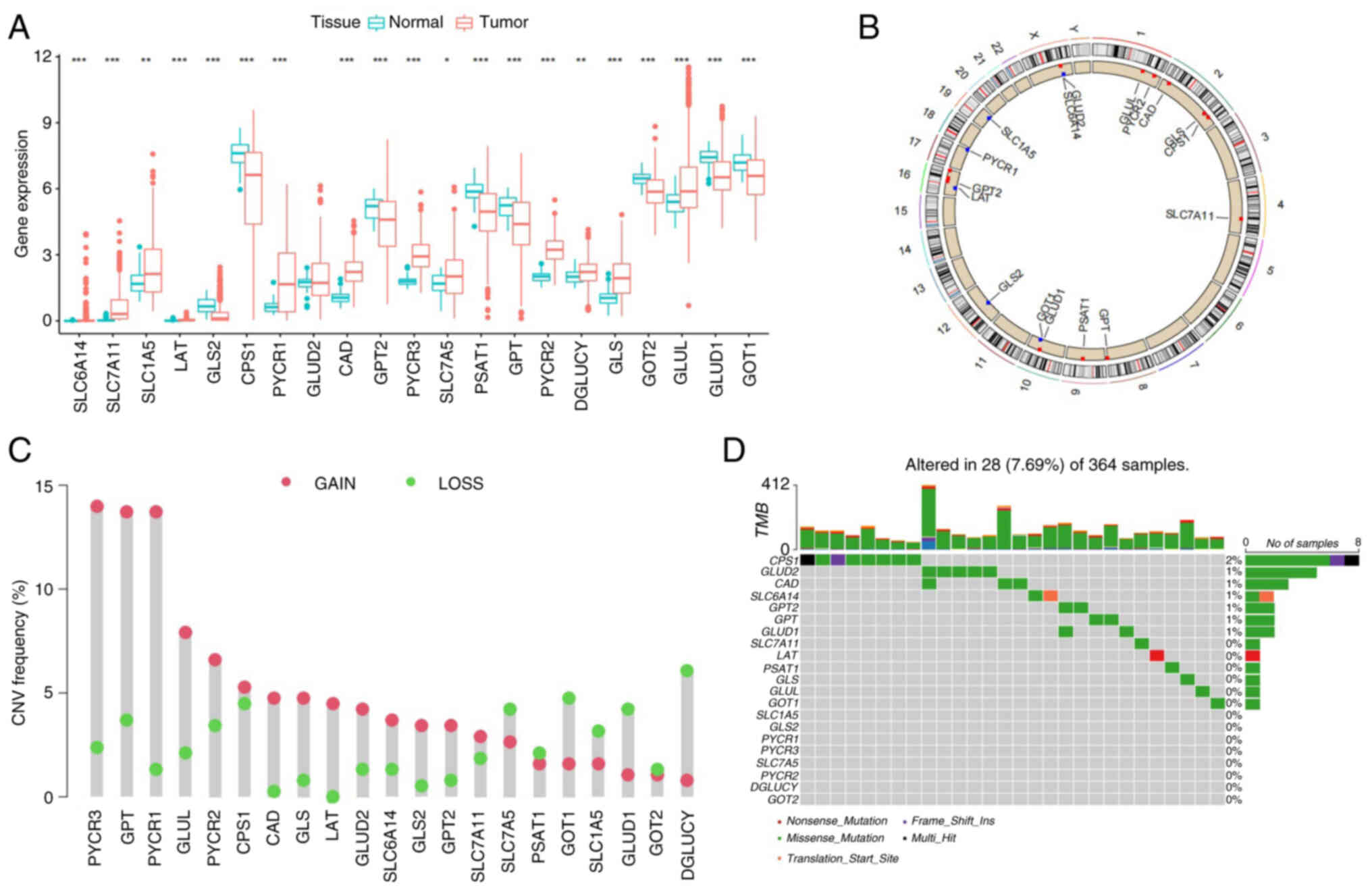
Figure 1

Expression and genetic variation of
glutamine metabolism-associated genes in LIHC. (A) Expression
difference of 21 glutamine metabolism-related genes between normal
and LIHC tissue. (B) Location of CNV alterations of glutamine
metabolism-related genes on 23 chromosomes. (C) CNV variation
frequency of glutamine metabolism-related genes. (D) Mutation
frequency of 21 glutamine metabolism-associated genes for 364
patients with LIHC in The Cancer Genome Atlas cohort. *P<0.05;
**P<0.01; ***P<0.001. LIHC, liver hepatocellular carcinoma;
CNV, copy number variation.

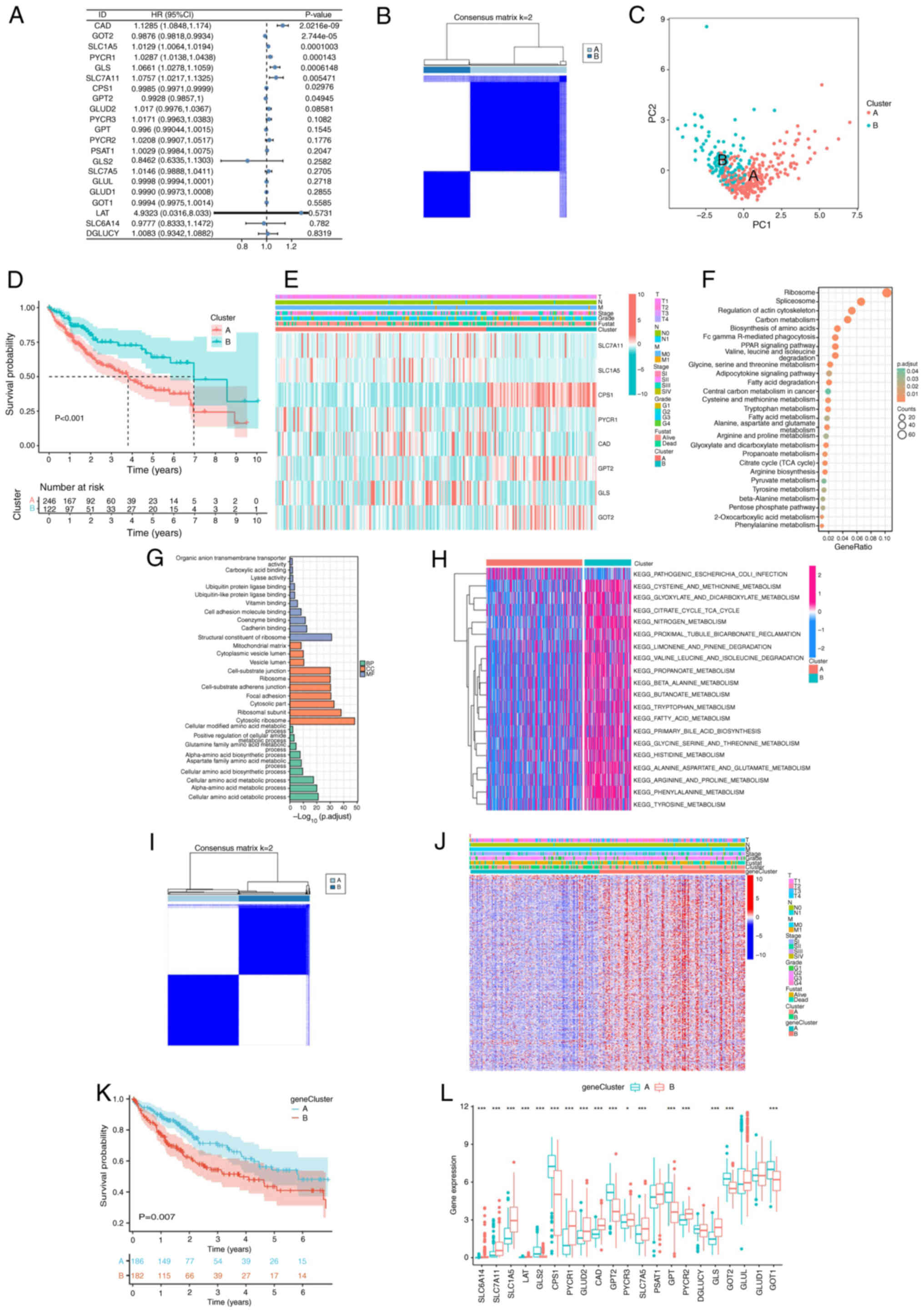
Figure 2

Establishment and biological
characteristics of glutamine metabolism-related clusters. (A) A
total of eight prognostic genes were selected using univariate Cox
regression analysis. (B) Consensus clustering matrix for K=2. (C)
Principal component analysis of clusters A and B. (D) Kaplan-Meier
overall survival curves for patients with LIHC in clusters A and B.
(E) Heatmap analysis of gene expression and clinical correlation
between clusters of LIHC. (F) KEGG pathway enrichment of DEGs
between clusters A and B. The enriched items were analyzed using
gene counts, gene ratios and adjusted P-values. (G) Gene Ontology
functional annotation analysis of DEGs between clusters A and B,
and enriched BPs, CCs and MFs. (H) gene set variation analysis
enrichment analysis, showing the biological pathways associated
with distinct glutamine metabolic modification patterns. Heatmap
analysis was used to visualize these BPs, with red representing
activated pathways and blue representing inhibited pathways. (I)
Sample distribution of different gene clusters. (J) Heatmap
analysis, showing gene expression and clinical correlation among
different gene clusters of LIHC. (K) Kaplan-Meier curves for
patients with LIHC in gene clusters A and B. (L) Expression
differences of 21 glutamine metabolism-related genes between gene
clusters A and B. *P<0.05; ***P<0.001. LIHC, liver
hepatocellular carcinoma; DEGs, differentially expressed genes;
KEGG, Kyoto Encyclopedia of Genes and Genomes; BP, biological
process; CC, cellular component; MF, molecular functions; HR,
hazard ratio; CI, confidence interval; T, tumor; N, lymph node; M,
metastasis.

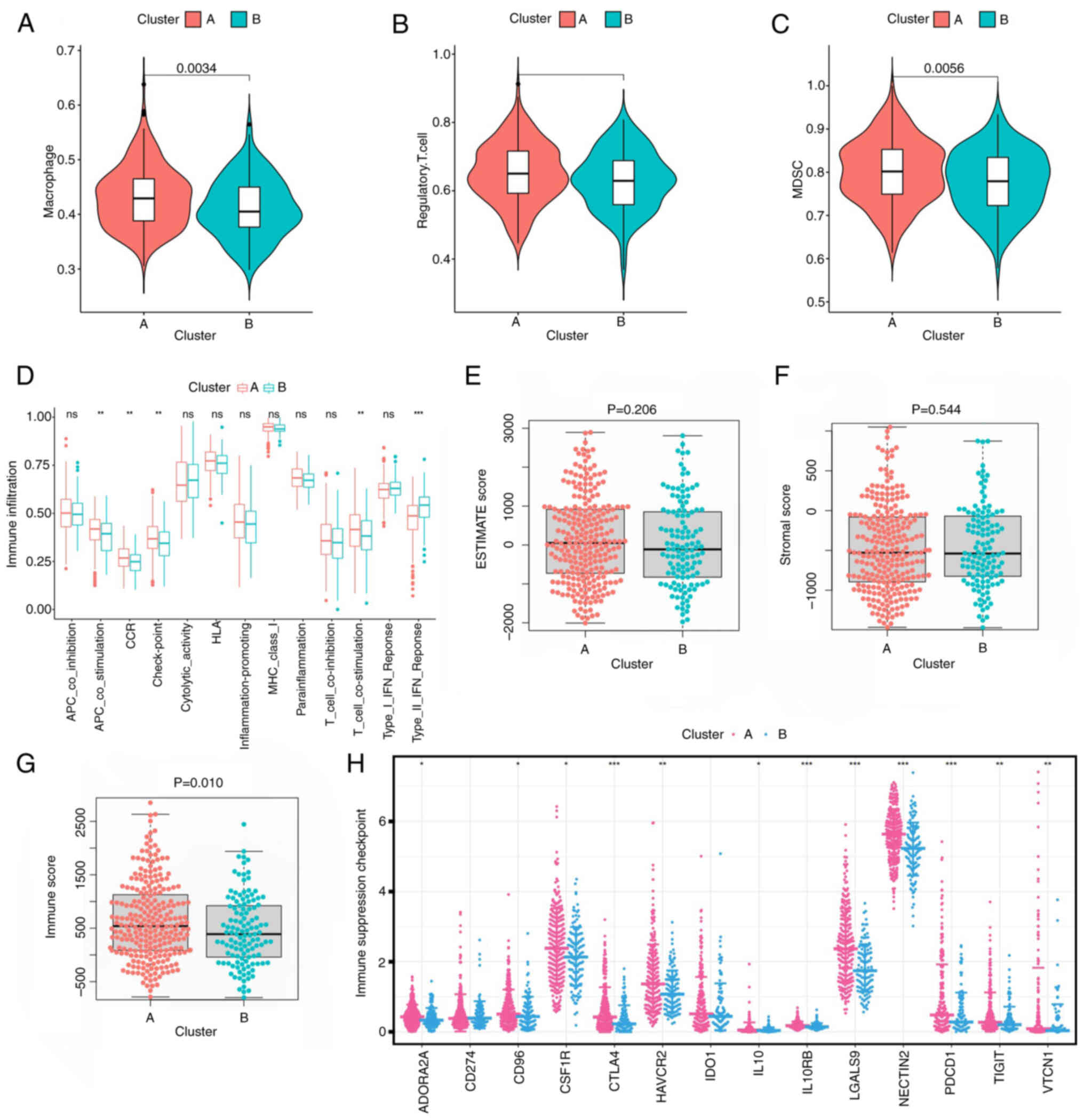
Figure 3

Immune infiltrate characteristics of
glutamine metabolism-related clusters. The abundance of the major
immunosuppressive infiltrating cells in the tumor microenvironment
in two clusters: (A) Macrophages; (B) regulatory T cells; and (C)
MDSCs. Cluster A was classified as the immunosuppressive phenotype,
characterized by the suppression of immunity. (D) Differential
expression of immune cells among the clusters. (E) ESTIMATE, (F)
stromal and (G) immune scores among the clusters. (H) Differential
expression of immune suppressive checkpoints among the clusters.
*P<0.05; **P<0.01; ***P<0.001. MDSC, myeloid-derived
suppressor cell; ESTIMATE, Estimation of Stromal and Immune cells
in Malignant Tumor tissues; ns, not significant; APC,
antigen-presenting cell; CCR, C-C Chemokine Receptor; HLA, Human
Leukocyte Antigen

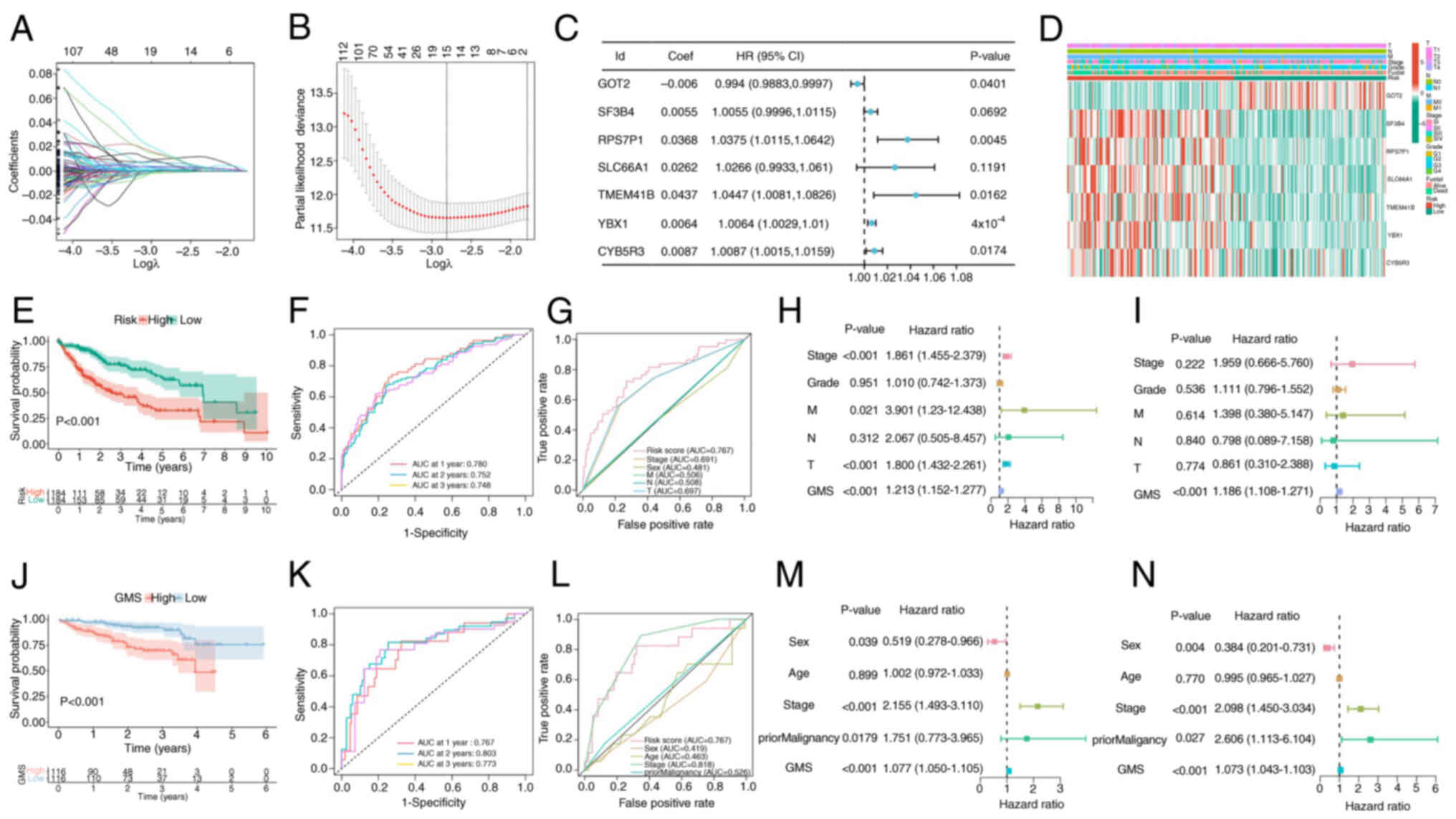
Figure 4

Establishment of the GMS. (A)
Characteristics of changes in variable coefficients. (B) Selection
process of optimal values of parameter λ in the Lasso regression
model by cross-validation method. (C) A total of seven prognostic
genes were selected to construct the prognostic model. (D)
Differences in representative gene expression profiles and
clinicopathological characteristics between the low- and high-risk
score groups. (E) Kaplan-Meier survival analysis of the patients
with LIHC from TCGA. (F) Time-dependent ROC analysis of patients
with LIHC from TCGA. (G) ROC curve analysis in TCGA-LIHC cohort.
(H) Univariate Cox regression analyses of clinicopathological
features for predicting the survival rates of patients with LIHC
from TCGA. (I) Multivariate Cox regression analyses of
clinicopathological features for predicting the survival rates of
patients with LIHC from TCGA. (J) Kaplan-Meier survival analysis of
the patients with LIHC from the ICGC. (K) Time-dependent ROC
analysis of the patients with LIHC from the ICGC is shown. (L) ROC
curve analysis in the ICGC cohort. (M) Univariate and (N)
multivariate Cox regression analyses of clinicopathological
features for predicting the survival rates of patients with LIHC
from the ICGC. GOT2, glutamate-oxaloacetate transaminase 2; SF3B4,
Splicing factor 3B subunit 4; RPS7P1, Ribosomal Protein S7
Pseudogene 1; SLC66A1, Lysosomal amino acid transporter 1 homolog;
TMEM41B, Transmembrane protein 41B; YBX1, Y-box-binding protein 1;
CYB5R3, NADH-cytochrome b5 reductase 3; GMS, glutamine
metabolism-related signature; LIHC, liver hepatocellular carcinoma;
TCGA, The Cancer Genome Atlas; ROC, receptor operator
characteristic; ICGC, International Cancer Genome Consortium; HR,
hazard ratio; CI, confidence interval; T, tumor; N, lymph node; M,
metastasis; AUC, area under the curve.

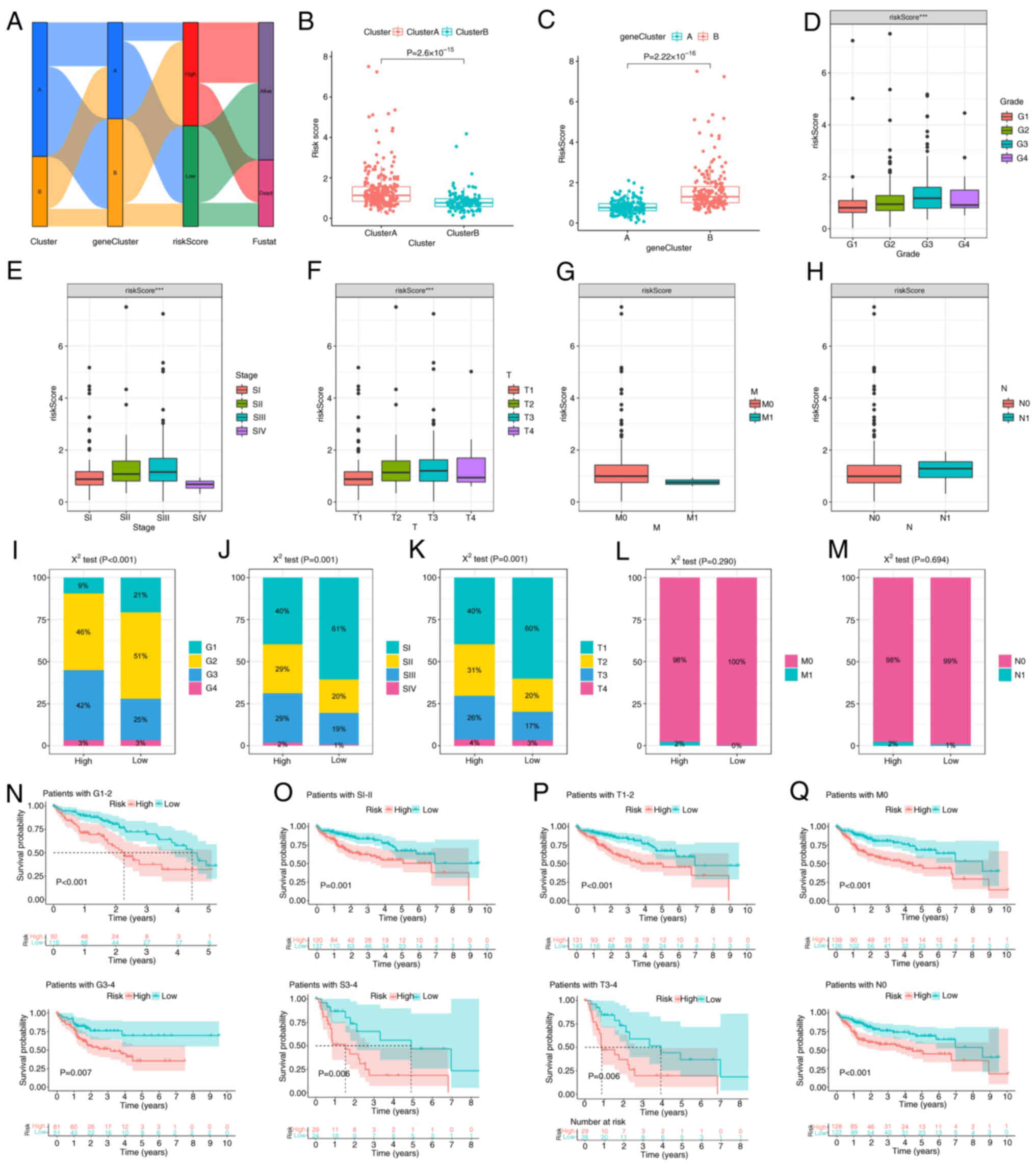
Figure 5

Identification of clinicopathological
features of the glutamine metabolism-related signature. (A)
Alluvial diagram, showing the changes of clusters, gene clusters
and index. Differential expression of the risk score among (B)
clusters and (C) gene clusters. Higher risk scores were associated
with worse clinical parameters in patients with LIHC: (D)
Histological grade, (E) stage, (F) T stage, (G) N stage and (H) M
stage according to data from The Cancer Genome Atlas. Differences
in the proportion of cases with different (I) grades, (J) stages,
(K) T stages, (L) M stages and (M) N stages between the high- and
low-risk score groups. Kaplan-Meier survival analysis of patients
with LIHC, comparing between high- and low-risk groups in different
clinical groups: (N) Patients with G1-2 and G3-4, (O) patients with
SI–II and S3-4, (P) patients with T1-2 and T3-4, and (Q) patients
with M0 and N0. ***P<0.001. G, grade; T, tumor; N, lymph node;
M, metastasis.

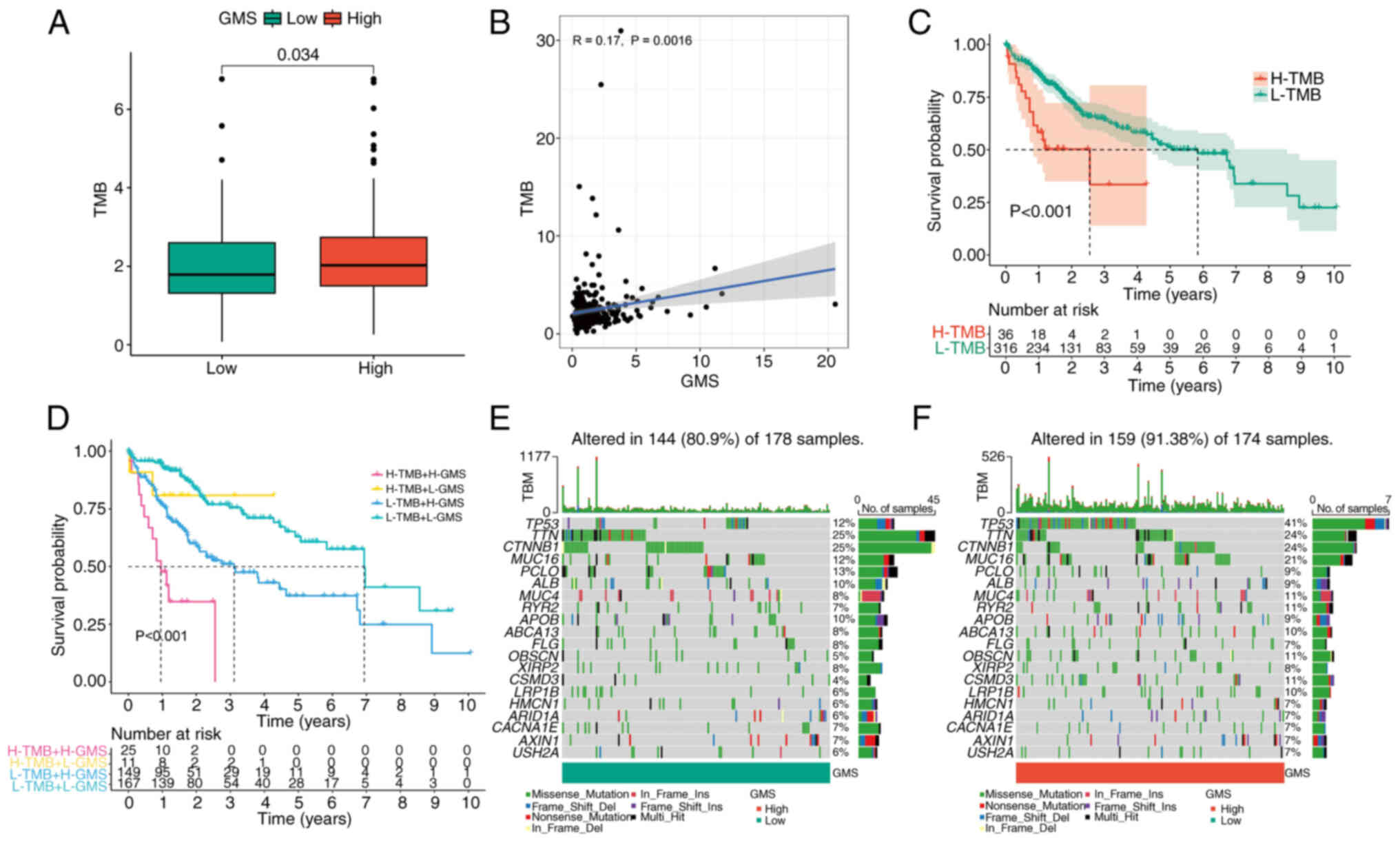
Figure 6

Mutational and immunotherapeutic
characteristics of the GMS. (A) Differential expression of TMB
between high- and low-GMS groups. (B) Correlation analysis between
TMB and GMS. (C) Survival analysis between high- and low-TMB
groups. (D) Survival analysis of distinct groups stratified by both
TMB and GMS. (E) Waterfall plots of somatic mutations in tumors in
the high- and low-GMS groups. (F) Somatic mutations in tumors in
the high-GMS group. GMS, glutamine metabolism-related signature;
TMB, tumor mutation burden.

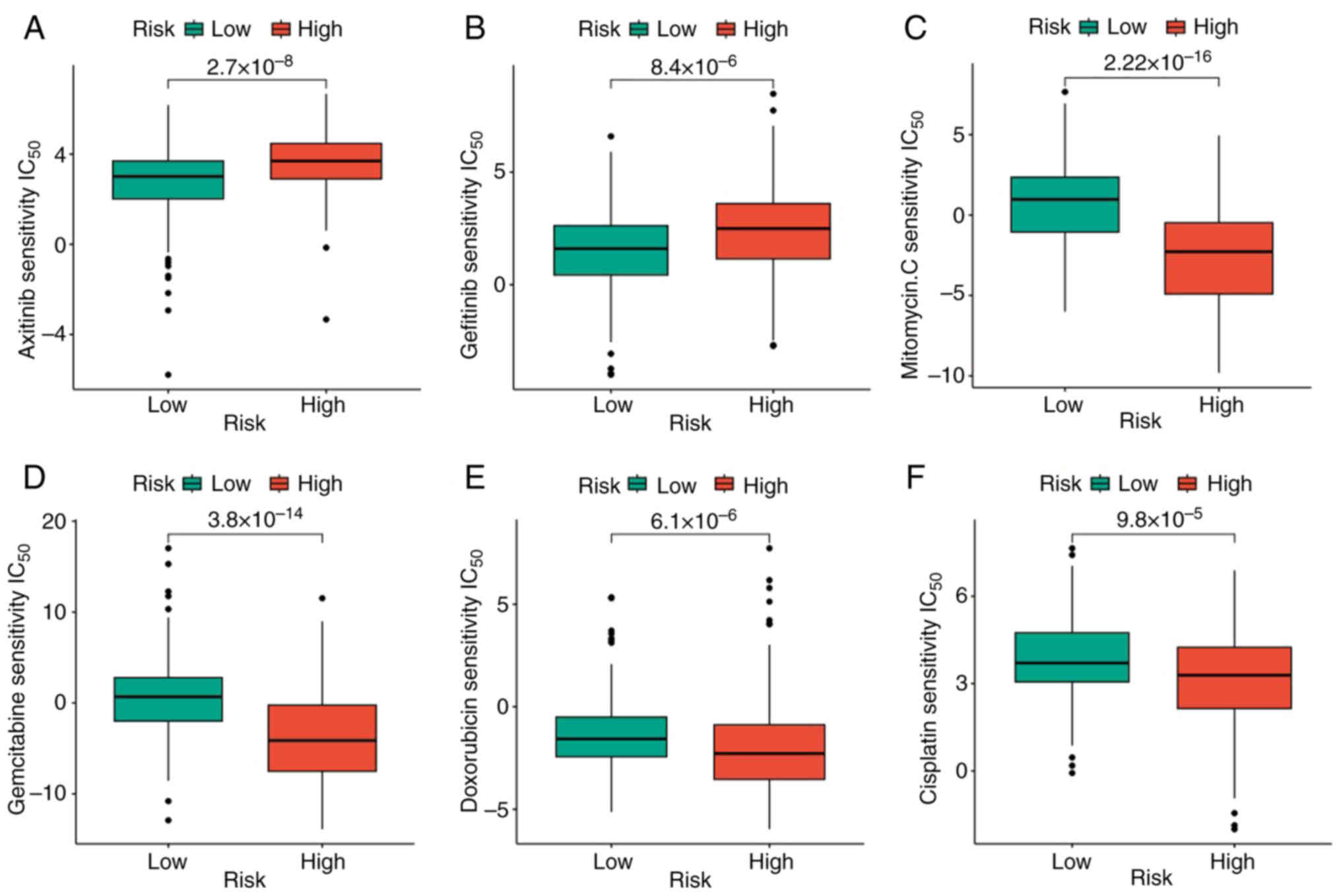
Figure 7

A total of six potential therapeutic
drugs in LIHC with differential IC50 values between
high- and low-glutamine metabolism-related signature groups.
Potential therapeutic drugs in LIHC: (A) Axitinib; (B) gefitinib;
(C) mitocycin C; (D) gemcitabine; (E) doxorubicin; and (F)
cisplatin. LIHC, liver hepatocellular carcinoma.

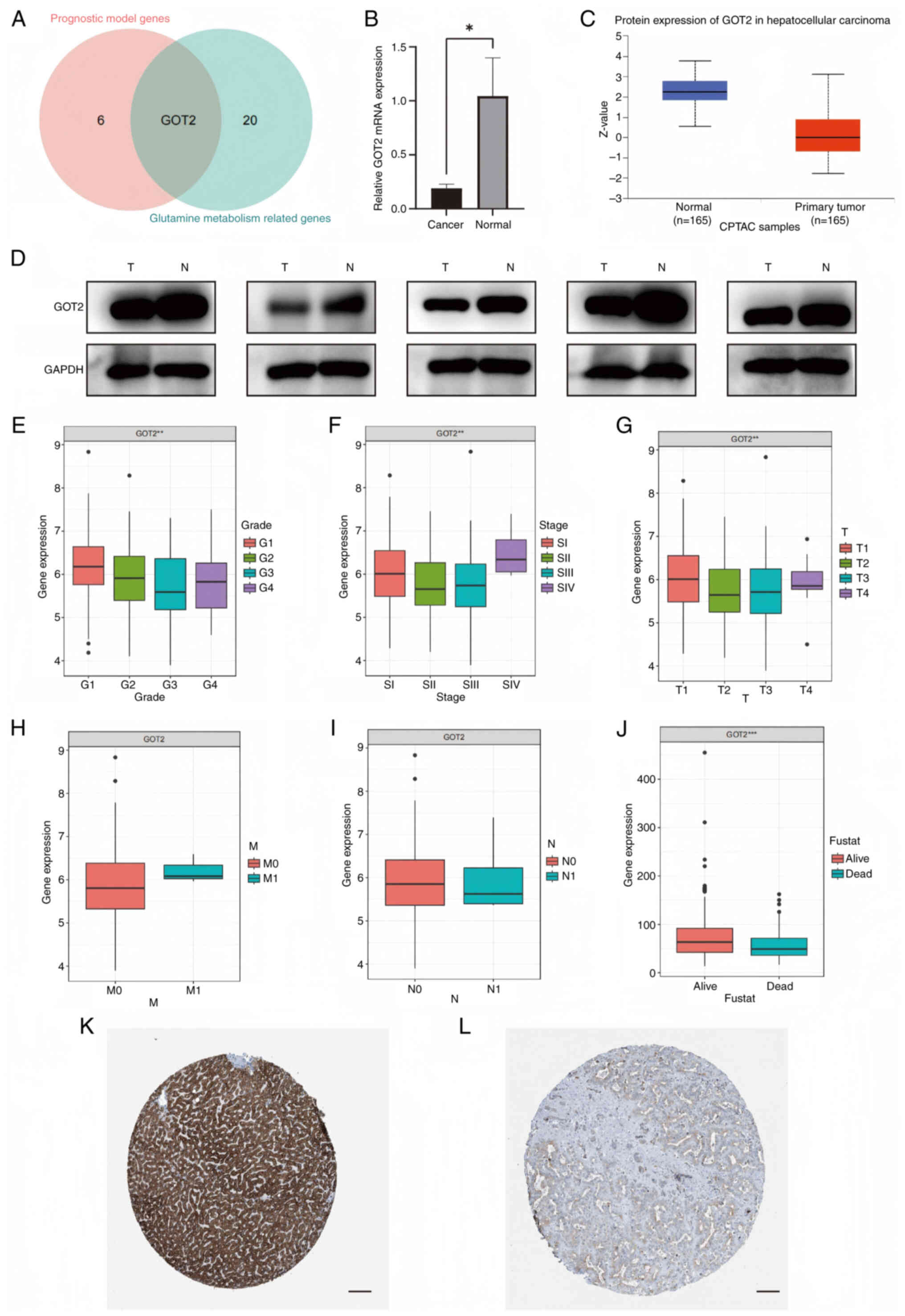
Figure 8

Identification of expression and
clinicopathological characteristics of the modeled genes. (A)
Candidate gene involved in Prognostic Model Genes and Glutamine
Metabolism Related Genes. (B) Relative expression of GOT2 between
LIHC tissues and normal tissues. (C) Protein expression of GOT2,
comparing between LIHC and normal tissues from CPTAC samples. (D)
Protein expression of GOT2, comparing between LIHC and normal
tissues from CPTAC samples. Association between GOT2 and different
clinical features: (E) grade, (F) stage, (G) T stage, (H) M stage,
(I) N stage and (J) survival status. Representative protein
expression of GOT2 in (K) normal liver and (L) LIHC tissue, as
retrieved from the Human Protein Atlas (scale bar, 100 µm).
*P<0.05; **P<0.01; ***P<0.001. GOT2,
glutamate-oxaloacetate transaminase 2; LIHC, liver hepatocellular
carcinoma; CPTAC, Clinical Proteomic Tumor Analysis Consortium; T,
tumor; N, normal; G, grade; M, metastasis; N, lymph node.

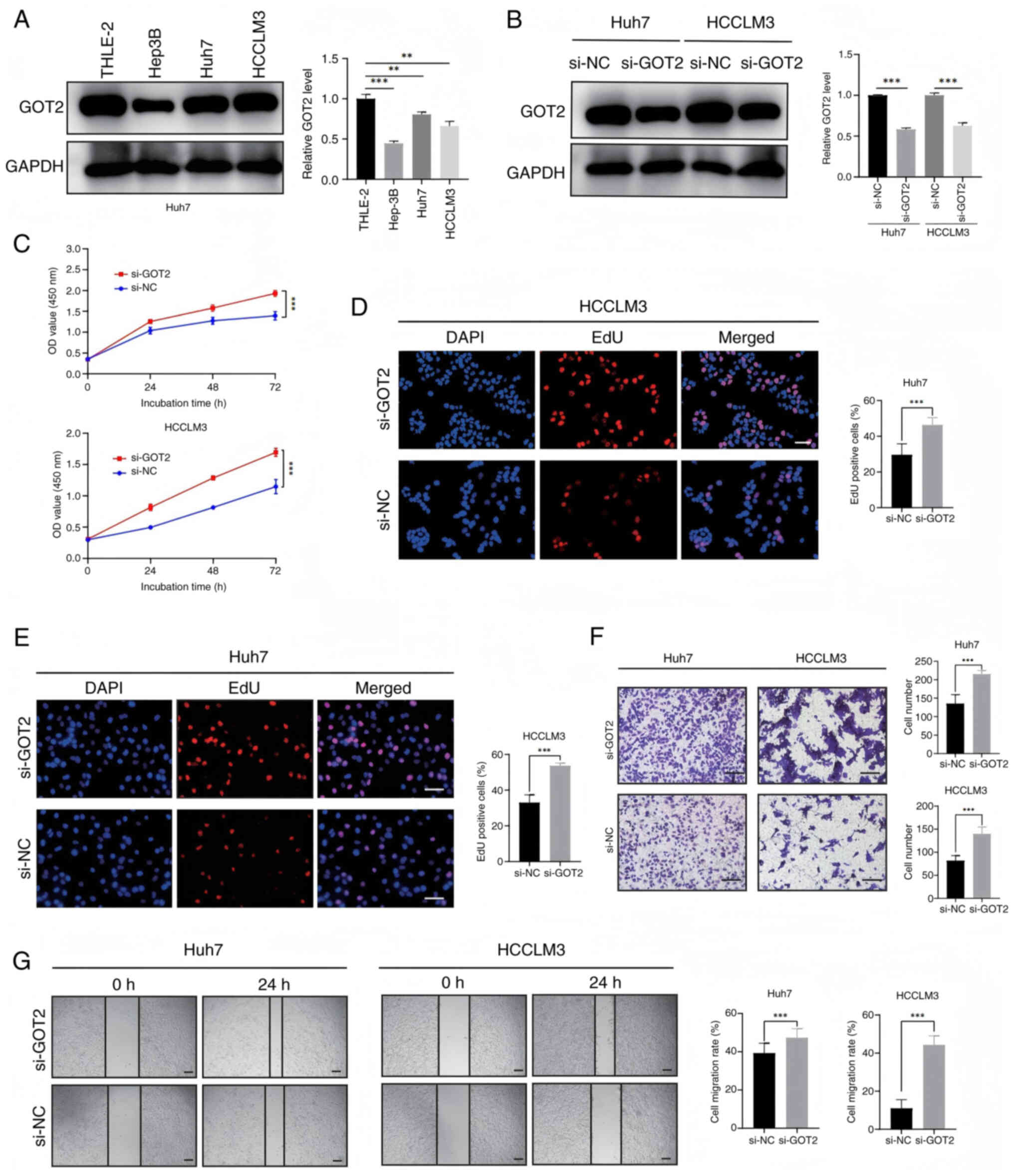
Figure 9

GOT2 knockdown significantly
increases LIHC cell migration and proliferation. (A) In three LIHC
and cell lines, the expression of GOT2 was semi-quantified using
western blot analysis. (B) Effectiveness of GOT2-siRNA knockdown.
(C) Growth kinetics of Huh7 and HCCLM3 cells, post-transfection
with si-NC or si-GOT2, was charted based on the CCK-8 assay data at
various time points–0, 24, 48, and 72 h. (D) HCCLM3 cells with GOT2
knockdown were used to assess cell proliferation using EdU assays
(scale bar, 50 µm). (E) Huh7 cells with GOT2 knockdown were used to
assess cell proliferation using EdU assay (scale bar, 50 µm). Huh7
and HCCLM3 cells with GOT2 expression knockdown were used to assess
migration using (F) Transwell (scale bar, 200 µm) and (G) wound
healing (scale bar, 50 µm) assays. **P<0.01; ***P<0.001.
GOT2, glutamate-oxaloacetate transaminase 2; LIHC, liver
hepatocellular carcinoma; si, small interfering; EdU,
5-ethynyl-2′-deoxyuridine; nc, negative control; OD, optical
density.
View References

1 

World Health Organization, . International Agency for Research on Cancer. Global Cancer Observatory: Cancer Today. IARC; Lyon: 2022, Available from:. https://gco.iarc.fr/today

2 

Zhong C, Xiong G, Yang H, Du X, Du J, Yao F, Fang W and Deng Y: Phosphorylation by IKKβ promotes the degradation of HMGCL via NEDD4 in lung cancer. Int J Biol Sci. 19:1110–1122. 2023. View Article : Google Scholar : PubMed/NCBI

3 

Altman BJ, Stine ZE and Dang CV: From krebs to clinic: Glutamine metabolism to cancer therapy. Nat Rev Cancer. 16:619–634. 2016. View Article : Google Scholar : PubMed/NCBI

4 

Ge T, Gu X, Jia R, Ge S, Chai P, Zhuang A and Fan X: Crosstalk between metabolic reprogramming and epigenetics in cancer: Updates on mechanisms and therapeutic opportunities. Cancer Commun (Lond). 42:1049–1082. 2022. View Article : Google Scholar : PubMed/NCBI

5 

Zhang Z, Huang Y, Li S and Hong L: Comprehensive analysis based on glycolytic and glutaminolytic pathways signature for predicting prognosis and immunotherapy in ovarian cancer. J Cancer. 15:383–400. 2024. View Article : Google Scholar : PubMed/NCBI

6 

Zhang HL, Chen P, Yan HX, Fu GB, Luo FF, Zhang J, Zhao SM, Zhai B, Yu JH, Chen L, et al: Targeting mTORC2/HDAC3 inhibits stemness of liver cancer cells against glutamine starvation. Adv Sci (Weinh). 9:e21038872022. View Article : Google Scholar : PubMed/NCBI

7 

Li S, Xu L, Wu G, Huang Z, Huang L, Zhang F, Wei C, Shen Q, Li R, Zhang L and Xu X: Remodeling serine synthesis and metabolism via nanoparticles (NPs)-mediated CFL1 silencing to enhance the sensitivity of hepatocellular carcinoma to sorafenib. Adv Sci (Weinh). 10:e22071182023. View Article : Google Scholar : PubMed/NCBI

8 

Park JM, Peng JM, Shen YS, Lin CY, Hsu TW, Su YH, Chen HA, Saengboonmee C, Chang JS, Chiu CF, et al: Phosphomimetic dicer S1016E triggers a switch to glutamine metabolism in gemcitabine-resistant pancreatic cancer. Mol Metab. 65:1015762022. View Article : Google Scholar : PubMed/NCBI

9 

He J, Chen Z, Xue Q, Sun P, Wang Y, Zhu C and Shi W: Identification of molecular subtypes and a novel prognostic model of diffuse large B-cell lymphoma based on a metabolism-associated gene signature. J Transl Med. 20:1862022. View Article : Google Scholar : PubMed/NCBI

10 

Yu Z, Li J, Ren Z, Sun R, Zhou Y, Zhang Q, Wang Q, Cui G, Li J, Li A, et al: Switching from fatty acid oxidation to glycolysis improves the outcome of acute-on-chronic liver failure. Adv Sci (Weinh). 7:19029962020. View Article : Google Scholar : PubMed/NCBI

11 

Huang M, Xiong D, Pan J, Zhang Q, Sei S, Shoemaker RH, Lubet RA, Montuenga LM, Wang Y, Slusher BS and You M: Targeting glutamine metabolism to enhance immunoprevention of EGFR-Driven lung cancer. Adv Sci (Weinh). 9:e21058852022. View Article : Google Scholar : PubMed/NCBI

12 

Curthoys NP and Watford M: Regulation of glutaminase activity and glutamine metabolism. Annu Rev Nutr. 15:133–159. 1995. View Article : Google Scholar : PubMed/NCBI

13 

GTEx Consortium: Human genomics. The genotype-tissue expression (GTEx) pilot analysis: Multitissue gene regulation in humans. Science. 348:648–660. 2015. View Article : Google Scholar : PubMed/NCBI

14 

Nishikawa G, Kawada K, Hanada K, Maekawa H, Itatani Y, Miyoshi H, Taketo MM and Obama K: Targeting asparagine synthetase in tumorgenicity using patient-derived tumor-initiating cells. Cells. 11:32732022. View Article : Google Scholar : PubMed/NCBI

15 

Yao Z, Zhu G, Too J, Duan M and Wang Z: Feature selection of OMIC data by ensemble swarm intelligence based approaches. Front Genet. 12:7936292021. View Article : Google Scholar : PubMed/NCBI

16 

Wang H, Yao Z, Luo R, Liu J, Wang Z and Zhang G: LaCOme: Learning the latent convolutional patterns among transcriptomic features to improve classifications. Gene. 862:1472462023. View Article : Google Scholar : PubMed/NCBI

17 

Liu X, Wan J, Wei M, Tong Y and Yao Z: Edaravone protects trophoblast cells from hypoxic injury in preeclampsia: Inhibition of the PI3K/AKT pathway as a promising therapeutic approach. Immun Inflamm Dis. 12:e700972024. View Article : Google Scholar : PubMed/NCBI

18 

Harshitha R and Arunraj DR: Real-time quantitative PCR: A tool for absolute and relative quantification. Biochem Mol Biol Educ. 49:800–812. 2021. View Article : Google Scholar : PubMed/NCBI

19 

McGlynn KA, Petrick JL and El-Serag HB: Epidemiology of hepatocellular carcinoma. Hepatology. 73 (Suppl 1):S4–S13. 2021. View Article : Google Scholar

20 

Vogel A, Meyer T, Sapisochin G, Salem R and Saborowski A: Hepatocellular carcinoma. Lancet. 400:1345–1362. 2022. View Article : Google Scholar : PubMed/NCBI

21 

Pavlova NN and Thompson CB: The emerging hallmarks of cancer metabolism. Cell Metab. 23:27–47. 2016. View Article : Google Scholar : PubMed/NCBI

22 

Fonseca LMD, Diniz-Lima I, da Costa Santos MAR, Franklim TN, da Costa KM, Santos ACD, Morrot A, Decote-Ricardo D, Valente RDC, Freire-de-Lima CG, et al: Bittersweet sugars: How unusual glycan structures may connect epithelial-to-mesenchymal transition and multidrug resistance in cancer. Medicines (Basel). 10:362023.PubMed/NCBI

23 

Warburg O: On the origin of cancer cells. Science. 123:309–314. 1956. View Article : Google Scholar : PubMed/NCBI

24 

Warburg O: On respiratory impairment in cancer cells. Science. 124:269–270. 1956. View Article : Google Scholar : PubMed/NCBI

25 

Kouidhi S, Ayed FB and Elgaaied AB: Targeting tumor metabolism: A new challenge to improve immunotherapy. Front Immunol. 9:3532018. View Article : Google Scholar : PubMed/NCBI

26 

Zhao E, Maj T, Kryczek I, Li W, Wu K, Zhao L, Wei S, Crespo J, Wan S, Vatan L, et al: Cancer mediates effector T cell dysfunction by targeting microRNAs and EZH2 via glycolysis restriction. Nat Immunol. 17:95–103. 2016. View Article : Google Scholar : PubMed/NCBI

27 

Tsun ZY and Possemato R: Amino acid management in cancer. Semin Cell Dev Biol. 43:22–32. 2015. View Article : Google Scholar : PubMed/NCBI

28 

Sivanand S and Heiden MG: Emerging roles for branched-chain amino acid metabolism in cancer. Cancer Cell. 37:147–156. 2020. View Article : Google Scholar : PubMed/NCBI

29 

Krall AS and Christofk HR: Rethinking glutamine addiction. Nat Cell Biol. 17:1515–1517. 2015. View Article : Google Scholar : PubMed/NCBI

30 

Fernandez-de-Cossio-Diaz J and Vazquez A: Limits of aerobic metabolism in cancer cells. Sci Rep. 7:134882017. View Article : Google Scholar : PubMed/NCBI

31 

Nakagawa H and Fujita M: Whole genome sequencing analysis for cancer genomics and precision medicine. Cancer Sci. 109:513–522. 2018. View Article : Google Scholar : PubMed/NCBI

32 

Li F, Liu S, Li K, Zhang Y, Duan M, Yao Z, Zhu G, Guo Y, Wang Y, Huang L and Zhou F: EpiTEAmDNA: Sequence feature representation via transfer learning and ensemble learning for identifying multiple DNA epigenetic modification types across species. Comput Biol Med. 160:1070302023. View Article : Google Scholar : PubMed/NCBI

33 

Yao Z, Li F, Xie W, Chen J, Wu J, Zhan Y, Wu X, Wang Z and Zhang G: DeepSF-4mC: A deep learning model for predicting DNA cytosine 4mC methylation sites leveraging sequence features. Comput Biol Med. 171:1081662024. View Article : Google Scholar : PubMed/NCBI

34 

Sun L, Zhang H and Gao P: Metabolic reprogramming and epigenetic modifications on the path to cancer. Protein Cell. 13:877–919. 2022. View Article : Google Scholar : PubMed/NCBI

35 

Yao Z, Shangguan H, Xie W, Liu J, He S, Huang H, Li F, Chen J, Zhan Y, Wu X, et al: SIPSC-Kac: Integrating swarm intelligence and protein spatial characteristics for enhanced lysine acetylation site identification. Int J Biol Macromol. 282:1372372024. View Article : Google Scholar : PubMed/NCBI

36 

Xie W, Yao Z, Yuan Y, Too J, Li F, Wang H, Zhan Y, Wu X, Wang Z and Zhang G: W2V-repeated index: Prediction of enhancers and their strength based on repeated fragments. Genomics. 116:1109062024. View Article : Google Scholar : PubMed/NCBI

37 

Reinfeld BI, Madden MZ, Wolf MM, Chytil A, Bader JE, Patterson AR, Sugiura A, Cohen AS, Ali A, Do BT, et al: Cell-programmed nutrient partitioning in the tumour microenvironment. Nature. 593:282–288. 2021. View Article : Google Scholar : PubMed/NCBI

38 

Jin J, Byun JK, Choi YK and Park KG: Targeting glutamine metabolism as a therapeutic strategy for cancer. Exp Mol Med. 55:706–715. 2023. View Article : Google Scholar : PubMed/NCBI

39 

Zhang J, Pavlova NN and Thompson CB: Cancer cell metabolism: The essential role of the nonessential amino acid, glutamine. EMBO J. 36:1302–1315. 2017. View Article : Google Scholar : PubMed/NCBI

40 

Leone RD, Zhao L, Englert JM, Sun IM, Oh MH, Sun IH, Oh MH, Sun IH, Arwood ML, Bettencourt IA, et al: Glutamine blockade induces divergent metabolic programs to overcome tumor immune evasion. Science. 366:1013–1021. 2019. View Article : Google Scholar : PubMed/NCBI

41 

Ren H, Li W, Liu X, Li S, Guo H, Wang W and Zhao N: Identification and validation of an 6-metabolism-related gene signature and its correlation with immune checkpoint in hepatocellular carcinoma. Front Oncol. 11:7839342021. View Article : Google Scholar : PubMed/NCBI

Related Articles

  • Abstract
  • View
  • Download
  • Twitter
Copy and paste a formatted citation
Spandidos Publications style
He X, Wang R, Zhu Y, Chen X, Zhang Y and Sun M: A novel glutamine metabolism‑related risk model for prognostic prediction of liver hepatocellular carcinoma. Oncol Lett 30: 403, 2025.
APA
He, X., Wang, R., Zhu, Y., Chen, X., Zhang, Y., & Sun, M. (2025). A novel glutamine metabolism‑related risk model for prognostic prediction of liver hepatocellular carcinoma. Oncology Letters, 30, 403. https://doi.org/10.3892/ol.2025.15149
MLA
He, X., Wang, R., Zhu, Y., Chen, X., Zhang, Y., Sun, M."A novel glutamine metabolism‑related risk model for prognostic prediction of liver hepatocellular carcinoma". Oncology Letters 30.3 (2025): 403.
Chicago
He, X., Wang, R., Zhu, Y., Chen, X., Zhang, Y., Sun, M."A novel glutamine metabolism‑related risk model for prognostic prediction of liver hepatocellular carcinoma". Oncology Letters 30, no. 3 (2025): 403. https://doi.org/10.3892/ol.2025.15149
Copy and paste a formatted citation
x
Spandidos Publications style
He X, Wang R, Zhu Y, Chen X, Zhang Y and Sun M: A novel glutamine metabolism‑related risk model for prognostic prediction of liver hepatocellular carcinoma. Oncol Lett 30: 403, 2025.
APA
He, X., Wang, R., Zhu, Y., Chen, X., Zhang, Y., & Sun, M. (2025). A novel glutamine metabolism‑related risk model for prognostic prediction of liver hepatocellular carcinoma. Oncology Letters, 30, 403. https://doi.org/10.3892/ol.2025.15149
MLA
He, X., Wang, R., Zhu, Y., Chen, X., Zhang, Y., Sun, M."A novel glutamine metabolism‑related risk model for prognostic prediction of liver hepatocellular carcinoma". Oncology Letters 30.3 (2025): 403.
Chicago
He, X., Wang, R., Zhu, Y., Chen, X., Zhang, Y., Sun, M."A novel glutamine metabolism‑related risk model for prognostic prediction of liver hepatocellular carcinoma". Oncology Letters 30, no. 3 (2025): 403. https://doi.org/10.3892/ol.2025.15149
Follow us
  • Twitter
  • LinkedIn
  • Facebook
About
  • Spandidos Publications
  • Careers
  • Cookie Policy
  • Privacy Policy
How can we help?
  • Help
  • Live Chat
  • Contact
  • Email to our Support Team