Spandidos Publications Logo
  • About
    • About Spandidos
    • Aims and Scopes
    • Abstracting and Indexing
    • Editorial Policies
    • Reprints and Permissions
    • Job Opportunities
    • Terms and Conditions
    • Contact
  • Journals
    • All Journals
    • Oncology Letters
      • Oncology Letters
      • Information for Authors
      • Editorial Policies
      • Editorial Board
      • Aims and Scope
      • Abstracting and Indexing
      • Bibliographic Information
      • Archive
    • International Journal of Oncology
      • International Journal of Oncology
      • Information for Authors
      • Editorial Policies
      • Editorial Board
      • Aims and Scope
      • Abstracting and Indexing
      • Bibliographic Information
      • Archive
    • Molecular and Clinical Oncology
      • Molecular and Clinical Oncology
      • Information for Authors
      • Editorial Policies
      • Editorial Board
      • Aims and Scope
      • Abstracting and Indexing
      • Bibliographic Information
      • Archive
    • Experimental and Therapeutic Medicine
      • Experimental and Therapeutic Medicine
      • Information for Authors
      • Editorial Policies
      • Editorial Board
      • Aims and Scope
      • Abstracting and Indexing
      • Bibliographic Information
      • Archive
    • International Journal of Molecular Medicine
      • International Journal of Molecular Medicine
      • Information for Authors
      • Editorial Policies
      • Editorial Board
      • Aims and Scope
      • Abstracting and Indexing
      • Bibliographic Information
      • Archive
    • Biomedical Reports
      • Biomedical Reports
      • Information for Authors
      • Editorial Policies
      • Editorial Board
      • Aims and Scope
      • Abstracting and Indexing
      • Bibliographic Information
      • Archive
    • Oncology Reports
      • Oncology Reports
      • Information for Authors
      • Editorial Policies
      • Editorial Board
      • Aims and Scope
      • Abstracting and Indexing
      • Bibliographic Information
      • Archive
    • Molecular Medicine Reports
      • Molecular Medicine Reports
      • Information for Authors
      • Editorial Policies
      • Editorial Board
      • Aims and Scope
      • Abstracting and Indexing
      • Bibliographic Information
      • Archive
    • World Academy of Sciences Journal
      • World Academy of Sciences Journal
      • Information for Authors
      • Editorial Policies
      • Editorial Board
      • Aims and Scope
      • Abstracting and Indexing
      • Bibliographic Information
      • Archive
    • International Journal of Functional Nutrition
      • International Journal of Functional Nutrition
      • Information for Authors
      • Editorial Policies
      • Editorial Board
      • Aims and Scope
      • Abstracting and Indexing
      • Bibliographic Information
      • Archive
    • International Journal of Epigenetics
      • International Journal of Epigenetics
      • Information for Authors
      • Editorial Policies
      • Editorial Board
      • Aims and Scope
      • Abstracting and Indexing
      • Bibliographic Information
      • Archive
    • Medicine International
      • Medicine International
      • Information for Authors
      • Editorial Policies
      • Editorial Board
      • Aims and Scope
      • Abstracting and Indexing
      • Bibliographic Information
      • Archive
  • Articles
  • Information
    • Information for Authors
    • Information for Reviewers
    • Information for Librarians
    • Information for Advertisers
    • Conferences
  • Language Editing
Spandidos Publications Logo
  • About
    • About Spandidos
    • Aims and Scopes
    • Abstracting and Indexing
    • Editorial Policies
    • Reprints and Permissions
    • Job Opportunities
    • Terms and Conditions
    • Contact
  • Journals
    • All Journals
    • Biomedical Reports
      • Information for Authors
      • Editorial Policies
      • Editorial Board
      • Aims and Scope
      • Abstracting and Indexing
      • Bibliographic Information
      • Archive
    • Experimental and Therapeutic Medicine
      • Information for Authors
      • Editorial Policies
      • Editorial Board
      • Aims and Scope
      • Abstracting and Indexing
      • Bibliographic Information
      • Archive
    • International Journal of Epigenetics
      • Information for Authors
      • Editorial Policies
      • Editorial Board
      • Aims and Scope
      • Abstracting and Indexing
      • Bibliographic Information
      • Archive
    • International Journal of Functional Nutrition
      • Information for Authors
      • Editorial Policies
      • Editorial Board
      • Aims and Scope
      • Abstracting and Indexing
      • Bibliographic Information
      • Archive
    • International Journal of Molecular Medicine
      • Information for Authors
      • Editorial Policies
      • Editorial Board
      • Aims and Scope
      • Abstracting and Indexing
      • Bibliographic Information
      • Archive
    • International Journal of Oncology
      • Information for Authors
      • Editorial Policies
      • Editorial Board
      • Aims and Scope
      • Abstracting and Indexing
      • Bibliographic Information
      • Archive
    • Medicine International
      • Information for Authors
      • Editorial Policies
      • Editorial Board
      • Aims and Scope
      • Abstracting and Indexing
      • Bibliographic Information
      • Archive
    • Molecular and Clinical Oncology
      • Information for Authors
      • Editorial Policies
      • Editorial Board
      • Aims and Scope
      • Abstracting and Indexing
      • Bibliographic Information
      • Archive
    • Molecular Medicine Reports
      • Information for Authors
      • Editorial Policies
      • Editorial Board
      • Aims and Scope
      • Abstracting and Indexing
      • Bibliographic Information
      • Archive
    • Oncology Letters
      • Information for Authors
      • Editorial Policies
      • Editorial Board
      • Aims and Scope
      • Abstracting and Indexing
      • Bibliographic Information
      • Archive
    • Oncology Reports
      • Information for Authors
      • Editorial Policies
      • Editorial Board
      • Aims and Scope
      • Abstracting and Indexing
      • Bibliographic Information
      • Archive
    • World Academy of Sciences Journal
      • Information for Authors
      • Editorial Policies
      • Editorial Board
      • Aims and Scope
      • Abstracting and Indexing
      • Bibliographic Information
      • Archive
  • Articles
  • Information
    • For Authors
    • For Reviewers
    • For Librarians
    • For Advertisers
    • Conferences
  • Language Editing
Login Register Submit
  • This site uses cookies
  • You can change your cookie settings at any time by following the instructions in our Cookie Policy. To find out more, you may read our Privacy Policy.

    I agree
Search articles by DOI, keyword, author or affiliation
Search
Advanced Search
presentation
Oncology Letters
Join Editorial Board Propose a Special Issue
Print ISSN: 1792-1074 Online ISSN: 1792-1082
Journal Cover
September-2025 Volume 30 Issue 3

Full Size Image

Sign up for eToc alerts
Recommend to Library

Journals

International Journal of Molecular Medicine

International Journal of Molecular Medicine

International Journal of Molecular Medicine is an international journal devoted to molecular mechanisms of human disease.

International Journal of Oncology

International Journal of Oncology

International Journal of Oncology is an international journal devoted to oncology research and cancer treatment.

Molecular Medicine Reports

Molecular Medicine Reports

Covers molecular medicine topics such as pharmacology, pathology, genetics, neuroscience, infectious diseases, molecular cardiology, and molecular surgery.

Oncology Reports

Oncology Reports

Oncology Reports is an international journal devoted to fundamental and applied research in Oncology.

Experimental and Therapeutic Medicine

Experimental and Therapeutic Medicine

Experimental and Therapeutic Medicine is an international journal devoted to laboratory and clinical medicine.

Oncology Letters

Oncology Letters

Oncology Letters is an international journal devoted to Experimental and Clinical Oncology.

Biomedical Reports

Biomedical Reports

Explores a wide range of biological and medical fields, including pharmacology, genetics, microbiology, neuroscience, and molecular cardiology.

Molecular and Clinical Oncology

Molecular and Clinical Oncology

International journal addressing all aspects of oncology research, from tumorigenesis and oncogenes to chemotherapy and metastasis.

World Academy of Sciences Journal

World Academy of Sciences Journal

Multidisciplinary open-access journal spanning biochemistry, genetics, neuroscience, environmental health, and synthetic biology.

International Journal of Functional Nutrition

International Journal of Functional Nutrition

Open-access journal combining biochemistry, pharmacology, immunology, and genetics to advance health through functional nutrition.

International Journal of Epigenetics

International Journal of Epigenetics

Publishes open-access research on using epigenetics to advance understanding and treatment of human disease.

Medicine International

Medicine International

An International Open Access Journal Devoted to General Medicine.

Journal Cover
September-2025 Volume 30 Issue 3

Full Size Image

Sign up for eToc alerts
Recommend to Library

  • Article
  • Citations
    • Cite This Article
    • Download Citation
    • Create Citation Alert
    • Remove Citation Alert
    • Cited By
  • Similar Articles
    • Related Articles (in Spandidos Publications)
    • Similar Articles (Google Scholar)
    • Similar Articles (PubMed)
  • Download PDF
  • Download XML
  • View XML
Article Open Access

Evidence of a functional Smad2/3 signaling axis and TGFβ‑mediated autocrine transcriptional regulation of in vitro vasculogenic mimicry in mesenchymal stem/stromal cells

  • Authors:
    • Kaénon Prisca‑Desiré Gnao
    • Marie-Eve Roy
    • Alain Zgheib
    • Michel Desjarlais
    • Borhane Annabi
  • View Affiliations / Copyright

    Affiliations: Department of Pharmacology and Physiology, Université de Montréal, Montreal, QC H3C 3J7, Canada, Molecular Oncology Laboratory, Department of Chemistry, Université du Québec à Montréal, Montreal, QC H2X 2J6, Canada, Department of Ophthalmology, Maisonneuve‑Rosemont Hospital Research Center, Université de Montréal, Montreal, QC H3T 1J4, Canada
    Copyright: © Gnao et al. This is an open access article distributed under the terms of Creative Commons Attribution License.
  • Article Number: 405
    |
    Published online on: June 23, 2025
       https://doi.org/10.3892/ol.2025.15151
  • Expand metrics +
Metrics: Total Views: 0 (Spandidos Publications: | PMC Statistics: )
Metrics: Total PDF Downloads: 0 (Spandidos Publications: | PMC Statistics: )
Cited By (CrossRef): 0 citations Loading Articles...

This article is mentioned in:


Abstract

Transforming growth factor β (TGFβ) serves a key physiological role in regulating the mobilization of mesenchymal stem/stromal cells (MSCs) to peripheral blood and injured tissues during ischemic and inflammatory processes. However, it has been suggested that in pathological settings circulating MSCs in peripheral blood contribute to tumor angiogenesis in response to immunosuppressive cytokines, such as TGFβ. The fact that MSCs are unable to fully differentiate into an endothelial angiogenic phenotype suggests that alternative mechanisms, including vasculogenic mimicry (VM), may be involved. The present study aimed to assess the impact of TGFβ signaling on the in vitro formation of 3D capillary‑like structures that recapitulate VM, and to elucidate the underlying signal transduction and molecular mechanisms involved in the vasculogenic function of MSCs. In vitro VM of MSCs was induced on a Cultrex matrix and gene expression was measured by reverse transcription‑quantitative PCR. Protein expression in total lysates or in cytosolic/nuclear fractions was measured by western blotting. Transient gene suppression was performed using small interfering RNA. Cell chemotaxis was assessed using the xCELLigence system. Notably, treatment of MSCs with TGFβ induced the expression of Snail, a key transcription factor regulating epithelial‑to‑mesenchymal transition, as well as its translocation into the nucleus alongside phosphorylated Smad2/3. Similarly, the formation of 3D structures resulted in the upregulation of Snail, FOXC2 and TGFβ expression. Treatment with Galunisertib, a TGFβ receptor (TGFβR) kinase inhibitor, prevented the formation of 3D structures, demonstrating that TGFβR signaling is required for the vasculogenic activity of MSCs. Furthermore, transient silencing of Smad2/3 impaired TGFβ‑mediated cell chemotaxis, which is critical for in vitro VM, reinforcing the previous evidence of the importance of TGFβR activity in this process. Taken together, the present study highlighted a new in vitro alternative mechanism involving VM that allows MSCs to adopt a vasculogenic phenotype. The involvement of TGFβ‑mediated autocrine signaling in VM could represent a new target to modulate the angiogenic activity of MSCs in future anticancer strategies.
View Figures

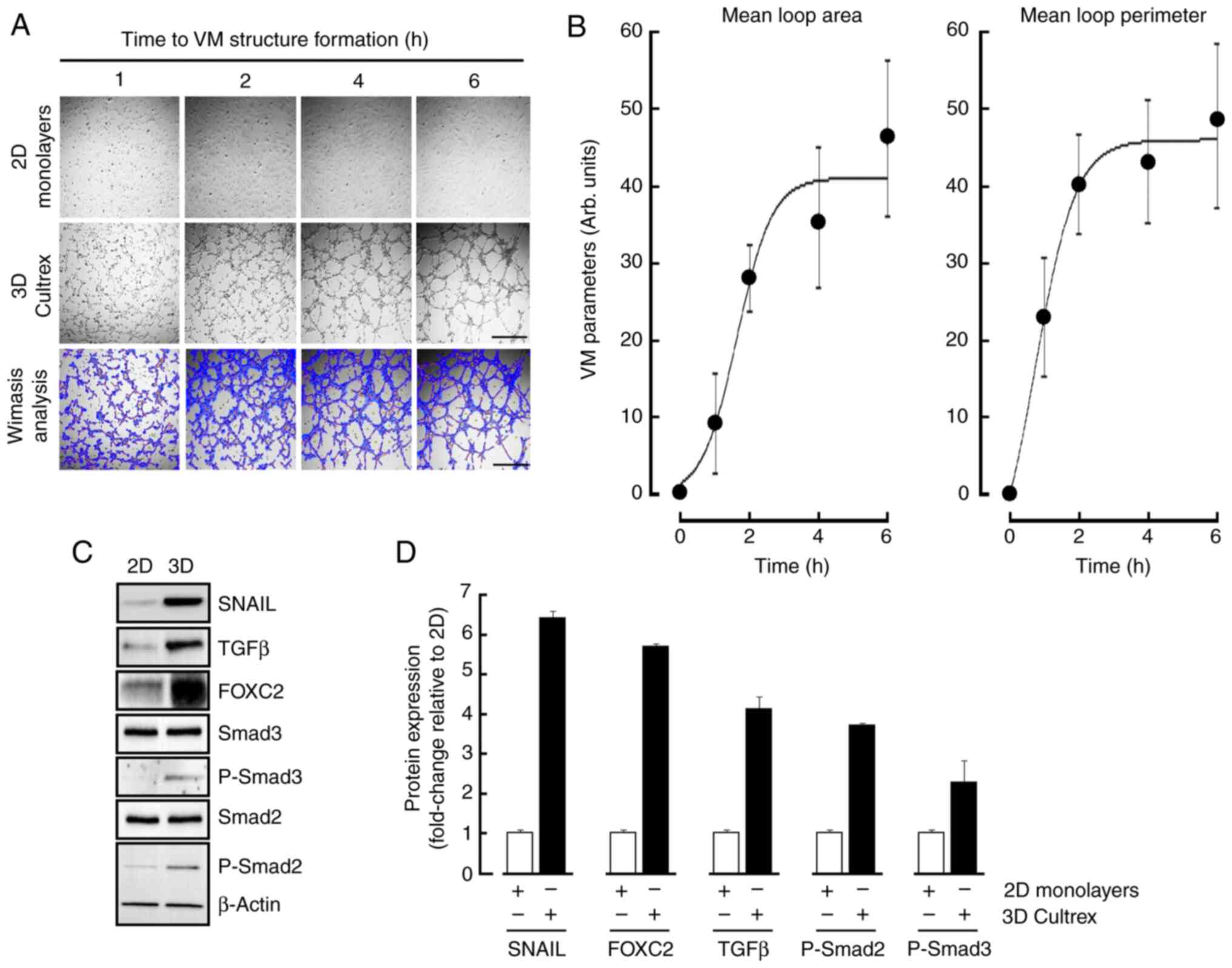
Figure 1

MSC in vitro VM triggers the
expression of TGFβ and Smad2/3 phosphorylation. (A) MSC were seeded
as 2D monolayers or ontop of Cultrex as described in the Methods
section and phase contrast pictures taken for up to 6 h of 2D
monolayers (upper panels) and 3D structures (middle panels).
Wimasis analysis was performed to monitor structure maturation
(lower panels). Scale bar, 1,000 µm. (B) Mean loop and perimeter
analysis as computed upon Wimasis analysis. (C) Cell lysates were
isolated from 2D and 3D cultures and immunoblotting performed to
assess protein expression of the indicated biomarkers. (D) A
representative densitometric analysis, out of two independent
experiments, was performed of the protein expression from 2D (white
boxes) and 3D cultures (black boxes). β-actin expression was used
as an internal loading control to normalize the expression of only
those biomarkers for which the expression was changed. MSC,
mesenchymal stem cells; VM, vasculogenic mimicry; TGF, transforming
growth factor; P-, phosphorylated.

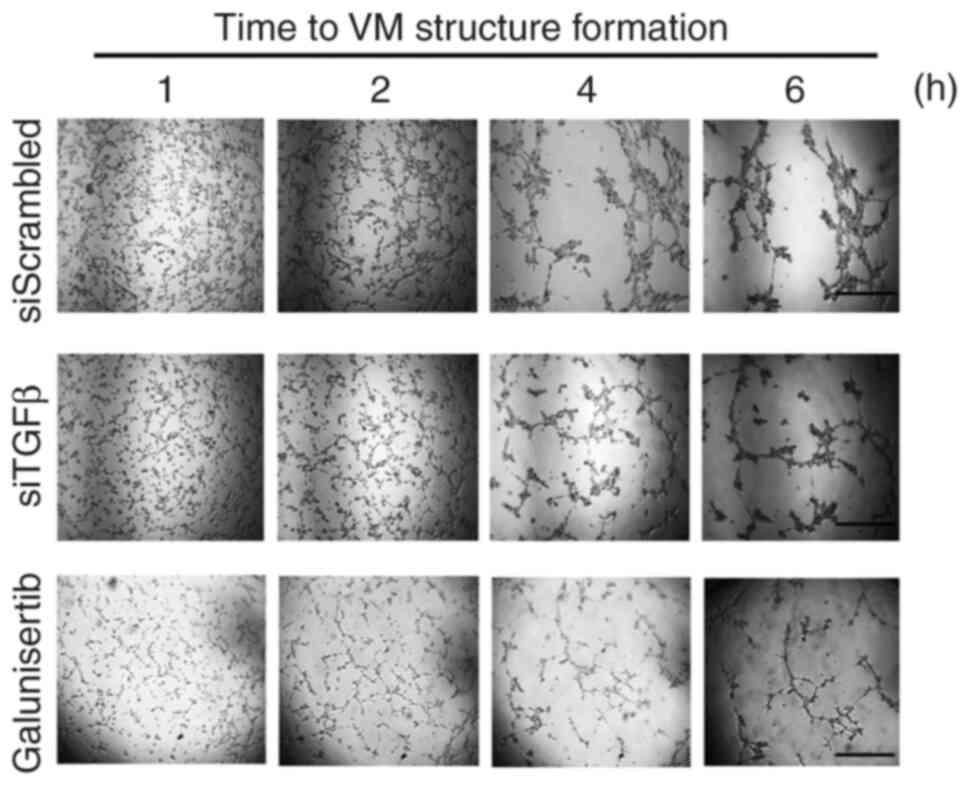
Figure 2

Transient silencing of TGFβ and
pharmacological inhibition of TGFβR1 alters in vitro VM. MSC
were transiently transfected with a nonspecific siScrambled siRNA
sequence or a specific siRNA directed against TGFβ (siTGFβ). MSC
were then seeded ontop of Cultrex as described in the Methods
section and phase contrast pictures taken for up to 6 h. The
contribution of the TGFβ signaling axis involving the TGFβR was
assessed using 10 µM Galunisertib, a pharmacological inhibitor well
known to alter the kinase activity of TGFβR. Scale bar, 1,000 µm.
MSC, mesenchymal stem cells; VM, vasculogenic mimicry; TGF,
transforming growth factor; TGFβR1, transforming growth factor β
receptor 1; si, small interfering.

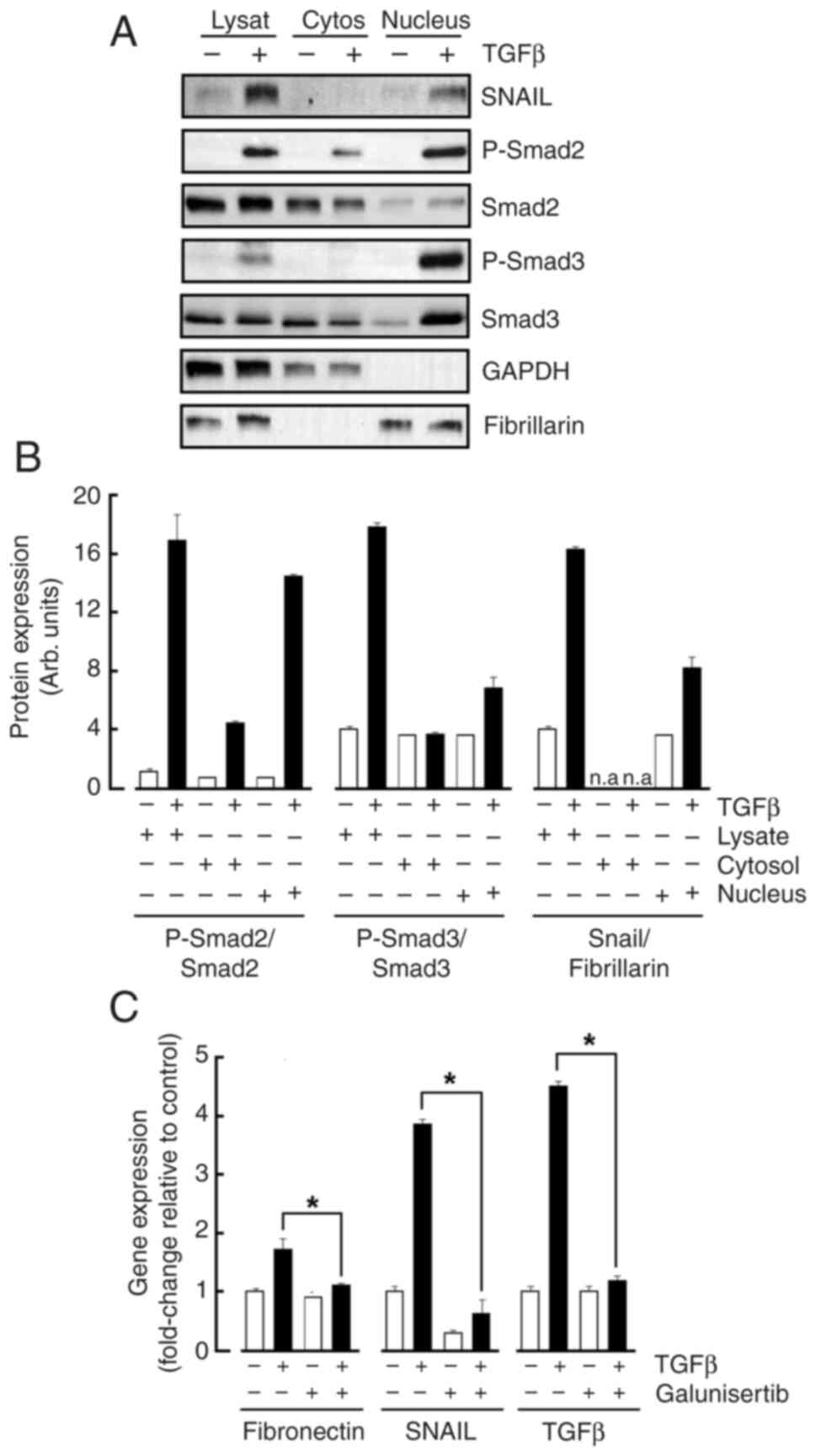
Figure 3

TGFβ triggers nuclear translocation
of Snail and of phosphorylated Smad2/3. MSC were treated or not
with 30 ng/ml TGFβ for 24 h. Next, total cell lysates or a
cytosolic and nuclear fraction from a nuclear fractionation
protocol were isolated as described in the Methods section. (A)
Immunoblotting was performed to assess protein expression of the
indicated biomarkers. (B) A representative densitometric analysis,
out of two independent experiments, was performed of the proteins
expression from (A). (C) Total RNA was extracted and RT-qPCR
performed as described in the Methods section to assess the
expression levels of the indicated genes in the absence (white
boxes) or presence (black boxes) of 30 ng/ml TGFβ, and in
combination or not of 10 µM Galunisertib. *P<0.05. n.a., not
applicable. MSC, mesenchymal stem cells; TGF, transforming growth
factor; P-, phosphorylated.

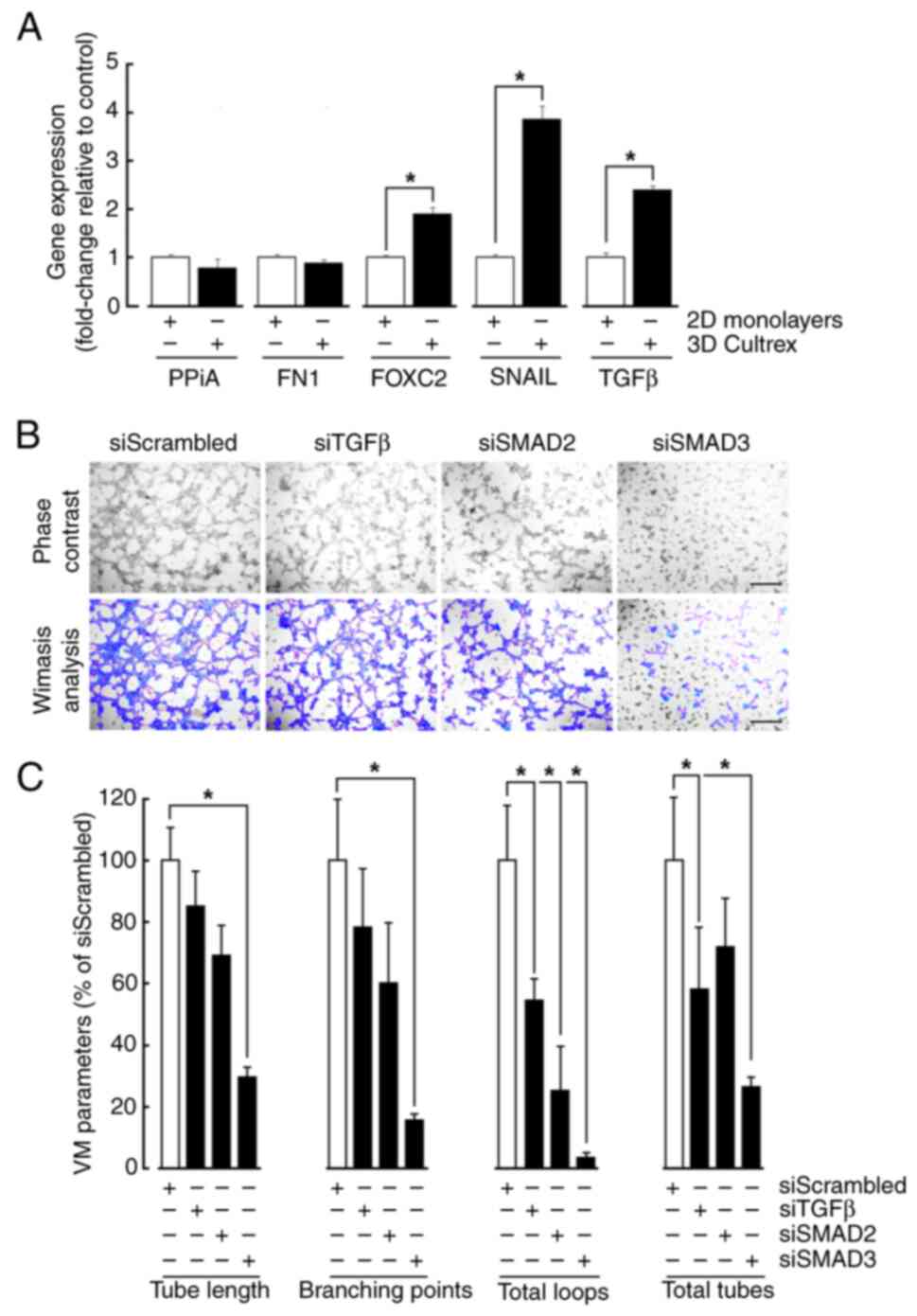
Figure 4

VM triggers differential EMT and TGFβ
biomarker gene expression and requires Smad2/3 signaling. (A) Total
RNA was extracted from MSC cultured as 2D monolayers (white bars)
or from 3D structures on Cultrex (black bars). RT-qPCR was
performed as described in the Methods section to assess the gene
expression levels of the indicated genes. (B) Transient gene
silencing was performed for the indicated genes and MSC seeded
ontop of Cultrex to monitor VM upon 6 h of formation.
Representative phase contrast pictures are shown (upper panels),
along with WIMASIS analysis (lower panels). Scale bar, 1,000 µm.
(C) Representative VM parameters are shown from siScrambled (white
bars) or MSC transfected with the indicated siRNA (black bars).
*P<0.05. EMT, epithelial-mesenchymal transition; MSC,
mesenchymal stem cells; VM, vasculogenic mimicry; TGF, transforming
growth factor; RT-qPCR, reverse transcription-quantitative
polymerase chain reaction; si, small interfering.

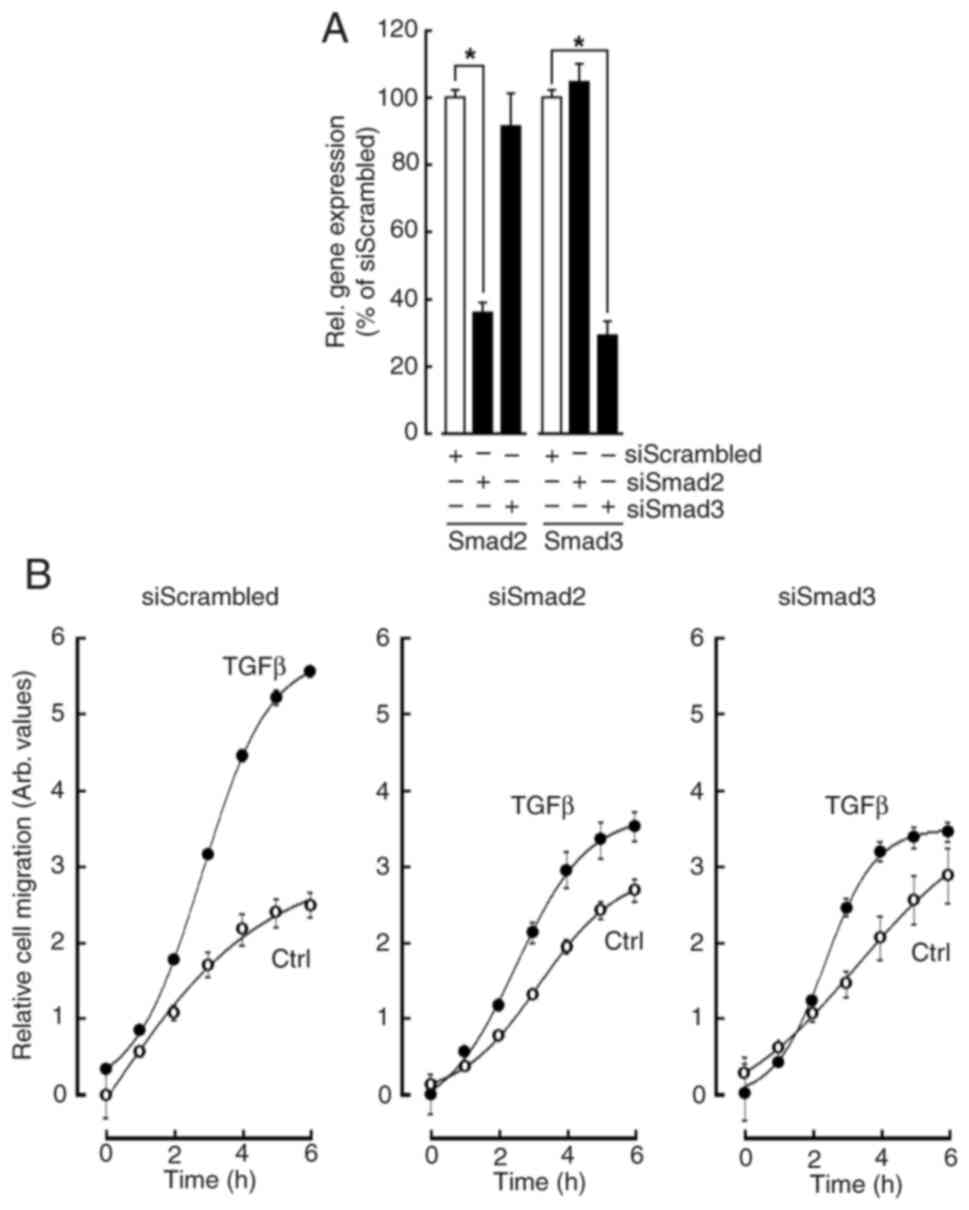
Figure 5

Silencing of Smad2/3 in MSC inhibits
their chemotactic response to TGFβ. (A) Specific transient gene
silencing was performed to repress either Smad2 (siSmad2) or Smad3
(siSmad3) as described in the Methods section and validated by
RT-qPCR. *P<0.05. (B) MSC chemotaxis was next performed using a
real-time cell migration assay with the xCELLigence instrument as
described in the Methods section. MSC were transiently transfected
for either Smad2 (siSmad2) Smad3 (siSmad3), or a random siRNA
sequence (siScrambled), then cell migration was assessed in
response to vehicle (Ctrl, open circles) or 30 ng/ml TGFβ (closed
circles) for up to 6 h. Data represent triplicates from a
representative experiment out of two. MSC, mesenchymal stem cells;
TGF, transforming growth factor; RT-qPCR, reverse
transcription-quantitative polymerase chain reaction; si, small
interfering.

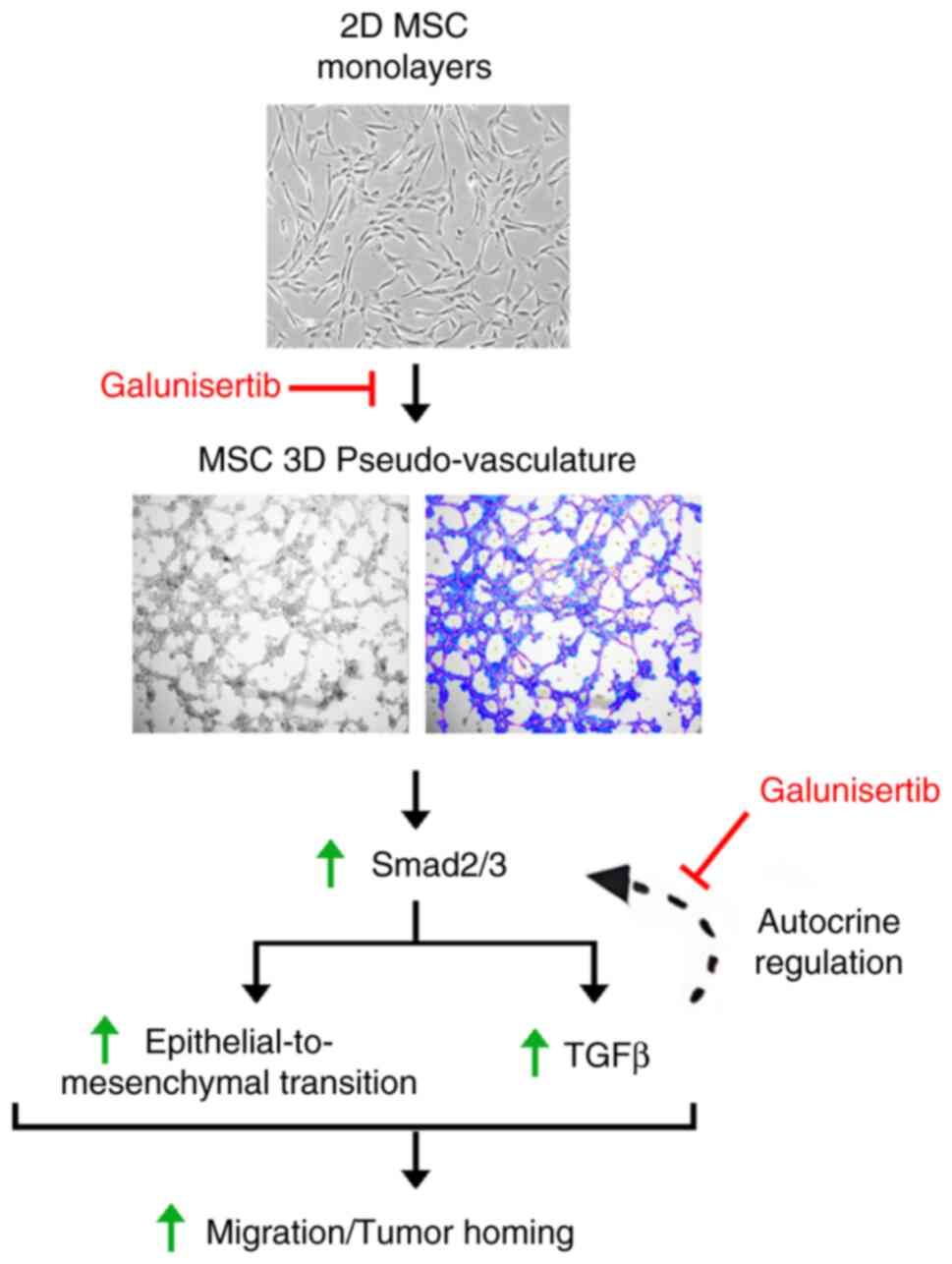
Figure 6

Scheme summarizing the Smad2/3
signaling and TGFβ-mediated autocrine regulation in MSC
mobilization and in vitro VM. MSC monolayers can
recapitulate in vitro VM when cultured on Cultrex. 3D
capillary-like structures can be inhibited by Galunisertib
targeting of the TGFβR kinase activity. Induction of an EMT
phenotype along with increased expression of TGFβ collectively
contribute to increased MSCs mobilization and homing within the
TME. An autocrine TGFβ-mediated signaling axis could also further
exacerbate MSCs contribution to VM. Collectively, this phenotype
may form pseudo-vasculature and sustain early pro-angiogenic
pathological processes. EMT, epithelial-mesenchymal transition;
MSC, mesenchymal stem cells; TGF, transforming growth factor; VM,
vasculogenic mimicry; TGFβR, transforming growth factor β receptor;
TME, tumor microenvironment.
View References

1 

Grafe I, Alexander S, Peterson JR, Snider TN, Levi B, Lee B and Mishina Y: TGF-β family signaling in mesenchymal differentiation. Cold Spring Harb Perspect Biol. 10:a0222022018. View Article : Google Scholar : PubMed/NCBI

2 

Yang X, Tian S, Fan L, Niu R, Yan M, Chen S, Zheng M and Zhang S: Integrated regulation of chondrogenic differentiation in mesenchymal stem cells and differentiation of cancer cells. Cancer Cell Int. 22:1692022. View Article : Google Scholar : PubMed/NCBI

3 

Yao JC, Oetjen KA, Wang T, Xu H, Abou-Ezzi G, Krambs JR, Uttarwar S, Duncavage EJ and Link DC: TGF-β signaling in myeloproliferative neoplasms contributes to myelofibrosis without disrupting the hematopoietic niche. J Clin Invest. 132:e1540922022. View Article : Google Scholar : PubMed/NCBI

4 

Wei E, Hu M, Wu L, Pan X, Zhu Q, Liu H and Liu Y: TGF-β signaling regulates differentiation of MSCs in bone metabolism: Disputes among viewpoints. Stem Cell Res Ther. 15:1562024. View Article : Google Scholar : PubMed/NCBI

5 

Liu F, Xie J, Zhang X, Wu Z, Zhang S, Xue M, Chen J, Yang Y and Qiu H: Overexpressing TGF-β1 in mesenchymal stem cells attenuates organ dysfunction during CLP-induced septic mice by reducing macrophage-driven inflammation. Stem Cell Res Ther. 11:3782020. View Article : Google Scholar : PubMed/NCBI

6 

Wan M, Li C, Zhen G, Jiao K, He W, Jia X, Wang W, Shi C, Xing Q, Chen YF, et al: Injury-activated transforming growth factor β controls mobilization of mesenchymal stem cells for tissue remodeling. Stem Cells. 30:2498–2511. 2012. View Article : Google Scholar : PubMed/NCBI

7 

Fan XL, Zhang Y, Li X and Fu QL: Mechanisms underlying the protective effects of mesenchymal stem cell-based therapy. Cell Mol Life Sci. 77:2771–2794. 2020. View Article : Google Scholar : PubMed/NCBI

8 

Denko NC and Giaccia AJ: Tumor hypoxia, the physiological link between Trousseau's syndrome (carcinoma-induced coagulopathy) and metastasis. Cancer Res. 61:795–798. 2001.PubMed/NCBI

9 

Emami Nejad A, Najafgholian S, Rostami A, Sistani A, Shojaeifar S, Esparvarinha M, Nedaeinia R, Haghjooy Javanmard S, Taherian M, Ahmadlou M, et al: The role of hypoxia in the tumor microenvironment and development of cancer stem cell: A novel approach to developing treatment. Cancer Cell Int. 21:622021. View Article : Google Scholar : PubMed/NCBI

10 

Liang W and Chen X, Zhang S, Fang J, Chen M, Xu Y and Chen X: Mesenchymal stem cells as a double-edged sword in tumor growth: Focusing on MSC-derived cytokines. Cell Mol Biol Lett. 26:32021. View Article : Google Scholar : PubMed/NCBI

11 

Aravindhan S, Ejam SS, Lafta MH, Markov A, Yumashev AV and Ahmadi M: Mesenchymal stem cells and cancer therapy: Insights into targeting the tumour vasculature. Cancer Cell Int. 21:1582021. View Article : Google Scholar : PubMed/NCBI

12 

Andonegui-Elguera MA, Alfaro-Mora Y, Cáceres-Gutiérrez R, Caro-Sánchez CHS, Herrera LA and Díaz-Chávez J: An overview of vasculogenic mimicry in breast cancer. Front Oncol. 10:2202020. View Article : Google Scholar : PubMed/NCBI

13 

Yao J, Sun L, Gao F and Zhu W: Mesenchymal stem/stromal cells: Dedicator to maintain tumor homeostasis. Hum Cell. 38:212024. View Article : Google Scholar : PubMed/NCBI

14 

den Hollander P, Maddela JJ and Mani SA: Spatial and temporal relationship between epithelial-mesenchymal transition (EMT) and stem cells in cancer. Clin Chem. 70:190–205. 2024. View Article : Google Scholar : PubMed/NCBI

15 

Hass R: Role of MSC in the tumor microenvironment. Cancers (Basel). 12:21072020. View Article : Google Scholar : PubMed/NCBI

16 

Hill BS, Pelagalli A, Passaro N and Zannetti A: Tumor-educated mesenchymal stem cells promote pro-metastatic phenotype. Oncotarget. 8:73296–73311. 2017. View Article : Google Scholar : PubMed/NCBI

17 

Fasano M, Pirozzi M, Miceli CC, Cocule M, Caraglia M, Boccellino M, Vitale P, De Falco V, Farese S, Zotta A, et al: TGF-β modulated pathways in colorectal cancer: New potential therapeutic opportunities. Int J Mol Sci. 25:74002024. View Article : Google Scholar : PubMed/NCBI

18 

Sritharan S and Sivalingam N: Secretion of IL-6 and TGF-β2 by colon cancer cells may promote resistance to chemotherapy. Ind J Clin Biochem. 2024. View Article : Google Scholar

19 

Dumont N and Arteaga CL: Transforming growth factor-beta and breast cancer: Tumor promoting effects of transforming growth factor-beta. Breast Cancer Res. 2:125–132. 2000. View Article : Google Scholar : PubMed/NCBI

20 

Huang K, Han Y, Chen Y, Shen H, Zeng S and Cai C: Tumor metabolic regulators: Key drivers of metabolic reprogramming and the promising targets in cancer therapy. Mol Cancer. 24:72025. View Article : Google Scholar : PubMed/NCBI

21 

Zhang H, Li S, Wang D, Liu S, Xiao T, Gu W, Yang H, Wang H, Yang M and Chen P: Metabolic reprogramming and immune evasion: The interplay in the tumor microenvironment. Biomark Res. 12:962024. View Article : Google Scholar : PubMed/NCBI

22 

Paul D and Nedelcu AM: The underexplored links between cancer and the internal body climate: Implications for cancer prevention and treatment. Front Oncol. 12:10400342022. View Article : Google Scholar : PubMed/NCBI

23 

Slominski RM, Raman C, Chen JY and Slominski AT: How cancer hijacks the body's homeostasis through the neuroendocrine system. Trends Neurosci. 46:263–275. 2023. View Article : Google Scholar : PubMed/NCBI

24 

Roy ME, Veilleux C and Annabi B: In vitro biomaterial priming of human mesenchymal stromal/stem cells: Implication of the Src/JAK/STAT3 pathway in vasculogenic mimicry. Sci Rep. 14:214442024. View Article : Google Scholar : PubMed/NCBI

25 

Schneider CA, Rasband WS and Eliceiri KW: NIH image to ImageJ: 25 Years of image analysis. Nat Methods. 9:671–675. 2012. View Article : Google Scholar : PubMed/NCBI

26 

Livak KJ and Schmittgen TD: Analysis of relative gene expression data using real-time quantitative PCR and the 2(−Delta Delta C(T)) method. Methods. 25:402–408. 2001. View Article : Google Scholar : PubMed/NCBI

27 

Roy ME, Veilleux C, Paquin A, Gagnon A and Annabi B: Transcriptional regulation of CYR61 and CTGF by LM98: A synthetic YAP-TEAD inhibitor that targets in-vitro vasculogenic mimicry in glioblastoma cells. Anticancer Drugs. 35:709–719. 2024. View Article : Google Scholar : PubMed/NCBI

28 

Pratt J, Haidara K and Annabi B: MT1-MMP expression levels and catalytic functions dictate LDL receptor-related protein-1 ligand internalization capacity in U87 glioblastoma cells. Int J Mol Sci. 23:142142022. View Article : Google Scholar : PubMed/NCBI

29 

Holmgaard RB, Schaer DA, Li Y, Castaneda SP, Murphy MY, Xu X, Inigo I, Dobkin J, Manro JR, Iversen PW, et al: Targeting the TGFβ pathway with galunisertib, a TGFβRI small molecule inhibitor, promotes anti-tumor immunity leading to durable, complete responses, as monotherapy and in combination with checkpoint blockade. J Immunother Cancer. 6:472018. View Article : Google Scholar : PubMed/NCBI

30 

Sicard AA, Suarez NG, Cappadocia L and Annabi B: Functional targeting of the TGF-βR1 kinase domain and downstream signaling: A role for the galloyl moiety of green tea-derived catechins in ES-2 ovarian clear cell carcinoma. J Nutr Biochem. 87:1085182021. View Article : Google Scholar : PubMed/NCBI

31 

Djediai S, Gonzalez Suarez N, El Cheikh-Hussein L, Rodriguez Torres S, Gresseau L, Dhayne S, Joly-Lopez Z and Annabi B: MT1-MMP cooperates with TGF-β receptor-mediated signaling to trigger SNAIL and Induce epithelial-to-mesenchymal-like transition in U87 glioblastoma cells. Int J Mol Sci. 22:130062021. View Article : Google Scholar : PubMed/NCBI

32 

Antoon R, Overdevest N, Saleh AH and Keating A: Mesenchymal stromal cells as cancer promoters. Oncogene. 43:3545–3555. 2024. View Article : Google Scholar : PubMed/NCBI

33 

Liu S, Ren J, Hu Y, Zhou F and Zhang L: TGFβ family signaling in human stem cell self-renewal and differentiation. Cell Regen. 13:262024. View Article : Google Scholar : PubMed/NCBI

34 

Wang J, Peng J, Chen Y, Nasser MI and Qin H: The role of stromal cells in epithelial-mesenchymal plasticity and its therapeutic potential. Discov Oncol. 15:132024. View Article : Google Scholar : PubMed/NCBI

35 

Novoseletskaya ES, Evdokimov PV and Efimenko AY: Extracellular matrix-induced signaling pathways in mesenchymal stem/stromal cells. Cell Commun Signal. 21:2442023. View Article : Google Scholar : PubMed/NCBI

36 

Nam D, Park A, Dubon MJ, Yu J, Kim W, Son Y and Park KS: Coordinated regulation of mesenchymal stem cell migration by various chemotactic stimuli. Int J Mol Sci. 21:85612020. View Article : Google Scholar : PubMed/NCBI

37 

Cottler-Fox MH, Lapidot T, Petit I, Kollet O, DiPersio JF, Link D and Devine S: Stem cell mobilization. Hematology Am Soc Hematol Educ Program. 419–437. 2003. View Article : Google Scholar : PubMed/NCBI

38 

Ridge SM, Sullivan FJ and Glynn SA: Mesenchymal stem cells: Key players in cancer progression. Mol Cancer. 16:312017. View Article : Google Scholar : PubMed/NCBI

39 

Annabi B, Naud E, Lee YT, Eliopoulos N and Galipeau J: Vascular progenitors derived from murine bone marrow stromal cells are regulated by fibroblast growth factor and are avidly recruited by vascularizing tumors. J Cell Biochem. 91:1146–1158. 2004. View Article : Google Scholar : PubMed/NCBI

40 

Frisbie L, Buckanovich RJ and Coffman L: Carcinoma-associated mesenchymal stem/stromal cells: Architects of the pro-tumorigenic tumor microenvironment. Stem Cells. 40:705–715. 2022. View Article : Google Scholar : PubMed/NCBI

41 

Zhang J, Qiao L, Liang N, Xie J, Luo H, Deng G and Zhang J: Vasculogenic mimicry and tumor metastasis. J BUON. 21:533–541. 2016.PubMed/NCBI

42 

Zonneville J, Safina A, Truskinovsky AM, Arteaga CL and Bakin AV: TGF-β signaling promotes tumor vasculature by enhancing the pericyte-endothelium association. BMC Cancer. 18:6702018. View Article : Google Scholar : PubMed/NCBI

43 

Yoshimura A and Muto G: TGF-β function in immune suppression. Curr Top Microbiol Immunol. 350:127–147. 2011.PubMed/NCBI

44 

Konkel JE, Zhang D, Zanvit P, Chia C, Zangarle-Murray T, Jin W, Wang S and Chen W: Transforming growth factor-β signaling in regulatory T cells controls T helper-17 cells and tissue-specific immune responses. Immunity. 46:660–674. 2017. View Article : Google Scholar : PubMed/NCBI

45 

Guo C, Sun H, Du Y, Dai X, Pang Y, Han Z, Xiong X, Li S, Zhang J, Zheng Q and Gui X: Specifically blocking αvβ8-mediated TGF-β signaling to reverse immunosuppression by modulating macrophage polarization. J Exp Clin Cancer Res. 44:12025. View Article : Google Scholar : PubMed/NCBI

46 

Itoh F, Itoh S, Adachi T, Ichikawa K, Matsumura Y, Takagi T, Festing M, Watanabe T, Weinstein M, Karlsson S and Kato M: Smad2/Smad3 in endothelium is indispensable for vascular stability via S1PR1 and N-cadherin expressions. Blood. 119:5320–5628. 2012. View Article : Google Scholar : PubMed/NCBI

47 

Tashima T: Mesenchymal stem cell (MSC)-based drug delivery into the brain across the blood-brain barrier. Pharmaceutics. 16:2892024. View Article : Google Scholar : PubMed/NCBI

48 

Minev T, Balbuena S, Gill JM, Marincola FM, Kesari S and Lin F: Mesenchymal stem cells-the secret agents of cancer immunotherapy: Promises, challenges, and surprising twists. Oncotarget. 15:793–805. 2024. View Article : Google Scholar : PubMed/NCBI

49 

Wu X, Jiang J, Gu Z, Zhang J, Chen Y and Liu X: Mesenchymal stromal cell therapies: Immunomodulatory properties and clinical progress. Stem Cell Res Ther. 11:3452020. View Article : Google Scholar : PubMed/NCBI

50 

Lan T, Luo M and Wei X: Mesenchymal stem/stromal cells in cancer therapy. J Hematol Oncol. 14:1952021. View Article : Google Scholar : PubMed/NCBI

51 

Kim BG, Malek E, Choi SH, Ignatz-Hoover JJ and Driscoll JJ: Novel therapies emerging in oncology to target the TGF-β pathway. J Hematol Oncol. 14:552021. View Article : Google Scholar : PubMed/NCBI

52 

Guo Y, Wang Z, Zhou H, Pan H, Han W, Deng Y, Li Q, Xue J, Ge X, Wang S, et al: First-in-human study of GFH018, a small molecule inhibitor of transforming growth factor-β receptor I inhibitor, in patients with advanced solid tumors. BMC Cancer. 24:4442024. View Article : Google Scholar : PubMed/NCBI

53 

Margiana R, Markov A, Zekiy AO, Hamza MU, Al-Dabbagh KA, Al-Zubaidi SH, Hameed NM, Ahmad I, Sivaraman R, Kzar HH, et al: Clinical application of mesenchymal stem cell in regenerative medicine: a narrative review. Stem Cell Res Ther. 13:3662022. View Article : Google Scholar : PubMed/NCBI

Related Articles

  • Abstract
  • View
  • Download
  • Twitter
Copy and paste a formatted citation
Spandidos Publications style
Gnao KP, Roy M, Zgheib A, Desjarlais M and Annabi B: Evidence of a functional Smad2/3 signaling axis and TGF&beta;‑mediated autocrine transcriptional regulation of <em>in vitro</em> vasculogenic mimicry in mesenchymal stem/stromal cells. Oncol Lett 30: 405, 2025.
APA
Gnao, K.P., Roy, M., Zgheib, A., Desjarlais, M., & Annabi, B. (2025). Evidence of a functional Smad2/3 signaling axis and TGF&beta;‑mediated autocrine transcriptional regulation of <em>in vitro</em> vasculogenic mimicry in mesenchymal stem/stromal cells. Oncology Letters, 30, 405. https://doi.org/10.3892/ol.2025.15151
MLA
Gnao, K. P., Roy, M., Zgheib, A., Desjarlais, M., Annabi, B."Evidence of a functional Smad2/3 signaling axis and TGF&beta;‑mediated autocrine transcriptional regulation of <em>in vitro</em> vasculogenic mimicry in mesenchymal stem/stromal cells". Oncology Letters 30.3 (2025): 405.
Chicago
Gnao, K. P., Roy, M., Zgheib, A., Desjarlais, M., Annabi, B."Evidence of a functional Smad2/3 signaling axis and TGF&beta;‑mediated autocrine transcriptional regulation of <em>in vitro</em> vasculogenic mimicry in mesenchymal stem/stromal cells". Oncology Letters 30, no. 3 (2025): 405. https://doi.org/10.3892/ol.2025.15151
Copy and paste a formatted citation
x
Spandidos Publications style
Gnao KP, Roy M, Zgheib A, Desjarlais M and Annabi B: Evidence of a functional Smad2/3 signaling axis and TGF&beta;‑mediated autocrine transcriptional regulation of <em>in vitro</em> vasculogenic mimicry in mesenchymal stem/stromal cells. Oncol Lett 30: 405, 2025.
APA
Gnao, K.P., Roy, M., Zgheib, A., Desjarlais, M., & Annabi, B. (2025). Evidence of a functional Smad2/3 signaling axis and TGF&beta;‑mediated autocrine transcriptional regulation of <em>in vitro</em> vasculogenic mimicry in mesenchymal stem/stromal cells. Oncology Letters, 30, 405. https://doi.org/10.3892/ol.2025.15151
MLA
Gnao, K. P., Roy, M., Zgheib, A., Desjarlais, M., Annabi, B."Evidence of a functional Smad2/3 signaling axis and TGF&beta;‑mediated autocrine transcriptional regulation of <em>in vitro</em> vasculogenic mimicry in mesenchymal stem/stromal cells". Oncology Letters 30.3 (2025): 405.
Chicago
Gnao, K. P., Roy, M., Zgheib, A., Desjarlais, M., Annabi, B."Evidence of a functional Smad2/3 signaling axis and TGF&beta;‑mediated autocrine transcriptional regulation of <em>in vitro</em> vasculogenic mimicry in mesenchymal stem/stromal cells". Oncology Letters 30, no. 3 (2025): 405. https://doi.org/10.3892/ol.2025.15151
Follow us
  • Twitter
  • LinkedIn
  • Facebook
About
  • Spandidos Publications
  • Careers
  • Cookie Policy
  • Privacy Policy
How can we help?
  • Help
  • Live Chat
  • Contact
  • Email to our Support Team