Spandidos Publications Logo
  • About
    • About Spandidos
    • Aims and Scopes
    • Abstracting and Indexing
    • Editorial Policies
    • Reprints and Permissions
    • Job Opportunities
    • Terms and Conditions
    • Contact
  • Journals
    • All Journals
    • Oncology Letters
      • Oncology Letters
      • Information for Authors
      • Editorial Policies
      • Editorial Board
      • Aims and Scope
      • Abstracting and Indexing
      • Bibliographic Information
      • Archive
    • International Journal of Oncology
      • International Journal of Oncology
      • Information for Authors
      • Editorial Policies
      • Editorial Board
      • Aims and Scope
      • Abstracting and Indexing
      • Bibliographic Information
      • Archive
    • Molecular and Clinical Oncology
      • Molecular and Clinical Oncology
      • Information for Authors
      • Editorial Policies
      • Editorial Board
      • Aims and Scope
      • Abstracting and Indexing
      • Bibliographic Information
      • Archive
    • Experimental and Therapeutic Medicine
      • Experimental and Therapeutic Medicine
      • Information for Authors
      • Editorial Policies
      • Editorial Board
      • Aims and Scope
      • Abstracting and Indexing
      • Bibliographic Information
      • Archive
    • International Journal of Molecular Medicine
      • International Journal of Molecular Medicine
      • Information for Authors
      • Editorial Policies
      • Editorial Board
      • Aims and Scope
      • Abstracting and Indexing
      • Bibliographic Information
      • Archive
    • Biomedical Reports
      • Biomedical Reports
      • Information for Authors
      • Editorial Policies
      • Editorial Board
      • Aims and Scope
      • Abstracting and Indexing
      • Bibliographic Information
      • Archive
    • Oncology Reports
      • Oncology Reports
      • Information for Authors
      • Editorial Policies
      • Editorial Board
      • Aims and Scope
      • Abstracting and Indexing
      • Bibliographic Information
      • Archive
    • Molecular Medicine Reports
      • Molecular Medicine Reports
      • Information for Authors
      • Editorial Policies
      • Editorial Board
      • Aims and Scope
      • Abstracting and Indexing
      • Bibliographic Information
      • Archive
    • World Academy of Sciences Journal
      • World Academy of Sciences Journal
      • Information for Authors
      • Editorial Policies
      • Editorial Board
      • Aims and Scope
      • Abstracting and Indexing
      • Bibliographic Information
      • Archive
    • International Journal of Functional Nutrition
      • International Journal of Functional Nutrition
      • Information for Authors
      • Editorial Policies
      • Editorial Board
      • Aims and Scope
      • Abstracting and Indexing
      • Bibliographic Information
      • Archive
    • International Journal of Epigenetics
      • International Journal of Epigenetics
      • Information for Authors
      • Editorial Policies
      • Editorial Board
      • Aims and Scope
      • Abstracting and Indexing
      • Bibliographic Information
      • Archive
    • Medicine International
      • Medicine International
      • Information for Authors
      • Editorial Policies
      • Editorial Board
      • Aims and Scope
      • Abstracting and Indexing
      • Bibliographic Information
      • Archive
  • Articles
  • Information
    • Information for Authors
    • Information for Reviewers
    • Information for Librarians
    • Information for Advertisers
    • Conferences
  • Language Editing
Spandidos Publications Logo
  • About
    • About Spandidos
    • Aims and Scopes
    • Abstracting and Indexing
    • Editorial Policies
    • Reprints and Permissions
    • Job Opportunities
    • Terms and Conditions
    • Contact
  • Journals
    • All Journals
    • Biomedical Reports
      • Information for Authors
      • Editorial Policies
      • Editorial Board
      • Aims and Scope
      • Abstracting and Indexing
      • Bibliographic Information
      • Archive
    • Experimental and Therapeutic Medicine
      • Information for Authors
      • Editorial Policies
      • Editorial Board
      • Aims and Scope
      • Abstracting and Indexing
      • Bibliographic Information
      • Archive
    • International Journal of Epigenetics
      • Information for Authors
      • Editorial Policies
      • Editorial Board
      • Aims and Scope
      • Abstracting and Indexing
      • Bibliographic Information
      • Archive
    • International Journal of Functional Nutrition
      • Information for Authors
      • Editorial Policies
      • Editorial Board
      • Aims and Scope
      • Abstracting and Indexing
      • Bibliographic Information
      • Archive
    • International Journal of Molecular Medicine
      • Information for Authors
      • Editorial Policies
      • Editorial Board
      • Aims and Scope
      • Abstracting and Indexing
      • Bibliographic Information
      • Archive
    • International Journal of Oncology
      • Information for Authors
      • Editorial Policies
      • Editorial Board
      • Aims and Scope
      • Abstracting and Indexing
      • Bibliographic Information
      • Archive
    • Medicine International
      • Information for Authors
      • Editorial Policies
      • Editorial Board
      • Aims and Scope
      • Abstracting and Indexing
      • Bibliographic Information
      • Archive
    • Molecular and Clinical Oncology
      • Information for Authors
      • Editorial Policies
      • Editorial Board
      • Aims and Scope
      • Abstracting and Indexing
      • Bibliographic Information
      • Archive
    • Molecular Medicine Reports
      • Information for Authors
      • Editorial Policies
      • Editorial Board
      • Aims and Scope
      • Abstracting and Indexing
      • Bibliographic Information
      • Archive
    • Oncology Letters
      • Information for Authors
      • Editorial Policies
      • Editorial Board
      • Aims and Scope
      • Abstracting and Indexing
      • Bibliographic Information
      • Archive
    • Oncology Reports
      • Information for Authors
      • Editorial Policies
      • Editorial Board
      • Aims and Scope
      • Abstracting and Indexing
      • Bibliographic Information
      • Archive
    • World Academy of Sciences Journal
      • Information for Authors
      • Editorial Policies
      • Editorial Board
      • Aims and Scope
      • Abstracting and Indexing
      • Bibliographic Information
      • Archive
  • Articles
  • Information
    • For Authors
    • For Reviewers
    • For Librarians
    • For Advertisers
    • Conferences
  • Language Editing
Login Register Submit
  • This site uses cookies
  • You can change your cookie settings at any time by following the instructions in our Cookie Policy. To find out more, you may read our Privacy Policy.

    I agree
Search articles by DOI, keyword, author or affiliation
Search
Advanced Search
presentation
Oncology Letters
Join Editorial Board Propose a Special Issue
Print ISSN: 1792-1074 Online ISSN: 1792-1082
Journal Cover
September-2025 Volume 30 Issue 3

Full Size Image

Sign up for eToc alerts
Recommend to Library

Journals

International Journal of Molecular Medicine

International Journal of Molecular Medicine

International Journal of Molecular Medicine is an international journal devoted to molecular mechanisms of human disease.

International Journal of Oncology

International Journal of Oncology

International Journal of Oncology is an international journal devoted to oncology research and cancer treatment.

Molecular Medicine Reports

Molecular Medicine Reports

Covers molecular medicine topics such as pharmacology, pathology, genetics, neuroscience, infectious diseases, molecular cardiology, and molecular surgery.

Oncology Reports

Oncology Reports

Oncology Reports is an international journal devoted to fundamental and applied research in Oncology.

Experimental and Therapeutic Medicine

Experimental and Therapeutic Medicine

Experimental and Therapeutic Medicine is an international journal devoted to laboratory and clinical medicine.

Oncology Letters

Oncology Letters

Oncology Letters is an international journal devoted to Experimental and Clinical Oncology.

Biomedical Reports

Biomedical Reports

Explores a wide range of biological and medical fields, including pharmacology, genetics, microbiology, neuroscience, and molecular cardiology.

Molecular and Clinical Oncology

Molecular and Clinical Oncology

International journal addressing all aspects of oncology research, from tumorigenesis and oncogenes to chemotherapy and metastasis.

World Academy of Sciences Journal

World Academy of Sciences Journal

Multidisciplinary open-access journal spanning biochemistry, genetics, neuroscience, environmental health, and synthetic biology.

International Journal of Functional Nutrition

International Journal of Functional Nutrition

Open-access journal combining biochemistry, pharmacology, immunology, and genetics to advance health through functional nutrition.

International Journal of Epigenetics

International Journal of Epigenetics

Publishes open-access research on using epigenetics to advance understanding and treatment of human disease.

Medicine International

Medicine International

An International Open Access Journal Devoted to General Medicine.

Journal Cover
September-2025 Volume 30 Issue 3

Full Size Image

Sign up for eToc alerts
Recommend to Library

  • Article
  • Citations
    • Cite This Article
    • Download Citation
    • Create Citation Alert
    • Remove Citation Alert
    • Cited By
  • Similar Articles
    • Related Articles (in Spandidos Publications)
    • Similar Articles (Google Scholar)
    • Similar Articles (PubMed)
  • Download PDF
  • Download XML
  • View XML
Article Open Access

Silymarin induces multiple myeloma cell apoptosis by inhibiting the JAK2/STAT3 signaling pathway

  • Authors:
    • Haiyun Liu
    • Tingting Liu
    • Junquan Zeng
    • Quangang Fang
  • View Affiliations / Copyright

    Affiliations: Department of Clinical Laboratory, Jiangxi Provincial People's Hospital, The First Affiliated Hospital of Nanchang Medical College, Nangchang, Jiangxi 330000, P.R. China, Department of Hematology, Jiangxi Provincial People's Hospital, The First Affiliated Hospital of Nanchang Medical College, Nangchang, Jiangxi 330000, P.R. China, Department of Hematology, The Affiliated Hospital of Jinggangshan University, Ji'an, Jiangxi 343000, P.R. China
    Copyright: © Liu et al. This is an open access article distributed under the terms of Creative Commons Attribution License.
  • Article Number: 426
    |
    Published online on: July 4, 2025
       https://doi.org/10.3892/ol.2025.15172
  • Expand metrics +
Metrics: Total Views: 0 (Spandidos Publications: | PMC Statistics: )
Metrics: Total PDF Downloads: 0 (Spandidos Publications: | PMC Statistics: )
Cited By (CrossRef): 0 citations Loading Articles...

This article is mentioned in:


Abstract

Multiple myeloma (MM) is a malignant tumor that originates in the plasma cells of the bone marrow, interfering with the production of healthy blood cells and causing notable damage to bones and other tissues. Currently, the treatment options for MM are limited and often fail to provide effective and well‑tolerated solutions. Silymarin, a primary active compound found in the dried fruit of Silybum marianum, is known for its inhibitory action on lipoxygenases and peroxidases. In addition to its known benefits in reducing liver toxicity and enhancing radiation protection, silymarin has shown promise in lowering lipid levels. Silymarin has anticancer properties; however, the specific mechanisms and efficacy of silymarin in treating MM require further investigation. In the present study, network pharmacology was employed to discern the targets and associated pathways of silymarin against MM. The cytotoxic effects of silymarin on MM were subsequently tested using RPMI 8226 and H929 cell lines. Furthermore, the molecular targets of silymarin in MM were assessed through immunofluorescence, reverse transcription‑quantitative polymerase chain reaction and molecular docking studies. A total of 15 notable targets of silymarin associated with MM were identified, along with 60 interactions among these targets and several associated signaling pathways. In vitro experiments using Cell Counting Kit‑8 and flow cytometry revealed that silymarin markedly promoted apoptosis in MM cells. Additionally, there was a reduction in the expression of anti‑apoptotic genes, such as Bcl‑2 and Bcl‑xL. After silymarin treatment, a decrease in phosphorylation of JAK2 and STAT3 was observed in MM cells, and it was suggested that silymarin potentially binds to JAK2 and STAT3. In conclusion, silymarin was revealed to trigger apoptosis in MM cells by blocking the JAK2/STAT3 signaling pathway. This mechanism highlights the potential of silymarin as a therapeutic agent that can target specific molecular pathways to combat MM.
View Figures

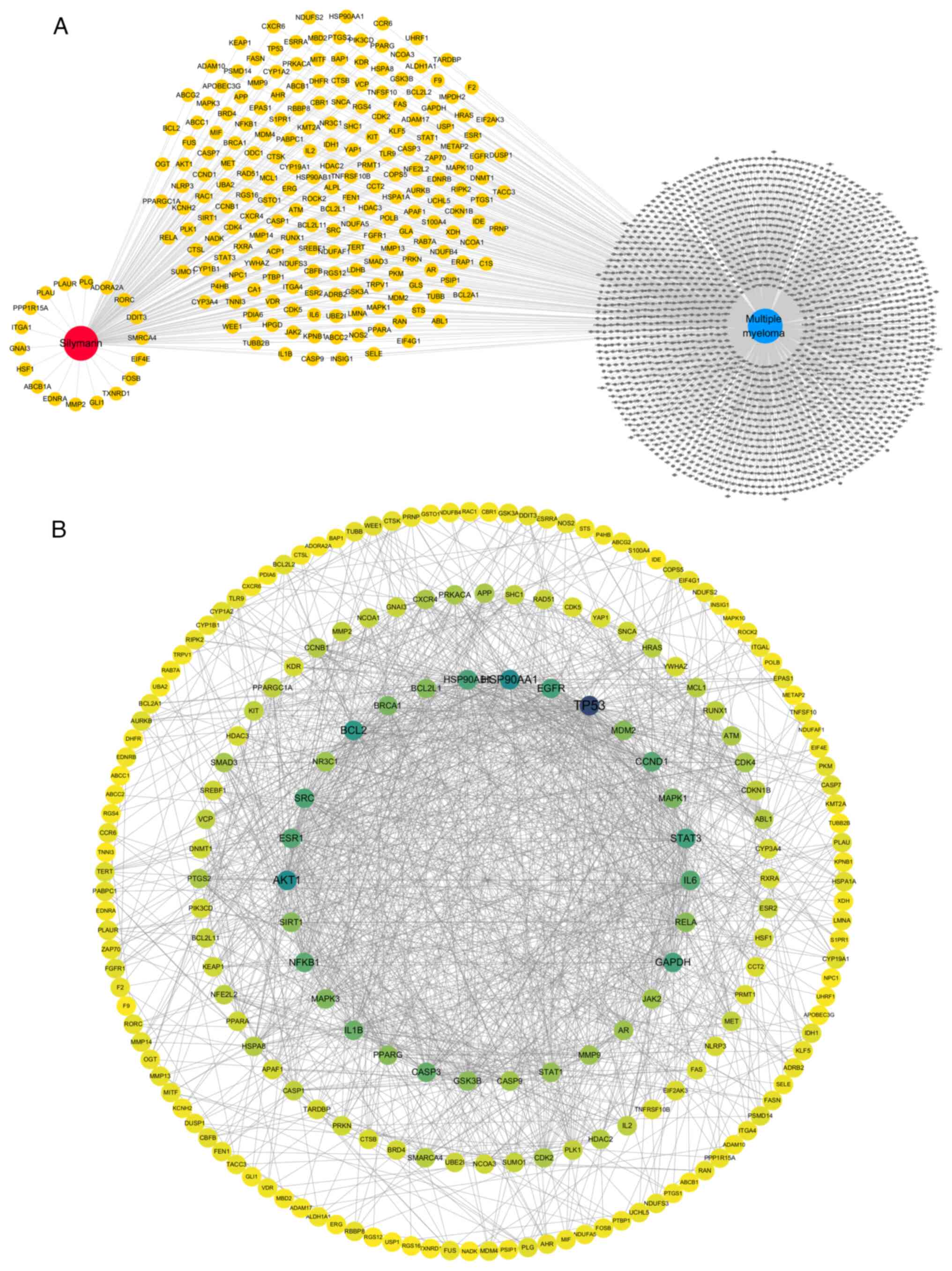
Figure 1

Analysis of overlapping targets
between silymarin and MM. (A) Overlap of gene targets associated
with both MM and silymarin. The red node represents silymarin, the
blue node represents MM, the yellow nodes represent silymarin
targets and the gray nodes represent MM genes. (B) Protein-protein
interaction network of the shared targets. The color depth of nodes
is directly proportional to the degree of nodes. The darker the
color, the greater the degree of nodes and the lighter the color,
the smaller the degree of nodes. MM, multiple myeloma.

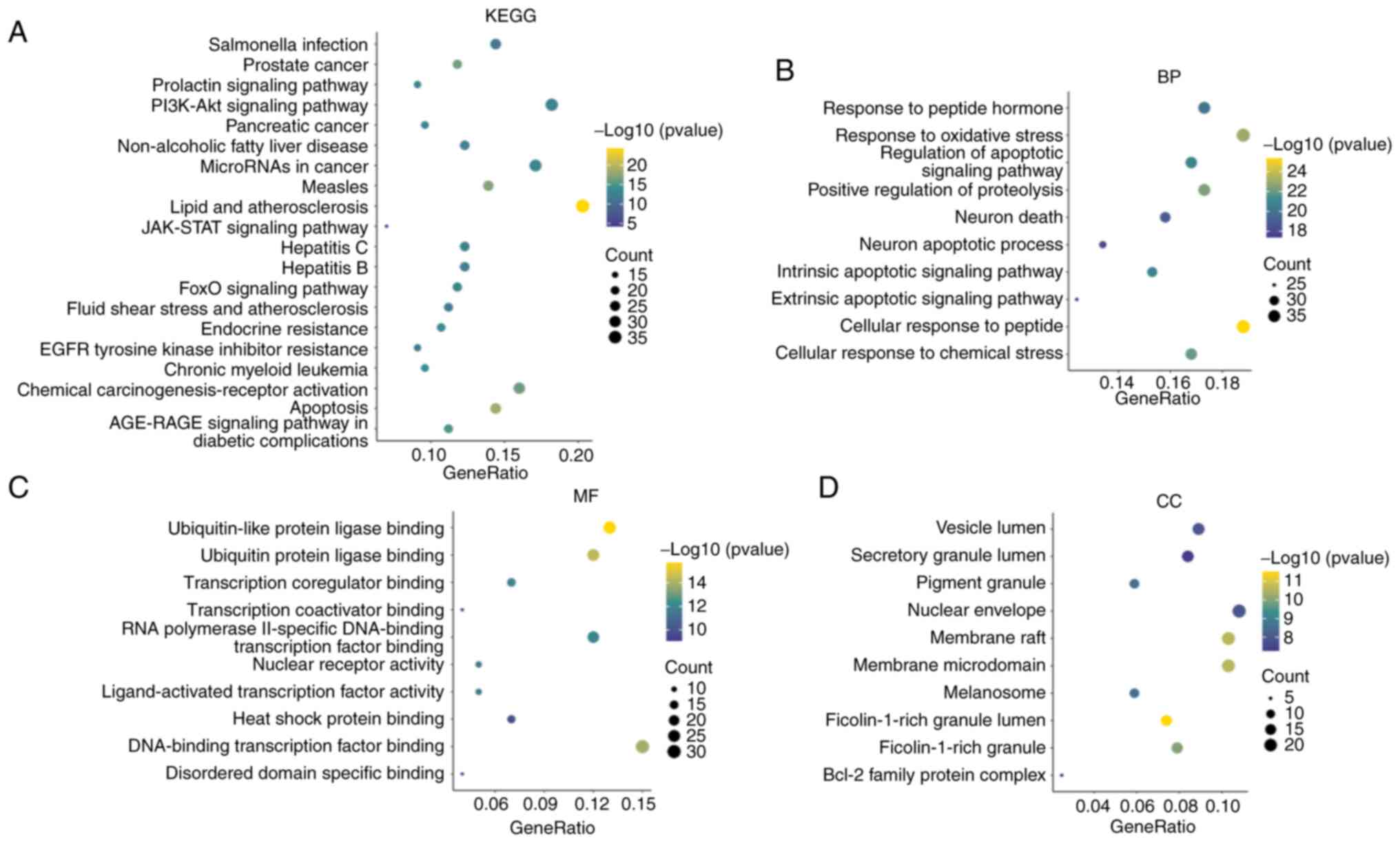
Figure 2

Enrichment analysis of potential
targets of silymarin in multiple myeloma treatment. (A) KEGG
enrichment analysis. Analyses of enriched (B) BP, (C) MF and (D)
CC. The color of the dots is associated with the P-value. The size
of the dots represents the number of genes, and the larger the dots
the more genes there are. KEGG, Kyoto Encyclopedia of Genes and
Genomes; BP, biological processes; MF, molecular functions; CC,
cellular components.

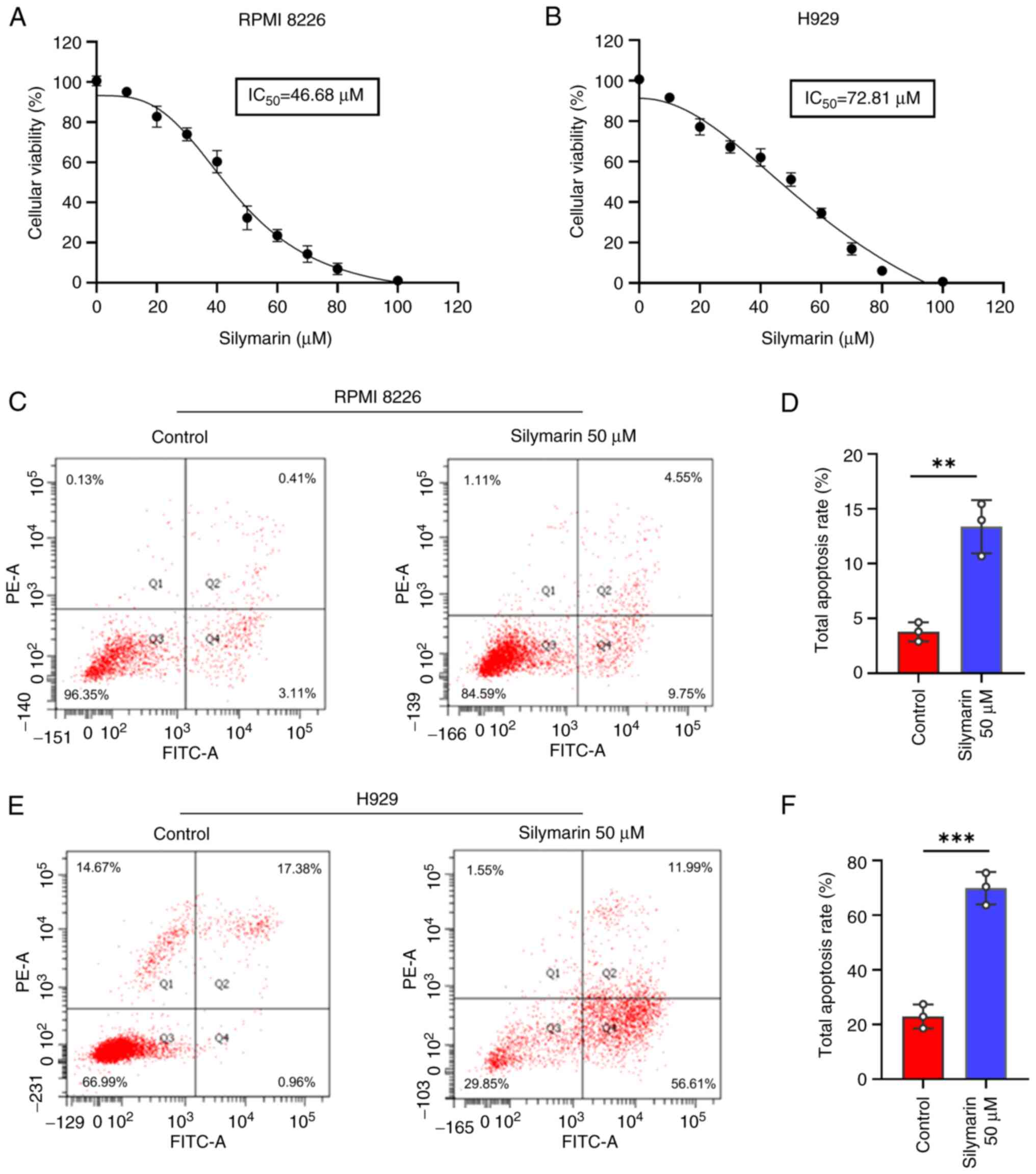
Figure 3

Silymarin induces the apoptosis of MM
cells in vitro. Dose-response curves of silymarin on MM cell
lines, (A) RPMI 8226 and (B) H929, as determined by a Cell Counting
Kit-8 assay. (C and D) Silymarin promoted the apoptosis of RPMI
8226 cells. (E and F) Silymarin promoted the apoptosis of H929
cells. n=3; **P<0.01; ***P<0.001. Error bars indicate
standard deviation. MM, multiple myeloma.

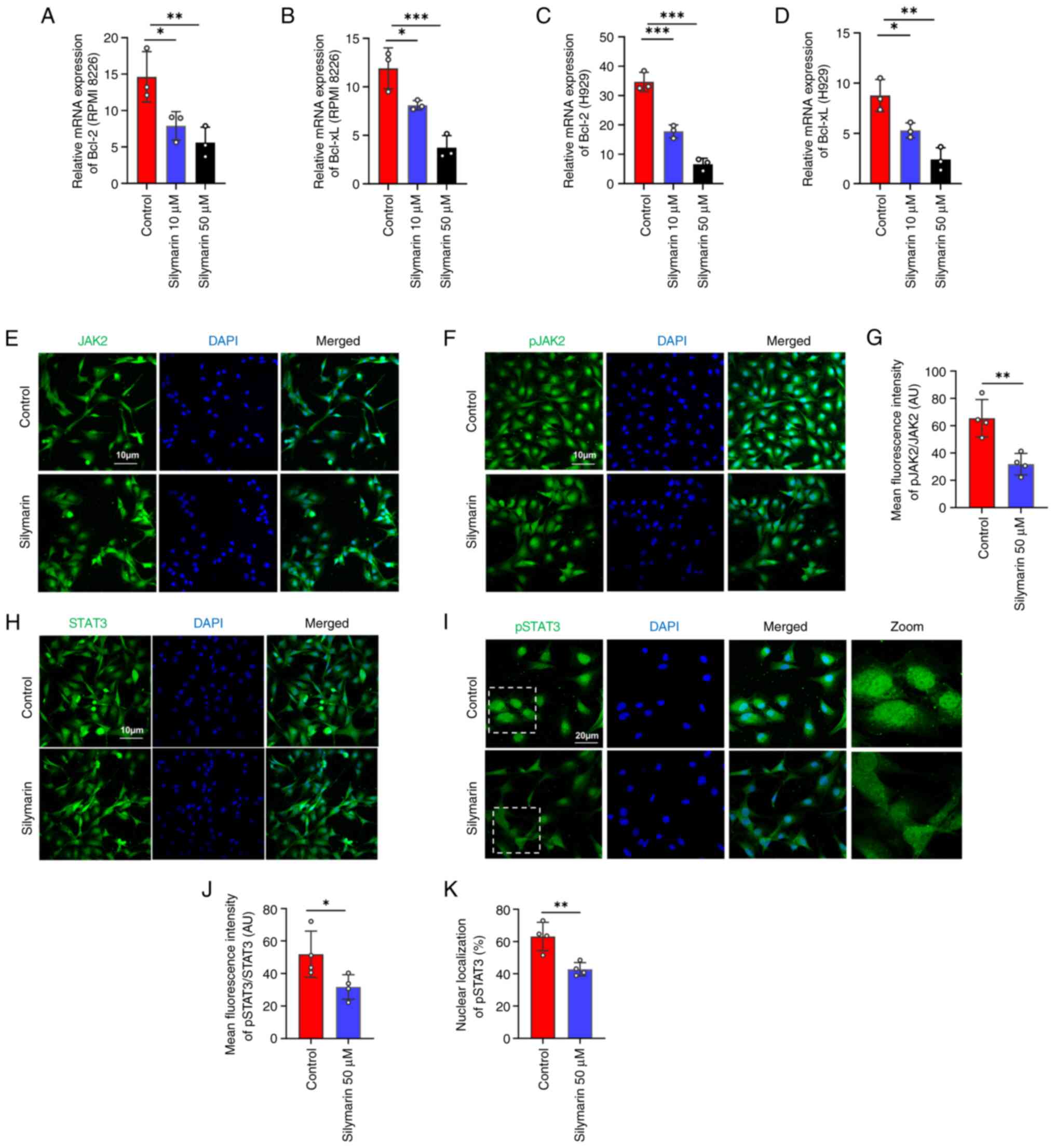
Figure 4

Silymarin inhibits the JAK2/STAT3
signaling pathway in multiple myeloma cells. mRNA expression levels
of (A) Bcl-2 and (B) Bcl-xL in the RPMI 8226 cell line (n=3). mRNA
expression levels of (C) Bcl-2 and (D) Bcl-xL in the H929 cell line
(n=3). Immunofluorescence images of (E) JAK2 and (F) pJAK2. (G)
Semi-quantification of levels of pJAK2 in the RPMI 8226 cell line
(n=4). Immunofluorescence images of (H) STAT3 and (I) pSTAT3.
Semi-quantification of (J) levels of pSTAT3 and (K) nuclear
localization of pSTAT3 in the RPMI 8226 cell line (n=4).
*P<0.05; **P<0.01; ***P<0.001. Error bars indicate
standard deviation. p, phosphorylated; AU, arbitrary units.

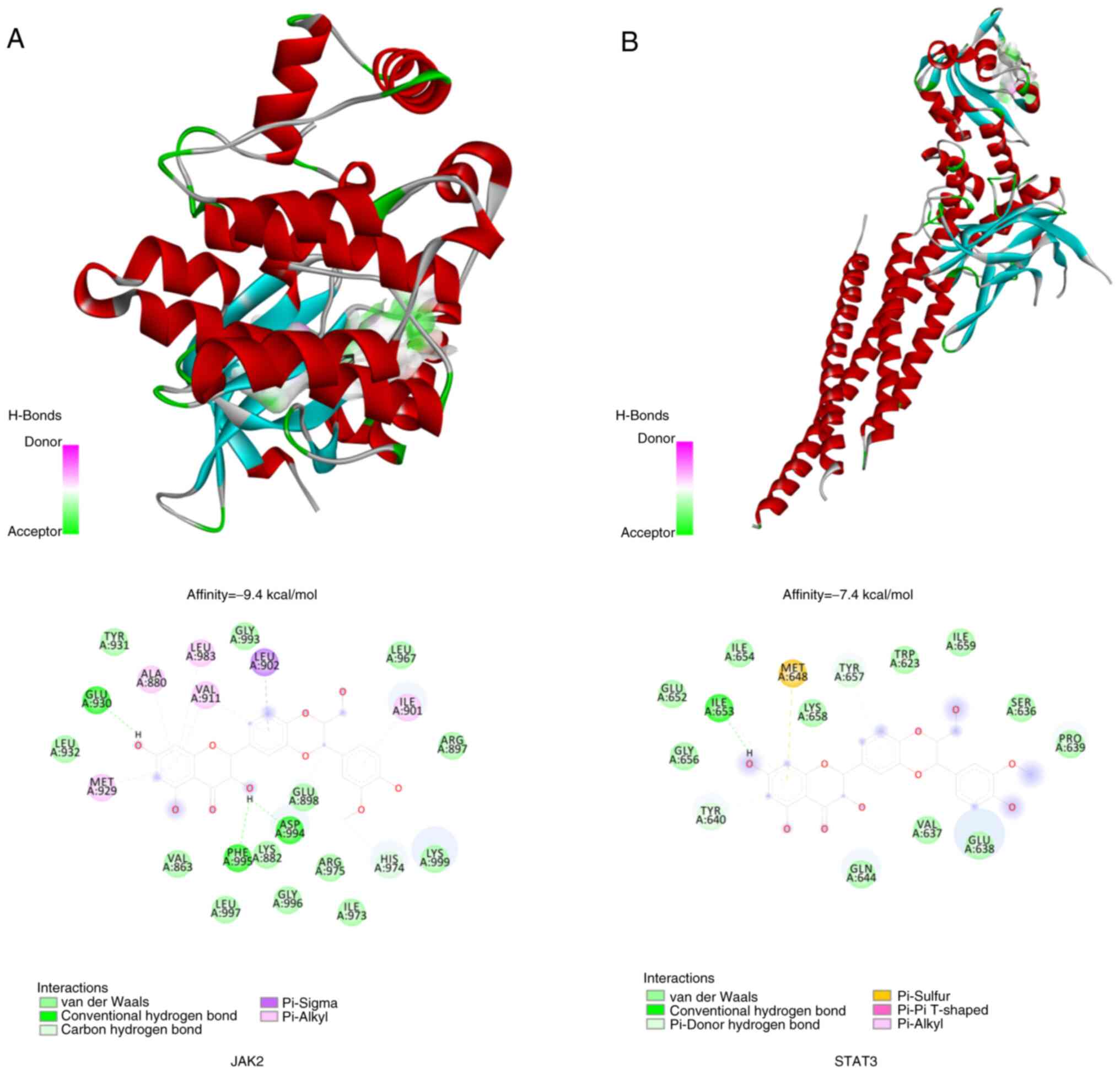
Figure 5

Interaction mode between silymarin
and JAK2/STAT3. (A) Docking diagram of silymarin and JAK2 protein.
(B) Docking diagram of silymarin and STAT3 protein. In addition,
the planar structure of silymarin can be seen in the 2D image.
View References

1 

Raab MS, Podar K, Breitkreutz I, Richardson PG and Anderson KC: Multiple myeloma. Lancet. 374:324–339. 2009. View Article : Google Scholar

2 

Cowan AJ, Green DJ, Kwok M, Lee S, Coffey DG, Holmberg LA, Tuazon S, Gopal AK and Libby EN: Diagnosis and management of multiple myeloma: A review. JAMA. 327:464–477. 2022. View Article : Google Scholar : PubMed/NCBI

3 

Choi T, Ahn W, Shin DW, Han K, Kim D and Chun S: Association between kidney function, proteinuria and the risk of multiple myeloma: A population-based retrospective cohort study in South Korea. Cancer Res Treat. 54:926–936. 2022. View Article : Google Scholar

4 

Korbet SM and Schwartz MM: Multiple myeloma. J Am Soc Nephrol. 17:2533–2545. 2006. View Article : Google Scholar

5 

Rajkumar SV: Myeloma today: Disease definitions and treatment advances. Am J Hematol. 91:90–100. 2016. View Article : Google Scholar

6 

Turesson I, Bjorkholm M, Blimark CH, Kristinsson S, Velez R and Landgren O: Rapidly changing myeloma epidemiology in the general population: Increased incidence, older patients, and longer survival. Eur J Haematol. April 9–2018.(Epub ahead of print). View Article : Google Scholar

7 

Malard F, Neri P, Bahlis NJ, Terpos E, Moukalled N, Hungria VTM, Manier S and Mohty M: Multiple myeloma. Nat Rev Dis Primers. 10:452024. View Article : Google Scholar : PubMed/NCBI

8 

Deng Y, Tu Y, Lao S, Wu M, Yin H, Wang L and Liao W: The role and mechanism of citrus flavonoids in cardiovascular diseases prevention and treatment. Crit Rev Food Sci Nutr. 62:7591–7614. 2022. View Article : Google Scholar : PubMed/NCBI

9 

Majee C, Mazumder R and Choudhary AN: Salahuddin: An insight into the hepatoprotective activity and structure-activity relationships of flavonoids. Mini Rev Med Chem. 23:131–149. 2023. View Article : Google Scholar : PubMed/NCBI

10 

Mohammadi S, Ashtary-Larky D, Asbaghi O, Farrokhi V, Jadidi Y, Mofidi F, Mohammadian M and Afrisham R: Effects of silymarin supplementation on liver and kidney functions: A systematic review and dose-response meta-analysis. Phytother Res. 38:2572–2593. 2024. View Article : Google Scholar : PubMed/NCBI

11 

Gillessen A and Schmidt HH: Silymarin as supportive treatment in liver diseases: A narrative review. Adv Ther. 37:1279–1301. 2020. View Article : Google Scholar : PubMed/NCBI

12 

Wadhwa K, Pahwa R, Kumar M, Kumar S, Sharma PC, Singh G, Verma R, Mittal V, Singh I, Kaushik D and Jeandet P: Mechanistic insights into the pharmacological significance of silymarin. Molecules. 27:53272022. View Article : Google Scholar : PubMed/NCBI

13 

Delmas D, Xiao J, Vejux A and Aires V: Silymarin and cancer: A dual strategy in both in chemoprevention and chemosensitivity. Molecules. 25:20092020. View Article : Google Scholar : PubMed/NCBI

14 

Koltai T and Fliegel L: Role of silymarin in cancer treatment: Facts, hypotheses, and questions. J Evid Based Integr Med. 27:2515690X2110688262022. View Article : Google Scholar : PubMed/NCBI

15 

Feng N, Luo J and Guo X: Silybin suppresses cell proliferation and induces apoptosis of multiple myeloma cells via the PI3K/Akt/mTOR signaling pathway. Mol Med Rep. 13:3243–3248. 2016. View Article : Google Scholar : PubMed/NCBI

16 

UniProt Consortium: UniProt: The universal protein knowledgebase in 2025. Nucleic Acids Res. 53(D1): D609–D617. 2025. View Article : Google Scholar : PubMed/NCBI

17 

Carvalho-Silva D, Pierleoni A, Pignatelli M, Ong C, Fumis L, Karamanis N, Carmona M, Faulconbridge A, Hercules A, McAuley E, et al: Open targets platform: New developments and updates two years on. Nucleic Acids Res. 47(D1): D1056–D1065. 2019. View Article : Google Scholar : PubMed/NCBI

18 

Piñero J, Saüch J, Sanz F and Furlong LI: The DisGeNET cytoscape app: Exploring and visualizing disease genomics data. Comput Struct Biotechnol J. 19:2960–2967. 2021. View Article : Google Scholar

19 

Davis AP, Grondin CJ, Johnson RJ, Sciaky D, McMorran R, Wiegers J, Wiegers TC and Mattingly CJ: The comparative toxicogenomics database: Update 2019. Nucleic Acids Res. 47(D1): D948–D954. 2019. View Article : Google Scholar : PubMed/NCBI

20 

Safran M, Dalah I, Alexander J, Rosen N, Iny Stein T, Shmoish M, Nativ N, Bahir I, Doniger T, Krug H, et al: GeneCards version 3: The human gene integrator. Database (Oxford). 2010:baq0202010. View Article : Google Scholar : PubMed/NCBI

21 

Dennis G Jr, Sherman BT, Hosack DA, Yang J, Gao W, Lane HC and Lempicki RA: DAVID: Database for annotation, visualization, and integrated discovery. Genome Biol. 4:P32003. View Article : Google Scholar

22 

Shannon P, Markiel A, Ozier O, Baliga NS, Wang JT, Ramage D, Amin N, Schwikowski B and Ideker T: Cytoscape: A software environment for integrated models of biomolecular interaction networks. Genome Res. 13:2498–2504. 2003. View Article : Google Scholar : PubMed/NCBI

23 

Szklarczyk D, Morris JH, Cook H, Kuhn M, Wyder S, Simonovic M, Santos A, Doncheva NT, Roth A, Bork P, et al: The STRING database in 2017: Quality-controlled protein-protein association networks, made broadly accessible. Nucleic Acids Res. 45(D1): D362–D368. 2017. View Article : Google Scholar : PubMed/NCBI

24 

Karbalaei R, Allahyari M, Rezaei-Tavirani M, Asadzadeh-Aghdaei H and Zali MR: Protein-protein interaction analysis of Alzheimer's disease and NAFLD based on systems biology methods unhide common ancestor pathways. Gastroenterol Hepatol Bed Bench. 11:27–33. 2018.PubMed/NCBI

25 

Assenov Y, Ramírez F, Schelhorn SE, Lengauer T and Albrecht M: Computing topological parameters of biological networks. Bioinformatics. 24:282–284. 2008. View Article : Google Scholar : PubMed/NCBI

26 

Yu G, Wang LG, Han Y and He QY: clusterProfiler: An R package for comparing biological themes among gene clusters. OMICS. 16:284–287. 2012. View Article : Google Scholar : PubMed/NCBI

27 

Trott O and Olson AJ: AutoDock Vina: Improving the speed and accuracy of docking with a new scoring function, efficient optimization, and multithreading. J Comput Chem. 31:455–461. 2010. View Article : Google Scholar : PubMed/NCBI

28 

Kim S, Thiessen PA, Bolton EE, Chen J, Fu G, Gindulyte A, Han L, He J, He S, Shoemaker BA, et al: PubChem substance and compound databases. Nucleic Acids Res. 44(D1): D1202–D1213. 2016. View Article : Google Scholar : PubMed/NCBI

29 

O'Boyle NM, Banck M, James CA, Morley C, Vandermeersch T and Hutchison GR: Open Babel: An open chemical toolbox. J Cheminform. 3:332011. View Article : Google Scholar

30 

Karuppasamy MP, Venkateswaran S and Subbiah P: PDB-2-PBv3.0: An updated protein block database. J Bioinform Comput Biol. 18:20500092020. View Article : Google Scholar

31 

Li B, Rui J, Ding X and Yang X: Exploring the multicomponent synergy mechanism of Banxia Xiexin Decoction on irritable bowel syndrome by a systems pharmacology strategy. J Ethnopharmacol. 233:158–168. 2019. View Article : Google Scholar

32 

Li X, Xu X, Wang J, Yu H, Wang X, Yang H, Xu H, Tang S, Li Y, Yang L, et al: A system-level investigation into the mechanisms of Chinese traditional medicine: Compound danshen formula for cardiovascular disease treatment. PLoS One. 7:e439182012. View Article : Google Scholar : PubMed/NCBI

33 

Zhang P, Zhang D, Zhou W, Wang L, Wang B, Zhang T and Li S: Network pharmacology: Towards the artificial intelligence-based precision traditional Chinese medicine. Brief Bioinform. 25:bbad5182023. View Article : Google Scholar : PubMed/NCBI

34 

Hu X, Li J, Fu M, Zhao X and Wang W: The JAK/STAT signaling pathway: From bench to clinic. Signal Transduct Target Ther. 6:4022021. View Article : Google Scholar : PubMed/NCBI

35 

Fruman DA and Rommel C: PI3K and cancer: Lessons, challenges and opportunities. Nat Rev Drug Discov. 13:140–156. 2014. View Article : Google Scholar : PubMed/NCBI

36 

Ma J, Matkar S, He X and Hua X: FOXO family in regulating cancer and metabolism. Semin Cancer Biol. 50:32–41. 2018. View Article : Google Scholar

37 

Bosch-Barrera J and Menendez JA: Silibinin and STAT3: A natural way of targeting transcription factors for cancer therapy. Cancer Treat Rev. 41:540–546. 2015. View Article : Google Scholar : PubMed/NCBI

38 

Liakopoulou C, Kazazis C and Vallianou NG: Silimarin and cancer. Anticancer Agents Med Chem. 18:1970–1974. 2018. View Article : Google Scholar : PubMed/NCBI

39 

Kim SH, Choo GS, Yoo ES, Woo JS, Lee JH, Han SH, Jung SH, Kim HJ and Jung JY: Silymarin inhibits proliferation of human breast cancer cells via regulation of the MAPK signaling pathway and induction of apoptosis. Oncol Lett. 21:4922021. View Article : Google Scholar

40 

Yu L, Li T, Zhang H, Ma Z and Wu S: Silymarin suppresses proliferation of human hepatocellular carcinoma cells under hypoxia through downregulation of the HIF-1α/VEGF pathway. Am J Transl Res. 15:4521–4532. 2023.PubMed/NCBI

41 

Borensztejn A, Boissoneau E, Fernandez G, Agnès F and Pret AM: JAK/STAT autocontrol of ligand-producing cell number through apoptosis. Development. 140:195–204. 2013. View Article : Google Scholar

42 

Weber-Nordt RM, Mertelsmann R and Finke J: The JAK-STAT pathway: signal transduction involved in proliferation, differentiation and transformation. Leuk Lymphoma. 28:459–467. 1998. View Article : Google Scholar

43 

Bharti AC, Shishodia S, Reuben JM, Weber D, Alexanian R, Raj-Vadhan S, Estrov Z, Talpaz M and Aggarwal BB: Nuclear factor-kappaB and STAT3 are constitutively active in CD138+ cells derived from multiple myeloma patients, and suppression of these transcription factors leads to apoptosis. Blood. 103:3175–3184. 2004. View Article : Google Scholar : PubMed/NCBI

44 

Corvinus FM, Orth C, Moriggl R, Tsareva SA, Wagner S, Pfitzner EB, Baus D, Kaufmann R, Huber LA, Zatloukal K, et al: Persistent STAT3 activation in colon cancer is associated with enhanced cell proliferation and tumor growth. Neoplasia. 7:545–555. 2005. View Article : Google Scholar

45 

Hodge DR, Hurt EM and Farrar WL: The role of IL-6 and STAT3 in inflammation and cancer. Eur J Cancer. 41:2502–2512. 2005. View Article : Google Scholar : PubMed/NCBI

46 

Shi Z, Zhou Q, Gao S, Li W, Li X, Liu Z, Jin P and Jiang J: Silibinin inhibits endometrial carcinoma via blocking pathways of STAT3 activation and SREBP1-mediated lipid accumulation. Life Sci. 217:70–80. 2019. View Article : Google Scholar

47 

Soleimani V, Delghandi PS, Moallem SA and Karimi G: Safety and toxicity of silymarin, the major constituent of milk thistle extract: An updated review. Phytother Res. 33:1627–1638. 2019. View Article : Google Scholar : PubMed/NCBI

48 

Yao ZJ, Dong J, Che YJ, Zhu MF, Wen M, Wang NN, Wang S, Lu AP and Cao DS: TargetNet: A web service for predicting potential drug-target interaction profiling via multi-target SAR models. J Comput Aided Mol Des. 30:413–424. 2016. View Article : Google Scholar : PubMed/NCBI

49 

Gfeller D, Grosdidier A, Wirth M, Daina A, Michielin O and Zoete V: SwissTargetPrediction: A web server for target prediction of bioactive small molecules. Nucleic Acids Res. 42((Web Server Issue)): W32–W38. 2014. View Article : Google Scholar : PubMed/NCBI

50 

Bosc N, Atkinson F, Felix E, Gaulton A, Hersey A and Leach AR: Large scale comparison of QSAR and conformal prediction methods and their applications in drug discovery. J Cheminform. 11:42019. View Article : Google Scholar : PubMed/NCBI

51 

Liu Z, Guo F, Wang Y, Li C, Zhang X, Li H, Diao L, Gu J, Wang W, Li D and He F: BATMAN-TCM: A bioinformatics analysis tool for molecular mechANism of traditional Chinese medicine. Sci Rep. 6:211462016. View Article : Google Scholar : PubMed/NCBI

52 

Szklarczyk D, Santos A, von Mering C, Jensen LJ, Bork P and Kuhn M: STITCH 5: Augmenting protein-chemical interaction networks with tissue and affinity data. Nucleic Acids Res. 44(D1): D380–D384. 2016. View Article : Google Scholar : PubMed/NCBI

53 

Wishart DS, Feunang YD, Guo AC, Lo EJ, Marcu A, Grant JR, Sajed T, Johnson D, Li C, Sayeeda Z, et al: DrugBank 5.0: A major update to the DrugBank database for 2018. Nucleic Acids Res. 46(D1): D1074–D1082. 2018. View Article : Google Scholar : PubMed/NCBI

54 

Wang Y, Zhang S, Li F, Zhou Y, Zhang Y, Wang Z, Zhang R, Zhu J, Ren Y, Tan Y, et al: Therapeutic target database 2020: Enriched resource for facilitating research and early development of targeted therapeutics. Nucleic Acids Res. 48(D1): D1031–D1041. 2020. View Article : Google Scholar : PubMed/NCBI

55 

Gaulton A, Hersey A, Nowotka M, Bento AP, Chambers J, Mendez D, Mutowo P, Atkinson F, Bellis LJ, Cibrián-Uhalte E, et al: The ChEMBL database in 2017. Nucleic Acids Res. 45(D1): D945–D954. 2017. View Article : Google Scholar : PubMed/NCBI

56 

Davis AP, Wiegers TC, Johnson RJ, Sciaky D, Wiegers J and Mattingly CJ: Comparative toxicogenomics database (CTD): Update 2023. Nucleic Acids Res. 51(D1): D1257–D1262. 2023. View Article : Google Scholar : PubMed/NCBI

Related Articles

  • Abstract
  • View
  • Download
  • Twitter
Copy and paste a formatted citation
Spandidos Publications style
Liu H, Liu T, Zeng J and Fang Q: Silymarin induces multiple myeloma cell apoptosis by inhibiting the JAK2/STAT3 signaling pathway. Oncol Lett 30: 426, 2025.
APA
Liu, H., Liu, T., Zeng, J., & Fang, Q. (2025). Silymarin induces multiple myeloma cell apoptosis by inhibiting the JAK2/STAT3 signaling pathway. Oncology Letters, 30, 426. https://doi.org/10.3892/ol.2025.15172
MLA
Liu, H., Liu, T., Zeng, J., Fang, Q."Silymarin induces multiple myeloma cell apoptosis by inhibiting the JAK2/STAT3 signaling pathway". Oncology Letters 30.3 (2025): 426.
Chicago
Liu, H., Liu, T., Zeng, J., Fang, Q."Silymarin induces multiple myeloma cell apoptosis by inhibiting the JAK2/STAT3 signaling pathway". Oncology Letters 30, no. 3 (2025): 426. https://doi.org/10.3892/ol.2025.15172
Copy and paste a formatted citation
x
Spandidos Publications style
Liu H, Liu T, Zeng J and Fang Q: Silymarin induces multiple myeloma cell apoptosis by inhibiting the JAK2/STAT3 signaling pathway. Oncol Lett 30: 426, 2025.
APA
Liu, H., Liu, T., Zeng, J., & Fang, Q. (2025). Silymarin induces multiple myeloma cell apoptosis by inhibiting the JAK2/STAT3 signaling pathway. Oncology Letters, 30, 426. https://doi.org/10.3892/ol.2025.15172
MLA
Liu, H., Liu, T., Zeng, J., Fang, Q."Silymarin induces multiple myeloma cell apoptosis by inhibiting the JAK2/STAT3 signaling pathway". Oncology Letters 30.3 (2025): 426.
Chicago
Liu, H., Liu, T., Zeng, J., Fang, Q."Silymarin induces multiple myeloma cell apoptosis by inhibiting the JAK2/STAT3 signaling pathway". Oncology Letters 30, no. 3 (2025): 426. https://doi.org/10.3892/ol.2025.15172
Follow us
  • Twitter
  • LinkedIn
  • Facebook
About
  • Spandidos Publications
  • Careers
  • Cookie Policy
  • Privacy Policy
How can we help?
  • Help
  • Live Chat
  • Contact
  • Email to our Support Team