Spandidos Publications Logo
  • About
    • About Spandidos
    • Aims and Scopes
    • Abstracting and Indexing
    • Editorial Policies
    • Reprints and Permissions
    • Job Opportunities
    • Terms and Conditions
    • Contact
  • Journals
    • All Journals
    • Oncology Letters
      • Oncology Letters
      • Information for Authors
      • Editorial Policies
      • Editorial Board
      • Aims and Scope
      • Abstracting and Indexing
      • Bibliographic Information
      • Archive
    • International Journal of Oncology
      • International Journal of Oncology
      • Information for Authors
      • Editorial Policies
      • Editorial Board
      • Aims and Scope
      • Abstracting and Indexing
      • Bibliographic Information
      • Archive
    • Molecular and Clinical Oncology
      • Molecular and Clinical Oncology
      • Information for Authors
      • Editorial Policies
      • Editorial Board
      • Aims and Scope
      • Abstracting and Indexing
      • Bibliographic Information
      • Archive
    • Experimental and Therapeutic Medicine
      • Experimental and Therapeutic Medicine
      • Information for Authors
      • Editorial Policies
      • Editorial Board
      • Aims and Scope
      • Abstracting and Indexing
      • Bibliographic Information
      • Archive
    • International Journal of Molecular Medicine
      • International Journal of Molecular Medicine
      • Information for Authors
      • Editorial Policies
      • Editorial Board
      • Aims and Scope
      • Abstracting and Indexing
      • Bibliographic Information
      • Archive
    • Biomedical Reports
      • Biomedical Reports
      • Information for Authors
      • Editorial Policies
      • Editorial Board
      • Aims and Scope
      • Abstracting and Indexing
      • Bibliographic Information
      • Archive
    • Oncology Reports
      • Oncology Reports
      • Information for Authors
      • Editorial Policies
      • Editorial Board
      • Aims and Scope
      • Abstracting and Indexing
      • Bibliographic Information
      • Archive
    • Molecular Medicine Reports
      • Molecular Medicine Reports
      • Information for Authors
      • Editorial Policies
      • Editorial Board
      • Aims and Scope
      • Abstracting and Indexing
      • Bibliographic Information
      • Archive
    • World Academy of Sciences Journal
      • World Academy of Sciences Journal
      • Information for Authors
      • Editorial Policies
      • Editorial Board
      • Aims and Scope
      • Abstracting and Indexing
      • Bibliographic Information
      • Archive
    • International Journal of Functional Nutrition
      • International Journal of Functional Nutrition
      • Information for Authors
      • Editorial Policies
      • Editorial Board
      • Aims and Scope
      • Abstracting and Indexing
      • Bibliographic Information
      • Archive
    • International Journal of Epigenetics
      • International Journal of Epigenetics
      • Information for Authors
      • Editorial Policies
      • Editorial Board
      • Aims and Scope
      • Abstracting and Indexing
      • Bibliographic Information
      • Archive
    • Medicine International
      • Medicine International
      • Information for Authors
      • Editorial Policies
      • Editorial Board
      • Aims and Scope
      • Abstracting and Indexing
      • Bibliographic Information
      • Archive
  • Articles
  • Information
    • Information for Authors
    • Information for Reviewers
    • Information for Librarians
    • Information for Advertisers
    • Conferences
  • Language Editing
Spandidos Publications Logo
  • About
    • About Spandidos
    • Aims and Scopes
    • Abstracting and Indexing
    • Editorial Policies
    • Reprints and Permissions
    • Job Opportunities
    • Terms and Conditions
    • Contact
  • Journals
    • All Journals
    • Biomedical Reports
      • Information for Authors
      • Editorial Policies
      • Editorial Board
      • Aims and Scope
      • Abstracting and Indexing
      • Bibliographic Information
      • Archive
    • Experimental and Therapeutic Medicine
      • Information for Authors
      • Editorial Policies
      • Editorial Board
      • Aims and Scope
      • Abstracting and Indexing
      • Bibliographic Information
      • Archive
    • International Journal of Epigenetics
      • Information for Authors
      • Editorial Policies
      • Editorial Board
      • Aims and Scope
      • Abstracting and Indexing
      • Bibliographic Information
      • Archive
    • International Journal of Functional Nutrition
      • Information for Authors
      • Editorial Policies
      • Editorial Board
      • Aims and Scope
      • Abstracting and Indexing
      • Bibliographic Information
      • Archive
    • International Journal of Molecular Medicine
      • Information for Authors
      • Editorial Policies
      • Editorial Board
      • Aims and Scope
      • Abstracting and Indexing
      • Bibliographic Information
      • Archive
    • International Journal of Oncology
      • Information for Authors
      • Editorial Policies
      • Editorial Board
      • Aims and Scope
      • Abstracting and Indexing
      • Bibliographic Information
      • Archive
    • Medicine International
      • Information for Authors
      • Editorial Policies
      • Editorial Board
      • Aims and Scope
      • Abstracting and Indexing
      • Bibliographic Information
      • Archive
    • Molecular and Clinical Oncology
      • Information for Authors
      • Editorial Policies
      • Editorial Board
      • Aims and Scope
      • Abstracting and Indexing
      • Bibliographic Information
      • Archive
    • Molecular Medicine Reports
      • Information for Authors
      • Editorial Policies
      • Editorial Board
      • Aims and Scope
      • Abstracting and Indexing
      • Bibliographic Information
      • Archive
    • Oncology Letters
      • Information for Authors
      • Editorial Policies
      • Editorial Board
      • Aims and Scope
      • Abstracting and Indexing
      • Bibliographic Information
      • Archive
    • Oncology Reports
      • Information for Authors
      • Editorial Policies
      • Editorial Board
      • Aims and Scope
      • Abstracting and Indexing
      • Bibliographic Information
      • Archive
    • World Academy of Sciences Journal
      • Information for Authors
      • Editorial Policies
      • Editorial Board
      • Aims and Scope
      • Abstracting and Indexing
      • Bibliographic Information
      • Archive
  • Articles
  • Information
    • For Authors
    • For Reviewers
    • For Librarians
    • For Advertisers
    • Conferences
  • Language Editing
Login Register Submit
  • This site uses cookies
  • You can change your cookie settings at any time by following the instructions in our Cookie Policy. To find out more, you may read our Privacy Policy.

    I agree
Search articles by DOI, keyword, author or affiliation
Search
Advanced Search
presentation
Oncology Letters
Join Editorial Board Propose a Special Issue
Print ISSN: 1792-1074 Online ISSN: 1792-1082
Journal Cover
September-2025 Volume 30 Issue 3

Full Size Image

Sign up for eToc alerts
Recommend to Library

Journals

International Journal of Molecular Medicine

International Journal of Molecular Medicine

International Journal of Molecular Medicine is an international journal devoted to molecular mechanisms of human disease.

International Journal of Oncology

International Journal of Oncology

International Journal of Oncology is an international journal devoted to oncology research and cancer treatment.

Molecular Medicine Reports

Molecular Medicine Reports

Covers molecular medicine topics such as pharmacology, pathology, genetics, neuroscience, infectious diseases, molecular cardiology, and molecular surgery.

Oncology Reports

Oncology Reports

Oncology Reports is an international journal devoted to fundamental and applied research in Oncology.

Experimental and Therapeutic Medicine

Experimental and Therapeutic Medicine

Experimental and Therapeutic Medicine is an international journal devoted to laboratory and clinical medicine.

Oncology Letters

Oncology Letters

Oncology Letters is an international journal devoted to Experimental and Clinical Oncology.

Biomedical Reports

Biomedical Reports

Explores a wide range of biological and medical fields, including pharmacology, genetics, microbiology, neuroscience, and molecular cardiology.

Molecular and Clinical Oncology

Molecular and Clinical Oncology

International journal addressing all aspects of oncology research, from tumorigenesis and oncogenes to chemotherapy and metastasis.

World Academy of Sciences Journal

World Academy of Sciences Journal

Multidisciplinary open-access journal spanning biochemistry, genetics, neuroscience, environmental health, and synthetic biology.

International Journal of Functional Nutrition

International Journal of Functional Nutrition

Open-access journal combining biochemistry, pharmacology, immunology, and genetics to advance health through functional nutrition.

International Journal of Epigenetics

International Journal of Epigenetics

Publishes open-access research on using epigenetics to advance understanding and treatment of human disease.

Medicine International

Medicine International

An International Open Access Journal Devoted to General Medicine.

Journal Cover
September-2025 Volume 30 Issue 3

Full Size Image

Sign up for eToc alerts
Recommend to Library

  • Article
  • Citations
    • Cite This Article
    • Download Citation
    • Create Citation Alert
    • Remove Citation Alert
    • Cited By
  • Similar Articles
    • Related Articles (in Spandidos Publications)
    • Similar Articles (Google Scholar)
    • Similar Articles (PubMed)
  • Download PDF
  • Download XML
  • View XML

  • Supplementary Files
    • Supplementary_Data1.xlsx
    • Supplementary_Data2.xlsx
    • Supplementary_Data3.xlsx
    • Supplementary_Data4.xlsx
    • Supplementary_Data5.xlsx
Article Open Access

A novel defined manganese metabolism‑related gene signature for predicting the prognosis of pancreatic ductal adenocarcinoma

  • Authors:
    • Zichao Xiong
    • Zhen Zhang
    • Shaodan Cheng
    • Shaohua Liao
  • View Affiliations / Copyright

    Affiliations: Department of Rehabilitation, Guanghua Hospital Affiliated to Shanghai University of Traditional Chinese Medicine, Shanghai 200050, P.R. China, Department of Rehabilitation, Shanghai Guanghua Hospital of Integrative Medicine, Shanghai University of Traditional Chinese Medicine, Shanghai 201203, P.R. China
    Copyright: © Xiong et al. This is an open access article distributed under the terms of Creative Commons Attribution License.
  • Article Number: 436
    |
    Published online on: July 9, 2025
       https://doi.org/10.3892/ol.2025.15182
  • Expand metrics +
Metrics: Total Views: 0 (Spandidos Publications: | PMC Statistics: )
Metrics: Total PDF Downloads: 0 (Spandidos Publications: | PMC Statistics: )
Cited By (CrossRef): 0 citations Loading Articles...

This article is mentioned in:


Abstract

Pancreatic ductal adenocarcinoma (PDAC) represents a particularly aggressive and highly malignant neoplasm, characterized by its unfavorable prognosis and restricted treatment alternatives. The present study aimed to use bioinformatics methodologies to assess transcriptomic data sourced from The Cancer Genome Atlas and the Gene Expression Omnibus to pinpoint biomarkers associated with manganese metabolism that may forecast outcomes in PDAC. Utilizing differential expression analysis, Least Absolute Shrinkage and Selection Operator regression and multivariable Cox regression, 12 essential genes were identified that demonstrate notable associations with the prognosis of PDAC (Natriuretic Peptide A, Kynureninase, Integrin Subunit β6, Cytochrome P450 Family 27 Subfamily A Member 1, C‑X‑C Motif Chemokine Ligand 10, Protein Phosphatase 2 Regulatory Subunit Bβ, MET Proto‑Oncogene Receptor Tyrosine Kinase, Matrix Metalloproteinase 3, Keratin 19, ATPase Na+/K+ Transporting Subunit α3, Pyridoxal Phosphatase and Interleukin 1 Receptor Accessory Protein Like 2). The validation of these genes was performing using both a training cohort and external datasets (GSE62452 and GSE28735), demonstrating the robustness of the model with area under the curve values of 0.82 and 0.83 in the training set and the external validation cohort, respectively. The results of the present study further elucidated the molecular processes underlying PDAC and highlight the crucial importance of manganese metabolism in its development. These biomarkers may provide significant prognostic insights and facilitate the advancement of targeted therapeutic strategies for PDAC.
View Figures

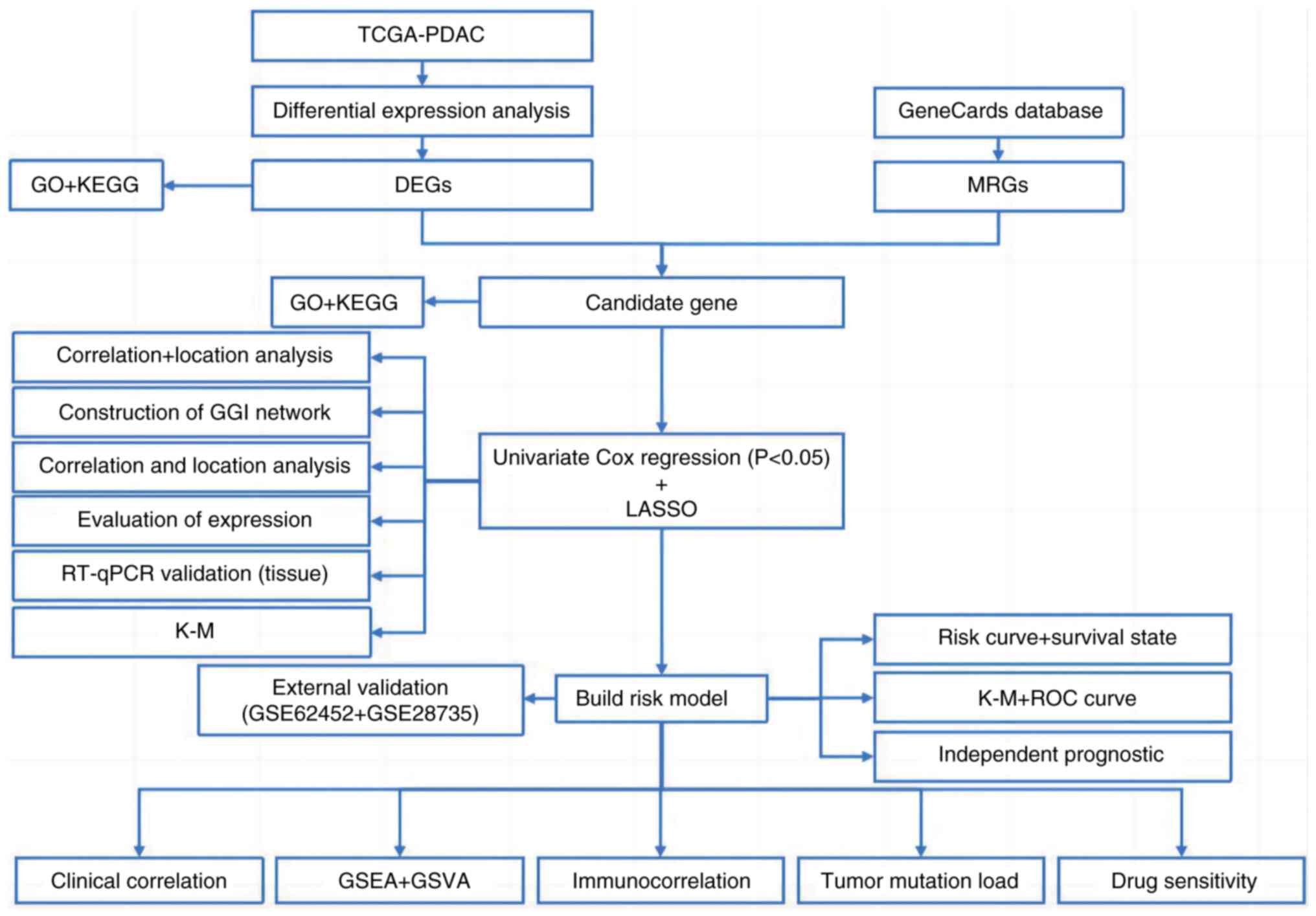
Figure 1

Workflow diagram. TCGA, The Cancer
Genome Atlas; PDAC, pancreatic ductal adenocarcinoma; GO, Gene
Ontology; KEGG, Kyoto Encyclopedia of Genes and Genomes; DEGs,
differentially expressed genes; MRGs, metabolism-related genes;
GGI, gene-gene interaction; RT-qPCR, reverse
transcription-quantitative PCR; K-M, Kaplan-Meier; LASSO, Least
Absolute Shrinkage and Selection Operator; ROC, Receiver Operating
Characteristic; GSEA, Gene Set Enrichment Analysis; GSVA, Gene Set
Variation Analysis.

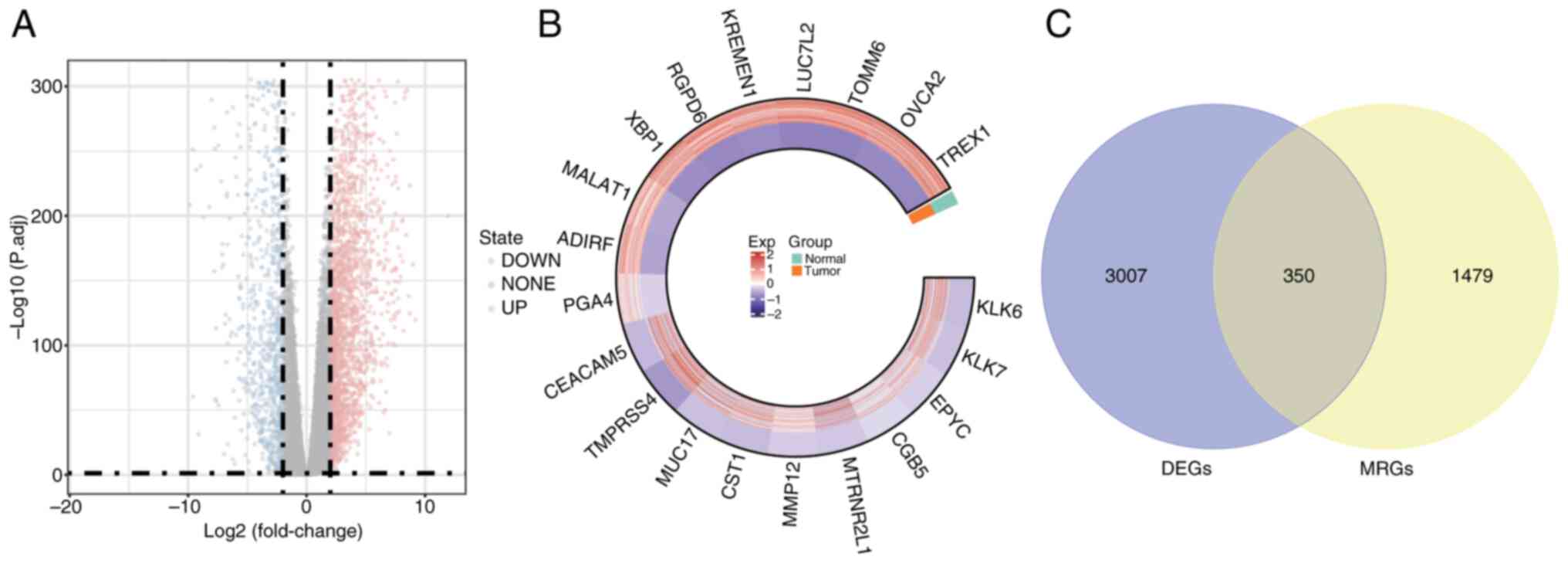
Figure 2

Differential expression analysis and
candidate gene identification. (A) Volcano plot illustrating the
distribution of DEGs between tumor and normal samples. The top 10
upregulated and downregulated genes with the highest
|log2(FoldChange)| are annotated. (B) Heatmap showing
the expression levels of DEGs, with red indicating upregulation and
blue indicating downregulation. (C) Venn diagram of candidate
genes. DEGs, differentially expressed genes; MRGs,
metabolism-related genes.

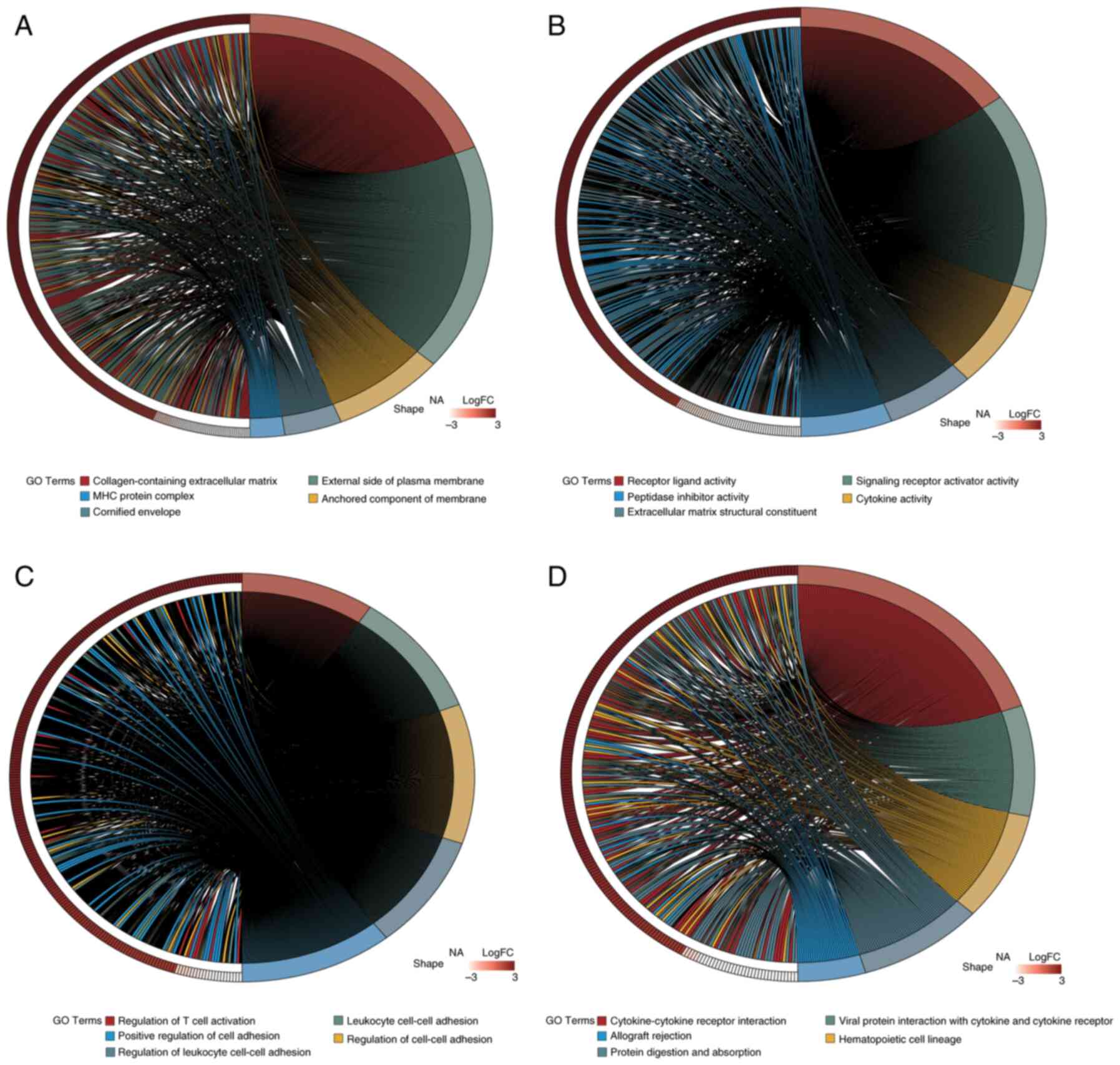
Figure 3

Enrichment analysis results of
differentially expressed genes. Circos plots illustrating the
results of GO enrichment analysis for different categories: (A)
Biological Process, (B) Molecular Function and (C) Cellular
Component. (D) Circos plot showing the results of KEGG pathway
enrichment analysis. In the figure, ‘NA’ within the ‘shape’
category indicates that the shape of the data points is not
applicable or not defined for the corresponding GO terms or
pathways. The top 5 pathways with an adjusted P-value of <0.05
from both GO and KEGG enrichment analyses are annotated in the
plots. GO, Gene Ontology; KEGG, Kyoto Encyclopedia of Genes and
Genomes; FC, fold change; MHC, major histocompatibility
complex.

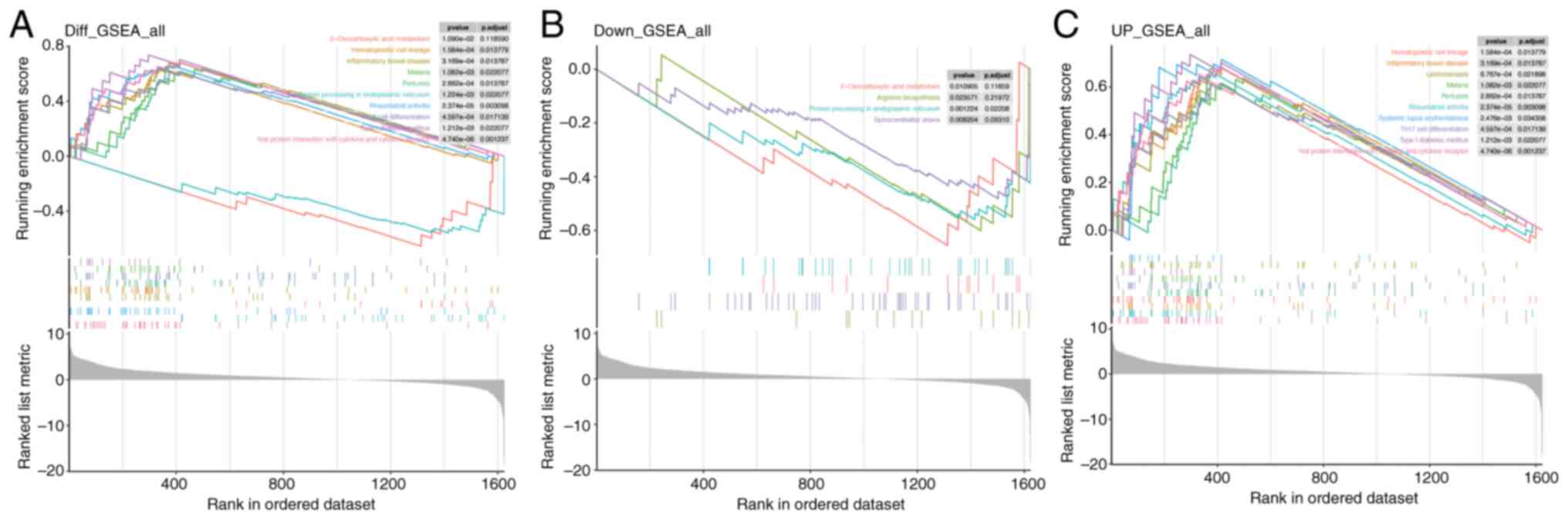
Figure 4

GSEA results for manganese metabolism
pathways. (A) Overall, (B) downregulated genes and (C) upregulated
genes. GSEA, Gene Set Enrichment Analysis.

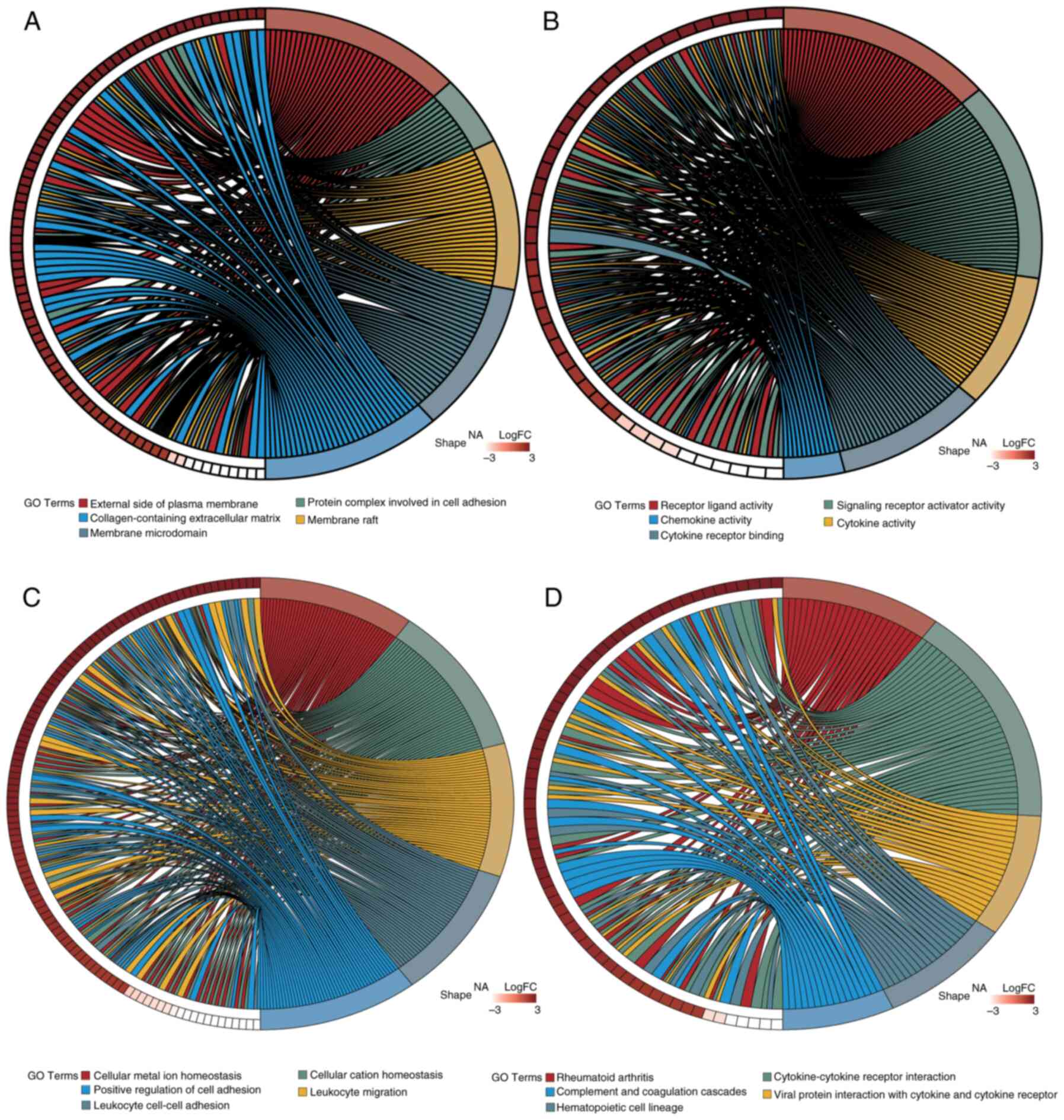
Figure 5

Results of GO and KEGG enrichment
analyses. Circos plots displaying the results of GO enrichment
analysis for the following categories: (A) Biological Process, (B)
Molecular Function and (C) Cellular Component. (D) Circos plot
illustrating the KEGG pathway enrichment analysis results. In the
figure, ‘NA’ within the ‘shape’ category indicates that the shape
of the data points is not applicable or not defined for the
corresponding GO terms or pathways. The top 5 pathways with an
adjusted P-value of <0.05 from both GO and KEGG enrichment
analyses are annotated in the plots. GO, Gene Ontology; KEGG, Kyoto
Encyclopedia of Genes and Genomes; FC, fold change.

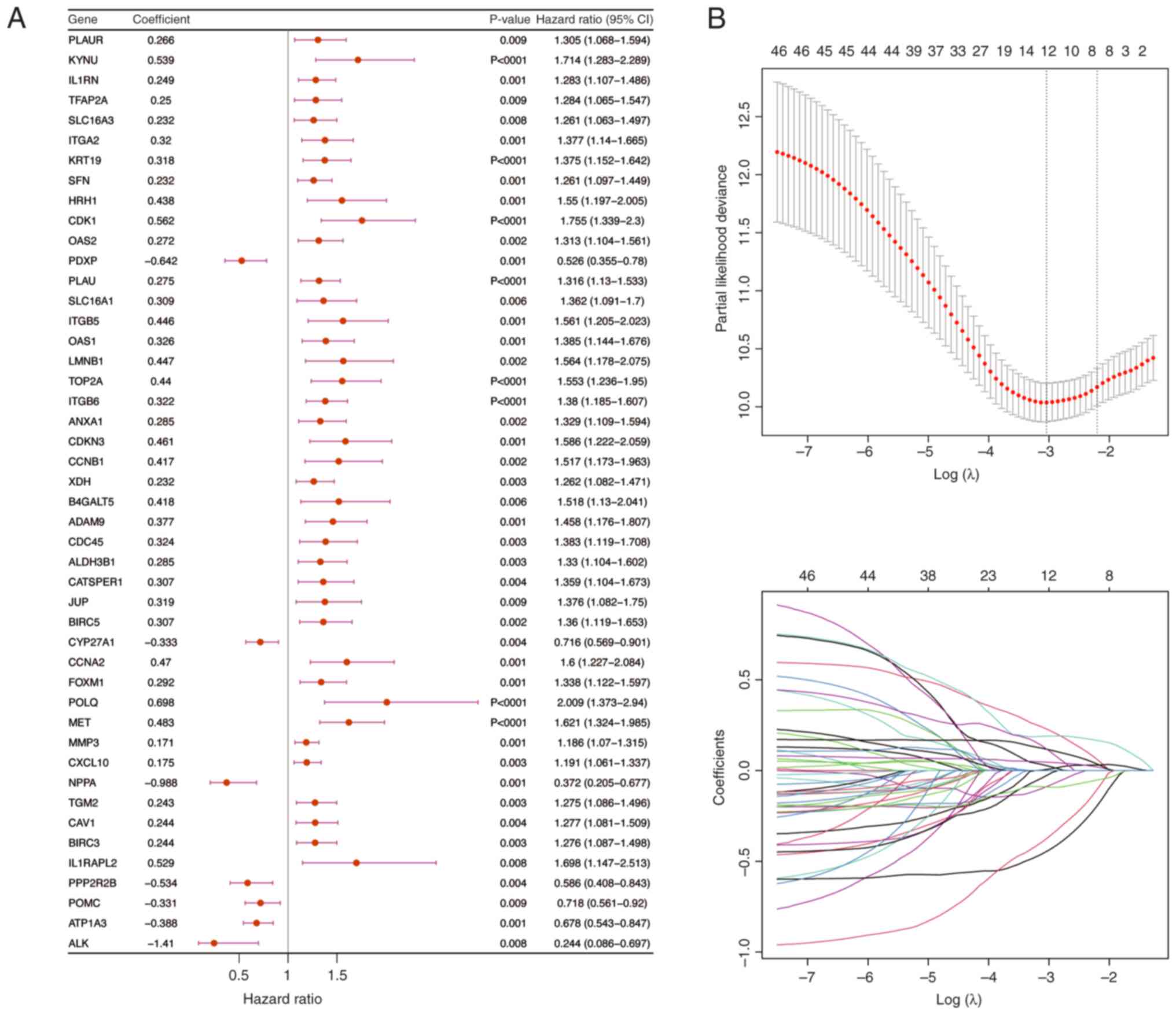
Figure 6

Regression analysis results. (A)
Univariate Cox regression analysis. The coefficient represents the
regression coefficient of a predictor variable (such as gene or
clinical feature) in the Cox regression model. This coefficient
indicates the direction and magnitude of the effect of a variable
on survival. The hazard ratio reflects the relative risk associated
with a one-unit change in the predictor variable. A hazard ratio=1
indicates no effect on survival, >1 suggests an increased risk
(adverse factor) and <1 suggests a decreased risk (protective
factor). (B) Least Absolute Shrinkage and Selection Operator
regression analysis. The optimal penalty coefficient (λ) is
selected through 10-fold cross-validation to optimize the model.
CI, confidence interval.

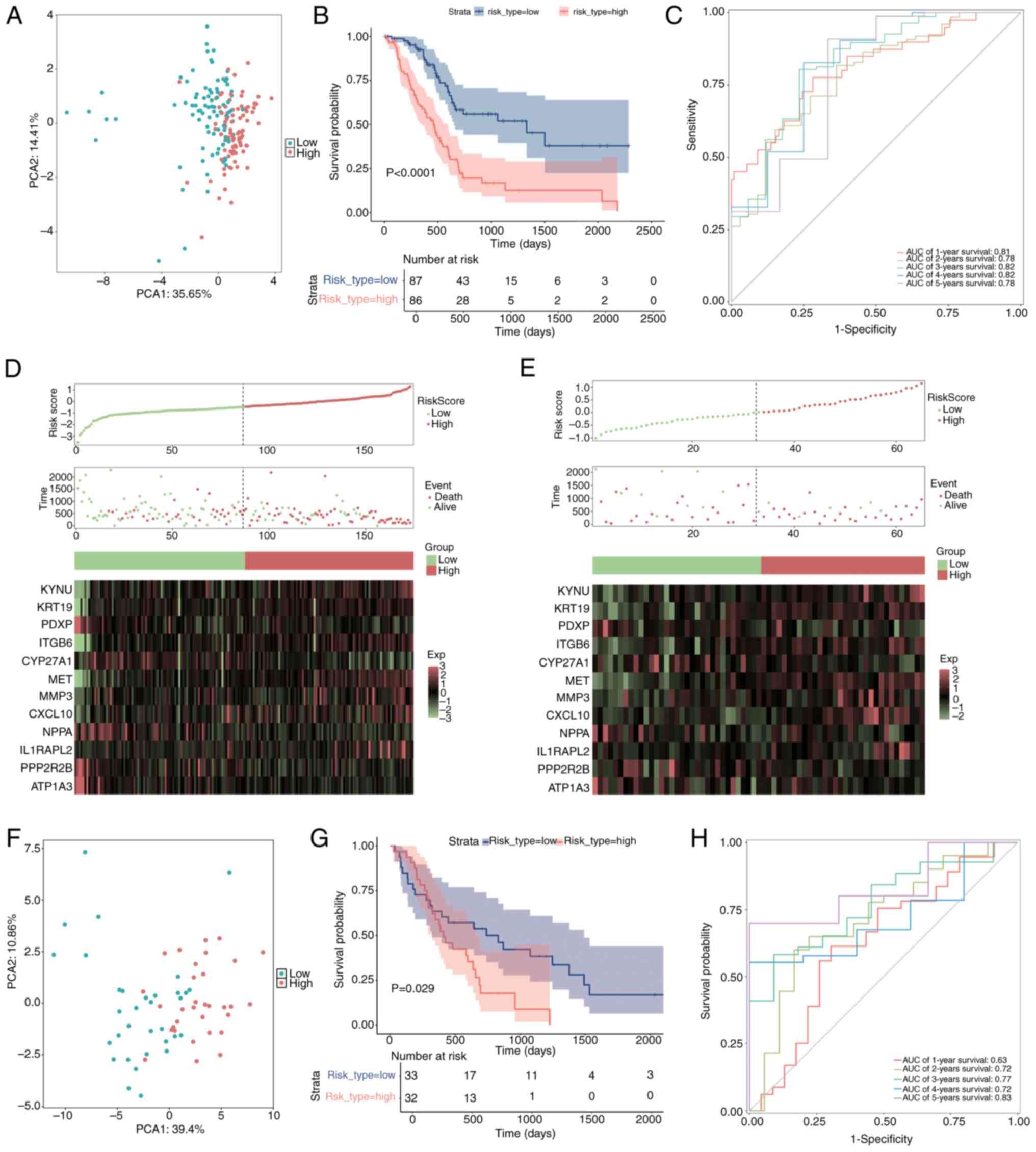
Figure 7

Evaluation of risk scores in training
and testing cohorts. (A) PCA analysis, with each point representing
an individual sample, (B) K-M survival analysis and (C) ROC curve
analysis of high and low-risk scores in the training cohort. The
AUC reflects the accuracy of the model, with higher AUC values
indicate an greater model performance. Risk curves, survival status
and heatmap of prognostic gene expression in high and low-risk
groups of the (D) training and (E) testing cohorts. (F) PCA
analysis, (G) K-M survival analysis and (H) ROC curve analysis of
high and low-risk scores in the testing cohort. PCA, principal
component analysis; K-M, Kaplan-Meier; ROC, Receiver Operating
Characteristic; AUC, area under the curve.

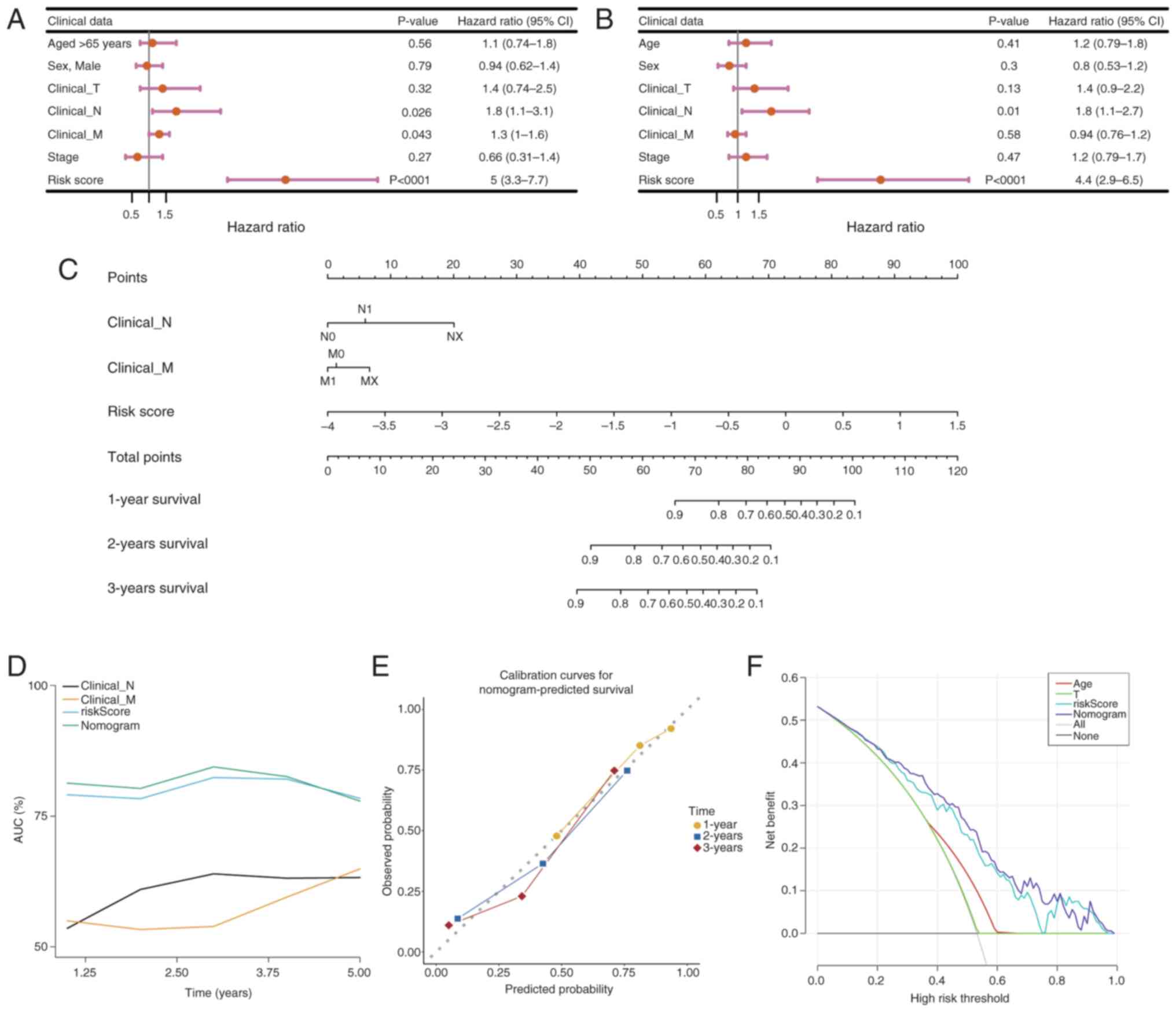
Figure 8

Development and evaluation of the
nomogram model. (A) Univariate and (B) multivariate Cox regression
analysis. The hazard ratio reflects the relative risk for a
one-unit change in a variable. A hazard ration of =1 indicates no
effect on survival time, >1 indicates an increased risk (adverse
factor) and <1 indicates a decreased risk (protective factor).
(C) Construction of the nomogram. Total Points represents the sum
of all factors, which can be used to estimate the 1-, 3- and 5-year
survival rates. Points represent the score corresponding to each
factor. (D) Receiver Operating Characteristic curve analysis of the
nomogram model. (E) Calibration curve analysis of the nomogram
model. The closer the slope of the curve is to the ideal gray line,
the greater the predictive performance of the nomogram. (F)
Decision curve analysis of the nomogram model. Each curve
represents the performance of a prediction model, with the higher
the curve, the greater the net benefit. CI, confidence interval; T,
tumor; N, lymph node; M, metastasis.

Figure 9

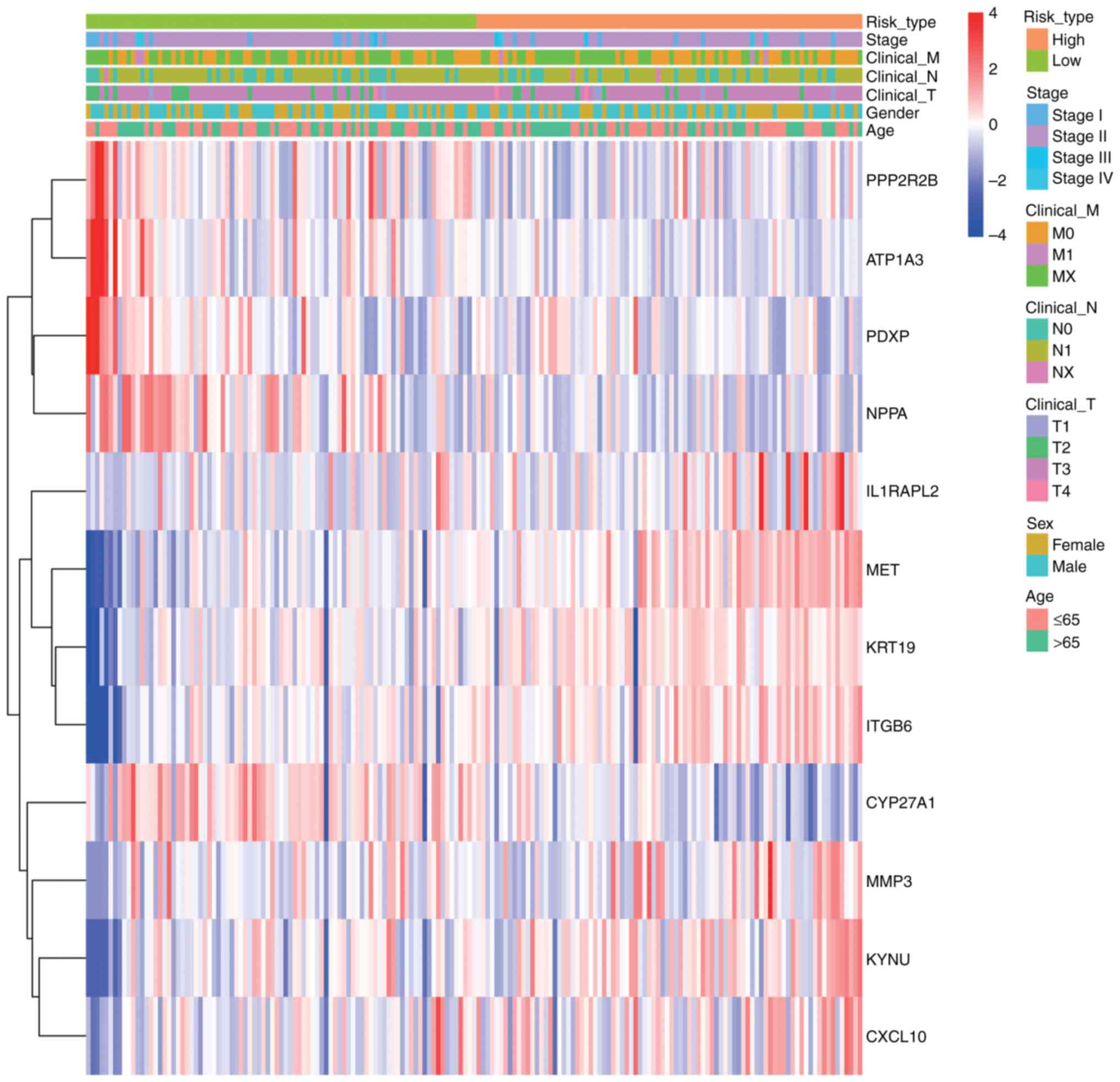
Heatmap of the clinical correlation
analysis Red represents upregulated genes and blue represents
downregulated genes. T, tumor; N, lymph node; M, metastasis.

Figure 10

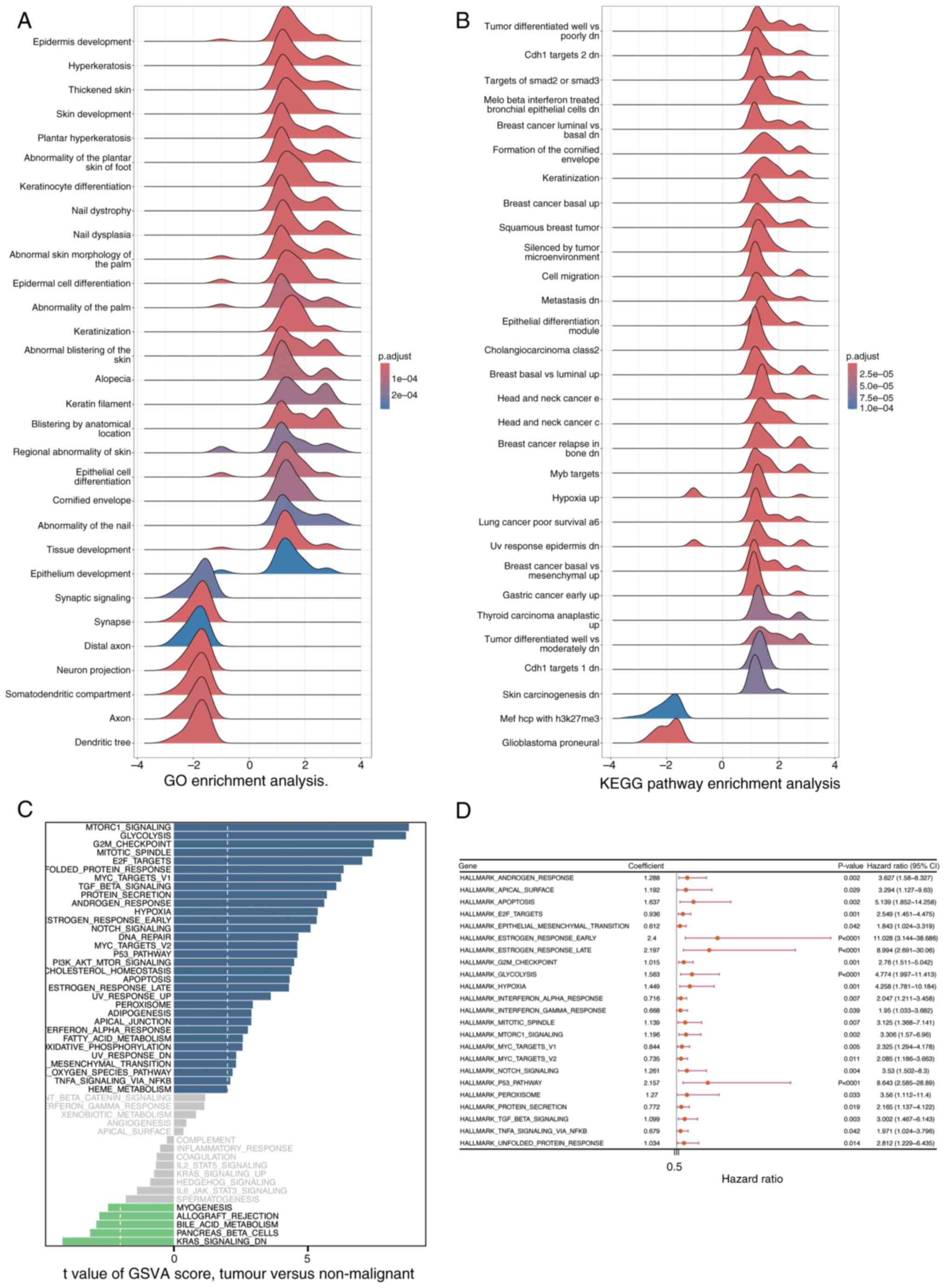
Enrichment and survival analysis of
signaling pathways. (A) GO enrichment analysis. (B) KEGG pathway
enrichment analysis. (C) GSVA of pathways. The x-axis represents
the t-value, calculated using a t-test: Larger t-values indicate
more significant differences between groups. Blue bars represent
upregulated pathways, whilst green bars represent downregulated
pathways. (D) Univariate Cox regression analysis of the
GSVA-enriched pathways (P<0.05). The hazard ratio reflects the
relative risk for a one-unit change in a variable. A hazard ratio
of =1 indicates no effect on survival time, >1 indicates
increased risk (adverse factor) and <1 indicates decreased risk
(protective factor). GO, Gene Ontology; KEGG, Kyoto Encyclopedia of
Genes and Genomes; GSVA, Gene Set Variation Analysis; CI,
confidence interval.

Figure 11

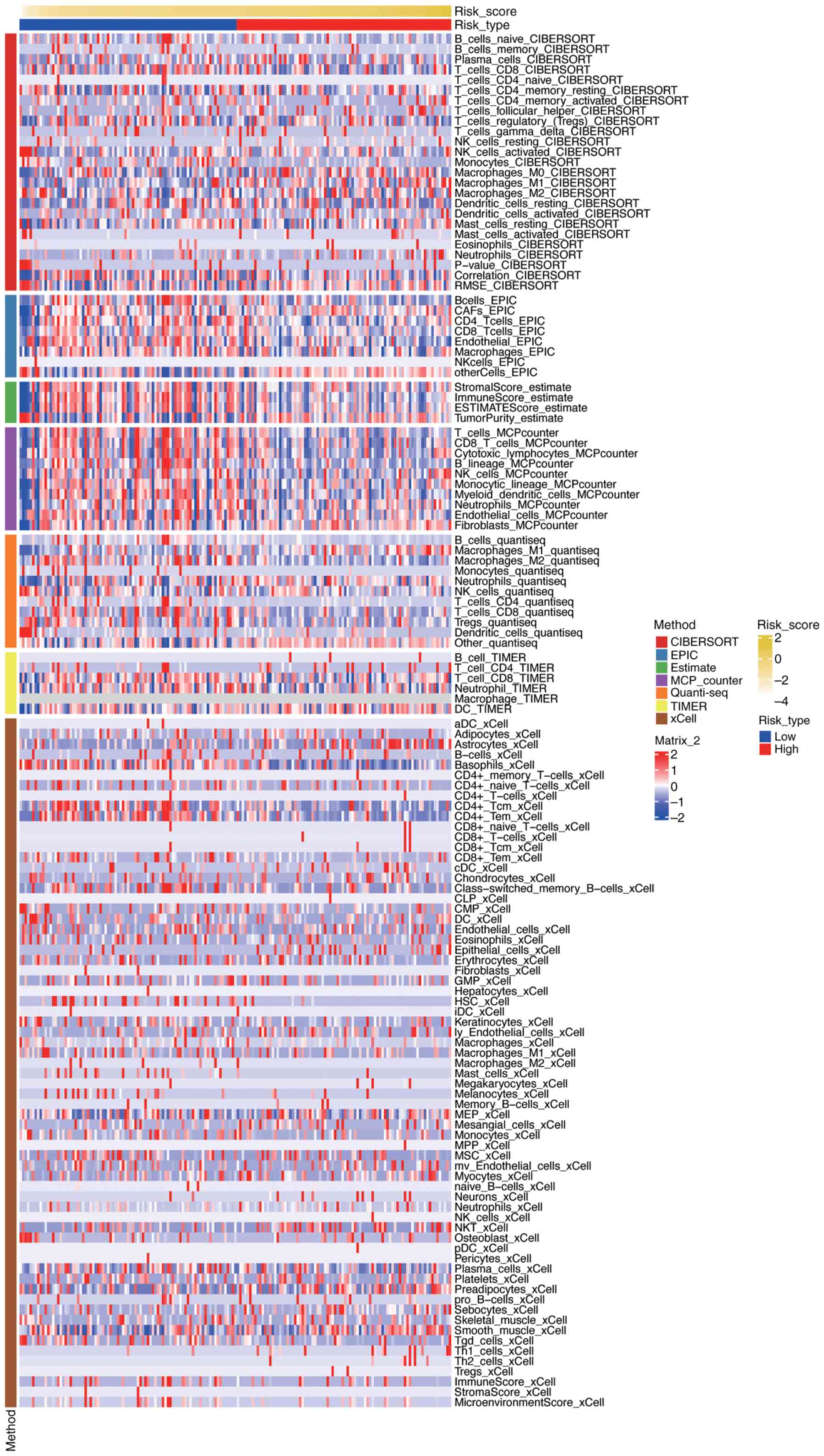
Differences in immune infiltration
between high-risk and low-risk groups evaluated by seven
algorithms.

Figure 12

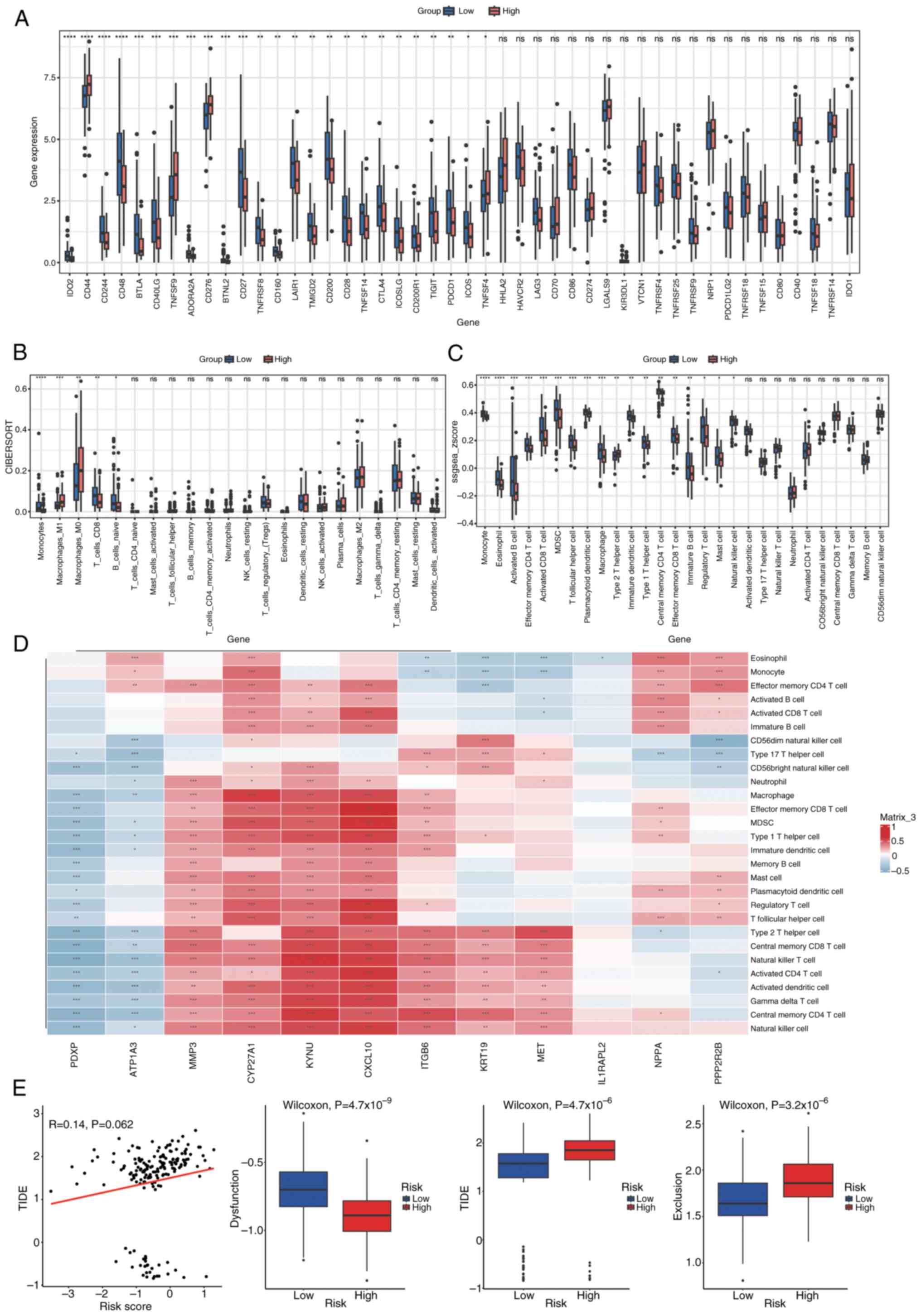
Immune checkpoint and immune cell
infiltration analysis. (A) Differential analysis of 46 immune
checkpoints between high-risk and low-risk groups. Differences in
the infiltration of (B) 22 immune cell types and (C) 28 immune cell
types between high-risk and low-risk groups. (D) Correlation
heatmap between immune cells and Least Absolute Shrinkage and
Selection Operator-selected genes. Blue indicates negative
correlations and red indicates positive correlations. (E)
Differences in dysfunction, exclusion and TIDE scores between
high-risk and low-risk groups. TIDE, Tumor Immune Dysfunction and
Exclusion. *P<0.05; **P<0.01; ***P<0.001;
****P<0.0001.

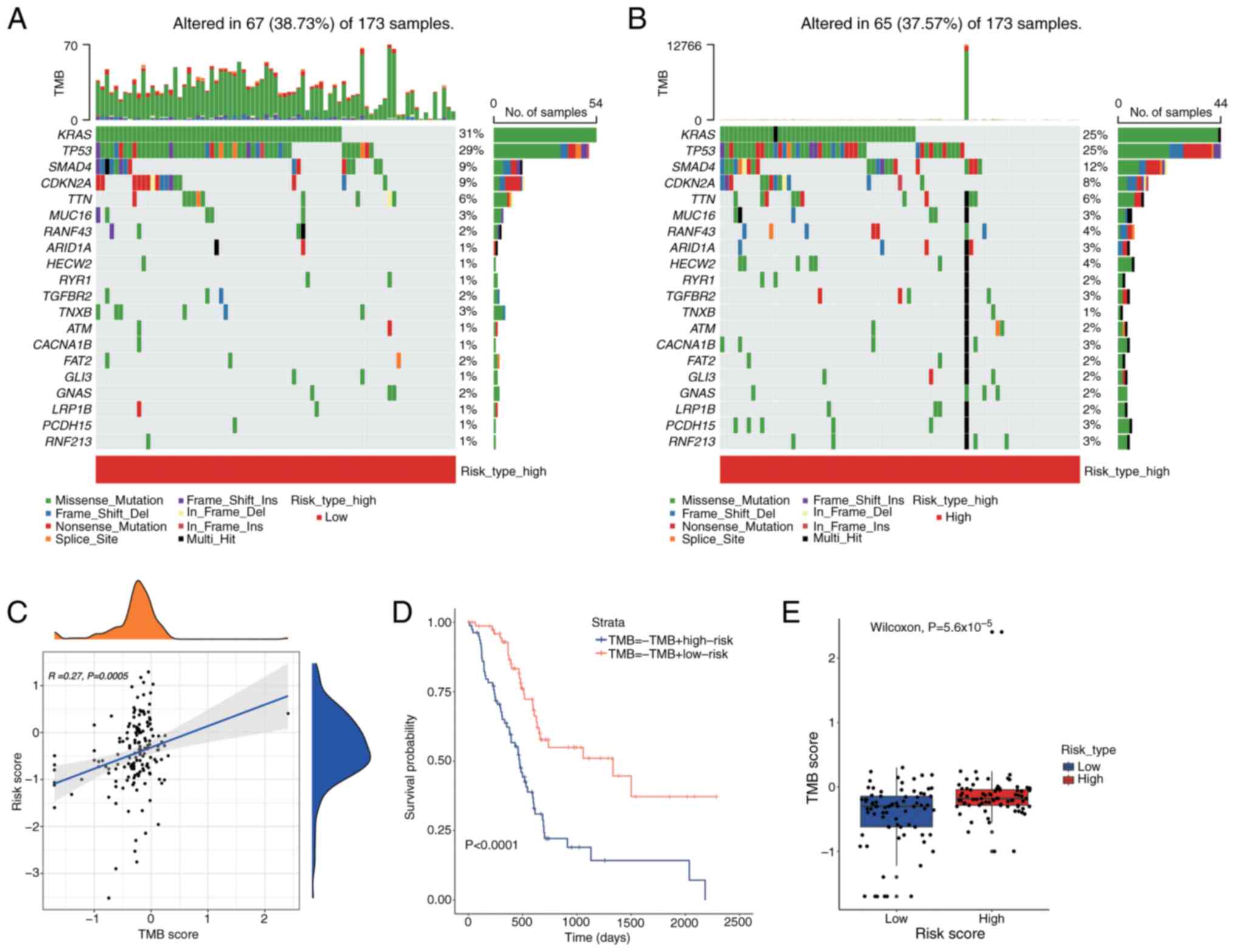
Figure 13

TMB analysis and correlation with
risk scores. Waterfall plot of mutations in the (A) high- and (B)
low-risk groups, with the % mutation rate of each gene presented.
(C) Correlation scatter plot of TMB scores and risk scores. The
blue density plot shows the distribution of risk scores, whilst the
orange density plot represents the distribution of TMB scores. (D)
Kaplan-Meier survival analysis between different TMB and risk score
combinations. (E) Differences in TMB scores between the high- and
low-risk groups. TMB, Tumor Mutational Burden.

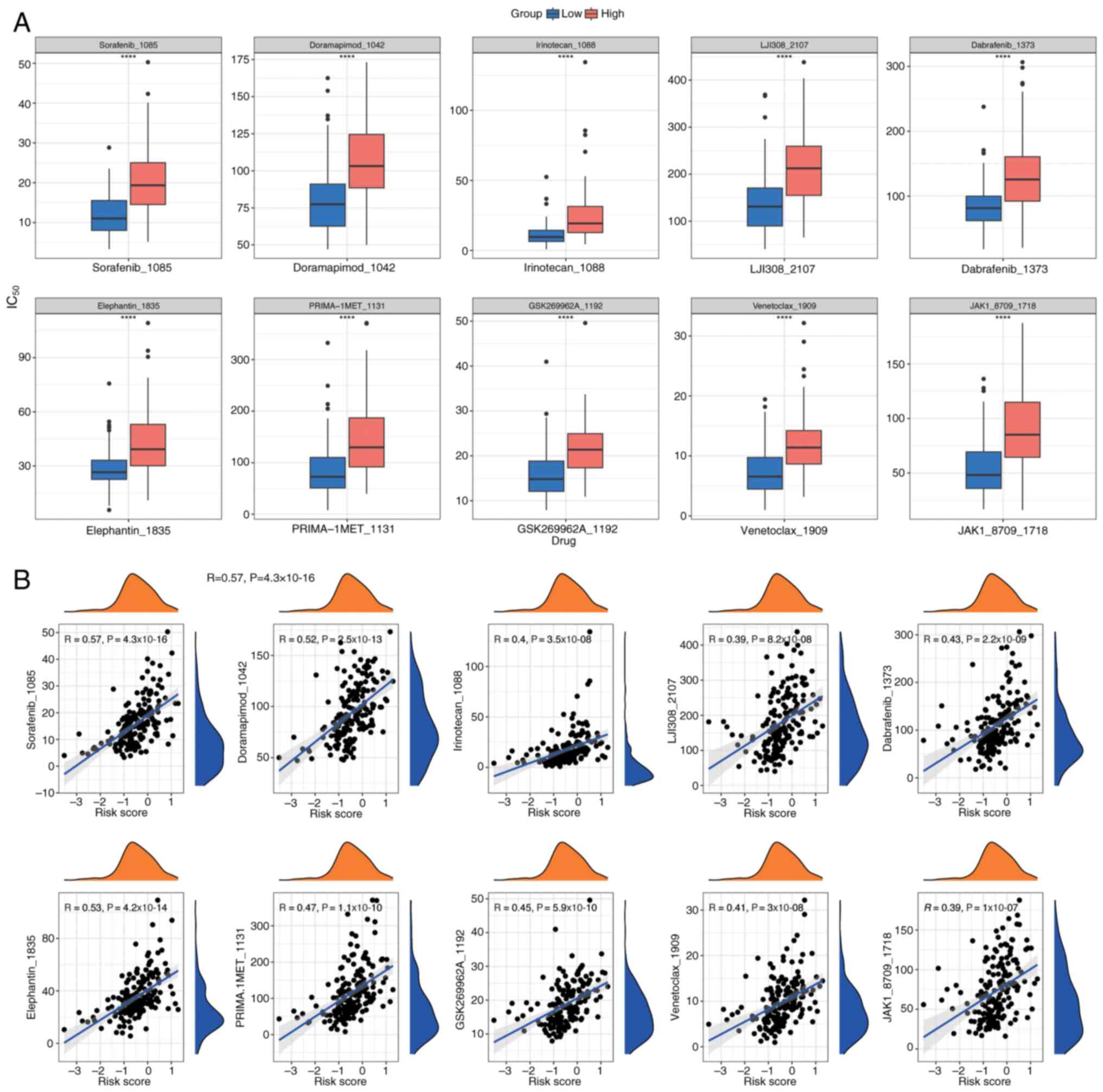
Figure 14

Drug sensitivity analysis based on
risk scores. (A) Difference in IC50 values of top 10
drugs between high-risk and low-risk groups. Lower IC50
values indicate higher drug sensitivity. (B) Correlation between
IC50 of top 10 drugs and risk scores. Higher
IC50 values indicate lower drug sensitivity.
****P<0.0001.

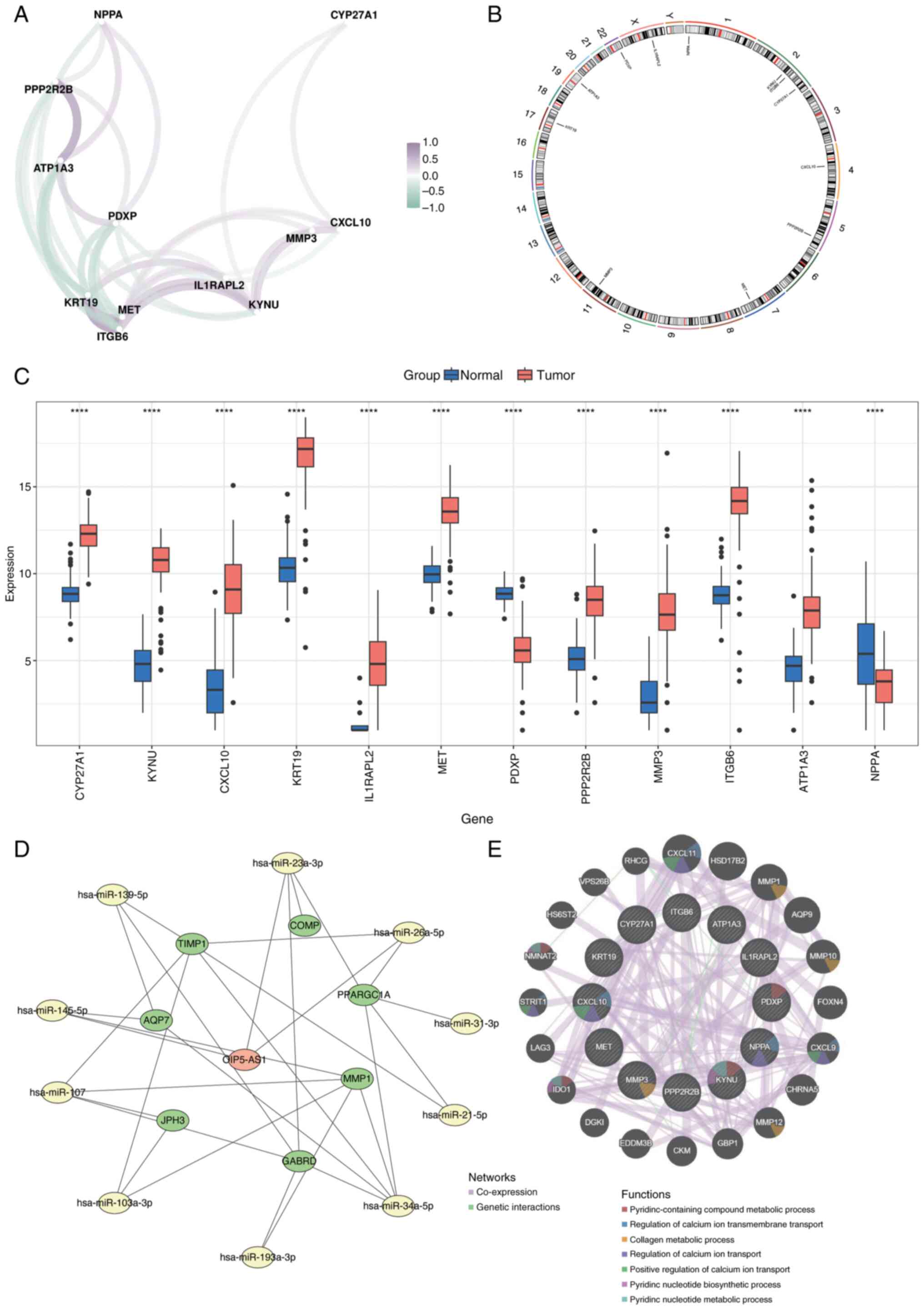
Figure 15

Analysis of prognostic genes and
their regulatory networks. (A) Correlation analysis between
prognostic genes. Purple represents a positive correlation and
green represents a negative correlation. The plot shows the
correlation matrix between the 12 prognostic genes, highlighting
significant relationships. (B) Chromosomal localization of
prognostic genes. The outer circle represents the chromosomes, with
lines connecting each prognostic gene to its respective chromosomal
location. The plot illustrates the genomic distribution of the
identified genes. (C) Differential expression of 12 prognostic
genes between normal and tumor tissues. (D) lncRNA-miRNA-mRNA
network of prognostic genes. Yellow nodes represent miRNAs, green
nodes represent mRNAs and red nodes represent lncRNAs. (E)
Gene-gene interaction network of prognostic genes. ‘Functions’
refers to the biological pathways identified through enrichment
analysis. The plot visualizes the functional relationships between
the prognostic genes and their associated pathways. lncRNA, long
noncoding RNA; miRNA/miR, microRNA.

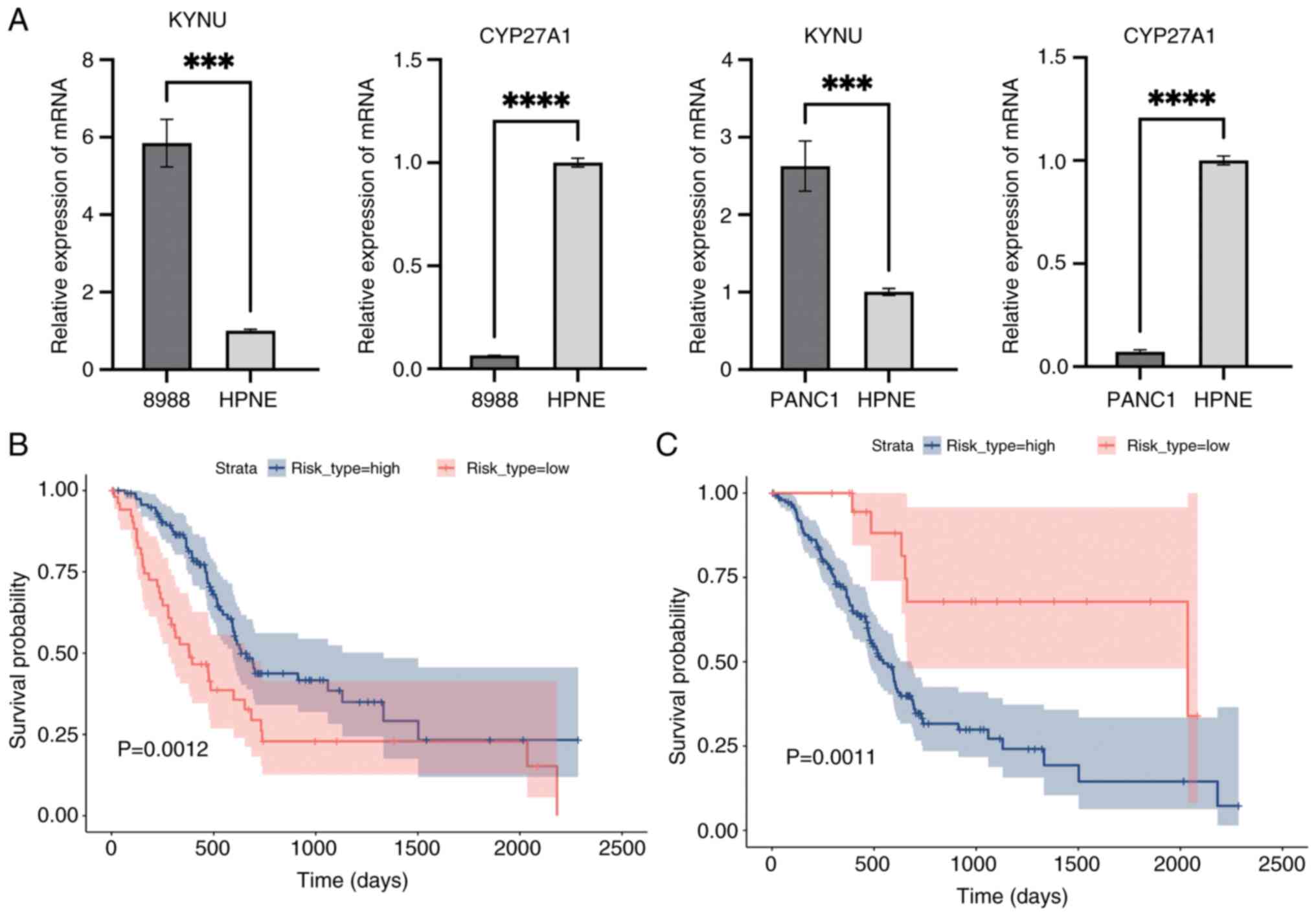
Figure 16

Expression and prognostic analysis of
CYP27A1 and KYNU in pancreatic ductal adenocarcinoma. (A)
Expression levels of CYP27A1 and KYNU in 8988, HPNE and PANC1 cell
lines, detected using reverse transcription-quantitative PCR. HPNE
represents the human pancreatic ductal epithelial cell line, whilst
8988 and PANC1 represent human pancreatic cancer cell lines.
***P<0.001; ****P<0.0001. (B) K-M survival analysis comparing
high- and low-risk groups based on CYP27A1 expression in the
training cohort. The survival curves are stratified by CYP27A1
expression levels. (C) K-M survival analysis comparing high- and
low-risk groups based on KYNU expression in the training cohort.
The survival curves are stratified by KYNU expression levels. KYNU,
Kynureninase; CYP27A1, Cytochrome P450 Family 27 Subfamily A Member
1; K-M, Kaplan-Meier.

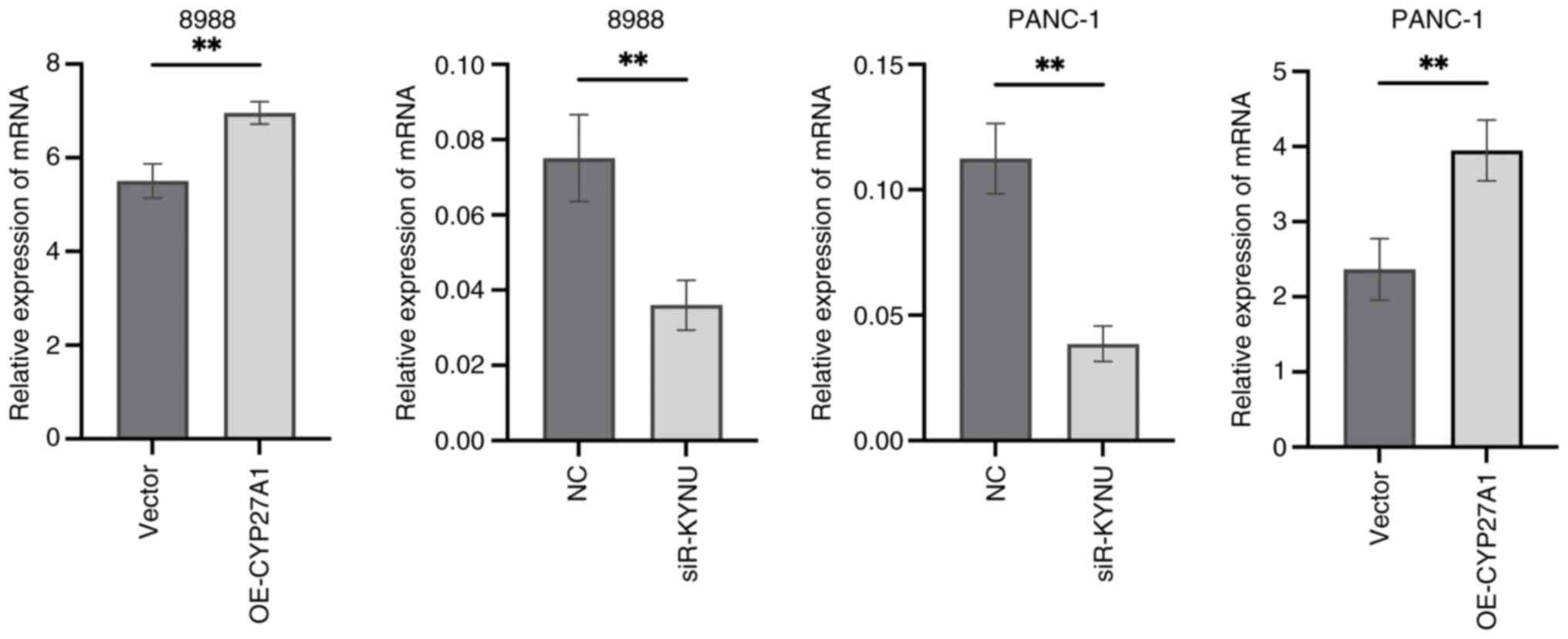
Figure 17

Transfection efficiency validation.
Reverse transcription-quantitative PCR analysis demonstrated the
efficacy of KYNU knockdown and CYP27A1 overexpression. GAPDH was
used as internal control. **P<0.01. KYNU, Kynureninase; CYP27A1,
Cytochrome P450 Family 27 Subfamily A Member 1; OE, overexpression;
NC, negative control; siR, small interfering RNA.

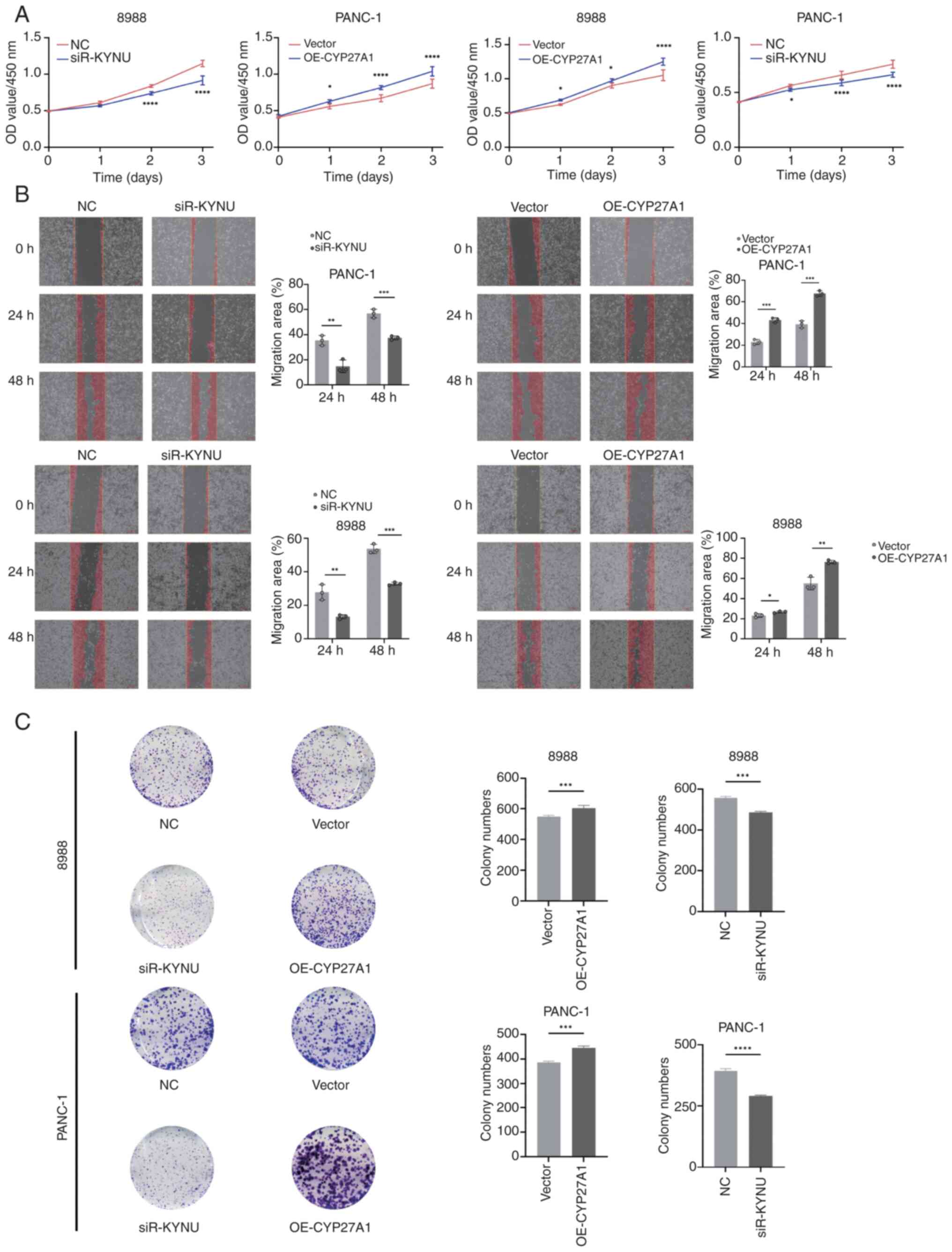
Figure 18

Functional roles of KYNU and CYP27A1
in PDAC progression. (A) Cell Counting Kit-8 assay evaluating the
effects of KYNU knockdown and CYP27A1 overexpression on PDAC cell
proliferation. *P<0.05; **P<0.01; ***P<0.001;
****P<0.0001. (B) Scratch assay assessing KYNU knockdown and
CYP27A1 overexpression on cell migration (4X). (C) Colony formation
assay detecting changes in cell proliferation after KYNU knockdown
and CYP27A1 overexpression. *P<0.05; **P<0.01; ***P<0.001;
****P<0.0001. KYNU, Kynureninase; CYP27A1, Cytochrome P450
Family 27 Subfamily A Member 1; PDAC, pancreatic ductal
adenocarcinoma; OD, optical density; NC, negative control; siR,
small interfering RNA; OE, overexpression.
View References

1 

Siegel RL, Miller KD, Fuchs HE and Jemal A: Cancer statistics, 2021. CA Cancer J Clin. 71:7–33. 2021. View Article : Google Scholar : PubMed/NCBI

2 

Rahib L, Smith BD, Aizenberg R, Rosenzweig AB, Fleshman JM and Matrisian LM: Projecting cancer incidence and deaths to 2030: The unexpected burden of thyroid, liver, and pancreas cancers in the United States. Cancer Res. 74:2913–2921. 2014. View Article : Google Scholar : PubMed/NCBI

3 

Chintamani Singhal V: Temporary closure of open abdominal wounds by the modified sandwich-vacuum pack technique (Br J Surg 2003; 90: 718–722). Br J Surg. 90:1452–1453. 2003. View Article : Google Scholar : PubMed/NCBI

4 

Conroy T, Desseigne F, Ychou M, Bouché O, Guimbaud R, Bécouarn Y, Adenis A, Raoul JL, Gourgou-Bourgade S, de la Fouchardière C, et al: FOLFIRINOX versus gemcitabine for metastatic pancreatic cancer. N Engl J Med. 364:1817–1825. 2011. View Article : Google Scholar : PubMed/NCBI

5 

Golan T, Hammel P, Reni M, Van Cutsem E, Macarulla T, Hall MJ, Park JO, Hochhauser D, Arnold D, Oh DY, et al: Maintenance olaparib for germline BRCA-mutated metastatic pancreatic cancer. N Engl J Med. 381:317–327. 2019. View Article : Google Scholar : PubMed/NCBI

6 

Raghavan D: Introduction: Bladder cancer. Semin Oncol. 39:5232012. View Article : Google Scholar : PubMed/NCBI

7 

Li D, Xie K, Wolff R and Abbruzzese JL: Pancreatic cancer. Lancet. 363:1049–1057. 2004. View Article : Google Scholar : PubMed/NCBI

8 

Von Hoff DD, Ervin T, Arena FP, Chiorean EG, Infante J, Moore M, Seay T, Tjulandin SA, Ma WW, Saleh MN, et al: Increased survival in pancreatic cancer with nab-paclitaxel plus gemcitabine. N Engl J Med. 369:1691–1703. 2013. View Article : Google Scholar : PubMed/NCBI

9 

Kanji ZS, Edwards AM, Mandelson MT, Sahar N, Lin BS, Badiozamani K, Song G, Alseidi A, Biehl TR, Kozarek RA, et al: Gemcitabine and taxane adjuvant therapy with chemoradiation in resected pancreatic cancer: A novel strategy for improved survival? Ann Surg Oncol. 25:1052–1060. 2018. View Article : Google Scholar : PubMed/NCBI

10 

Olive KP, Jacobetz MA, Davidson CJ, Gopinathan A, McIntyre D, Honess D, Madhu B, Goldgraben MA, Caldwell ME, Allard D, et al: Inhibition of hedgehog signaling enhances delivery of chemotherapy in a mouse model of pancreatic cancer. Science. 324:1457–1461. 2009. View Article : Google Scholar : PubMed/NCBI

11 

Grant TJ, Hua K and Singh A: Molecular pathogenesis of pancreatic cancer. Prog Mol Biol Transl Sci. 144:241–275. 2016. View Article : Google Scholar : PubMed/NCBI

12 

Duan H, Li L and He S: Advances and prospects in the treatment of pancreatic cancer. Int J Nanomedicine. 18:3973–3988. 2023. View Article : Google Scholar : PubMed/NCBI

13 

Liu J, Ji S, Liang C, Qin Y, Jin K, Liang D, Xu W, Shi S, Zhang B, Liu L, et al: Critical role of oncogenic KRAS in pancreatic cancer (review). Mol Med Rep. 13:4943–4949. 2016. View Article : Google Scholar : PubMed/NCBI

14 

Sun H, Zhang B and Li H: The roles of frequently mutated genes of pancreatic cancer in regulation of tumor microenvironment. Technol Cancer Res Treat. 19:15330338209209692020. View Article : Google Scholar : PubMed/NCBI

15 

Hafezi S, Saber-Ayad M and Abdel-Rahman WM: Highlights on the role of KRAS mutations in reshaping the microenvironment of pancreatic adenocarcinoma. Int J Mol Sci. 22:102192021. View Article : Google Scholar : PubMed/NCBI

16 

George B, Kudryashova O, Kravets A, Thalji S, Malarkannan S, Kurzrock R, Chernyavskaya E, Gusakova M, Kravchenko D, Tychinin D, et al: Transcriptomic-based microenvironment classification reveals precision medicine strategies for pancreatic ductal adenocarcinoma. Gastroenterology. 166:859–871.e3. 2024. View Article : Google Scholar : PubMed/NCBI

17 

Bear AS, Vonderheide RH and O'Hara MH: Challenges and opportunities for pancreatic cancer immunotherapy. Cancer Cell. 38:788–802. 2020. View Article : Google Scholar : PubMed/NCBI

18 

Le DT, Uram JN, Wang H, Bartlett BR, Kemberling H, Eyring AD, Skora AD, Luber BS, Azad NS, Laheru D, et al: PD-1 blockade in tumors with mismatch-repair deficiency. N Engl J Med. 372:2509–2520. 2015. View Article : Google Scholar : PubMed/NCBI

19 

Baj J, Flieger W, Barbachowska A, Kowalska B, Flieger M, Forma A, Teresiński G, Portincasa P, Buszewicz G, Radzikowska-Büchner E and Flieger J: Consequences of disturbing manganese homeostasis. Int J Mol Sci. 24:149592023. View Article : Google Scholar : PubMed/NCBI

20 

Lin M, Colon-Perez LM, Sambo DO, Miller DR, Lebowitz JJ, Jimenez-Rondan F, Cousins RJ, Horenstein N, Aydemir TB, Febo M and Khoshbouei H: Mechanism of manganese dysregulation of dopamine neuronal activity. J Neurosci. 40:5871–5891. 2020. View Article : Google Scholar : PubMed/NCBI

21 

Yanjun Y, Jing Z, Yifei S, Gangzhao G, Chenxin Y, Qiang W, Qiang Y and Shuwen H: Trace elements in pancreatic cancer. Cancer Med. 13:e74542024. View Article : Google Scholar : PubMed/NCBI

22 

Zhao N, Zhang AS, Wortham AM, Jue S, Knutson MD and Enns CA: The tumor suppressor, P53, decreases the metal transporter, ZIP14. Nutrients. 9:13352017. View Article : Google Scholar : PubMed/NCBI

23 

Konzack A, Jakupovic M, Kubaichuk K, Görlach A, Dombrowski F, Miinalainen I, Sormunen R and Kietzmann T: Mitochondrial dysfunction due to lack of manganese superoxide dismutase promotes hepatocarcinogenesis. Antioxid Redox Signal. 23:1059–1075. 2015. View Article : Google Scholar : PubMed/NCBI

24 

Wu J, Minikes AM, Gao M, Bian H, Li Y, Stockwell BR, Chen ZN and Jiang X: Intercellular interaction dictates cancer cell ferroptosis via NF2-YAP signalling. Nature. 572:402–406. 2019. View Article : Google Scholar : PubMed/NCBI

25 

Saleh SAK, Adly HM, Abdelkhaliq AA and Nassir AM: Serum levels of selenium, zinc, copper, manganese, and iron in prostate cancer patients. Curr Urol. 14:44–49. 2020. View Article : Google Scholar : PubMed/NCBI

26 

Wang W, Chen G, Zhang W, Zhang X, Huang M, Li C, Wang L, Lu Z and Xia J: The crucial prognostic signaling pathways of pancreatic ductal adenocarcinoma were identified by single-cell and bulk RNA sequencing data. Hum Genet. 143:1109–1129. 2024. View Article : Google Scholar : PubMed/NCBI

27 

Xu X, Peng Q, Jiang X, Tan S, Yang Y, Yang W, Han Y, Chen Y, Oyang L, Lin J, et al: Metabolic reprogramming and epigenetic modifications in cancer: From the impacts and mechanisms to the treatment potential. Exp Mol Med. 55:1357–1370. 2023. View Article : Google Scholar : PubMed/NCBI

28 

Zhou Z, Cheng Y, Jiang Y, Liu S, Zhang M, Liu J and Zhao Q: Ten hub genes associated with progression and prognosis of pancreatic carcinoma identified by co-expression analysis. Int J Biol Sci. 14:124–36. 2018. View Article : Google Scholar : PubMed/NCBI

29 

Xiang XH, Mao J and Li H: Expression and clinical significance of centromere protein A in pancreatic cancer based on GEO and TCGA database analysis. Chin J Pancreatol. 20:184–189. 2020.(In Chinese).

30 

Livak KJ and Schmittgen TD: Analysis of relative gene expression data using real-time quantitative PCR and the 2(−delta delta C(T)) method. Methods. 25:402–408. 2001. View Article : Google Scholar : PubMed/NCBI

31 

Sahoo K and Sharma A: Understanding the mechanistic roles of environmental heavy metal stressors in regulating ferroptosis: Adding new paradigms to the links with diseases. Apoptosis. 28:277–292. 2023. View Article : Google Scholar : PubMed/NCBI

32 

Rozenberg JM, Kamynina M, Sorokin M, Zolotovskaia M, Koroleva E, Kremenchutckaya K, Gudkov A, Buzdin A and Borisov N: The role of the metabolism of zinc and manganese ions in human cancerogenesis. Biomedicines. 10:10722022. View Article : Google Scholar : PubMed/NCBI

33 

Diessl J, Berndtsson J, Broeskamp F, Habernig L, Kohler V, Vazquez-Calvo C, Nandy A, Peselj C, Drobysheva S, Pelosi L, et al: Manganese-driven CoQ deficiency. Nat Commun. 13:60612022. View Article : Google Scholar : PubMed/NCBI

34 

Zhang J and Chen X: p53 tumor suppressor and iron homeostasis. FEBS J. 286:620–629. 2019. View Article : Google Scholar : PubMed/NCBI

35 

Ichim G, Lopez J, Ahmed SU, Muthalagu N, Giampazolias E, Delgado ME, Haller M, Riley JS, Mason SM, Athineos D, et al: Limited mitochondrial permeabilization causes DNA damage and genomic instability in the absence of cell death. Mol Cell. 57:860–872. 2015. View Article : Google Scholar : PubMed/NCBI

36 

Alaimo A, Gorojod RM, Miglietta EA, Villarreal A, Ramos AJ and Kotler ML: Manganese induces mitochondrial dynamics impairment and apoptotic cell death: A study in human Gli36 cells. Neurosci Lett. 554:76–81. 2013. View Article : Google Scholar : PubMed/NCBI

37 

Stelling MP, Soares MA, Cardoso SC, Motta JM, de Abreu JC, Antunes MJM, de Freitas VG, Moraes JA, Castelo-Branco MTL, Pérez CA and Pavão MSG: Manganese systemic distribution is modulated in vivo during tumor progression and affects tumor cell migration and invasion in vitro. Sci Rep. 11:158332021. View Article : Google Scholar : PubMed/NCBI

38 

Pandey V, Fleming-Martinez A, Bastea L, Doeppler HR, Eisenhauer J, Le T, Edenfield B and Storz P: CXCL10/CXCR3 signaling contributes to an inflammatory microenvironment and its blockade enhances progression of murine pancreatic precancerous lesions. Elife. 10:e606462021. View Article : Google Scholar : PubMed/NCBI

39 

Gobin E, Bagwell K, Wagner J, Mysona D, Sandirasegarane S, Smith N, Bai S, Sharma A, Schleifer R and She JX: A pan-cancer perspective of matrix metalloproteases (MMP) gene expression profile and their diagnostic/prognostic potential. BMC Cancer. 19:5812019. View Article : Google Scholar : PubMed/NCBI

40 

Luan H, Jian L, Huang Y, Guo Y and Zhou L: Identification of novel therapeutic target and prognostic biomarker in matrix metalloproteinase gene family in pancreatic cancer. Sci Rep. 13:172112023. View Article : Google Scholar : PubMed/NCBI

41 

Fu J, Su X, Li Z, Deng L, Liu X, Feng X and Peng J: HGF/c-MET pathway in cancer: From molecular characterization to clinical evidence. Oncogene. 40:4625–4651. 2021. View Article : Google Scholar : PubMed/NCBI

42 

Guo R, Luo J, Chang J, Rekhtman N, Arcila M and Drilon A: MET-dependent solid tumours-molecular diagnosis and targeted therapy. Nat Rev Clin Oncol. 17:569–587. 2020. View Article : Google Scholar : PubMed/NCBI

43 

Nie Y, Liu C, Liu Q and Zhu X: CXCL10 is a prognostic marker for pancreatic adenocarcinoma and tumor microenvironment remodeling. BMC Cancer. 23:1502023. View Article : Google Scholar : PubMed/NCBI

44 

He S, Ma L, Baek AE, Vardanyan A, Vembar V, Chen JJ, Nelson AT, Burdette JE and Nelson ER: Host CYP27A1 expression is essential for ovarian cancer progression. Endocr Relat Cancer. 26:659–675. 2019. View Article : Google Scholar : PubMed/NCBI

45 

Niu N, Shen X, Wang Z, Chen Y, Weng Y, Yu F, Tang Y, Lu P, Liu M, Wang L, et al: Tumor cell-intrinsic epigenetic dysregulation shapes cancer-associated fibroblasts heterogeneity to metabolically support pancreatic cancer. Cancer Cell. 42:869–884.e9. 2024. View Article : Google Scholar : PubMed/NCBI

46 

Newton-Cheh C, Larson MG, Vasan RS, Levy D, Bloch KD, Surti A, Guiducci C, Kathiresan S, Benjamin EJ, Struck J, et al: Association of common variants in NPPA and NPPB with circulating natriuretic peptides and blood pressure. Nat Genet. 41:348–353. 2009. View Article : Google Scholar : PubMed/NCBI

47 

Forte M, Marchitti S, Di Nonno F, Stanzione R, Schirone L, Cotugno M, Bianchi F, Schiavon S, Raffa S, Ranieri D, et al: NPPA/atrial natriuretic peptide is an extracellular modulator of autophagy in the heart. Autophagy. 19:1087–1099. 2023. View Article : Google Scholar : PubMed/NCBI

48 

Song P, Yao X, Zhong T, Zhang S, Guo Y, Ren W, Huang D, Duan XC, Yin YF, Zhang SS and Zhang X: The anti-tumor efficacy of 3-(2-nitrophenyl) propionic acid-paclitaxel (NPPA-PTX): A novel paclitaxel bioreductive prodrug. Oncotarget. 7:48467–48480. 2016. View Article : Google Scholar : PubMed/NCBI

49 

Song W, Wang H and Wu Q: Atrial natriuretic peptide in cardiovascular biology and disease (NPPA). Gene. 569:1–6. 2015. View Article : Google Scholar : PubMed/NCBI

50 

Luan Y, Xie B and Wei W: REST-repressed lncRNA NPPA-AS1 regulates cervical cancer progression by modulating miR-302e/DKK1/wnt/β-catenin signaling pathway. J Cell Biochem. 122:16–28. 2021. View Article : Google Scholar : PubMed/NCBI

51 

Malvi P, Chava S, Cai G, Hu K, Zhu LJ, Edwards YJK, Green MR, Gupta R and Wajapeyee N: HOXC6 drives a therapeutically targetable pancreatic cancer growth and metastasis pathway by regulating MSK1 and PPP2R2B. Cell Rep Med. 4:1012852023. View Article : Google Scholar : PubMed/NCBI

52 

Li J, Zhang Y, Yang C and Rong R: Discrepant mRNA and protein expression in immune cells. Curr Genomics. 21:560–563. 2020. View Article : Google Scholar : PubMed/NCBI

53 

Ramazi S and Zahiri J: Posttranslational modifications in proteins: Resources, tools and prediction methods. Database (Oxford). 2021:baab0122021. View Article : Google Scholar : PubMed/NCBI

54 

Nalbantoglu S and Karadag A: Metabolomics bridging proteomics along metabolites/oncometabolites and protein modifications: Paving the way toward integrative multiomics. J Pharm Biomed Anal. 199:1140312021. View Article : Google Scholar : PubMed/NCBI

55 

Gautam SK, Batra SK and Jain M: Molecular and metabolic regulation of immunosuppression in metastatic pancreatic ductal adenocarcinoma. Mol Cancer. 22:1182023. View Article : Google Scholar : PubMed/NCBI

Related Articles

  • Abstract
  • View
  • Download
  • Twitter
Copy and paste a formatted citation
Spandidos Publications style
Xiong Z, Zhang Z, Cheng S and Liao S: A novel defined manganese metabolism‑related gene signature for predicting the prognosis of pancreatic ductal adenocarcinoma. Oncol Lett 30: 436, 2025.
APA
Xiong, Z., Zhang, Z., Cheng, S., & Liao, S. (2025). A novel defined manganese metabolism‑related gene signature for predicting the prognosis of pancreatic ductal adenocarcinoma. Oncology Letters, 30, 436. https://doi.org/10.3892/ol.2025.15182
MLA
Xiong, Z., Zhang, Z., Cheng, S., Liao, S."A novel defined manganese metabolism‑related gene signature for predicting the prognosis of pancreatic ductal adenocarcinoma". Oncology Letters 30.3 (2025): 436.
Chicago
Xiong, Z., Zhang, Z., Cheng, S., Liao, S."A novel defined manganese metabolism‑related gene signature for predicting the prognosis of pancreatic ductal adenocarcinoma". Oncology Letters 30, no. 3 (2025): 436. https://doi.org/10.3892/ol.2025.15182
Copy and paste a formatted citation
x
Spandidos Publications style
Xiong Z, Zhang Z, Cheng S and Liao S: A novel defined manganese metabolism‑related gene signature for predicting the prognosis of pancreatic ductal adenocarcinoma. Oncol Lett 30: 436, 2025.
APA
Xiong, Z., Zhang, Z., Cheng, S., & Liao, S. (2025). A novel defined manganese metabolism‑related gene signature for predicting the prognosis of pancreatic ductal adenocarcinoma. Oncology Letters, 30, 436. https://doi.org/10.3892/ol.2025.15182
MLA
Xiong, Z., Zhang, Z., Cheng, S., Liao, S."A novel defined manganese metabolism‑related gene signature for predicting the prognosis of pancreatic ductal adenocarcinoma". Oncology Letters 30.3 (2025): 436.
Chicago
Xiong, Z., Zhang, Z., Cheng, S., Liao, S."A novel defined manganese metabolism‑related gene signature for predicting the prognosis of pancreatic ductal adenocarcinoma". Oncology Letters 30, no. 3 (2025): 436. https://doi.org/10.3892/ol.2025.15182
Follow us
  • Twitter
  • LinkedIn
  • Facebook
About
  • Spandidos Publications
  • Careers
  • Cookie Policy
  • Privacy Policy
How can we help?
  • Help
  • Live Chat
  • Contact
  • Email to our Support Team