Spandidos Publications Logo
  • About
    • About Spandidos
    • Aims and Scopes
    • Abstracting and Indexing
    • Editorial Policies
    • Reprints and Permissions
    • Job Opportunities
    • Terms and Conditions
    • Contact
  • Journals
    • All Journals
    • Oncology Letters
      • Oncology Letters
      • Information for Authors
      • Editorial Policies
      • Editorial Board
      • Aims and Scope
      • Abstracting and Indexing
      • Bibliographic Information
      • Archive
    • International Journal of Oncology
      • International Journal of Oncology
      • Information for Authors
      • Editorial Policies
      • Editorial Board
      • Aims and Scope
      • Abstracting and Indexing
      • Bibliographic Information
      • Archive
    • Molecular and Clinical Oncology
      • Molecular and Clinical Oncology
      • Information for Authors
      • Editorial Policies
      • Editorial Board
      • Aims and Scope
      • Abstracting and Indexing
      • Bibliographic Information
      • Archive
    • Experimental and Therapeutic Medicine
      • Experimental and Therapeutic Medicine
      • Information for Authors
      • Editorial Policies
      • Editorial Board
      • Aims and Scope
      • Abstracting and Indexing
      • Bibliographic Information
      • Archive
    • International Journal of Molecular Medicine
      • International Journal of Molecular Medicine
      • Information for Authors
      • Editorial Policies
      • Editorial Board
      • Aims and Scope
      • Abstracting and Indexing
      • Bibliographic Information
      • Archive
    • Biomedical Reports
      • Biomedical Reports
      • Information for Authors
      • Editorial Policies
      • Editorial Board
      • Aims and Scope
      • Abstracting and Indexing
      • Bibliographic Information
      • Archive
    • Oncology Reports
      • Oncology Reports
      • Information for Authors
      • Editorial Policies
      • Editorial Board
      • Aims and Scope
      • Abstracting and Indexing
      • Bibliographic Information
      • Archive
    • Molecular Medicine Reports
      • Molecular Medicine Reports
      • Information for Authors
      • Editorial Policies
      • Editorial Board
      • Aims and Scope
      • Abstracting and Indexing
      • Bibliographic Information
      • Archive
    • World Academy of Sciences Journal
      • World Academy of Sciences Journal
      • Information for Authors
      • Editorial Policies
      • Editorial Board
      • Aims and Scope
      • Abstracting and Indexing
      • Bibliographic Information
      • Archive
    • International Journal of Functional Nutrition
      • International Journal of Functional Nutrition
      • Information for Authors
      • Editorial Policies
      • Editorial Board
      • Aims and Scope
      • Abstracting and Indexing
      • Bibliographic Information
      • Archive
    • International Journal of Epigenetics
      • International Journal of Epigenetics
      • Information for Authors
      • Editorial Policies
      • Editorial Board
      • Aims and Scope
      • Abstracting and Indexing
      • Bibliographic Information
      • Archive
    • Medicine International
      • Medicine International
      • Information for Authors
      • Editorial Policies
      • Editorial Board
      • Aims and Scope
      • Abstracting and Indexing
      • Bibliographic Information
      • Archive
  • Articles
  • Information
    • Information for Authors
    • Information for Reviewers
    • Information for Librarians
    • Information for Advertisers
    • Conferences
  • Language Editing
Spandidos Publications Logo
  • About
    • About Spandidos
    • Aims and Scopes
    • Abstracting and Indexing
    • Editorial Policies
    • Reprints and Permissions
    • Job Opportunities
    • Terms and Conditions
    • Contact
  • Journals
    • All Journals
    • Biomedical Reports
      • Information for Authors
      • Editorial Policies
      • Editorial Board
      • Aims and Scope
      • Abstracting and Indexing
      • Bibliographic Information
      • Archive
    • Experimental and Therapeutic Medicine
      • Information for Authors
      • Editorial Policies
      • Editorial Board
      • Aims and Scope
      • Abstracting and Indexing
      • Bibliographic Information
      • Archive
    • International Journal of Epigenetics
      • Information for Authors
      • Editorial Policies
      • Editorial Board
      • Aims and Scope
      • Abstracting and Indexing
      • Bibliographic Information
      • Archive
    • International Journal of Functional Nutrition
      • Information for Authors
      • Editorial Policies
      • Editorial Board
      • Aims and Scope
      • Abstracting and Indexing
      • Bibliographic Information
      • Archive
    • International Journal of Molecular Medicine
      • Information for Authors
      • Editorial Policies
      • Editorial Board
      • Aims and Scope
      • Abstracting and Indexing
      • Bibliographic Information
      • Archive
    • International Journal of Oncology
      • Information for Authors
      • Editorial Policies
      • Editorial Board
      • Aims and Scope
      • Abstracting and Indexing
      • Bibliographic Information
      • Archive
    • Medicine International
      • Information for Authors
      • Editorial Policies
      • Editorial Board
      • Aims and Scope
      • Abstracting and Indexing
      • Bibliographic Information
      • Archive
    • Molecular and Clinical Oncology
      • Information for Authors
      • Editorial Policies
      • Editorial Board
      • Aims and Scope
      • Abstracting and Indexing
      • Bibliographic Information
      • Archive
    • Molecular Medicine Reports
      • Information for Authors
      • Editorial Policies
      • Editorial Board
      • Aims and Scope
      • Abstracting and Indexing
      • Bibliographic Information
      • Archive
    • Oncology Letters
      • Information for Authors
      • Editorial Policies
      • Editorial Board
      • Aims and Scope
      • Abstracting and Indexing
      • Bibliographic Information
      • Archive
    • Oncology Reports
      • Information for Authors
      • Editorial Policies
      • Editorial Board
      • Aims and Scope
      • Abstracting and Indexing
      • Bibliographic Information
      • Archive
    • World Academy of Sciences Journal
      • Information for Authors
      • Editorial Policies
      • Editorial Board
      • Aims and Scope
      • Abstracting and Indexing
      • Bibliographic Information
      • Archive
  • Articles
  • Information
    • For Authors
    • For Reviewers
    • For Librarians
    • For Advertisers
    • Conferences
  • Language Editing
Login Register Submit
  • This site uses cookies
  • You can change your cookie settings at any time by following the instructions in our Cookie Policy. To find out more, you may read our Privacy Policy.

    I agree
Search articles by DOI, keyword, author or affiliation
Search
Advanced Search
presentation
Oncology Letters
Join Editorial Board Propose a Special Issue
Print ISSN: 1792-1074 Online ISSN: 1792-1082
Journal Cover
September-2025 Volume 30 Issue 3

Full Size Image

Sign up for eToc alerts
Recommend to Library

Journals

International Journal of Molecular Medicine

International Journal of Molecular Medicine

International Journal of Molecular Medicine is an international journal devoted to molecular mechanisms of human disease.

International Journal of Oncology

International Journal of Oncology

International Journal of Oncology is an international journal devoted to oncology research and cancer treatment.

Molecular Medicine Reports

Molecular Medicine Reports

Covers molecular medicine topics such as pharmacology, pathology, genetics, neuroscience, infectious diseases, molecular cardiology, and molecular surgery.

Oncology Reports

Oncology Reports

Oncology Reports is an international journal devoted to fundamental and applied research in Oncology.

Experimental and Therapeutic Medicine

Experimental and Therapeutic Medicine

Experimental and Therapeutic Medicine is an international journal devoted to laboratory and clinical medicine.

Oncology Letters

Oncology Letters

Oncology Letters is an international journal devoted to Experimental and Clinical Oncology.

Biomedical Reports

Biomedical Reports

Explores a wide range of biological and medical fields, including pharmacology, genetics, microbiology, neuroscience, and molecular cardiology.

Molecular and Clinical Oncology

Molecular and Clinical Oncology

International journal addressing all aspects of oncology research, from tumorigenesis and oncogenes to chemotherapy and metastasis.

World Academy of Sciences Journal

World Academy of Sciences Journal

Multidisciplinary open-access journal spanning biochemistry, genetics, neuroscience, environmental health, and synthetic biology.

International Journal of Functional Nutrition

International Journal of Functional Nutrition

Open-access journal combining biochemistry, pharmacology, immunology, and genetics to advance health through functional nutrition.

International Journal of Epigenetics

International Journal of Epigenetics

Publishes open-access research on using epigenetics to advance understanding and treatment of human disease.

Medicine International

Medicine International

An International Open Access Journal Devoted to General Medicine.

Journal Cover
September-2025 Volume 30 Issue 3

Full Size Image

Sign up for eToc alerts
Recommend to Library

  • Article
  • Citations
    • Cite This Article
    • Download Citation
    • Create Citation Alert
    • Remove Citation Alert
    • Cited By
  • Similar Articles
    • Related Articles (in Spandidos Publications)
    • Similar Articles (Google Scholar)
    • Similar Articles (PubMed)
  • Download PDF
  • Download XML
  • View XML

  • Supplementary Files
    • Supplementary_Data1.pdf
    • Supplementary_Data2.pdf
Article Open Access

circEFR3A promotes breast cancer progression by sponging miR‑590‑3p to upregulate androgen receptor expression

  • Authors:
    • Yunzhe Mi
    • Xinle Wang
    • Han Song
    • Zhenyu Wu
    • Sainan Li
    • Fei Liu
    • Wei Liu
    • Meixiang Sang
    • Cuizhi Geng
  • View Affiliations / Copyright

    Affiliations: Breast Center, The Fourth Hospital of Hebei Medical University, Hebei Medical University, Shijiazhuang, Hebei 050017, P.R. China, Core Facilities and Centers, Institute of Medical and Health Science, Hebei Medical University, Shijiazhuang, Hebei 050017, P.R. China, Department of General Surgery, Hebei Key Laboratory of Colorectal Cancer Precision Diagnosis and Treatment, The First Hospital of Hebei Medical University, Shijiazhuang, Hebei 050031, P.R. China, Breast Center, The Fourth Hospital of Hebei Medical University, Hebei Medical University, Shijiazhuang, Hebei 050017, P.R. China, Research Center, The Fourth Hospital of Hebei Medical University, Shijiazhuang, Hebei 050017, P.R. China, Department of Breast Surgery, The Fourth Hospital of Shijiazhuang City, Shijiazhuang, Hebei 050000, P.R. China, Research Center, The Fourth Hospital of Hebei Medical University, Shijiazhuang, Hebei 050017, P.R. China
    Copyright: © Mi et al. This is an open access article distributed under the terms of Creative Commons Attribution License.
  • Article Number: 446
    |
    Published online on: July 17, 2025
       https://doi.org/10.3892/ol.2025.15192
  • Expand metrics +
Metrics: Total Views: 0 (Spandidos Publications: | PMC Statistics: )
Metrics: Total PDF Downloads: 0 (Spandidos Publications: | PMC Statistics: )
Cited By (CrossRef): 0 citations Loading Articles...

This article is mentioned in:


Abstract

Circular (circ)RNA, a type of non‑coding RNA, serves a critical role in several diseases, including cancer. The present study aimed to elucidate the involvement of hsa_circ_0006522 (circEFR3A) in the advancement of breast cancer (BC) and uncover the molecular mechanisms behind its function. Fluorescence in situ hybridization (FISH) was performed on a tissue microarray to assess the expression and intracellular localization of circEFR3A. Kaplan‑Meier analysis and Cox proportional hazards model were utilized to evaluate the potential prognostic significance of circEFR3A in relation to the overall survival of patients with BC. The biological function was assessed through gain‑ and loss‑of‑function experiments. In addition, dual luciferase reporter assays, RNA immunoprecipitation, FISH and western blotting were performed to identify the interaction between circEFR3A, microRNA (miR)‑590‑3p and androgen receptors (ARs). Rescue experiments were performed to identify the hypothetical regulatory role of circEFR3A on BC progression in vivo and in vitro. The results of the present study demonstrated that circEFR3A was significantly upregulated in BC tissues and was associated with a poor prognosis in patients. Findings from the Cell Counting Kit‑8, colony formation and Transwell assays revealed that increased circEFR3A expression notably promoted BC cell proliferation, invasion and migration, as well as tumor growth in vivo. Mechanistically, circEFR3A was demonstrated to act as a molecular sponge for miR‑590‑3p in vitro and in vivo, thereby regulating AR expression and functioning as an oncogene. In summary, the findings of the present study indicate that circEFR3A acts as a novel oncogene in BC by sponging miR‑590‑3p, leading to the upregulation of AR expression and consequently driving BC progression.
View Figures

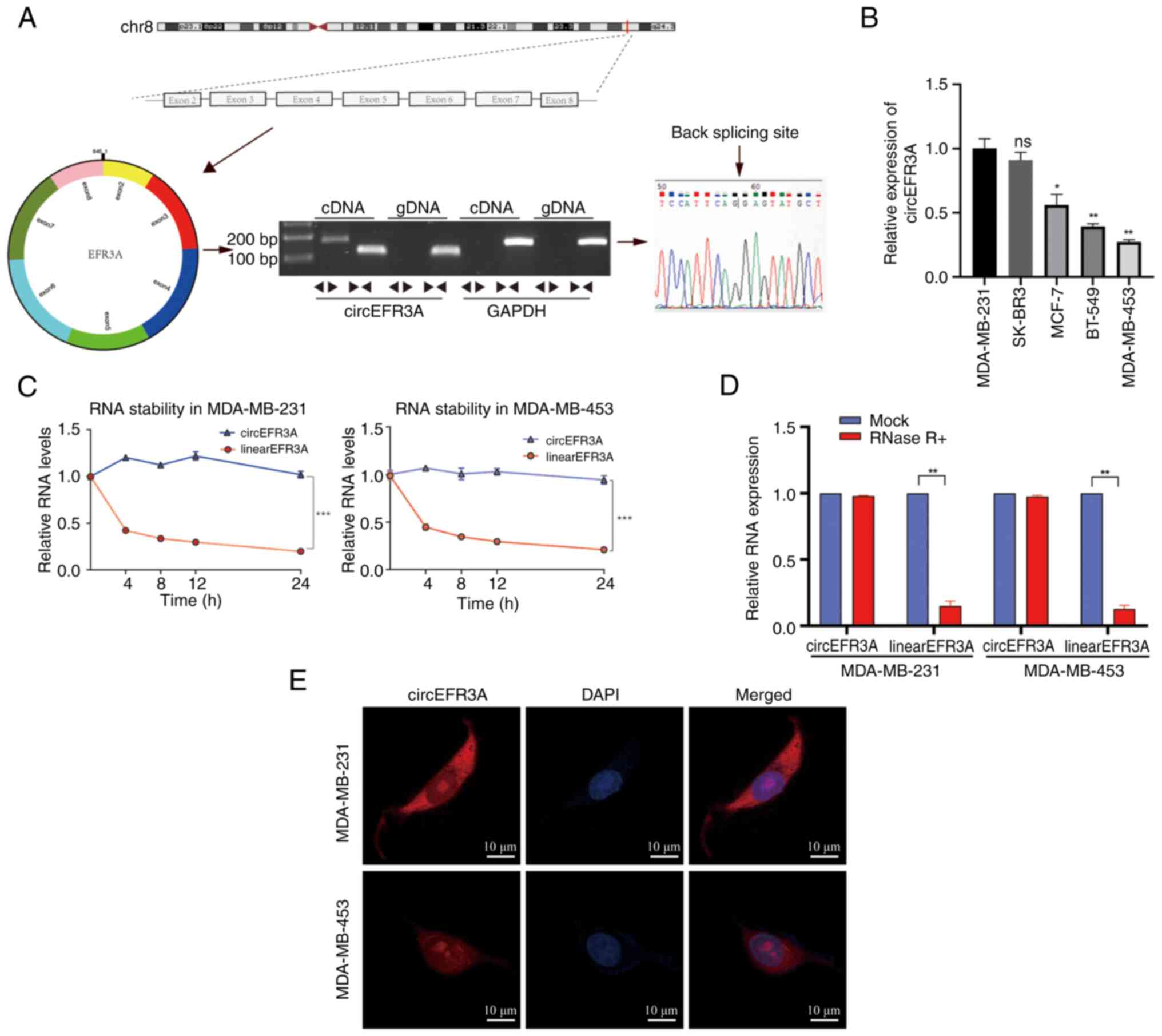
Figure 1

Characterization of circEFR3A in
breast cancer cells. (A) Splicing site sequence and circularization
schematic of circEFR3A. Divergent primers successfully amplified
the circular RNA transcript circEFR3A in cDNA but not in gDNA. By
contrast, convergent primers amplified the linear RNA transcript
circEFR3A in both cDNA and gDNA. GAPDH served as an internal
control. (B) Expression level of circEFR3A in SK-BR-3, MCF7, BT-549
and MDA-MB-453 cells compared with MDA-MB-231 cells. (C) Relative
expression levels of circEFR3A and linear EFR3A mRNA were assessed
using RT-qPCR following Actinomycin treatment in MDA-MB-231 and
MDA-MB-453 cells at the indicated time points. (D) mRNA expression
of circEFR3A and linear EFR3A in RNase R-treated breast cancer
cells, assessed using RT-qPCR. (E) Subcellular localization of
circEFR3A was determined using fluorescence in situ
hybridization. Scale bar, 10 µm. *P<0.05; **P<0.01;
***P<0.001 vs. MDA-MB-231 cells or as indicated. Circ, circular;
cDNA, complementary DNA; gDNA, genomic DNA; RT-qPCR, reverse
transcription-quantitative PCR; ns, not significant; bp, base
pairs.

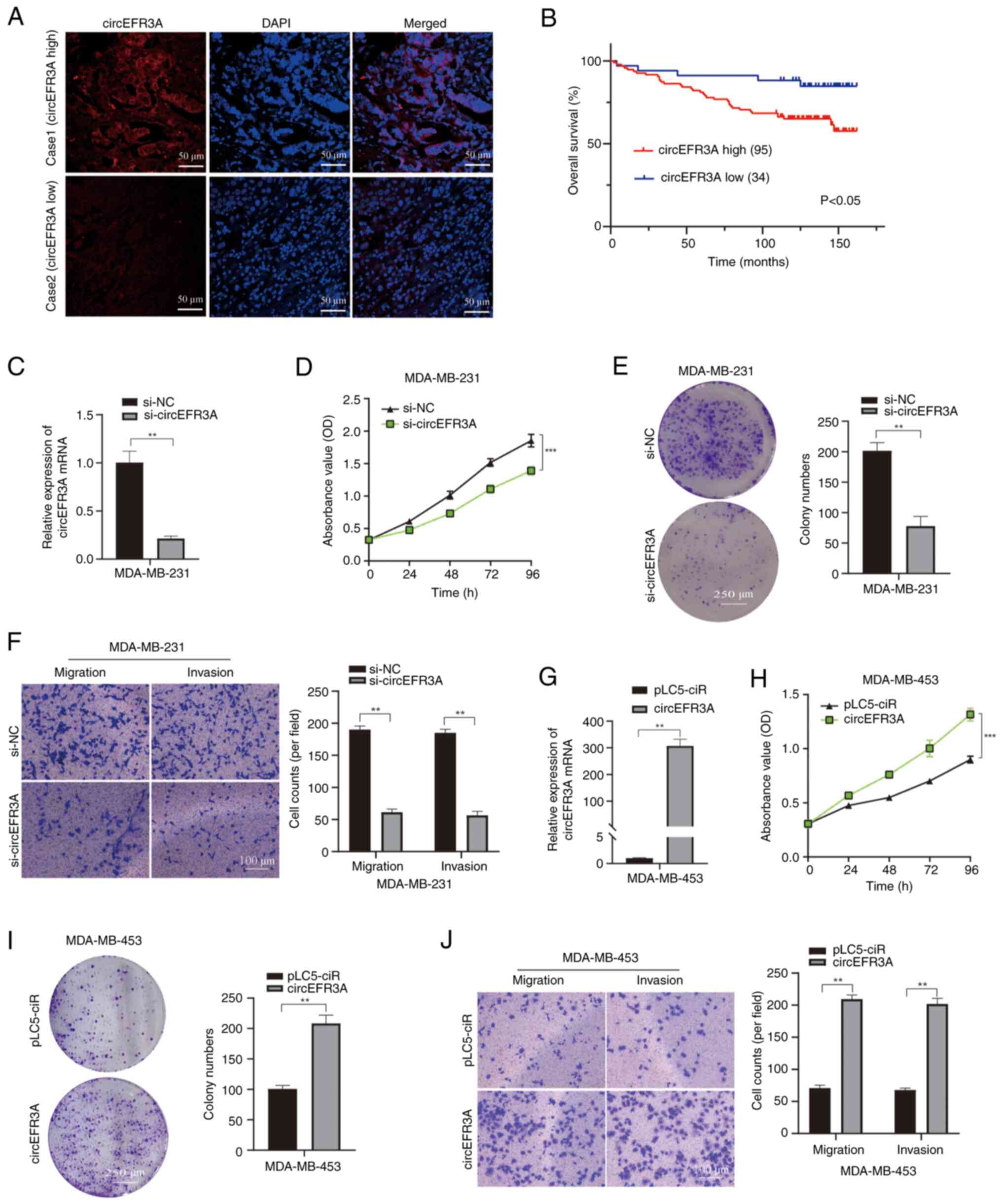
Figure 2

circEFR3A is associated with breast
cancer progression and promotes breast cancer cell proliferation,
migration and invasion. (A) Fluorescence in situ
hybridization analysis revealed the expression level of circEFR3A
in breast cancer tissue specimens. Scale bar, 50 µm. (B) Survival
analysis demonstrated that patients with breast cancer with high
circEFR3A expression had a worse prognosis compared with those with
low expression. (C) Quantification of circEFR3A Levels in
MDA-MB-231 cells following transfection with circEFR3A siRNA. (D)
CCK-8 assay results demonstrated that reduced circEFR3A expression
significantly inhibited the proliferation of MDA-MB-231 cells. (E)
Colony formation assay results revealed a significant reduction in
the number of cell colonies following circEFR3A knockdown in breast
cancer cells. Scale bar, 250 µm. (F) Transwell assay results
indicated that knockdown of circEFR3A expression suppressed
migration and invasion in MDA-MB-231 cells. Scale bar, 100 µm. (G)
Level of circEFR3A in MDA-MB-453 cells after transfection with
circEFR3A, assessed using reverse transcription-quantitative PCR.
(H) CCK-8 assay results demonstrated that circEFR3A overexpression
significantly enhanced the proliferation of MDA-MB-453 cells. (I)
Colony formation assay results indicated a significant increase in
the number of cell colonies following circEFR3A overexpression in
MDA-MB-453 cells. Scale bar, 250 µm. (J) Transwell assay results
demonstrated that circEFR3A overexpression promoted the migration
and invasion of MDA-MB-453 cells. Scale bar, 100 µm.**P<0.01;
***P<0.001. Circ, circular; si, small interfering; CCK-8, Cell
Counting Kit-8; OS, overall survival; NC, negative control; OD,
optical density.

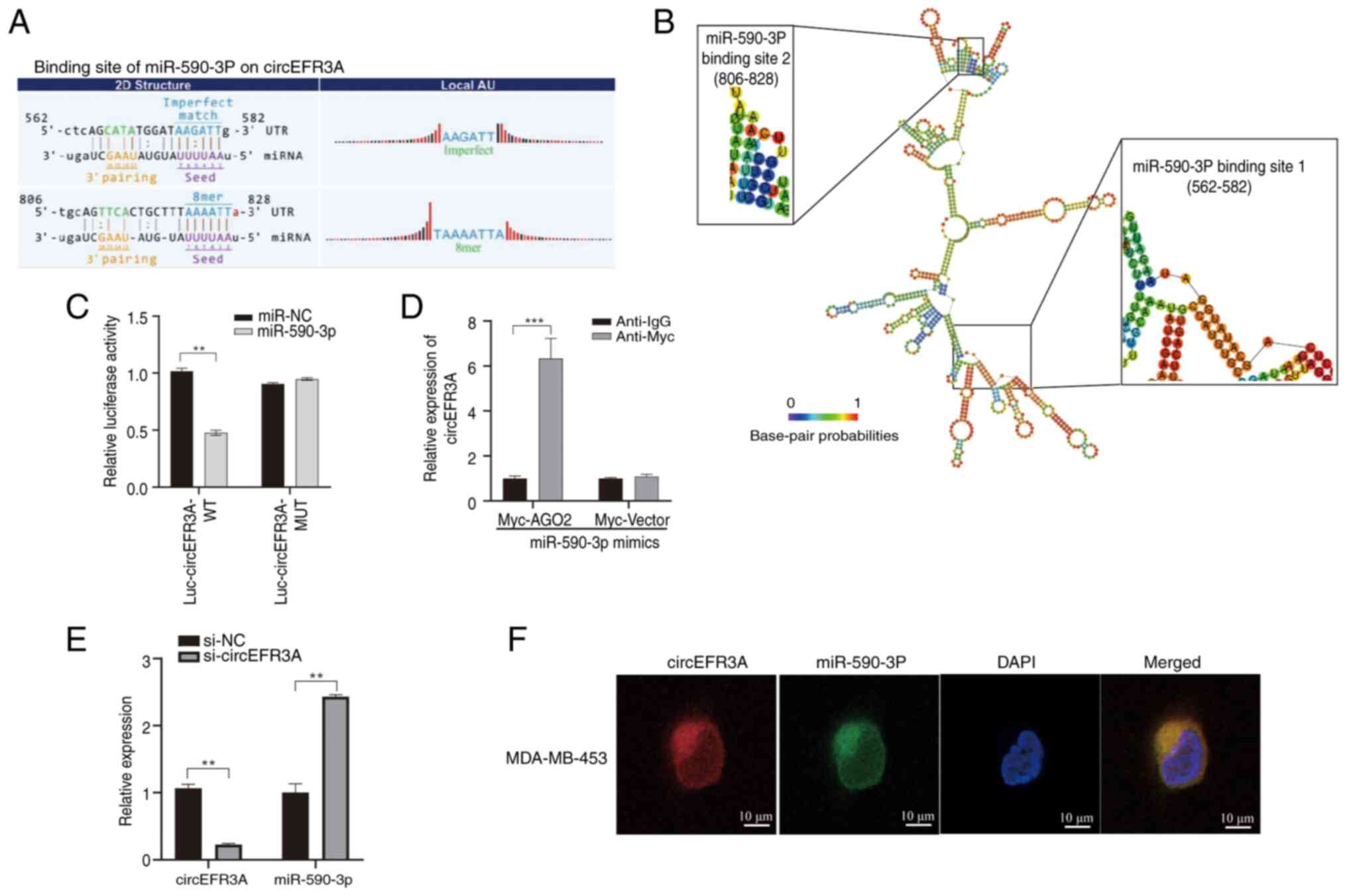
Figure 3

circEFR3A serves as a miR-590-3p
sponge in breast cancer cells. (A) Predicting miRNA that bind to
circEFR3A based on the TargetScan and miRanda databases. (B)
Minimum free energy secondary structure of circEFR3A was predicted
using the RNAfold web server, highlighting the regions relevant for
miR-590-3p binding. (C) Luciferase assay was performed to determine
the luciferase activity of circEFR3A when co-transfected with
wild-type or mutant luc-circEFR3A vector and miR-NC or miR-590-3p
mimics in MDA-MB-231 cells. (D) RIP assay was performed to assess
the binding between circEFR3A and miR-590-3p, confirming their
interaction. Experiments were repeated three times. (E) MDA-MB-231
cells were transfected with si-NC or si-circEFR3A, followed by
reverse transcription-quantitative PCR to assess the relative
expression levels of circEFR3A and miR-590-3p. (F) Fluorescence
in situ hybridization demonstrated that circEFR3A and
miR-590-3p were co-localized in the cytoplasm of MDA-MB-453 cells.
Scale bar, 10 µm. **P<0.01; ***P<0.001. Circ, circular;
miR/miRNA, microRNA; NC, negative control; RIP, RNA
immunoprecipitation; si, small interfering.

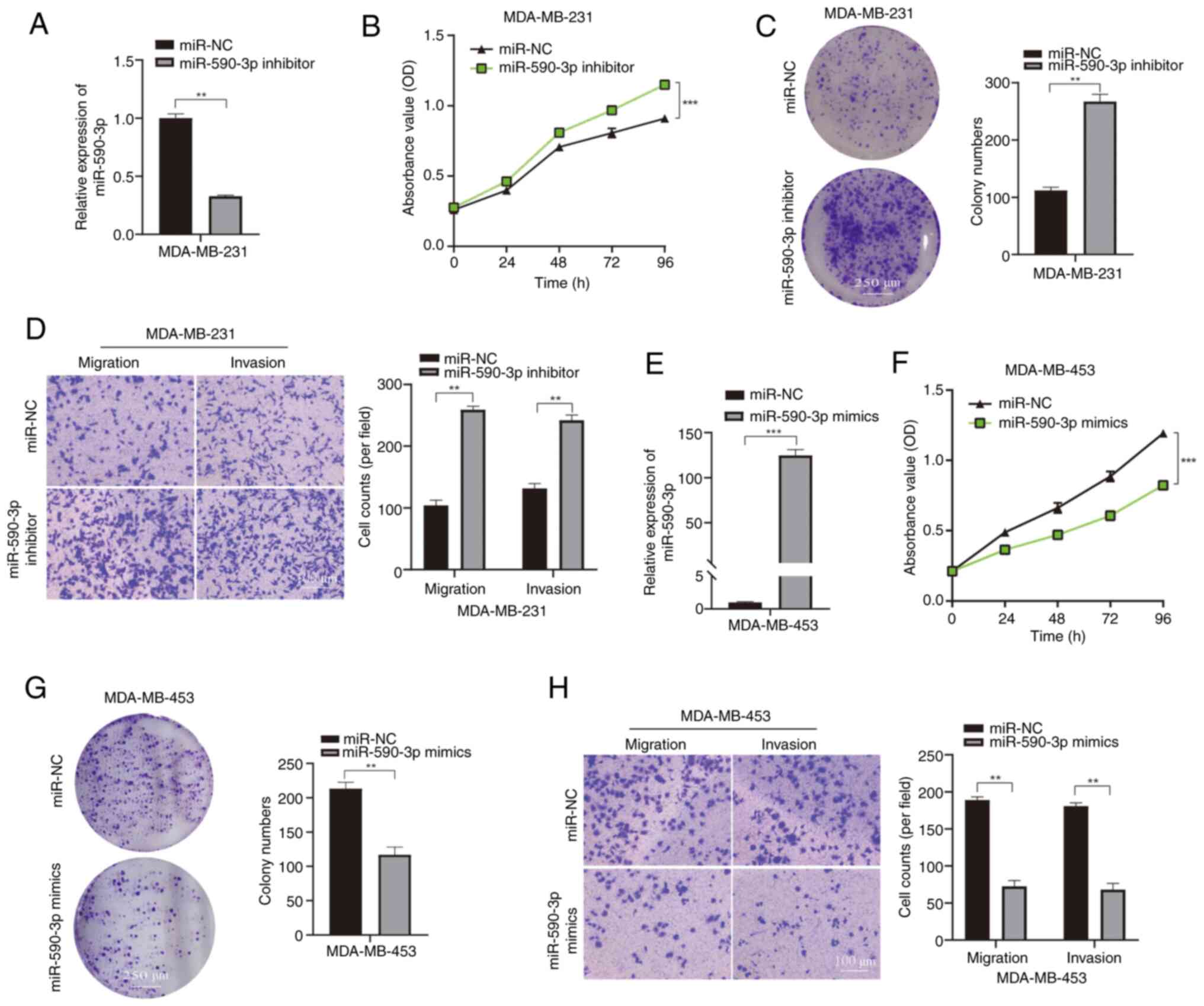
Figure 4

miR-590-3p inhibits the
proliferation, migration and invasion of breast cancer cells. (A)
Expression levels of miR-590-3p in MDA-MB-231 cells, assessed using
RT-qPCR. (B) CCK-8 assay results revealed that miR-590-3p low
expression significantly enhanced the proliferation of MDA-MB-231
cells. (C) Colony formation assay results revealed a significant
increase in the number of cell colonies following miR-590-3p
downregulation in MDA-MB-231 cells. Scale bar, 250 µm. (D)
Transwell assay results demonstrated that low miR-590-3p expression
was significantly associated with an increase in the migration and
invasion of MDA-MB-231 cells. Scale bar, 100 µm. (E) Expression of
miR-590-3p in MDA-MB-453 cells, assessed using RT-qPCR. (F) CCK-8
assays revealed that miR-590-3p overexpression significantly
promoted the proliferation of MDA-MB-453 cells. (G) Colony
formation assay results indicated a significant increase in cell
colony formation after miR-590-3p upregulation in MDA-MB-453 cells.
Scale bar, 250 µm. (H) Transwell assay analysis indicated that
miR-590-3p overexpression reduced the migration and invasion of
MDA-MB-453 cells. Scale bar, 100 µm. **P<0.01; ***P<0.001.
miR, microRNA; RT-qPCR, reverse transcription-quantitative PCR;
CCK-8, Cell Counting Kit-8; NC, negative control; OD, optical
density.

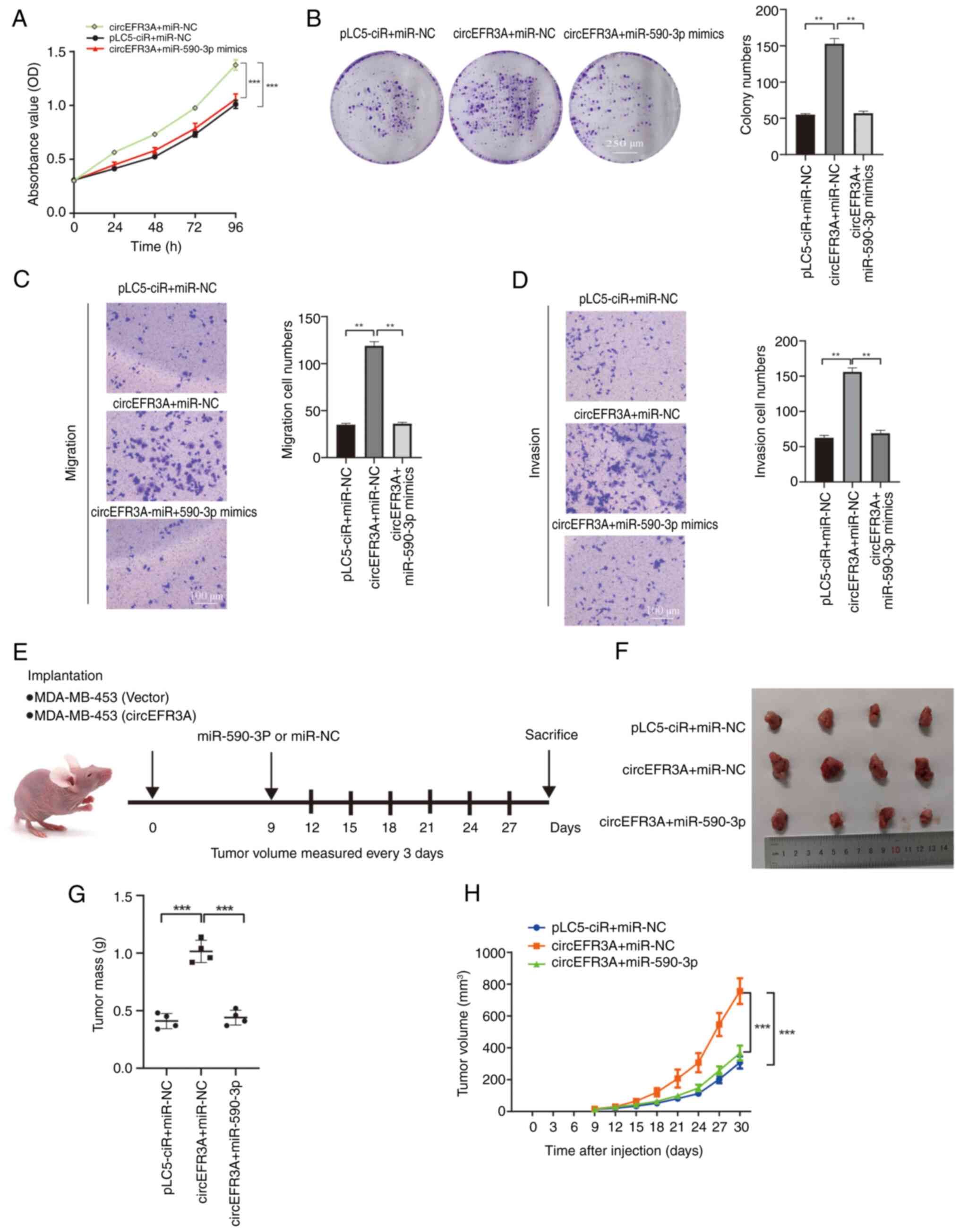
Figure 5

circEFR3A promotes the proliferation,
migration and invasion of breast cancer via miR-590-3p. (A) Cell
Counting Kit-8 and (B) colony formation assays demonstrated that
transfection with circEFR3A alone significantly enhanced the
proliferation of MDA-MB-453 cells. Additionally, the
pro-proliferative effects of circEFR3A were partially reversed by
miR-590-3p mimics. Transwell assay results indicated that
transfection with circEFR3A alone significantly increased the (C)
migration and (D) invasion rates of MDA-MB-453 cells. However,
co-transfection with miR-590-3p mimics partially counteracted these
enhanced effects. Scale bar, 100 µm. (E) Schematic diagram of
grouping for the xenotransplantation model. (F) In the xenograft
tumor experiment, mice were injected with MDA-MB-453 cells stably
transfected with either pLC5-ciR + miR-NC, circEFR3A + miR-NC or
circEFR3A + miR-590-3p. (G) Tumor mass and (H) volume were
evaluated. **P<0.01; ***P<0.001. circ, circular; miR,
microRNA; NC, negative control.

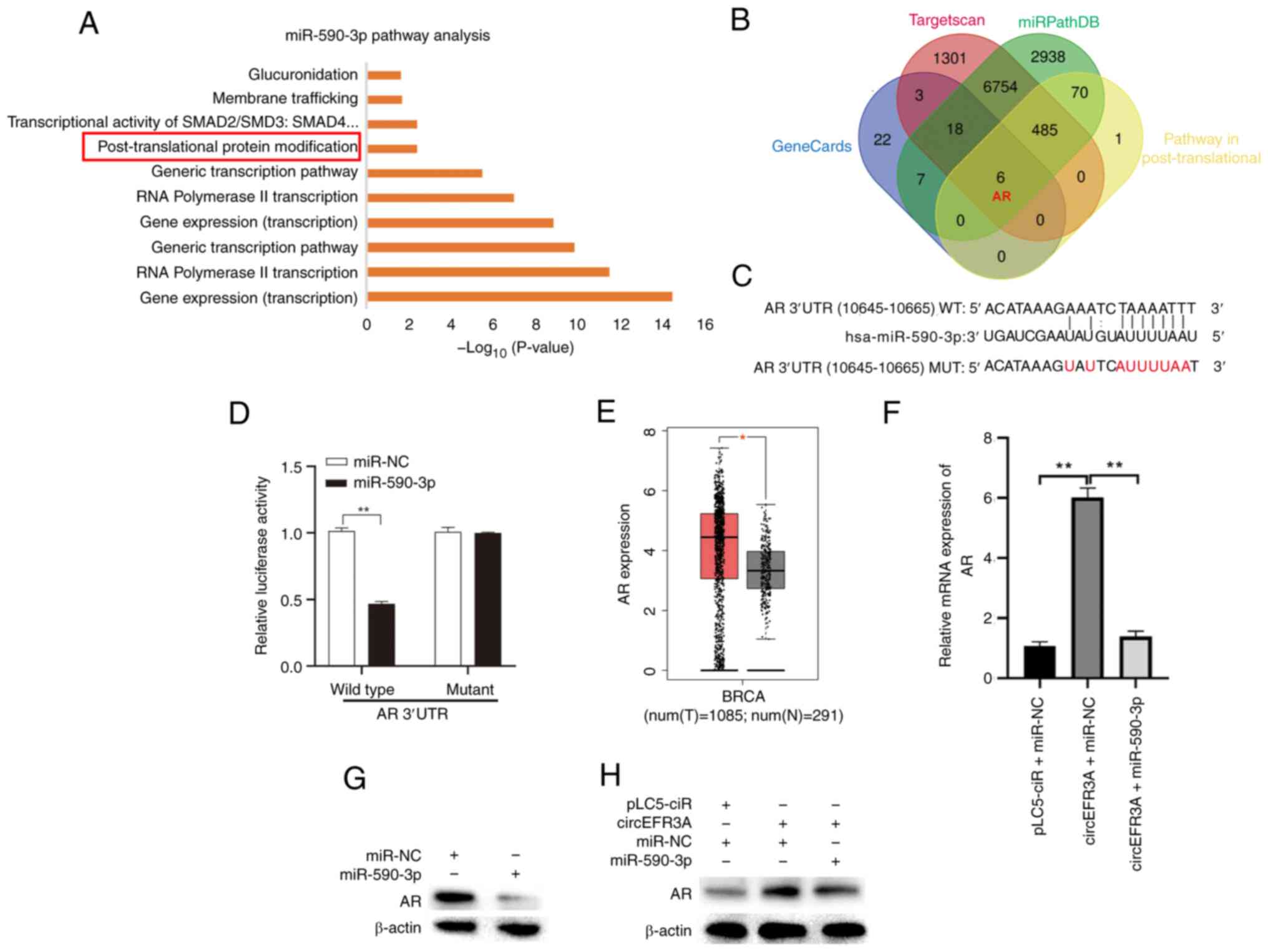
Figure 6

AR is a target gene of miR-590-3p.
(A) Downstream signaling pathway of miR-590-3p, predicted using the
miRPathDB database. (B) Potential target genes of miR-590-3p,
identified using the Targetscan and miRPathDB databases,
cross-referenced with key breast cancer genes from the GeneCards
database and genes involved in the post-translational protein
modification pathway, with intersecting genes visualized in a Venn
diagram. (C) Predicted miR-590-3p binding site in AR 3′UTR, along
with a diagrammatic depiction of the AR 3′UTR wild-type or mutant
reporter constructs. (D) A luciferase reporter assay was performed
to measure the activity of the wild-type or mutant AR 3′UTR vector
in MDA-MB-453 cells that were co-transfected with either miR-590-3p
mimics or a negative control vector. (E) Expression of AR mRNA in
1,085 breast cancer specimens and 291 normal specimens, determined
based on the Gene Expression Profiling Interactive Analysis
database. (F) Mice were injected with MDA-MB-453 cells stably
transfected with either pLC5-ciR + miR-NC, circEFR3A + miR-NC or
circEFR3A + miR-590-3p. The mRNA expression levels of AR were
measured in tissues from three groups of nude mice. *P<0.05;
**P<0.01. AR protein expression in MDA-MB-453 cells transfected
with (G) miR-590-3p or miR-NC and (H) miR-NC or miR-590-3p +
circEFR3A or pLC5-ciR+miR-NC was assessed using western blotting.
AR, androgen receptor; miR, microRNA; circ, circular; NC, negative
control.
View References

1 

Fillon M: Breast cancer recurrence risk can remain for 10 to 32 years. CA Cancer J Clin. 72:197–199. 2022.PubMed/NCBI

2 

Siegel RL, Giaquinto AN and Jemal A: Cancer statistics, 2024. CA Cancer J Clin. 74:12–49. 2024.PubMed/NCBI

3 

Cardoso F, Paluch-Shimon S, Senkus E, Curigliano G, Aapro MS, André F, Barrios CH, Bergh J, Bhattacharyya GS, Biganzoli L, et al: 5th ESO-ESMO international consensus guidelines for advanced breast cancer (ABC 5). Ann Oncol. 31:1623–1649. 2020. View Article : Google Scholar : PubMed/NCBI

4 

Klinge CM: Non-Coding RNAs in breast cancer: Intracellular and intercellular communication. Noncoding RNA. 4:402018.PubMed/NCBI

5 

Qu S, Yang X, Li X, Wang J, Gao Y, Shang R, Sun W, Dou K and Li H: Circular RNA: A new star of noncoding RNAs. Cancer Lett. 365:141–148. 2015. View Article : Google Scholar : PubMed/NCBI

6 

Memczak S, Jens M, Elefsinioti A, Torti F, Krueger J, Rybak A, Maier L, Mackowiak SD, Gregersen LH, Munschauer M, et al: Circular RNAs are a large class of animal RNAs with regulatory potency. Nature. 495:333–338. 2013. View Article : Google Scholar : PubMed/NCBI

7 

Hansen TB, Jensen TI, Clausen BH, Bramsen JB, Finsen B, Damgaard CK and Kjems J: Natural RNA circles function as efficient microRNA sponges. Nature. 495:384–388. 2013. View Article : Google Scholar : PubMed/NCBI

8 

Lei M, Zheng G, Ning Q, Zheng J and Dong D: Translation and functional roles of circular RNAs in human cancer. Mol Cancer. 19:302020. View Article : Google Scholar : PubMed/NCBI

9 

Zhou WY, Cai ZR, Liu J, Wang DS, Ju HQ and Xu RH: Circular RNA: metabolism, functions and interactions with proteins. Mol Cancer. 19:1722020. View Article : Google Scholar : PubMed/NCBI

10 

Yu Y, Zheng W, Ji C, Wang X, Chen M, Hua K, Deng X and Fang L: Tumor-Derived circRNAs as circulating biomarkers for breast cancer. Front Pharmacol. 13:8118562022. View Article : Google Scholar : PubMed/NCBI

11 

Yang B, Wang YW and Zhang K: Interactions between circRNA and protein in breast cancer. Gene. 895:1480192024. View Article : Google Scholar : PubMed/NCBI

12 

Zhu J, Li Q, Wu Z, Xu W and Jiang R: Circular RNA-mediated miRNA sponge & RNA binding protein in biological modulation of breast cancer. Noncoding RNA Res. 9:262–276. 2024. View Article : Google Scholar : PubMed/NCBI

13 

Gopikrishnan M, R HC, R G, Ashour HM, Pintus G, Hammad M, Kashyap MK, C GPD and Zayed H: Therapeutic and diagnostic applications of exosomal circRNAs in breast cancer. Funct Integr Genomics. 23:1842023. View Article : Google Scholar : PubMed/NCBI

14 

Gao D, Cui C, Jiao Y, Zhang H, Li M, Wang J and Sheng X: Circular RNA and its potential diagnostic and therapeutic values in breast cancer. Mol Biol Rep. 51:2582024. View Article : Google Scholar : PubMed/NCBI

15 

Weidle UH, Hsia HE and Brinkmann U: Breast cancer: Circular RNAs mediating efficacy in preclinical in vivo models. Cancer Genomics Proteomics. 20:222–238. 2023. View Article : Google Scholar : PubMed/NCBI

16 

Liang G, Ling Y, Mehrpour M, Saw PE, Liu Z, Tan W, Tian Z, Zhong W, Lin W, Luo Q, et al: Autophagy-associated circRNA circCDYL augments autophagy and promotes breast cancer progression. Mol Cancer. 19:652020. View Article : Google Scholar : PubMed/NCBI

17 

Wu S, Lu J, Zhu H, Wu F, Mo Y, Xie L, Song C, Liu L, Xie X, Li Y, et al: A novel axis of circKIF4A-miR-637-STAT3 promotes brain metastasis in triple-negative breast cancer. Cancer Lett. 581:2165082024. View Article : Google Scholar : PubMed/NCBI

18 

Fu B, Liu W, Zhu C, Li P, Wang L, Pan L, Li K, Cai P, Meng M, Wang Y, et al: Circular RNA circBCBM1 promotes breast cancer brain metastasis by modulating miR-125a/BRD4 axis. Int J Biol Sci. 17:3104–3117. 2021. View Article : Google Scholar : PubMed/NCBI

19 

Ju C, Zhou M, Du D, Wang C, Yao J, Li H, Luo Y, He F and He J: EIF4A3-mediated circ_0042881 activates the RAS pathway via miR-217/SOS1 axis to facilitate breast cancer progression. Cell Death Dis. 14:5592023. View Article : Google Scholar : PubMed/NCBI

20 

Song H, Zhao Z, Ma L, Zhao W, Hu Y and Song Y: Novel exosomal circEGFR facilitates triple negative breast cancer autophagy via promoting TFEB nuclear trafficking and modulating miR-224-5p/ATG13/ULK1 feedback loop. Oncogene. 43:821–836. 2024. View Article : Google Scholar : PubMed/NCBI

21 

Livak KJ and Schmittgen TD: Analysis of relative gene expression data using real-time quantitative PCR and the 2(−Delta Delta C(T)) Method. Methods. 25:402–408. 2001. View Article : Google Scholar : PubMed/NCBI

22 

Stelzer G, Rosen N, Plaschkes I, Zimmerman S, Twik M, Fishilevich S, Stein TI, Nudel R, Lieder I, Mazor Y, et al: The genecards suite: From gene data mining to disease genome sequence analyses. Curr Protoc Bioinformatics. 54:1 30 1–1 30 33. 2016. View Article : Google Scholar : PubMed/NCBI

23 

Witkos TM, Koscianska E and Krzyzosiak WJ: Practical aspects of microRNA target prediction. Curr Mol Med. 11:93–109. 2011. View Article : Google Scholar : PubMed/NCBI

24 

Kristensen LS, Andersen MS, Stagsted LVW, Ebbesen KK, Hansen TB and Kjems J: The biogenesis, biology and characterization of circular RNAs. Nat Rev Genet. 20:675–691. 2019. View Article : Google Scholar : PubMed/NCBI

25 

Dolgin E: Why rings of RNA could be the next blockbuster drug. Nature. 622:22–24. 2023. View Article : Google Scholar : PubMed/NCBI

26 

Liu CX and Chen LL: Circular RNAs: Characterization, cellular roles, and applications. Cell. 185:23902022. View Article : Google Scholar : PubMed/NCBI

27 

Zhang Y, Zhang X, Xu Y, Fang S, Ji Y, Lu L, Xu W, Qian H and Liang ZF: Circular RNA and its roles in the occurrence, development, diagnosis of cancer. Front Oncol. 12:8457032022. View Article : Google Scholar : PubMed/NCBI

28 

Trybus M, Hryniewicz-Jankowska A, Wojtowicz K, Trombik T, Czogalla A and Sikorski AF: EFR3A: A new raft domain organizing protein? Cell Mol Biol Lett. 28:862023. View Article : Google Scholar : PubMed/NCBI

29 

Gupta AR, Pirruccello M, Cheng F, Kang HJ, Fernandez TV, Baskin JM, Choi M, Liu L, Ercan-Sencicek AG, Murdoch JD, et al: Rare deleterious mutations of the gene EFR3A in autism spectrum disorders. Mol Autism. 5:312014. View Article : Google Scholar : PubMed/NCBI

30 

Hu H, Ye B, Zhang L, Wang Q, Liu Z, Ji S, Liu Q, Lv J, Ma Y, Xu Y, et al: Efr3a insufficiency attenuates the degeneration of spiral ganglion neurons after hair cell loss. Front Mol Neurosci. 10:862017. View Article : Google Scholar : PubMed/NCBI

31 

Adhikari H, Kattan WE, Kumar S, Zhou P, Hancock JF and Counter CM: Oncogenic KRAS is dependent upon an EFR3A-PI4KA signaling axis for potent tumorigenic activity. Nat Commun. 12:52482021. View Article : Google Scholar : PubMed/NCBI

32 

Pang H, Zheng Y, Zhao Y, Xiu X and Wang J: miR-590-3p suppresses cancer cell migration, invasion and epithelial-mesenchymal transition in glioblastoma multiforme by targeting ZEB1 and ZEB2. Biochem Biophys Res Commun. 468:739–745. 2015. View Article : Google Scholar : PubMed/NCBI

33 

Youssef AI, Khaled GM and Amleh A: Functional role and epithelial to mesenchymal transition of the miR-590-3p/MDM2 axis in hepatocellular carcinoma. BMC Cancer. 23:3962023. View Article : Google Scholar : PubMed/NCBI

34 

Ge X and Gong L: MiR-590-3p suppresses hepatocellular carcinoma growth by targeting TEAD1. Tumour Biol. 39:10104283176959472017. View Article : Google Scholar : PubMed/NCBI

35 

Bruno T, Catena V, Corleone G, Cortile C, Cappelletto MC, Bellei B, De Nicola F, Amadio B, Gumenyuk S, Marchesi F, et al: Che-1/miR-590-3p/TAZ axis sustains multiple myeloma disease. Leukemia. 38:877–882. 2024. View Article : Google Scholar : PubMed/NCBI

36 

Zhang Y, Chang J, Jiang W, Ye X and Zhang S: Long non-coding RNA CASC9/microRNA-590-3p axis participates in lutein-mediated suppression of breast cancer cell proliferation. Oncol Lett. 22:5442021. View Article : Google Scholar : PubMed/NCBI

37 

Yan M, Ye L, Feng X, Shi R, Sun Z, Li Z and Liu T: MicroRNA-590-3p inhibits invasion and metastasis in triple-negative breast cancer by targeting Slug. Am J Cancer Res. 10:965–974. 2020.PubMed/NCBI

38 

Shan Q, Qu F, Yang W and Chen N: Effect of LINC00657 on apoptosis of breast cancer cells by regulating miR-590-3p. Cancer Manag Res. 12:4561–4571. 2020. View Article : Google Scholar : PubMed/NCBI

39 

Ricciardelli C, Bianco-Miotto T, Jindal S, Butler LM, Leung S, McNeil CM, O'Toole SA, Ebrahimie E, Millar EKA, Sakko AJ, et al: The magnitude of androgen receptor positivity in breast cancer is critical for reliable prediction of disease outcome. Clin Cancer Res. 24:2328–2341. 2018. View Article : Google Scholar : PubMed/NCBI

40 

Bhattarai S, Klimov S, Mittal K, Krishnamurti U, Li XB, Oprea-Ilies G, Wetherilt CS, Riaz A, Aleskandarany MA, Green AR, et al: Prognostic role of androgen receptor in triple negative breast cancer: A multi-institutional study. Cancers (Basel). 11:9952019. View Article : Google Scholar : PubMed/NCBI

41 

Sang M, Meng L, Ma C, Liu S, Sang M, Chang S, Liu F, Lian Y and Geng C: Effect of AR antagonist combined with PARP1 inhibitor on sporadic triple-negative breast cancer bearing AR expression and methylation-mediated BRCA1 dysfunction. Biomed Pharmacother. 111:169–177. 2019. View Article : Google Scholar : PubMed/NCBI

42 

Traina TA, Miller K, Yardley DA, Eakle J, Schwartzberg LS, O'Shaughnessy J, Gradishar W, Schmid P, Winer E, Kelly C, et al: Enzalutamide for the treatment of androgen receptor-expressing triple-negative breast cancer. J Clin Oncol. 36:884–890. 2018. View Article : Google Scholar : PubMed/NCBI

43 

Bonnefoi H, Grellety T, Tredan O, Saghatchian M, Dalenc F, Mailliez A, L'Haridon T, Cottu P, Abadie-Lacourtoisie S, You B, et al: A phase II trial of abiraterone acetate plus prednisone in patients with triple-negative androgen receptor positive locally advanced or metastatic breast cancer (UCBG 12-1). Ann Oncol. 27:812–818. 2016. View Article : Google Scholar : PubMed/NCBI

44 

Liu Y, Zhu XZ, Xiao Y, Wu SY, Zuo WJ, Yu Q, Cao AY, Li JJ, Yu KD, Liu GY, et al: Subtyping-based platform guides precision medicine for heavily pretreated metastatic triple-negative breast cancer: The FUTURE phase II umbrella clinical trial. Cell Res. 33:389–402. 2023. View Article : Google Scholar : PubMed/NCBI

45 

Jiang P and Xia B: Circular RNA EFR3A promotes nasopharyngeal carcinoma progression through modulating the miR-654-3p/EFR3A axis. Cell Mol Biol (Noisy-le-grand). 69:111–117. 2023. View Article : Google Scholar : PubMed/NCBI

Related Articles

  • Abstract
  • View
  • Download
  • Twitter
Copy and paste a formatted citation
Spandidos Publications style
Mi Y, Wang X, Song H, Wu Z, Li S, Liu F, Liu W, Sang M and Geng C: circEFR3A promotes breast cancer progression by sponging miR‑590‑3p to upregulate androgen receptor expression. Oncol Lett 30: 446, 2025.
APA
Mi, Y., Wang, X., Song, H., Wu, Z., Li, S., Liu, F. ... Geng, C. (2025). circEFR3A promotes breast cancer progression by sponging miR‑590‑3p to upregulate androgen receptor expression. Oncology Letters, 30, 446. https://doi.org/10.3892/ol.2025.15192
MLA
Mi, Y., Wang, X., Song, H., Wu, Z., Li, S., Liu, F., Liu, W., Sang, M., Geng, C."circEFR3A promotes breast cancer progression by sponging miR‑590‑3p to upregulate androgen receptor expression". Oncology Letters 30.3 (2025): 446.
Chicago
Mi, Y., Wang, X., Song, H., Wu, Z., Li, S., Liu, F., Liu, W., Sang, M., Geng, C."circEFR3A promotes breast cancer progression by sponging miR‑590‑3p to upregulate androgen receptor expression". Oncology Letters 30, no. 3 (2025): 446. https://doi.org/10.3892/ol.2025.15192
Copy and paste a formatted citation
x
Spandidos Publications style
Mi Y, Wang X, Song H, Wu Z, Li S, Liu F, Liu W, Sang M and Geng C: circEFR3A promotes breast cancer progression by sponging miR‑590‑3p to upregulate androgen receptor expression. Oncol Lett 30: 446, 2025.
APA
Mi, Y., Wang, X., Song, H., Wu, Z., Li, S., Liu, F. ... Geng, C. (2025). circEFR3A promotes breast cancer progression by sponging miR‑590‑3p to upregulate androgen receptor expression. Oncology Letters, 30, 446. https://doi.org/10.3892/ol.2025.15192
MLA
Mi, Y., Wang, X., Song, H., Wu, Z., Li, S., Liu, F., Liu, W., Sang, M., Geng, C."circEFR3A promotes breast cancer progression by sponging miR‑590‑3p to upregulate androgen receptor expression". Oncology Letters 30.3 (2025): 446.
Chicago
Mi, Y., Wang, X., Song, H., Wu, Z., Li, S., Liu, F., Liu, W., Sang, M., Geng, C."circEFR3A promotes breast cancer progression by sponging miR‑590‑3p to upregulate androgen receptor expression". Oncology Letters 30, no. 3 (2025): 446. https://doi.org/10.3892/ol.2025.15192
Follow us
  • Twitter
  • LinkedIn
  • Facebook
About
  • Spandidos Publications
  • Careers
  • Cookie Policy
  • Privacy Policy
How can we help?
  • Help
  • Live Chat
  • Contact
  • Email to our Support Team