Spandidos Publications Logo
  • About
    • About Spandidos
    • Aims and Scopes
    • Abstracting and Indexing
    • Editorial Policies
    • Reprints and Permissions
    • Job Opportunities
    • Terms and Conditions
    • Contact
  • Journals
    • All Journals
    • Oncology Letters
      • Oncology Letters
      • Information for Authors
      • Editorial Policies
      • Editorial Board
      • Aims and Scope
      • Abstracting and Indexing
      • Bibliographic Information
      • Archive
    • International Journal of Oncology
      • International Journal of Oncology
      • Information for Authors
      • Editorial Policies
      • Editorial Board
      • Aims and Scope
      • Abstracting and Indexing
      • Bibliographic Information
      • Archive
    • Molecular and Clinical Oncology
      • Molecular and Clinical Oncology
      • Information for Authors
      • Editorial Policies
      • Editorial Board
      • Aims and Scope
      • Abstracting and Indexing
      • Bibliographic Information
      • Archive
    • Experimental and Therapeutic Medicine
      • Experimental and Therapeutic Medicine
      • Information for Authors
      • Editorial Policies
      • Editorial Board
      • Aims and Scope
      • Abstracting and Indexing
      • Bibliographic Information
      • Archive
    • International Journal of Molecular Medicine
      • International Journal of Molecular Medicine
      • Information for Authors
      • Editorial Policies
      • Editorial Board
      • Aims and Scope
      • Abstracting and Indexing
      • Bibliographic Information
      • Archive
    • Biomedical Reports
      • Biomedical Reports
      • Information for Authors
      • Editorial Policies
      • Editorial Board
      • Aims and Scope
      • Abstracting and Indexing
      • Bibliographic Information
      • Archive
    • Oncology Reports
      • Oncology Reports
      • Information for Authors
      • Editorial Policies
      • Editorial Board
      • Aims and Scope
      • Abstracting and Indexing
      • Bibliographic Information
      • Archive
    • Molecular Medicine Reports
      • Molecular Medicine Reports
      • Information for Authors
      • Editorial Policies
      • Editorial Board
      • Aims and Scope
      • Abstracting and Indexing
      • Bibliographic Information
      • Archive
    • World Academy of Sciences Journal
      • World Academy of Sciences Journal
      • Information for Authors
      • Editorial Policies
      • Editorial Board
      • Aims and Scope
      • Abstracting and Indexing
      • Bibliographic Information
      • Archive
    • International Journal of Functional Nutrition
      • International Journal of Functional Nutrition
      • Information for Authors
      • Editorial Policies
      • Editorial Board
      • Aims and Scope
      • Abstracting and Indexing
      • Bibliographic Information
      • Archive
    • International Journal of Epigenetics
      • International Journal of Epigenetics
      • Information for Authors
      • Editorial Policies
      • Editorial Board
      • Aims and Scope
      • Abstracting and Indexing
      • Bibliographic Information
      • Archive
    • Medicine International
      • Medicine International
      • Information for Authors
      • Editorial Policies
      • Editorial Board
      • Aims and Scope
      • Abstracting and Indexing
      • Bibliographic Information
      • Archive
  • Articles
  • Information
    • Information for Authors
    • Information for Reviewers
    • Information for Librarians
    • Information for Advertisers
    • Conferences
  • Language Editing
Spandidos Publications Logo
  • About
    • About Spandidos
    • Aims and Scopes
    • Abstracting and Indexing
    • Editorial Policies
    • Reprints and Permissions
    • Job Opportunities
    • Terms and Conditions
    • Contact
  • Journals
    • All Journals
    • Biomedical Reports
      • Information for Authors
      • Editorial Policies
      • Editorial Board
      • Aims and Scope
      • Abstracting and Indexing
      • Bibliographic Information
      • Archive
    • Experimental and Therapeutic Medicine
      • Information for Authors
      • Editorial Policies
      • Editorial Board
      • Aims and Scope
      • Abstracting and Indexing
      • Bibliographic Information
      • Archive
    • International Journal of Epigenetics
      • Information for Authors
      • Editorial Policies
      • Editorial Board
      • Aims and Scope
      • Abstracting and Indexing
      • Bibliographic Information
      • Archive
    • International Journal of Functional Nutrition
      • Information for Authors
      • Editorial Policies
      • Editorial Board
      • Aims and Scope
      • Abstracting and Indexing
      • Bibliographic Information
      • Archive
    • International Journal of Molecular Medicine
      • Information for Authors
      • Editorial Policies
      • Editorial Board
      • Aims and Scope
      • Abstracting and Indexing
      • Bibliographic Information
      • Archive
    • International Journal of Oncology
      • Information for Authors
      • Editorial Policies
      • Editorial Board
      • Aims and Scope
      • Abstracting and Indexing
      • Bibliographic Information
      • Archive
    • Medicine International
      • Information for Authors
      • Editorial Policies
      • Editorial Board
      • Aims and Scope
      • Abstracting and Indexing
      • Bibliographic Information
      • Archive
    • Molecular and Clinical Oncology
      • Information for Authors
      • Editorial Policies
      • Editorial Board
      • Aims and Scope
      • Abstracting and Indexing
      • Bibliographic Information
      • Archive
    • Molecular Medicine Reports
      • Information for Authors
      • Editorial Policies
      • Editorial Board
      • Aims and Scope
      • Abstracting and Indexing
      • Bibliographic Information
      • Archive
    • Oncology Letters
      • Information for Authors
      • Editorial Policies
      • Editorial Board
      • Aims and Scope
      • Abstracting and Indexing
      • Bibliographic Information
      • Archive
    • Oncology Reports
      • Information for Authors
      • Editorial Policies
      • Editorial Board
      • Aims and Scope
      • Abstracting and Indexing
      • Bibliographic Information
      • Archive
    • World Academy of Sciences Journal
      • Information for Authors
      • Editorial Policies
      • Editorial Board
      • Aims and Scope
      • Abstracting and Indexing
      • Bibliographic Information
      • Archive
  • Articles
  • Information
    • For Authors
    • For Reviewers
    • For Librarians
    • For Advertisers
    • Conferences
  • Language Editing
Login Register Submit
  • This site uses cookies
  • You can change your cookie settings at any time by following the instructions in our Cookie Policy. To find out more, you may read our Privacy Policy.

    I agree
Search articles by DOI, keyword, author or affiliation
Search
Advanced Search
presentation
Oncology Letters
Join Editorial Board Propose a Special Issue
Print ISSN: 1792-1074 Online ISSN: 1792-1082
Journal Cover
October-2025 Volume 30 Issue 4

Full Size Image

Sign up for eToc alerts
Recommend to Library

Journals

International Journal of Molecular Medicine

International Journal of Molecular Medicine

International Journal of Molecular Medicine is an international journal devoted to molecular mechanisms of human disease.

International Journal of Oncology

International Journal of Oncology

International Journal of Oncology is an international journal devoted to oncology research and cancer treatment.

Molecular Medicine Reports

Molecular Medicine Reports

Covers molecular medicine topics such as pharmacology, pathology, genetics, neuroscience, infectious diseases, molecular cardiology, and molecular surgery.

Oncology Reports

Oncology Reports

Oncology Reports is an international journal devoted to fundamental and applied research in Oncology.

Experimental and Therapeutic Medicine

Experimental and Therapeutic Medicine

Experimental and Therapeutic Medicine is an international journal devoted to laboratory and clinical medicine.

Oncology Letters

Oncology Letters

Oncology Letters is an international journal devoted to Experimental and Clinical Oncology.

Biomedical Reports

Biomedical Reports

Explores a wide range of biological and medical fields, including pharmacology, genetics, microbiology, neuroscience, and molecular cardiology.

Molecular and Clinical Oncology

Molecular and Clinical Oncology

International journal addressing all aspects of oncology research, from tumorigenesis and oncogenes to chemotherapy and metastasis.

World Academy of Sciences Journal

World Academy of Sciences Journal

Multidisciplinary open-access journal spanning biochemistry, genetics, neuroscience, environmental health, and synthetic biology.

International Journal of Functional Nutrition

International Journal of Functional Nutrition

Open-access journal combining biochemistry, pharmacology, immunology, and genetics to advance health through functional nutrition.

International Journal of Epigenetics

International Journal of Epigenetics

Publishes open-access research on using epigenetics to advance understanding and treatment of human disease.

Medicine International

Medicine International

An International Open Access Journal Devoted to General Medicine.

Journal Cover
October-2025 Volume 30 Issue 4

Full Size Image

Sign up for eToc alerts
Recommend to Library

  • Article
  • Citations
    • Cite This Article
    • Download Citation
    • Create Citation Alert
    • Remove Citation Alert
    • Cited By
  • Similar Articles
    • Related Articles (in Spandidos Publications)
    • Similar Articles (Google Scholar)
    • Similar Articles (PubMed)
  • Download PDF
  • Download XML
  • View XML

  • Supplementary Files
    • Supplementary_Data1.pdf
    • Supplementary_Data2.pdf
Article Open Access

Knockdown of LINC00467 inhibits gastric cancer progression by modulating the sequestration of miR‑141‑3p

  • Authors:
    • Hui Ju
    • Yi Feng
    • Xiaojing Mu
    • Weitai He
    • Guifang He
    • Ben Tian
    • Duo Cai
    • Changchang Liu
    • Yu Song
    • Hao Chen
    • Shihai Liu
  • View Affiliations / Copyright

    Affiliations: Department of Gastroenterology, The Affiliated Hospital of Qingdao University, Qingdao, Shandong 266500, P.R. China, Department of Rehabilitation, The Affiliated Hospital of Qingdao University, Qingdao, Shandong 266500, P.R. China, Department of Healthcare, The Affiliated Hospital of Qingdao University, Qingdao, Shandong 266500, P.R. China, The Key Laboratory of Medicinal Resources and Natural Pharmaceutical Chemistry, The Ministry of Education, College of Life Sciences, Shaanxi Normal University, Xian, Shaanxi 710000, P.R. China, Medical Animal Lab, Medical Research Center, The Affiliated Hospital of Qingdao University, Qingdao, Shandong 266500, P.R. China, Department of Neurosurgery Intensive Medicine, The First Affiliated Hospital of Baotou Medical College, Baotou, Inner Mongolia Autonomous Region 014060, P.R. China, Key Laboratory of Biomedical Information Engineering of Ministry of Education, Biomedical Informatics and Genomics Center, School of Life Science and Technology, Xi'an Jiaotong University, Xi'an, Shaanxi 710049, P.R. China
    Copyright: © Ju et al. This is an open access article distributed under the terms of Creative Commons Attribution License.
  • Article Number: 459
    |
    Published online on: July 24, 2025
       https://doi.org/10.3892/ol.2025.15205
  • Expand metrics +
Metrics: Total Views: 0 (Spandidos Publications: | PMC Statistics: )
Metrics: Total PDF Downloads: 0 (Spandidos Publications: | PMC Statistics: )
Cited By (CrossRef): 0 citations Loading Articles...

This article is mentioned in:


Abstract

Gastric cancer (GC) is one of the most common malignancies globally, with notable morbidity and mortality rates. Despite advances in surgical techniques and adjuvant therapies, recurrence and metastasis remain major challenges, highlighting the need for novel biomarkers and therapeutic targets. Long non‑coding RNAs (lncRNAs) have emerged as key regulators in various types of cancer, including GC, which can influence tumor progression through diverse mechanisms. LINC00467, in particular, has been implicated in non‑small cell lung cancer, hepatocellular carcinoma and colorectal cancer, but the role of LINC00467 in GC remains poorly understood. The present study aimed to elucidate the role of LINC00467 in GC progression by investigating its expression patterns, functional impact on cellular behaviors and underlying molecular mechanisms. The expression levels of LINC00467 were evaluated in the GEPIA database of human gastric cancer samples, which demonstrated LINC00467 upregulation in 60 tumor tissue samples from patients with GC compared with that of paired para‑cancerous control tissues. Functionally, LINC00467 promoted glycolysis in GC cells and enhanced their proliferative, migratory and invasive activities. From a mechanistic perspective, LINC00467 was able to bind to microRNA (miR)‑141‑3p in GC cells and a negative correlation between miR‑141‑3p and LINC00467 expression was observed in GC tissue samples. Inhibition of miR‑141‑3p partially reversed the effects of LINC00467 knockdown on GC cell malignancy and LINC00467 was further found to control the expression of the miR‑141‑3p target gene dihydropyriminidase‑like 3 (DPYSL3) in GC cells. Furthermore, lactate accumulation from glycolysis activated the AKT signaling pathway to promote the transcriptional expression of LINC00467 in GC cells and led to persistent glycolysis and GC cell invasion. The present study findings suggested that LINC00467 potentially controls GC progression via regulation of the miR‑141‑3p/DPYSL3 pathway. 
View Figures

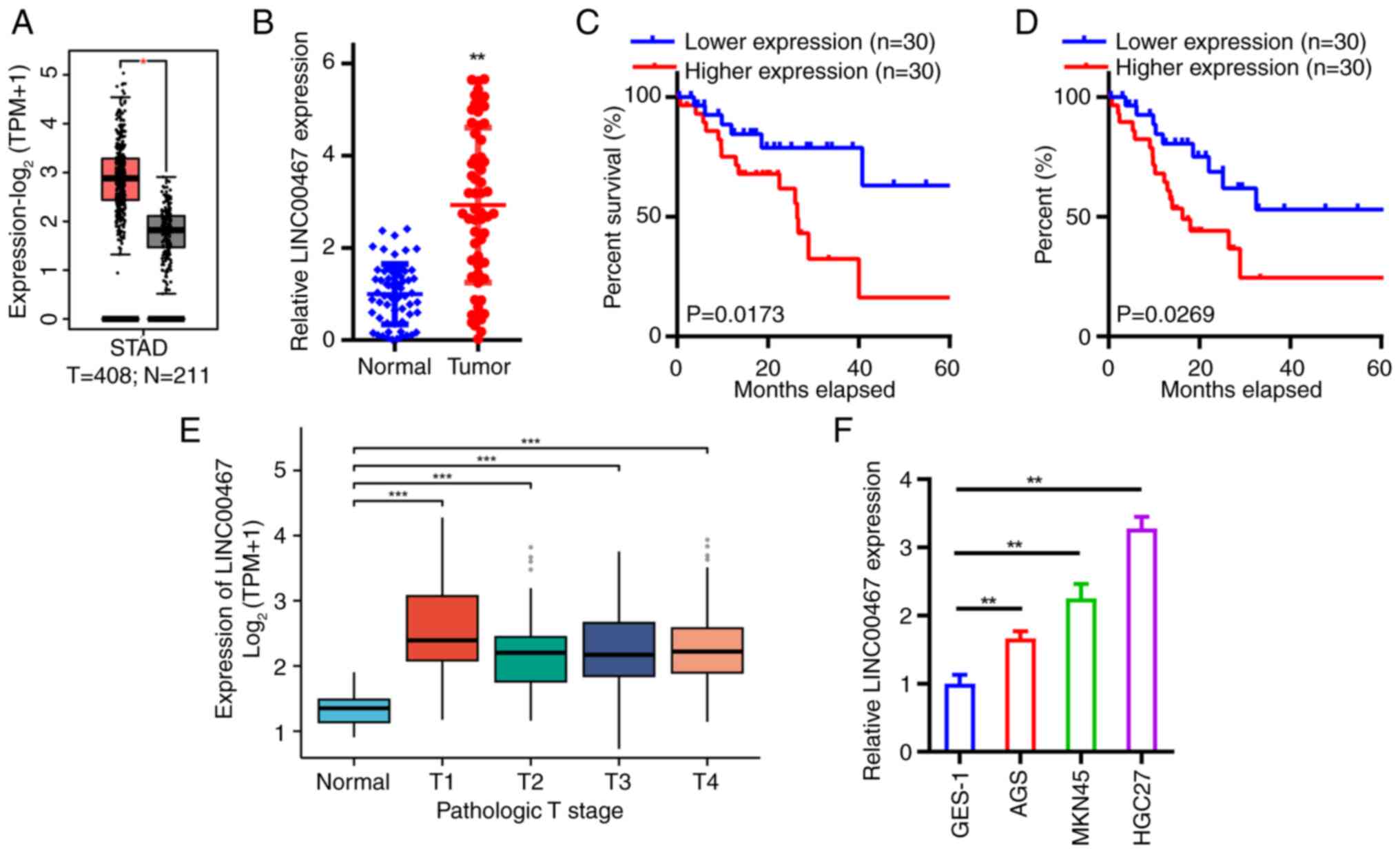
Figure 1

LINC00467 is upregulated in GC
tissues and associates with GC progression. (A) LINC00467 levels in
STAD (n=408) and normal tissue samples (n=211) in the GEPIA
database. (B) Relative LINC00467 levels in 60 pairs of GC tumor
tissue and para-cancerous samples. (C) Patient survival percentage
(n=60) was assessed using Kaplan-Meier curves and log-rank tests.
Lower LINC00467 expression (n=30) was represented in blue and
higher LINC00467 expression (n=30) was represented in red. (D)
Analysis of DFS in patients with GC based on relative LINC00467
expression levels. Lower expression (n=30) was represented in blue
and higher expression (n=30) was represented in red. (E) Expression
levels of LINC00467 across different T stages (T1-T4) and in normal
tissues. (F) Relative LINC00467 expression levels were assessed in
AGS, HGC27 and MKN45 human GC cells and in GES-1 control cells.
*P<0.05; **P<0.01; ***P<0.001. GC, gastric cancer; STAD,
stomach adenocarcinoma; GEPIA, Gene Expression Profiling
Interactive Analysis; DFS, disease-free survival.

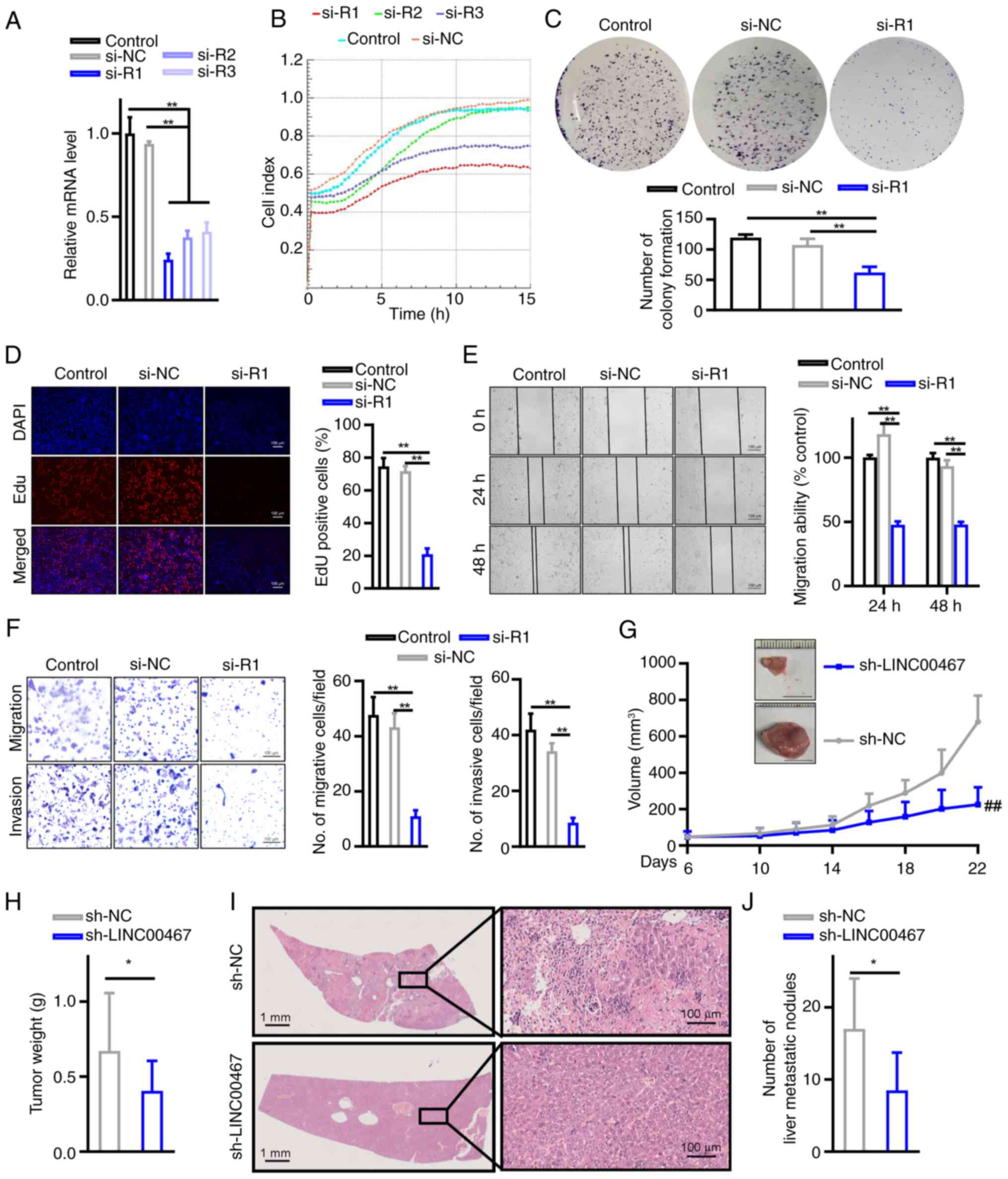
Figure 2

Knockdown of LINC00467 suppresses GC
cell proliferation and invasion in vitro and in vivo.
HGC27 cells exhibited (A) reduced LINC00467 expression following
si-LINC00467 transfection and led to reduced proliferation
demonstrated by (B) RTCA and (C) colony formation assays. (D)
Si-LINC00467 transfection suppressed EdU uptake by HGC27 cells
(scale bar, 100 µm). (E) Transfection of HGC27 cells with
si-LINC00467 was associated with reduced migration in a wound
healing assay and (F) reduced migration and invasion in Transwell
assays compared with si-NC transfection. (G) Tumor volumes were
assessed every other day in nude mice injected with HGC27 cells
that had been transduced with sh-LINC00467 or sh-NC, demonstrating
that LINC00467 knockdown was associated with reduced tumor growth.
(H) Quantification of tumor weights (g). (I) Representative images
of livers from mice in the two treatment groups (scale bar, 100
µm), with (J) corresponding quantification of the numbers of
metastatic nodules. Data are presented as mean ± SD. **P<0.01
vs. si-NC; *P<0.05 vs. sh-NC; ##P<0.01 vs. sh-NC.
GC, gastric cancer; RTCA, real-time cell analysis; EdU,
5-Ethynyl-2′-deoxyuridine; NC, negative control; si-NC, small
interfering RNA-NC; sh-NC, short hairpin RNA-NC.

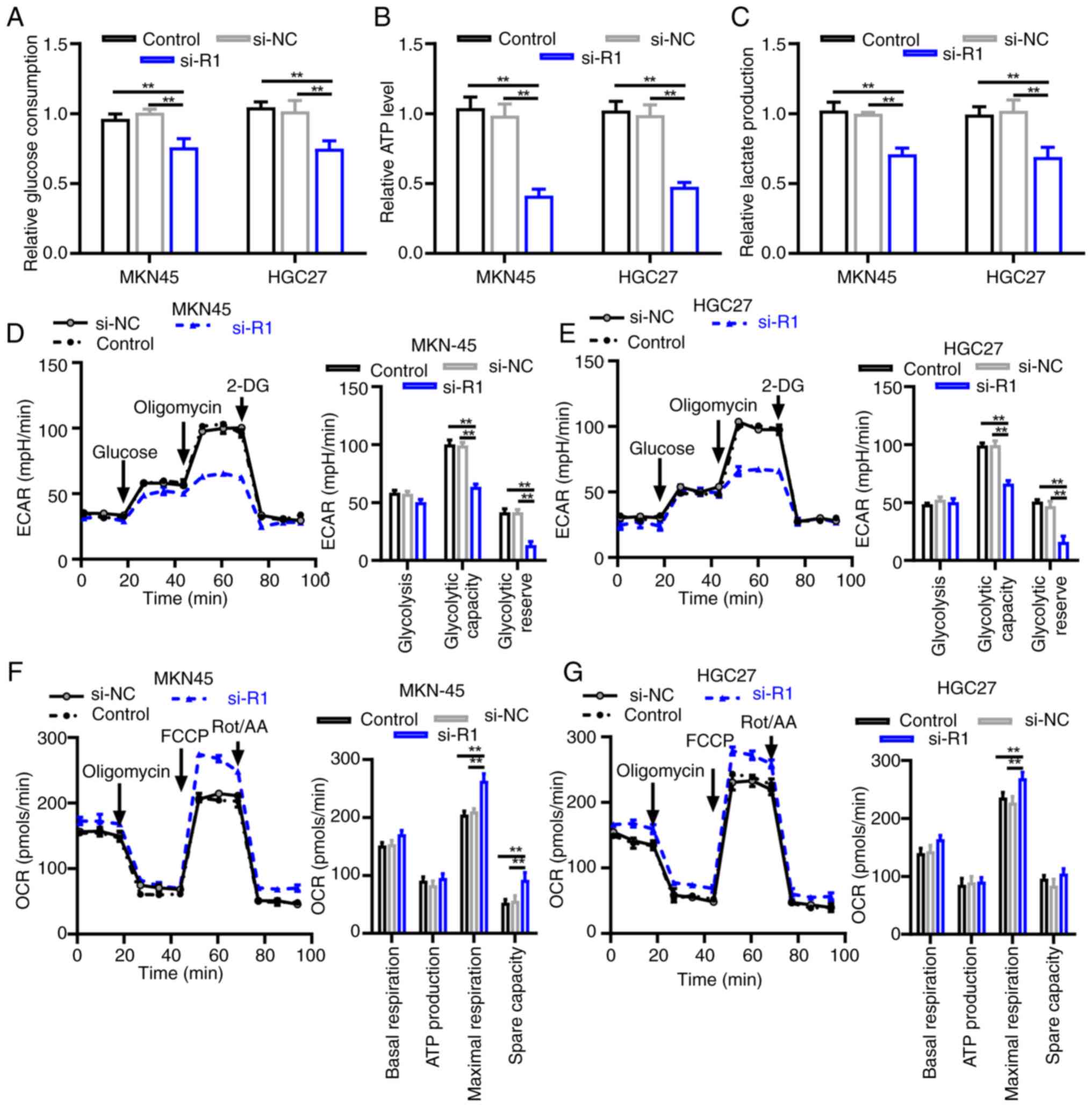
Figure 3

LINC00467 promotes glycolysis in GC
cells. (A) Changes in relative glucose consumption, (B) ATP levels
and (C) lactate production in MKN45 and HGC27 cells after LINC00467
knockdown. Changes in ECAR and OCR levels after LINC00467 knockdown
in MKN45 and HGC27 cells. Effects of LINC00467 on glycolysis in (D)
MKN45 and (E) HGC27 cells were assessed by ECAR following LINC00467
knockdown. ECAR assay and quantification of (D, right) MKN45 and
(E, right) HGC27 cells; OCR assay and quantification of (F) MKN45
and (G) HGC27 cells transfected with LINC00467 knockdown.
Quantifications of the OCR results of (F, right) MKN45 and (G,
right) HGC27 cells, demonstrated basal respiration, ATP production,
maximal respiration and spare capacity. **P<0.01. GC, gastric
cancer; ECAR, extracellular acidification rate; OCR, oxygen
consumption rate; si-NC, small interfering RNA-negative control;
2-DG, 2-deoxyglucose; FCCP, p-trifluoromethoxy carbonyl cyanide
phenylhydrazone; Rot/AA, rotenone and antimycin A.

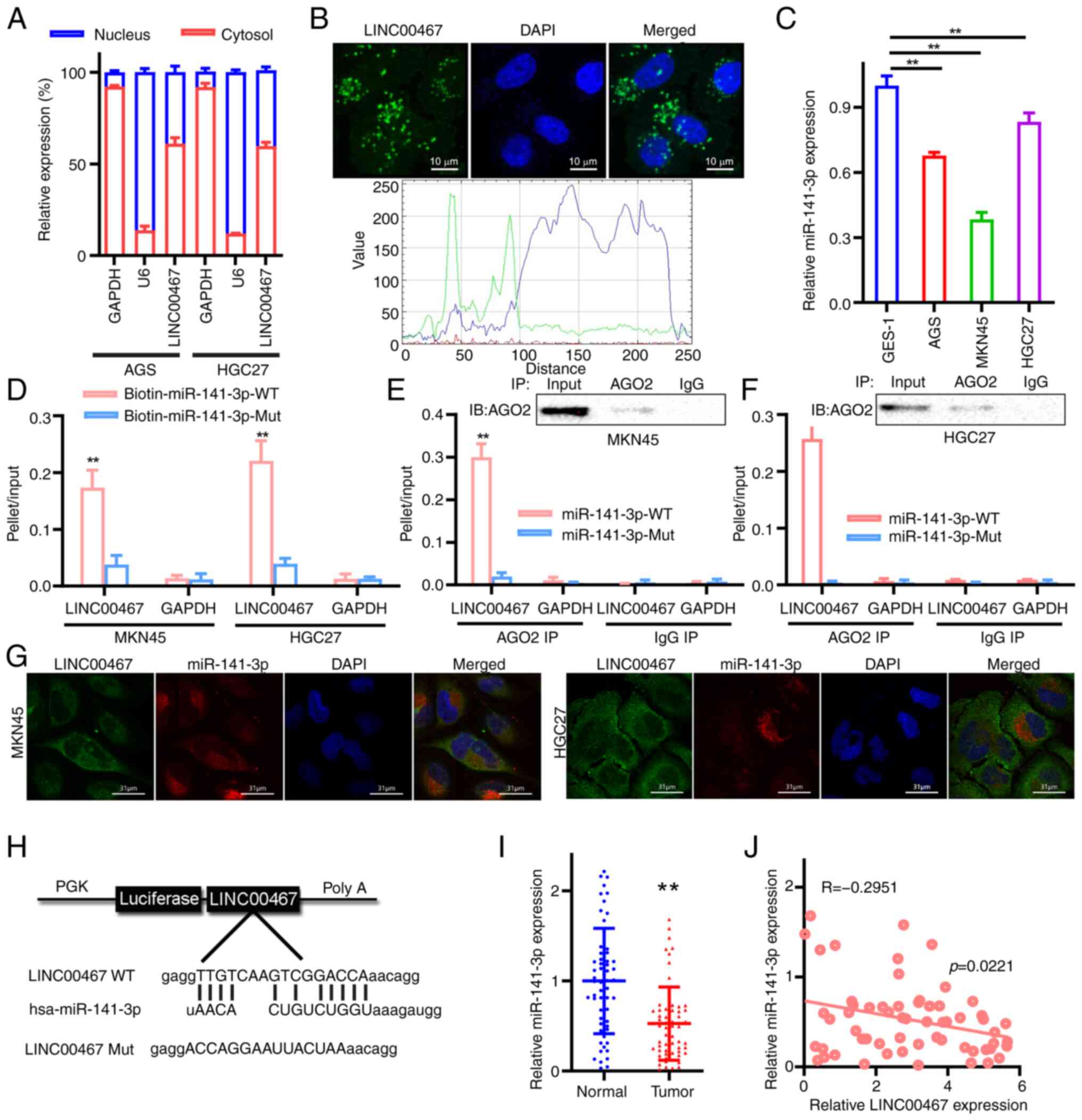
Figure 4

miR-141-3p is a LINC00467 target in
GC cells. (A) Relative LINC00467 expression percentage in nuclear
and cytoplasmic compartments was evaluated using U6 and GAPDH as
respective nuclear and cytoplasmic normalization controls in AGS
and HGC27 cell lines. (B) FISH was used to assess LINC00467
localization in GC cells and ImageJ was used to quantify confocal
images (scale bar, 10 mm). (C) Relative miR-141-3p expression
levels in control and GC cell lines (AGS, MKN45 and HGC27). (D)
Expression levels of LINC00467 and GAPDH mRNA after streptavidin
capture were measured in GC cells transfected with biotinylated
miR-141-3p-WT or -Mut. (E) MKN45 and (F) HGC27 cells were
transfected with miR-141-3p-WT or -Mut. (G) Representative FISH
images demonstrated the co-localization of LINC00467 and miR-141-3p
(scale bar, 31 µm). (H) Putative miR-141-3p-binding sites within
the LINC00467 sequence, with corresponding schematics of the WT and
Mut luciferase reporter vectors. (I) Relative miR-141-3p expression
was assessed in 60 GC and normal para-cancerous tissue samples.
**P<0.01. (J) The relationship between LINC00467 and miR-141-3p
was assessed via Spearman correlation analyses in 60 GC samples.
r=−0.2951; P<0.05. WT, wild-type; Mut, mutant; AGO2, argonaute
2; miR-141-3p, microRNA-141-3p; FISH, fluorescence in situ
hybridization.

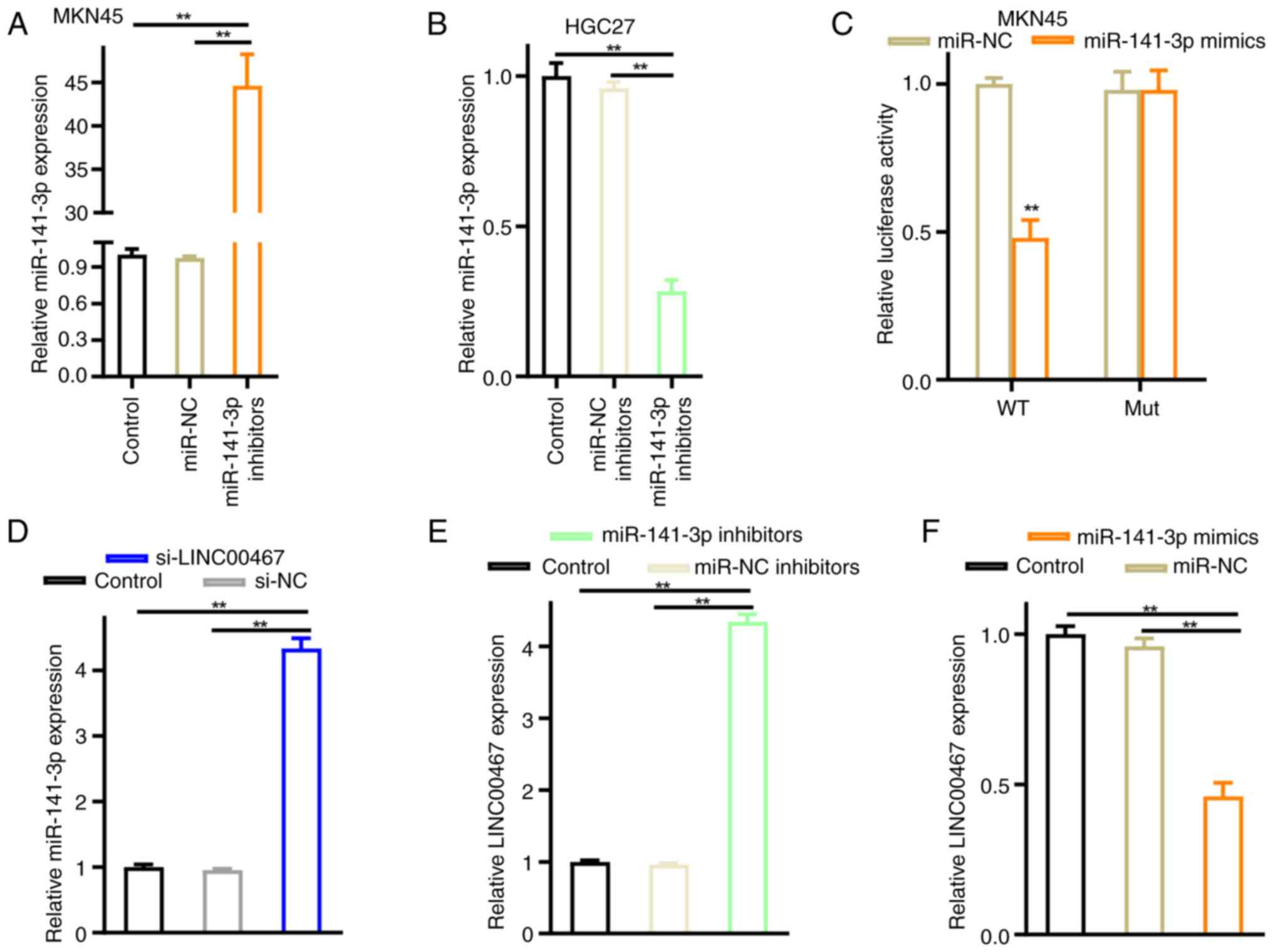
Figure 5

LINC00467 and miR-141-3p regulated
one another. Relative miR-141-3p expression levels were assessed
following transfection with an miR-141-3p mimic or control miR-NC
in (A) MKN45 and (B) HGC27 cells. (C) MKN45 cells were
co-transfected with WT or Mut LINC00467 vectors along with
miR-141-3p mimics or miR-NC, after which luciferase activity was
assessed. (D) Knockdown of LINC00467 significantly increased
miR-141-3p expression in GC cells. (E) Transfection of HGC27 cells
with the miR-141-3p inhibitor resulted in LINC00467 upregulation.
(F) Transfection of MKN45 cells with miR-141-3p mimics resulted in
LINC00467 downregulation. **P<0.01. miR-141-3p, microRNA-141-3p;
miR-NC, microRNA negative control; WT, wild-type; Mut, mutant; GC,
gastric cancer.

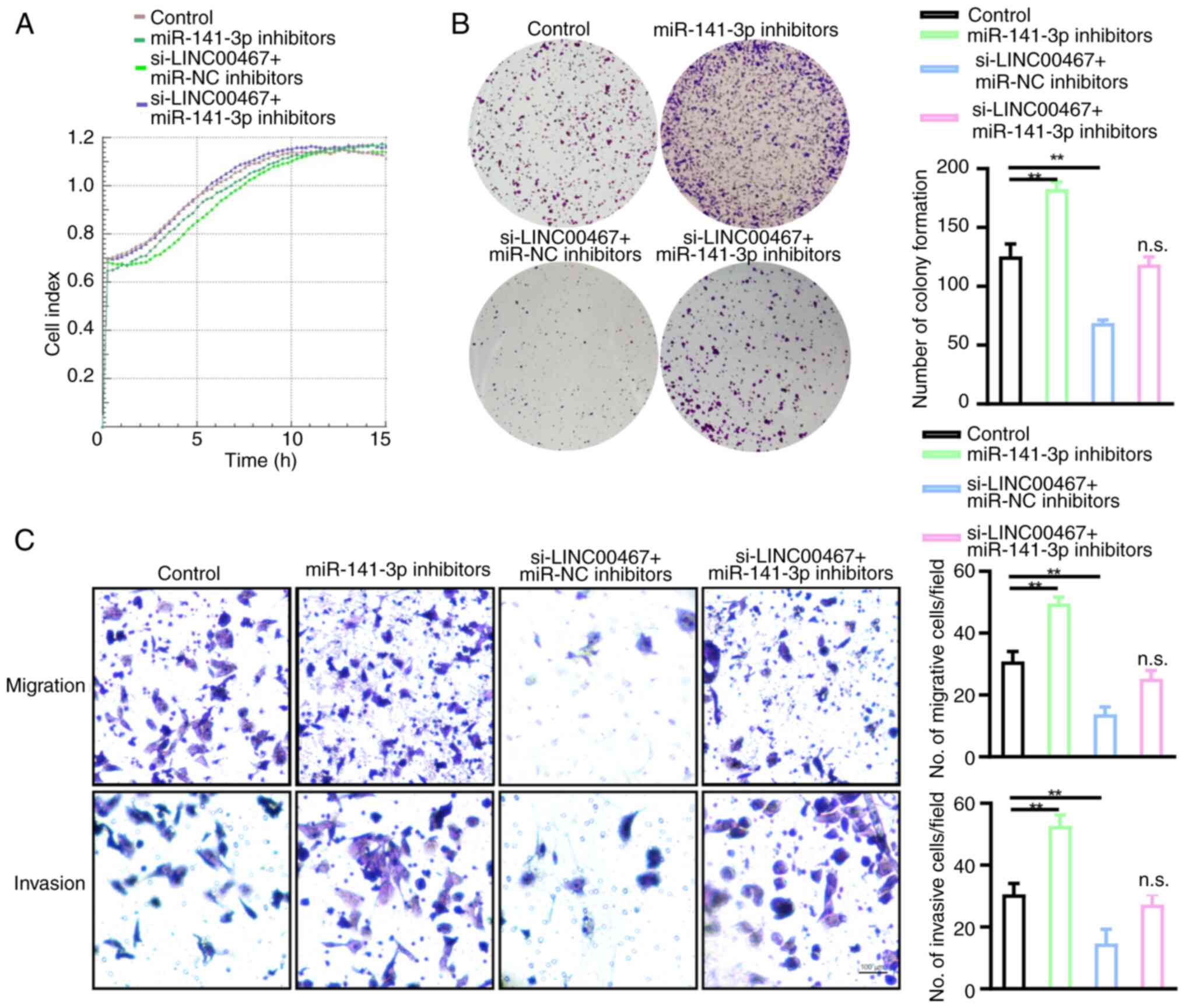
Figure 6

The impact of LINC00467 knockdown on
GC cell malignancy was mediated by miR-141-3p. HGC27 cells were
transfected with si-LINC00467 and miR-141-3p inhibitors or
corresponding control constructs, after which (A) RTCA and (B)
colony formation assays demonstrated that inhibition of miR-141-3p
reversed the effects of LINC00467 knockdown on proliferation. (C)
Transwell assays demonstrated that miR-141-3p inhibition reversed
the effects of LINC00467 knockdown on GC cell migration and
invasion. **P<0.01 vs. miR-NC. ns, not significant; miR-141-3p,
microRNA-141-3p; RTCA, real-time cell analysis; miR-NC, microRNA
negative control; GC, gastric cancer.

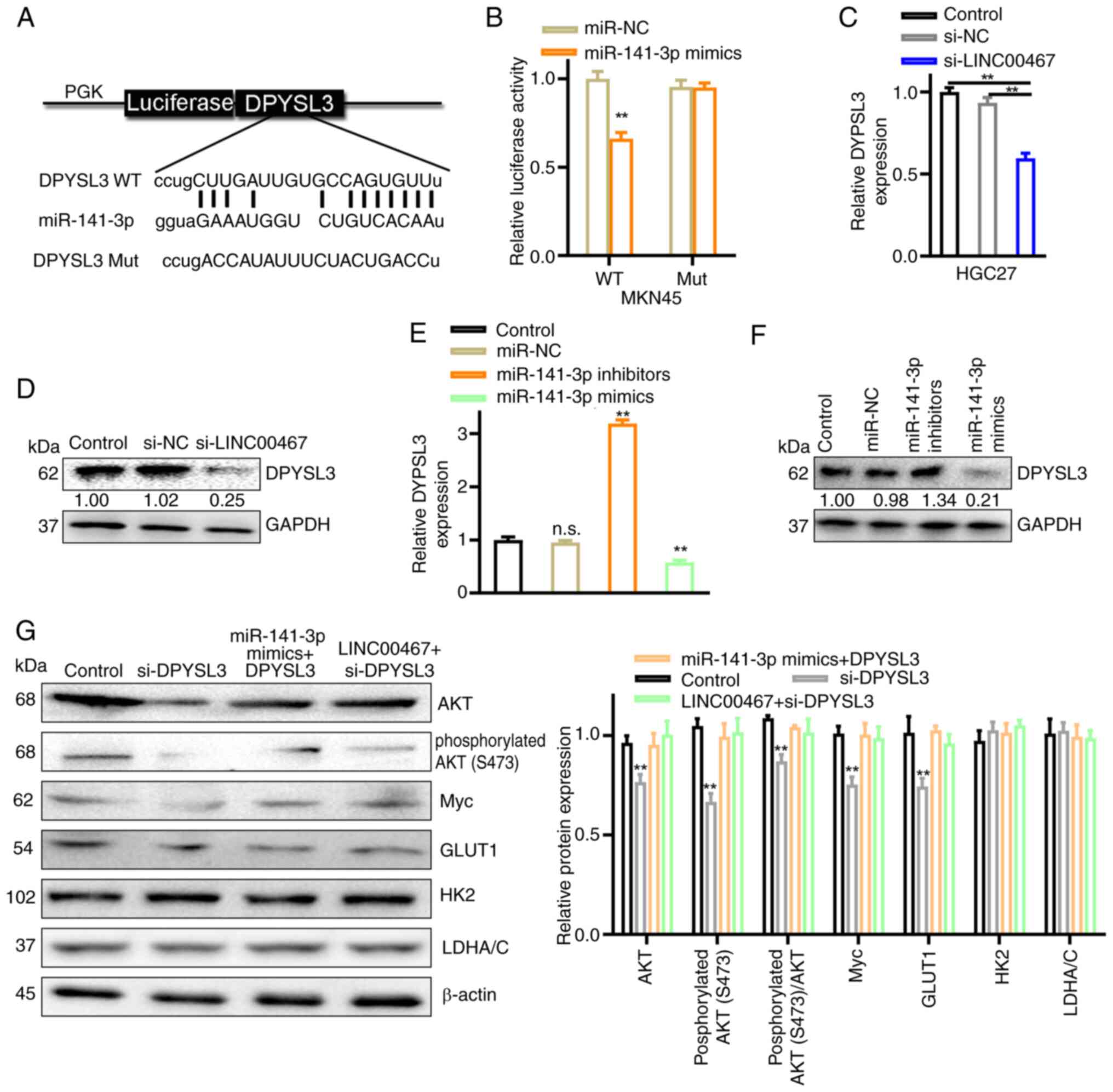
Figure 7

DPYSL3, a miR-141-3p target, was
indirectly controlled by LINC00467. (A) WT and Mut DPYSL3 3′-UTR
sequences. (B) Luciferase reporter assays were used to assess
interactions between miR-141-3p interactions with the DPYSL3
3′-UTR, following transfection of MKN45 cells with the miR-141-3p
mimics and luciferase reporter vectors containing the WT or Mut
DPYSL3 3′-UTR. (C) Relative DPYSL3 mRNA expression levels in HGC27
cells was reduced following LINC00467 knockdown. LINC00467
knockdown in HGC27 cells reduced DPYSL3 protein expression levels
(D). Effects of miR-141-3p overexpression and knockdown on DPYSL3
(E) mRNA and (F) protein expression levels, in HGC27 cells. (G)
Relationship between DPYSL3 and AKT, Myc and GLUT1 associated with
the AKT signaling pathway was explored by Western blotting
analysis. **P<0.01, vs. miR-NC. PGK, phosphoglycerate kinase;
GLUT1, glucose transporter 1; HK2, hexokinase 2; LDHA/C, lactate
dehydrogenase A/C isoforms; WT, wild-type; Mut, mutant; NC,
negative control; si-NC, small interfering RNA-NC; miR-141-3p,
microRNA-141-3p; DPYSL3, dihydropyriminidase-like 3; miR-NC,
microRNA-NC.

Figure 8

LINC00467 suppressed GC cell
proliferation, migration and invasion through the
LINC00467/miR-141-3p/DPYSL3 axis. Relative mRNA and protein
expression levels of DPYSL3 in (A) MKN45 and (B) AGS cells
transfected with miR-141-3p mimics and inhibitors, si-NC,
si-LINC00467, or LINC00467, using qPCR and Western blotting,
respectively. (C) Colony formation assays were used to assess
proliferation in MKN45 and AGS cells transfected with miR-141-3p
mimics and inhibitors, si-NC, si-LINC00467, or LINC00467. (D) Cell
migration and (E) invasion was assessed using Transwell assays in
MKN45 and AGS cells, respectively, following transfection with the
miR-141-3p mimics and inhibitors, si-NC, si-LINC00467 and
OV-LINC00467 (scale bar, 100 µm). Data were indicated as mean ± SD.
**P<0.01. GC, gastric cancer; miR-141-3p, microRNA-141-3p;
DPYSL3, dihydropyriminidase-like 3; si-NC, small interfering
RNA-negative control.

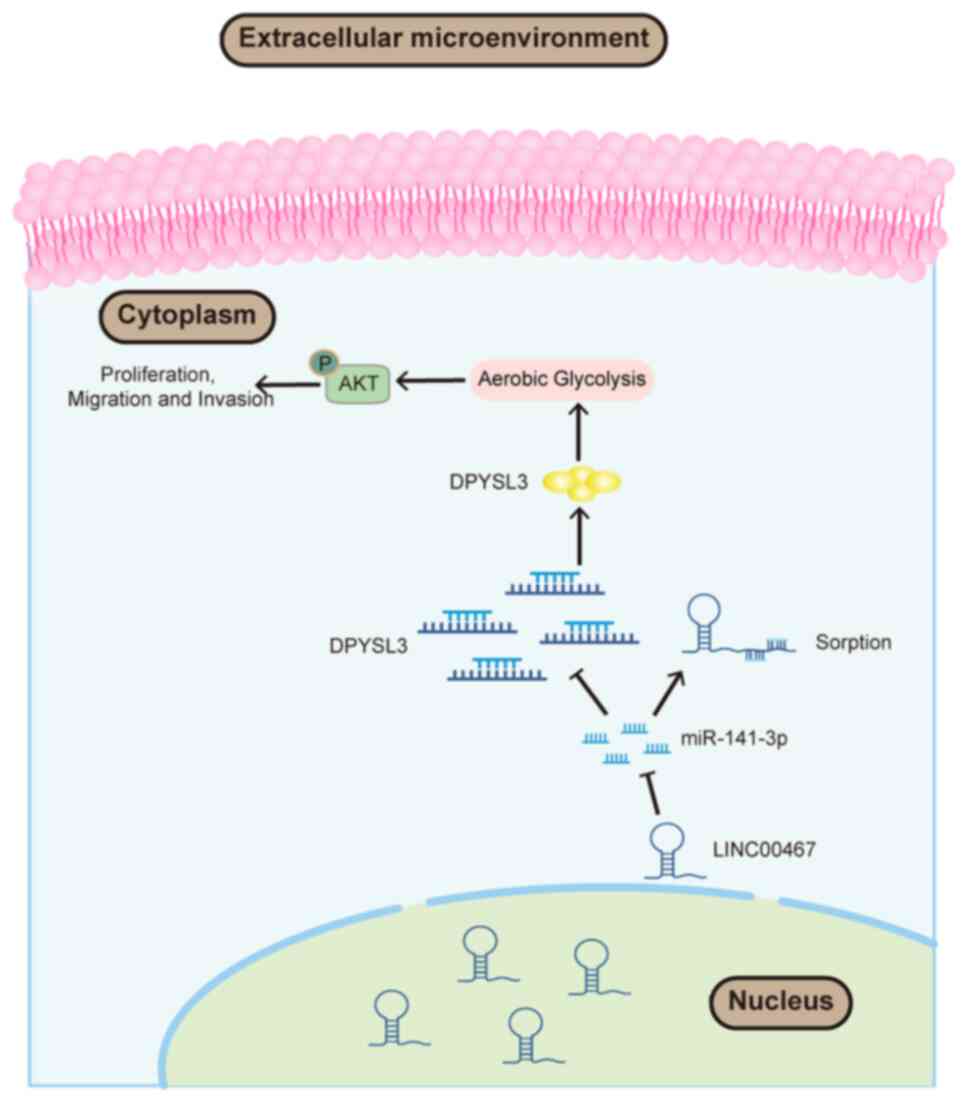
Figure 9

Molecular mechanism associated with
the effects of LINC00467 on GC progression via regulation of
miR-141-3p and DPYSL3. LINC00467 promoted glycolysis in GC cells
and enhanced tumor cell proliferation, migration and invasion.
LINC00467 specifically competed with miR-141-3p and downregulation
of LINC00467 could upregulate the expression levels of miR-141-3p
and downregulate DPYSL3 expression levels, and thus regulate
aerobic glycolysis, inhibit proliferation, migration and invasion
in GC cells. GC, gastric cancer; miR-141-3p, microRNA-141-3p;
DPYSL3, dihydropyriminidase-like 3.
View References

1 

Filho AM, Laversanne M, Ferlay J, Colombet M, Piñeros M, Znaor A, Parkin DM, Soerjomataram I and Bray F: The GLOBOCAN 2022 cancer estimates: Data sources, methods, and a snapshot of the cancer burden worldwide. Int J Cancer. 156:1336–1346. 2025. View Article : Google Scholar : PubMed/NCBI

2 

Dong D, Yu X, Xu J, Yu N, Liu Z and Sun Y: Cellular and molecular mechanisms of gastrointestinal cancer liver metastases and drug resistance. Drug Resist Updat. 77:1011252024. View Article : Google Scholar : PubMed/NCBI

3 

de Back TR, van Hooff SR, Sommeijer DW and Vermeulen L: Transcriptomic subtyping of gastrointestinal malignancies. Trends Cancer. 10:842–856. 2024. View Article : Google Scholar : PubMed/NCBI

4 

Zhang T, Chen Y and Xiang Z: Machine learning-based integration develops a disulfidptosis-related lncRNA signature for improving outcomes in gastric cancer. Artif Cells Nanomed Biotechnol. 53:1–13. 2025. View Article : Google Scholar : PubMed/NCBI

5 

Vaghari-Tabari M, Qujeq D and Hashemzadeh MS: Long noncoding RNAs as potential targets for overcoming chemoresistance in upper gastrointestinal cancers. Biomed Pharmacother. 179:1173682024. View Article : Google Scholar : PubMed/NCBI

6 

Shuai Y, Ma Z, Liu W, Yu T, Yan C, Jiang H, Tian S, Xu T and Shu Y: TEAD4 modulated LncRNA MNX1-AS1 contributes to gastric cancer progression partly through suppressing BTG2 and activating BCL2. Mol Cancer. 19:62020. View Article : Google Scholar : PubMed/NCBI

7 

Wu Q, Ma J, Wei J, Meng W, Wang Y and Shi M: lncRNA SNHG11 promotes gastric cancer progression by activating the Wnt/β-catenin pathway and oncogenic autophagy. Mol Ther. 29:1258–1278. 2020. View Article : Google Scholar : PubMed/NCBI

8 

Zhou R, Sun H, Zheng S, Zhang J, Zeng D, Wu J, Huang Z, Rong X, Bin J, Liao Y, et al: A stroma-related lncRNA panel for predicting recurrence and adjuvant chemotherapy benefit in patients with early-stage colon cancer. J Cell Mol Med. 24:3229–3241. 2020. View Article : Google Scholar : PubMed/NCBI

9 

Wang P, Guo Q, Hao Y, Liu Q, Gao Y, Zhi H, Li X, Shang S, Guo S, Zhang Y, et al: LnCeCell: A comprehensive database of predicted lncRNA-associated ceRNA networks at single-cell resolution. Nucleic Acids Res. 49:D125–D133. 2021. View Article : Google Scholar : PubMed/NCBI

10 

Tian Y, Ma R, Sun Y, Liu H, Zhang H, Sun Y, Liu L, Li Y, Song L and Gao P: SP1-activated long noncoding RNA lncRNA GCMA functions as a competing endogenous RNA to promote tumor metastasis by sponging miR-124 and miR-34a in gastric cancer. Oncogene. 39:4854–4868. 2020. View Article : Google Scholar : PubMed/NCBI

11 

Ye J, Li J and Zhao P: Roles of ncRNAs as ceRNAs in gastric cancer. Genes (Basel). 12:10362021. View Article : Google Scholar : PubMed/NCBI

12 

Liu HT, Ma RR, Lv BB, Zhang H, Shi DB, Guo XY, Zhang GH and Gao P: LncRNA-HNF1A-AS1 functions as a competing endogenous RNA to activate PI3K/AKT signalling pathway by sponging miR-30b-3p in gastric cancer. Br J Cancer. 122:1825–1836. 2020. View Article : Google Scholar : PubMed/NCBI

13 

Zhang Y, Li J, Jia S, Wang Y, Kang Y and Zhang W: Down-regulation of lncRNA-ATB inhibits epithelial-mesenchymal transition of breast cancer cells by increasing miR-141-3p expression. Biochem Cell Biol. 97:193–200. 2019. View Article : Google Scholar : PubMed/NCBI

14 

Zhu Y, Li J, Bo H, He D, Xiao M, Xiang L, Gong L, Hu Y, Zhang Y, Cheng Y, et al: LINC00467 is up-regulated by TDG-mediated acetylation in non-small cell lung cancer and promotes tumor progression. Oncogene. 39:6071–6084. 2020. View Article : Google Scholar : PubMed/NCBI

15 

Li W, He Y, Chen W, Man W, Fu Q, Tan H, Guo H, Zhou J and Yang P: Knockdown of LINC00467 contributed to Axitinib sensitivity in hepatocellular carcinoma through miR-509-3p/PDGFRA axis. Gene Ther. 28:634–645. 2020. View Article : Google Scholar : PubMed/NCBI

16 

Li Z, Liu J, Chen H, Zhang Y, Shi H, Huang L, Tao J, Shen R and Wang T: Ferritin light chain (FTL) competes with long noncoding RNA Linc00467 for miR-133b binding site to regulate chemoresistance and metastasis of colorectal cancer. Carcinogenesis. 41:467–477. 2020. View Article : Google Scholar : PubMed/NCBI

17 

Wiel C, Le Gal K, Ibrahim MX, Jahangir CA, Kashif M, Yao H, Ziegler DV, Xu X, Ghosh T, Mondal T, et al: BACH1 stabilization by antioxidants stimulates lung cancer metastasis. Cell. 178:330–345. 2019. View Article : Google Scholar : PubMed/NCBI

18 

Stine ZE, Schug ZT, Salvino JM and Dang CV: Targeting cancer metabolism in the era of precision oncology. Nat Rev Drug Discov. 21:141–162. 2022. View Article : Google Scholar : PubMed/NCBI

19 

Wang Q, Yu PF, Liu CX, He XL and Wang G: Mitochondrial fragmentation in liver cancer: Emerging player and promising therapeutic opportunities. Cancer Lett. 549:2159122022. View Article : Google Scholar : PubMed/NCBI

20 

Wang N, Tan HY, Lu YJ, Chan YT, Wang D, Guo W, Xu Y, Zhang C, Chen F, Tang G and Feng Y: PIWIL1 governs the crosstalk of cancer cell metabolism and immunosuppressive microenvironment in hepatocellular carcinoma. Signal Transduct Tar. 6:862021. View Article : Google Scholar

21 

Amin MB, Greene FL, Edge SB, Compton CC, Gershenwald JE, Brookland RK, Meyer L, Gress DM, Byrd DR and Winchester DP: The eighth edition AJCC cancer staging manual: Continuing to build a bridge from a population-based to a more ‘personalized’ approach to cancer staging. CA Cancer J Clin. 67:93–99. 2017.PubMed/NCBI

22 

Zhang X, Ni Z, Duan Z, Xin Z, Wang H, Tan J, Wang G and Li F: Overexpression of E2F mRNAs associated with gastric cancer progression identified by the transcription factor and miRNA co-regulatory network analysis. PLoS One. 10:e01169792015. View Article : Google Scholar : PubMed/NCBI

23 

Ye L, Pu C, Tang J, Wang Y, Wang C, Qiu Z, Xiang T, Zhang Y and Peng W: Transmembrane-4 L-six family member-1 (TM4SF1) promotes non-small cell lung cancer proliferation, invasion and chemo-resistance through regulating the DDR1/Akt/ERK-mTOR axis. Respir Res. 20:1062019. View Article : Google Scholar : PubMed/NCBI

24 

Liu S, Qiu J, He G, Liang Y, Wang L, Liu C and Pan H: LncRNA MALAT1 acts as a miR-125a-3p sponge to regulate FOXM1 expression and promote hepatocellular carcinoma progression. J Cancer. 10:6649–6659. 2019. View Article : Google Scholar : PubMed/NCBI

25 

Livak KJ and Schmittgen TD: Analysis of relative gene expression data using real-time quantitative PCR and the 2(−Delta Delta C(T)) method. Methods. 25:402–408. 2001. View Article : Google Scholar : PubMed/NCBI

26 

Moniri MR, Young A, Reinheimer K, Rayat J, Dai LJ and Warnock GL: Dynamic assessment of cell viability, proliferation and migration using real time cell analyzer system (RTCA). Cytotechnology. 67:379–386. 2015. View Article : Google Scholar : PubMed/NCBI

27 

Laferriere CA, Leung VS and Pang DS: Evaluating intrahepatic and intraperitoneal sodium pentobarbital or ethanol for mouse euthanasia. J Am Assoc Lab Anim Sci. 59:264–268. 2020. View Article : Google Scholar : PubMed/NCBI

28 

Zhao X, Su L, He XY, Zhao BX and Miao JY: Long noncoding RNA CA7-4 promotes autophagy and apoptosis via sponging MIR877-3P and MIR5680 in high glucose-induced vascular endothelial cells. Autophagy. 16:70–85. 2020. View Article : Google Scholar : PubMed/NCBI

29 

Massari F, Ciccarese C, Santoni M, Iacovelli R, Mazzucchelli R, Piva F, Scarpelli M, Berardi R, Tortora G, Lopez-Beltran A, et al: Metabolic phenotype of bladder cancer. Cancer Treat Rev. 45:46–57. 2016. View Article : Google Scholar : PubMed/NCBI

30 

Burns JE, Hurst CD, Knowles MA, Phillips RM and Allison SJ: The Warburg effect as a therapeutic target for bladder cancers and intratumoral heterogeneity in associated molecular targets. Cancer Sci. 112:3822–3834. 2021. View Article : Google Scholar : PubMed/NCBI

31 

Hu Y, Zhang Y, Ding M and Xu R: LncRNA TMPO-AS1/miR-126-5p/BRCC3 axis accelerates gastric cancer progression and angiogenesis via activating PI3K/Akt/mTOR pathway. J Gastroenterol Hepatol. 36:1877–1888. 2020. View Article : Google Scholar

32 

Ma P, Pan Y, Yang F, Fang Y, Liu W, Zhao C, Yu T, Xie M, Jing X, Wu X, et al: KLF5-modulated lncRNA NEAT1 contributes to tumorigenesis by acting as a scaffold for BRG1 to silence GADD45A in gastric cancer. Mol Ther Nucleic Acids. 22:382–395. 2020. View Article : Google Scholar : PubMed/NCBI

33 

Ma ZH, Shuai Y, Gao XY, Yan Y, Wang KM, Wen XZ and Ji JF: BTEB2-activated lncRNA TSPEAR-AS2 drives GC progression through suppressing GJA1 expression and upregulating CLDN4 expression. Mol Ther Nucleic Acids. 22:1129–1141. 2020. View Article : Google Scholar : PubMed/NCBI

34 

Liu Z, Yang S, Chen X, Dong S, Zhou S and Xu S: LncRNA LINC00467 acted as an oncogene in esophageal squamous cell carcinoma by accelerating cell proliferation and preventing cell apoptosis via the miR-485-5p/DPAGT1 axis. J Gastroenterol Hepatol. 36:721–730. 2020. View Article : Google Scholar : PubMed/NCBI

35 

Zhang Y, Jiang X, Wu Z, Hu D, Jia J, Guo J, Tang T, Yao J, Liu H and Tang H: Long noncoding RNA LINC00467 promotes glioma progression through inhibiting P53 expression via binding to DNMT1. J Cancer. 11:2935–2944. 2020. View Article : Google Scholar : PubMed/NCBI

36 

He X, Li S, Yu B, Kuang G, Wu Y, Zhang M, He Y, Ou C and Cao P: Up-regulation of LINC00467 promotes the tumourigenesis in colorectal cancer. J Cancer. 10:6405–6413. 2019. View Article : Google Scholar : PubMed/NCBI

37 

Gao S, Duan H, An D, Yi X, Li J and Liao C: Knockdown of long non-coding RNA LINC00467 inhibits glioma cell progression via modulation of E2F3 targeted by miR-200a. Cell Cycle. 19:2040–2053. 2020. View Article : Google Scholar : PubMed/NCBI

38 

Evans JR, Feng FY and Chinnaiyan AM: The bright side of dark matter: lncRNAs in cancer. J Clin Invest. 126:2775–2782. 2016. View Article : Google Scholar : PubMed/NCBI

39 

Wei L, Sun J, Zhang N, Zheng Y, Wang X, Lv L, Liu J, Xu Y, Shen Y and Yang M: Noncoding RNAs in gastric cancer: Implications for drug resistance. Mol Cancer. 19:622020. View Article : Google Scholar : PubMed/NCBI

40 

Xie S, Chang Y, Jin H, Yang F, Xu Y, Yan X, Lin A, Shu Q and Zhou T: Non-coding RNAs in gastric cancer. Cancer Lett. 493:55–70. 2020. View Article : Google Scholar : PubMed/NCBI

41 

Li M, Huang H, Cheng F, Hu X and Liu J: miR-141-3p promotes proliferation and metastasis of nasopharyngeal carcinoma by targeting NME1. Adv Med Sci. 65:252–258. 2020. View Article : Google Scholar : PubMed/NCBI

42 

Zhao G, Wang B, Liu Y, Zhang JG, Deng SC, Qin Q, Tian K, Li X, Zhu S, Niu Y, et al: miRNA-141, downregulated in pancreatic cancer, inhibits cell proliferation and invasion by directly targeting MAP4K4. Mol Cancer Ther. 12:2569–2580. 2013. View Article : Google Scholar : PubMed/NCBI

43 

Xu L, Li Q, Xu D, Wang Q, An Y, Du Q, Zhang J, Zhu Y and Miao Y: hsa-miR-141 downregulates TM4SF1 to inhibit pancreatic cancer cell invasion and migration. Int J Oncol. 44:459–466. 2014. View Article : Google Scholar : PubMed/NCBI

44 

Pan Y, Lu F, Xiong P, Pan M, Zhang Z, Lin X, Pan M and Huang H: WIPF1 antagonizes the tumor suppressive effect of miR-141/200c and is associated with poor survival in patients with PDAC. J Exp Clin Cancer Res. 37:1672018. View Article : Google Scholar : PubMed/NCBI

45 

Luo QQ, Tian Y, Qu GJ, Kun H and Luo SS: Functional mechanism and clinical implications of miR-141 in human cancers. Cell Signal. 95:1103542022. View Article : Google Scholar : PubMed/NCBI

46 

Matsunuma R, Chan DW, Kim BJ, Singh P, Han A, Saltzman AB, Cheng C, Lei JT, Wang J, Roberto da Silva L, et al: DPYSL3 modulates mitosis, migration, and epithelial-to-mesenchymal transition in claudin-low breast cancer. Proc Natl Acad Sci USA. 115:E11978–E11987. 2018. View Article : Google Scholar : PubMed/NCBI

47 

Gao X, Pang J, Li LY, Liu WP, Di JM, Sun QP, Fang YQ, Liu XP, Pu XY, He D, et al: Expression profiling identifies new function of collapsin response mediator protein 4 as a metastasis-suppressor in prostate cancer. Oncogene. 29:4555–4566. 2010. View Article : Google Scholar : PubMed/NCBI

48 

Kawahara T, Hotta N, Ozawa Y, Kato S, Kano K, Yokoyama Y, Nagino M, Takahashi T and Yanagisawa K: Quantitative proteomic profiling identifies DPYSL3 as pancreatic ductal adenocarcinoma-associated molecule that regulates cell adhesion and migration by stabilization of focal adhesion complex. PLoS One. 8:e796542013. View Article : Google Scholar : PubMed/NCBI

49 

Kanda M, Nomoto S, Oya H, Shimizu D, Takami H, Hibino S, Hashimoto R, Kobayashi D, Tanaka C, Yamada S, et al: Dihydropyrimidinase-like 3 facilitates malignant behavior of gastric cancer. J Exp Clin Cancer Res. 33:662014. View Article : Google Scholar : PubMed/NCBI

50 

Zhong H and Luo X: Serum Dihydropyrimidinase-Like 3 concentration in patients with gastric cancer and its diagnostic value. Iran J Public Health. 50:1789–1795. 2021.PubMed/NCBI

51 

Zhao L, Liu YY, Zhang SM, Wei L, Cheng H and Wang J and Wang J: Impacts and mechanisms of metabolic reprogramming of tumor microenvironment for immunotherapy in gastric cancer. Cell Death Dis. 13:3782022. View Article : Google Scholar : PubMed/NCBI

52 

Zhang CS, Cheng W, Yang TJ, Fang HL and Zhang RQ: Lactate secreted by esophageal cancer cells induces M2 macrophage polarization via the AKT/ERK pathway. Thorac Cancer. 14:2139–2148. 2023. View Article : Google Scholar : PubMed/NCBI

53 

Li Z, Jiang Y, Liu J, Fu H, Yang Q, Song W and Li Y: Exosomes from PYCR1 knockdown bone marrow mesenchymal stem inhibits aerobic glycolysis and the growth of bladder cancer cells via regulation of the EGFR/PI3K/AKT pathway. Int J Oncol. 63:842023. View Article : Google Scholar : PubMed/NCBI

54 

Slominski RM, Raman C, Chen JY and Slominski AT: How cancer hijacks the body's homeostasis through the neuroendocrine system. Trends Neurosci. 46:263–275. 2023. View Article : Google Scholar : PubMed/NCBI

55 

Swanton C, Bernard E, Abbosh C, André F, Auwerx J, Balmain A, Bar-Sagi D, Bernards R, Bullman S, DeGregori J, et al: Embracing cancer complexity: Hallmarks of systemic disease. Cell. 187:1589–1616. 2024. View Article : Google Scholar : PubMed/NCBI

56 

Huang S, Shi J, Shen J and Fan X: Metabolic reprogramming of neutrophils in the tumor microenvironment: Emerging therapeutic targets. Cancer Lett. 612:2174662025. View Article : Google Scholar : PubMed/NCBI

57 

Hou XR, Zhang ZD, Cao XL and Wang XP: Long noncoding RNAs, glucose metabolism and cancer (Review). Oncol Lett. 26:3402023. View Article : Google Scholar : PubMed/NCBI

Related Articles

  • Abstract
  • View
  • Download
  • Twitter
Copy and paste a formatted citation
Spandidos Publications style
Ju H, Feng Y, Mu X, He W, He G, Tian B, Cai D, Liu C, Song Y, Chen H, Chen H, et al: Knockdown of LINC00467 inhibits gastric cancer progression by modulating the sequestration of miR‑141‑3p. Oncol Lett 30: 459, 2025.
APA
Ju, H., Feng, Y., Mu, X., He, W., He, G., Tian, B. ... Liu, S. (2025). Knockdown of LINC00467 inhibits gastric cancer progression by modulating the sequestration of miR‑141‑3p. Oncology Letters, 30, 459. https://doi.org/10.3892/ol.2025.15205
MLA
Ju, H., Feng, Y., Mu, X., He, W., He, G., Tian, B., Cai, D., Liu, C., Song, Y., Chen, H., Liu, S."Knockdown of LINC00467 inhibits gastric cancer progression by modulating the sequestration of miR‑141‑3p". Oncology Letters 30.4 (2025): 459.
Chicago
Ju, H., Feng, Y., Mu, X., He, W., He, G., Tian, B., Cai, D., Liu, C., Song, Y., Chen, H., Liu, S."Knockdown of LINC00467 inhibits gastric cancer progression by modulating the sequestration of miR‑141‑3p". Oncology Letters 30, no. 4 (2025): 459. https://doi.org/10.3892/ol.2025.15205
Copy and paste a formatted citation
x
Spandidos Publications style
Ju H, Feng Y, Mu X, He W, He G, Tian B, Cai D, Liu C, Song Y, Chen H, Chen H, et al: Knockdown of LINC00467 inhibits gastric cancer progression by modulating the sequestration of miR‑141‑3p. Oncol Lett 30: 459, 2025.
APA
Ju, H., Feng, Y., Mu, X., He, W., He, G., Tian, B. ... Liu, S. (2025). Knockdown of LINC00467 inhibits gastric cancer progression by modulating the sequestration of miR‑141‑3p. Oncology Letters, 30, 459. https://doi.org/10.3892/ol.2025.15205
MLA
Ju, H., Feng, Y., Mu, X., He, W., He, G., Tian, B., Cai, D., Liu, C., Song, Y., Chen, H., Liu, S."Knockdown of LINC00467 inhibits gastric cancer progression by modulating the sequestration of miR‑141‑3p". Oncology Letters 30.4 (2025): 459.
Chicago
Ju, H., Feng, Y., Mu, X., He, W., He, G., Tian, B., Cai, D., Liu, C., Song, Y., Chen, H., Liu, S."Knockdown of LINC00467 inhibits gastric cancer progression by modulating the sequestration of miR‑141‑3p". Oncology Letters 30, no. 4 (2025): 459. https://doi.org/10.3892/ol.2025.15205
Follow us
  • Twitter
  • LinkedIn
  • Facebook
About
  • Spandidos Publications
  • Careers
  • Cookie Policy
  • Privacy Policy
How can we help?
  • Help
  • Live Chat
  • Contact
  • Email to our Support Team