Spandidos Publications Logo
  • About
    • About Spandidos
    • Aims and Scopes
    • Abstracting and Indexing
    • Editorial Policies
    • Reprints and Permissions
    • Job Opportunities
    • Terms and Conditions
    • Contact
  • Journals
    • All Journals
    • Oncology Letters
      • Oncology Letters
      • Information for Authors
      • Editorial Policies
      • Editorial Board
      • Aims and Scope
      • Abstracting and Indexing
      • Bibliographic Information
      • Archive
    • International Journal of Oncology
      • International Journal of Oncology
      • Information for Authors
      • Editorial Policies
      • Editorial Board
      • Aims and Scope
      • Abstracting and Indexing
      • Bibliographic Information
      • Archive
    • Molecular and Clinical Oncology
      • Molecular and Clinical Oncology
      • Information for Authors
      • Editorial Policies
      • Editorial Board
      • Aims and Scope
      • Abstracting and Indexing
      • Bibliographic Information
      • Archive
    • Experimental and Therapeutic Medicine
      • Experimental and Therapeutic Medicine
      • Information for Authors
      • Editorial Policies
      • Editorial Board
      • Aims and Scope
      • Abstracting and Indexing
      • Bibliographic Information
      • Archive
    • International Journal of Molecular Medicine
      • International Journal of Molecular Medicine
      • Information for Authors
      • Editorial Policies
      • Editorial Board
      • Aims and Scope
      • Abstracting and Indexing
      • Bibliographic Information
      • Archive
    • Biomedical Reports
      • Biomedical Reports
      • Information for Authors
      • Editorial Policies
      • Editorial Board
      • Aims and Scope
      • Abstracting and Indexing
      • Bibliographic Information
      • Archive
    • Oncology Reports
      • Oncology Reports
      • Information for Authors
      • Editorial Policies
      • Editorial Board
      • Aims and Scope
      • Abstracting and Indexing
      • Bibliographic Information
      • Archive
    • Molecular Medicine Reports
      • Molecular Medicine Reports
      • Information for Authors
      • Editorial Policies
      • Editorial Board
      • Aims and Scope
      • Abstracting and Indexing
      • Bibliographic Information
      • Archive
    • World Academy of Sciences Journal
      • World Academy of Sciences Journal
      • Information for Authors
      • Editorial Policies
      • Editorial Board
      • Aims and Scope
      • Abstracting and Indexing
      • Bibliographic Information
      • Archive
    • International Journal of Functional Nutrition
      • International Journal of Functional Nutrition
      • Information for Authors
      • Editorial Policies
      • Editorial Board
      • Aims and Scope
      • Abstracting and Indexing
      • Bibliographic Information
      • Archive
    • International Journal of Epigenetics
      • International Journal of Epigenetics
      • Information for Authors
      • Editorial Policies
      • Editorial Board
      • Aims and Scope
      • Abstracting and Indexing
      • Bibliographic Information
      • Archive
    • Medicine International
      • Medicine International
      • Information for Authors
      • Editorial Policies
      • Editorial Board
      • Aims and Scope
      • Abstracting and Indexing
      • Bibliographic Information
      • Archive
  • Articles
  • Information
    • Information for Authors
    • Information for Reviewers
    • Information for Librarians
    • Information for Advertisers
    • Conferences
  • Language Editing
Spandidos Publications Logo
  • About
    • About Spandidos
    • Aims and Scopes
    • Abstracting and Indexing
    • Editorial Policies
    • Reprints and Permissions
    • Job Opportunities
    • Terms and Conditions
    • Contact
  • Journals
    • All Journals
    • Biomedical Reports
      • Information for Authors
      • Editorial Policies
      • Editorial Board
      • Aims and Scope
      • Abstracting and Indexing
      • Bibliographic Information
      • Archive
    • Experimental and Therapeutic Medicine
      • Information for Authors
      • Editorial Policies
      • Editorial Board
      • Aims and Scope
      • Abstracting and Indexing
      • Bibliographic Information
      • Archive
    • International Journal of Epigenetics
      • Information for Authors
      • Editorial Policies
      • Editorial Board
      • Aims and Scope
      • Abstracting and Indexing
      • Bibliographic Information
      • Archive
    • International Journal of Functional Nutrition
      • Information for Authors
      • Editorial Policies
      • Editorial Board
      • Aims and Scope
      • Abstracting and Indexing
      • Bibliographic Information
      • Archive
    • International Journal of Molecular Medicine
      • Information for Authors
      • Editorial Policies
      • Editorial Board
      • Aims and Scope
      • Abstracting and Indexing
      • Bibliographic Information
      • Archive
    • International Journal of Oncology
      • Information for Authors
      • Editorial Policies
      • Editorial Board
      • Aims and Scope
      • Abstracting and Indexing
      • Bibliographic Information
      • Archive
    • Medicine International
      • Information for Authors
      • Editorial Policies
      • Editorial Board
      • Aims and Scope
      • Abstracting and Indexing
      • Bibliographic Information
      • Archive
    • Molecular and Clinical Oncology
      • Information for Authors
      • Editorial Policies
      • Editorial Board
      • Aims and Scope
      • Abstracting and Indexing
      • Bibliographic Information
      • Archive
    • Molecular Medicine Reports
      • Information for Authors
      • Editorial Policies
      • Editorial Board
      • Aims and Scope
      • Abstracting and Indexing
      • Bibliographic Information
      • Archive
    • Oncology Letters
      • Information for Authors
      • Editorial Policies
      • Editorial Board
      • Aims and Scope
      • Abstracting and Indexing
      • Bibliographic Information
      • Archive
    • Oncology Reports
      • Information for Authors
      • Editorial Policies
      • Editorial Board
      • Aims and Scope
      • Abstracting and Indexing
      • Bibliographic Information
      • Archive
    • World Academy of Sciences Journal
      • Information for Authors
      • Editorial Policies
      • Editorial Board
      • Aims and Scope
      • Abstracting and Indexing
      • Bibliographic Information
      • Archive
  • Articles
  • Information
    • For Authors
    • For Reviewers
    • For Librarians
    • For Advertisers
    • Conferences
  • Language Editing
Login Register Submit
  • This site uses cookies
  • You can change your cookie settings at any time by following the instructions in our Cookie Policy. To find out more, you may read our Privacy Policy.

    I agree
Search articles by DOI, keyword, author or affiliation
Search
Advanced Search
presentation
Oncology Letters
Join Editorial Board Propose a Special Issue
Print ISSN: 1792-1074 Online ISSN: 1792-1082
Journal Cover
October-2025 Volume 30 Issue 4

Full Size Image

Sign up for eToc alerts
Recommend to Library

Journals

International Journal of Molecular Medicine

International Journal of Molecular Medicine

International Journal of Molecular Medicine is an international journal devoted to molecular mechanisms of human disease.

International Journal of Oncology

International Journal of Oncology

International Journal of Oncology is an international journal devoted to oncology research and cancer treatment.

Molecular Medicine Reports

Molecular Medicine Reports

Covers molecular medicine topics such as pharmacology, pathology, genetics, neuroscience, infectious diseases, molecular cardiology, and molecular surgery.

Oncology Reports

Oncology Reports

Oncology Reports is an international journal devoted to fundamental and applied research in Oncology.

Experimental and Therapeutic Medicine

Experimental and Therapeutic Medicine

Experimental and Therapeutic Medicine is an international journal devoted to laboratory and clinical medicine.

Oncology Letters

Oncology Letters

Oncology Letters is an international journal devoted to Experimental and Clinical Oncology.

Biomedical Reports

Biomedical Reports

Explores a wide range of biological and medical fields, including pharmacology, genetics, microbiology, neuroscience, and molecular cardiology.

Molecular and Clinical Oncology

Molecular and Clinical Oncology

International journal addressing all aspects of oncology research, from tumorigenesis and oncogenes to chemotherapy and metastasis.

World Academy of Sciences Journal

World Academy of Sciences Journal

Multidisciplinary open-access journal spanning biochemistry, genetics, neuroscience, environmental health, and synthetic biology.

International Journal of Functional Nutrition

International Journal of Functional Nutrition

Open-access journal combining biochemistry, pharmacology, immunology, and genetics to advance health through functional nutrition.

International Journal of Epigenetics

International Journal of Epigenetics

Publishes open-access research on using epigenetics to advance understanding and treatment of human disease.

Medicine International

Medicine International

An International Open Access Journal Devoted to General Medicine.

Journal Cover
October-2025 Volume 30 Issue 4

Full Size Image

Sign up for eToc alerts
Recommend to Library

  • Article
  • Citations
    • Cite This Article
    • Download Citation
    • Create Citation Alert
    • Remove Citation Alert
    • Cited By
  • Similar Articles
    • Related Articles (in Spandidos Publications)
    • Similar Articles (Google Scholar)
    • Similar Articles (PubMed)
  • Download PDF
  • Download XML
  • View XML

  • Supplementary Files
    • Supplementary_Data.pdf
Article Open Access

Mechanism of action of Aloe vera against human papillomavirus‑positive head and neck squamous cell carcinoma

  • Authors:
    • Kunpeng Zhu
    • Yizhen Han
    • Yunyun Zhu
    • Xiumei Zhu
    • Shiqi Huang
    • Kunpeng Wang
  • View Affiliations / Copyright

    Affiliations: Department of Procurement Services, Characteristic Medical Center of Chinese People's Armed Police Force, Tianjin 300162, P.R. China, Department of Dentistry, Characteristic Medical Center of Chinese People's Armed Police Force, Tianjin 300162, P.R. China, Department of Oncology Radiotherapy, The 900th Hospital of Joint Logistics Support Force of PLA, Fuzhou, Fujian 350000, P.R. China, Department of Rehabilitative Medicine, The 900th Hospital of Joint Logistics Support Force of People's Liberation Army of China, Fuzhou, Fujian 350000, P.R. China, Department of Dentistry, Nankai University Hospital, Tianjin 300071, P.R. China, Department of Dentistry, Hetian District People's Hospital, Hetian, Xinjiang 848099, P.R. China
    Copyright: © Zhu et al. This is an open access article distributed under the terms of Creative Commons Attribution License.
  • Article Number: 475
    |
    Published online on: August 11, 2025
       https://doi.org/10.3892/ol.2025.15221
  • Expand metrics +
Metrics: Total Views: 0 (Spandidos Publications: | PMC Statistics: )
Metrics: Total PDF Downloads: 0 (Spandidos Publications: | PMC Statistics: )
Cited By (CrossRef): 0 citations Loading Articles...

This article is mentioned in:


Abstract

The present study aimed to evaluate the therapeutic targets of Aloe vera against human papillomavirus‑positive (HPV+) head and neck squamous cell carcinoma (HNSCC), focusing on key bioactive components and their impact on molecular pathways, gene expression, overall survival and the tumor immune microenvironment. Using network pharmacology analysis, eight bioactive components of Aloe vera were identified, along with 244 corresponding potential therapeutic targets. Differential gene expression analysis of the GSE53355 and GSE117973 datasets revealed HPV+ HNSCC‑specific genes. Using topological analysis of protein‑protein interaction networks, serpin family member 1 (SERPINE1) was determined to be the core gene. Gene expression data were validated and survival analysis was performed, alongside molecular docking and experimental validation in HPV+ HNSCC cells. SERPINE1 was identified as a key gene that was markedly upregulated in HPV+ HNSCC, with a strong association with worse overall survival (P<0.0001). Genetic alterations in SERPINE1, primarily arm‑level gains, were associated with immune cell infiltration, suggesting a role in tumorigenesis. Gene Set Enrichment Analysis showed the involvement of SERPINE1 in crucial cancer‑associated pathways. Quercetin and SERPINE1 have strong binding affinity, as demonstrated by molecular docking, with experimental validation showing dose‑dependent downregulation of SERPINE1 in HPV+ HNSCC cells. In conclusion, the bioactive component of Aloe vera, quercetin, exhibits potential in specifically targeting SERPINE1. The present discovery offers a potential therapeutic strategy for HPV+ HNSCC, particularly for enhancing patient survival outcomes. However, further in‑depth investigations are essential to validate its therapeutic efficacy and underlying mechanisms within the intricate tumor microenvironment in vivo.
View Figures

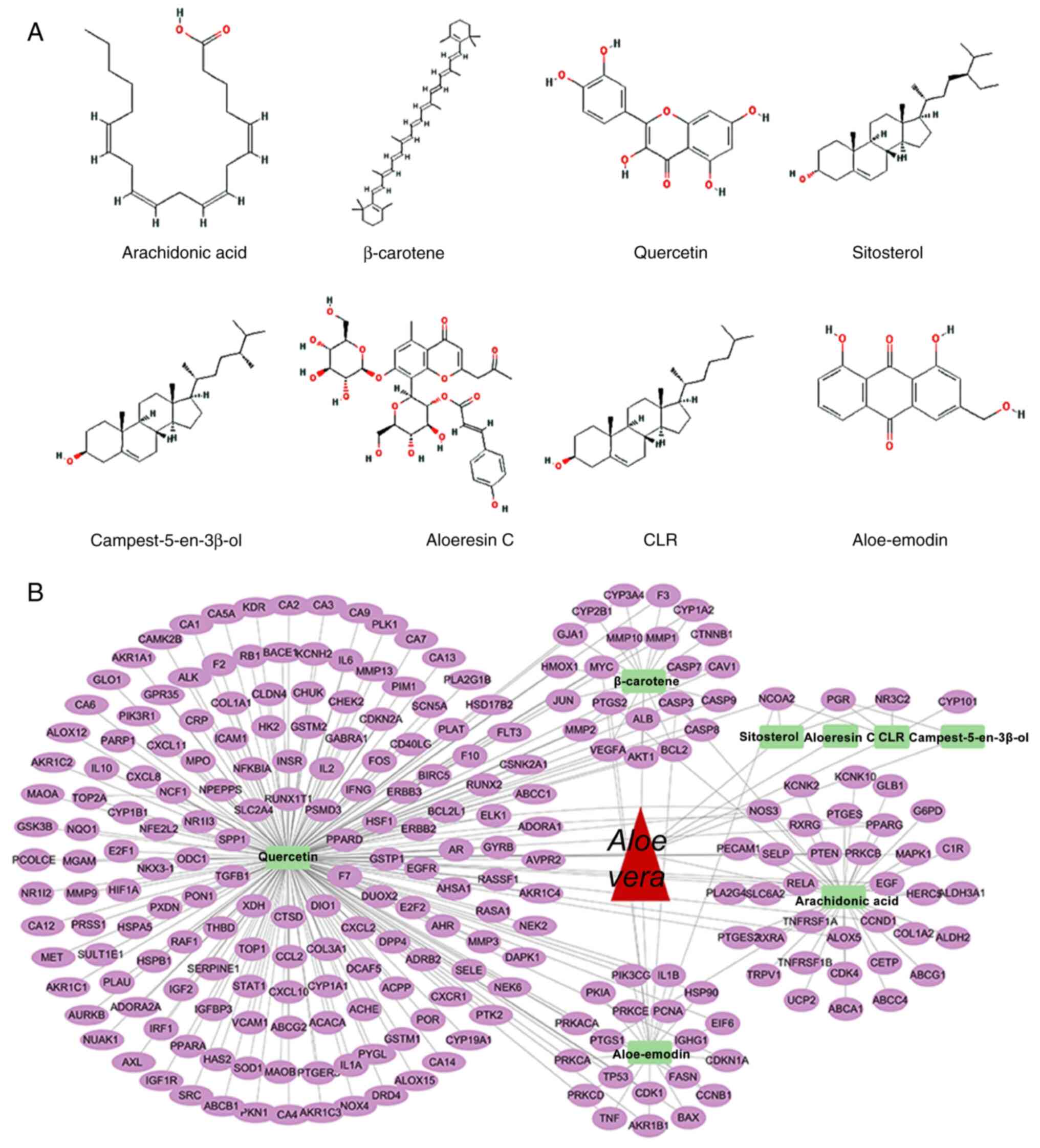
Figure 1

Analysis of therapeutic ingredients
and targets of Aloe vera. (A) Structures of eight medicinal
components of Aloe vera. (B) Network showing the
relationship between Aloe vera ingredients and their
targets. Red represents Aloe vera, green represents the
eight therapeutic ingredients and purple indicates potential
targets.

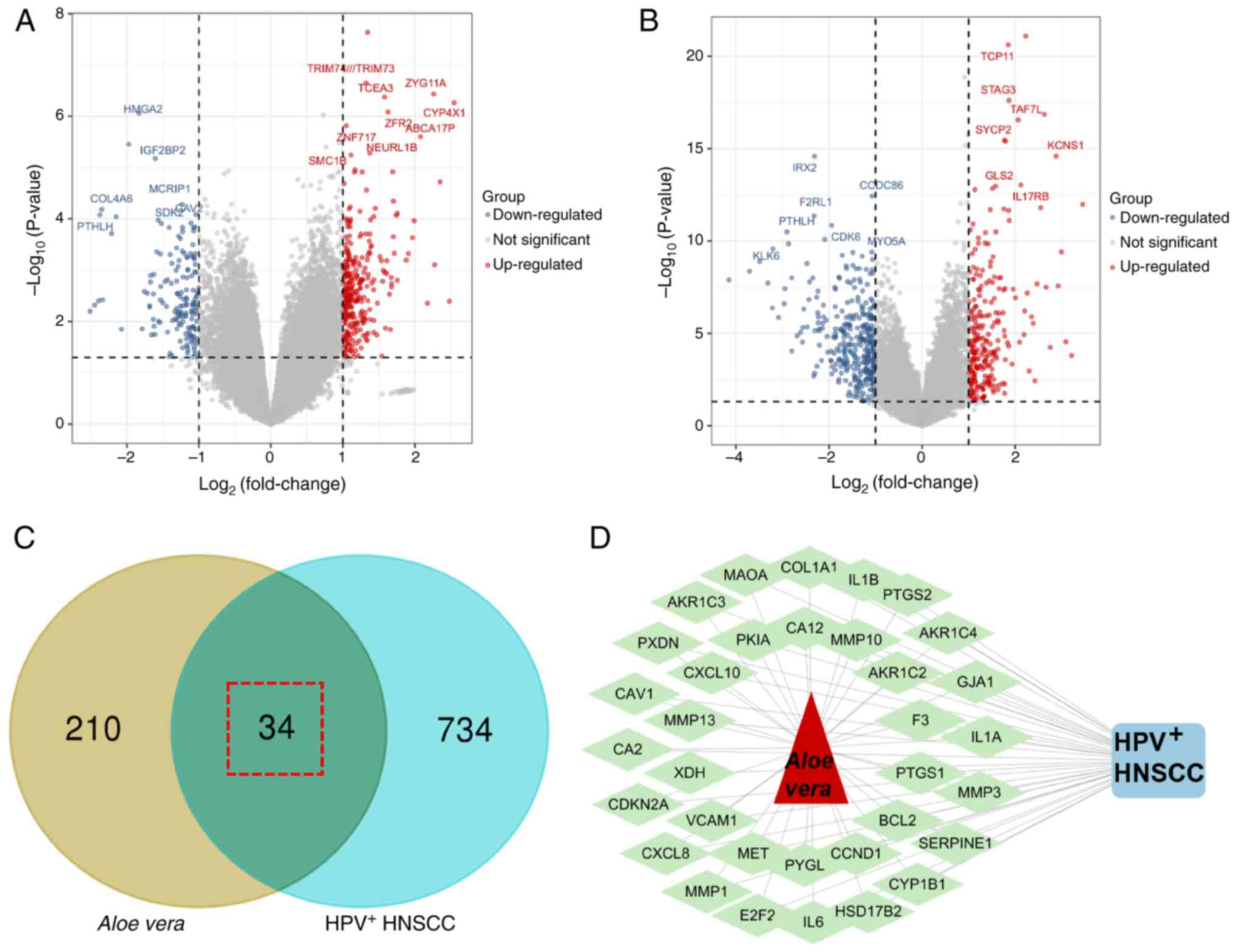
Figure 2

Analysis of shared target genes
between Aloe vera and HPV+ HNSCC. Differential
gene expression analysis was performed on (A) GSE53355 and (B)
GSE117973 datasets to obtain volcano plots of target genes in
HPV+ HNSCC. (C) Intersection of target genes between
Aloe vera and HPV+ HNSCC yielded a total of 34
shared genes, visualized using a Venn diagram. (D) A
drug-target-disease network was constructed with 34 shared genes
between Aloe vera and HPV+ HNSCC. HPV, human
papillomavirus; HNSCC, head and neck squamous cell carcinoma.

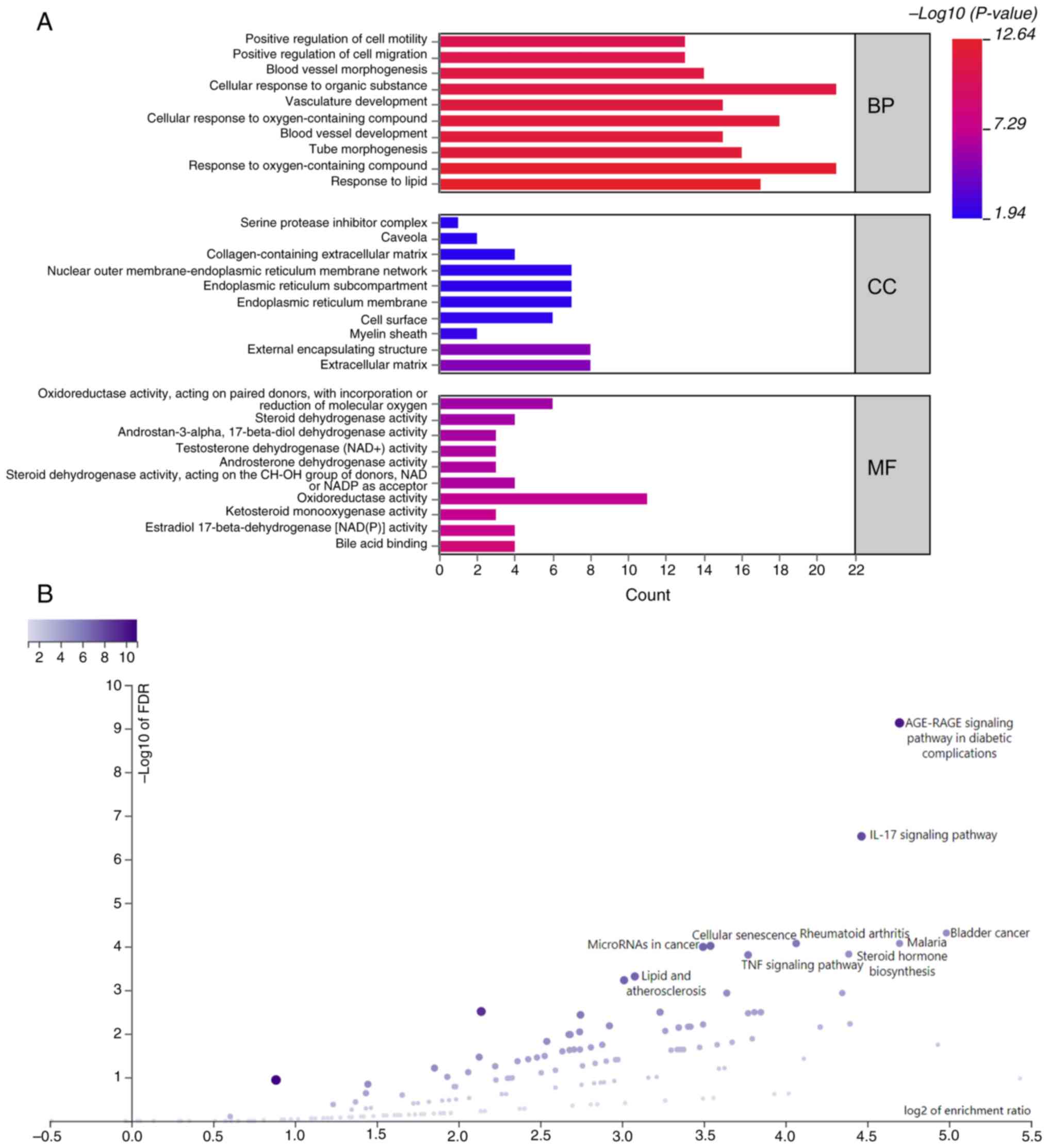
Figure 3

GO and Kyoto Encyclopedia of Genes
and Genomes analysis results of Aloe vera and human
papillomavirus-positive head and neck squamous cell carcinoma
shared target genes. (A) Most significant GO terms associated with
target genes. (B) Pathways such as ‘AGE-RAGE signaling pathway in
diabetic complications’ and ‘IL-17 signaling pathway’ were
identified. GO, Gene Ontology; FDR, false discovery rate.

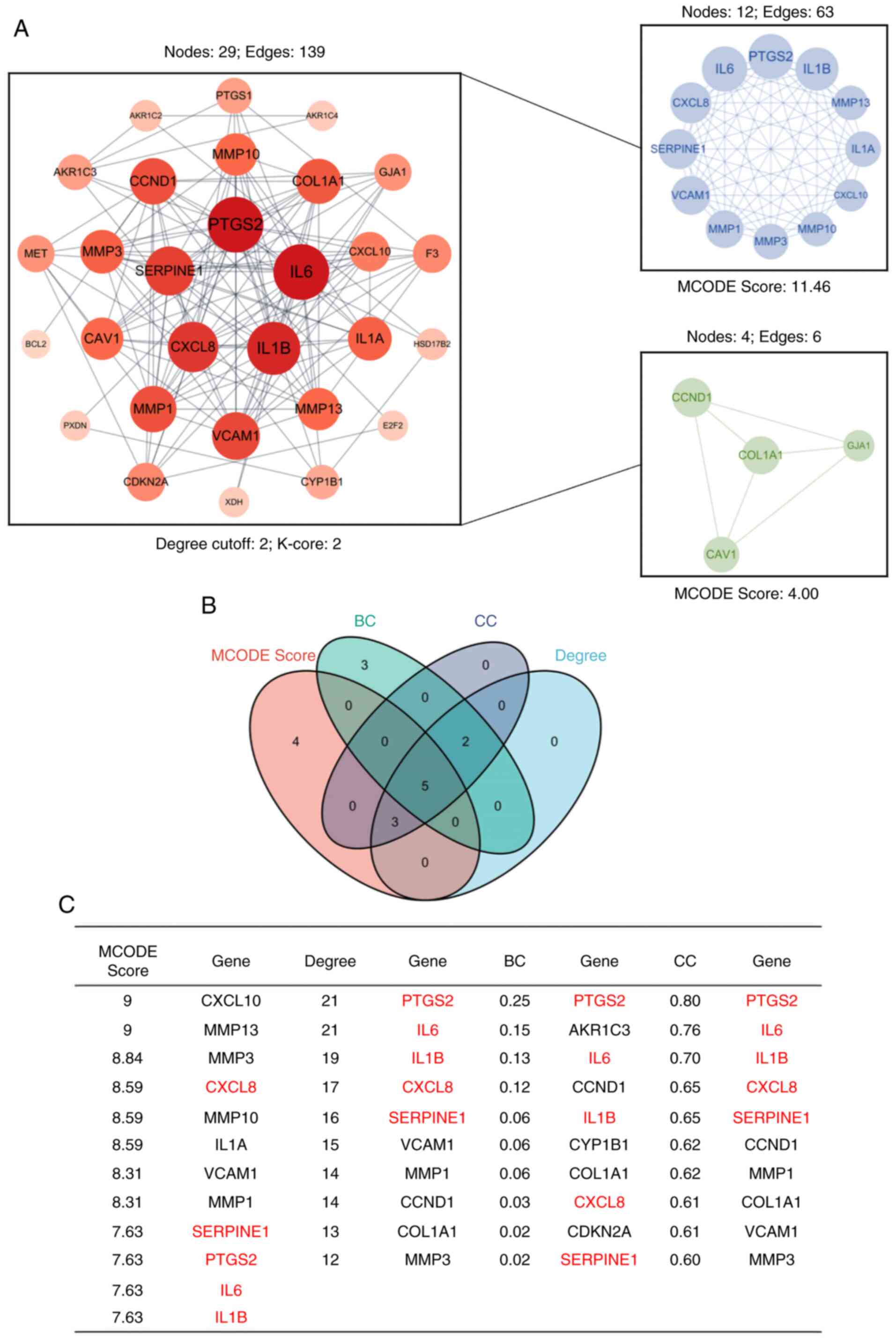
Figure 4

PPI network analysis. (A) A PPI
network of Aloe vera- and human papillomavirus-positive head
and neck squamous cell carcinoma shared targets was constructed,
with two core subnetworks identified with degree cutoff=2 and
K-core=2. (B) Based on MCODE score, BC, CC and degree, a total of
five hub genes were identified, as shown in the Venn diagram. (C)
Five hub genes were selected including PTGS2, IL6, IL1B, CXCL8 and
SERPINE1, through the intersection of four gene sets. PPI,
protein-protein interaction; BC, betweenness centrality; CC,
closeness centrality; SERPINE1, serpin family member 1.

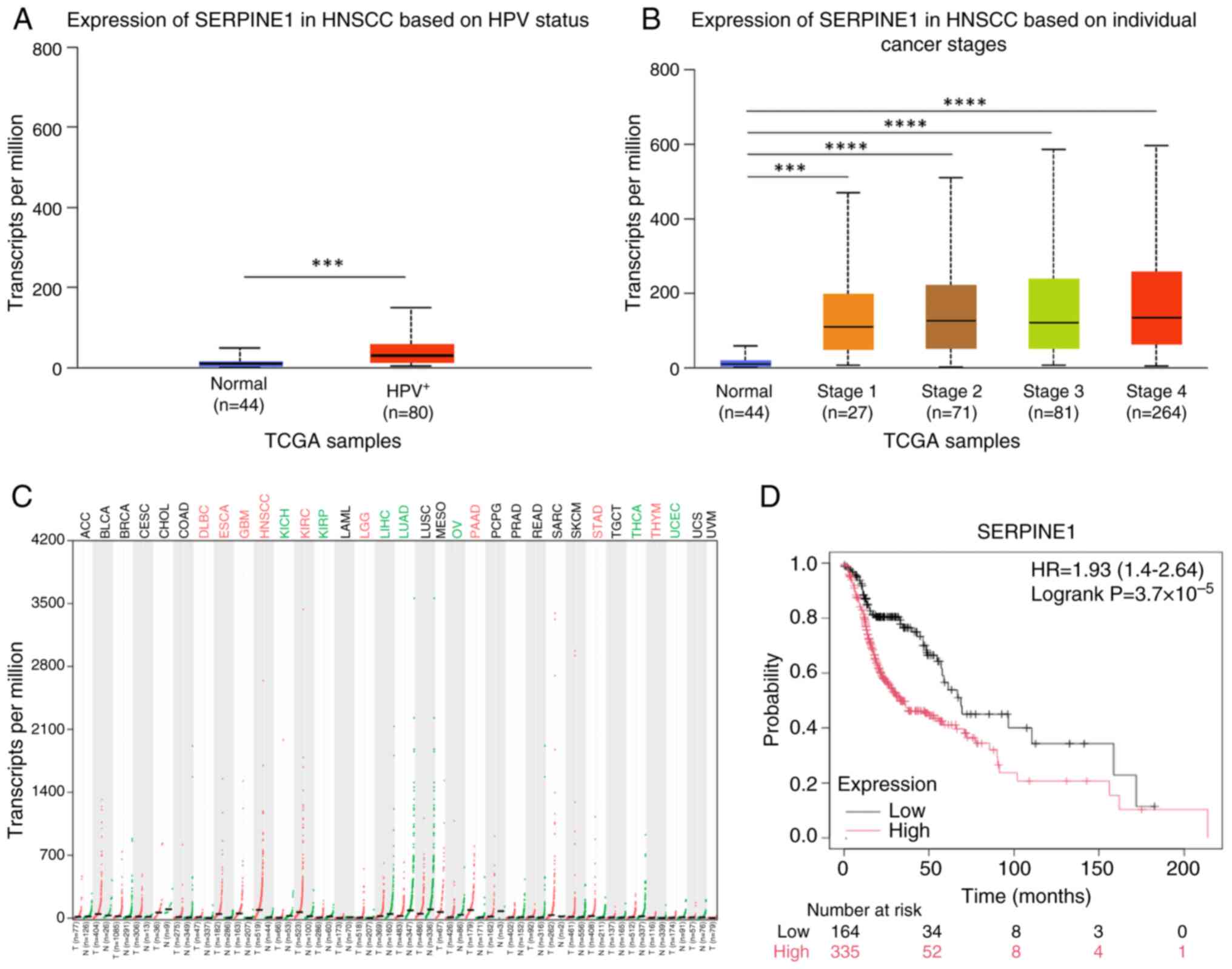
Figure 5

Expression of SERPINE1 and its
prognostic implications in HNSCC. (A) Significantly elevated
expression levels of SERPINE1 were observed in HPV+
HNSCC (***P<0.001). (B) SERPINE1 expression levels were
significantly higher across different stages in HNSCC
(***P<0.001; ****P<0.0001). (C) Elevated SERPINE1 levels were
noted in HNSCC, as well as in eight additional cancer types
(P<0.05). Colors indicate tumor expression differences: Red
indicates upregulation, green indicates downregulation and black
indicates no significant difference. (D) Kaplan-Meier curve
illustrating the inverse association between SERPINE1 expression
and overall survival. SERPINE1, serpin family member 1; HNSCC, head
and neck squamous cell carcinoma; HPV, human papillomavirus; TCGA,
The Cancer Genome Atlas.

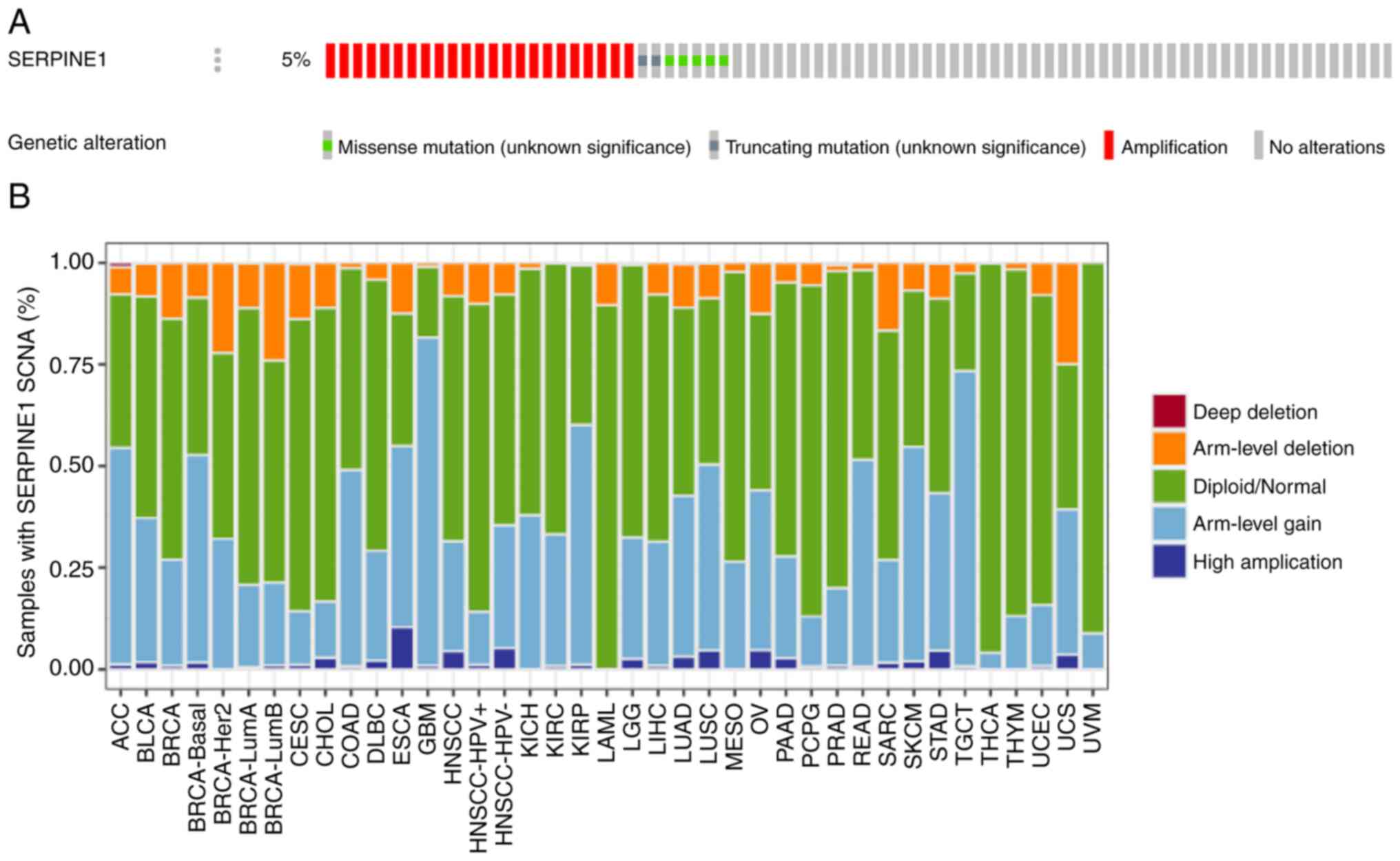
Figure 6

Genetic alterations and SCNAs of
SERPINE1 in HPV+ HNSCC. (A) Genetic alteration profile
of SERPINE1 in HNSCC, including missense mutations, truncating
mutations and amplifications. (B) SCNAs profile of SERPINE1 across
various types of cancer. SCNAs, somatic copy number alterations;
SERPINE1, serpin family member 1; HPV, human papillomavirus; HNSCC,
head and neck squamous cell carcinoma.

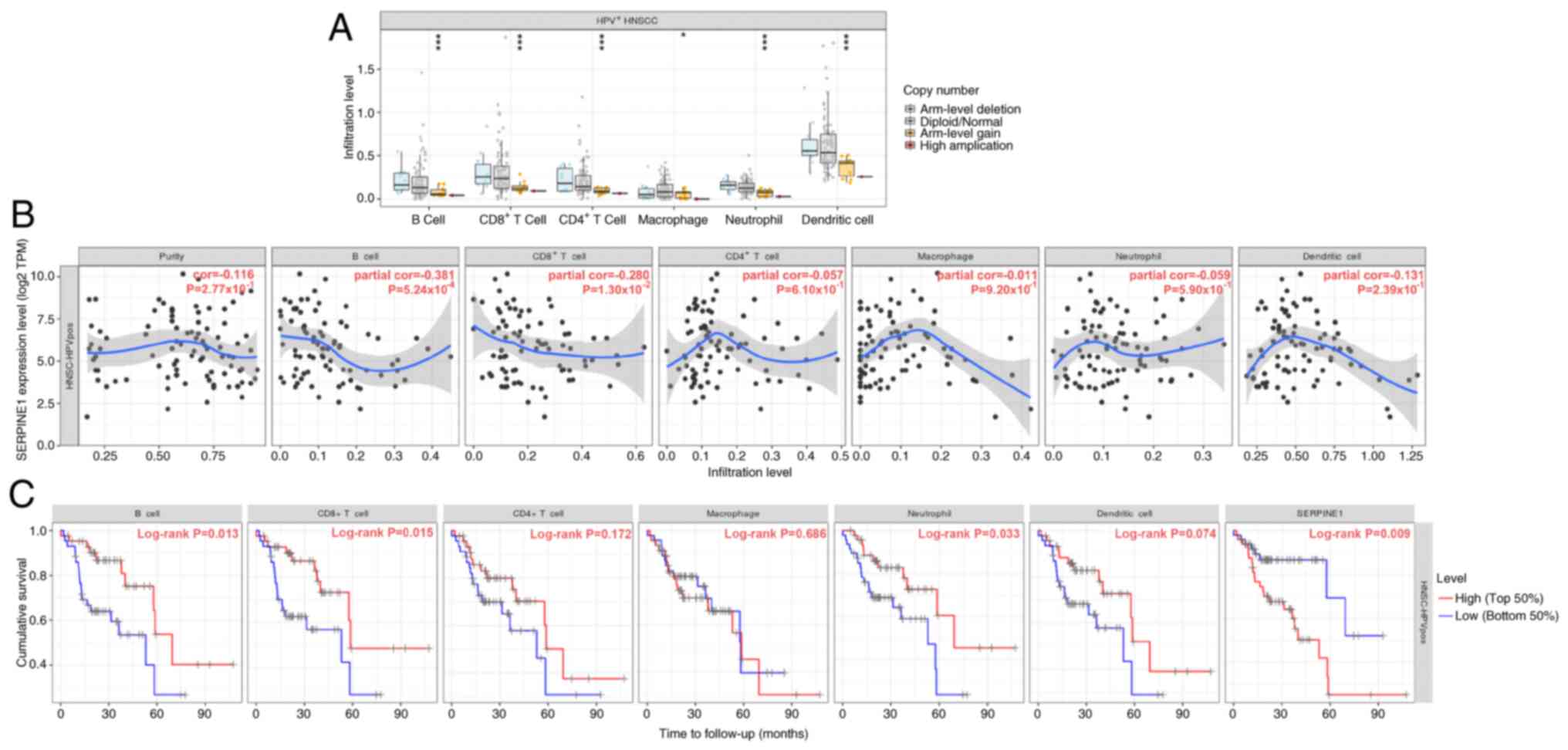
Figure 7

SERPINE1 shapes the tumor immune
microenvironment of HPV+ HNSCC. (A) Through arm-level
gain, the SCNA of SERPINE1 can significantly influence immune cell
infiltrations. (B) Weak negative correlations between SERPINE1
expression level and infiltrations of B cells and CD8+ T
cells in HPV+ HNSCC. (C) Prognostic value of B-cell and
CD8+ T-cell infiltrations, along with SERPINE1
expression, for improved overall survival. *P<0.05 and
***P<0.001. SCNA, somatic copy number alteration; SERPINE1,
serpin family member 1; HPV, human papillomavirus; HNSCC, head and
neck squamous cell carcinoma; TPM, transcripts per million.

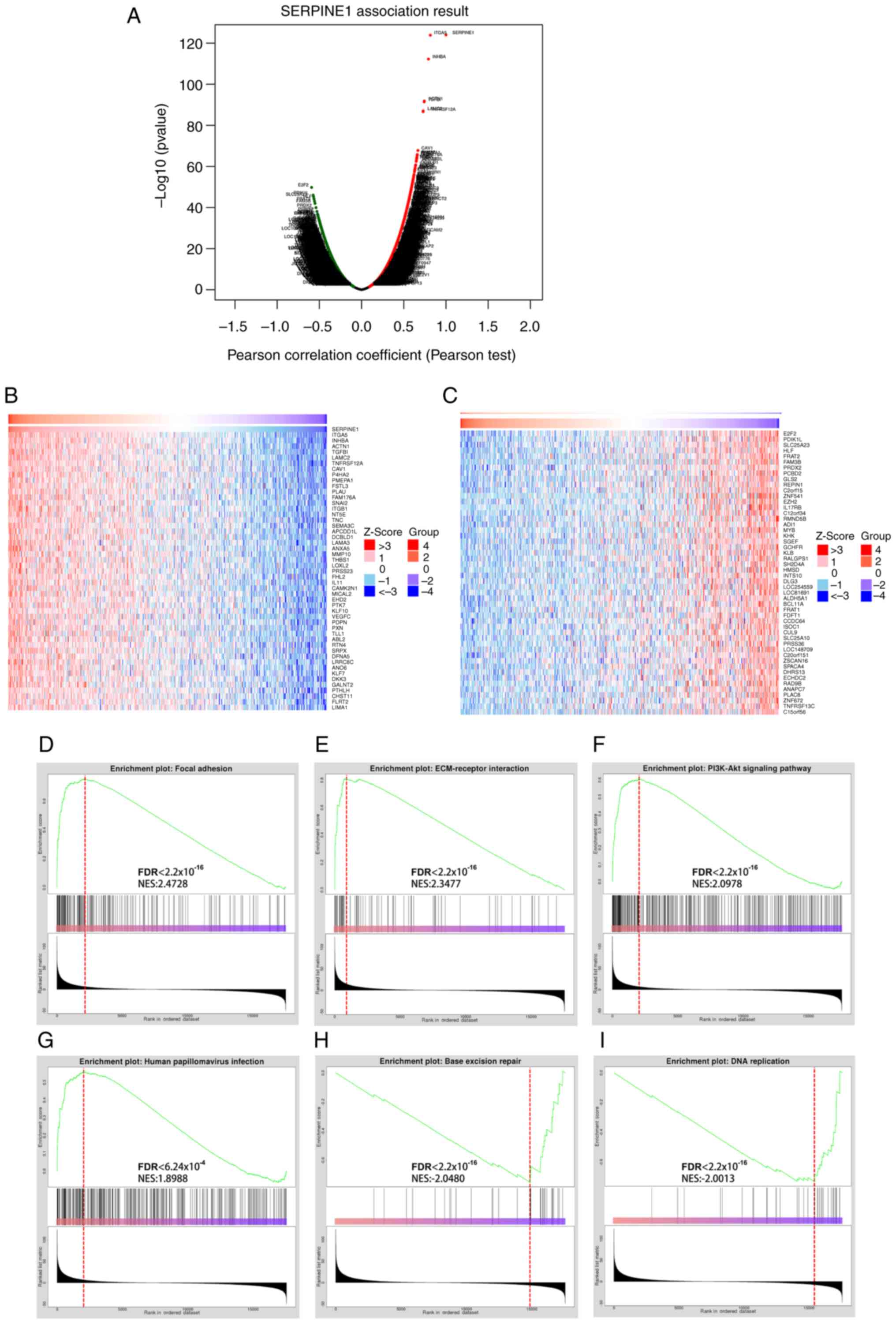
Figure 8

Co-expression analysis and GSEA of
SERPINE1 in HNSCC. (A) Scatter plot representing the genes
co-expressed with SERPINE1. (B) Top 50 genes positively associated
with SERPINE1. (C) Top 50 genes negatively associated with
SERPINE1. GSEA demonstrated a positive association between the
SERPINE1 gene set and (D) focal adhesion.=, (E) ECM-receptor
interaction, (F) PI3K-AKT signaling pathway and (G) human
papillomavirus infection, a negative association between the
SERPINE1 gene set and (H) base excision repair and (I) DNA
replication. GSEA, Gene Set Enrichment Analysis; SERPINE1, serpin
family member 1.

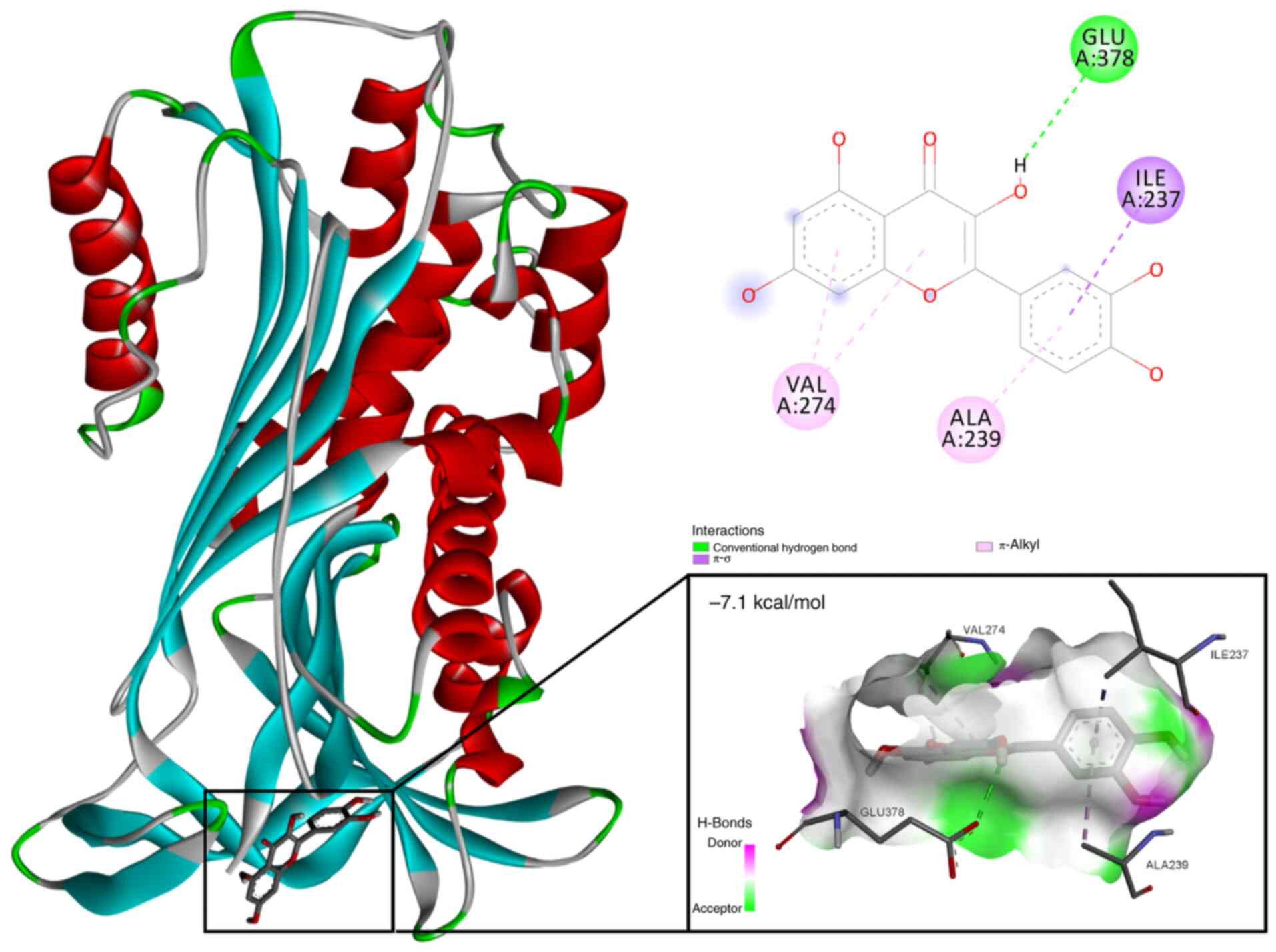
Figure 9

Molecular docking analysis. Molecular
docking analysis of quercetin, a key component of Aloe vera,
with the SERPINE1 protein revealed a binding energy of −7.1
kcal/mol. Quercetin establishes a hydrogen bond with GLU378,
π-alkyl interactions with VAL274 and ALA239, and a π-σ interaction
with ILE237, indicating strong binding affinity within the active
site of SERPINE1. SERPINE1, serpin family member 1.

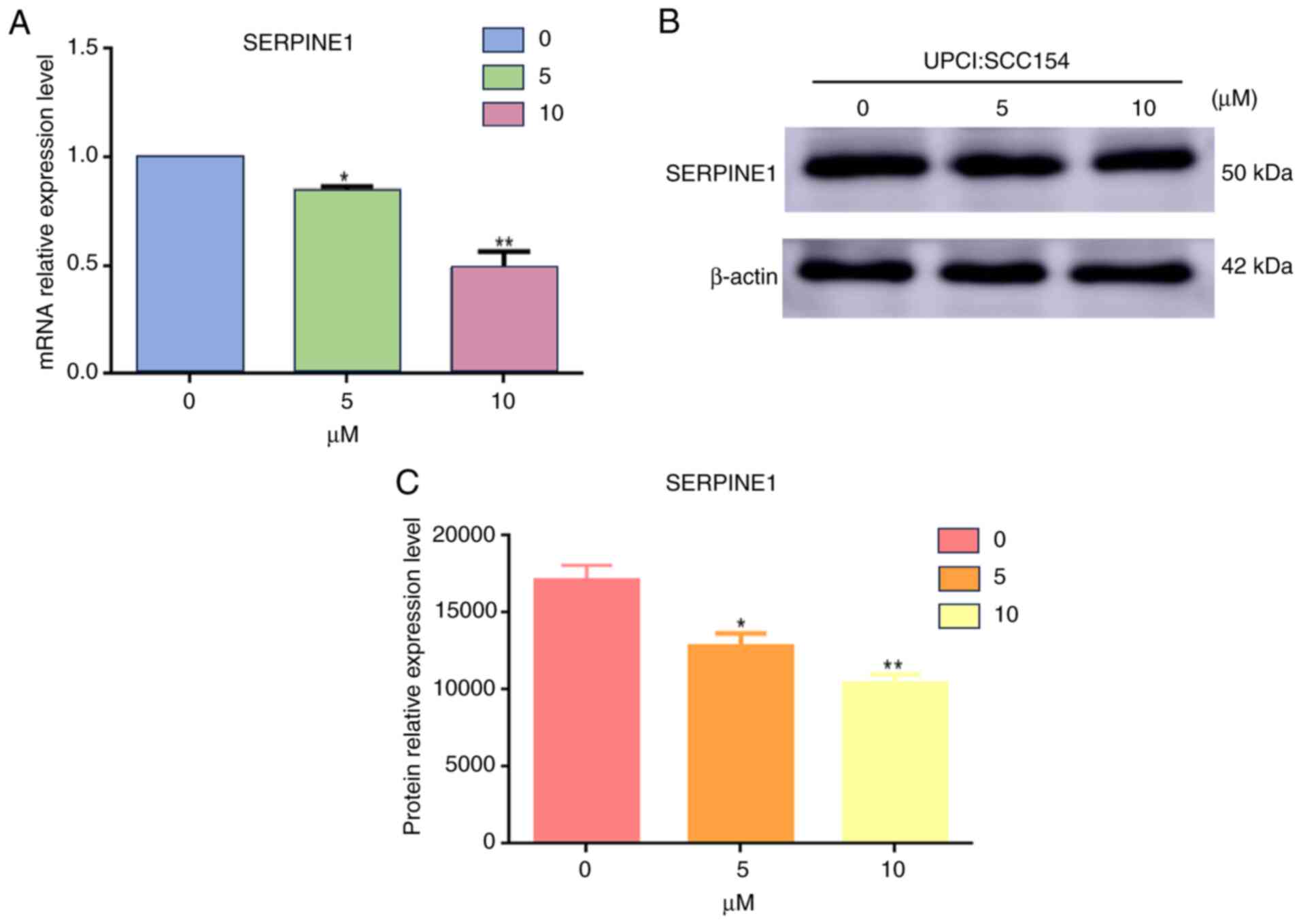
Figure 10

Effects of quercetin on SERPINE1
expression in HPV+ HNSCC cells. (A) Quercetin caused a
dose-dependent decrease of SERPINE1 mRNA expression in
HPV+ HNSCC cells, as measured after exposure to 0, 5 and
10 µM concentrations (*P<0.05; **P<0.01 vs 0 µM). (B) Western
blot analysis further validated the downregulation of SERPINE1
protein expression following quercetin treatment. (C)
Semi-quantitative bar graph showing the downregulation of SERPINE1
protein expression levels following Aloe vera treatment, as
determined by densitometric analysis of western blotting data. Data
are presented as the mean ± SEM (n=3) (*P<0.05; **P<0.01 vs.
0 µM). SERPINE1, serpin family member 1; HPV, human papillomavirus;
HNSCC, head and neck squamous cell carcinoma.
View References

1 

Barsouk A, Aluru JS, Rawla P, Saginala K and Barsouk A: Epidemiology, risk factors, and prevention of head and neck squamous cell carcinoma. Med Sci (Basel). 11:422023.PubMed/NCBI

2 

Dickstein DR, Egerman MA, Bui AH, Doucette JT, Sharma S, Liu J, Gupta V, Miles BA, Genden E, Westra WH, et al: A new face of the HPV epidemic: Oropharyngeal cancer in the elderly. Oral Oncol. 109:1046872020. View Article : Google Scholar : PubMed/NCBI

3 

De Felice F, Bird T, Michaelidou A, Thavaraj S, Odell E, Sandison A, Hall G, Morgan P, Lyons A, Cascarini L, et al: Radical (chemo)radiotherapy in oropharyngeal squamous cell carcinoma: Comparison of TNM 7th and 8th staging systems. Radiother Oncol. 145:146–153. 2020. View Article : Google Scholar : PubMed/NCBI

4 

Aggarwal N, Yadav J, Thakur K, Bibban R, Chhokar A, Tripathi T, Bhat A, Singh T, Jadli M, Singh U, et al: Human papillomavirus infection in head and neck squamous cell carcinomas: Transcriptional triggers and changed disease patterns. Front Cell Infect Microbiol. 10:5376502020. View Article : Google Scholar : PubMed/NCBI

5 

Abou Kors T, Hofmann L, Betzler A, Payer K, Bens M, Truong J, von Witzleben A, Thomas J, Kraus JM, Kalaajieh R, et al: INHBA is enriched in HPV-negative oropharyngeal squamous cell carcinoma and promotes cancer progression. Cancer Res Commun. 4:571–587. 2024. View Article : Google Scholar : PubMed/NCBI

6 

Ben-Arie E, Lottering B, Inprasit C, Yip HT, Ho WC, Ton G, Lee YC and Kao PY: Traditional Chinese medicine use in patients with oral cancer: A retrospective longitudinal cohort study in Taiwan. Medicine (Baltimore). 101:e307162022. View Article : Google Scholar : PubMed/NCBI

7 

Wang H, Zhao Q, Zhang Y, Zhang Q, Zheng Z, Liu S, Liu Z, Meng L, Xin Y and Jiang X: Immunotherapy advances in locally advanced and recurrent/metastatic head and neck squamous cell carcinoma and its relationship with human papillomavirus. Front Immunol. 12:6520542021. View Article : Google Scholar : PubMed/NCBI

8 

Zhang X, Qiu H, Li C, Cai P and Qi F: The positive role of traditional Chinese medicine as an adjunctive therapy for cancer. Biosci Trends. 15:283–298. 2021. View Article : Google Scholar : PubMed/NCBI

9 

Zhang B, Liu G, Wang X and Hu X: Identification of molecular targets and potential mechanisms of Yinchen Wuling San against head and neck squamous cell carcinoma by network pharmacology and molecular docking. Front Genet. 13:9146462022. View Article : Google Scholar : PubMed/NCBI

10 

Catalano A, Ceramella J, Iacopetta D, Marra M, Conforti F, Lupi FR, Gabriele D, Borges F and Sinicropi MS: Aloe vera-an extensive review focused on recent studies. Foods. 13:21552024. View Article : Google Scholar : PubMed/NCBI

11 

Riaz S, Hussain S, Syed SK and Anwar R: Chemical characteristics and therapeutic potentials of Aloe vera. RADS J Biol Res Appl Sci. 12:160–166. 2021. View Article : Google Scholar

12 

Tong X, Li M, Li D, Lao C, Chen J, Xu W, Du J, Zhang M, Yang X and Li J: Aloe vera gel extract: Safety evaluation for acute and chronic oral administration in Sprague-Dawley rats and anticancer activity in breast and lung cancer cells. J Ethnopharmacol. 280:1144342021. View Article : Google Scholar : PubMed/NCBI

13 

Karpagam T, Firdous J, Priya S, Varalakshmi B, Gomathi S, Geetha S and Muhamad N: Anti-cancer activity of Aloe vera ethanolic leaves extract against in vitro cancer cells. Res J Pharm Technol. 12:2167–2170. 2019. View Article : Google Scholar

14 

Akev N, Candoken E and Erdem Kuruca S: Comparative study on the anticancer drug potential of a lectin purified from aloe vera and aloe-emodin. Asian Pac J Cancer Prev. 21:99–106. 2020. View Article : Google Scholar : PubMed/NCBI

15 

Sa N, Liu X, Hao D, Lv Z, Zhou S, Yang L, Jiang S, Tian J and Xu W: FTO-mediated m6A demethylation of SERPINE1 mRNA promotes tumor progression in hypopharyngeal squamous cell carcinoma. Transl Cancer Res. 14:595–612. 2025. View Article : Google Scholar : PubMed/NCBI

16 

Arroyo-Solera I, Pavón MÁ, León X, López M, Gallardo A, Céspedes MV, Casanova I, Pallarès V, López-Pousa A, Mangues MA, et al: Effect of serpinE1 overexpression on the primary tumor and lymph node, and lung metastases in head and neck squamous cell carcinoma. Head Neck. 41:429–439. 2019. View Article : Google Scholar : PubMed/NCBI

17 

Zhu C, Liu H, Li Z, Shi Y, Zhao J, Bai Y, Chen Q and Li W: Prognostic significance and therapeutic potential of SERPINE1 in head and neck squamous cell carcinoma. Cancer Med. 14:e706052025. View Article : Google Scholar : PubMed/NCBI

18 

Jiang S, Ou L, Wang Y, Su K, Chen Z, He L, Xu X, Cheng B, Xia J and Fan Z: CircPRMT5, a potential salivary biomarker, facilitates the progression of head and neck squamous cell carcinoma via the IGF2BP3-SERPINE1 pathway. Int J Nanomedicine. 20:1597–1613. 2025. View Article : Google Scholar : PubMed/NCBI

19 

Ru J, Li P, Wang J, Zhou W, Li B, Huang C, Li P, Guo Z, Tao W, Yang Y, et al: TCMSP: A database of systems pharmacology for drug discovery from herbal medicines. J Cheminform. 6:132014. View Article : Google Scholar : PubMed/NCBI

20 

Daina A, Michielin O and Zoete V: SwissTargetPrediction: Updated data and new features for efficient prediction of protein targets of small molecules. Nucleic Acids Res. 47:W357–W364. 2019. View Article : Google Scholar : PubMed/NCBI

21 

Mock A, Plath M, Moratin J, Tapken MJ, Jäger D, Krauss J, Fröhling S, Hess J and Zaoui K: EGFR and PI3K pathway activities might guide drug repurposing in HPV-negative head and neck cancers. Front Oncol. 11:6789662021. View Article : Google Scholar : PubMed/NCBI

22 

Parker HS, Leek JT, Favorov AV, Considine M, Xia X, Chavan S, Chung CH and Fertig EJ: Preserving biological heterogeneity with a permuted surrogate variable analysis for genomics batch correction. Bioinformatics. 30:2757–2763. 2014. View Article : Google Scholar : PubMed/NCBI

23 

Huang DW, Sherman BT, Tan Q, Collins JR, Alvord WG, Roayaei J, Stephens R, Baseler MW, Lane HC and Lempicki RA: The DAVID gene functional classification tool: A novel biological module-centric algorithm to functionally analyze large gene lists. Genome Biol. 8:R1832007. View Article : Google Scholar : PubMed/NCBI

24 

Shannon P, Markiel A, Ozier O, Baliga NS, Wang JT, Ramage D, Amin N, Schwikowski B and Ideker T: Cytoscape: A software environment for integrated models of biomolecular interaction networks. Genome Res. 13:2498–2504. 2003. View Article : Google Scholar : PubMed/NCBI

25 

Vasaikar SV, Straub P, Wang J and Zhang B: LinkedOmics: Analyzing multi-omics data within and across 32 cancer types. Nucleic Acids Res. 46:D956–D963. 2018. View Article : Google Scholar : PubMed/NCBI

26 

Livak KJ and Schmittgen TD: Analysis of relative gene expression data using real-time quantitative PCR and the 2(−Delta Delta C(T)) method. Methods. 25:402–408. 2001. View Article : Google Scholar : PubMed/NCBI

27 

Yang C, Li D, Ko CN, Wang K and Wang H: Active ingredients of traditional Chinese medicine for enhancing the effect of tumor immunotherapy. Front Immunol. 14:11330502023. View Article : Google Scholar : PubMed/NCBI

28 

Zheng H, Wang G, Liu M and Cheng H: Traditional Chinese medicine inhibits PD-1/PD-L1 axis to sensitize cancer immunotherapy: A literature review. Front Oncol. 13:1682262023.

29 

Saeedi-Boroujeni A and Mahmoudian-Sani MR: Anti-inflammatory potential of quercetin in COVID-19 treatment. J Inflamm (Lond). 18:32021. View Article : Google Scholar : PubMed/NCBI

30 

Clemente-Soto AF, Salas-Vidal E, Milan-Pacheco C, Sánchez-Carranza JN, Peralta-Zaragoza O and González-Maya L: Quercetin induces G2 phase arrest and apoptosis with the activation of p53 in an E6 expression-independent manner in HPV-positive human cervical cancer-derived cells. Mol Med Rep. 19:2097–2106. 2019.PubMed/NCBI

31 

Zhuang Y, Coppock JD, Haugrud AB, Lee JH, Messerli SM and Miskimins WK: Dichloroacetate and quercetin prevent cell proliferation, induce cell death and slow tumor growth in a mouse model of HPV-positive head and neck cancer. Cancers (Basel). 16:15252024. View Article : Google Scholar : PubMed/NCBI

32 

Chan CY, Hong SC, Chang CM, Chen YH, Liao PC and Huang CY: Oral squamous cell carcinoma cells with acquired resistance to erlotinib are sensitive to anti-cancer effect of quercetin via pyruvate kinase M2 (PKM2). Cells. 12:1792023. View Article : Google Scholar : PubMed/NCBI

33 

Huang CF, Liu SH, Ho TJ, Lee KI, Fang KM, Lo WC, Liu JM, Wu CC and Su CC: Quercetin induces tongue squamous cell carcinoma cell apoptosis via the JNK activation-regulated ERK/GSK-3α/β-mediated mitochondria-dependent apoptotic signaling pathway. Oncol Lett. 23:782022. View Article : Google Scholar : PubMed/NCBI

34 

Son HK and Kim D: Quercetin induces cell cycle arrest and apoptosis in YD10B and YD38 oral squamous cell carcinoma cells. Asian Pac J Cancer Prev. 24:283–289. 2023. View Article : Google Scholar : PubMed/NCBI

35 

Miranda-Galvis M, Carneiro Soares C, Moretto Carnielli C, Ramalho Buttura J, Sales de Sá R, Kaminagakura E, Marchi FA, Paes Leme AF, Lópes Pinto CA, Santos-Silva AR, et al: New insights into the impact of human papillomavirus on oral cancer in young patients: Proteomic approach reveals a novel role for S100A8. Cells. 12:13232023. View Article : Google Scholar : PubMed/NCBI

36 

Chen S, Li Y, Zhu Y, Fei J, Song L, Sun G, Guo L and Li X: SERPINE1 overexpression promotes malignant progression and poor prognosis of gastric cancer. J Oncol. 2022:26478252022.PubMed/NCBI

37 

Zhou Q, Yuan O, Cui H, Hu T, Xiao GG, Wei J, Zhang H and Wu C: Bioinformatic analysis identifies HPV-related tumor microenvironment remodeling prognostic biomarkers in head and neck squamous cell carcinoma. Front Cell Infect Microbiol. 12:10079502022. View Article : Google Scholar : PubMed/NCBI

38 

Zhao H, Wang F, Wang X, Zhao X and Ji J: HPV-related prognostic signature predicts survival in head and neck squamous cell carcinoma. J Oncol. 2022:73575662022. View Article : Google Scholar : PubMed/NCBI

39 

Zhang H, Tang J, Cao H, Wang C, Shen C and Liu J: Effect and mechanism of magnolia officinalis in colorectal cancer: Multi-component-multi-target approach. J Ethnopharmacol. 338:1190072025. View Article : Google Scholar : PubMed/NCBI

Related Articles

  • Abstract
  • View
  • Download
  • Twitter
Copy and paste a formatted citation
Spandidos Publications style
Zhu K, Han Y, Zhu Y, Zhu X, Huang S and Wang K: Mechanism of action of <em>Aloe vera</em> against human papillomavirus‑positive head and neck squamous cell carcinoma. Oncol Lett 30: 475, 2025.
APA
Zhu, K., Han, Y., Zhu, Y., Zhu, X., Huang, S., & Wang, K. (2025). Mechanism of action of <em>Aloe vera</em> against human papillomavirus‑positive head and neck squamous cell carcinoma. Oncology Letters, 30, 475. https://doi.org/10.3892/ol.2025.15221
MLA
Zhu, K., Han, Y., Zhu, Y., Zhu, X., Huang, S., Wang, K."Mechanism of action of <em>Aloe vera</em> against human papillomavirus‑positive head and neck squamous cell carcinoma". Oncology Letters 30.4 (2025): 475.
Chicago
Zhu, K., Han, Y., Zhu, Y., Zhu, X., Huang, S., Wang, K."Mechanism of action of <em>Aloe vera</em> against human papillomavirus‑positive head and neck squamous cell carcinoma". Oncology Letters 30, no. 4 (2025): 475. https://doi.org/10.3892/ol.2025.15221
Copy and paste a formatted citation
x
Spandidos Publications style
Zhu K, Han Y, Zhu Y, Zhu X, Huang S and Wang K: Mechanism of action of <em>Aloe vera</em> against human papillomavirus‑positive head and neck squamous cell carcinoma. Oncol Lett 30: 475, 2025.
APA
Zhu, K., Han, Y., Zhu, Y., Zhu, X., Huang, S., & Wang, K. (2025). Mechanism of action of <em>Aloe vera</em> against human papillomavirus‑positive head and neck squamous cell carcinoma. Oncology Letters, 30, 475. https://doi.org/10.3892/ol.2025.15221
MLA
Zhu, K., Han, Y., Zhu, Y., Zhu, X., Huang, S., Wang, K."Mechanism of action of <em>Aloe vera</em> against human papillomavirus‑positive head and neck squamous cell carcinoma". Oncology Letters 30.4 (2025): 475.
Chicago
Zhu, K., Han, Y., Zhu, Y., Zhu, X., Huang, S., Wang, K."Mechanism of action of <em>Aloe vera</em> against human papillomavirus‑positive head and neck squamous cell carcinoma". Oncology Letters 30, no. 4 (2025): 475. https://doi.org/10.3892/ol.2025.15221
Follow us
  • Twitter
  • LinkedIn
  • Facebook
About
  • Spandidos Publications
  • Careers
  • Cookie Policy
  • Privacy Policy
How can we help?
  • Help
  • Live Chat
  • Contact
  • Email to our Support Team