Spandidos Publications Logo
  • About
    • About Spandidos
    • Aims and Scopes
    • Abstracting and Indexing
    • Editorial Policies
    • Reprints and Permissions
    • Job Opportunities
    • Terms and Conditions
    • Contact
  • Journals
    • All Journals
    • Oncology Letters
      • Oncology Letters
      • Information for Authors
      • Editorial Policies
      • Editorial Board
      • Aims and Scope
      • Abstracting and Indexing
      • Bibliographic Information
      • Archive
    • International Journal of Oncology
      • International Journal of Oncology
      • Information for Authors
      • Editorial Policies
      • Editorial Board
      • Aims and Scope
      • Abstracting and Indexing
      • Bibliographic Information
      • Archive
    • Molecular and Clinical Oncology
      • Molecular and Clinical Oncology
      • Information for Authors
      • Editorial Policies
      • Editorial Board
      • Aims and Scope
      • Abstracting and Indexing
      • Bibliographic Information
      • Archive
    • Experimental and Therapeutic Medicine
      • Experimental and Therapeutic Medicine
      • Information for Authors
      • Editorial Policies
      • Editorial Board
      • Aims and Scope
      • Abstracting and Indexing
      • Bibliographic Information
      • Archive
    • International Journal of Molecular Medicine
      • International Journal of Molecular Medicine
      • Information for Authors
      • Editorial Policies
      • Editorial Board
      • Aims and Scope
      • Abstracting and Indexing
      • Bibliographic Information
      • Archive
    • Biomedical Reports
      • Biomedical Reports
      • Information for Authors
      • Editorial Policies
      • Editorial Board
      • Aims and Scope
      • Abstracting and Indexing
      • Bibliographic Information
      • Archive
    • Oncology Reports
      • Oncology Reports
      • Information for Authors
      • Editorial Policies
      • Editorial Board
      • Aims and Scope
      • Abstracting and Indexing
      • Bibliographic Information
      • Archive
    • Molecular Medicine Reports
      • Molecular Medicine Reports
      • Information for Authors
      • Editorial Policies
      • Editorial Board
      • Aims and Scope
      • Abstracting and Indexing
      • Bibliographic Information
      • Archive
    • World Academy of Sciences Journal
      • World Academy of Sciences Journal
      • Information for Authors
      • Editorial Policies
      • Editorial Board
      • Aims and Scope
      • Abstracting and Indexing
      • Bibliographic Information
      • Archive
    • International Journal of Functional Nutrition
      • International Journal of Functional Nutrition
      • Information for Authors
      • Editorial Policies
      • Editorial Board
      • Aims and Scope
      • Abstracting and Indexing
      • Bibliographic Information
      • Archive
    • International Journal of Epigenetics
      • International Journal of Epigenetics
      • Information for Authors
      • Editorial Policies
      • Editorial Board
      • Aims and Scope
      • Abstracting and Indexing
      • Bibliographic Information
      • Archive
    • Medicine International
      • Medicine International
      • Information for Authors
      • Editorial Policies
      • Editorial Board
      • Aims and Scope
      • Abstracting and Indexing
      • Bibliographic Information
      • Archive
  • Articles
  • Information
    • Information for Authors
    • Information for Reviewers
    • Information for Librarians
    • Information for Advertisers
    • Conferences
  • Language Editing
Spandidos Publications Logo
  • About
    • About Spandidos
    • Aims and Scopes
    • Abstracting and Indexing
    • Editorial Policies
    • Reprints and Permissions
    • Job Opportunities
    • Terms and Conditions
    • Contact
  • Journals
    • All Journals
    • Biomedical Reports
      • Information for Authors
      • Editorial Policies
      • Editorial Board
      • Aims and Scope
      • Abstracting and Indexing
      • Bibliographic Information
      • Archive
    • Experimental and Therapeutic Medicine
      • Information for Authors
      • Editorial Policies
      • Editorial Board
      • Aims and Scope
      • Abstracting and Indexing
      • Bibliographic Information
      • Archive
    • International Journal of Epigenetics
      • Information for Authors
      • Editorial Policies
      • Editorial Board
      • Aims and Scope
      • Abstracting and Indexing
      • Bibliographic Information
      • Archive
    • International Journal of Functional Nutrition
      • Information for Authors
      • Editorial Policies
      • Editorial Board
      • Aims and Scope
      • Abstracting and Indexing
      • Bibliographic Information
      • Archive
    • International Journal of Molecular Medicine
      • Information for Authors
      • Editorial Policies
      • Editorial Board
      • Aims and Scope
      • Abstracting and Indexing
      • Bibliographic Information
      • Archive
    • International Journal of Oncology
      • Information for Authors
      • Editorial Policies
      • Editorial Board
      • Aims and Scope
      • Abstracting and Indexing
      • Bibliographic Information
      • Archive
    • Medicine International
      • Information for Authors
      • Editorial Policies
      • Editorial Board
      • Aims and Scope
      • Abstracting and Indexing
      • Bibliographic Information
      • Archive
    • Molecular and Clinical Oncology
      • Information for Authors
      • Editorial Policies
      • Editorial Board
      • Aims and Scope
      • Abstracting and Indexing
      • Bibliographic Information
      • Archive
    • Molecular Medicine Reports
      • Information for Authors
      • Editorial Policies
      • Editorial Board
      • Aims and Scope
      • Abstracting and Indexing
      • Bibliographic Information
      • Archive
    • Oncology Letters
      • Information for Authors
      • Editorial Policies
      • Editorial Board
      • Aims and Scope
      • Abstracting and Indexing
      • Bibliographic Information
      • Archive
    • Oncology Reports
      • Information for Authors
      • Editorial Policies
      • Editorial Board
      • Aims and Scope
      • Abstracting and Indexing
      • Bibliographic Information
      • Archive
    • World Academy of Sciences Journal
      • Information for Authors
      • Editorial Policies
      • Editorial Board
      • Aims and Scope
      • Abstracting and Indexing
      • Bibliographic Information
      • Archive
  • Articles
  • Information
    • For Authors
    • For Reviewers
    • For Librarians
    • For Advertisers
    • Conferences
  • Language Editing
Login Register Submit
  • This site uses cookies
  • You can change your cookie settings at any time by following the instructions in our Cookie Policy. To find out more, you may read our Privacy Policy.

    I agree
Search articles by DOI, keyword, author or affiliation
Search
Advanced Search
presentation
Oncology Letters
Join Editorial Board Propose a Special Issue
Print ISSN: 1792-1074 Online ISSN: 1792-1082
Journal Cover
November-2025 Volume 30 Issue 5

Full Size Image

Sign up for eToc alerts
Recommend to Library

Journals

International Journal of Molecular Medicine

International Journal of Molecular Medicine

International Journal of Molecular Medicine is an international journal devoted to molecular mechanisms of human disease.

International Journal of Oncology

International Journal of Oncology

International Journal of Oncology is an international journal devoted to oncology research and cancer treatment.

Molecular Medicine Reports

Molecular Medicine Reports

Covers molecular medicine topics such as pharmacology, pathology, genetics, neuroscience, infectious diseases, molecular cardiology, and molecular surgery.

Oncology Reports

Oncology Reports

Oncology Reports is an international journal devoted to fundamental and applied research in Oncology.

Experimental and Therapeutic Medicine

Experimental and Therapeutic Medicine

Experimental and Therapeutic Medicine is an international journal devoted to laboratory and clinical medicine.

Oncology Letters

Oncology Letters

Oncology Letters is an international journal devoted to Experimental and Clinical Oncology.

Biomedical Reports

Biomedical Reports

Explores a wide range of biological and medical fields, including pharmacology, genetics, microbiology, neuroscience, and molecular cardiology.

Molecular and Clinical Oncology

Molecular and Clinical Oncology

International journal addressing all aspects of oncology research, from tumorigenesis and oncogenes to chemotherapy and metastasis.

World Academy of Sciences Journal

World Academy of Sciences Journal

Multidisciplinary open-access journal spanning biochemistry, genetics, neuroscience, environmental health, and synthetic biology.

International Journal of Functional Nutrition

International Journal of Functional Nutrition

Open-access journal combining biochemistry, pharmacology, immunology, and genetics to advance health through functional nutrition.

International Journal of Epigenetics

International Journal of Epigenetics

Publishes open-access research on using epigenetics to advance understanding and treatment of human disease.

Medicine International

Medicine International

An International Open Access Journal Devoted to General Medicine.

Journal Cover
November-2025 Volume 30 Issue 5

Full Size Image

Sign up for eToc alerts
Recommend to Library

  • Article
  • Citations
    • Cite This Article
    • Download Citation
    • Create Citation Alert
    • Remove Citation Alert
    • Cited By
  • Similar Articles
    • Related Articles (in Spandidos Publications)
    • Similar Articles (Google Scholar)
    • Similar Articles (PubMed)
  • Download PDF
  • Download XML
  • View XML

  • Supplementary Files
    • Supplementary_Data1.pdf
    • Supplementary_Data2.xlsx
    • Supplementary_Data3.pdf
Article Open Access

Machine learning‑based model identifies a novel cuproptosis‑related mitochondrial gene signature with a key role in the prognosis and treatment of lung adenocarcinoma

  • Authors:
    • Yi-Hao Liu
    • Wen-Hao Zhao
    • Ze-Xia Zhao
    • Zhi-Xuan Duan
    • Hua Huang
    • Cheng Ding
    • Ming-Hui Liu
    • Hong-Bing Zhang
    • Yong-Wen Li
    • Min Wang
    • Jun Chen
    • Hong-Lin Zhao
  • View Affiliations / Copyright

    Affiliations: Department of Lung Cancer Surgery, Tianjin Medical University General Hospital, Tianjin 300052, P.R. China
    Copyright: © Liu et al. This is an open access article distributed under the terms of Creative Commons Attribution License.
  • Article Number: 494
    |
    Published online on: August 21, 2025
       https://doi.org/10.3892/ol.2025.15240
  • Expand metrics +
Metrics: Total Views: 0 (Spandidos Publications: | PMC Statistics: )
Metrics: Total PDF Downloads: 0 (Spandidos Publications: | PMC Statistics: )
Cited By (CrossRef): 0 citations Loading Articles...

This article is mentioned in:


Abstract

Lung adenocarcinoma (LUAD) remains one of the most prevalent and lethal cancers globally, making it critical to understand the mechanisms driving its progression and improve prognosis. Moreover, cuproptosis and mitochondrial dysfunction may be involved in lung cancer. Therefore, the present study aimed to identify mitochondrial genes associated with cuproptosis to develop a prognostic model for patients with LUAD, with the potential to predict survival outcomes and responses to treatment. Bulk RNA‑sequencing data was utilized from The Cancer Genome Atlas and the Gene Expression Omnibus (GEO), and Pearson correlation analysis was employed to identify mitochondrial genes associated with cuproptosis. A prognostic model was constructed using univariate Cox regression combined with least absolute shrinkage and selection operator analysis, and a nomogram was developed to predict survival with clinical relevance. The accuracy of the model was evaluated using two independent GEO datasets. Additionally, the clinical value of the risk score model was assessed using immune infiltration analysis, tumor mutational burden and drug sensitivity predictions. Furthermore, the effects of superoxide dismutase 2 (SOD2) gene knockdown on tumor metastasis and proliferation were experimentally evaluated. A set of 22 mitochondrial genes associated with cuproptosis were identified: Metabolism of cobalamin associated D, SOD2, human immunodeficiency virus‑1 Tat interactive protein 2, cytochrome C somatic, mitochondrial pyruvate carrier 1, adenylate kinase 2, mitochondrial ribosomal protein L44, transforming growth factor β regulator 4, mitochondrial transcription factor A, tetratricopeptide repeat domain 19, coiled‑coil‑helix‑­coiled‑coil‑helix domain containing 4, sideroflexin 1, ATP binding cassette subfamily D member 1, NADH:ubiquinone oxidoreductase complex assembly factor 7, NOP2/Sun RNA methyltransferase 4, NME/NM23 nucleoside diphosphate kinase 6, X‑Prolyl aminopeptidase 3, lipoyltransferase 1, mitochondrial methionyl aminopeptidase type 1D, carbonic anhydrase 5B, kynurenine 3‑monooxygenase and alcohol dehydrogenase iron containing 1. The model was validated as an independent predictor of overall survival, dividing patients into high‑ and low‑risk groups. Immune infiltration analysis revealed that tumors in the low‑risk group displayed more active immune responses and improved immune function. Drug sensitivity analysis suggested that high‑risk patients may be more responsive to specific drug treatments. Finally, knockdown of the SOD2 gene suppressed tumor cell metabolism, proliferation and metastasis. In conclusion, the present study successfully established a prognostic model based on cuproptosis‑related mitochondrial genes and developed a nomogram to predict LUAD prognosis with high accuracy, thereby providing improved tools for treatment decision‑making and enhancing patient outcomes.
View Figures

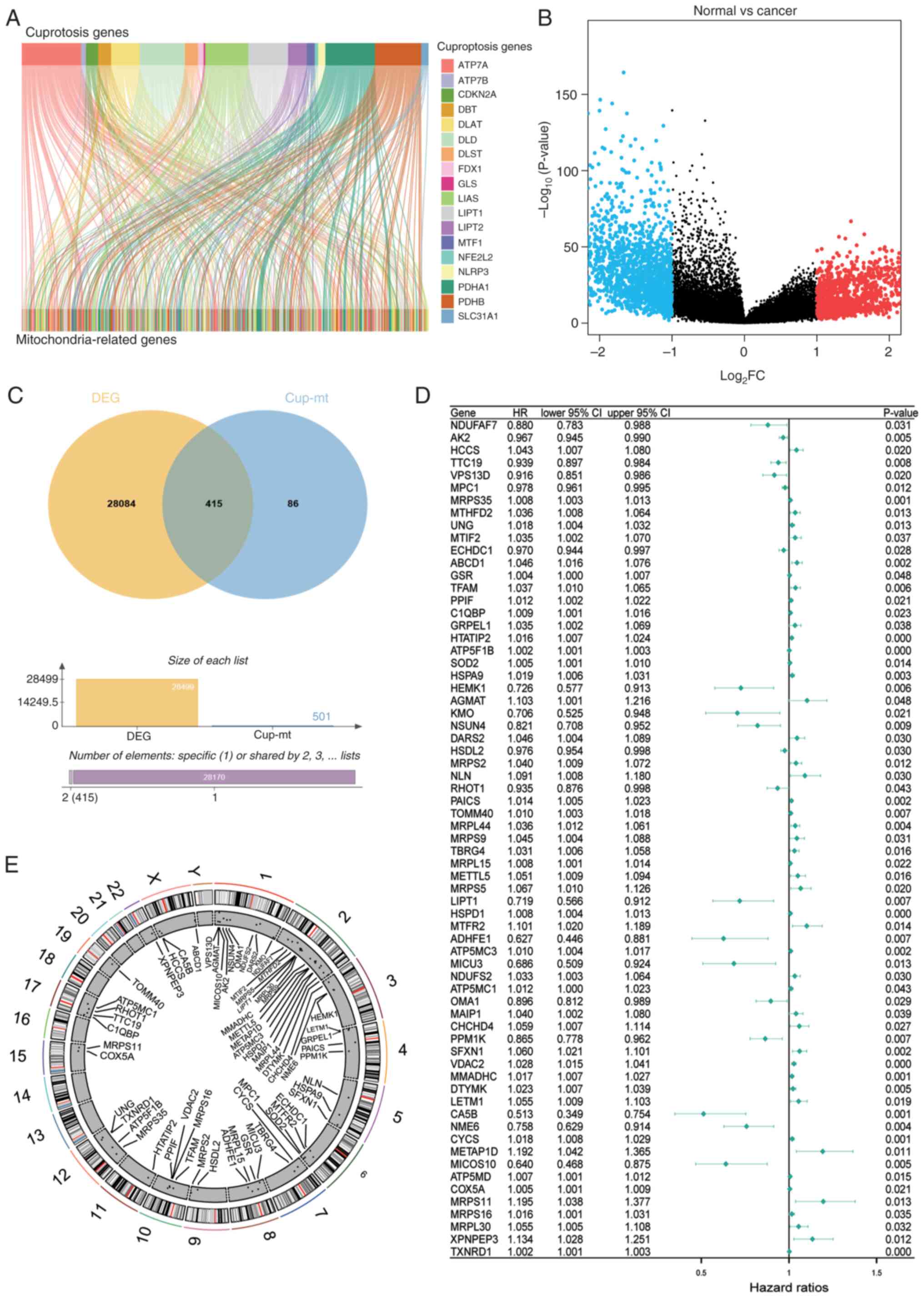
Figure 1

Identification of cuproptosis-related
mitochondrial genes in lung adenocarcinoma. (A) Sankey diagram
showing the positive correlation (>0.3) between 13
cuproptosis-related genes and mitochondrial-related genes based on
Pearson correlation analysis. (B) Volcano plot displaying all
differentially expressed genes. (C) Venn diagram showing the
intersection of 415 genes obtained from differentially expressed
genes and cuproptosis-related mitochondrial genes. (D) Forest plot
demonstrating the 67 cuproptosis-related mitochondrial genes
identified through univariate Cox regression analysis. (E)
Chromosomal localization of these 67 genes. FC, fold change; DEG,
differentially expressed gene; Cup-mt, cuproptosis-related
mitochondrial genes; HR, hazard ratio; CI, confidence interval.

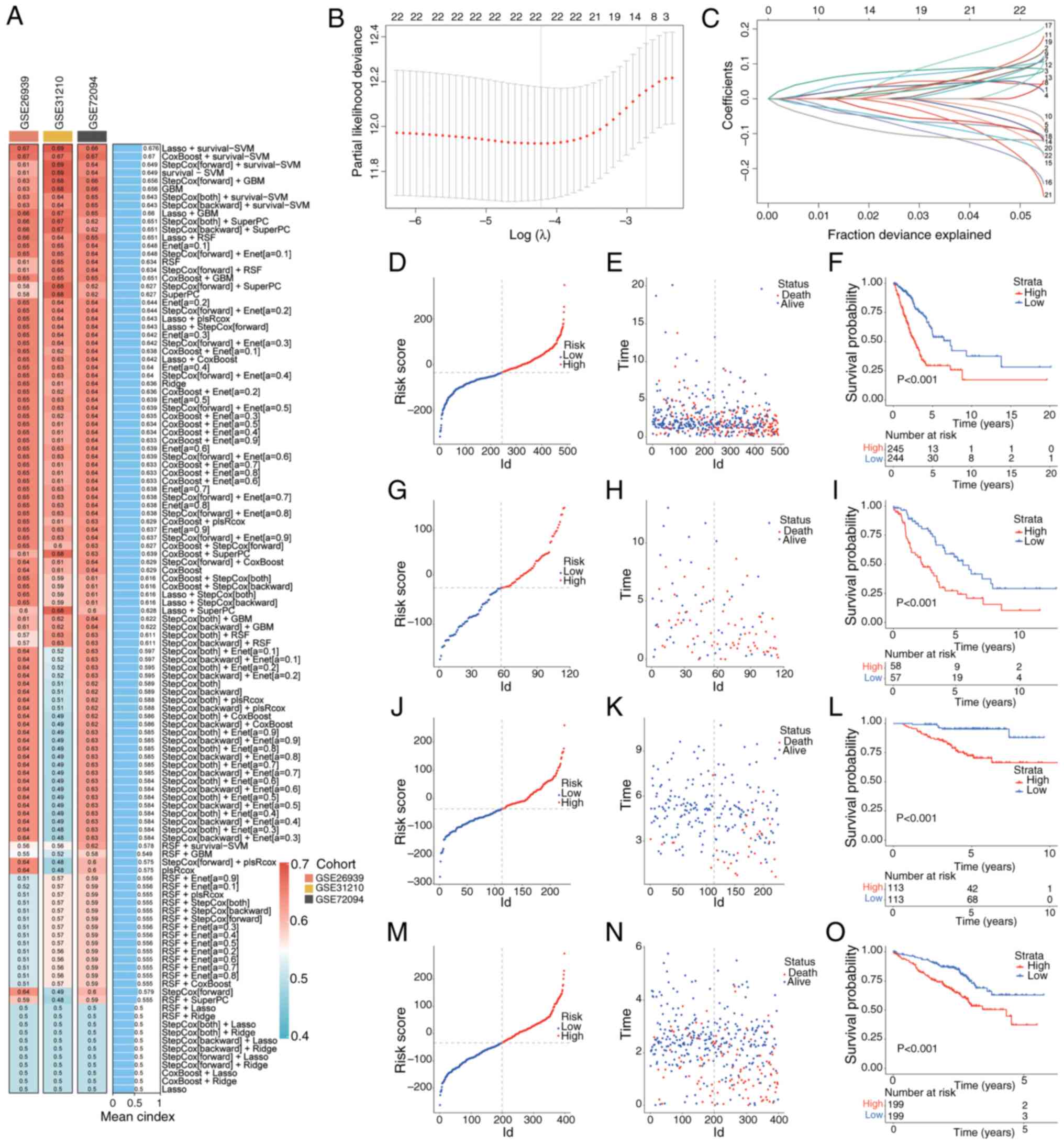
Figure 2

Machine learning-based prognostic
risk score model construction. (A) C-index for each machine
learning prediction model calculated for the training and test
sets, with >100 models included. (B) LASSO regression analysis
established a model containing cuproptosis-related mitochondrial
genes associated with prognosis. (C) Coefficients of the LASSO
analysis. (D) Distribution of risk scores, (E) survival status and
time distribution in high- and low-risk groups. (F) Kaplan-Meier
curves showing the OS of patients in high- and low-risk groups in
TCGA training set. (G) Distribution of risk scores, (H) survival
status and time distribution in high- and low-risk groups, and (I)
Kaplan-Meier curves showing the OS of patients in high- and
low-risk groups in the GSE26939 test set. (J) Distribution of risk
scores, (K) survival status and time distribution in high- and
low-risk groups, and (L) Kaplan-Meier curves showing the overall OS
of patients in high- and low-risk groups in the GSE31210 test set.
(M) Distribution of risk scores, (N) survival status and time
distribution in high- and low-risk groups, and (O) Kaplan-Meier
curves showing the overall OS of patients in high- and low-risk
groups in the GSE72094 test set. LASSO, least absolute shrinkage
and selection operator; TCGA, The Cancer Genome Atlas; OS, overall
survival.

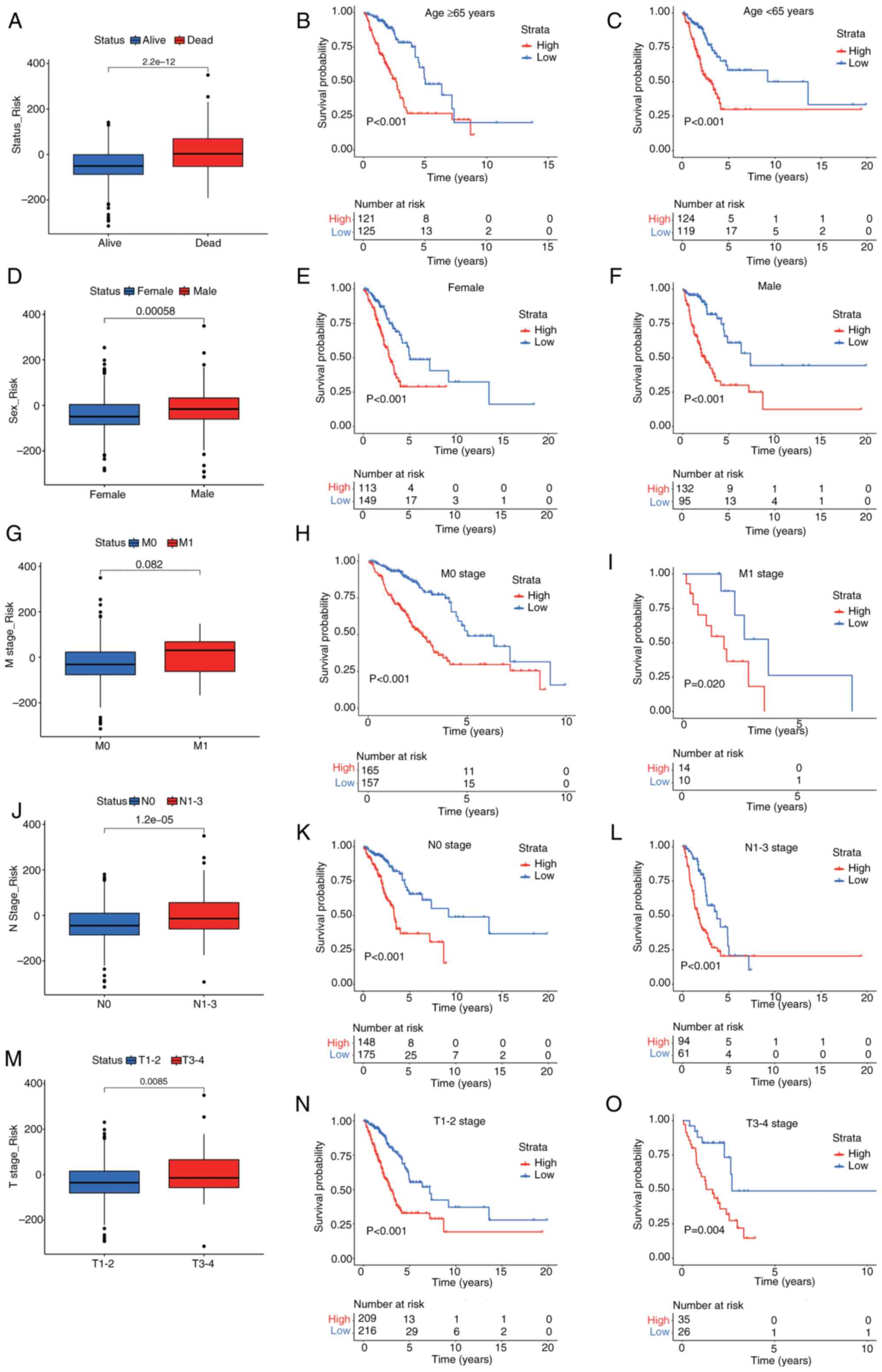
Figure 3

Risk scores and survival curves for
different subgroups. (A) Risk score boxplot by survival status.
Kaplan-Meier curves for high- and low-risk groups in patients aged
(B) ≥65 years and (C) <65 years. (D) Risk score boxplot by sex.
Kaplan-Meier curves for high- and low-risk groups in (E) female and
(F) male patients. (G) Risk score boxplot by clinical stages M0 and
M1. Kaplan-Meier curves for high- and low-risk groups of patients
with clinical stage (H) M0 and (I) M1. (J) Risk score boxplot by
clinical stages N0 and N1-3. Kaplan-Meier curves for high- and
low-risk groups in patients with clinical stage (K) N0 and (L)
N1-3. (M) Risk score boxplot by stage T1-2 and T3-4. Kaplan-Meier
curves for high- and low-risk groups of patients with clinical
stage (N) T1-2 and (O) T3-4. M, metastasis; N, node; T, tumor.

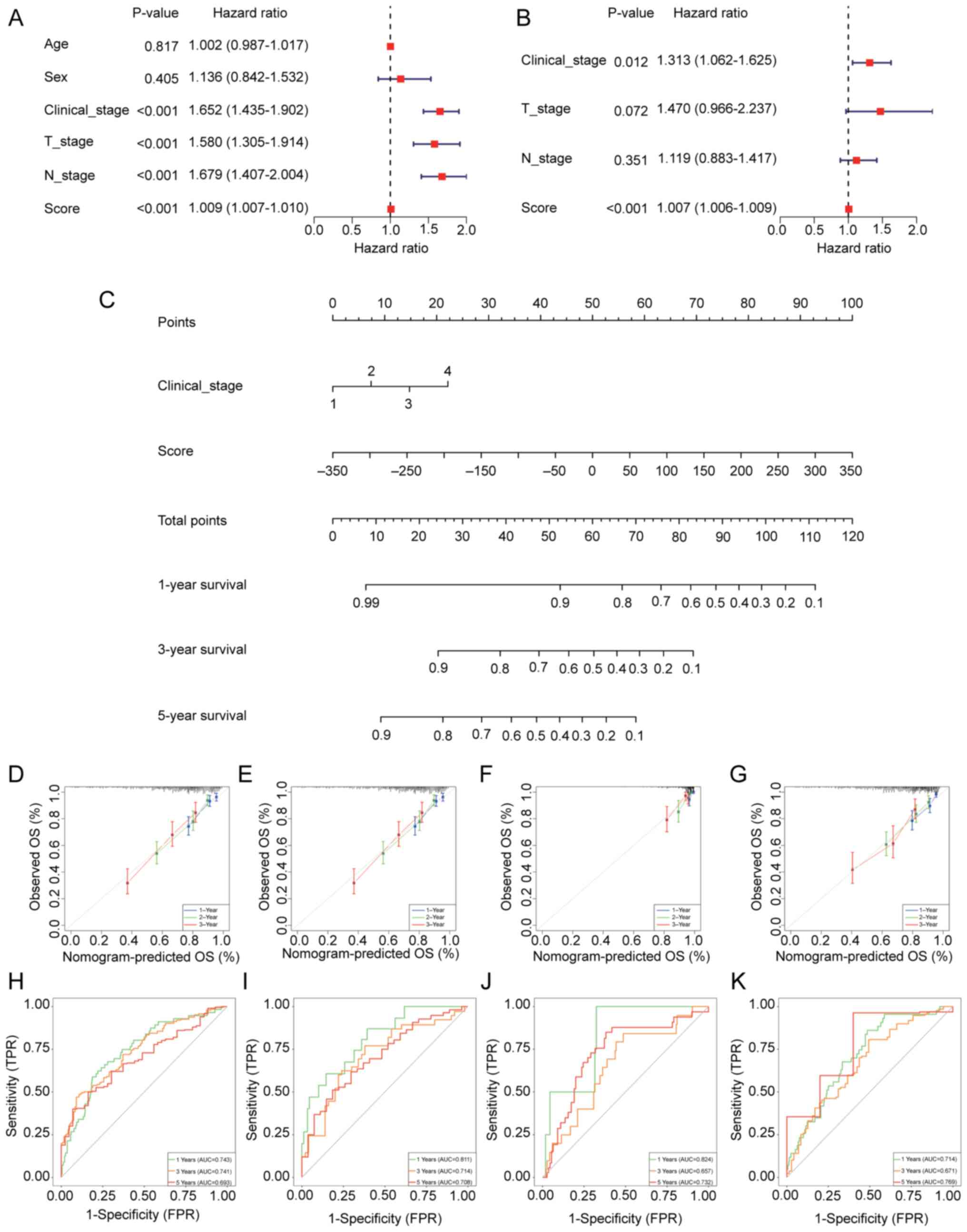
Figure 4

Nomogram construction to elucidate
lung adenocarcinoma prognosis. (A) Univariate and (B) multivariate
Cox regression analyses for clinical features and risk scores. (C)
Nomogram based on clinical features and risk scores. Calibration
curves showing the accuracy of predicted and actual values in (D)
TCGA training set, (E) the GSE26939 test set, (F) the GSE31210 test
set and (G) the GSE72094 test set. Receiver operating
characteristic curves evaluating the performance of the nomogram in
(H) TCGA training set, (I) the GSE26939 test sets, (J) the GSE31210
test set and (K) the GSE72094 test set. TCGA, The Cancer Genome
Atlas; T, tumor; N, node; OS, overall survival; FPR, false-positive
rate; TPR, true-positive rate; AUC, area under the curve.

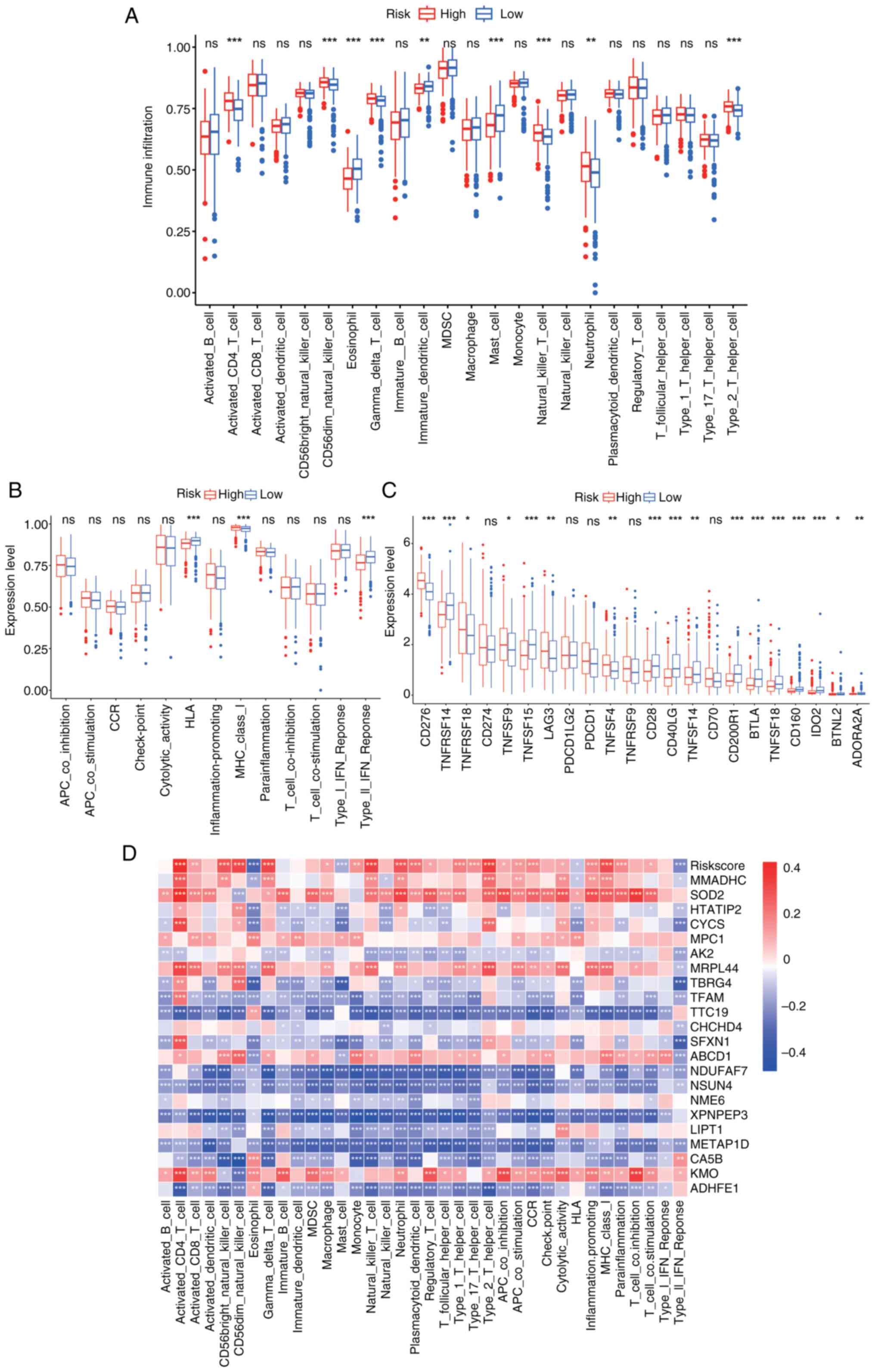
Figure 5

Immune cell infiltration in high- and
low-risk groups. (A) Expression of 23 immune cell subtypes between
high- and low-risk groups. (B) Distribution and expression of
immune-related pathways in high- and low-risk groups. (C)
Expression of checkpoint-related genes in high- and low-risk
groups. (D) Correlation heatmap of risk scores and model genes with
immune cells and pathways. *P<0.05; **P<0.01; ***P<0.001.
ns, not significant. TNFRSF, tumor necrosis factor receptor
superfamily; LAG3, Lymphocyte activation gene 3; PDCD1LG2,
Programmed cell death 1 ligand 2; CD200R1, CD200 receptor 1; BTLA,
B and T lymphocyte attenuator; IDO2, indoleamine 2,3-dioxygenase 2;
BTNL2, Butyrophilin like 2; ADORA2A, Adenosine a2a receptor.

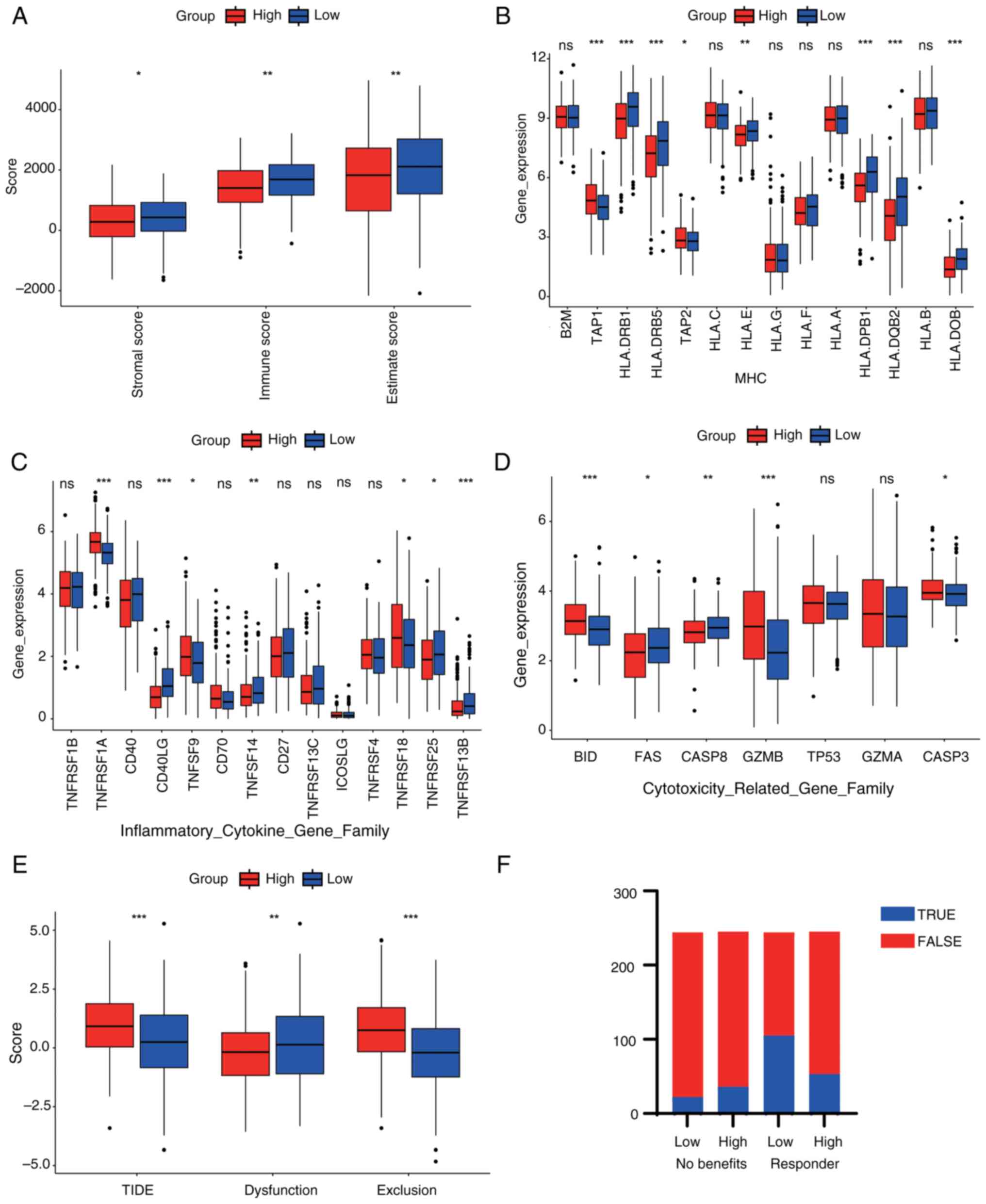
Figure 6

Immune scores and expression of
different immune gene families. (A) ESTIMATE scores. Boxplot of the
expression of (B) MHC gene families, (C) inflammatory cytokine gene
families and (D) cytotoxic molecule-related gene families between
high- and low-risk groups. (E) Difference in TIDE scores between
high- and low-risk groups. (F) Proportion of ‘No benefits’ and
‘Responder’ between high- and low-risk groups. *P<0.05;
**P<0.01; ***P<0.001. ns, not significant; MHC, major
histocompatibility complex; TIDE, Tumor Immune Dysfunction and
Exclusion.

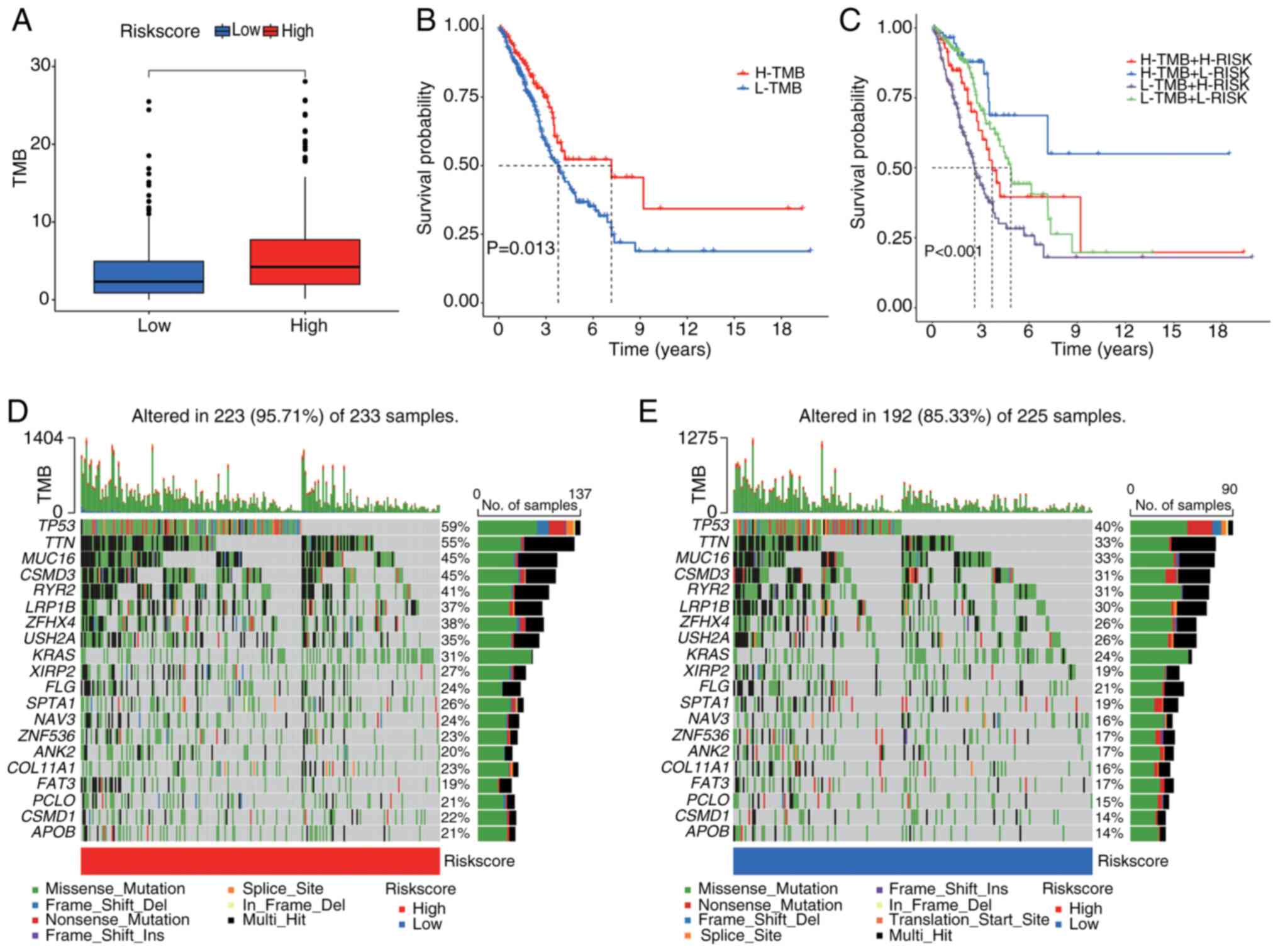
Figure 7

Relationship between TMB, risk scores
and gene mutations in different risk groups. (A) Comparison of TMB
between high- and low-risk groups. Kaplan-Meier survival curve for
overall survival stratified by (B) high and low TMB grouping, and
(C) TMB (high or low) and risk score (high or low). Mutation
spectrum of common gene mutations in the (D) high-risk group and
(E) low-risk group. TMB, tumor mutational burden; H-TMB, high TMB;
L-TMB, low TMB; H-RISK, high risk; L-RISK, low risk.

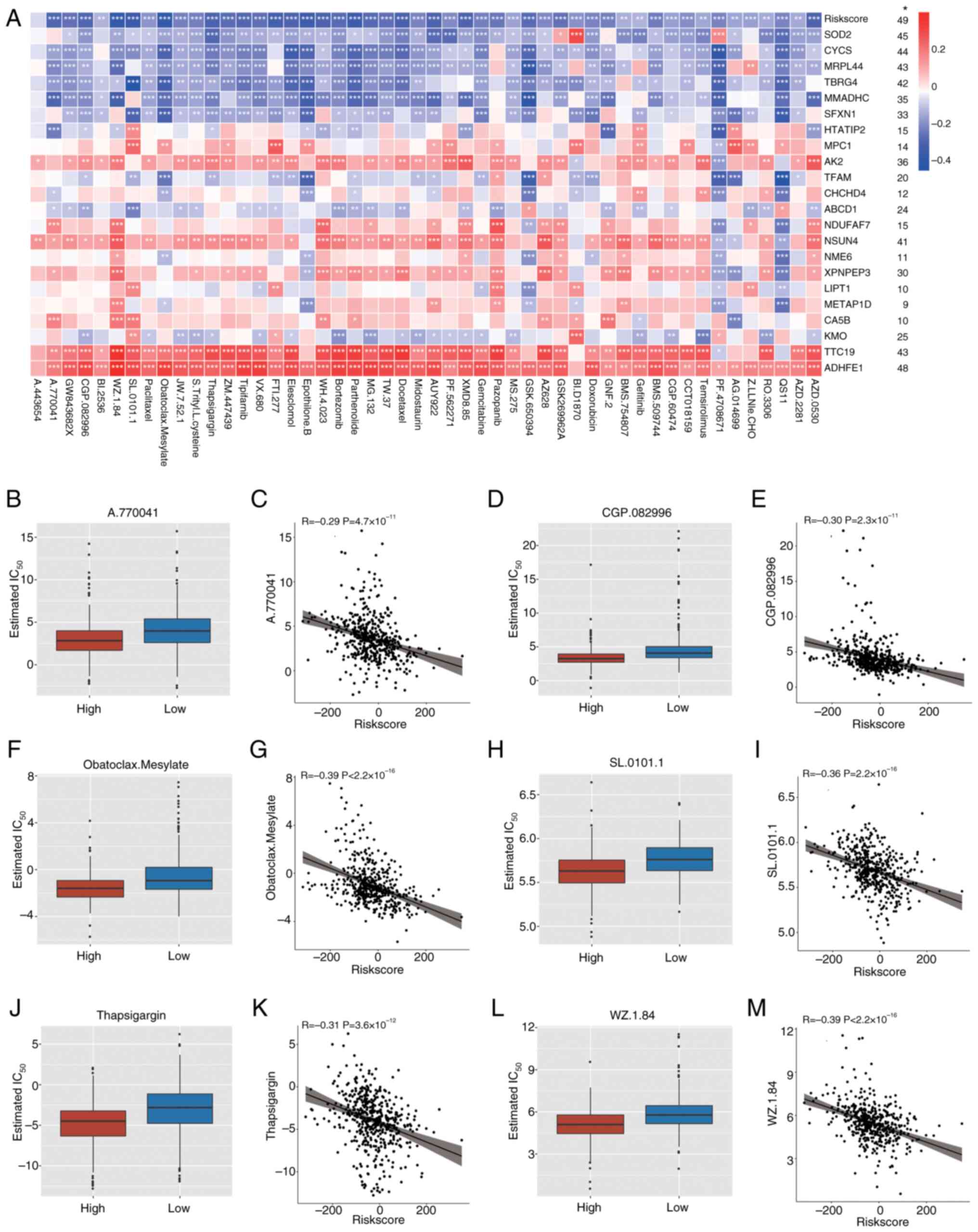
Figure 8

Correlation between prognostic model
and drug sensitivity prediction. (A) Correlation between risk
score, model genes and drugs. Blue indicates a negative
correlation, whilst orange denotes a positive correlation. (B)
Boxplot showing the difference in IC50 of A.770041
between high- and low-risk groups. (C) Scatter plot showing the
correlation between risk score and A.770041. (D) Boxplot showing
the difference in IC50 of CGP.082996 between high- and
low-risk groups. (E) Scatter plot showing the correlation between
risk score and CGP.082996. (F) Boxplot showing the difference in
IC50 of Obatoclax.Mesylate between high- and low-risk
groups. (G) Scatter plot showing the correlation between risk score
and Obatoclax.Mesylate. (H) Boxplot showing the difference in
IC50 of SL.0101.1 between high- and low-risk groups. (I)
Scatter plot showing the correlation between risk score and
SL.0101.1. (J) Boxplot showing the difference in IC50 of
Thapsigargin between high- and low-risk groups. (K) Scatter plot
showing the correlation between risk score and Thapsigargin. (L)
Boxplot showing the difference in IC50 of WZ.1.84
between high- and low-risk groups. (M) Scatter plot showing the
correlation between risk score and WZ.1.84. *P<0.05;
**P<0.01; ***P<0.001.

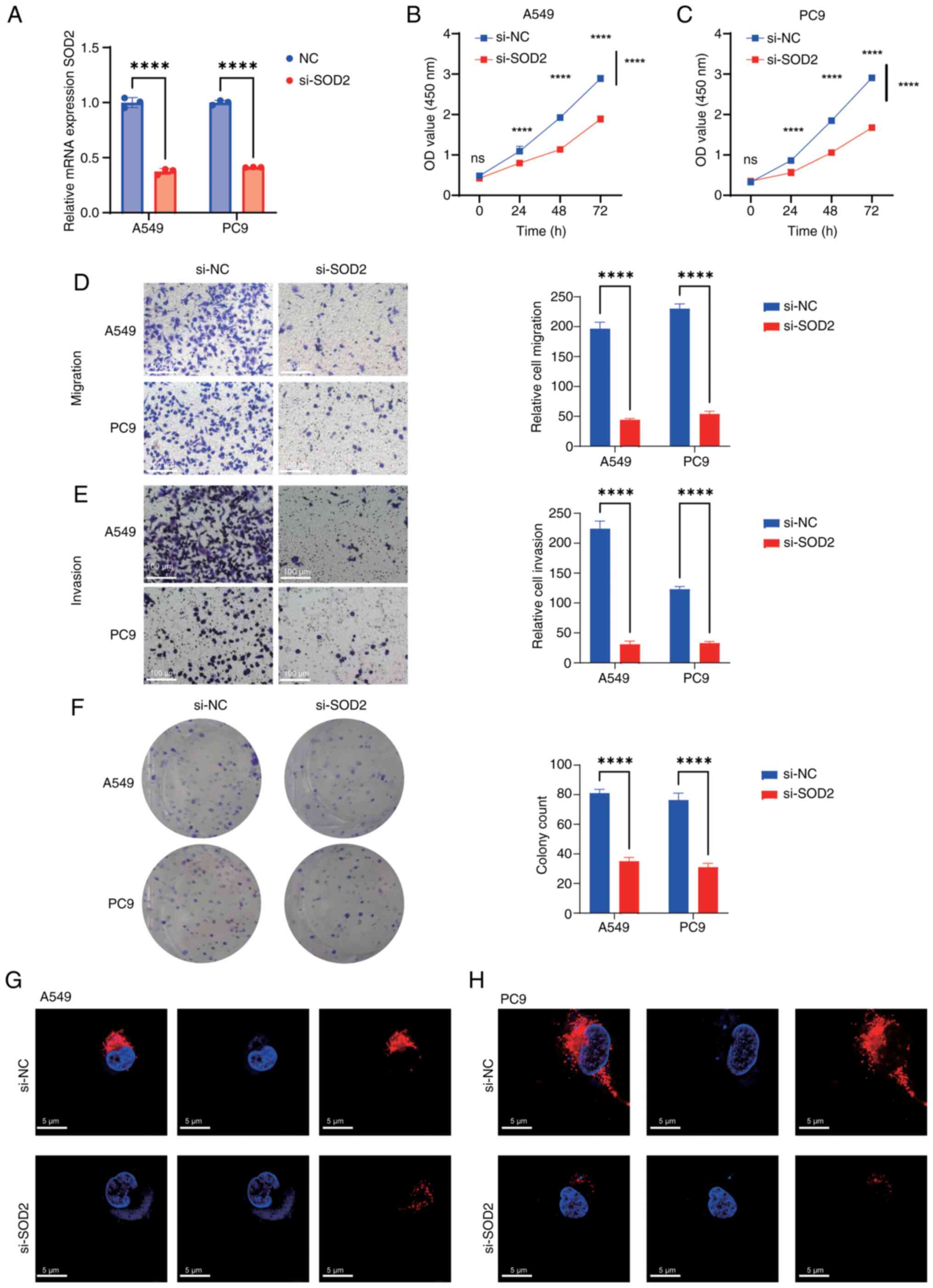
Figure 9

Expression levels and biological
functions of SOD2 in lung adenocarcinoma cell lines. (A) mRNA
levels of SOD2 in the NC and knockdown groups in A549 and PC9 cell
lines. Cell Counting Kit-8 analysis showing the effects of SOD2
knockdown on the (B) A549 and (C) PC9 cell lines. Comparison of (D)
migration, (E) invasion and (F) proliferation in A549 and PC9 cells
between NC and SOD2 knockdown groups. Comparison of mitochondrial
fluorescence between the si-NC and si-SOD2 groups in (G) A549 and
(H) PC9 cells. ****P<0.0001. SOD2, superoxide dismutase 2; NC,
negative control; si, small interfering; ns, not significant OD,
optical density.
View References

1 

Zhang Y, Vaccarella S, Morgan E, Li M, Etxeberria J, Chokunonga E, Manraj SS, Kamate B, Omonisi A and Bray F: Global variations in lung cancer incidence by histological subtype in 2020: A population-based study. Lancet Oncol. 24:1206–1218. 2023. View Article : Google Scholar : PubMed/NCBI

2 

Florez N, Kiel L, Riano I, Patel S, DeCarli K, Dhawan N, Franco I, Odai-Afotey A, Meza K, Swami N, et al: Lung cancer in women: The past, present, and future. Clin Lung Cancer. 25:1–8. 2024. View Article : Google Scholar : PubMed/NCBI

3 

Carter-Harris L: Lung cancer stigma as a barrier to medical help-seeking behavior: Practice implications. J Am Assoc Nurse Pract. 27:240–245. 2015. View Article : Google Scholar : PubMed/NCBI

4 

Liu HI, Chiang CJ, Su SY, Jhuang JR, Tsai DR, Yang YW, Lin LJ, Wang YC and Lee WC: Incidence trends and spatial distributions of lung adenocarcinoma and squamous cell carcinoma in Taiwan. Sci Rep. 13:16552023. View Article : Google Scholar : PubMed/NCBI

5 

Nakagawa K, Yoshida Y, Yotsukura M and Watanabe SI: Minimally invasive open surgery (MIOS) for clinical stage I lung cancer: Diversity in minimally invasive procedures. Jpn J Clin Oncol. 51:1649–1655. 2021. View Article : Google Scholar : PubMed/NCBI

6 

Duma N, Santana-Davila R and Molina JR: Non-small cell lung cancer: Epidemiology, screening, diagnosis, and treatment. Mayo Clin Proc. 94:1623–1640. 2019. View Article : Google Scholar : PubMed/NCBI

7 

Doval DC, Desai CJ and Sahoo TP: Molecularly targeted therapies in non-small cell lung cancer: The evolving role of tyrosine kinase inhibitors. Indian J Cancer. 56 (Suppl 1):S23–S30. 2019. View Article : Google Scholar : PubMed/NCBI

8 

Laerum D, Strand TE, Brustugun OT, Gallefoss F, Falk R, Durheim MT and Fjellbirkeland L: Evaluation of sex inequity in lung-cancer-specific survival. Acta Oncol. 63:343–350. 2024. View Article : Google Scholar : PubMed/NCBI

9 

Lyu G, Dai L, Deng X, Liu X, Guo Y, Zhang Y, Wang X, Huang Y, Wu S, Guo JC and Liu Y: Integrative analysis of cuproptosis-related mitochondrial depolarisation genes for prognostic prediction in non-small cell lung cancer. J Cell Mol Med. 29:e704382025. View Article : Google Scholar : PubMed/NCBI

10 

Tong X, Tang R, Xiao M, Xu J, Wang W, Zhang B, Liu J, Yu X and Shi S: Targeting cell death pathways for cancer therapy: Recent developments in necroptosis, pyroptosis, ferroptosis, and cuproptosis research. J Hematol Oncol. 15:1742022. View Article : Google Scholar : PubMed/NCBI

11 

Wang W, Lu K, Jiang X, Wei Q, Zhu L, Wang X, Jin H and Feng L: Ferroptosis inducers enhanced cuproptosis induced by copper ionophores in primary liver cancer. J Exp Clin Cancer Res. 42:1422023. View Article : Google Scholar : PubMed/NCBI

12 

Chen L, Min J and Wang F: Copper homeostasis and cuproptosis in health and disease. Signal Transduct Target Ther. 7:3782022. View Article : Google Scholar : PubMed/NCBI

13 

Faubert B, Li KY, Cai L, Hensley CT, Kim J, Zacharias LG, Yang C, Do QN, Doucette S, Burguete D, et al: Lactate metabolism in human lung tumors. Cell. 171:358–371. 2017. View Article : Google Scholar : PubMed/NCBI

14 

He Y, Ji Z, Gong Y, Fan L, Xu P, Chen X, Miao J, Zhang K, Zhang W, Ma P, et al: Numb/Parkin-directed mitochondrial fitness governs cancer cell fate via metabolic regulation of histone lactylation. Cell Rep. 42:1120332023. View Article : Google Scholar : PubMed/NCBI

15 

Elnaggar GN, El-Hifnawi NM, Ismail A, Yahia M and Elshimy RAA: Micro RNA-148a targets Bcl-2 in patients with non-small cell lung cancer. Asian Pac J Cancer Prev. 22:1949–1955. 2021. View Article : Google Scholar : PubMed/NCBI

16 

Ran XM, Xiao H, Tang YX, Jin X, Tang X, Zhang J, Li H, Li YK and Tang ZZ: The effect of cuproptosis-relevant genes on the immune infiltration and metabolism of gynecological oncology by multiply analysis and experiments validation. Sci Rep. 13:194742023. View Article : Google Scholar : PubMed/NCBI

17 

Huang H, Shi Z, Li Y, Zhu G, Chen C, Zhang Z, Shi R, Su L, Cao P, Pan Z, et al: Pyroptosis-related LncRNA signatures correlate with lung adenocarcinoma prognosis. Front Oncol. 12:8509432022. View Article : Google Scholar : PubMed/NCBI

18 

Wilkerson MD, Yin X, Walter V, Zhao N, Cabanski CR, Hayward MC, Miller CR, Socinski MA, Parsons AM, Thorne LB, et al: Differential pathogenesis of lung adenocarcinoma subtypes involving sequence mutations, copy number, chromosomal instability, and methylation. PLoS One. 7:e365302012. View Article : Google Scholar : PubMed/NCBI

19 

Okayama H, Kohno T, Ishii Y, Shimada Y, Shiraishi K, Iwakawa R, Furuta K, Tsuta K, Shibata T, Yamamoto S, et al: Identification of genes upregulated in ALK-positive and EGFR/KRAS/ALK-negative lung adenocarcinomas. Cancer Res. 72:100–111. 2012. View Article : Google Scholar : PubMed/NCBI

20 

Schabath MB, Welsh EA, Fulp WJ, Chen L, Teer JK, Thompson ZJ, Engel BE, Xie M, Berglund AE, Creelan BC, et al: Differential association of STK11 and TP53 with KRAS mutation-associated gene expression, proliferation and immune surveillance in lung adenocarcinoma. Oncogene. 35:3209–3216. 2016. View Article : Google Scholar : PubMed/NCBI

21 

Zhao W, Huang H, Zhao Z, Ding C, Jia C, Wang Y, Wang G, Li Y, Liu H and Chen J: Identification of hypoxia and mitochondrial-related gene signature and prediction of prognostic model in lung adenocarcinoma. J Cancer. 15:4513–4526. 2024. View Article : Google Scholar : PubMed/NCBI

22 

Zhang Z, Zhang P, Xie J, Cui Y, Shuo W and Yue D: Five-gene prognostic model based on autophagy-dependent cell death for predicting prognosis in lung adenocarcinoma. Sci Rep. 14:264492024. View Article : Google Scholar : PubMed/NCBI

23 

Huang J, Zhang J, Zhang F, Lu S, Guo S, Shi R, Zhai Y, Gao Y, Tao X, Jin Z, et al: Identification of a disulfidptosis-related genes signature for prognostic implication in lung adenocarcinoma. Comput Biol Med. 165:1074022023. View Article : Google Scholar : PubMed/NCBI

24 

Ritchie ME: limma: Linear models for microarray and RNA-Seq data. The R Foundation for Statistical Computing. 2024.

25 

He Y, Jiang Z, Chen C and Wang X: Classification of triple-negative breast cancers based on Immunogenomic profiling. J Exp Clin Cancer Res. 37:3272018. View Article : Google Scholar : PubMed/NCBI

26 

Jiang G, Song C, Wang X, Xu Y, Li H, He Z, Cai Y, Zheng M and Mao W: The multi-omics analysis identifies a novel cuproptosis-anoikis-related gene signature in prognosis and immune infiltration characterization of lung adenocarcinoma. Heliyon. 9:e140912023. View Article : Google Scholar : PubMed/NCBI

27 

Wang B, Yin Y, Wang A, Liu W, Chen J and Li T: SMR-guided molecular subtyping and machine learning model reveals novel prognostic biomarkers and therapeutic targets in non-small cell lung adenocarcinoma. Sci Rep. 15:16402025. View Article : Google Scholar : PubMed/NCBI

28 

Ma Y, Li J, Xiong C, Sun X and Shen T: Development of a prognostic model for NSCLC based on differential genes in tumour stem cells. Sci Rep. 14:209382024. View Article : Google Scholar : PubMed/NCBI

29 

Wang Z, Zhang J, Zhang H, Dai Z, Liang X, Li S, Peng R, Zhang X, Liu F, Liu Z, et al: CMTM family genes affect prognosis and modulate immunocytes infiltration in grade II/III glioma patients by influencing the tumor immune landscape and activating associated immunosuppressing pathways. Front Cell Dev Biol. 10:7408222022. View Article : Google Scholar : PubMed/NCBI

30 

Chen Z and Zhang Y: Development of an immune-related gene signature applying ridge method for improving immunotherapy responses and clinical outcomes in lung adenocarcinoma. PeerJ. 13:e191212025. View Article : Google Scholar : PubMed/NCBI

31 

Ghisai SA, Barin N, van Hijfte L, Verhagen K, de Wit M, van den Bent MJ, Hoogstrate Y and French PJ: Transcriptomic analysis of EGFR co-expression and activation in glioblastoma reveals associations with its ligands. Neurooncol Adv. 7:vdae2292025.PubMed/NCBI

32 

Han AX, Long BY, Li CY, Huang DD, Xiong EQ, Li FJ, Wu GL, Liu Q, Yang GB and Hu HY: Machine learning framework develops neutrophil extracellular traps model for clinical outcome and immunotherapy response in lung adenocarcinoma. Apoptosis. 29:1090–1108. 2024. View Article : Google Scholar : PubMed/NCBI

33 

Chen T, Yang Y, Huang Z, Pan F, Xiao Z, Gong K, Huang W, Xu L, Liu X and Fang C: Prognostic risk modeling of endometrial cancer using programmed cell death-related genes: A comprehensive machine learning approach. Discov Oncol. 16:2802025. View Article : Google Scholar : PubMed/NCBI

34 

Feng Q, Lu H and Wu L: Identification of M2-like macrophage-related signature for predicting the prognosis, ecosystem and immunotherapy response in hepatocellular carcinoma. PLoS One. 18:e02916452023. View Article : Google Scholar : PubMed/NCBI

35 

Xu L, Wu J, Tian J, Zhang B, Zhao Y, Zhao Z, Luo Y and Li Y: Machine Learning unveils sphingolipid Metabolism's role in tumour microenvironment and immunotherapy in lung cancer. J Cell Mol Med. 29:e704352025. View Article : Google Scholar : PubMed/NCBI

36 

Meng WJ, Guo JM, Huang L, Zhang YY, Zhu YT, Tang LS, Wang JL, Li HS and Liu JY: Anoikis-related long non-coding RNA signatures to predict prognosis and immune infiltration of gastric cancer. Bioengineering (Basel). 11:8932024. View Article : Google Scholar : PubMed/NCBI

37 

Therneau TM: Survival: Survival analysis. The R Foundation for Statistical Computing. 2024.

38 

Kassambara A: Survminer: Drawing survival curves using ‘ggplot2’. The R Foundation for Statistical Computing. 2024.

39 

Wickham H: ggplot2: Create elegant data visualisations using the grammar of graphics. The R Foundation for Statistical Computing. 2025.

40 

Harrell FE Jr: rms: Regression modeling strategies. The R Foundation for Statistical Computing. 2024.

41 

Jiang P, Gu S, Pan D, Fu J, Sahu A, Hu X, Li Z, Traugh N, Bu X, Li B, et al: Signatures of T cell dysfunction and exclusion predict cancer immunotherapy response. Nat Med. 24:1550–1558. 2018. View Article : Google Scholar : PubMed/NCBI

42 

Yoshihara K, Shahmoradgoli M, Martinez E, Vegesna R, Kim H, Torres-Garcia W, Treviño V, Shen H, Laird PW, Levine DA, et al: Inferring tumour purity and stromal and immune cell admixture from expression data. Nat Commun. 4:26122013. View Article : Google Scholar : PubMed/NCBI

43 

Newman AM, Liu CL, Green MR, Gentles AJ, Feng W, Xu Y, Hoang CD, Diehn M and Alizadeh AA: Robust enumeration of cell subsets from tissue expression profiles. Nat Methods. 12:453–457. 2015. View Article : Google Scholar : PubMed/NCBI

44 

Aran D, Hu Z and Butte AJ: xCell: Digitally portraying the tissue cellular heterogeneity landscape. Genome Biol. 18:2202017. View Article : Google Scholar : PubMed/NCBI

45 

Mayakonda A: maftools: Summarize, analyze and visualize MAF files. The R Foundation for Statistical Computing. 2025.

46 

Maeser D: oncoPredict: Drug response modeling and biomarker discovery. The R Foundation for Statistical Computing. 2024.

47 

Kassambara A: ggpubr: ‘ggplot2’-Based Publication Ready Plots. The R Foundation for Statistical Computing. 2025.

48 

Kolde R: pheatmap: Pretty Heatmaps. The R Foundation for Statistical Computing. 2025.

49 

Revelle W: Psych: Procedures for psychological, psychometric, and personality research. The R Foundation for Statistical Computing. 2025.

50 

Livak KJ and Schmittgen TD: Analysis of relative gene expression data using real-time quantitative PCR and the 2(−Delta Delta C(T)) method. Methods. 25:402–408. 2001. View Article : Google Scholar : PubMed/NCBI

51 

Pan J, Liu F, Xiao X, Xu R, Dai L, Zhu M, Xu H, Xu Y, Zhao A, Zhou W, et al: METTL3 promotes colorectal carcinoma progression by regulating the m6A-CRB3-Hippo axis. J Exp Clin Cancer Res. 41:192022. View Article : Google Scholar : PubMed/NCBI

52 

Li J, Xie H, Ying Y, Chen H, Yan H, He L, Xu M, Xu X, Liang Z, Liu B, et al: YTHDF2 mediates the mRNA degradation of the tumor suppressors to induce AKT phosphorylation in N6-methyladenosine-dependent way in prostate cancer. Mol Cancer. 19:1522020. View Article : Google Scholar : PubMed/NCBI

53 

Wen H, Qu C, Wang Z, Gao H, Liu W, Wang H, Sun H, Gu J, Yang Z and Wang X: Cuproptosis enhances docetaxel chemosensitivity by inhibiting autophagy via the DLAT/mTOR pathway in prostate cancer. FASEB J. 37:e231452023. View Article : Google Scholar : PubMed/NCBI

54 

Zhu S, Wu H, Cui H, Guo H, Ouyang Y, Ren Z, Deng Y, Geng Y, Ouyang P, Wu A, et al: Induction of mitophagy via ROS-dependent pathway protects copper-induced hypothalamic nerve cell injury. Food Chem Toxicol. 181:1140972023. View Article : Google Scholar : PubMed/NCBI

55 

Vander Heiden MG, Cantley LC and Thompson CB: Understanding the Warburg effect: The metabolic requirements of cell proliferation. Science. 324:1029–1033. 2009. View Article : Google Scholar : PubMed/NCBI

56 

Tsvetkov P, Detappe A, Cai K, Keys HR, Brune Z, Ying W, Thiru P, Reidy M, Kugener G, Rossen J, et al: Mitochondrial metabolism promotes adaptation to proteotoxic stress. Nat Chem Biol. 15:681–689. 2019. View Article : Google Scholar : PubMed/NCBI

57 

Su Y, Zhang X, Li S, Xie W and Guo J: Emerging roles of the copper-CTR1 axis in tumorigenesis. Mol Cancer Res. 20:1339–1353. 2022. View Article : Google Scholar : PubMed/NCBI

58 

Wu Z, Zhang W and Kang YJ: Copper affects the binding of HIF-1α to the critical motifs of its target genes. Metallomics. 11:429–438. 2019. View Article : Google Scholar : PubMed/NCBI

59 

Zheng P, Zhou C, Lu L, Liu B and Ding Y: Elesclomol: A copper ionophore targeting mitochondrial metabolism for cancer therapy. J Exp Clin Cancer Res. 41:2712022. View Article : Google Scholar : PubMed/NCBI

60 

Li Q, Wang T, Zhou Y and Shi J: Cuproptosis in lung cancer: Mechanisms and therapeutic potential. Mol Cell Biochem. 479:1487–1499. 2024. View Article : Google Scholar : PubMed/NCBI

61 

Li H, Fu Y, Xu Y, Miao H, Wang H, Zhang T, Mei X, He Y, Zhang A and Ge X: Cuproptosis associated cytoskeletal destruction contributes to podocyte injury in chronic kidney disease. Am J Physiol Cell Physiol. 327:C254–C269. 2024. View Article : Google Scholar : PubMed/NCBI

62 

Zhao W, Ding C, Zhao M, Li Y, Huang H, Li X, Cheng Q, Shi Z, Gao W, Liu H and Chen J: Identification and validation of a hypoxia and glycolysis prognostic signatures in lung adenocarcinoma. J Cancer. 15:1568–1582. 2024. View Article : Google Scholar : PubMed/NCBI

63 

Liu Y, Lin W, Yang Y, Shao J, Zhao H, Wang G and Shen A: Role of cuproptosis-related gene in lung adenocarcinoma. Front Oncol. 12:10809852022. View Article : Google Scholar : PubMed/NCBI

64 

Yang J, Liu K, Yang L, Ji J, Qin J, Deng H and Wang Z: Identification and validation of a novel cuproptosis-related stemness signature to predict prognosis and immune landscape in lung adenocarcinoma by integrating single-cell and bulk RNA-sequencing. Front Immunol. 14:11747622023. View Article : Google Scholar : PubMed/NCBI

65 

You J, Yu Q, Chen R, Li J, Zhao T and Lu Z: A prognostic model for lung adenocarcinoma based on cuproptosis and disulfidptosis related genes revealing the key prognostic role of FURIN. Sci Rep. 15:60572025. View Article : Google Scholar : PubMed/NCBI

66 

Liang P, Chen J, Yao L, Hao Z and Chang Q: A deep learning approach for prognostic evaluation of lung adenocarcinoma based on cuproptosis-related genes. Biomedicines. 11:14792023. View Article : Google Scholar : PubMed/NCBI

67 

Zhang W, Qu H, Ma X, Li L, Wei Y, Wang Y, Zeng R, Nie Y, Zhang C, Yin K, et al: Identification of cuproptosis and immune-related gene prognostic signature in lung adenocarcinoma. Front Immunol. 14:11797422023. View Article : Google Scholar : PubMed/NCBI

68 

Wang C, Zhang S, Liu J, Tian Y, Ma B, Xu S, Fu Y and Luo Y: Secreted pyruvate kinase M2 promotes lung cancer metastasis through activating the integrin Beta1/FAK signaling pathway. Cell Rep. 30:1780–1797. 2020. View Article : Google Scholar : PubMed/NCBI

69 

Yin L, Shi J, Zhang J, Lin X, Jiang W, Zhu Y, Song Y, Lu Y and Ma Y: PKM2 is a potential prognostic biomarker and related to immune infiltration in lung cancer. Sci Rep. 13:222432023. View Article : Google Scholar : PubMed/NCBI

70 

Liu Y, Liang X, Zhang H, Dong J, Zhang Y, Wang J, Li C, Xin X and Li Y: ER stress-related genes EIF2AK3, HSPA5, and DDIT3 polymorphisms are associated with risk of lung cancer. Front Genet. 13:9387872022. View Article : Google Scholar : PubMed/NCBI

71 

Cheuk IW, Siu MT, Ho JC, Chen J, Shin VY and Kwong A: ITGAV targeting as a therapeutic approach for treatment of metastatic breast cancer. Am J Cancer Res. 10:211–223. 2020.PubMed/NCBI

72 

Wu D, Jin J, Qiu Z, Liu D and Luo H: Functional analysis of O-GlcNAcylation in cancer metastasis. Front Oncol. 10:5852882020. View Article : Google Scholar : PubMed/NCBI

73 

Crawford A, Fassett RG, Geraghty DP, Kunde DA, Ball MJ, Robertson IK and Coombes JS: Relationships between single nucleotide polymorphisms of antioxidant enzymes and disease. Gene. 501:89–103. 2012. View Article : Google Scholar : PubMed/NCBI

74 

Isomoto K, Haratani K, Hayashi H, Shimizu S, Tomida S, Niwa T, Yokoyama T, Fukuda Y, Chiba Y, Kato R, et al: Impact of EGFR-TKI treatment on the tumor immune microenvironment in EGFR mutation-positive non-small cell lung cancer. Clin Cancer Res. 26:2037–2046. 2020. View Article : Google Scholar : PubMed/NCBI

75 

Chen S, Ren Y and Duan P: Biomimetic nanoparticle loading obatoclax mesylate for the treatment of non-small-cell lung cancer (NSCLC) through suppressing bcl-2 signaling. Biomed Pharmacother. 129:1103712020. View Article : Google Scholar : PubMed/NCBI

76 

Bhat V, Narayanan DL and Shukla A: Report of rapid diagnosis and precise management of MMADHC-related intracellular cobalamin defect. BMJ Case Rep. 14:e2397552021. View Article : Google Scholar : PubMed/NCBI

77 

Wu D and Casey PJ: GPCR-Gα13 involvement in mitochondrial function, oxidative stress, and prostate cancer. Int J Mol Sci. 25:71622024. View Article : Google Scholar : PubMed/NCBI

78 

Mukherjee S, Forde R, Belton A and Duttaroy A: SOD2, the principal scavenger of mitochondrial superoxide, is dispensable for embryogenesis and imaginal tissue development but essential for adult survival. Fly (Austin). 5:39–46. 2011. View Article : Google Scholar : PubMed/NCBI

79 

Hernandez-Saavedra D and McCord JM: Association of a new intronic polymorphism of the SOD2 gene (G1677T) with cancer. Cell Biochem Funct. 27:223–227. 2009. View Article : Google Scholar : PubMed/NCBI

80 

Zhao C, Zhang Z, Wang Z and Liu X: Circular RNA circRANGAP1/miR-512-5p/SOD2 axis regulates cell proliferation and migration in non-small cell lung cancer (NSCLC). Mol Biotechnol. 66:3608–3617. 2024. View Article : Google Scholar : PubMed/NCBI

81 

Li P, Sun Q, Bai S, Wang H and Zhao L: Combination of the cuproptosis inducer disulfiram and anti-PD-L1 abolishes NSCLC resistance by ATP7B to regulate the HIF-1 signaling pathway. Int J Mol Med. 53:192024. View Article : Google Scholar : PubMed/NCBI

82 

Wang X, Liu Z and Lin C: Metal ions-induced programmed cell death: How does oxidative stress regulate cell death? Life Sci. 374:1236882025. View Article : Google Scholar : PubMed/NCBI

83 

Guo Z, Chen D, Yao L, Sun Y, Li D, Le J, Dian Y, Zeng F, Chen X and Deng G: The molecular mechanism and therapeutic landscape of copper and cuproptosis in cancer. Signal Transduct Target Ther. 10:1492025. View Article : Google Scholar : PubMed/NCBI

84 

Ning X, Chen X, Li R, Li Y, Lin Z and Yin Y: Identification of a novel cuproptosis inducer that induces ER stress and oxidative stress to trigger immunogenic cell death in tumors. Free Radic Biol Med. 229:276–288. 2025. View Article : Google Scholar : PubMed/NCBI

85 

Sun W, Lu H, Zhang P, Zeng L, Ye B, Xu Y, Chen J, Xue P, Yu J, Chen K, et al: Localized propranolol delivery from a copper-loaded hydrogel for enhancing infected burn wound healing via adrenergic β-receptor blockade. Mater Today Bio. 30:1014172025. View Article : Google Scholar : PubMed/NCBI

86 

Ge EJ, Bush AI, Casini A, Cobine PA, Cross JR, DeNicola GM, Dou QP, Franz KJ, Gohil VM, Gupta S, et al: Connecting copper and cancer: From transition metal signalling to metalloplasia. Nat Rev Cancer. 22:102–113. 2022. View Article : Google Scholar : PubMed/NCBI

87 

Oliveri V: Selective targeting of cancer cells by copper ionophores: An overview. Front Mol Biosci. 9:8418142022. View Article : Google Scholar : PubMed/NCBI

88 

Tsvetkov P, Coy S, Petrova B, Dreishpoon M, Verma A, Abdusamad M, Rossen J, Joesch-Cohen L, Humeidi R, Spangler RD, et al: Copper induces cell death by targeting lipoylated TCA cycle proteins. Science. 375:1254–1261. 2022. View Article : Google Scholar : PubMed/NCBI

89 

Bagherpoor AJ, Shameem M, Luo X, Seelig D and Kassie F: Inhibition of lung adenocarcinoma by combinations of sulfasalazine (SAS) and disulfiram-copper (DSF-Cu) in cell line models and mice. Carcinogenesis. 44:291–303. 2023. View Article : Google Scholar : PubMed/NCBI

90 

Liu X, Wang L, Cui W, Yuan X, Lin L, Cao Q, Wang N, Li Y, Guo W, Zhang X, et al: Targeting ALDH1A1 by disulfiram/copper complex inhibits non-small cell lung cancer recurrence driven by ALDH-positive cancer stem cells. Oncotarget. 7:58516–58530. 2016. View Article : Google Scholar : PubMed/NCBI

91 

Liu D, Cao J, Ding X, Xu W, Yao X, Dai M, Tai Q, Shi M, Fei K, Xu Y and Su B: Disulfiram/copper complex improves the effectiveness of the WEE1 inhibitor Adavosertib in p53 deficient non-small cell lung cancer via ferroptosis. Biochim Biophys Acta Mol Basis Dis. 1870:1674552024. View Article : Google Scholar : PubMed/NCBI

Related Articles

  • Abstract
  • View
  • Download
  • Twitter
Copy and paste a formatted citation
Spandidos Publications style
Liu Y, Zhao W, Zhao Z, Duan Z, Huang H, Ding C, Liu M, Zhang H, Li Y, Wang M, Wang M, et al: Machine learning‑based model identifies a novel cuproptosis‑related mitochondrial gene signature with a key role in the prognosis and treatment of lung adenocarcinoma. Oncol Lett 30: 494, 2025.
APA
Liu, Y., Zhao, W., Zhao, Z., Duan, Z., Huang, H., Ding, C. ... Zhao, H. (2025). Machine learning‑based model identifies a novel cuproptosis‑related mitochondrial gene signature with a key role in the prognosis and treatment of lung adenocarcinoma. Oncology Letters, 30, 494. https://doi.org/10.3892/ol.2025.15240
MLA
Liu, Y., Zhao, W., Zhao, Z., Duan, Z., Huang, H., Ding, C., Liu, M., Zhang, H., Li, Y., Wang, M., Chen, J., Zhao, H."Machine learning‑based model identifies a novel cuproptosis‑related mitochondrial gene signature with a key role in the prognosis and treatment of lung adenocarcinoma". Oncology Letters 30.5 (2025): 494.
Chicago
Liu, Y., Zhao, W., Zhao, Z., Duan, Z., Huang, H., Ding, C., Liu, M., Zhang, H., Li, Y., Wang, M., Chen, J., Zhao, H."Machine learning‑based model identifies a novel cuproptosis‑related mitochondrial gene signature with a key role in the prognosis and treatment of lung adenocarcinoma". Oncology Letters 30, no. 5 (2025): 494. https://doi.org/10.3892/ol.2025.15240
Copy and paste a formatted citation
x
Spandidos Publications style
Liu Y, Zhao W, Zhao Z, Duan Z, Huang H, Ding C, Liu M, Zhang H, Li Y, Wang M, Wang M, et al: Machine learning‑based model identifies a novel cuproptosis‑related mitochondrial gene signature with a key role in the prognosis and treatment of lung adenocarcinoma. Oncol Lett 30: 494, 2025.
APA
Liu, Y., Zhao, W., Zhao, Z., Duan, Z., Huang, H., Ding, C. ... Zhao, H. (2025). Machine learning‑based model identifies a novel cuproptosis‑related mitochondrial gene signature with a key role in the prognosis and treatment of lung adenocarcinoma. Oncology Letters, 30, 494. https://doi.org/10.3892/ol.2025.15240
MLA
Liu, Y., Zhao, W., Zhao, Z., Duan, Z., Huang, H., Ding, C., Liu, M., Zhang, H., Li, Y., Wang, M., Chen, J., Zhao, H."Machine learning‑based model identifies a novel cuproptosis‑related mitochondrial gene signature with a key role in the prognosis and treatment of lung adenocarcinoma". Oncology Letters 30.5 (2025): 494.
Chicago
Liu, Y., Zhao, W., Zhao, Z., Duan, Z., Huang, H., Ding, C., Liu, M., Zhang, H., Li, Y., Wang, M., Chen, J., Zhao, H."Machine learning‑based model identifies a novel cuproptosis‑related mitochondrial gene signature with a key role in the prognosis and treatment of lung adenocarcinoma". Oncology Letters 30, no. 5 (2025): 494. https://doi.org/10.3892/ol.2025.15240
Follow us
  • Twitter
  • LinkedIn
  • Facebook
About
  • Spandidos Publications
  • Careers
  • Cookie Policy
  • Privacy Policy
How can we help?
  • Help
  • Live Chat
  • Contact
  • Email to our Support Team